4th Grade Lines and Angles Worksheets
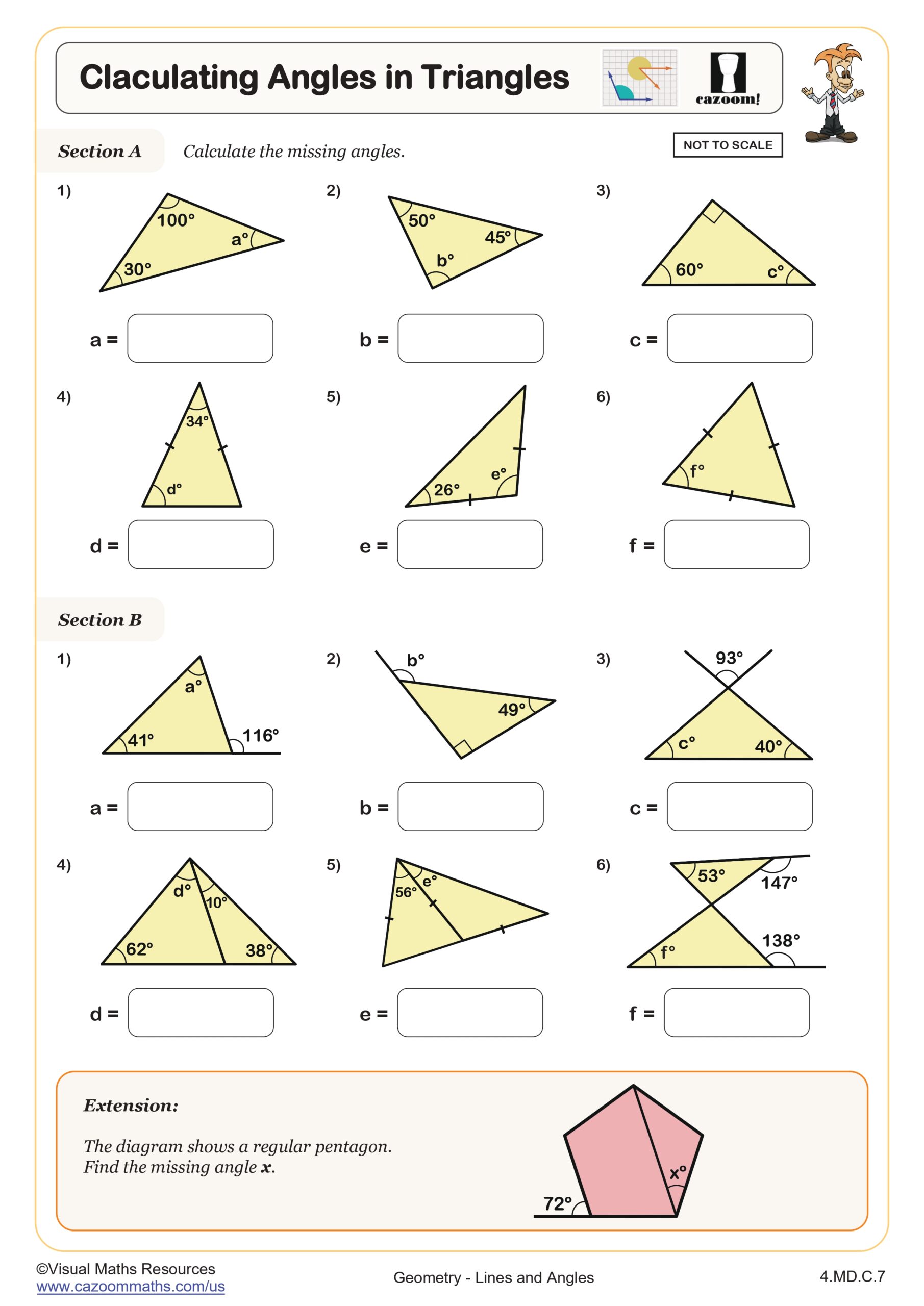
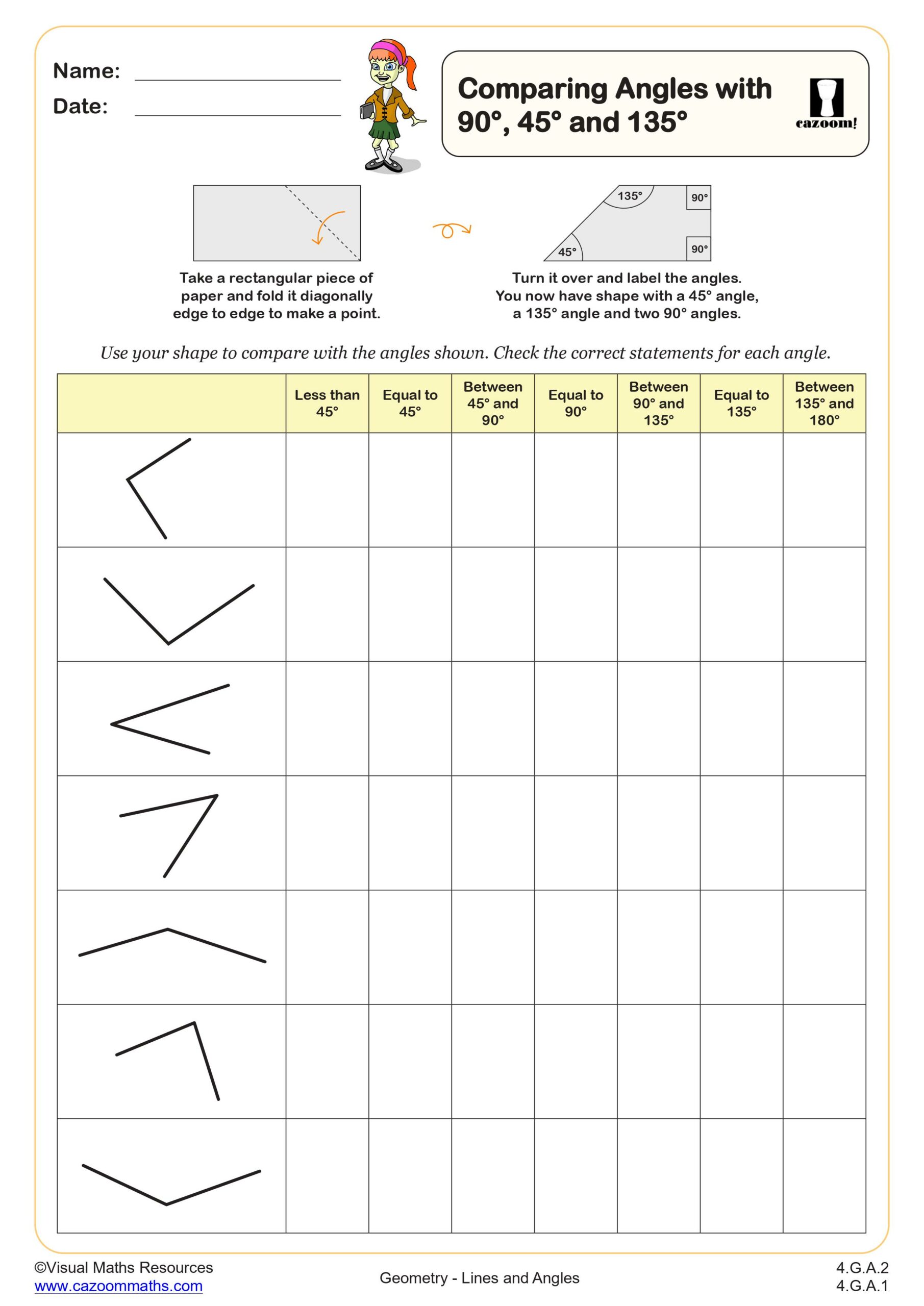
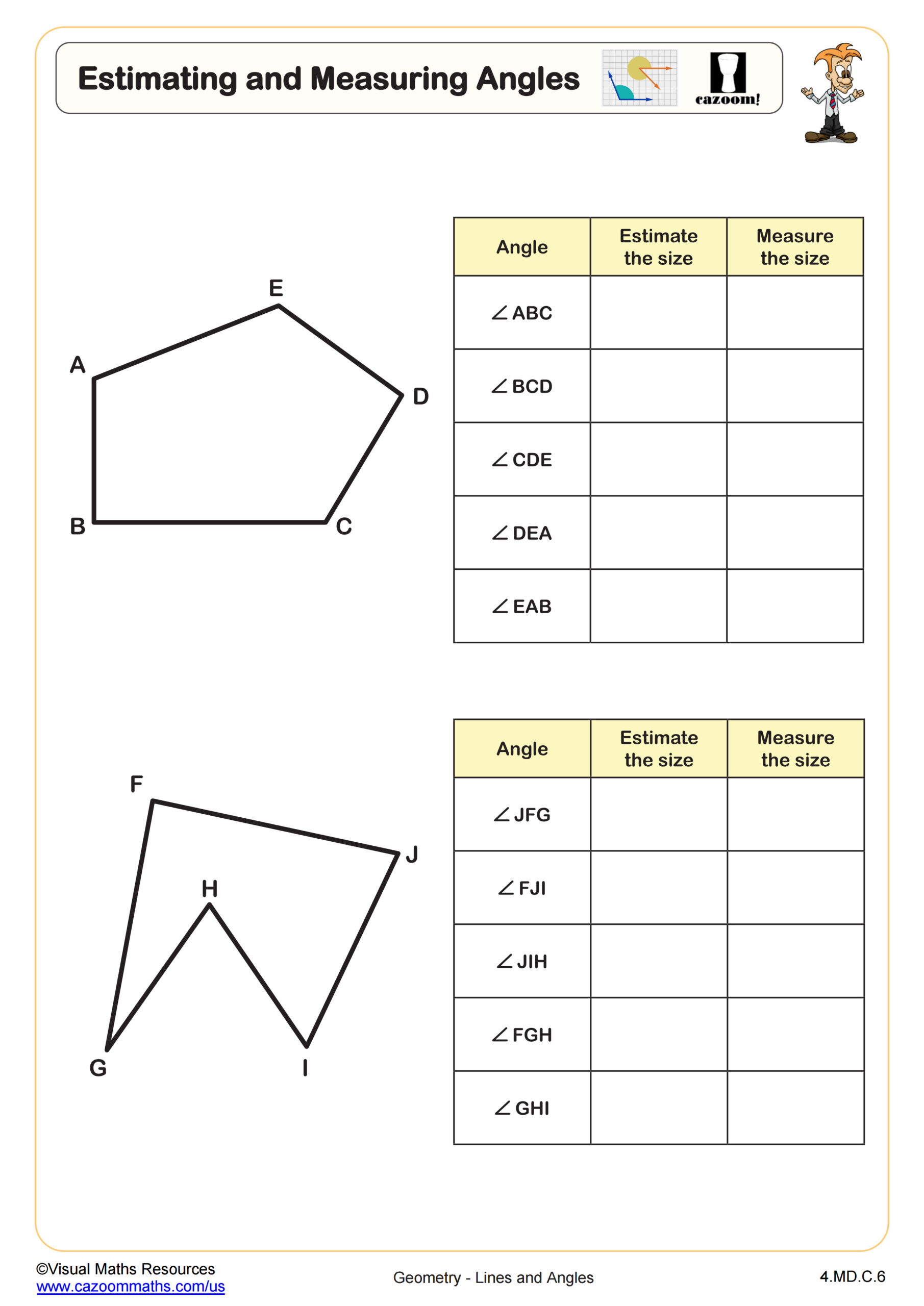
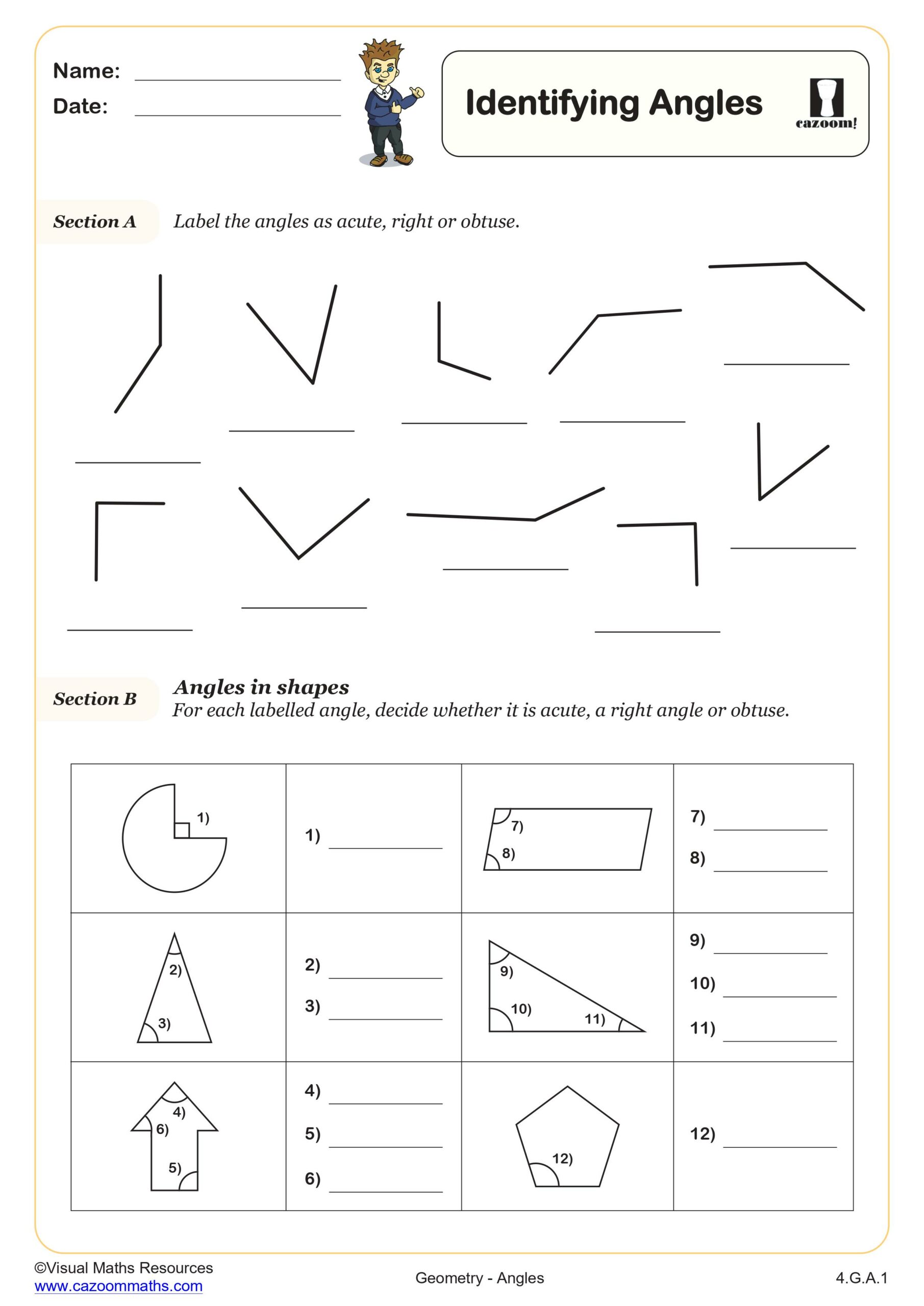
All worksheets are created by the team of experienced teachers at Cazoom Math.
What topics are covered in 4th grade angles worksheets?
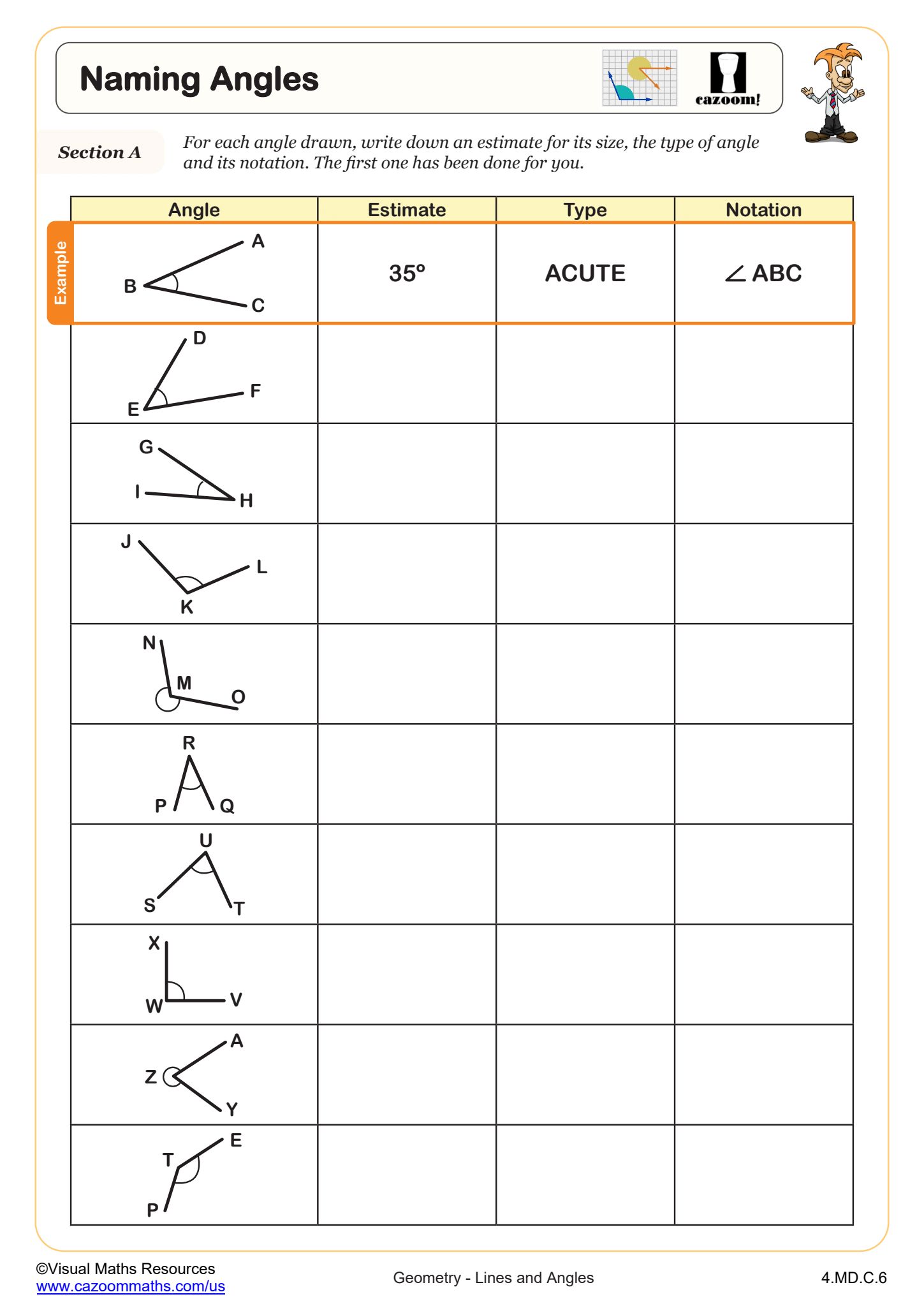
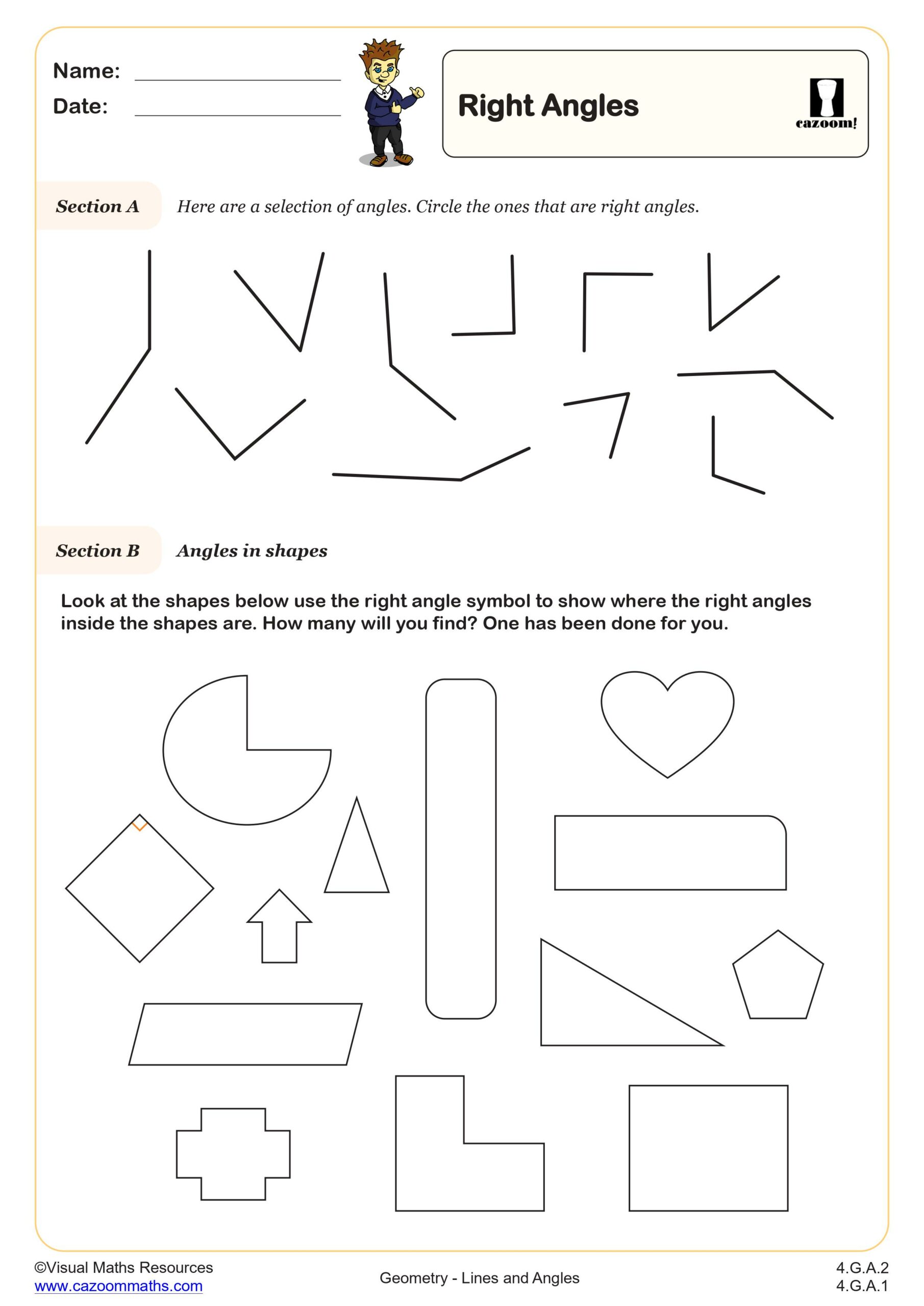
Fourth grade angle worksheets typically focus on identifying and classifying the four main angle types: acute angles (less than 90 degrees), right angles (exactly 90 degrees), obtuse angles (greater than 90 degrees but less than 180 degrees), and straight angles (exactly 180 degrees). Students also practice recognizing angles in various orientations and real-world contexts.
Teachers frequently observe that students struggle most with obtuse angles, often confusing them with acute angles when the angle opens in an unfamiliar direction. A quality angles worksheet 4th grade level includes angles positioned at different orientations to help students focus on the actual angle measure rather than the direction the rays point.
Are these angle worksheets appropriate for different grade levels?
These 4th grade math angles worksheets align specifically with fourth grade Common Core geometry standards (4.G.1), though they can serve different purposes across grade levels. Third grade students might use them as enrichment material, while fifth graders could use them for review before moving to more complex angle measurement activities.
The difficulty progression makes these worksheets particularly effective for differentiated instruction within fourth grade classrooms. Teachers often start struggling students with basic angle identification before advancing to more complex problems, while advanced learners can work on mixed angle types and real-world applications simultaneously.
How do these worksheets help students avoid common angle misconceptions?
Many measuring angles worksheet 4th grade activities specifically address the common misconception that longer rays create larger angles. Students often think a wide-drawn acute angle is larger than a narrow-drawn obtuse angle, focusing on ray length rather than the actual opening between rays.
These worksheet on angles for grade 4 activities include varied visual representations where angles with the same measure appear with different ray lengths. This helps students understand that angle size depends only on the amount of rotation between rays, not their visual length on paper. Teachers report this approach significantly reduces confusion during formal angle measurement instruction.
How can teachers use these 4th grade angle worksheets effectively in their classrooms?
Teachers find these lines and angles worksheet grade 4 materials work best when introduced after hands-on angle exploration using manipulatives like pattern blocks or angle rulers. Students benefit from making physical angles with their arms or paper strips before identifying angles on worksheets.
The included answer keys allow for immediate feedback during independent practice or homework assignments. Many teachers use these 4th grade angle worksheets as formative assessments, quickly identifying which students need additional support with specific angle types before moving to formal protractor instruction in later units.