4th Grade Place Value Worksheets
1000 More 1000 Less (A)
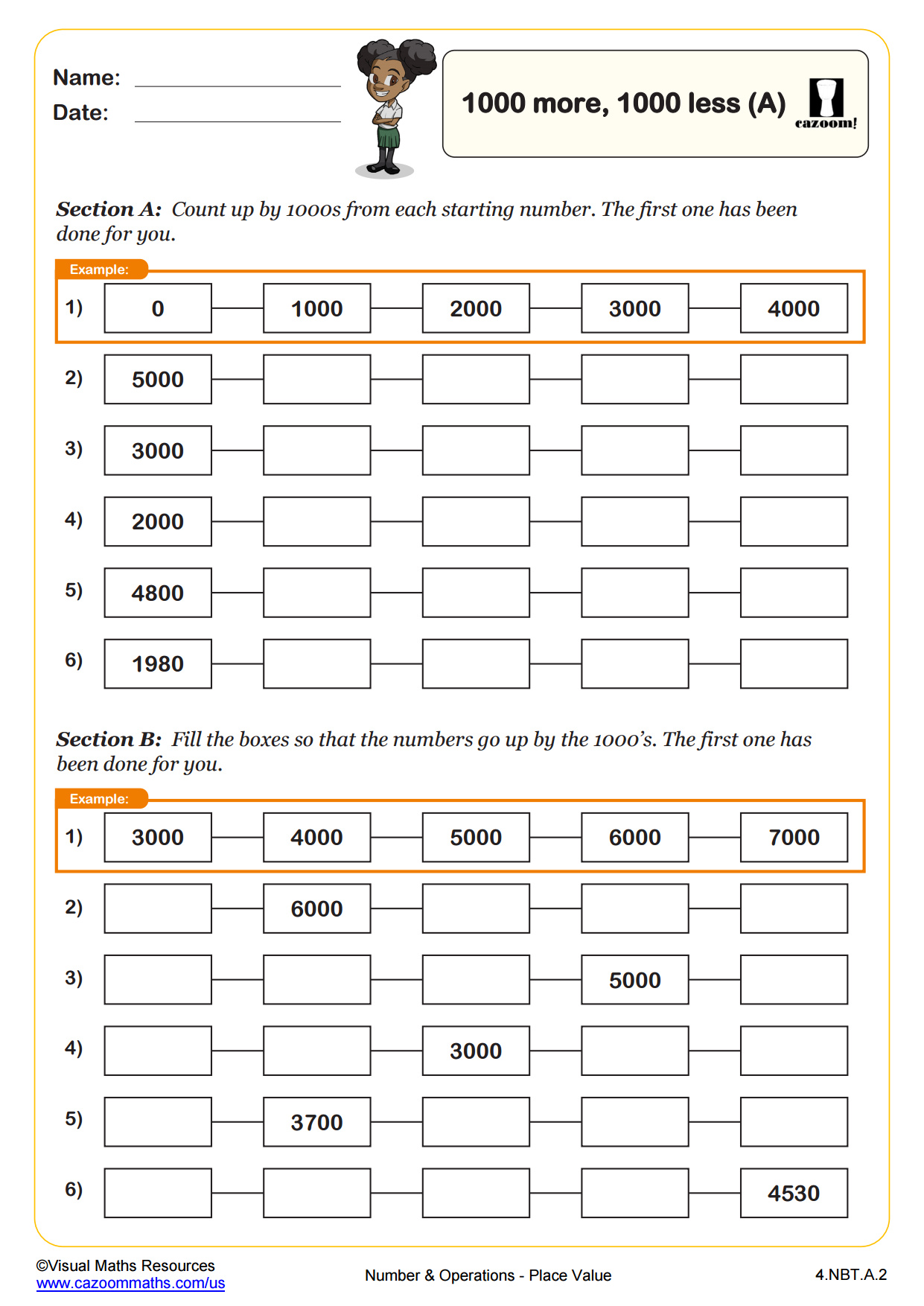
1000 More 1000 Less (B)
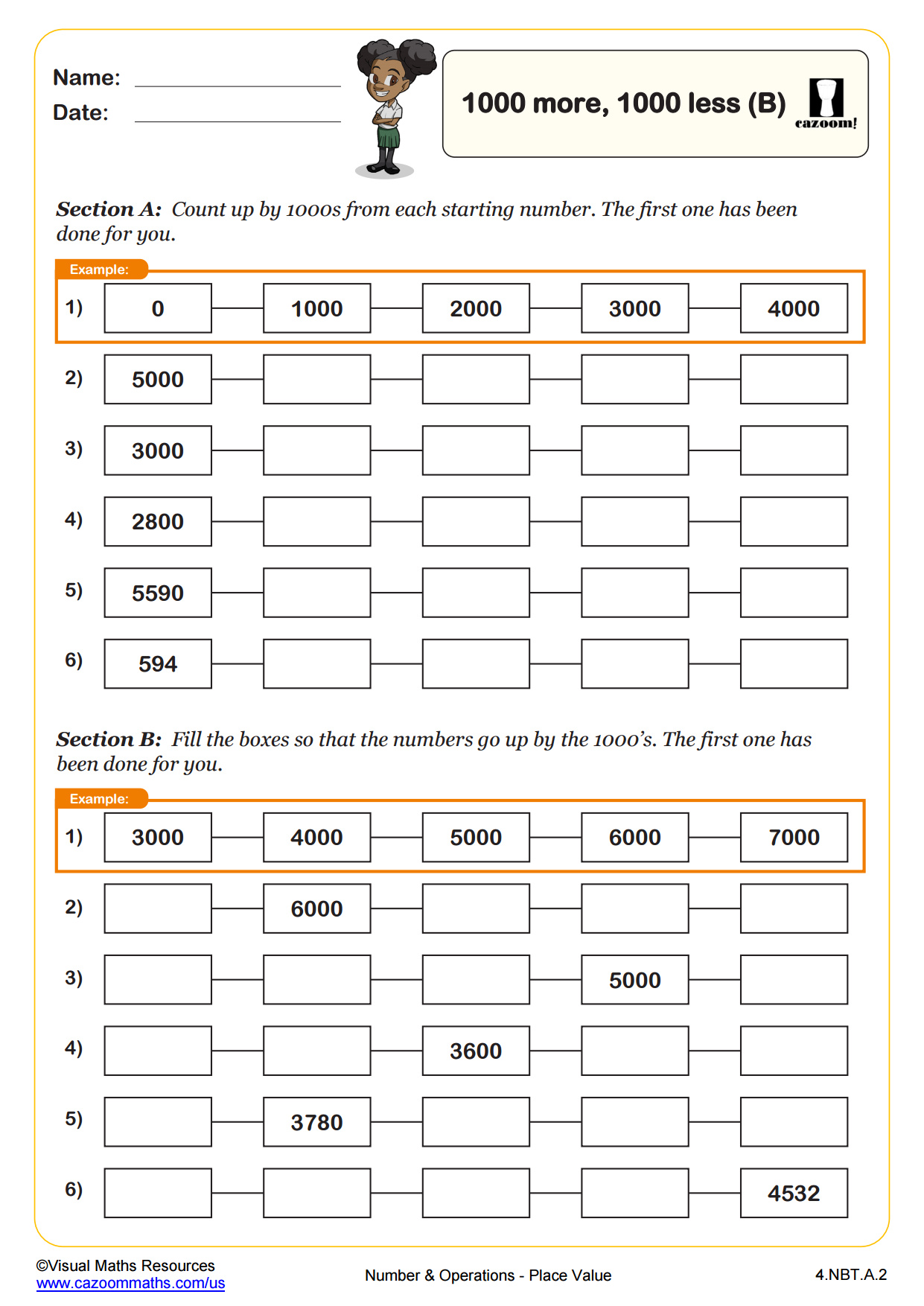
1000 More 1000 Less (C)
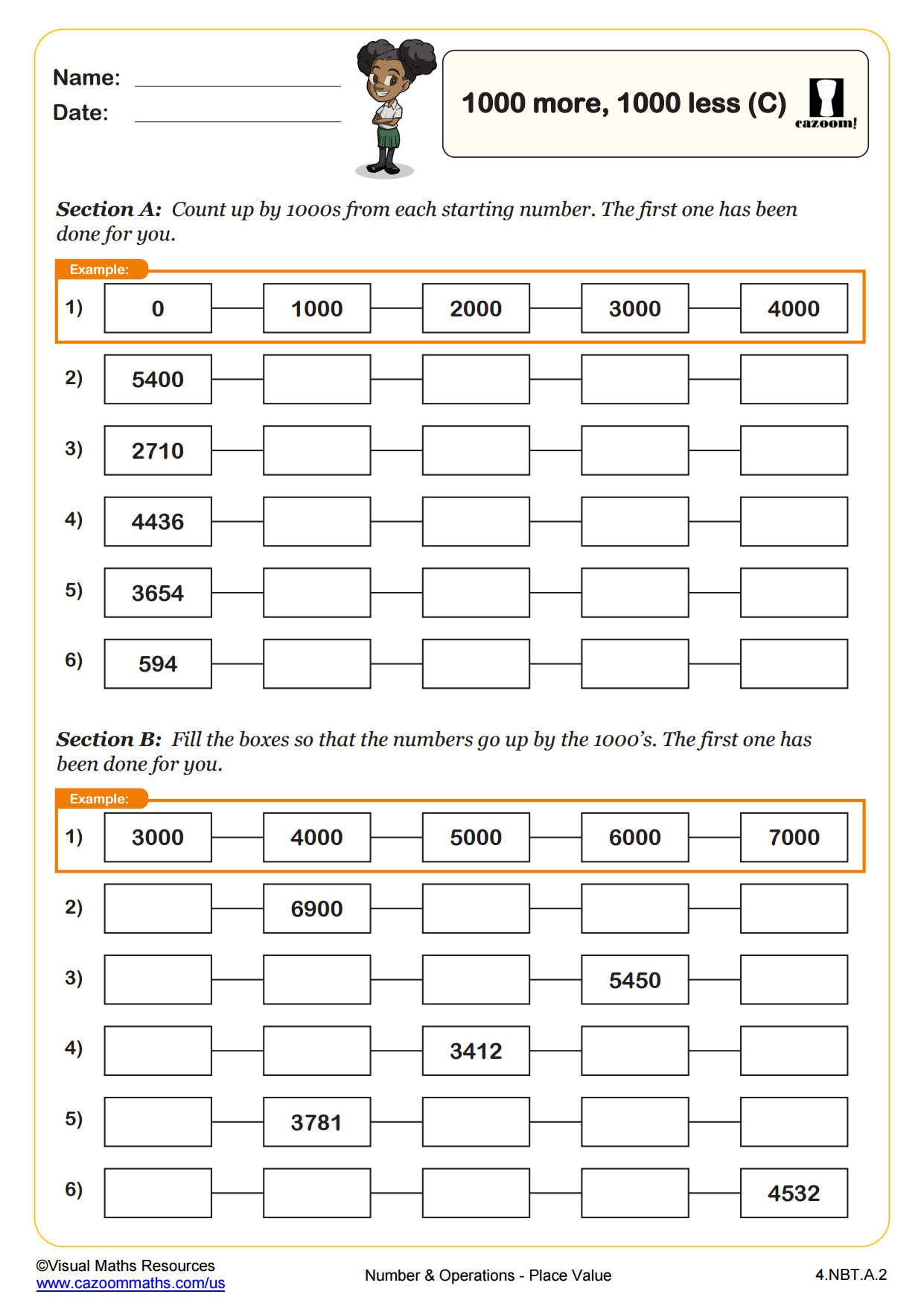
Compare and Order Numbers to 10,000
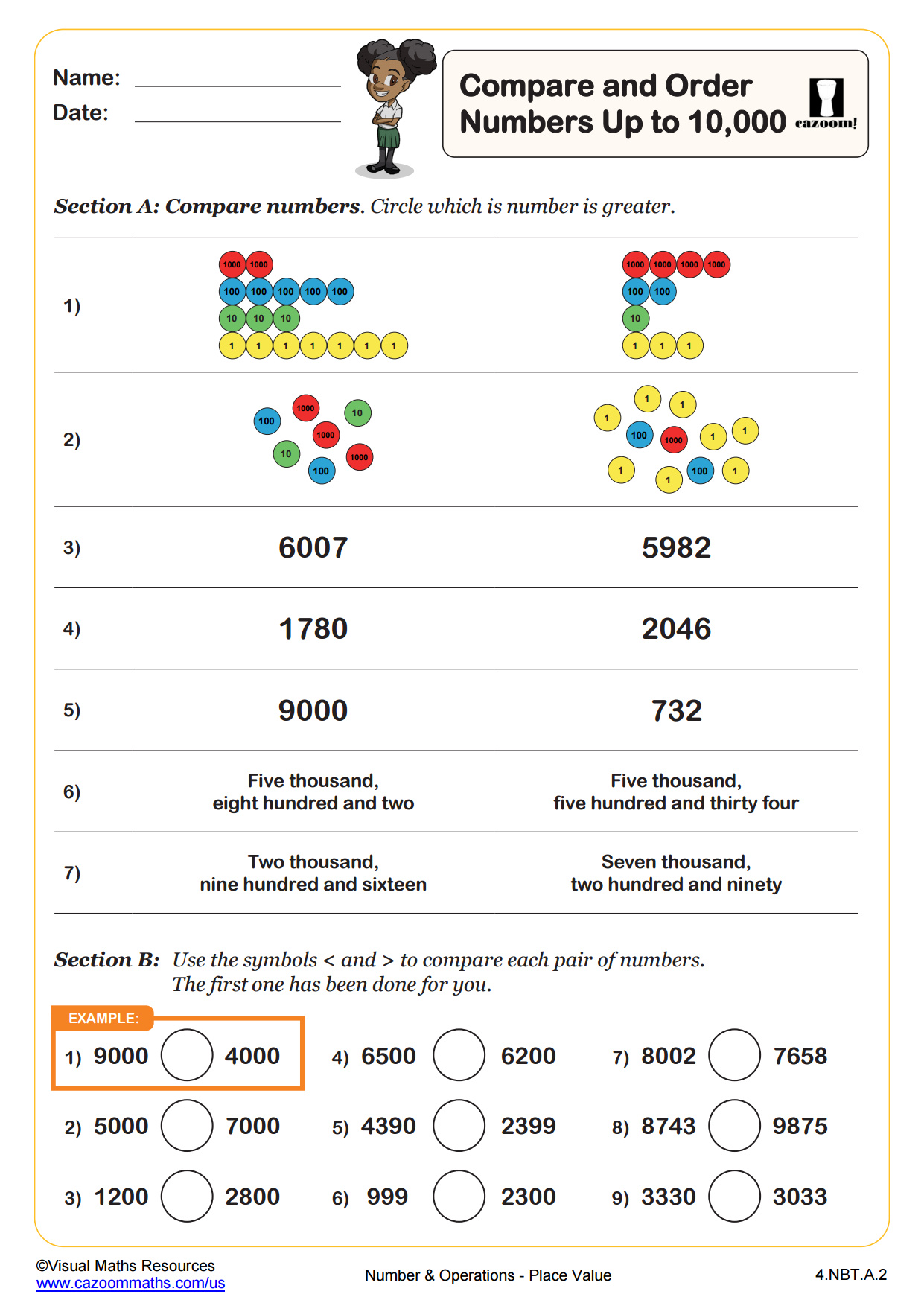
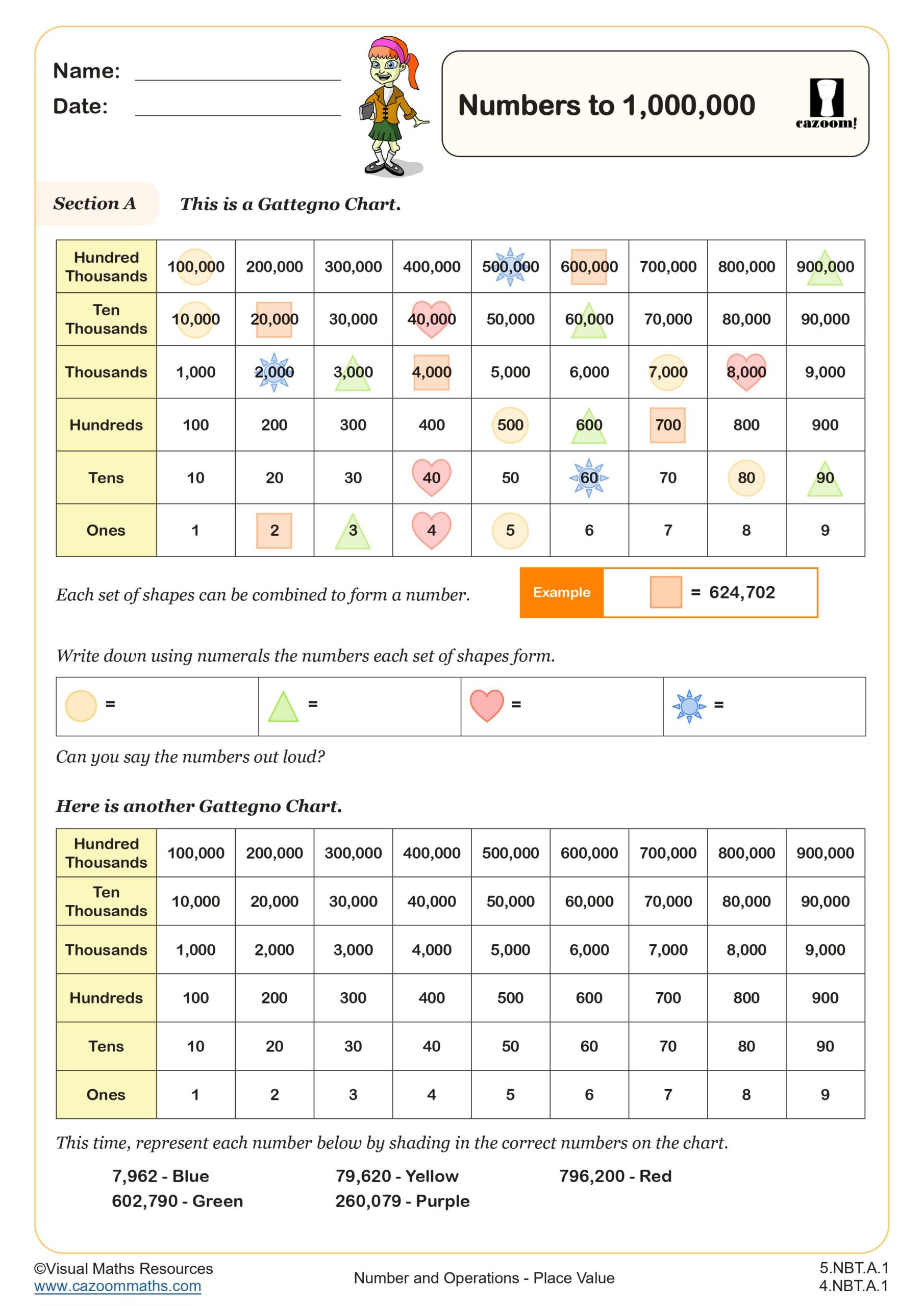
Numbers to 1,000,000
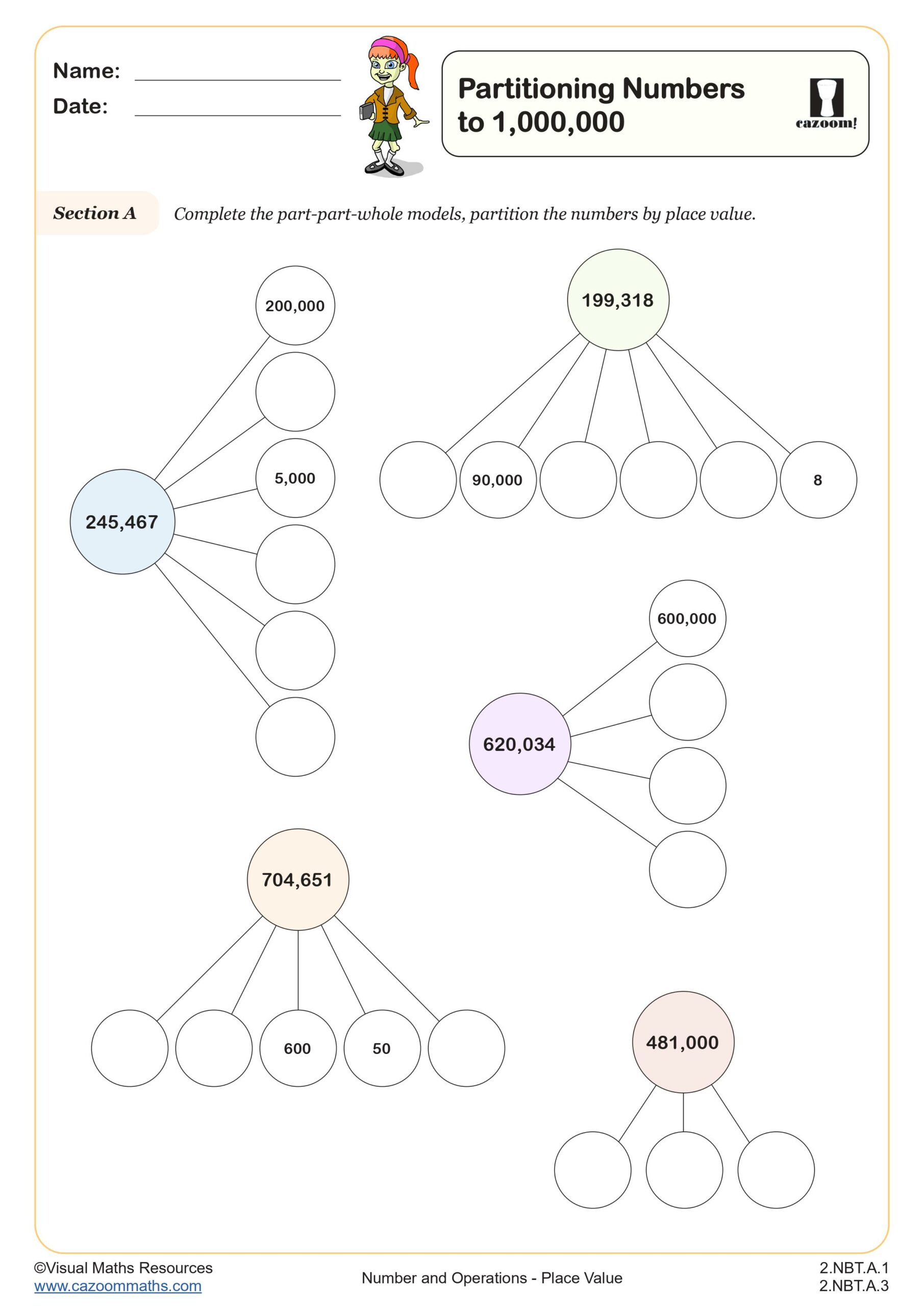
Partitioning Numbers to 1,000,000
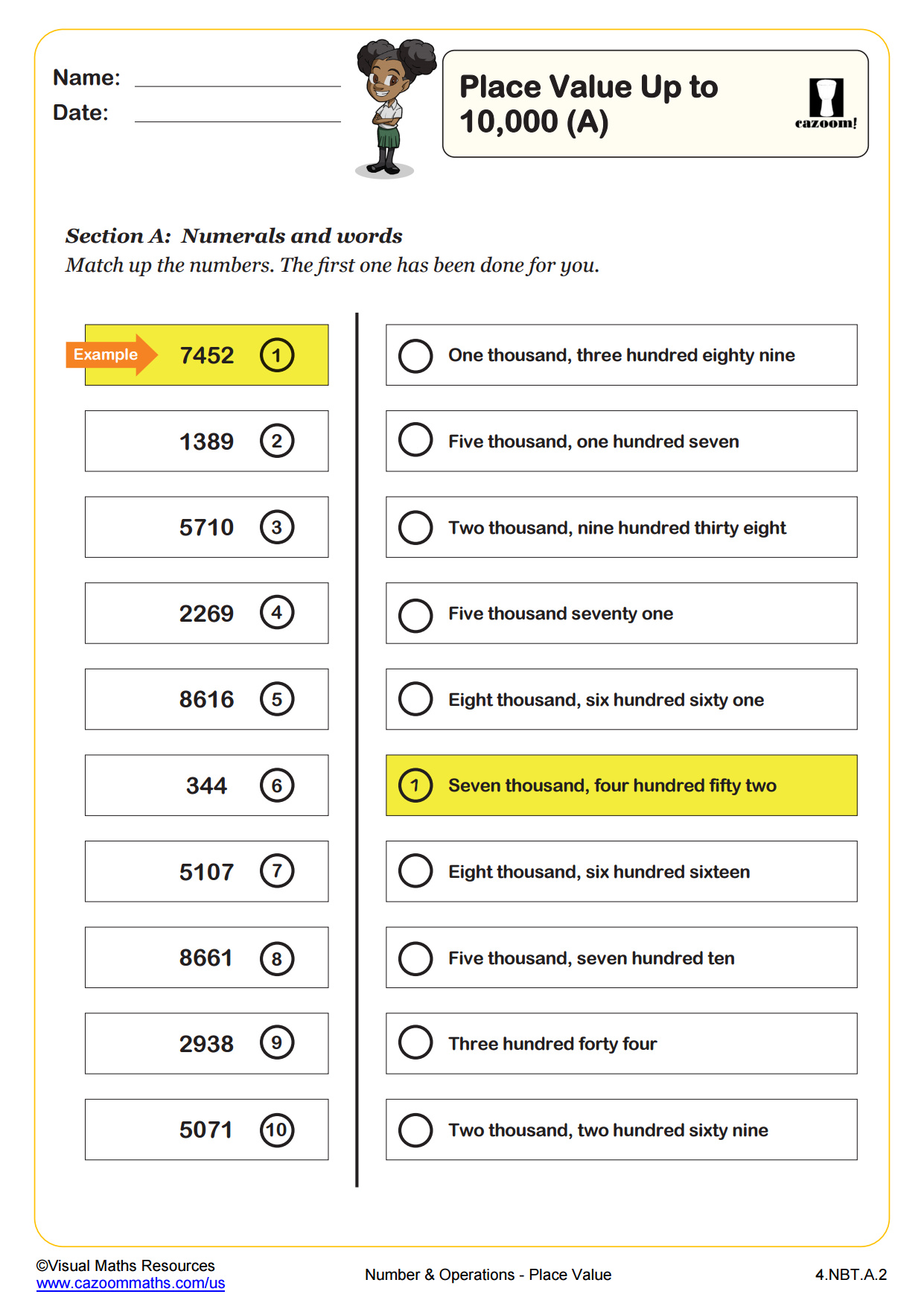
Place Value up to 10,000 (A)
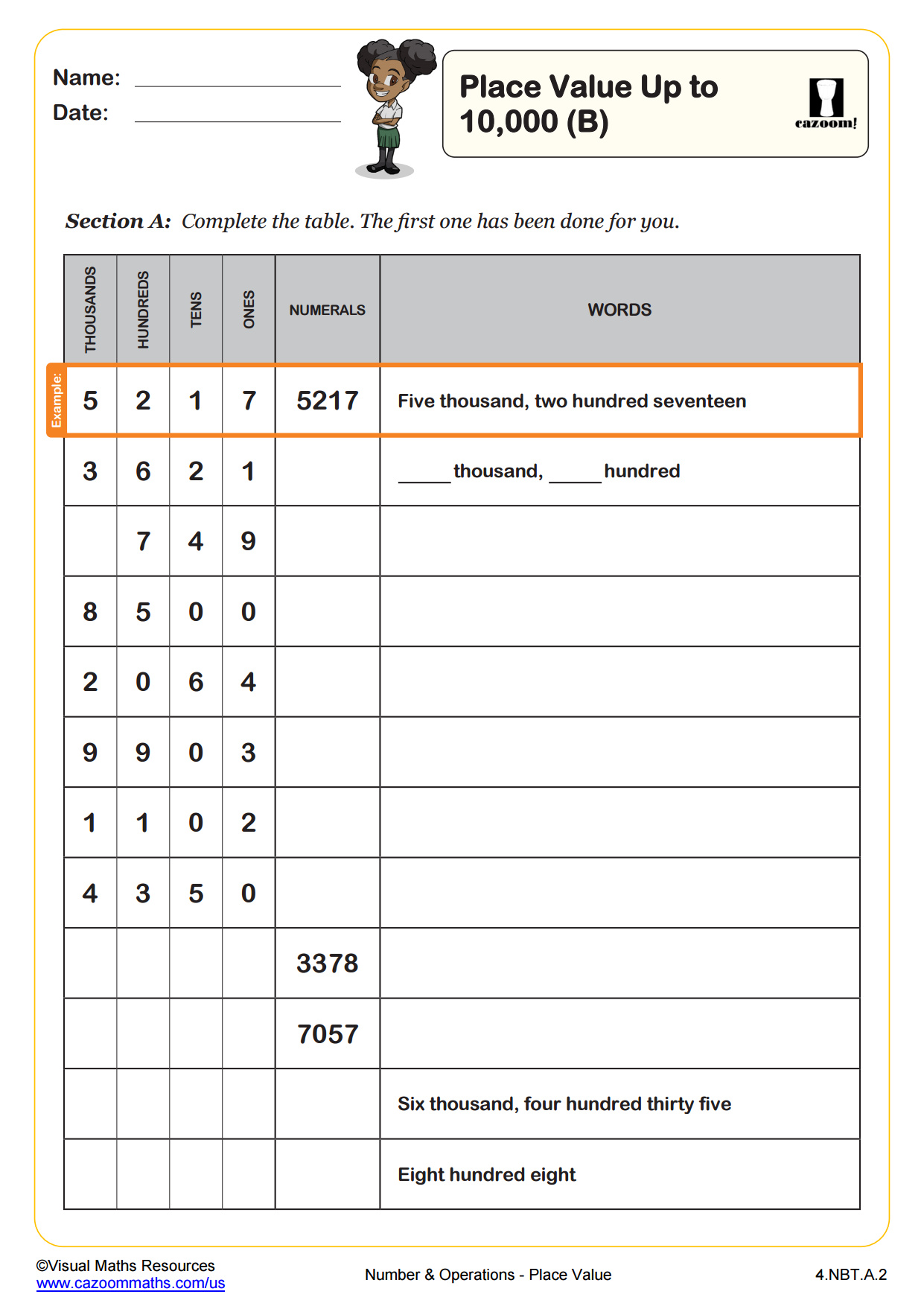
Place Value up to 10,000 (B)
Place Value up to 10,000 (C)
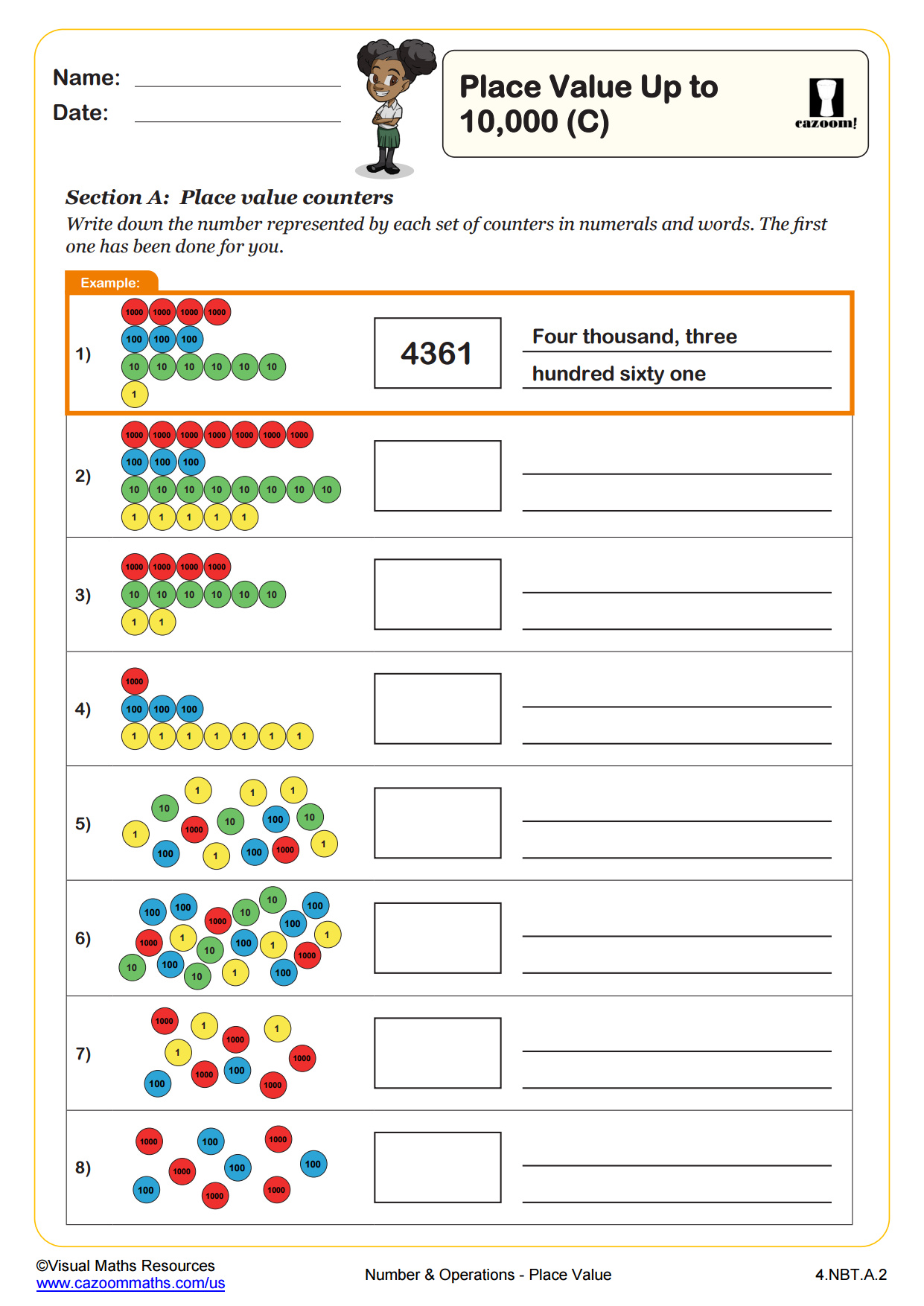
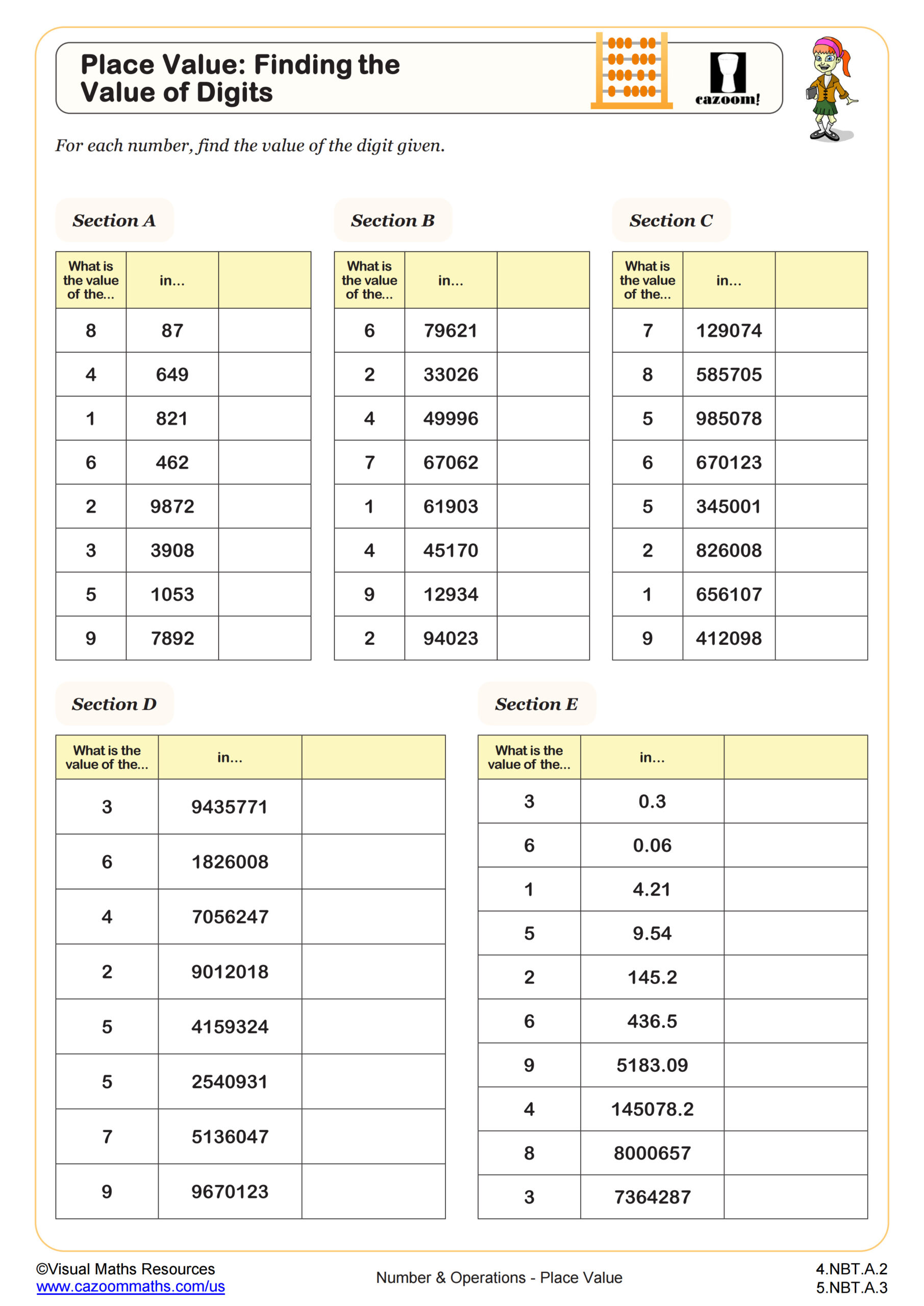
Place Value: Finding the Value of Digits
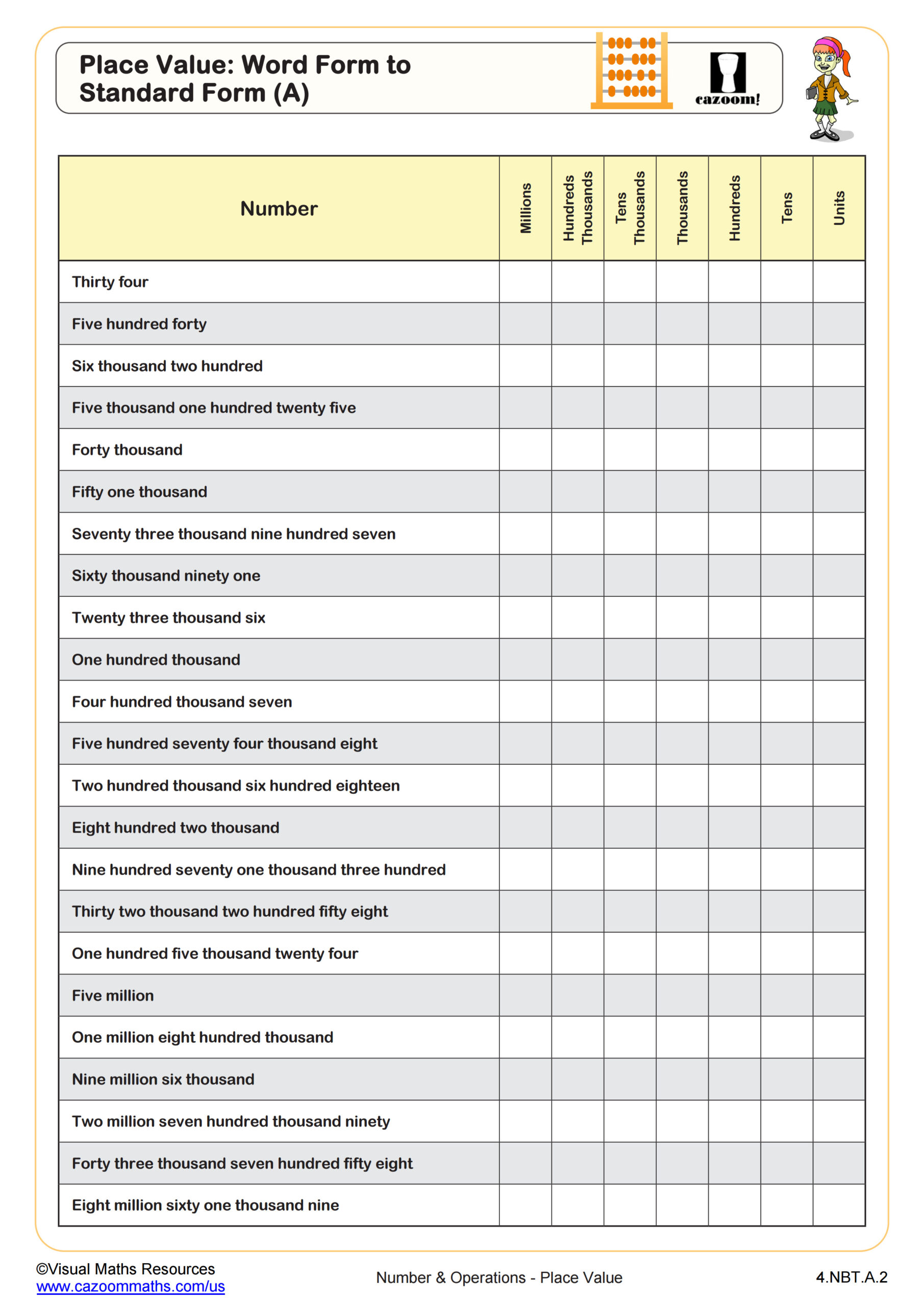
Place Value: Word Form to Standard Form (A)
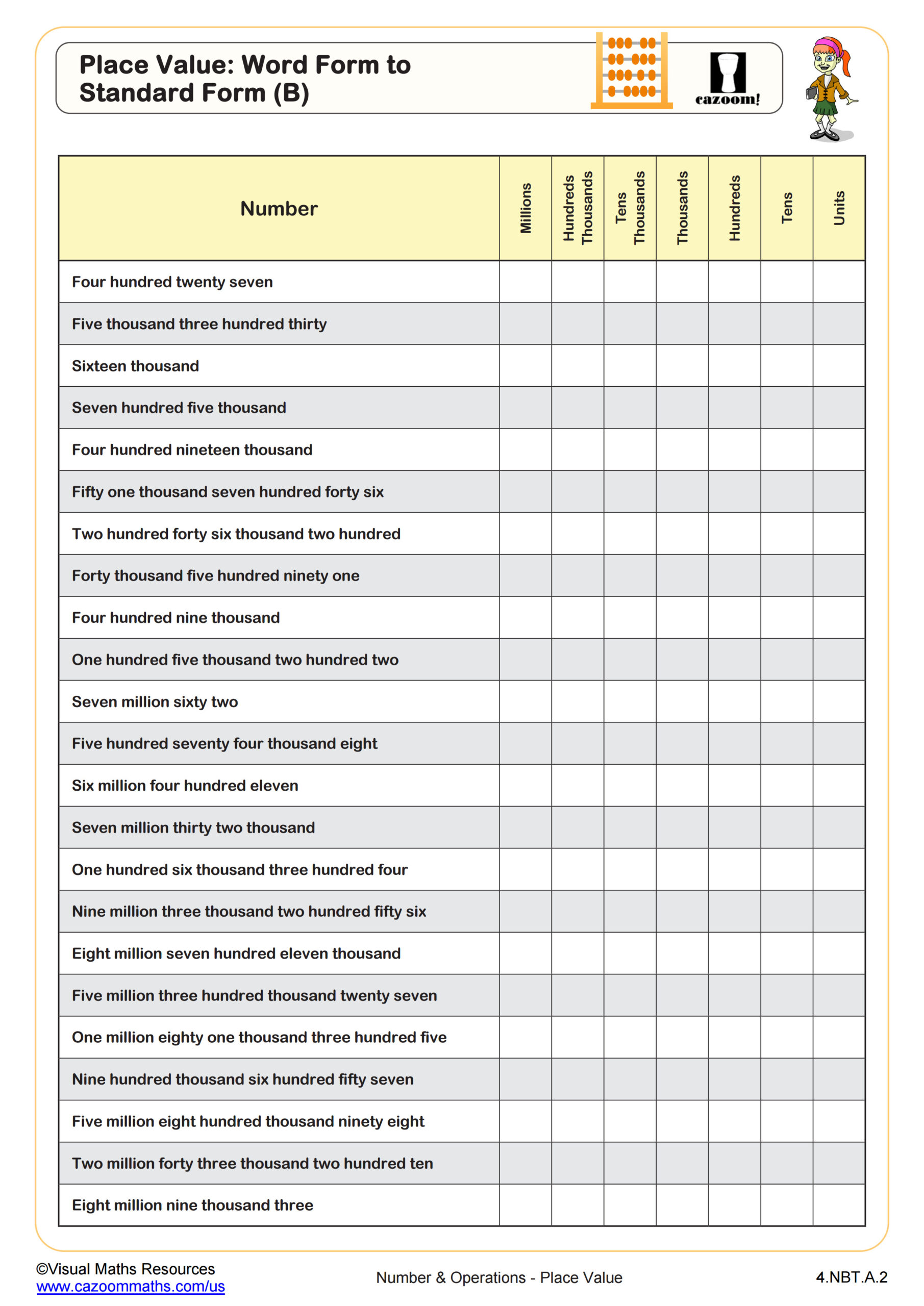
Place Value: Word Form to Standard Form (B)
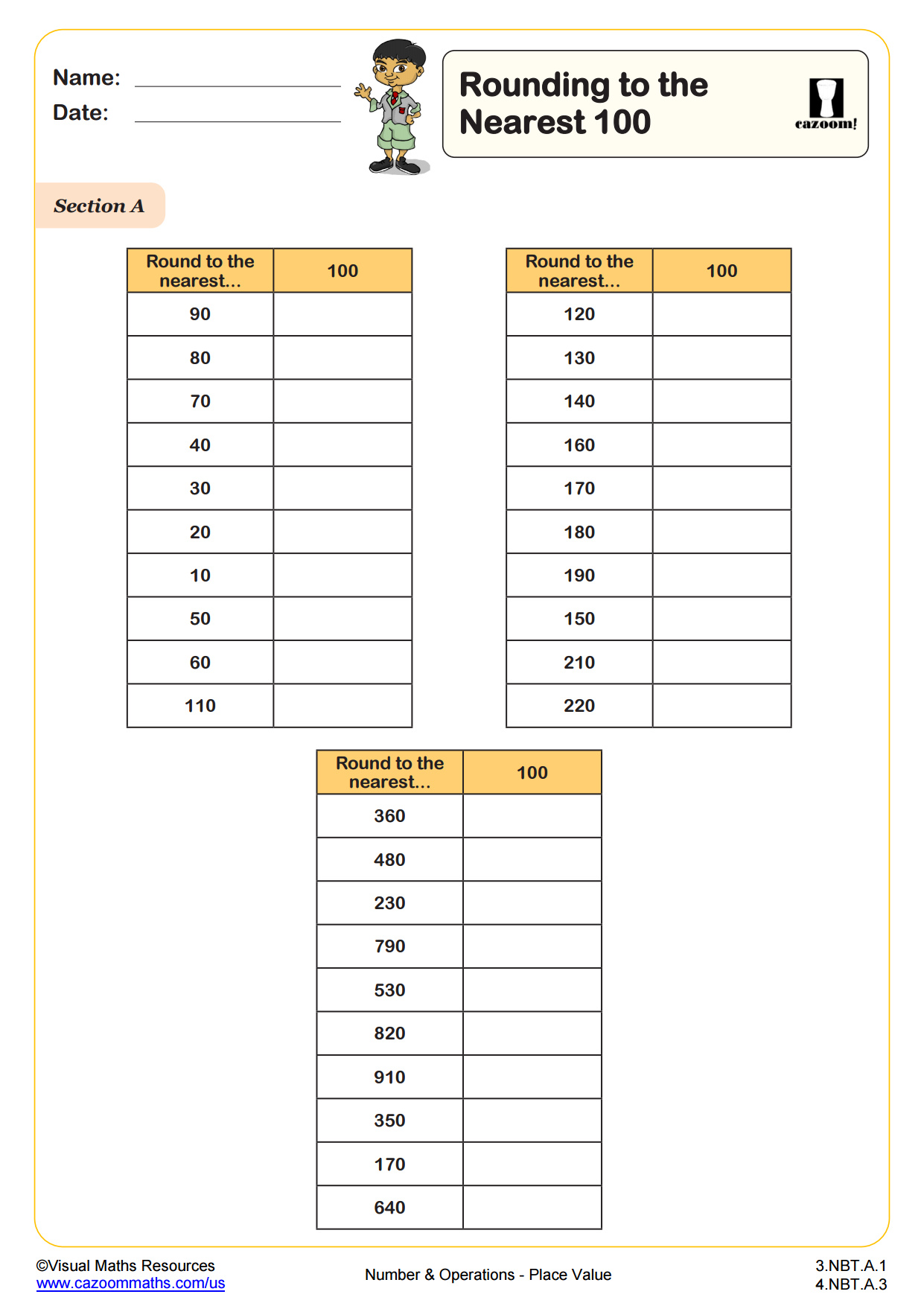
Rounding to the Nearest 100
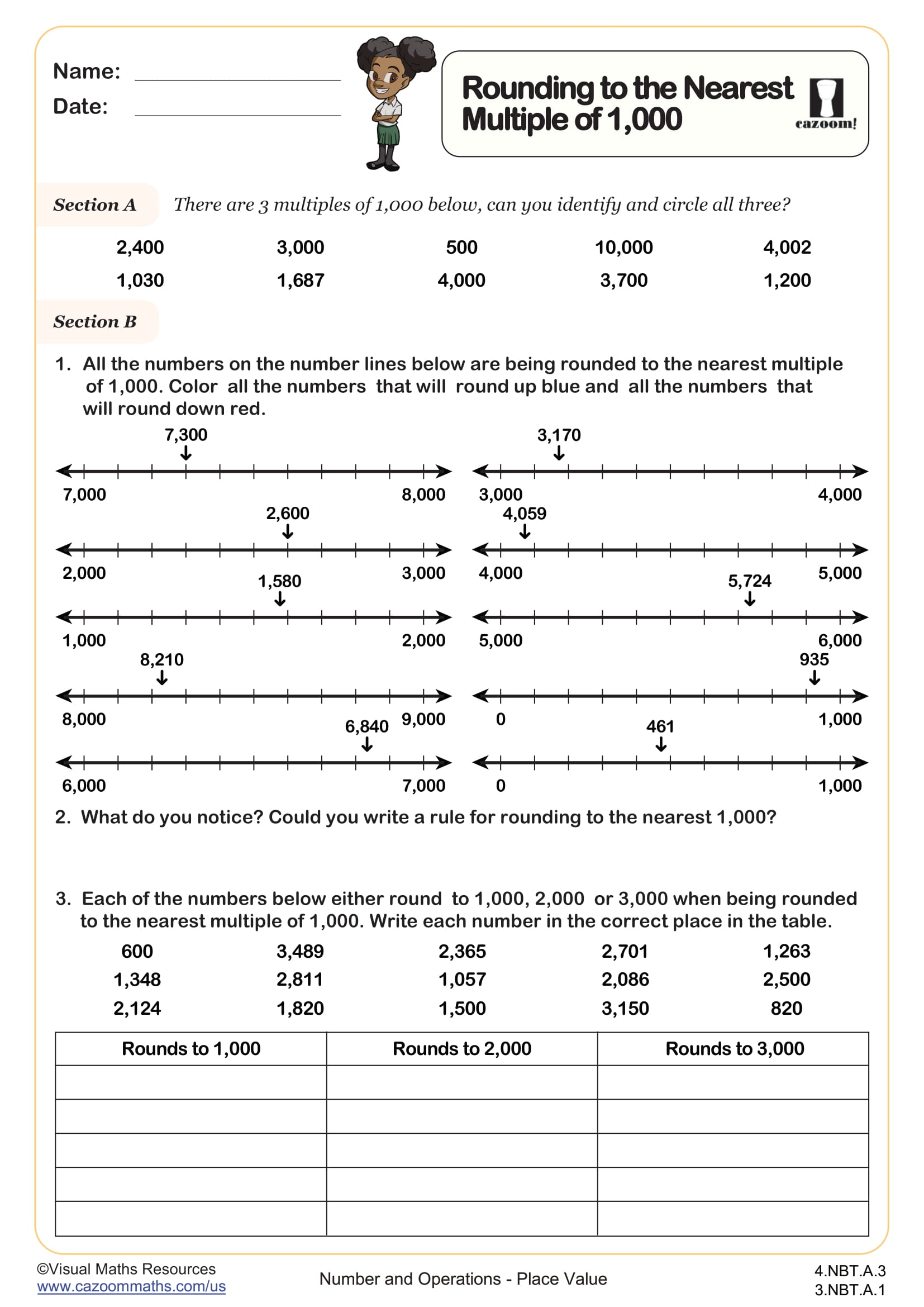
Rounding to the Nearest Multiple of 1,000
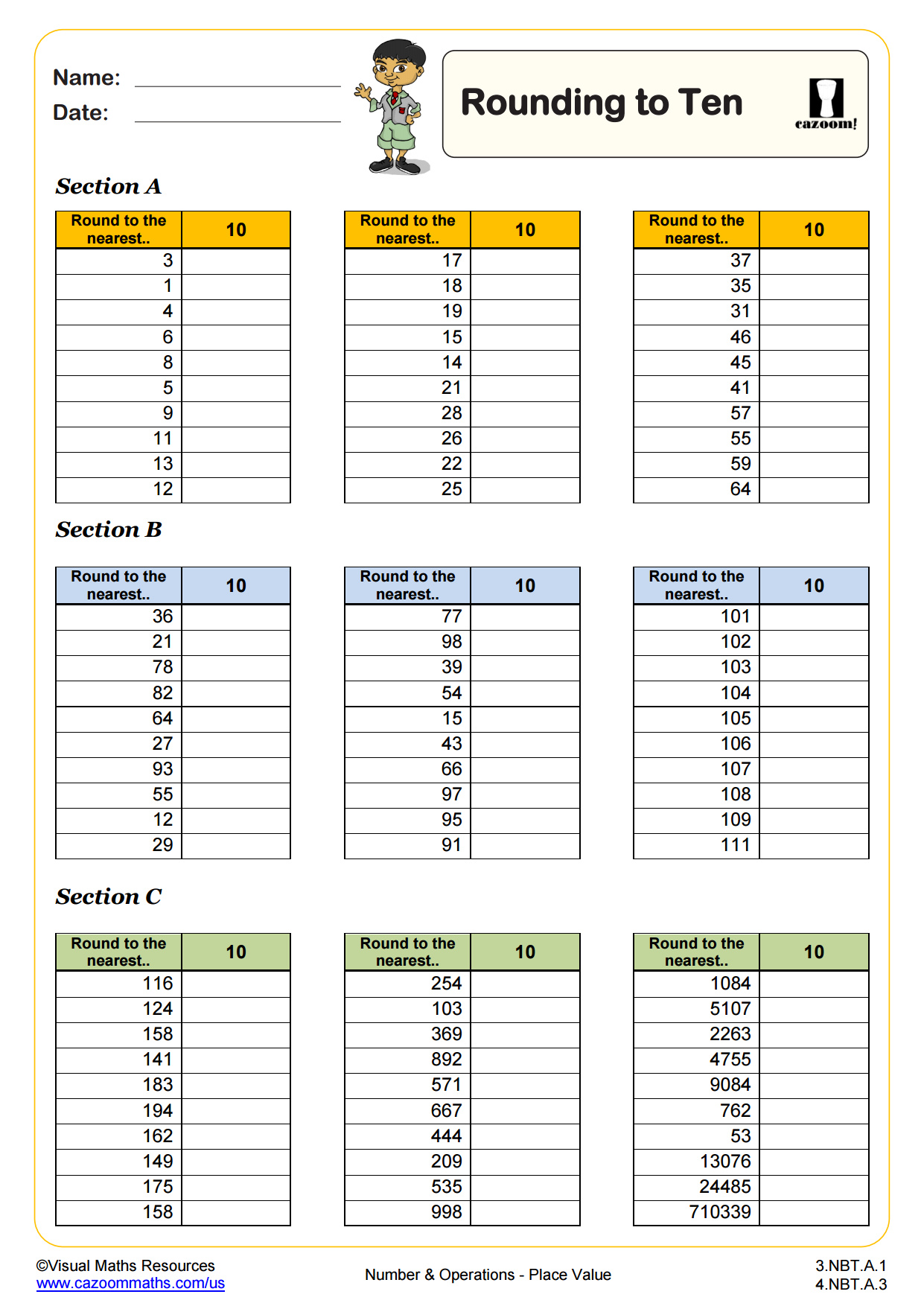
Rounding to the Nearest Ten
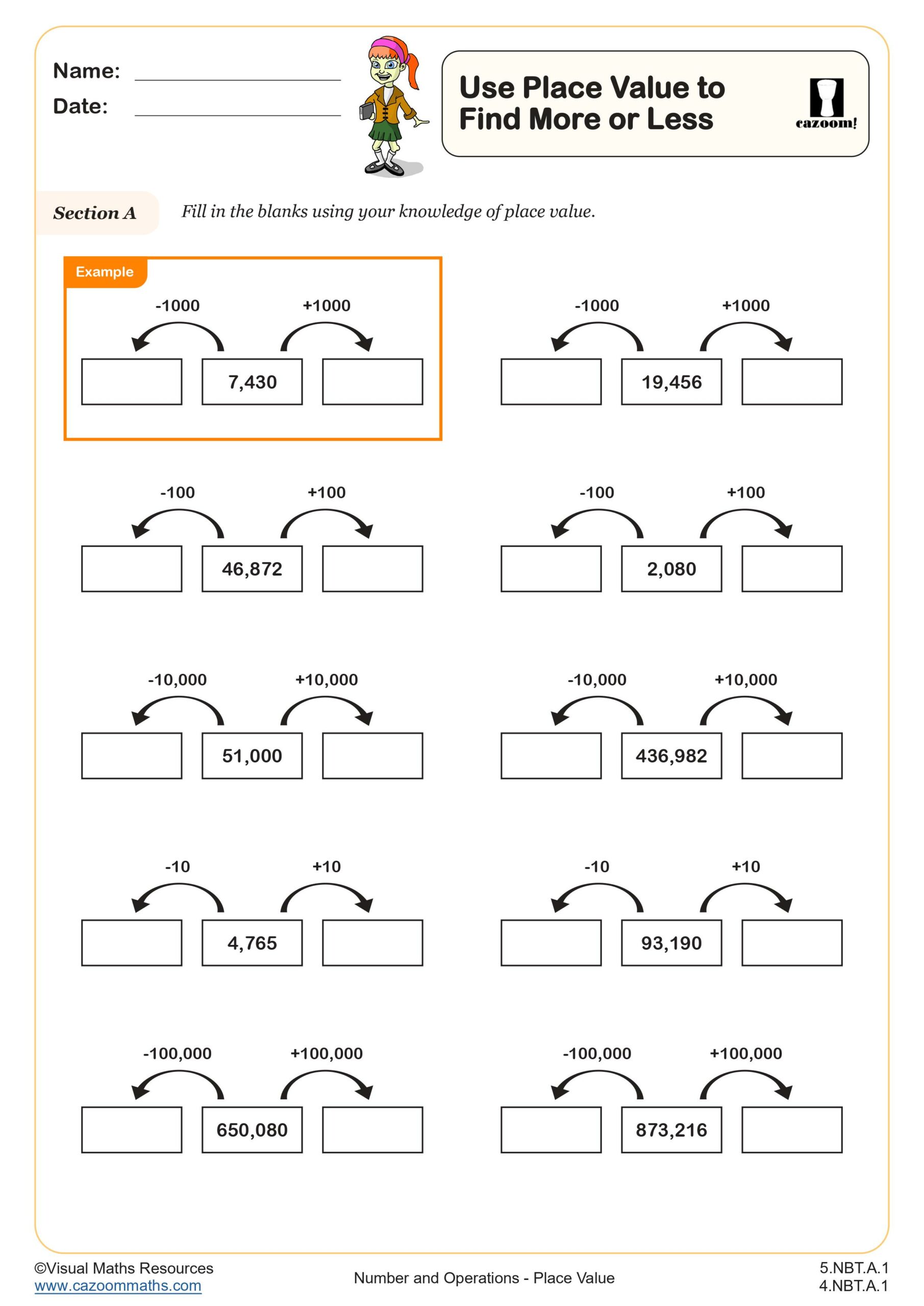
Use Place Value to Find More or Less
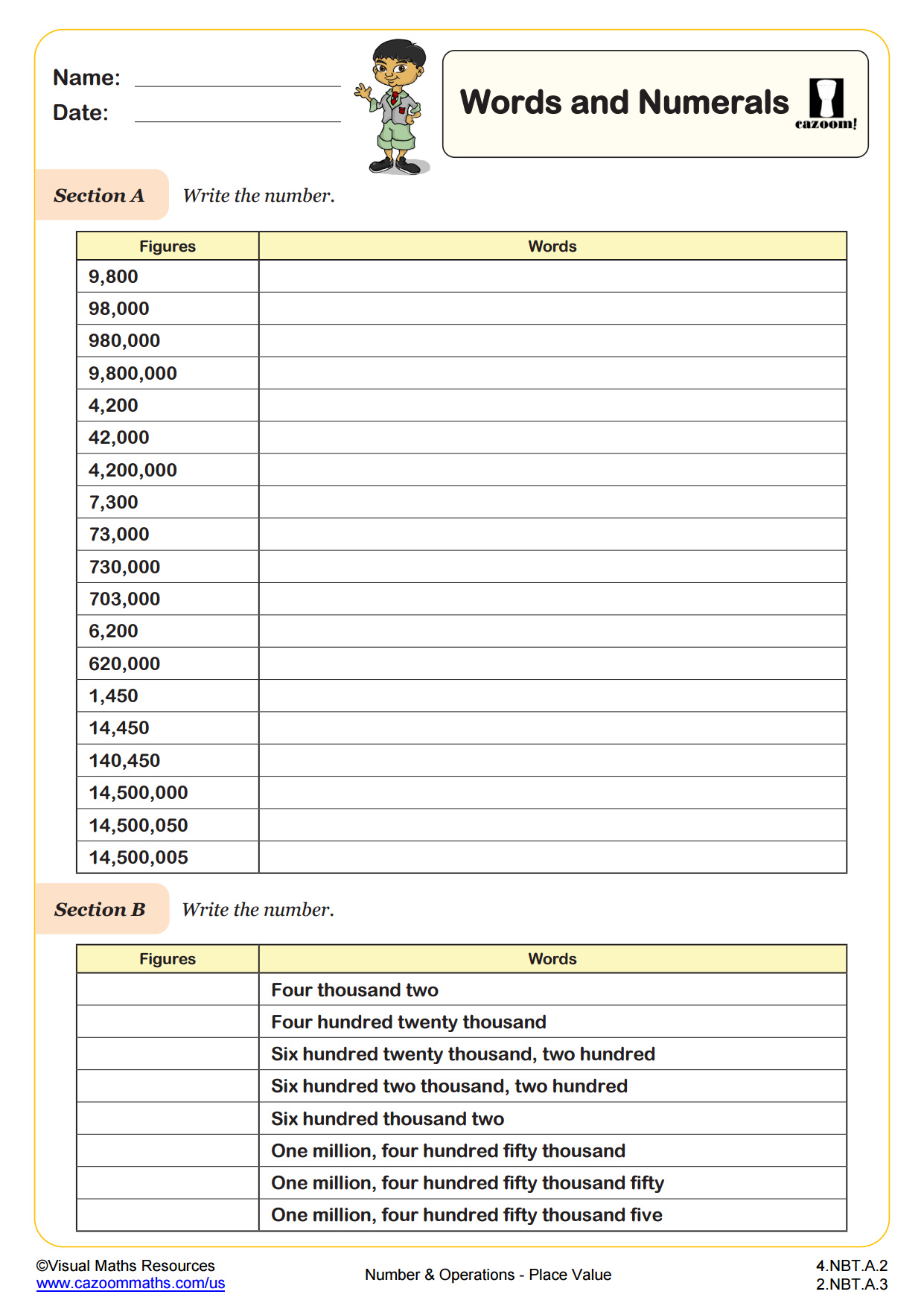
Words and Numerals
All worksheets are created by the team of experienced teachers at Cazoom Math.
What topics do 4th grade place value worksheets typically cover?
Fourth grade place value worksheets address the Common Core standards 4.NBT.A.1 through 4.NBT.A.3, covering numbers up to one million. Students practice reading and writing numbers in standard form, expanded form, and word form, while also working with place value charts and comparing multi-digit numbers using inequality symbols.
Teachers frequently observe that students make errors when writing numbers like 'forty thousand, six hundred three' because they add extra zeros or omit necessary ones. Place value worksheet 4th grade activities often include exercises where students must identify the value of specific digits, such as recognizing that the 7 in 47,825 represents 7,000, not just 7. This concrete practice with digit identification prevents common mistakes when students encounter larger numbers in real-world contexts like population data or sports statistics.
How do 4th grade place value skills differ from 3rd grade?
While 3rd graders work primarily with numbers up to 1,000, fourth grade place value worksheets extend this understanding to numbers reaching one million. Students must now navigate five and six-digit numbers, understanding places like ten thousands and hundred thousands that weren't part of their previous experience.
The cognitive leap from 999 to 10,000 presents unique challenges that experienced teachers recognize immediately. Students often write 'ten thousand, five' as 10,005 instead of the correct 10,500, revealing gaps in their understanding of place value positions. Place value worksheets for 4th grade specifically address these transition points with exercises that highlight the multiplicative relationship between adjacent place values, helping students see that each position represents ten times the value of the position to its right.
Why do students struggle with zeros in place value?
Zeros act as placeholders in our number system, but fourth graders often treat them as 'nothing' rather than understanding their critical role in maintaining place value positions. When students encounter numbers like 30,405, they frequently omit zeros when writing the word form or incorrectly read the number aloud.
Classroom observations reveal that students often write 'thirty thousand, four hundred five' as 30,45 or 3,045, completely missing the placeholder function of zeros. Place value worksheets 4th grade PDF materials typically include specific exercises where students must identify which zeros are necessary and which represent actual values of zero. This distinction becomes crucial when students advance to decimal concepts, where understanding placeholder zeros directly impacts their success with money, measurement, and scientific notation in later grades.
How can teachers use these worksheets most effectively in their classroom?
Effective implementation begins with diagnostic assessment to identify which students need support with basic three-digit place value before advancing to larger numbers. Teachers should introduce multi-digit numbers gradually, using manipulatives like base-ten blocks alongside worksheet practice to provide concrete visual support for abstract place value concepts.
Many teachers find success using place value worksheets 4th grade materials as warm-up activities, spending five minutes daily on focused practice rather than lengthy worksheet sessions. The answer keys allow for immediate feedback, which research shows significantly improves retention. Additionally, connecting worksheet problems to real-world scenarios like school enrollment numbers or distances between cities helps students see the practical application of place value skills in STEM contexts and daily life.