4th Grade Reason with Shapes Worksheets
All worksheets are created by the team of experienced teachers at Cazoom Math.
What Does Reasoning with Shapes Mean in Fourth Grade Math?
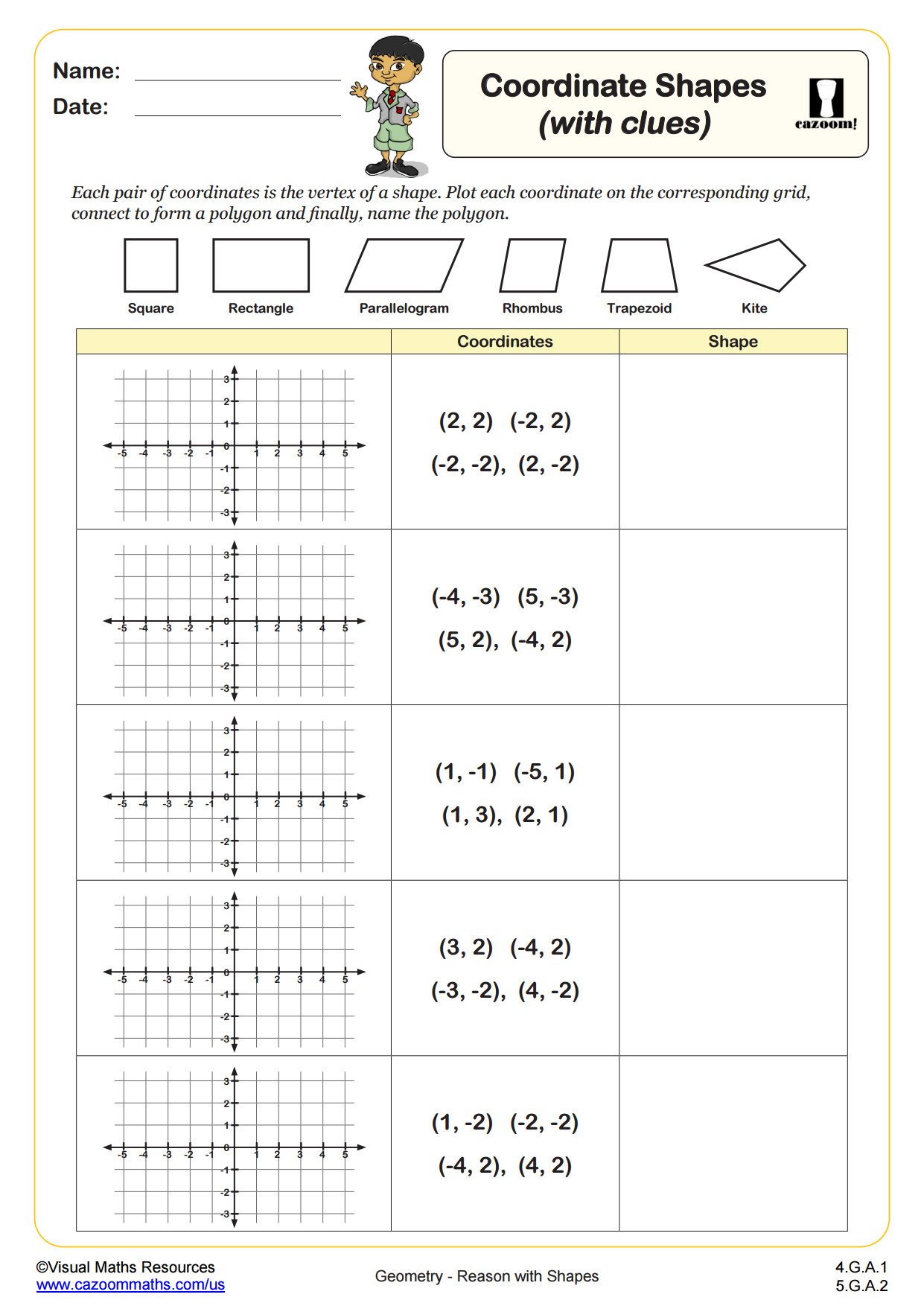
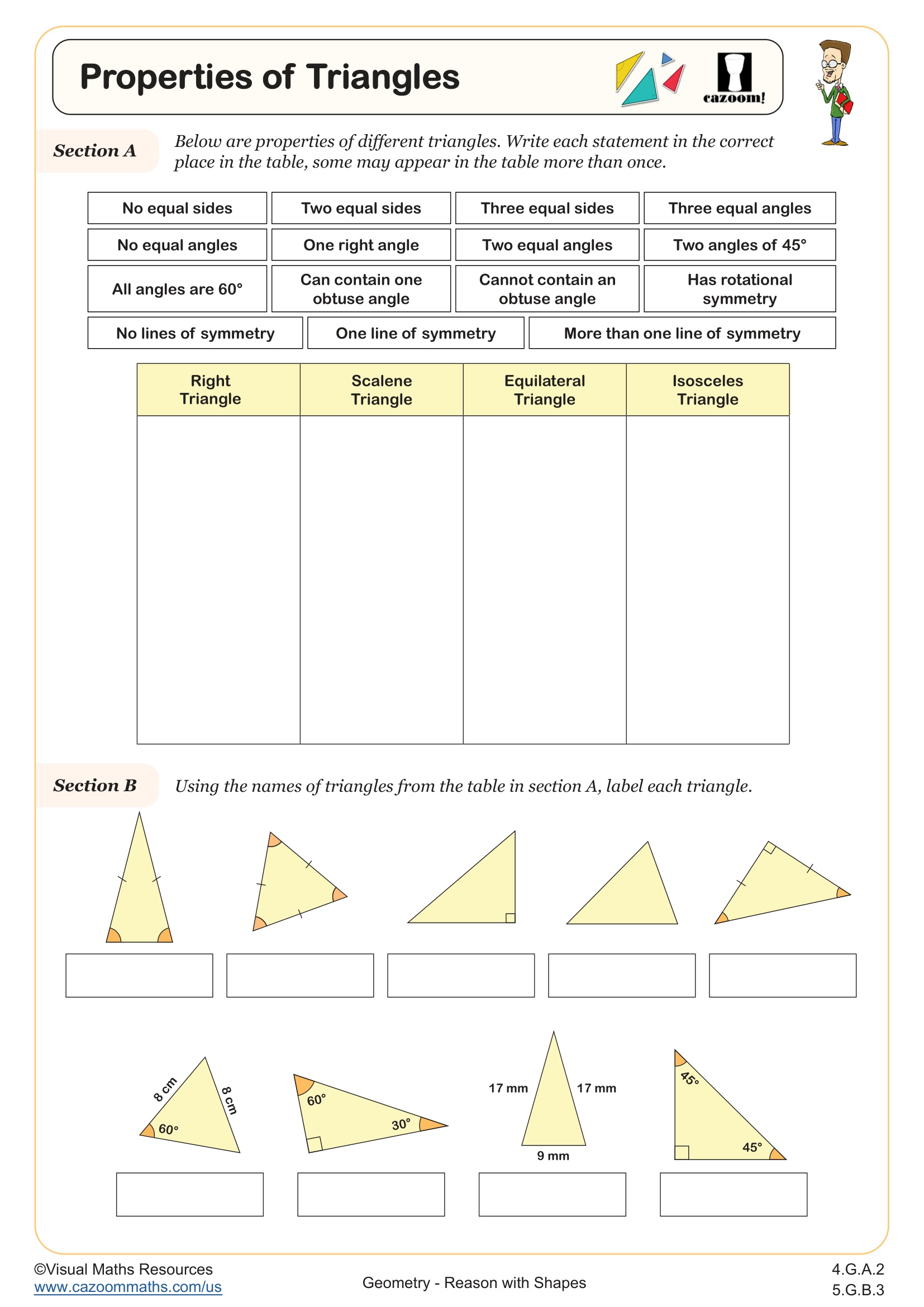
Reasoning with shapes in fourth grade extends beyond identifying triangles or rectangles. Students analyze properties, make predictions based on coordinate clues, and justify their thinking about geometric relationships. This aligns with Common Core Standard 4.G.A, which emphasizes drawing and identifying lines and angles in geometric figures.
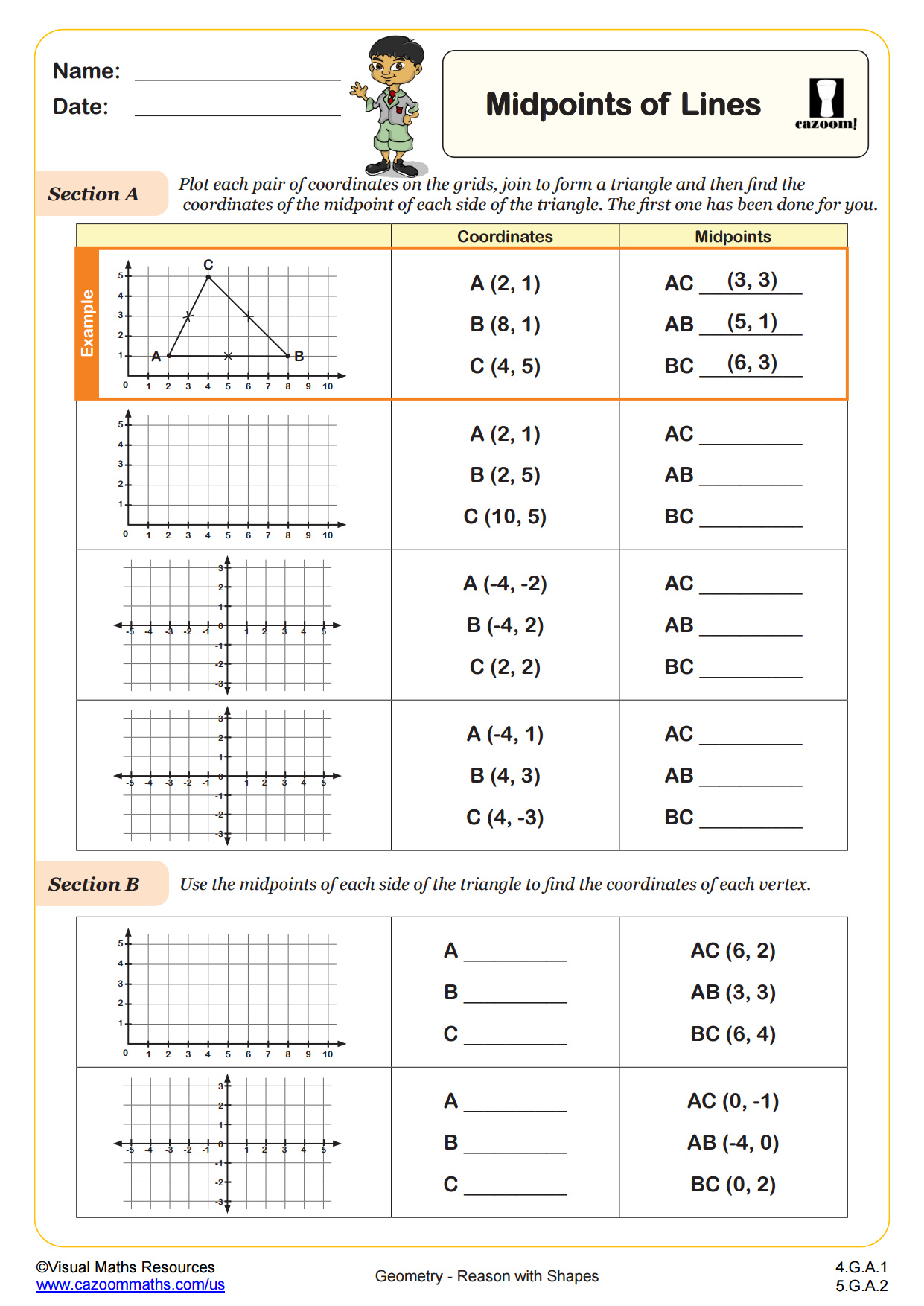
Students lose points on assessments when they confuse midpoint location with simply dividing a number by two without considering both coordinates. Teachers notice breakthrough moments when students realize that finding a midpoint requires averaging both the x-coordinates and y-coordinates separately. Worksheets that include coordinate shapes with clues help students practice this analytical approach while developing precision in mathematical reasoning.
Which Grade Levels Cover Reasoning with Shapes?
This collection focuses specifically on fourth grade elementary school students, addressing the geometry standards introduced at this level. Fourth graders encounter coordinate planes, analyze triangle properties, and work with fractional parts of shapes as part of their grade-level curriculum.
The progression builds systematically within fourth grade, starting with identifying coordinates and moving toward more complex reasoning about midpoints and shape properties. Students who struggle with plotting points on a coordinate plane benefit from additional practice before tackling midpoint problems. Many teachers find that reviewing fraction concepts alongside questions about halves and quarters of shapes reinforces both geometry and fraction understanding simultaneously.
How Do Students Find Midpoints of Lines?
Finding midpoints requires students to identify the exact center point of a line segment by averaging the coordinates of both endpoints. On a coordinate plane, students add the two x-coordinates and divide by two, then repeat the process for the y-coordinates. This introduces fourth graders to a systematic problem-solving approach that combines coordinate geometry with computation skills.
Architects and engineers use midpoint calculations when designing structures that require symmetry or when subdividing spaces equally. Urban planners apply this concept when determining optimal locations for facilities that serve multiple neighborhoods. Students who understand midpoints develop spatial reasoning that appears in blueprint reading, CAD software, and construction planning, making this mathematical skill directly applicable to STEM careers.
How Can Teachers Use These Geometry Worksheets Effectively?
These worksheets provide structured practice that moves from concrete coordinate plotting to abstract reasoning about shape properties. Answer keys allow students to self-check their work during independent practice, helping them identify errors in their reasoning process before misconceptions solidify. The variety of subtopics ensures students develop a well-rounded understanding of geometric reasoning.
Teachers use these worksheets during math centers for differentiated practice, assigning coordinate shapes problems to students ready for challenge while directing others toward triangle properties review. The PDF format makes them practical for homework assignments or quick formative assessments to gauge which students need reteaching. Paired work with these worksheets encourages mathematical discourse as students explain their reasoning to partners, strengthening both their geometry skills and communication abilities.