4th Grade Sudoku Worksheets
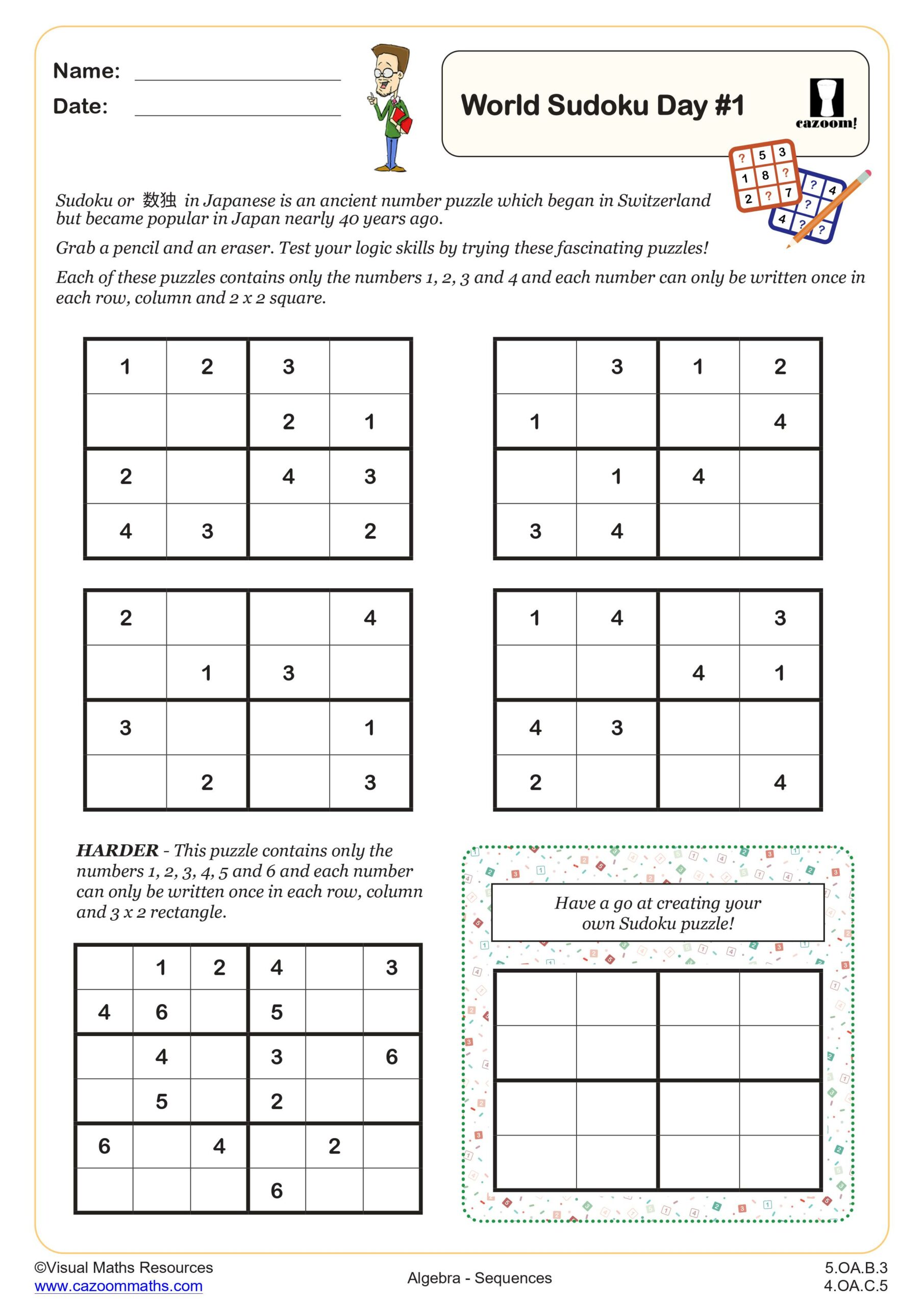
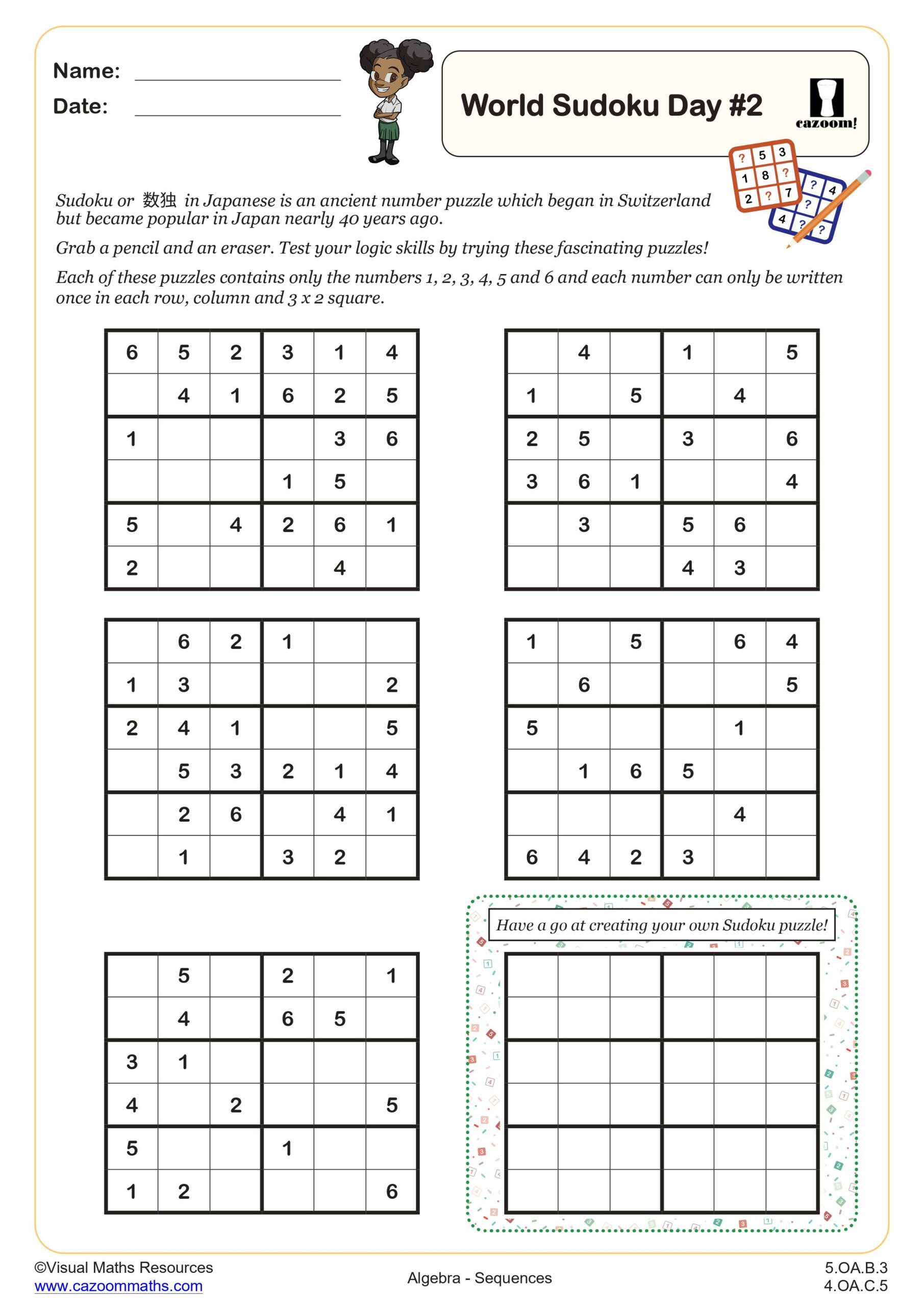
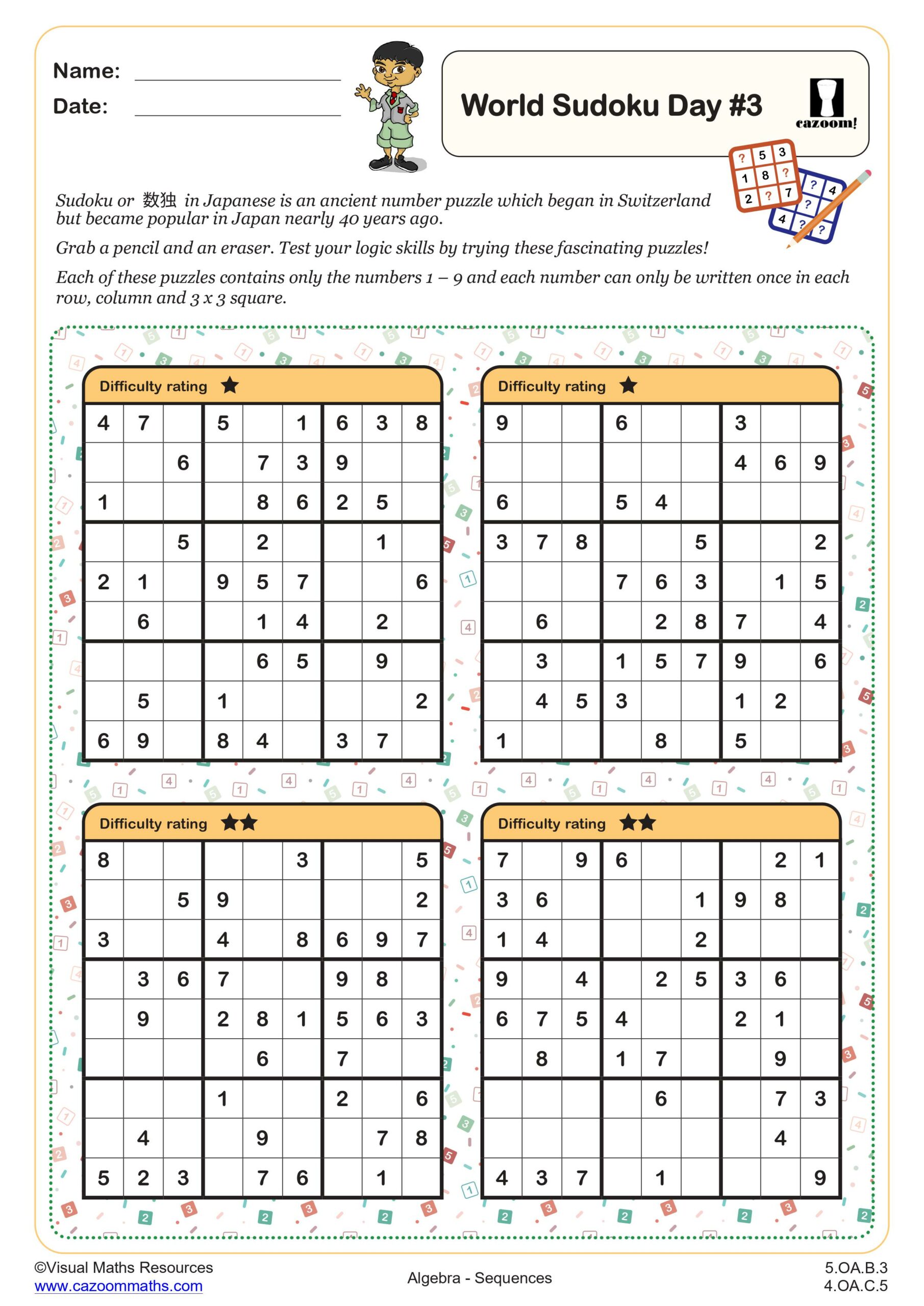
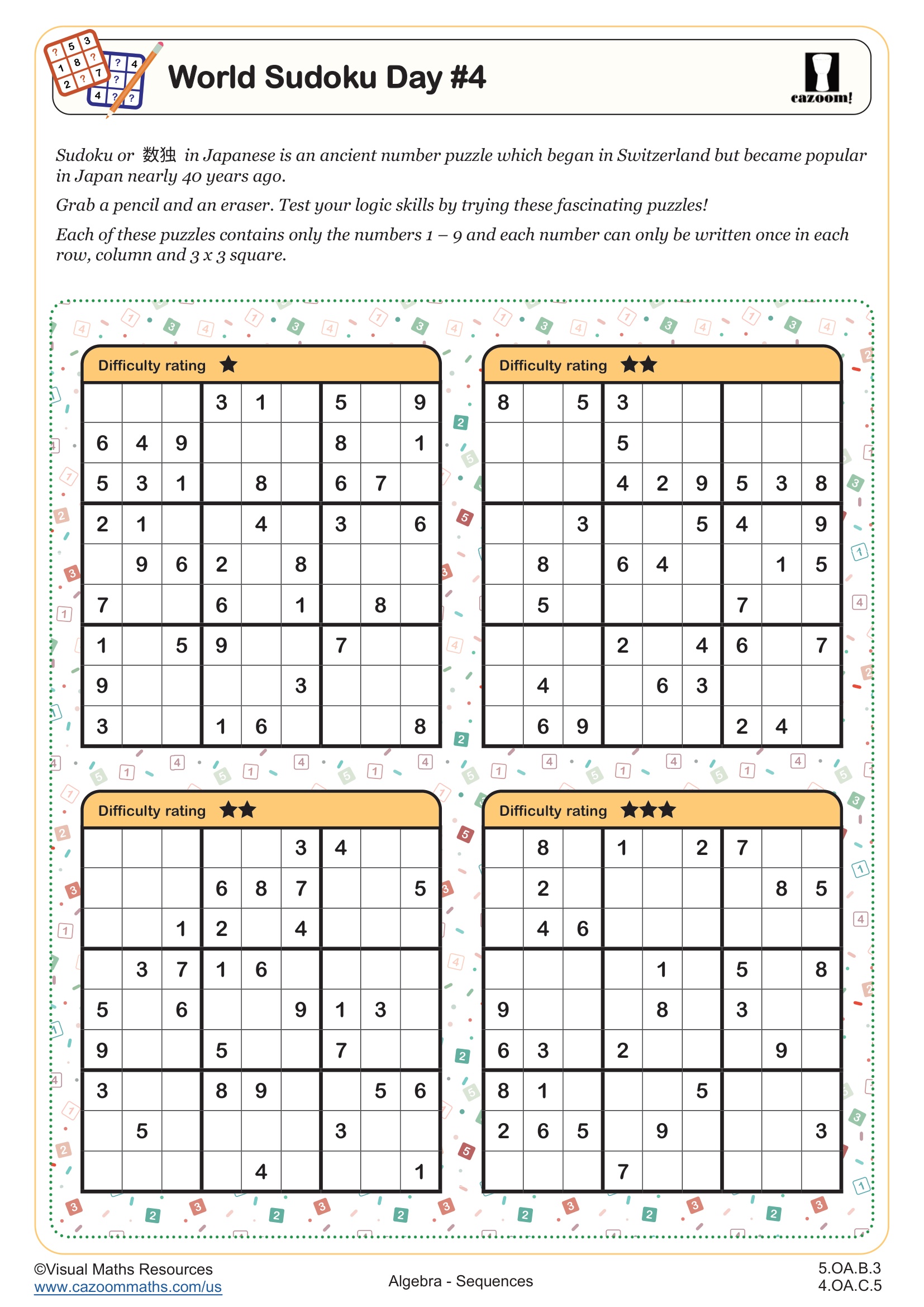
All worksheets are created by the team of experienced teachers at Cazoom Math.
What Math Skills Do Students Practice with Sudoku Puzzles?
Sudoku puzzles develop logical reasoning and number sense without requiring arithmetic calculations. Students practice elimination strategies, recognizing patterns, and using deductive logic to determine which numbers fit into empty cells. These same cognitive skills transfer directly to algebraic thinking, where students must determine unknown values using given constraints and rules.
Teachers frequently observe that struggling students initially fill in random guesses, then erase repeatedly. The breakthrough happens when they recognize that each placement decision must be based on evidence from what's already on the grid. This shift from guessing to systematic reasoning marks an important cognitive development that supports mathematical proof and justification skills in later grades.
What Grade Levels Use Sudoku Worksheets?
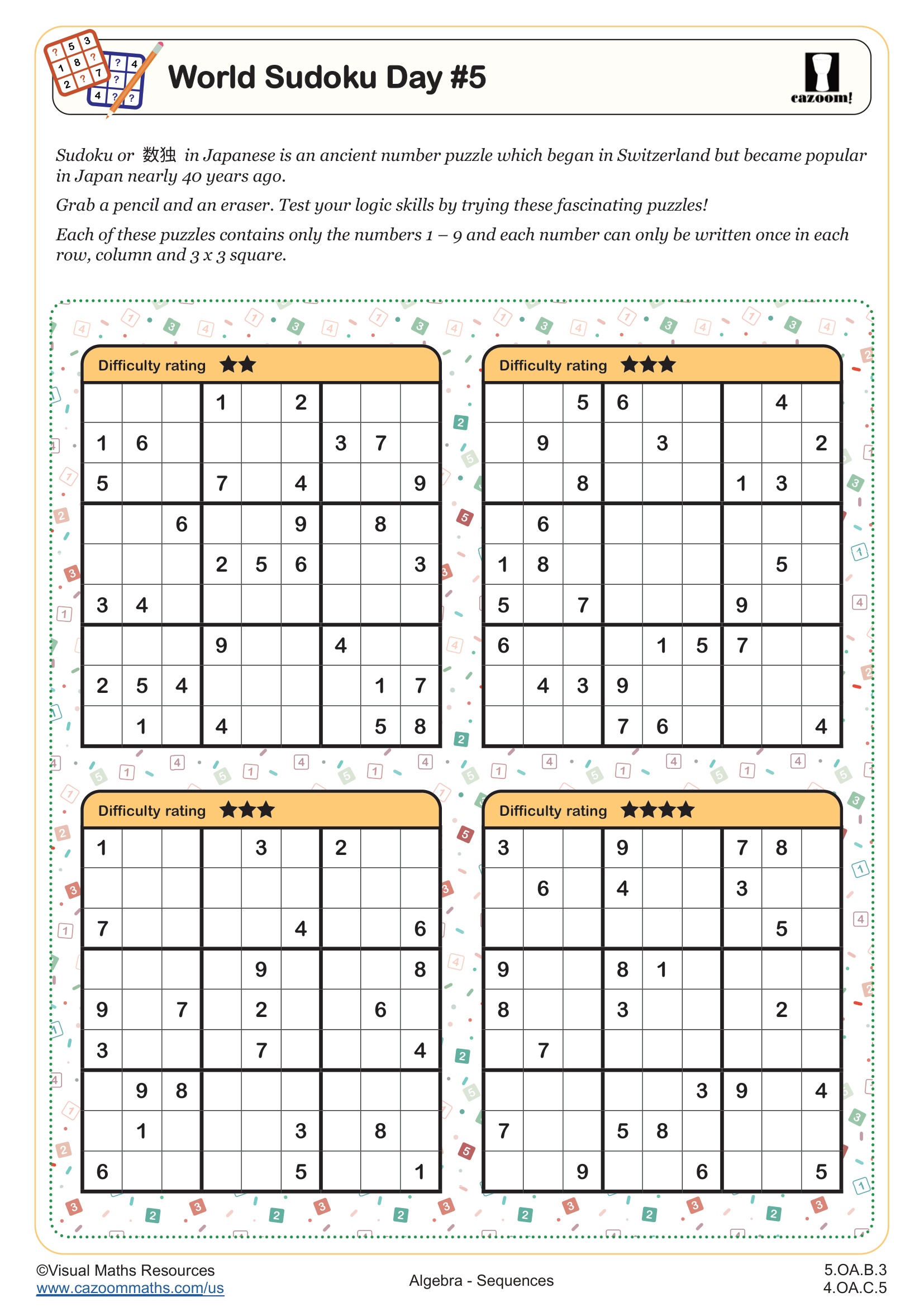
These Sudoku worksheets target 4th grade students in elementary school, featuring grid sizes and difficulty levels appropriate for this developmental stage. Fourth graders have developed sufficient number recognition and visual scanning abilities to track numbers across rows, columns, and boxes simultaneously, making this the ideal time to introduce structured logic puzzles.
The difficulty progression within the collection accommodates varying skill levels within a single classroom. Early puzzles include more pre-filled numbers to guide students through the logical process, while later puzzles require more independent reasoning. This scaffolded approach lets teachers differentiate instruction, giving students who catch on quickly more challenging puzzles while others build confidence with supported practice.
How Do Sudoku Puzzles Connect to Problem-Solving Strategies?
Sudoku puzzles teach systematic problem-solving through constraint satisfaction—determining solutions that meet multiple requirements simultaneously. Students learn to scan rows, columns, and boxes to eliminate possibilities, a strategy mathematicians call the process of elimination. This mirrors how scientists narrow down hypotheses by testing what doesn't work, a fundamental method in experimental design.
Data analysts and computer programmers use these exact logical reasoning skills daily. Database designers ensure information doesn't duplicate across systems (similar to no repeated numbers in a row), and software engineers debug code by systematically checking where constraints are violated. Students practicing Sudoku build the foundational logic skills that power STEM careers, learning to work within defined rules to find solutions that satisfy all conditions.
How Can Teachers Use These Sudoku Worksheets Effectively?
The worksheets provide structured logic practice that requires no teacher demonstration once students understand the basic rules. The included answer keys let students check their completed puzzles independently, building self-assessment skills. Teachers can display one puzzle on a document camera to model scanning techniques and explaining why certain numbers must go in specific cells, then release students to work independently.
Many teachers use Sudoku puzzles as fast finisher activities, allowing students who complete assignments early to engage in meaningful mathematical thinking rather than waiting idly. The puzzles work well in math centers rotations, as morning warm-ups, or as calm-down activities before transitions. Some teachers incorporate them into Friday enrichment time or offer them as alternative homework options, giving students low-pressure opportunities to build persistence and logical reasoning outside traditional computation practice.