4th Grade Units and Dimensions Worksheets
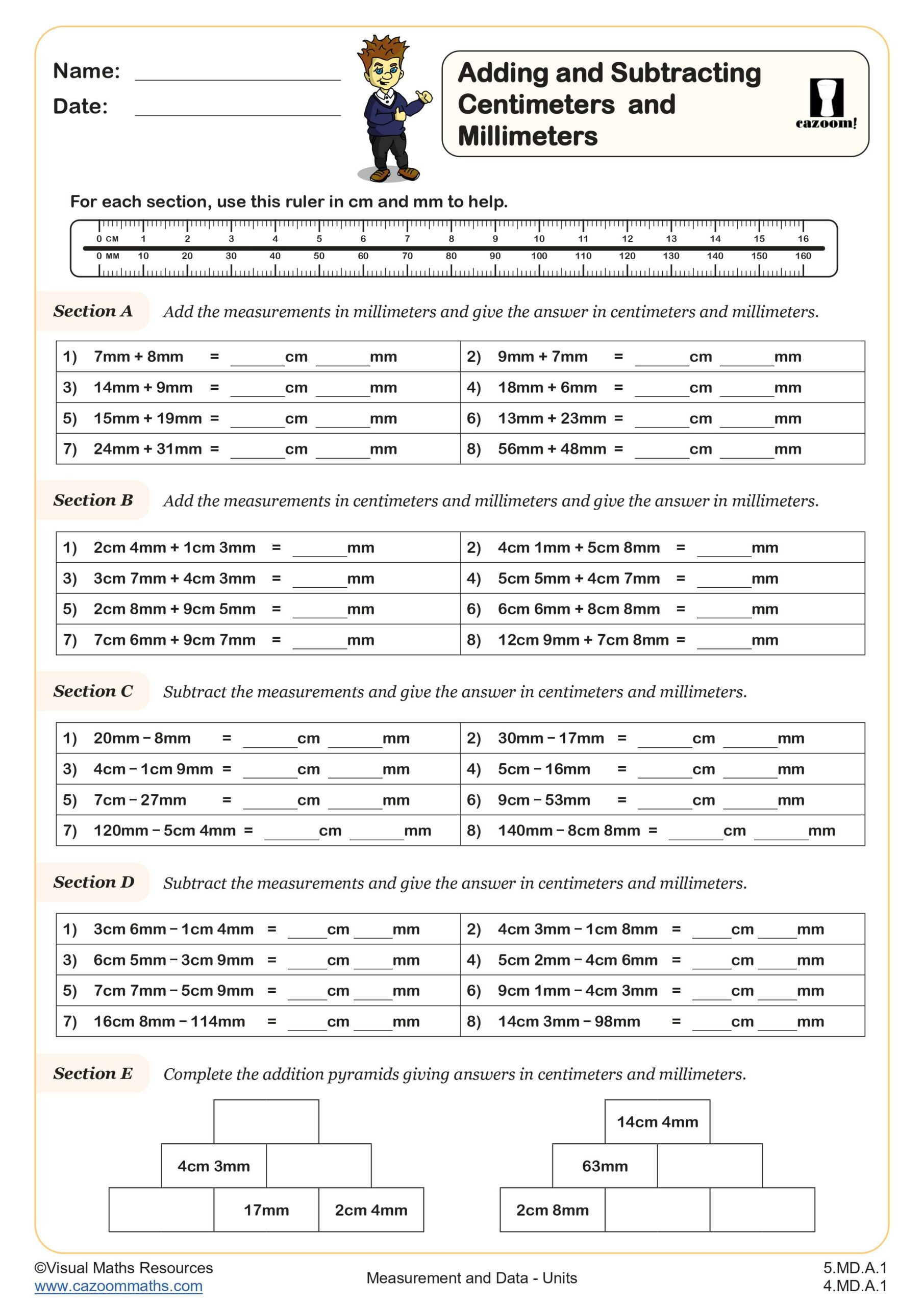
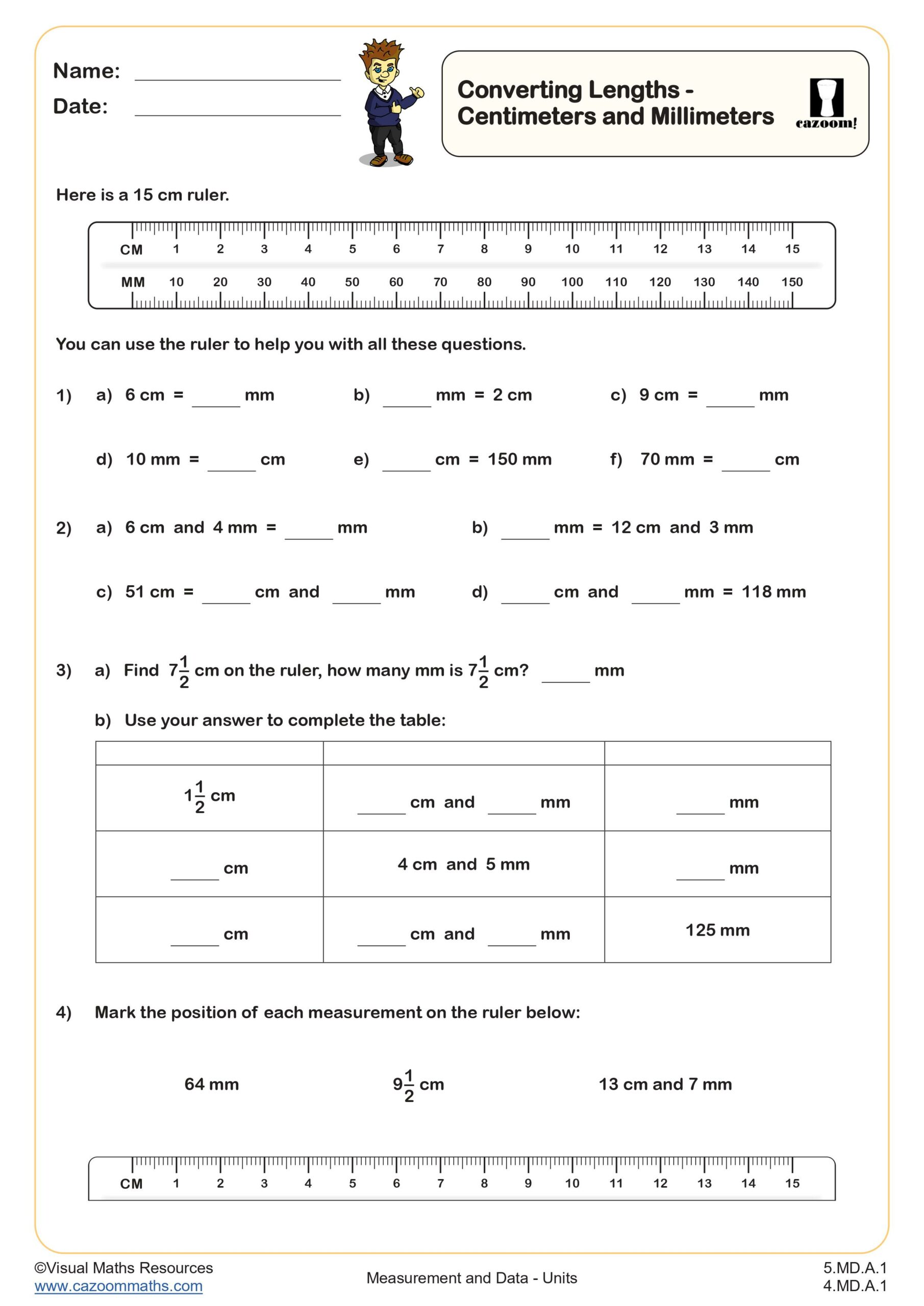
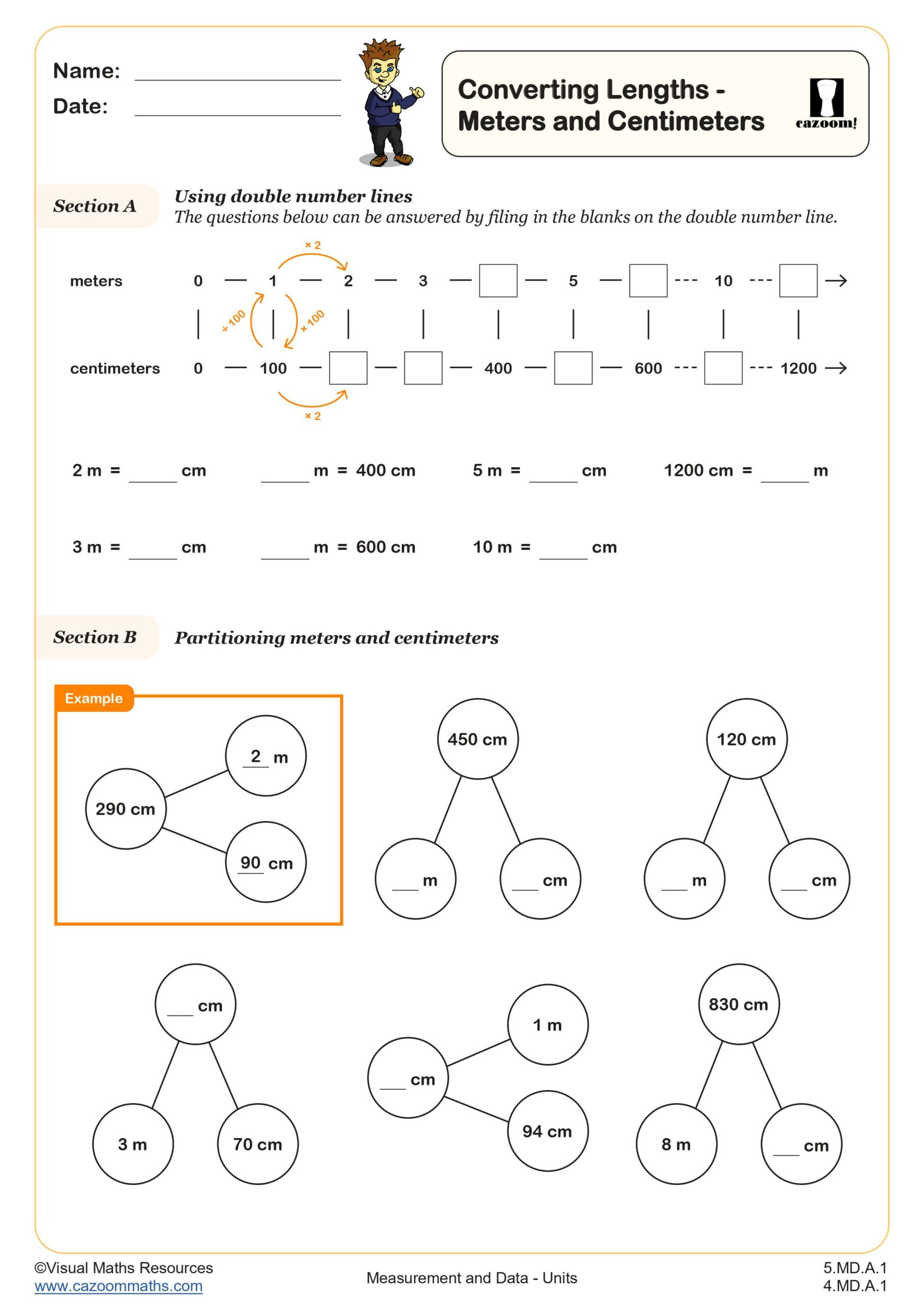
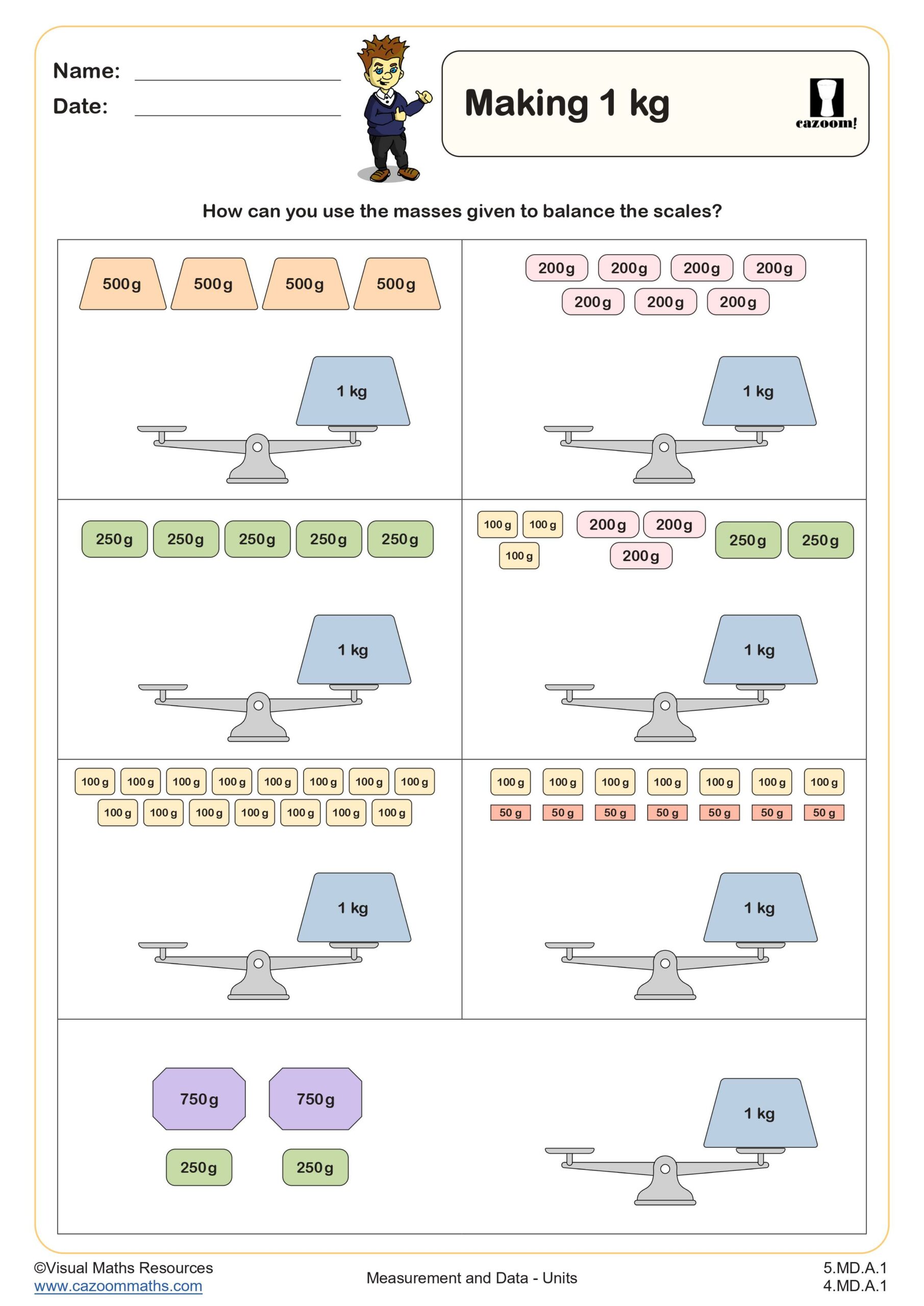
All worksheets are created by the team of experienced teachers at Cazoom Math.
What are units and dimensions in 4th grade math?
Units and dimensions in 4th grade focus on understanding and working with metric length measurements, specifically meters, centimeters, and millimeters. Students learn that the metric system operates on a base-ten structure, which connects directly to their place value knowledge. They practice converting between units (knowing that 1 meter equals 100 centimeters and 1 centimeter equals 10 millimeters) and performing operations with measurements that may include different units in the same problem.
A common error occurs when students confuse which direction to move the decimal point during conversions. Many students assume that converting from larger units to smaller units means dividing, when the opposite is true—converting 5 meters to centimeters requires multiplying by 100 to get 500 centimeters. Teachers find that using visual models like meter sticks marked with centimeter divisions helps students internalize these relationships before moving to abstract conversions.
Which grade levels learn units and dimensions?
These worksheets are designed specifically for 4th grade students in elementary school, aligning with Common Core standards that introduce metric measurement conversions and operations with measurement quantities. At this level, students are expected to understand the relative sizes of measurement units within the metric system and use the four operations to solve word problems involving distances and lengths.
The worksheets progress in difficulty from straightforward single-step conversions (changing meters to centimeters) to more complex problems requiring students to first convert units before adding or subtracting. Teachers notice that students gain confidence when they master simple conversions before tackling problems that combine conversion with computation, so the scaffolded approach helps build procedural fluency while maintaining conceptual understanding of why conversions work.
Why do students learn about elliptical orbits in a measurement unit?
Elliptical orbits appear in these worksheets as an application context where students measure and calculate distances related to planetary motion using metric units. Students might work with problems involving the closest and farthest distances a planet travels from the sun during its orbit, requiring them to convert between larger and smaller metric units to make meaningful comparisons or perform calculations with these astronomical measurements.
This connection to space science makes measurement conversions relevant to real STEM contexts. Astronomers and aerospace engineers constantly work with vast distances measured in different units, from millimeters in satellite component design to kilometers in orbital calculations. When students calculate the difference between a planet's perihelion and aphelion distances (requiring unit conversions), they're using the same mathematical reasoning that scientists employ when analyzing data from space missions or designing spacecraft trajectories.
How do these worksheets help students practice measurement conversions?
The worksheets provide structured practice that moves from isolated conversion skills to applied problems requiring multiple steps. Students encounter problems that isolate converting meters to centimeters or centimeters to millimeters before progressing to mixed operations where they must add 3 meters 45 centimeters plus 2 meters 78 centimeters, requiring both conversion thinking and regrouping skills. The complete answer keys allow students to check their work independently and identify exactly where errors occurred in multi-step problems.
Teachers use these worksheets effectively for differentiated instruction during small-group work, assigning different subtopic sheets based on diagnostic assessment results. Some teachers find success using them as warm-up activities to maintain measurement fluency throughout the year, while others incorporate them into science class when students need to measure and record observations in lab activities. The sheets work well for homework because parents can reference the answer keys to support learning at home.