5th Grade Area and Perimeter Worksheets
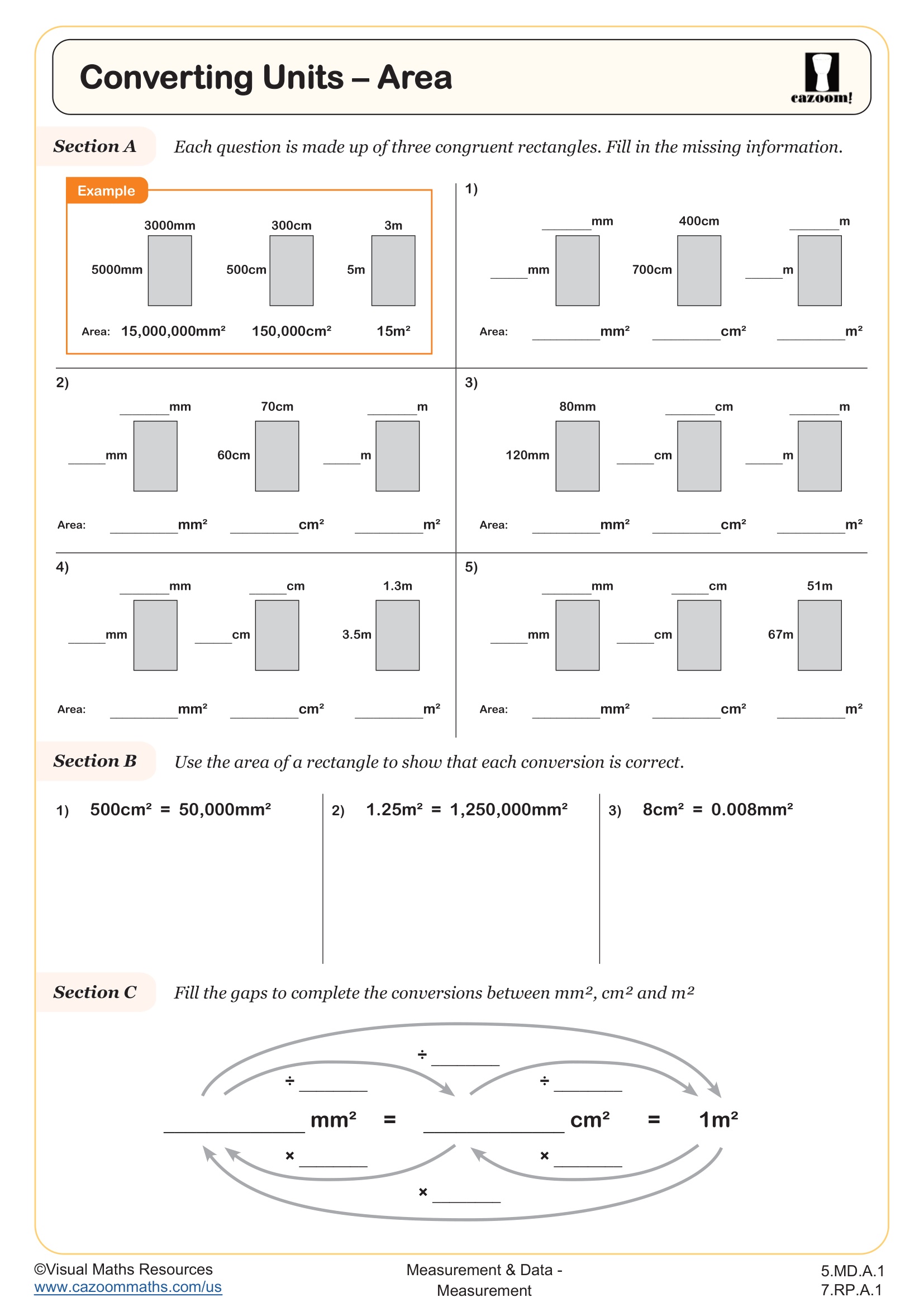
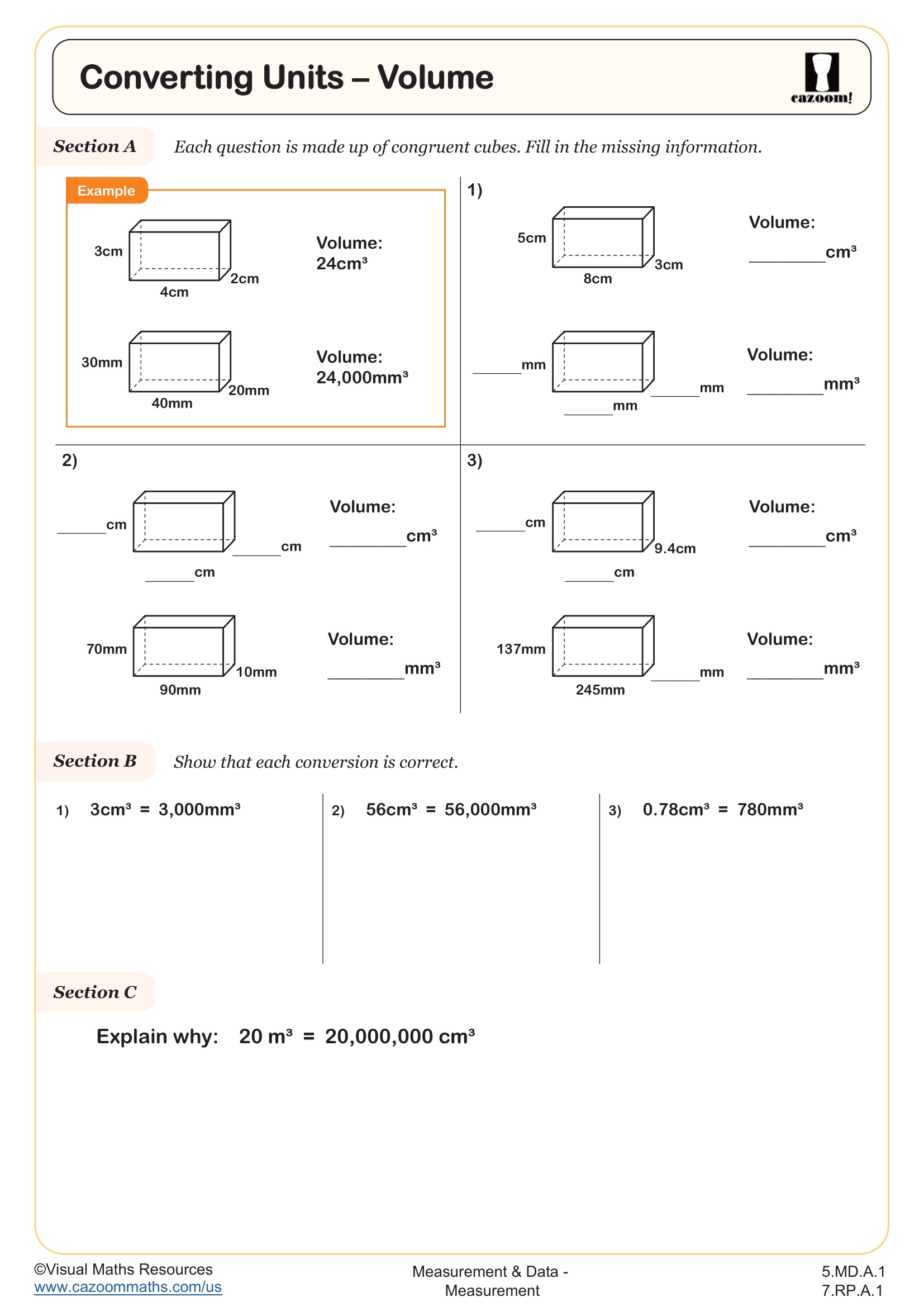
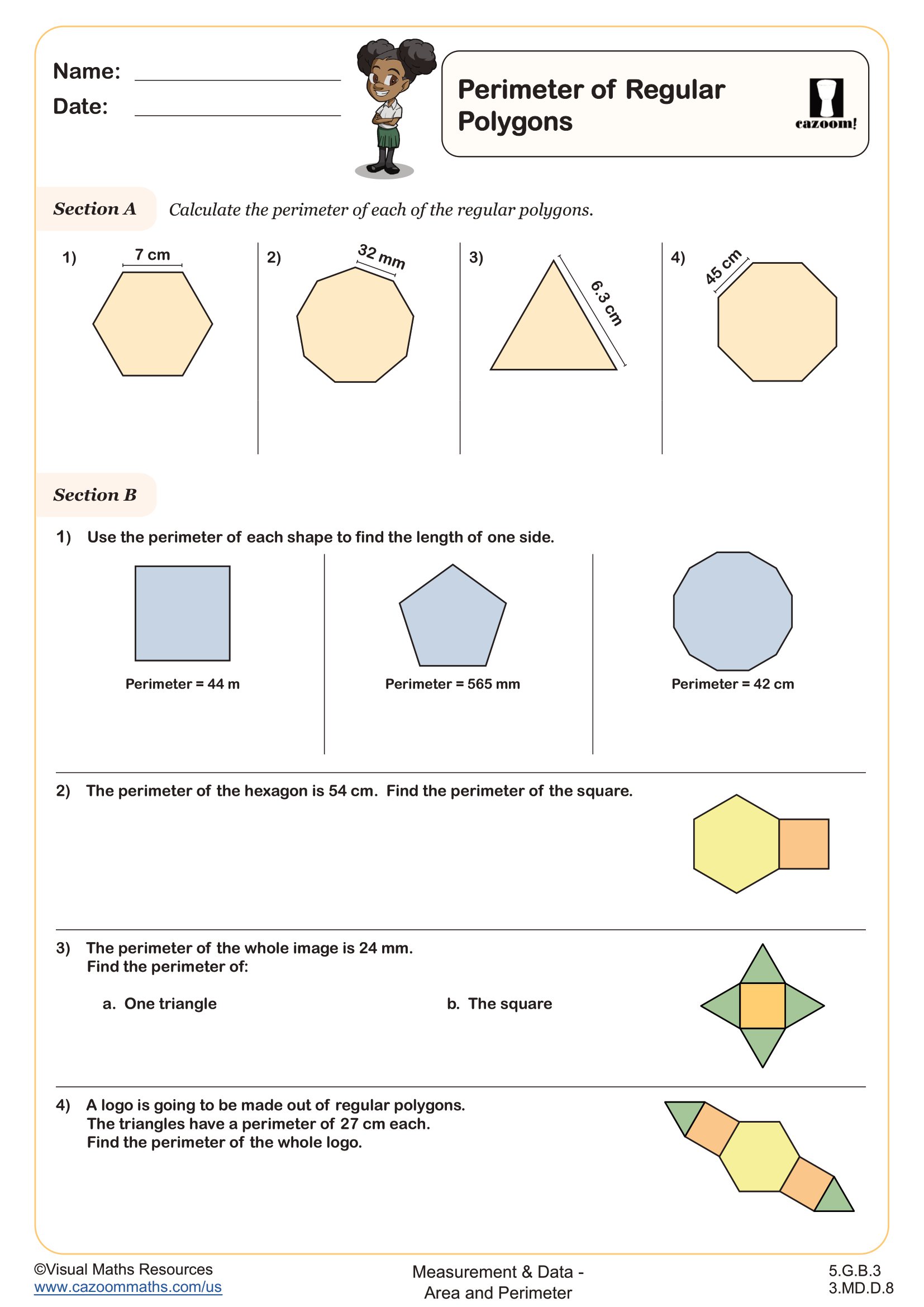
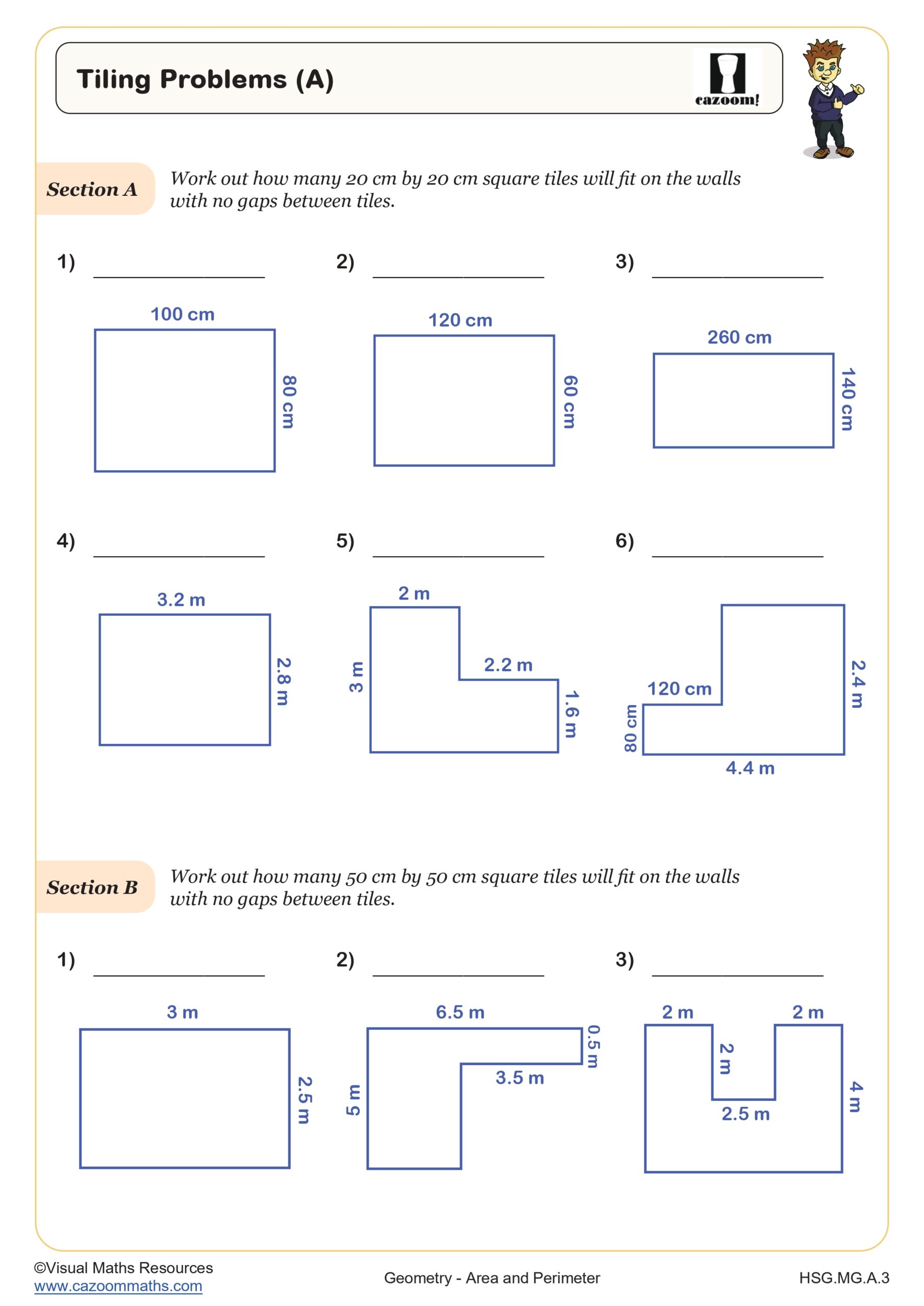
All worksheets are created by the team of experienced teachers at Cazoom Math.
What's the difference between area and perimeter?
Perimeter measures the total distance around the outside of a shape, expressed in linear units like inches or centimeters. Area measures the space inside a shape, expressed in square units like square feet or square meters. Fifth graders learn specific formulas for each: perimeter of a rectangle is 2(length + width), while area is length × width.
A common error occurs when students apply the wrong units—writing "12 inches" for area instead of "12 square inches." Students lose points on standardized tests when they calculate correctly but forget to square their units for area problems. Teachers often use grid paper to make the distinction visual: counting squares inside a shape for area versus tracing the outline for perimeter helps cement the difference.
What grade level learns area and perimeter?
These worksheets target fifth grade elementary school students, aligning with standards that require calculating area and perimeter of various two-dimensional shapes. Fifth graders work with rectangles, triangles, and circles, applying formulas and solving problems involving shaded regions and composite figures.
The progression builds from basic rectangle perimeter in third and fourth grades to more complex shapes and multi-step problems in fifth grade. Students at this level tackle right triangle area using the formula A = ½bh and calculate areas of shaded regions by subtracting one shape's area from another. Teachers notice that students who struggle with fraction multiplication often find circle area problems challenging since π creates fractional or decimal answers.
How do you find the area of shaded regions in circles?
Area of shaded regions requires students to find the area of a larger shape, then subtract the area of a smaller shape inside it. For circles, students typically calculate the area of the full circle using A = πr², then subtract the area of an inner circle or other shape. Some problems provide clues rather than direct measurements, requiring students to use relationships between radius and diameter or apply proportional reasoning.
This skill connects directly to real-world design and engineering applications. Architects calculate shaded regions when designing circular patios with fountain cutouts, and engineers determine material needs for washers or gaskets by finding the difference between outer and inner circle areas. Medical imaging technicians use similar subtraction methods to measure tissue areas in circular cross-sections, making this a relevant STEM skill beyond the classroom.
How can teachers use these area and perimeter worksheets effectively?
The worksheets progress from foundational formula sheets that students can reference during initial practice to complex shaded region problems that assess deeper understanding. Formula sheets work well as desk references during early lessons, while mixed problem sets help students decide which formula applies to each situation—a critical thinking skill that standardized tests frequently assess.
Many teachers use these worksheets for differentiated math centers, assigning basic perimeter practice to students still building fluency while challenging advanced learners with circle shaded regions. The answer keys make them practical for homework that students can self-check or for intervention groups where immediate feedback accelerates learning. Teachers also find them useful for spiral review, cycling back to area and perimeter throughout the year to maintain skills before state assessments.