5th Grade Constructions Worksheets
All worksheets are created by the team of experienced teachers at Cazoom Math.
What Are Geometric Constructions in 5th Grade Math?
Geometric constructions involve creating precise shapes and figures using only a compass and straightedge, without relying on measurement tools like protractors or rulers with numbers. In 5th grade, students learn foundational construction techniques including perpendicular bisectors (lines that cut segments exactly in half at right angles), angle bisectors (rays that divide angles into two equal parts), and various triangle constructions based on given side lengths or angle measures.
A common error occurs when students press too hard with their compass, causing the point to slip and creating arcs that don't intersect properly. Teachers find that demonstrating how to hold the compass with light, consistent pressure and keeping the same radius setting throughout a construction significantly improves accuracy. Students also need reminders to leave construction marks visible rather than erasing them, as these marks demonstrate their understanding of the procedure.
Which Grade Levels Learn Geometric Constructions?
These construction worksheets target 5th grade students in elementary school, introducing them to formal geometric construction methods that prepare them for middle school geometry. At this level, constructions connect directly to Common Core standards addressing geometric measurement, properties of shapes, and coordinate plane work that students encounter in upper elementary grades.
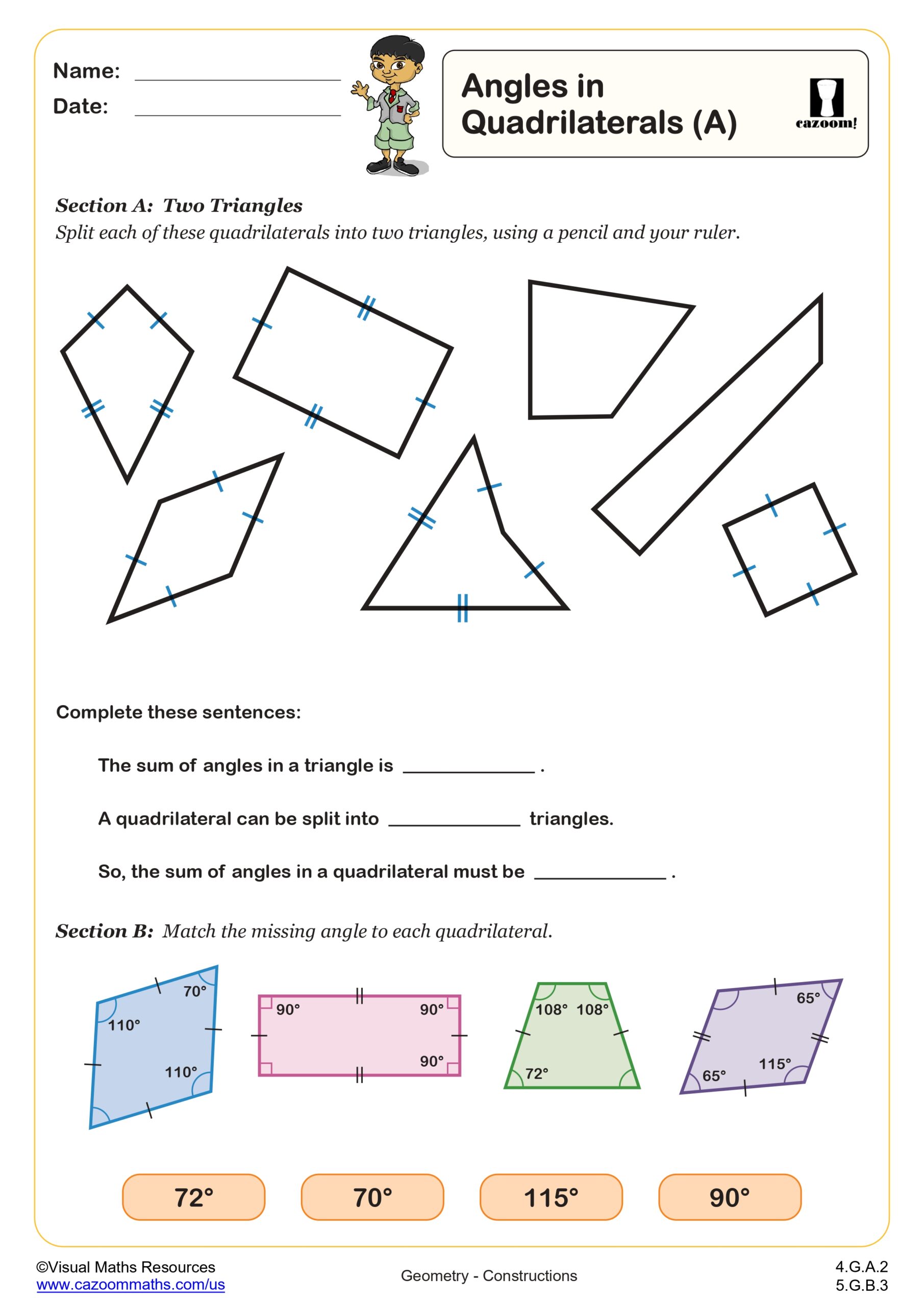
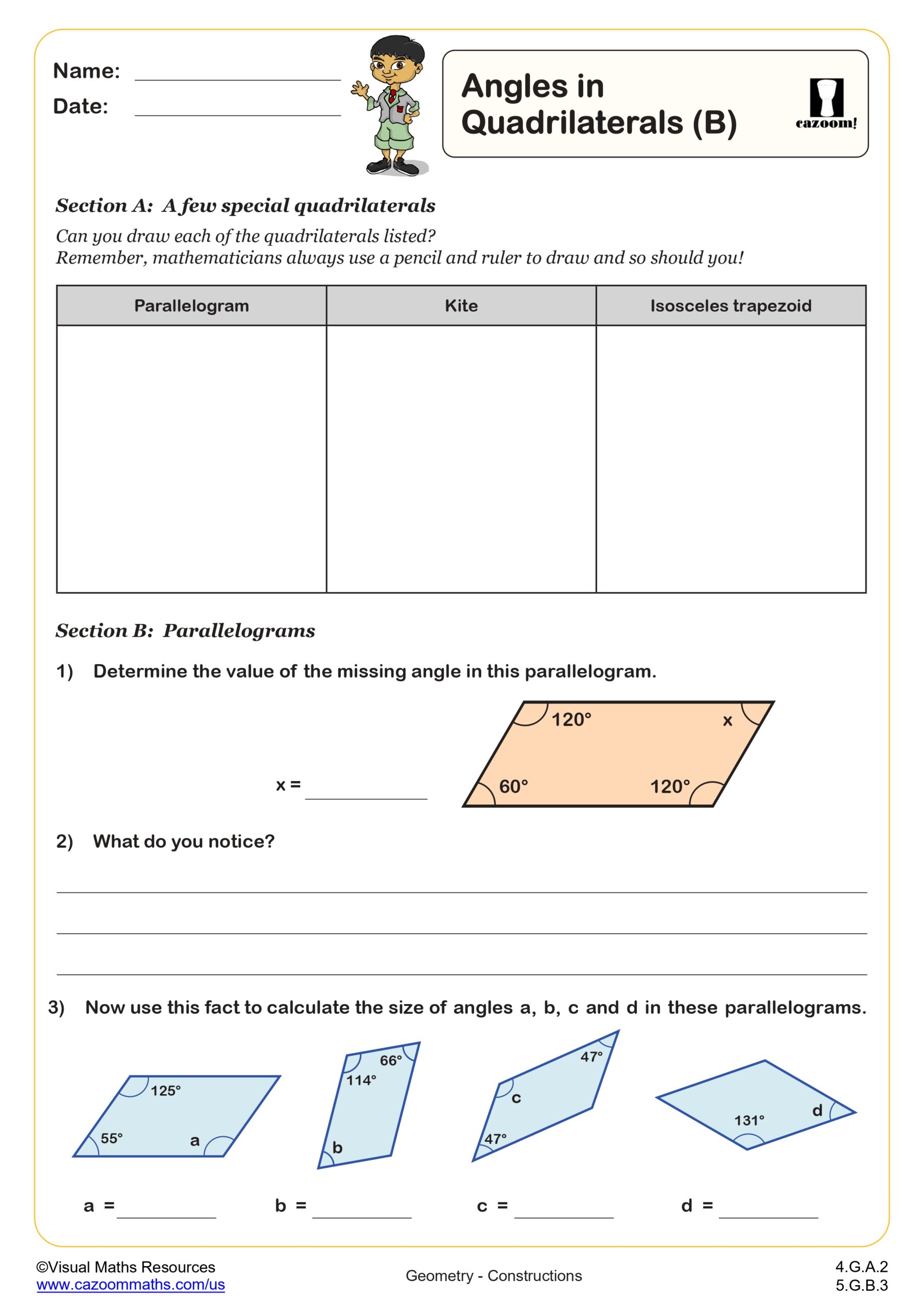
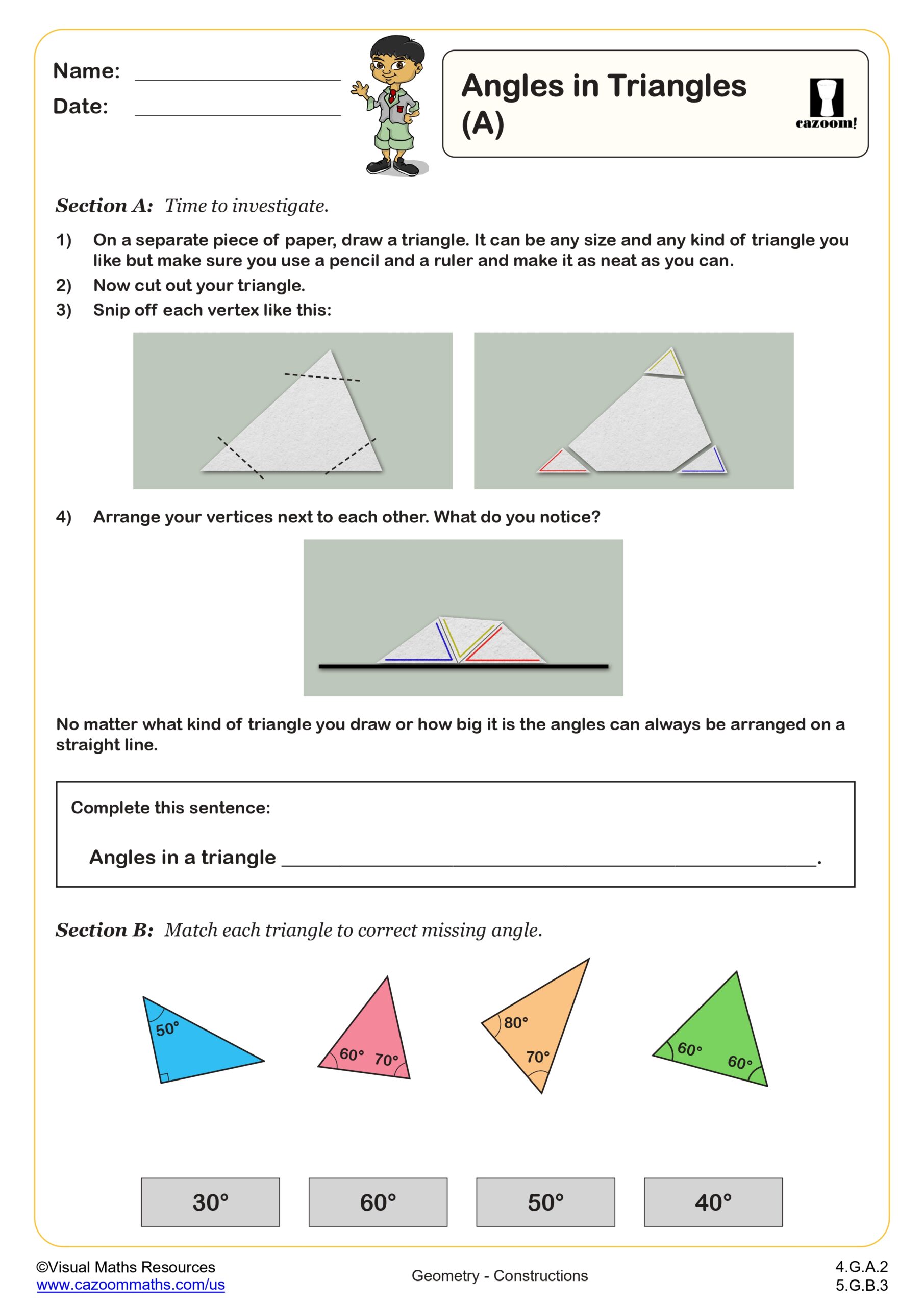
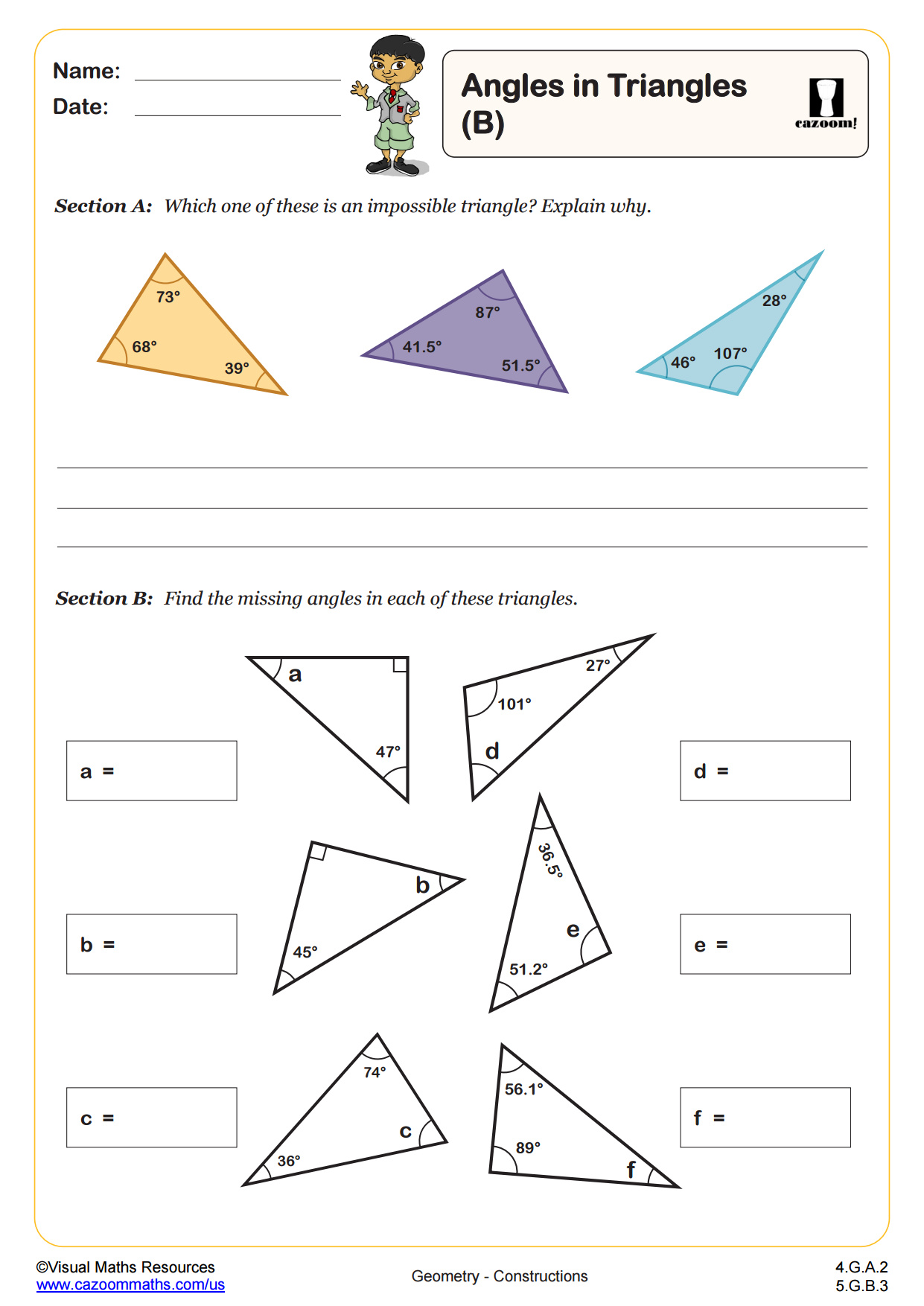
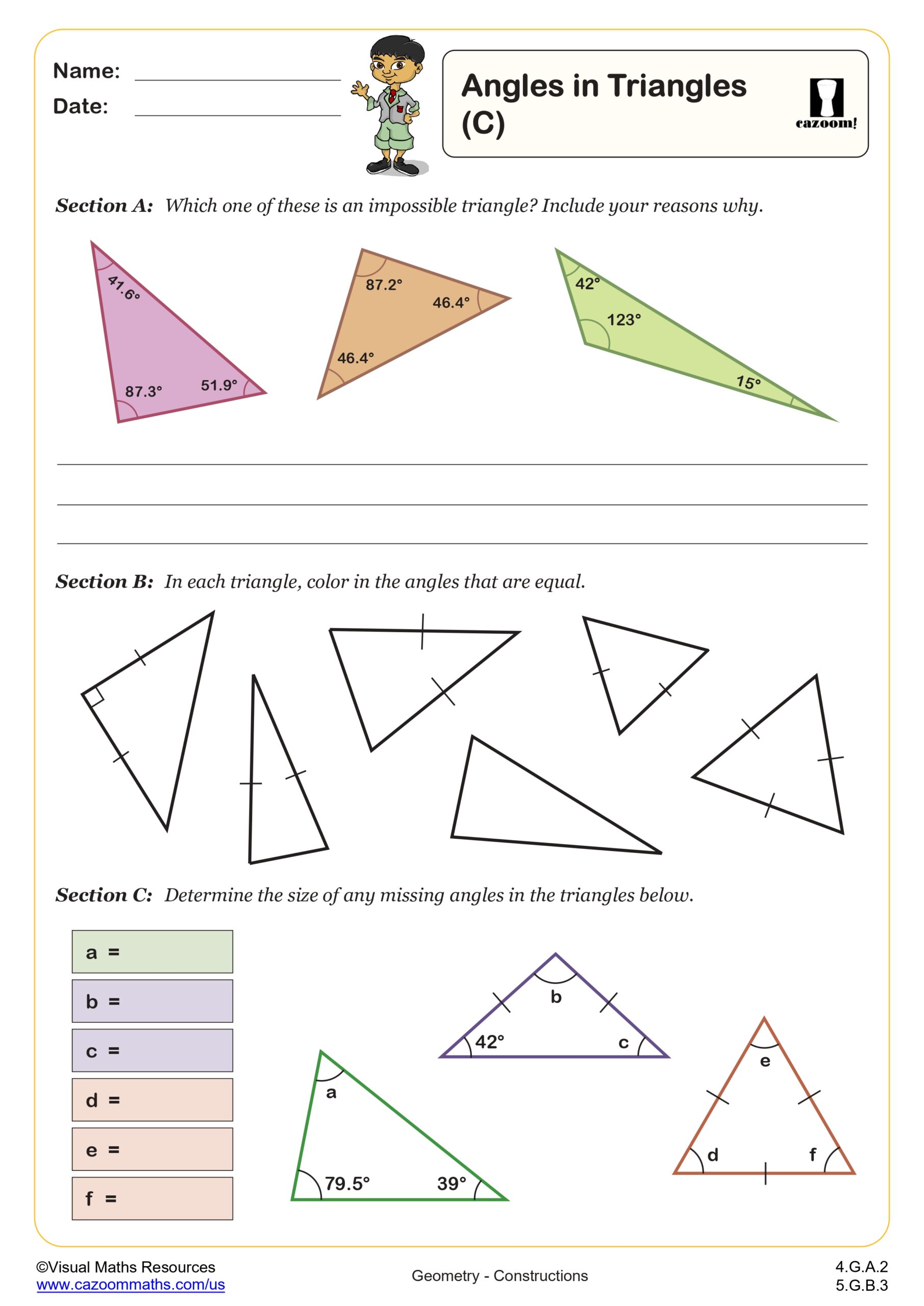
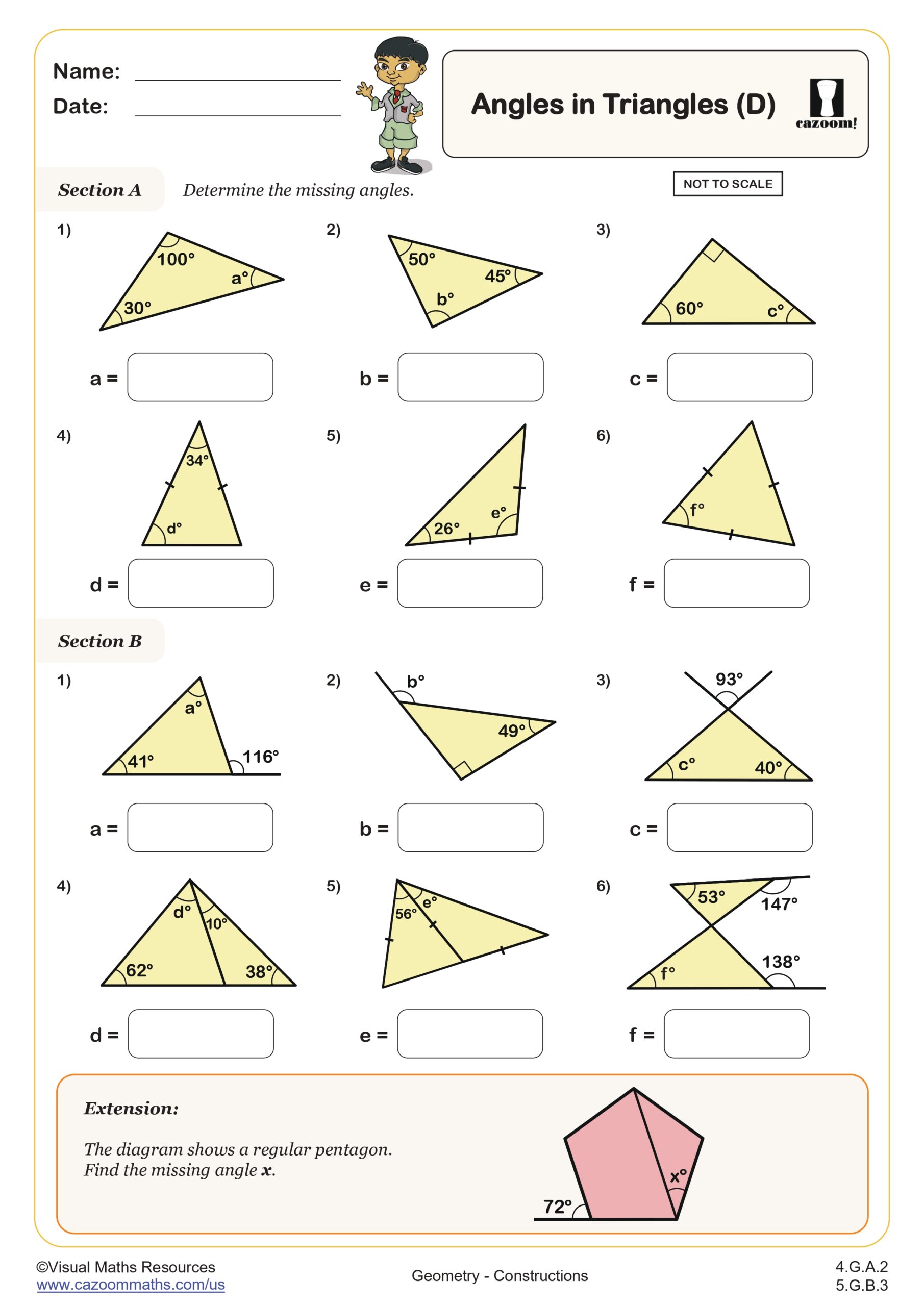
The progression within 5th grade moves from simpler tasks like constructing perpendicular and angle bisectors to more complex challenges involving triangle constructions and mixed practice problems. Students begin with guided constructions that break down each step, then advance to problems requiring them to select appropriate techniques independently. Later worksheets incorporate angle relationships in triangles and quadrilaterals, asking students to both construct figures and calculate missing angle measures using properties they've learned.
How Do Students Construct Perpendicular Bisectors?
Constructing a perpendicular bisector requires students to place the compass point at one endpoint of a line segment, set the radius to more than half the segment's length, and draw arcs above and below the segment. They repeat this process from the other endpoint with the same radius setting, creating two intersection points. Connecting these intersection points produces a line that cuts the original segment exactly in half at a 90-degree angle.
Architects and engineers use perpendicular bisector principles when establishing center lines for symmetric structures or finding equidistant points in construction projects. Surveyors apply these concepts when dividing land parcels, and graphic designers rely on bisector techniques when creating balanced layouts. Students who understand perpendicular bisector construction gain insight into how precise geometric relationships appear in bridge design, building facades, and even smartphone screen layouts where symmetry matters.
How Can Teachers Use These Construction Worksheets Effectively?
The worksheets provide step-by-step scaffolding that helps students develop construction skills systematically, starting with clearly labeled diagrams and progressing to problems where students must determine which construction technique applies. Answer keys show completed constructions with all construction marks visible, allowing teachers to verify not just final answers but also proper procedure. This makes it easier to identify whether errors stem from compass technique, incorrect sequencing, or misunderstanding of geometric properties.
Many teachers use these worksheets during guided practice sessions where students work through constructions simultaneously, pausing to compare their work with neighbors and troubleshoot issues together. The mixed practice sheets work well for stations or centers where students rotate through different construction challenges. Some teachers assign specific construction types for homework after demonstrating the technique in class, while others use the angle relationship problems as formative assessments to check whether students can apply construction skills alongside their knowledge of triangle and quadrilateral properties.