5th Grade Coordinates Worksheets
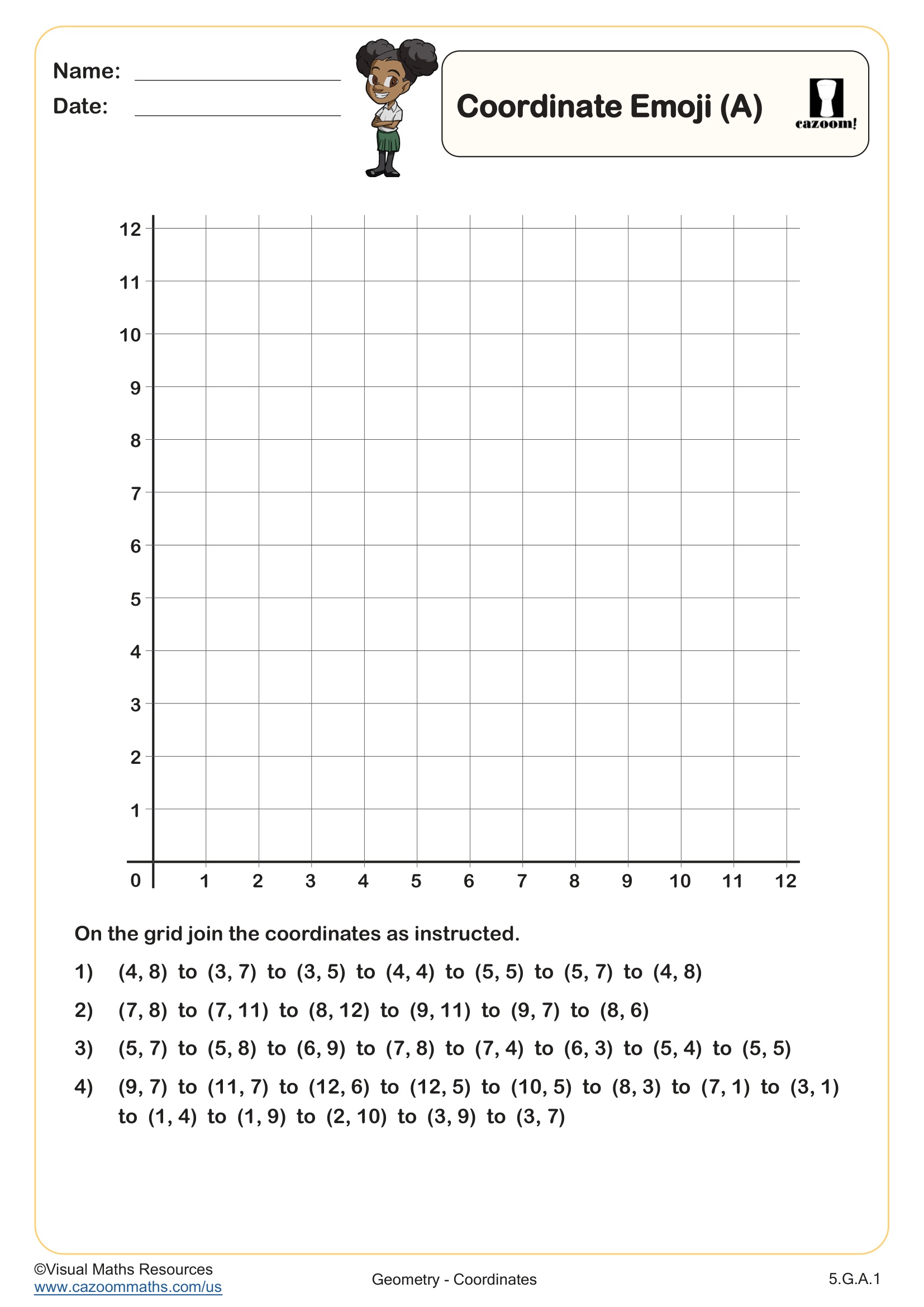
Coordinate Emoji (A)
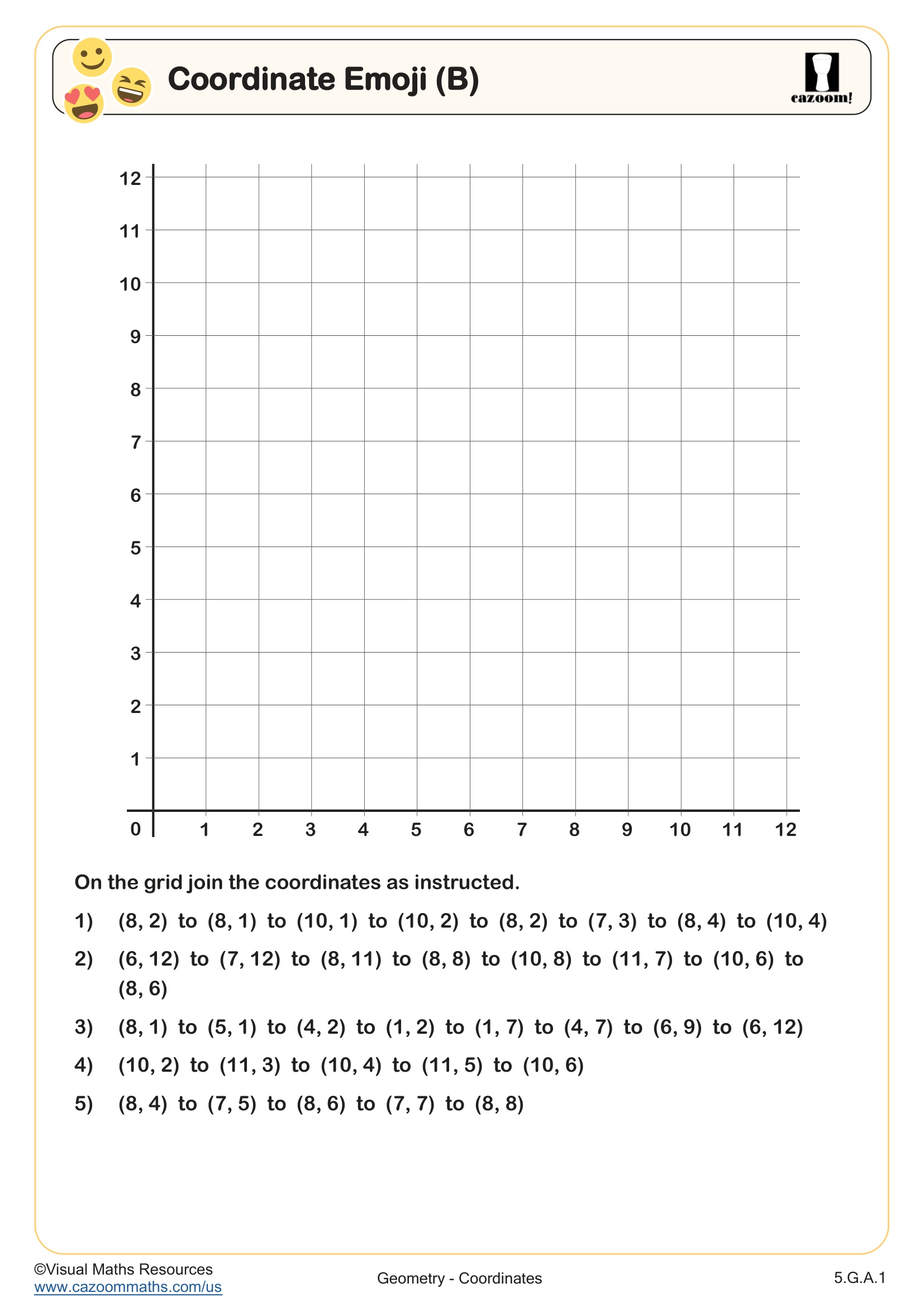
Coordinate Emoji (B)
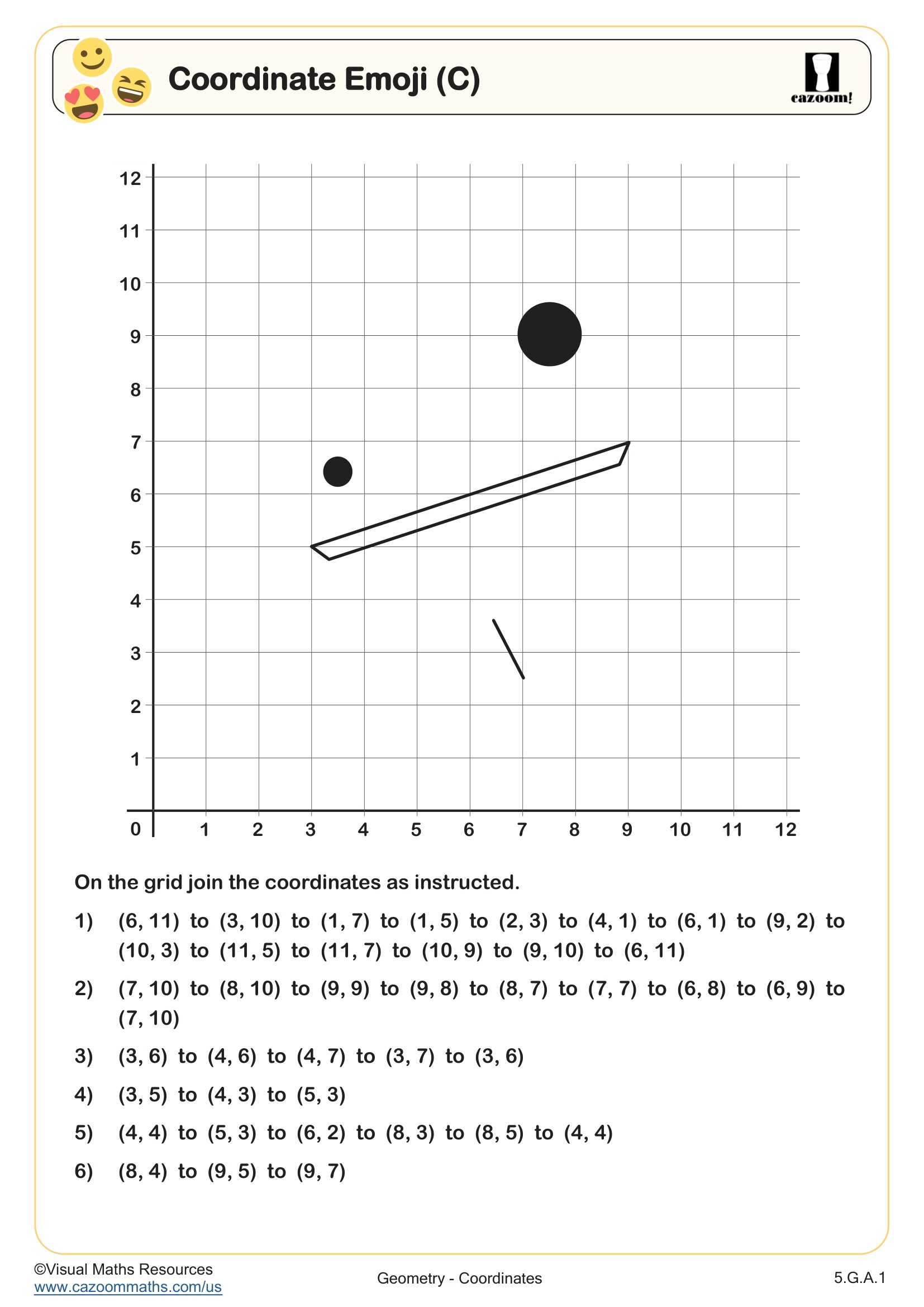
Coordinate Emoji (C)
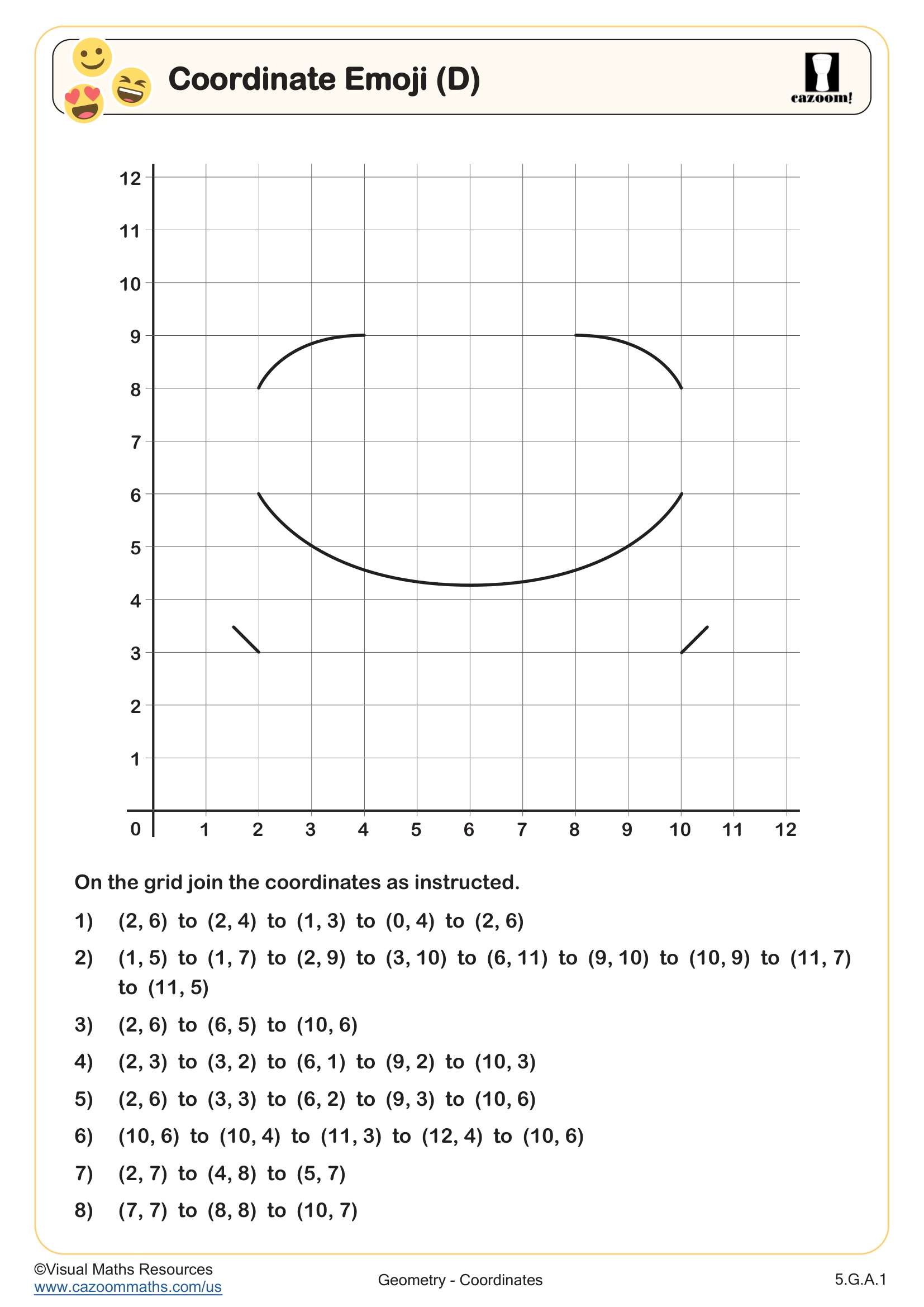
Coordinate Emoji (D)
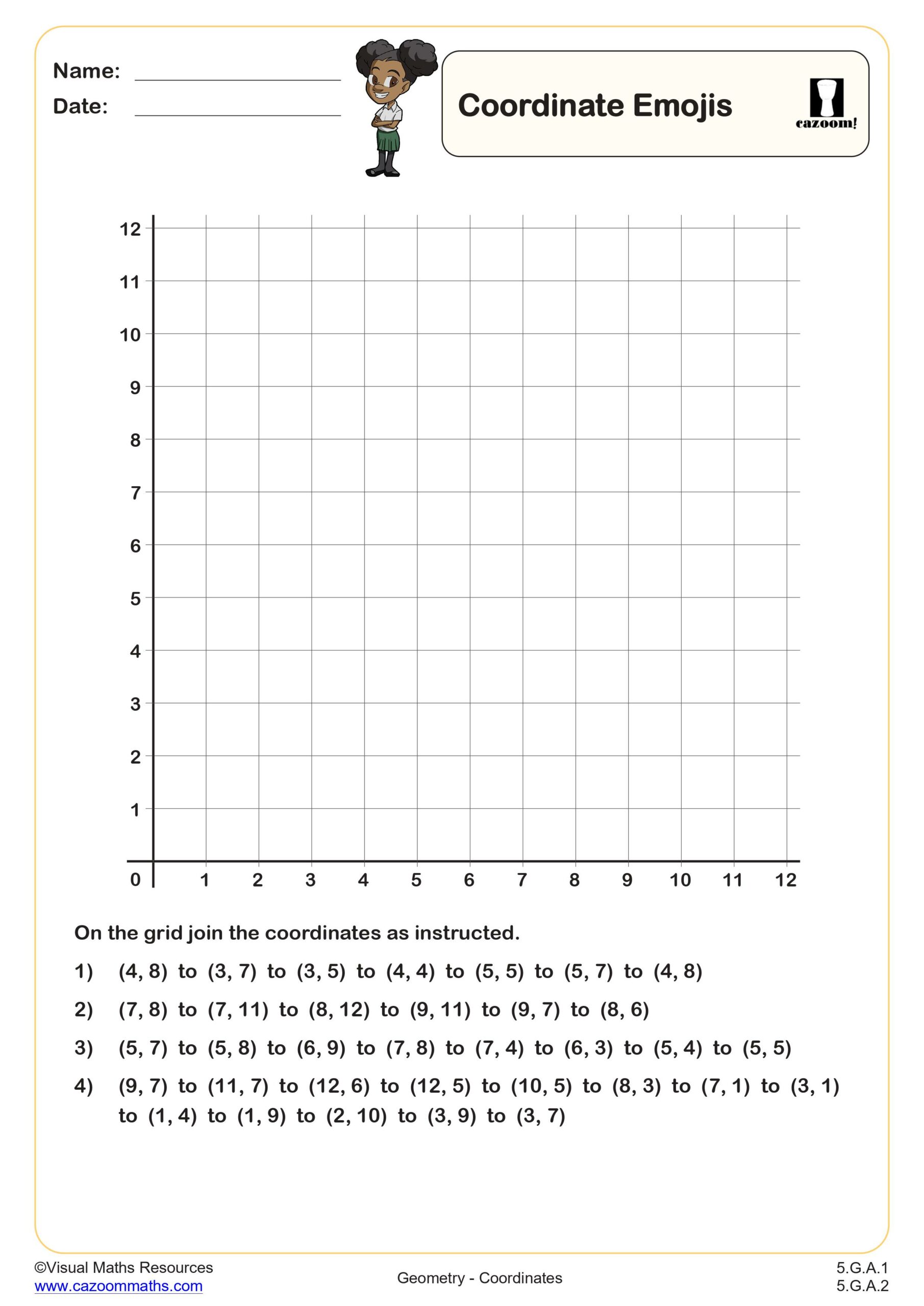
Coordinate Emojis
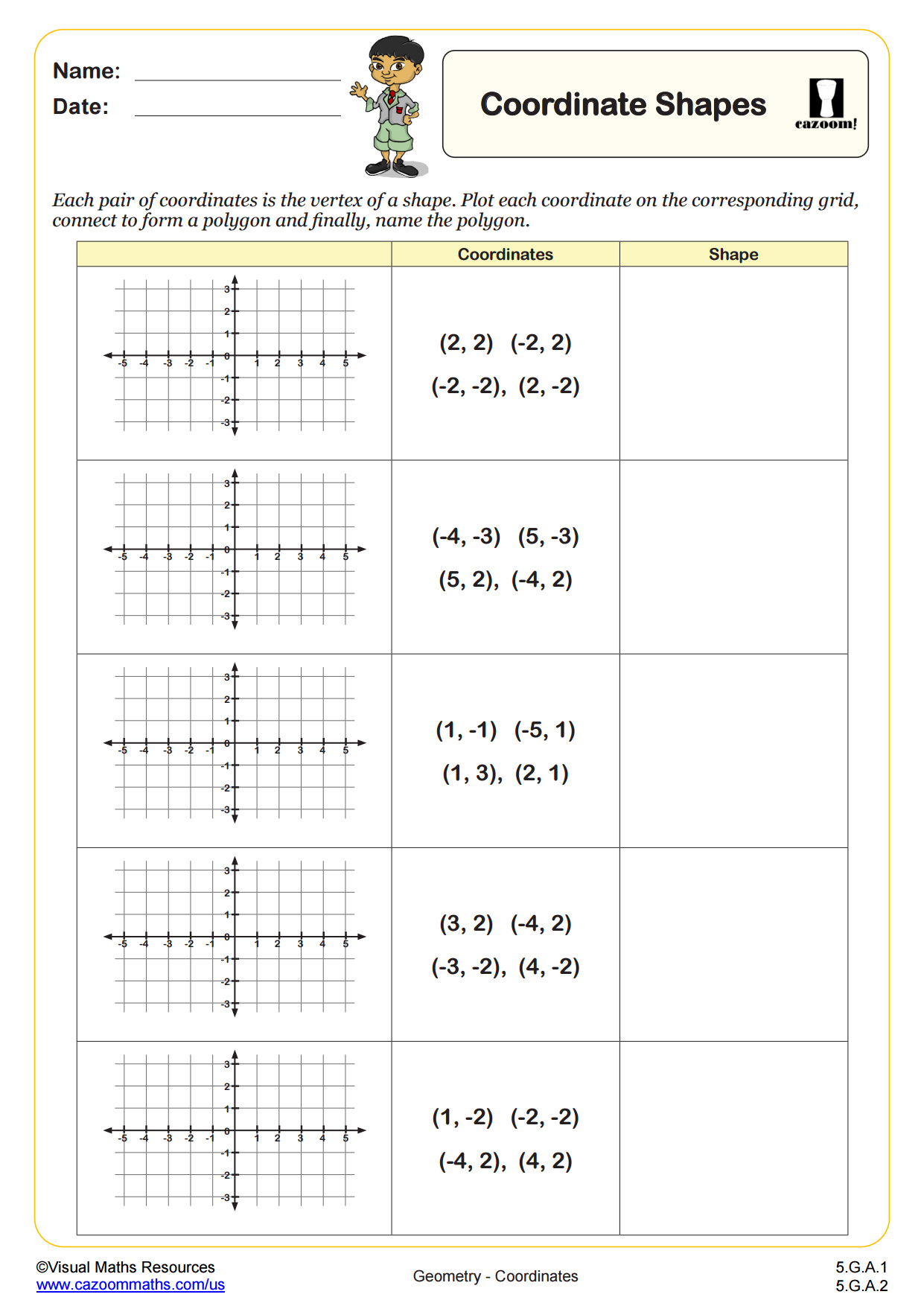
Coordinate Shapes
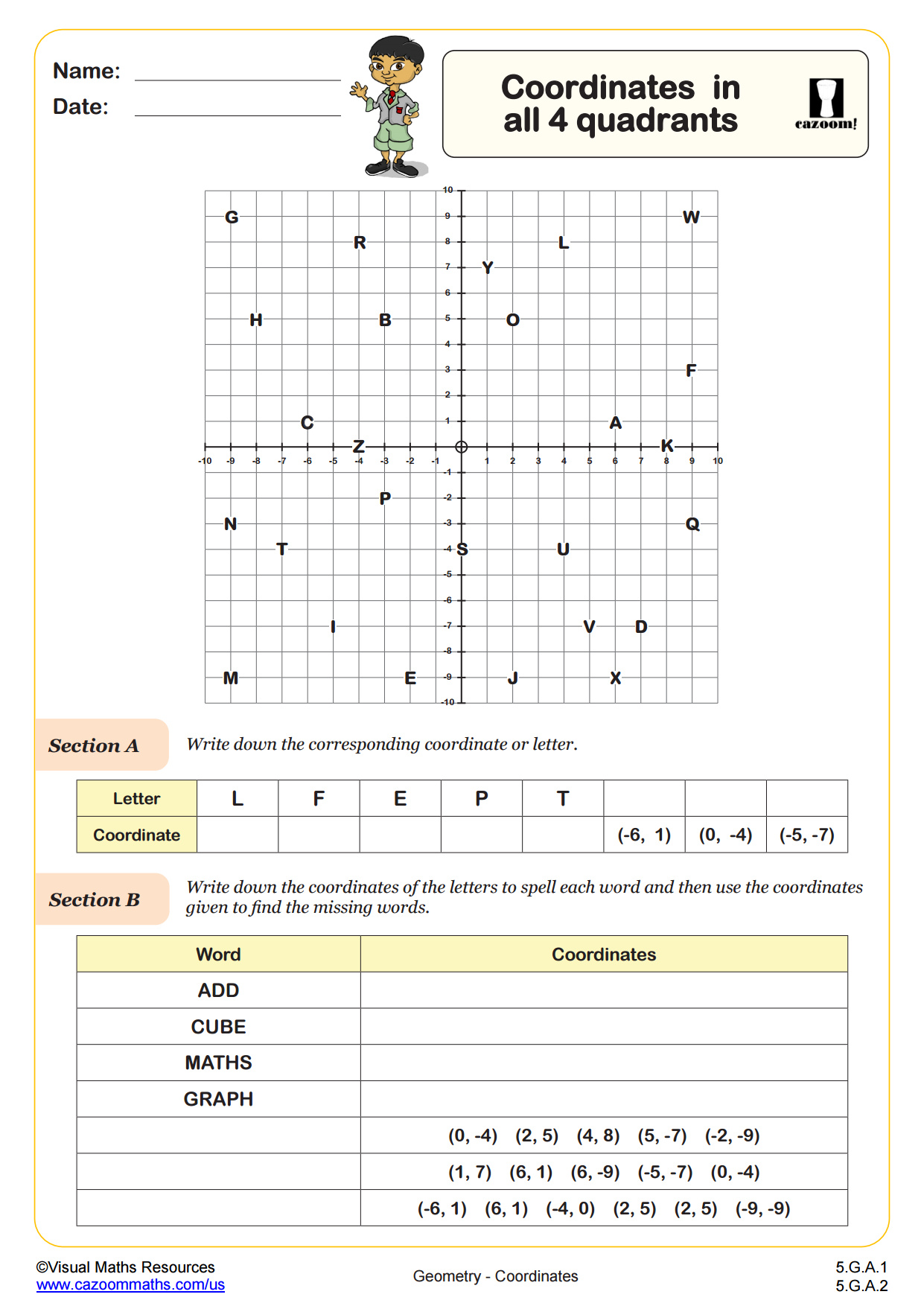
Coordinates in all four quadrants
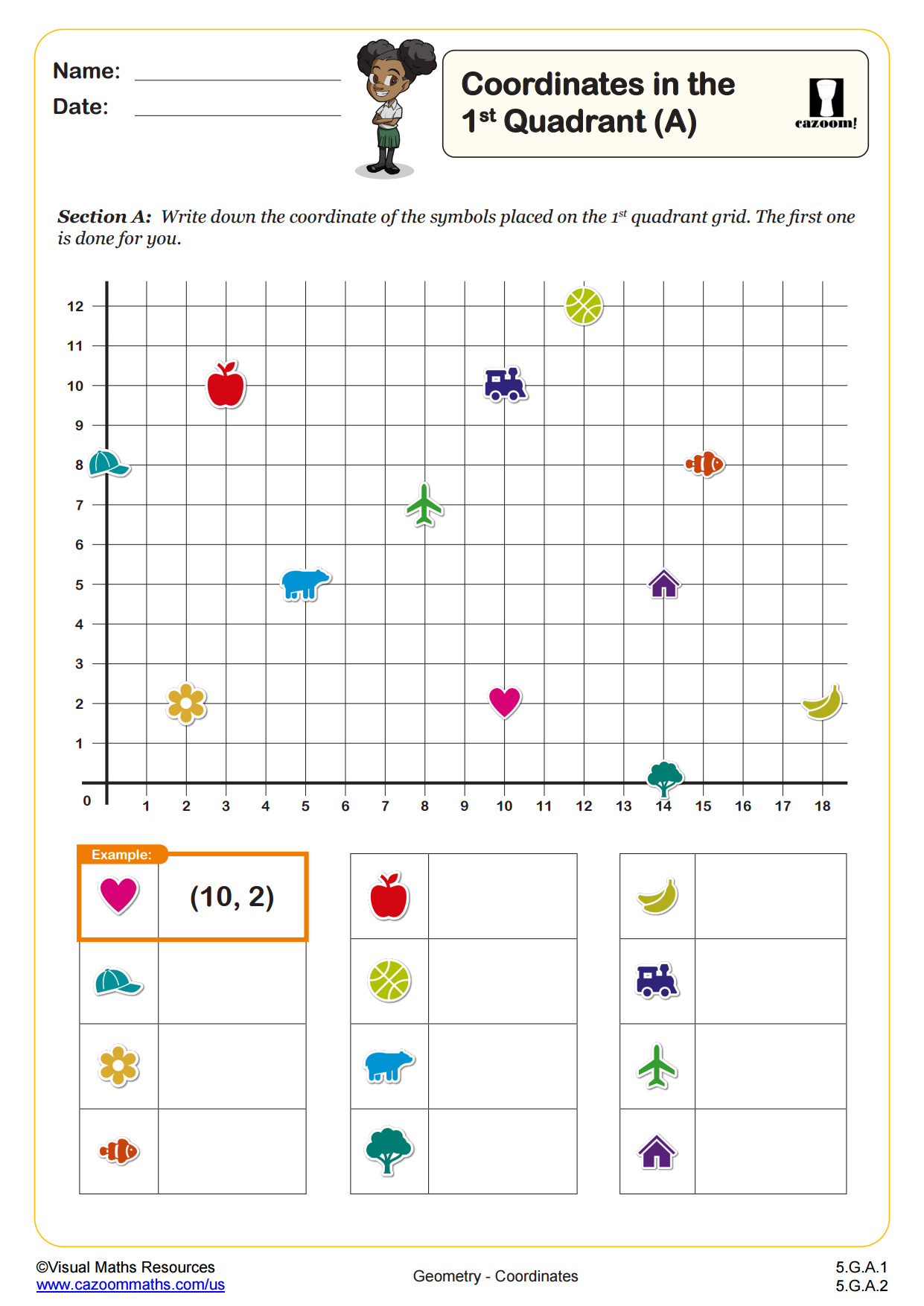
Coordinates in the First Quadrant (A)
Coordinates in the First Quadrant (B)
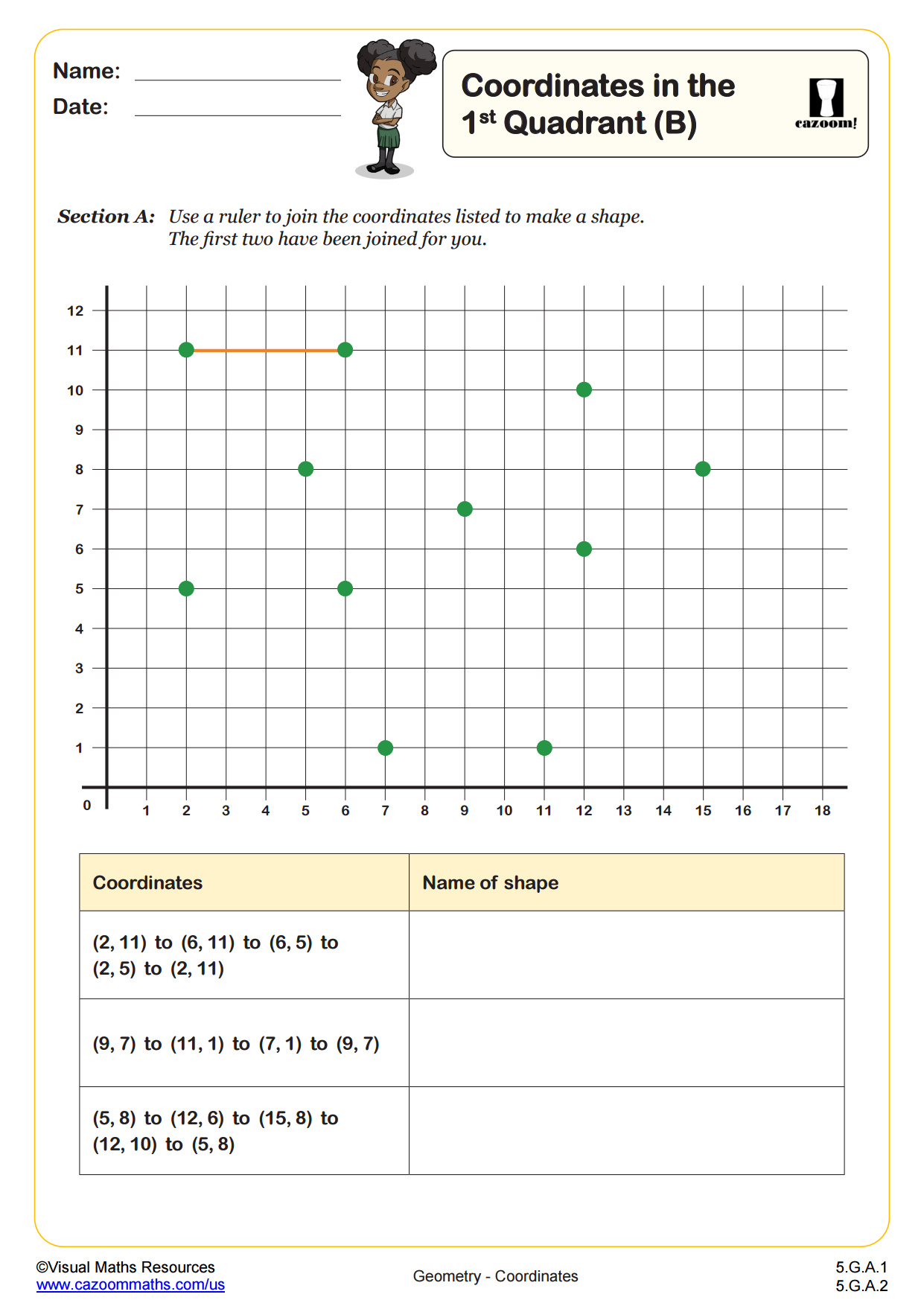
Coordinates in the First Quadrant (C)
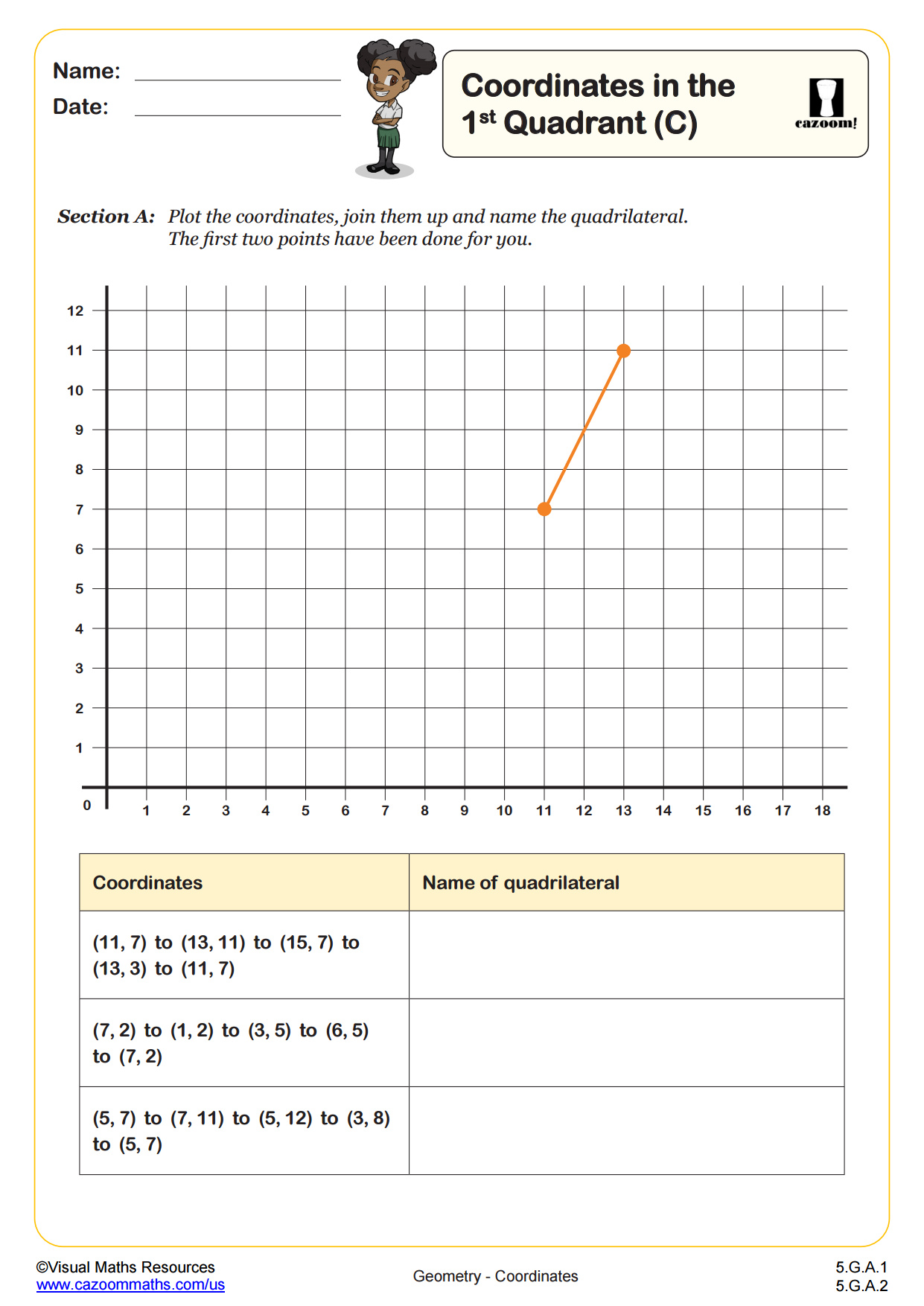
Drawing Line Graphs
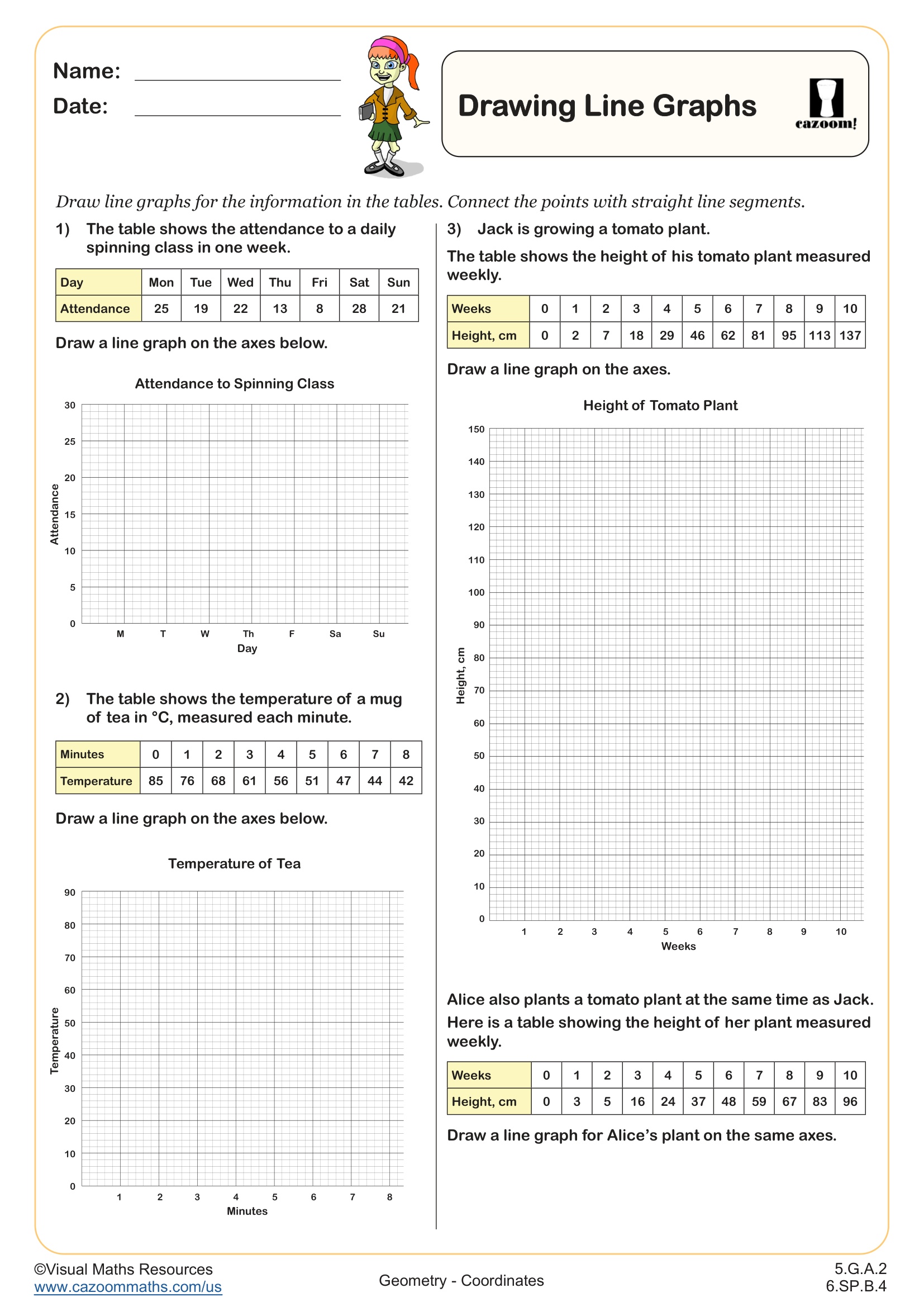
Easter Bunny Coordinate Picture
Easter Egg Trail
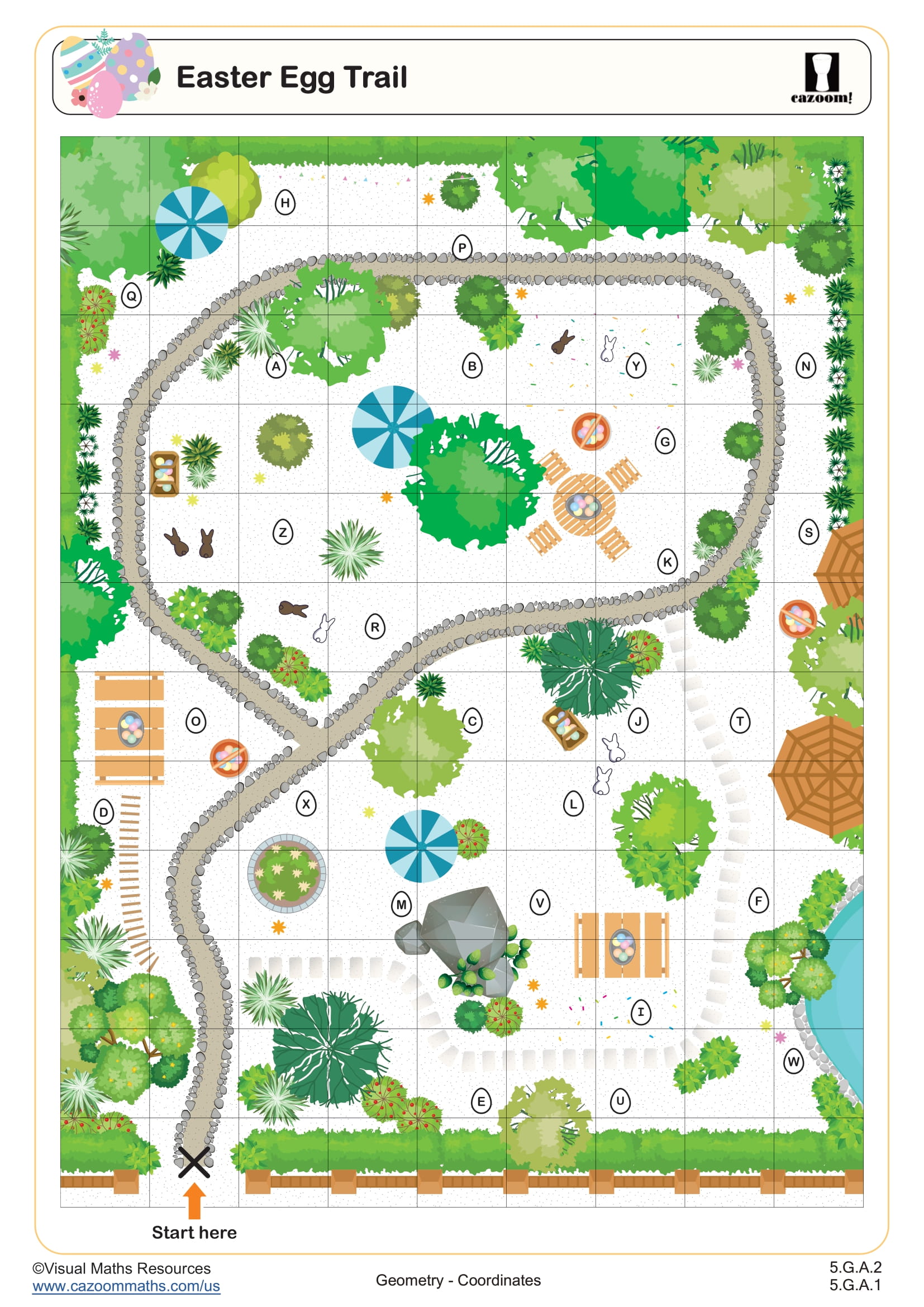
Easter Egg Trail - Compass Directions
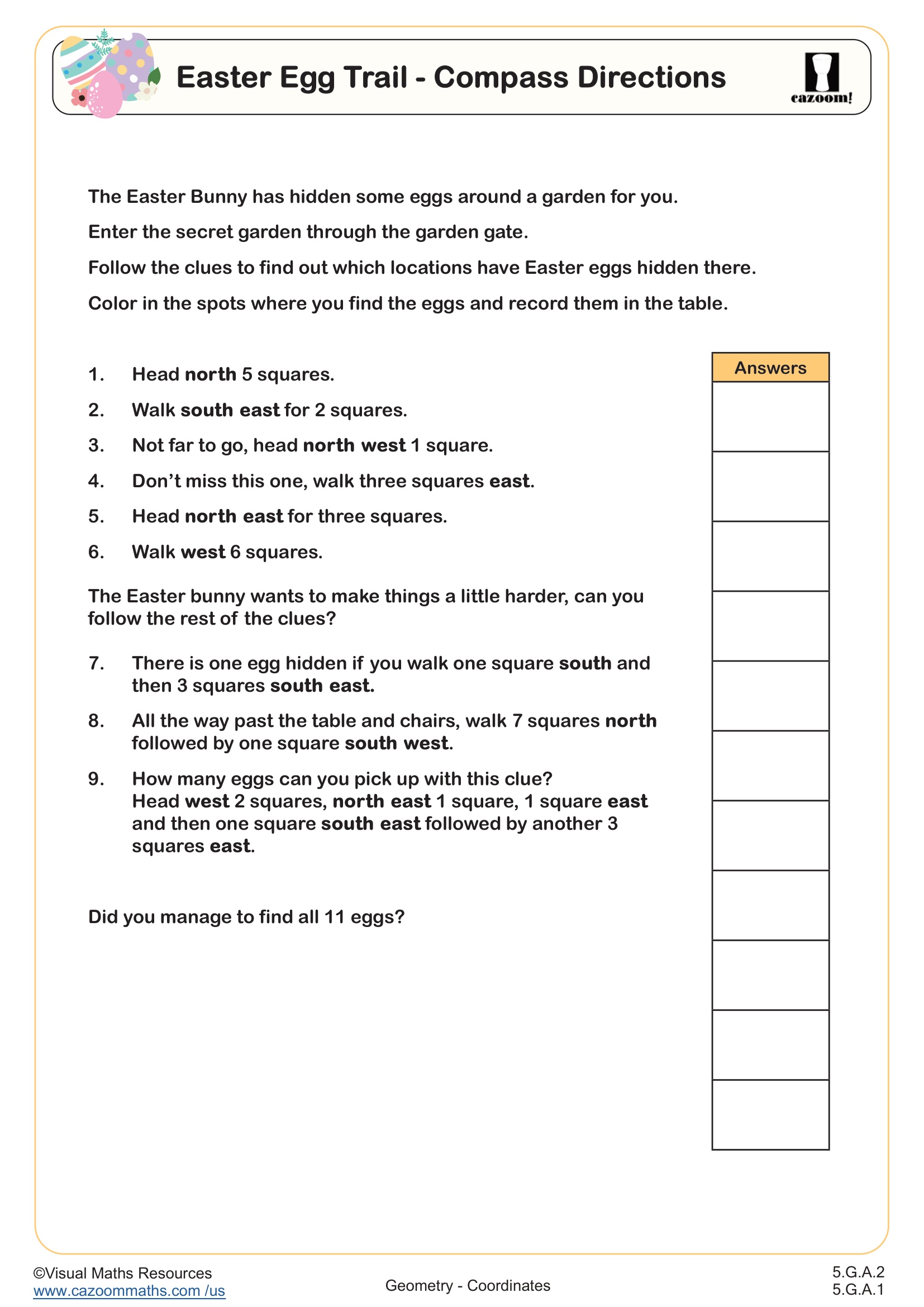
Interpreting Line Graphs
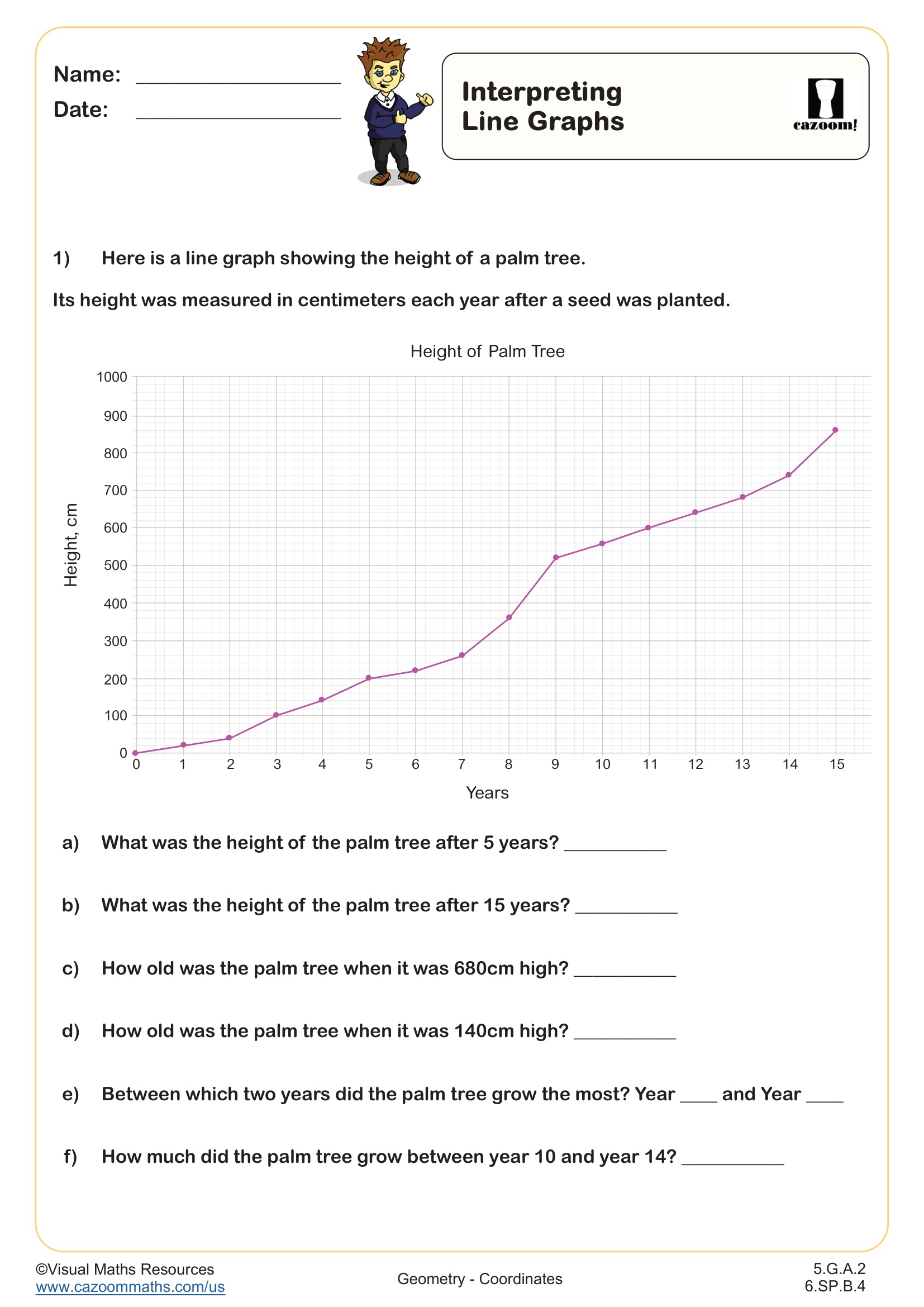
Using Rectangles to Draw the International Space Station
All worksheets are created by the team of experienced teachers at Cazoom Math.
What are coordinates in 5th grade math?
In 5th grade, coordinates introduce students to the Cartesian coordinate system, where they learn to plot and identify points using ordered pairs (x, y) on a grid. Students work exclusively with positive coordinates in the first quadrant, mastering the convention that the first number represents horizontal movement along the x-axis and the second number represents vertical movement along the y-axis. This foundational skill connects directly to Common Core Standard 5.G.A.1, which expects students to use coordinate systems to solve real-world and mathematical problems.
Many students lose points on assessments when they confuse the order of coordinates, particularly when reading points off an existing graph. Teachers often use the phrase "walk before you climb" or "across the hall and up the stairs" to help students remember that x comes first (horizontal movement) before y (vertical movement). Regular practice with plotting and identifying coordinates prevents this reversal error from becoming a persistent habit in middle school mathematics.
Which grade levels learn about coordinates?
This collection focuses specifically on 5th grade elementary school students who are encountering coordinate grids as a formal mathematical system for the first time. At this level, students work exclusively with positive whole numbers in the first quadrant, building comfort with the basic mechanics of plotting and reading ordered pairs before encountering negative coordinates in middle school.
The progression continues in 6th grade when students expand their understanding to all four quadrants, working with negative integers and eventually rational numbers. Fifth grade serves as the critical foundation year where students must develop accuracy and confidence with the coordinate system's basic structure. Teachers notice that students who master positive coordinates in 5th grade transition smoothly to four-quadrant graphing, while those who skip this foundational practice often struggle with sign errors and directional confusion in later grades.
How do coordinate grids connect to real-world applications?
Coordinate grids teach students to describe locations precisely using numerical systems, a skill that mirrors how GPS technology, mapping applications, and navigation systems function in everyday life. Understanding that every point has a unique ordered pair helps students grasp how addresses, latitude and longitude coordinates, and digital screen positions all rely on similar two-dimensional reference systems. This mathematical framework becomes particularly relevant when students later encounter computer programming, where screen coordinates control where images, text, and interactive elements appear.
The Easter Egg Trail and bearings activities in this collection extend coordinate understanding into navigation contexts, where students must follow directional instructions to locate specific points on a grid. This connects directly to STEM fields like robotics, where programmers use coordinate systems to tell machines exactly where to move, and engineering design software, where precise coordinate input creates technical drawings. Students who recognize coordinates as a practical communication tool rather than just abstract math develop stronger spatial reasoning skills.
How should teachers use these coordinate worksheets in the classroom?
These worksheets provide structured practice that moves from basic point plotting to more complex coordinate challenges, allowing teachers to differentiate instruction based on student readiness. The variety of activities, from straightforward coordinate grids to themed puzzles like Coordinate Emoji, maintains student engagement while building the same core skills. Teachers can use the answer keys to quickly assess which students have mastered the x-before-y convention and which still need intervention with coordinate order.
Many teachers find these worksheets effective for math centers, where students work independently or in pairs to complete coordinate challenges while the teacher provides small-group instruction. The themed activities work particularly well as early finisher tasks or as low-stakes practice before assessments, since the engaging formats reduce math anxiety. Teachers also use coordinate worksheets for homework because parents can easily check answers, and the visual nature of plotting points makes it accessible for families to support learning at home without advanced math knowledge.