5th Grade Decimals Worksheets
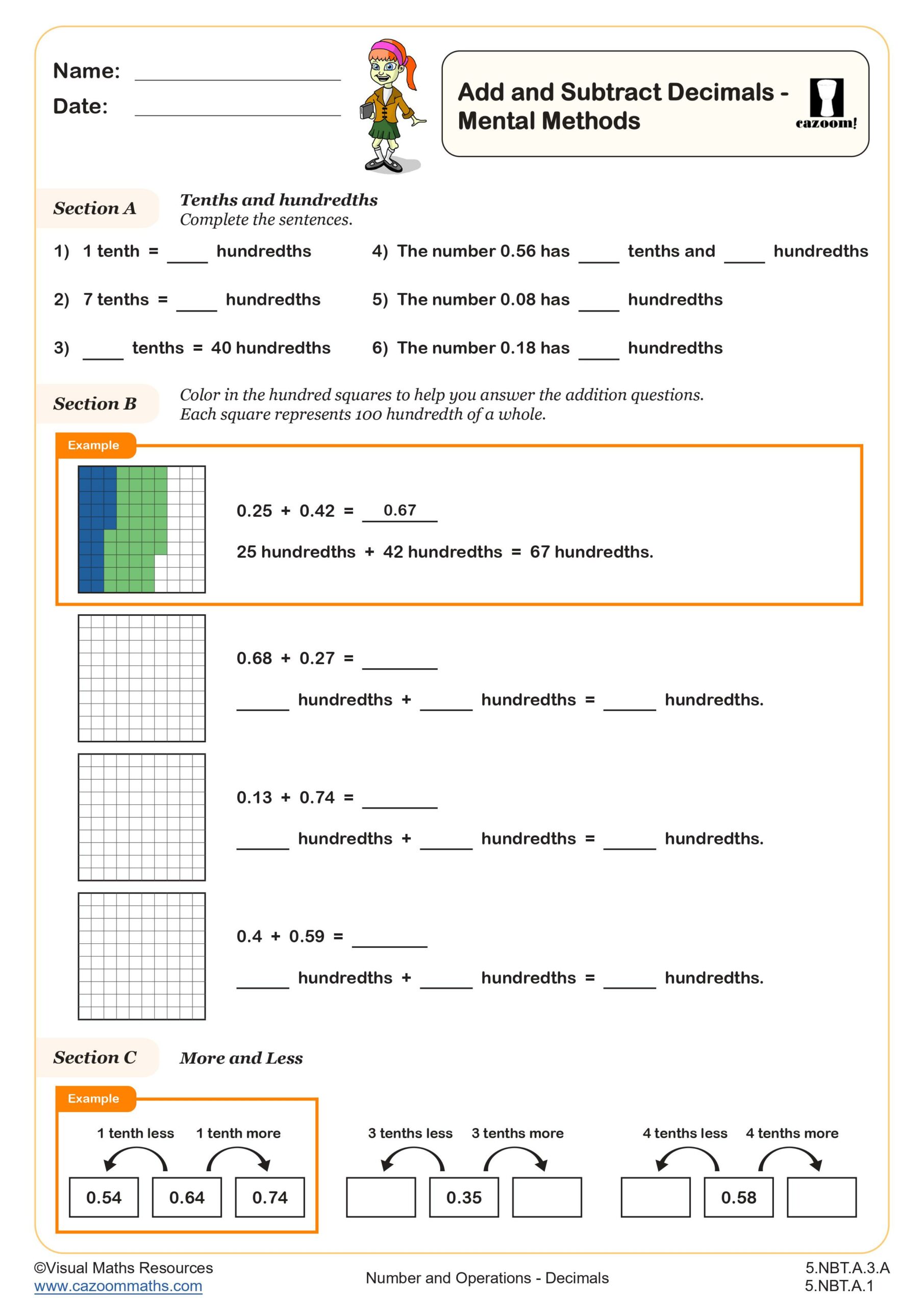
Add and Subtract Decimals - Mental Methods
Adding and Subtracting Decimals
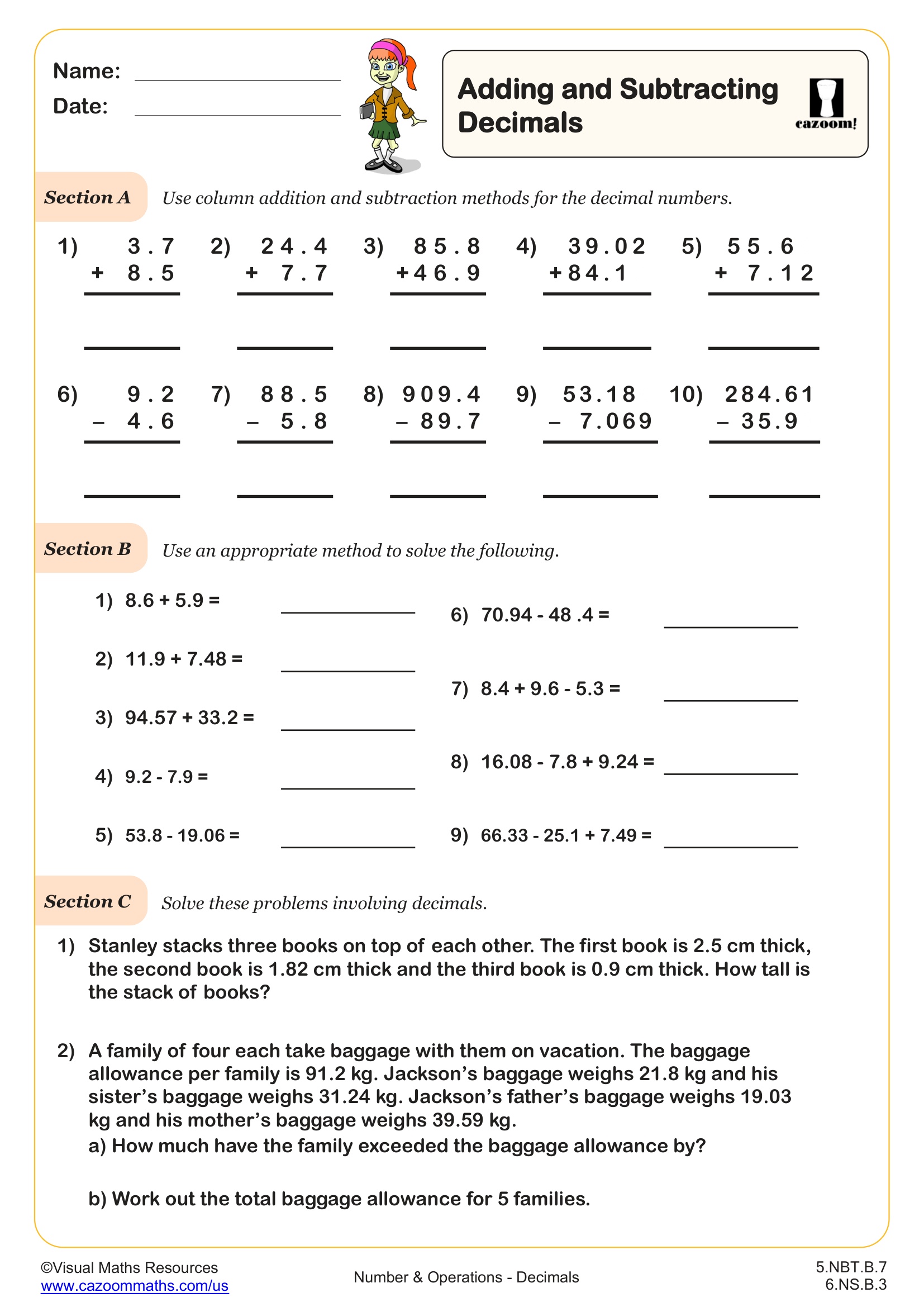
Column Addition - Decimals A
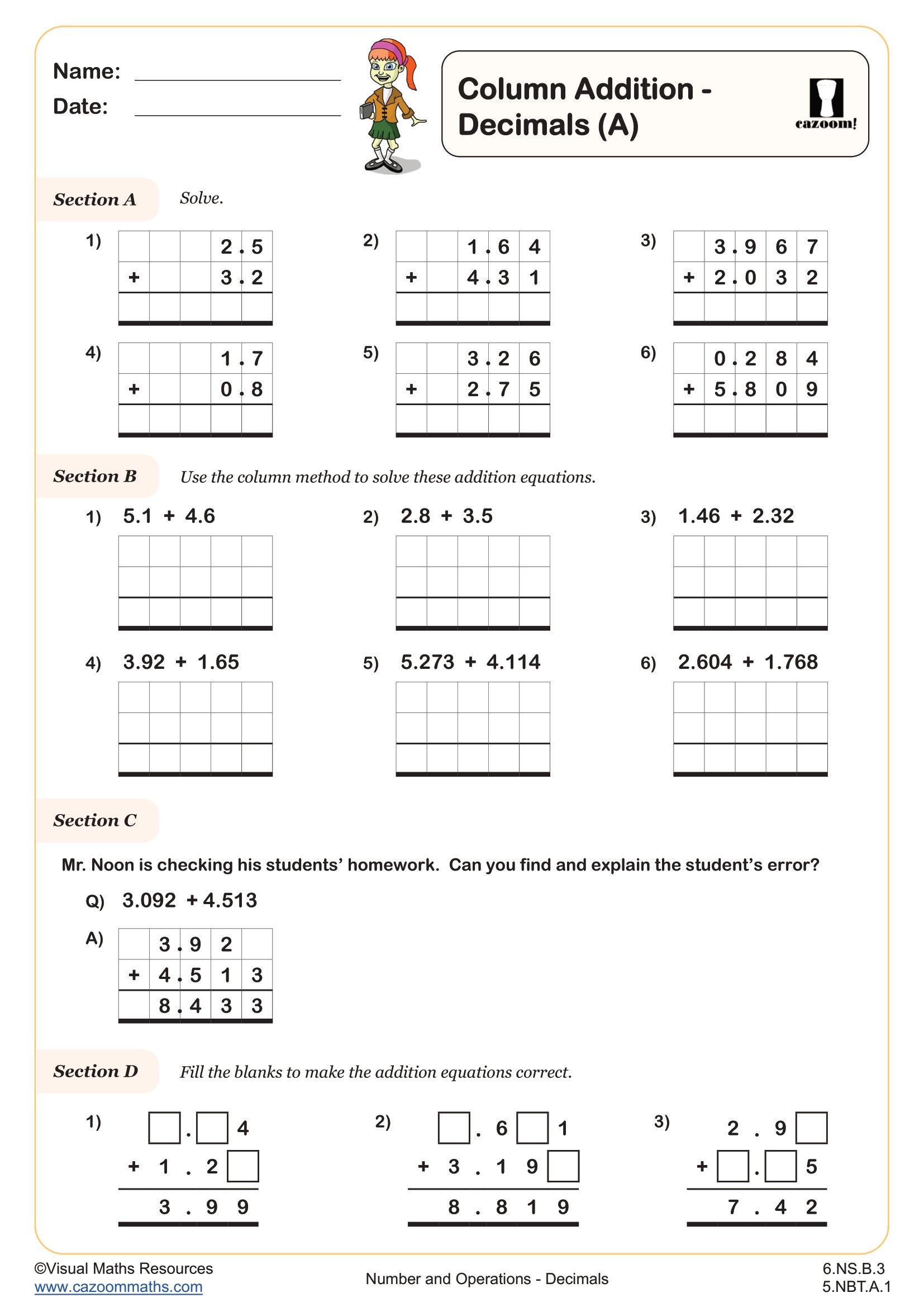
Column Addition - Decimals B
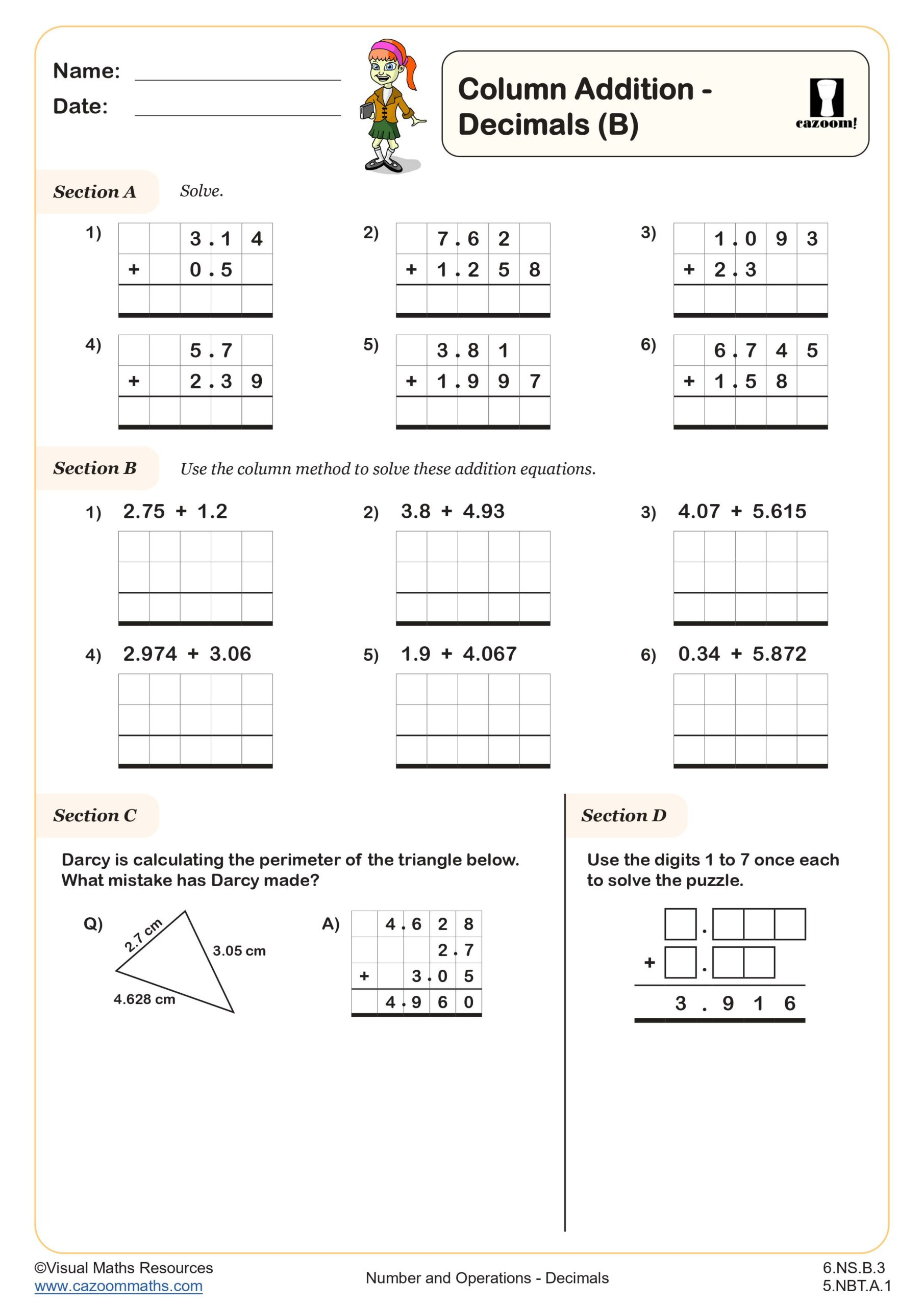
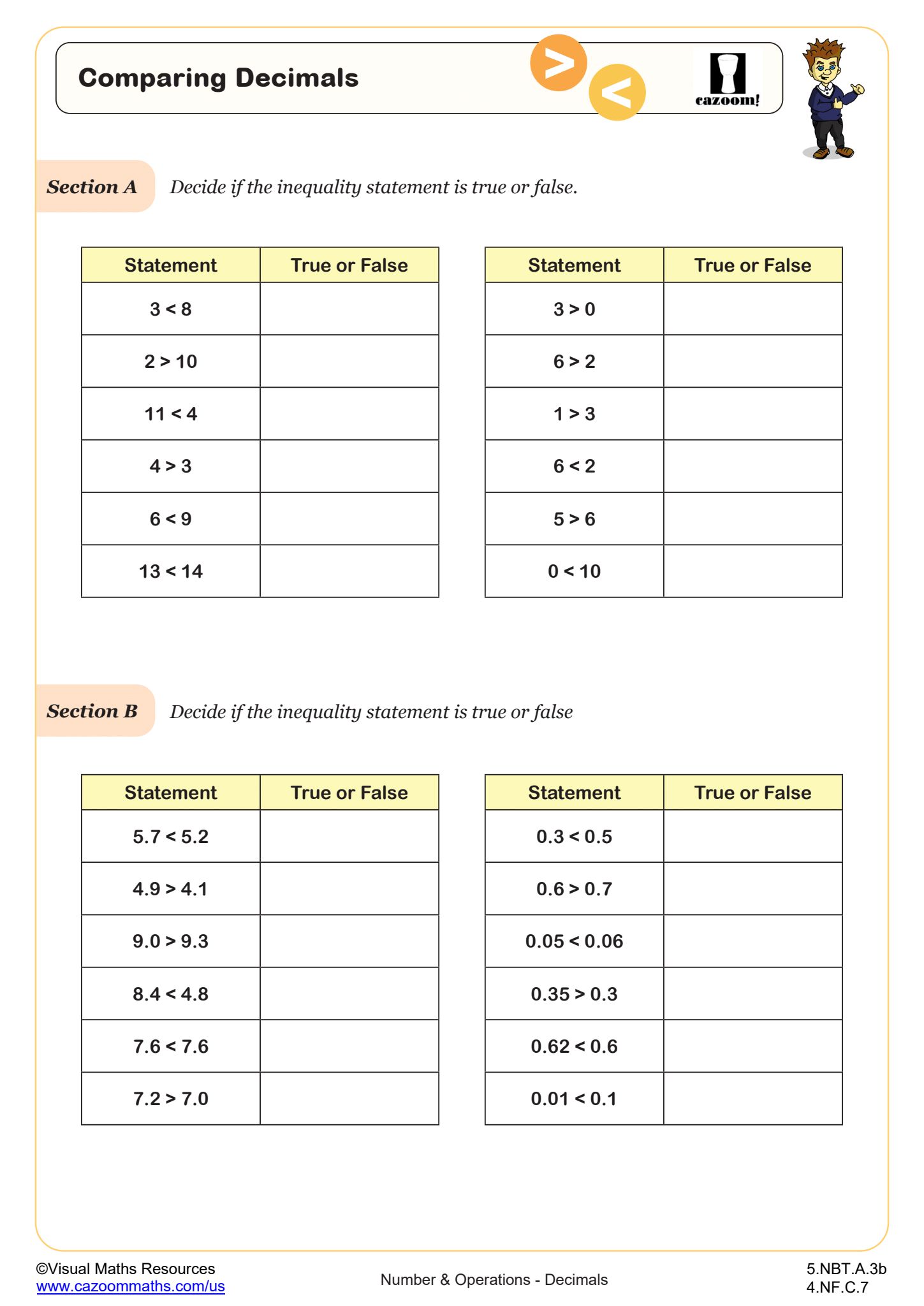
Comparing Decimals
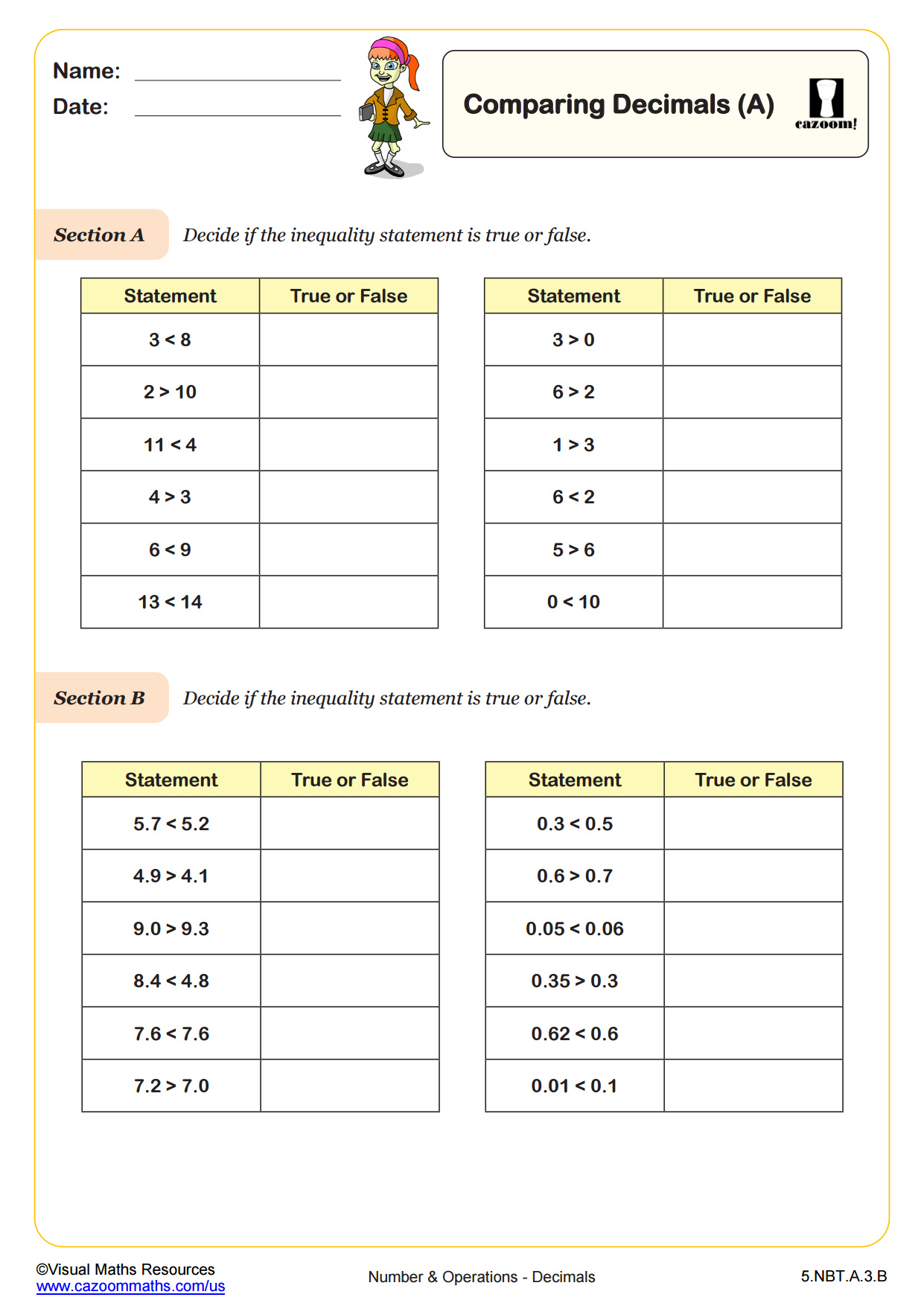
Comparing Decimlas (A)
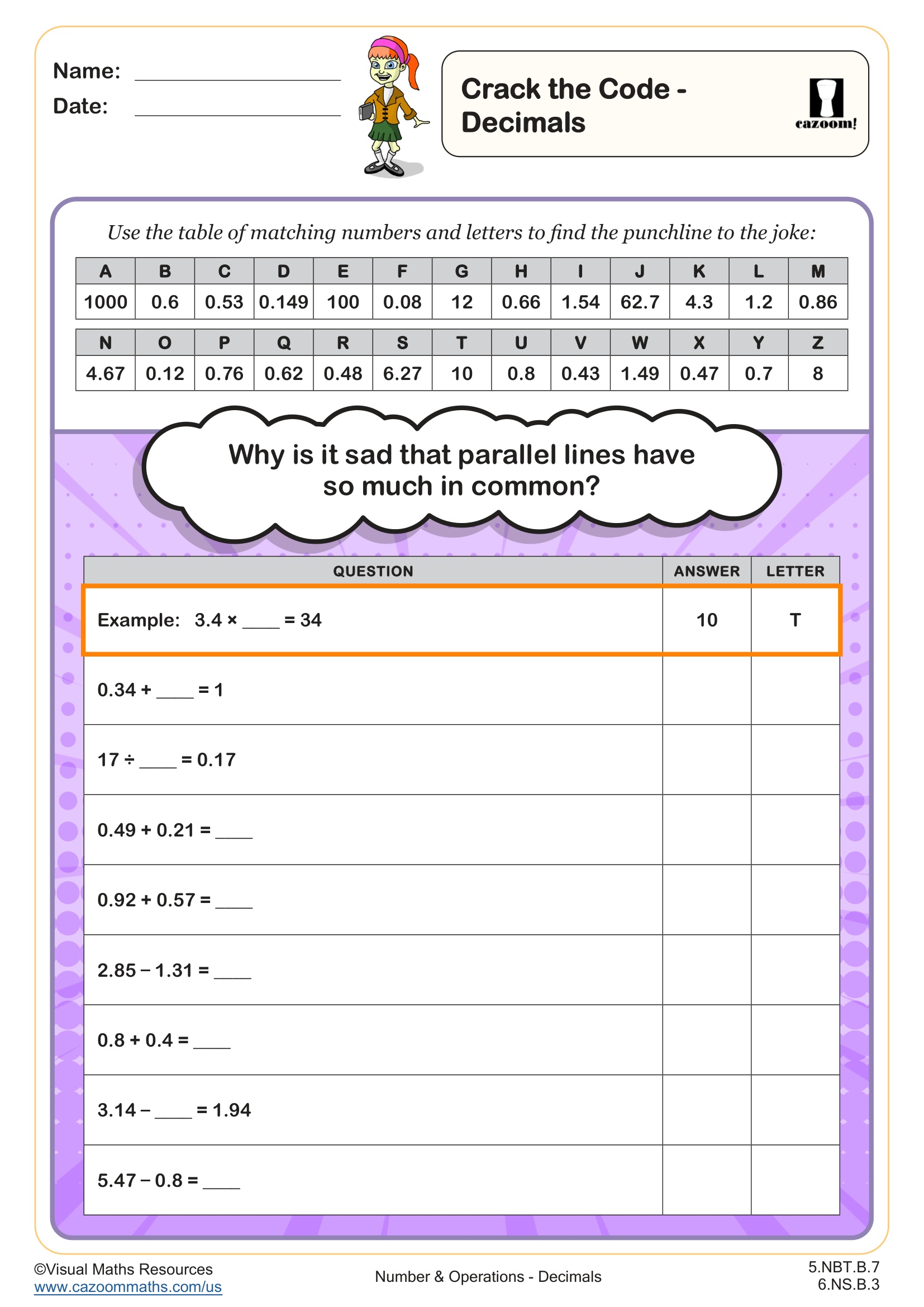
Crack the Code - Decimals
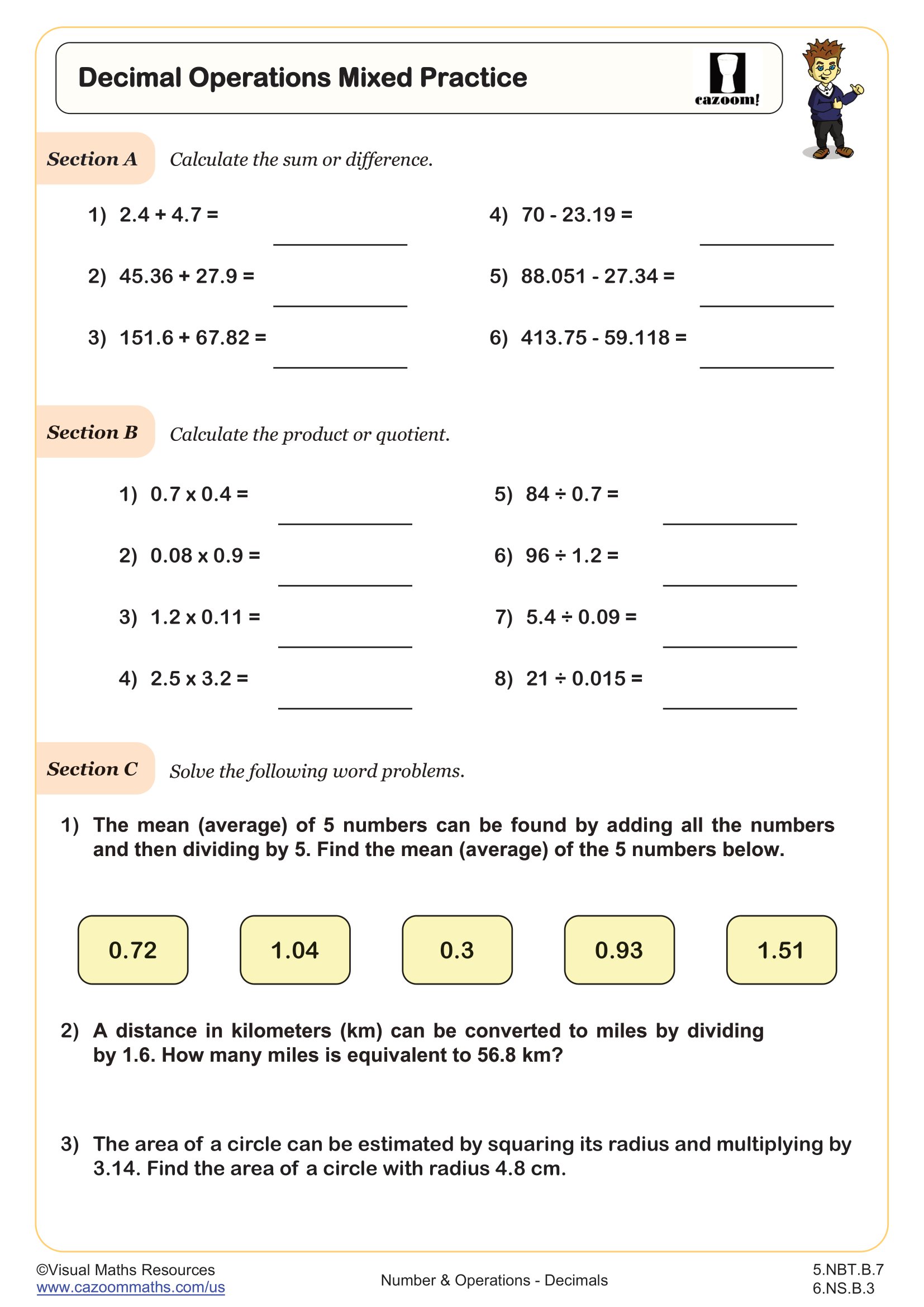
Decimal Operations Mixed Practice
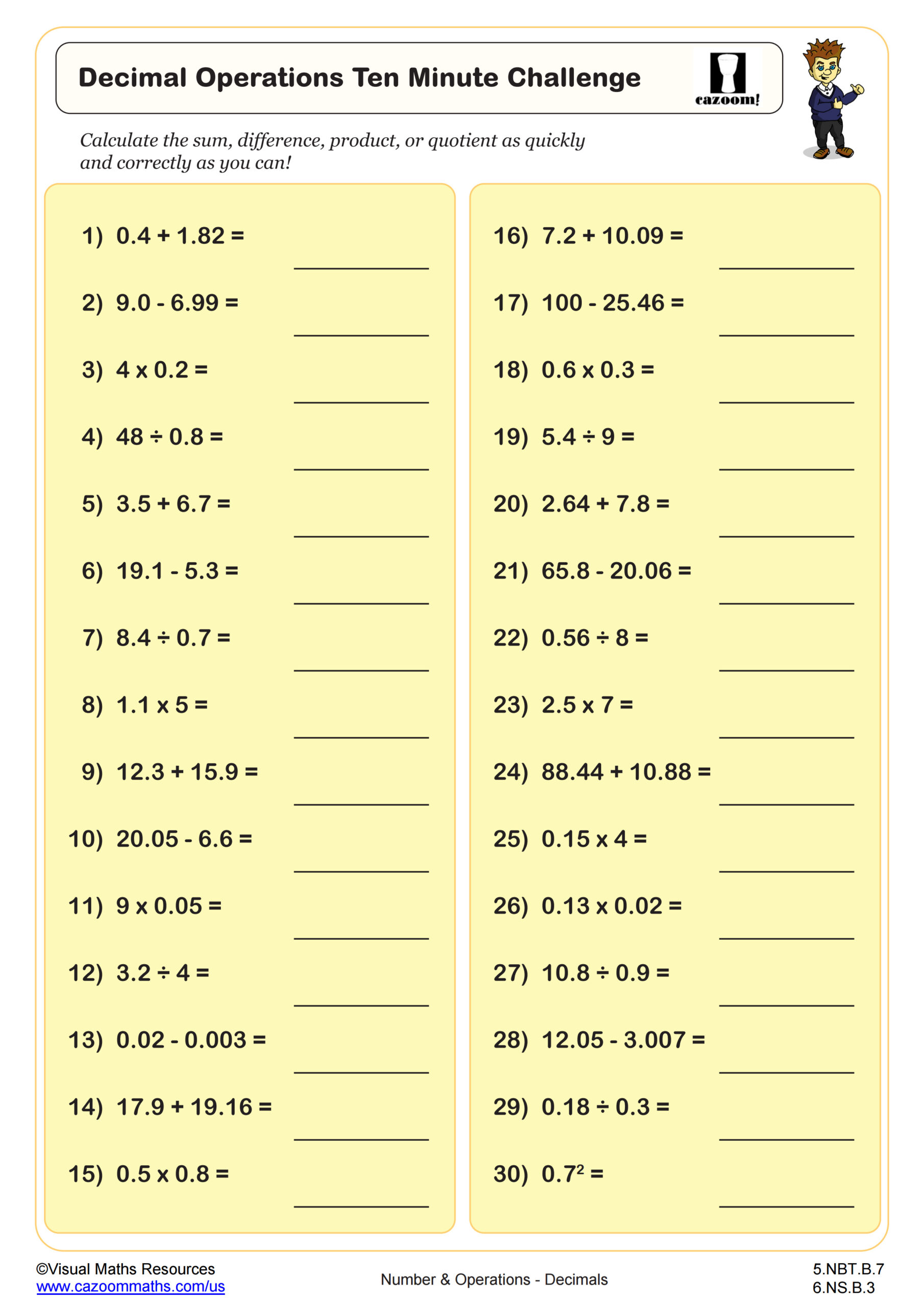
Decimal Operations Ten Minute Challenge
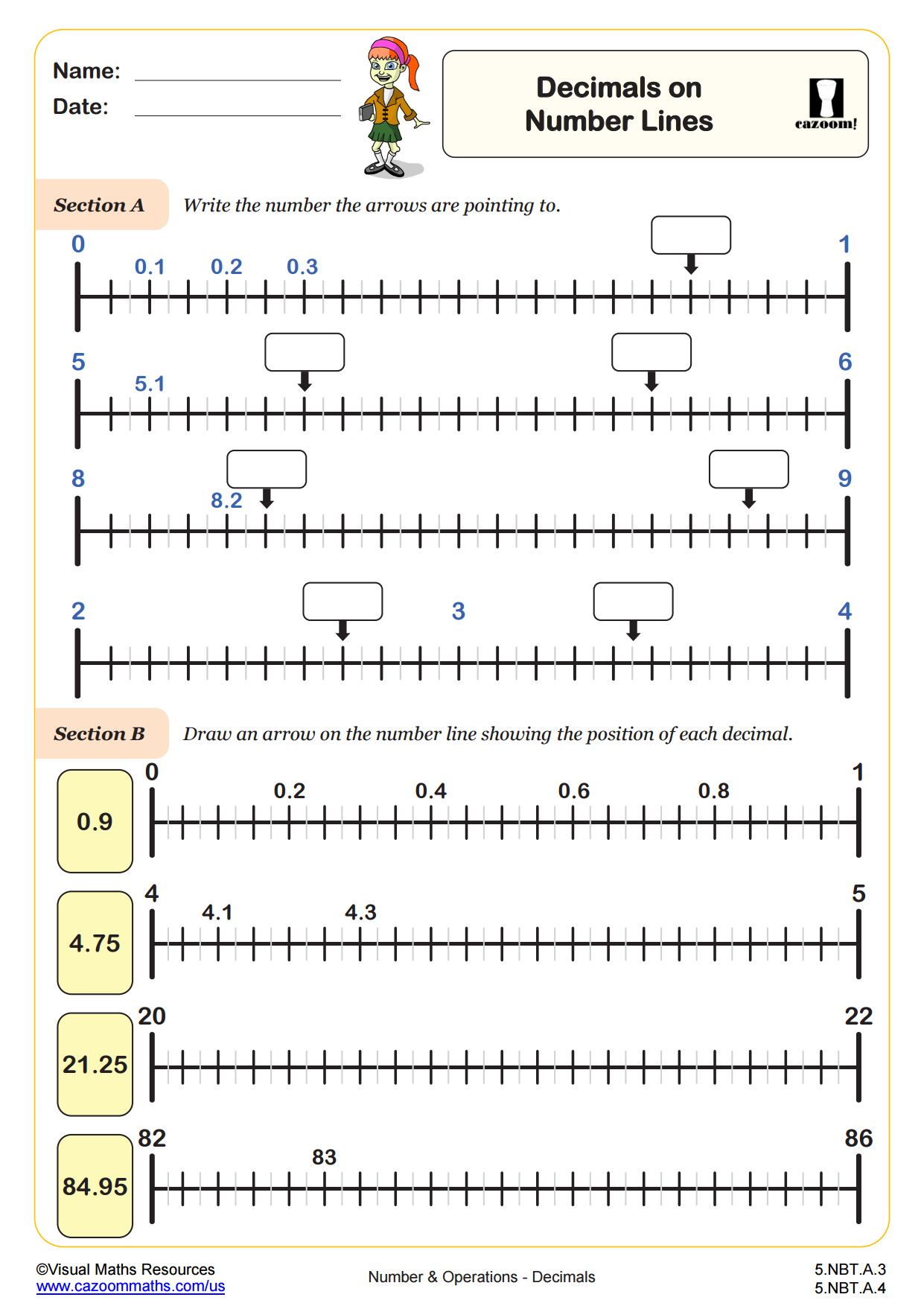
Decimals on Number Lines
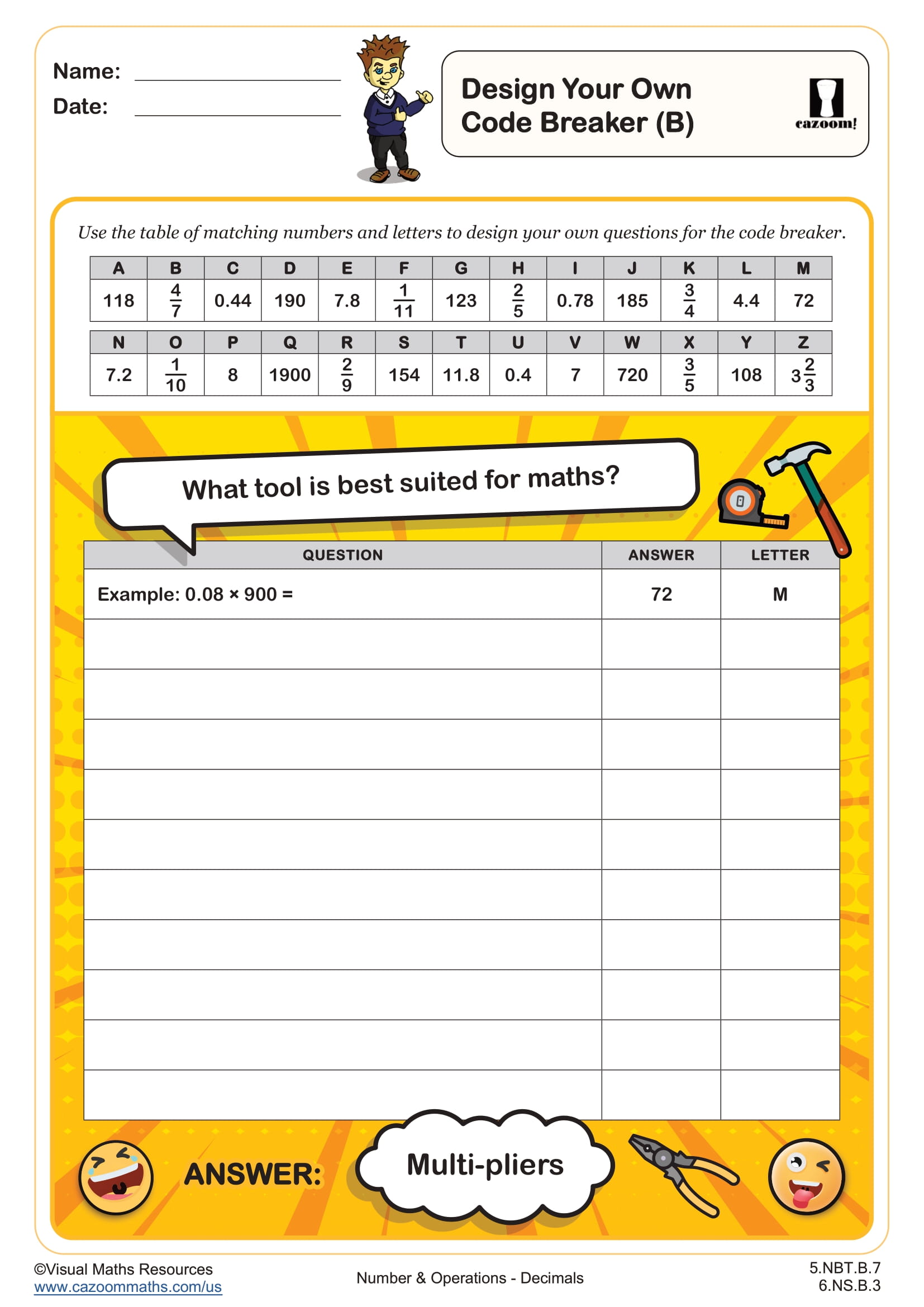
Design Your Own Code Breaker (B)
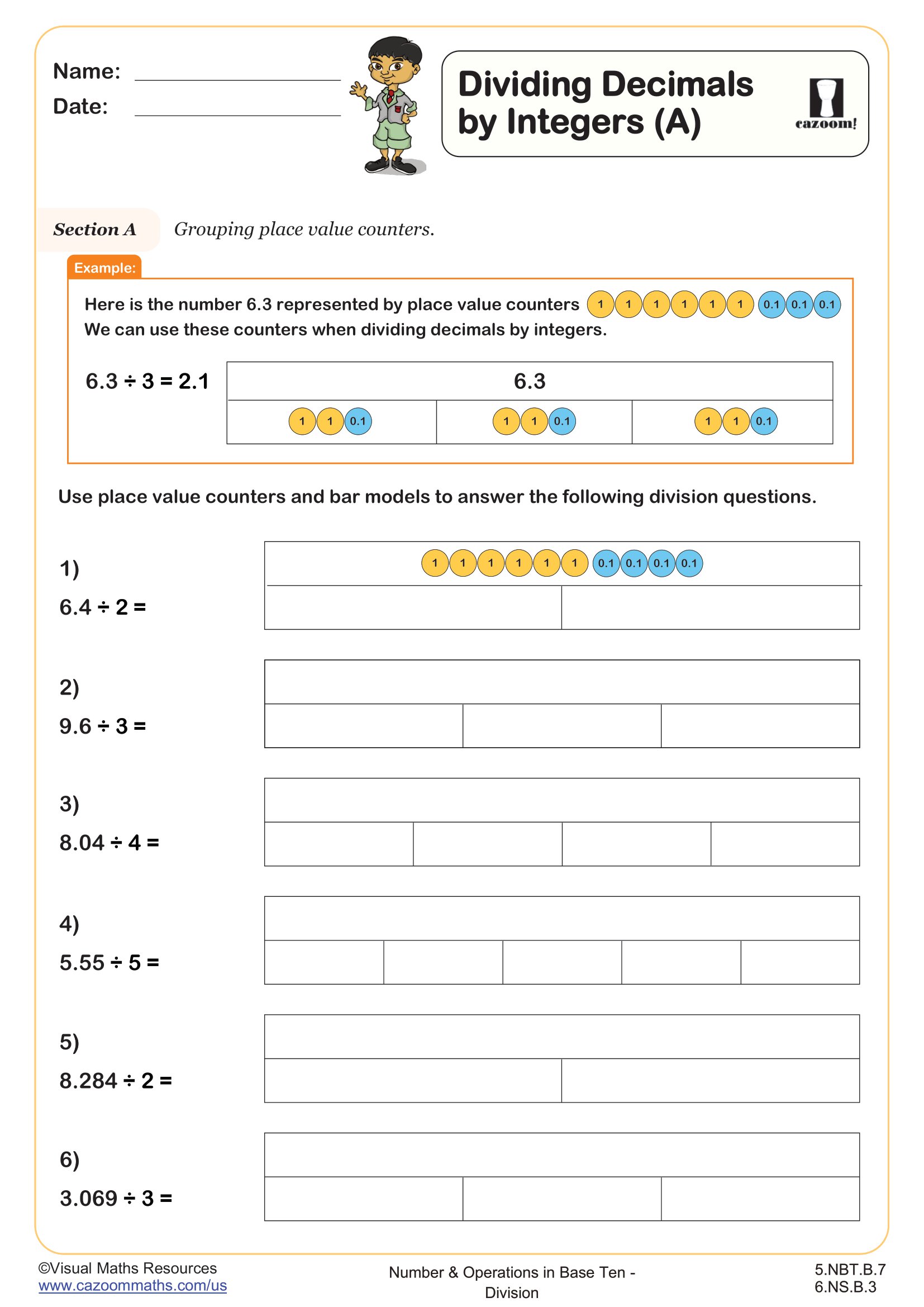
Divide Decimals by Integers (A)
Divide Decimals Using Gattegno Charts by 10, 100, 1000
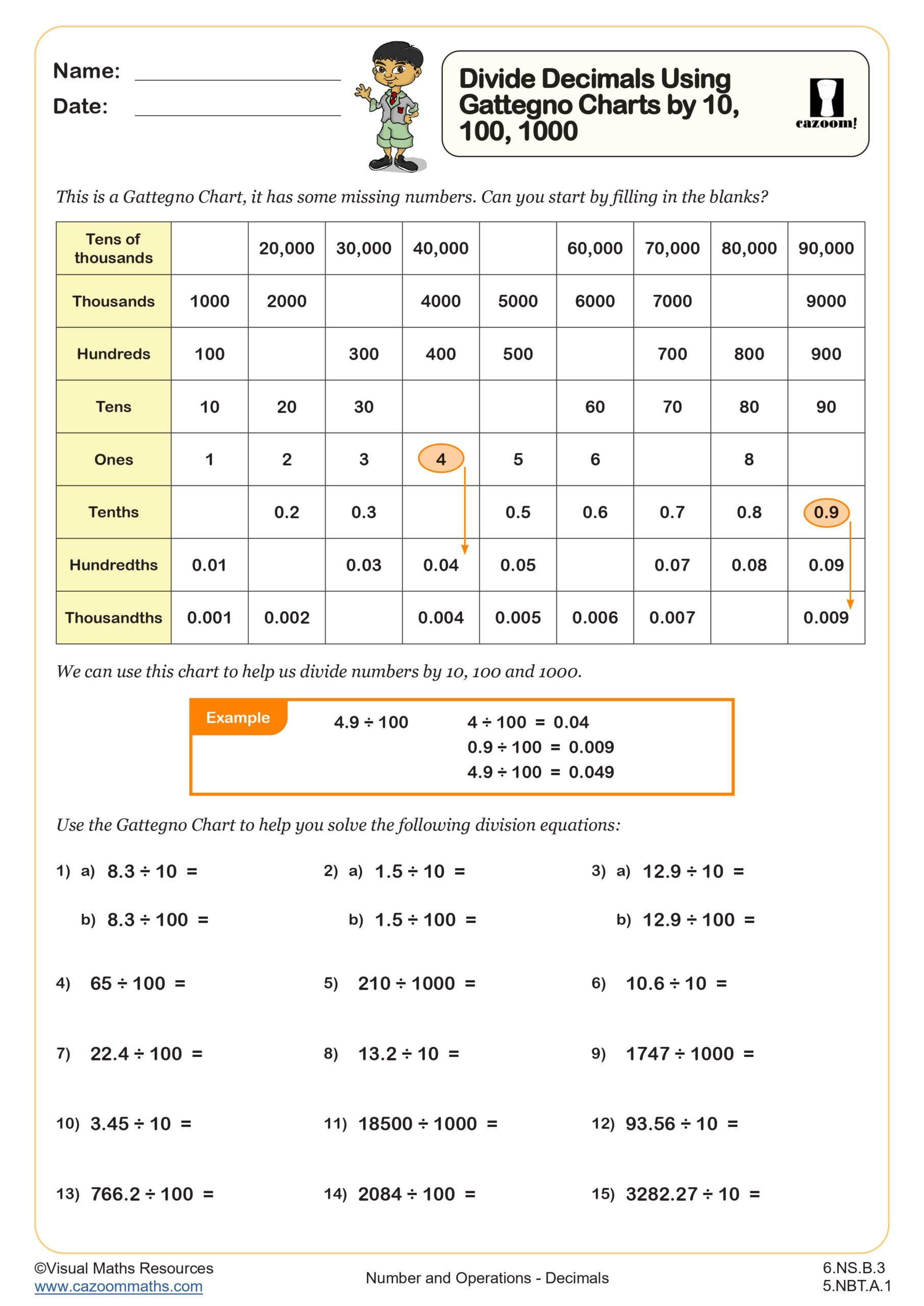
Dividing Decimals (A)
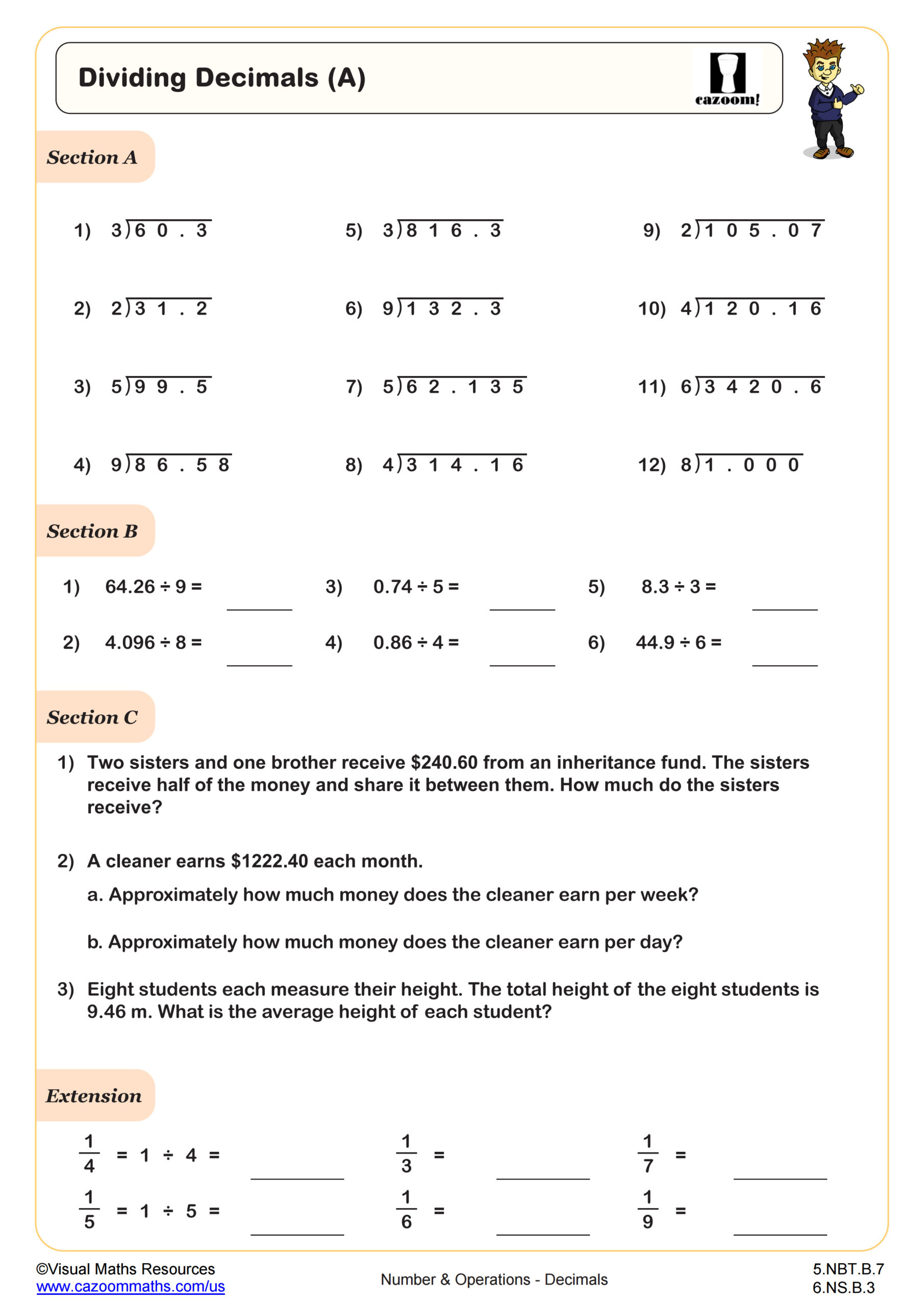
Dividing Decimals (B)
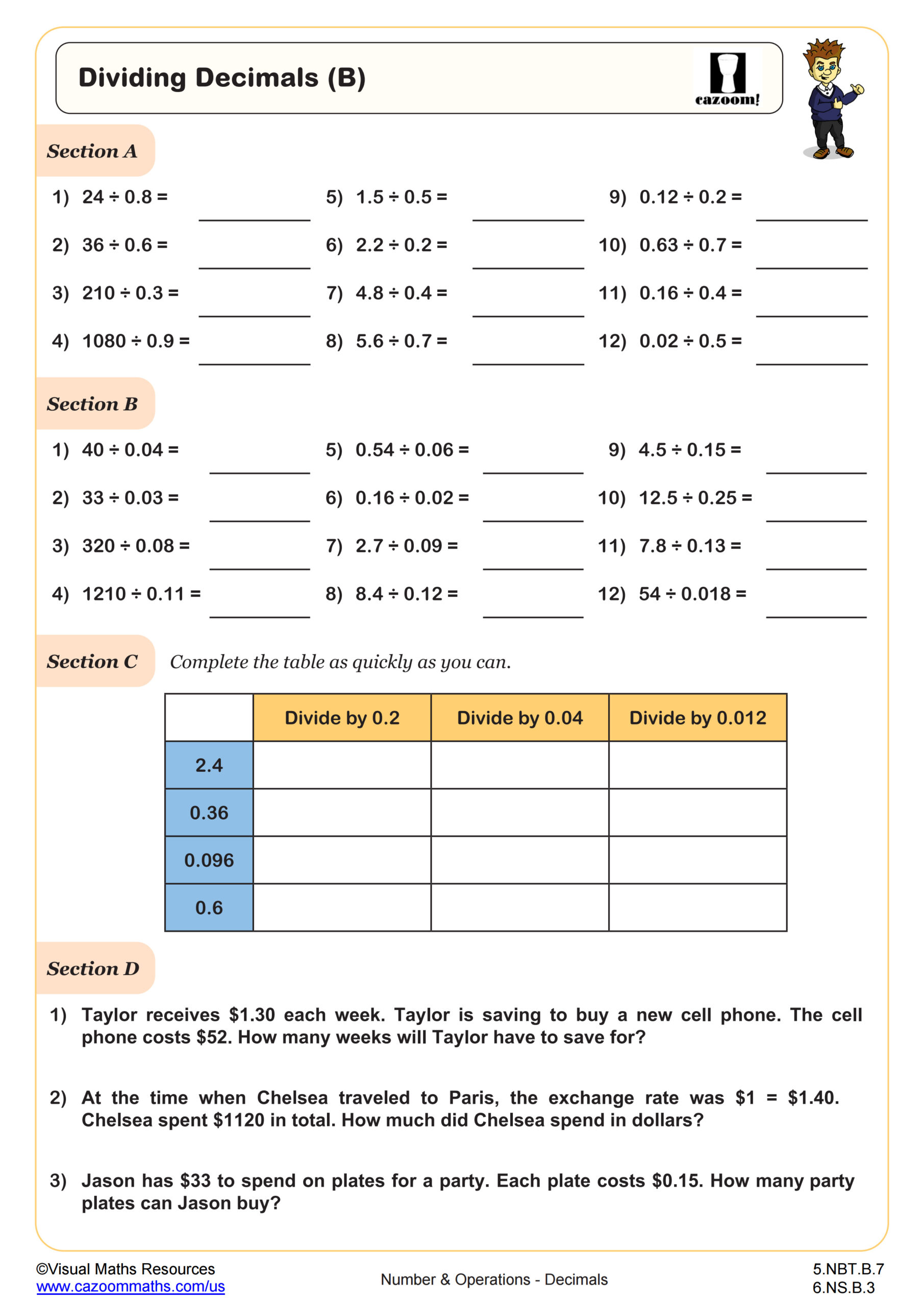
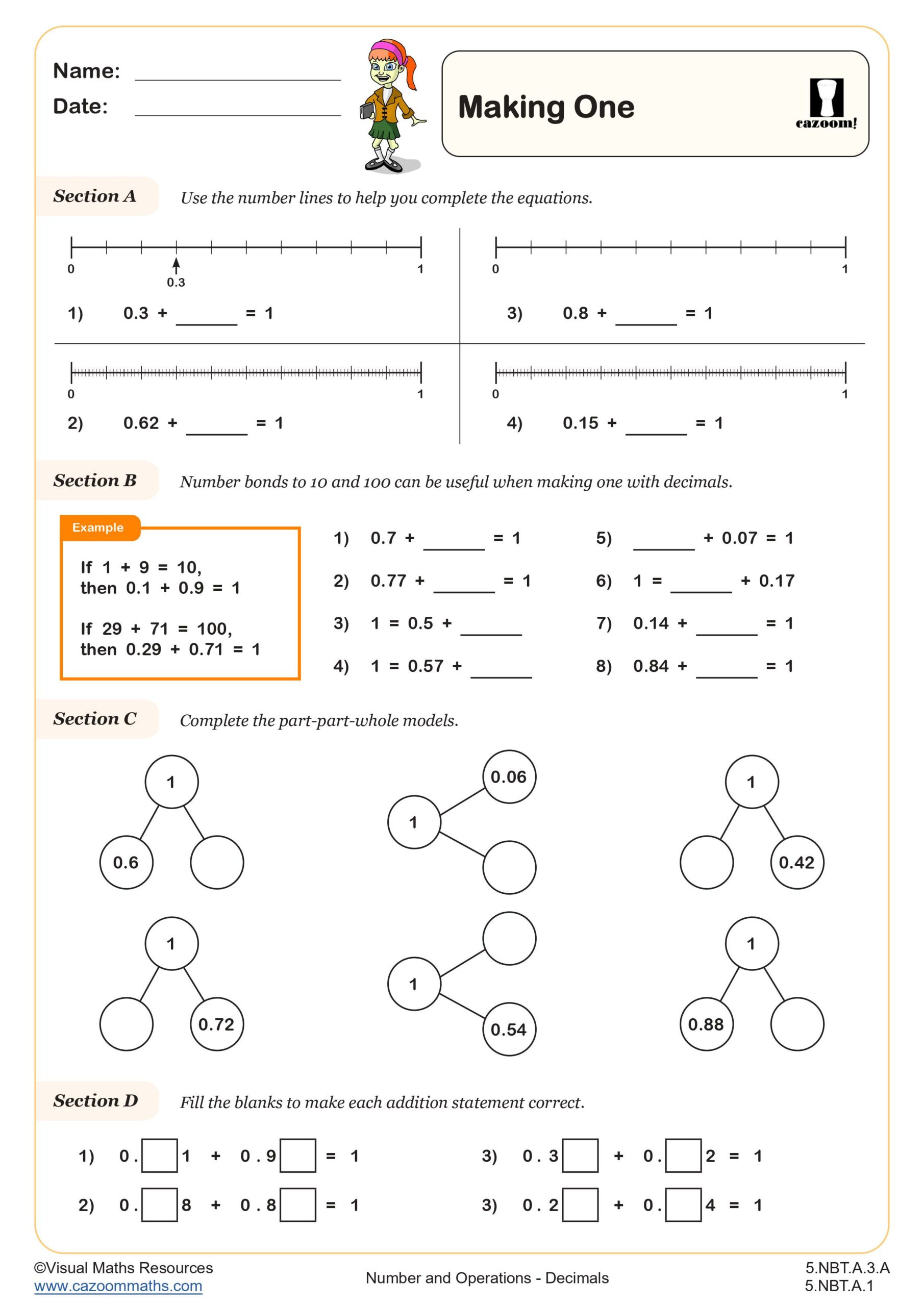
Making One
Measurement Conversions: Time - Minutes and Hours (B)
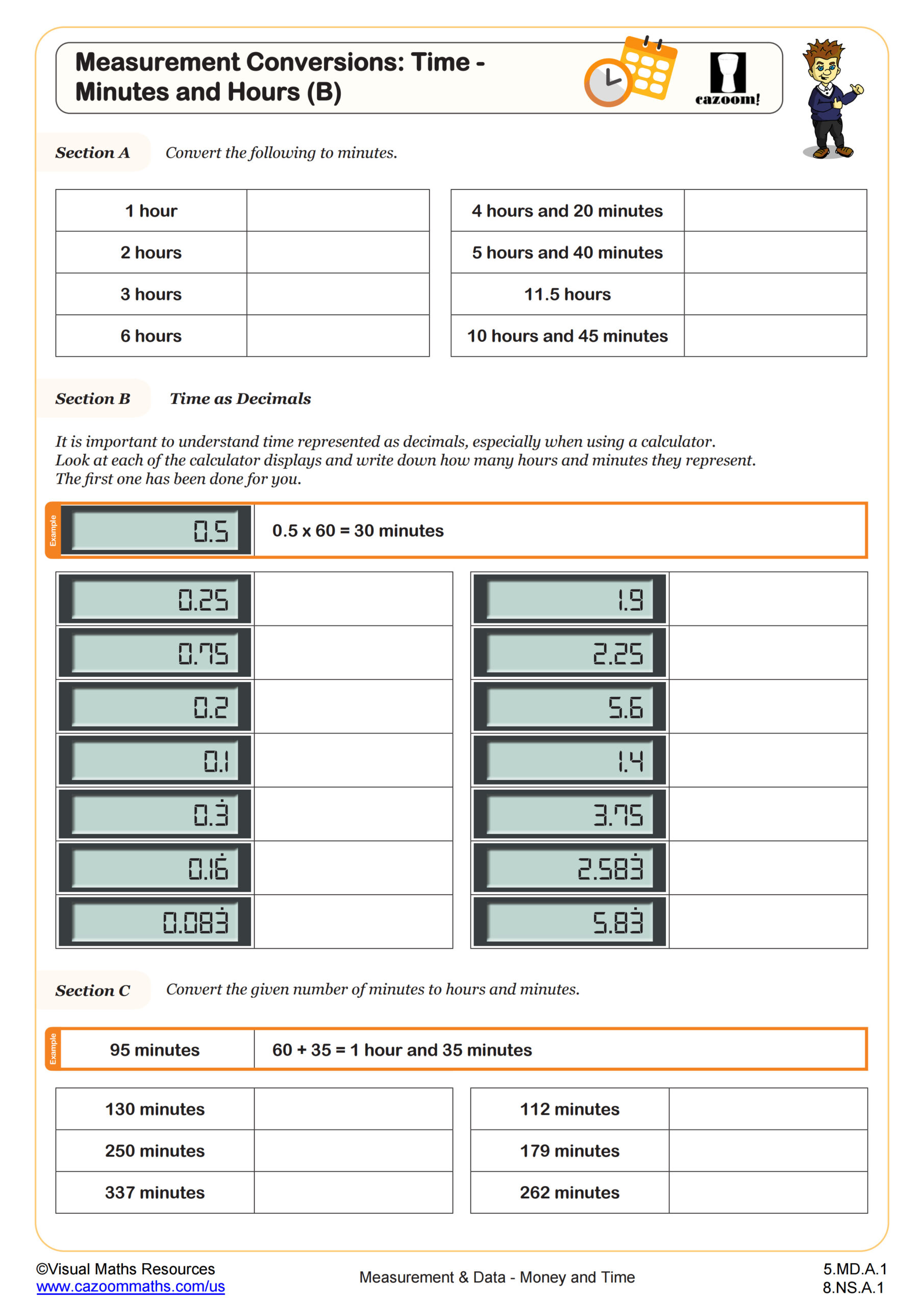
Multiply decimals by integers
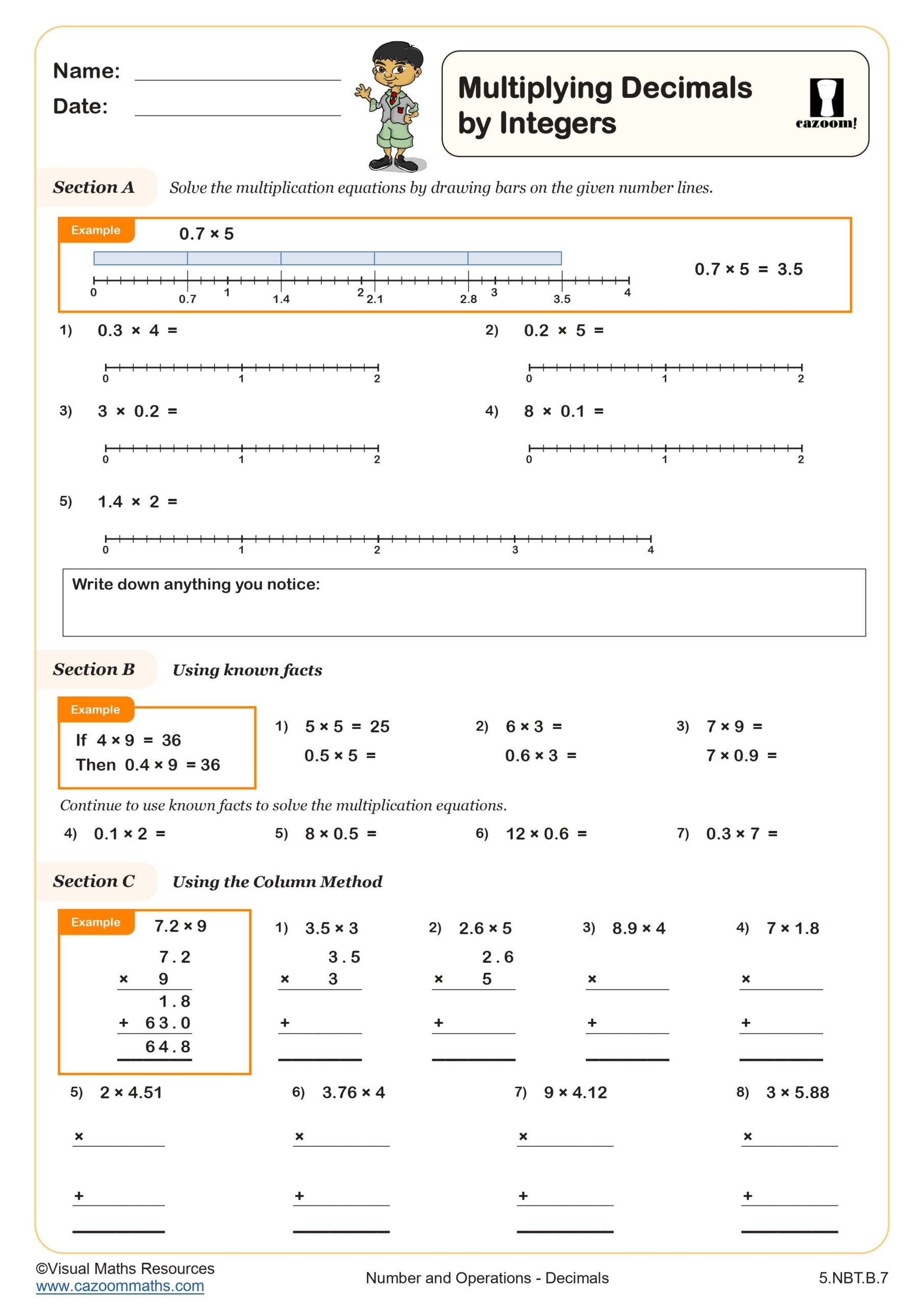
Multiply Decimals Using Gattegno Charts by 10, 100, 1000
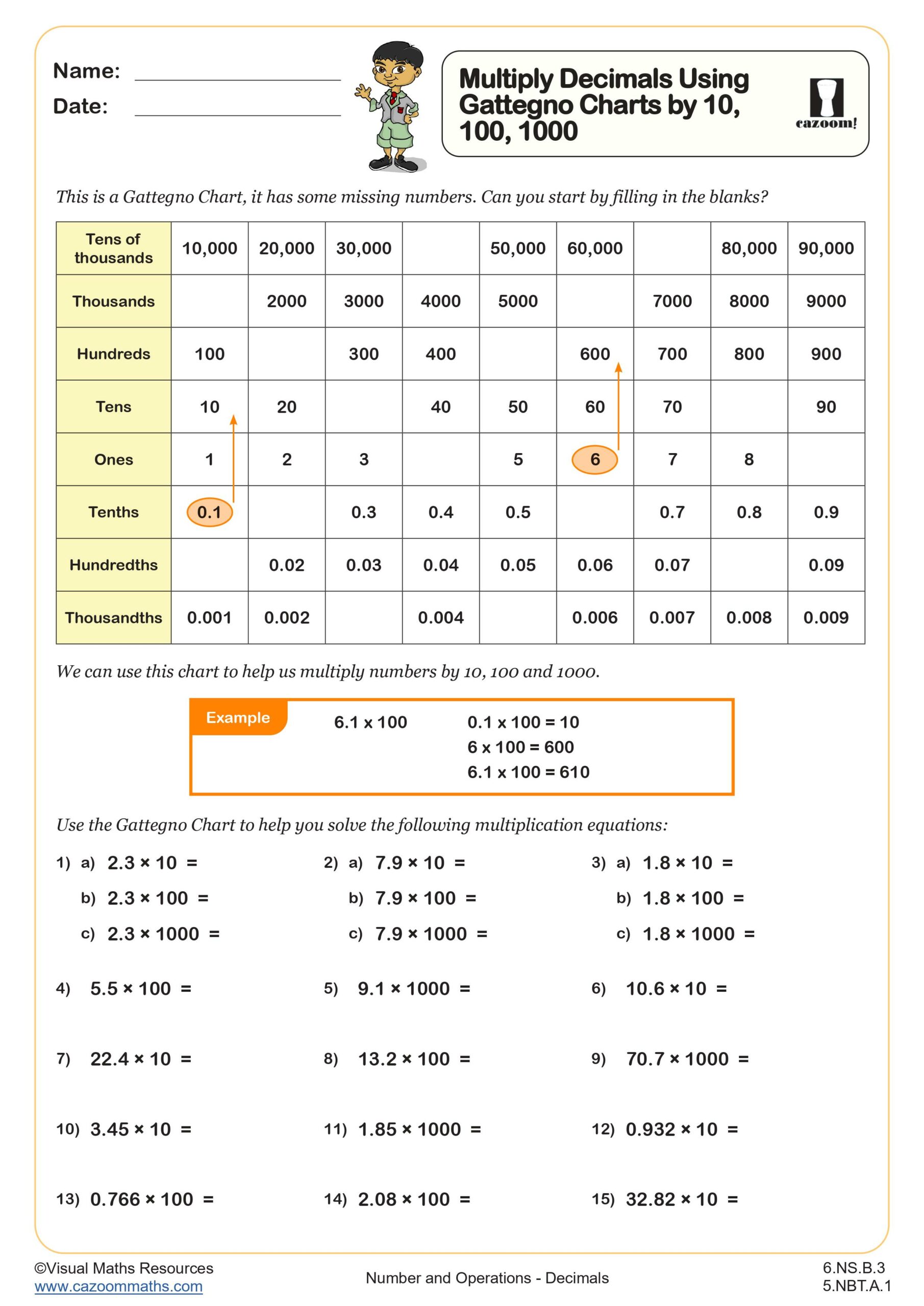
Multiplying and Dividing Decimals
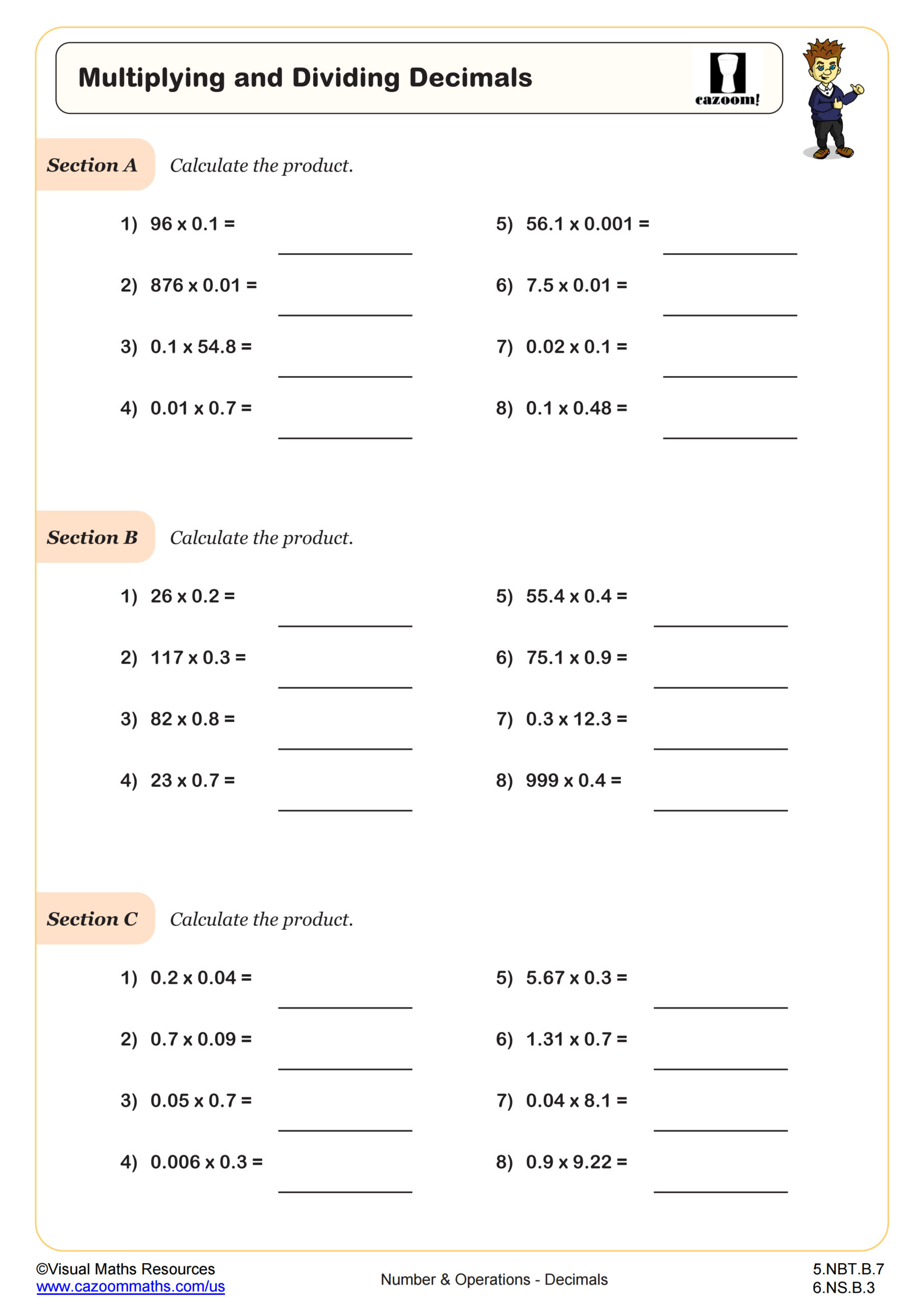
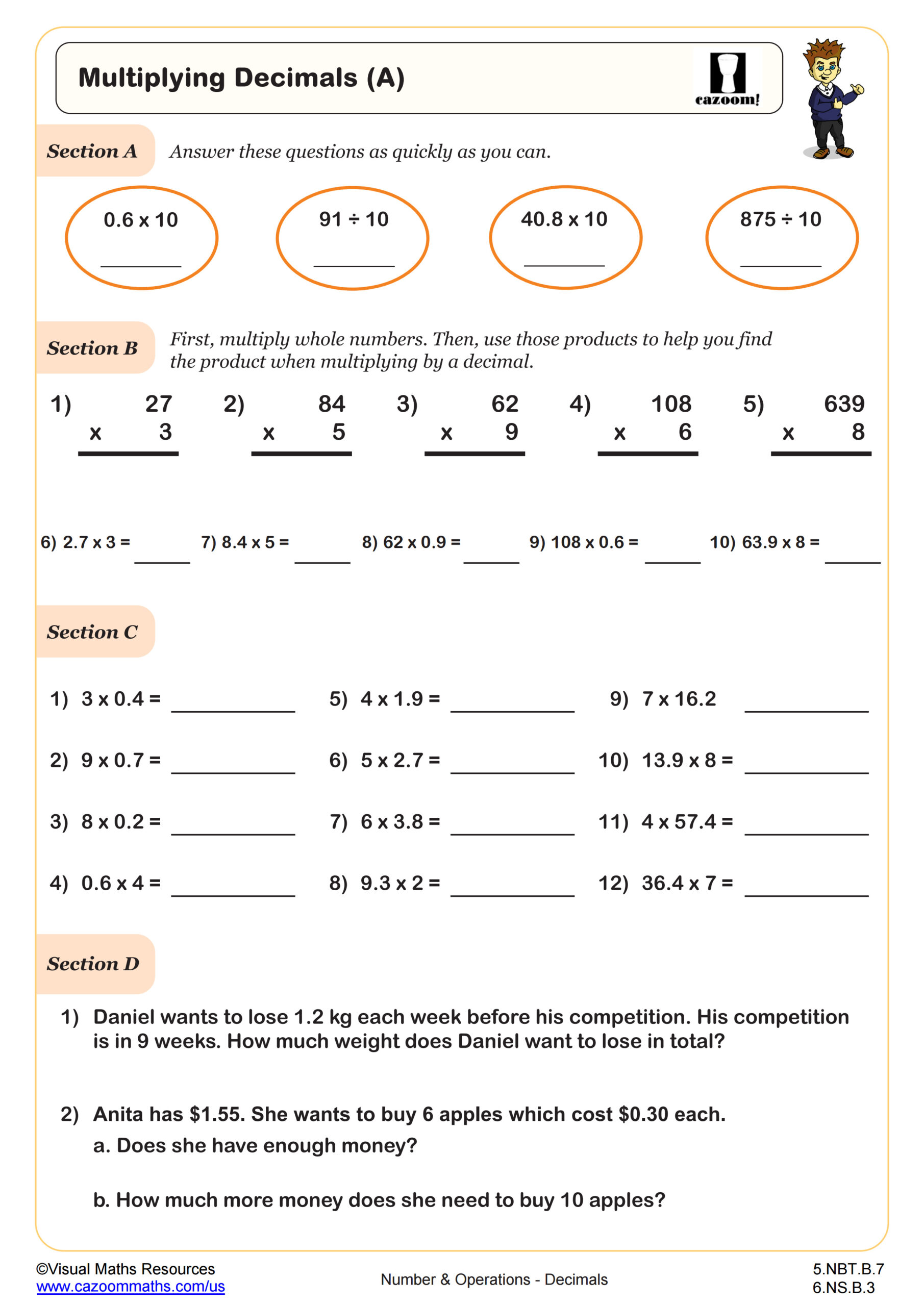
Multiplying Decimals (A)
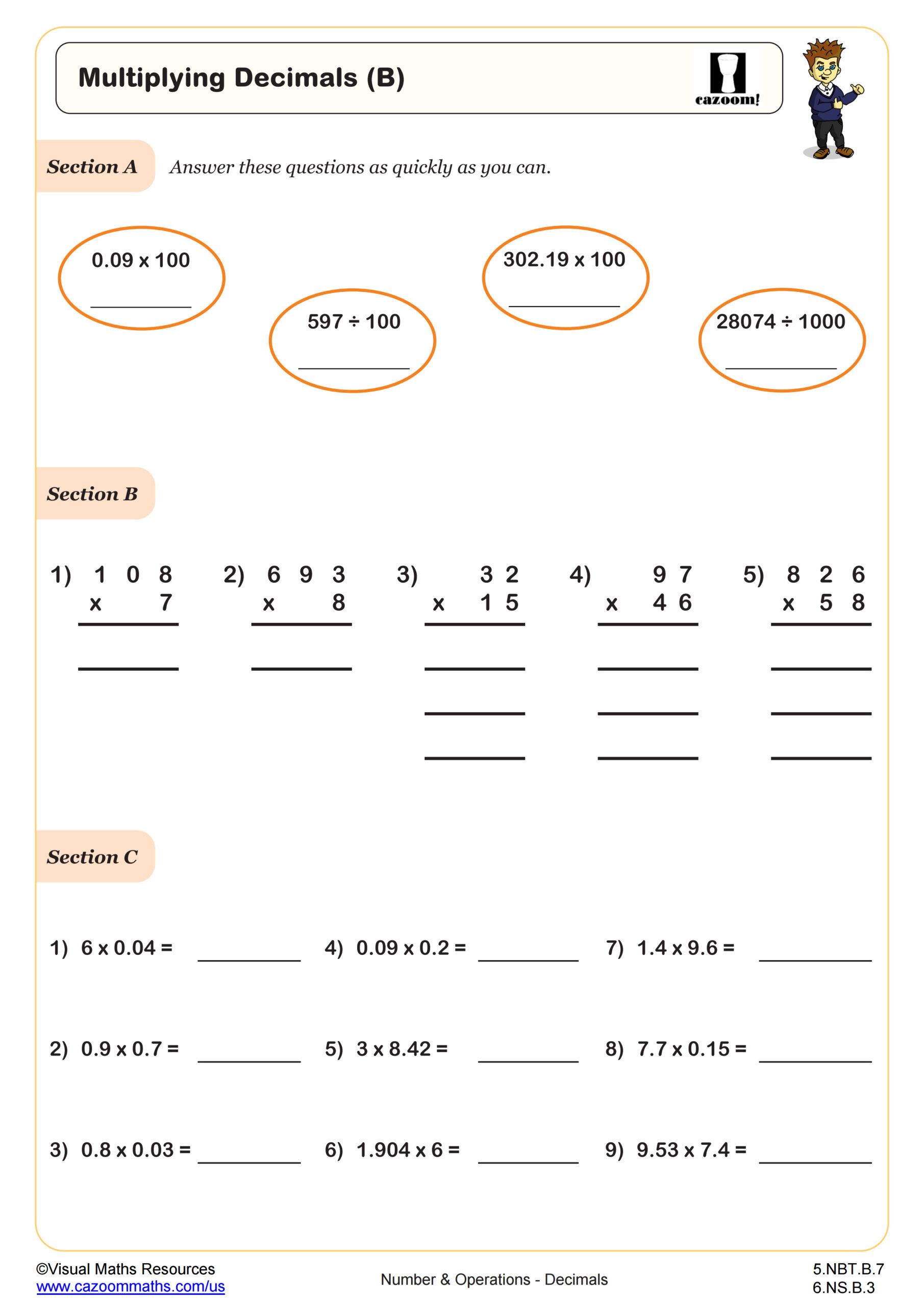
Multiplying Decimals (B)
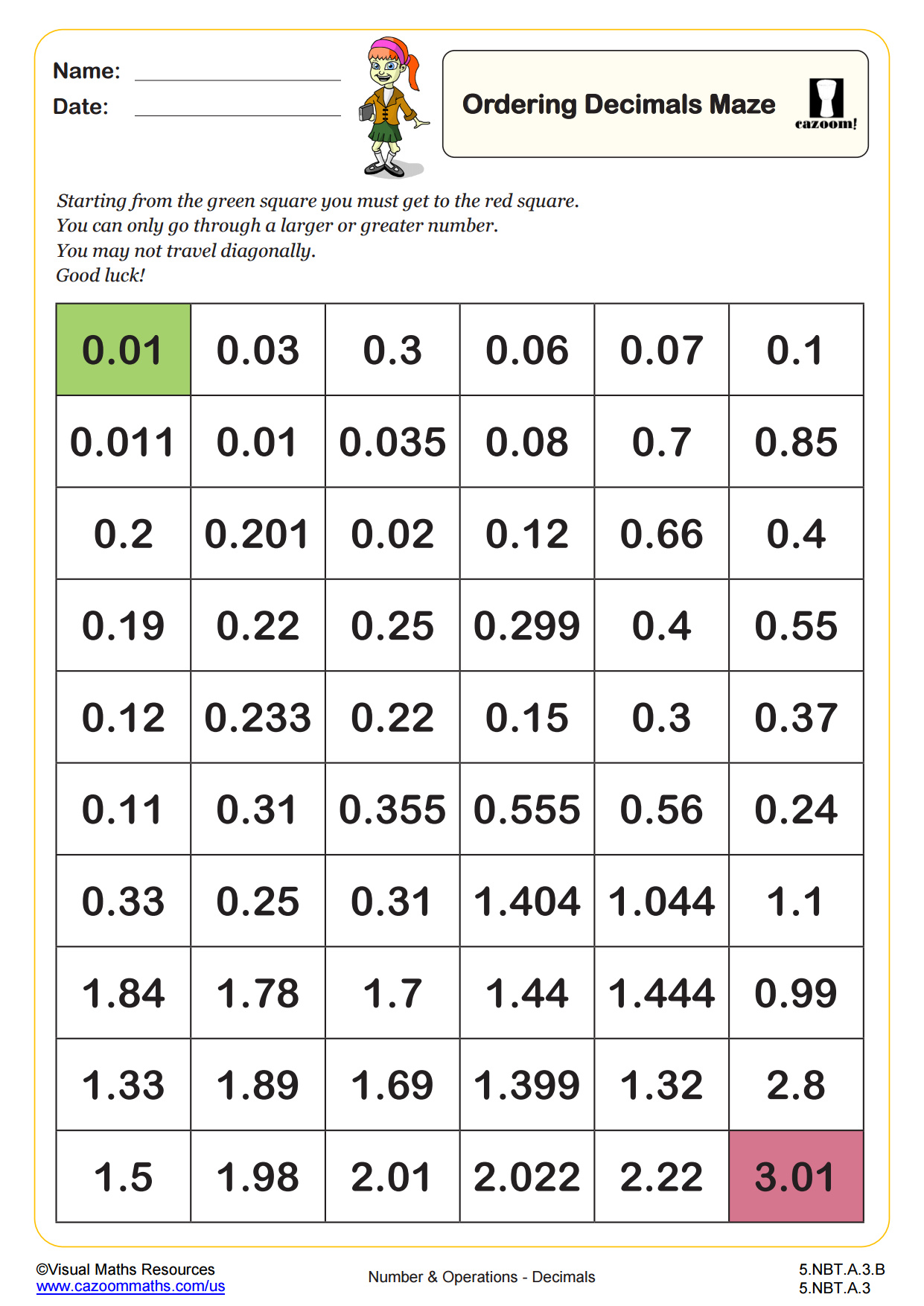
Ordering Decimals Maze
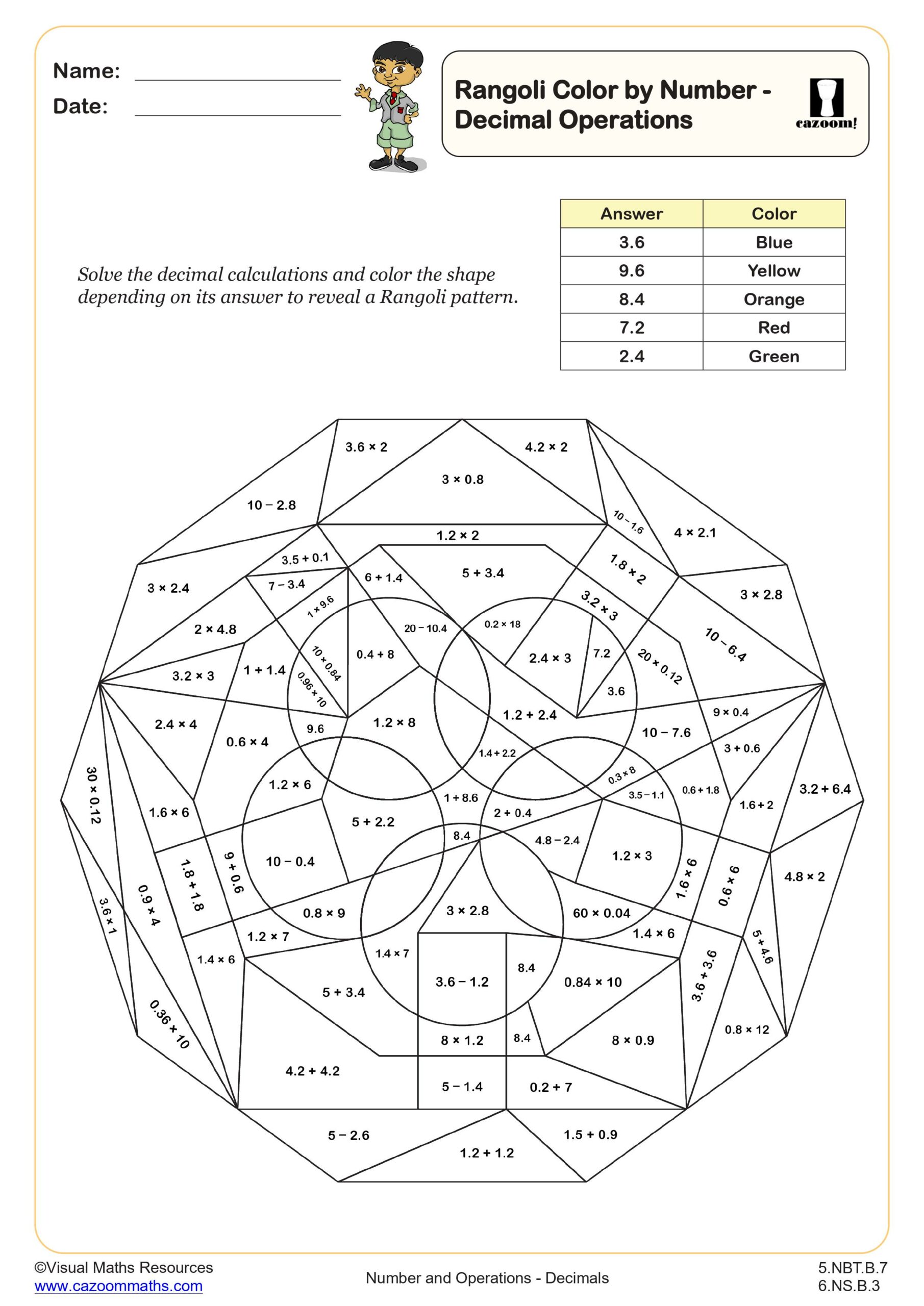
Rangoli Color by Number - Decimal Operations
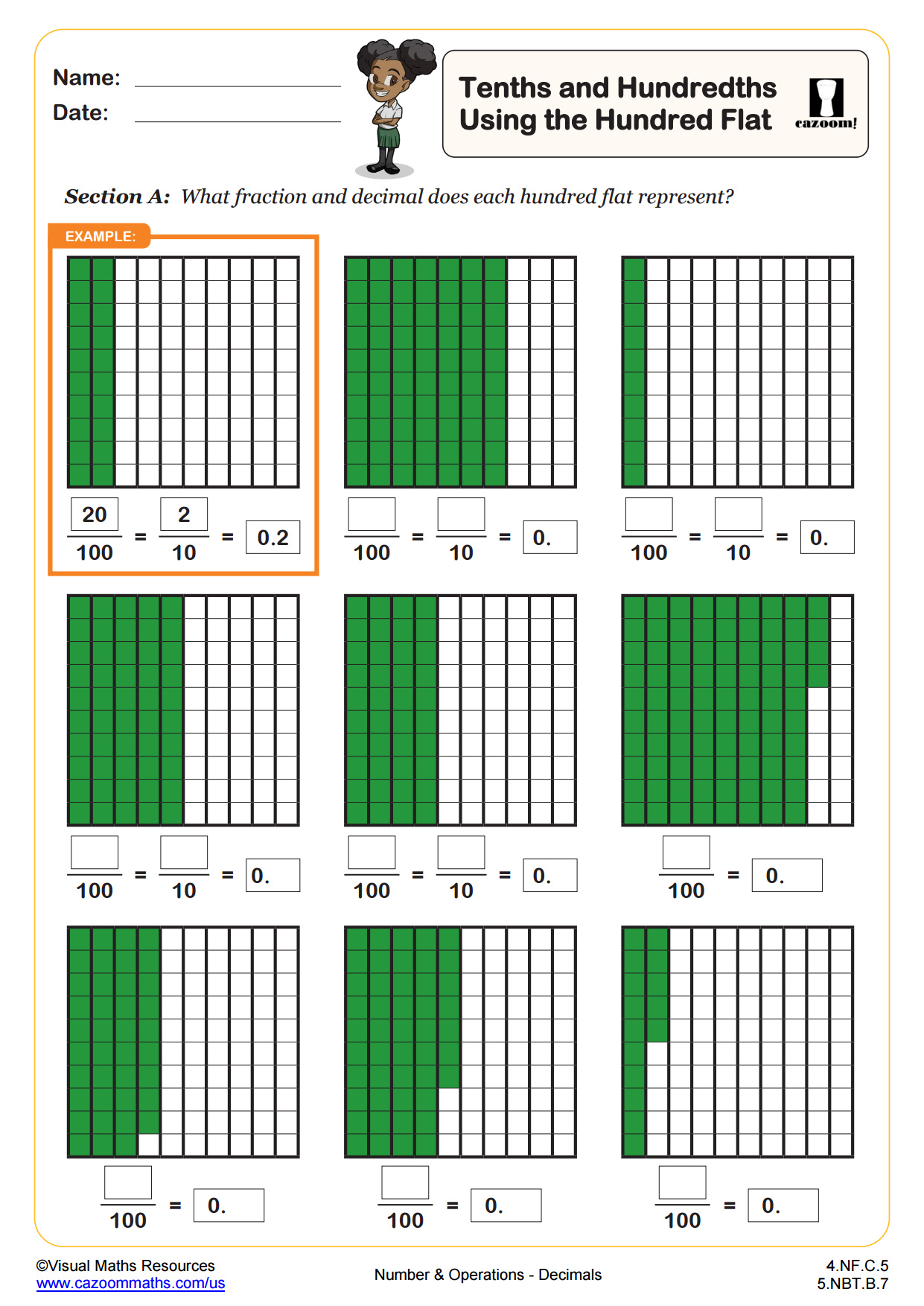
Tenths And Hundredths Using The Hundred Flat
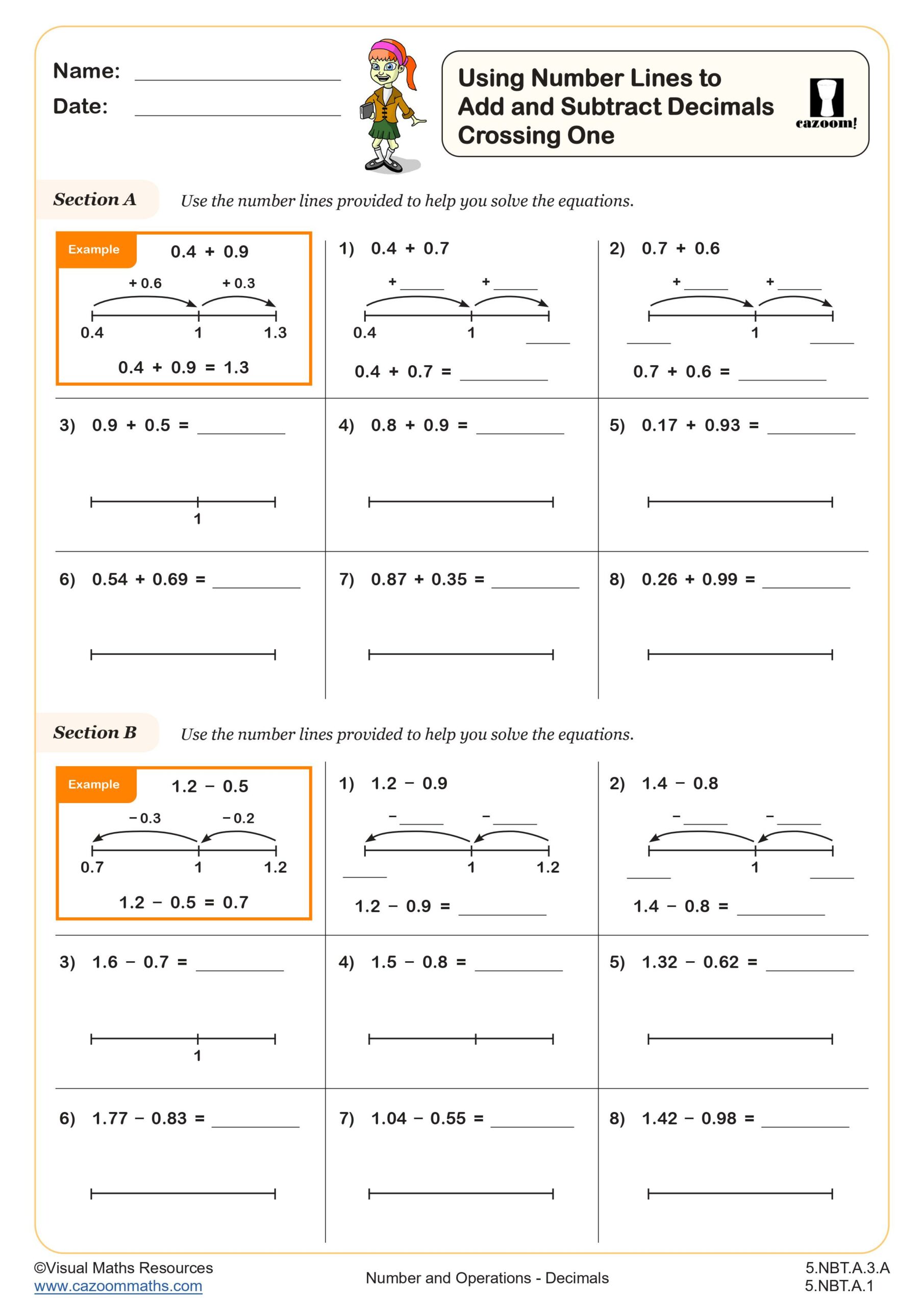
Using Number Lines to Add and Subtract Decimals Crossing One
All worksheets are created by the team of experienced teachers at Cazoom Math.
What makes effective decimal practice 5th grade activities?
Effective decimal practice 5th grade activities build systematically from place value understanding through operations, aligning with Common Core standard 5.NBT.3 and 5.NBT.7. Students need repeated exposure to decimal models, place value charts, and word problems that require decimal reasoning in contexts like money and measurement.
Teachers notice that students who master decimal practice through varied problem types show stronger performance on standardized assessments. The most successful activities include visual representations alongside numerical work, helping students connect abstract decimal concepts to concrete models they can manipulate and understand.
How do 5th grade decimal worksheets differ from 4th grade work?
Fifth grade decimal worksheets extend beyond 4th grade work by introducing operations with decimals and more complex place value relationships. While 4th graders focus on decimal notation and comparing decimals to hundredths, 5th grade math decimals worksheets require students to add, subtract, multiply, and divide with decimals to thousandths.
This progression reflects the Common Core's developmental approach where students first understand decimal meaning before applying operations. Teachers find that students who struggled with fraction concepts in earlier grades often experience renewed success with decimals when presented through place value frameworks rather than fraction equivalencies.
Why do students make errors when multiplying decimals?
Students make errors when multiplying decimals because they often apply whole number rules without considering decimal point placement. Many students multiply the digits correctly but struggle to determine where the decimal point belongs in their answer, frequently placing it in the wrong position or omitting it entirely.
Teachers observe that students benefit from learning the counting method for decimal placement: count the total decimal places in both factors, then place the decimal point that many places from the right in the product. This systematic approach reduces guessing and helps students develop confidence with decimal multiplication across various problem contexts.
How should teachers use these decimal worksheets effectively?
Teachers should use these decimal worksheets as targeted practice after introducing concepts through concrete manipulatives and visual models. The most effective approach involves assigning specific worksheets that match current lesson objectives rather than random practice, ensuring students work with appropriate difficulty levels.
Many teachers find success using the answer keys for immediate feedback during guided practice sessions. Students can check their work step-by-step, identifying errors while the problem-solving process remains fresh in their minds. This approach builds mathematical confidence and helps students recognize their own misconceptions before they become ingrained habits.