5th Grade Division Worksheets
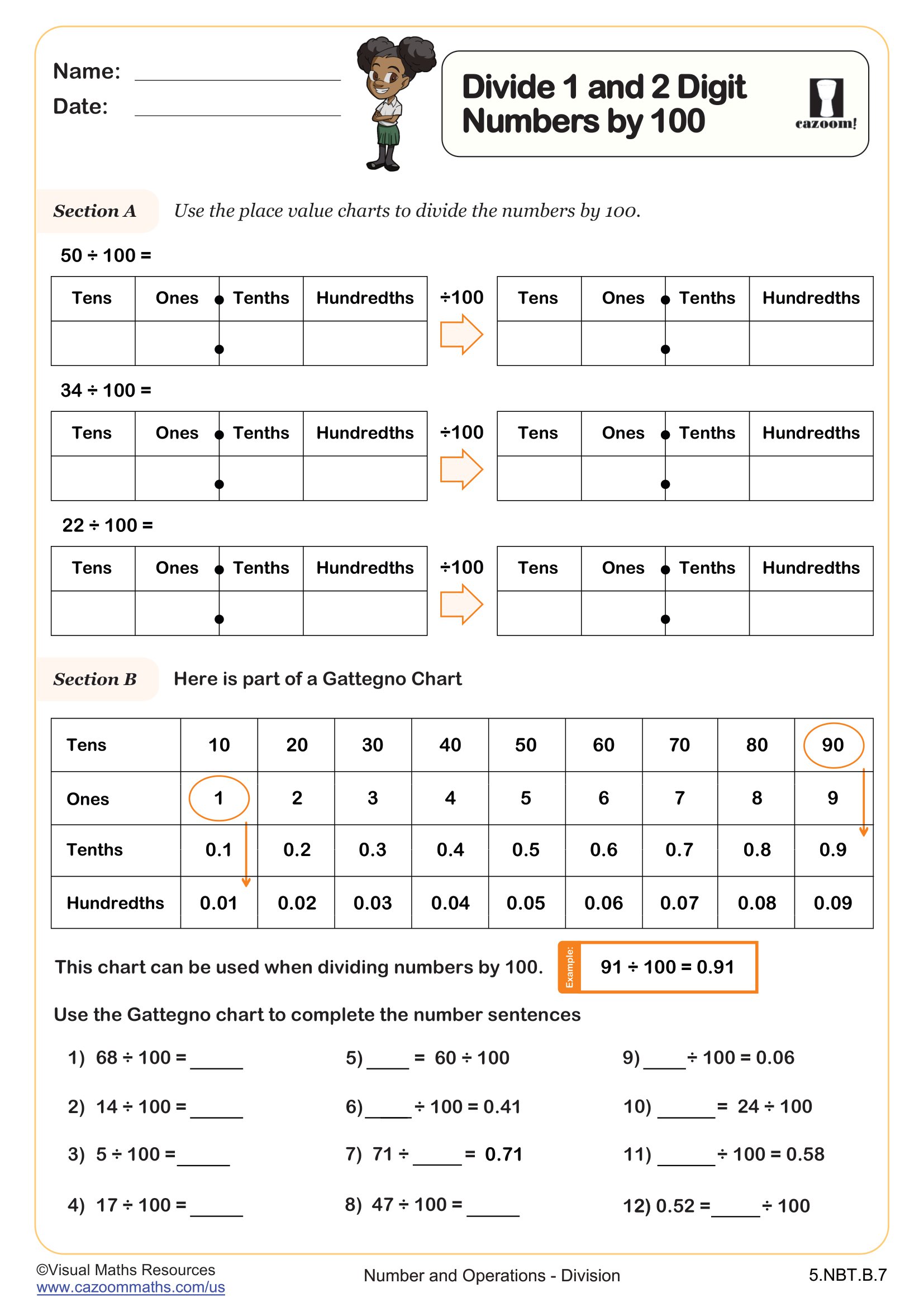
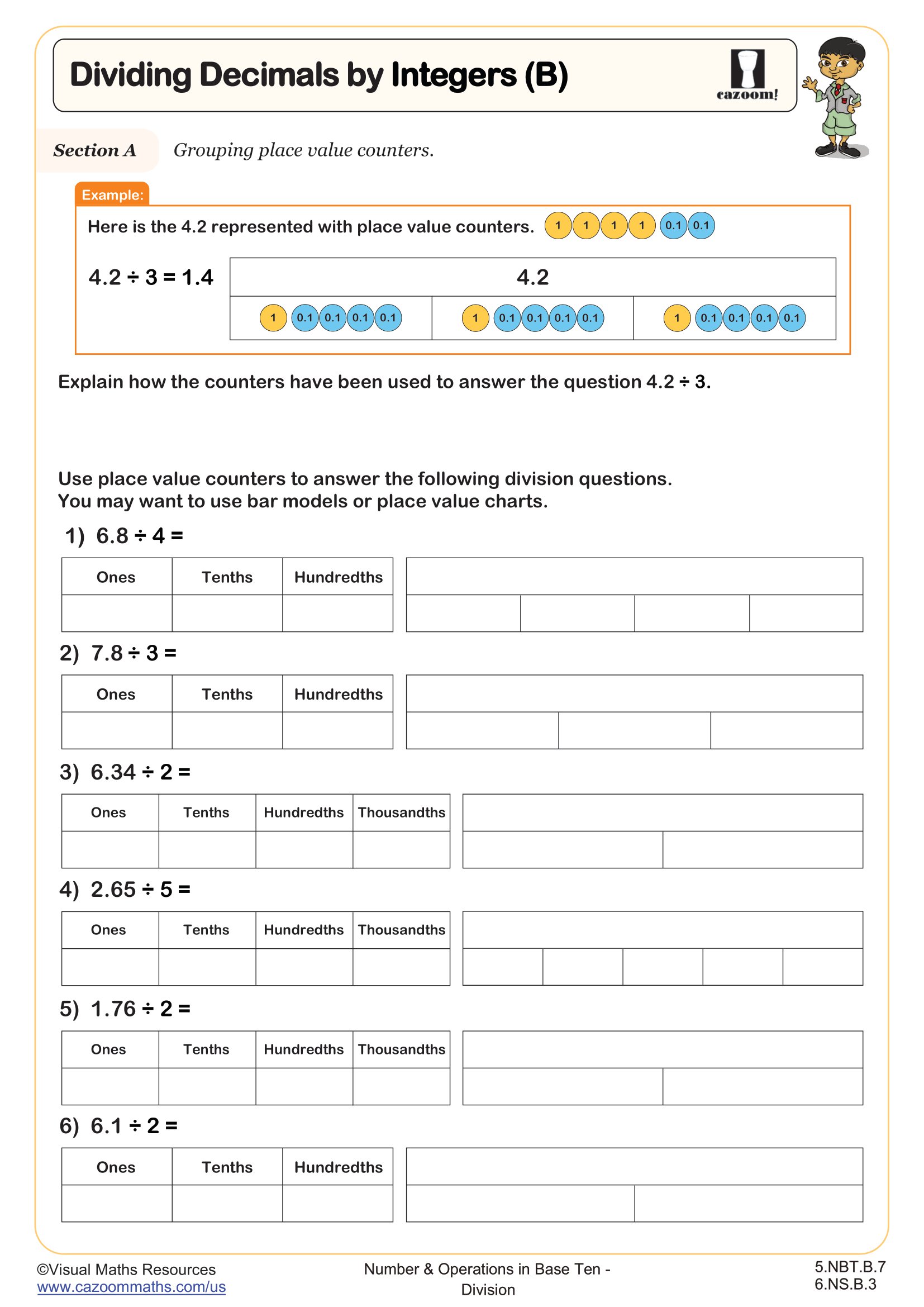
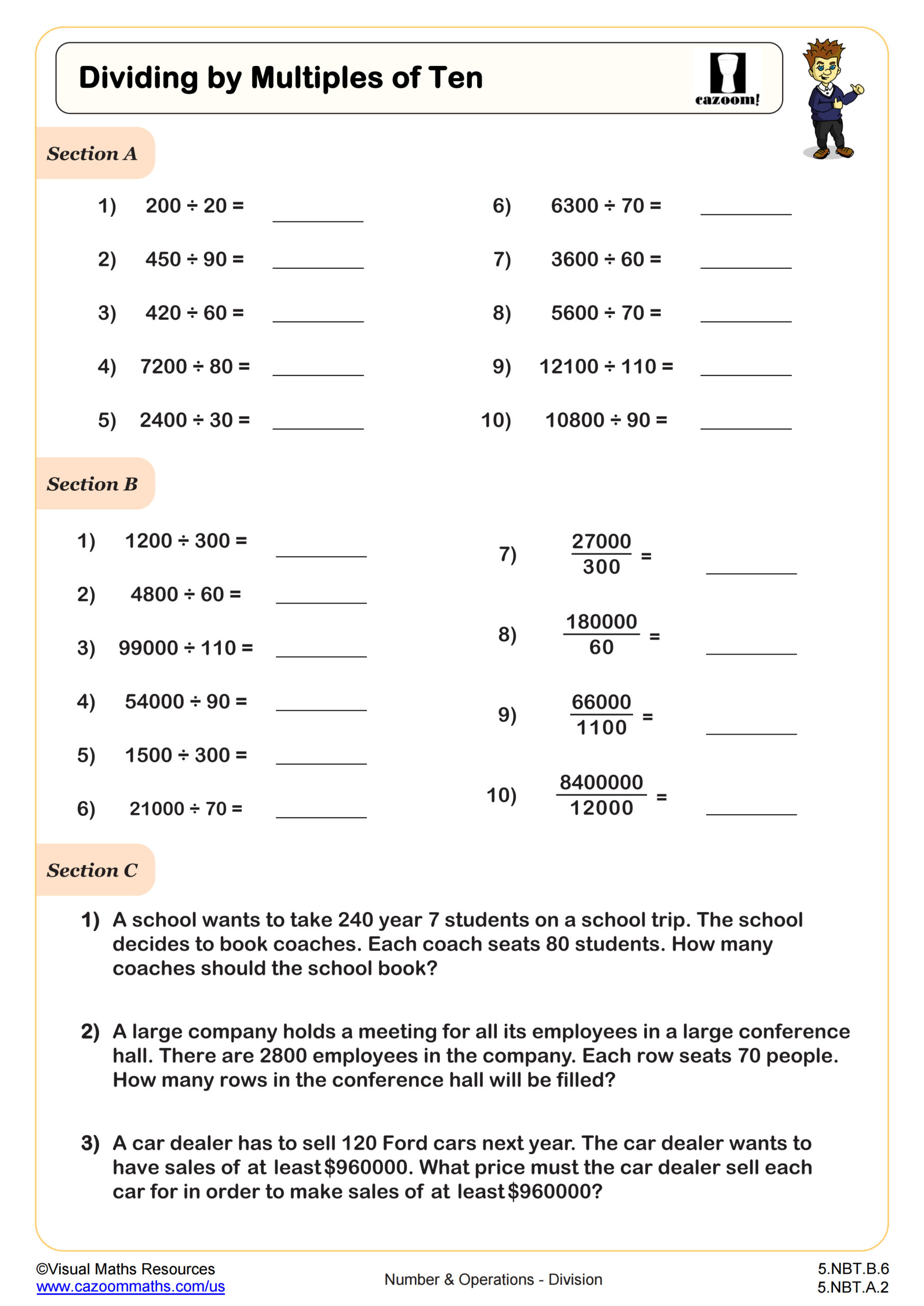
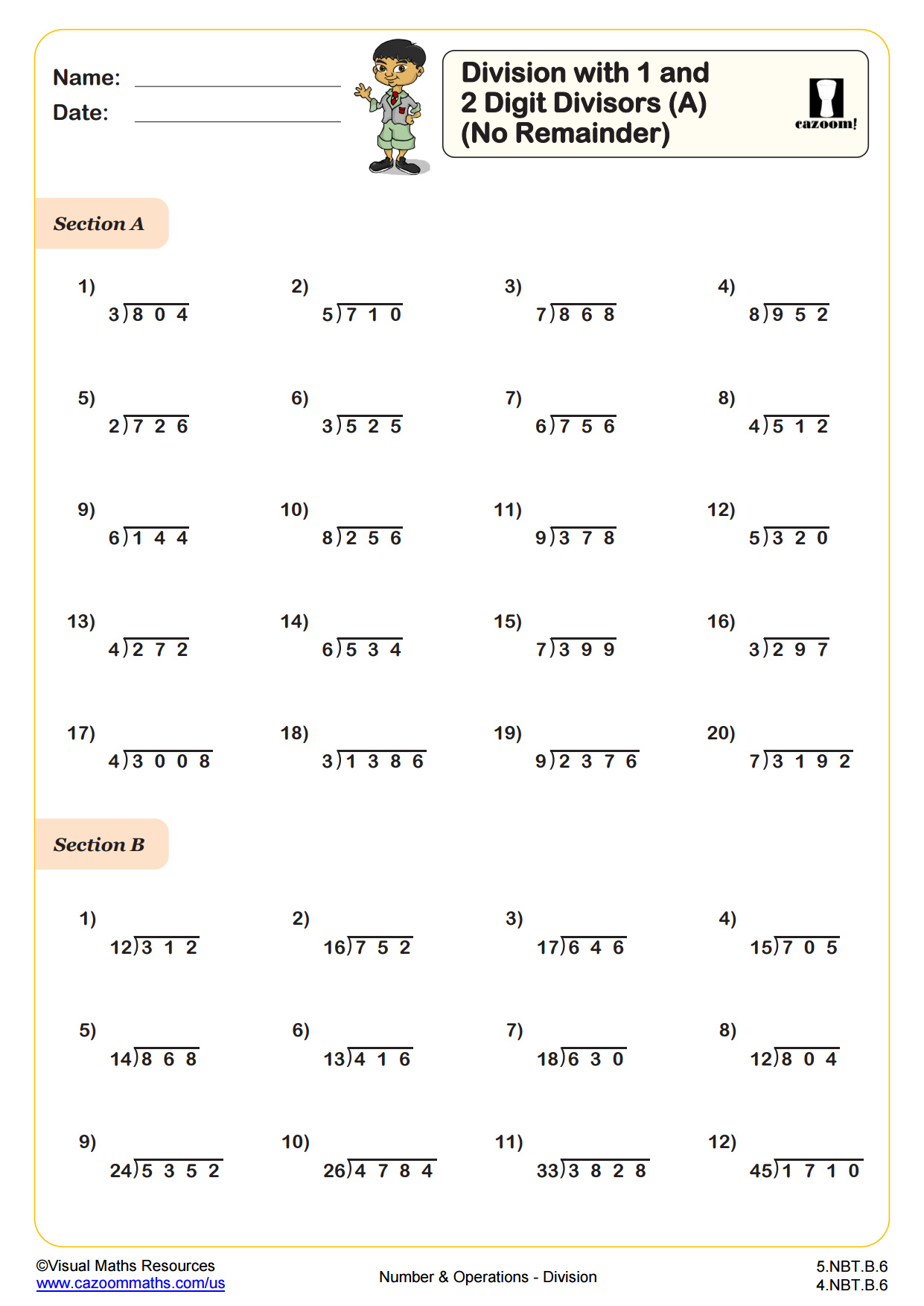
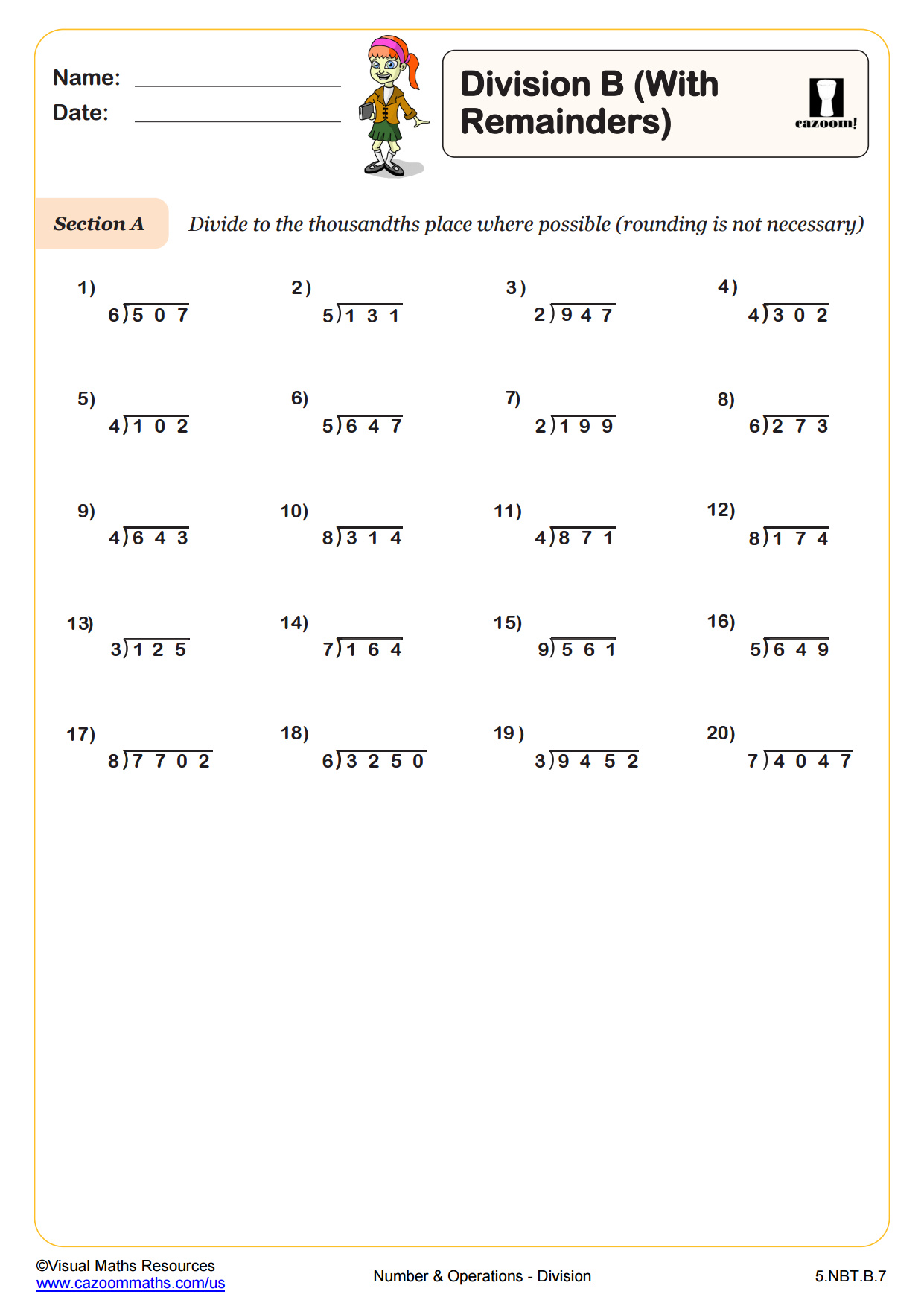
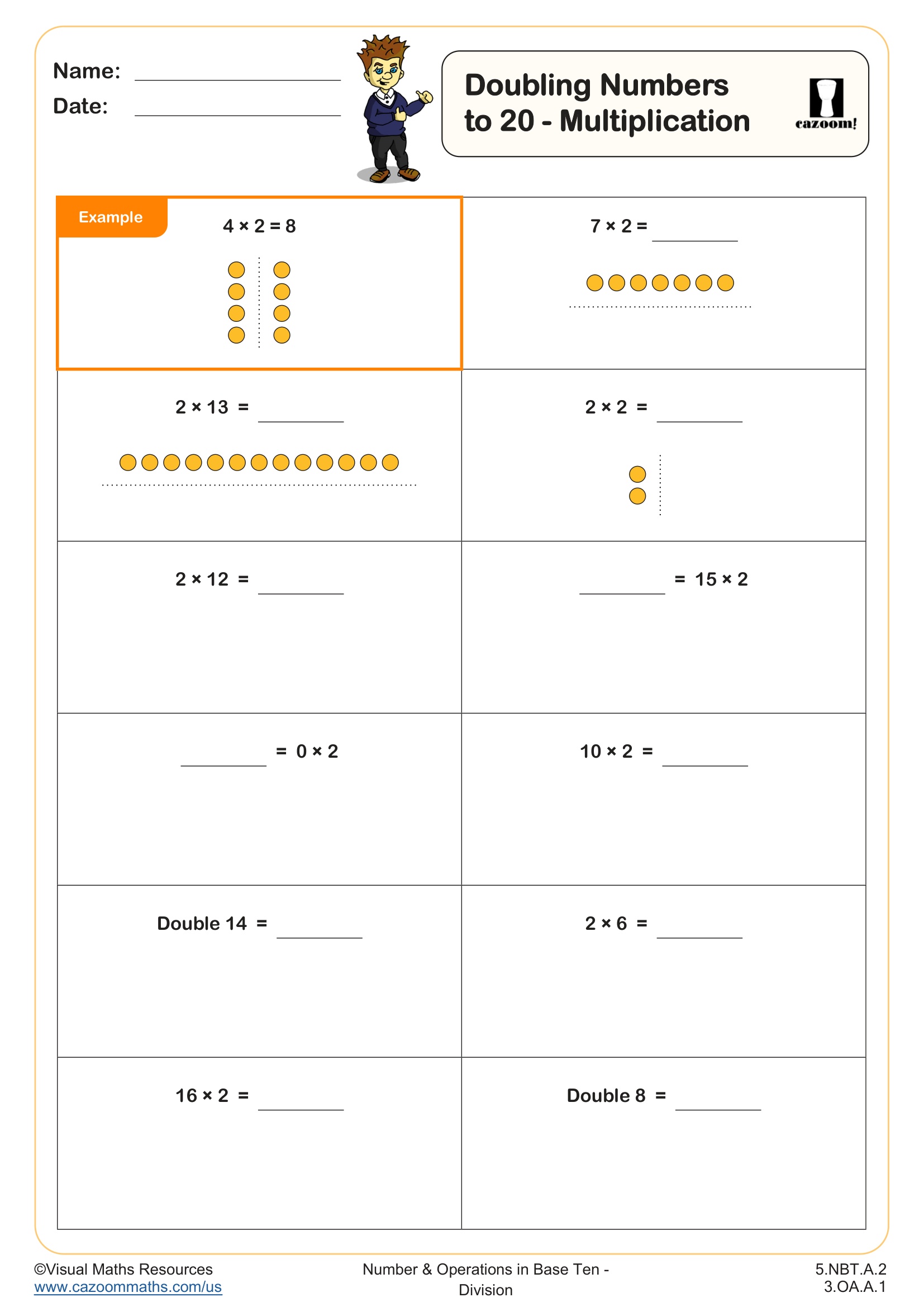
All worksheets are created by the team of experienced teachers at Cazoom Math.
What types of 5th grade division problems should students master?
Students should practice multi-digit division with both whole number and decimal quotients, including problems that require regrouping and those with remainders. The Common Core emphasizes fluency with the standard algorithm while maintaining conceptual understanding through area models and partial quotients strategies.
Teachers frequently observe that students make errors when the dividend has zeros in the middle positions, such as 4,036 ÷ 23. Many students forget to include placeholder zeros in their quotients, leading to incorrect answers. These division worksheets grade 5 PDF with answers help teachers identify and address this specific misconception through targeted practice problems.
How does 5th grade division differ from earlier grade levels?
Fifth grade division introduces multi-digit divisors and requires students to estimate quotient digits using multiplication facts and place value understanding. Unlike 4th grade division that focuses mainly on single-digit divisors, 5th graders must develop strategies for dividing by numbers like 24, 36, or 48.
The complexity increases significantly because students must coordinate multiple skills simultaneously. They need strong multiplication fact fluency, place value concepts, and subtraction accuracy. Teachers notice that students who struggled with 4th grade fact fluency often hit a wall with these more complex problems, making diagnostic assessment through division homework 5th grade assignments particularly valuable for identifying skill gaps.
What should teachers focus on when students struggle with remainders?
Students need explicit instruction on interpreting remainders contextually, whether to express them as whole numbers, fractions, or decimals depending on the problem situation. Many students memorize the division algorithm without understanding when and how to handle leftover amounts appropriately.
Classroom experience shows that word problems involving remainders trip up even students who can execute the algorithm correctly. For example, when calculating how many buses are needed for 127 students with 24 seats per bus, students often give the answer as 5 remainder 7 instead of recognizing they need 6 buses. These worksheets include real-world contexts that help students practice remainder interpretation skills practical for problem-solving success.
How can teachers use these worksheets to differentiate instruction?
The answer keys allow teachers to quickly sort students into groups based on their division proficiency levels and error patterns. Teachers can assign different worksheet sections to students based on their readiness, with some focusing on two-digit divisors while others work on decimal quotients or remainder problems.
Effective differentiation involves analyzing student errors systematically rather than just marking problems wrong. When teachers review the completed worksheets, they can identify whether students need more work on estimation strategies, multiplication facts, or place value concepts. This targeted approach helps teachers plan small group instruction and intervention more effectively than generic division for fifth graders practice.