5th Grade Estimation Worksheets
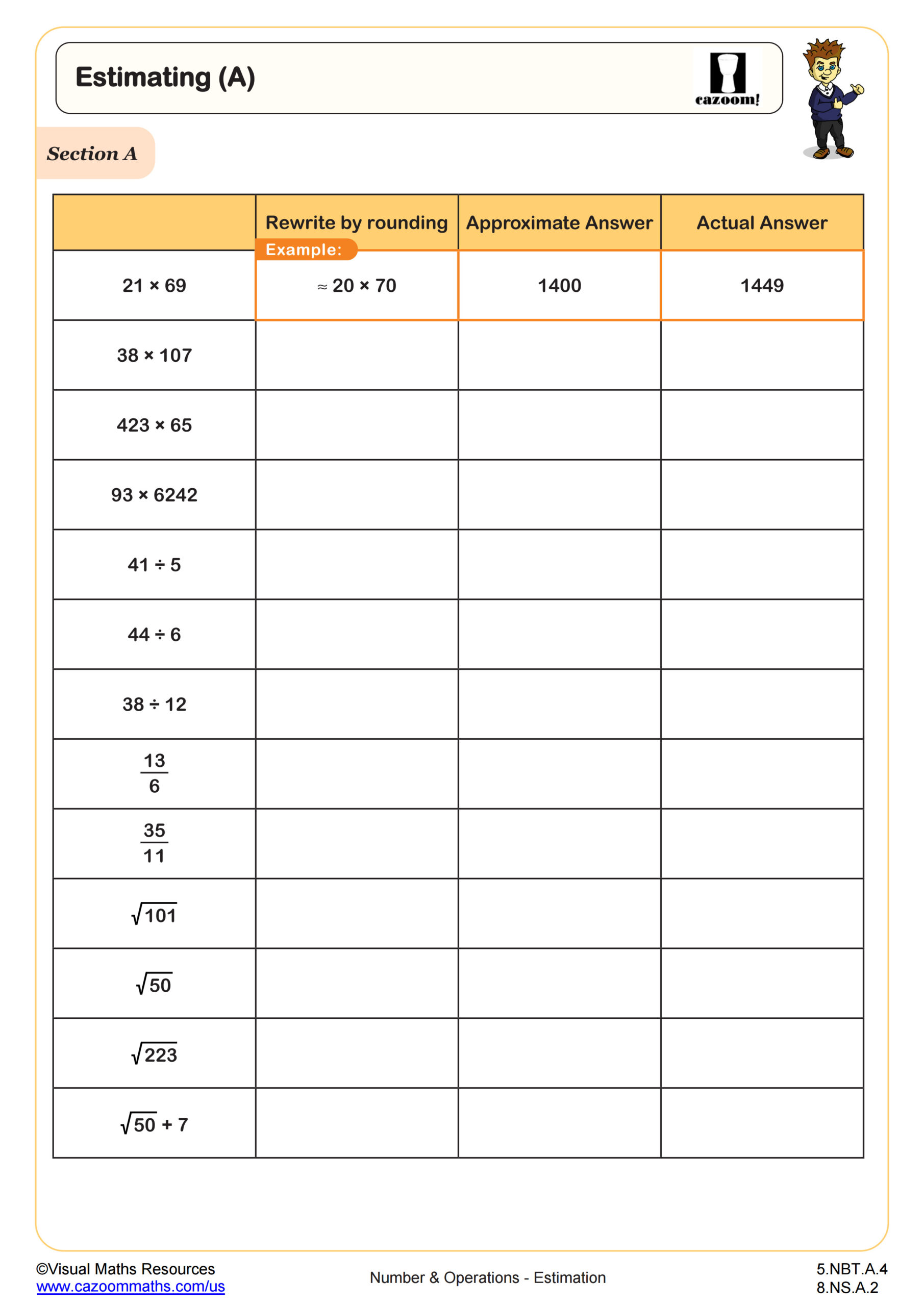
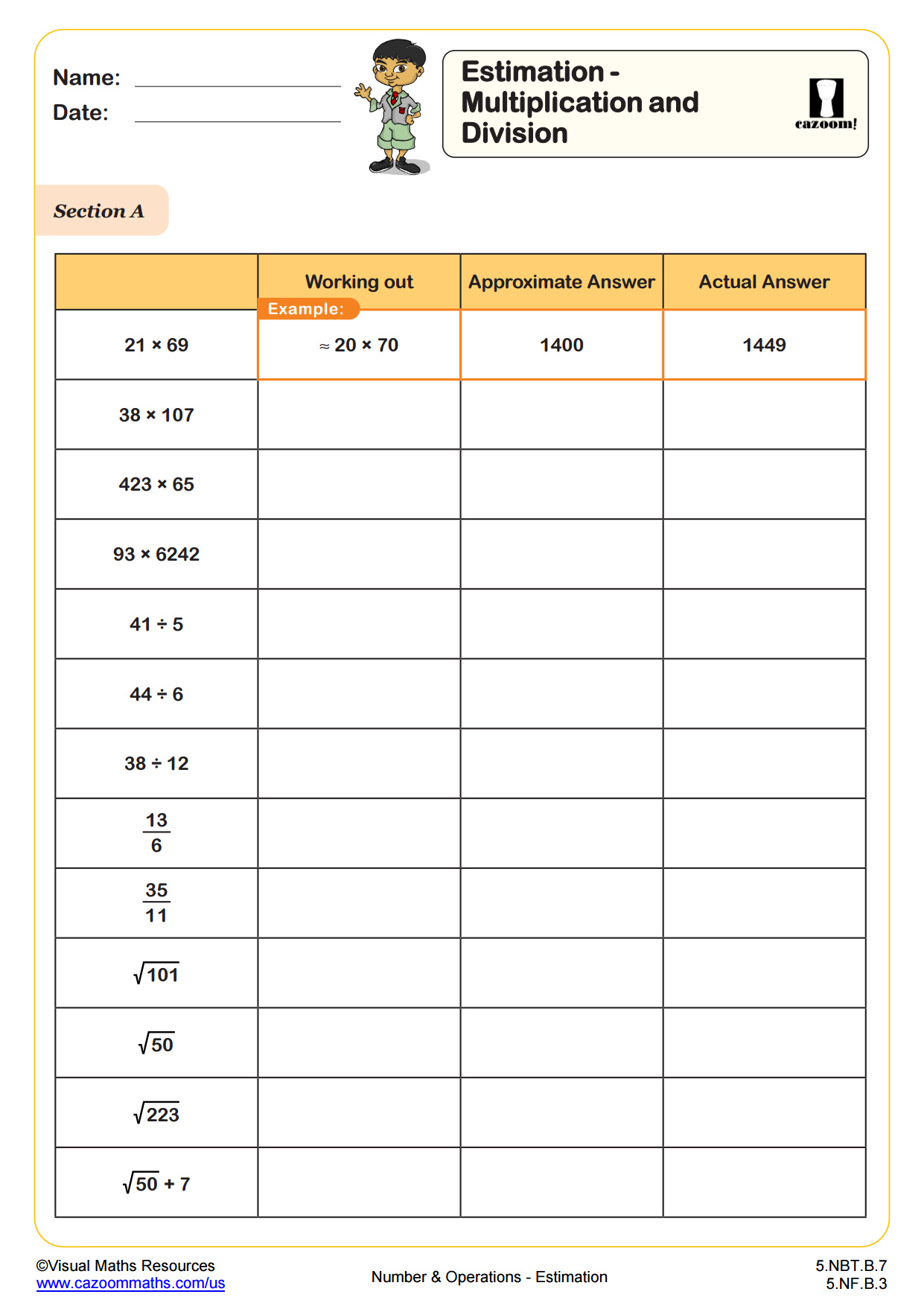
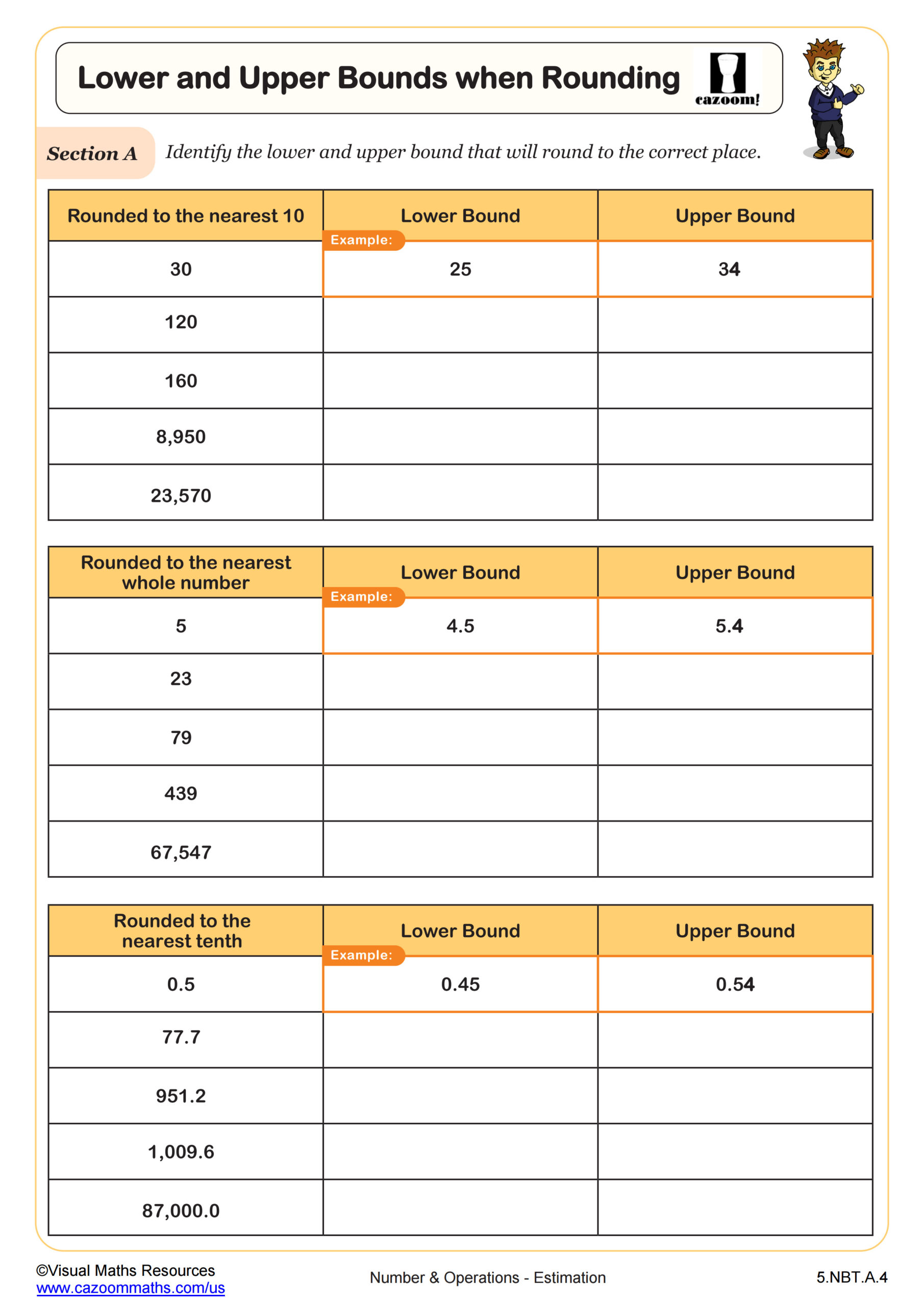
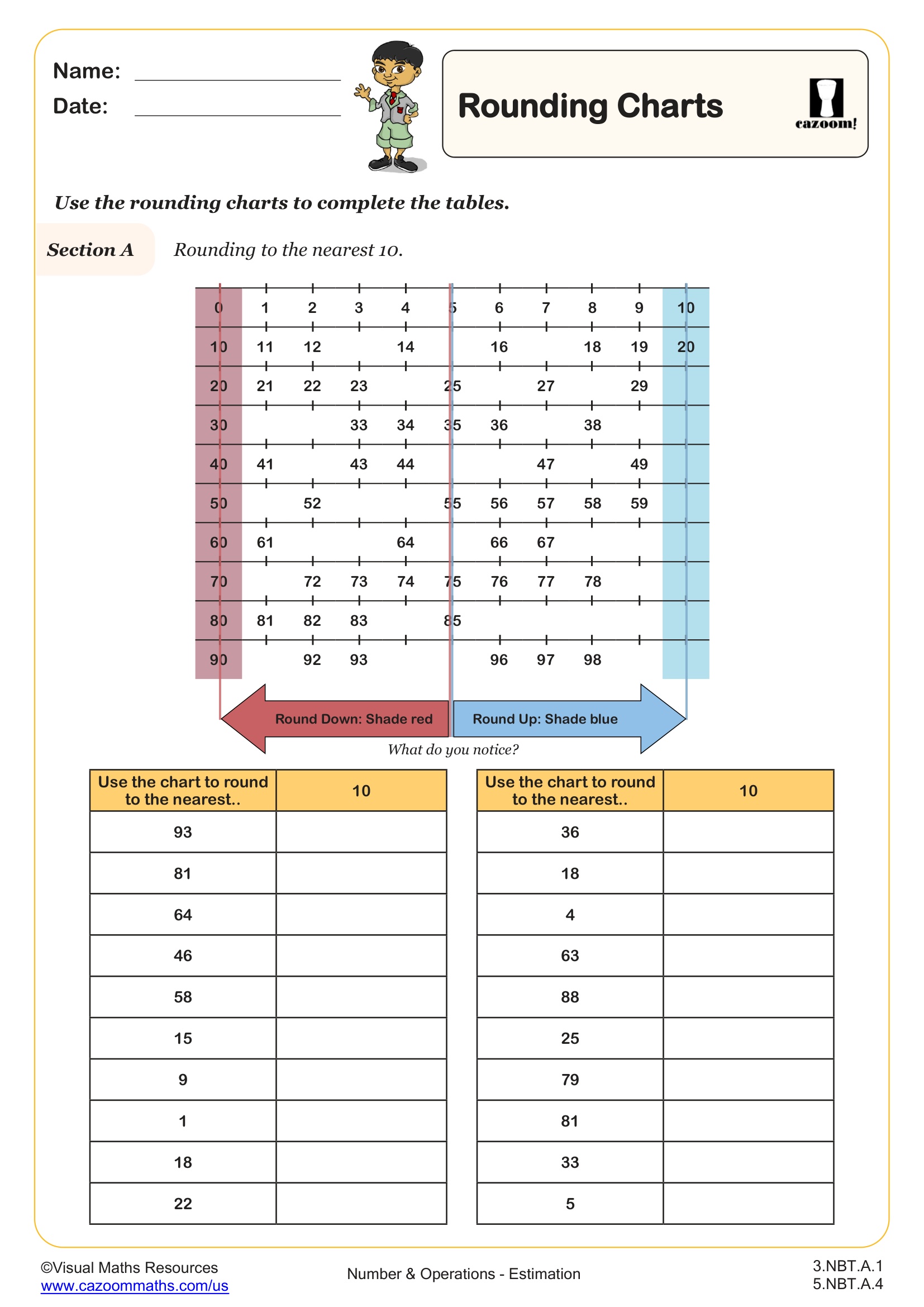
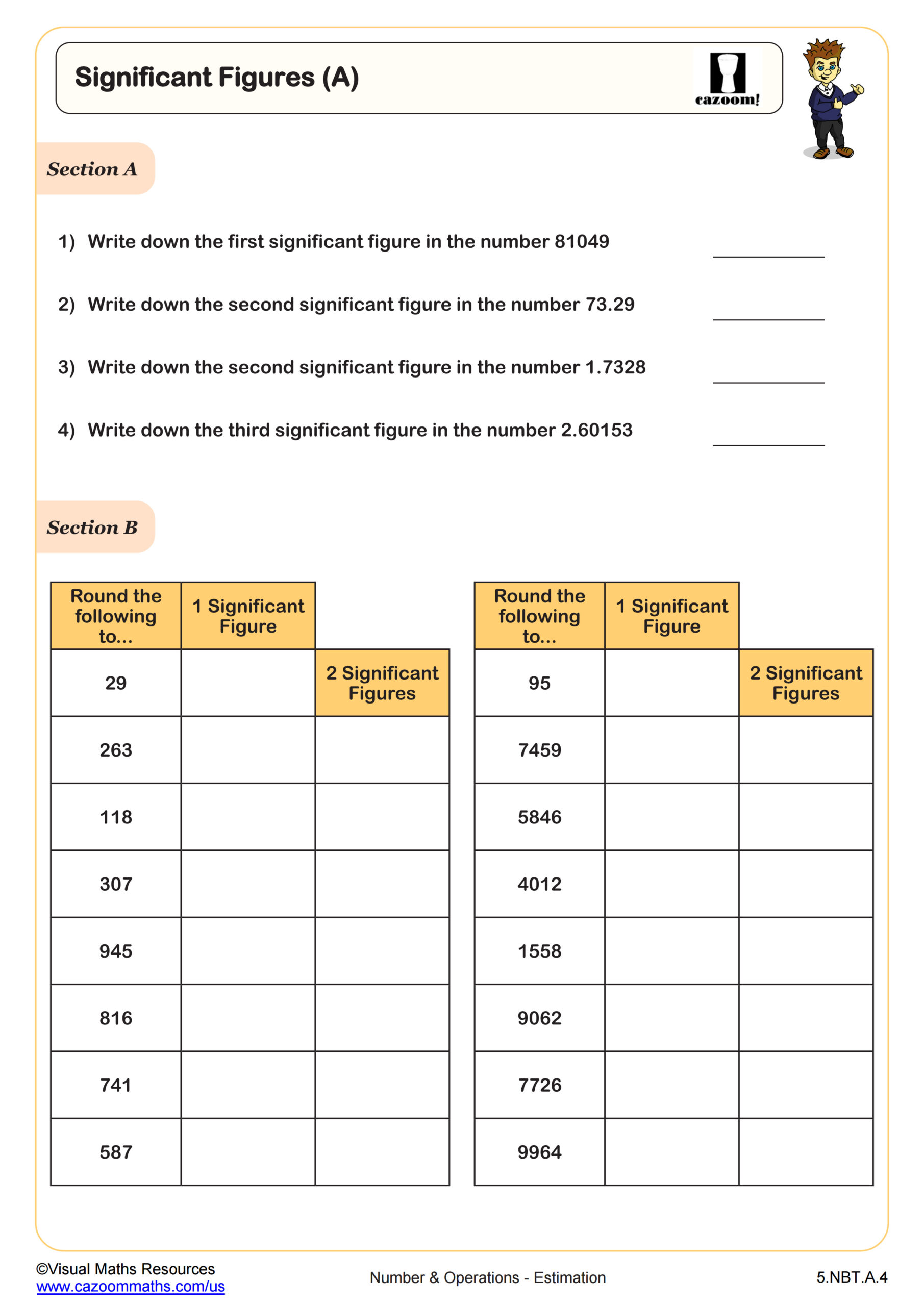
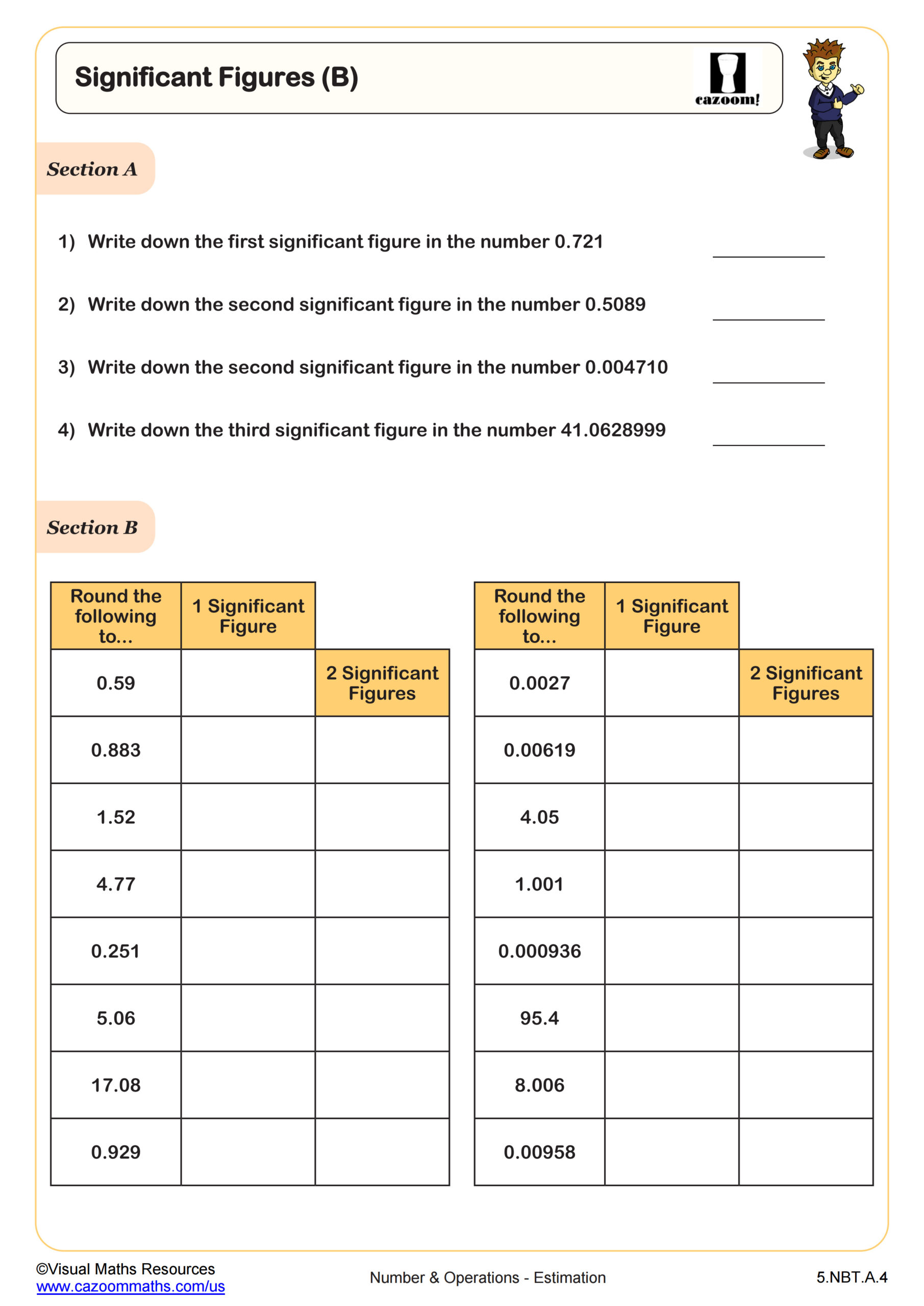
All worksheets are created by the team of experienced teachers at Cazoom Math.
What are the most effective estimation strategies grade 5 students should learn?
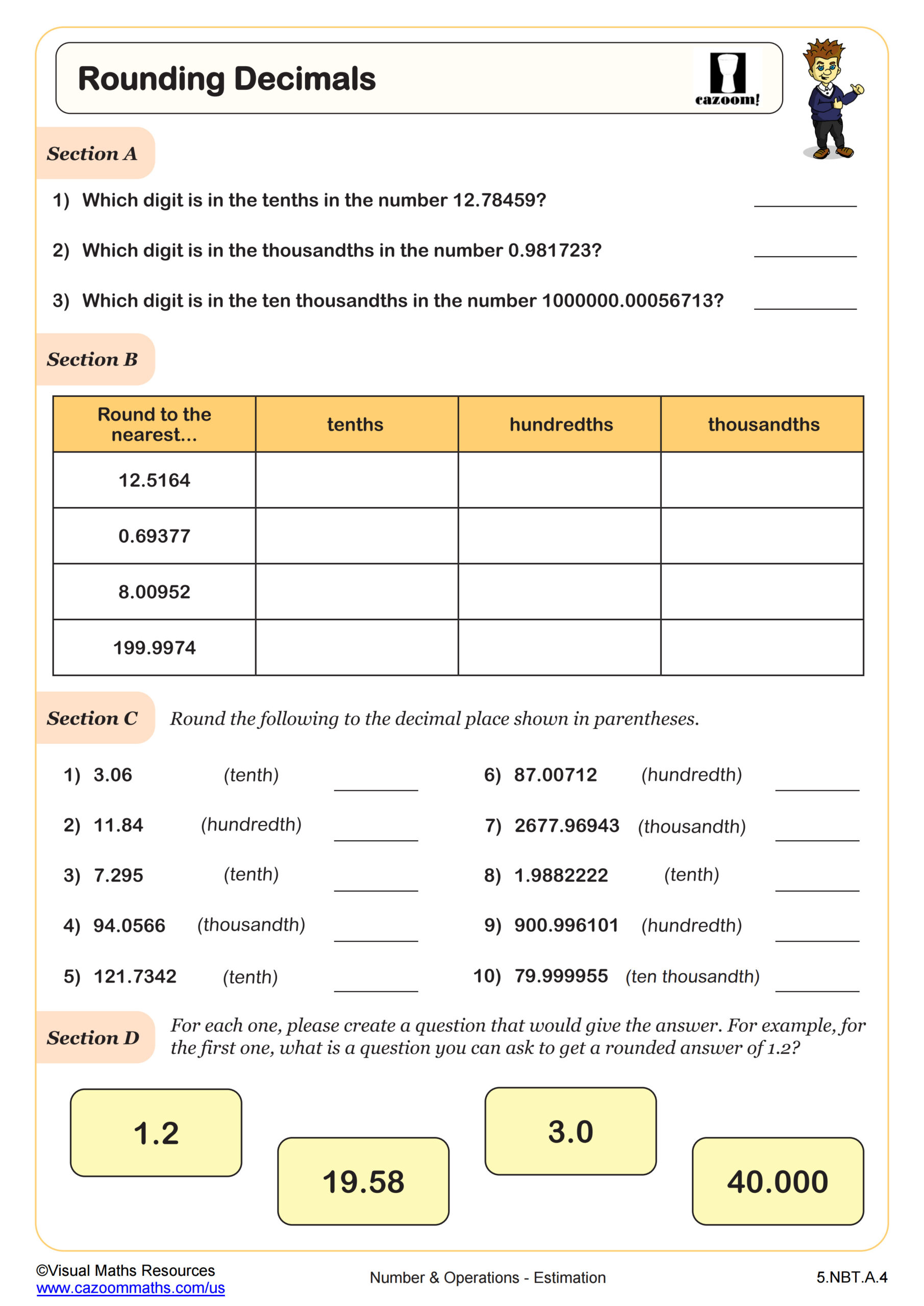
Fifth grade students should master four core estimation strategies: rounding to place value, front-end estimation, compatible numbers, and clustering. According to Common Core Standard 5.NBT.4, students need to use these strategies flexibly depending on the mathematical context and numbers involved.
Teachers frequently observe that students initially want to round every number to the nearest ten, even when working with large numbers like 4,847 + 3,921 where rounding to the nearest thousand would be more appropriate. The worksheets provide structured practice helping students recognize when to apply each strategy, such as using compatible numbers for mental multiplication (like treating 19 × 21 as 20 × 20) or front-end estimation for addition problems with multiple addends.
How do estimation skills progress from 4th to 6th grade?
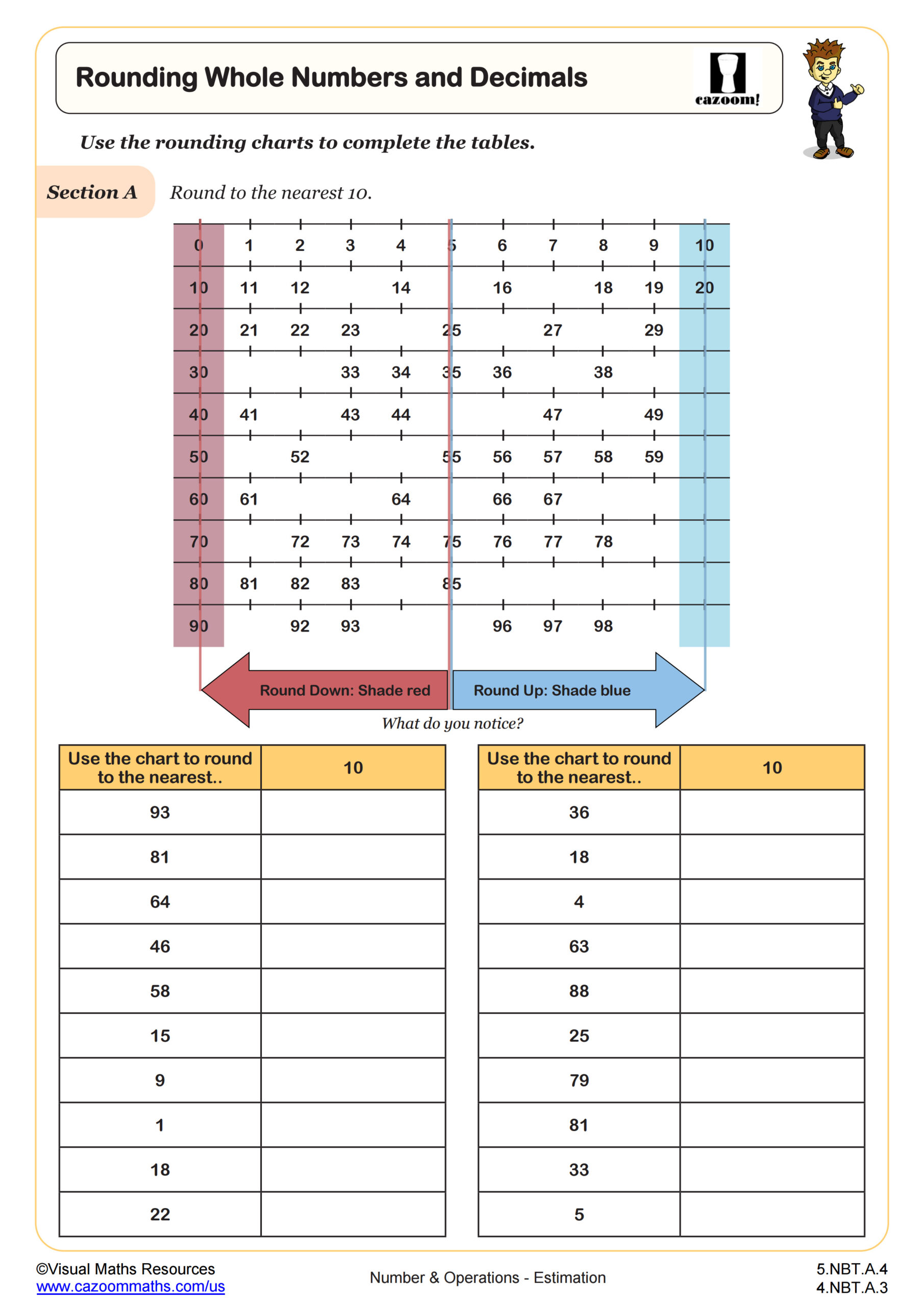
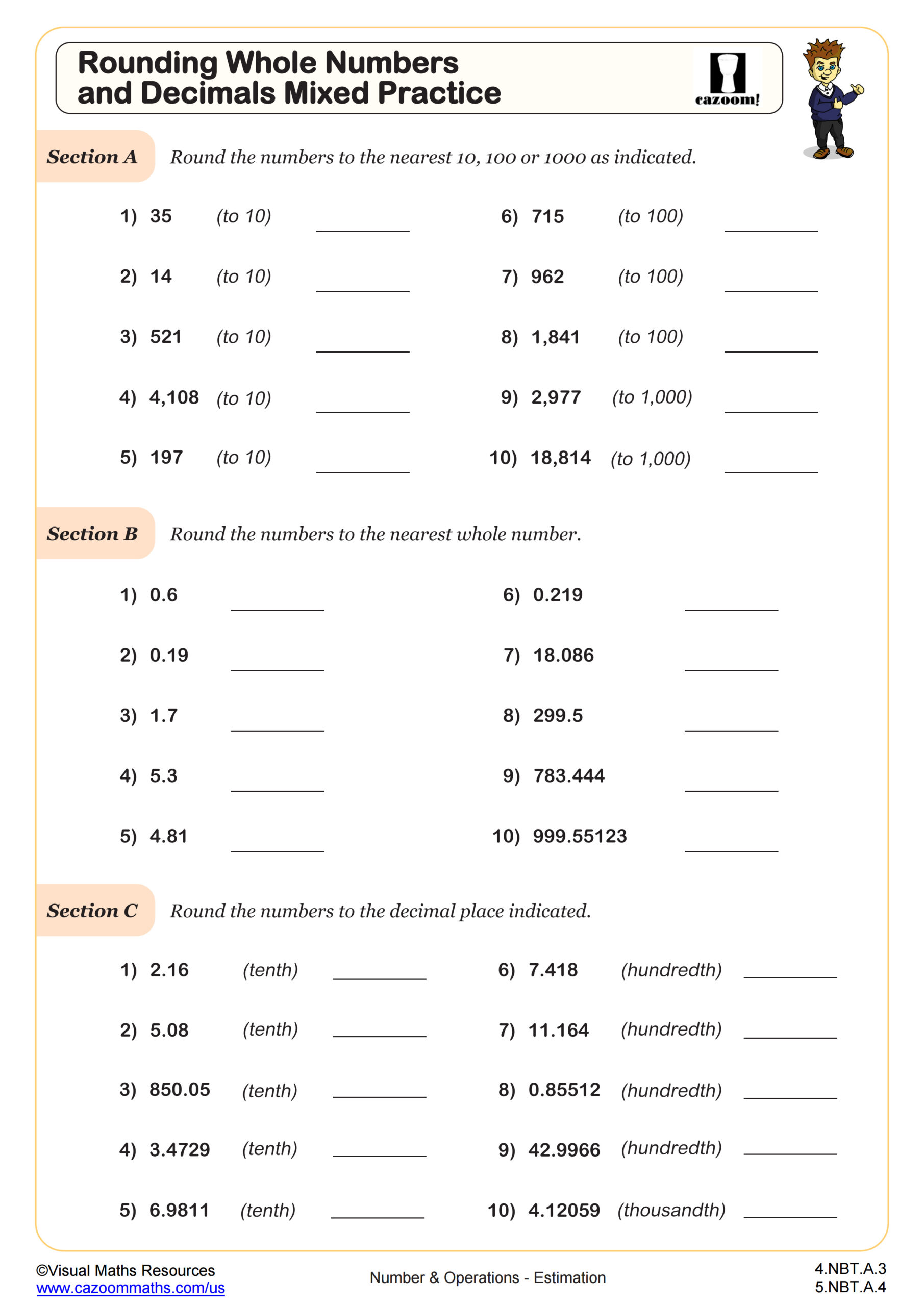
Fourth grade students typically focus on rounding whole numbers to the nearest ten and hundred, while fifth graders expand to include decimals, fractions, and more sophisticated strategies. Sixth grade builds on these foundations by incorporating estimation with ratios, percentages, and algebraic thinking.
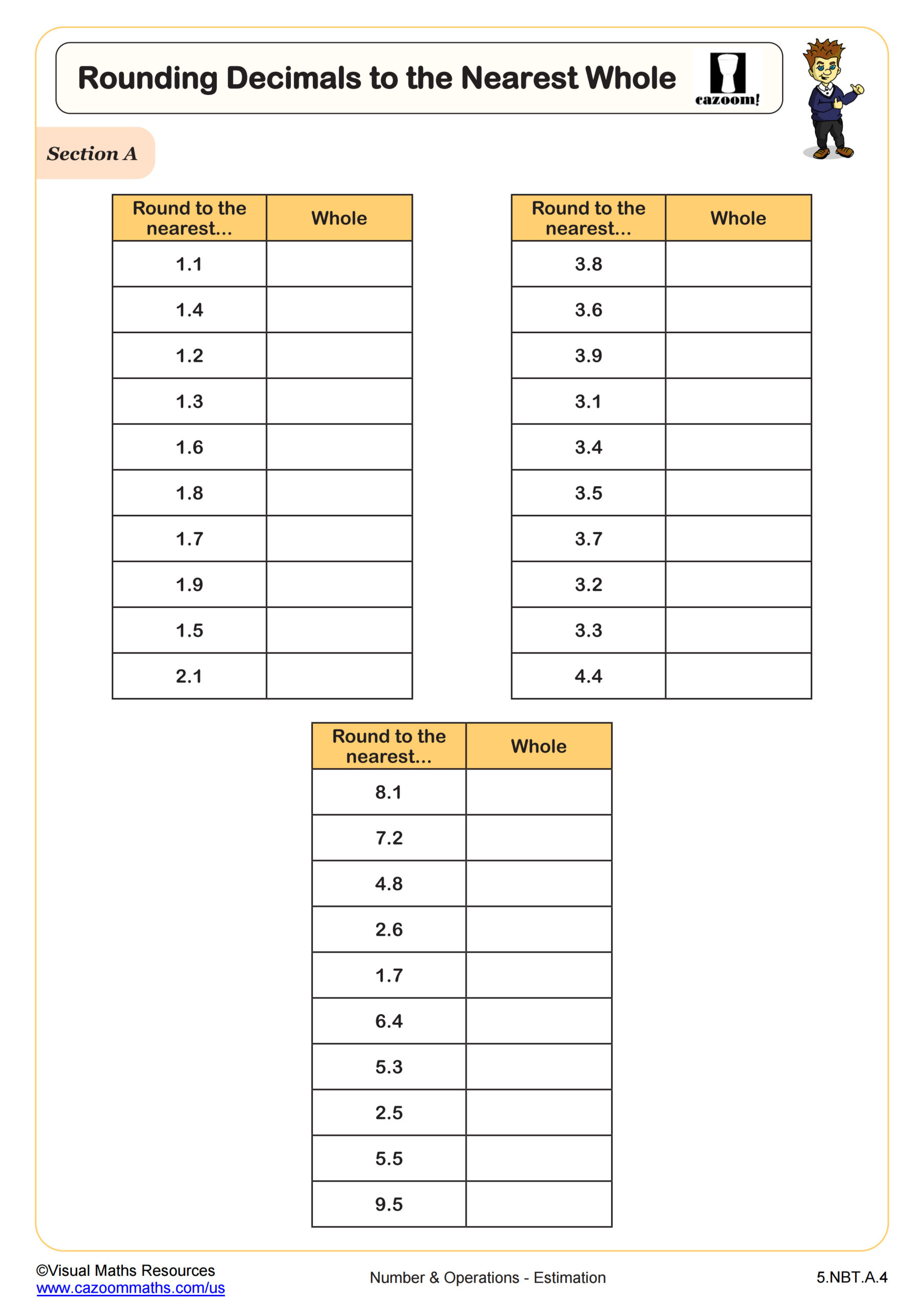
Teachers notice that the transition from whole number estimation in fourth grade to decimal estimation in fifth grade creates confusion for many students. They often apply whole number rounding rules incorrectly to decimals, such as rounding 3.47 to 3.5 instead of recognizing that 3.5 might be the most useful estimate depending on the context. The progression emphasizes flexibility in strategy selection rather than mechanical application of rules.
Why do students find estimating with decimals more challenging than whole numbers?
Decimal estimation requires students to understand place value relationships beyond the ones place, which many fifth graders find conceptually difficult. They must decide whether to round to the nearest whole number, tenth, or use benchmark fractions like 0.25, 0.5, and 0.75 for more intuitive estimates.
Classroom observations reveal that students often lose sight of reasonableness when working with decimals. For example, when estimating 4.7 × 2.3, they might calculate 5 × 2 = 10 but fail to recognize that their exact answer of 10.81 is reasonable. The worksheets include problems that require students to compare their estimates with exact calculations, reinforcing the connection between estimation and computational accuracy.
How can teachers use these worksheets to improve student reasoning about number size?
Teachers can use these worksheets most effectively by having students explain their estimation strategy choices rather than just providing numerical answers. This approach helps students develop metacognitive awareness about when different strategies work best and builds number sense beyond procedural skills.
Many teachers find success in using estimation worksheets as warm-up activities before exact calculation lessons, helping students predict reasonable answers. The answer keys allow for quick assessment of both accuracy and strategy appropriateness. Teachers can also modify problems by asking students to provide multiple estimates using different strategies, then discuss which approach yields the most useful result for the given context or real-world application.