5th Grade Factors and Multiples Worksheets
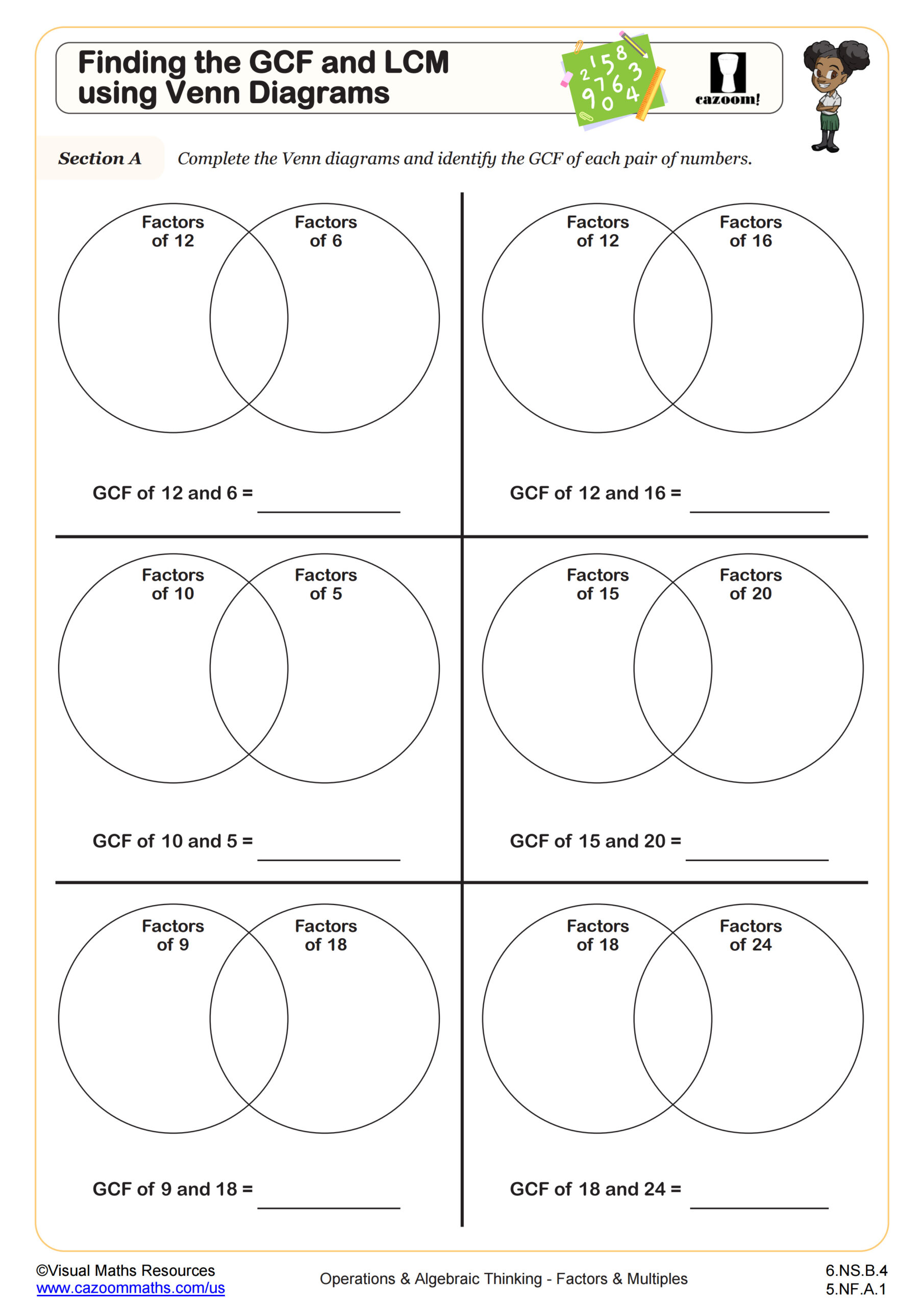
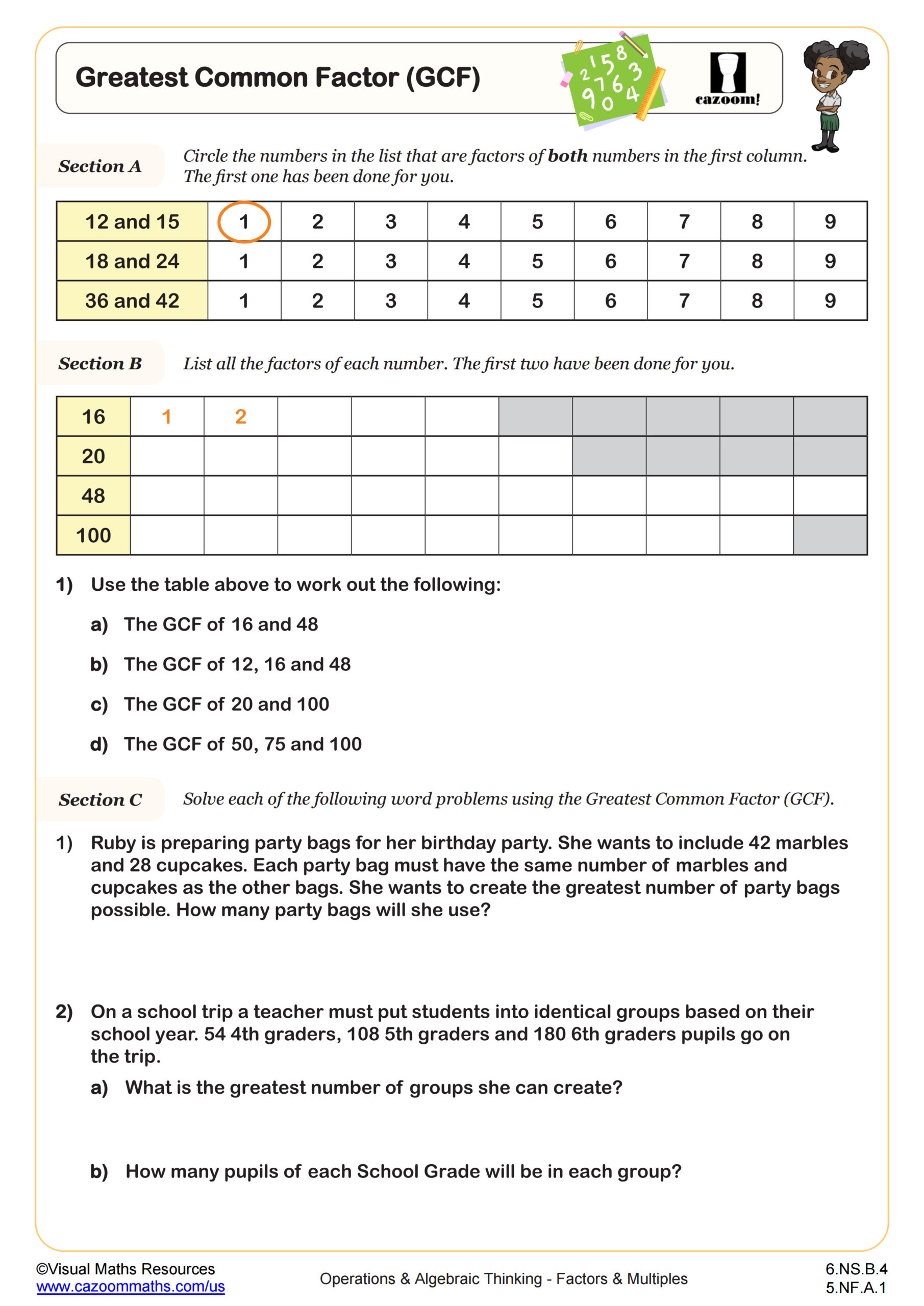
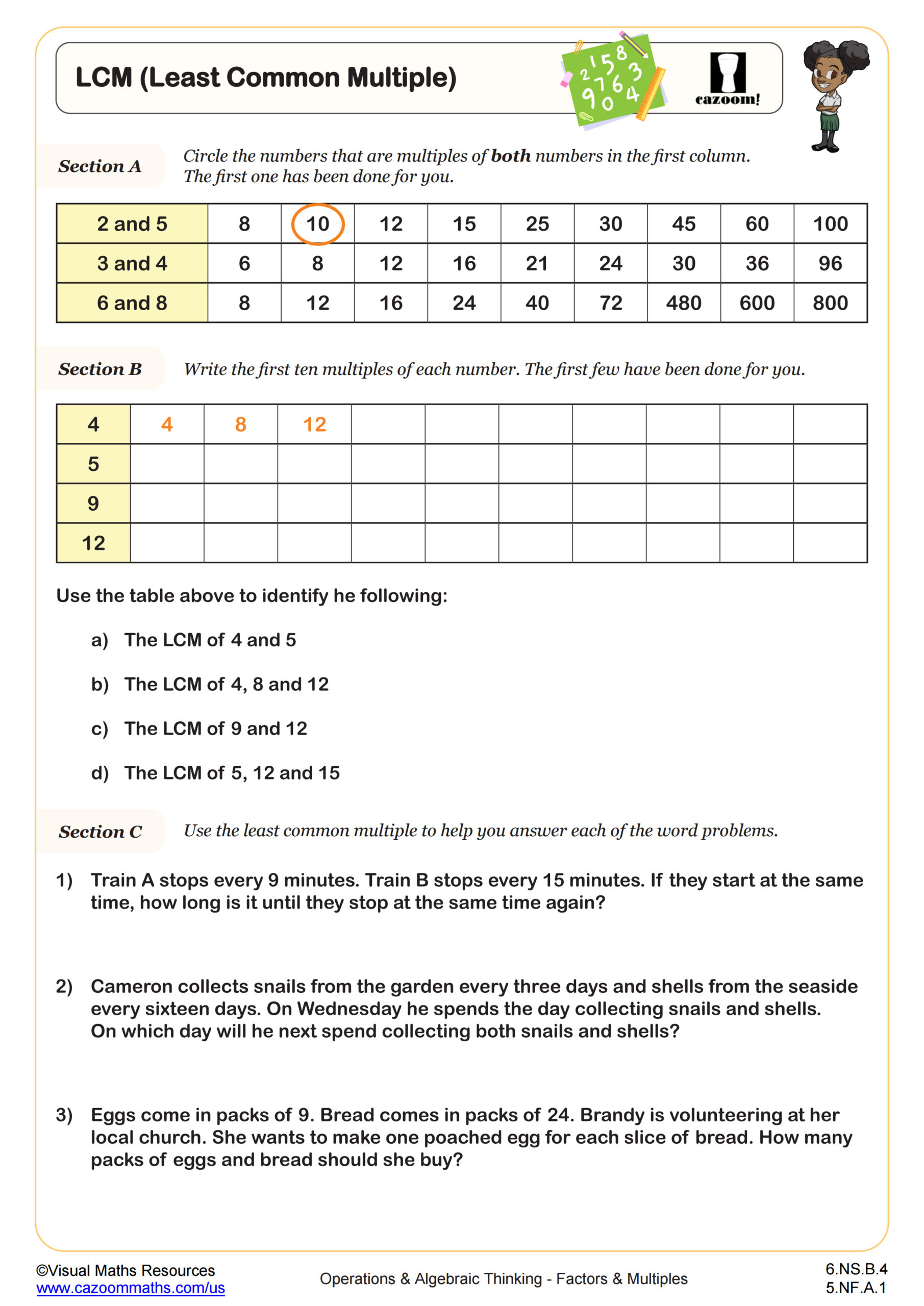
All worksheets are created by the team of experienced teachers at Cazoom Math.
What makes a good 5th grade factors and multiples worksheet?
A quality 5th grade factors and multiples worksheet should align with Common Core standard 5.OA.B.2, which requires students to write simple expressions and interpret patterns. The worksheet needs varied problem types including factor pairs, listing multiples, and finding common factors of two numbers.
Teachers find that worksheets work best when they start with smaller numbers before progressing to larger ones. Students often struggle when asked to find factors of numbers like 48 or 72 without systematic approaches, so effective worksheets include visual organizers or factor trees to support logical thinking processes.
Are these worksheets appropriate for different grade levels?
While designed for fifth grade, these worksheets can support differentiated instruction across grade levels. Advanced fourth graders who have mastered multiplication facts can tackle basic factor problems, while sixth graders needing review benefit from the systematic practice before moving to prime factorization.
Teachers often use these resources for intervention with middle school students who missed foundational concepts. The clear progression from simple to complex problems helps identify exactly where gaps exist, making them valuable diagnostic tools beyond just fifth grade classrooms.
How do students typically approach finding least common multiples?
Fifth graders commonly use listing methods to find LCM, writing out multiples of each number until they spot the first match. Teachers observe that students frequently stop at the first common multiple they see, correctly identifying the LCM without realizing why this method works.
The most persistent error involves confusing LCM with greatest common factor. Students might multiply the two numbers together or choose the larger number as their answer. Quality worksheets include problems where students must explain their reasoning, helping teachers catch these conceptual misunderstandings before they become ingrained habits.
What strategies help students succeed with these worksheets?
Teachers report best results when students work through problems systematically rather than guessing. Encouraging students to use factor trees for larger numbers and organized lists for finding multiples reduces random errors and builds mathematical reasoning skills.
Providing manipulatives like counters or graph paper helps visual learners see factor relationships concretely. Many teachers assign these worksheets for homework after classroom instruction, using the answer keys to facilitate parent support while maintaining accuracy in student feedback and self-checking opportunities.