5th Grade Fractions Decimals Percentages Worksheets
Add Mixed Numbers with the Same Denominator
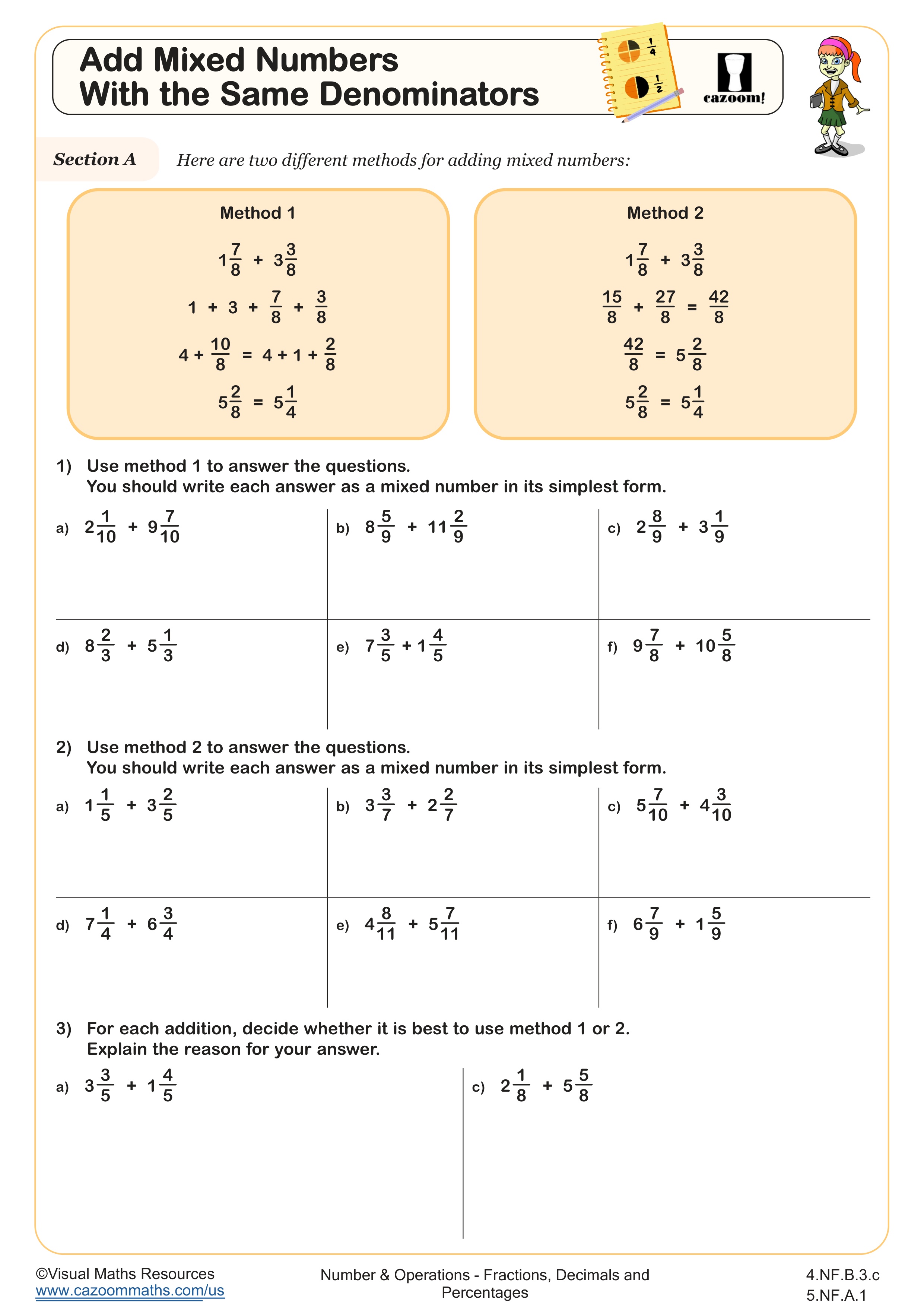
Adding and Subtracting Decimals
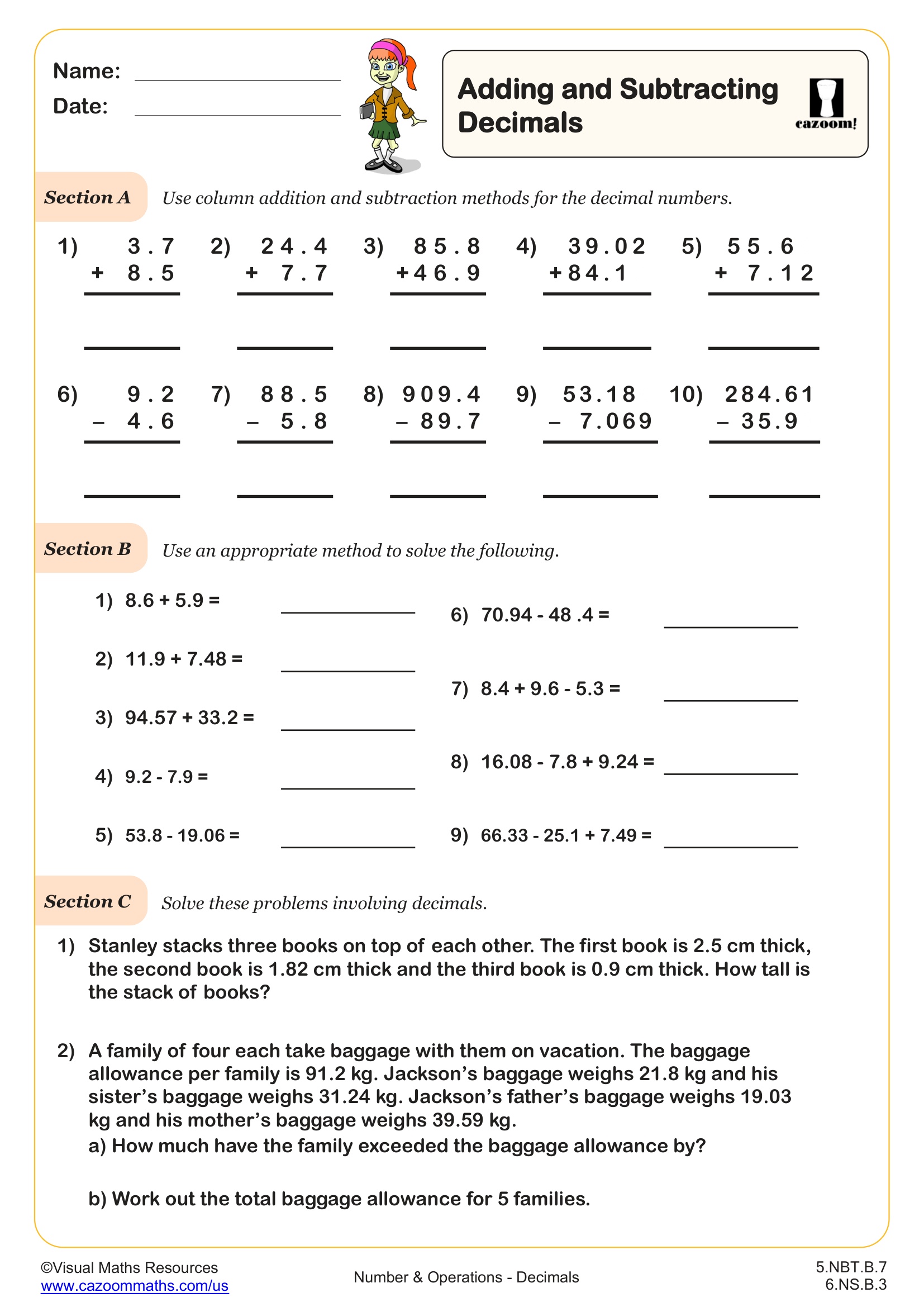
Comparing Decimals (A)
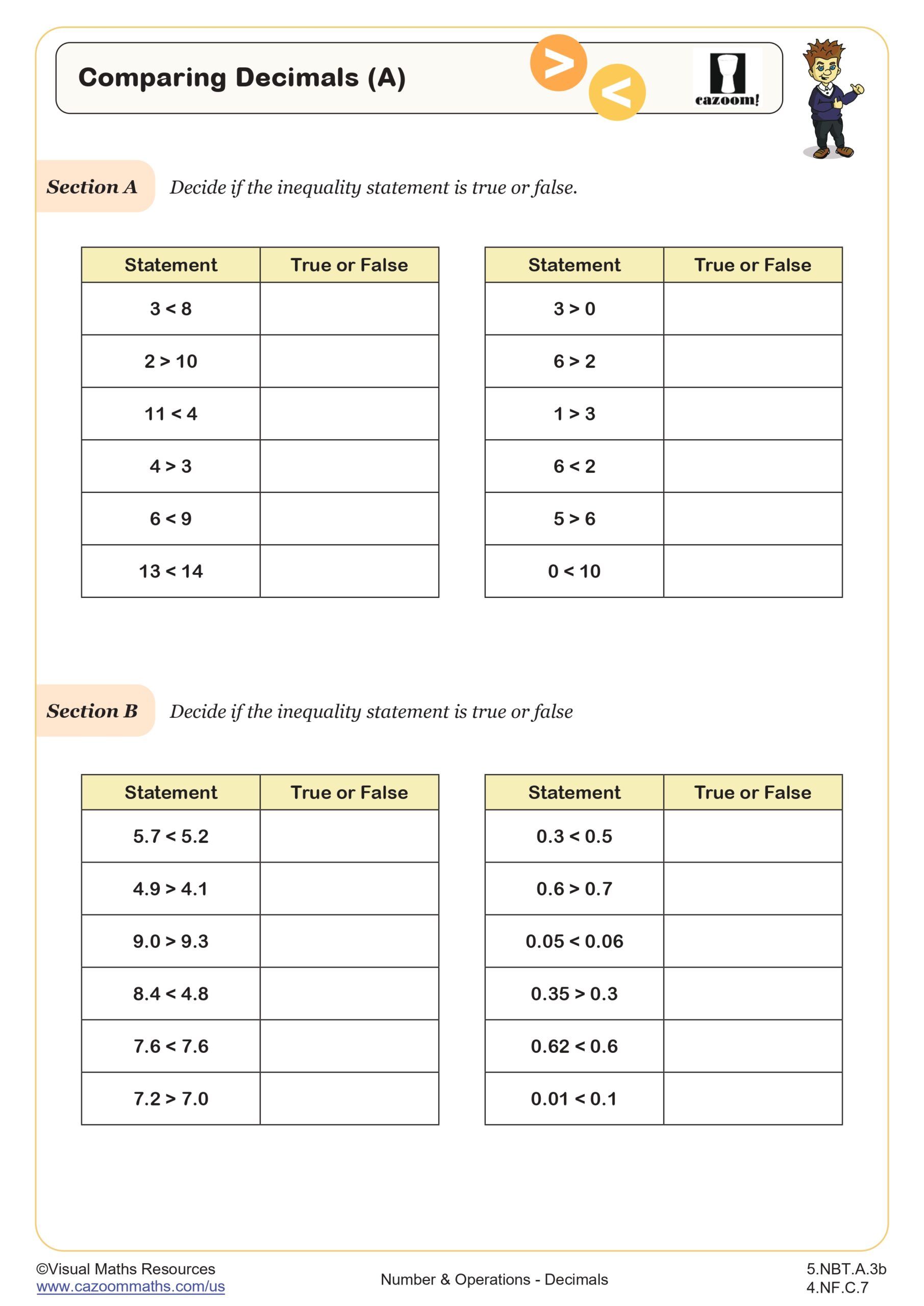
Decimal Place Value With Decomposition
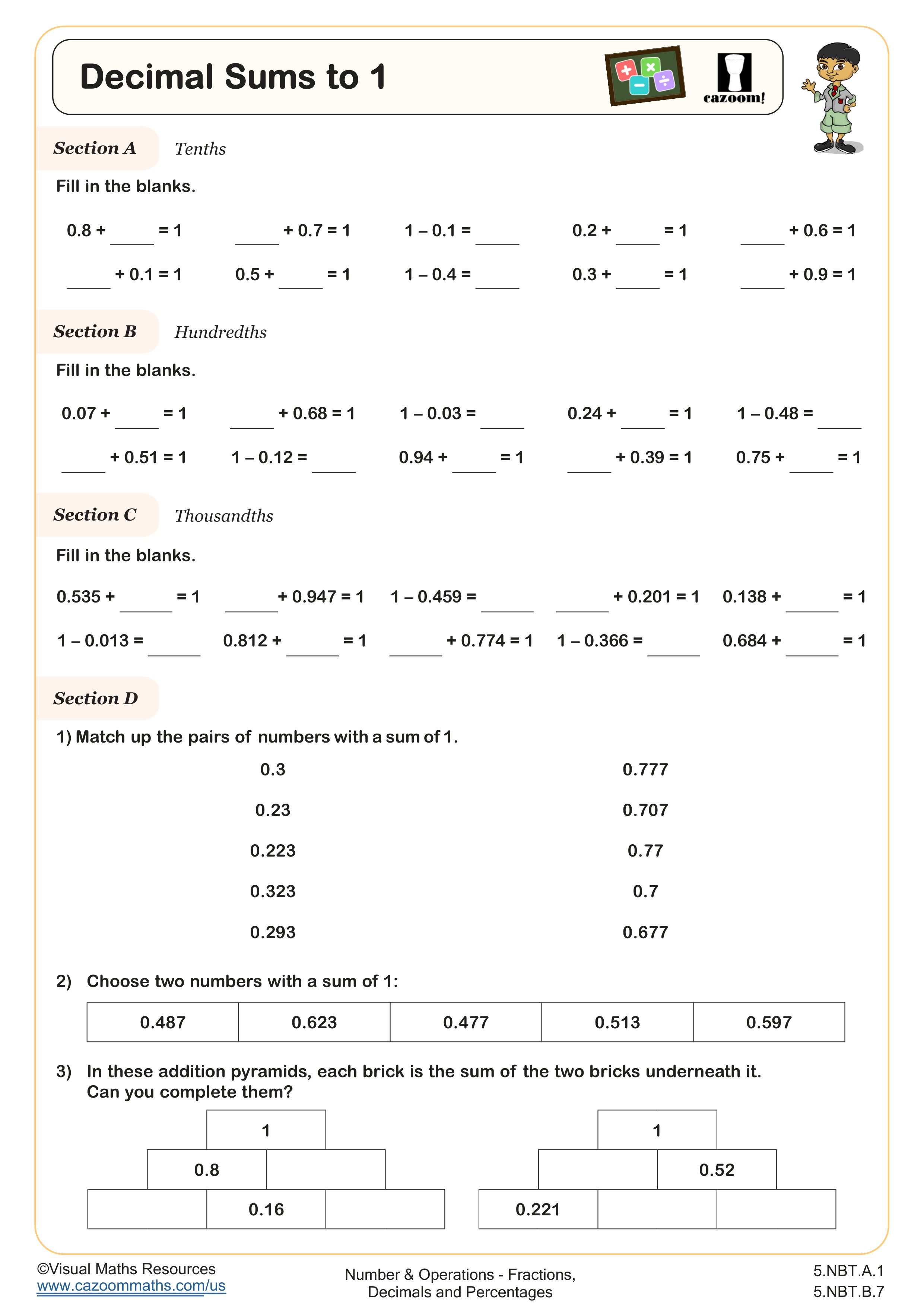
Decimal Sums to 1
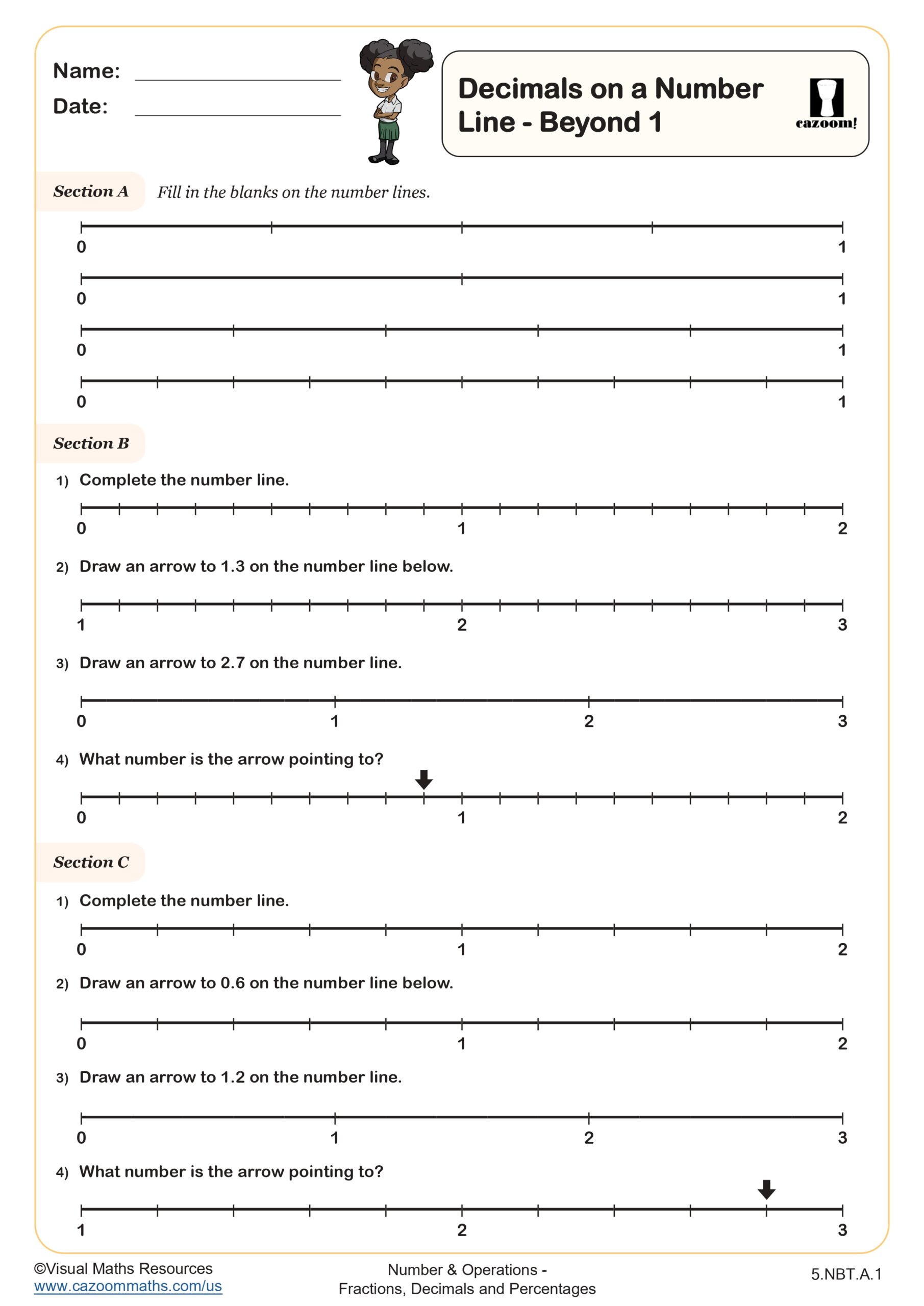
Decimals on a Number Line - Beyond 1
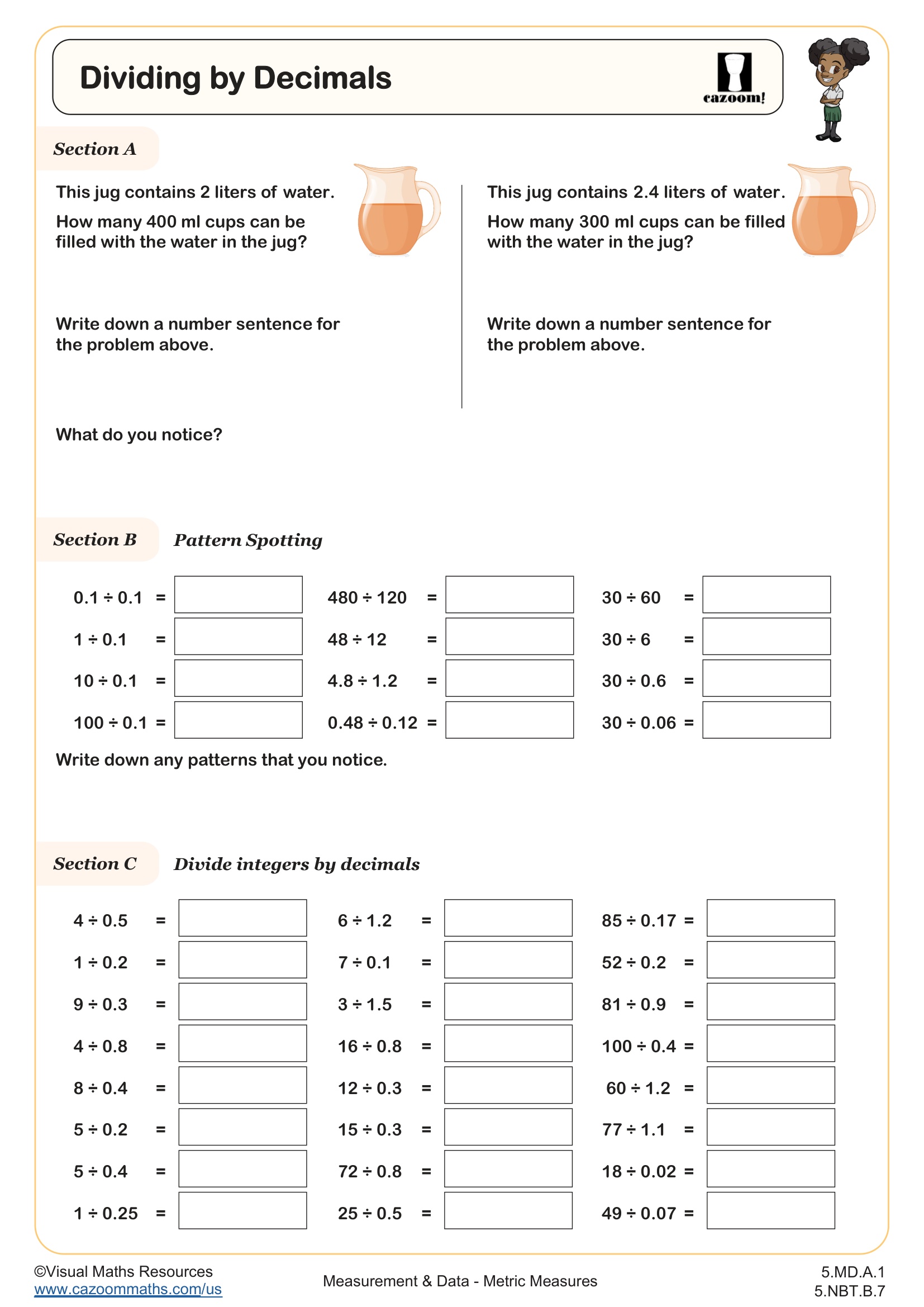
Dividing by Decimals
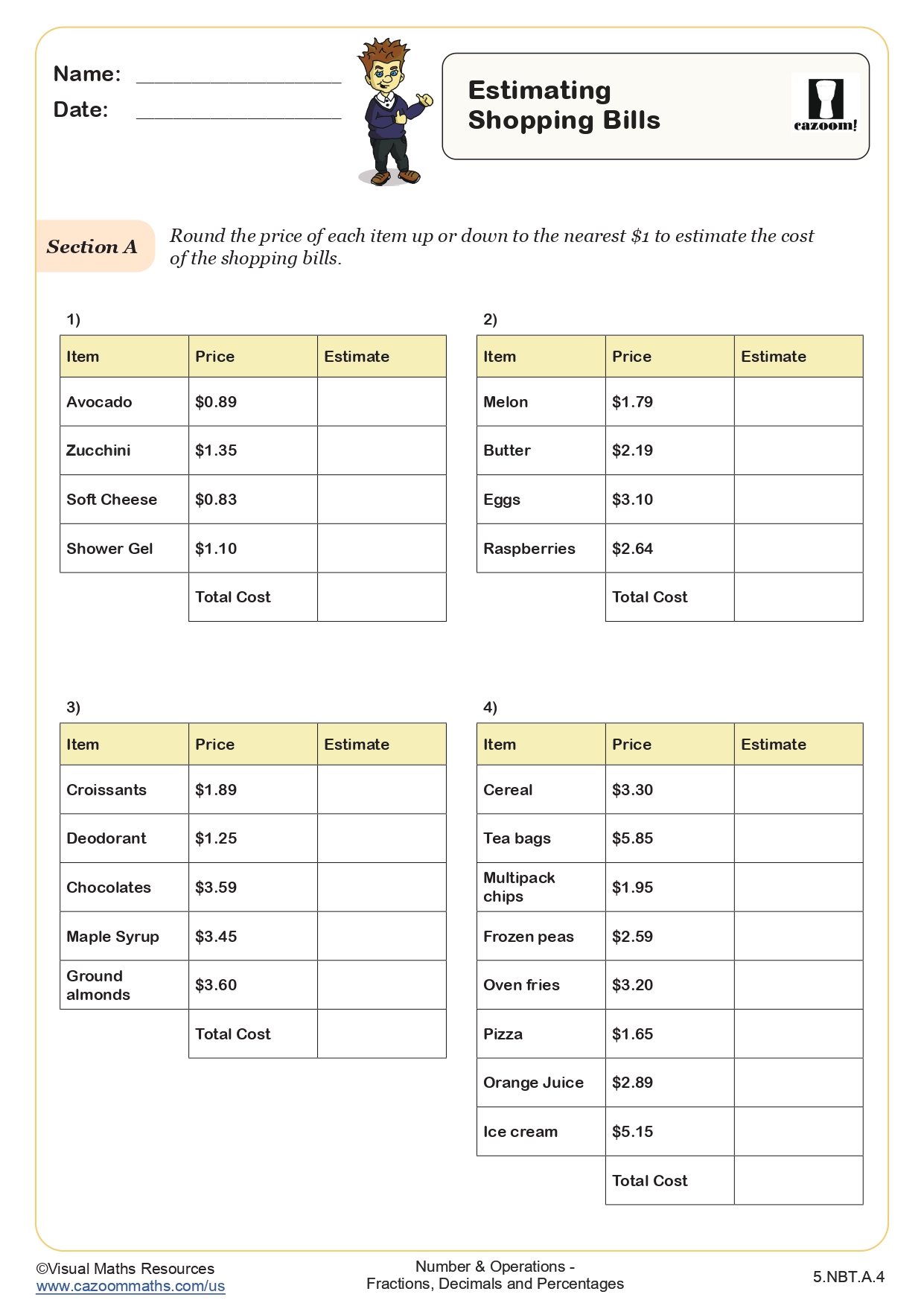
Estimating Shopping Bills
Finding Fractional Amounts
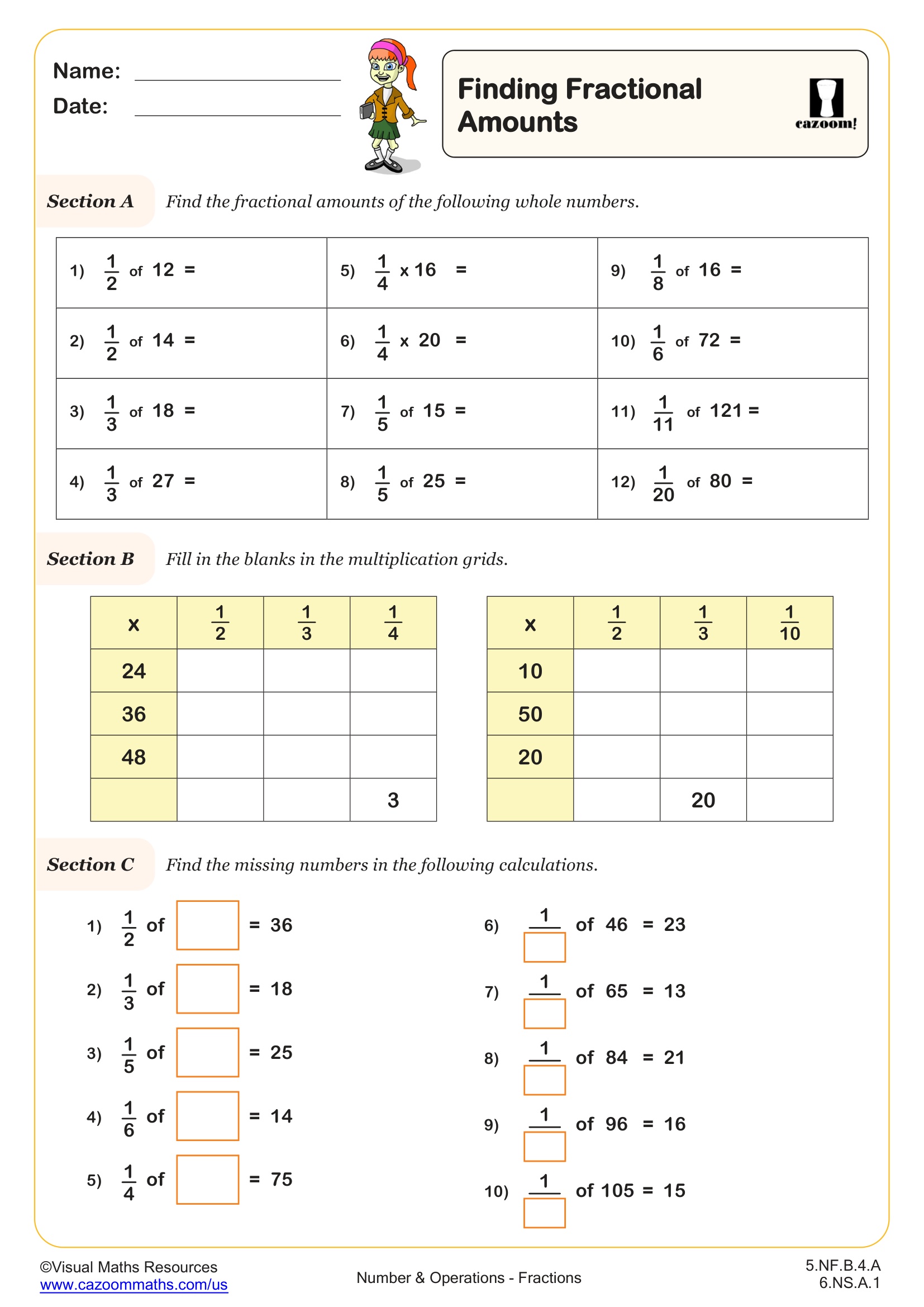
Finding Fractions of Amounts
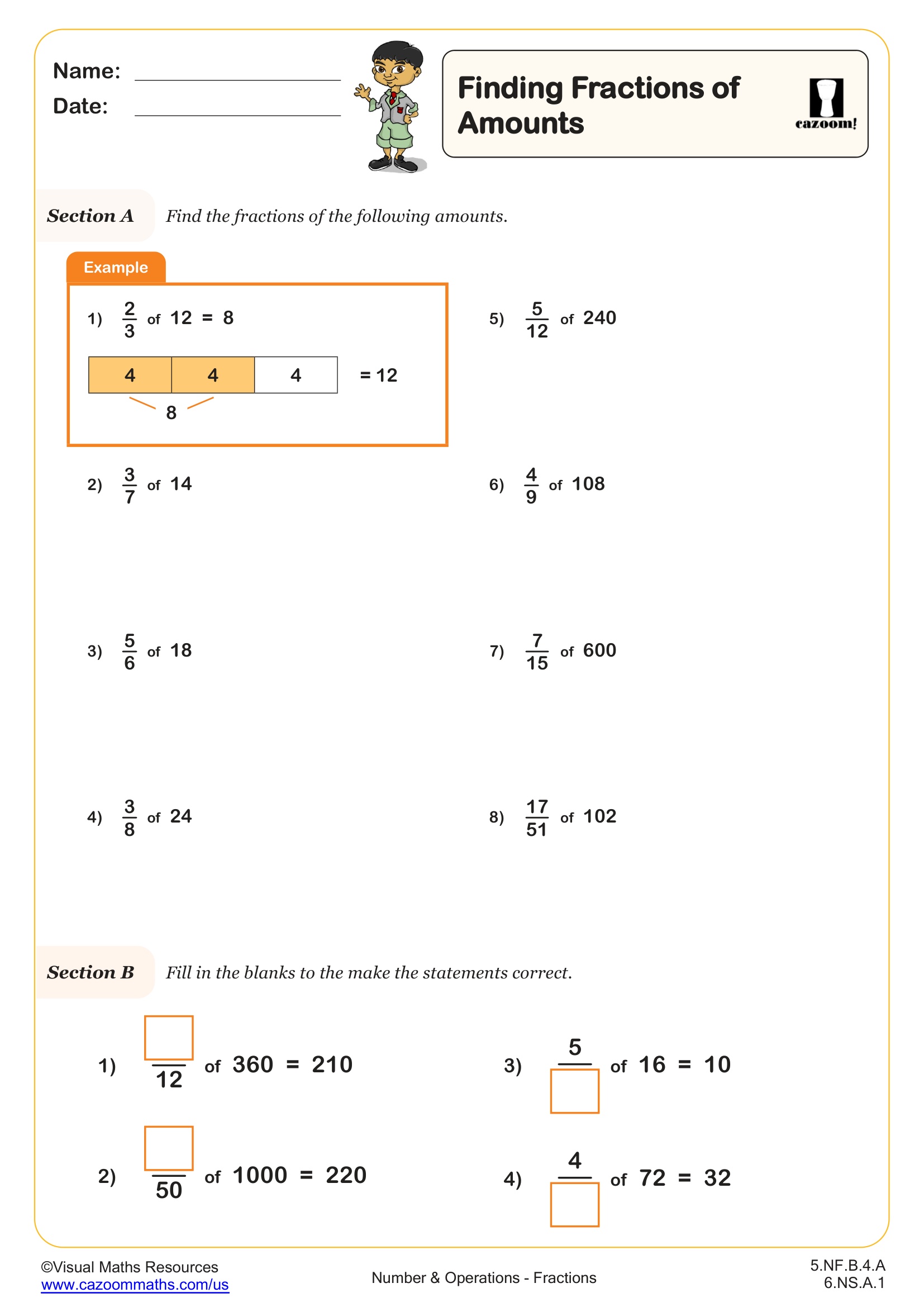
Fraction - Increase and Decrease
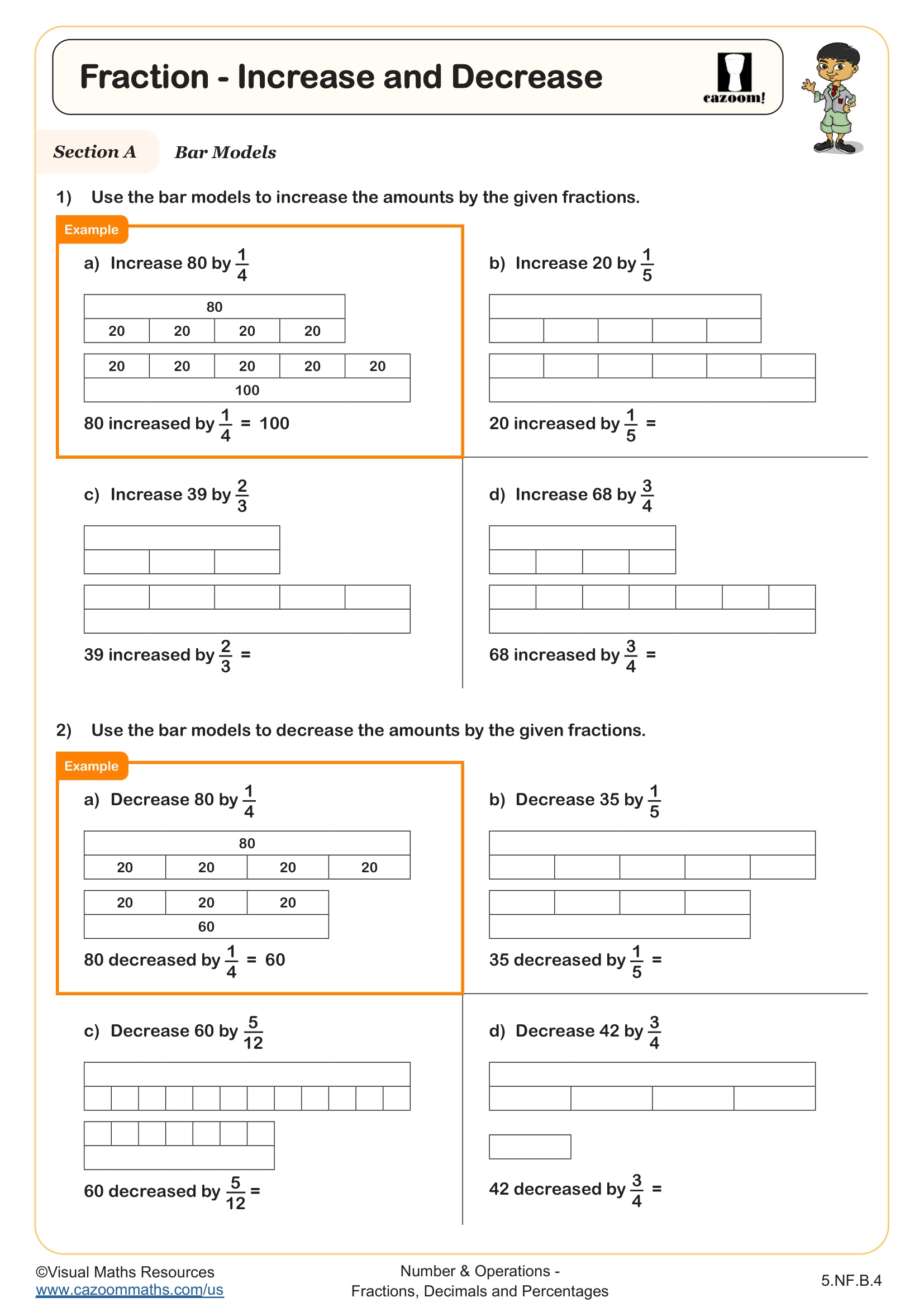
Money Problems (B)
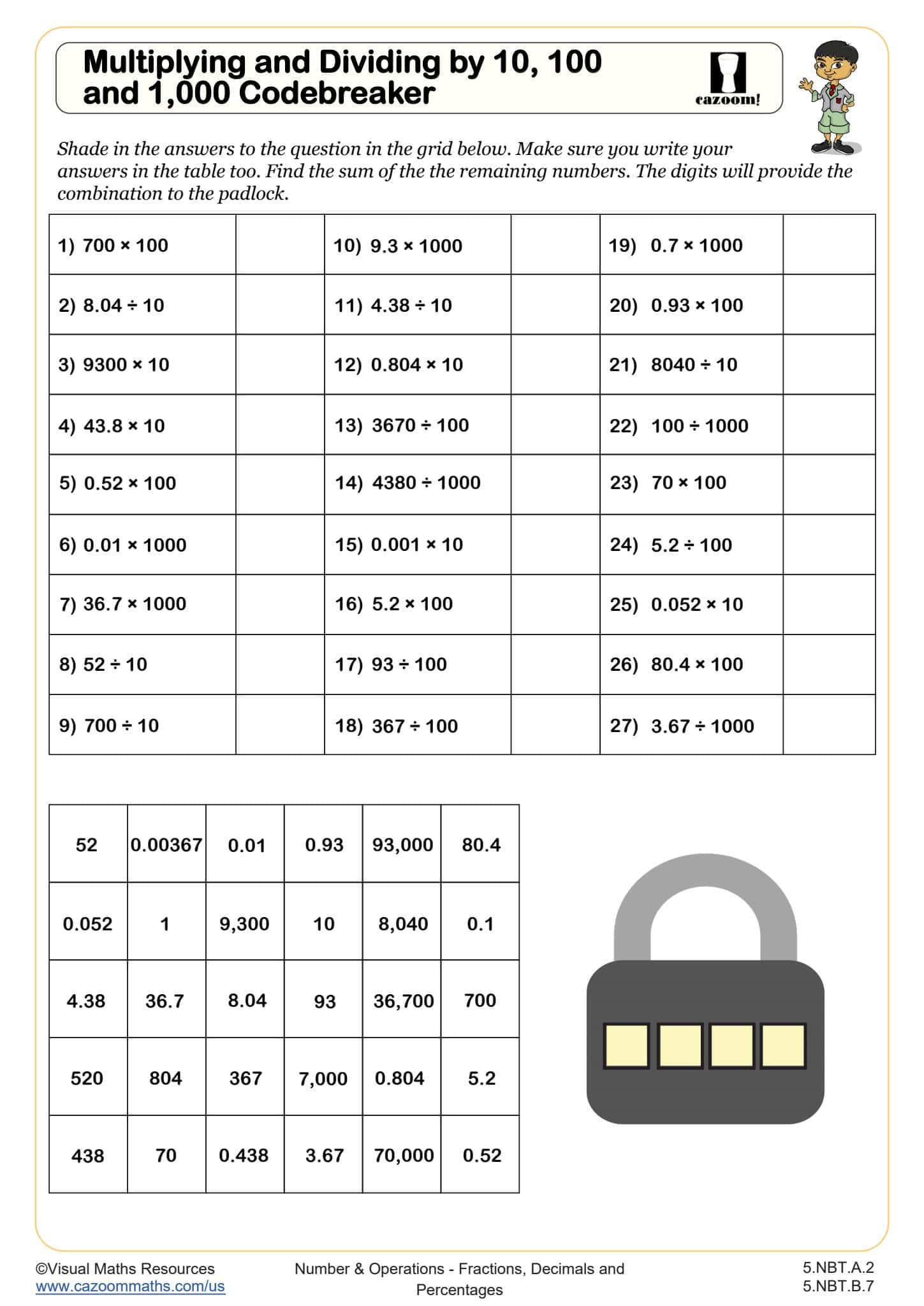
Multiplying and Dividing by 10, 100 and 1,000 Codebreaker
Partitioning Decimals - Tenths and Hundredths (A)
-Questions-Worksheet.jpg?w=3840)
Partitioning Decimals - Tenths and Hundredths (B)
-Questions-Worksheet.jpg?w=3840)
All worksheets are created by the team of experienced teachers at Cazoom Math.
What Are Fractions, Decimals, and Percentages?
Fractions, decimals, and percentages are three different ways to represent parts of a whole or rational numbers. A fraction like 3/4 shows a relationship between a numerator and denominator, a decimal like 0.75 expresses the same value using place value, and a percentage like 75% represents the value as parts per hundred. In 5th grade, students learn to move fluidly between these representations, understanding that they're different notation systems for the same mathematical concept.
Students often lose points on assessments when they memorize conversion procedures without understanding equivalence. For example, many students can convert 1/2 to 50% but struggle to explain why both represent the same amount. Teachers find that using visual models like number lines or area models helps students see that 0.5, 1/2, and 50% occupy the same position and represent identical quantities.
What Grade Level Learns Fractions, Decimals, and Percentages?
These worksheets target 5th grade students in elementary school, where converting between fractions, decimals, and percentages becomes a major focus of the curriculum. According to Common Core State Standards, 5th graders are expected to add and subtract fractions with unlike denominators, divide whole numbers to find decimal quotients, and understand the relationships between decimals and fractions.
The difficulty progresses throughout 5th grade as students move from simple conversions like halves and tenths to more complex fractions that generate repeating decimals. Early worksheets focus on benchmark fractions like 1/4, 1/2, and 3/4 that convert cleanly to decimals and percentages. Later worksheets introduce fractions like 1/3 or 2/9 that produce repeating decimals, challenging students to work with notation like 0.3̄ and understand what the bar represents.
How Do You Convert Fractions to Decimals and Percentages?
Converting a fraction to a decimal requires dividing the numerator by the denominator. For example, 3/5 becomes 0.6 when you divide 3 by 5. To convert that decimal to a percentage, multiply by 100 and add the percent symbol: 0.6 × 100 = 60%. Students can also convert fractions directly to percentages by finding an equivalent fraction with a denominator of 100, though this method only works efficiently with certain fractions.
This skill connects directly to financial literacy and consumer mathematics. When students estimate shopping bills with discounts, they're applying these conversions in real contexts. A 25% discount on a $40 item requires recognizing that 25% equals 0.25 or 1/4, then calculating that discount amount. Medical dosing, engineering tolerances, and data analysis in STEM fields all depend on moving between these three representations to choose the most useful form for specific calculations.
How Do These Worksheets Help Students Practice Conversions?
These worksheets provide structured practice moving between fractions, decimals, and percentages with problems that build from straightforward conversions to more complex applications. Students encounter comparing decimals exercises that require ordering values in different forms, forcing them to convert strategically. The recurring decimal worksheets introduce the notation and concept that some fractions produce infinite decimal patterns, preparing students for more advanced rational number work.
Teachers use these worksheets for differentiated instruction based on student readiness. Some students benefit from working through the comparing decimals sheets to reinforce place value before tackling conversions, while others jump directly to the conversion worksheets. The answer keys allow students to check their work during independent practice or homework, helping them identify whether errors stem from division mistakes or conceptual misunderstandings about equivalence.