5th Grade Fractions Worksheets
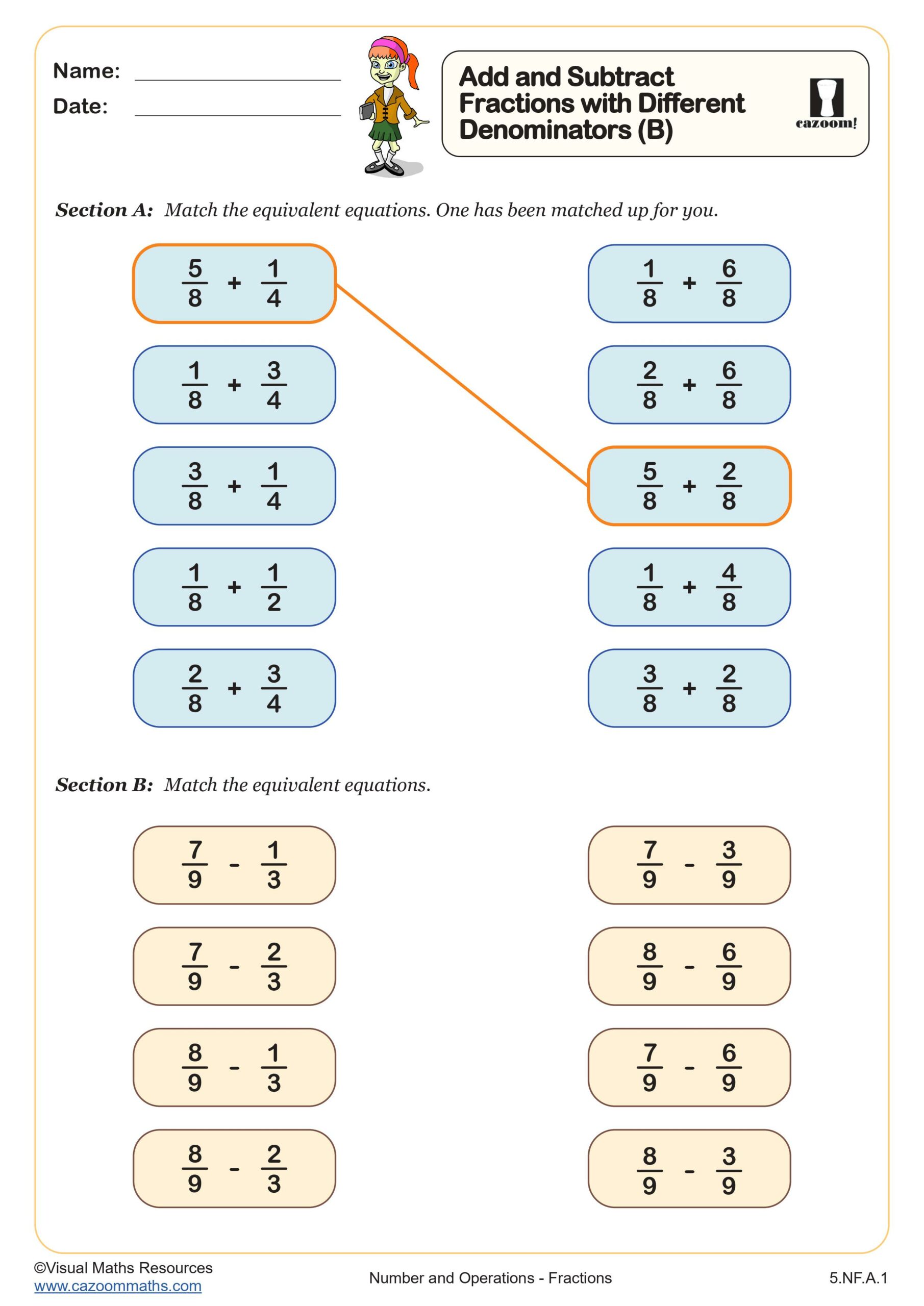
Add and Subtract Fractions with Different Denominators (B)
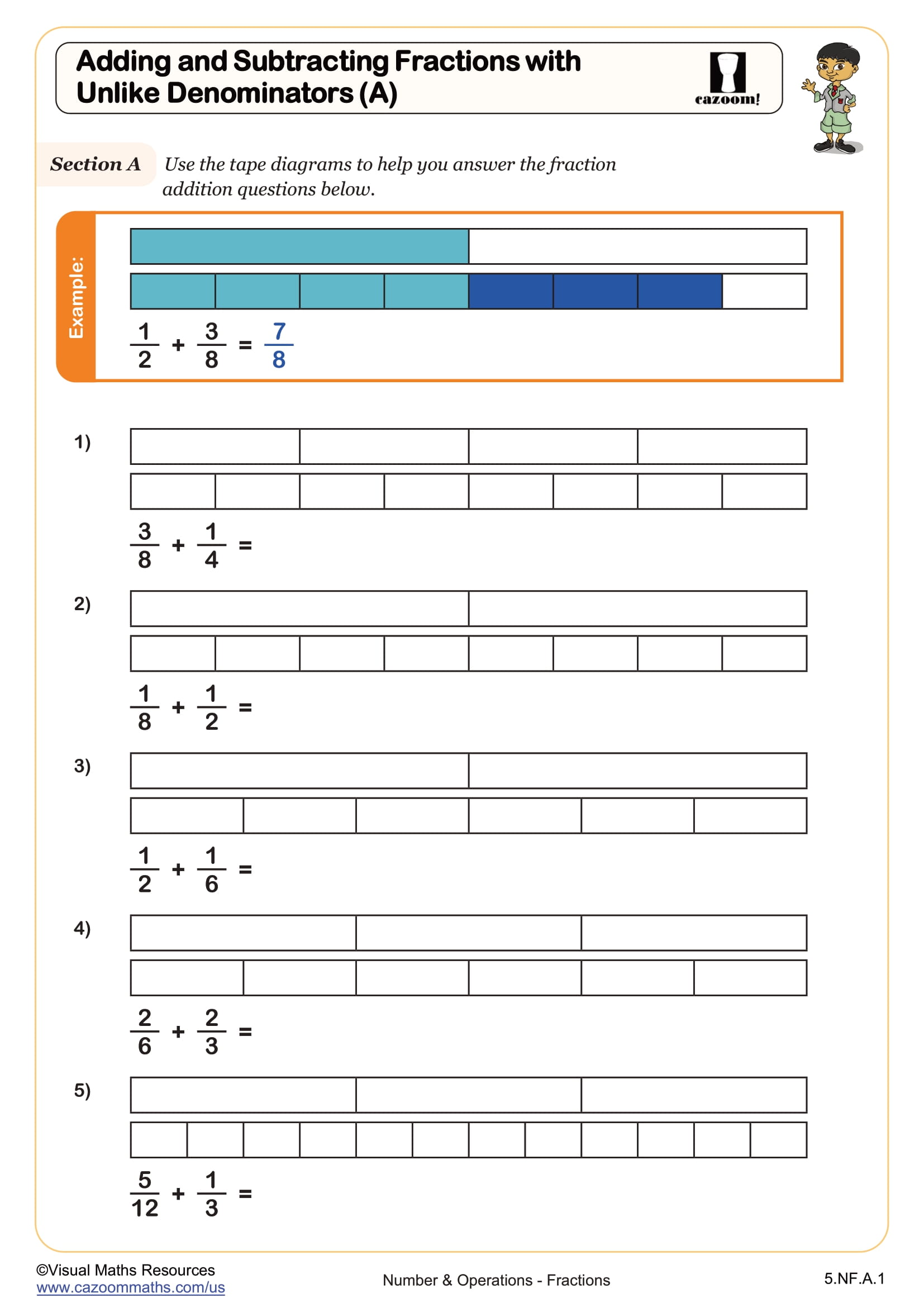
Add and Subtract Fractions with Unlike Denominators (A)
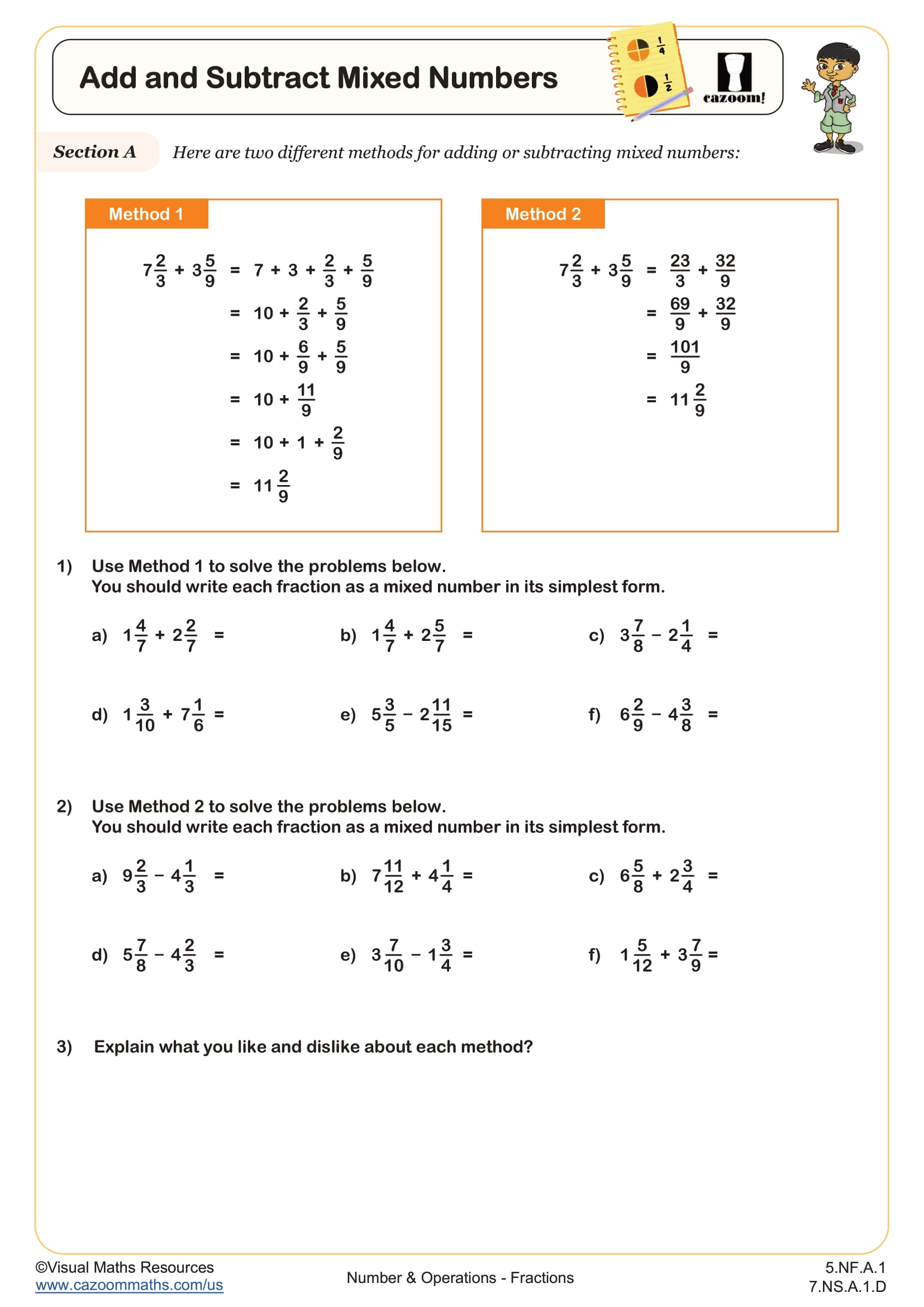
Add and Subtract Mixed Numbers
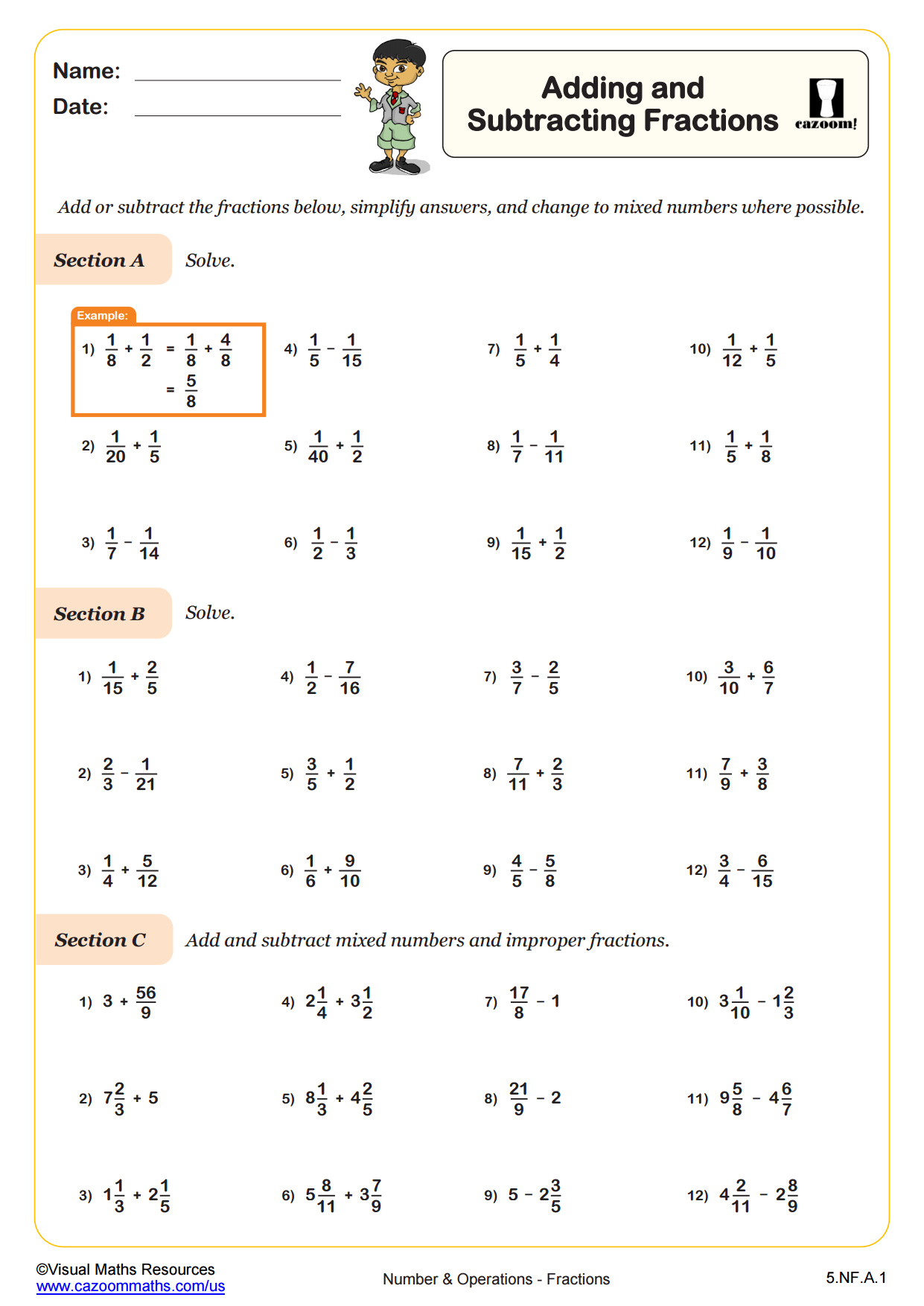
Adding and Subtracting Fractions
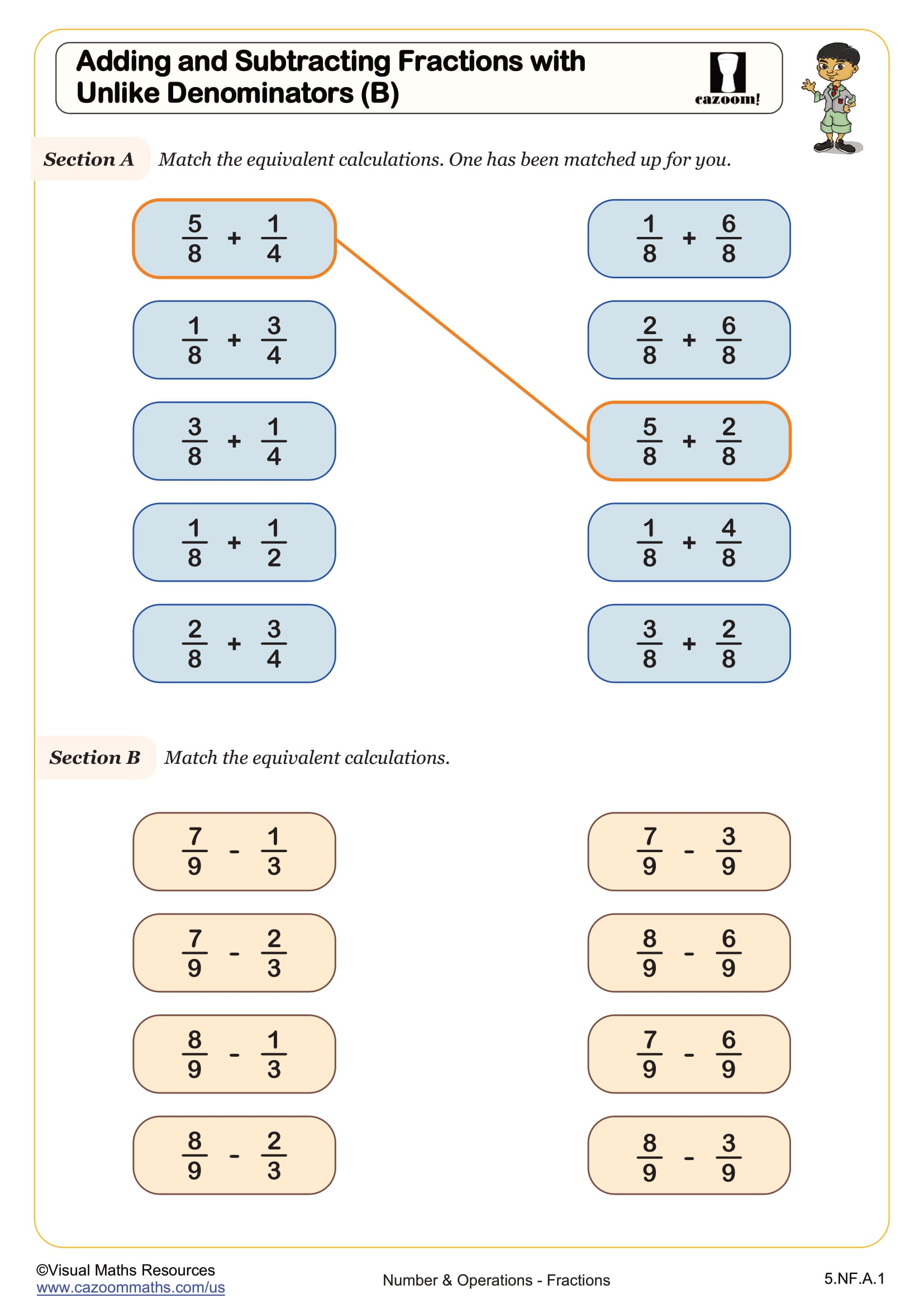
Adding and Subtracting Fractions with Unlike Denominators (B)
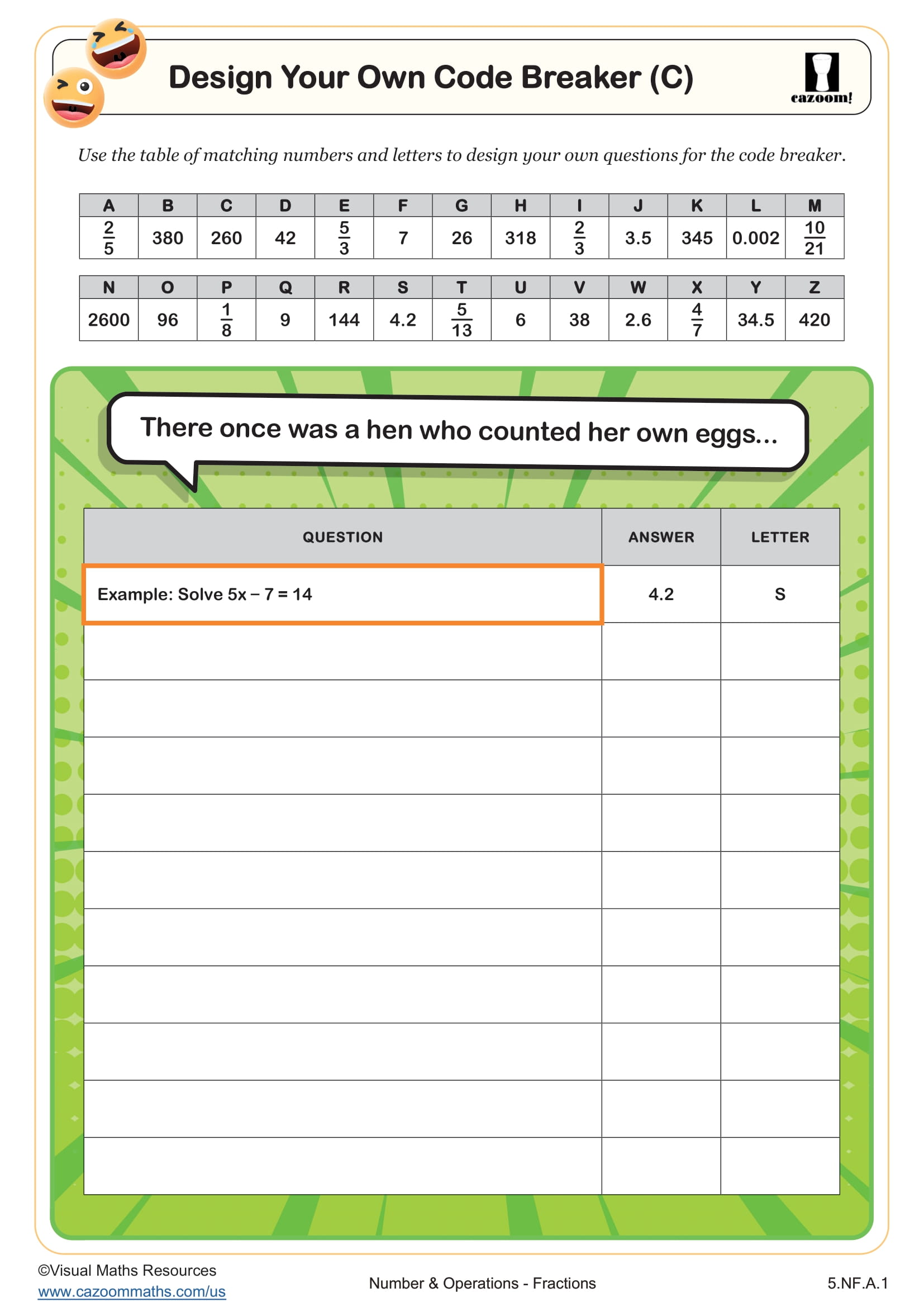
Design Your Own Code Breaker (C)
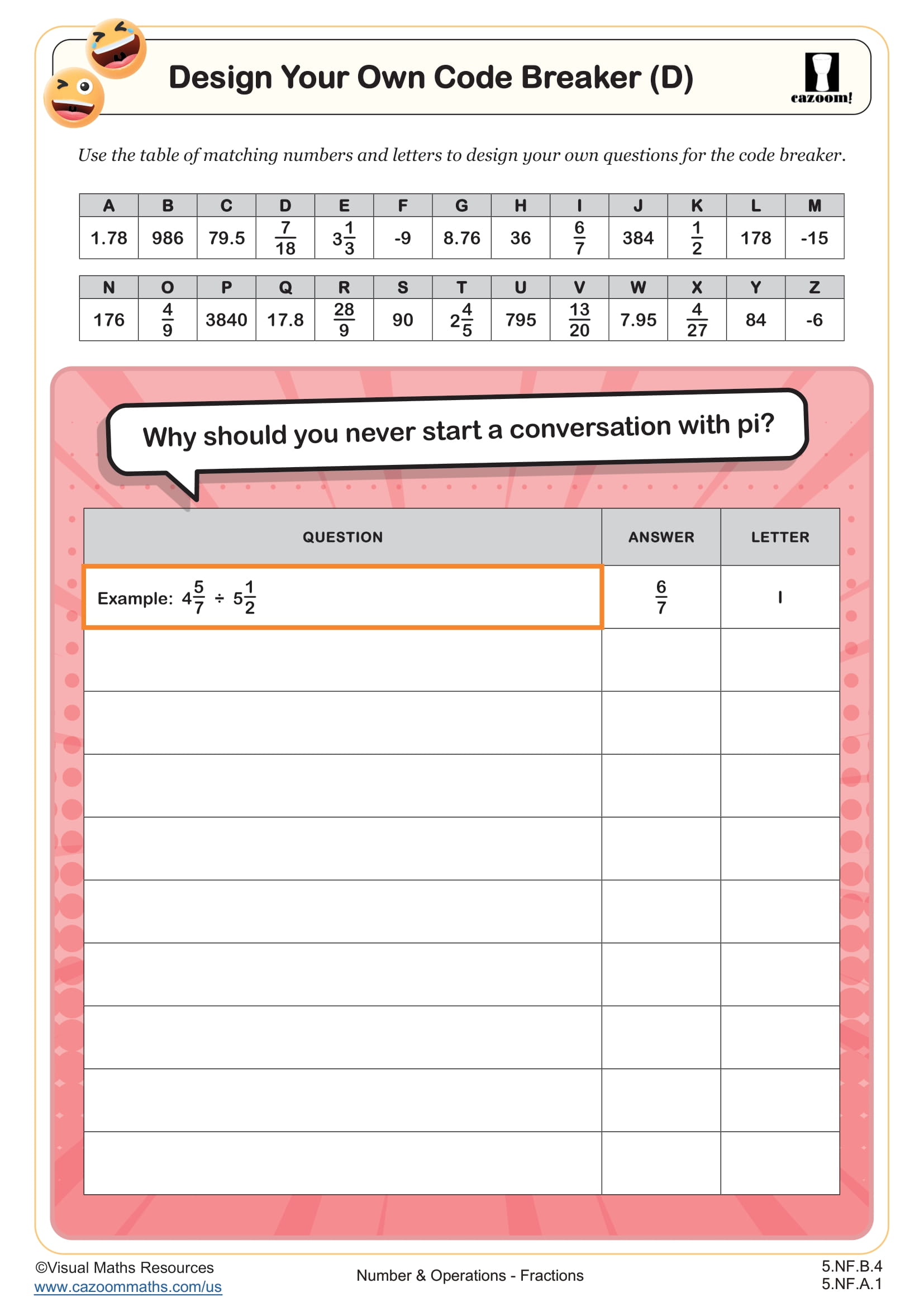
Design Your Own Code Breaker (D)
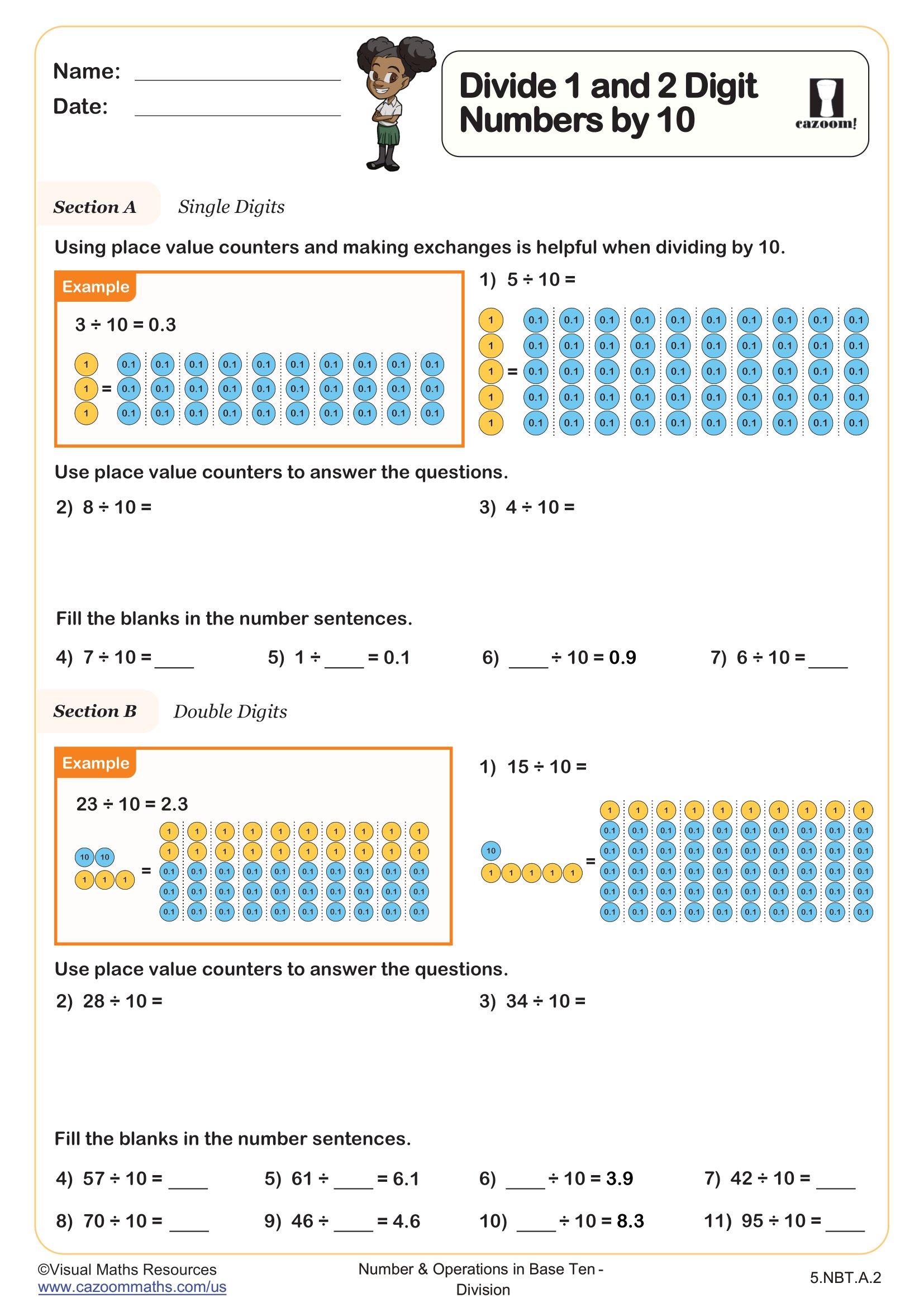
Divide 1 and 2 Digit Numbers by 10
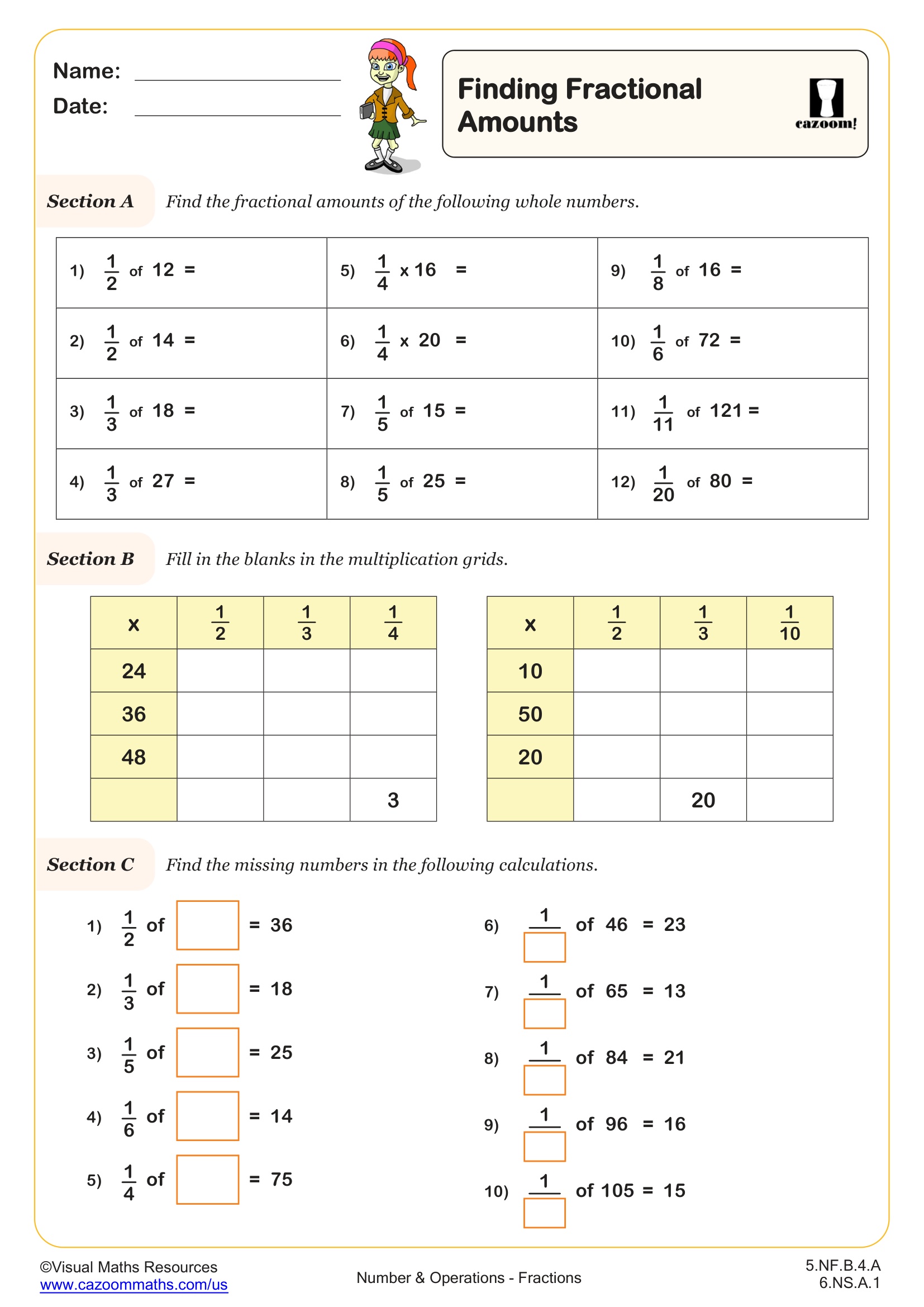
Finding Fractional Amounts
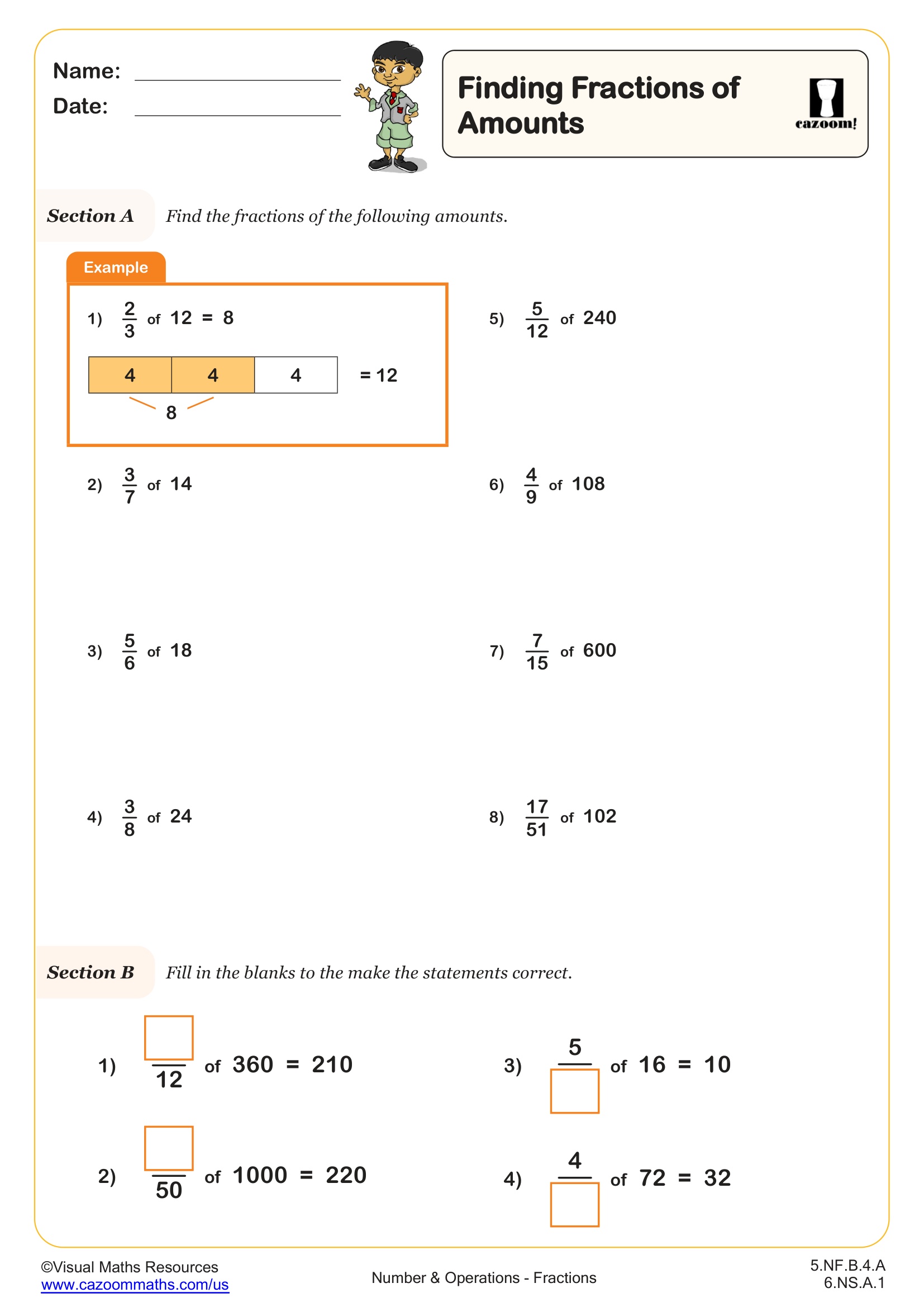
Finding Fractions of Amounts
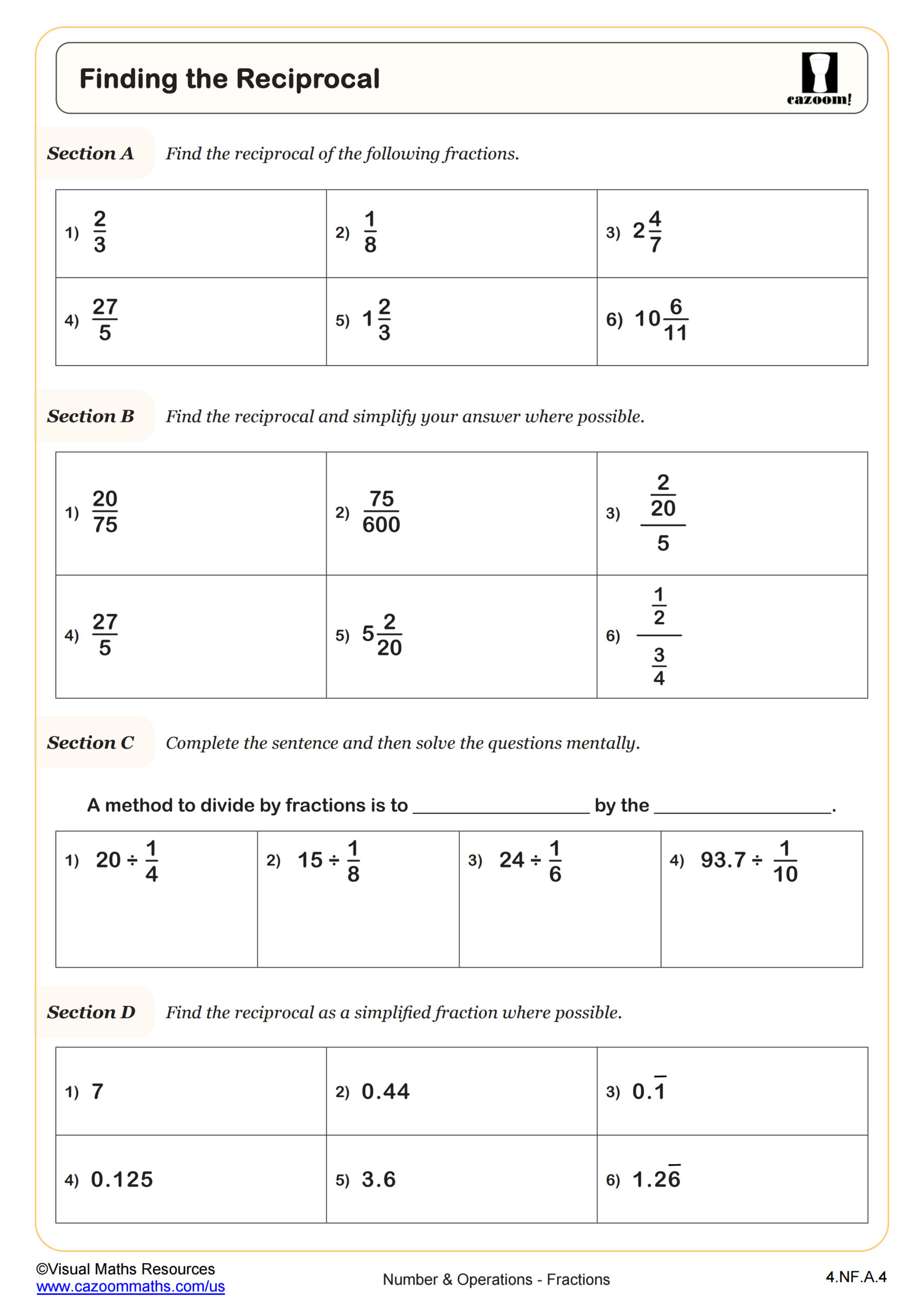
Finding the Reciprocal
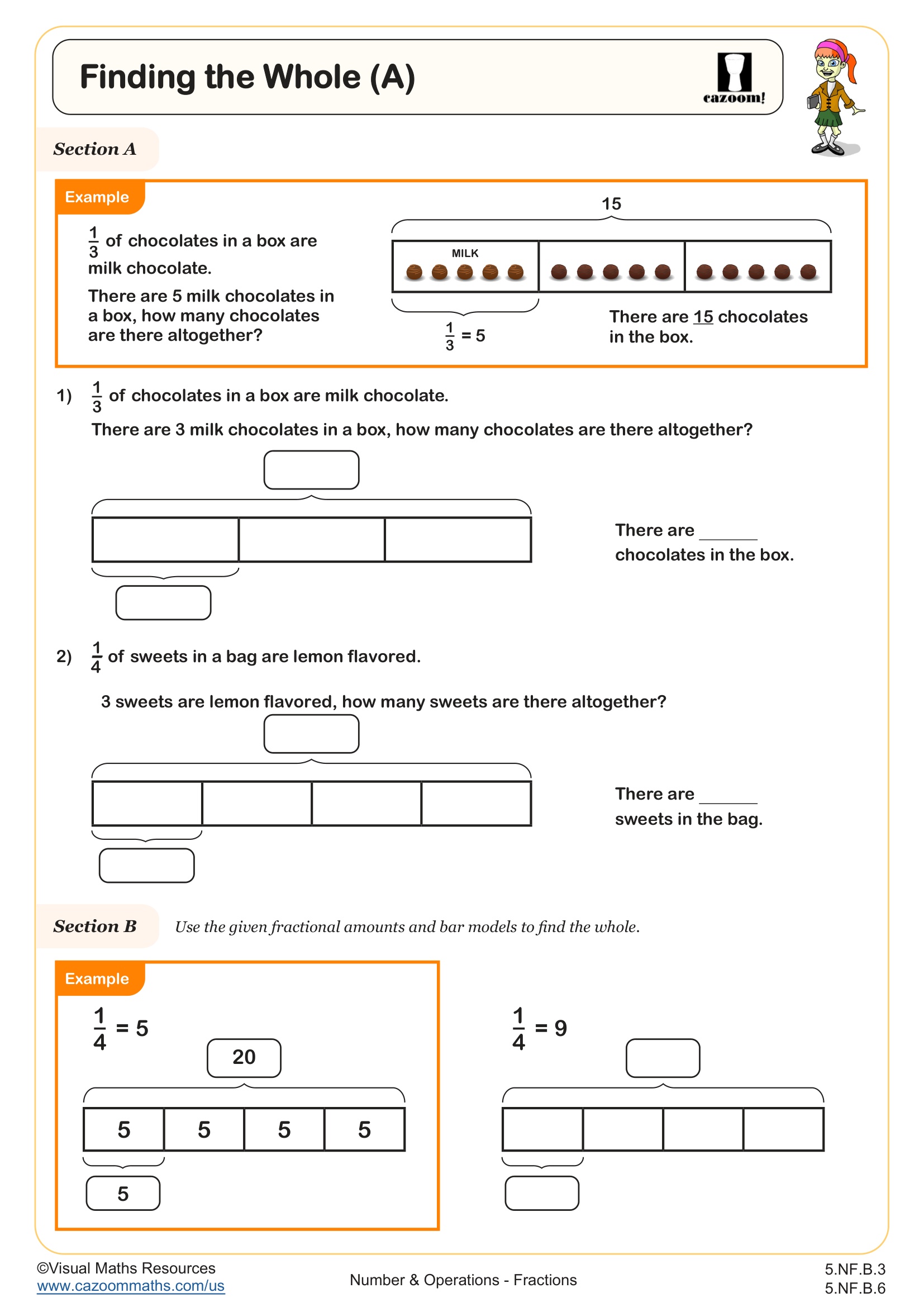
Finding the Whole (A)
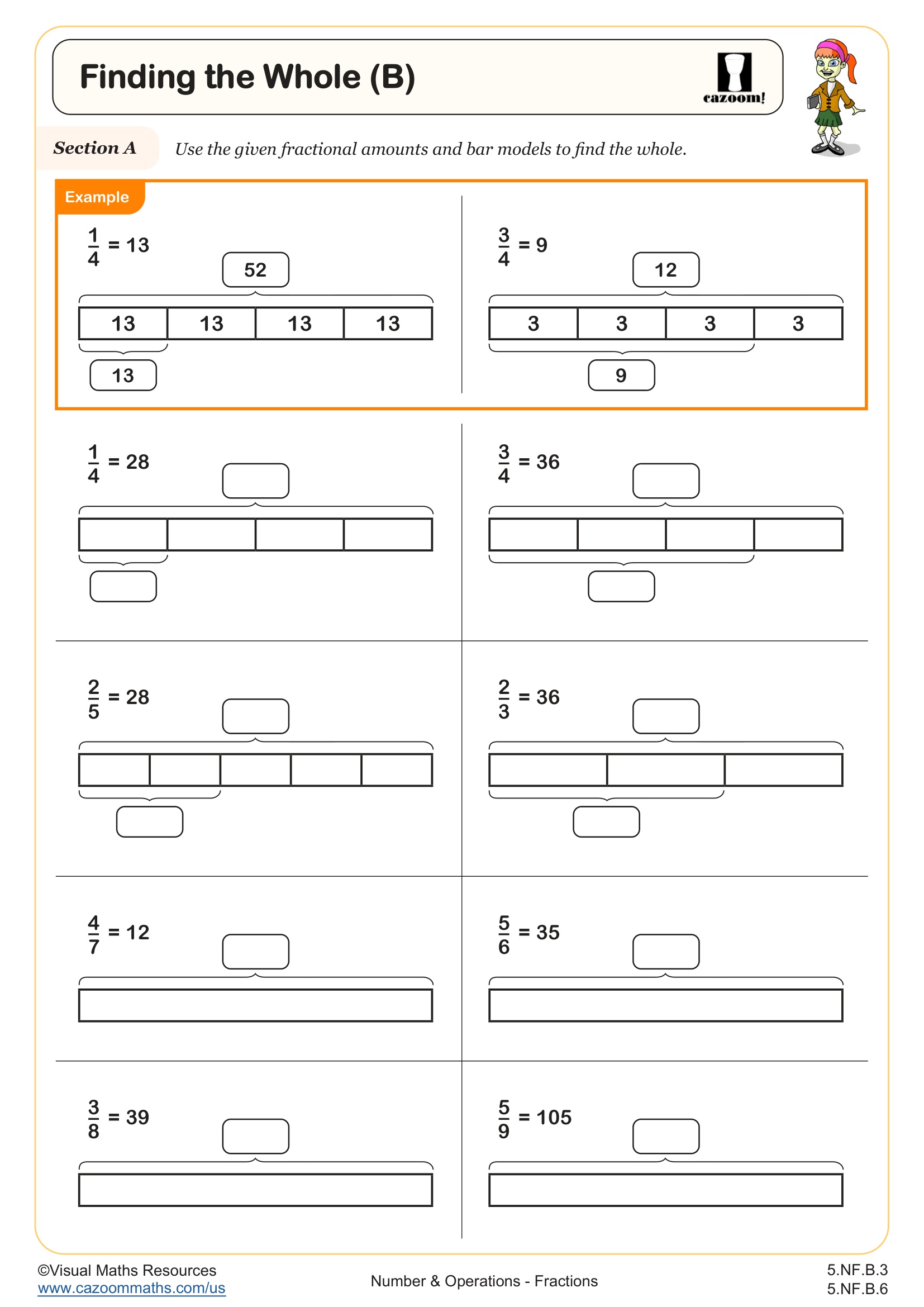
Finding the Whole (B)
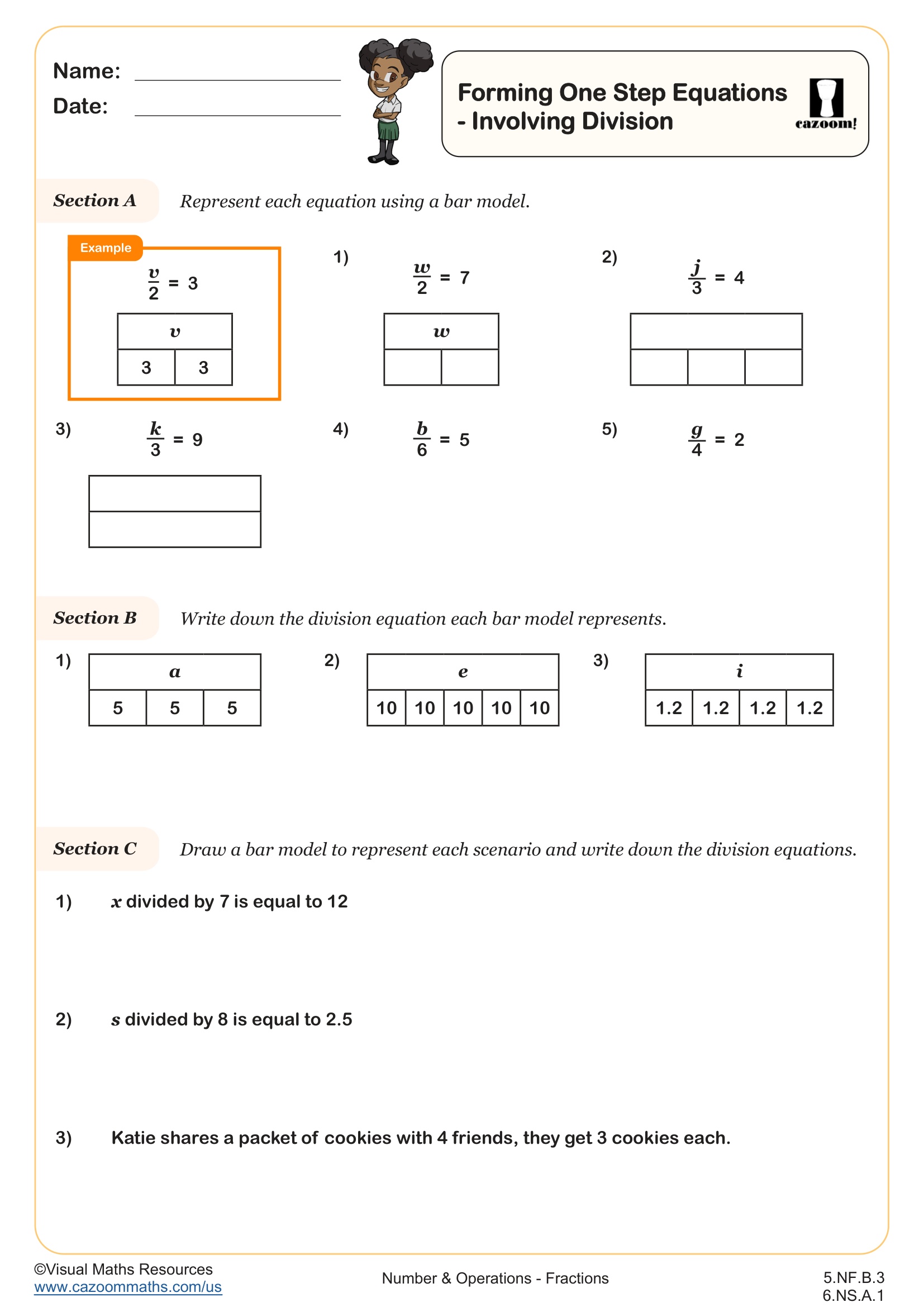
Forming One Step Equations Involving Division
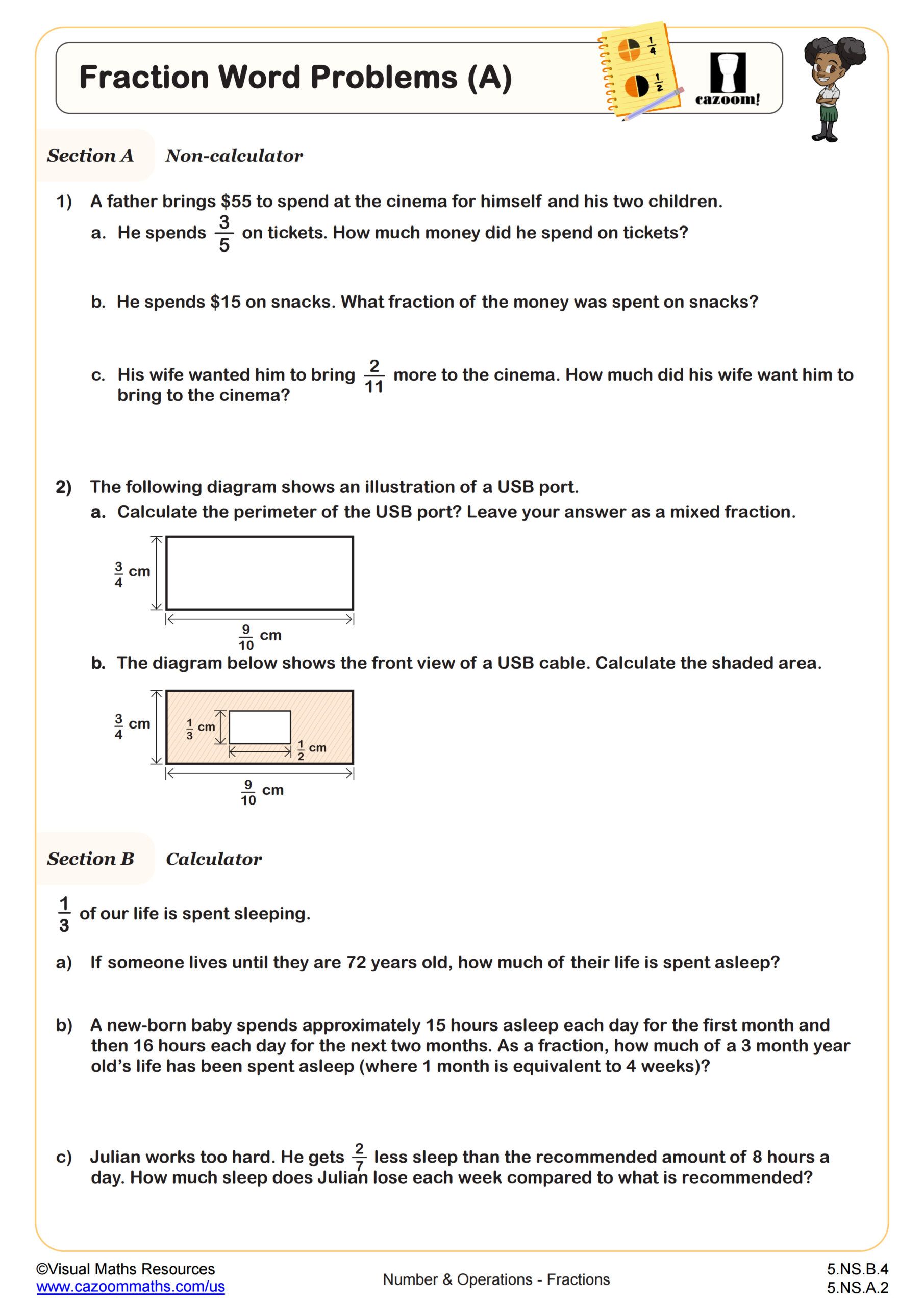
Fractions Word Problems (A)
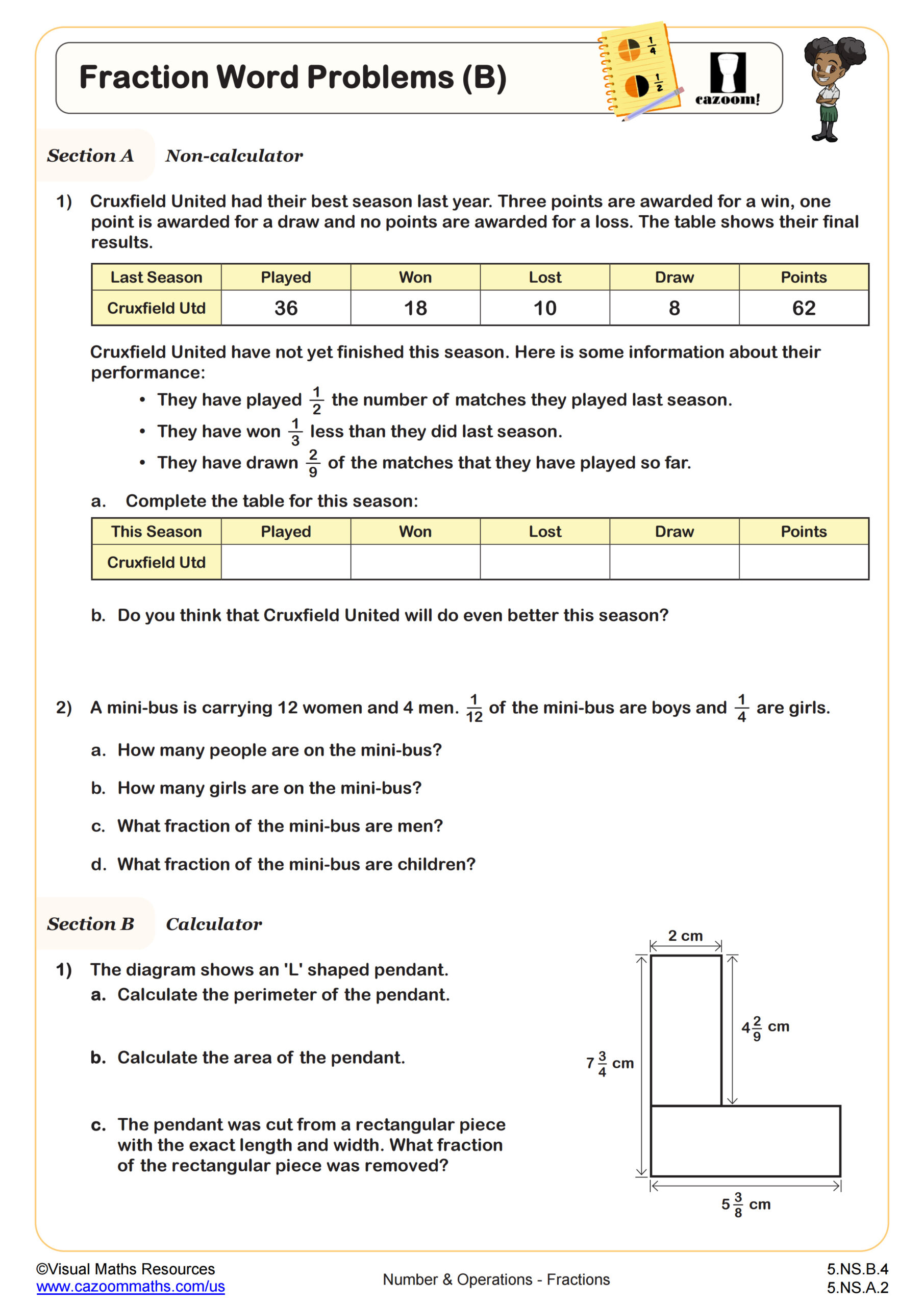
Fractions Word Problems (B)
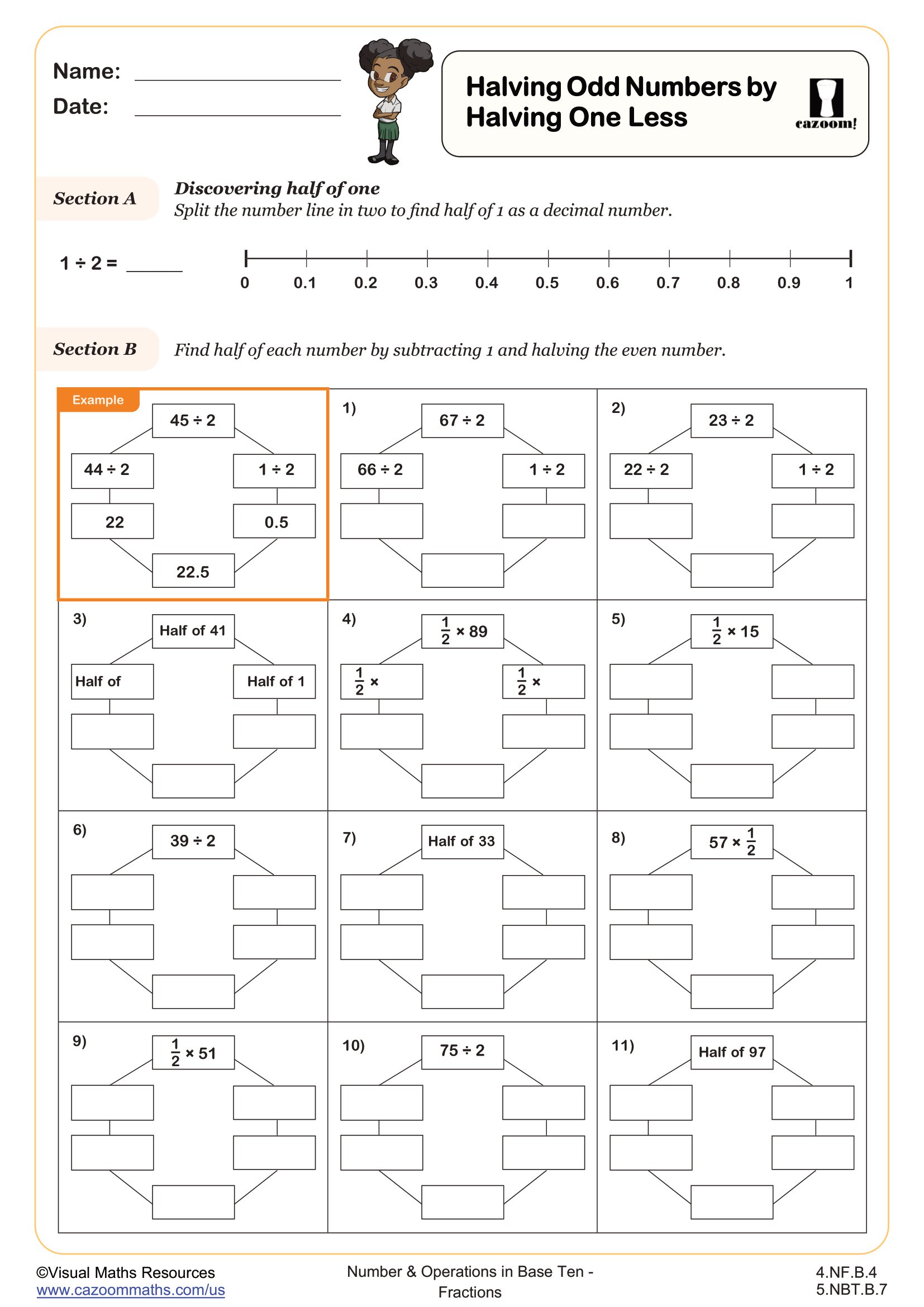
Halving Odd Numbers by Halving One Less
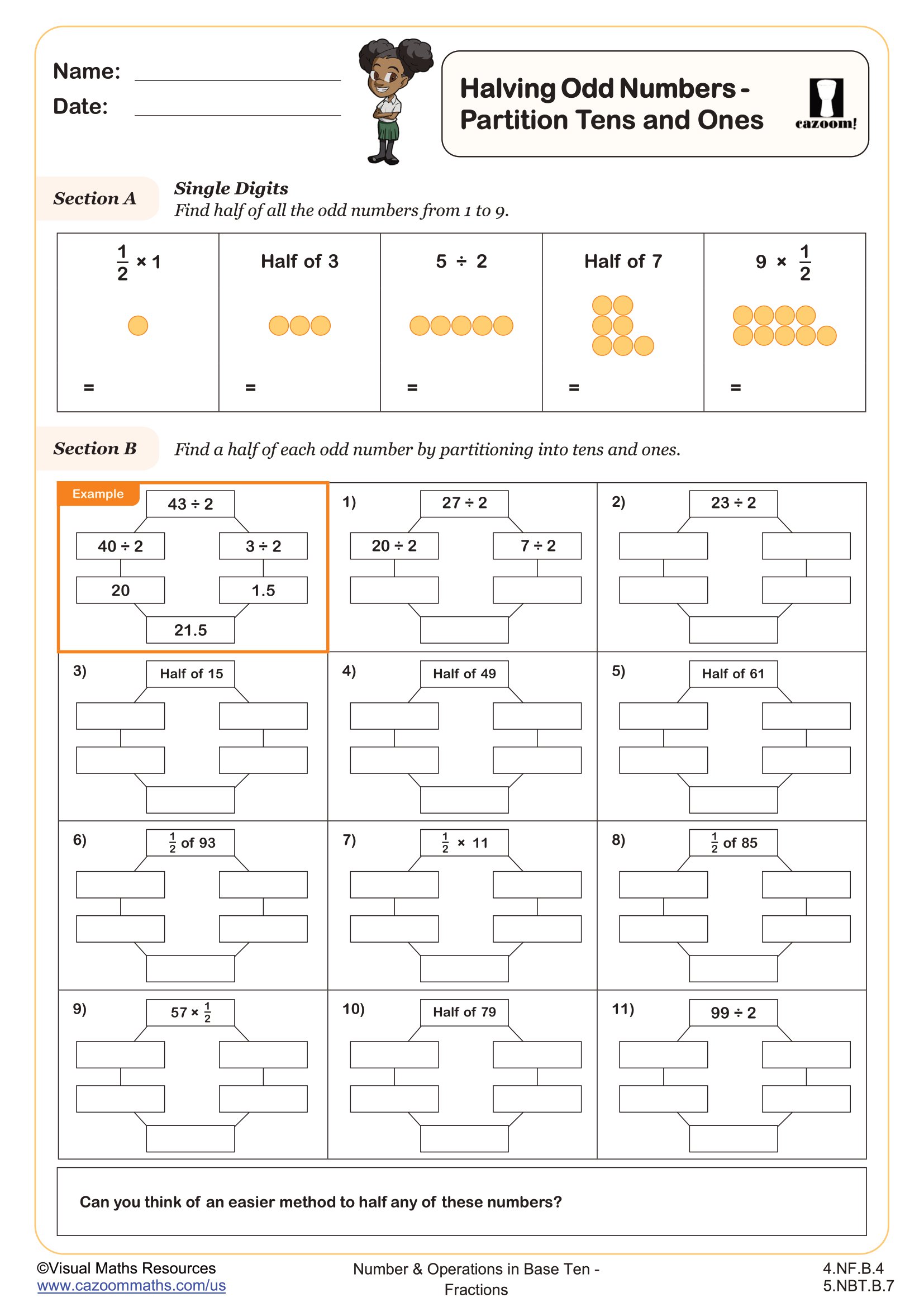
Halving Odd Numbers Partition Tens and Ones
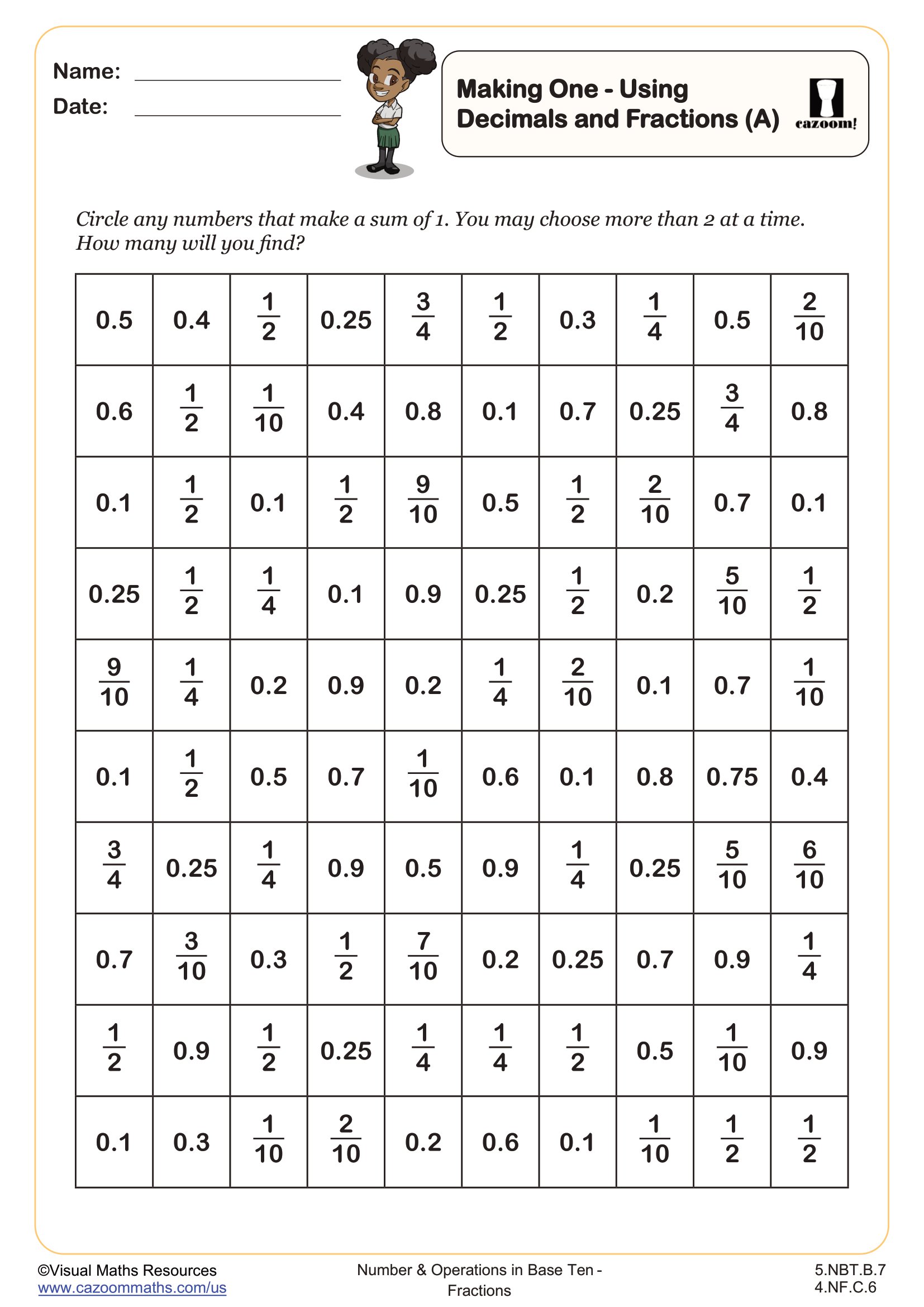
Making One Using Decimals and Fractions (A)
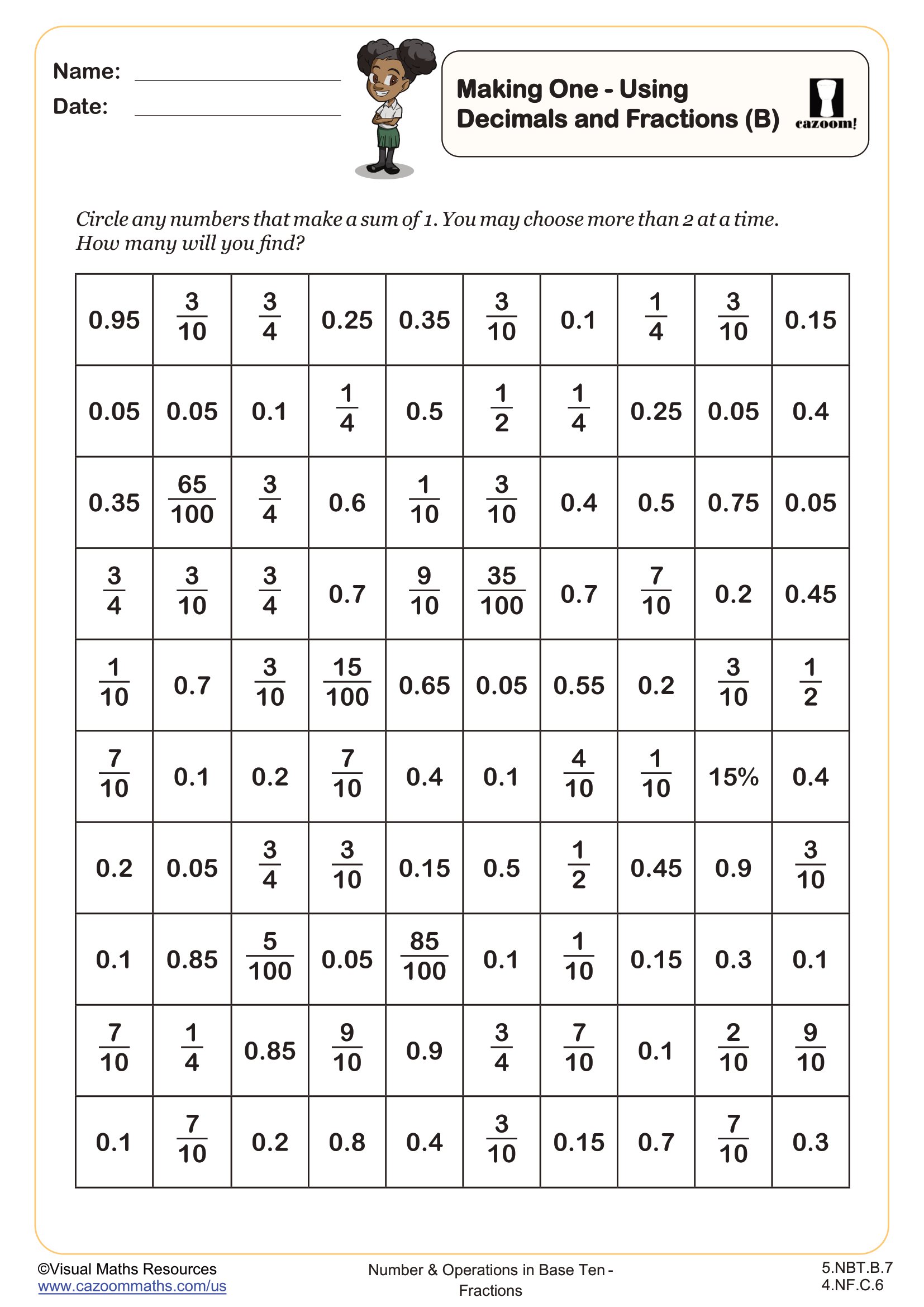
Making One Using Decimals and Fractions (B)
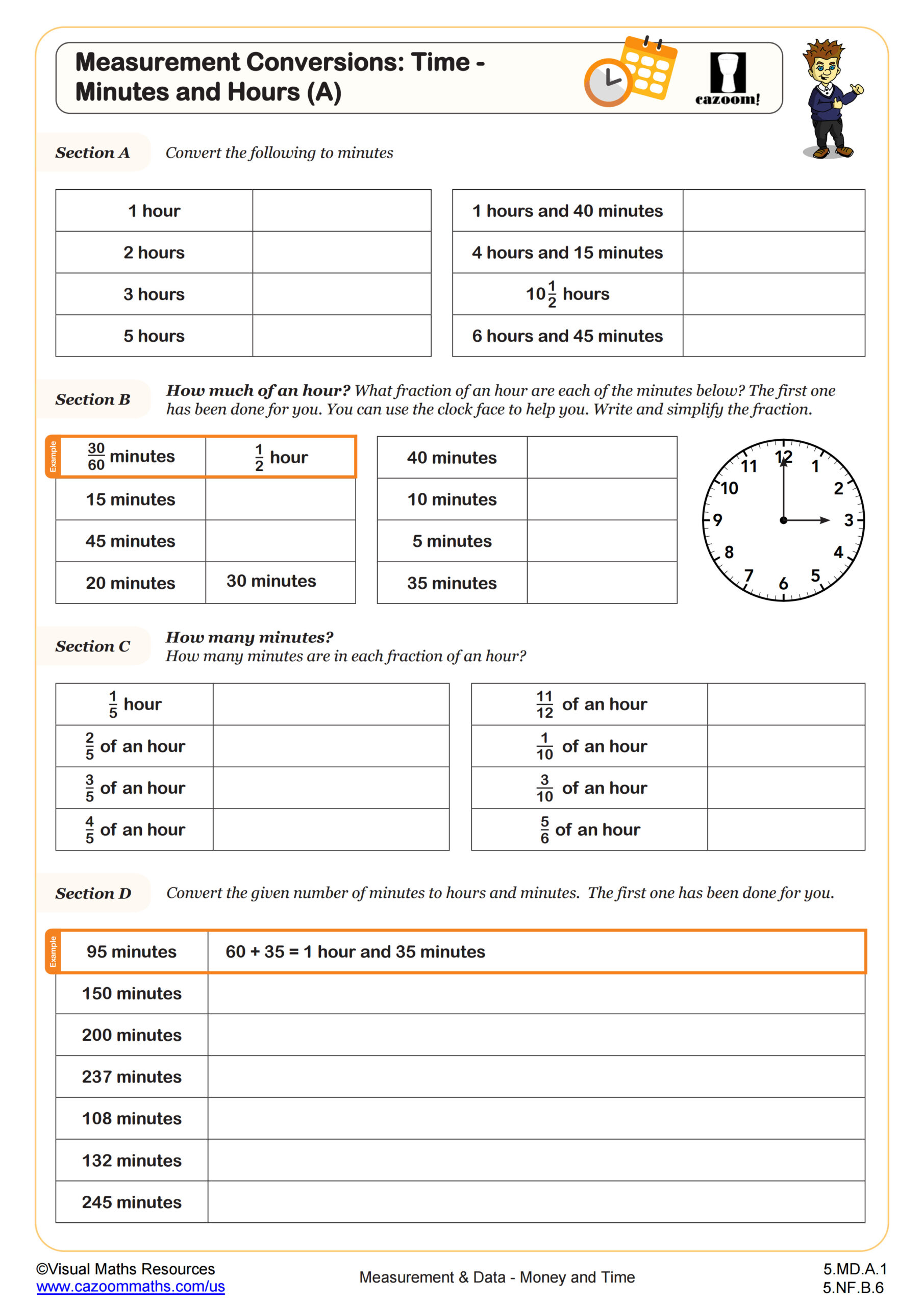
Measurement Conversions: Time - Minutes and Hours (A)
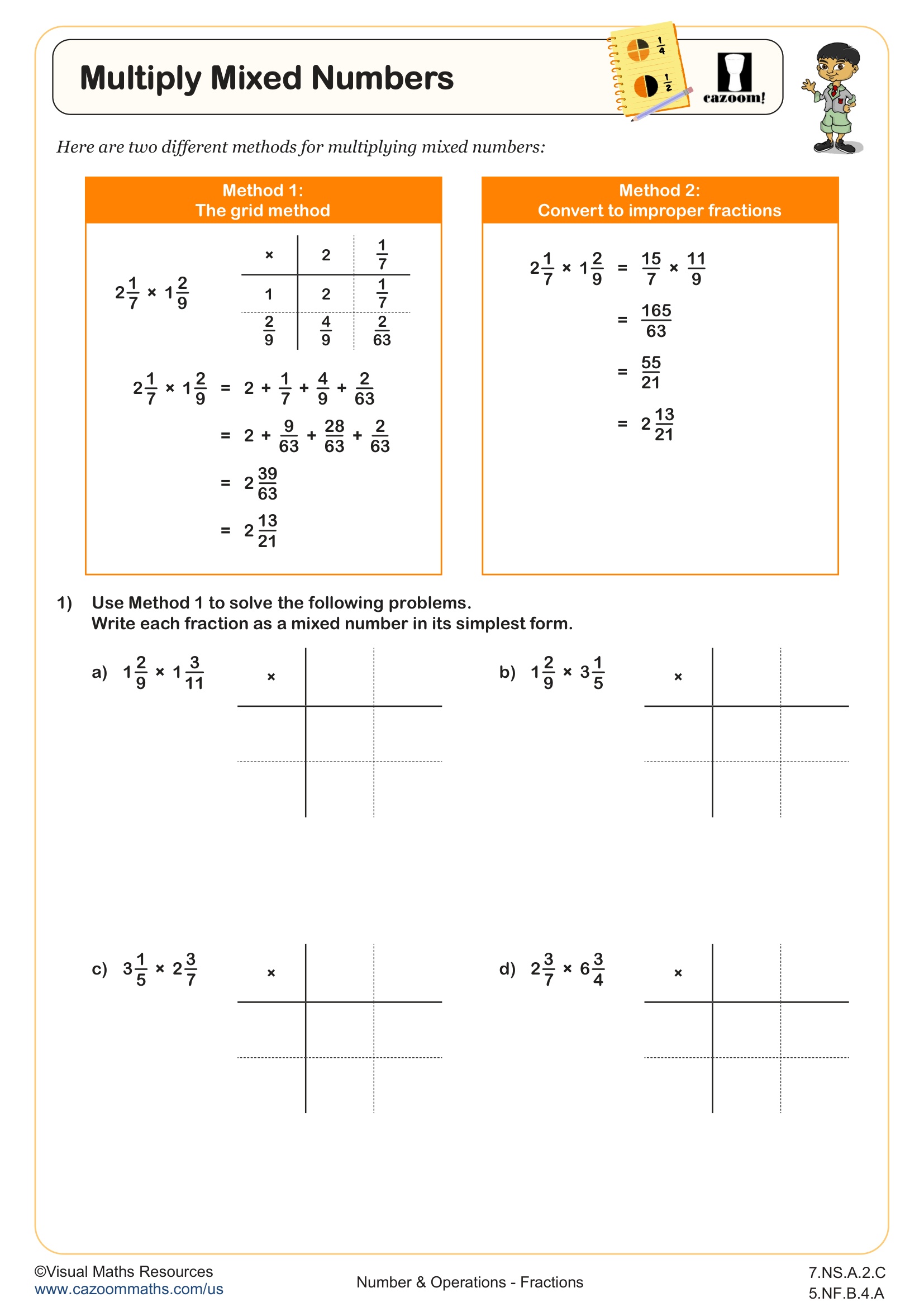
Multiply Mixed Numbers
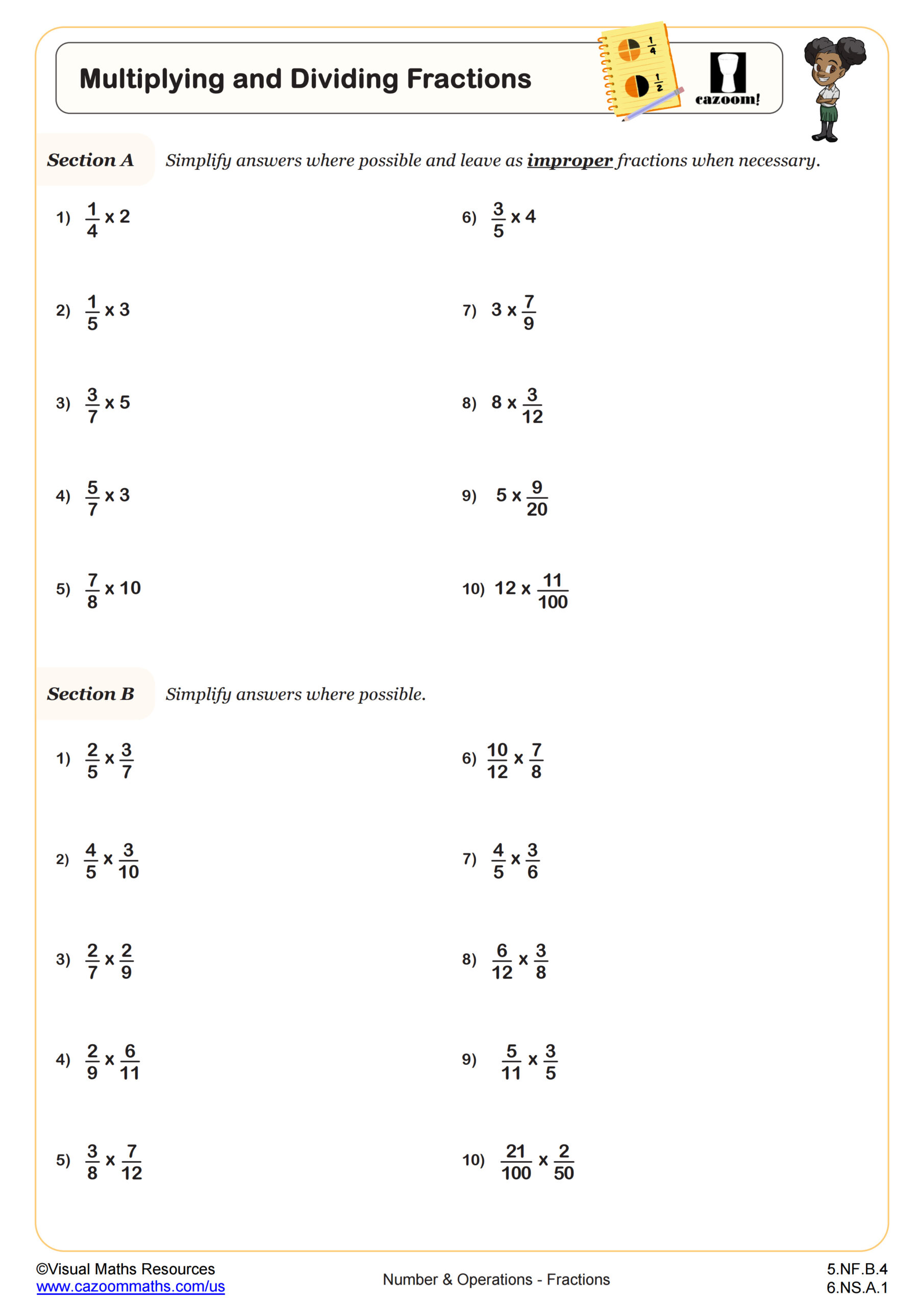
Multiplying and Dividing Fractions
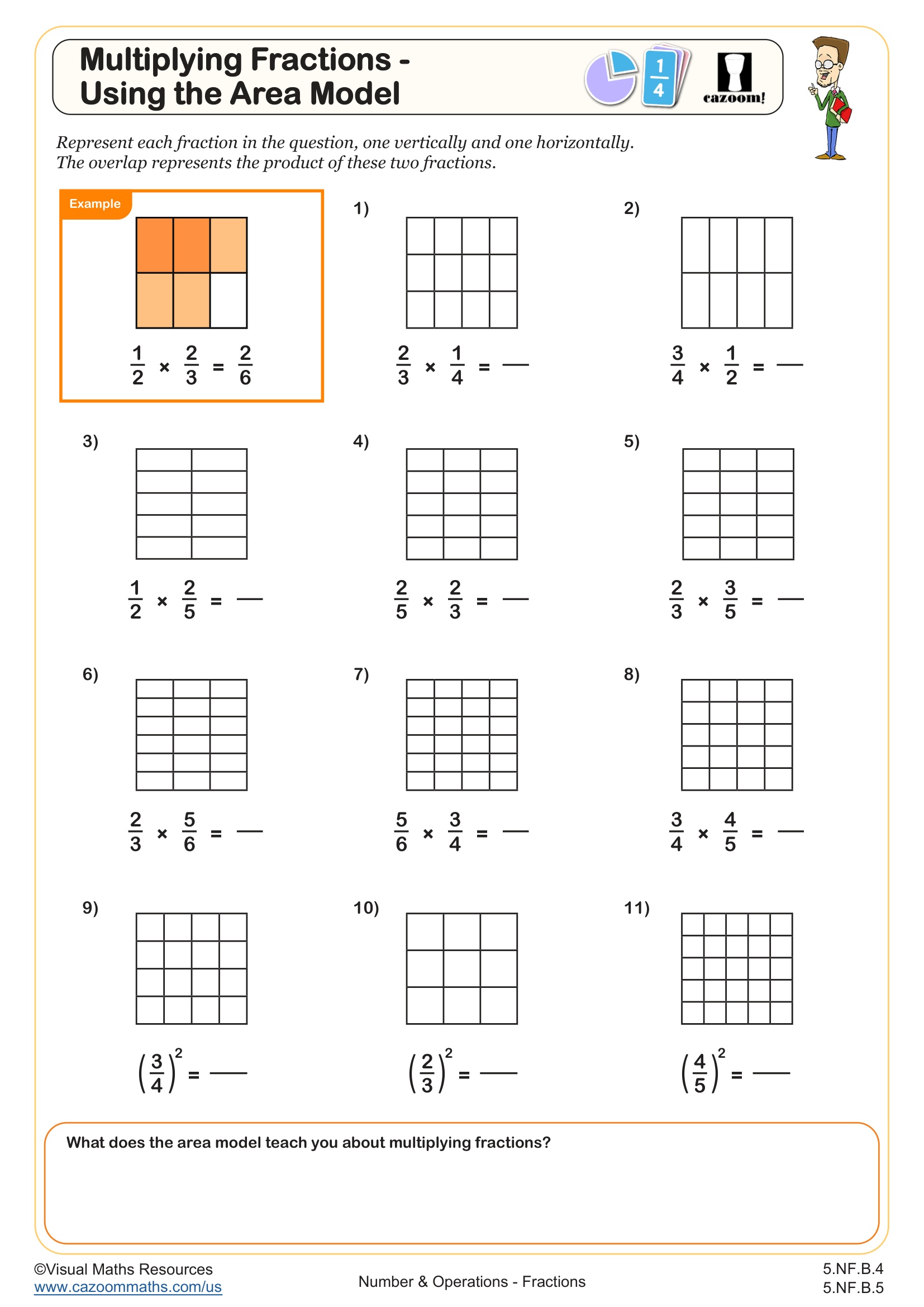
Multiplying Fractions - Using the Area Model
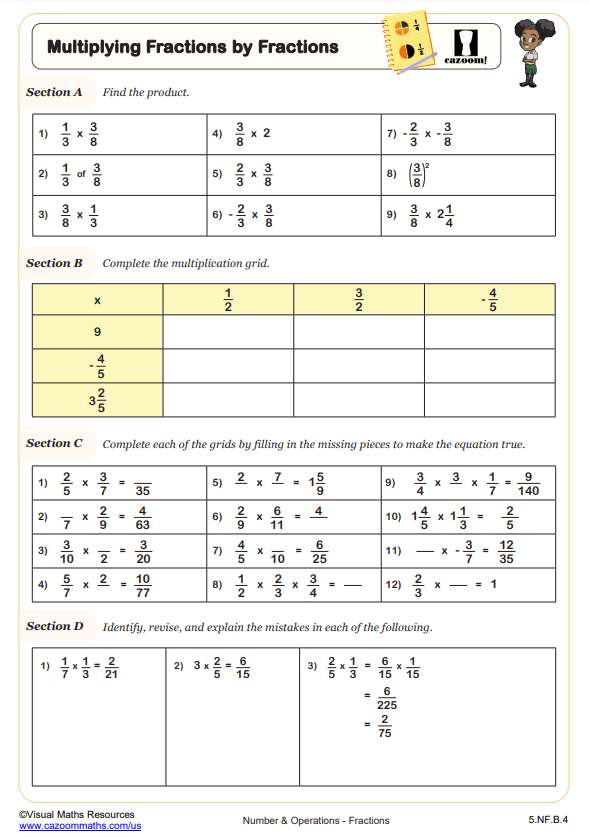
Multiplying Fractions by Fractions
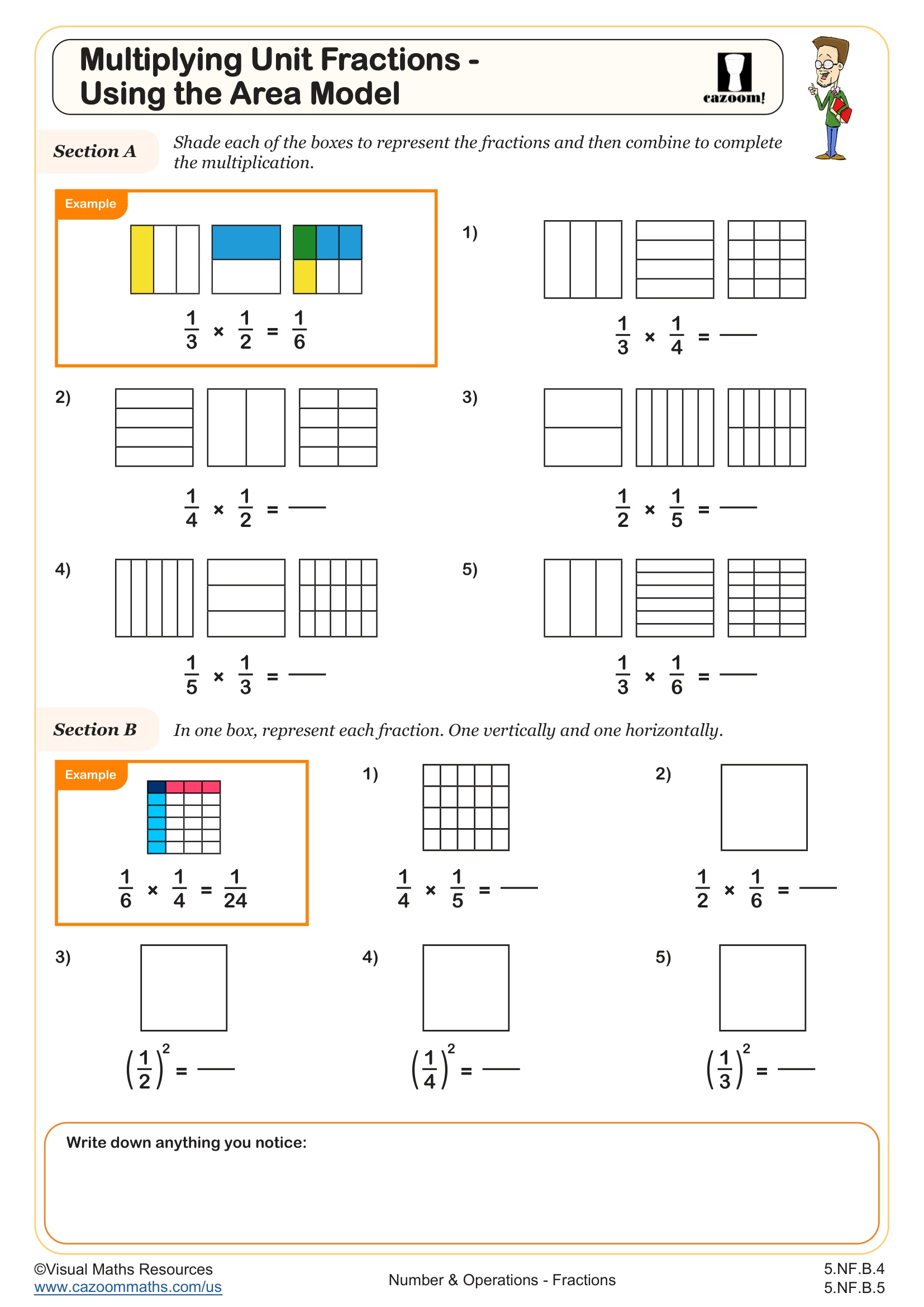
Multiplying Unit Fractions - Using the Area Model
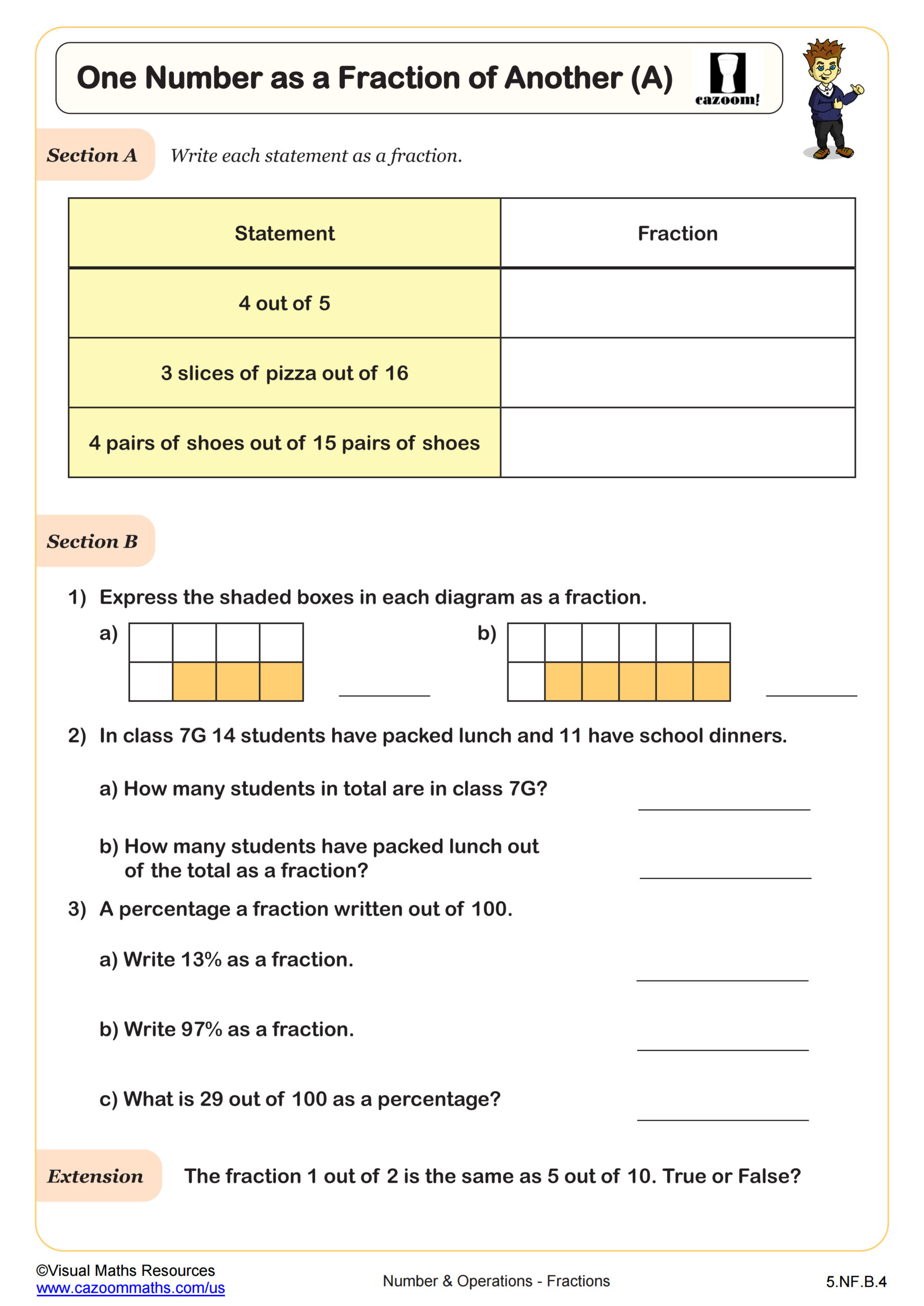
One Number as a Fraction of Another (A)
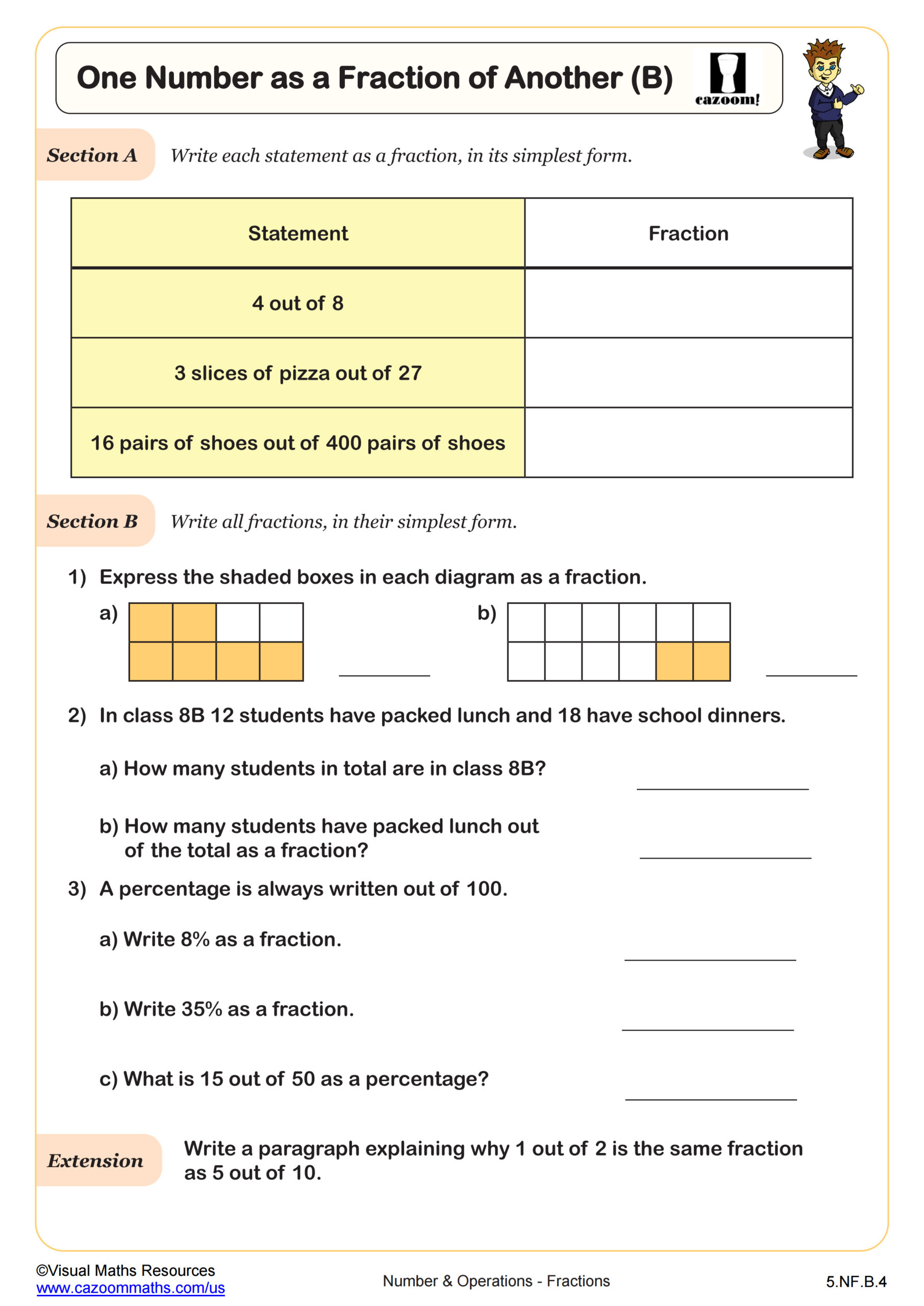
One Number as a Fraction of Another (B)
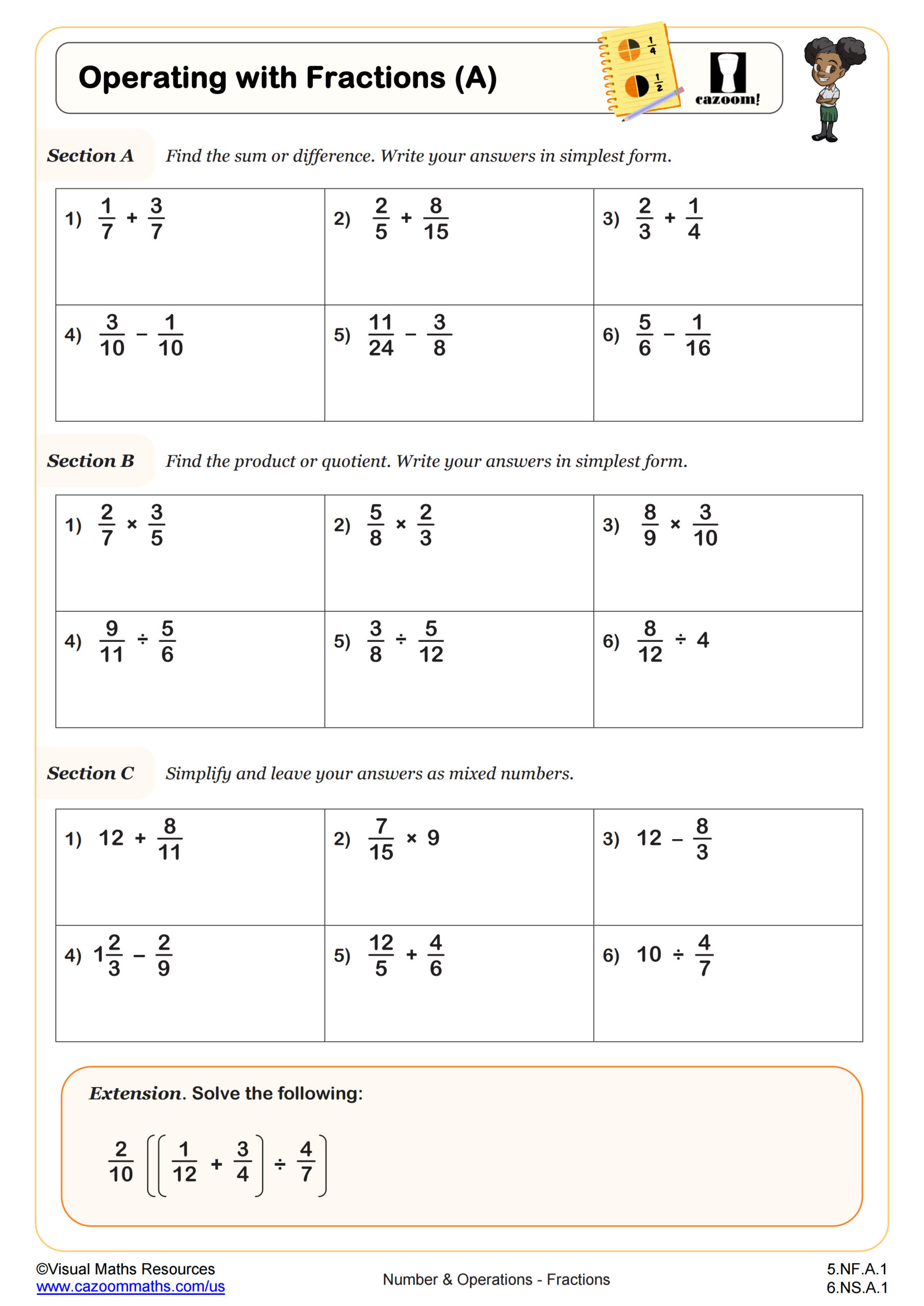
Operations with Fractions (A)
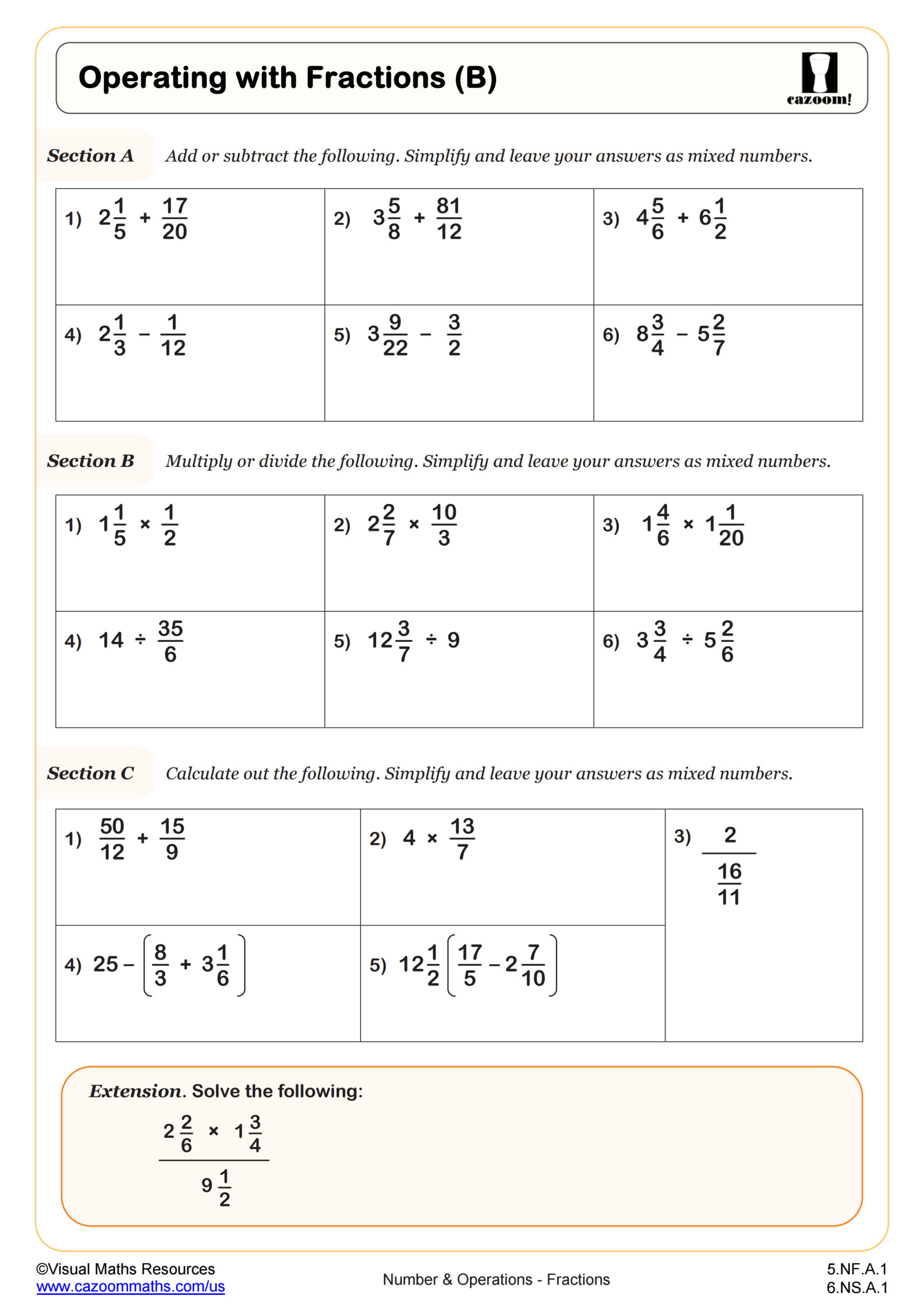
Operations with Fractions (B)
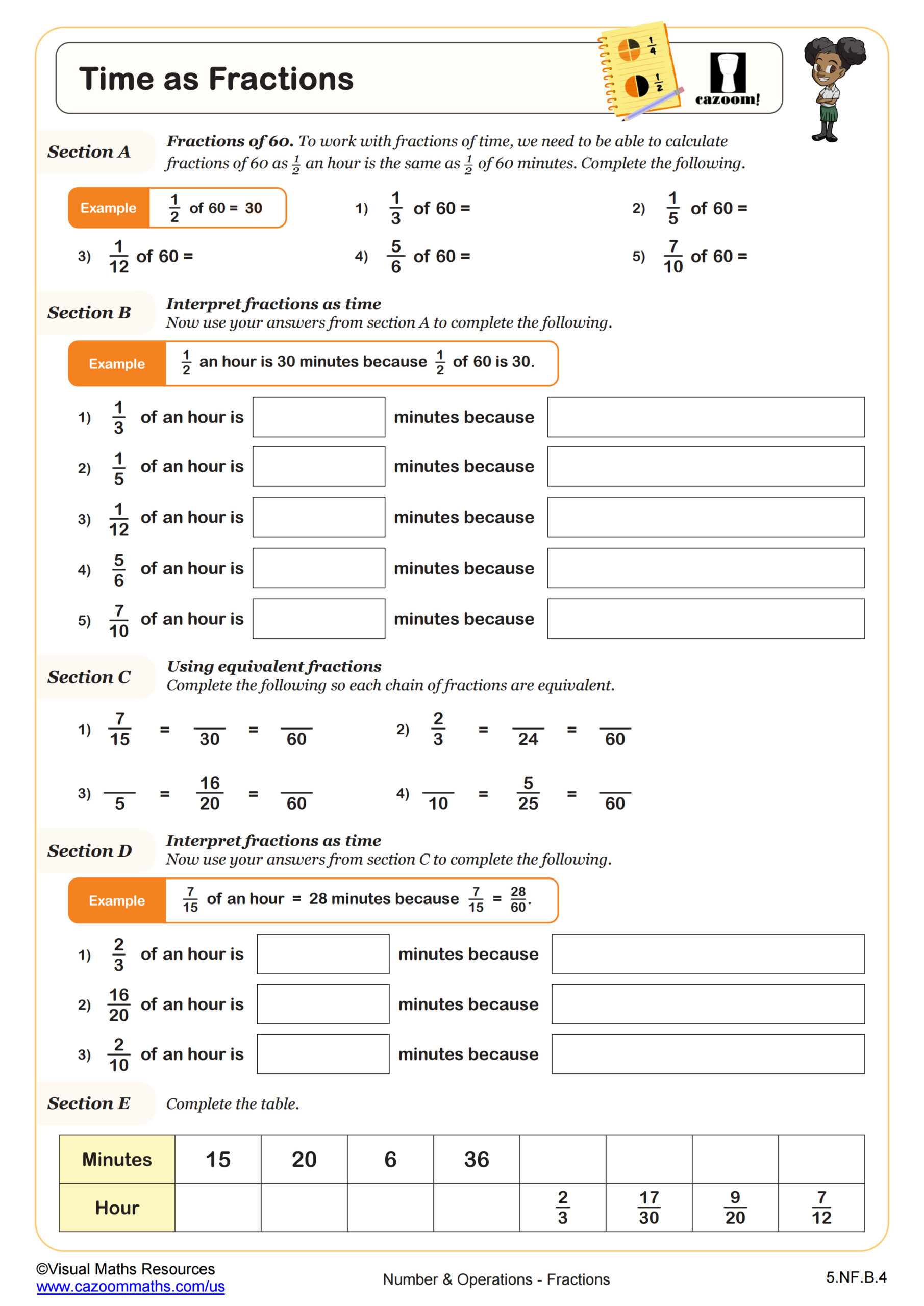
Time as Fractions (A)
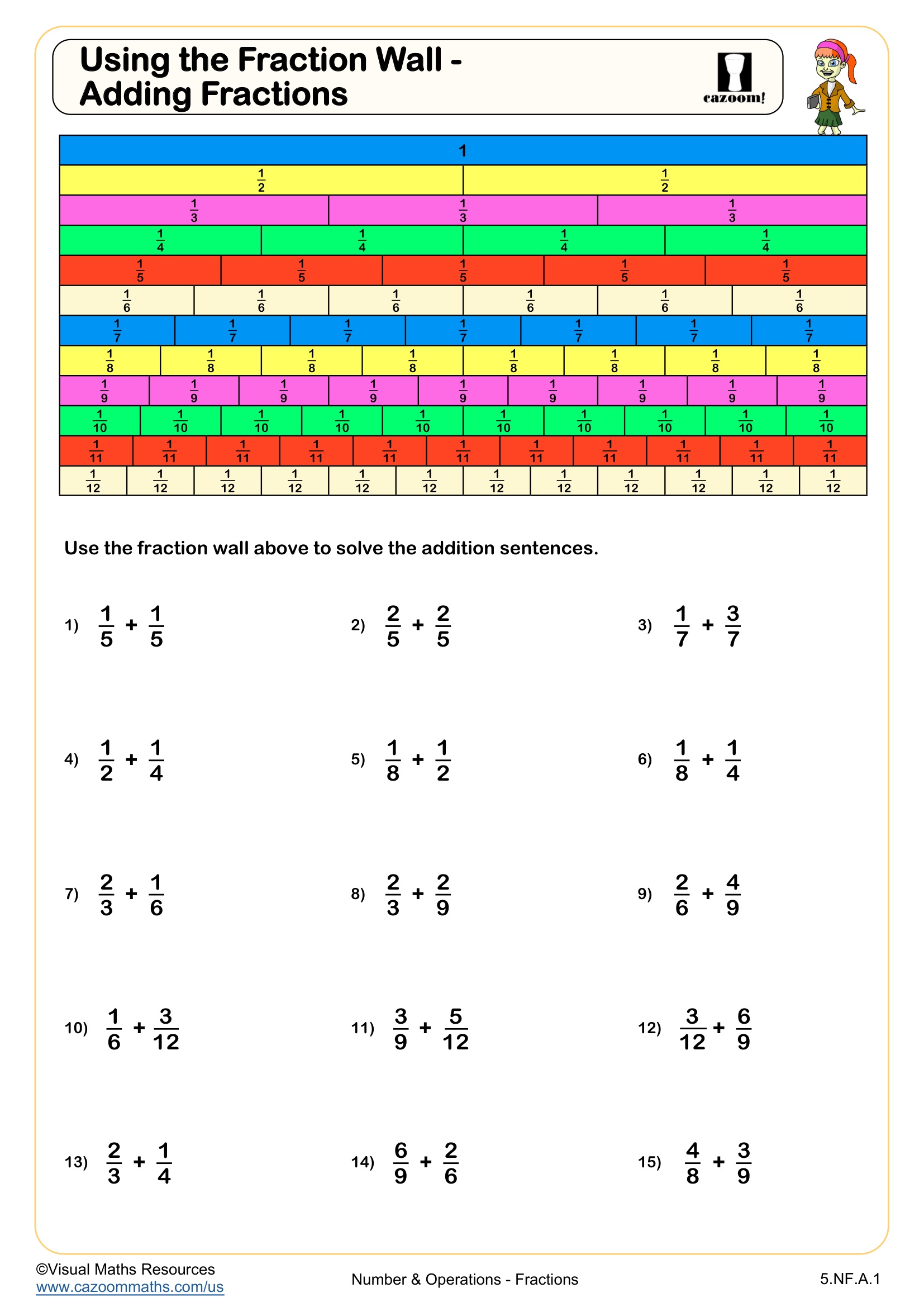
Using a Fraction Wall - Adding Fractions
All worksheets are created by the team of experienced teachers at Cazoom Math.
What topics are covered in 5th grade fractions worksheets?
Quality 5th grade fractions worksheets cover the core topics outlined in Common Core standards 5.NF.1 through 5.NF.7. These include adding and subtracting fractions with unlike denominators, multiplying fractions by whole numbers, interpreting fractions as division, and comparing fractions using benchmark strategies. The worksheets also address equivalent fractions, mixed numbers, and word problems involving fraction operations.
Teachers frequently observe that students who master these concepts in 5th grade show stronger algebraic thinking in middle school, since fraction operations form the foundation for rational number work. The most challenging transition occurs when students move from adding fractions with like denominators to unlike denominators, where conceptual understanding of equivalent fractions becomes critical for computational fluency.
How do 5th grade fraction skills differ from earlier grade levels?
Fifth grade represents a significant leap in fraction complexity compared to 3rd and 4th grade work. While earlier grades focus on identifying fractions, comparing simple fractions, and understanding fractions as parts of a whole, 5th grade fractions worksheets grade 5 pdf materials emphasize operations and more abstract thinking. Students must now add and subtract fractions with different denominators and multiply fractions by whole numbers.
The cognitive demand increases substantially because students must coordinate multiple concepts simultaneously. Teachers notice that students who relied heavily on visual models in 4th grade sometimes struggle when 5th grade problems require more efficient strategies. This grade level introduces fractions as division (5 ÷ 4 = 5/4), connecting arithmetic operations in ways that prepare students for pre-algebraic thinking.
Why do students find adding fractions with unlike denominators challenging?
Adding fractions with unlike denominators represents the most significant conceptual hurdle in 5th grade fraction work. Students must understand that fractions need common units before combining, similar to how you cannot directly add 3 feet and 5 inches without conversion. The challenge lies in coordinating equivalent fraction knowledge with addition procedures while maintaining conceptual understanding.
Classroom observations show students often apply whole number thinking, simply adding numerators and denominators separately (1/2 + 1/3 = 2/5). Others find common denominators correctly but lose track of equivalent relationships. Effective fractions class 5 worksheet with answers provide step-by-step scaffolding and visual models to bridge concrete understanding with abstract procedures, helping students maintain meaning throughout the computational process.
How can teachers use these worksheets most effectively in instruction?
Teachers find greatest success using 5th grade math worksheets fractions as targeted practice following conceptual instruction rather than introducing new concepts. The worksheets work best when students have already explored fraction operations through manipulatives, visual models, or real-world contexts. Strategic worksheet selection allows teachers to address specific misconceptions or reinforce particular strategies identified during classroom instruction.
Many teachers implement a gradual release approach, completing the first few problems together before assigning independent practice. The answer keys enable immediate feedback, allowing students to self-correct and identify error patterns. Teachers also use these materials for differentiated instruction, providing additional practice for students who need reinforcement while offering extension problems for those ready for greater challenge in fraction reasoning and problem-solving applications.