5th Grade Place Value Worksheets
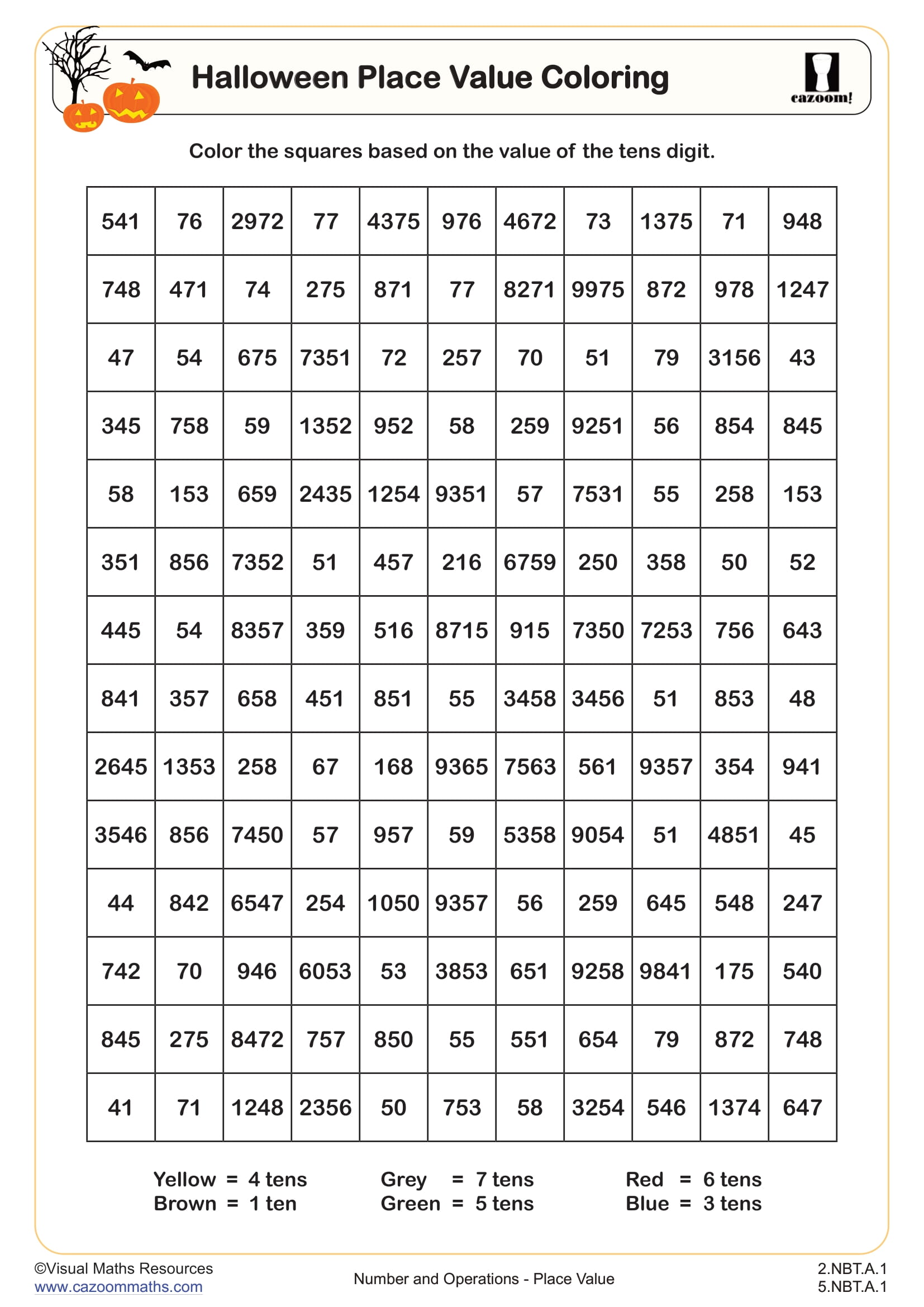
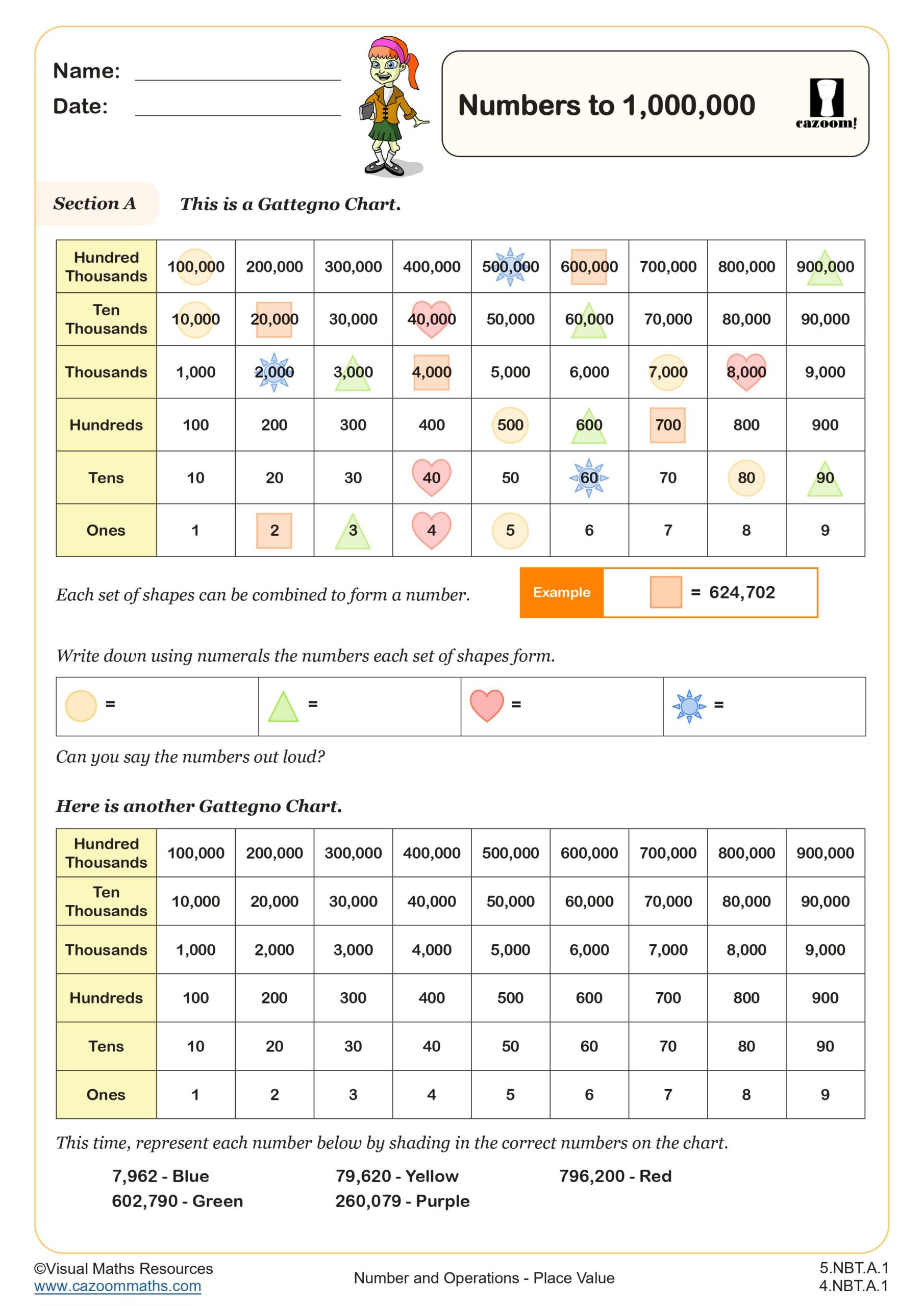
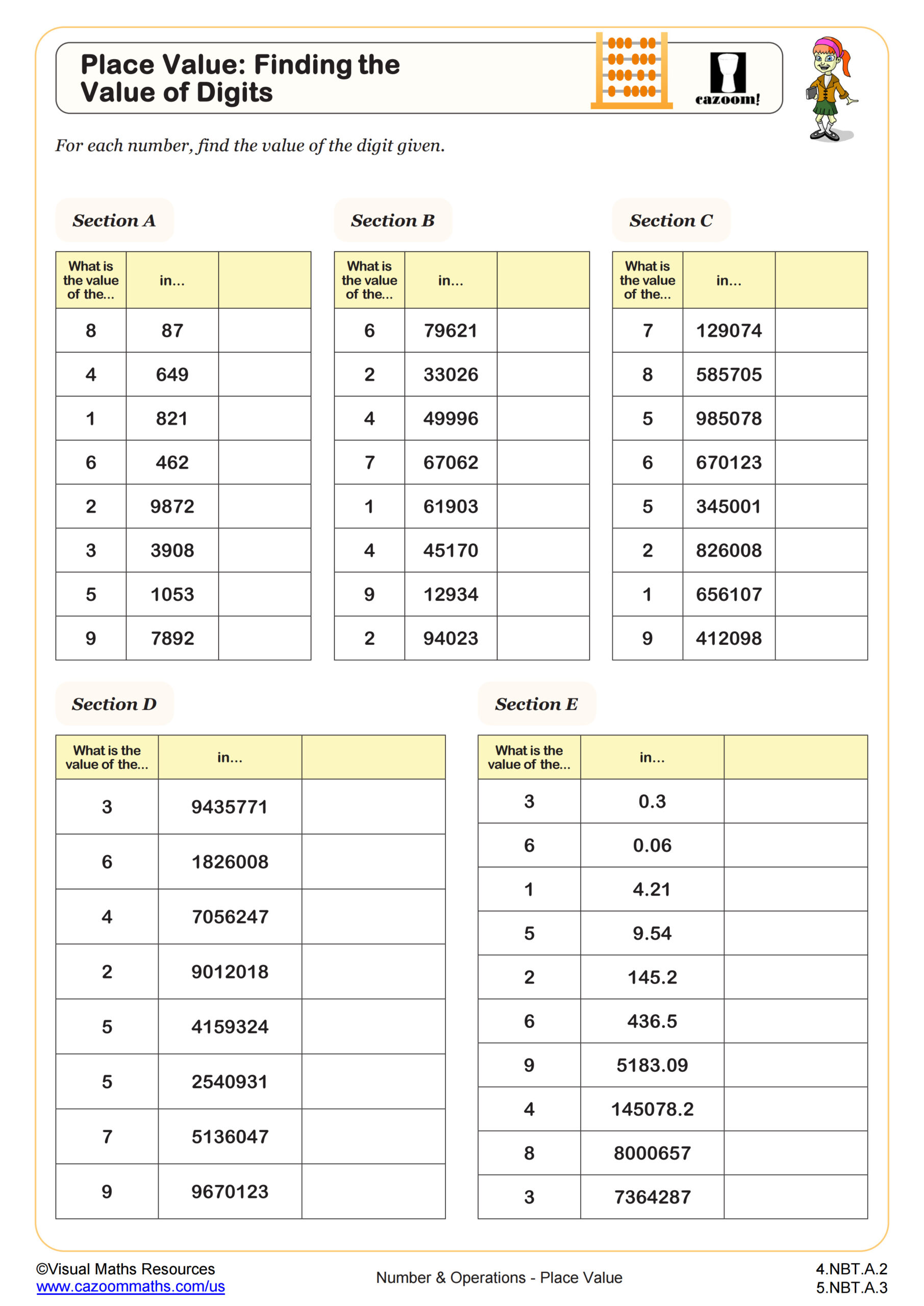
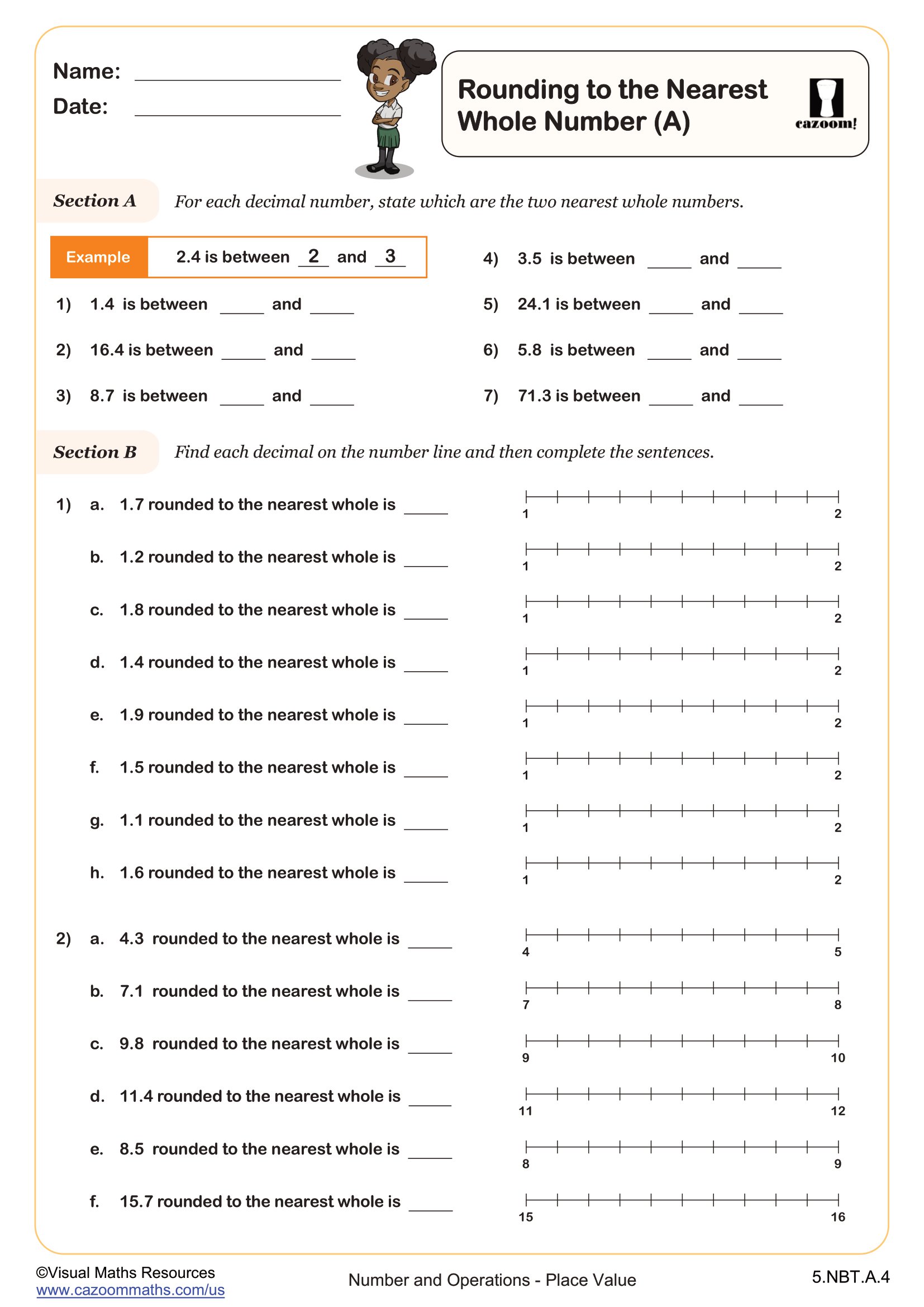
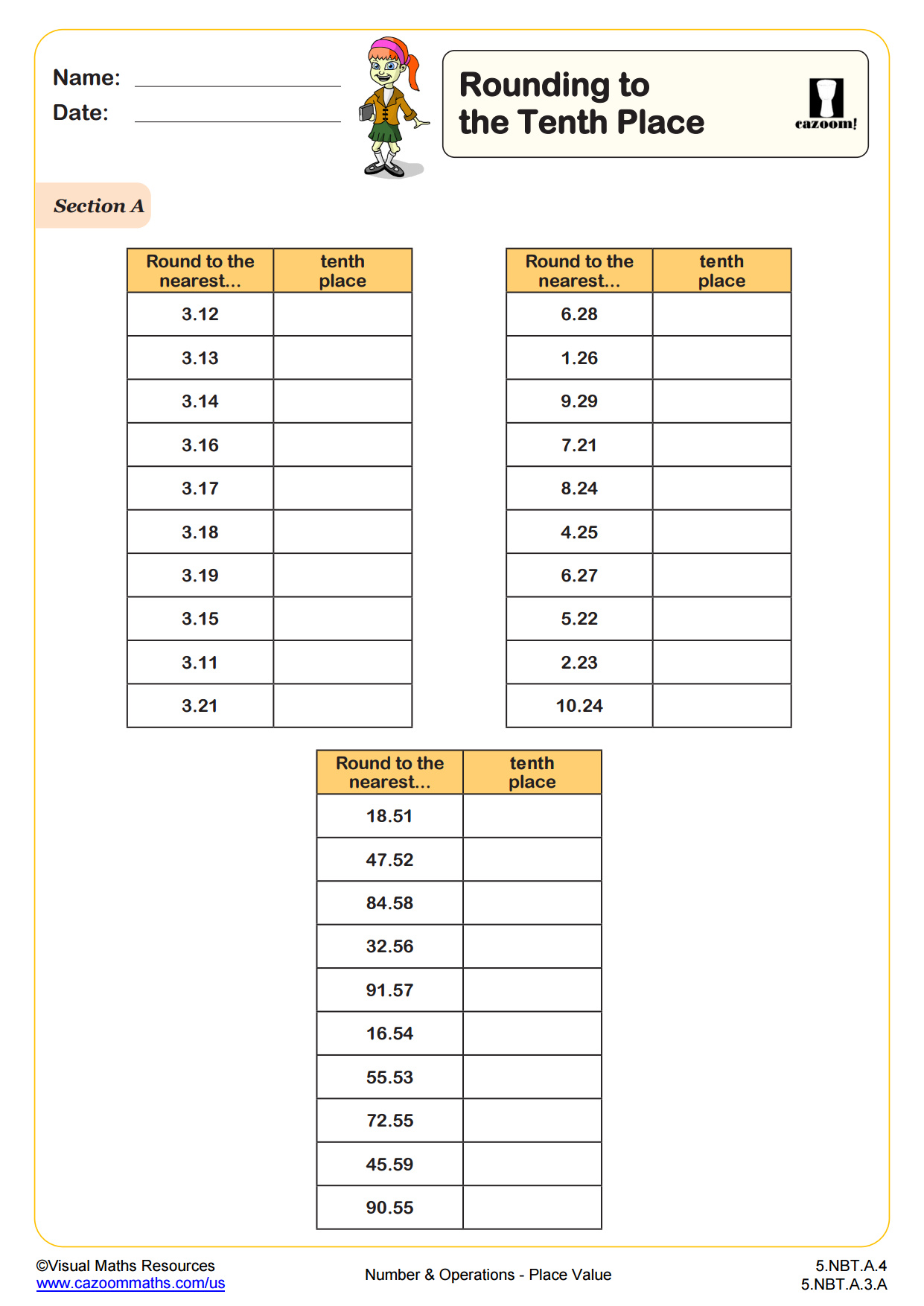
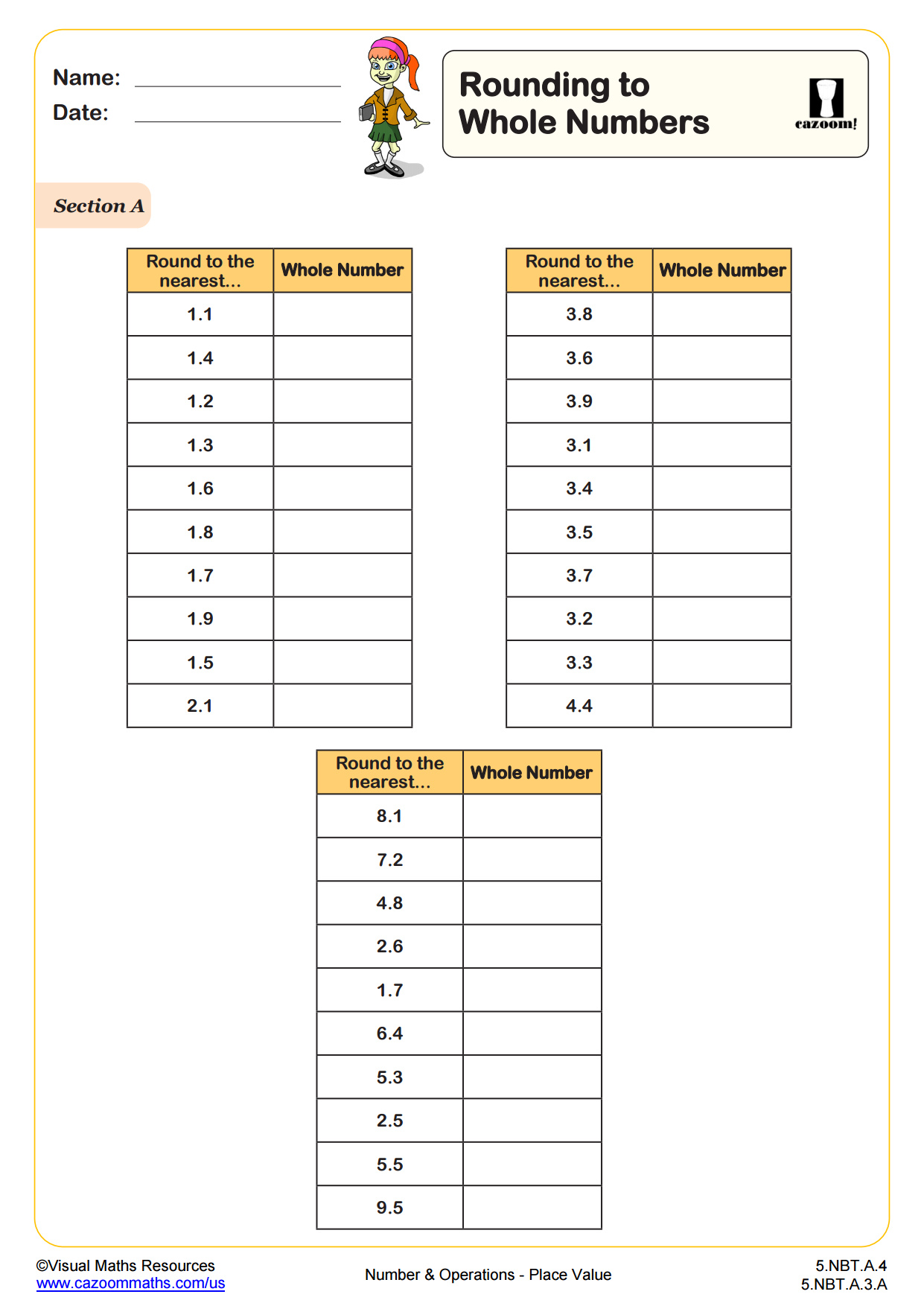
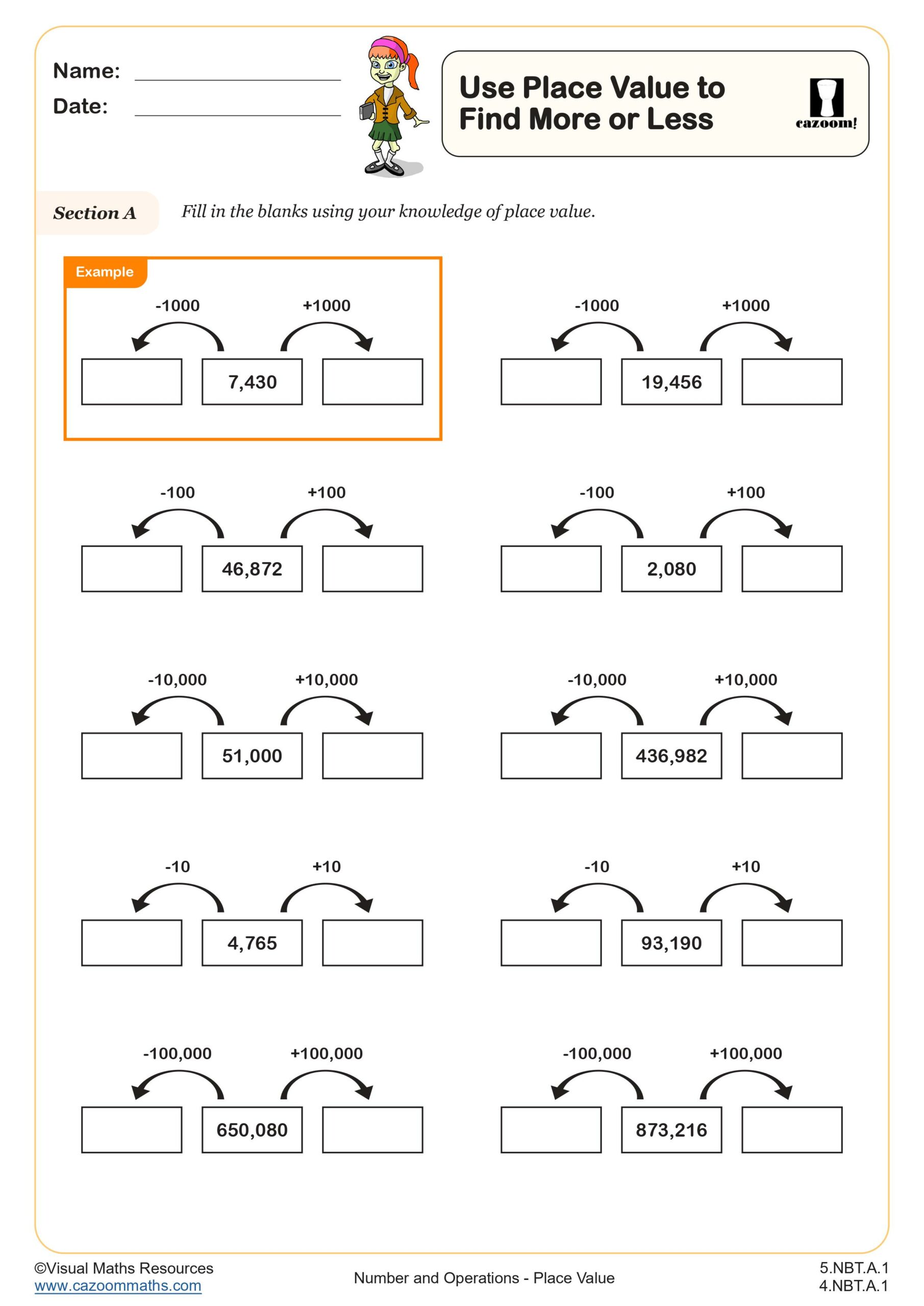
All worksheets are created by the team of experienced teachers at Cazoom Math.
What skills do place value worksheets grade 5 typically cover?
Grade 5 place value worksheets address Common Core standards 5.NBT.1-4, covering place value understanding through millions and decimal places to thousandths. Students practice reading, writing, and comparing multi-digit numbers, understanding that digits in one place represent ten times what they represent in the place to their right.
Teachers frequently observe that students make errors when working with decimal place value, often treating 0.4 as larger than 0.37 because they focus on the whole number 4 versus 37. These worksheets provide systematic practice with place value charts, expanded form exercises, and number comparisons that help students visualize the relationships between place values and develop stronger number sense.
How do 5th grade place value skills build from 4th grade concepts?
Fourth grade students work primarily with whole numbers up to millions, while 5th grade extends place value understanding to include decimal fractions. This progression aligns with the Common Core's systematic approach to building number sense, where students first master whole number place value before tackling decimals.
The leap from 4th to 5th grade place value often challenges students because decimal notation requires understanding that place values continue the pattern to the right of the decimal point. Teachers notice that students who struggled with whole number place value in 4th grade need additional support with decimal concepts, making targeted practice worksheets valuable for identifying and addressing these foundational gaps.
Why do students often confuse expanded form with word form notation?
Expanded form breaks numbers into additive components (3,000 + 400 + 50 + 7), while word form expresses the complete number in written language (three thousand four hundred fifty-seven). Students frequently mix these formats because both require translating between different representations of the same number.
Teachers observe that students often write partial word forms in expanded notation, such as "3 thousands + 4 hundreds" instead of using numerical values. This confusion stems from not fully understanding that expanded form shows the actual mathematical value of each digit's position. Systematic practice with both formats helps students recognize the distinctions and choose the appropriate representation for different mathematical contexts.
How can teachers use these worksheets to support struggling learners?
Teachers can differentiate instruction by starting struggling students with simpler whole number place value problems before introducing decimal concepts. The answer keys allow for quick assessment of student understanding and identification of specific areas needing reteaching, such as decimal point placement or zero as a placeholder.
Many teachers find success using these worksheets in small group rotations, where students work at their instructional level while receiving targeted feedback. The visual place value charts included in many problems help students who need concrete representations to understand abstract concepts. Teachers can also use the worksheets for exit tickets to gauge daily progress and adjust next-day instruction accordingly.