5th Grade Powers To Ten Worksheets
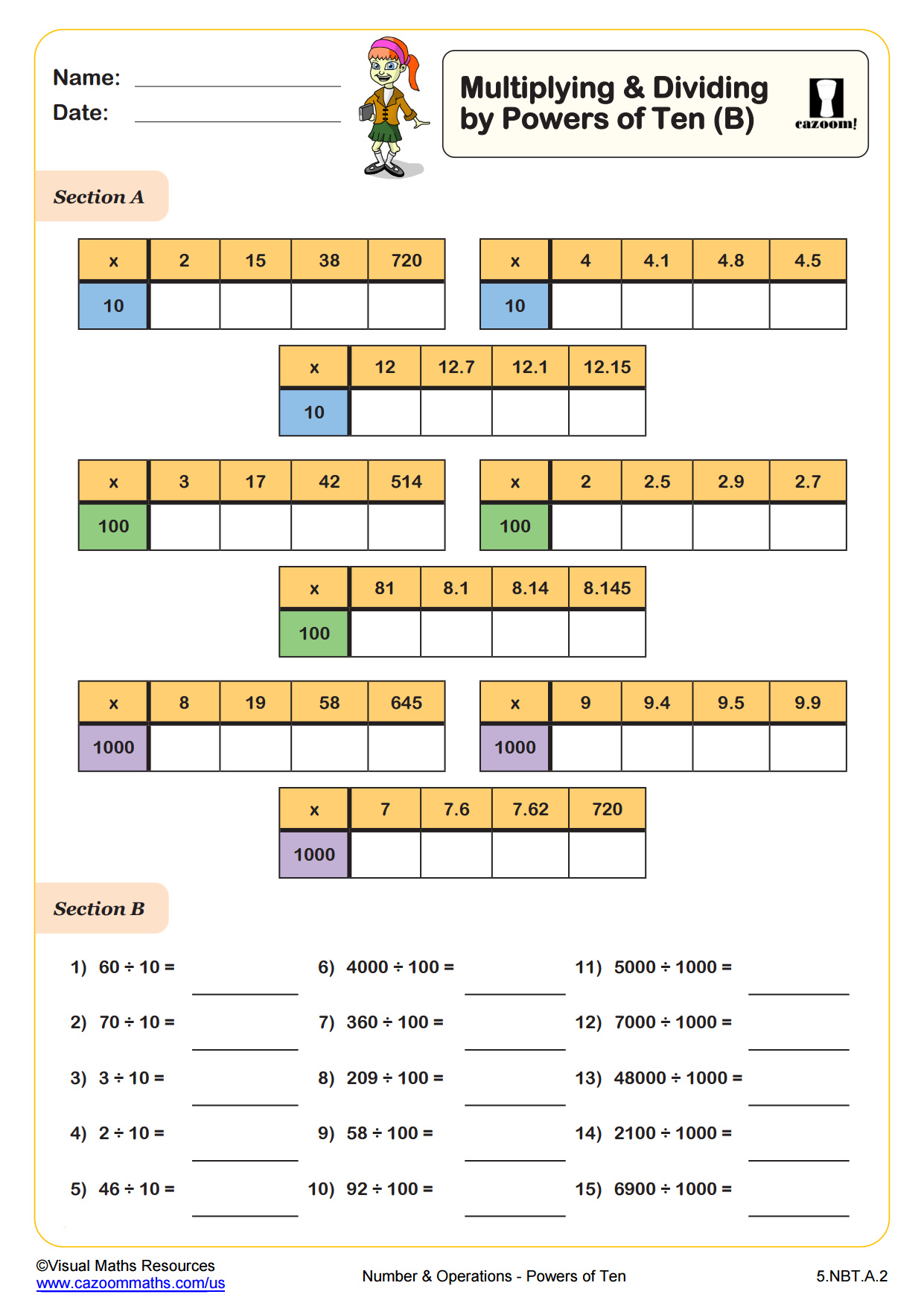
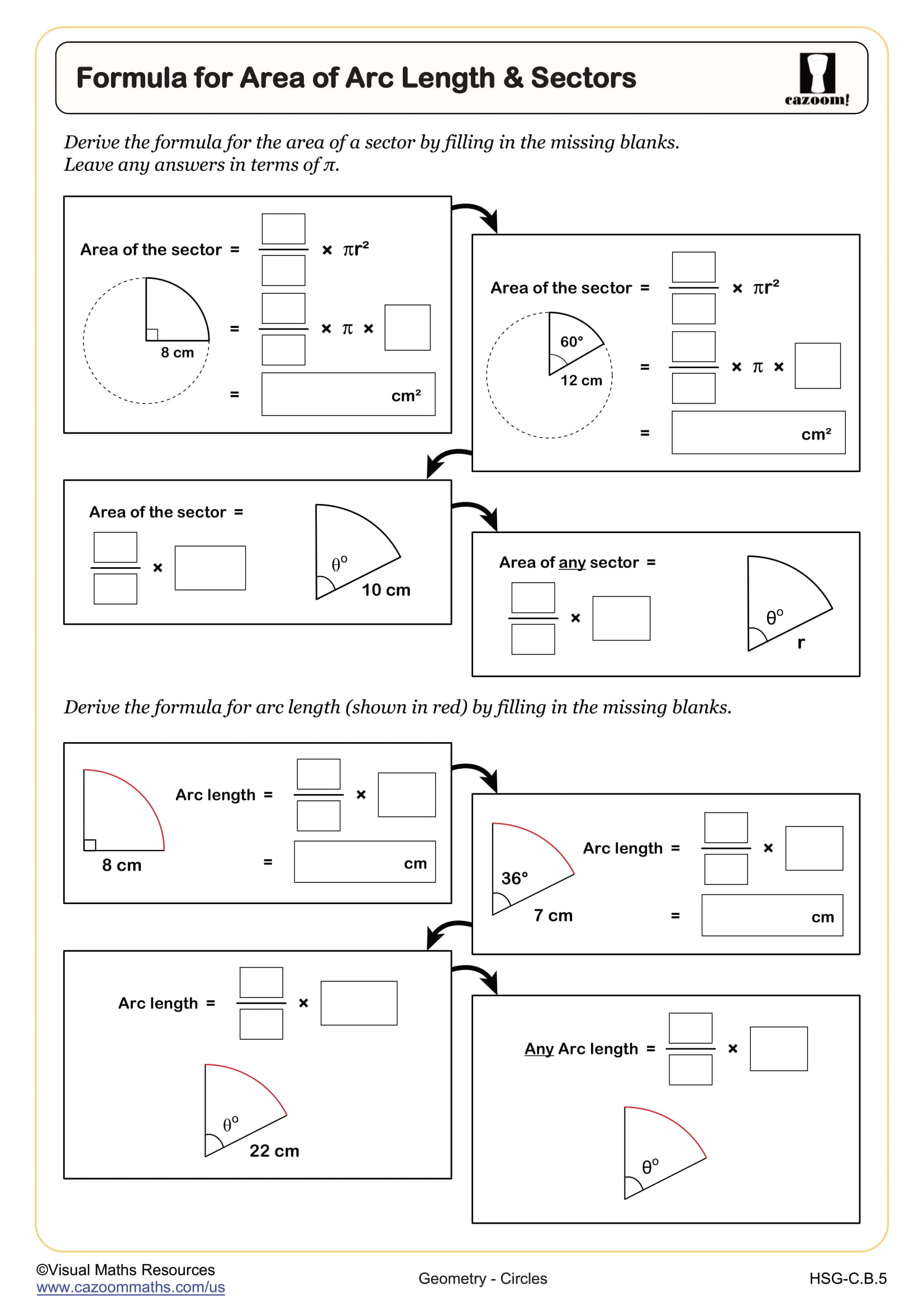
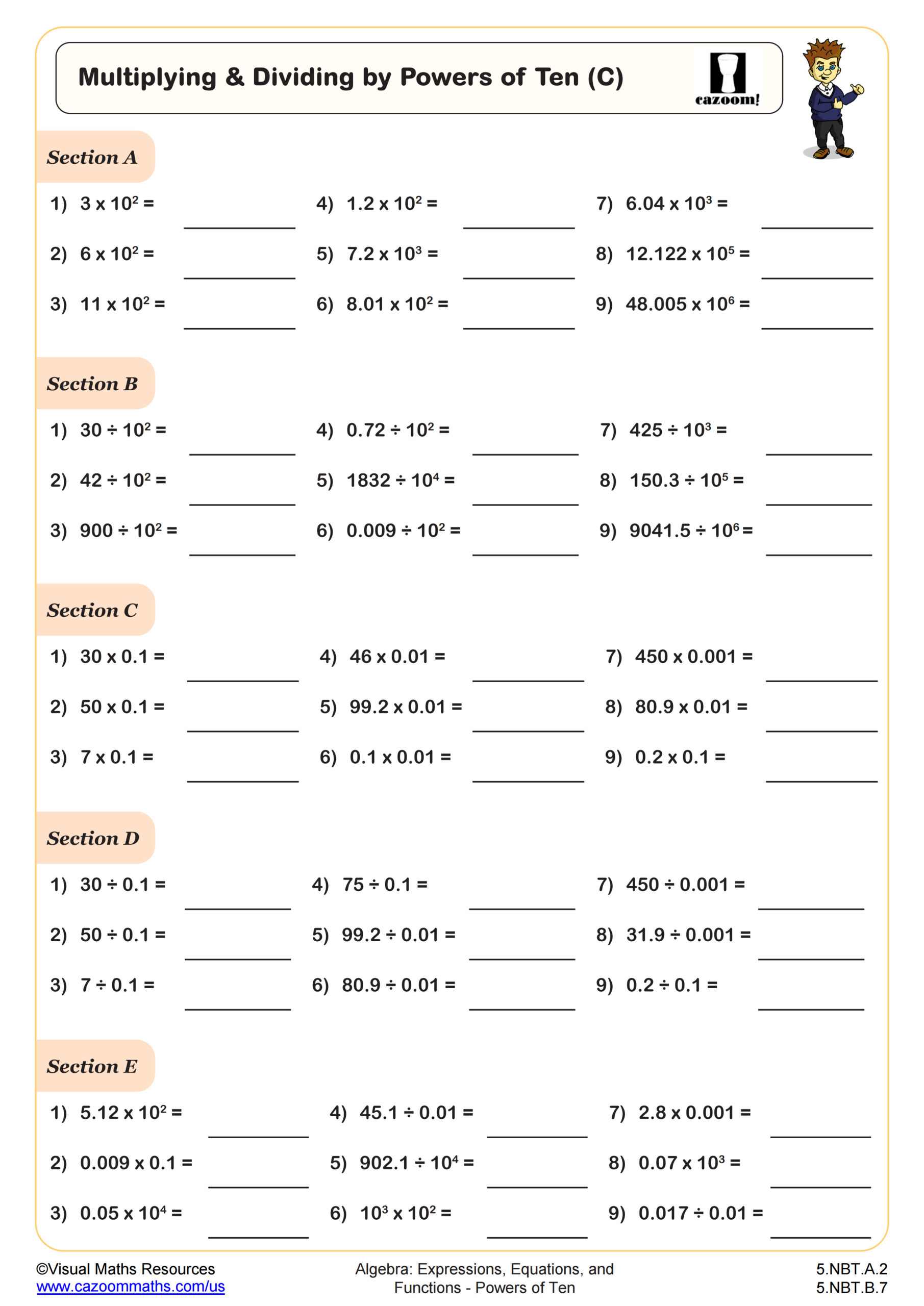
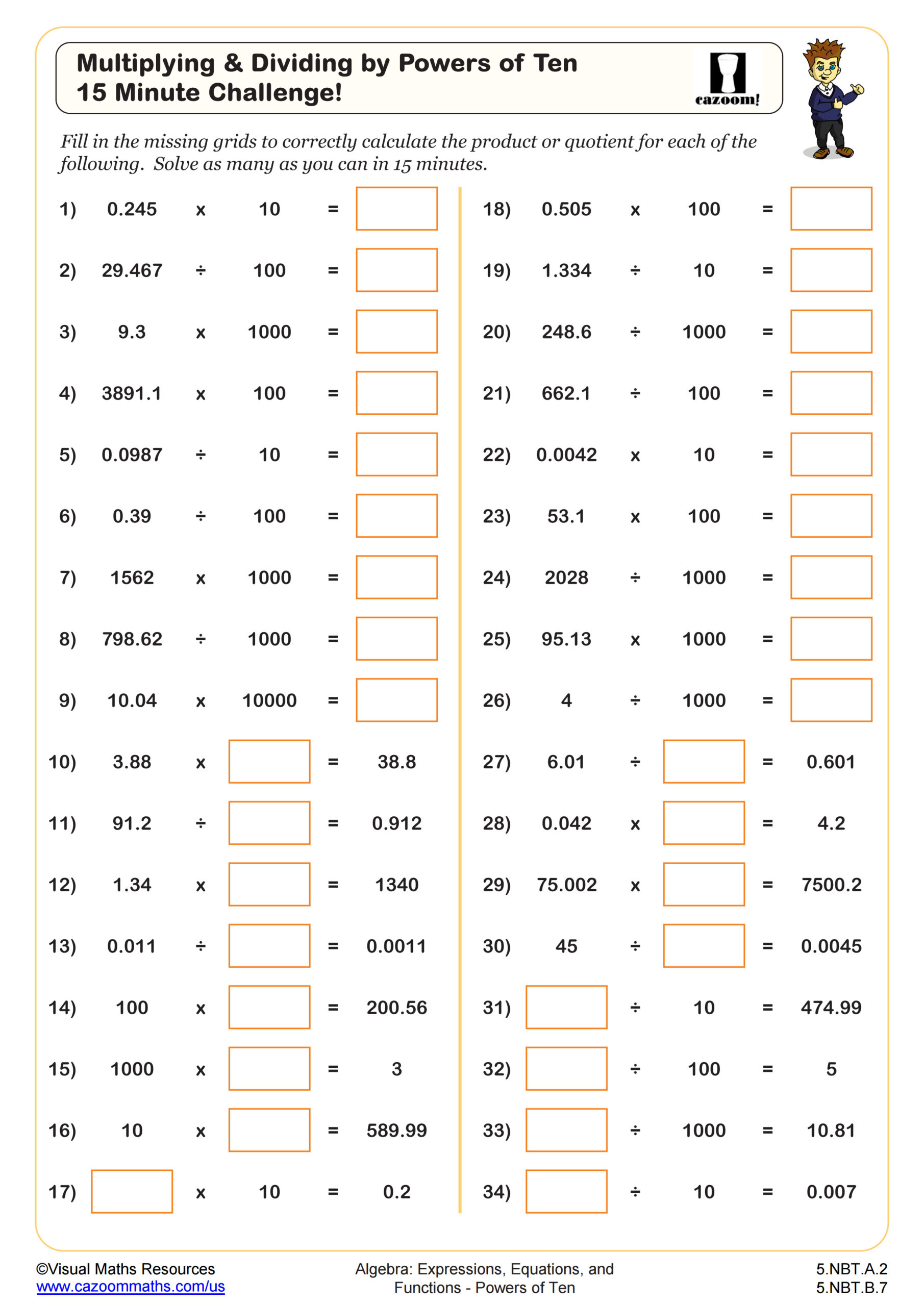
All worksheets are created by the team of experienced teachers at Cazoom Math.
What makes effective powers of 10 worksheets for 5th grade students?
Effective 5th grade powers of 10 worksheets align with Common Core standard 5.NBT.2, which requires students to explain patterns when multiplying by powers of ten. Quality worksheets progress from concrete examples with whole numbers to more abstract work with decimals, helping students recognize that the decimal point appears to move when multiplying or dividing by 10, 100, or 1000.
Teachers report that students often memorize the "add zeros" rule without understanding place value, leading to errors when working with decimals like 3.4 × 10 = 34, not 3.40. The most effective worksheets include visual models, pattern recognition exercises, and real-world problems that connect powers of ten to measurement conversions and scientific notation foundations.
How do powers of ten skills progress from 4th to 6th grade?
In 4th grade, students work with patterns in multiples of 10, while 5th grade introduces formal powers of ten notation and decimal applications. The powers of 10 worksheets grade 5 level bridges concrete multiplication facts with abstract exponential thinking that students will need for 6th grade scientific notation and algebra preparation.
By 6th grade, students apply powers of ten understanding to scientific notation and work with negative exponents. Teachers find that students who master the place value reasoning in 5th grade, rather than just memorizing rules, show stronger performance in middle school mathematics. The progression emphasizes understanding why digits shift positions rather than mechanical application of shortcuts.
Why do students struggle with decimal multiplication by powers of ten?
Students often apply whole number patterns incorrectly when working with decimals and powers of ten. The common misconception that "multiplying makes numbers bigger" causes confusion when 0.3 × 10 = 3.0, since students expect to add zeros rather than move the decimal point. This error appears frequently on state assessments and classroom work.
Teachers notice that students who understand place value conceptually recognize that multiplying by 10 means each digit moves to a position ten times greater in value. Using place value charts and connecting to money contexts (3 dimes × 10 = 30 dimes = 3 dollars) helps students visualize why the decimal point shifts rather than disappearing or staying fixed.
How should teachers introduce powers of ten notation in 5th grade?
Teachers report success when introducing powers of ten through pattern recognition before formal exponential notation. Starting with repeated multiplication (10 × 10 × 10) and connecting to place value positions helps students understand that 10³ represents the value of the thousands place. This foundation prevents the common error of thinking 10³ means 10 + 3.
Effective instruction connects powers of ten to STEM contexts like astronomy and measurement conversion. When students calculate that light travels 186,000 miles per second, or 1.86 × 10⁵ miles, they see practical applications. The progression from concrete patterns to abstract notation, supported by varied practice problems, builds the reasoning skills students need for scientific notation in middle school mathematics.