5th Grade Sequences Worksheets
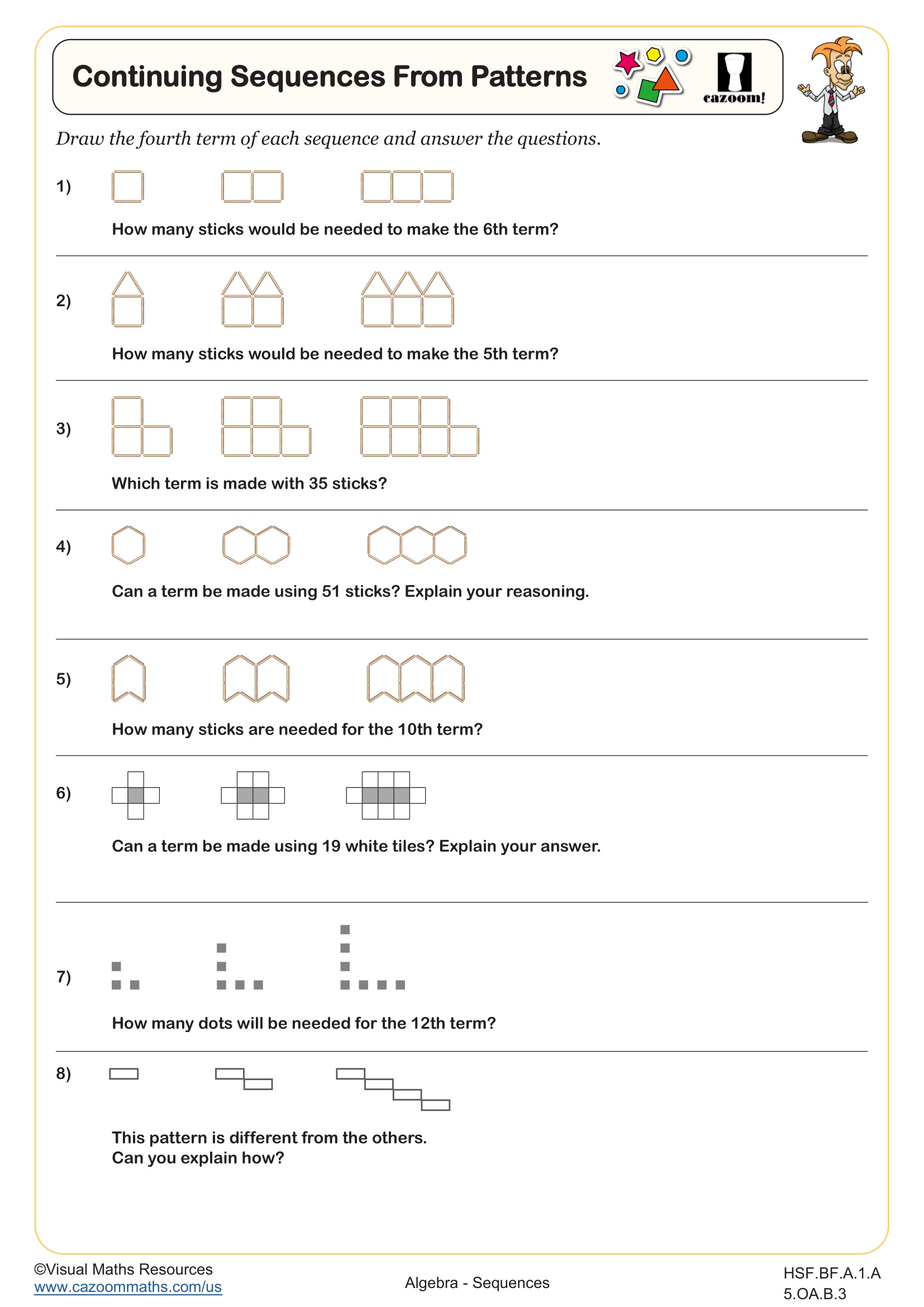
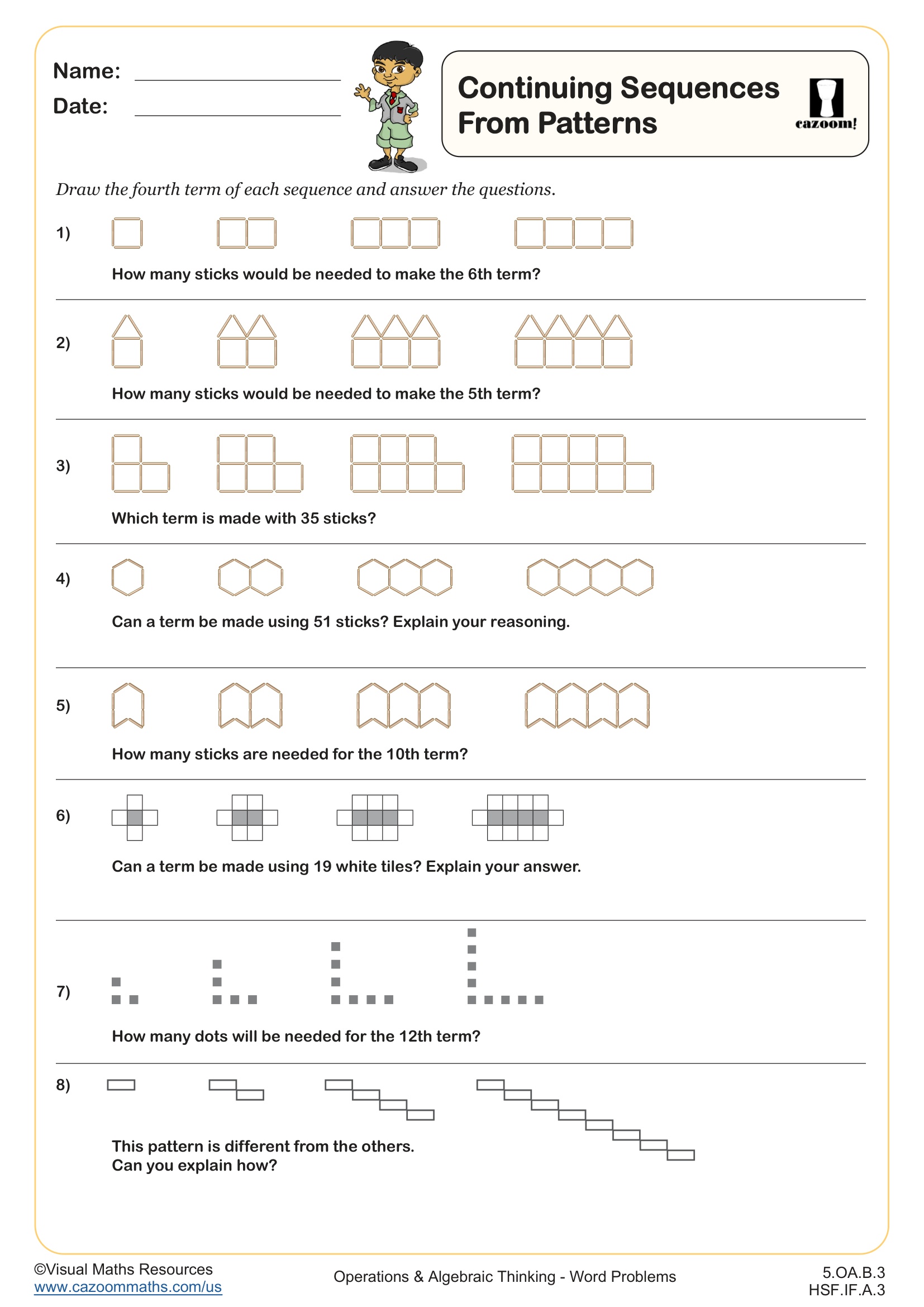
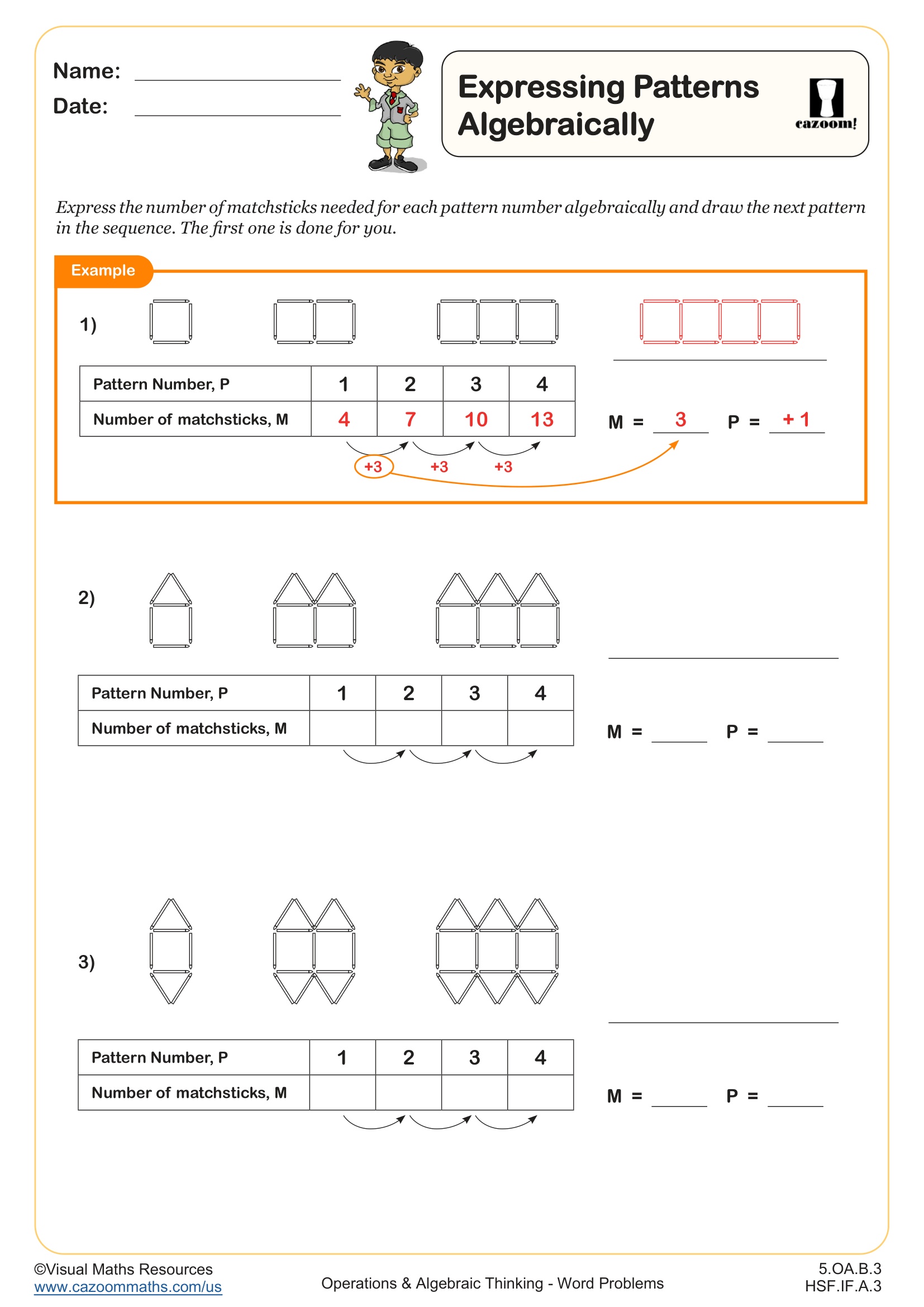
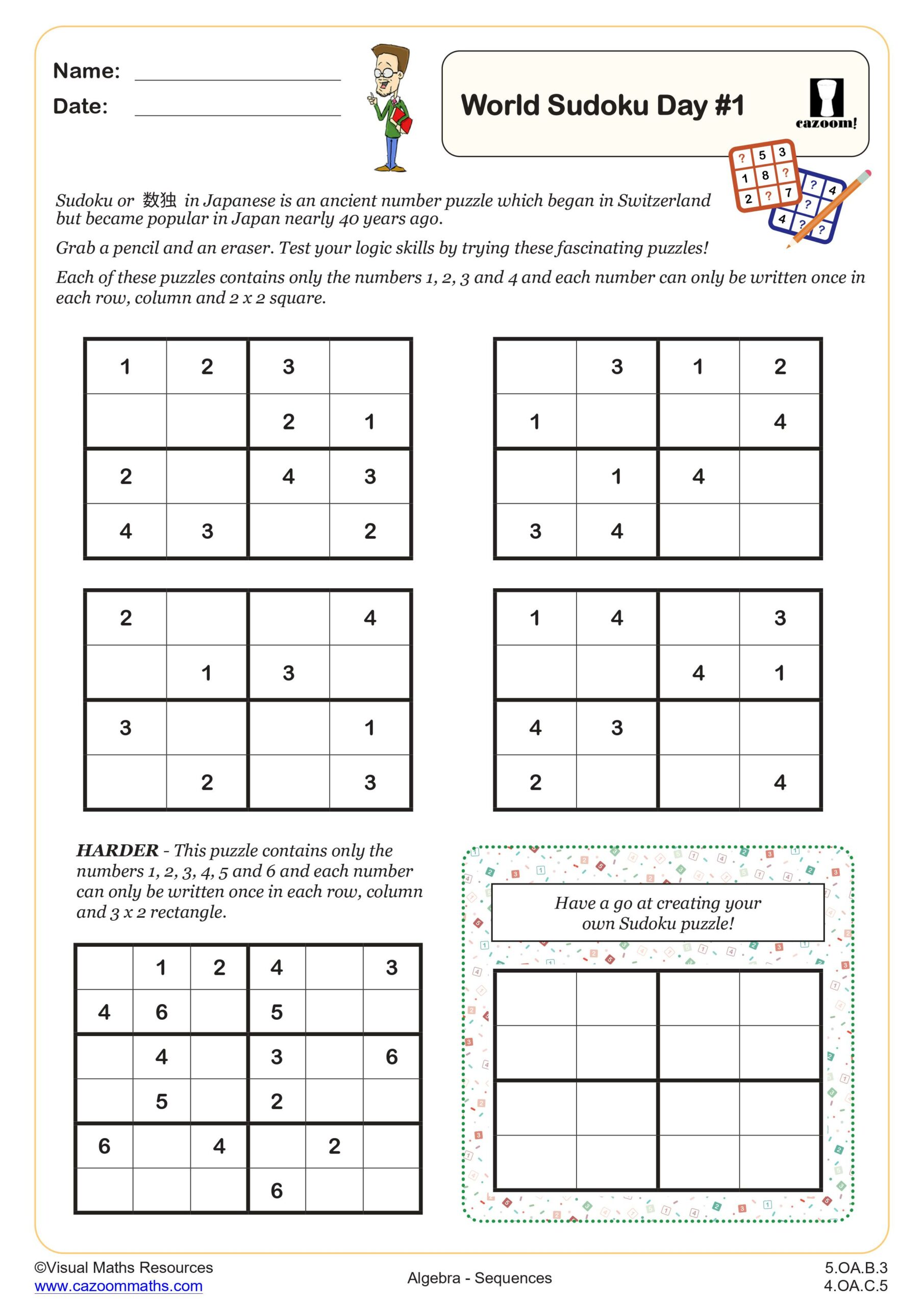
All worksheets are created by the team of experienced teachers at Cazoom Math.
What Are Sequences in 5th Grade Math?
In 5th grade mathematics, sequences are ordered lists of numbers that follow a specific pattern or rule. Students learn to identify, extend, and describe numerical patterns where each term relates to previous terms through addition, subtraction, or a defined relationship. This work aligns with Common Core standards focusing on numerical patterns and preparing students for the study of functions in later grades.
A common misconception occurs when students assume all sequences follow simple addition patterns. When presented with sequences like 2, 6, 18, 54, students who only look for equal steps between terms miss the multiplication rule. Teachers find that asking students to explain the pattern in words before finding missing terms helps them recognize different pattern types and strengthens their reasoning skills.
Which Grade Levels Study Sequences?
These sequence worksheets are designed specifically for 5th grade students in elementary school. At this level, students transition from basic skip-counting patterns to more sophisticated analysis of how sequences behave and how rules can predict future terms. This work builds directly on 4th grade pattern recognition while preparing students for 6th grade work with expressions and equations.
The difficulty progression within 5th grade sequences moves from identifying simple equal-step patterns to working with more complex rules and special sequences like Fibonacci numbers. Students begin with concrete examples where each term increases or decreases by a constant amount, then advance to sequences requiring deeper analysis of relationships between consecutive terms and recognition of patterns that don't follow arithmetic progressions.
What Is the Fibonacci Sequence?
The Fibonacci sequence is a special pattern where each number equals the sum of the two preceding numbers: 1, 1, 2, 3, 5, 8, 13, 21, and so on. Unlike equal-step sequences where students add the same value each time, Fibonacci numbers require students to look back at multiple previous terms, strengthening their ability to recognize different types of mathematical relationships and rules.
This sequence appears throughout nature and design, making it particularly engaging for students. The spiral patterns in sunflower seeds, pinecone scales, and nautilus shells follow Fibonacci numbers, connecting classroom mathematics to biology and architecture. Students often show increased enthusiasm for pattern work when they recognize these same numbers in art, music composition, and even stock market analysis, demonstrating how abstract mathematical patterns have concrete applications across STEM fields.
How Can Teachers Use These Sequence Worksheets Effectively?
These worksheets scaffold learning by starting with straightforward equal-step patterns before introducing more challenging variations and special sequences. The progression from identifying existing patterns to filling in missing terms to determining rules helps students build confidence systematically. Answer keys allow students to check their work independently, making these resources valuable for self-paced learning and immediate feedback during practice.
Teachers use sequence worksheets for targeted intervention with students who need additional practice recognizing patterns, as warm-up activities to activate prior knowledge before algebra lessons, and as homework that reinforces classroom instruction without requiring extensive parent support. The worksheets work well for paired activities where students explain their reasoning to partners, a strategy that helps surface misconceptions and strengthens mathematical communication skills that standardized tests increasingly assess.