5th Grade Sudoku Worksheets
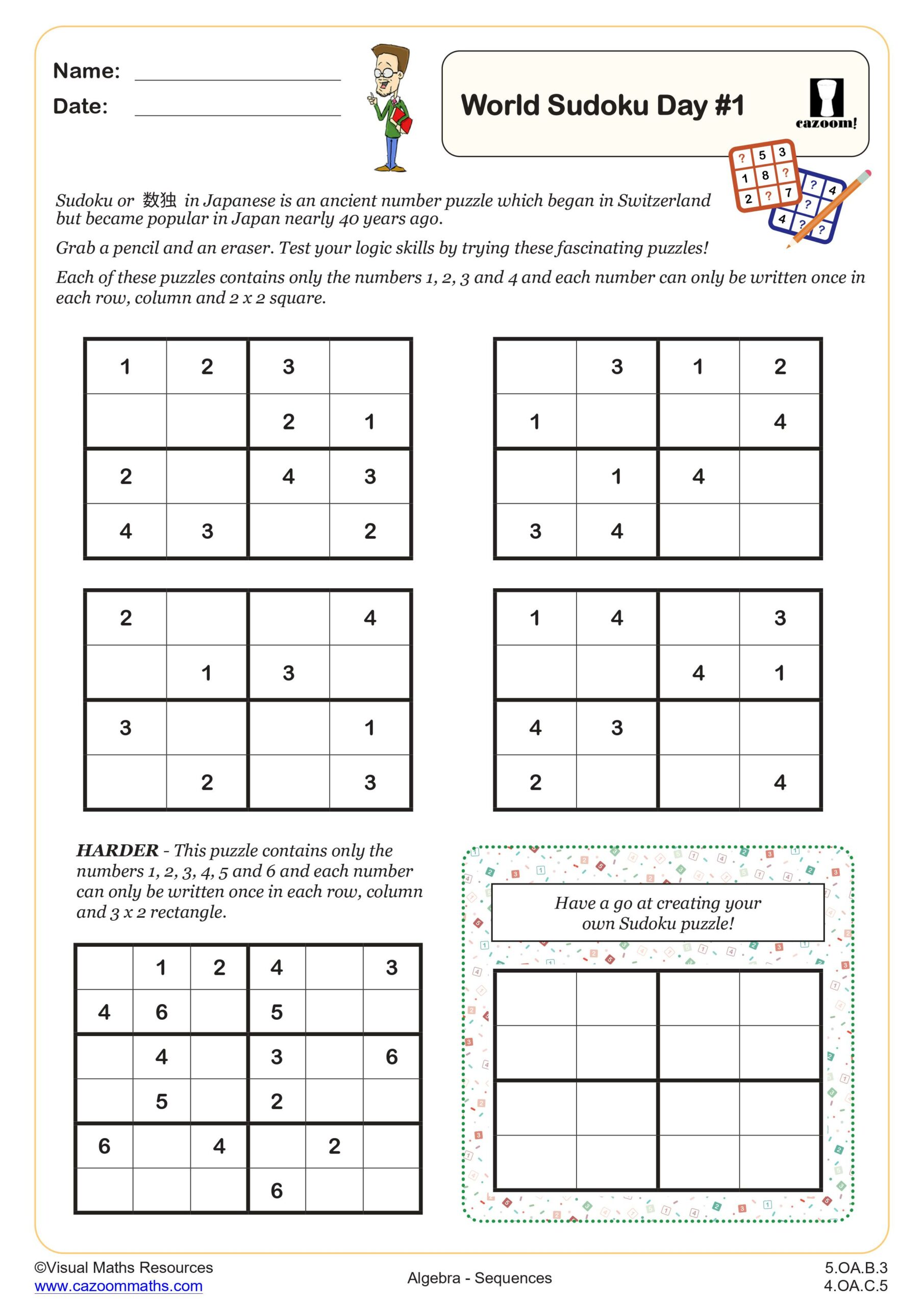
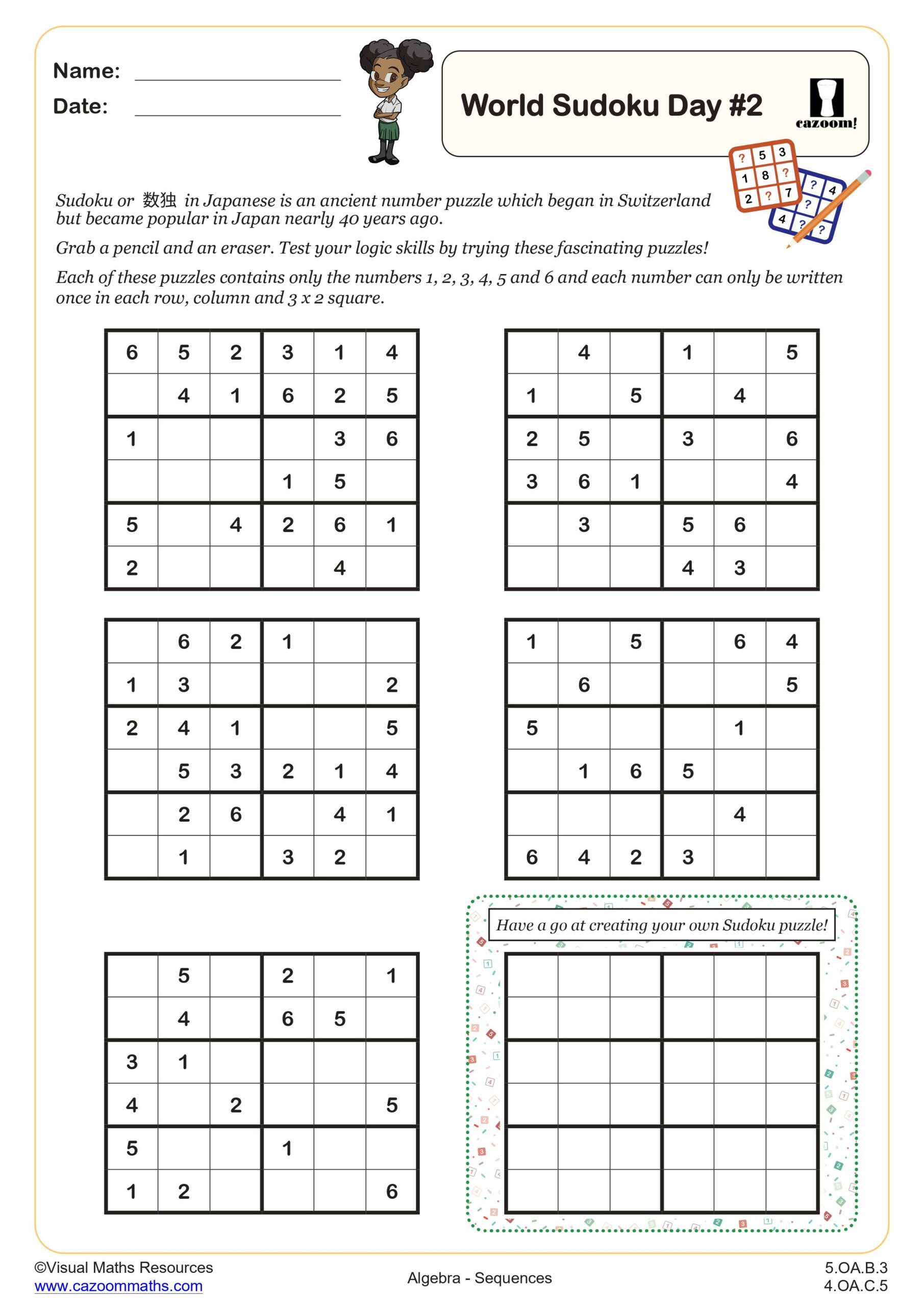
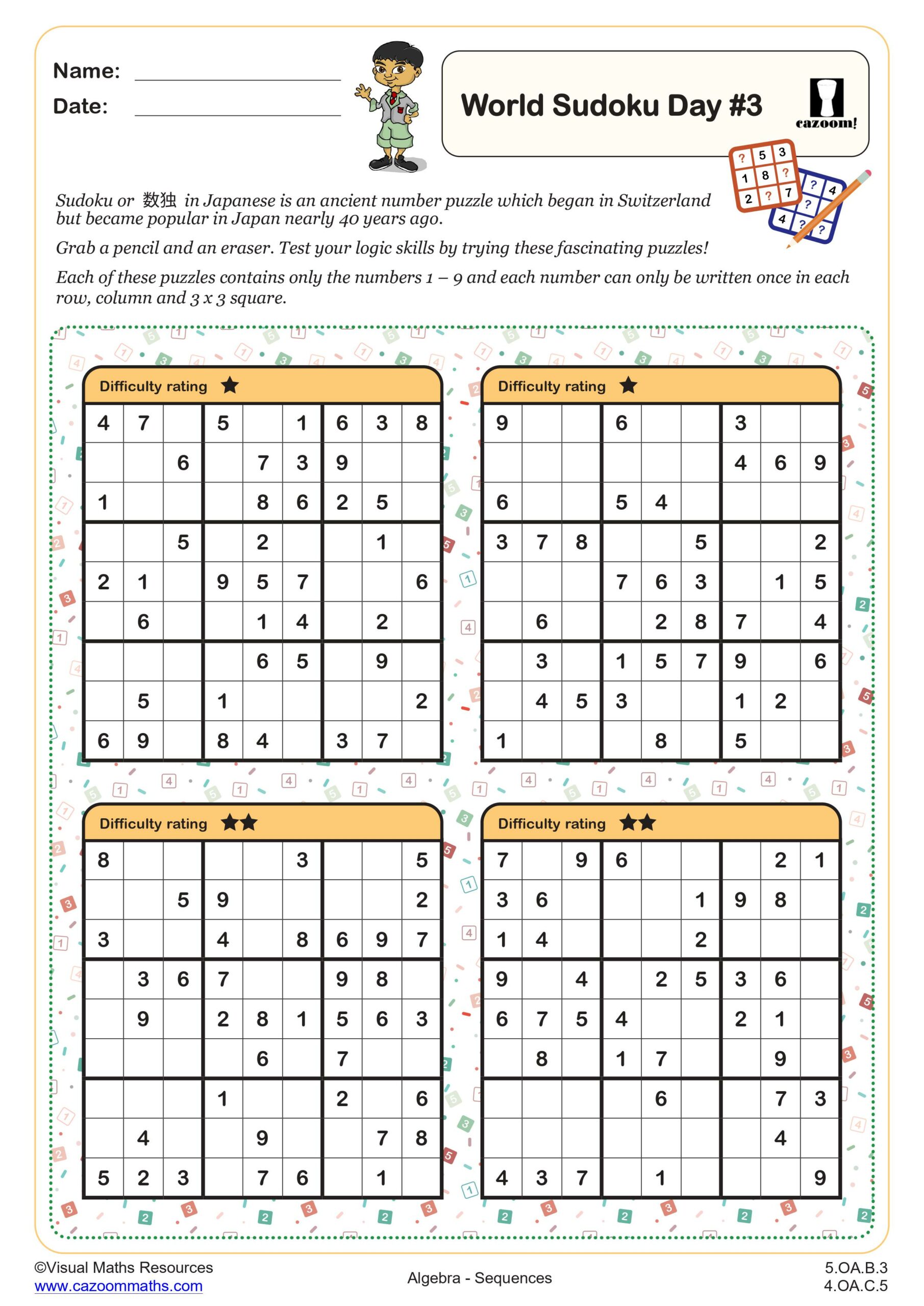
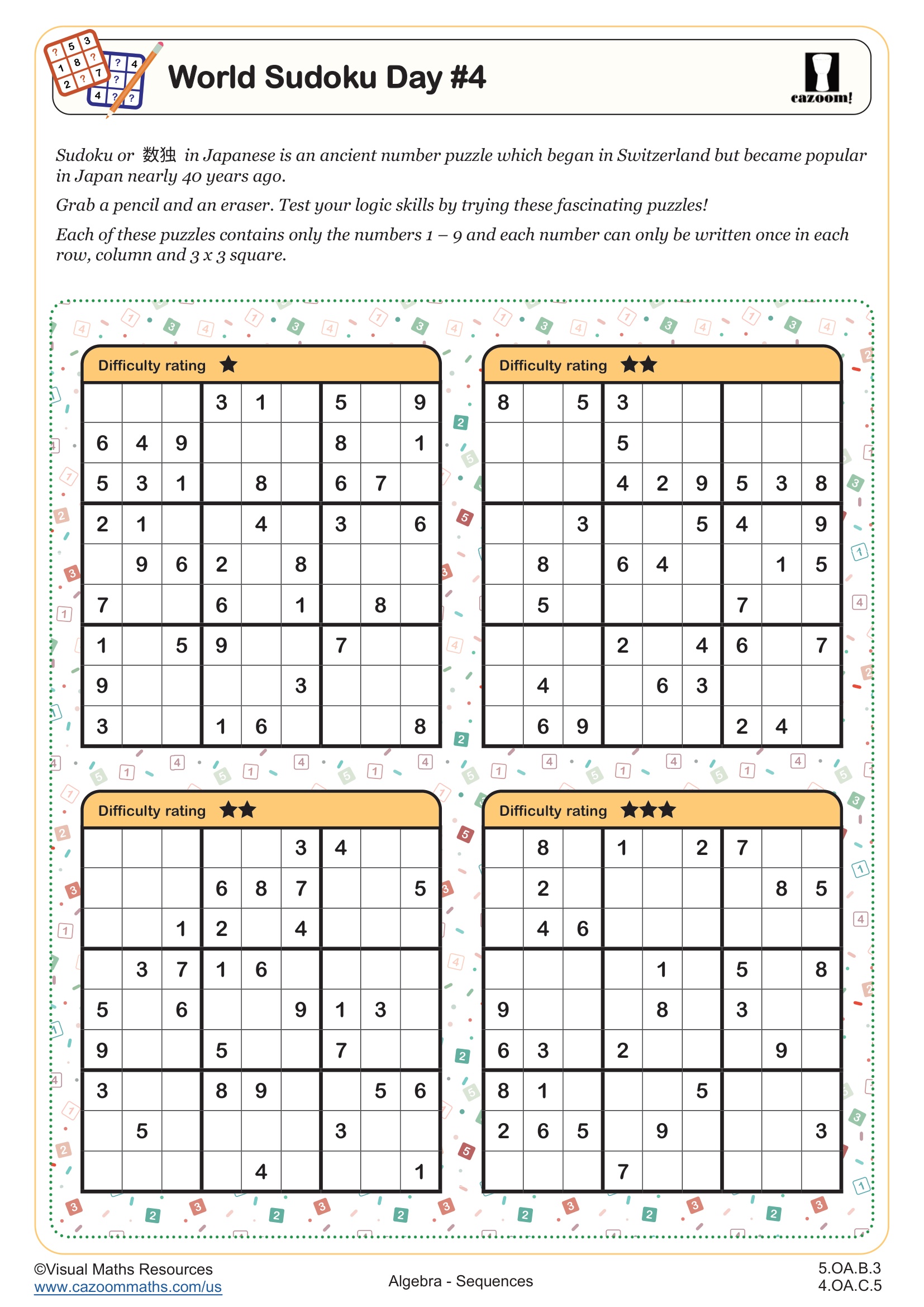
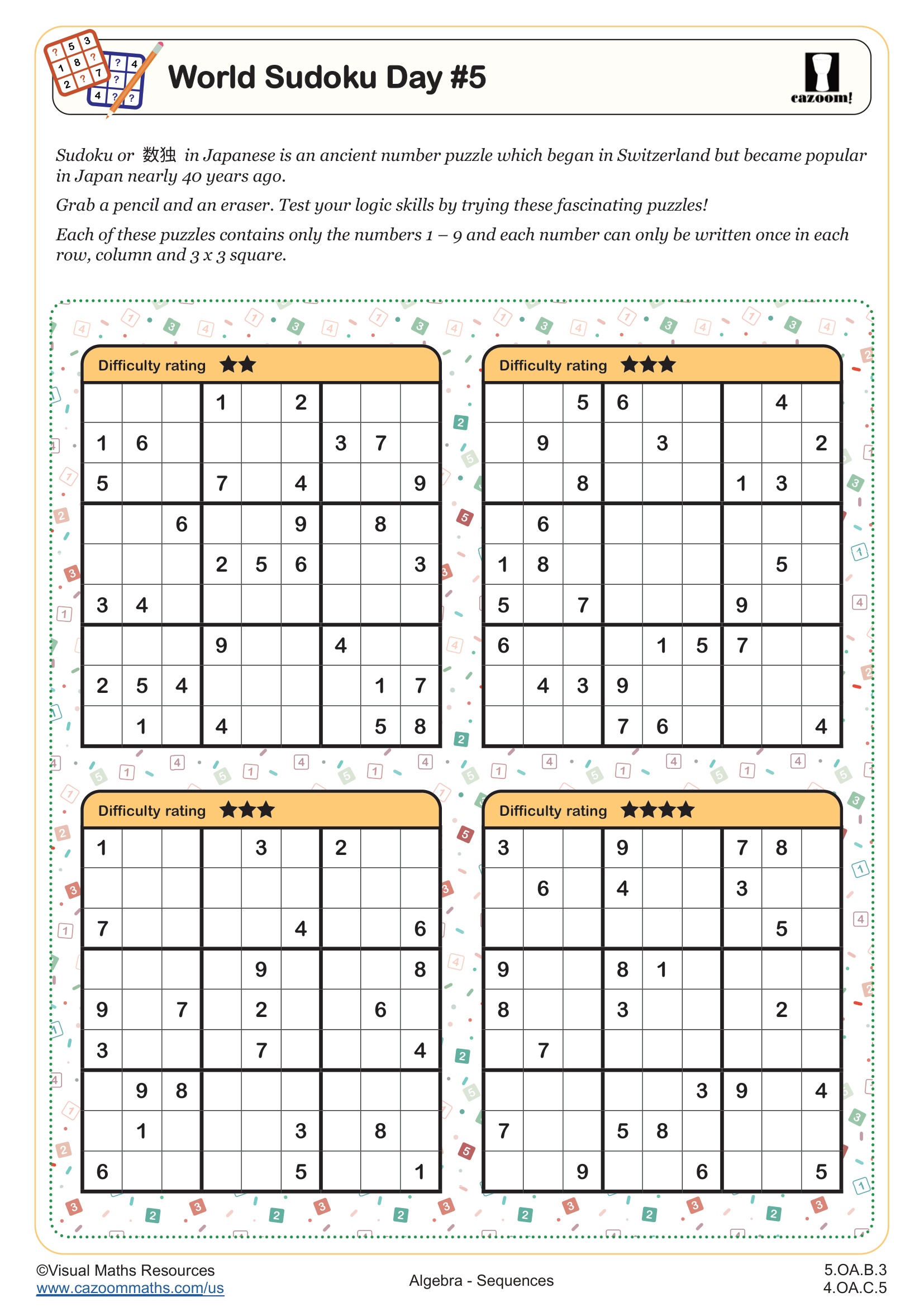
All worksheets are created by the team of experienced teachers at Cazoom Math.
How Does Sudoku Support 5th Grade Math Skills?
Sudoku puzzles reinforce several mathematical competencies that align with 5th grade standards, including logical reasoning, pattern recognition, and systematic problem-solving approaches. While students aren't performing traditional computations, they're developing the analytical thinking required for algebraic reasoning and multi-step problem-solving that becomes increasingly important in middle school mathematics.
Teachers notice that students who struggle with staying organized during long division or multi-step word problems often benefit from regular Sudoku practice. The puzzles require tracking what numbers have been used, identifying what's missing, and using elimination strategies—the same skills needed when working through complex computational problems or checking work for errors on standardized assessments.
What Grade Level Are These Sudoku Worksheets For?
These worksheets are specifically designed for 5th grade students in elementary school. The puzzle complexity and grid sizes match the developmental stage and attention span of 10-11 year olds, providing appropriate challenge without overwhelming frustration.
At the 5th grade level, students have developed sufficient number sense and concentration skills to tackle classic 9x9 Sudoku grids with strategic thinking. The World Sudoku Day themed worksheets introduce students to this puzzle format in an engaging context, building stamina for logical reasoning tasks that will become more complex in middle school mathematics, where algebraic thinking and systems of equations require similar systematic approaches.
What Is the Elimination Strategy in Sudoku?
The elimination strategy involves systematically determining which numbers cannot go in a particular cell based on the existing numbers in that row, column, and 3x3 box. Students scan each region to identify which numbers from 1-9 are already present, then deduce which numbers remain as possibilities for empty cells. This process of narrowing options through logical deduction mirrors mathematical proof and problem-solving techniques.
This same elimination thinking appears in computer science algorithms and database management, where programmers must filter through possibilities to find solutions. Engineers use similar constraint-based reasoning when designing systems with multiple requirements that must all be satisfied simultaneously, making Sudoku practice a foundation for STEM fields that rely on logical problem-solving and systematic analysis.
How Can Teachers Use These Sudoku Worksheets Effectively?
These worksheets work well as warm-up activities that activate logical thinking before math lessons, or as brain breaks that keep students engaged with mathematical reasoning during transitions. The self-contained nature of Sudoku puzzles makes them ideal for early finishers who need enrichment without requiring direct instruction on new content.
Many teachers incorporate these worksheets into math centers or stations, allowing students to work collaboratively and discuss their reasoning strategies. They're also effective for substitute teacher lesson plans, indoor recess activities, or homework assignments that don't require parent support. The included answer keys enable students to self-check their work, promoting independence and metacognitive reflection on their problem-solving approaches.