6th Grade 3D Shapes Worksheets
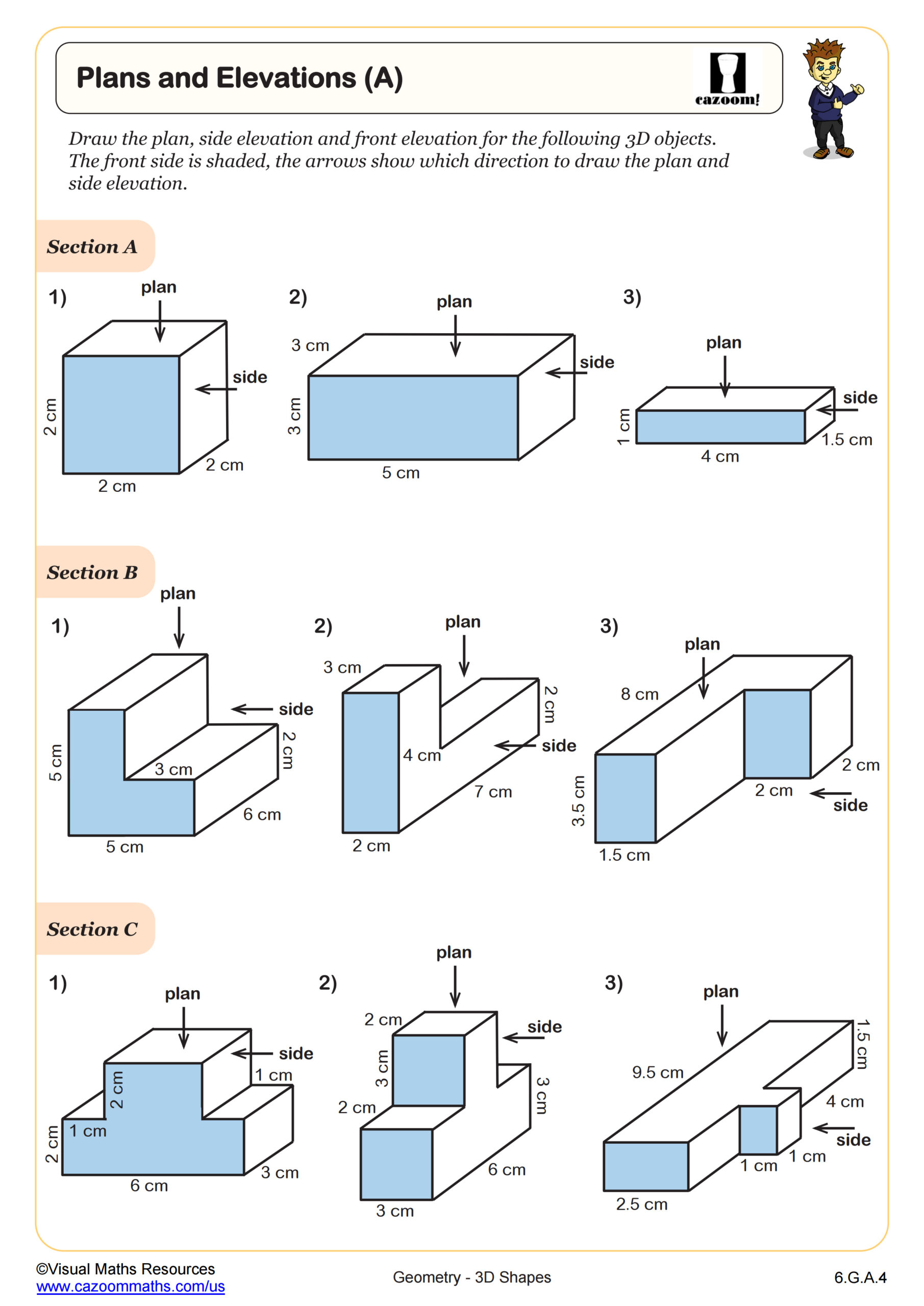
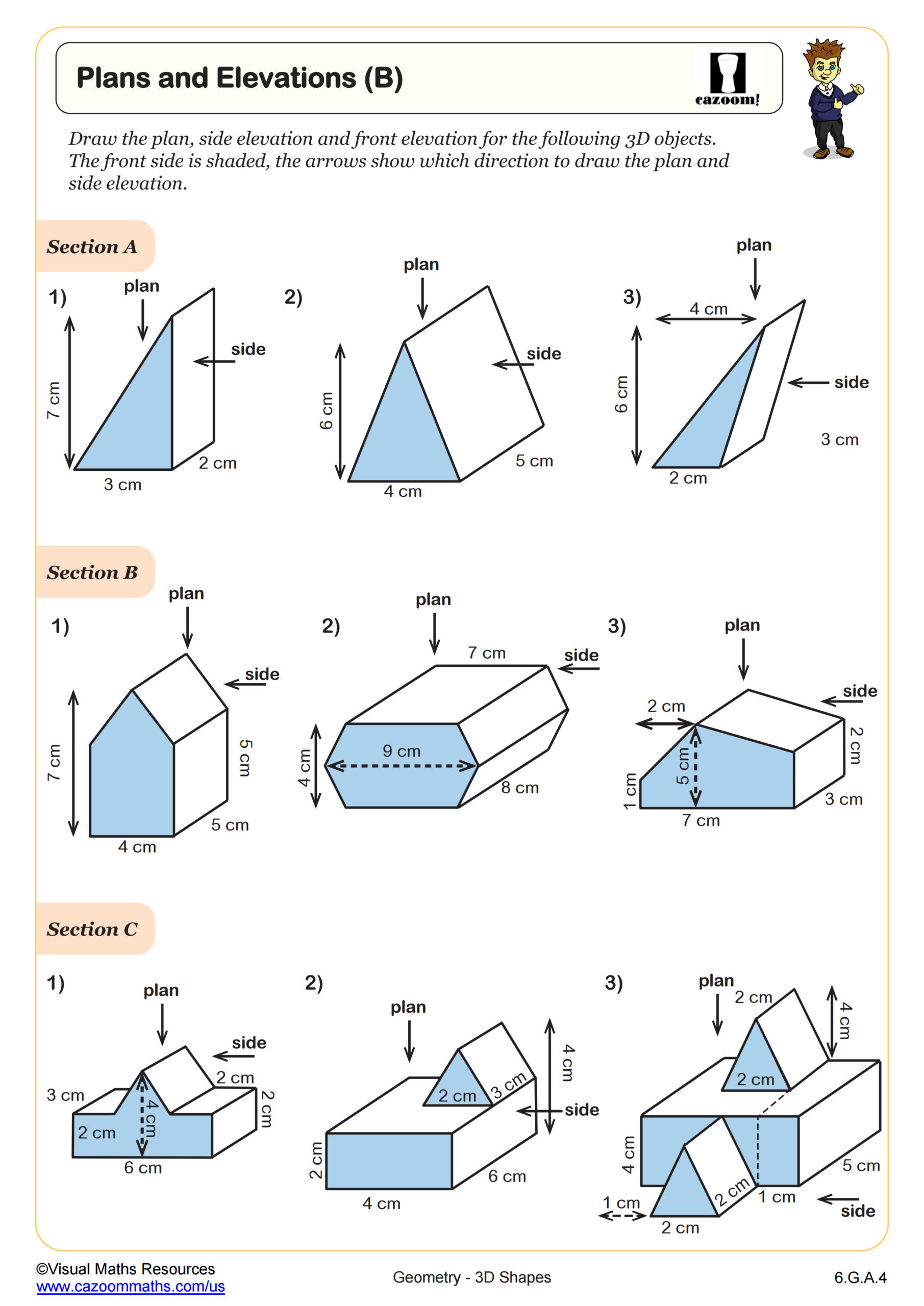
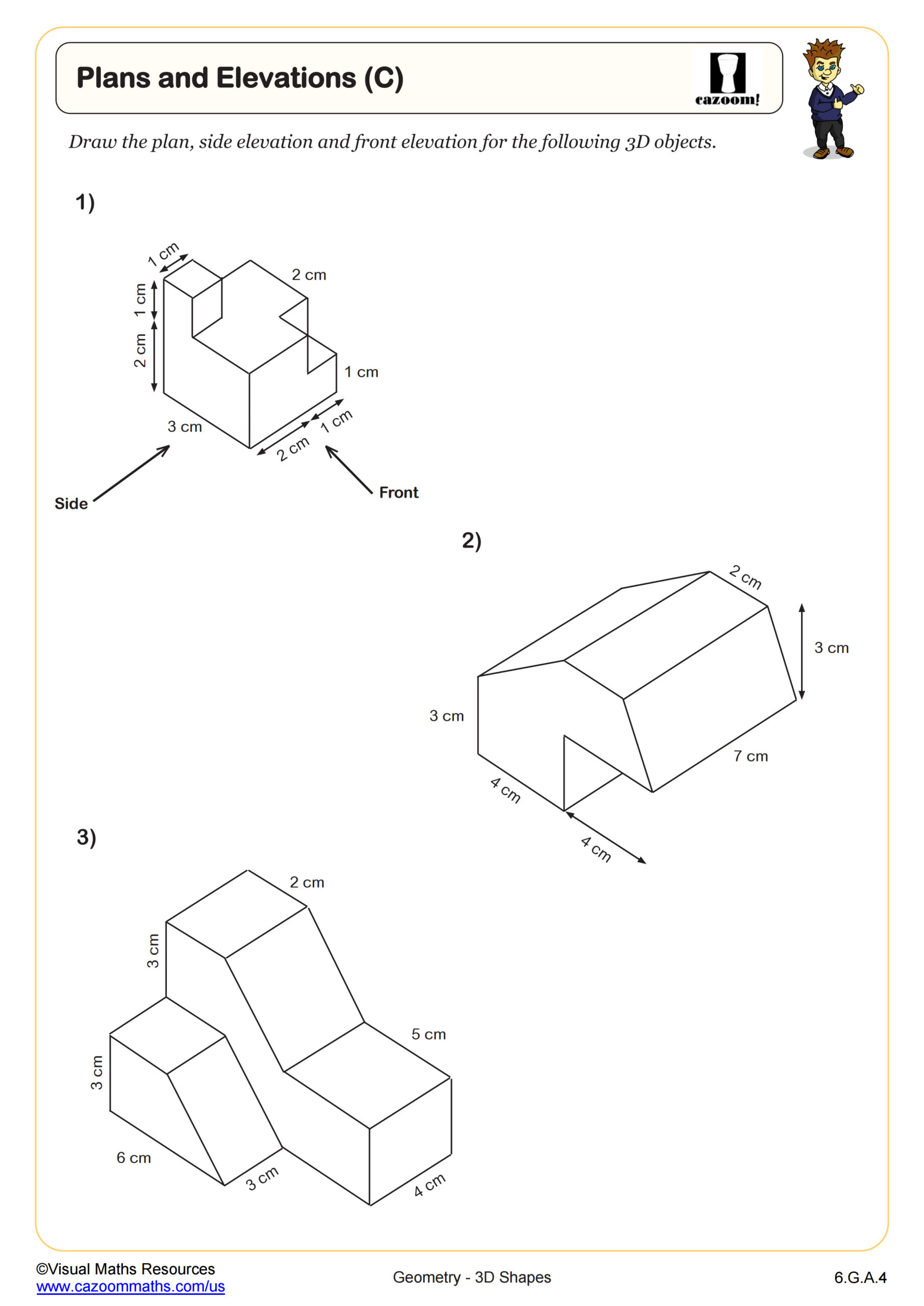
All worksheets are created by the team of experienced teachers at Cazoom Math.
What topics are covered in a 3d shapes worksheet grade 6?
A thorough 3d shapes worksheet grade 6 typically covers identifying and classifying three-dimensional figures including cubes, rectangular prisms, triangular prisms, cylinders, cones, spheres, and pyramids. Students practice counting faces, edges, and vertices while connecting 2D nets to their corresponding 3D shapes.
Teachers notice that students often confuse edges with faces when counting geometric features, particularly on complex shapes like pentagonal prisms. The worksheets also incorporate real-world problems where students might calculate surface area for gift wrapping or identify 3D shapes in architectural structures, reinforcing the connection between classroom learning and practical applications.
How do 6th grade 3D shape skills build from elementary concepts?
Sixth grade students expand beyond basic shape recognition to analyze geometric properties and relationships. While elementary students focus on naming common 3D shapes, middle schoolers examine nets, cross-sections, and begin calculating surface area and volume using formulas.
This progression prepares students for advanced geometric concepts in grades 7 and 8, including working with more complex polyhedra and understanding spatial reasoning. Teachers observe that students who master 6th grade 3D geometry concepts demonstrate stronger performance in later algebra and geometry courses, particularly when solving problems involving three-dimensional coordinate systems and geometric transformations.
What makes nets particularly challenging for 6th grade students?
Nets require students to visualize how flat patterns fold into three-dimensional shapes, which demands strong spatial reasoning skills that many sixth graders are still developing. Students must mentally rotate and manipulate shapes while understanding how edges connect when folded.
Teachers frequently observe that students can identify a cube when they see it but struggle to recognize which net will fold into that same cube. This skill directly connects to engineering and design fields where professionals create blueprints and packaging templates. Practice with various net configurations helps students develop the spatial awareness needed for advanced STEM coursework.
How can teachers use answer keys effectively with 3D shapes worksheets?
Complete answer keys allow teachers to provide immediate feedback during independent practice and enable students to self-check their work when appropriate. Teachers can use the answer keys to identify common error patterns across the class and adjust instruction accordingly.
Many educators find that having students explain their reasoning, even when their answer matches the key, helps reveal misconceptions about 3D geometry concepts. The answer keys also support differentiated instruction by allowing advanced students to work independently while teachers provide targeted support to students who need additional guidance with spatial visualization or geometric vocabulary.