6th Grade Area and Perimeter Worksheets
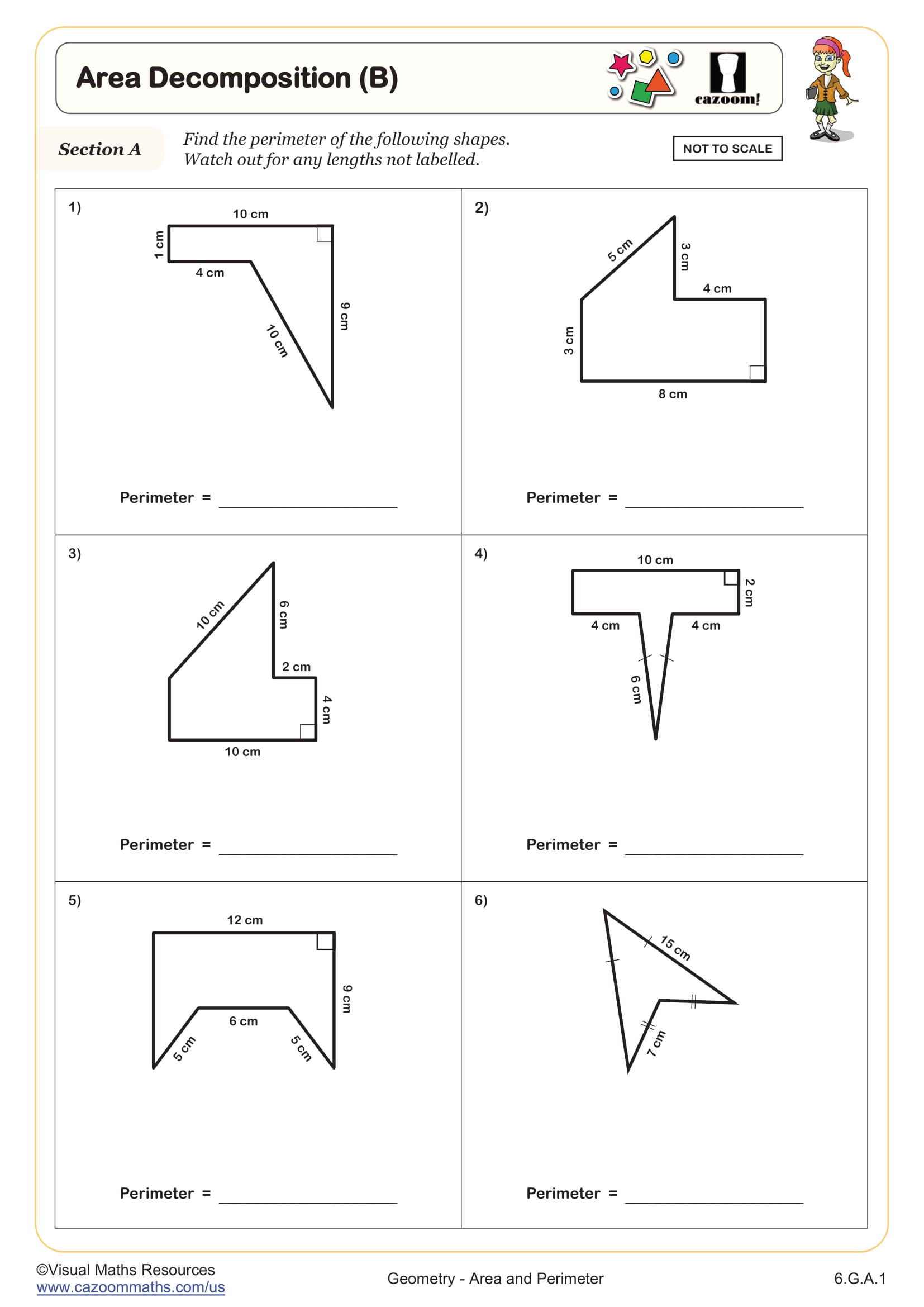
Area Decomposition (B)
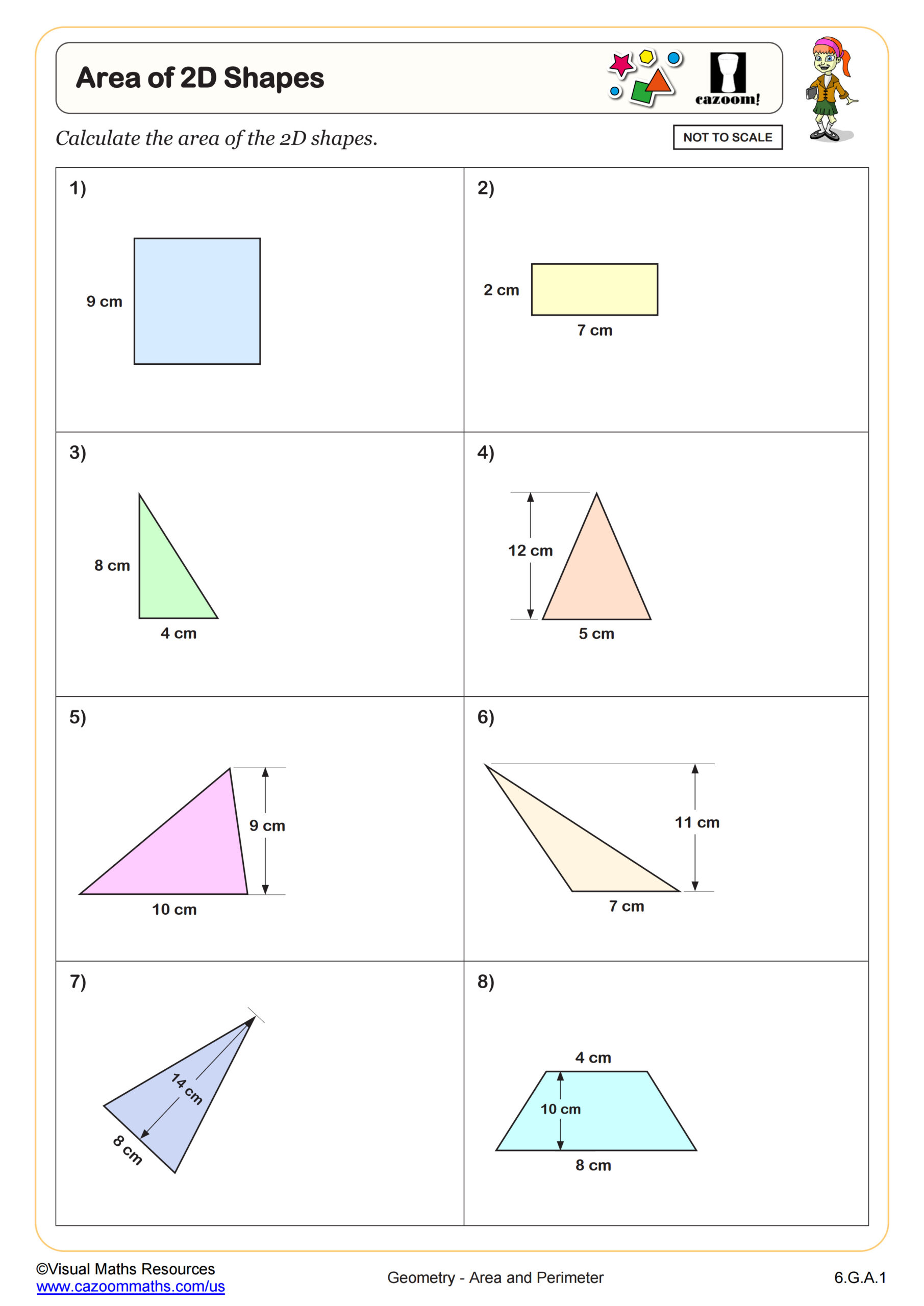
Area of 2D Shapes
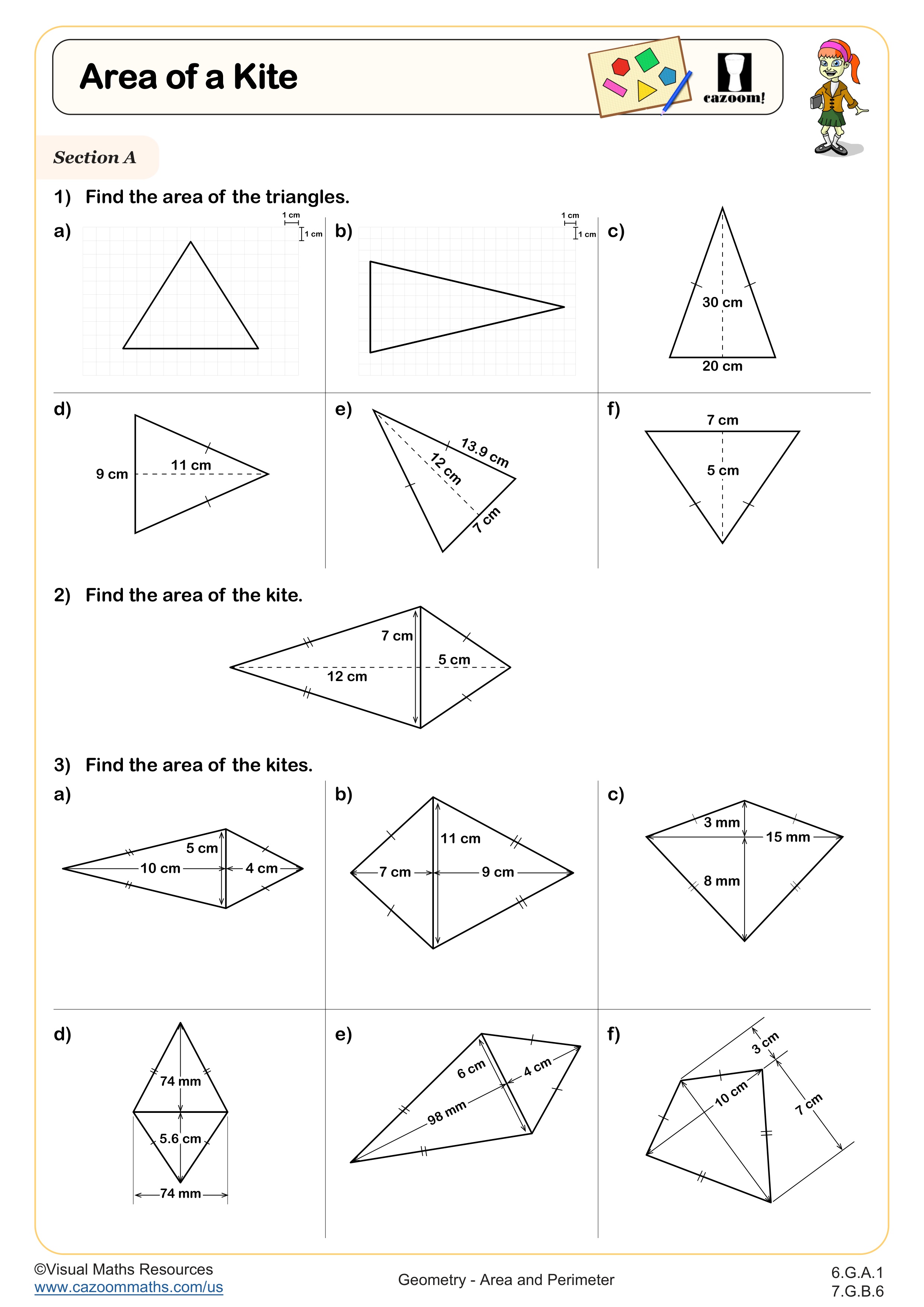
Area of a Kite
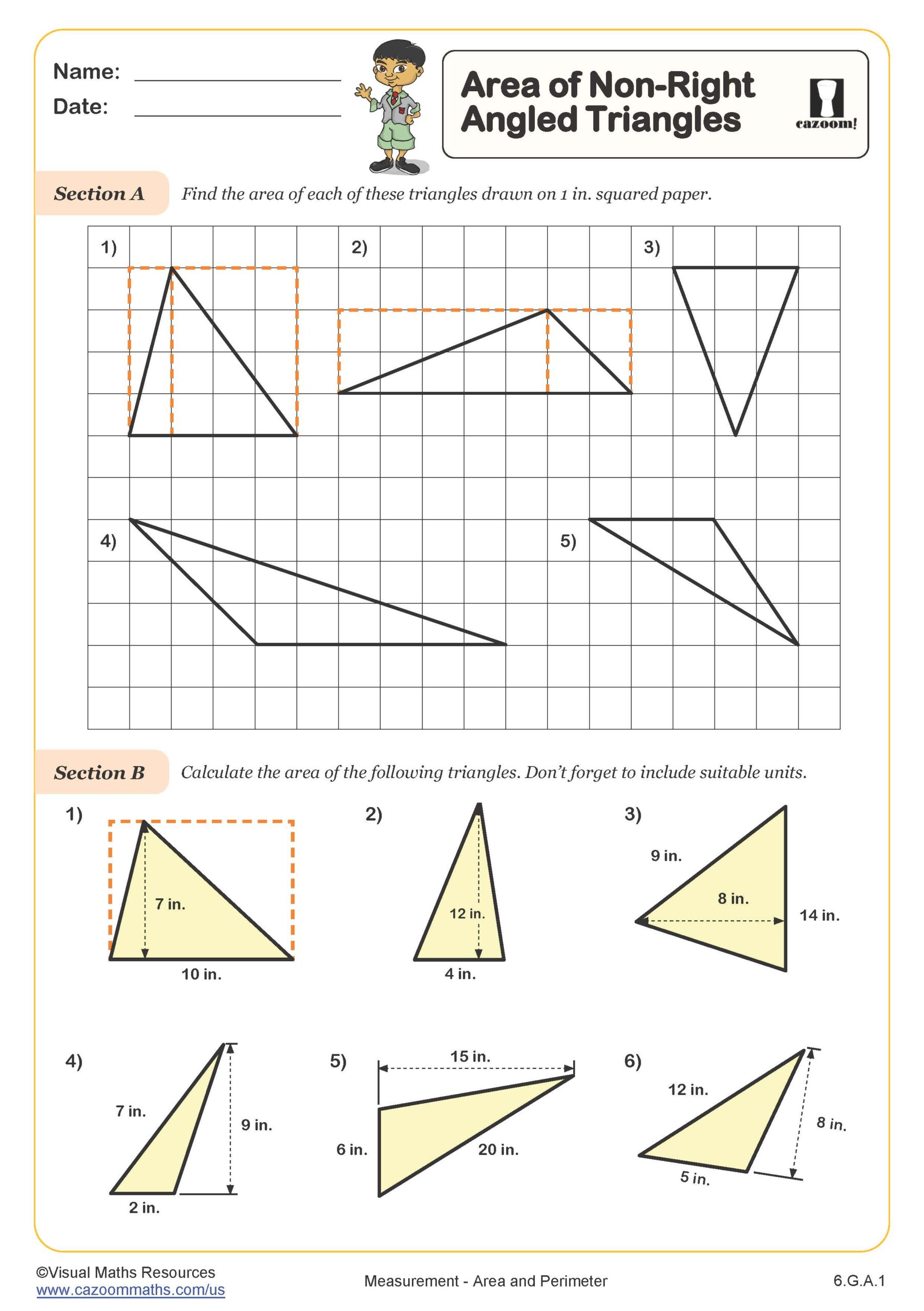
Area of Non-Right Angled Triangles
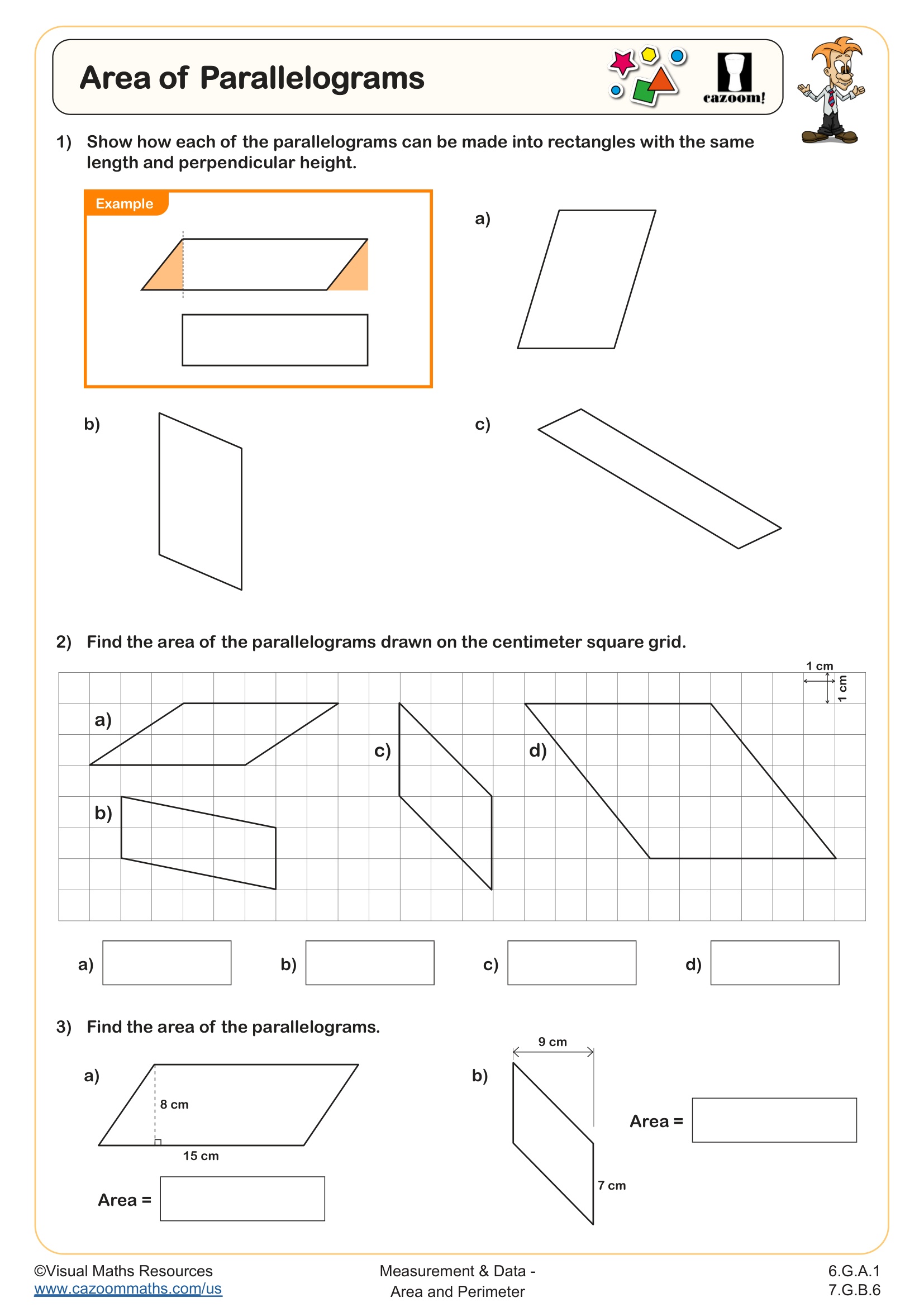
Area of Parallelograms
Area of Quadrilaterals (A)
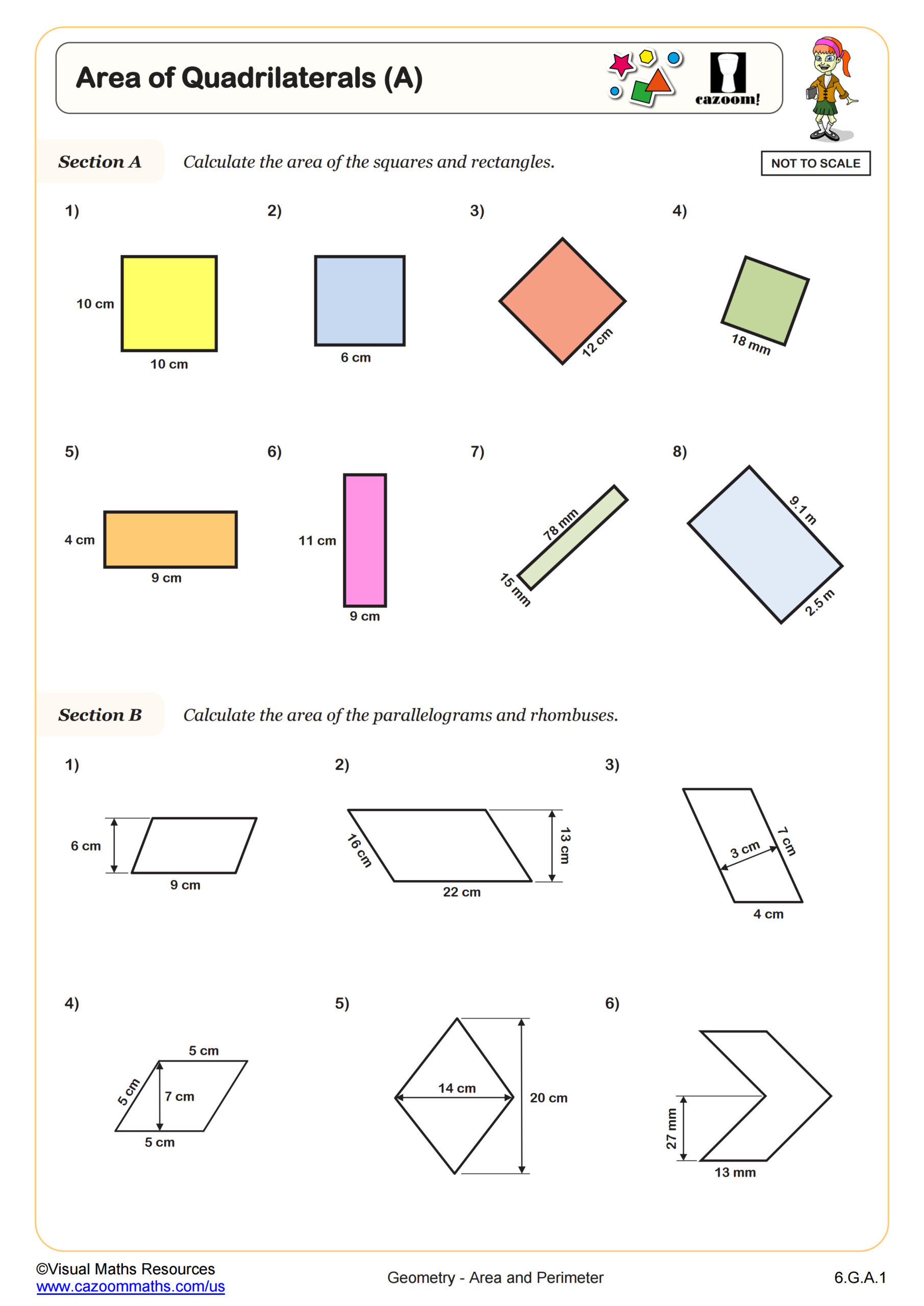
Area of Quadrilaterals (B)
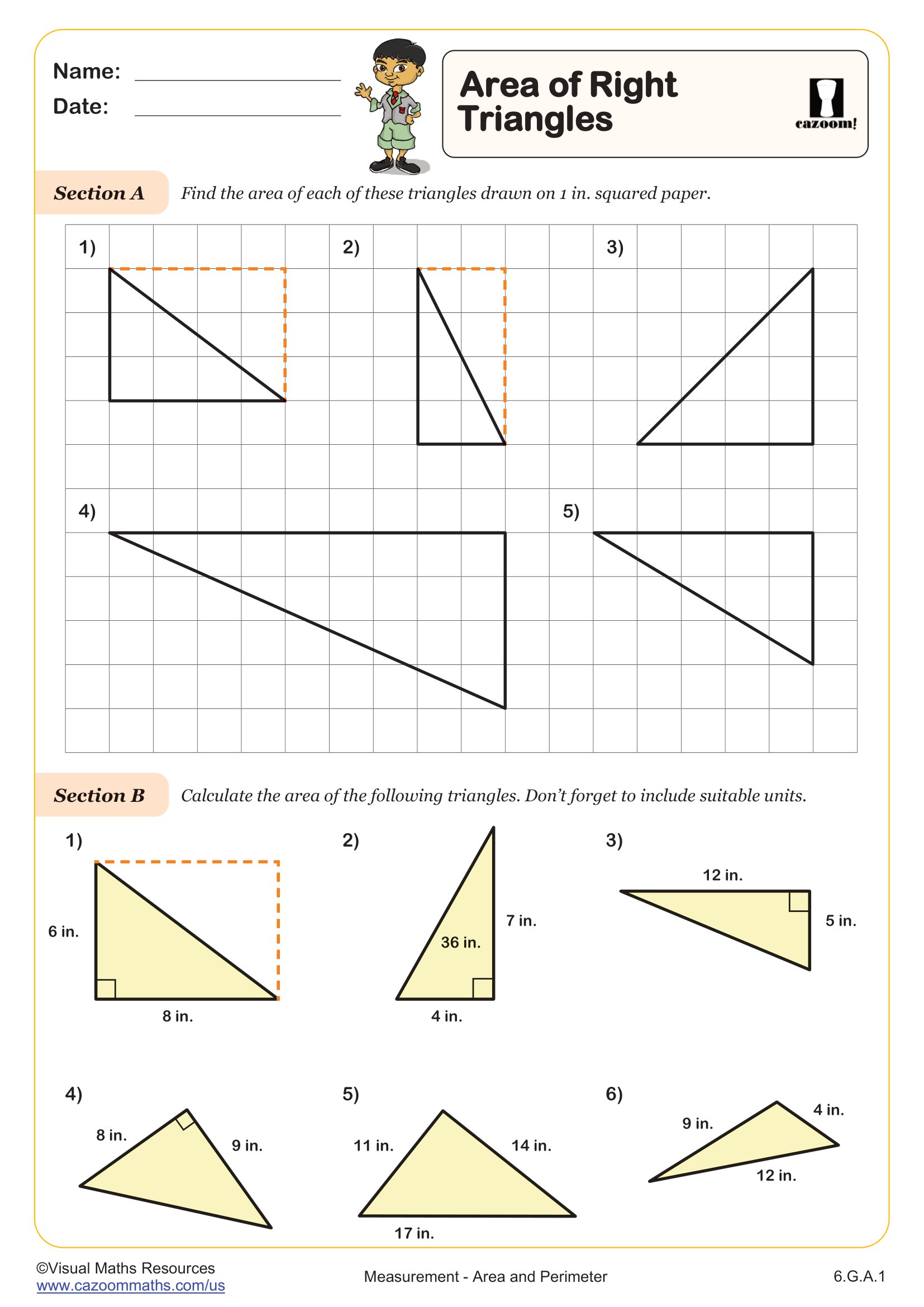
Area of Right Triangles
Area of Trapezoid (A)
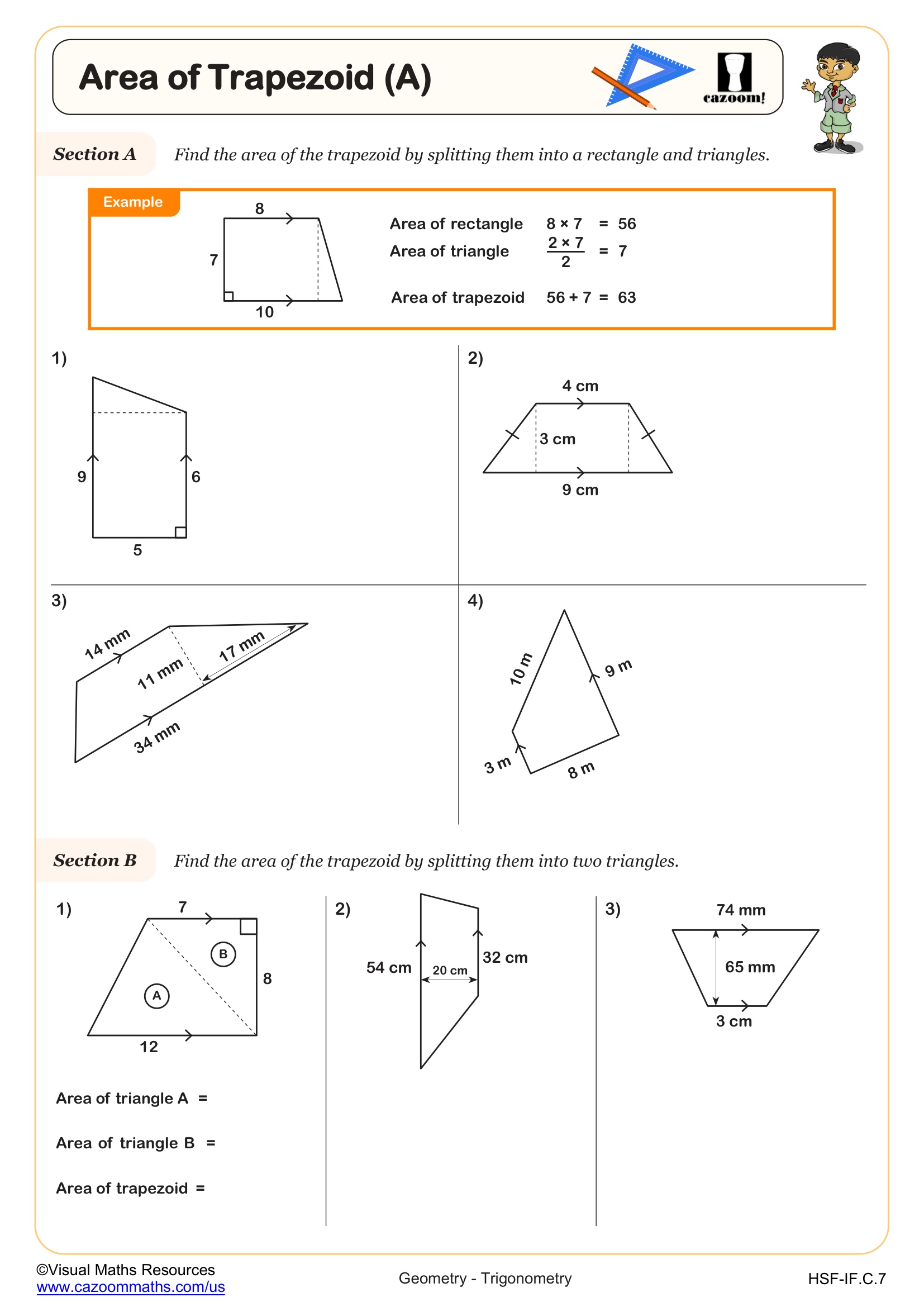
Area of Trapezoid (B)
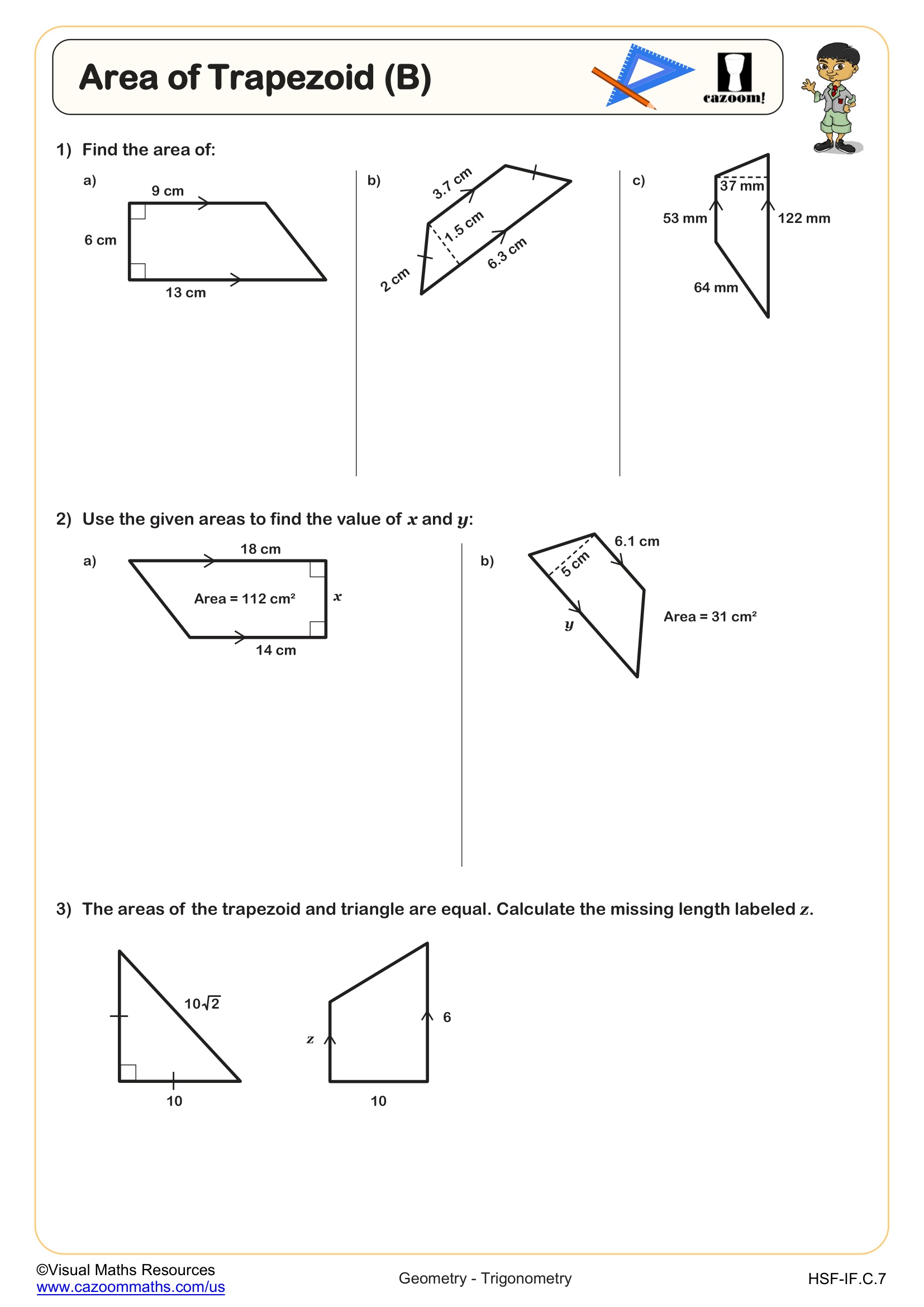
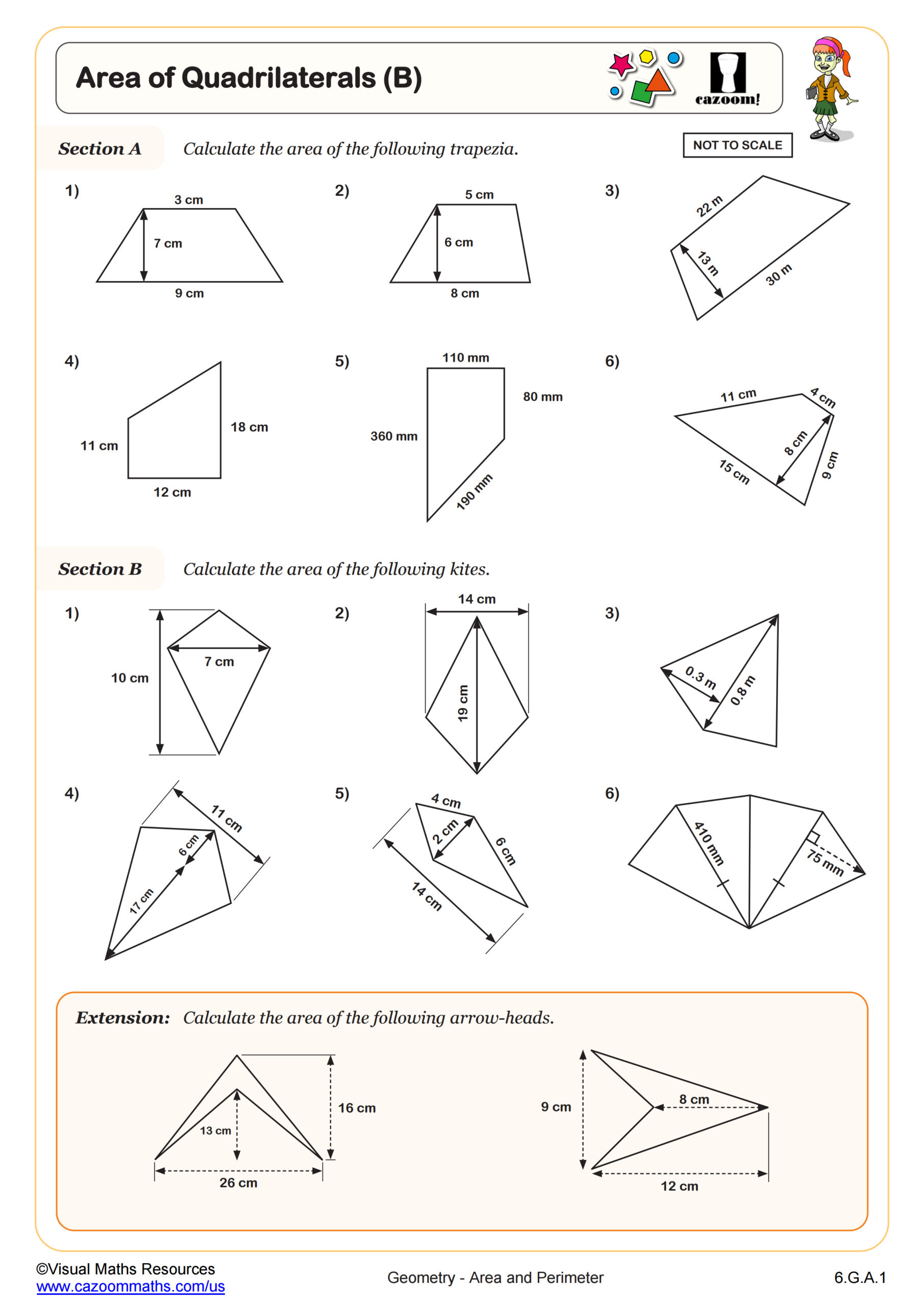
Areas of Kites
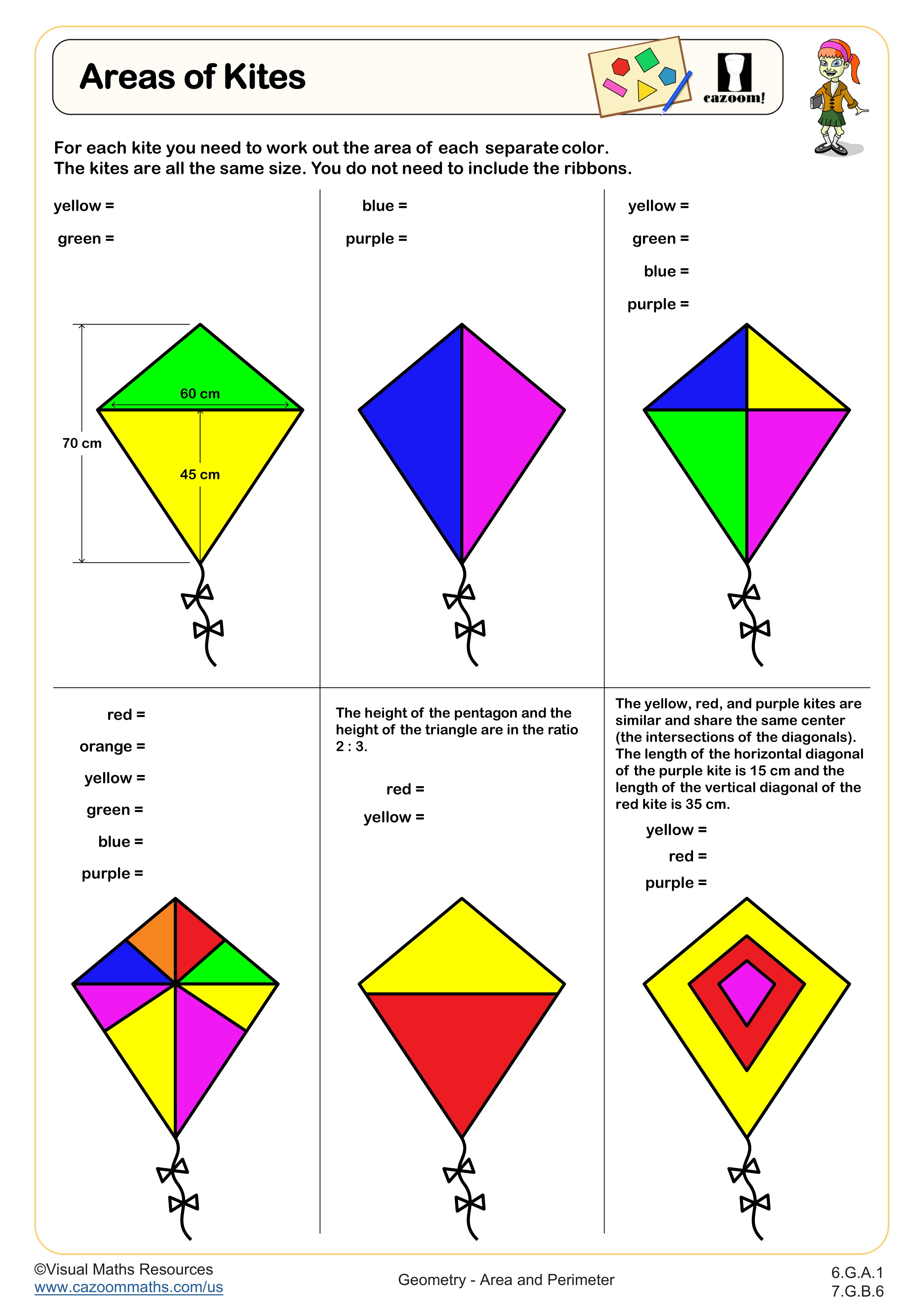
Comparing Areas and Perimeters (C)
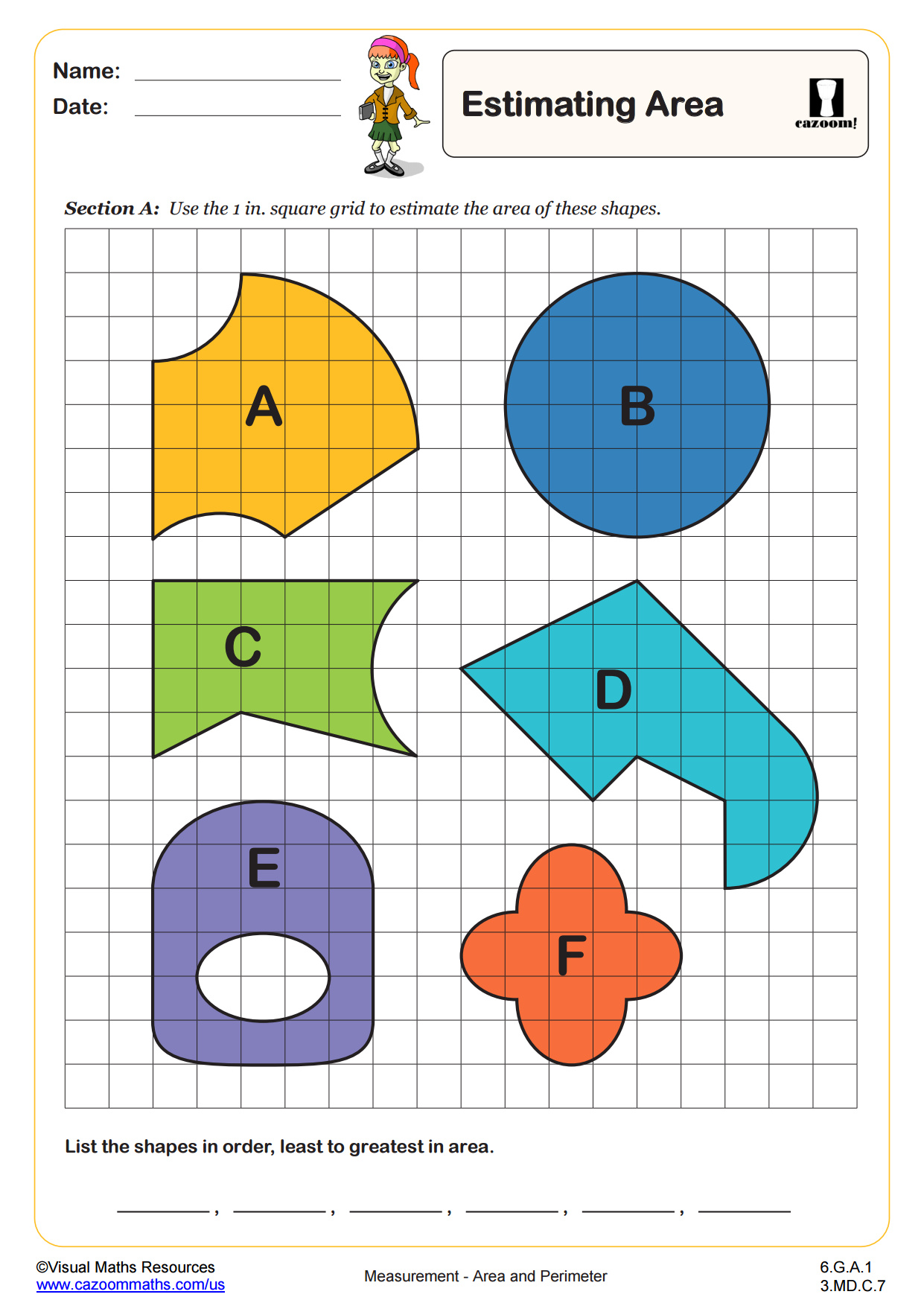
Estimating Area
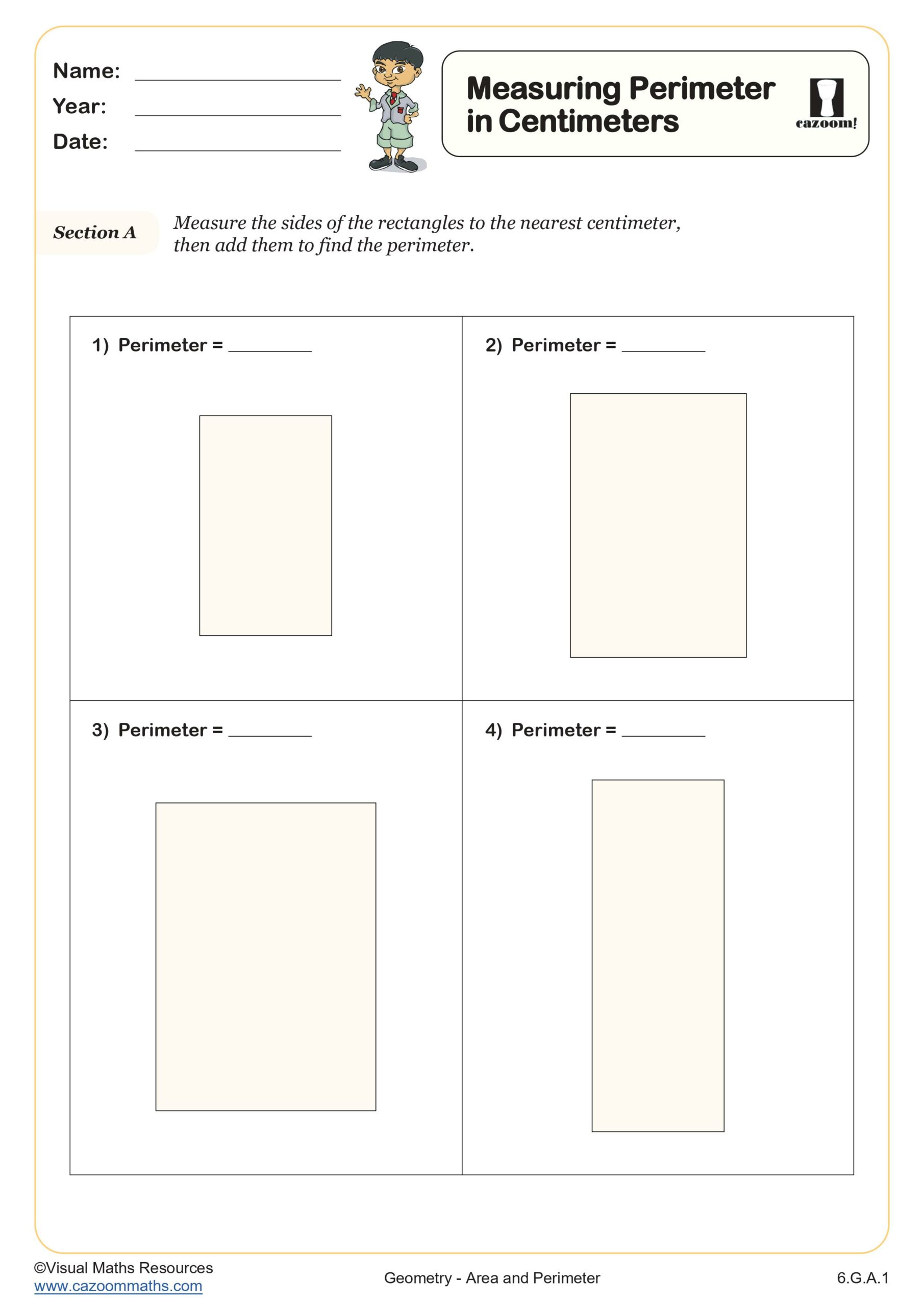
Measuring Perimeter in Centimeters
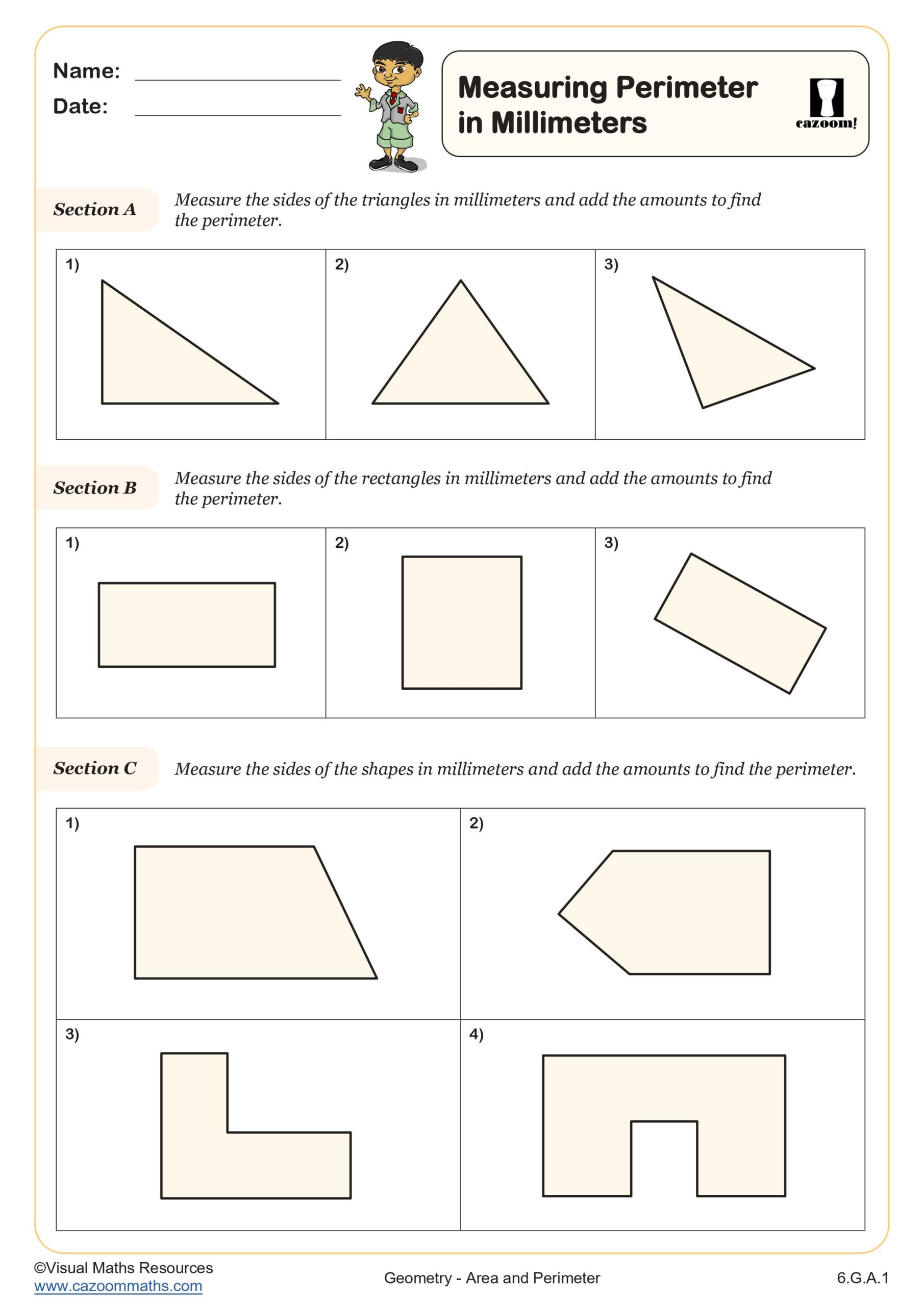
Measuring Perimeter in Millimeters
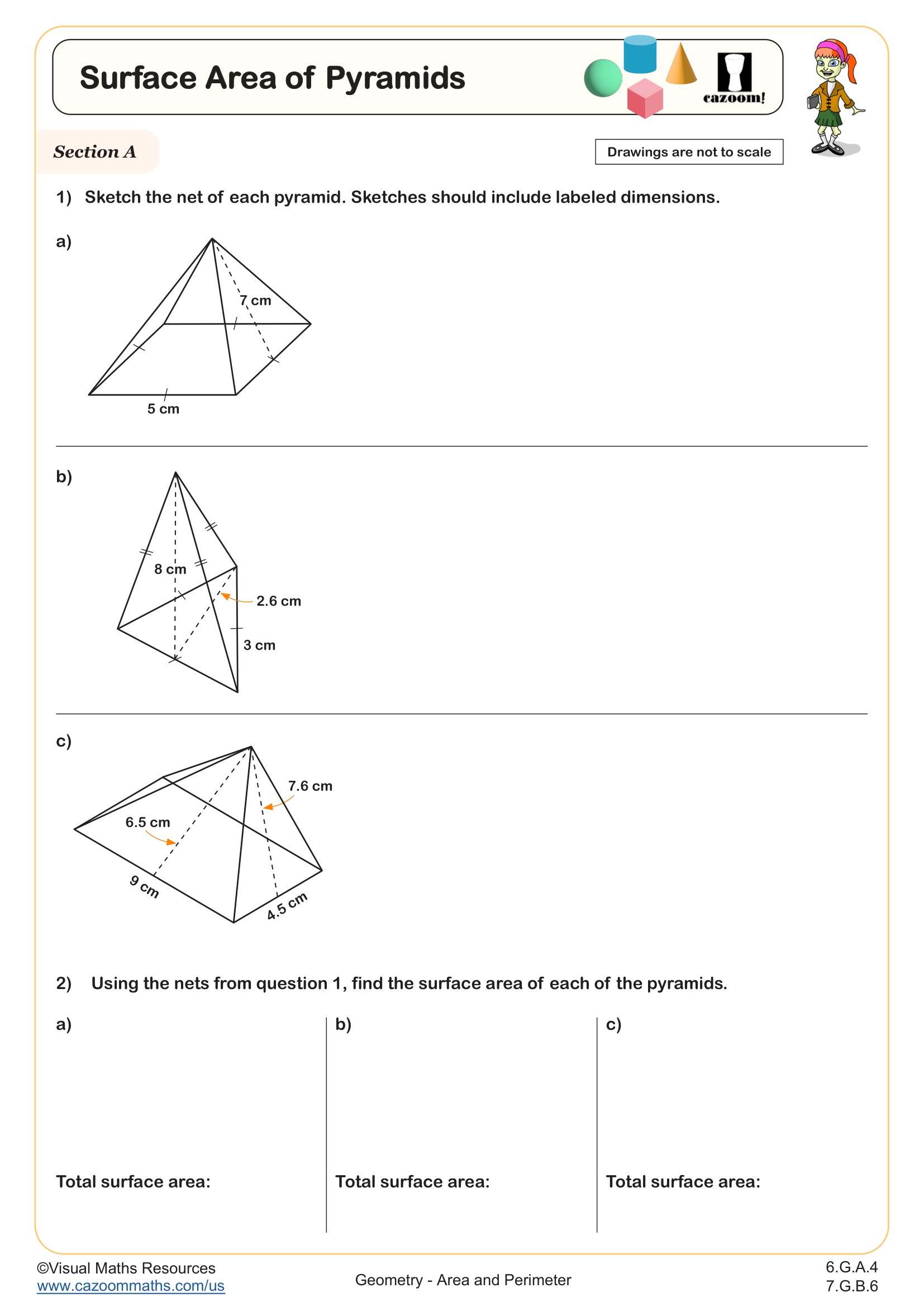
Surface Area of Pyramids
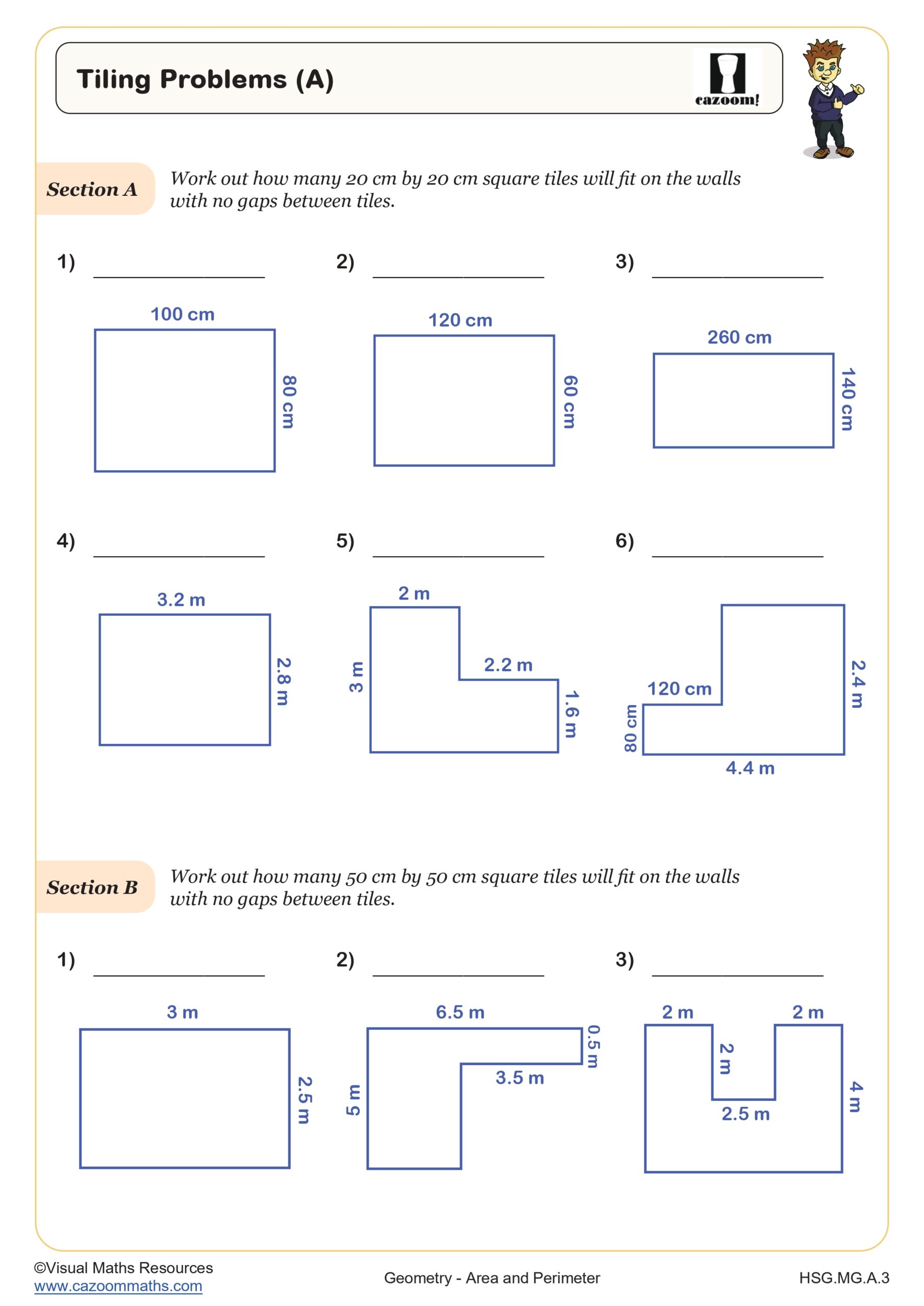
Tiling Problems (A)
All worksheets are created by the team of experienced teachers at Cazoom Math.
What topics do area and perimeter worksheets grade 6 cover?
Area worksheets grade 6 with answers typically include rectangles, squares, triangles, parallelograms, trapezoids, and composite shapes. Students practice applying formulas like A = l × w for rectangles and A = ½ × b × h for triangles while also calculating perimeters by adding all side lengths. These worksheets align with Common Core standard 6.G.1, which requires students to find area and volume of right rectangular prisms.
Teachers often observe that students struggle most with composite shapes, where they must break complex figures into simpler components. The most common error involves forgetting to subtract overlapping areas when shapes are combined, which is why step-by-step problems that show the decomposition process prove most effective for building understanding.
Are these worksheets appropriate for students below or above 6th grade level?
Perimeter worksheets grade 6 work well for advanced 5th graders who have mastered basic multiplication and division, as well as struggling 7th and 8th graders who need to reinforce foundational geometry concepts. The content bridges elementary arithmetic with middle school geometry, making it versatile for differentiated instruction across multiple grade levels.
Many middle school teachers use these materials for review at the beginning of 7th grade geometry units, while elementary teachers find them useful for extending learning with gifted students. The progressive difficulty within each worksheet set allows teachers to assign problems based on individual student readiness rather than strict grade-level expectations.
How do students handle irregular and composite shapes in these worksheets?
Area questions grade 6 involving composite shapes require students to decompose complex figures into rectangles, triangles, and other familiar shapes before calculating total area. These problems develop critical thinking as students must identify the most efficient way to break down each figure and avoid counting overlapping regions twice.
Classroom experience shows that students benefit from drawing lines directly on the shapes to show their decomposition strategy. Teachers often notice improved success rates when students are encouraged to label each component shape and show their work for each separate calculation before finding the total area.
How can teachers use these worksheets most effectively in their instruction?
Area and perimeter worksheets grade 6 with answers work best when integrated with hands-on measurement activities and real-world problem solving. Teachers find success using these as guided practice after introducing formulas with manipulatives or interactive demonstrations, rather than as isolated drill exercises.
The answer keys allow for immediate feedback during independent work or can be used for peer checking activities. Many teachers assign different problems to pairs of students, then have them explain their solutions to each other, which reinforces both calculation skills and mathematical communication as required by Common Core speaking and listening standards.