6th Grade Constructions Worksheets
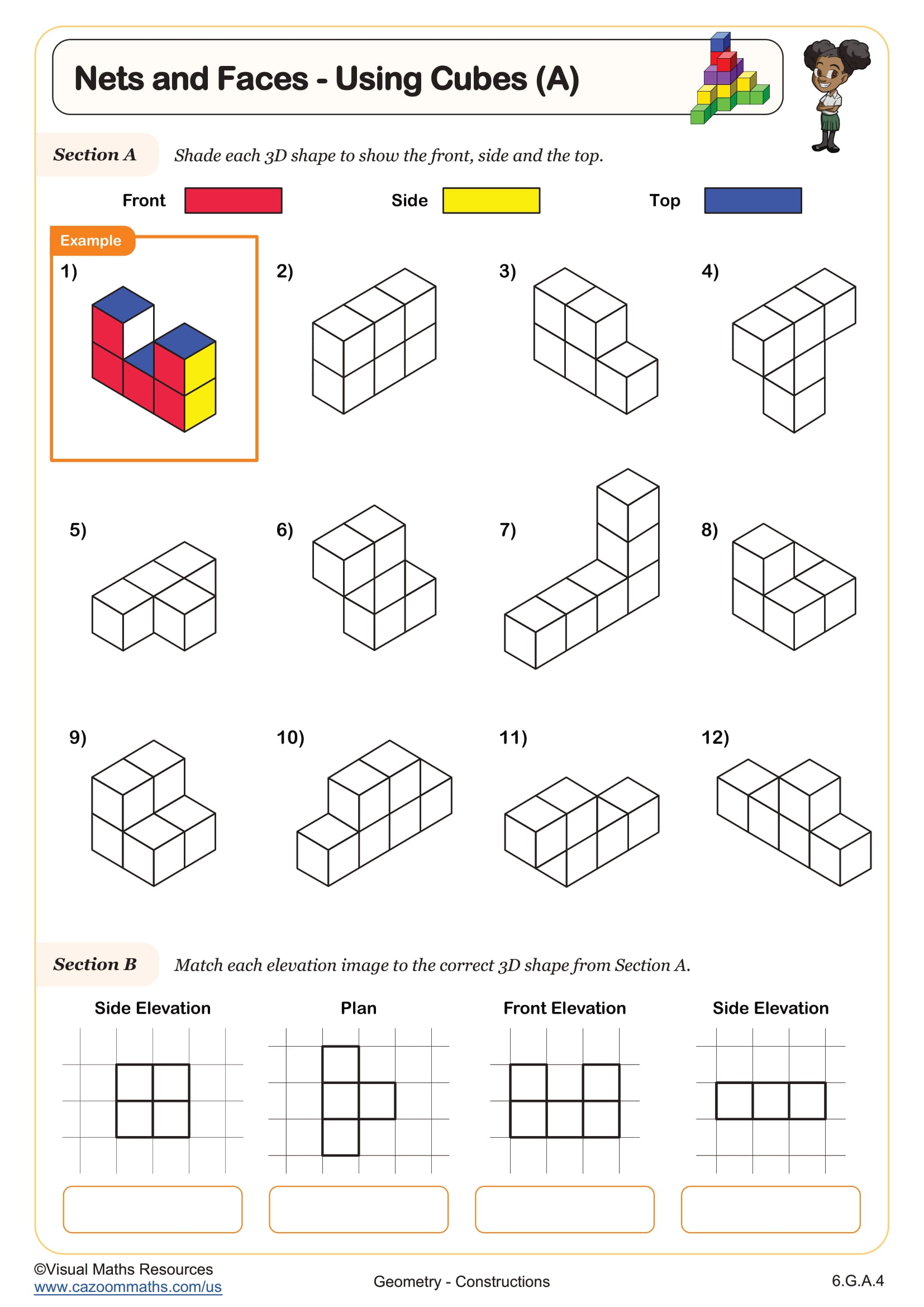
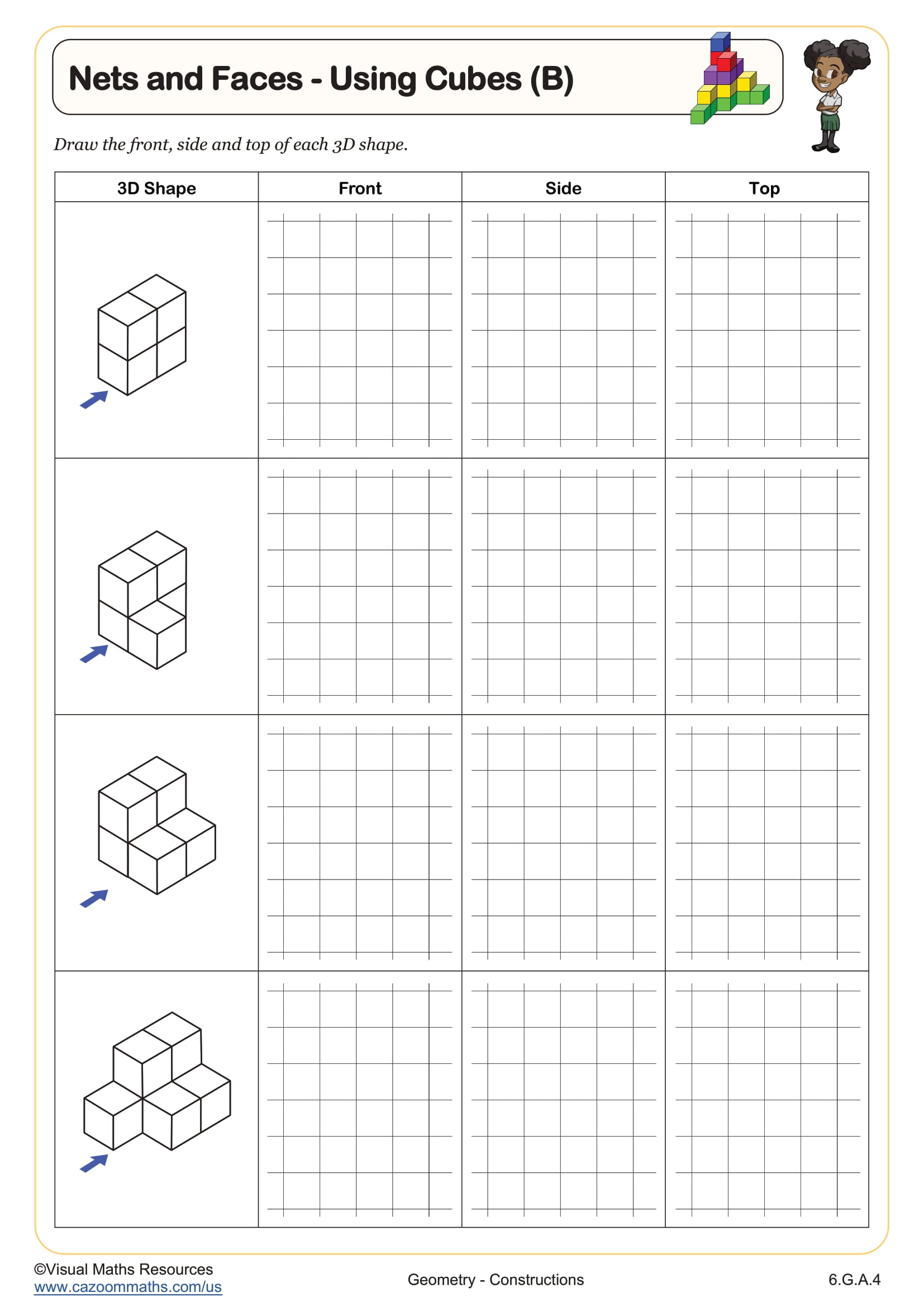
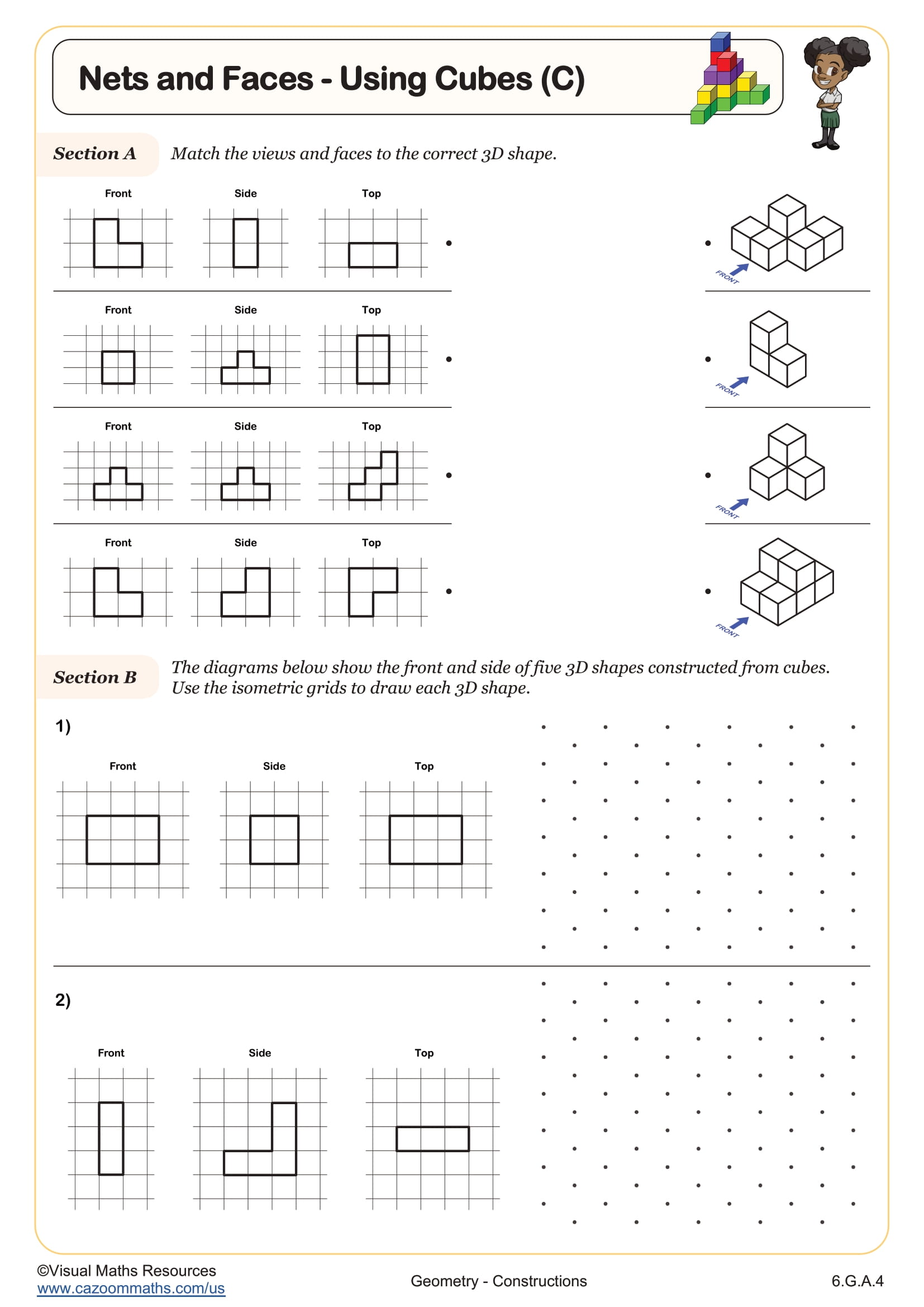
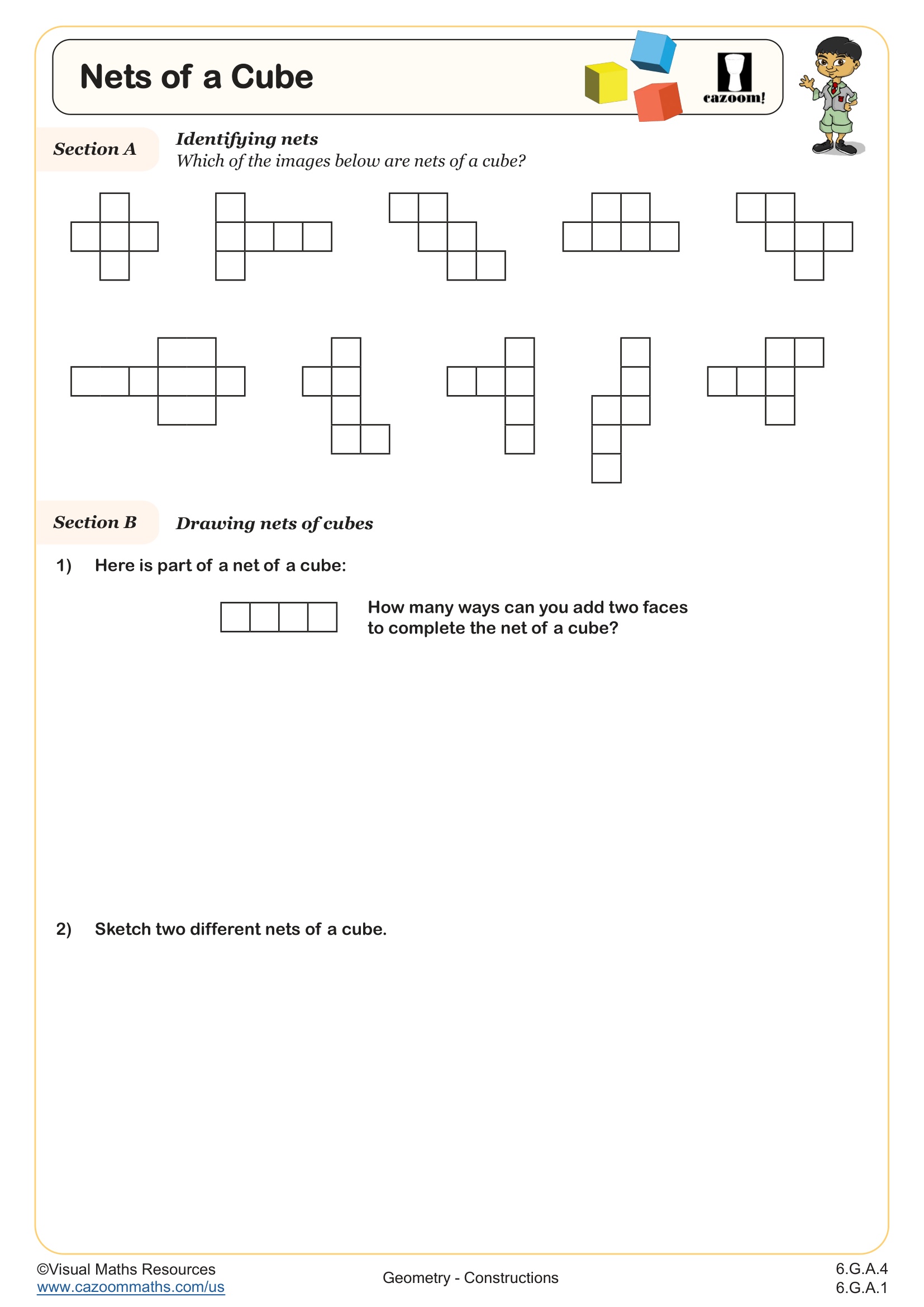
All worksheets are created by the team of experienced teachers at Cazoom Math.
What Are Geometric Constructions in 6th Grade Math?
Geometric constructions involve creating precise geometric figures using only a compass and straightedge, without relying on measurements from a ruler or protractor. In 6th grade, students learn fundamental construction techniques including bisecting angles, bisecting line segments perpendicularly, and constructing various triangles using given measurements. This topic aligns with Common Core standards for geometry that emphasize understanding geometric relationships through hands-on exploration.
A common error occurs when students fail to maintain consistent compass width during construction, resulting in arcs that don't intersect properly. Teachers often find that demonstrating constructions on large vertical surfaces helps students visualize the arc intersections more clearly. Students need to understand that the compass creates equal distances from a center point, which is the geometric principle underlying most basic constructions.
What Grade Level Studies Geometric Constructions?
Geometric constructions are introduced in 6th grade as part of the middle school geometry curriculum. Students encounter these skills as they transition from elementary measurement activities to more formal geometric reasoning. This middle school topic prepares students for the logical structure and formal proofs they'll encounter in high school geometry courses.
At the 6th grade level, constructions start with basic perpendicular and angle bisectors before progressing to triangle constructions and analyzing angle relationships within polygons. The difficulty increases as students move from single-step constructions to multi-step problems that combine several techniques. Many state assessments include questions about geometric properties discovered through construction activities, even if students aren't required to physically perform constructions during testing.
How Do You Construct an Angle Bisector?
Constructing an angle bisector requires placing the compass point at the angle's vertex and drawing an arc that intersects both rays of the angle. Without changing the compass width, students then place the compass point at each intersection and draw two more arcs that cross in the interior of the angle. Drawing a ray from the vertex through this intersection point creates the angle bisector, dividing the original angle into two congruent parts.
Angle bisectors appear throughout engineering and design applications, particularly in computer graphics and architecture. Navigation systems use angle bisector principles when calculating optimal flight paths between two destinations from a fixed point. Understanding how to construct and recognize angle bisectors helps students recognize symmetry in architectural designs and natural patterns, connecting geometry to real-world STEM fields where precision and spatial relationships matter.
How Do Construction Worksheets Support Student Learning?
Construction worksheets provide step-by-step guidance that helps students develop proper compass and straightedge techniques before attempting complex figures. The scaffolded approach moves from guided constructions with partial steps shown to independent practice where students apply techniques without visual prompts. Answer keys show the correct construction arcs and final figures, allowing students to self-check their geometric accuracy and identify where their technique may need adjustment.
These worksheets work effectively for small group instruction where students can compare their constructions and discuss why different approaches lead to the same result. Teachers use them during intervention time to help students who struggle with spatial visualization, as the tactile nature of compass work often reaches learners who find abstract geometry challenging. The mixed practice sections serve well as cumulative review before assessments or as homework that reinforces classroom demonstrations.