6th Grade Division Worksheets
All worksheets are created by the team of experienced teachers at Cazoom Math.
What types of problems are included in 6th grade division worksheets?
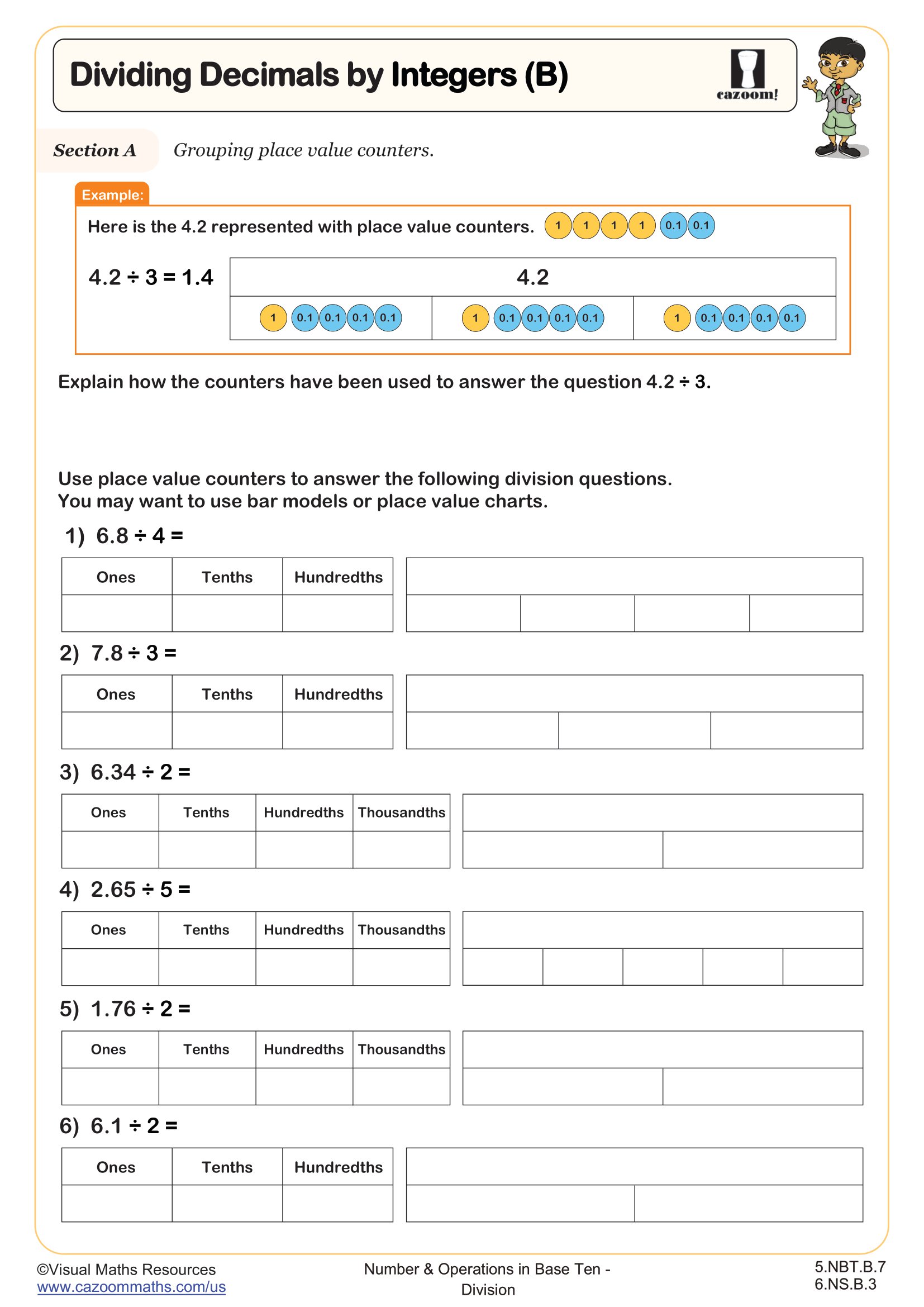
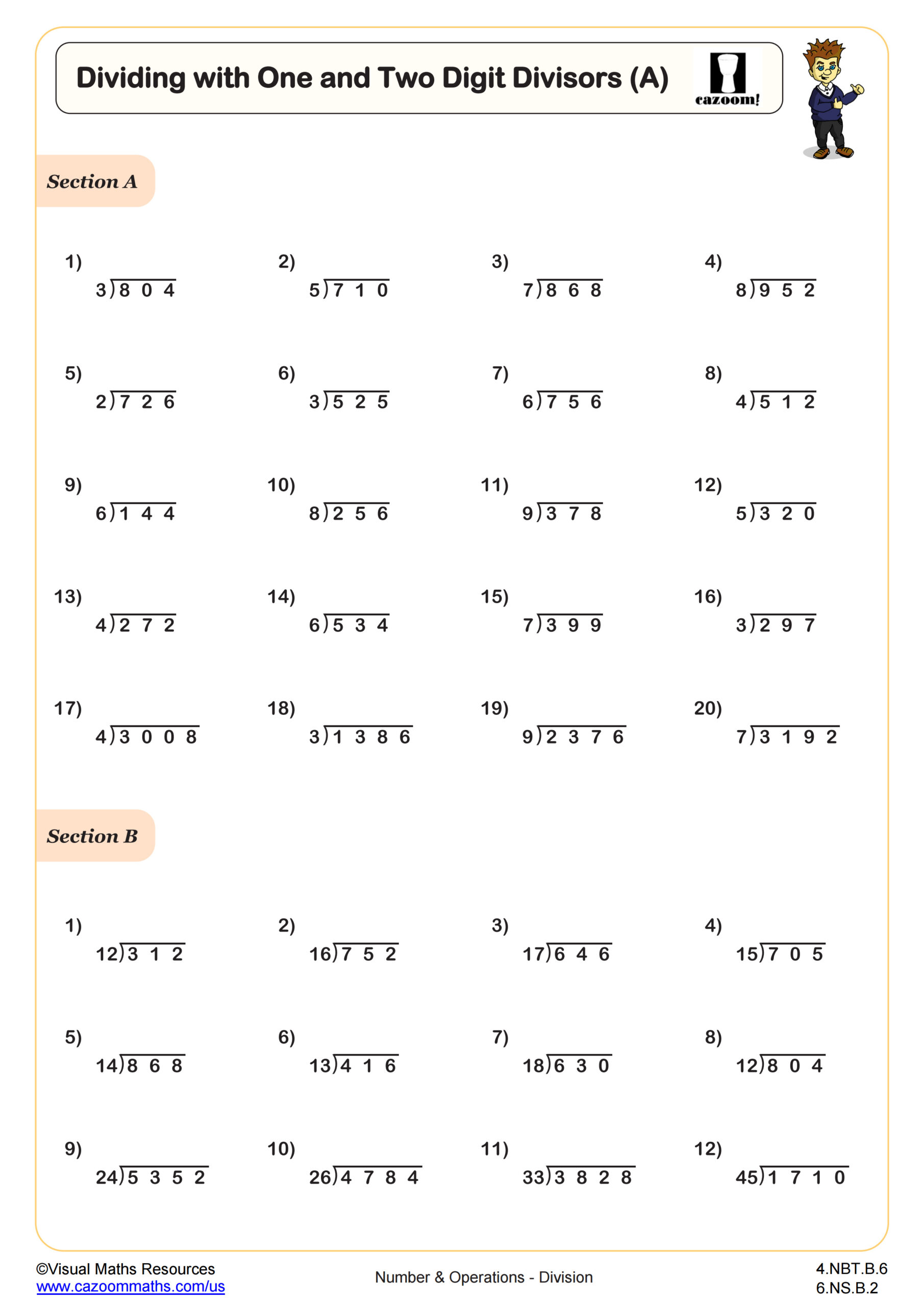
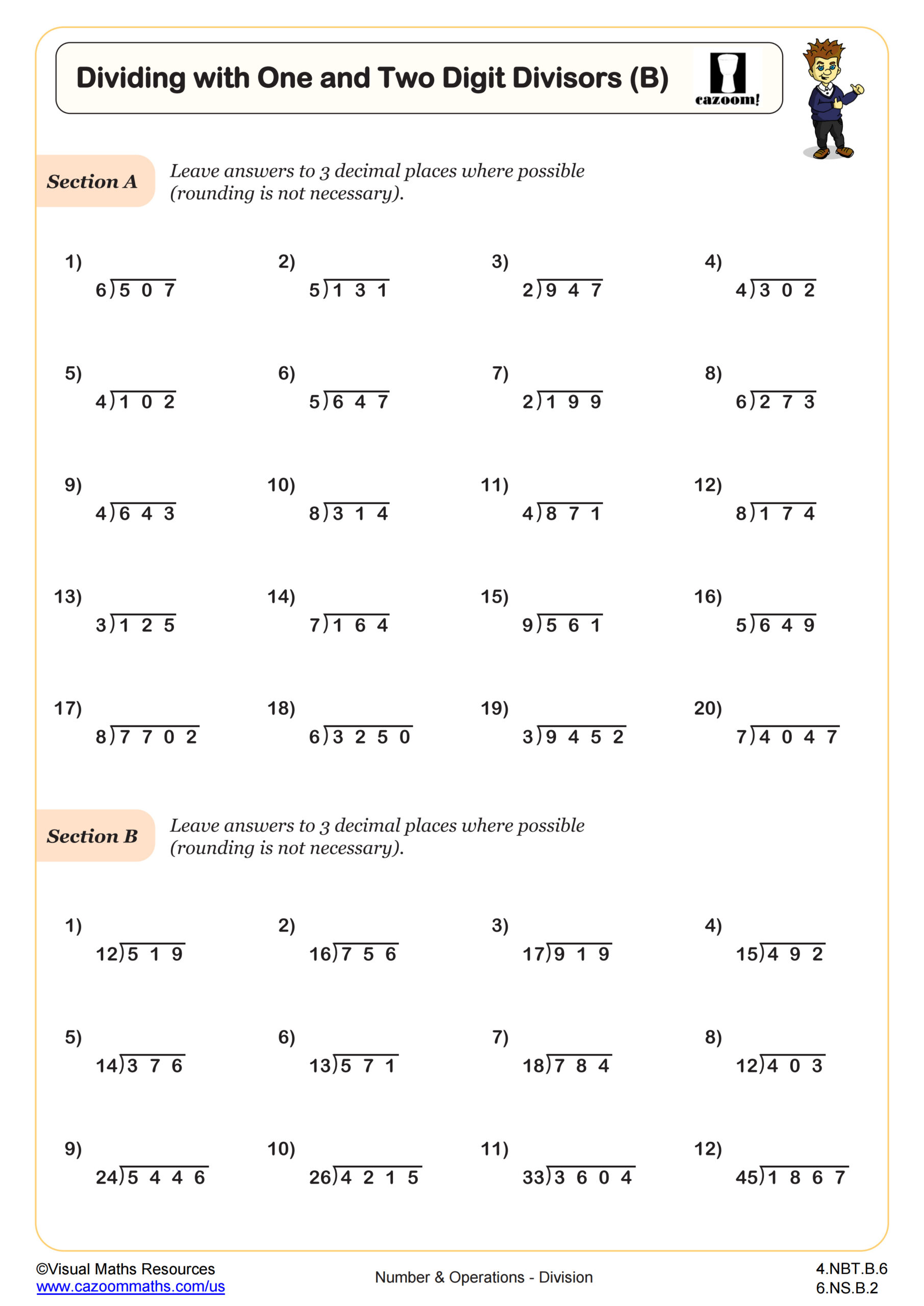
Grade 6 division worksheets with answers typically include multi-digit division with whole numbers, division of decimals by whole numbers and decimals, and real-world word problems that require division to solve. These problems align with Common Core standard 6.NS.B.2, which focuses on fluently dividing multi-digit numbers using the standard algorithm.
Teachers frequently observe that students make computational errors when dividing decimals, particularly when placing the decimal point in the quotient. Many students also struggle with interpreting remainders in context, especially in word problems where they need to determine whether to round up, round down, or express the remainder as a fraction or decimal.
How do 6th grade division problems differ from elementary division?
Division problems 6th grade students encounter involve larger numbers, decimal operations, and more complex word problems compared to elementary levels. While 4th and 5th graders focus on basic long division with whole numbers, 6th graders work with division of decimals and apply division in algebraic thinking contexts.
The transition to decimal division often proves challenging because students must apply their understanding of place value in new ways. Teachers notice that students who struggled with whole number division in earlier grades need additional scaffolding with decimal placement and estimation skills to check their answers for reasonableness.
What division strategies should 6th graders master?
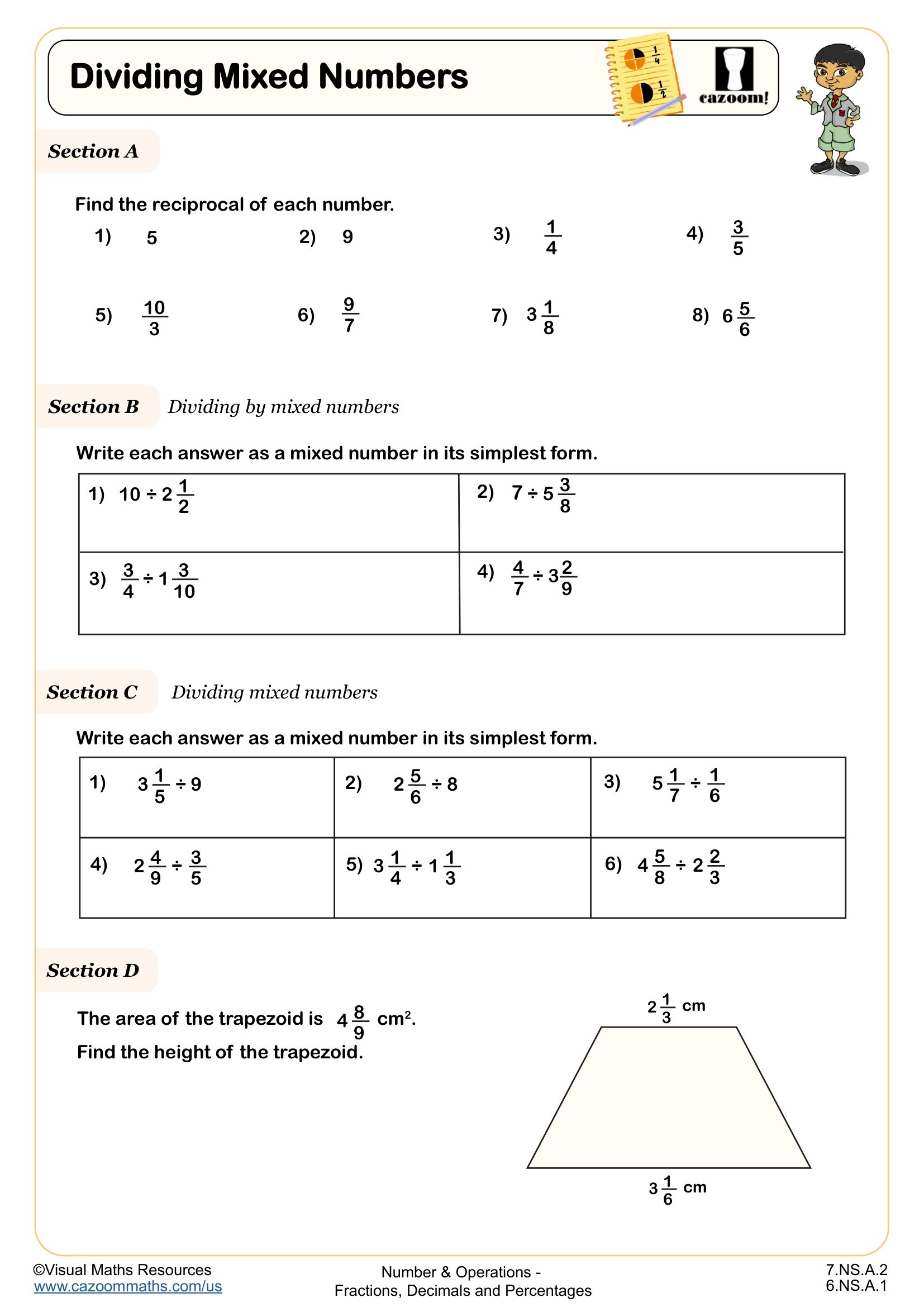
Sixth grade students should demonstrate fluency with the standard long division algorithm while also using estimation and mental math strategies for simpler calculations. They need to connect division to fraction concepts, understanding that division creates equivalent fractions and can be expressed in multiple forms.
Many teachers find that students benefit from learning the relationship between multiplication and division facts, especially when working with decimal problems. Students often make errors when they don't estimate first, leading to answers that are off by powers of ten. Teaching students to use benchmark numbers and check their work through multiplication helps reduce these computational mistakes.
How can teachers use these division worksheets effectively in class?
Teachers can implement these worksheets as warm-up activities, homework assignments, or assessment tools to gauge student understanding of division concepts. The answer keys allow for immediate feedback, which is crucial for helping students identify and correct misconceptions before they become ingrained habits.
Many educators use these worksheets in a tiered approach, starting with easier problems and gradually increasing complexity based on student performance. The variety of problem types helps teachers differentiate instruction, allowing advanced students to work on challenging word problems while others focus on computational fluency with the standard algorithm.