6th Grade Factors and Multiples Worksheets
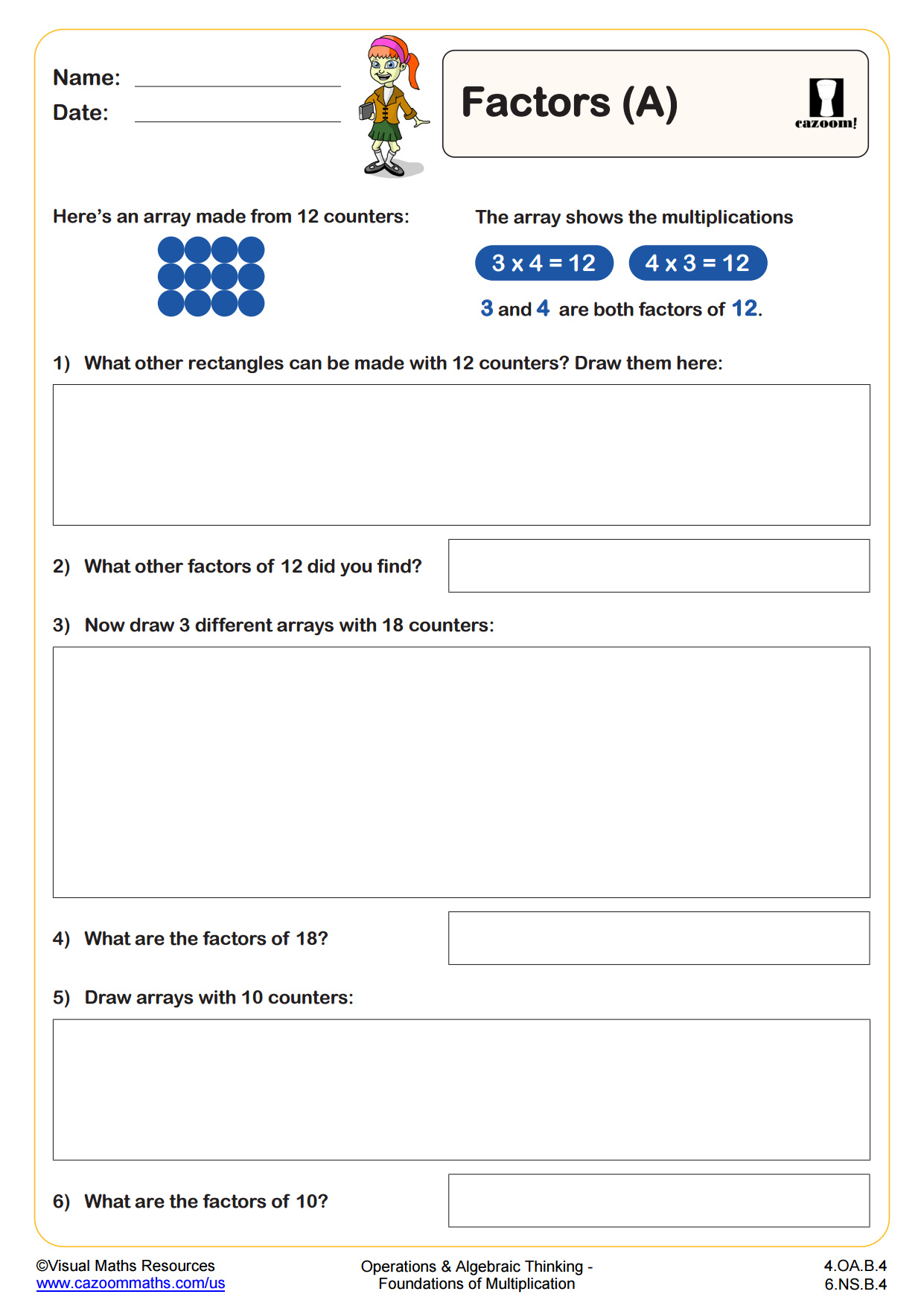
Factors (A)
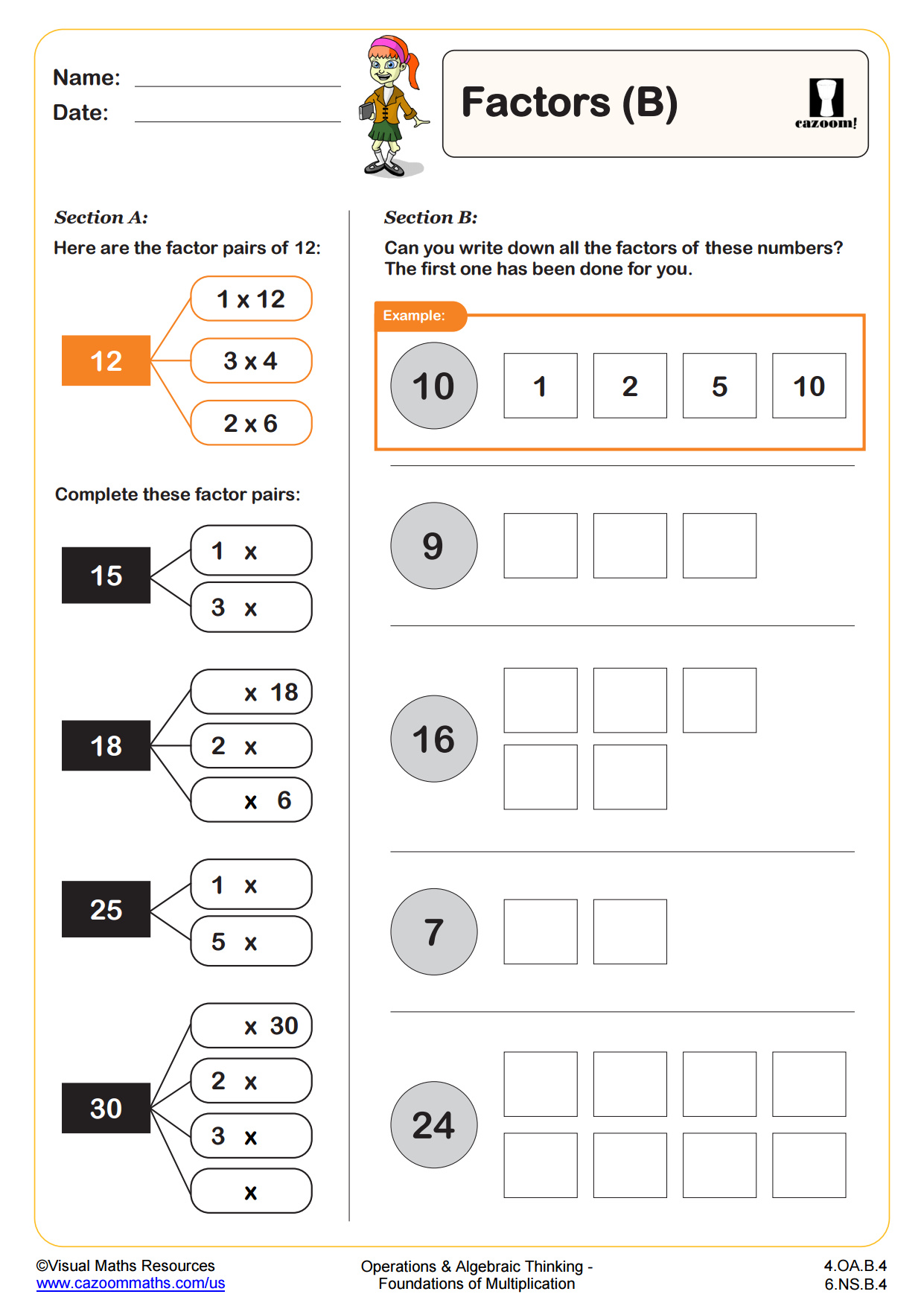
Factors (B)
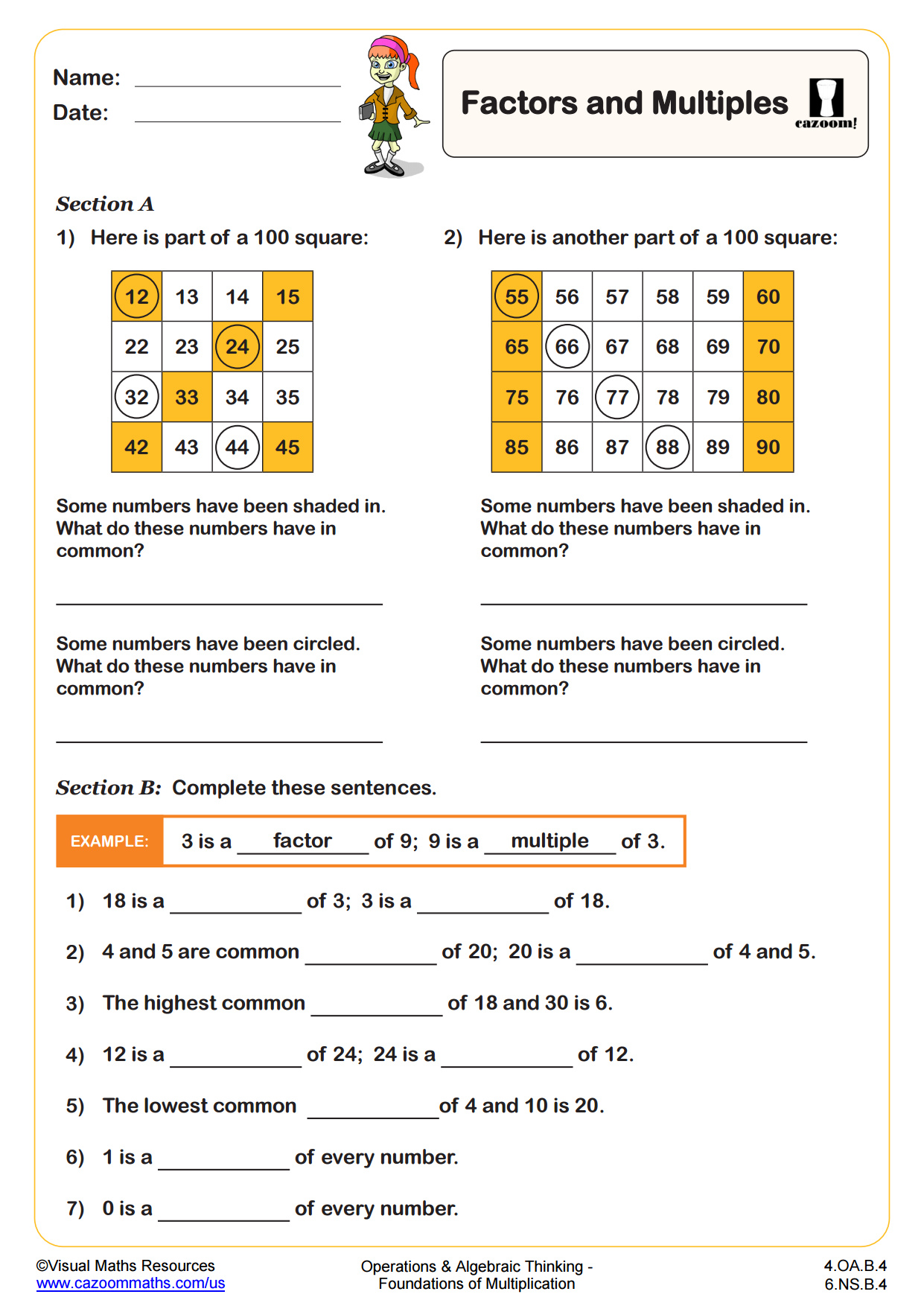
Factors and Multiples
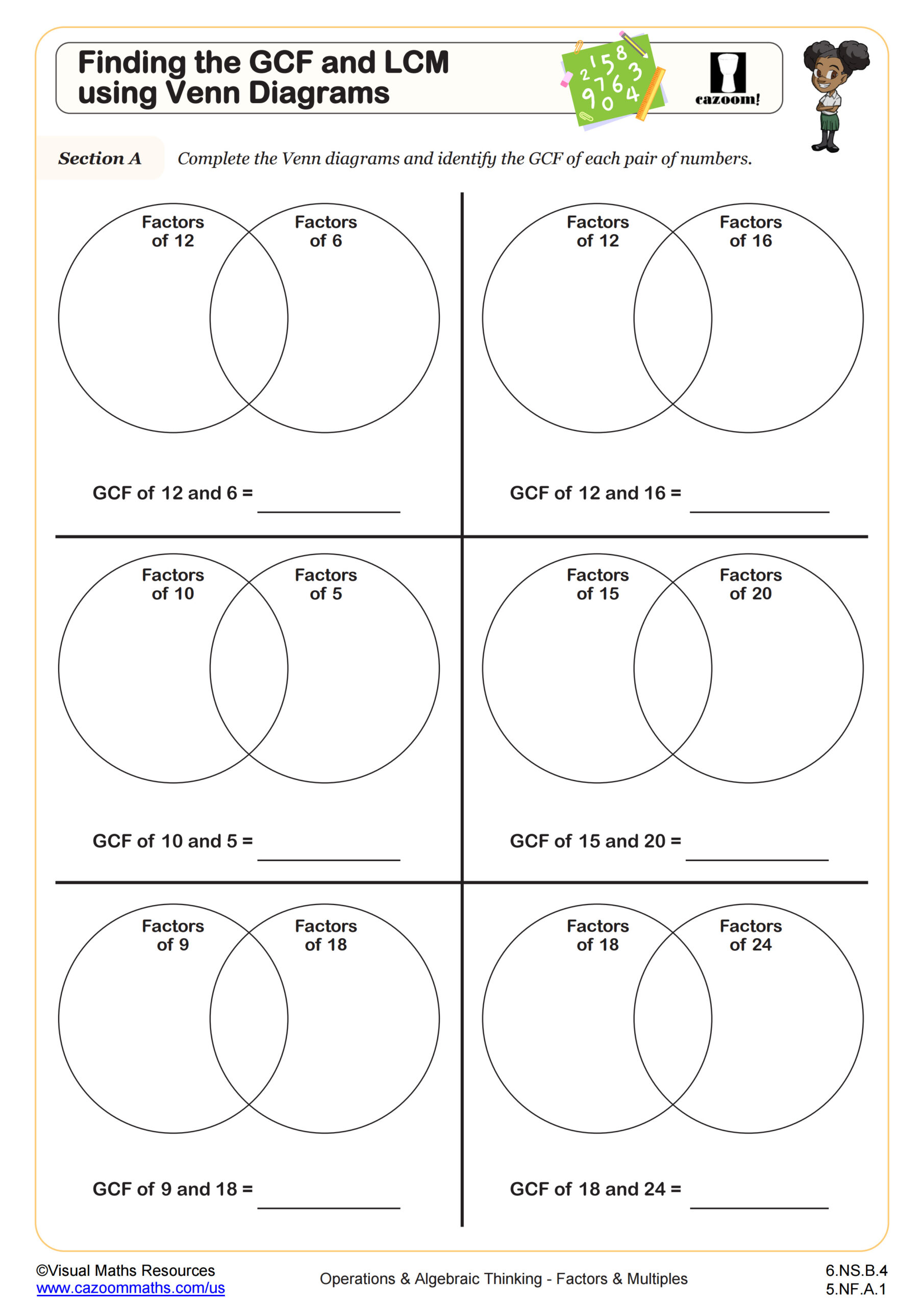
Finding the GCF and LCM using Venn Diagrams
Greatest Common Factor (GCF)
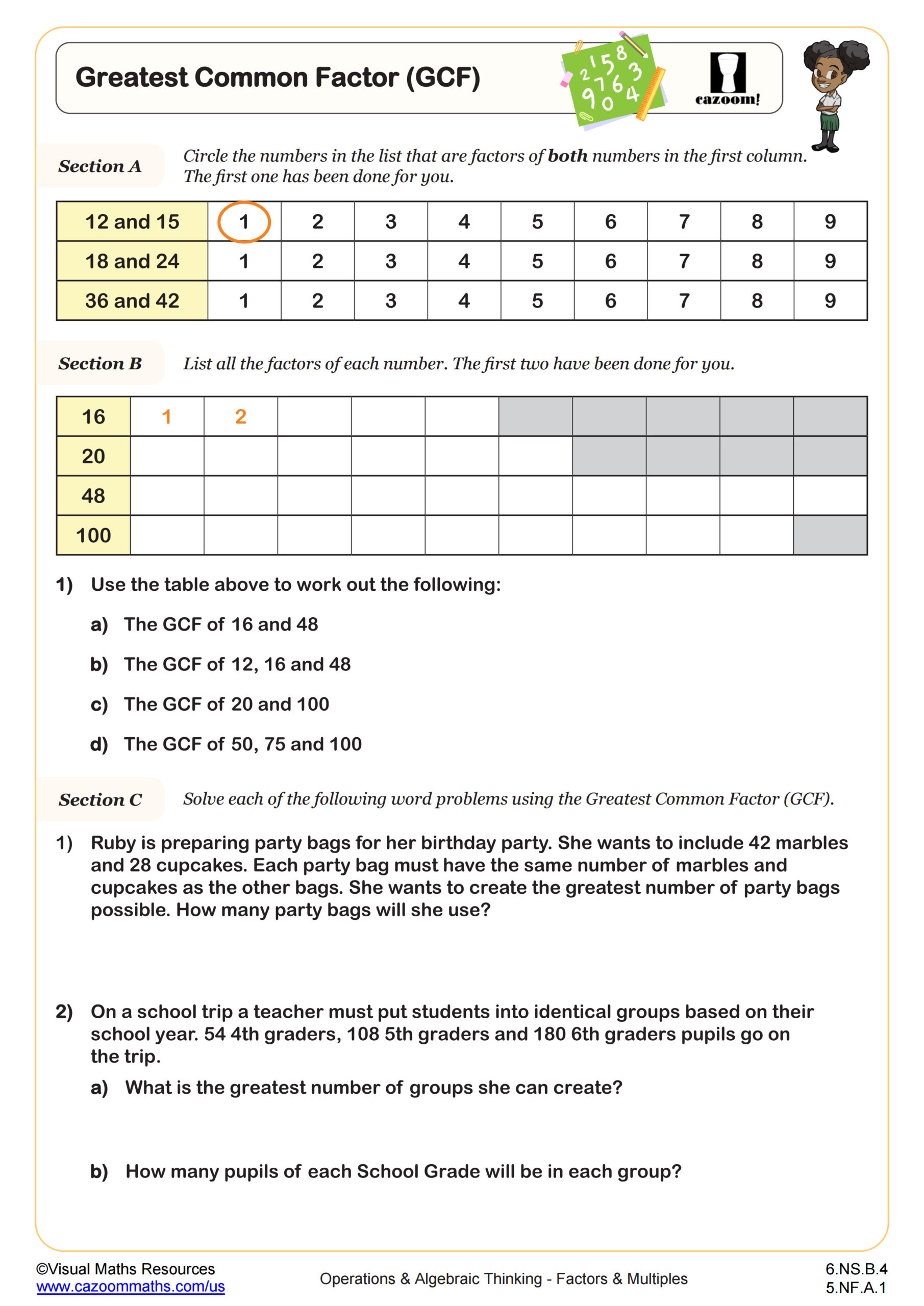
Least Common Multiple (LCM)
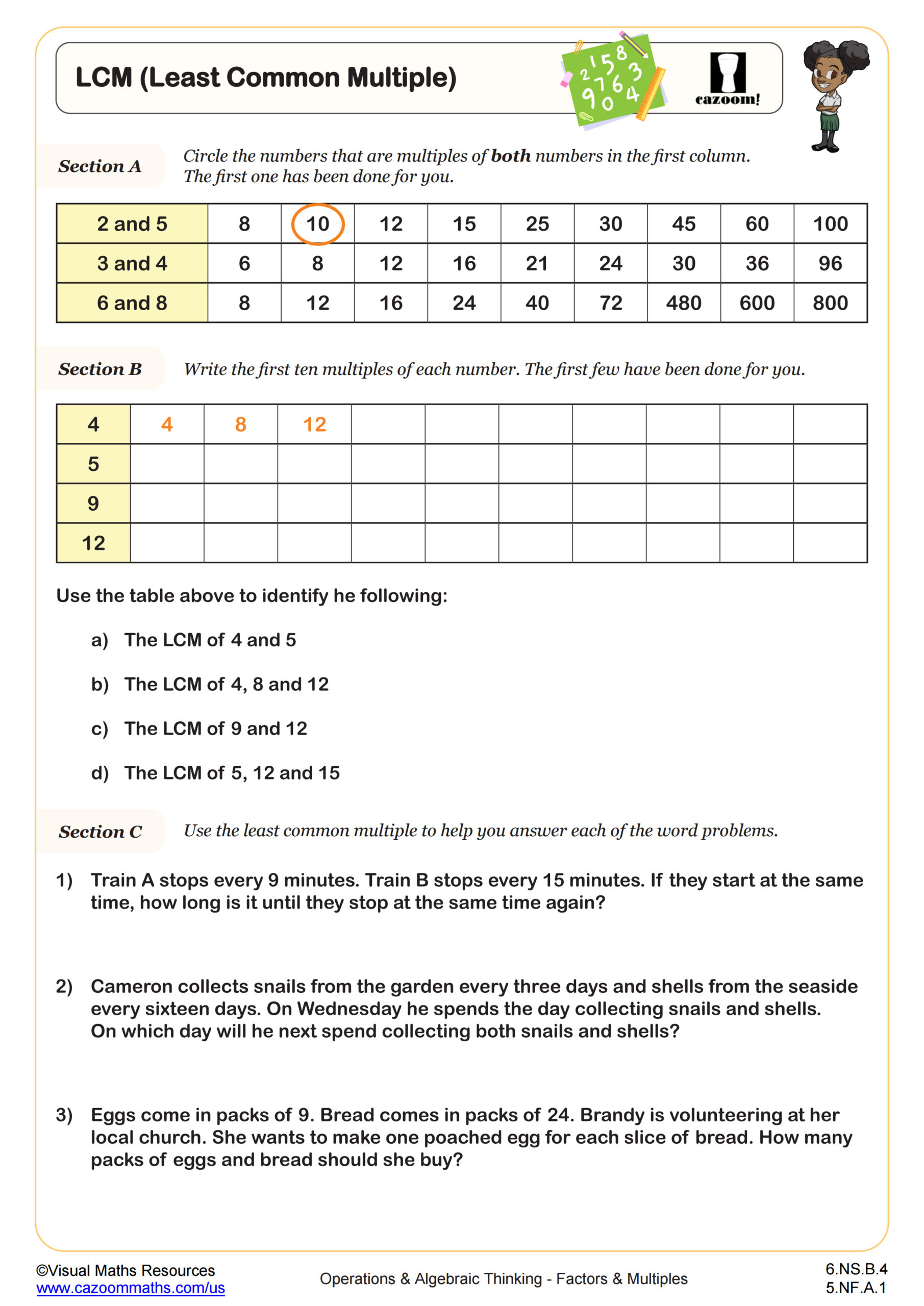
Prime Factor Decomposition - Using the Short Division Method
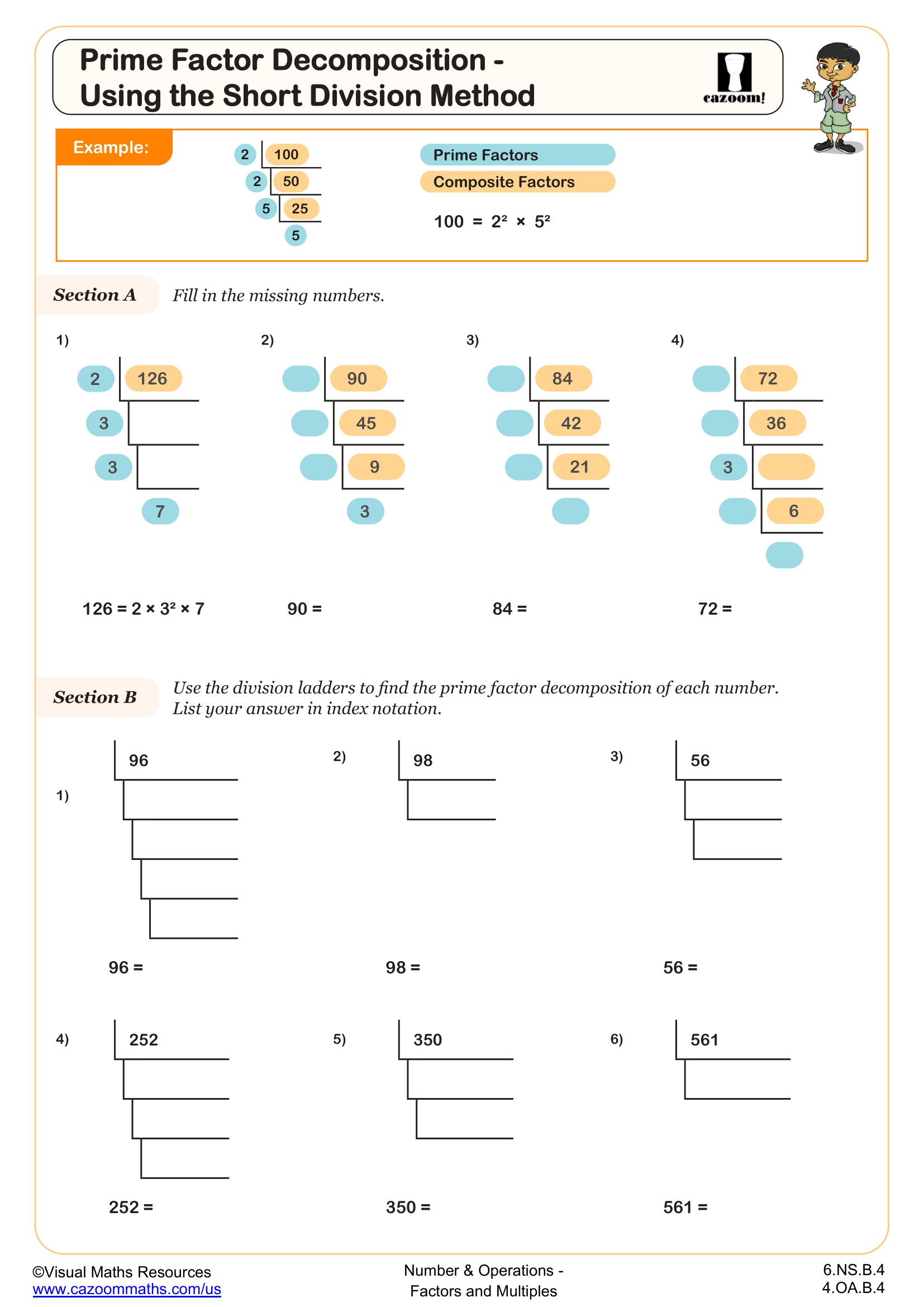
Prime Factorization for GCF and LCM (A)
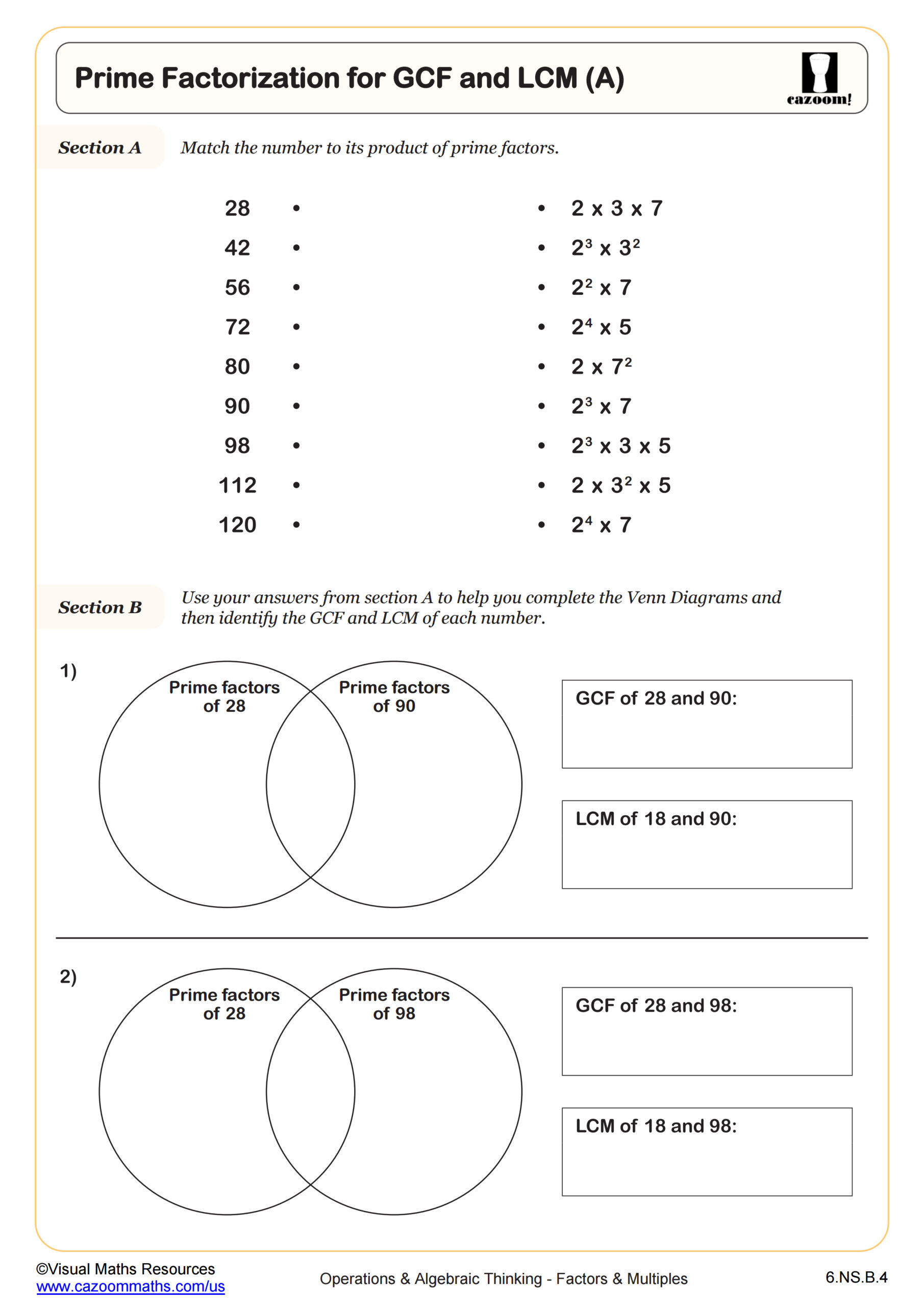
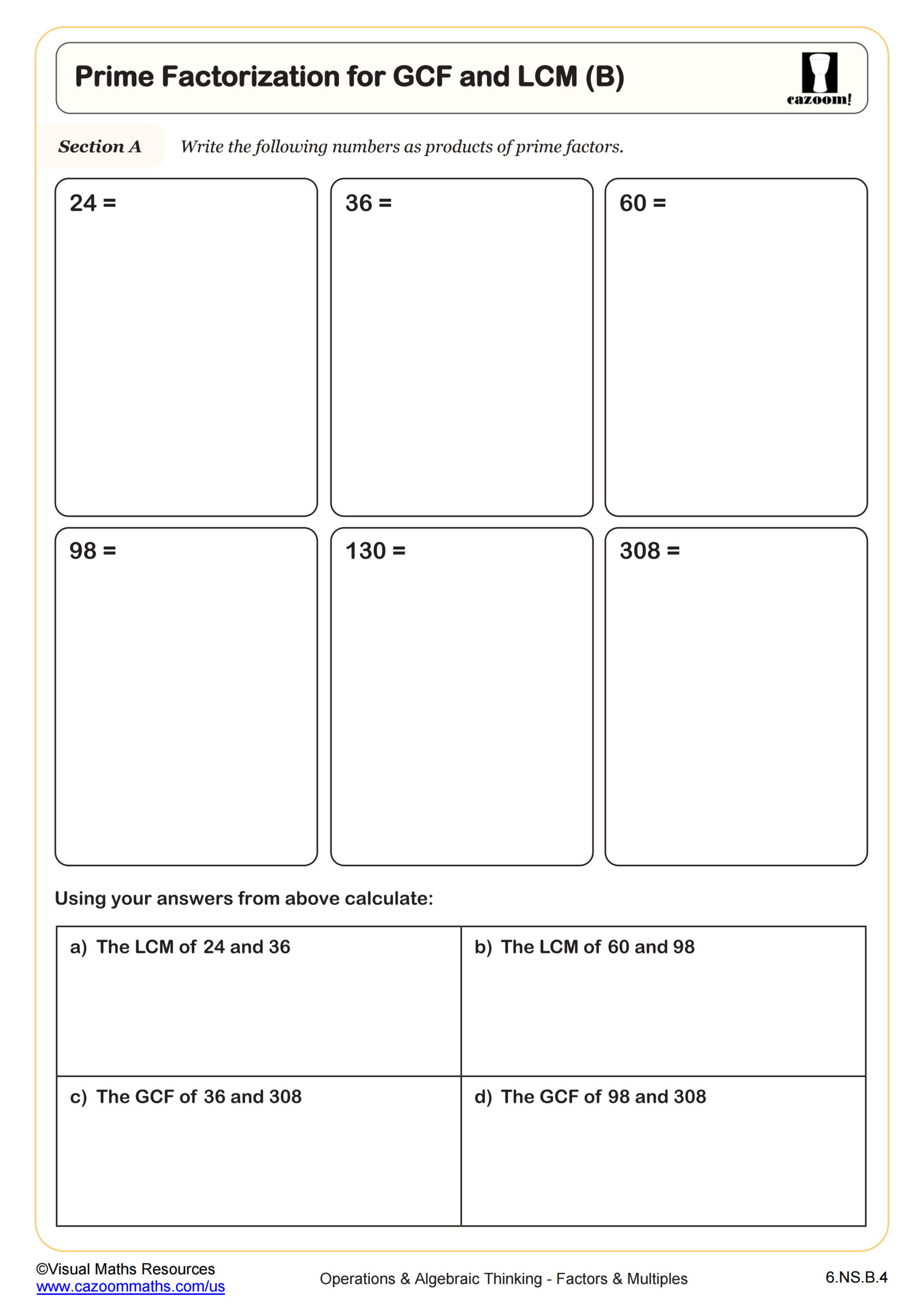
Prime Factorization for GCF and LCM (B)
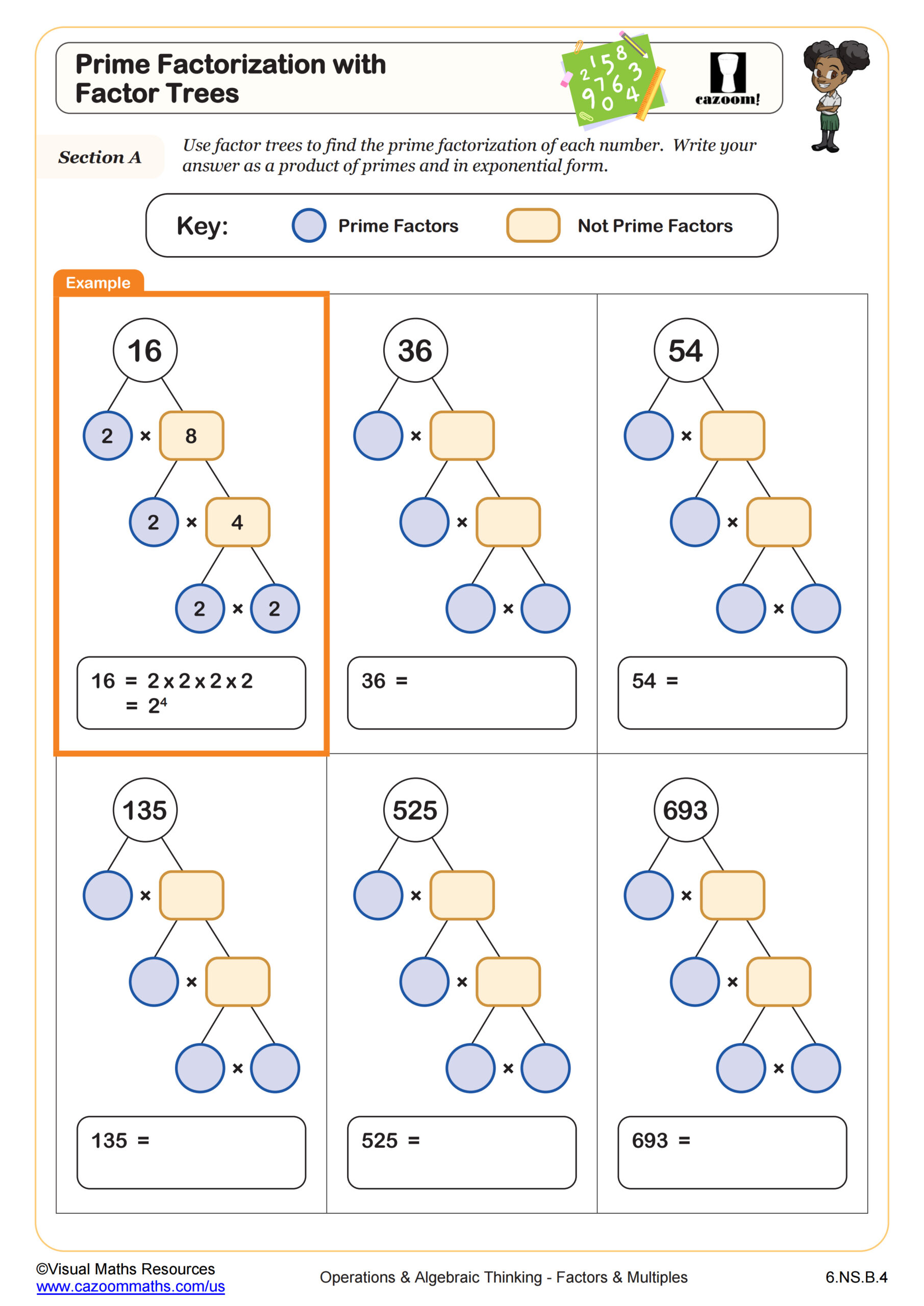
Prime Factorization with Factor Trees
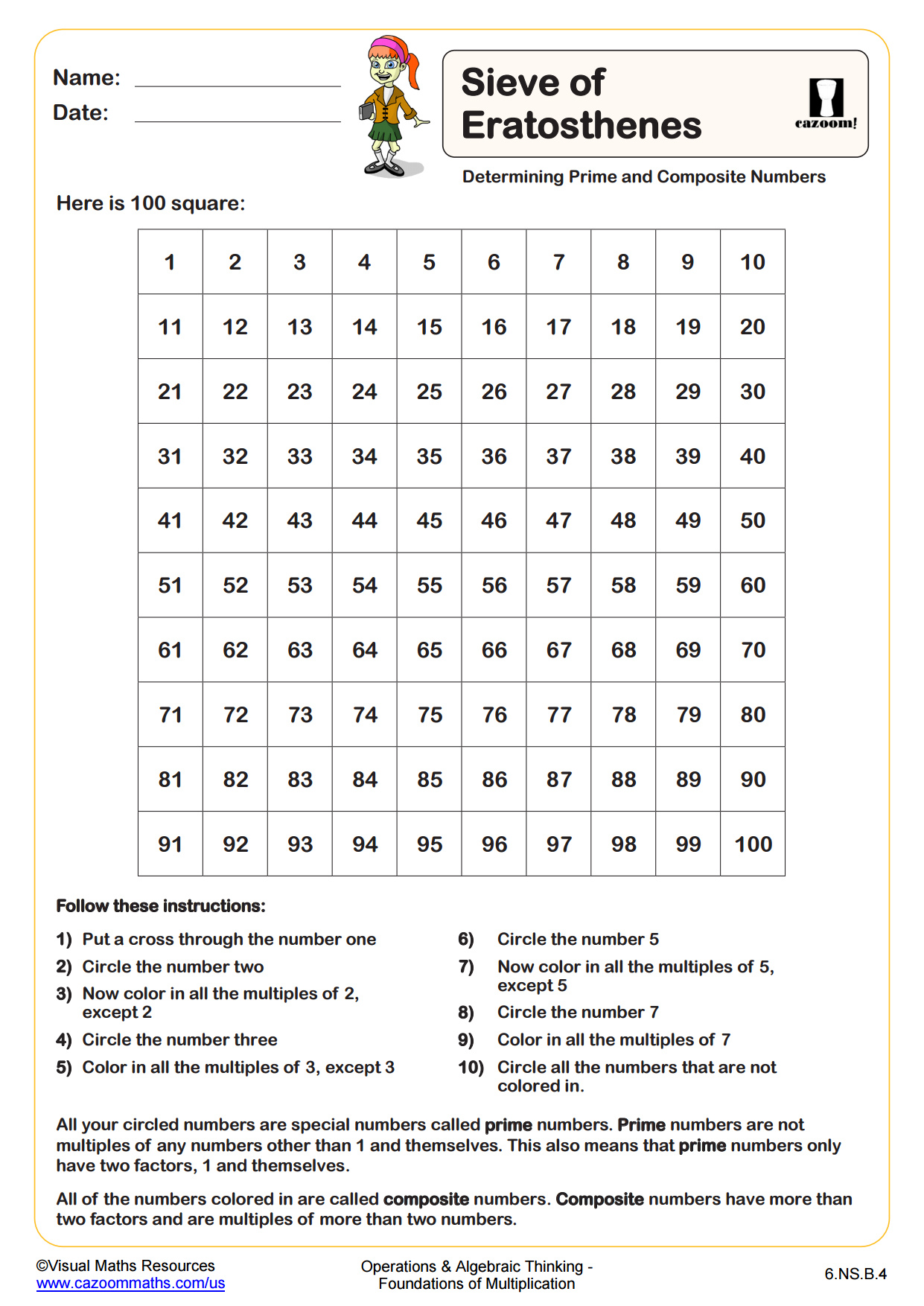
Sieve of Eratosthenes
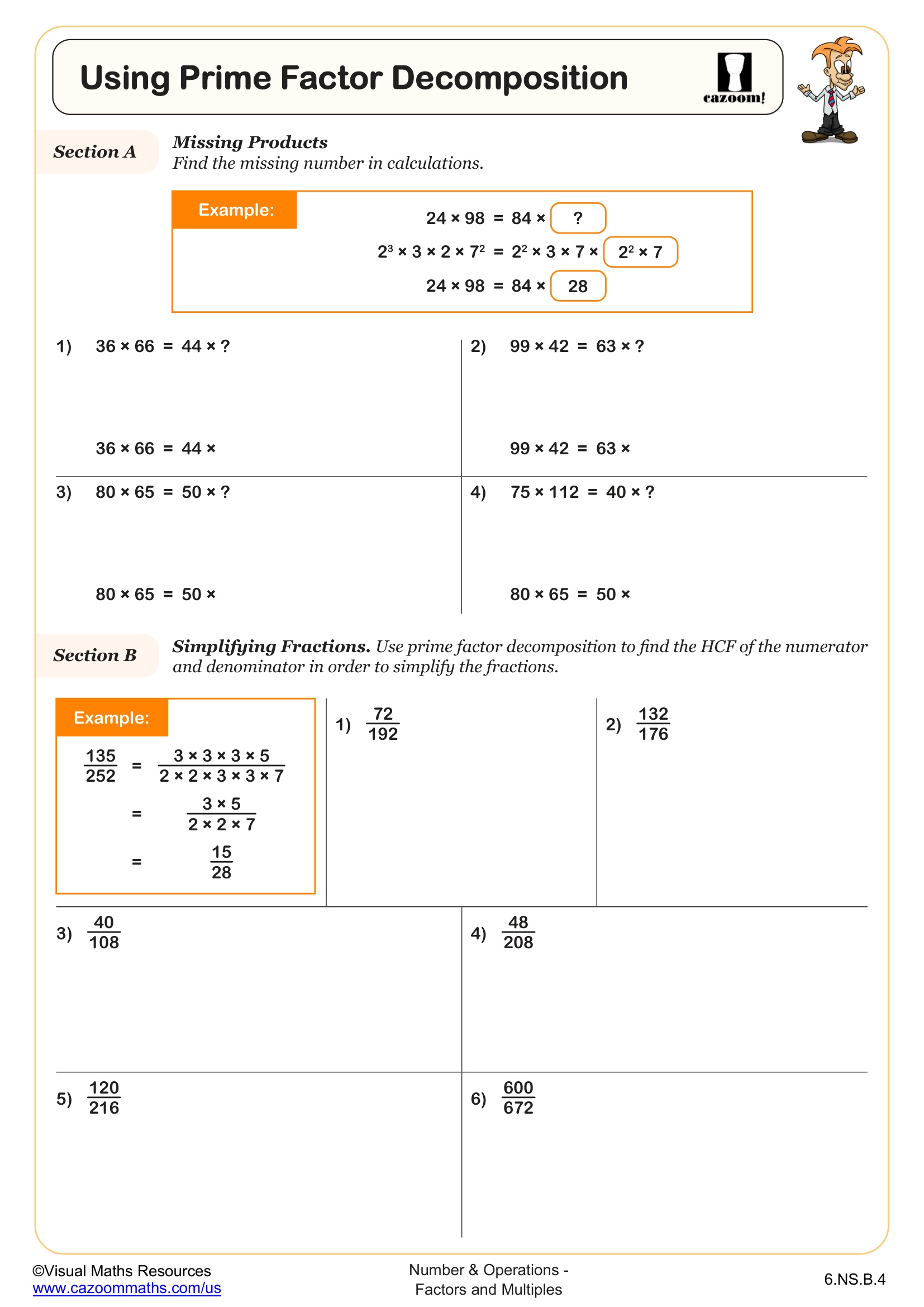
Using Prime Factor Decomposition
All worksheets are created by the team of experienced teachers at Cazoom Math.
What makes a good factors and multiples worksheet for class 6?
An effective factors and multiples worksheet for class 6 aligns with Common Core standard 6.NS.4, which requires students to find greatest common factors and least common multiples of whole numbers. The worksheet should include graduated difficulty levels, starting with smaller numbers before progressing to two-digit challenges that require systematic thinking.
Teachers report that students often struggle when worksheets jump too quickly from simple examples like finding factors of 12 to complex problems involving numbers like 48 or 72. Quality worksheets include visual aids such as factor trees for prime factorization and provide multiple opportunities to practice the relationship between factors and multiples using the same number sets.
How do 6th grade factors and multiples concepts build on earlier learning?
Sixth grade factors and multiples work extends elementary multiplication and division fluency into more abstract number relationships. Students move beyond memorized times tables to understand why 4 and 6 are factors of 24, while 24, 48, and 72 represent multiples of 24. This conceptual shift prepares students for pre-algebra topics like simplifying fractions and solving equations.
Many teachers observe that students who mastered basic multiplication facts in fourth and fifth grade still need explicit instruction in factor identification strategies. The transition from "What times what equals 36?" to "List all factors of 36" requires students to think systematically about division relationships rather than relying on recall alone.
Why do students find prime factorization challenging on factors worksheets?
Prime factorization requires students to break numbers down into their most basic building blocks, combining division skills with knowledge of prime numbers. A 6th grade prime factorization worksheet typically includes factor trees and systematic division methods, but students often get confused about when to stop the factorization process or mix up prime and composite numbers.
Classroom observations show that students frequently make errors with numbers like 21 or 35, incorrectly identifying these as prime numbers because they don't immediately recognize the factor pairs. Teachers find success when worksheets include reference charts of prime numbers up to 100 and provide step-by-step examples showing multiple factorization paths for the same number.
How can teachers use these worksheets most effectively in math instruction?
Teachers achieve the best results when they use factors and multiples worksheets as guided practice after introducing concepts through hands-on activities like using manipulatives or creating factor rainbows. The multiples worksheet grade 6 activities work well as warm-up exercises, while more complex factor identification problems suit independent practice or homework assignments.
Many educators find that students benefit from working through worksheet problems in pairs initially, allowing them to verbalize their thinking processes before attempting solo work. Teachers also report success using the answer keys for immediate feedback during guided practice sessions, helping students catch and correct misconceptions about factor pairs before these errors become ingrained habits.