6th Grade Foundations of Multiplication Worksheets
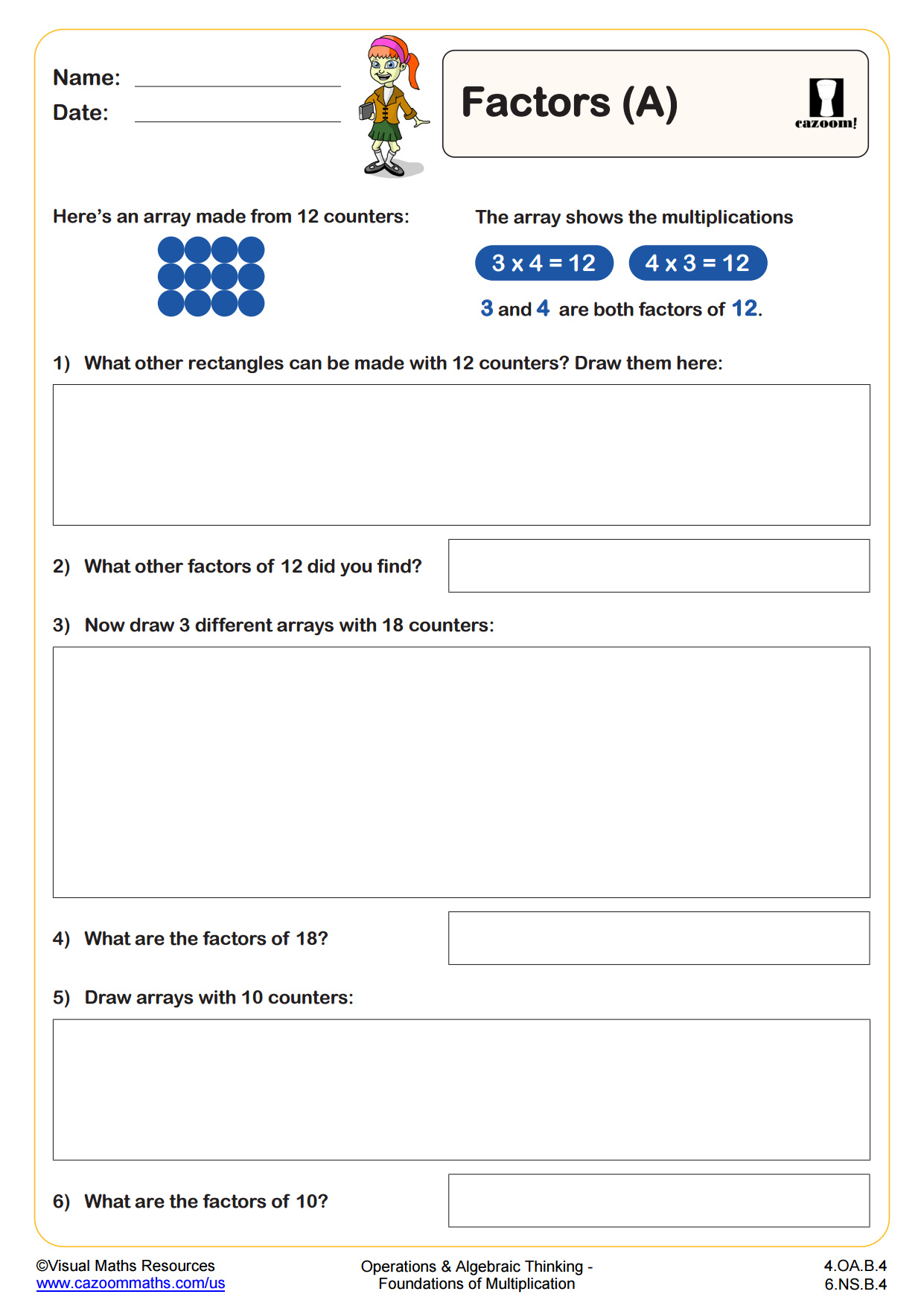
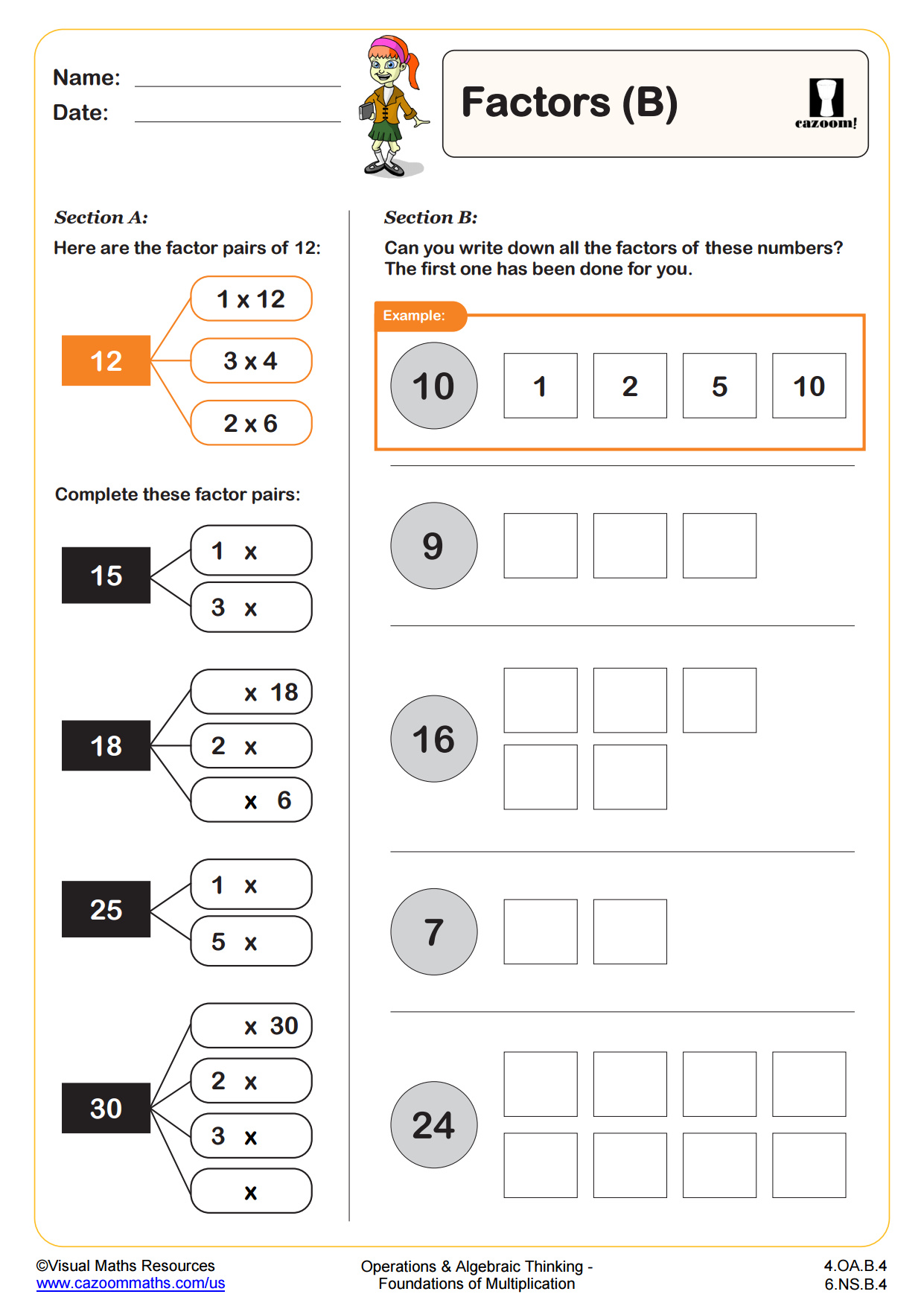
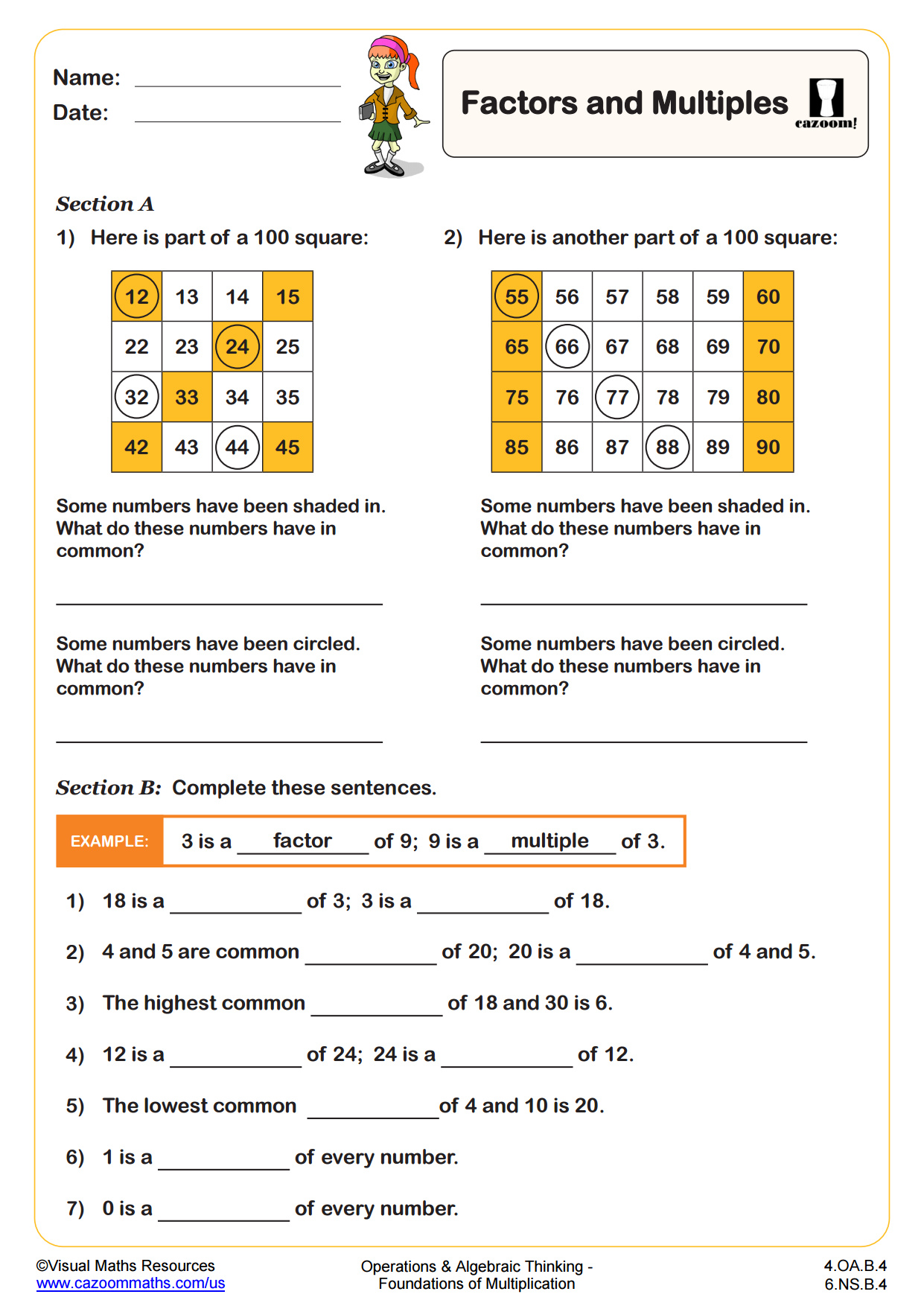
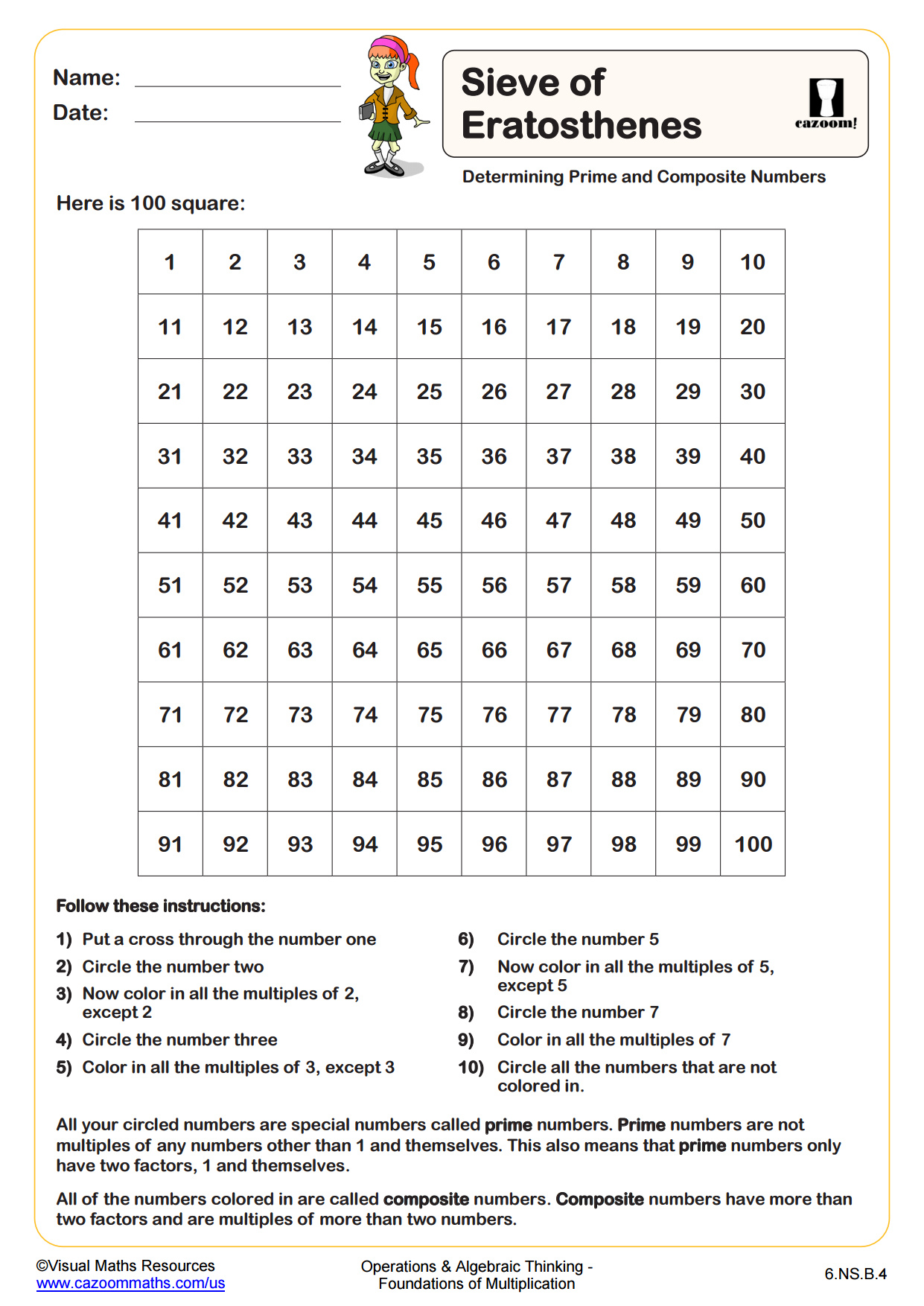
All worksheets are created by the team of experienced teachers at Cazoom Math.
What Are the Foundations of Multiplication and Why Do 6th Graders Need Them?
The foundations of multiplication encompass understanding factors, multiples, factor pairs, and fluency with multiplication tables. While 6th graders learned basic multiplication in elementary school, middle school mathematics requires deeper conceptual understanding of how numbers decompose and relate multiplicatively. This foundation becomes critical when students work with fractions, ratios, expressions, and equations throughout 6th grade and beyond.
Students often struggle when they memorized multiplication facts without developing number sense about factors. Teachers frequently notice that students can recite "6 times 8 equals 48" but fail to recognize that 6 and 8 are factors of 48 when solving problems. These worksheets bridge that gap by connecting procedural fluency with conceptual understanding, helping students recognize multiplication relationships in multiple contexts rather than treating each problem type as an isolated skill.
Which Grade Levels Use Foundations of Multiplication Worksheets?
These worksheets target 6th grade students in middle school who need to solidify their multiplication foundations before tackling more advanced topics. While basic multiplication is introduced in elementary grades, 6th grade Common Core standards expect students to apply this knowledge to rational numbers, expressions, and multi-step problems where weak multiplication skills become barriers to success.
The progression within 6th grade moves from reviewing factor identification and multiplication tables through more sophisticated applications like finding all factor pairs efficiently and understanding the relationship between factors and multiples. Students who master these foundations enter pre-algebra with the number sense needed for factoring expressions, simplifying fractions, and solving equations. Teachers notice that time invested in strengthening these basics prevents ongoing struggles throughout middle and high school mathematics.
How Do Factor Pairs Support Mathematical Thinking?
Factor pairs are two numbers that multiply together to produce a given number, such as 4 and 9 being a factor pair of 36. Understanding factor pairs develops students' ability to decompose numbers strategically, which becomes foundational for algebraic thinking. Rather than listing factors randomly, recognizing pairs helps students organize their thinking and ensures they find all factors systematically by checking divisibility up to the square root.
This skill connects directly to real-world applications in architecture and design, where professionals must determine possible dimensions for spaces with specific areas. For example, designing a 72-square-foot room requires identifying factor pairs of 72 to determine feasible length-width combinations. Engineers similarly use factor pair thinking when designing rectangular arrays for solar panels, garden plots, or manufacturing layouts where area constraints require determining all possible configurations that meet spatial requirements.
How Can Teachers Use These Multiplication Worksheets Effectively?
The worksheets provide structured practice with varied problem formats, allowing teachers to assess whether students truly understand multiplication concepts or simply memorized procedures. The included answer keys enable efficient grading and help teachers identify specific misconceptions, such as confusing factors with multiples or missing factor pairs. The variety across subtopics means teachers can select worksheets that target precise skill gaps revealed through formative assessment or classwork.
Many teachers use these worksheets for differentiated instruction, assigning multiplication table review to students who need fluency practice while giving factor pair puzzles to students ready for challenge. The worksheets work well as warm-up activities to activate prior knowledge before fraction operations or as homework that reinforces classroom instruction without requiring parent expertise. During intervention periods, teachers often use specific subtopic worksheets to address individual student needs, working through problems alongside struggling learners before assigning independent practice.