6th Grade Frequency Polygons and Histograms Worksheets
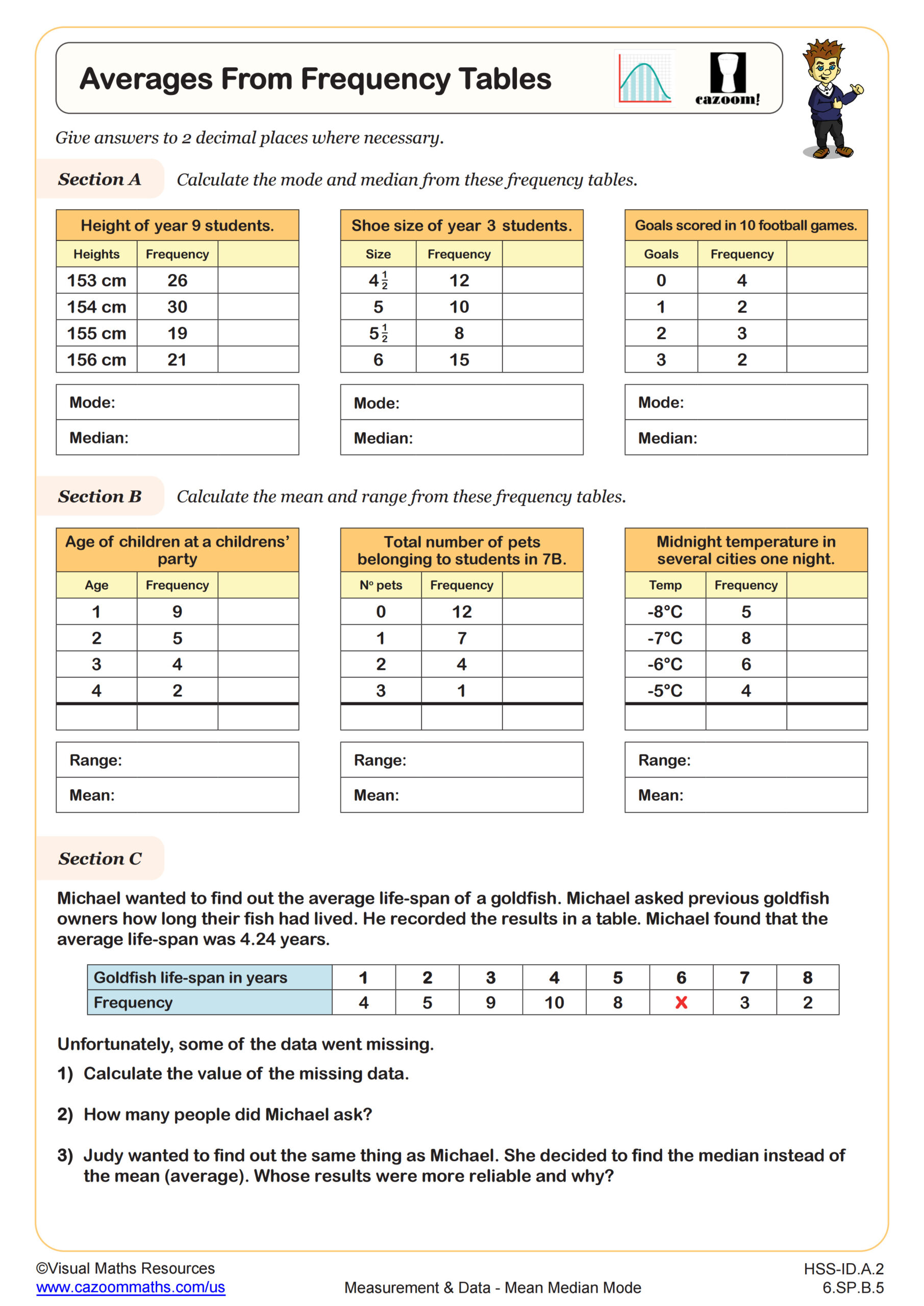
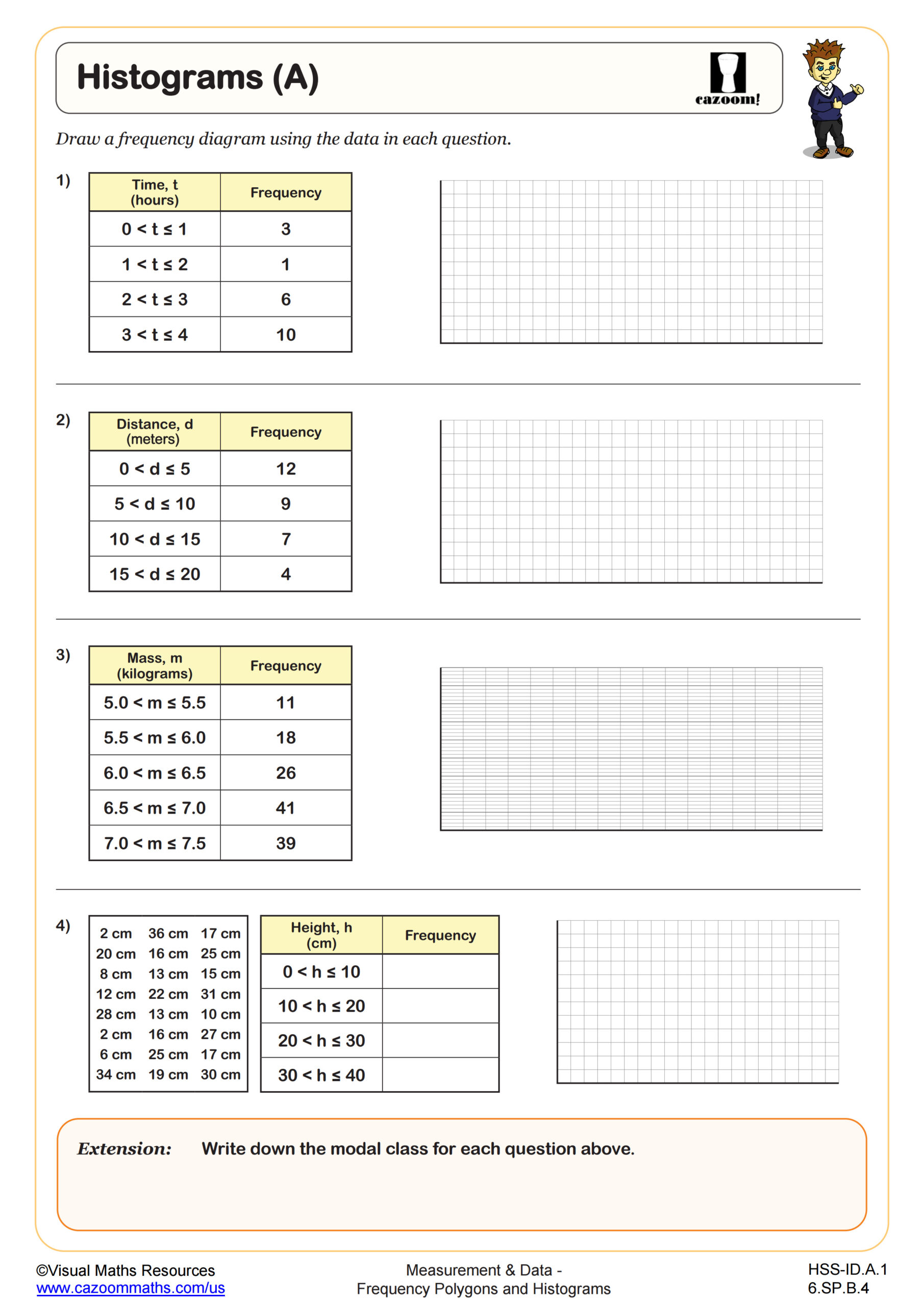
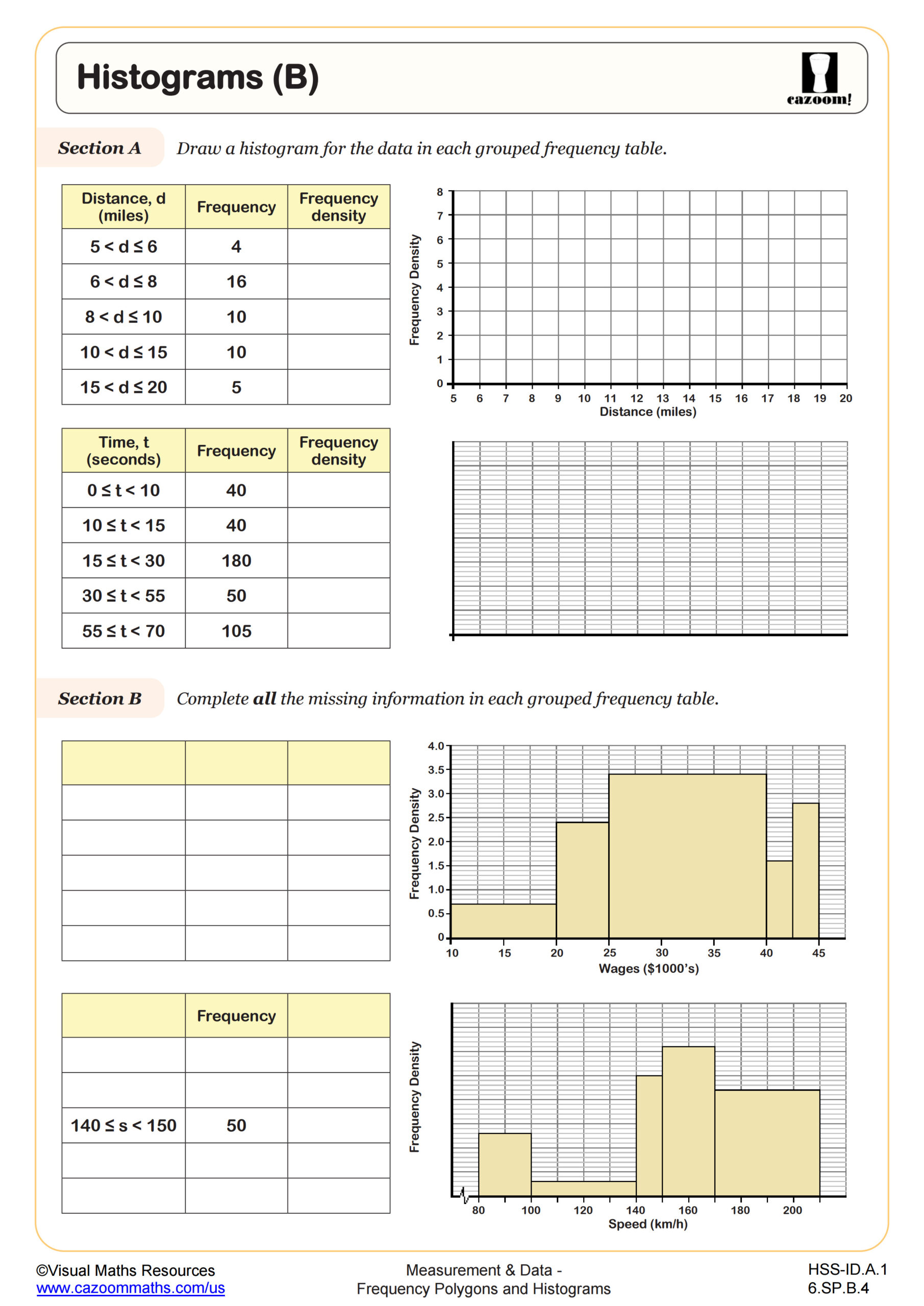
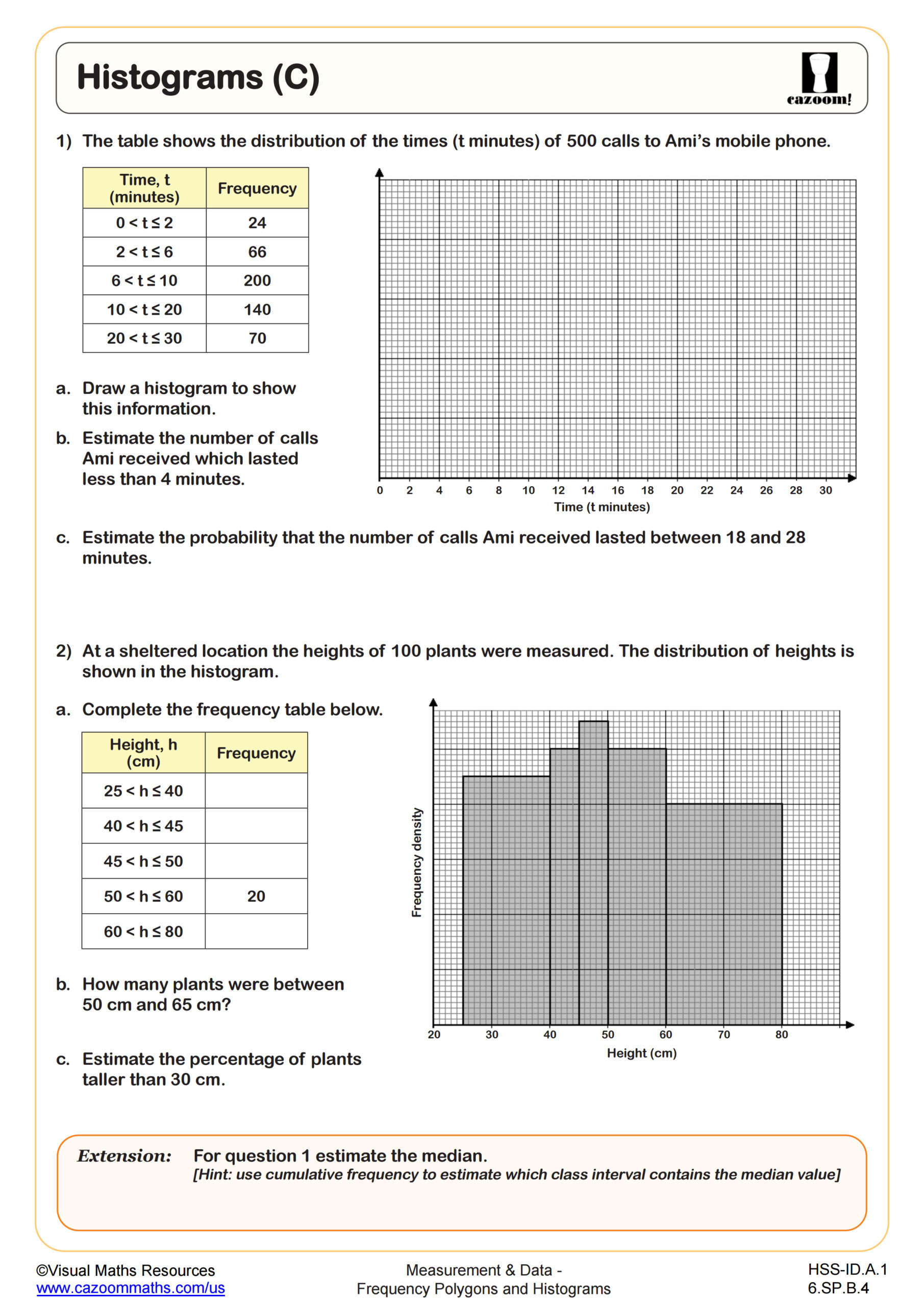
All worksheets are created by the team of experienced teachers at Cazoom Math.
What makes a histogram worksheet effective for 6th grade students?
An effective histogram worksheet for 6th grade balances skill-building with conceptual understanding, starting with simple frequency tables before progressing to graph construction and interpretation. These materials align with Common Core State Standards 6.SP.B.4, which requires students to display numerical data in plots and describe the shape and center of distributions.
Teachers find that the most successful histogram practice pdf materials include varied data sets from familiar contexts like test scores, heights, or sports statistics. Students often misunderstand that histogram bars represent ranges of values rather than individual data points, so worksheets that explicitly address this distinction through guided practice problems tend to produce better learning outcomes.
Why do 6th graders need histogram skills at this grade level?
Sixth grade represents the foundational year for data analysis in the Common Core progression, where students transition from simple data collection to sophisticated statistical reasoning. Histogram skills build directly on earlier work with dot plots and bar graphs while preparing students for more advanced statistics in grades 7 and 8.
The timing connects perfectly with students' cognitive development, as 6th graders can handle the abstract thinking required to group continuous data into intervals. Teachers observe that students who master histograms in 6th grade show greater confidence with probability distributions and sampling concepts in subsequent years, making this skill set crucial for long-term mathematical success.
How do interpreting histograms worksheet activities support data literacy?
Interpreting histograms worksheet activities teach students to read statistical stories from visual data, a skill increasingly vital in our data-driven society. Students learn to identify patterns like skewness, outliers, and central tendencies while making evidence-based conclusions about populations and samples.
Classroom experience shows that students initially focus only on individual bars rather than overall distribution shapes. Effective worksheets guide students through systematic interpretation steps: describing the shape, identifying the center, noting spread, and recognizing any unusual features. This structured approach helps students develop the analytical thinking needed for advanced STEM coursework and informed citizenship in an age of big data.
What teaching strategies work best with 6th grade histogram worksheet activities?
Teachers achieve the best results when they introduce histograms through collaborative data collection before moving to worksheet practice. Having students gather classroom data about heights, shoe sizes, or study hours creates investment in the graphing process and makes abstract concepts concrete.
Many educators find success using a gradual release model where they complete one histogram worksheet problem together as a class, then have students work in pairs before attempting individual practice. The answer keys become particularly valuable during peer checking sessions, where students can identify and discuss common errors like incorrect scaling or misaligned bins before misconceptions become entrenched.