6th Grade Multiplication Worksheets
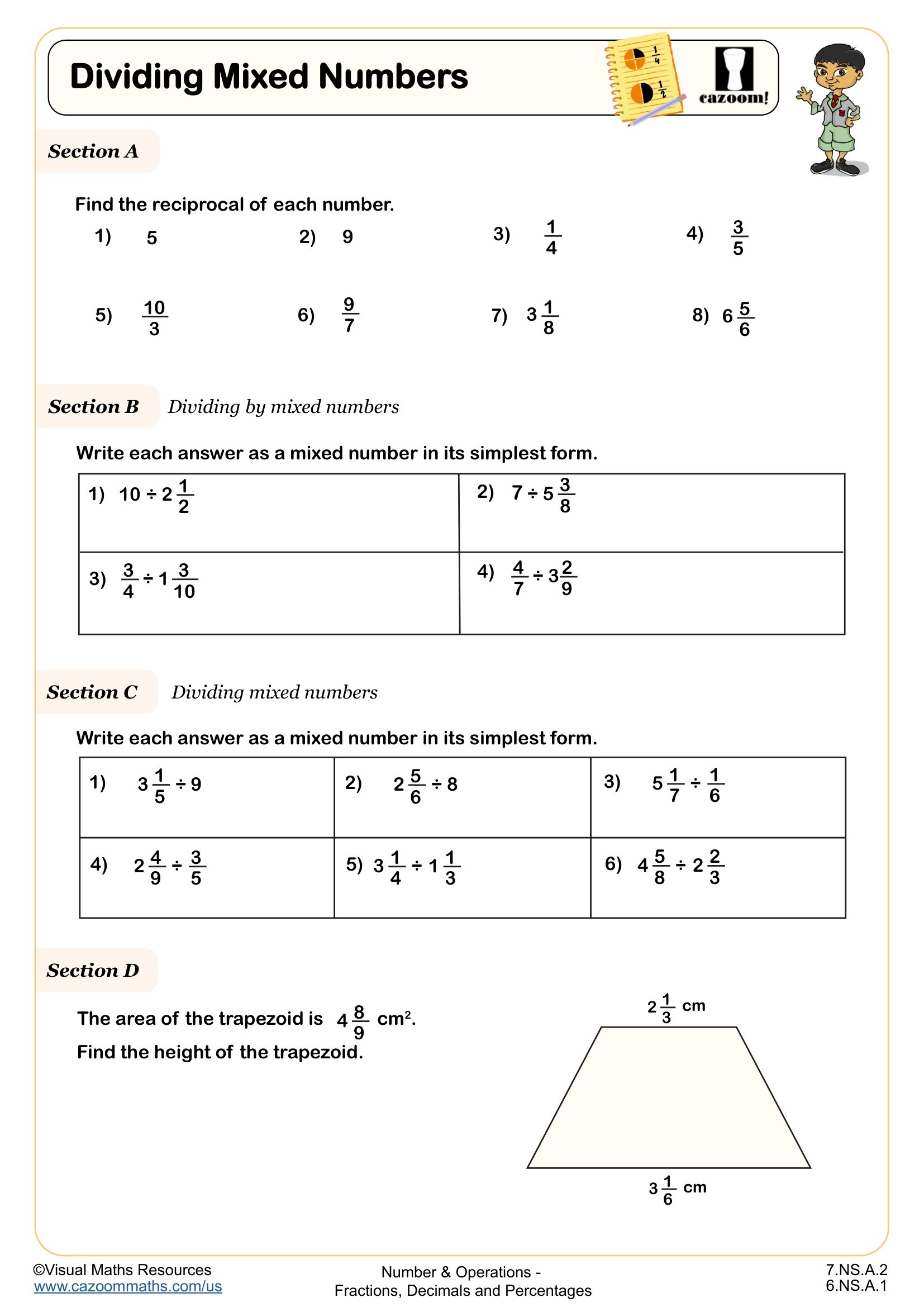
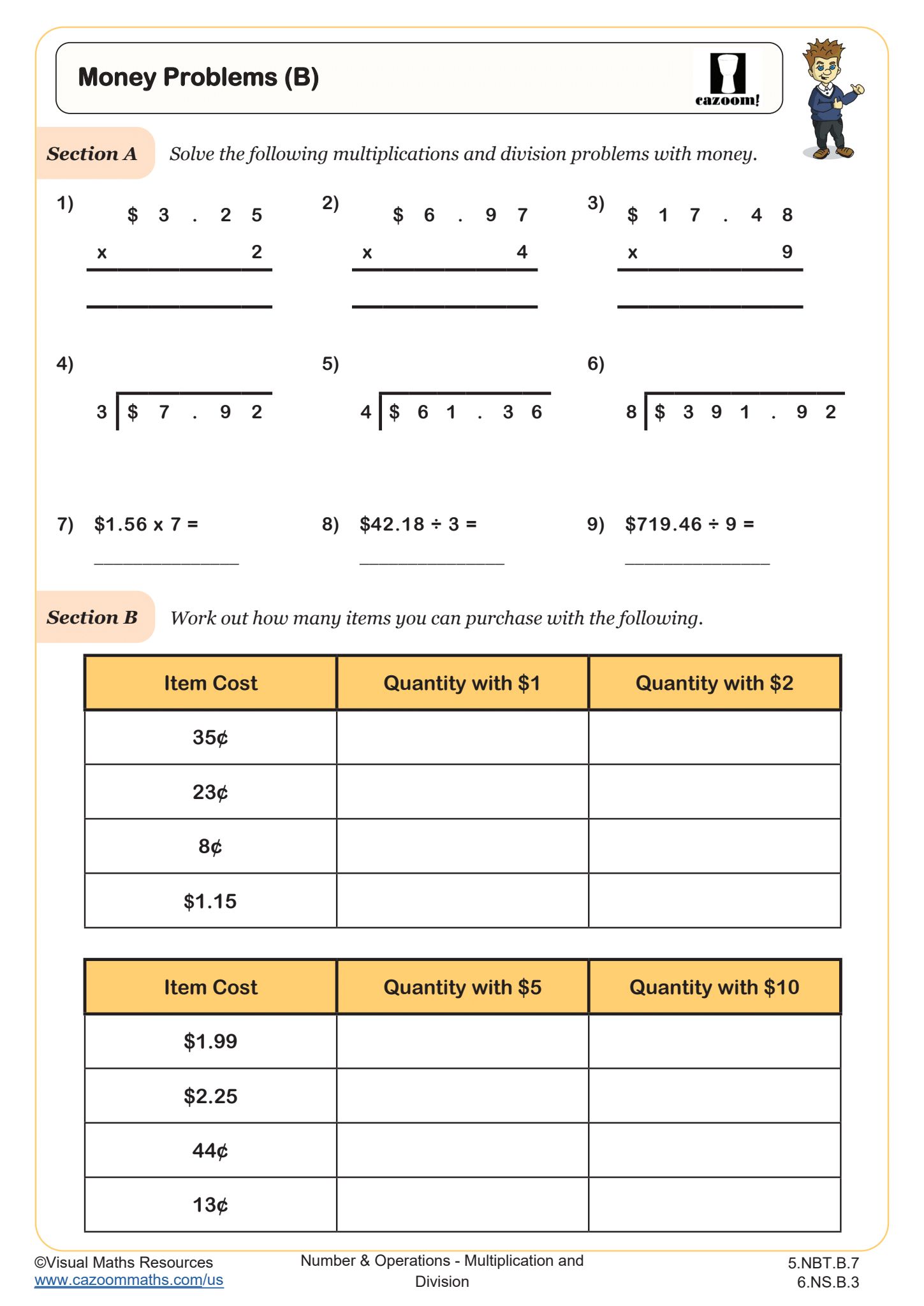
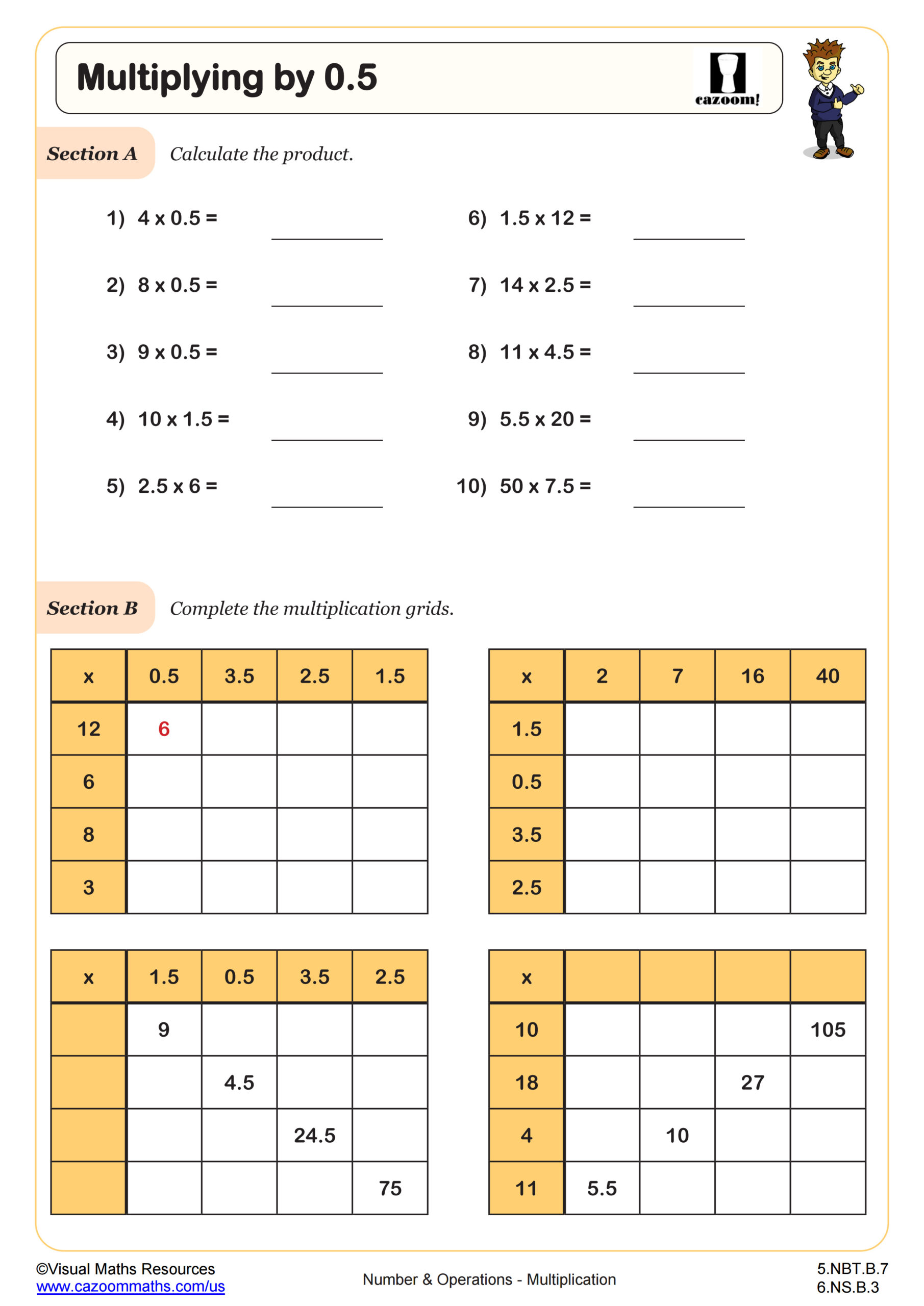
All worksheets are created by the team of experienced teachers at Cazoom Math.
What multiplication skills should 6th graders master?
Sixth graders should demonstrate fluency with the standard multiplication algorithm for multi-digit whole numbers and develop strategies for multiplying decimals and fractions. According to Common Core State Standards (6.NS.B.3), students at this level need to compute fluently with multi-digit numbers using the standard algorithm, building on the conceptual understanding developed in earlier grades. This includes multiplying numbers up to four digits by two digits and understanding why the algorithm works based on place value and the distributive property.
Students lose points on state assessments when they misalign partial products in long multiplication or forget to add placeholder zeros. A common error occurs when multiplying by the tens digit—students correctly calculate 3 × 24 but then write the result directly below instead of shifting one place left. Teachers frequently notice that students who struggle with this concept benefit from grid-based visual models that explicitly show each place value interaction before transitioning to the condensed standard algorithm format.
Which grade levels use these multiplication worksheets?
These worksheets target 6th grade students in middle school, focusing on consolidating multiplication fluency and extending skills to more complex numerical operations. At this stage, students transition from learning basic multiplication facts and algorithms to applying these skills in algebraic contexts, fraction operations, and real-world problem solving. The emphasis shifts from "how to multiply" to "when to multiply" and recognizing multiplication within multi-step problems.
The difficulty progression within 6th grade materials moves from reinforcing basic fact fluency through multiplication grids to executing the standard algorithm with larger numbers, then applying strategic thinking in magic squares and grid puzzles. Students who enter 6th grade with weak multiplication facts often struggle with fraction multiplication and algebraic expressions later in the year. Teachers find that diagnostic use of blank multiplication grids at the beginning of the year quickly identifies students who need intervention with basic facts before tackling more complex applications.
How do magic squares develop mathematical reasoning?
Magic squares require students to arrange numbers so that each row, column, and diagonal produces the same sum or product, creating a puzzle that combines multiplication fluency with logical reasoning. Unlike standard computation worksheets, magic squares demand strategic thinking—students must work backward from the target value, consider multiple constraints simultaneously, and test different number placements. This develops problem-solving skills beyond rote calculation, encouraging students to look for patterns, make predictions, and self-correct when their approach doesn't work.
This type of numerical reasoning appears throughout STEM fields, particularly in computer science algorithms and data structure optimization. Software engineers use similar constraint-based thinking when writing code that must satisfy multiple conditions simultaneously. In data analysis, professionals arrange and manipulate numerical arrays to reveal patterns, much like students do when solving multiplication-based magic squares. Students who excel at these puzzles often show stronger performance in algebra, where equation-solving requires similar backwards reasoning and constraint management.
How should teachers use these multiplication worksheets?
The worksheets provide scaffolded practice that moves from foundational fact fluency to complex algorithm application, allowing teachers to differentiate based on student readiness. Multiplication grids serve as diagnostic tools or warm-up activities, long multiplication worksheets build procedural fluency with the standard algorithm, and magic squares offer enrichment for students who need cognitive challenge beyond repetitive computation. The variety of formats prevents practice fatigue while addressing different aspects of multiplicative thinking—automaticity, procedure, and strategy.
Many teachers use these materials for tiered intervention, assigning basic grids to students who need fact practice while challenging advanced learners with magic squares during the same class period. The complete answer keys enable self-checking during independent work or math centers, freeing teachers to provide targeted small-group instruction. Homework assignments benefit from the mix of computational practice and puzzle-based problems, which maintains student engagement better than worksheets containing only standard calculations. Paired work on blank multiplication grids creates productive peer discussion about fact strategies and mental math techniques.