6th Grade Proportion Worksheets
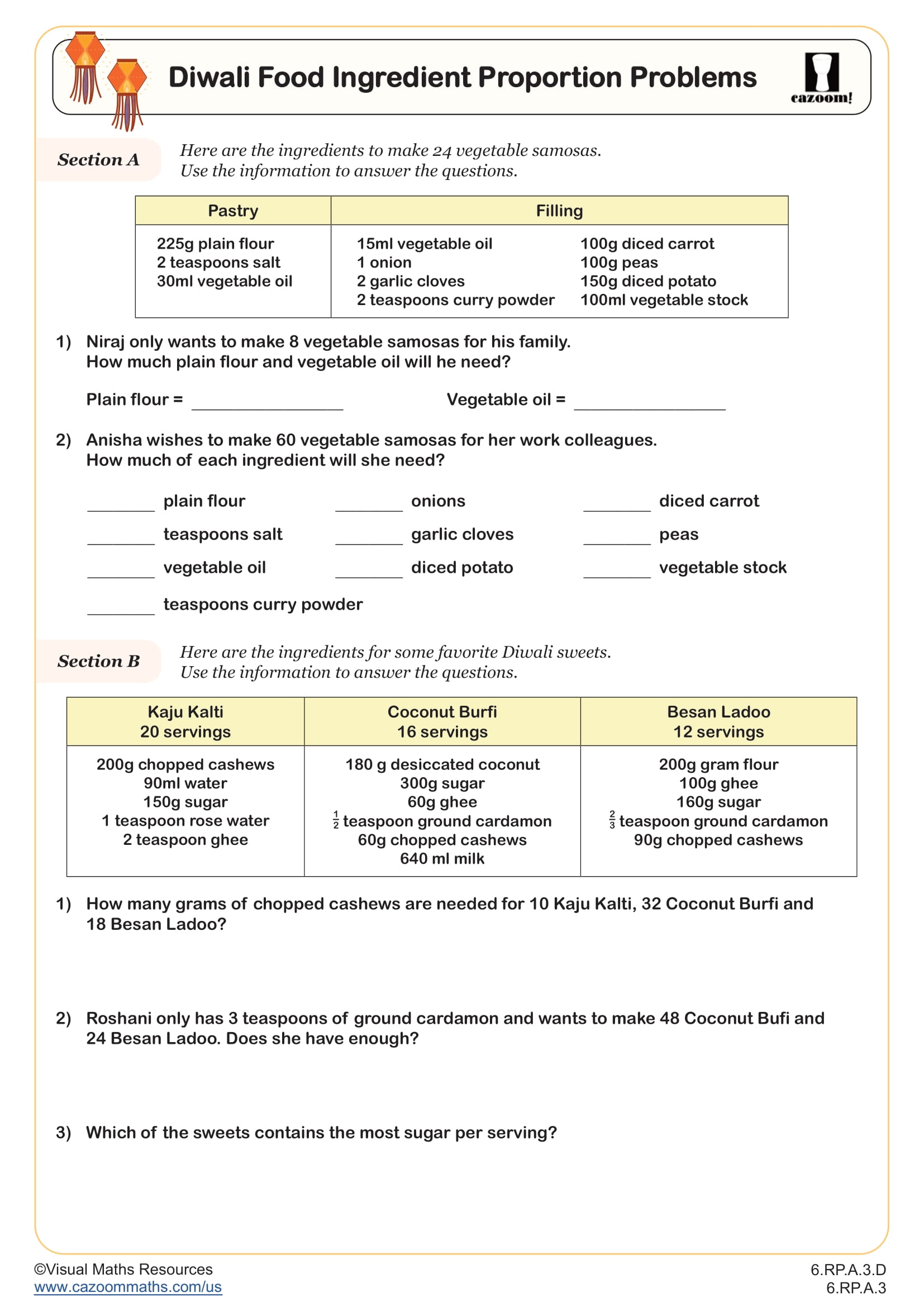
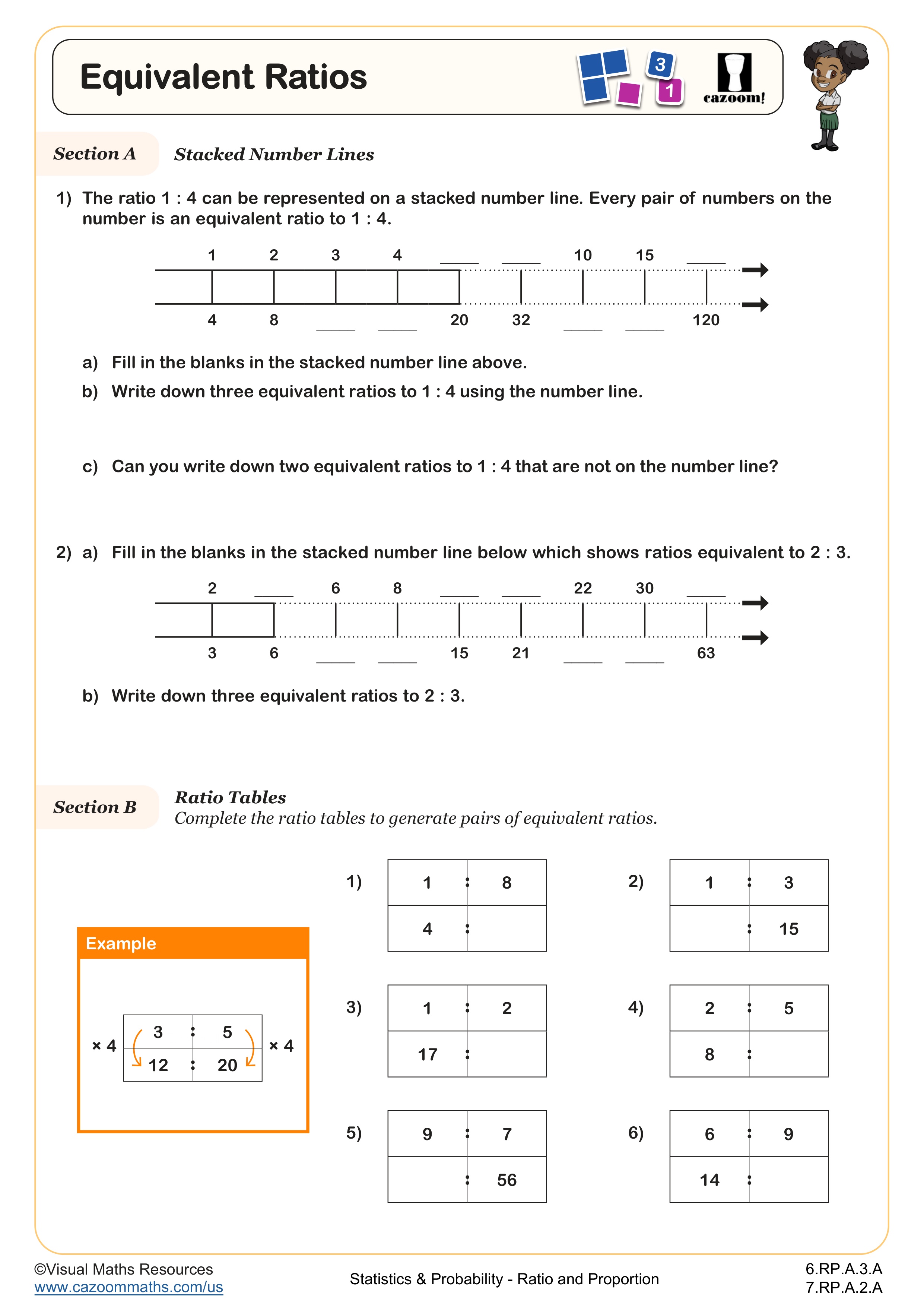
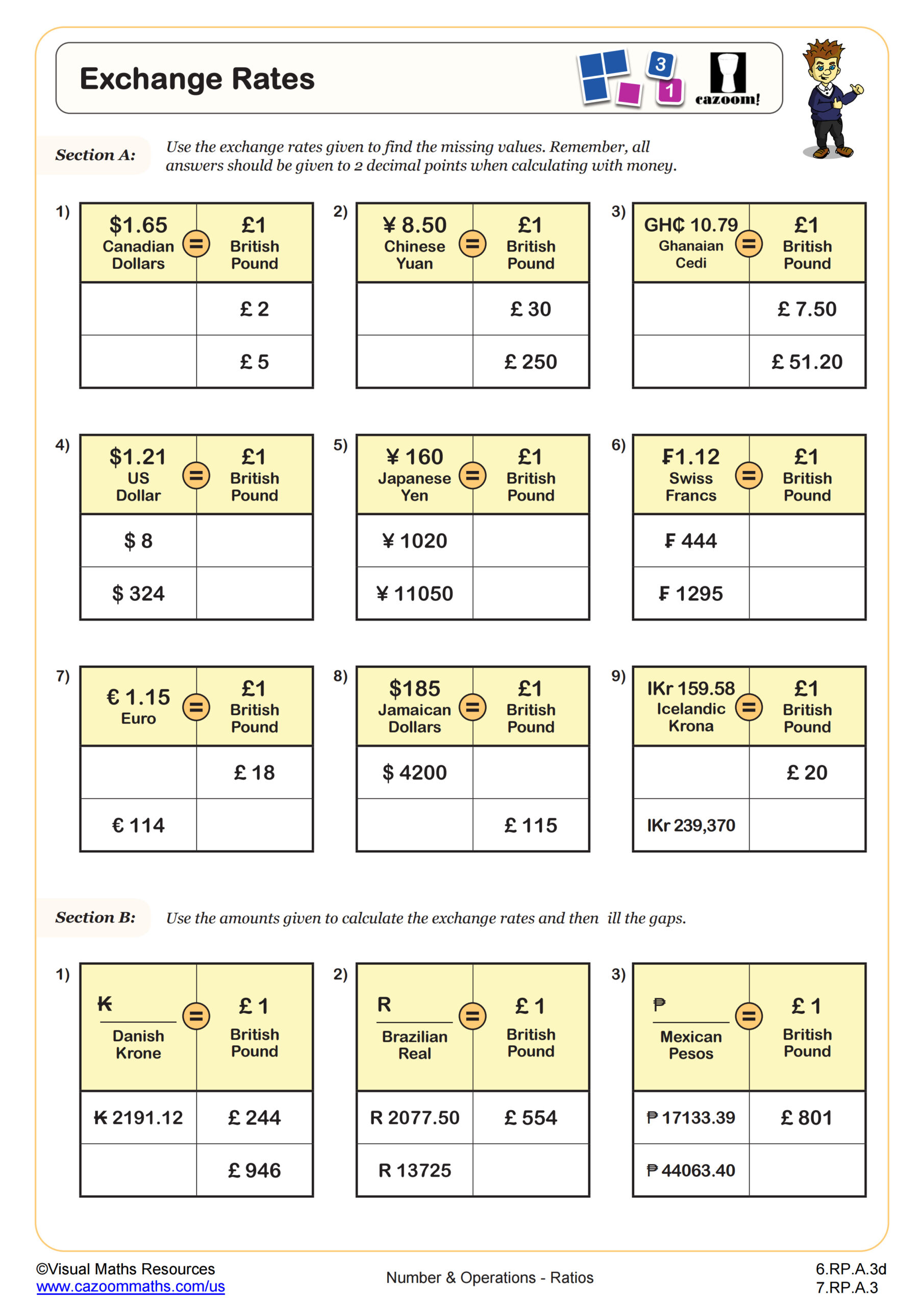
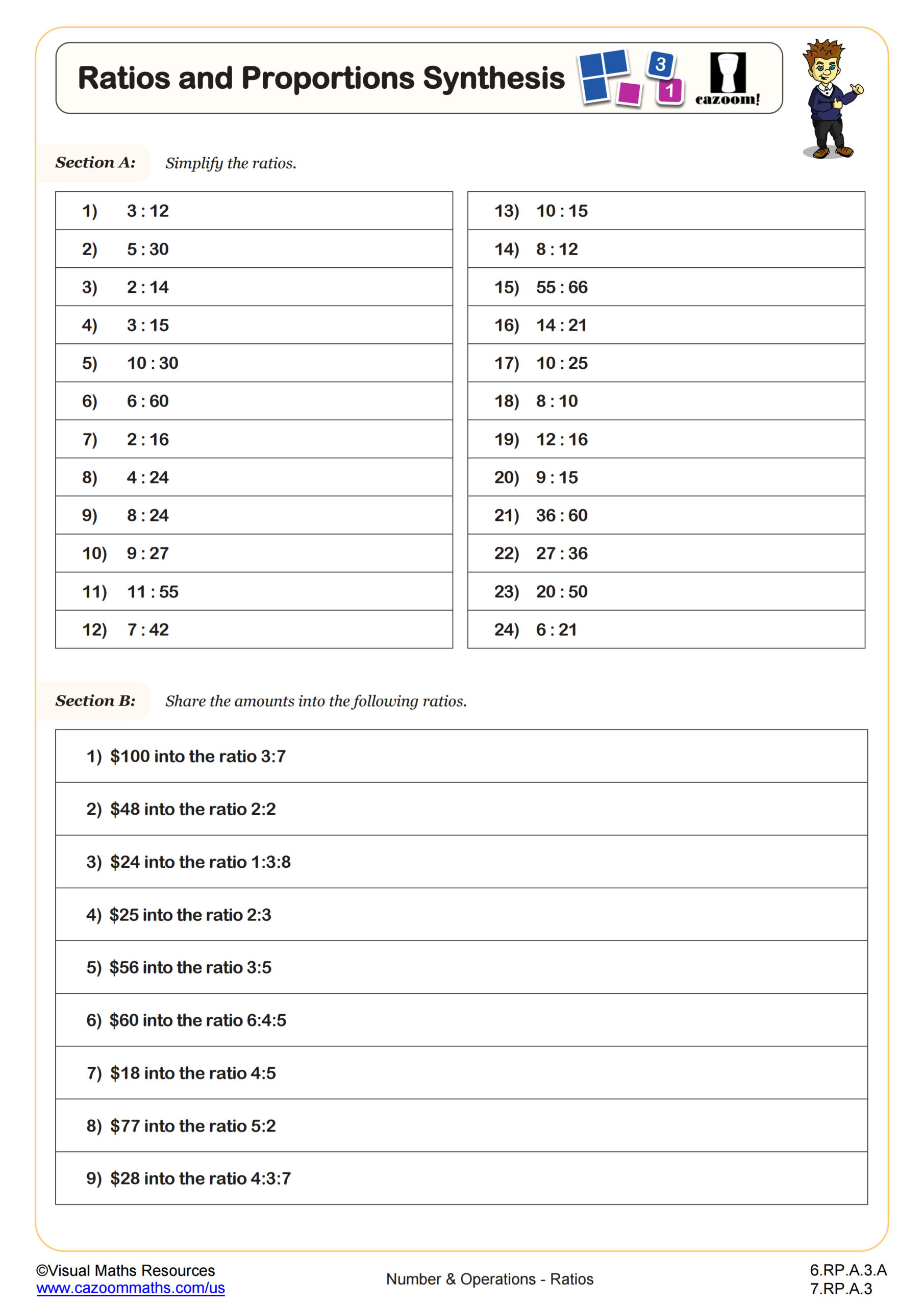
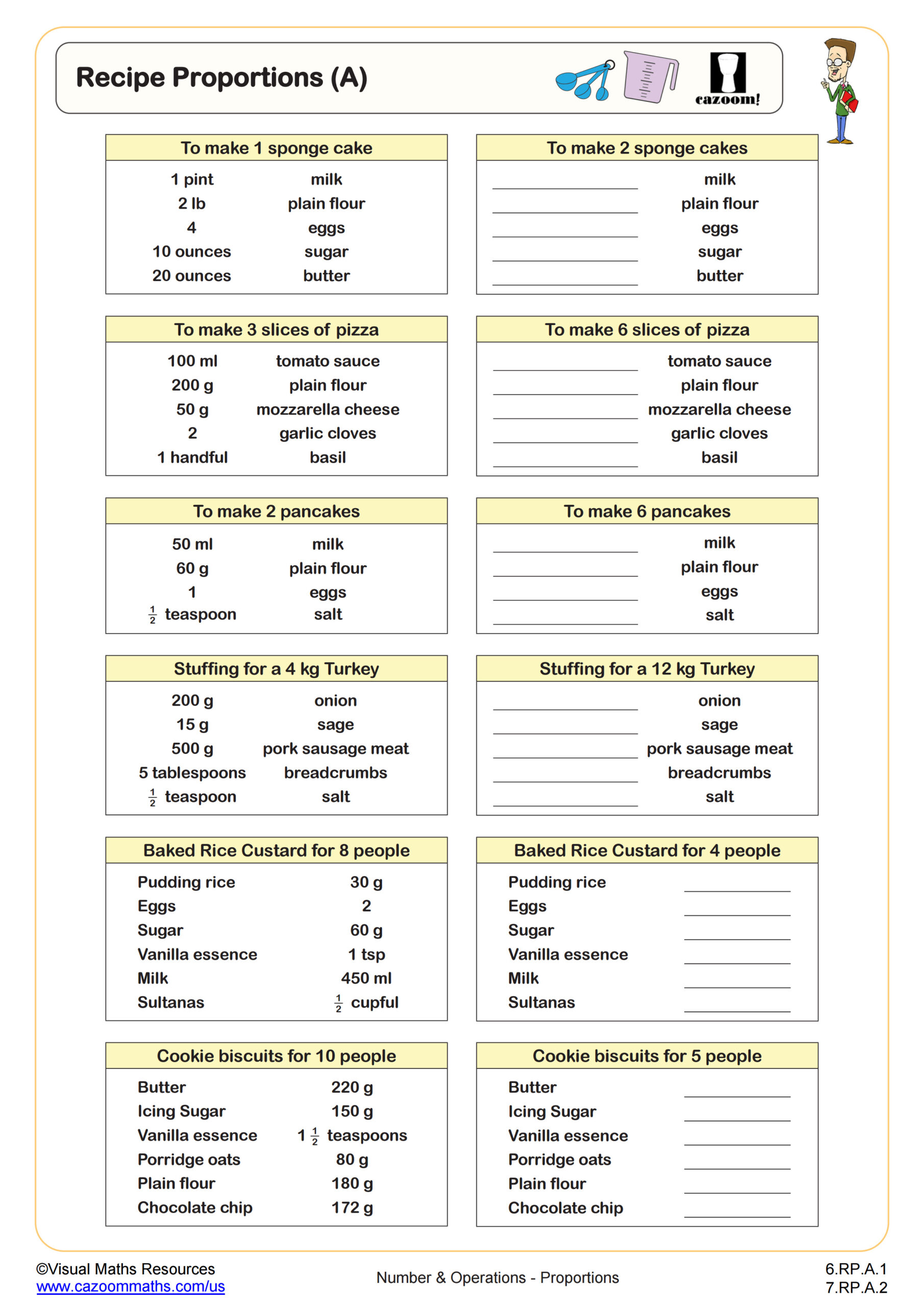
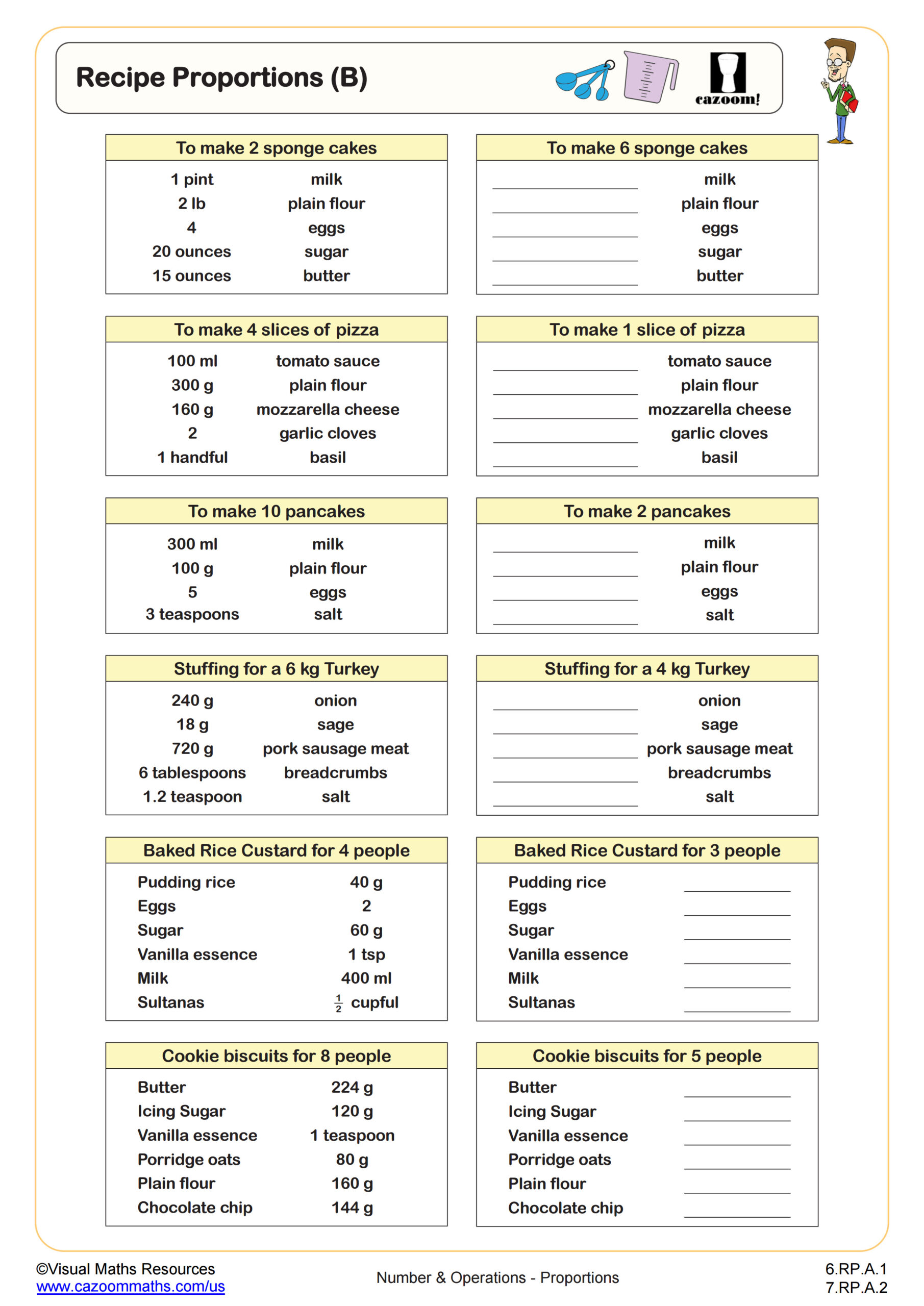
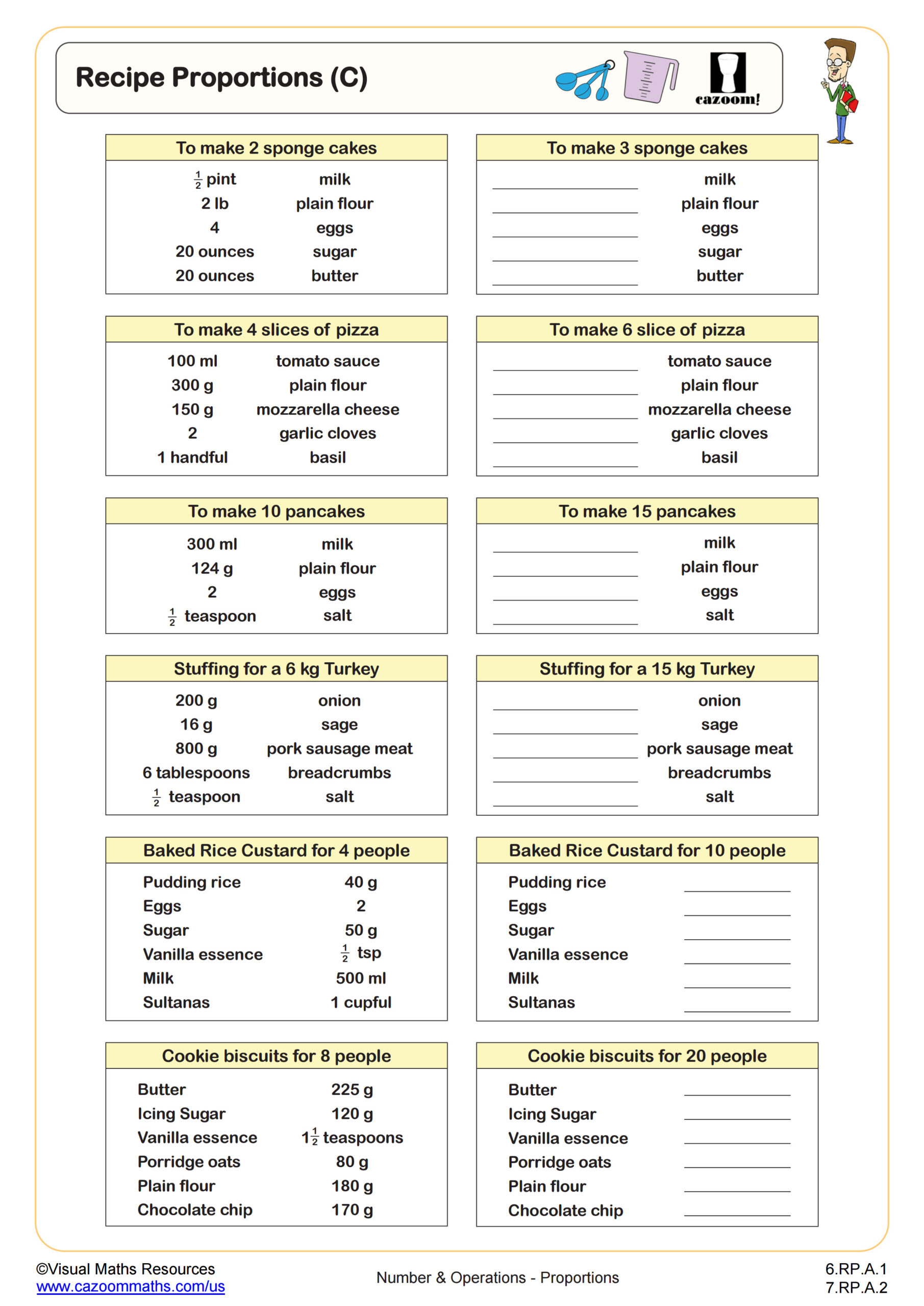
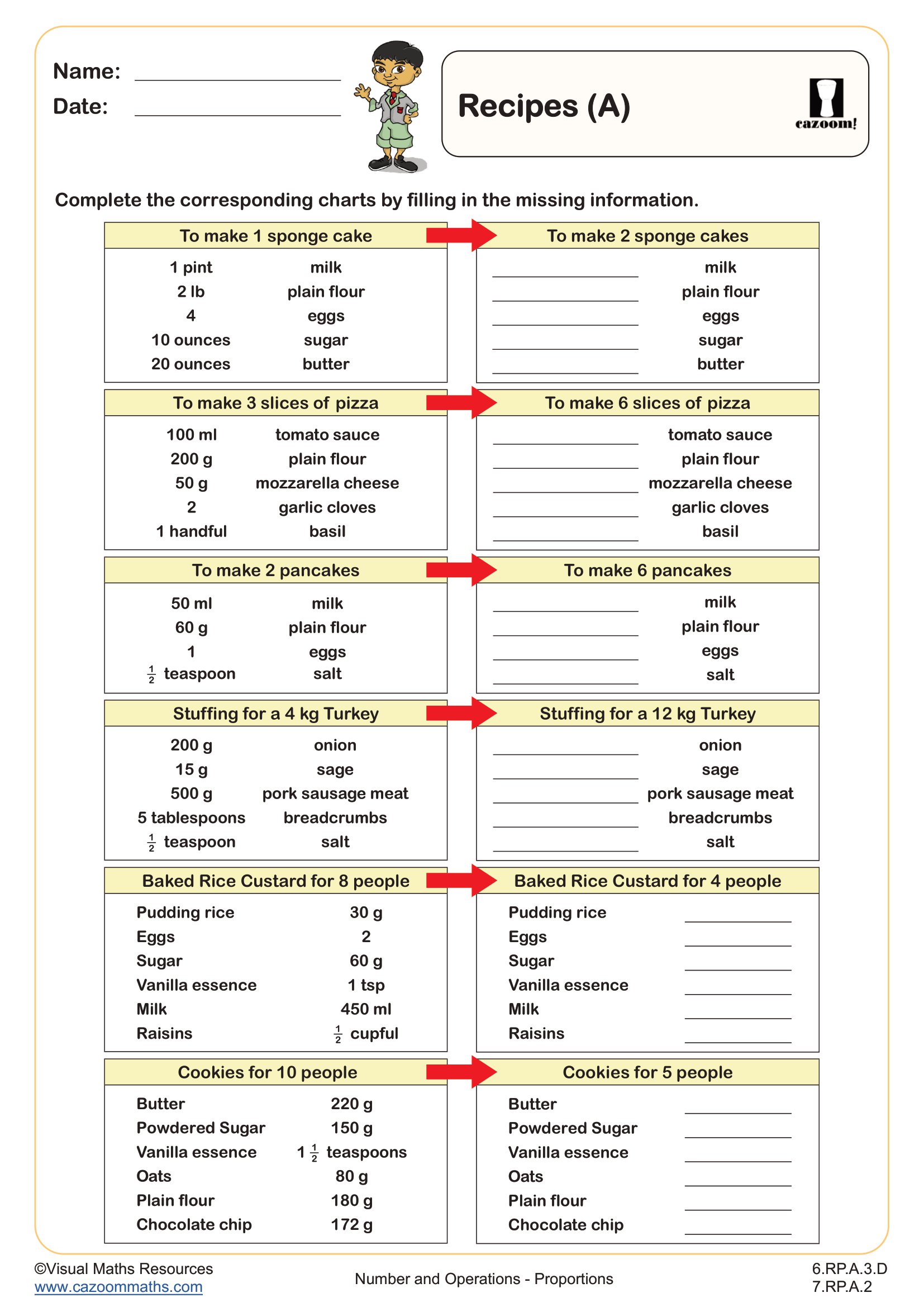
All worksheets are created by the team of experienced teachers at Cazoom Math.
What topics are covered in a proportions worksheet 6th grade level?
A proportions worksheet 6th grade typically covers solving proportions using cross-multiplication, finding missing values in equivalent ratios, unit rates, and proportional relationships in tables and graphs. According to Common Core Standard 6.RP.A.3, students should solve real-world problems involving ratios and rates, making these worksheets aligned with curriculum expectations.
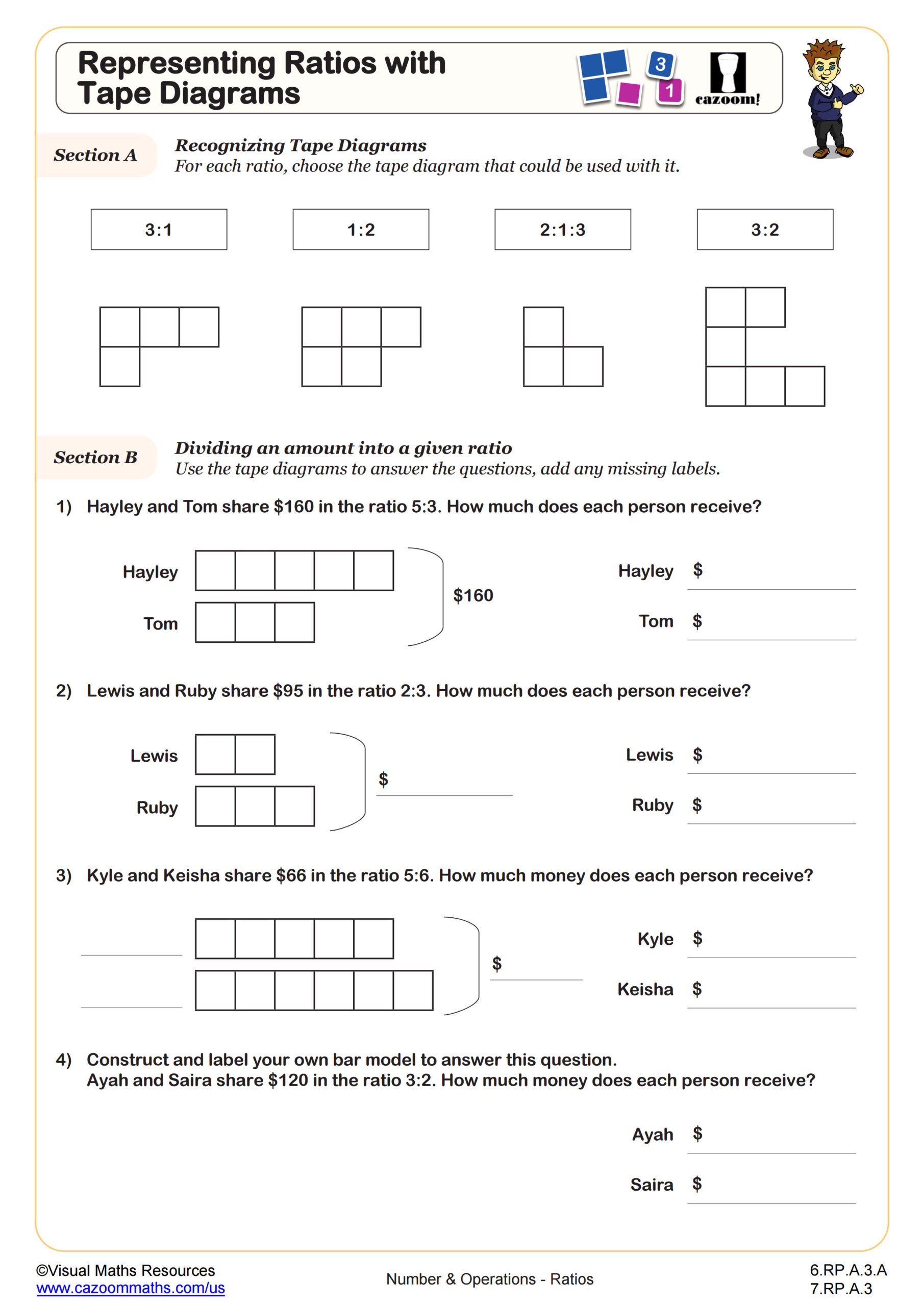
Teachers frequently observe that students mix up cross-multiplication steps, multiplying across the wrong diagonal or forgetting to divide by the remaining number. The most effective worksheets include visual models like ratio tables and diagrams to help students understand the relationship between quantities before moving to abstract cross-multiplication algorithms.
Are 6th grade proportions suitable for students at different skill levels?
Sixth grade proportions worksheets work well for most middle school students, though teachers often differentiate based on individual readiness. Advanced 5th graders who have mastered basic ratios can handle introductory proportion problems, while some 7th graders benefit from reviewing these concepts before tackling more complex proportional relationships.
Classroom experience shows that students who struggle with fractions need extra support with proportions since cross-multiplication involves fraction operations. Teachers find success by starting these students with simple whole number proportions before introducing problems with decimals or mixed numbers, allowing gradual skill building.
How do students learn to set up proportions correctly?
Students learn to set up proportions by identifying corresponding parts and maintaining consistent units across ratios. The key teaching strategy involves helping students recognize what quantities are being compared and ensuring the same units appear in corresponding positions on both sides of the equation.
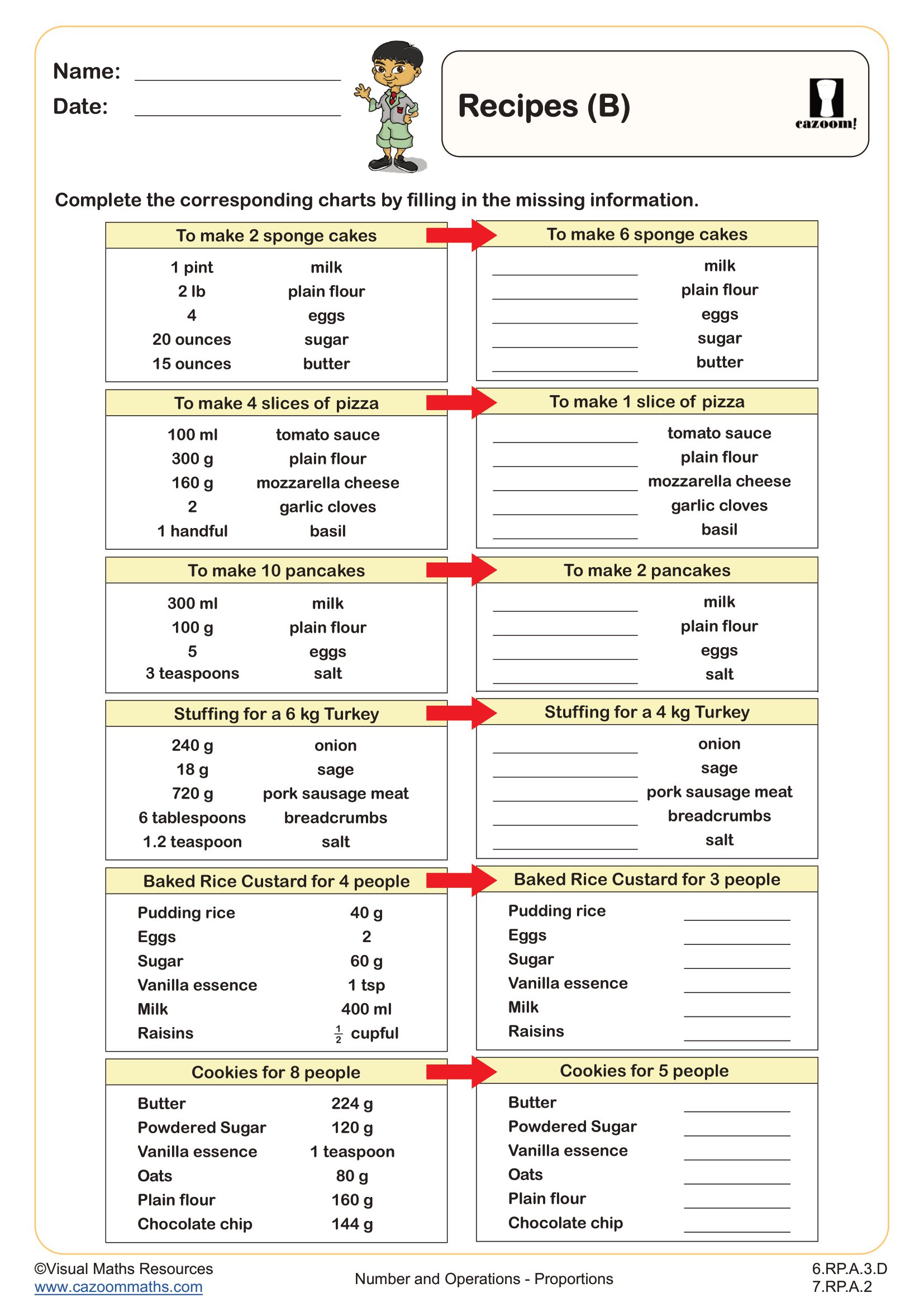
Many teachers notice students randomly place numbers without considering relationships, leading to incorrect setups like comparing apples to oranges. Successful proportion worksheets include problems where students must first identify what goes together before solving, such as matching "3 cups flour to 2 cups sugar" with "6 cups flour to how many cups sugar" rather than mixing up ingredients.
How can teachers use these worksheets most effectively in class?
Teachers get the best results when they use proportions worksheets as guided practice after demonstrating setup strategies, rather than assigning them as independent work immediately. The answer keys allow teachers to quickly identify common errors and address misconceptions during class review sessions.
Classroom management improves when teachers have students work through the first few problems together, discussing their reasoning for how they set up each proportion. This collaborative approach helps students catch setup errors early and builds confidence before independent practice, leading to better performance on assessments.