6th Grade Ratio Worksheets
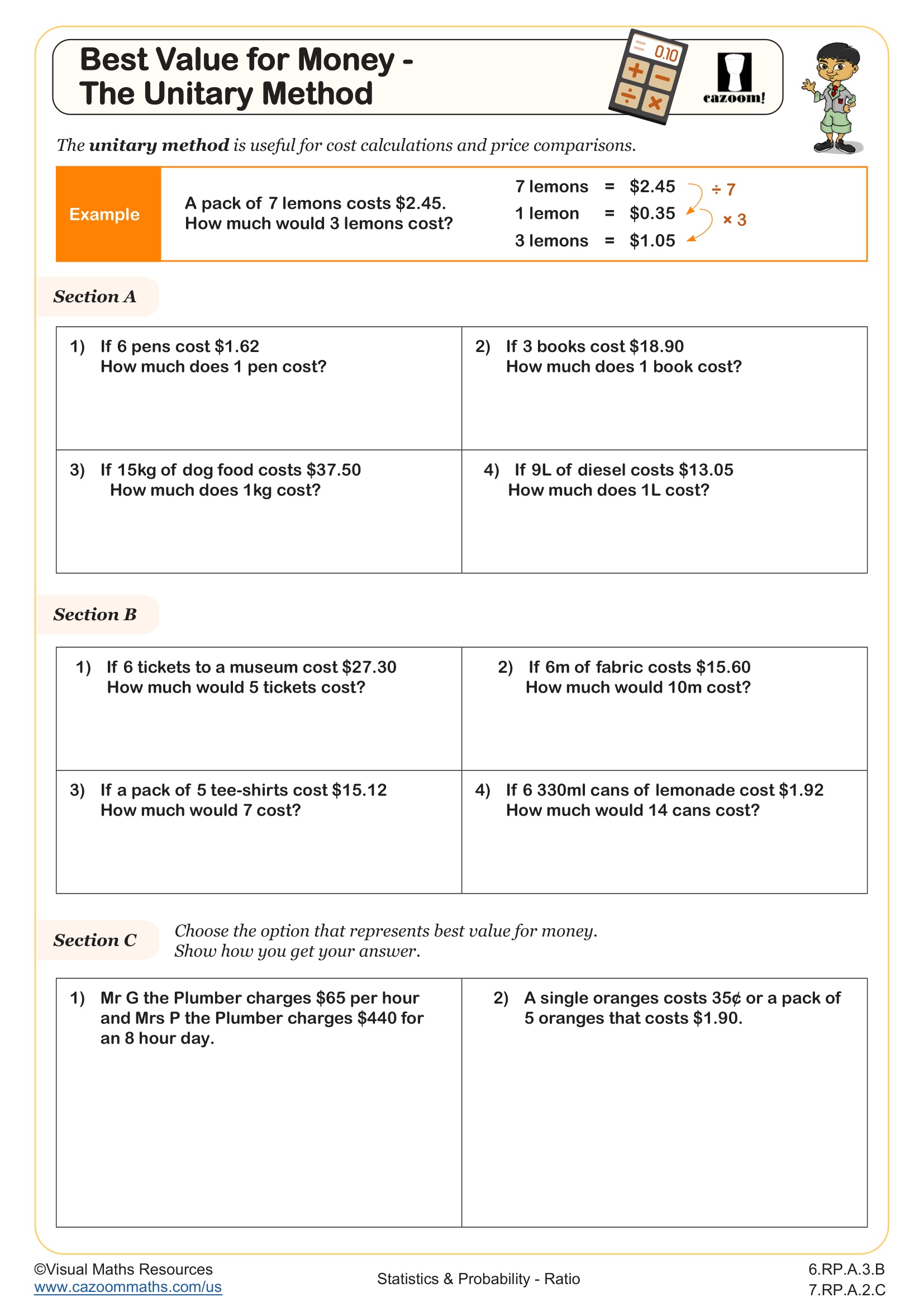
Best Value for Money - the Unitary Method
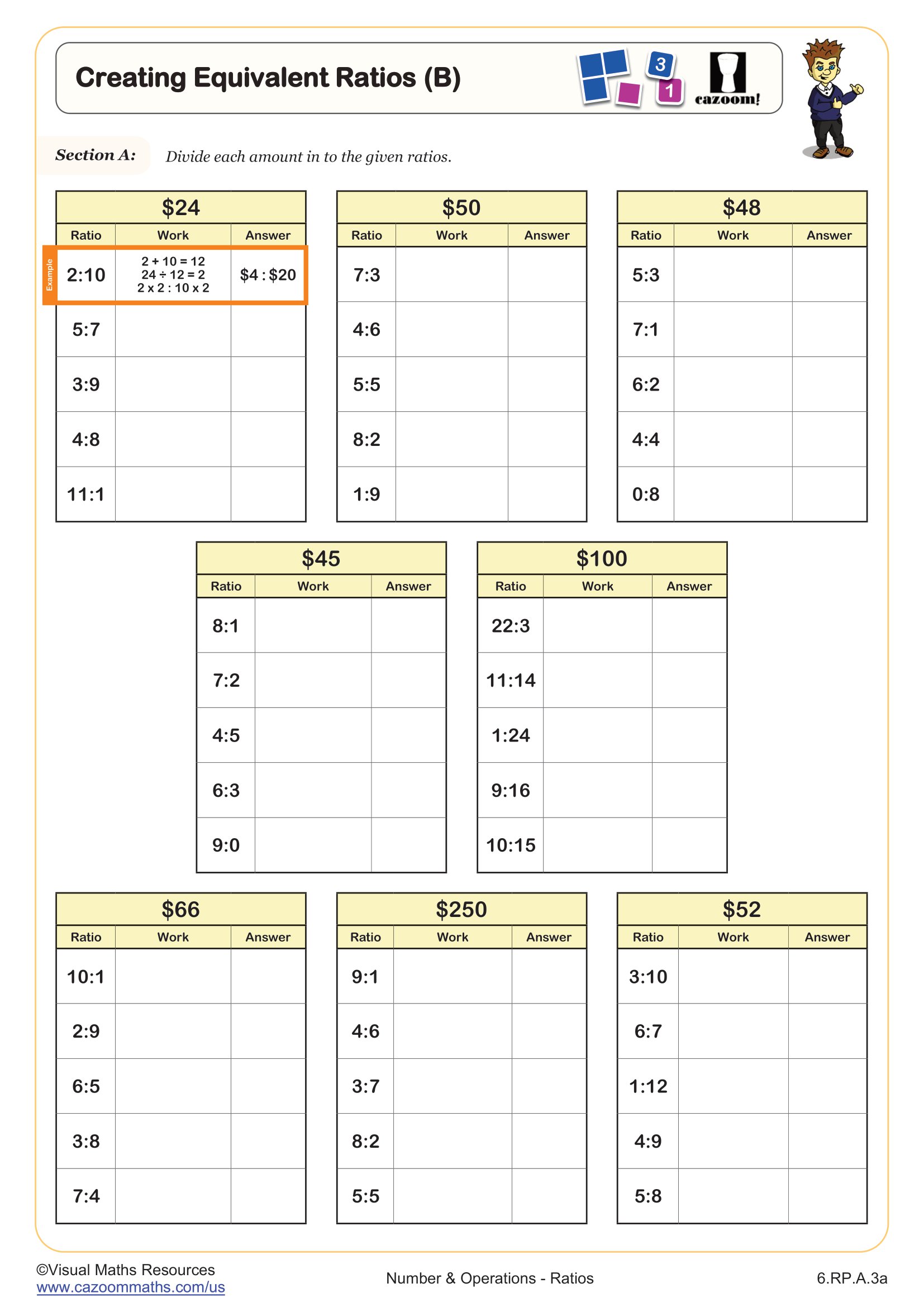
Creating Equivalent Ratios (B)
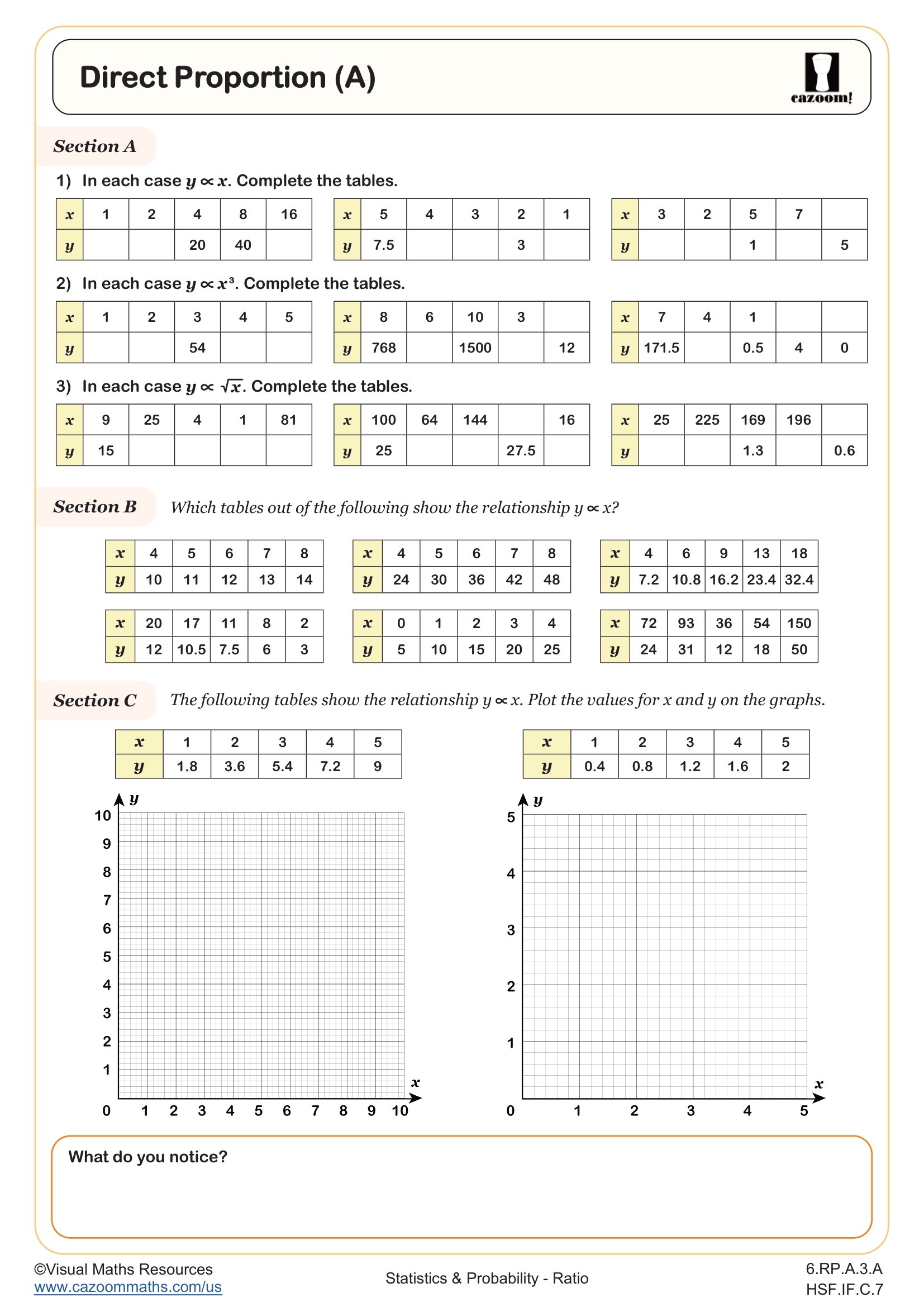
Direct Proportion (A)
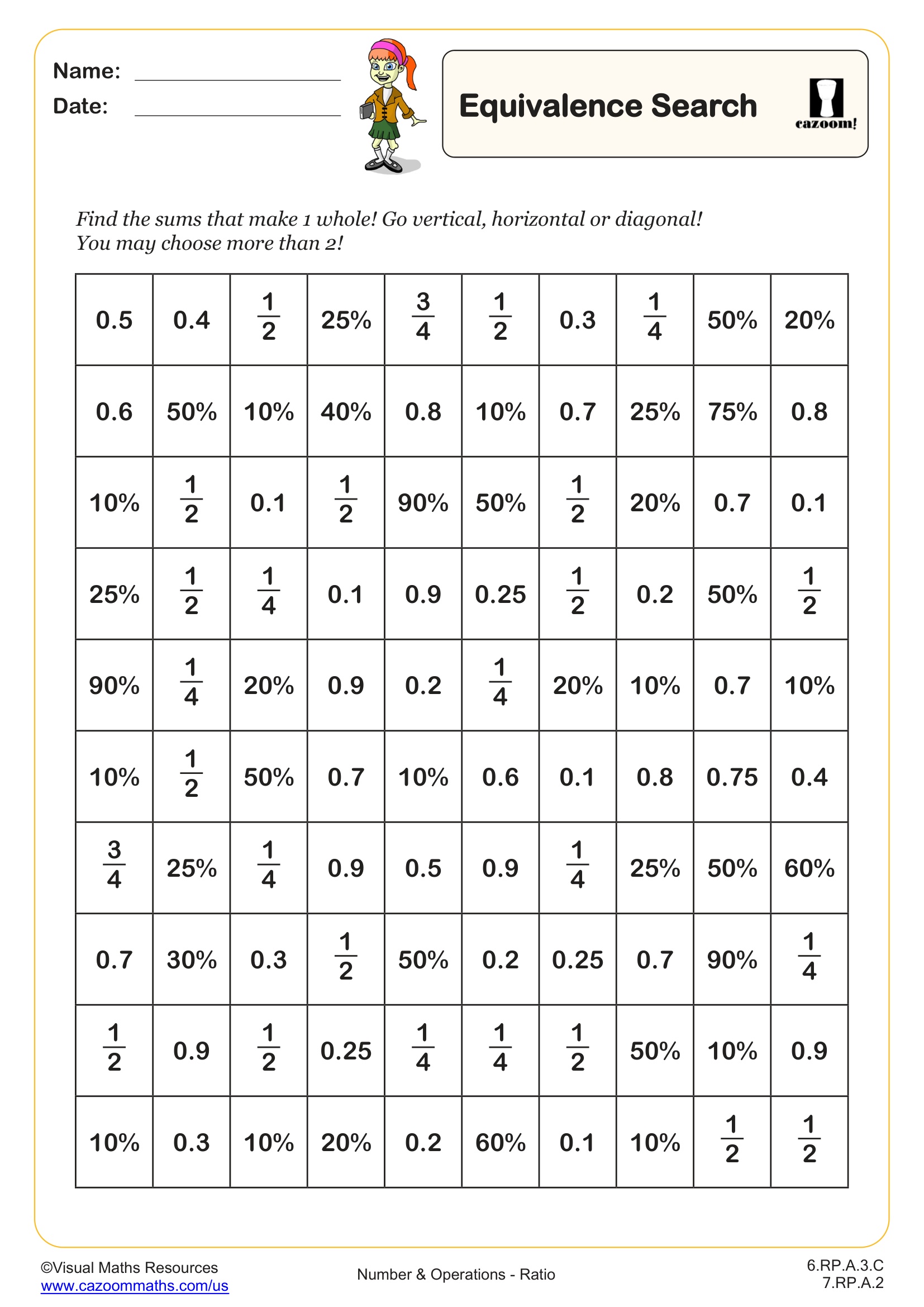
Equivalence Search (A)
Equivalent Ratios
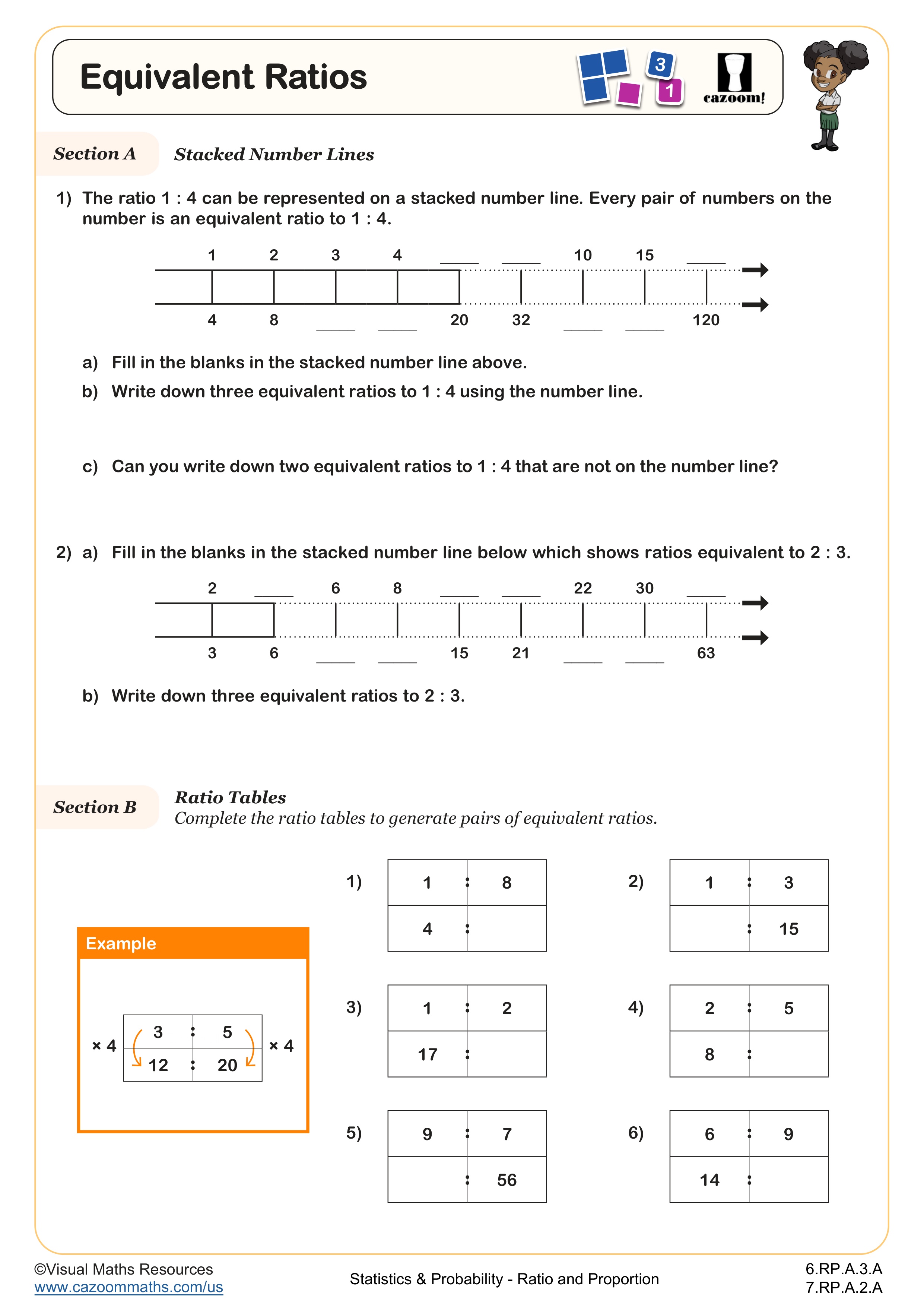
Exchange Rates
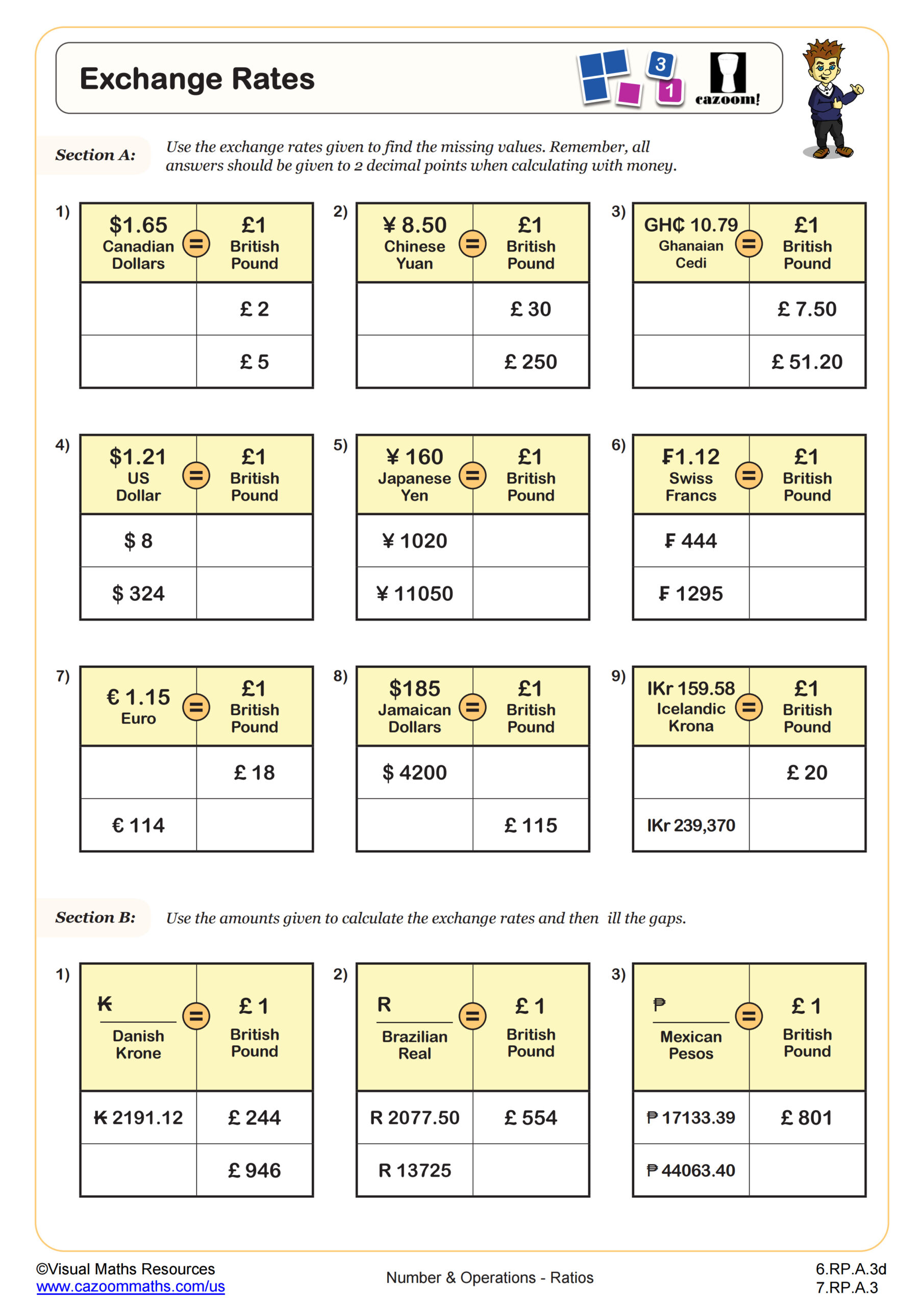
Fraction, Percentage and Ratio Problems
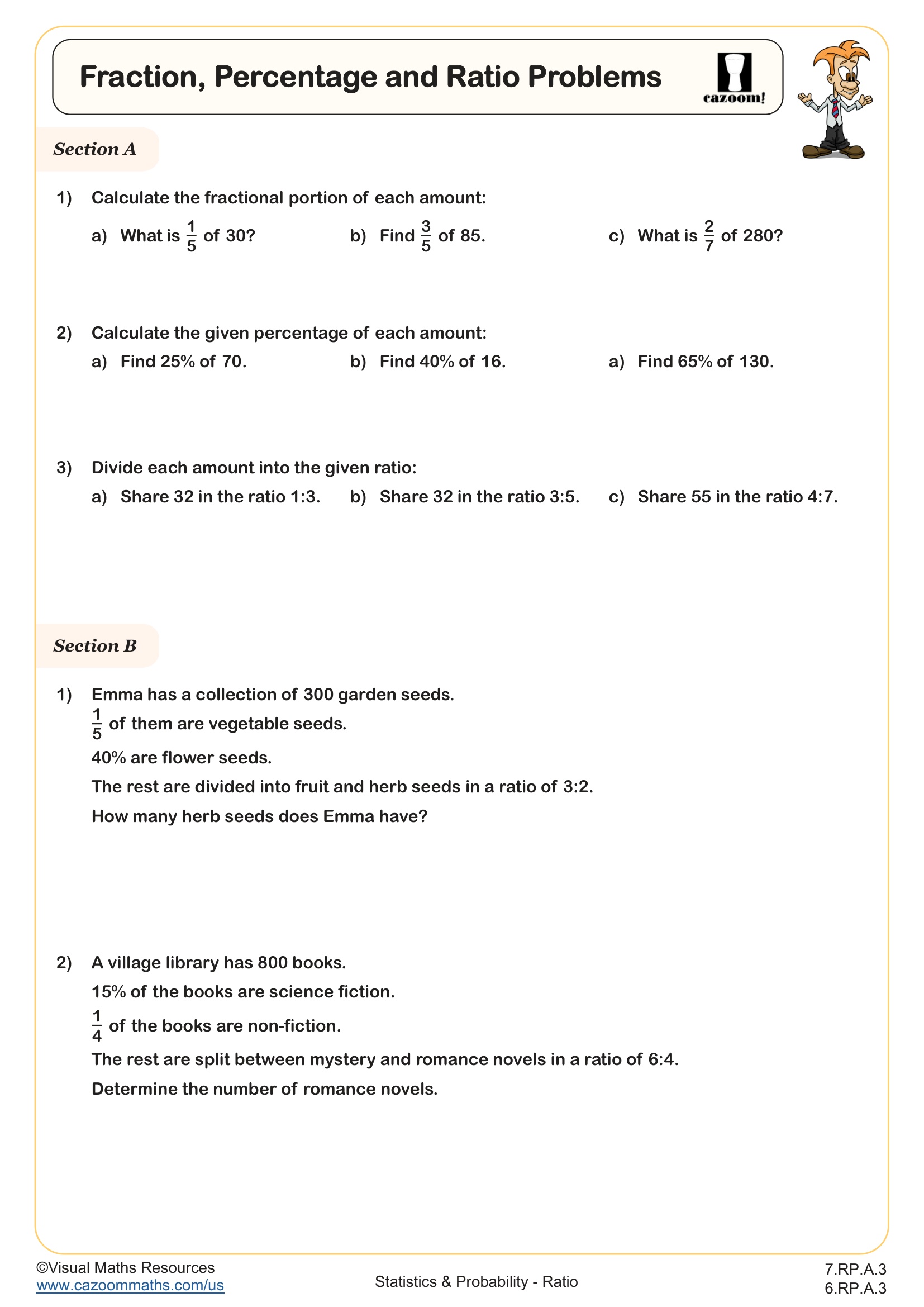
Introducing Ratio
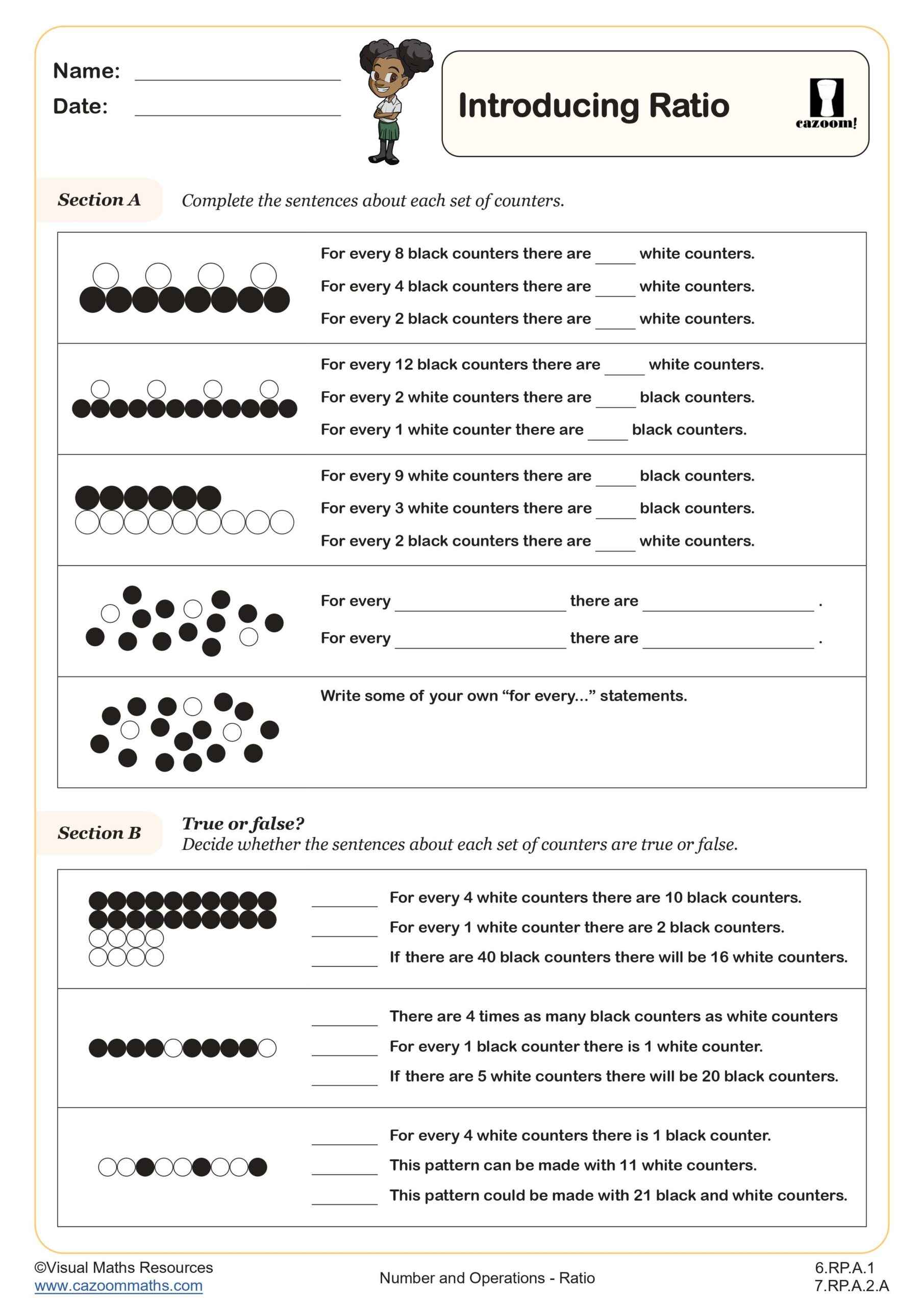
Ratio - Difference Known
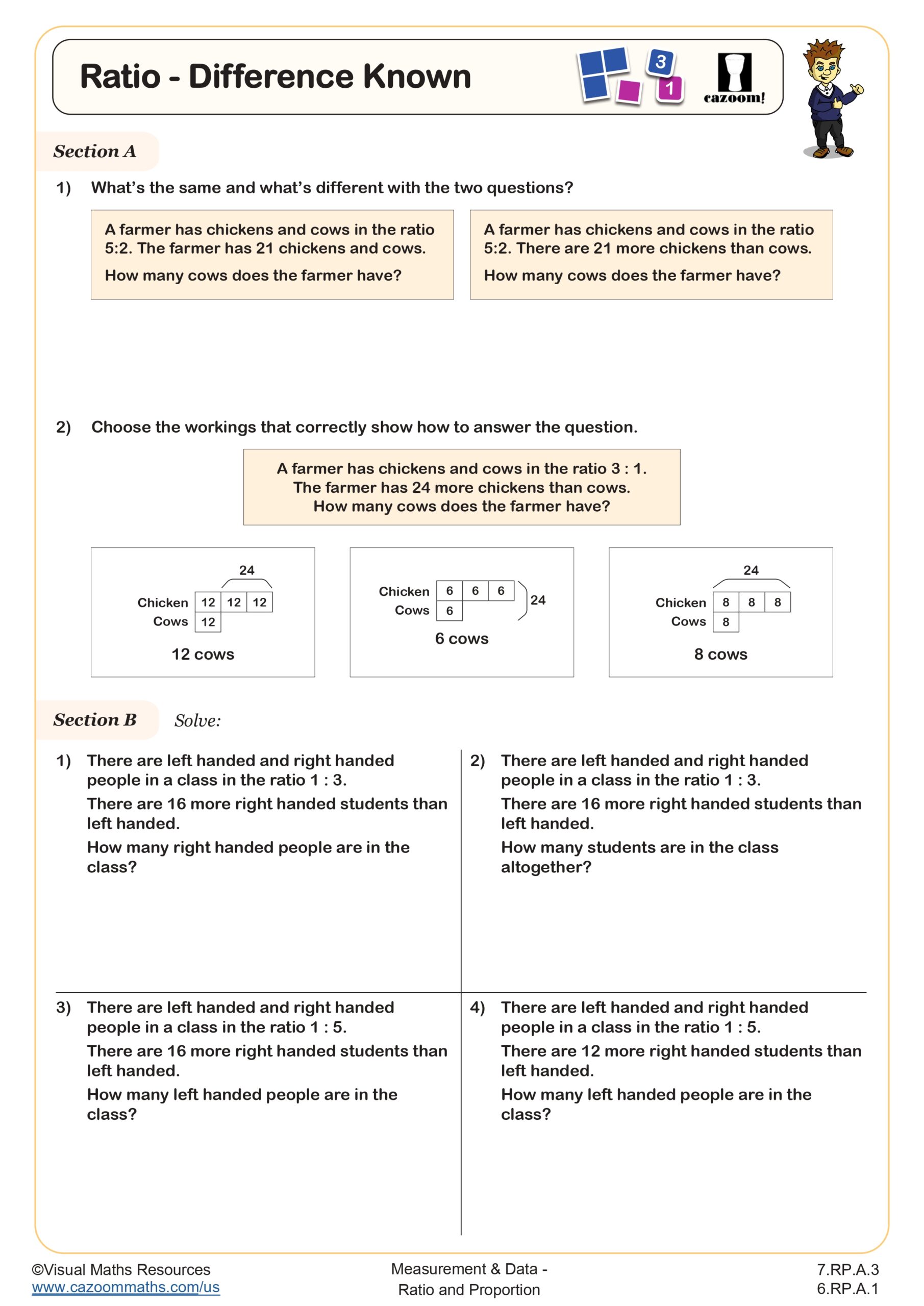
Ratio - Using Bar Models (A)
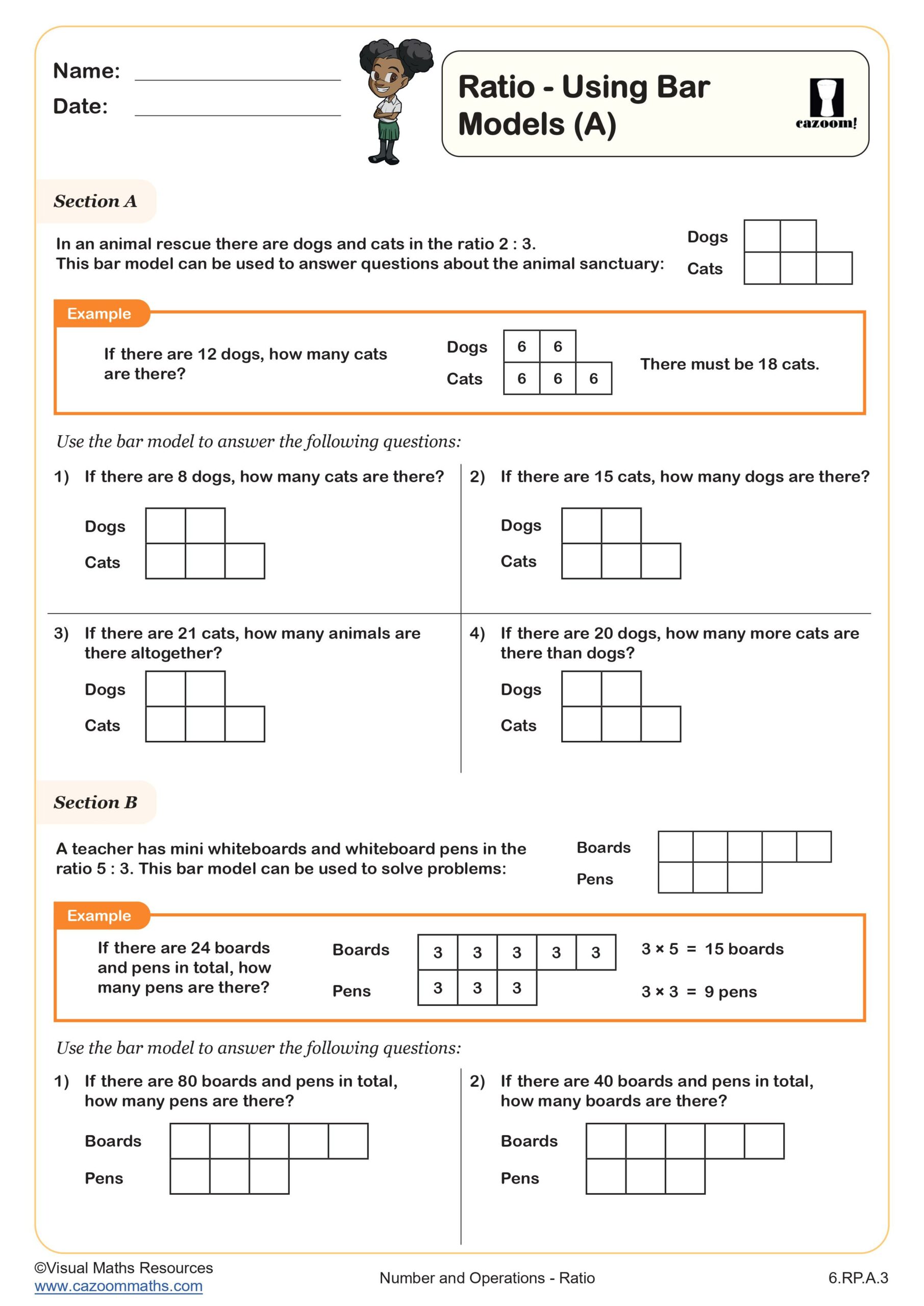
Ratio - Using Bar Models (B)
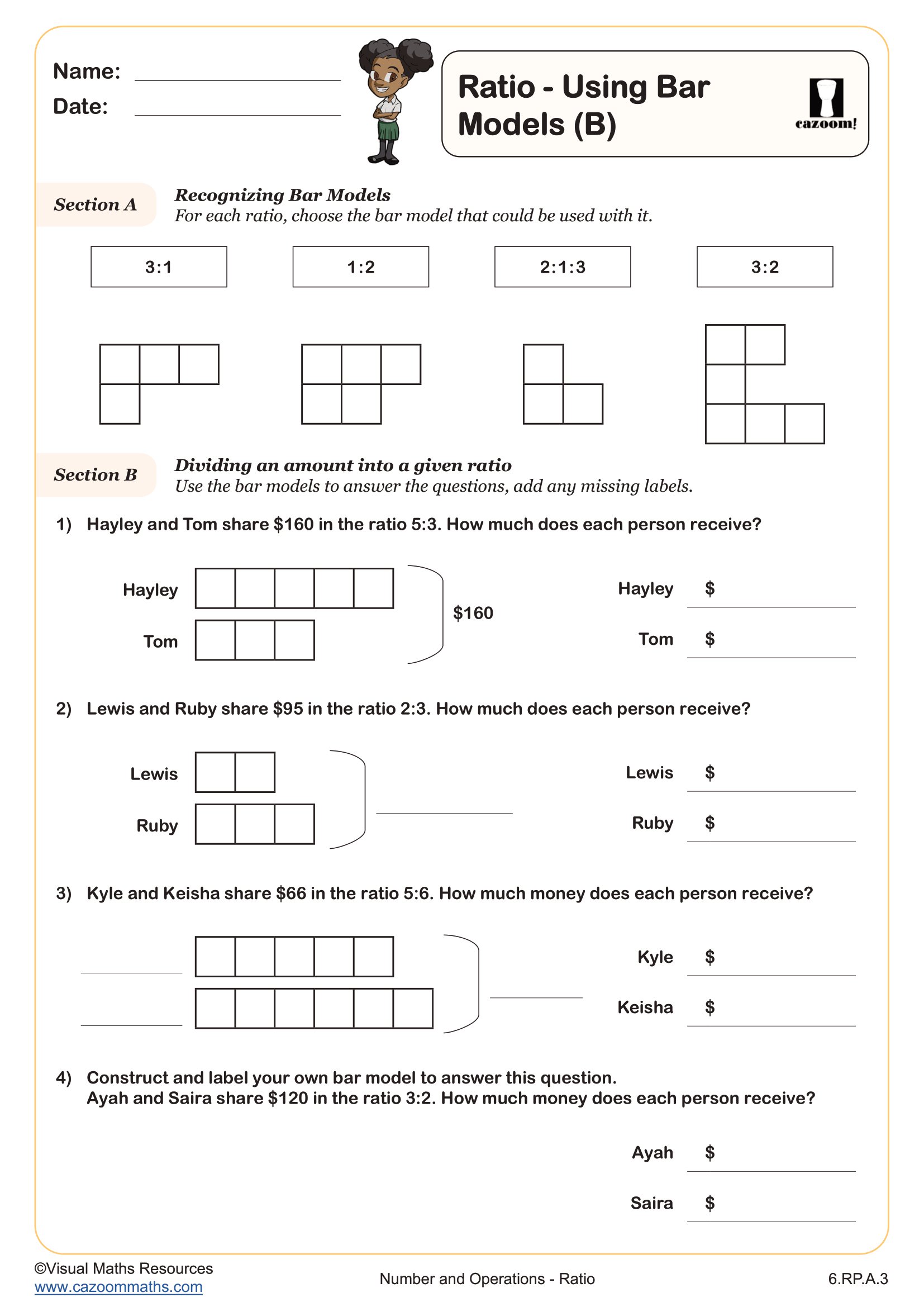
Ratio and Fractions
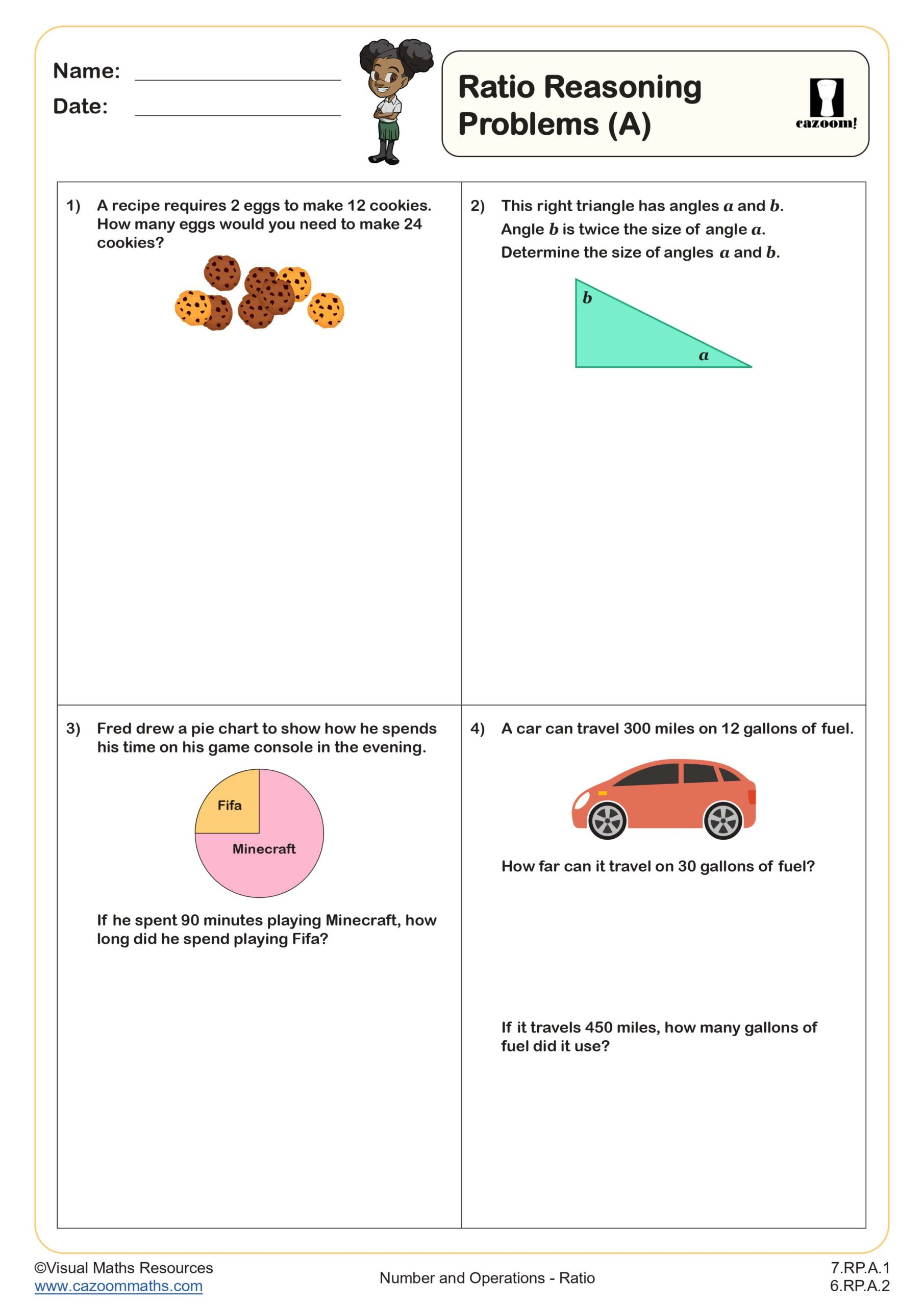
Ratio Reasoning Problems (A)
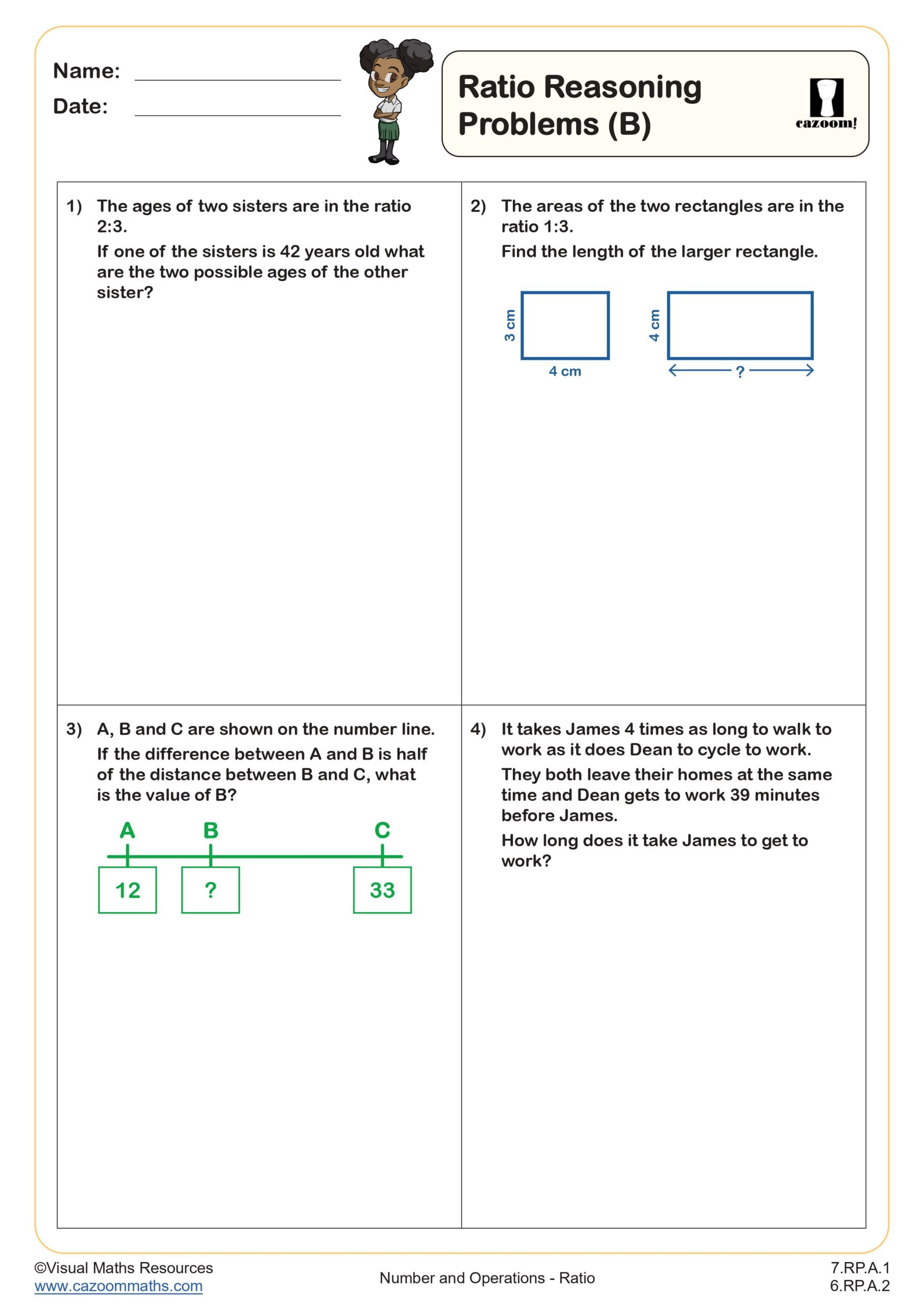
Ratio Reasoning Problems (B)
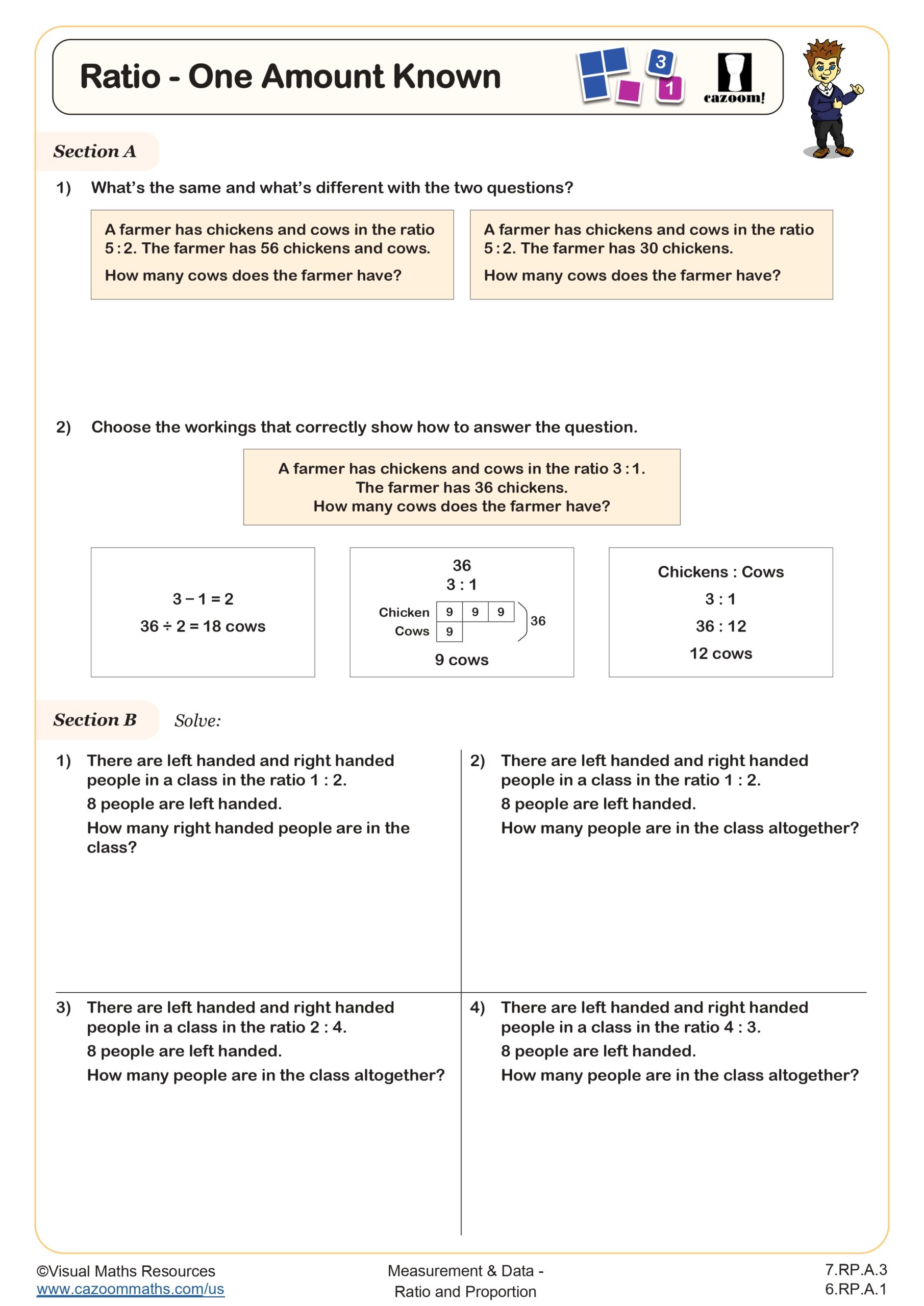
Ratio- One Amount Known
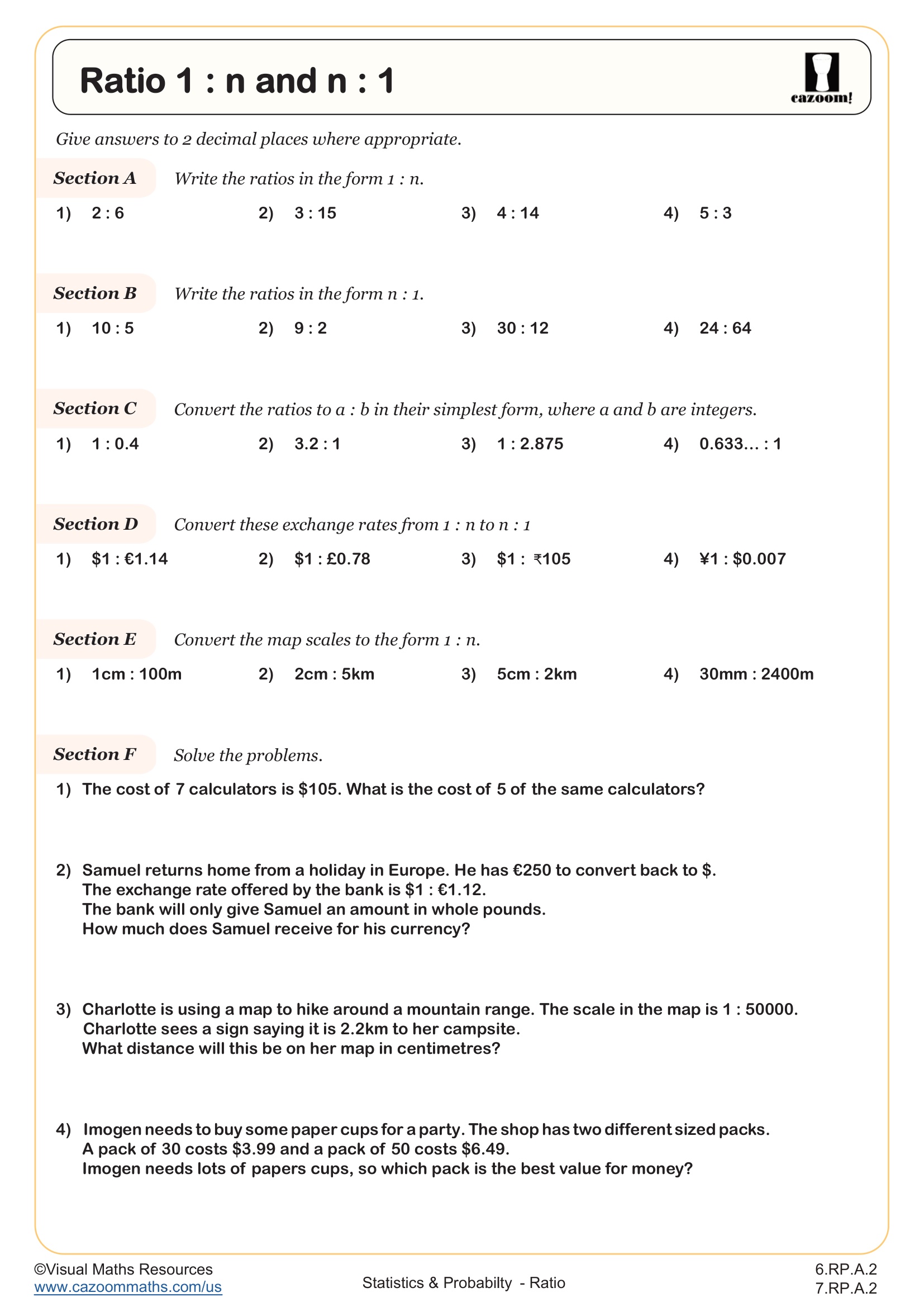
Ratios 1:n and n:1
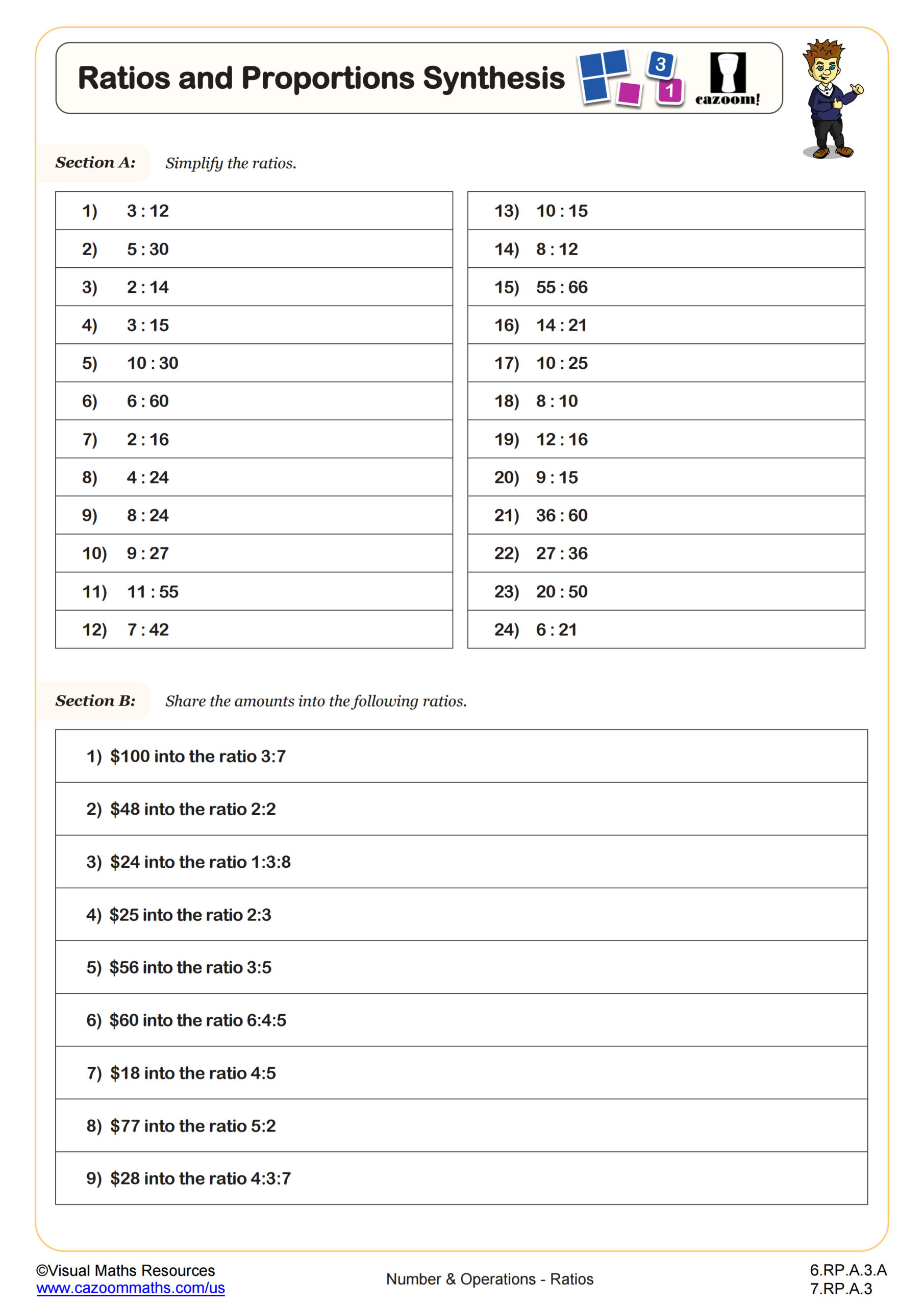
Ratios and Proportions Synthesis
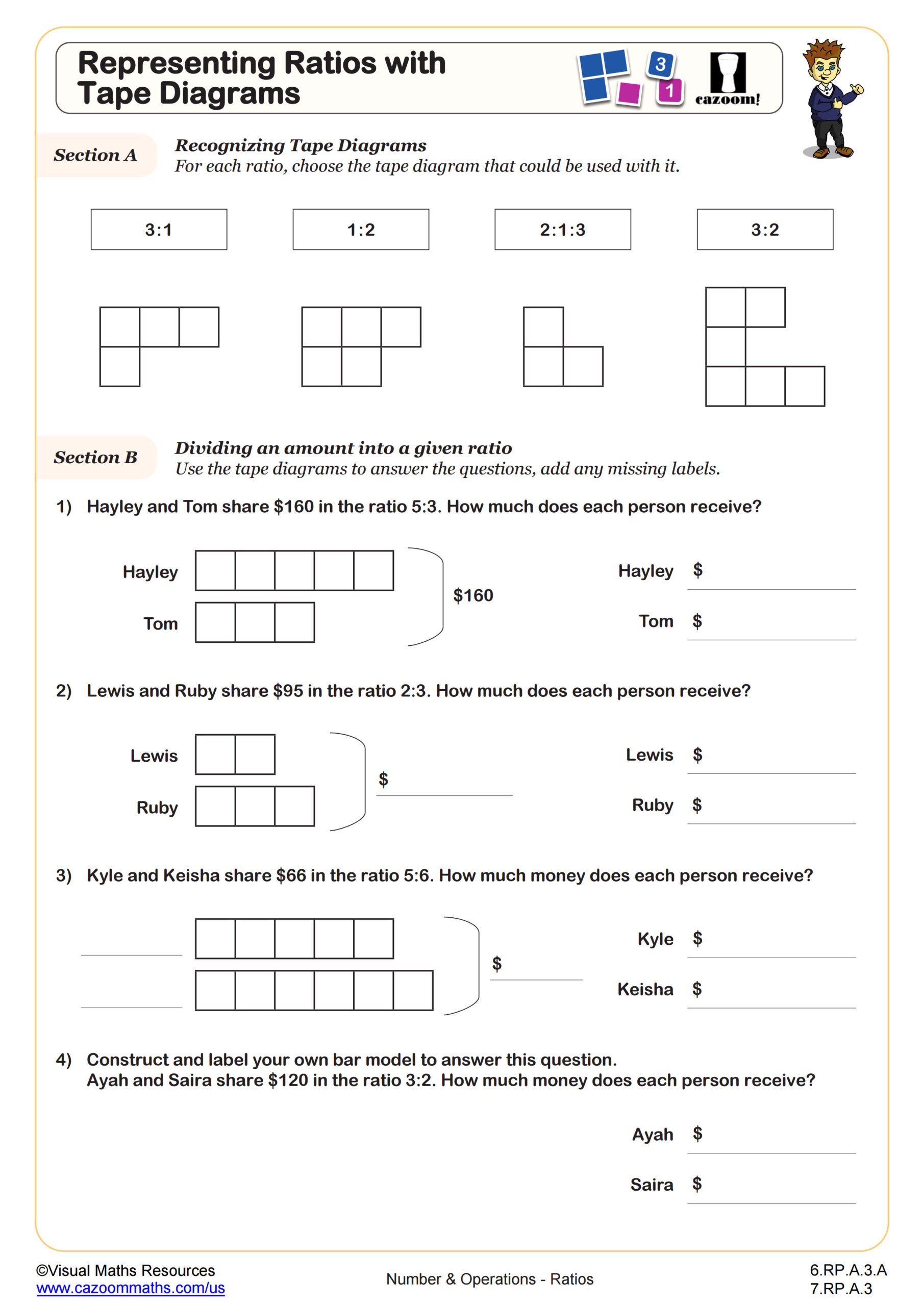
Representing Ratios with Tape Diagrams
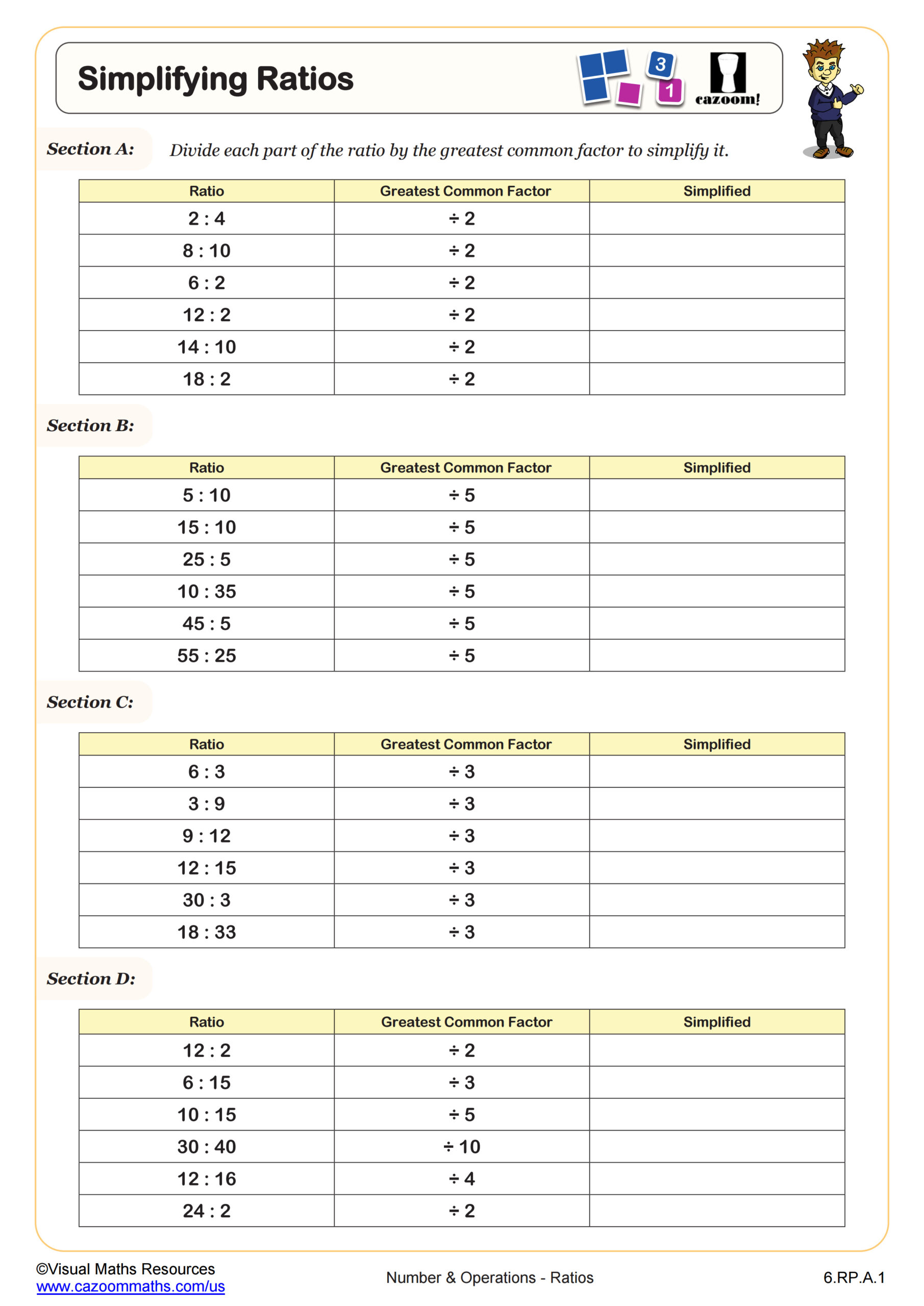
Simplifying Ratios
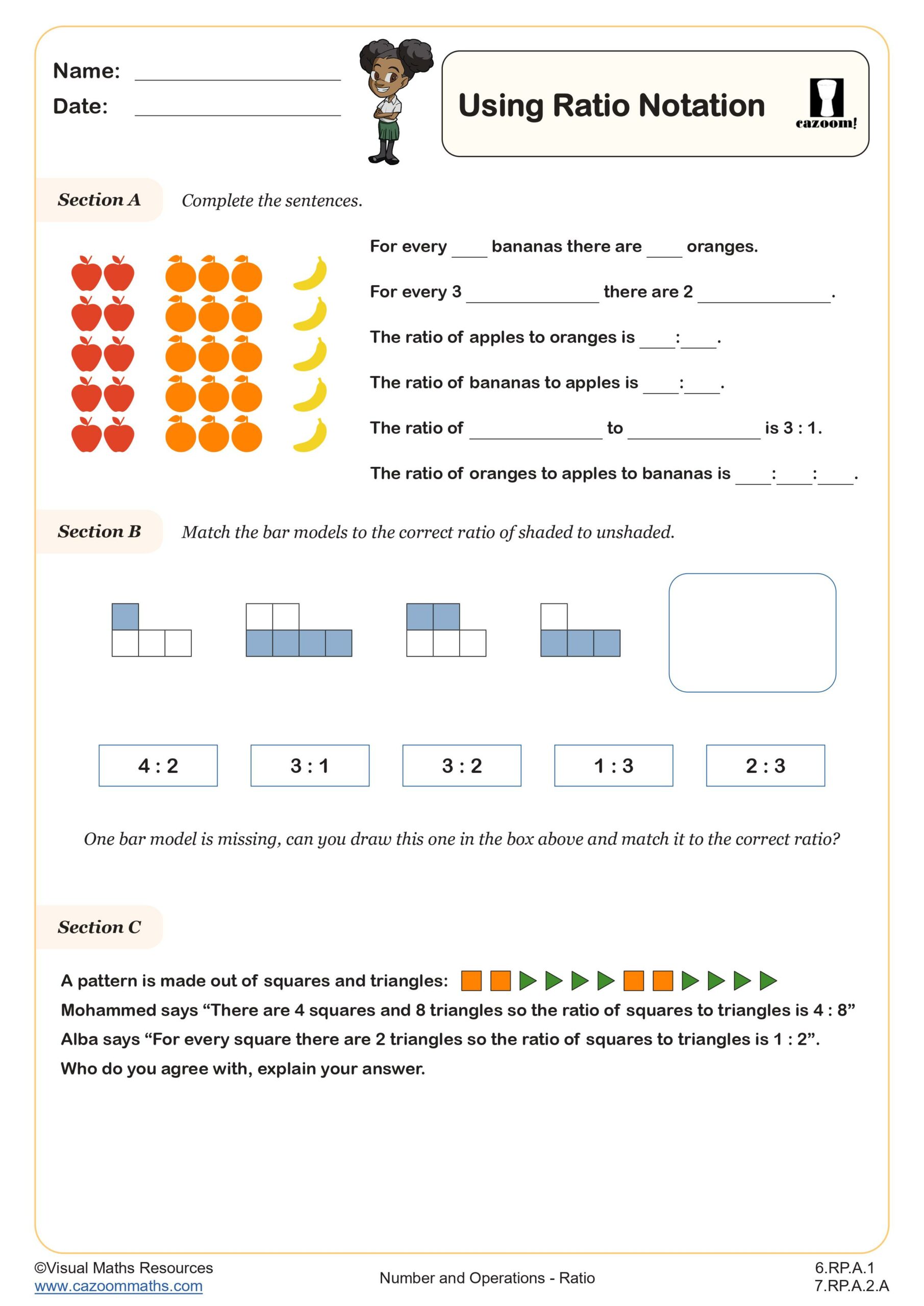
Using Ratio Notation
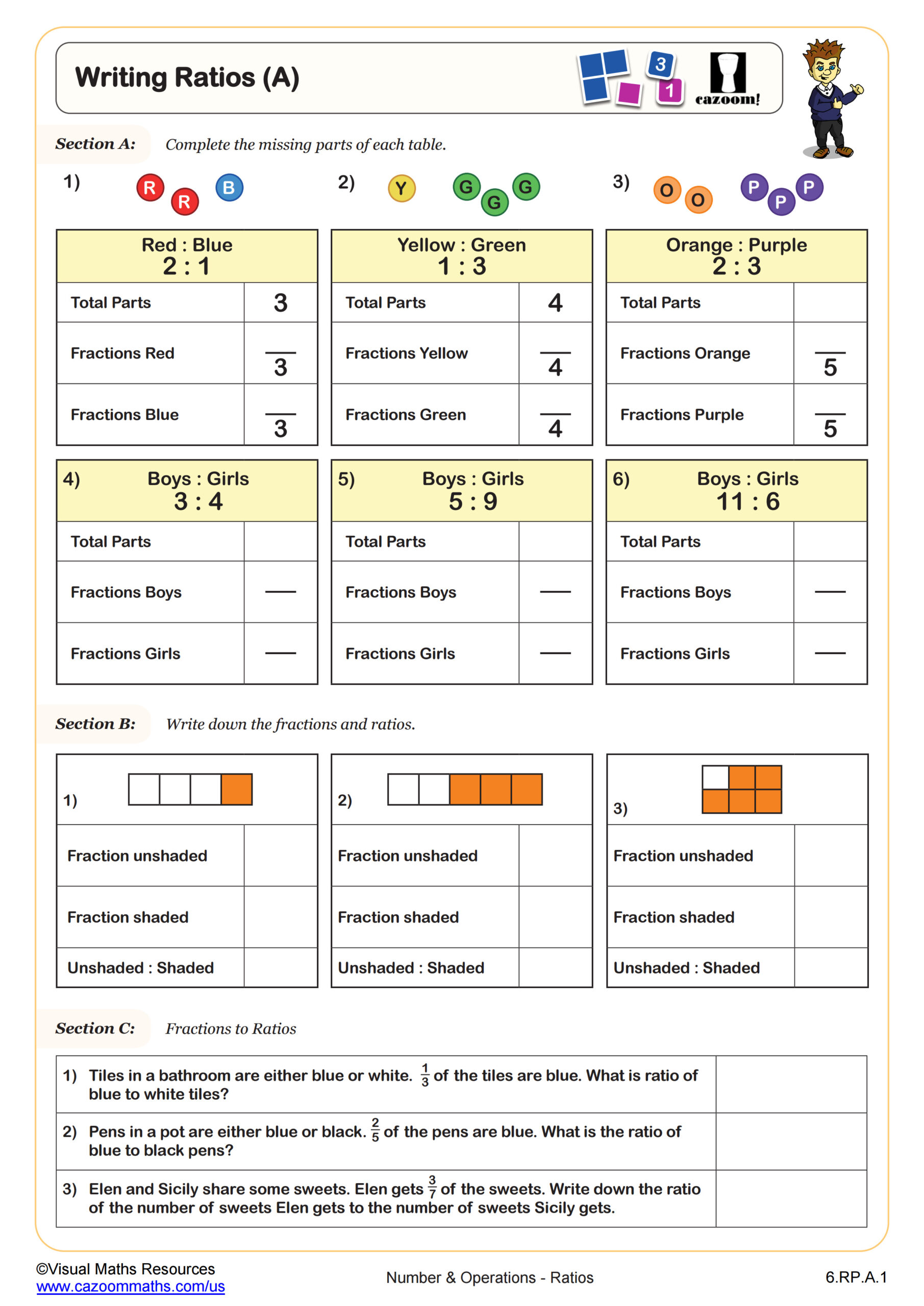
Writing Ratios (A)
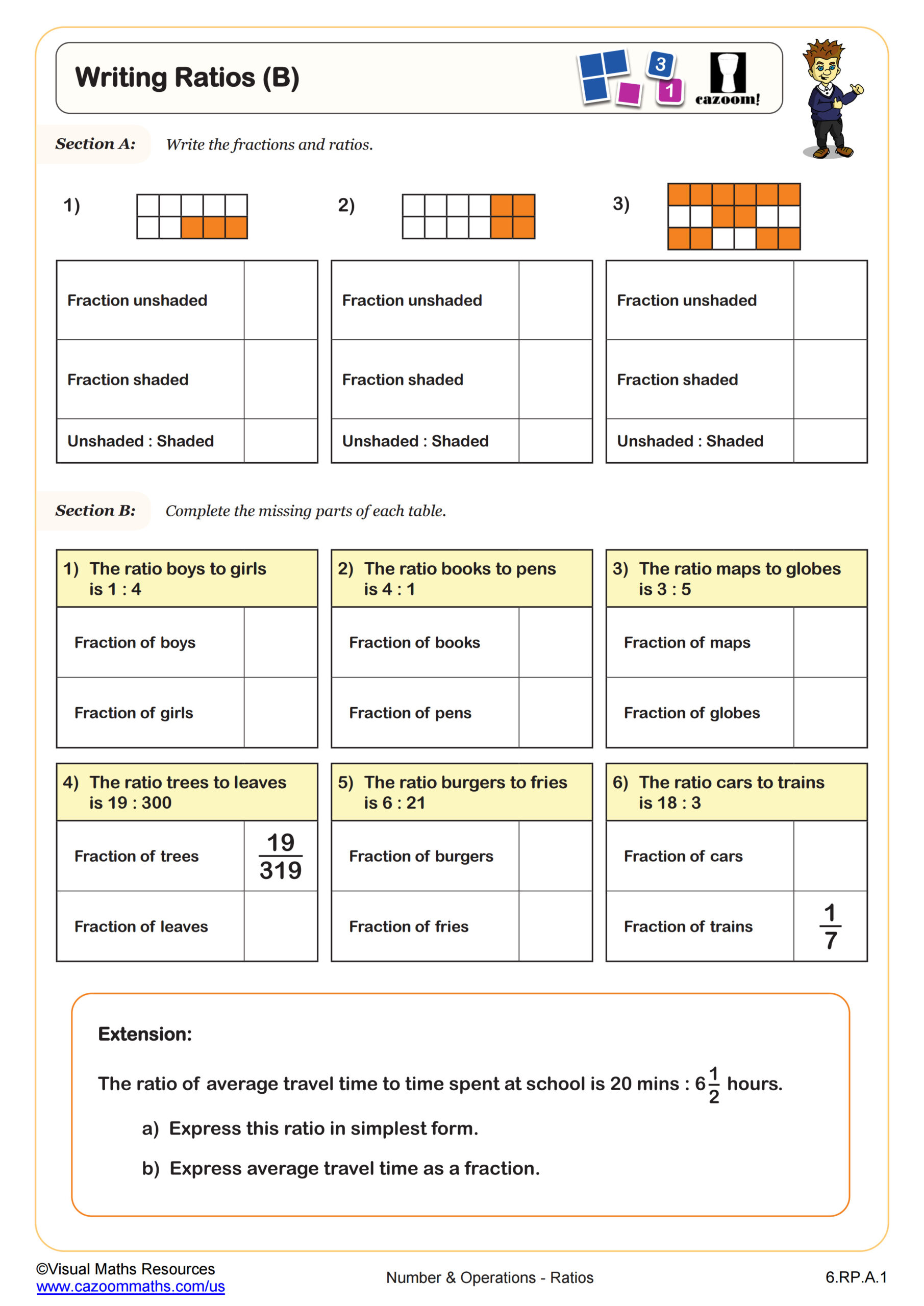
Writing Ratios (B)
All worksheets are created by the team of experienced teachers at Cazoom Math.
What topics do ratio worksheet grade 6 materials typically cover?
Sixth grade ratio worksheets align with Common Core Standard 6.RP.A.1, focusing on understanding ratios as comparisons between quantities and writing them in multiple formats including a:b, a to b, and a/b notation. Students practice identifying ratios from visual models, tables, and word problems while learning to distinguish between part-to-part and part-to-whole relationships.
Teachers frequently notice that students need extensive practice recognizing when ratios are equivalent, particularly when scaling up or down by the same factor. The worksheets typically progress from simple whole number ratios like 2:3 to more complex scenarios involving mixed numbers and real-world contexts such as recipe proportions and sports statistics.
How do 6th grade ratio worksheets prepare students for advanced mathematics?
Grade 6 ratio worksheets establish the foundation for proportional reasoning that students will encounter in seventh and eighth grade algebra concepts. The ability to recognize and work with equivalent ratios directly connects to solving proportions, understanding similar figures in geometry, and analyzing linear relationships on coordinate planes.
Middle school teachers report that students who master ratio concepts in sixth grade demonstrate stronger performance when learning about slope, scale factors, and percentage applications in later grades. The visual and numerical pattern recognition developed through these worksheets supports mathematical thinking skills that extend into high school STEM courses where proportional relationships appear in chemistry stoichiometry, physics formulas, and engineering calculations.
What are equivalent ratios and why do students find them challenging?
Equivalent ratios worksheet grade 6 materials focus on ratios that represent the same relationship between quantities, such as 2:3, 4:6, and 6:9. Students learn to identify these relationships by multiplying or dividing both terms by the same non-zero number, connecting to their understanding of equivalent fractions from earlier grades.
Classroom observations reveal that many sixth graders initially attempt to add the same number to both terms instead of multiplying, creating incorrect ratios like changing 2:3 to 4:5 instead of 4:6. Teachers find success when students use visual models like double number lines or ratio tables to see the multiplicative patterns before moving to abstract symbolic manipulation of the ratios.
How should teachers use ratios worksheets grade 6 most effectively in instruction?
Effective implementation of ratios grade 6 worksheets involves starting with concrete manipulatives and visual representations before introducing symbolic notation. Teachers report better student understanding when worksheets are paired with hands-on activities using colored counters, measurement tools, or real objects that students can physically group and compare.
The answer keys become particularly valuable for differentiated instruction, allowing advanced students to work independently while teachers provide targeted support to students who need additional scaffolding. Many educators use these materials for both initial instruction and spiral review throughout the year, as ratio concepts connect to unit rates, percentages, and proportional relationships that appear in subsequent sixth grade units.