6th Grade Solving Equations Worksheets
All worksheets are created by the team of experienced teachers at Cazoom Math.
What skills do students practice when solving equations?
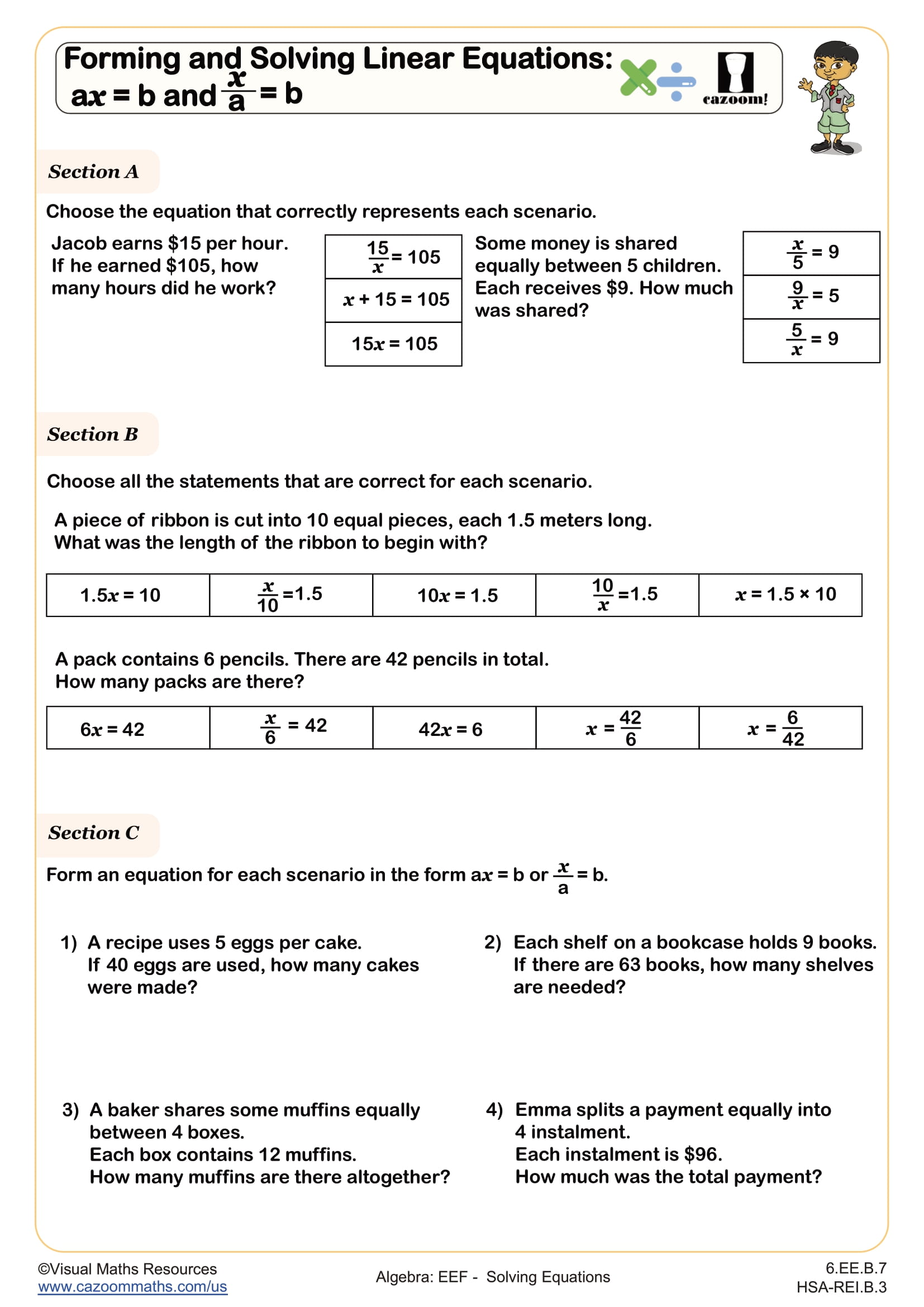
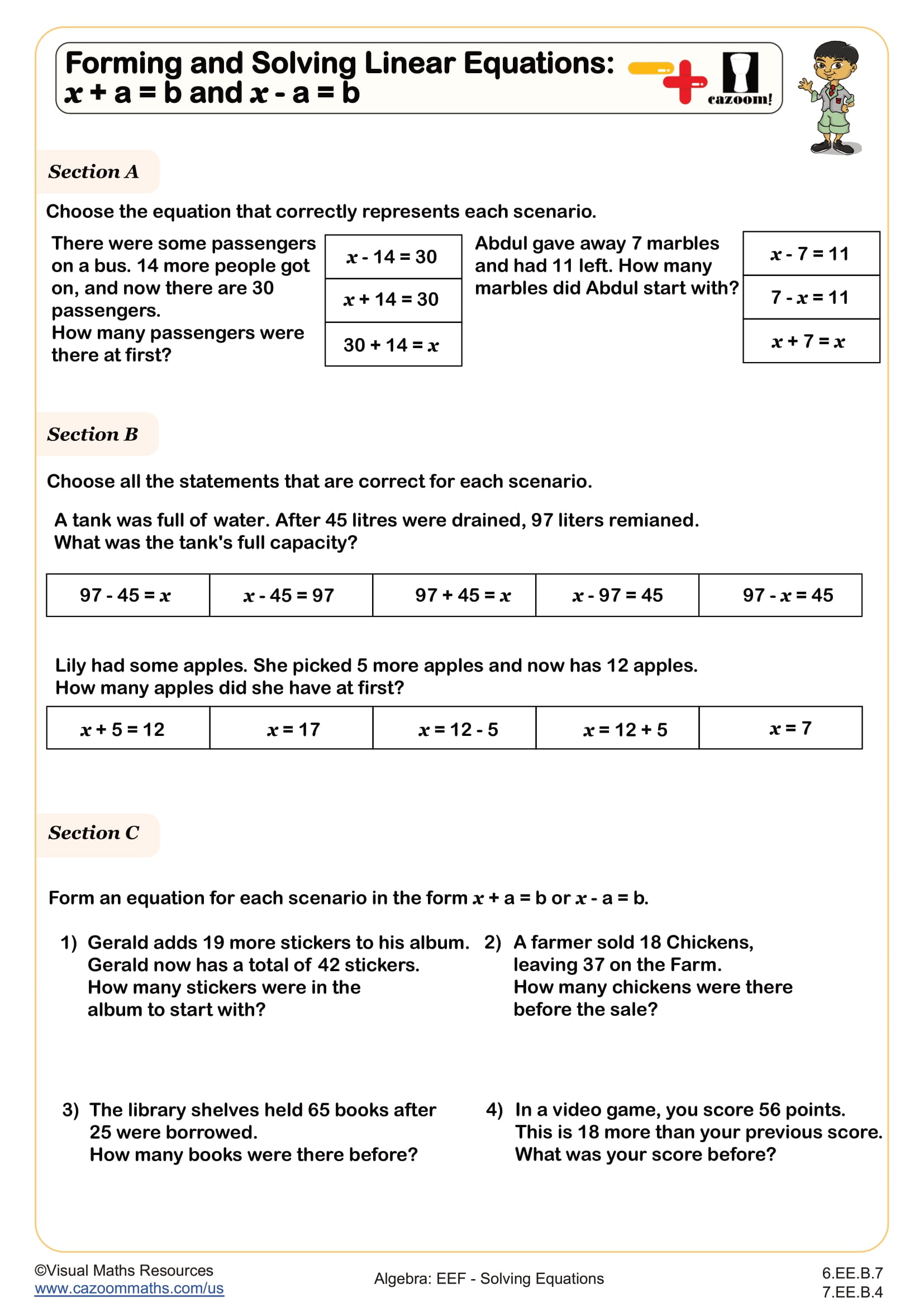
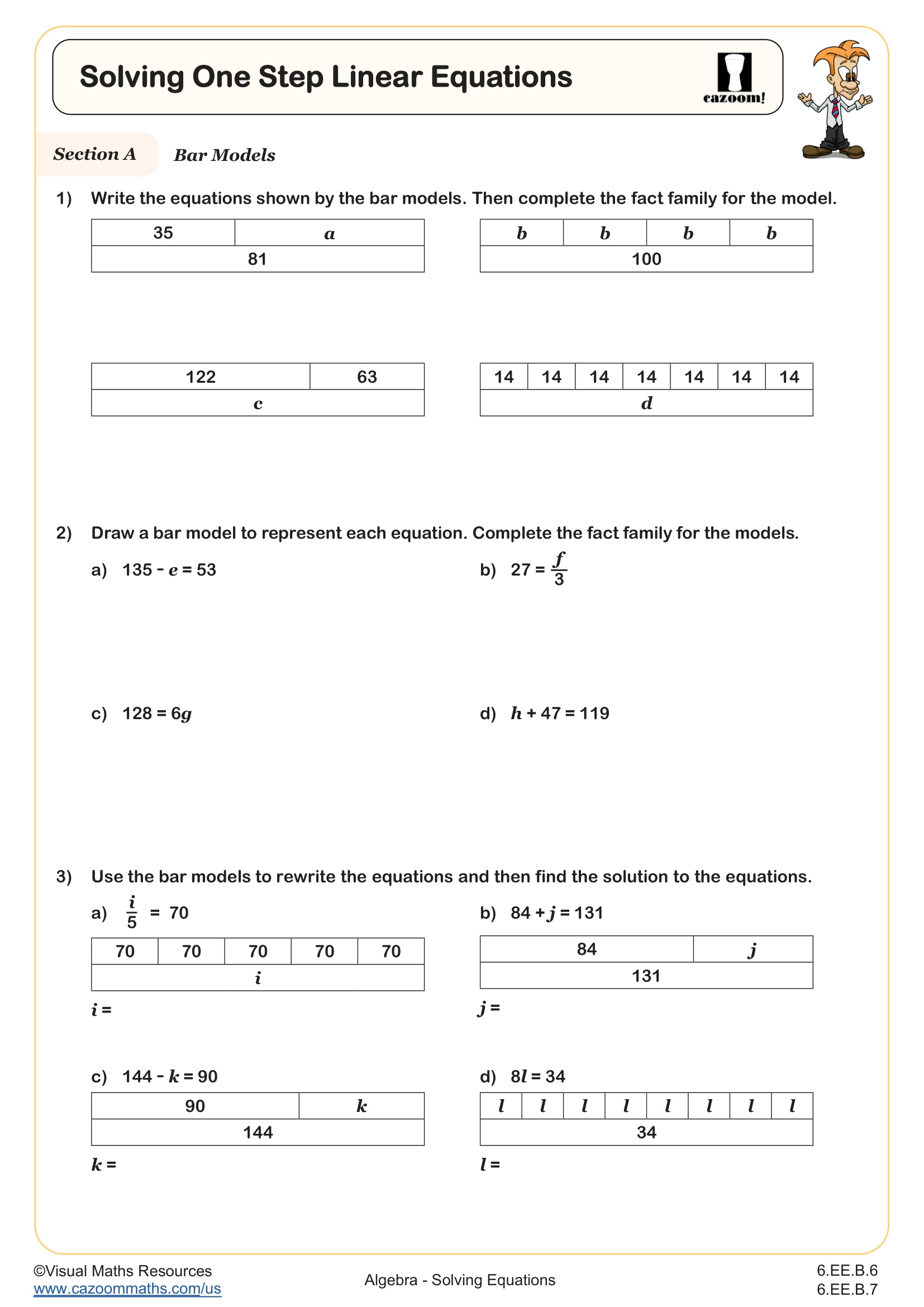
Students practice isolating variables through inverse operations, combining like terms, and maintaining equation balance while performing algebraic manipulations. These worksheets address Common Core standards for 6th grade expressions and equations, progressing from simple one-step problems through more complex multi-step equations that require distributing, collecting variables, and working with fractions or decimals.
A common error pattern emerges when students attempt to solve 3x + 5 = 20 by subtracting 5 from only the left side, arriving at 3x = 20 instead of 3x = 15. Students lose points on standardized tests when they fail to show their work step-by-step, even if they arrive at the correct answer, since partial credit depends on demonstrated understanding of the solution process.
Which grade levels use solving equations worksheets?
These solving equations worksheets target 6th grade students in middle school, aligning with the transition from arithmetic thinking to algebraic reasoning. At this stage, students move beyond finding missing numbers in number sentences to working with variables representing unknown quantities in formal equations.
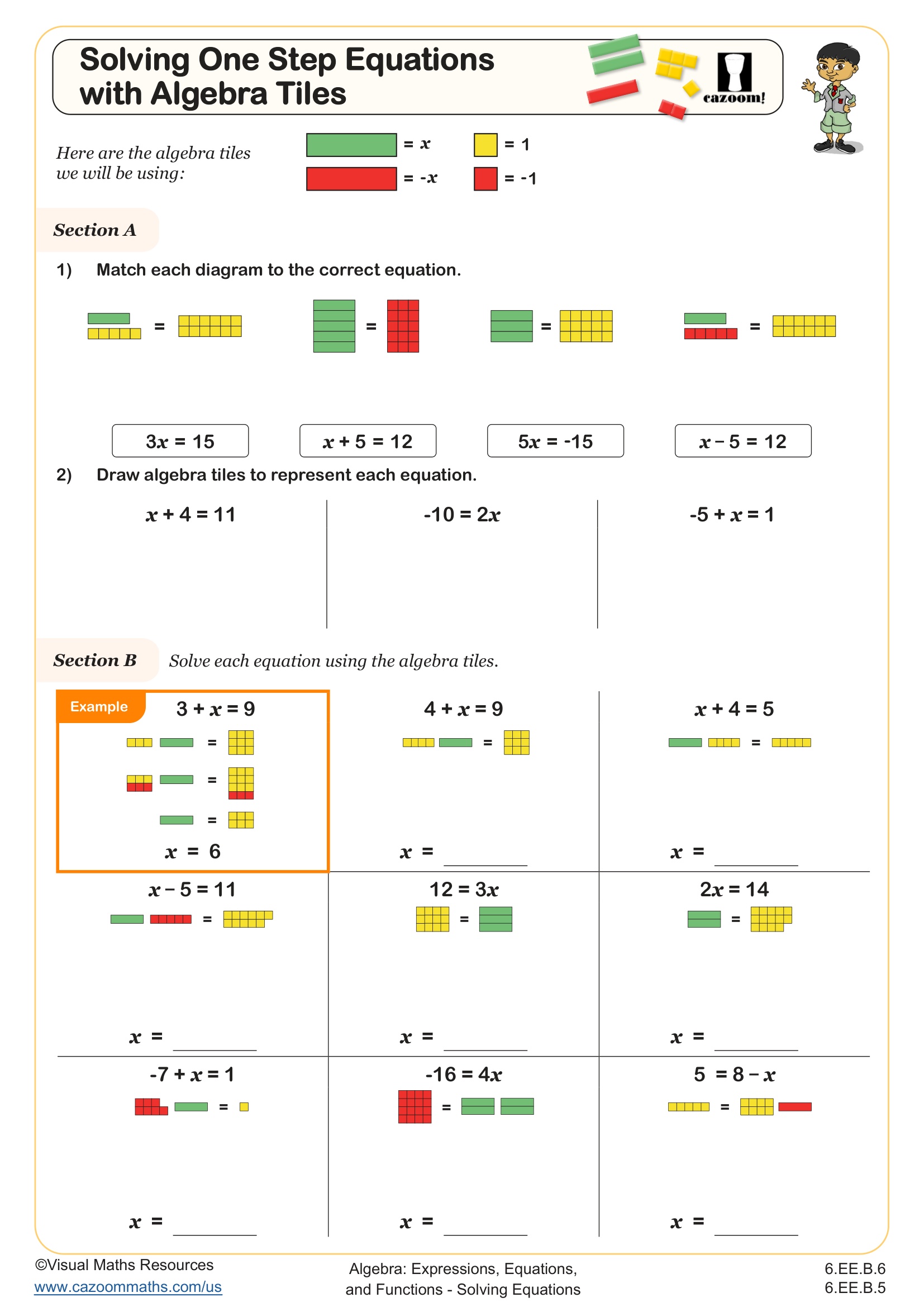
The progression within 6th grade begins with concrete representations like function machines and algebra tiles that provide visual support for abstract concepts, then advances through two-step linear equations before introducing more challenging topics like compound interest formulas and quadratic equations. Teachers often notice breakthrough moments when students recognize that balancing an equation mirrors the logic they used in elementary school when checking subtraction with addition or division with multiplication.
How do algebra tiles help students combine like terms?
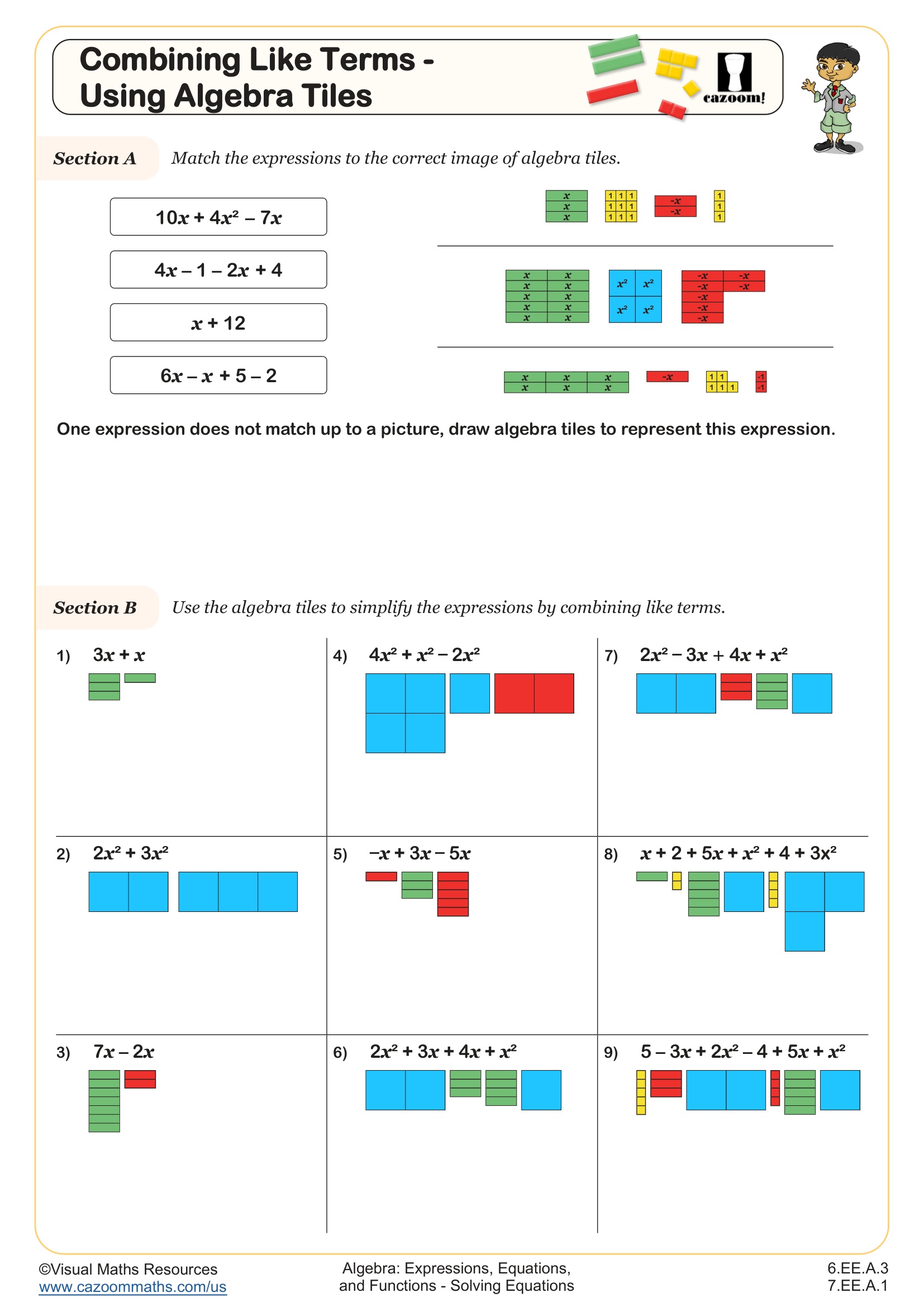
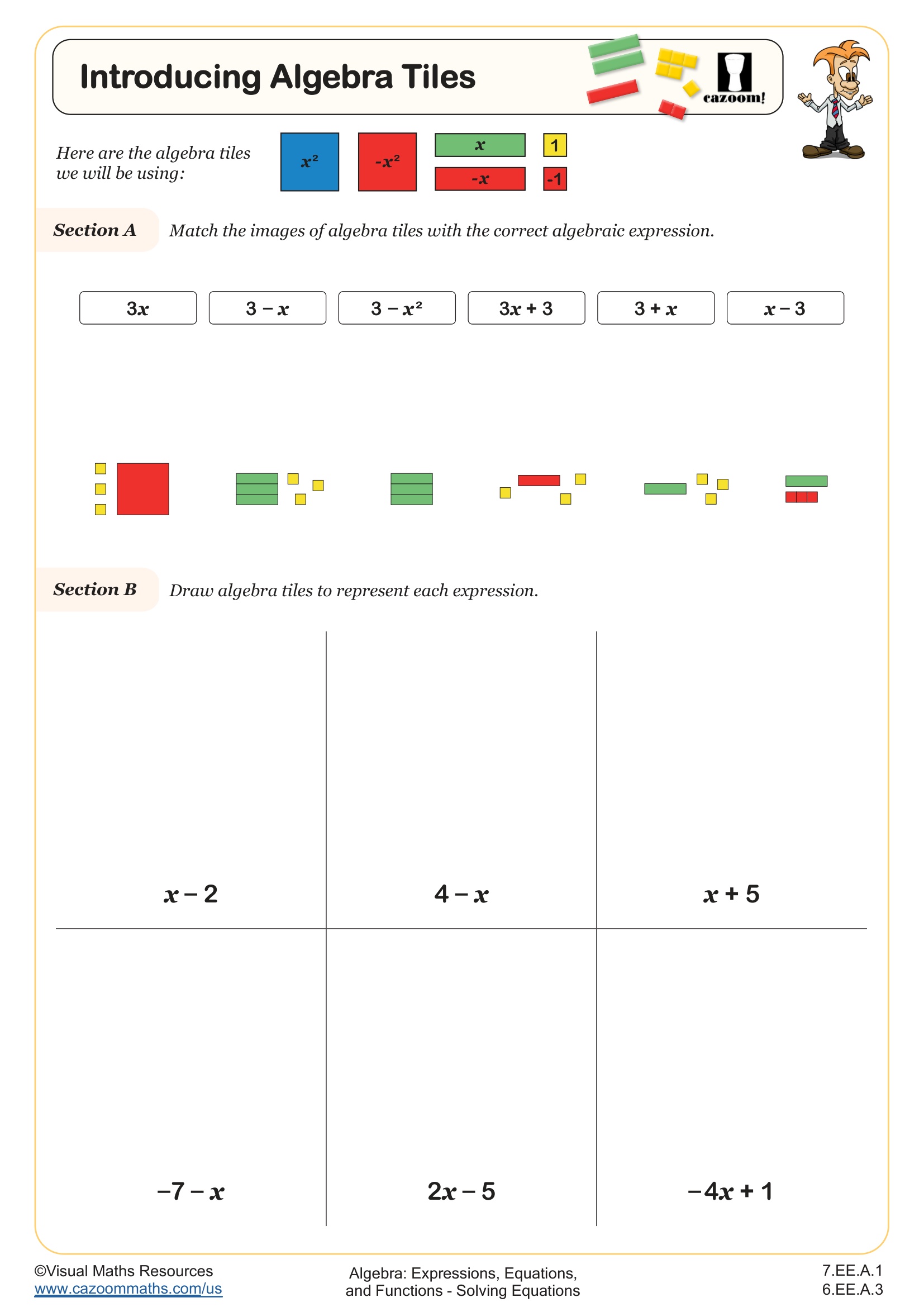
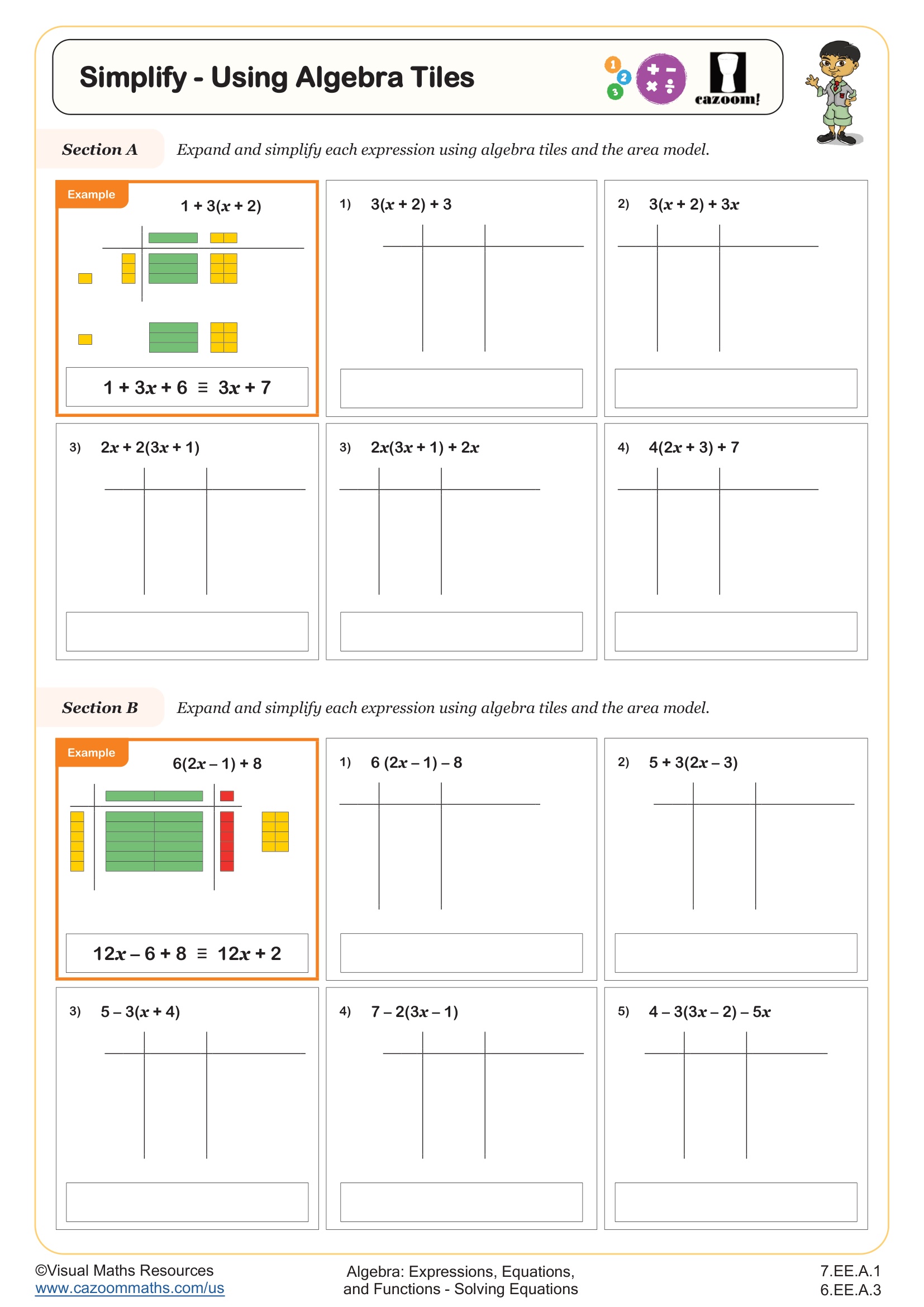
Algebra tiles provide a manipulative-based approach where physical rectangles represent variables (x) and small squares represent unit values (1), allowing students to physically group matching pieces. When solving equations with algebra tiles, students can see that 2x + 3 + x represents two variable tiles, three unit tiles, and one more variable tile, which combine into 3x + 3 by grouping like shapes together.
This concrete understanding connects directly to financial literacy applications in STEM fields, particularly when calculating compound interest where like terms must be identified within formulas like A = P(1 + r)^t. Financial analysts and data scientists regularly simplify algebraic expressions to isolate variables representing interest rates, principal amounts, or time periods, making equation-solving skills essential for careers in economics, business analytics, and investment management.
How can teachers use these solving equations worksheets effectively?
The worksheets provide scaffolded practice that moves from worked examples through guided problems to independent application, giving students gradual release of responsibility as their confidence builds. Function machine templates offer visual frameworks that help students understand input-output relationships before formalizing algebraic notation, while quadratic formula worksheets include reference boxes showing the formula structure.
Many teachers use these worksheets for differentiated math stations where students work at their appropriate challenge level, for homework assignments that reinforce classroom instruction, or during intervention blocks when small groups need targeted support on specific solving techniques. The complete answer keys allow for self-checking during independent work or peer tutoring arrangements, freeing teachers to circulate and address misconceptions during practice time rather than spending class time reviewing every problem.