6th Grade Statistics and Probability Worksheets
All worksheets are created by the team of experienced teachers at Cazoom Math.
What topics do 6th grade statistics worksheets typically cover?
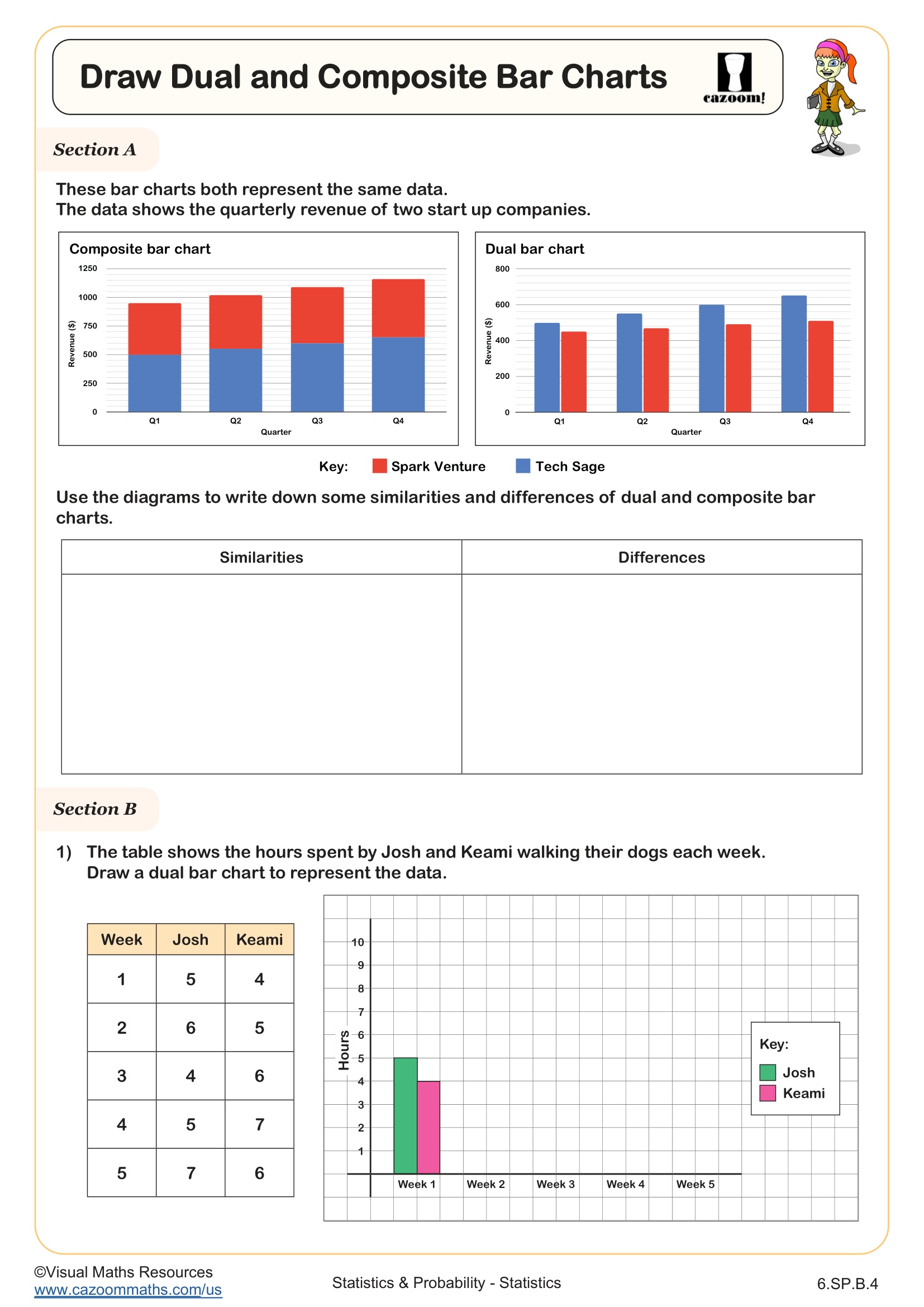
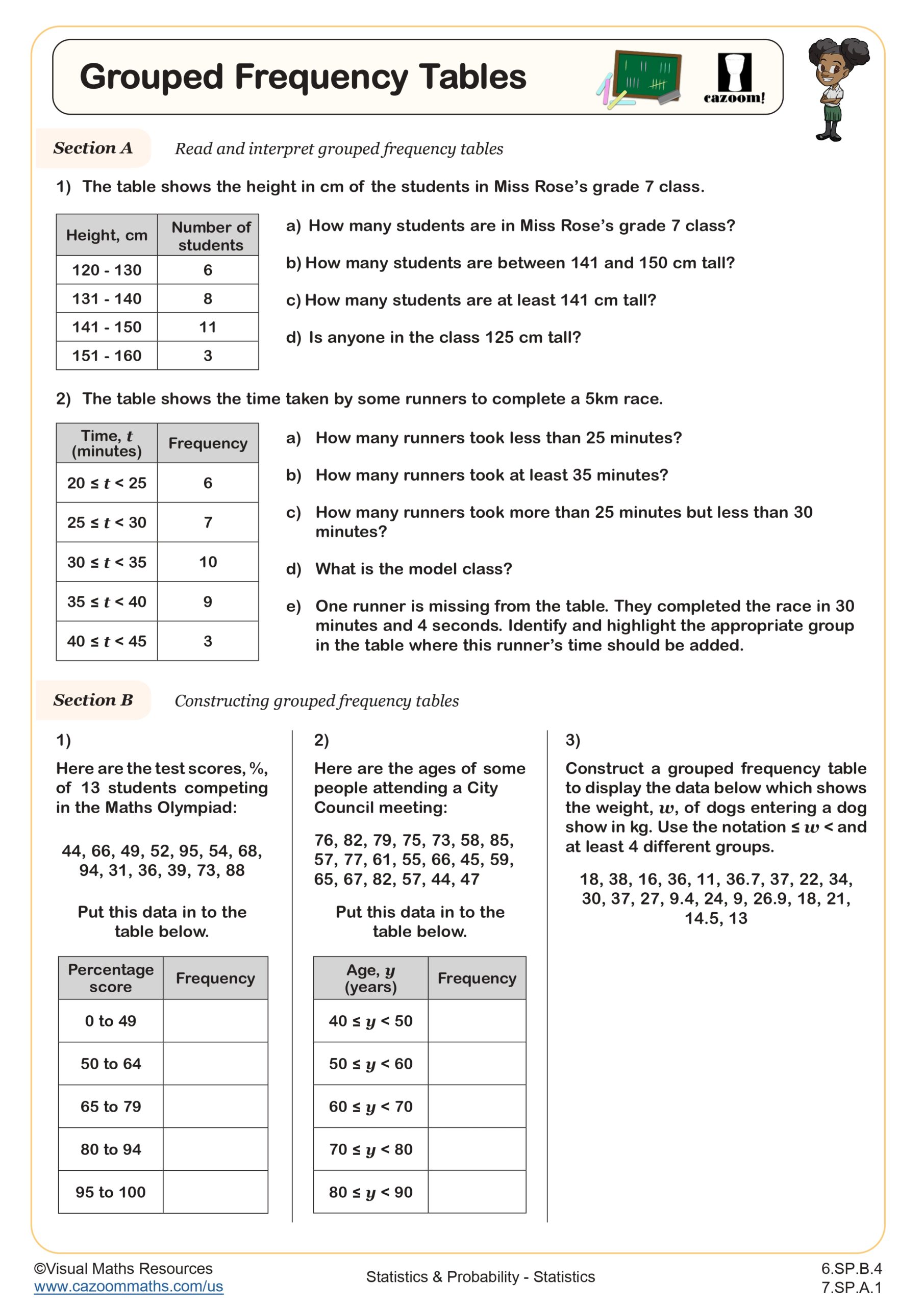
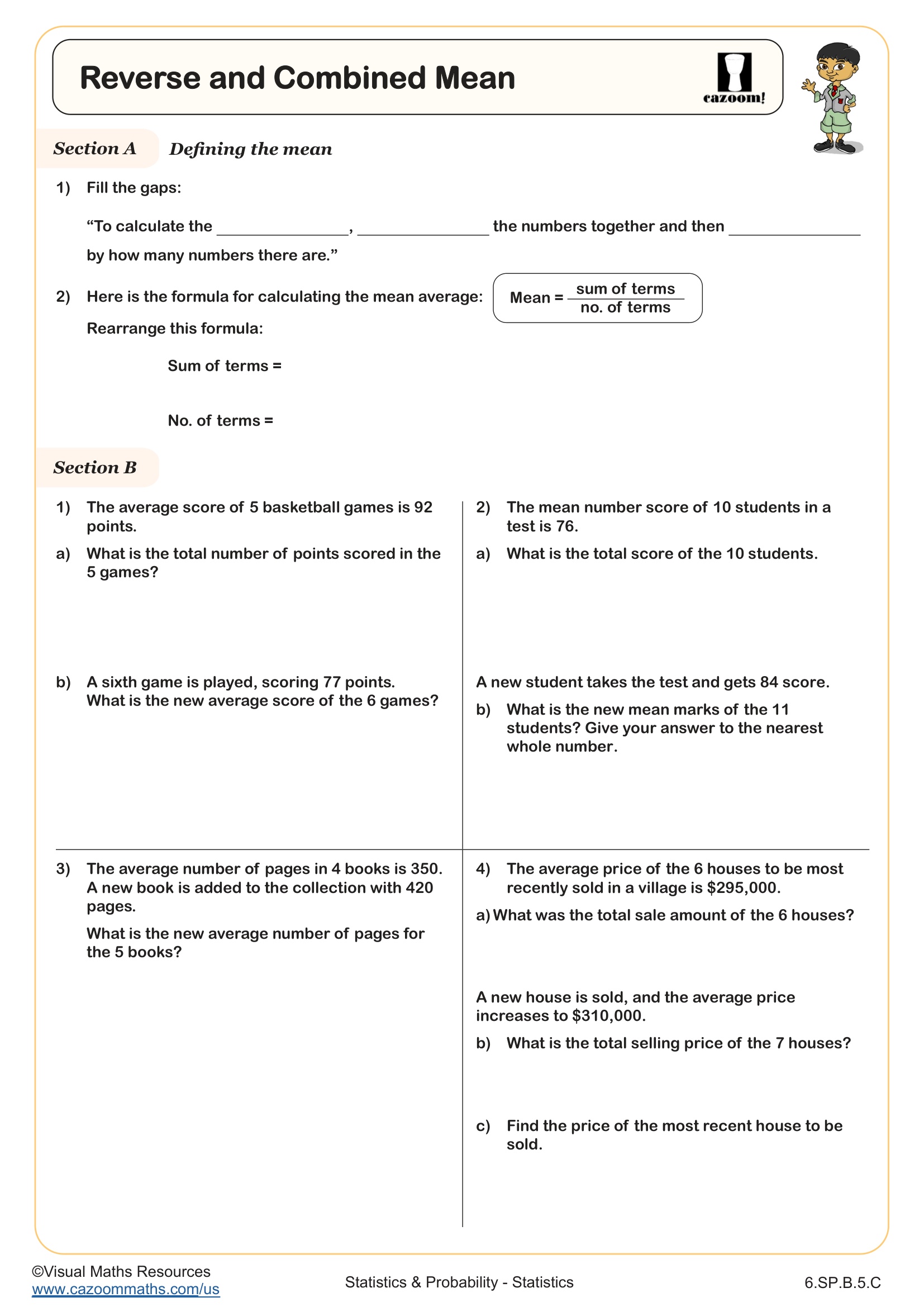
Grade 6 statistics worksheets pdf with answers typically focus on foundational data analysis concepts outlined in Common Core Standard 6.SP. Students practice calculating measures of central tendency (mean, median, mode), creating and interpreting various graph types including histograms and box plots, understanding variability in data sets, and exploring basic probability concepts through simple experiments.
Teachers frequently observe that students struggle most with determining which measure of central tendency best represents a data set, especially when outliers are present. Many sixth graders automatically calculate the mean without considering whether median might be more appropriate for skewed data, making explicit instruction on when to use each measure particularly important.
Are these statistics worksheets appropriate for other grade levels?
While designed for sixth grade, these statistics worksheets can serve different purposes across grade levels. Advanced fifth graders may use them as enrichment activities, particularly the basic graphing and data collection exercises. Seventh and eighth graders often benefit from these materials as review or remediation when they encounter gaps in foundational statistics knowledge.
Teachers working with struggling students in higher grades find that returning to sixth grade level practice helps rebuild confidence with statistical concepts before advancing to more complex topics like scatter plots and linear relationships. The clear answer keys make these worksheets valuable for independent study and self-assessment across multiple grade levels.
How do these worksheets help students understand measures of central tendency?
The worksheets provide systematic practice with mean, median, and mode calculations using real-world data sets that make mathematical concepts meaningful. Students work through problems involving sports statistics, survey results, and scientific measurements, helping them understand when each measure provides the most useful information about a data set.
Classroom teachers report that students initially memorize calculation procedures without understanding practical applications. The worksheets address this by including scenarios where students must justify their choice of central tendency measure, such as determining whether mean or median salary better represents typical earnings in a company with executive compensation outliers.
How can teachers use these worksheets most effectively in their classrooms?
Teachers find these statistics worksheets work best when integrated with hands-on data collection activities. Students can gather their own classroom data through surveys or measurements, then use the worksheets to practice analysis techniques on both their collected information and provided data sets. This approach helps bridge the gap between abstract calculations and practical application.
Many educators use the answer keys strategically by having students work in pairs to check each other's solutions before reviewing correct answers. This peer collaboration reveals misconceptions early and encourages mathematical discourse. Teachers also report success using individual worksheet problems as warm-up activities or exit tickets to assess daily learning objectives.