6th Grade Substitution Worksheets
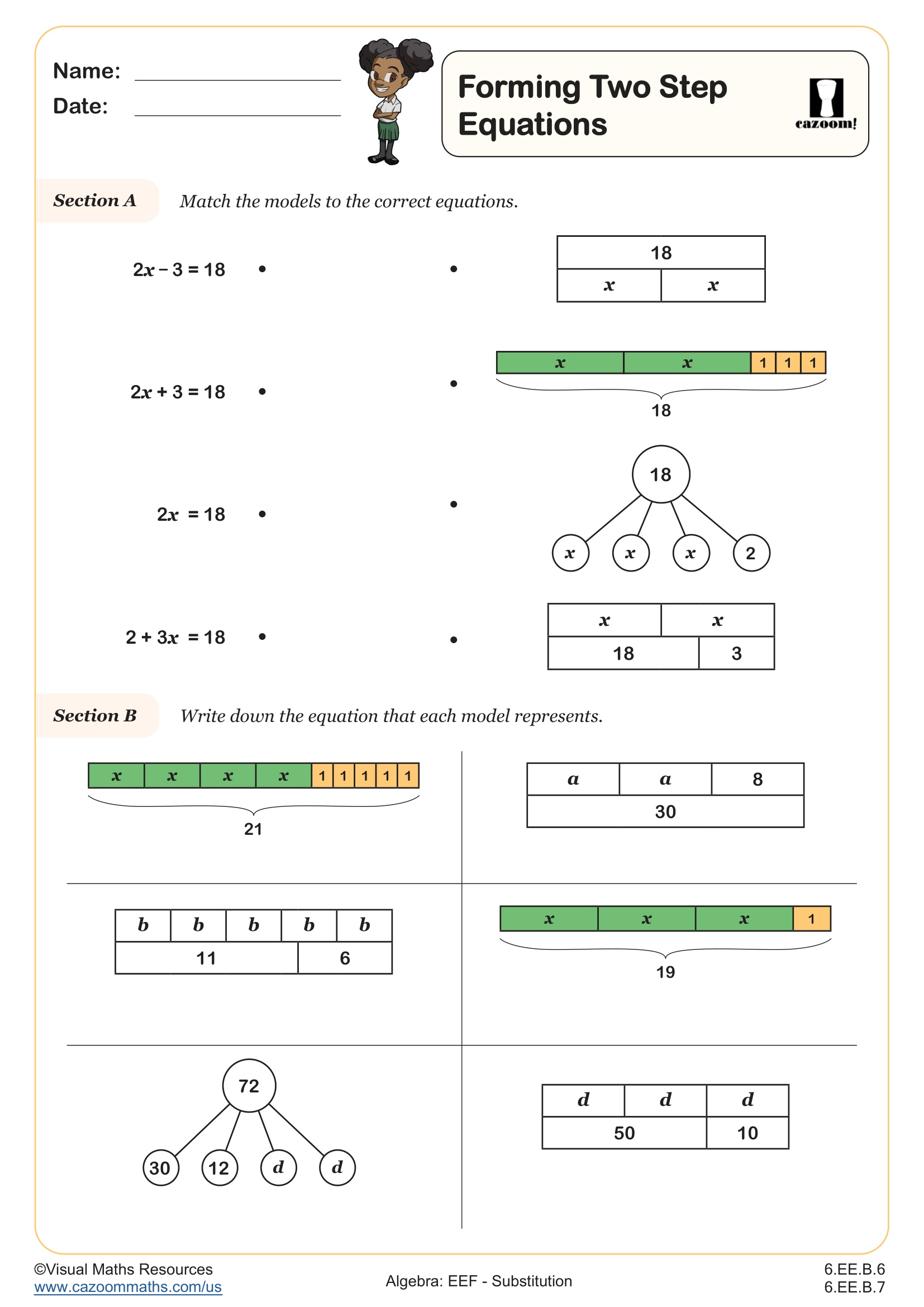
Forming Two Step Equations
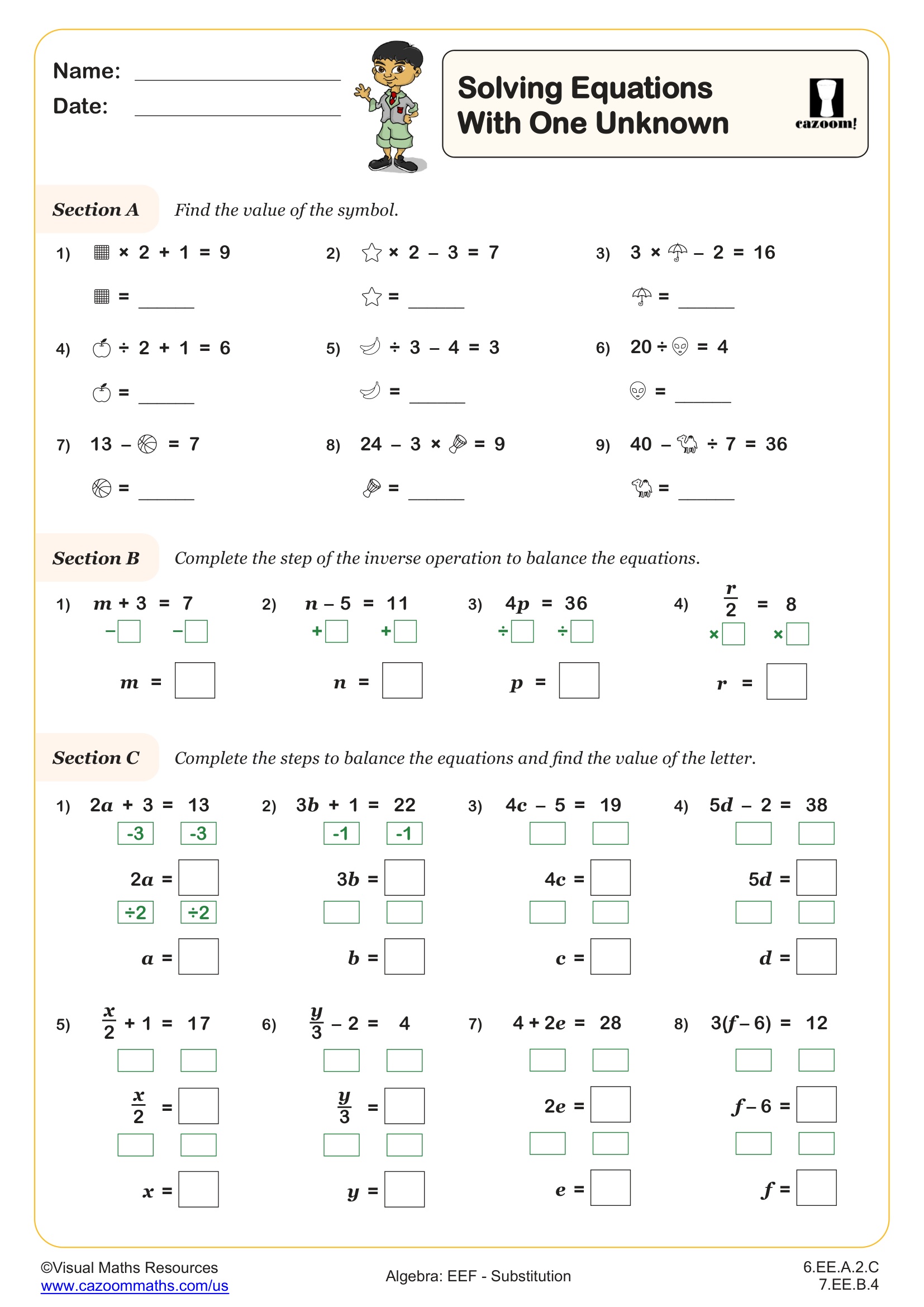
Solving Equations with One Unknown
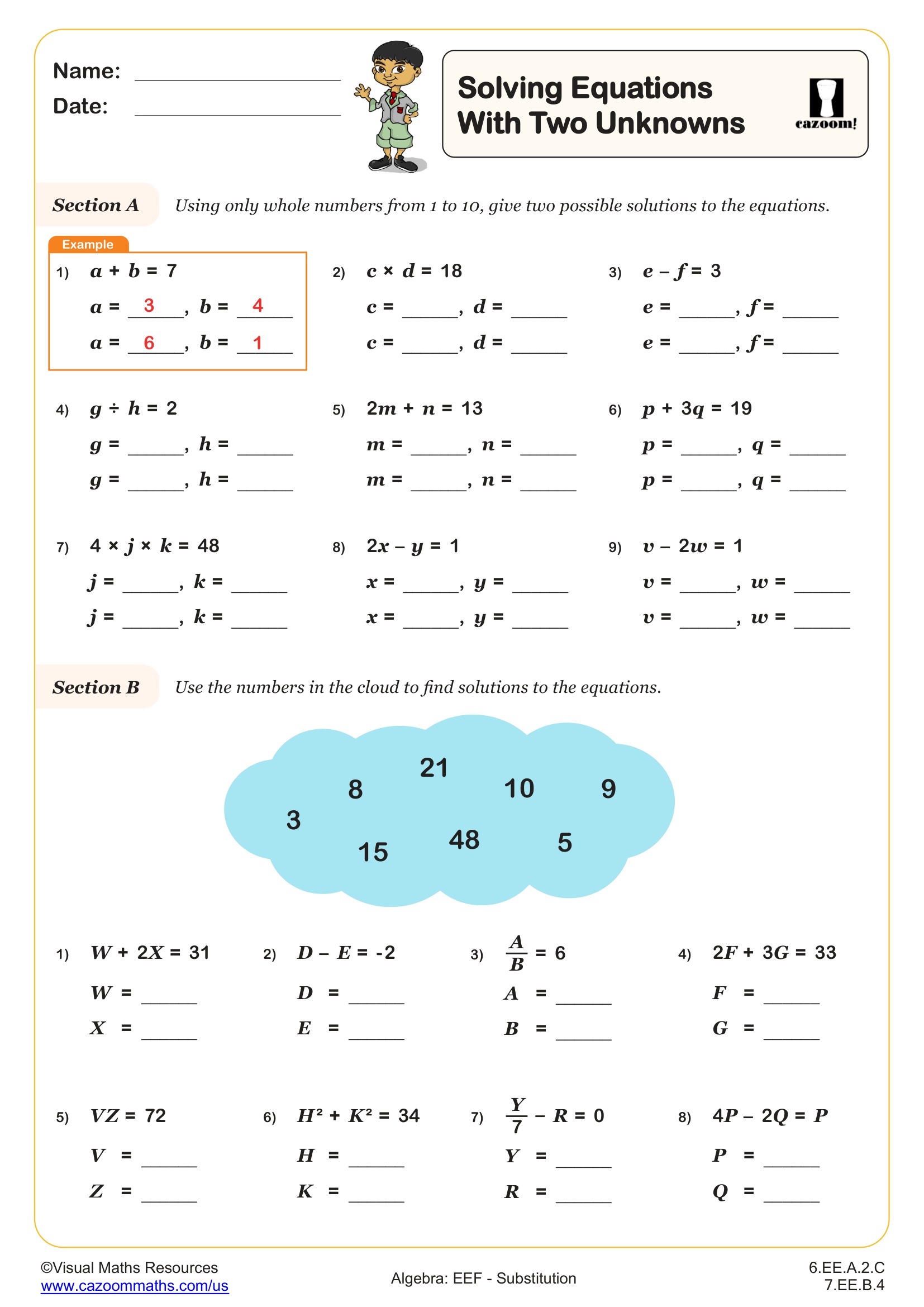
Solving Equations with Two Unknowns
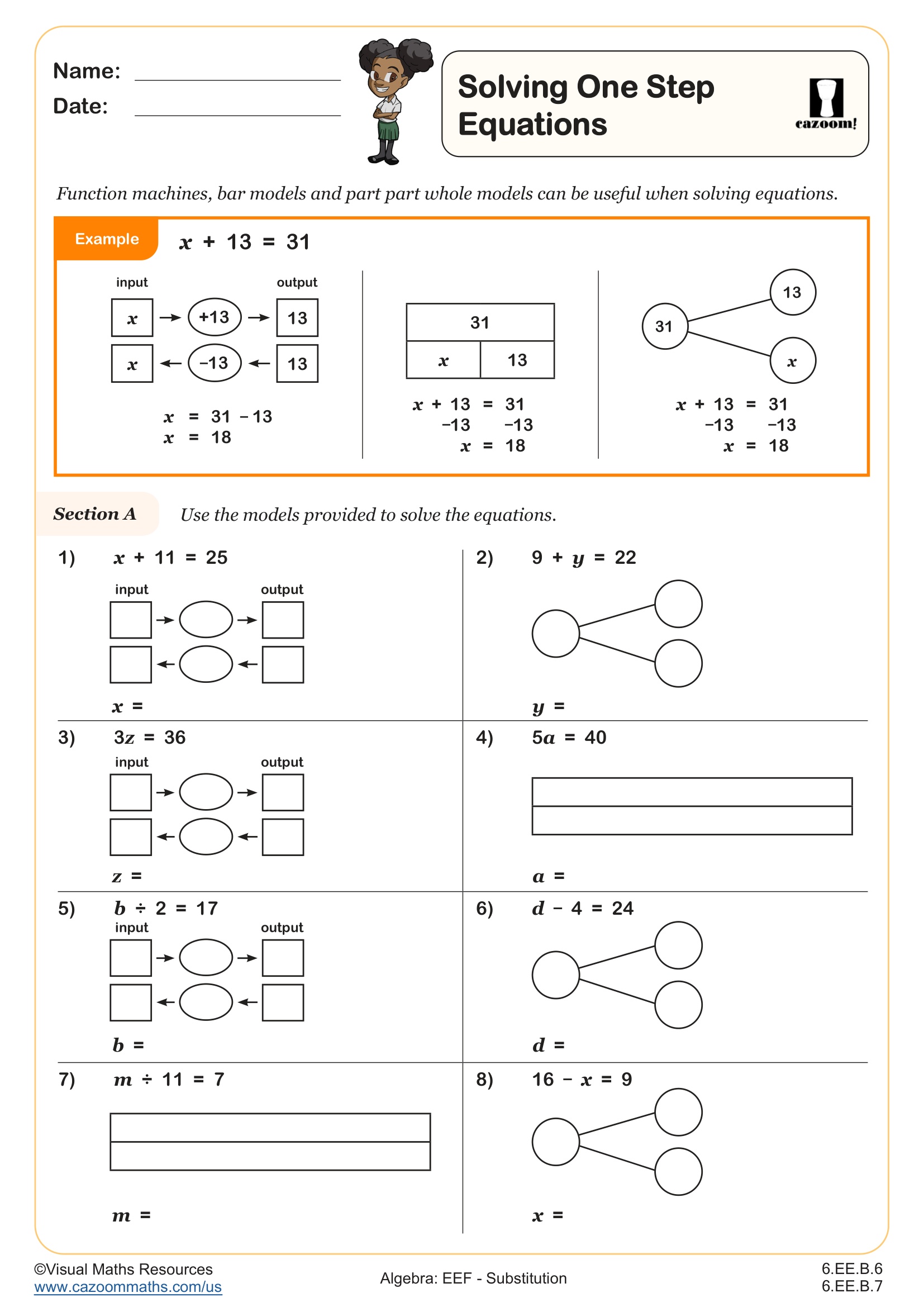
Solving One Step Equations
Solving Two Step Equations
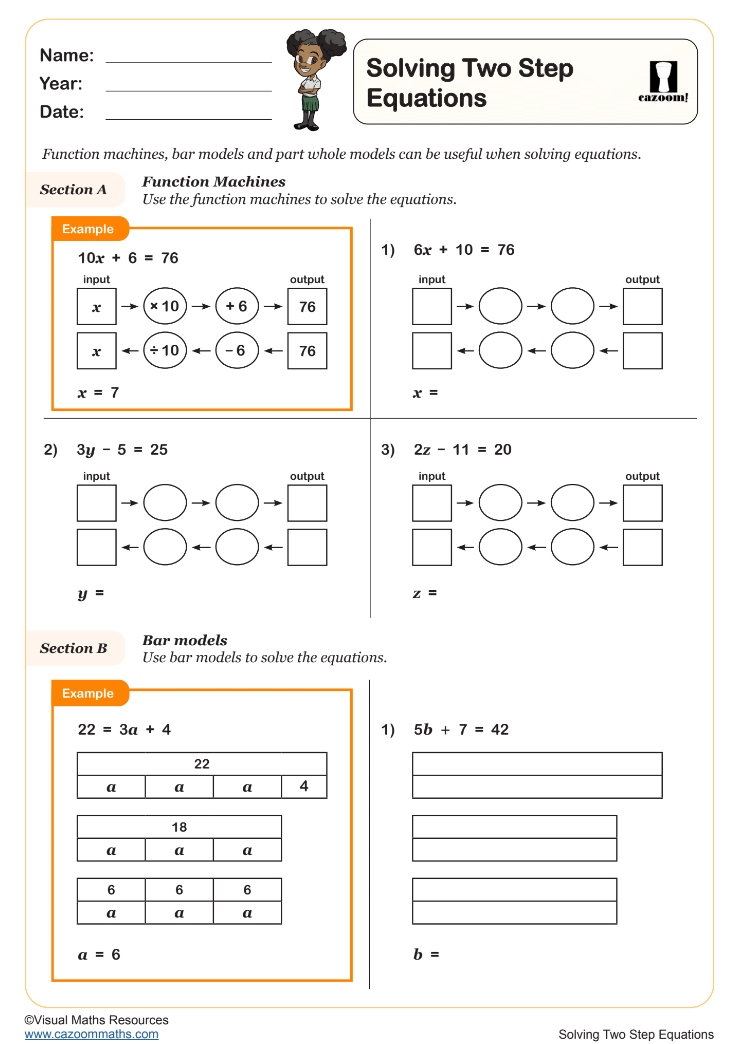
Substituing Value into Formulas (A) (With Clues)
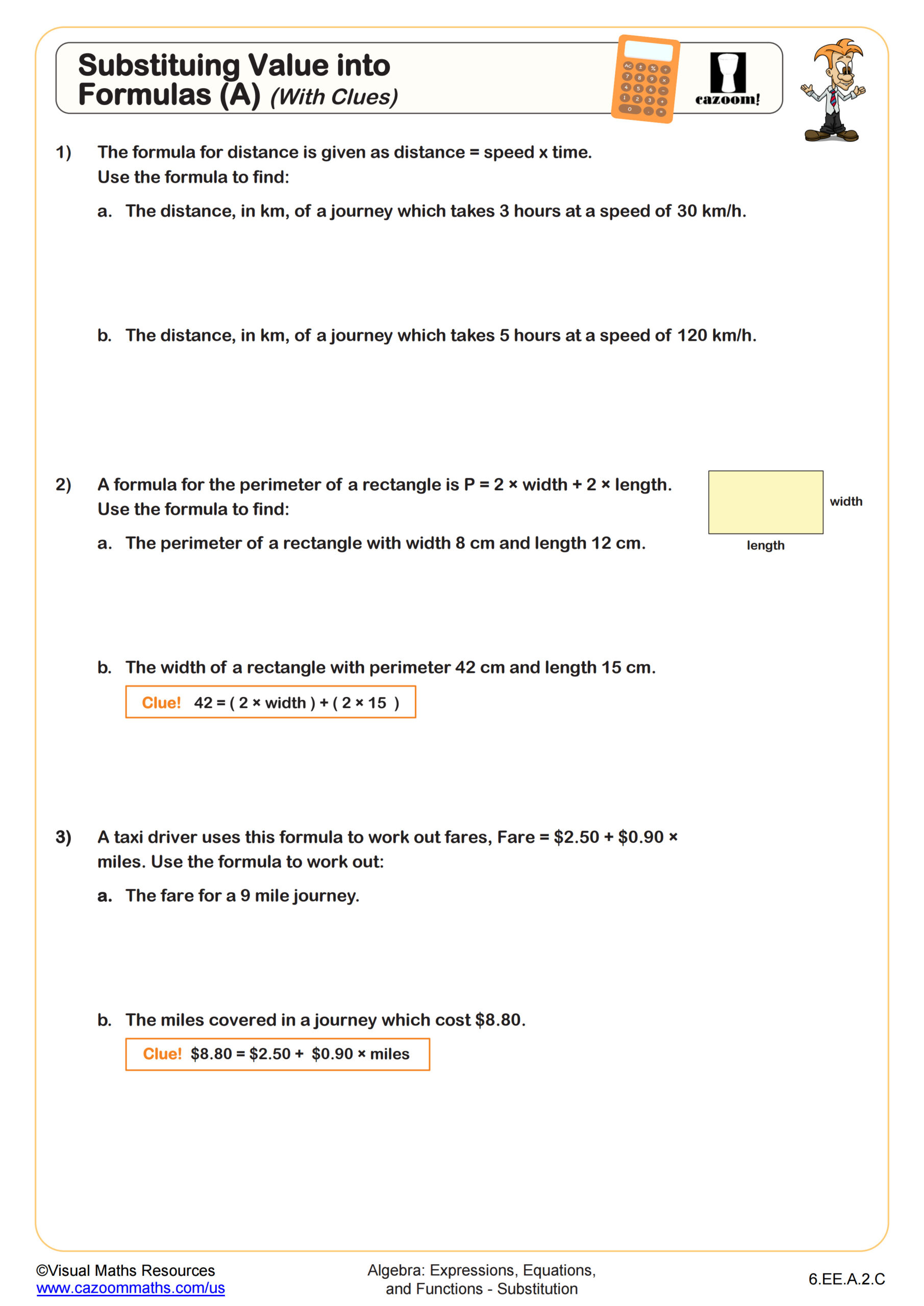
Substituing Value into Formulas (B)
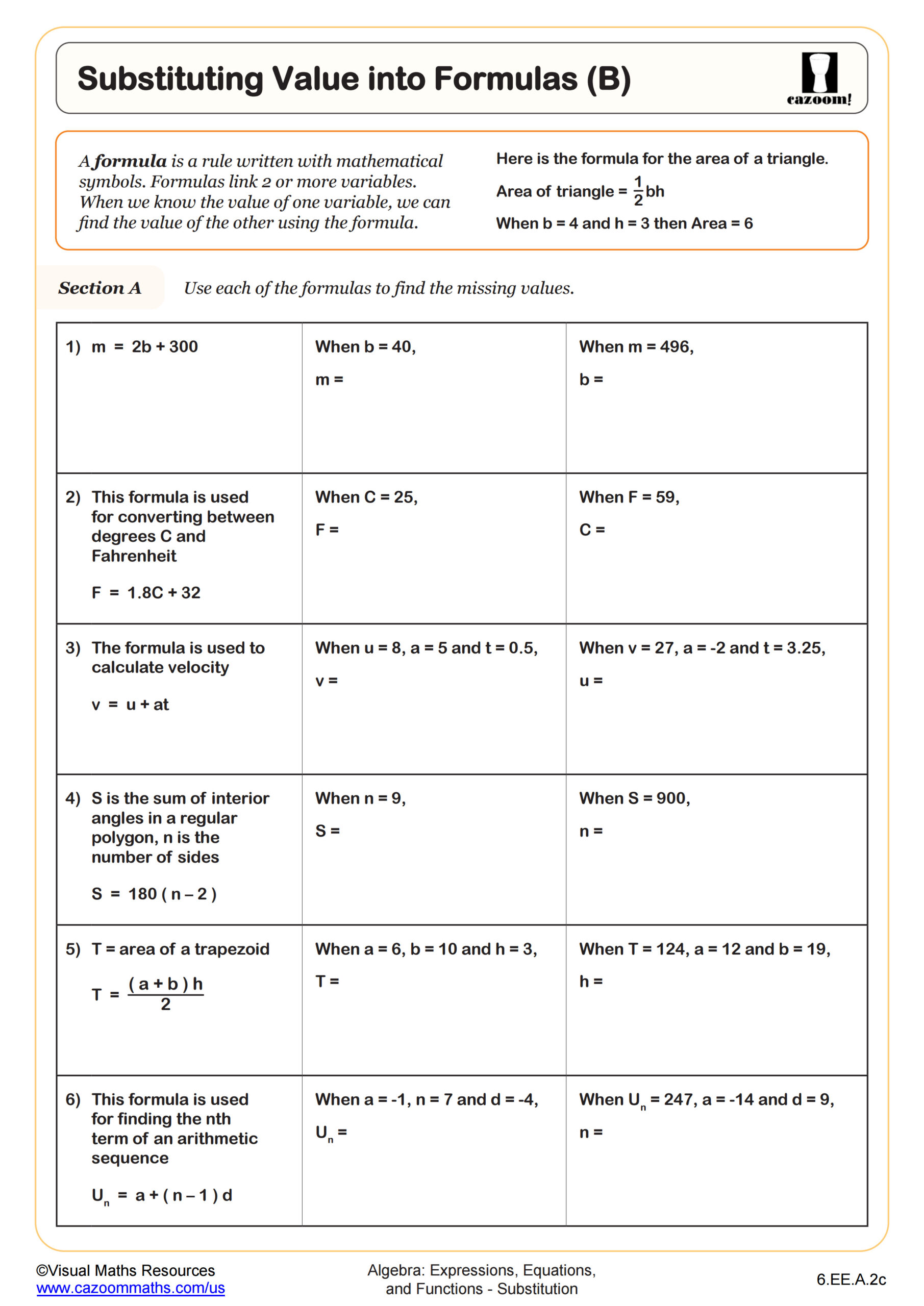
Substituing Value into Formulas Word Problems (A)
Substituting into Expressions (A)
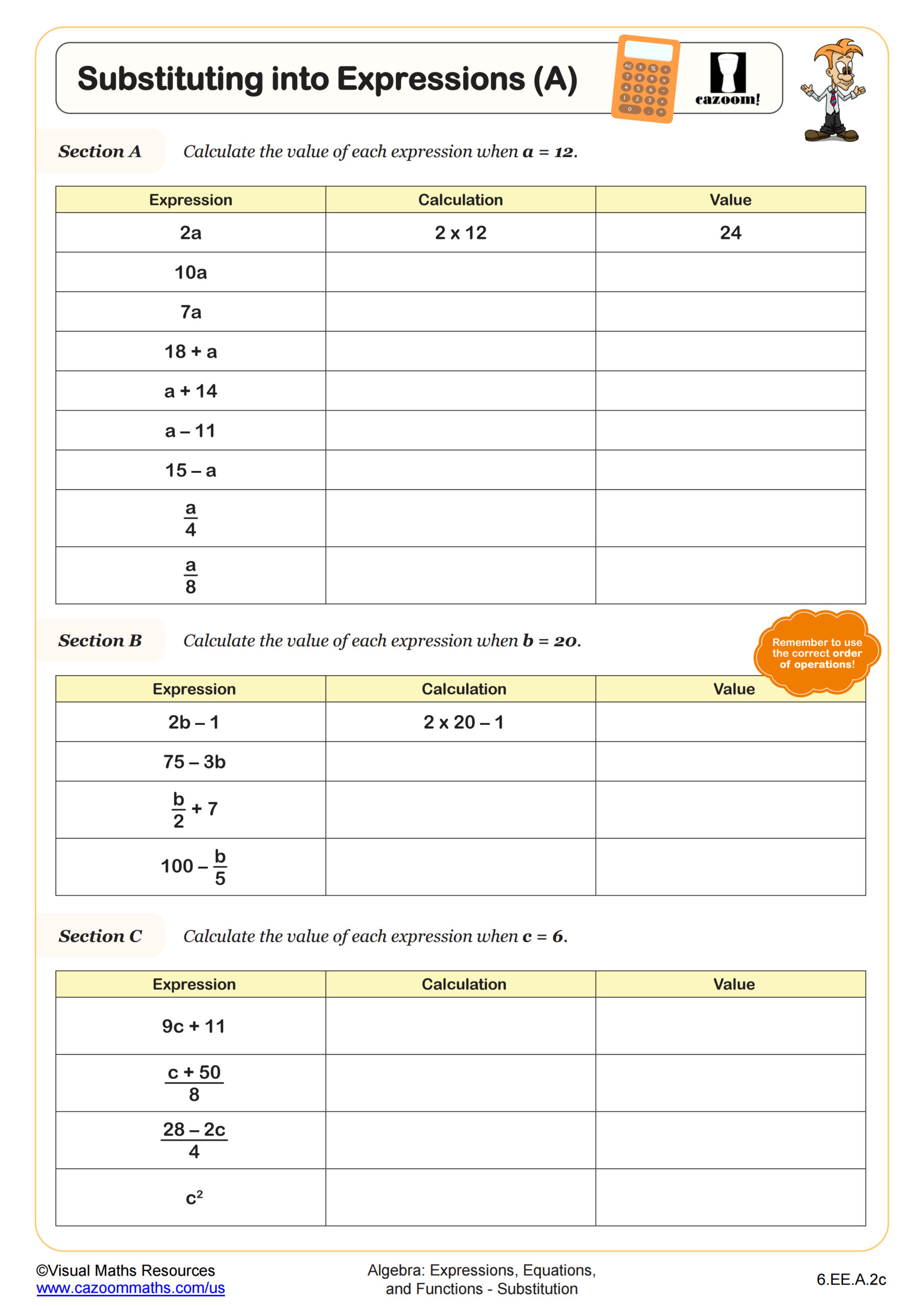
Substituting into Expressions (B)
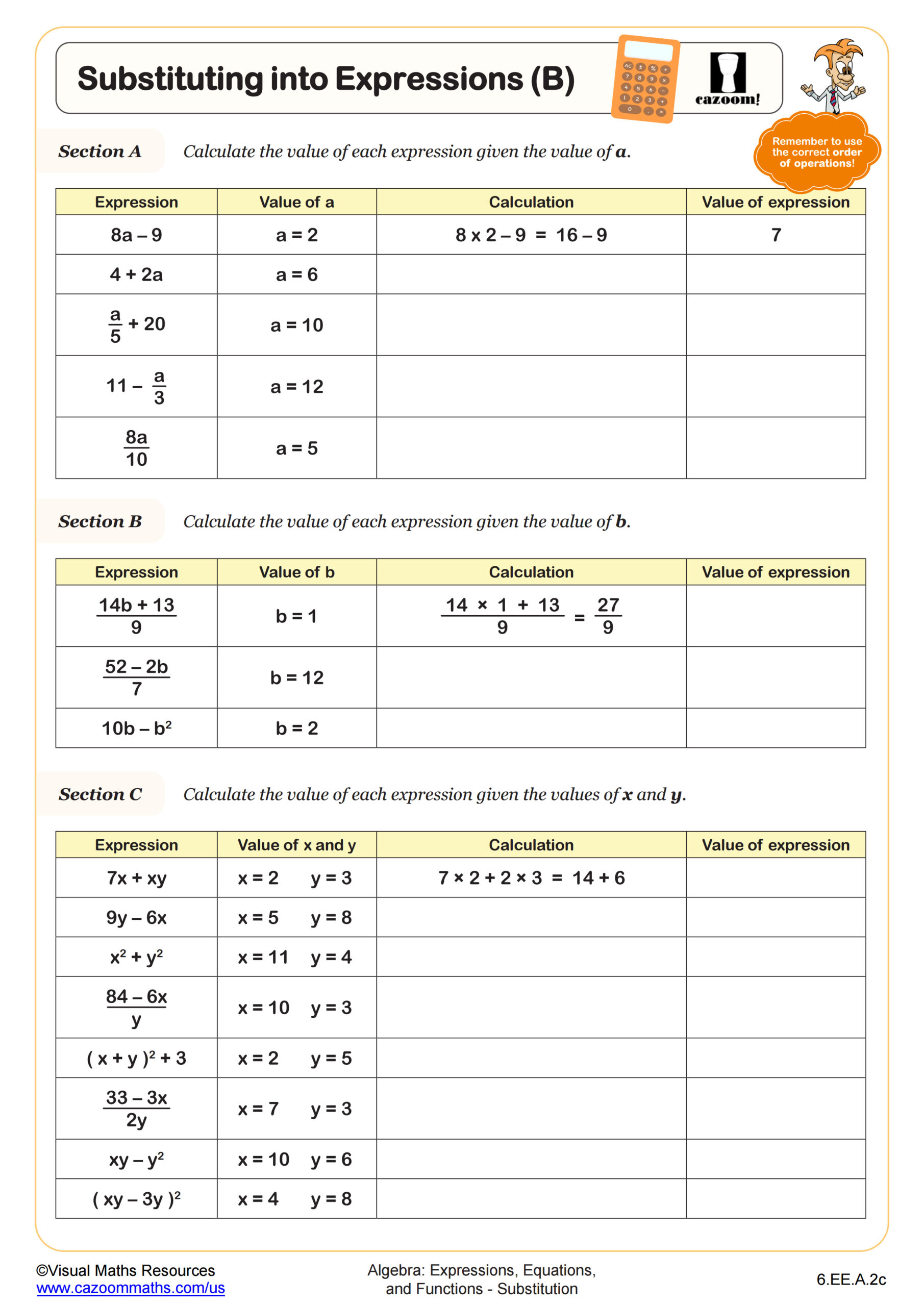
Substituting into Expressions (C)
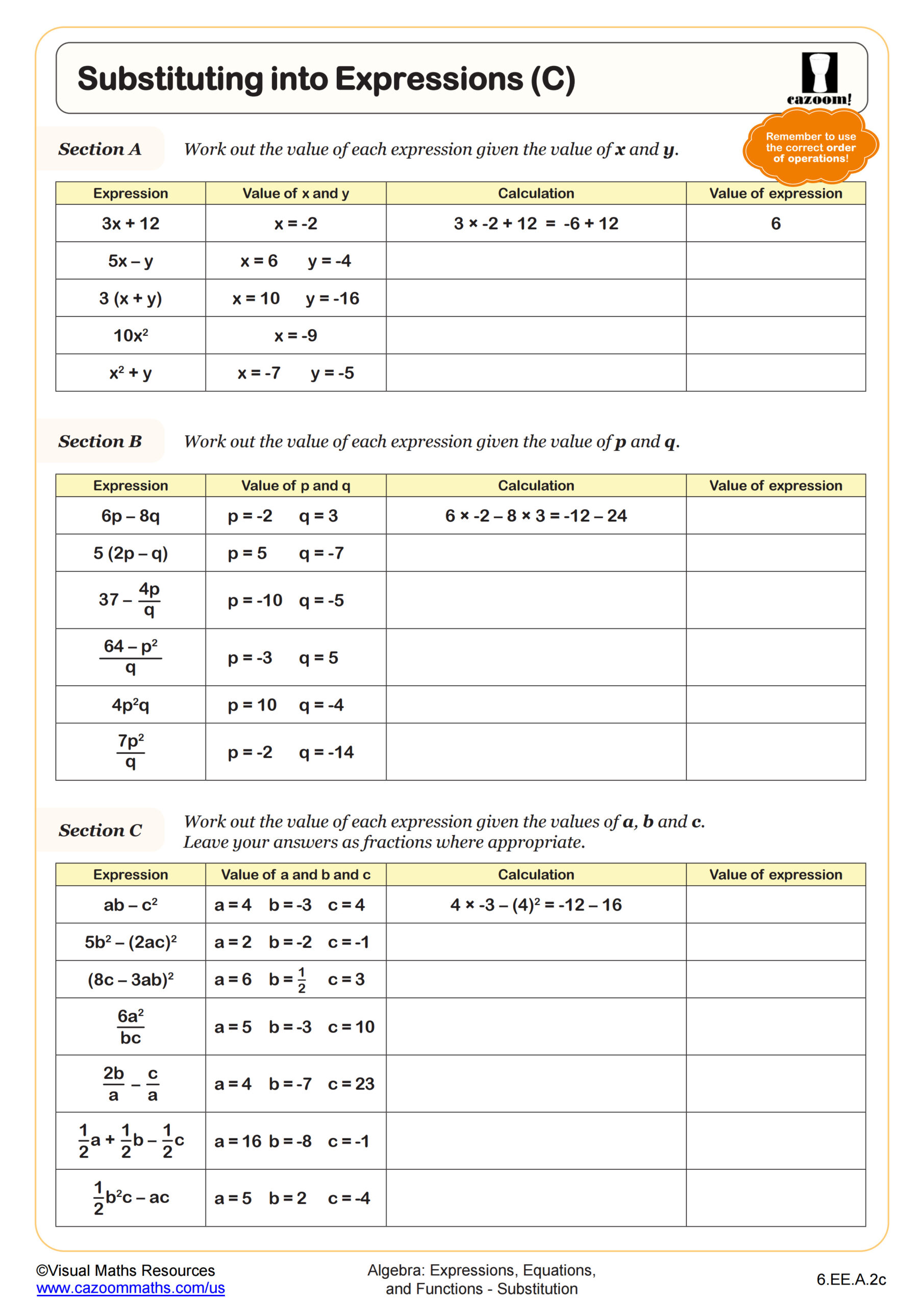
Substitution Builder (A)
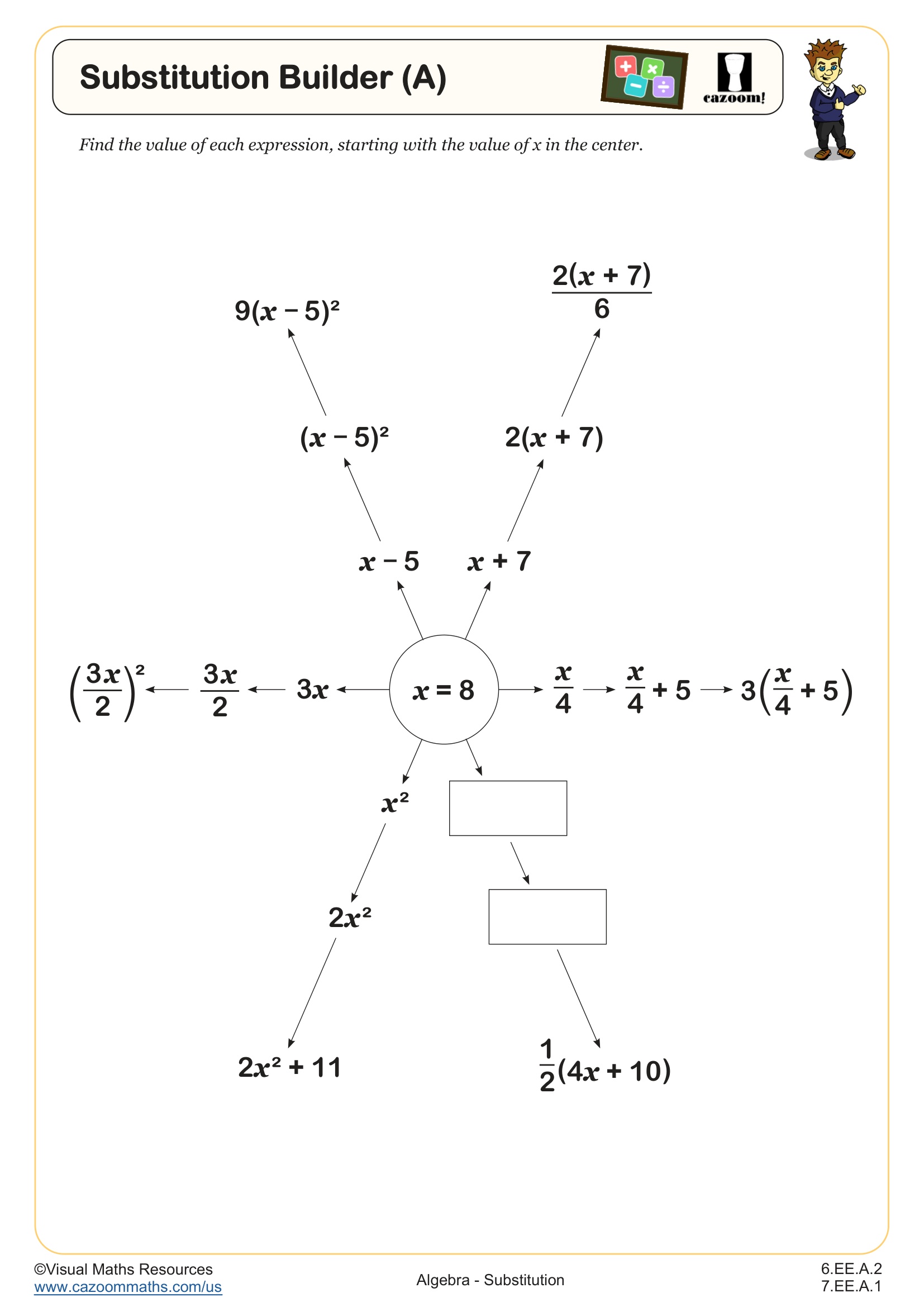
Substitution Builder (B)
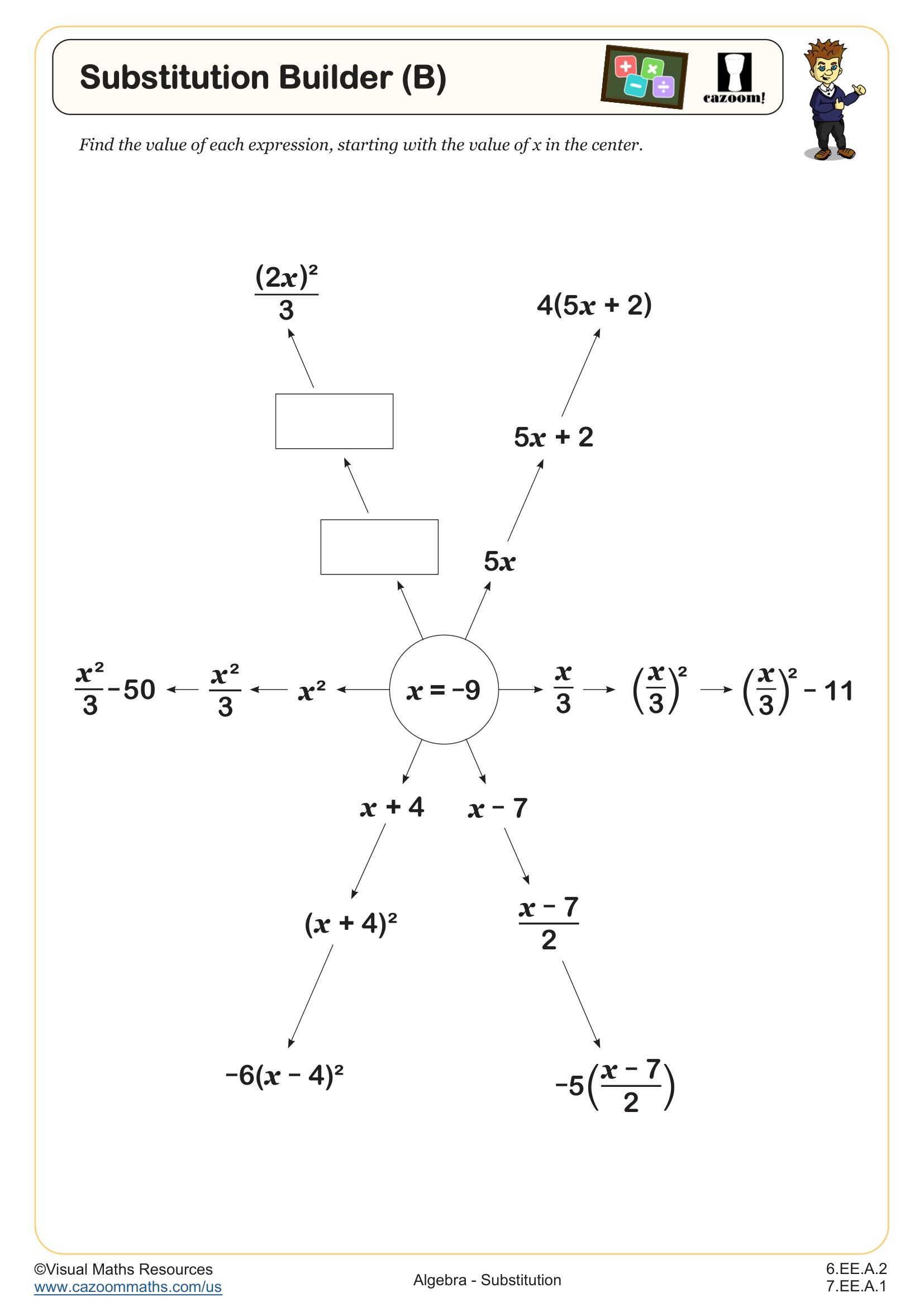
Substitution Builder (C)
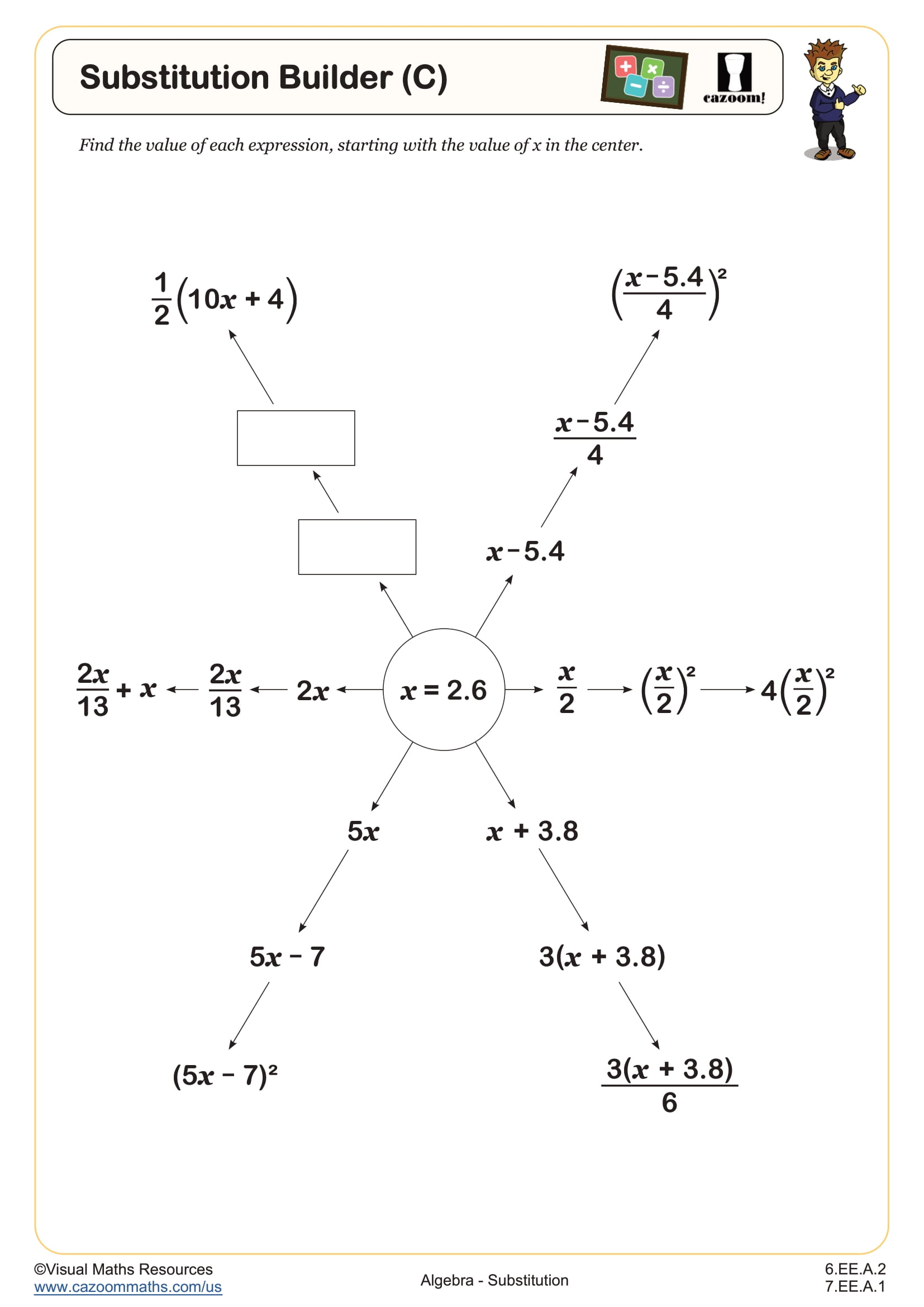
Substitution Magic Squares
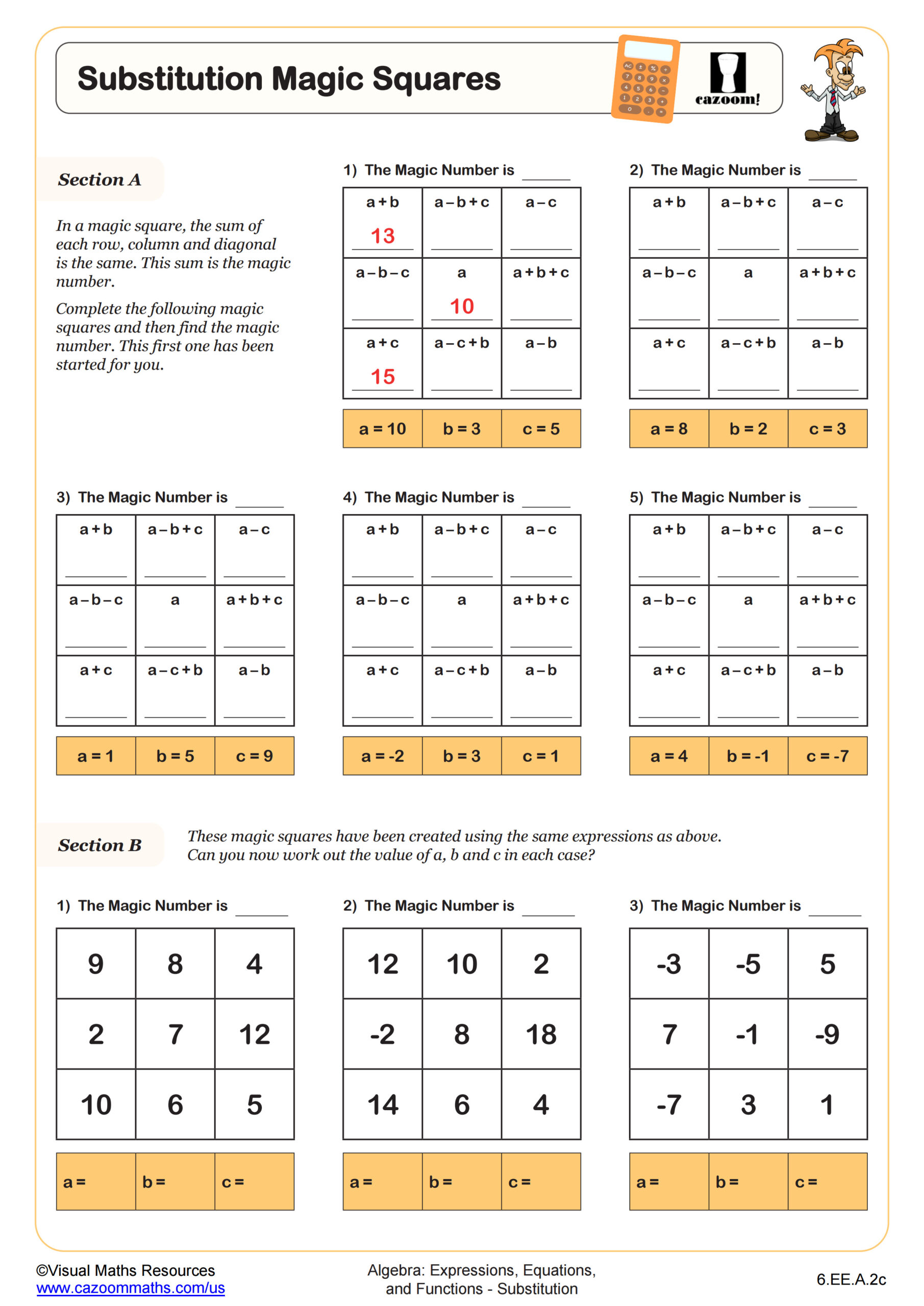
Words as Expressions
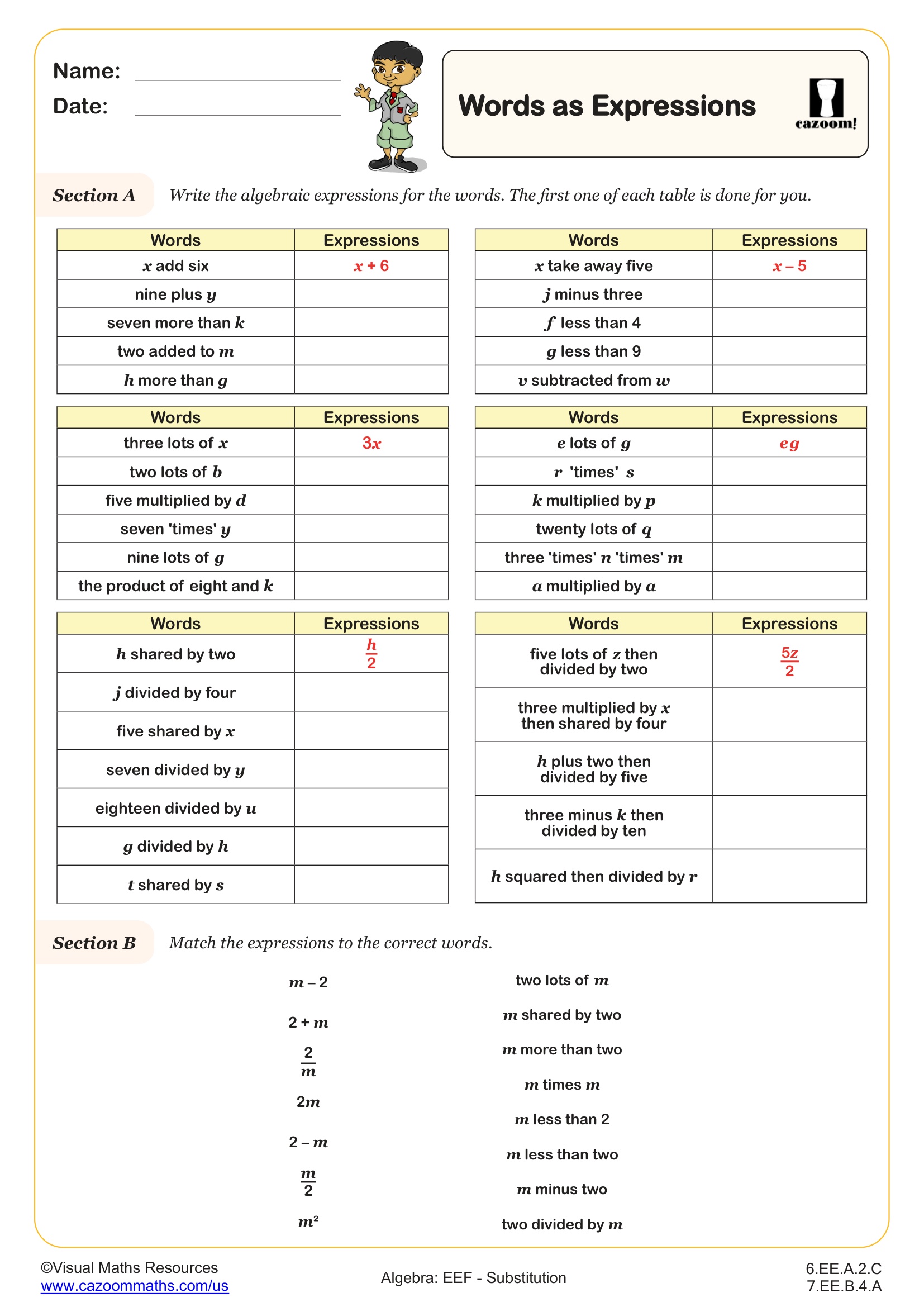
All worksheets are created by the team of experienced teachers at Cazoom Math.
What makes an effective substitution worksheet for 6th grade students?
An effective substitution worksheet presents problems in a logical sequence, starting with simple single-variable expressions before progressing to more complex multi-variable scenarios. Teachers notice that worksheets work best when they include a mix of positive and negative substitution values, as this forces students to confront order of operations challenges early in their algebraic journey.
The most valuable substitution worksheets also incorporate real-world contexts, such as calculating distances using speed and time formulas or determining costs using variable pricing models. Teachers report that students engage more deeply with substitution when they can connect the mathematical process to situations they might encounter in science class or everyday problem-solving scenarios.
How does 6th grade substitution connect to higher-level math concepts?
Substitution in 6th grade lays the groundwork for solving systems of equations in 8th grade and Algebra I, where students will use the solve by substitution worksheet pdf approach to find intersection points of linear equations. Teachers observe that students who master basic substitution techniques in middle school demonstrate greater confidence when tackling more complex algebraic manipulations later.
The substitution skills learned in 6th grade also connect directly to function evaluation in high school mathematics. Students who can efficiently substitute values into expressions find themselves better prepared for calculus concepts like finding derivatives at specific points, making this foundational skill crucial for long-term mathematical success.
Why do students make calculation errors during substitution practice?
Teachers frequently notice that students make errors when substituting negative values because they forget to use parentheses around the replacement number. For example, when substituting x = -3 into the expression 2x² - 5, students often write 2-3² - 5 instead of 2(-3)² - 5, leading to incorrect results that compound throughout their work.
Another common issue occurs when students substitute into expressions with multiple variables but lose track of which variable they're replacing. A substitution math worksheet that requires students to highlight or circle the variable being replaced helps minimize these tracking errors and builds more systematic problem-solving habits.
How should teachers structure substitution worksheet practice sessions?
Teachers find success by starting each substitution practice session with a brief review of order of operations, since substitution errors often stem from calculation mistakes rather than conceptual misunderstandings. Having students work through two or three problems together before independent practice helps establish the systematic approach of substitute, simplify, and solve.
Effective teachers also encourage students to show their substitution step explicitly by writing the original expression, then the expression with numbers substituted, and finally the simplified result. This three-step approach makes it easier to identify where errors occur and helps students develop the detailed work habits they'll need for more advanced algebra courses.