6th Grade Units and Dimensions Worksheets
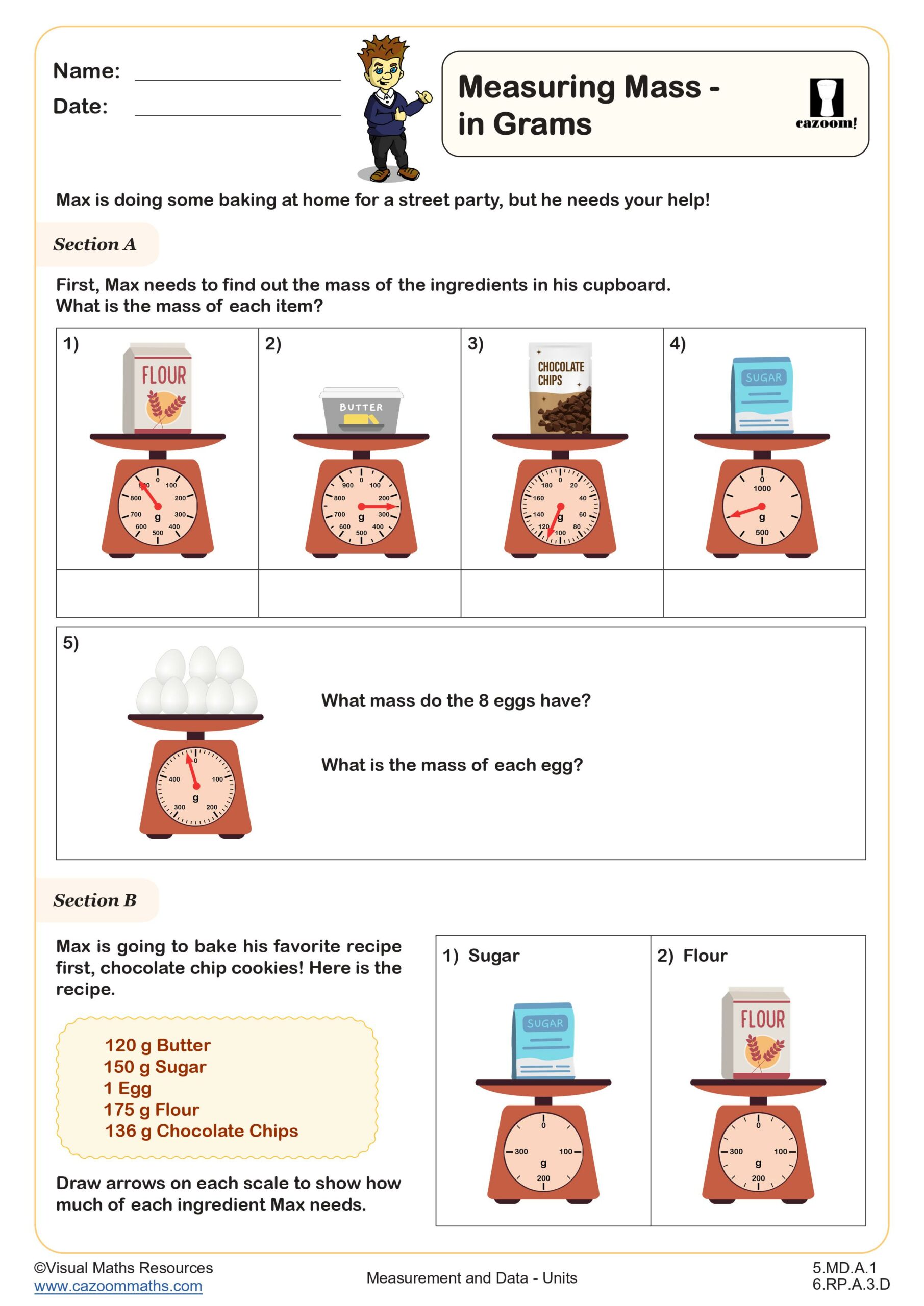
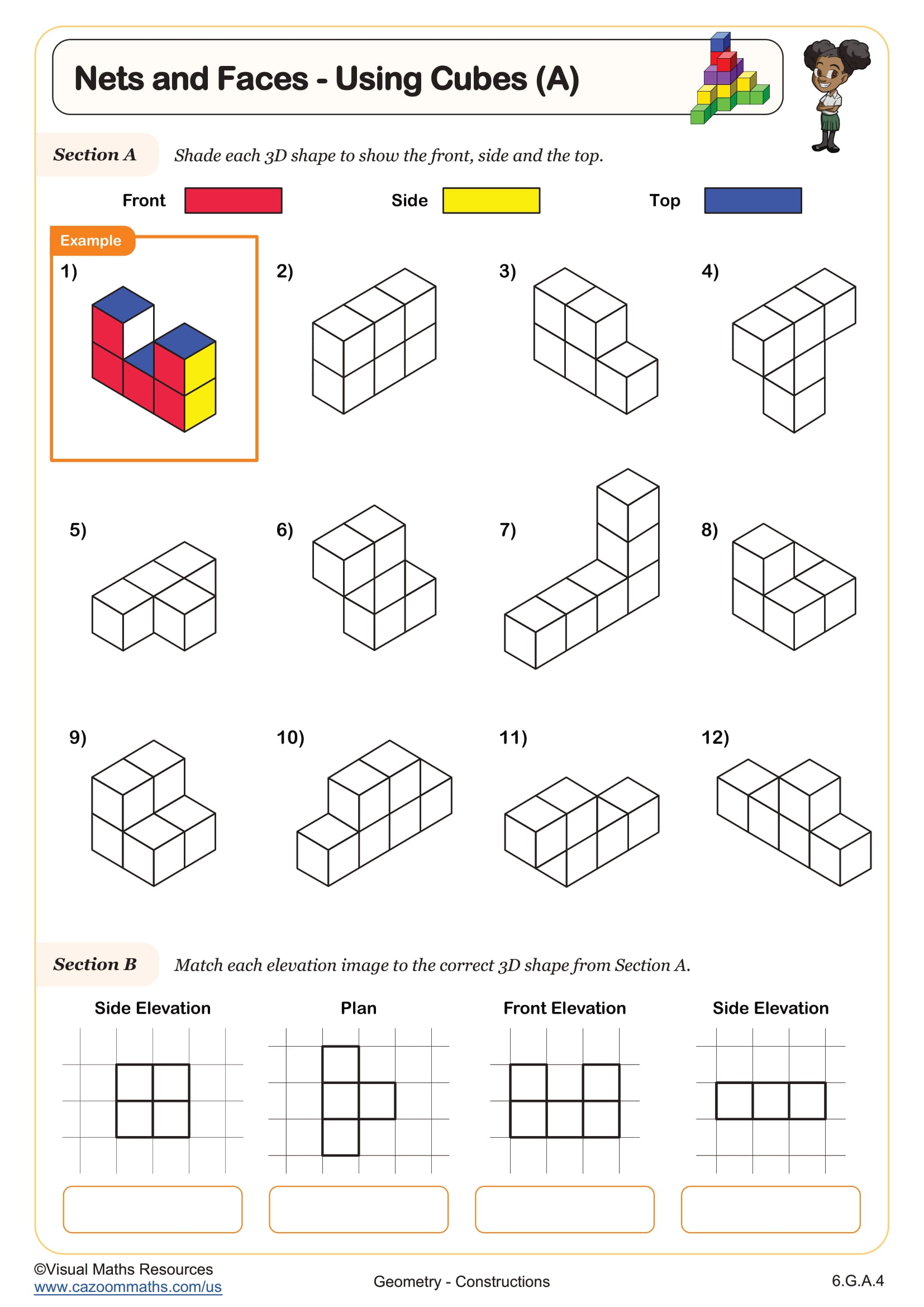
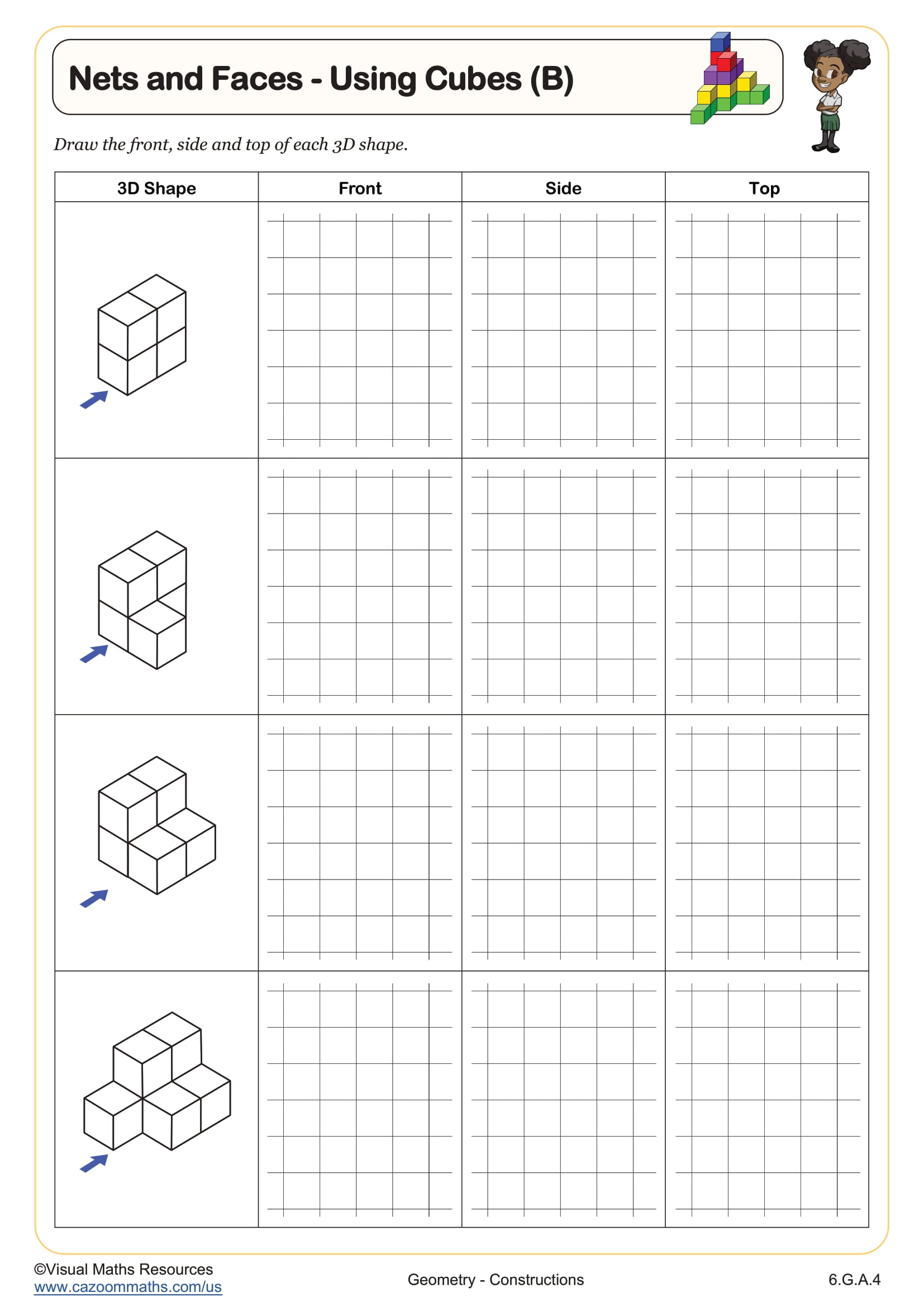
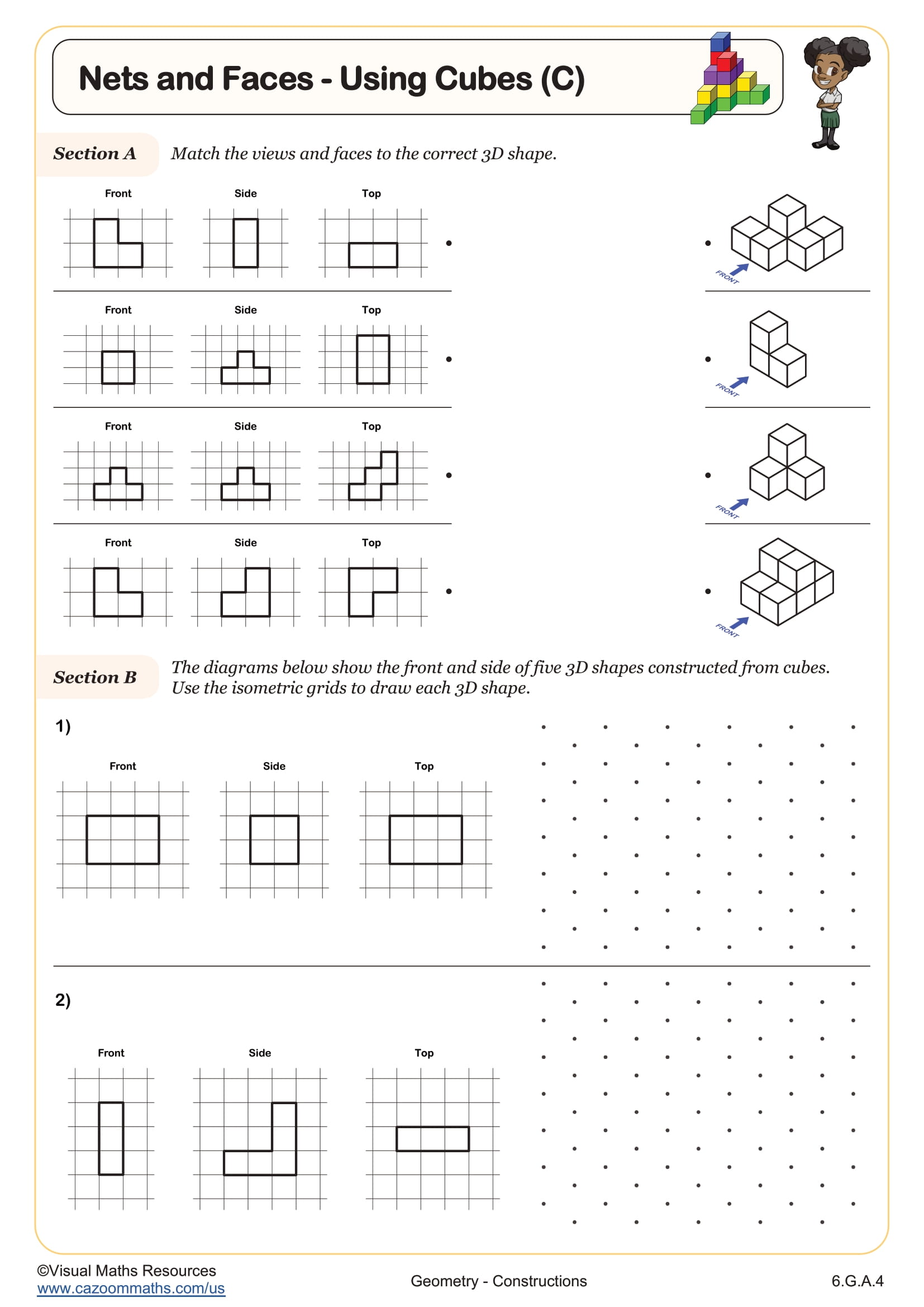
All worksheets are created by the team of experienced teachers at Cazoom Math.
What are units and dimensions in 6th grade math?
Units and dimensions in 6th grade math refer to the measurement systems students use to quantify length, with particular emphasis on the metric system. This topic bridges arithmetic operations with practical measurement skills, requiring students to convert between related units like meters to centimeters or centimeters to millimeters, and to perform addition and subtraction with mixed units.
A common error occurs when students add measurements without converting to the same unit first, writing answers like "5 meters + 30 centimeters = 35" without recognizing they're combining different dimensional units. Students lose points on assessments when they forget to label their final answers with the correct unit, even when their numerical work is accurate. The worksheets address this by requiring students to work systematically through conversions before performing operations.
What grade level learns units and dimensions?
Units and dimensions worksheets are designed for 6th grade students in middle school. At this level, the Common Core State Standards expect students to solve real-world problems involving measurement conversions within the metric system, building on the foundational measurement work from elementary grades.
The progression in 6th grade moves from simple single-step conversions to more complex multi-step problems that combine conversion with addition or subtraction. Students start with straightforward conversions between adjacent units (centimeters to millimeters) before tackling problems that require converting meters to centimeters while simultaneously performing operations. This scaffolded approach prepares students for the ratio and proportional reasoning they'll need in 7th and 8th grade, where unit rates and dimensional analysis become more sophisticated.
How do you convert between meters and centimeters?
Converting between meters and centimeters requires understanding that 1 meter equals 100 centimeters. To convert meters to centimeters, students multiply by 100 (moving the decimal point two places right), while converting centimeters to meters requires dividing by 100 (moving the decimal point two places left). The key is recognizing that you're converting from a larger unit to a smaller unit or vice versa.
This skill connects directly to STEM applications, particularly in engineering and scientific measurement. Architects create building plans using meters but need centimeter precision for cabinet installations or doorway dimensions. Scientists measuring bacterial growth in lab settings convert between units constantly, recording initial measurements in centimeters but reporting growth rates in millimeters. Understanding these conversions allows students to interpret real measurement data and communicate findings accurately across different scales.
How do these worksheets help students practice measurement conversions?
The worksheets provide systematic practice by separating conversion skills from mixed-operation problems, allowing students to build confidence with each component before combining them. Students work through pure conversion exercises first, then progress to problems requiring both conversion and addition or subtraction of measurements. Answer keys let students check their work immediately and identify whether errors stem from conversion mistakes or computational issues.
Teachers use these worksheets for differentiated small-group instruction, assigning simpler conversion pages to students still mastering the metric system while others work on multi-step problems. The worksheets work well as homework following direct instruction, as independent practice stations during math workshop, or as intervention materials for students who struggled with measurement units in elementary grades. The inclusion of elliptical orbits provides an engaging context that connects abstract conversion practice to space science concepts.