7th Grade Bearings Scale and Loci Worksheets
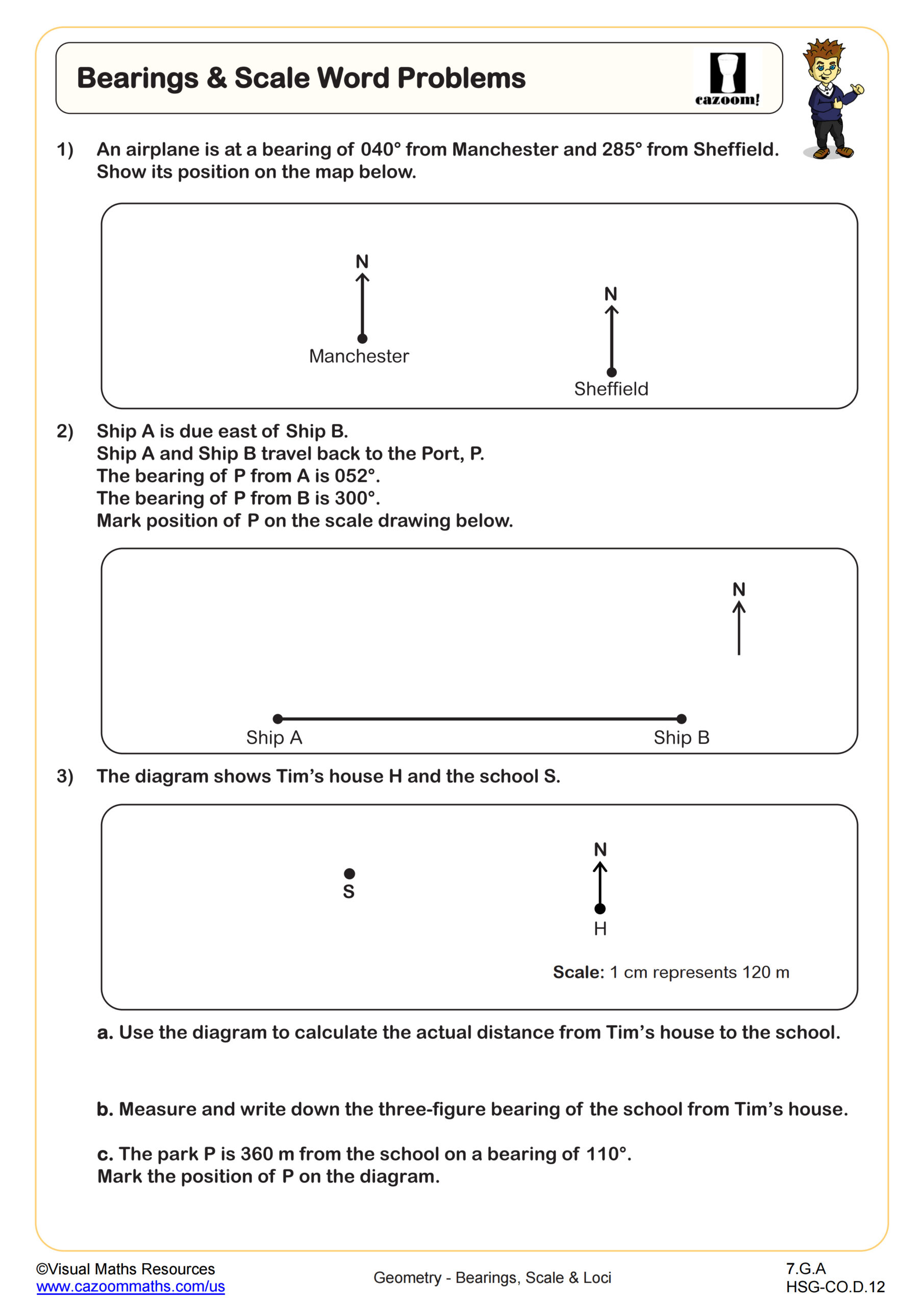
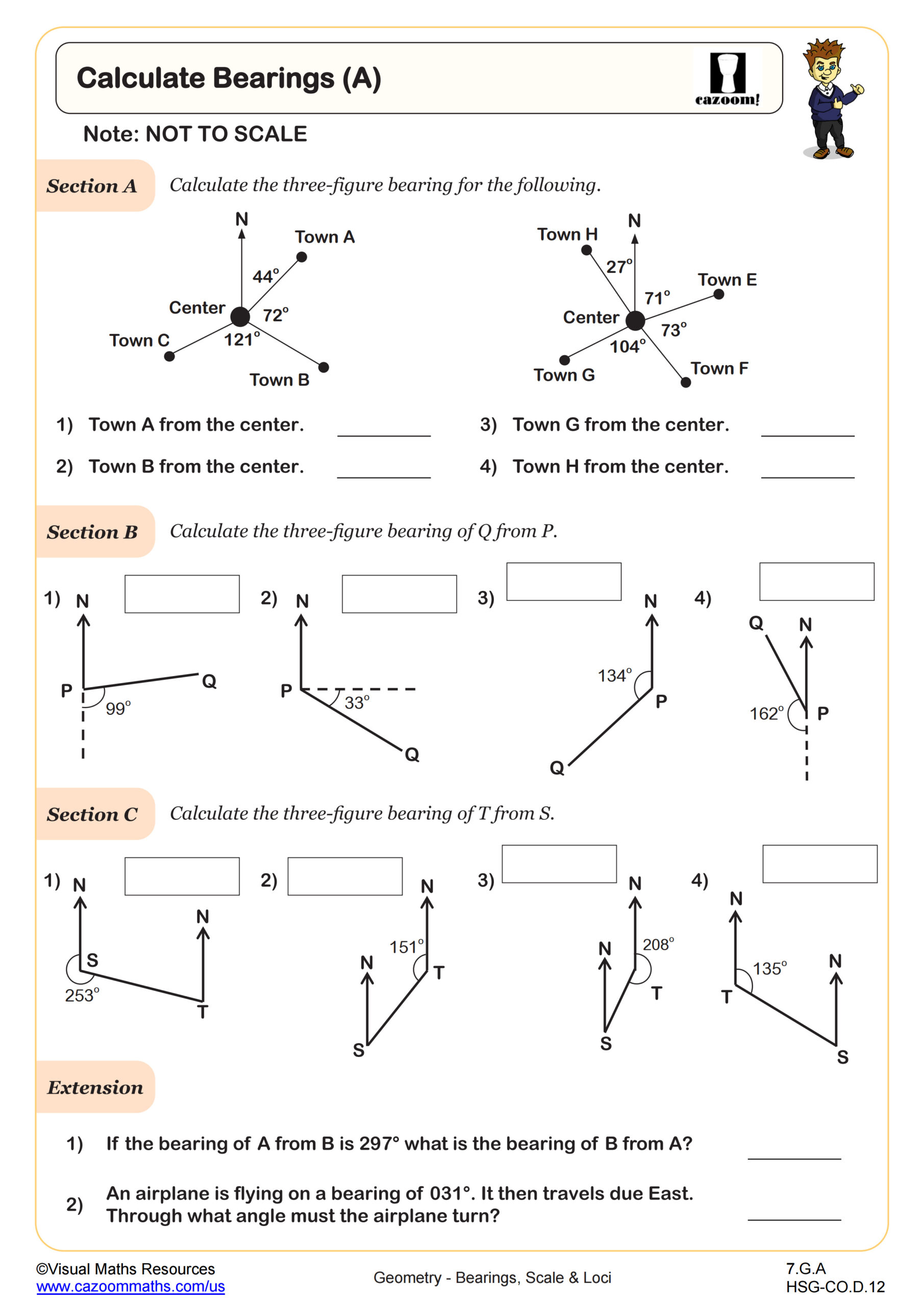
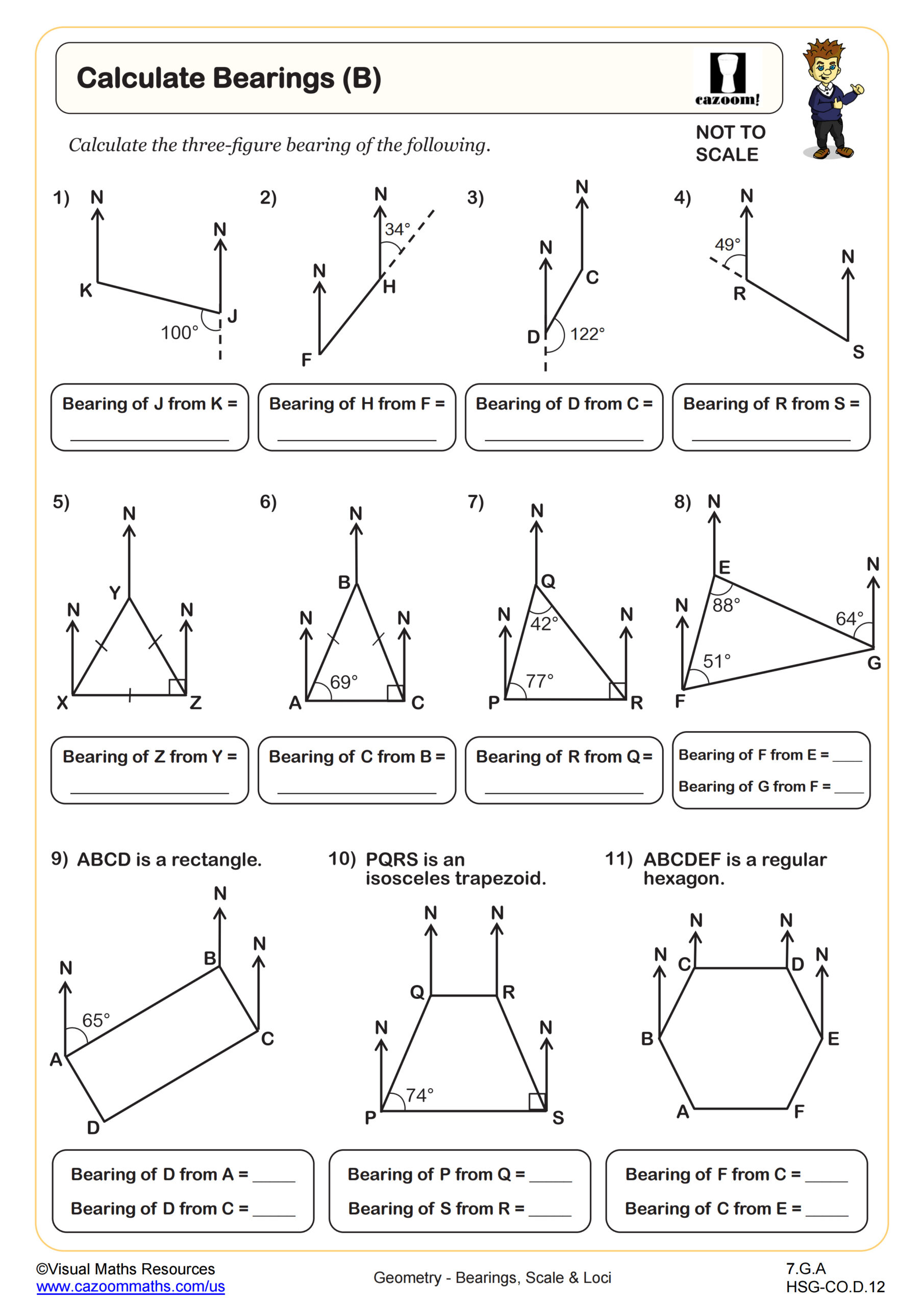
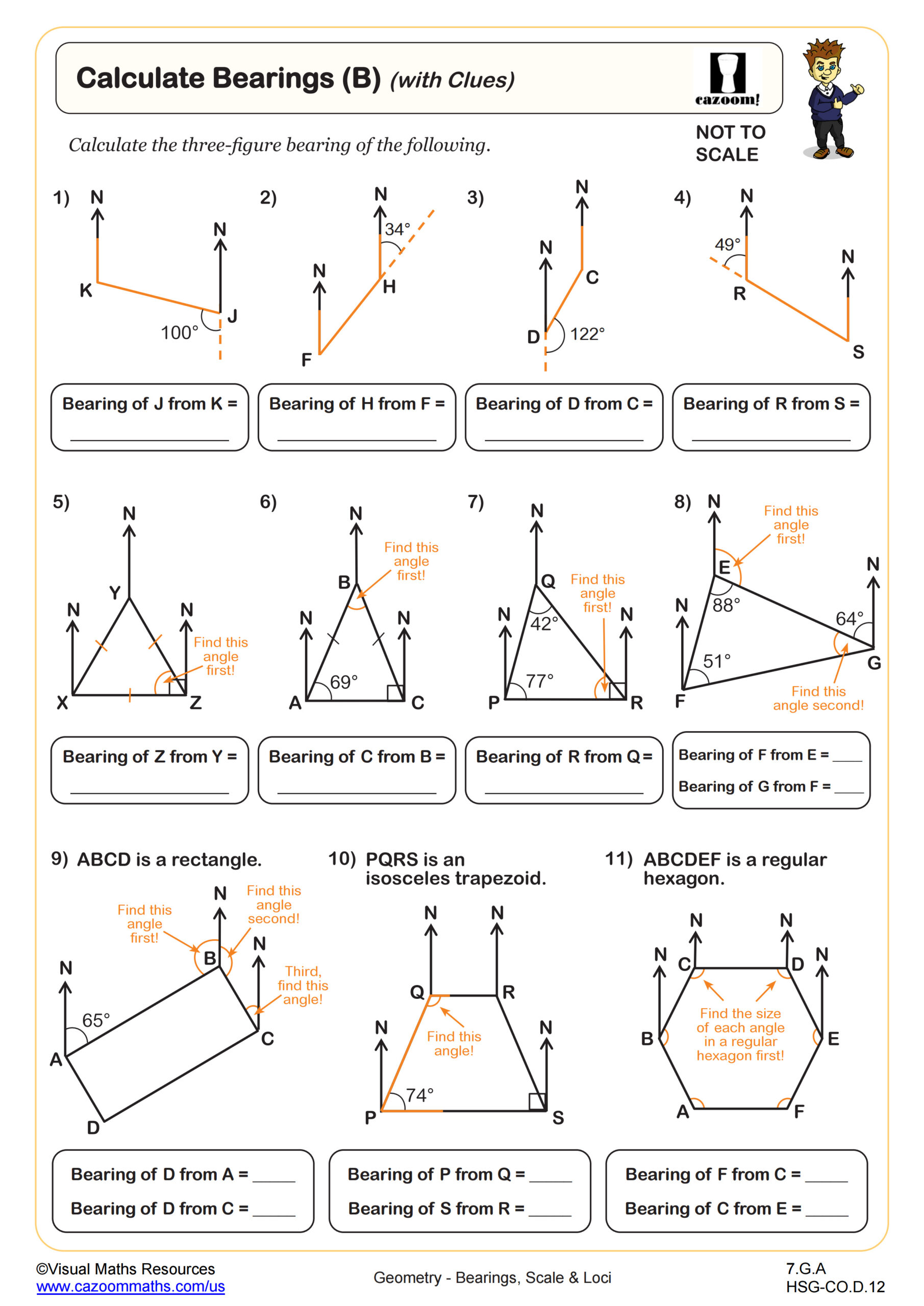
All worksheets are created by the team of experienced teachers at Cazoom Math.
What should I look for in a measuring bearings worksheet for 7th graders?
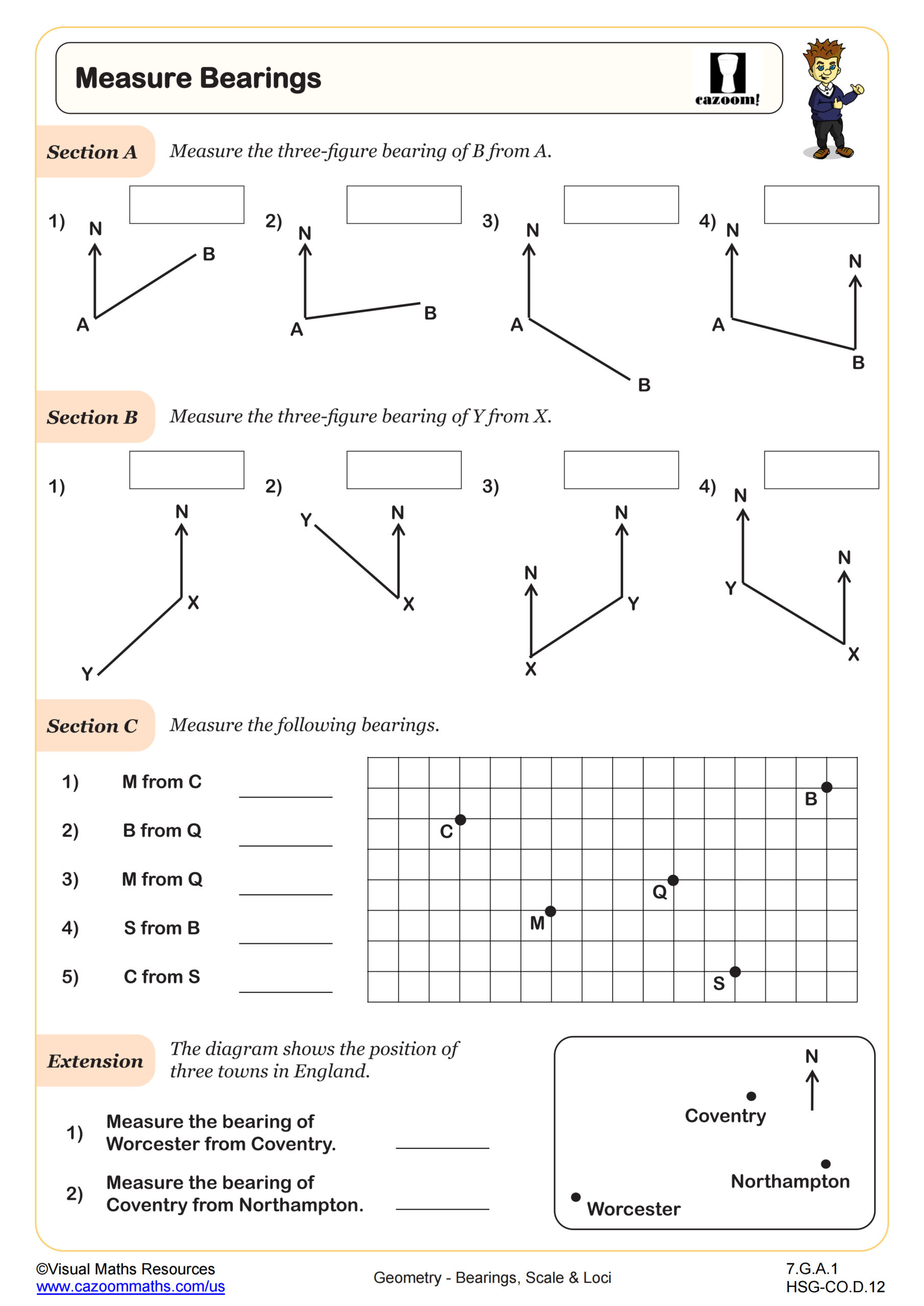
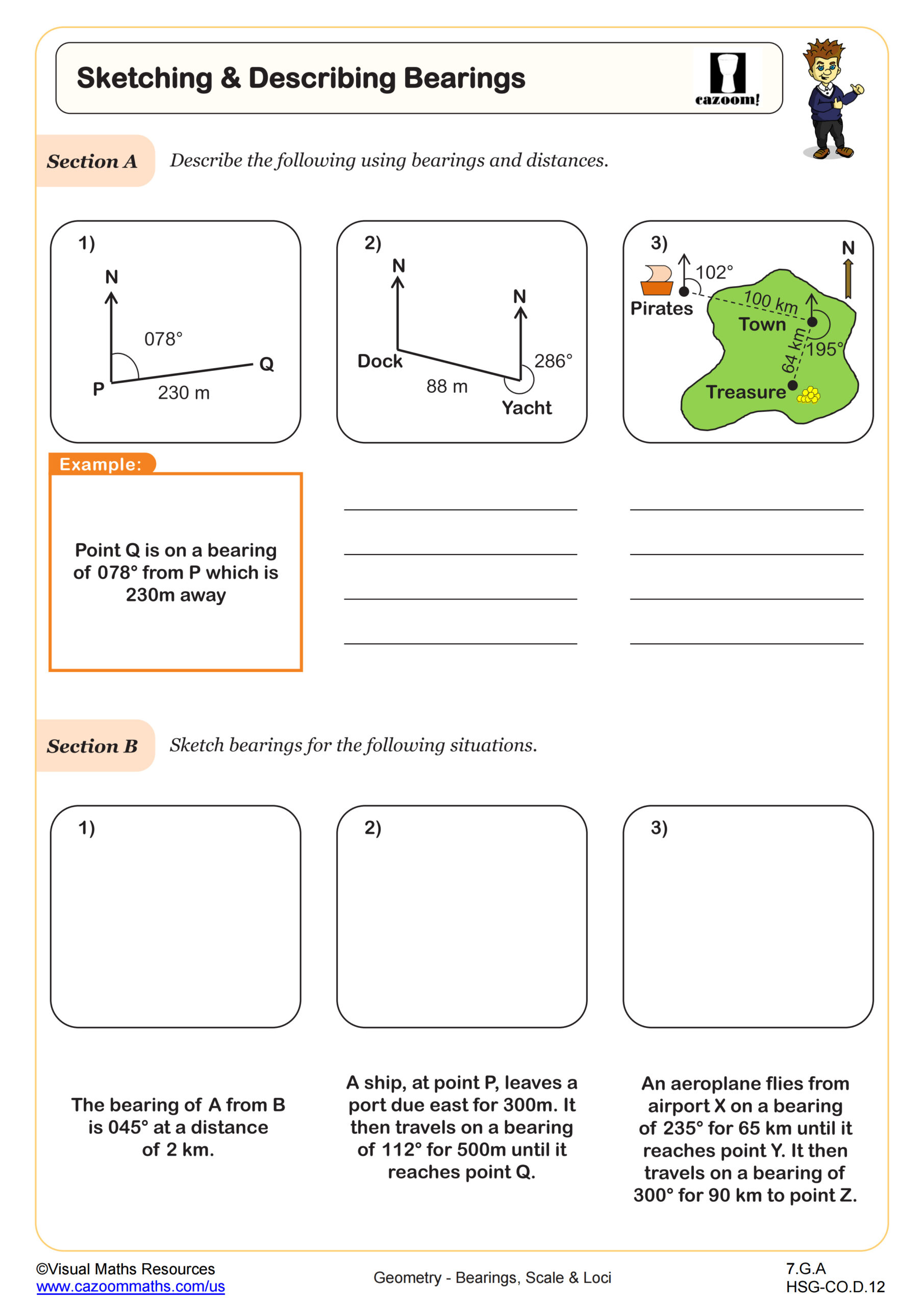
A quality measuring bearings worksheet should include problems that progress from basic compass direction identification to three-figure bearing calculations and conversions. The worksheet should align with 7th grade geometry standards, particularly those covering angle measurement and directional relationships that appear in Common Core State Standards.
Teachers report that students benefit most from worksheets that clearly distinguish between bearing measurements (always measured clockwise from north) and standard angle measurements. Look for problems that include both bearing-to-angle and angle-to-bearing conversions, as this helps students understand the relationship between different measurement systems used in navigation and coordinate geometry.
Are bearings and loci appropriate for all 7th grade students?
Bearings and loci concepts align well with 7th grade geometry standards, particularly students' work with angle measurement, construction, and spatial reasoning. Most 7th graders have developed sufficient understanding of angles and coordinate systems to tackle basic bearing problems and simple loci constructions.
However, teachers should ensure students have solid foundational skills in angle measurement and compass use before introducing bearings. Students who struggle with basic angle concepts may need additional support with protractor skills and understanding clockwise versus counterclockwise rotation before moving to bearing calculations and geometric constructions.
How do loci problems connect to real-world applications?
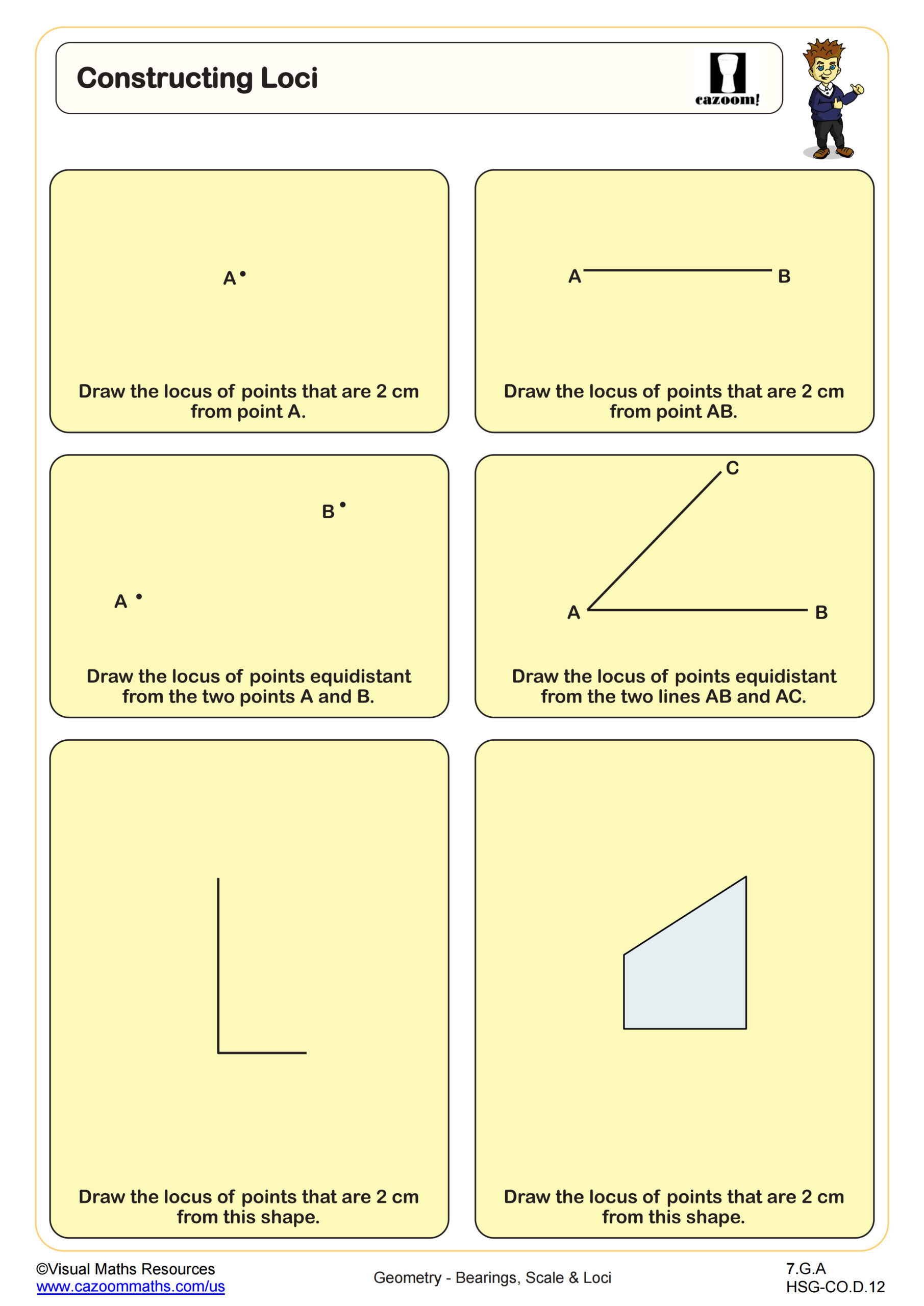
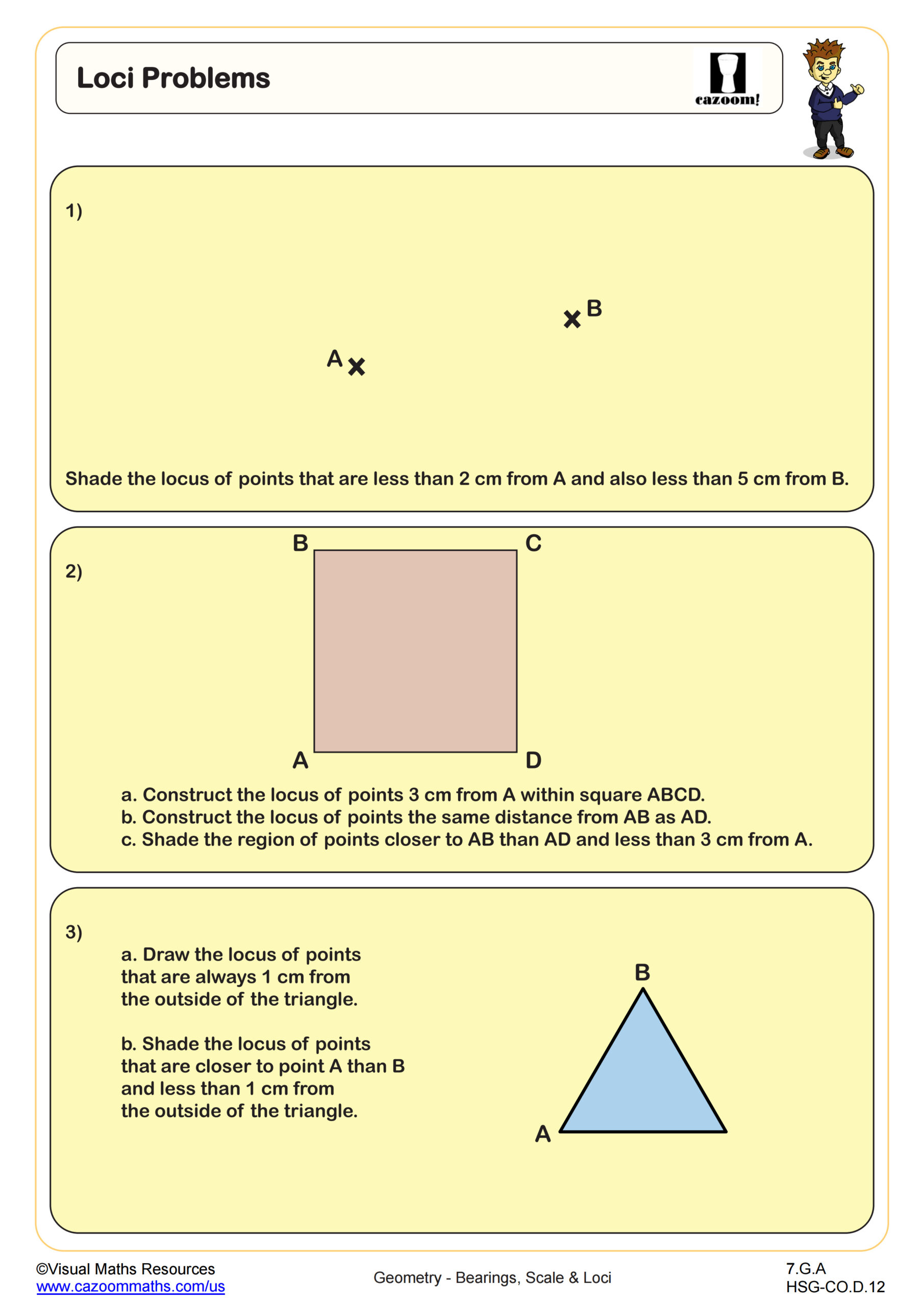
Loci problems teach students to identify sets of points that satisfy specific geometric conditions, skills directly applicable to GPS technology, architectural planning, and engineering design. Students learn to construct paths equidistant from fixed points or lines, mirroring how engineers determine optimal placement for cell towers or emergency service locations.
Teachers find that connecting loci to familiar contexts like finding the best location for a new school (equidistant from several neighborhoods) or determining radio tower coverage areas helps students understand why these geometric constructions matter beyond the classroom. These connections strengthen student engagement with abstract geometric concepts.
How can teachers effectively use these worksheets in their geometry instruction?
Teachers get best results when they introduce bearing concepts with hands-on compass activities before moving to worksheet practice. Starting with physical compass work helps students visualize the relationship between magnetic north and angle measurement, making paper-based problems more meaningful.
The answer keys allow teachers to quickly identify common error patterns, particularly students who measure bearings counterclockwise or confuse bearing notation with standard angle measurement. Teachers report success using these worksheets as both guided practice during lessons and independent review assignments, since the step-by-step format supports different learning paces.