7th Grade Circle Worksheets
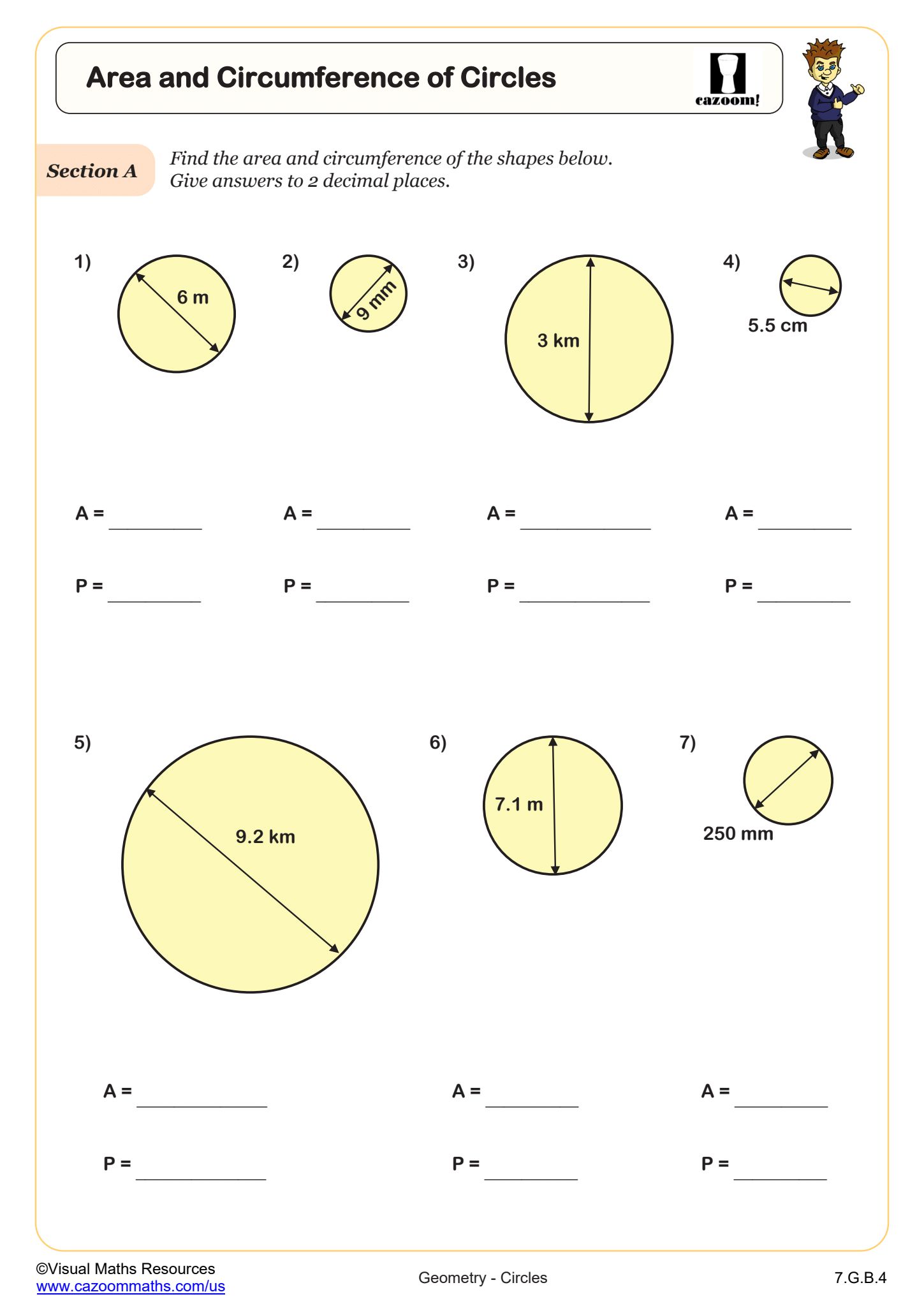
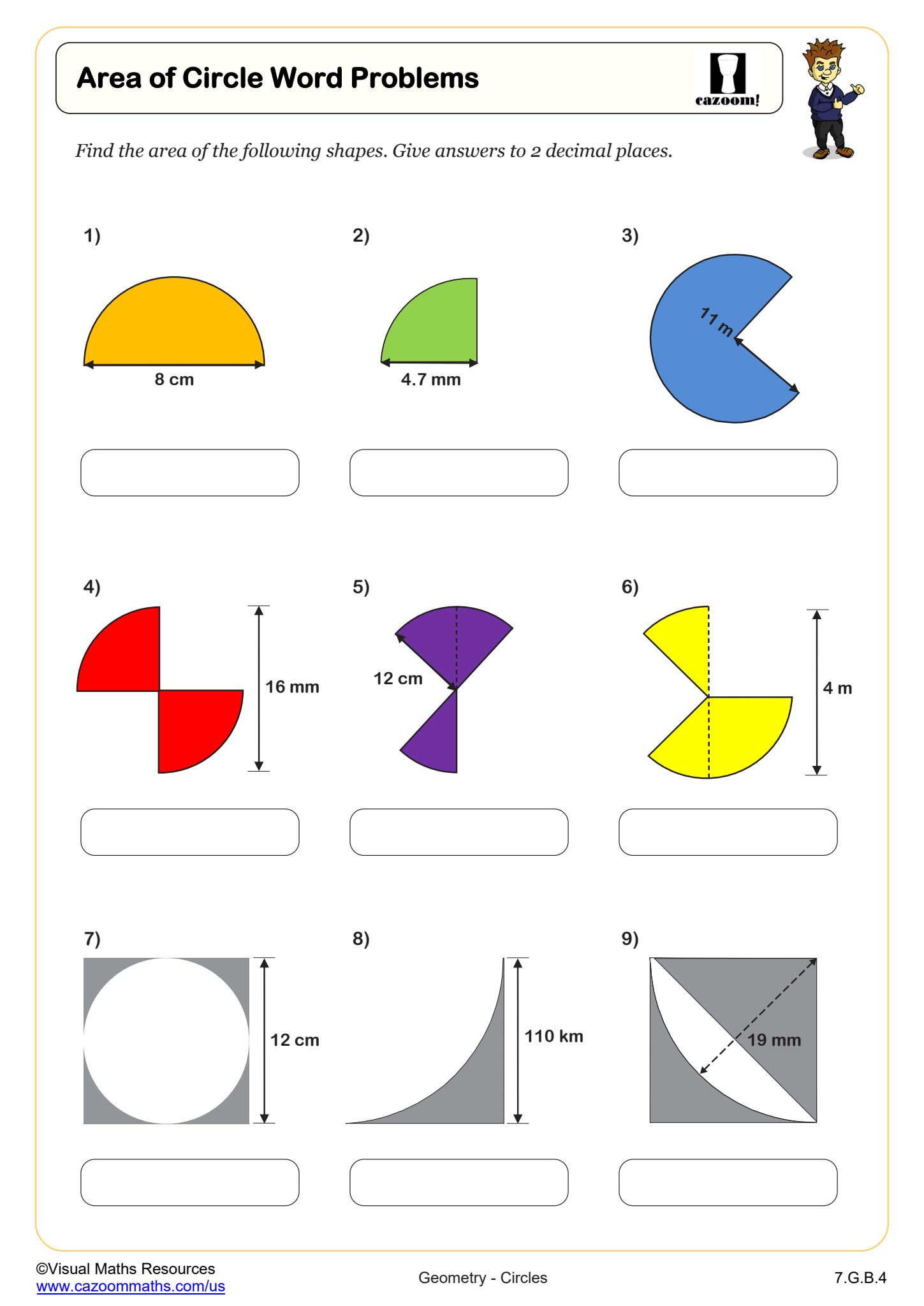
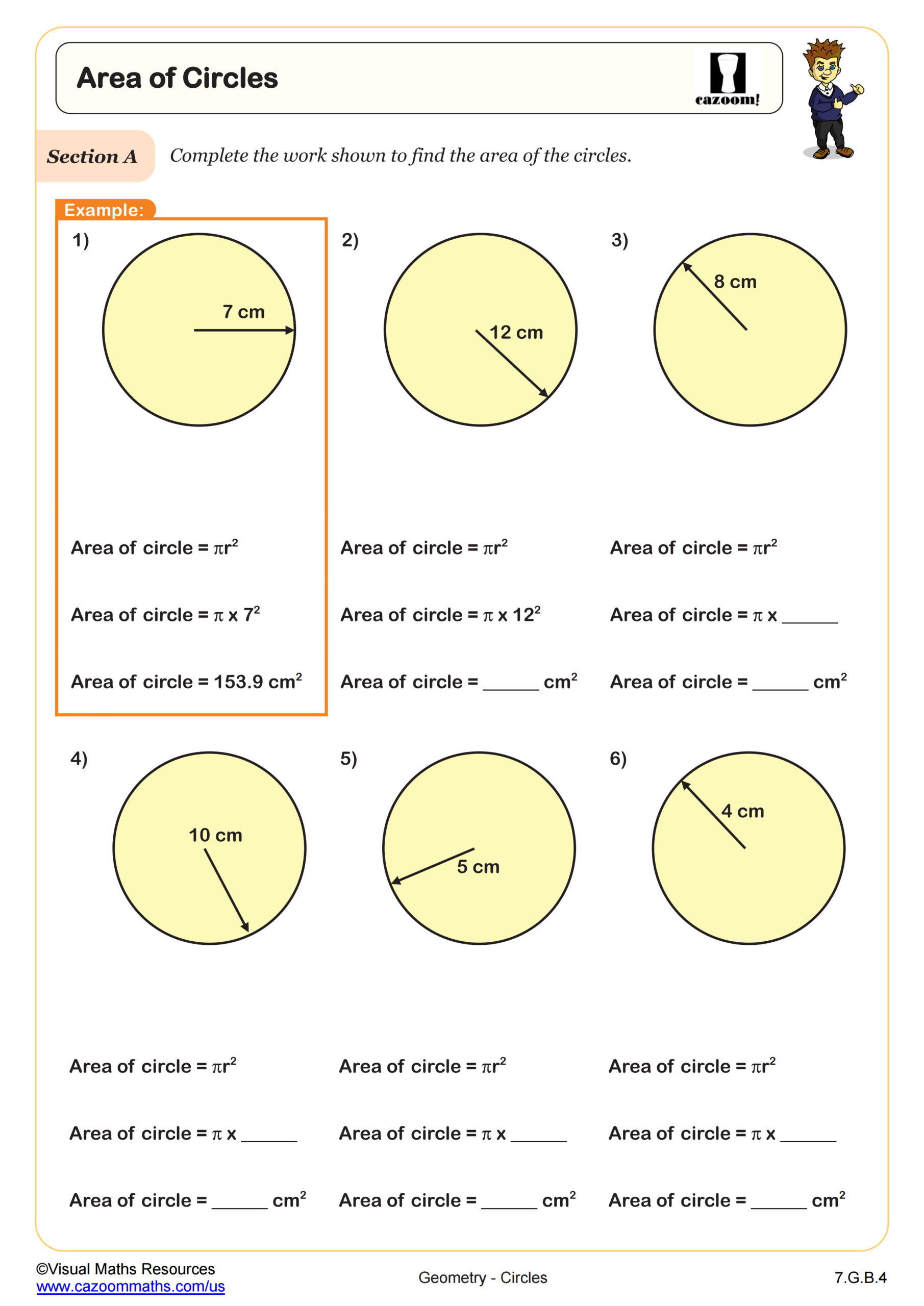
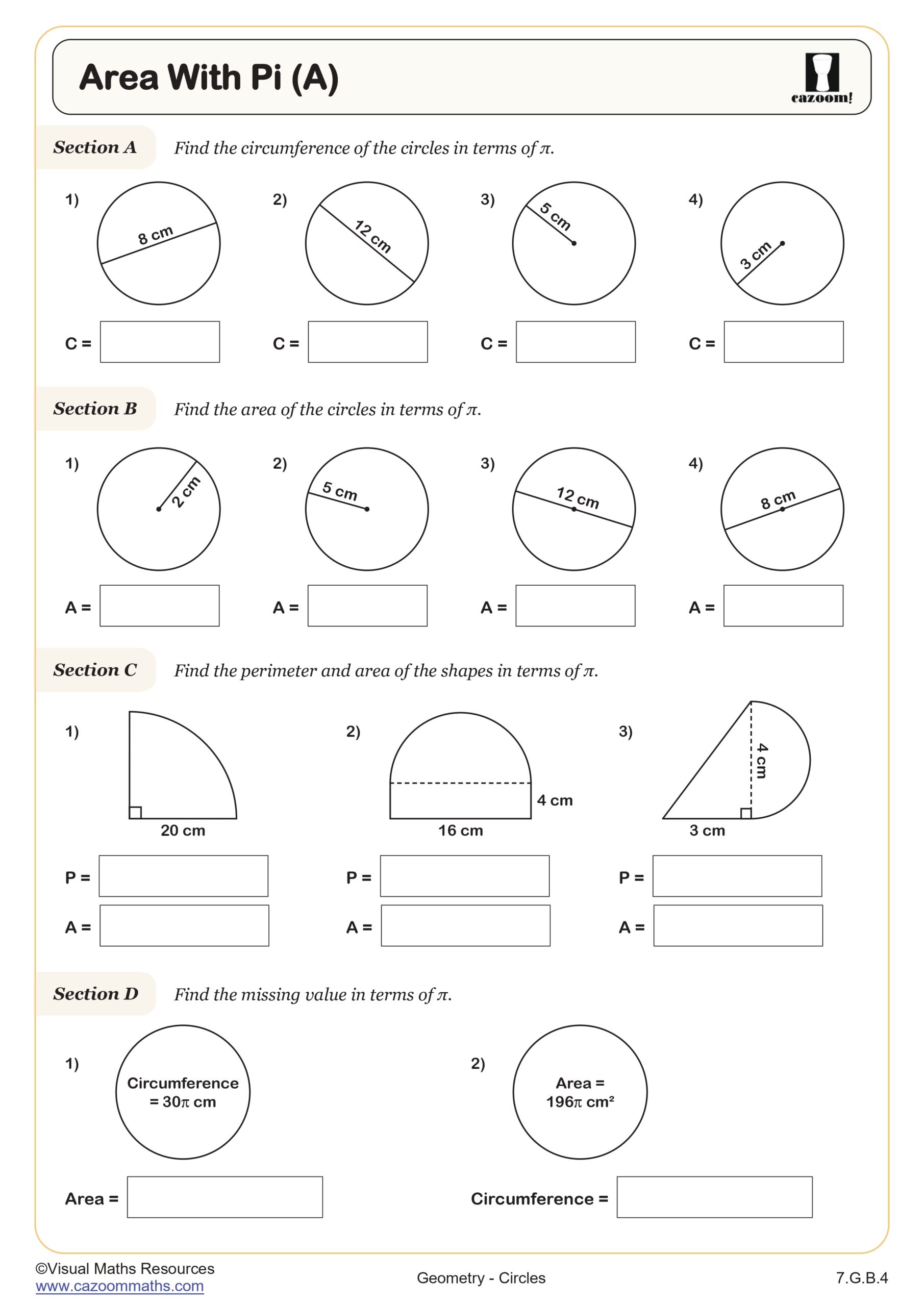
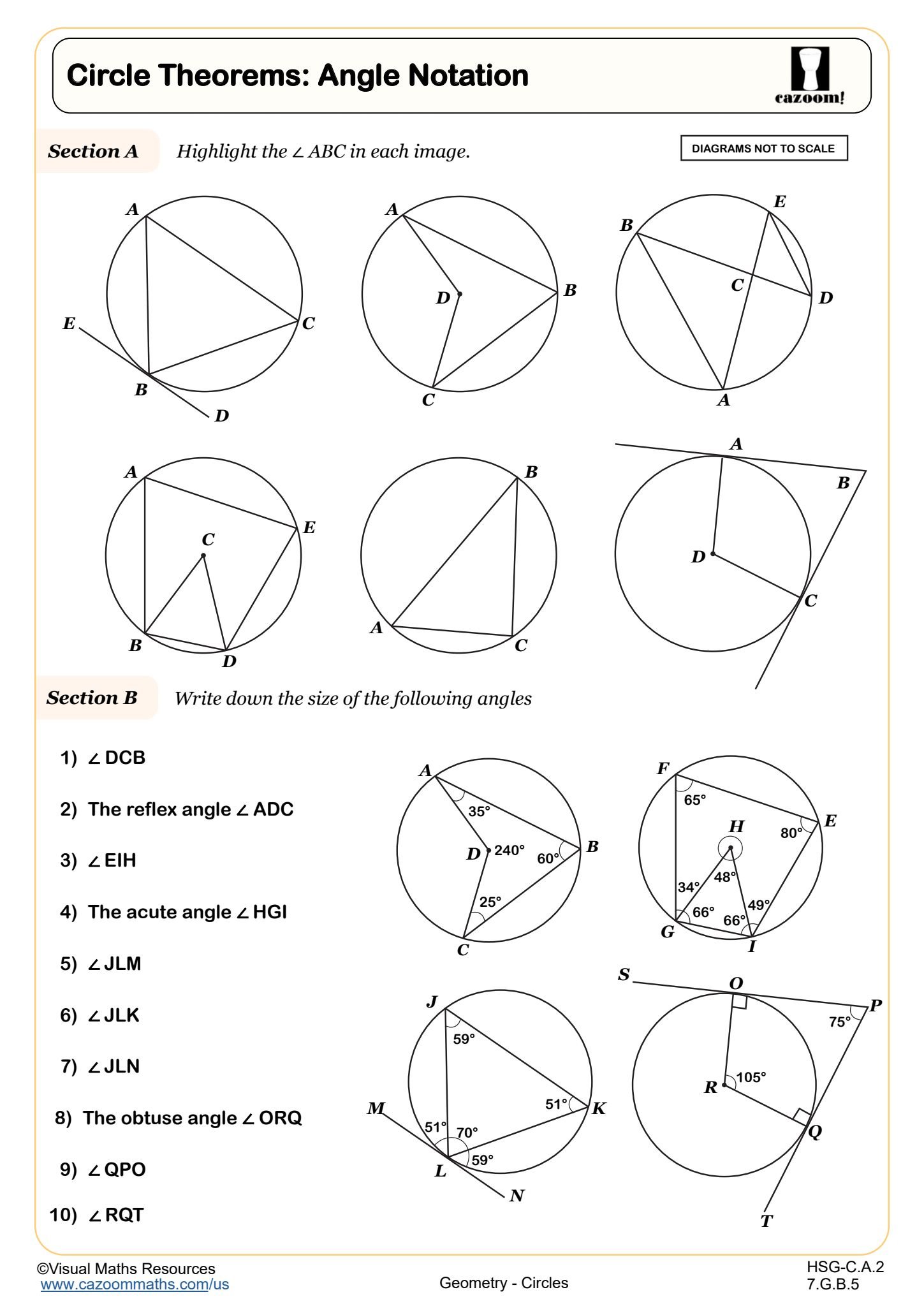
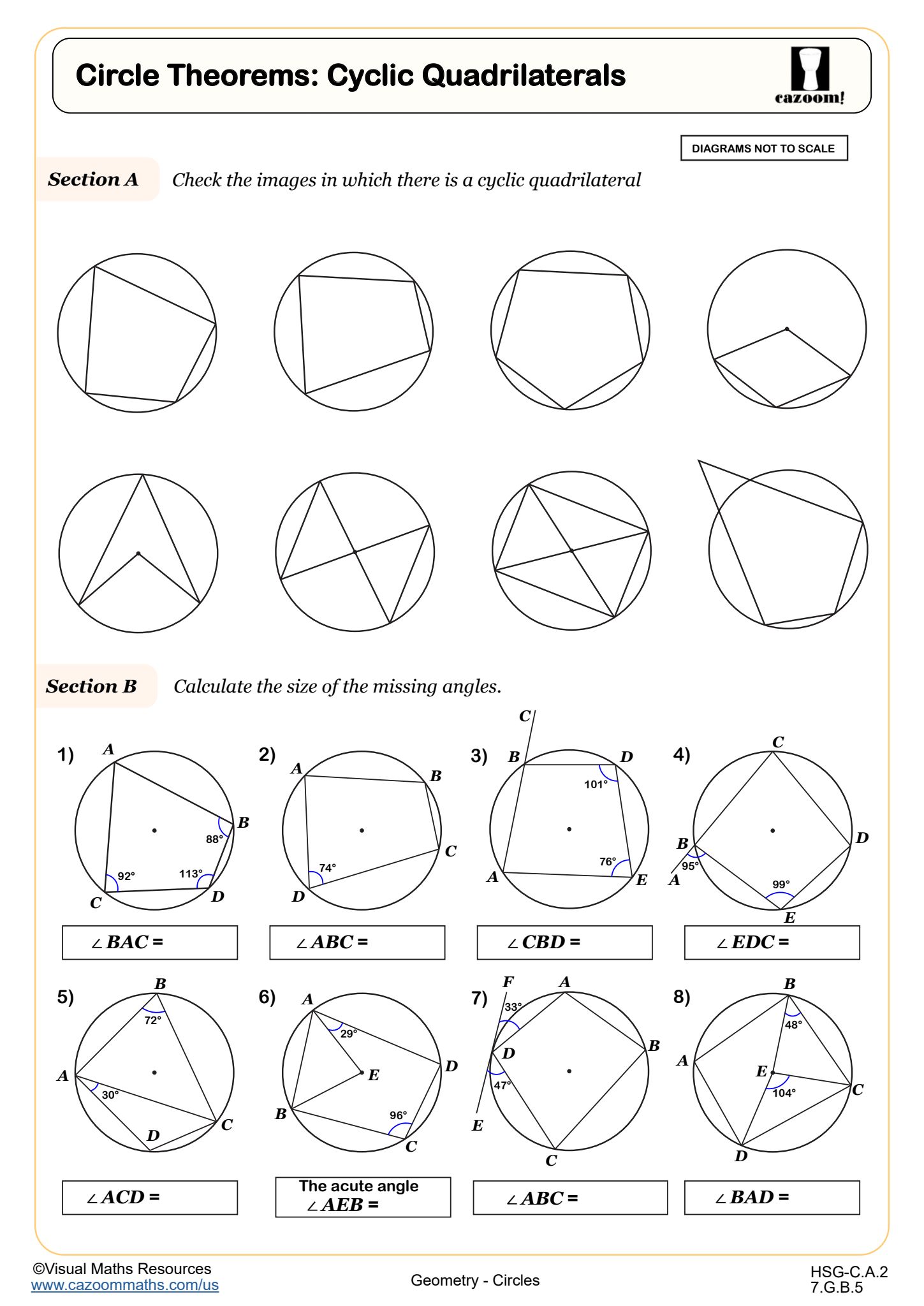
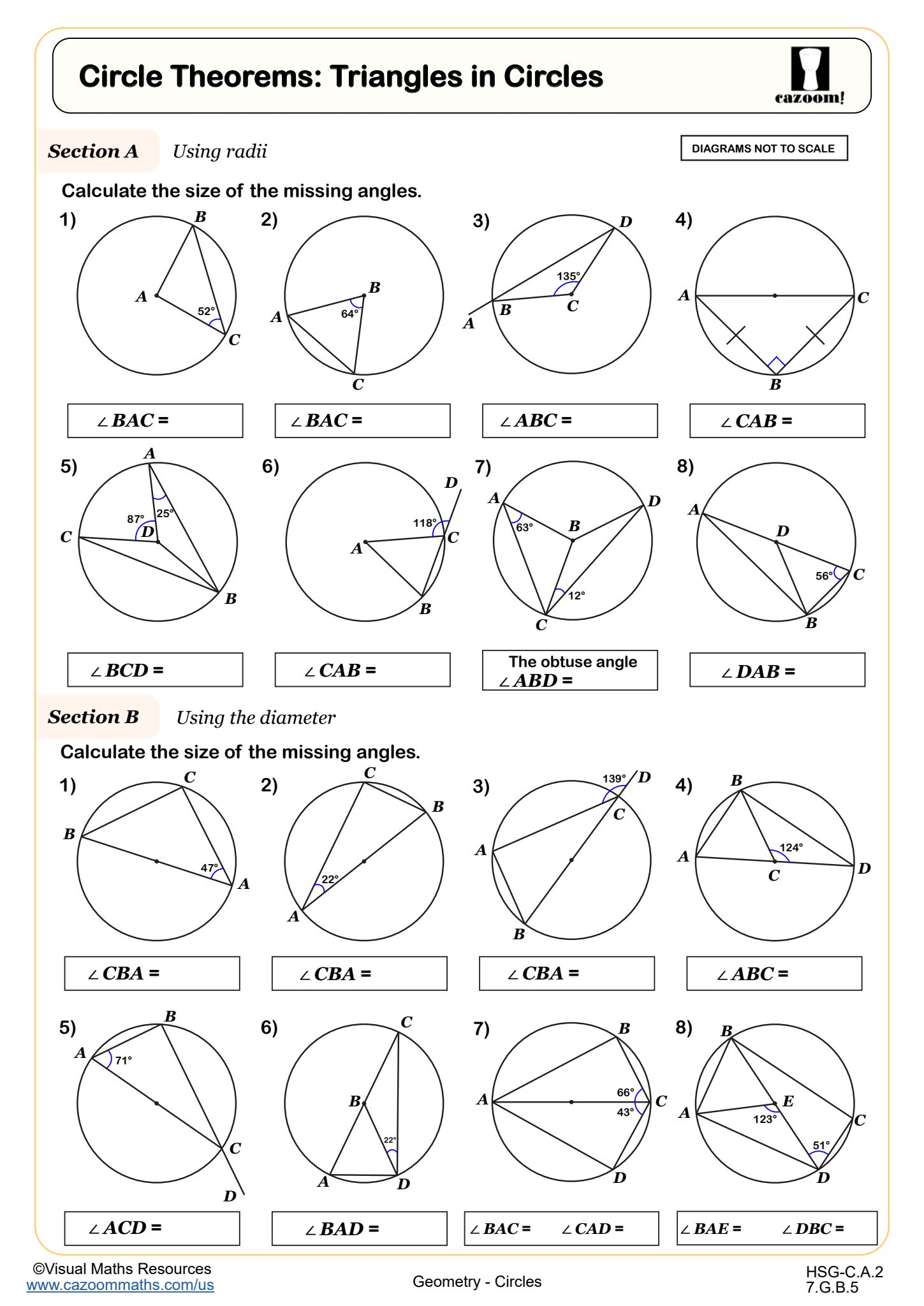
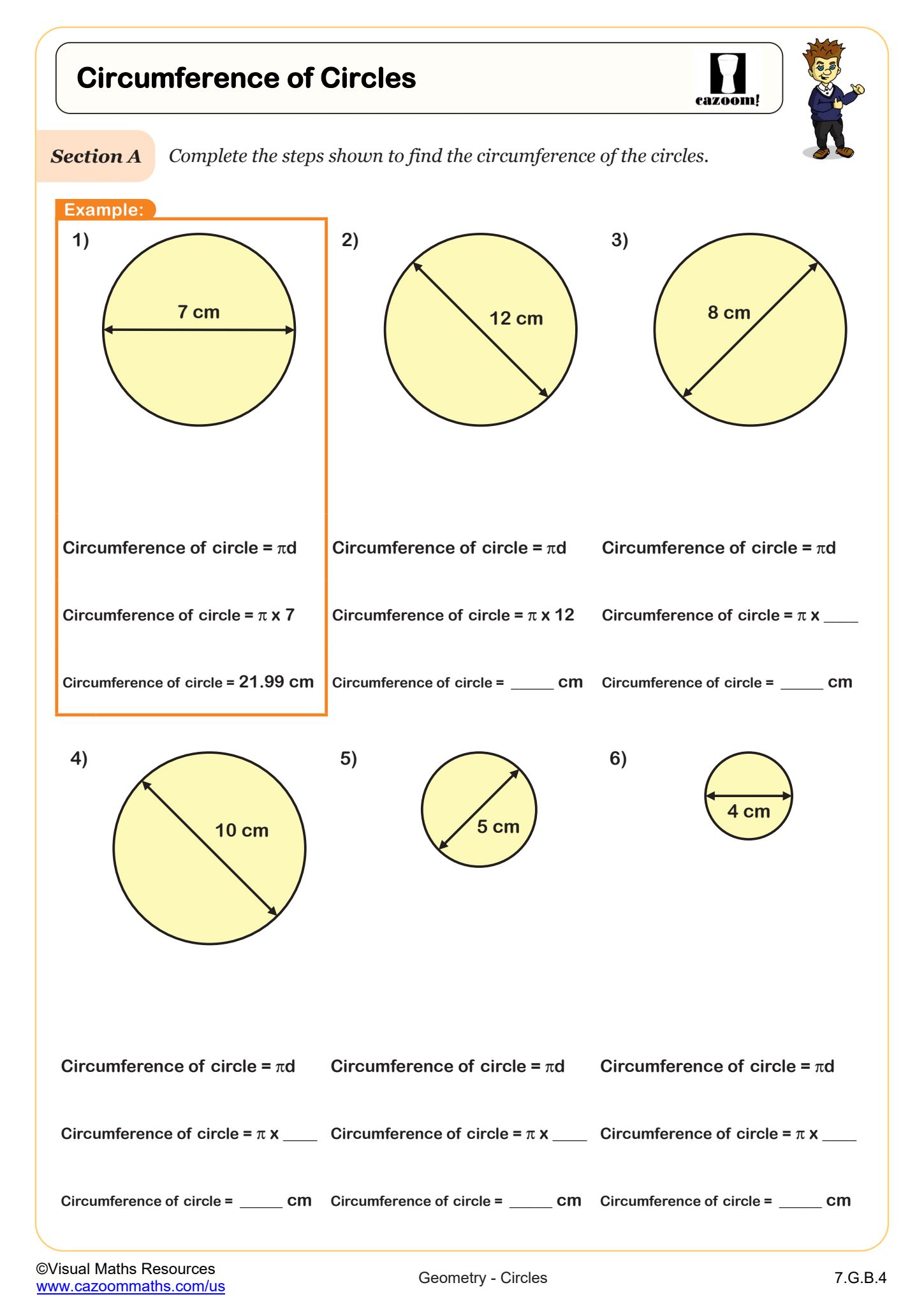
All worksheets are created by the team of experienced teachers at Cazoom Math.
What concepts do grade 7 circumference worksheets typically cover?
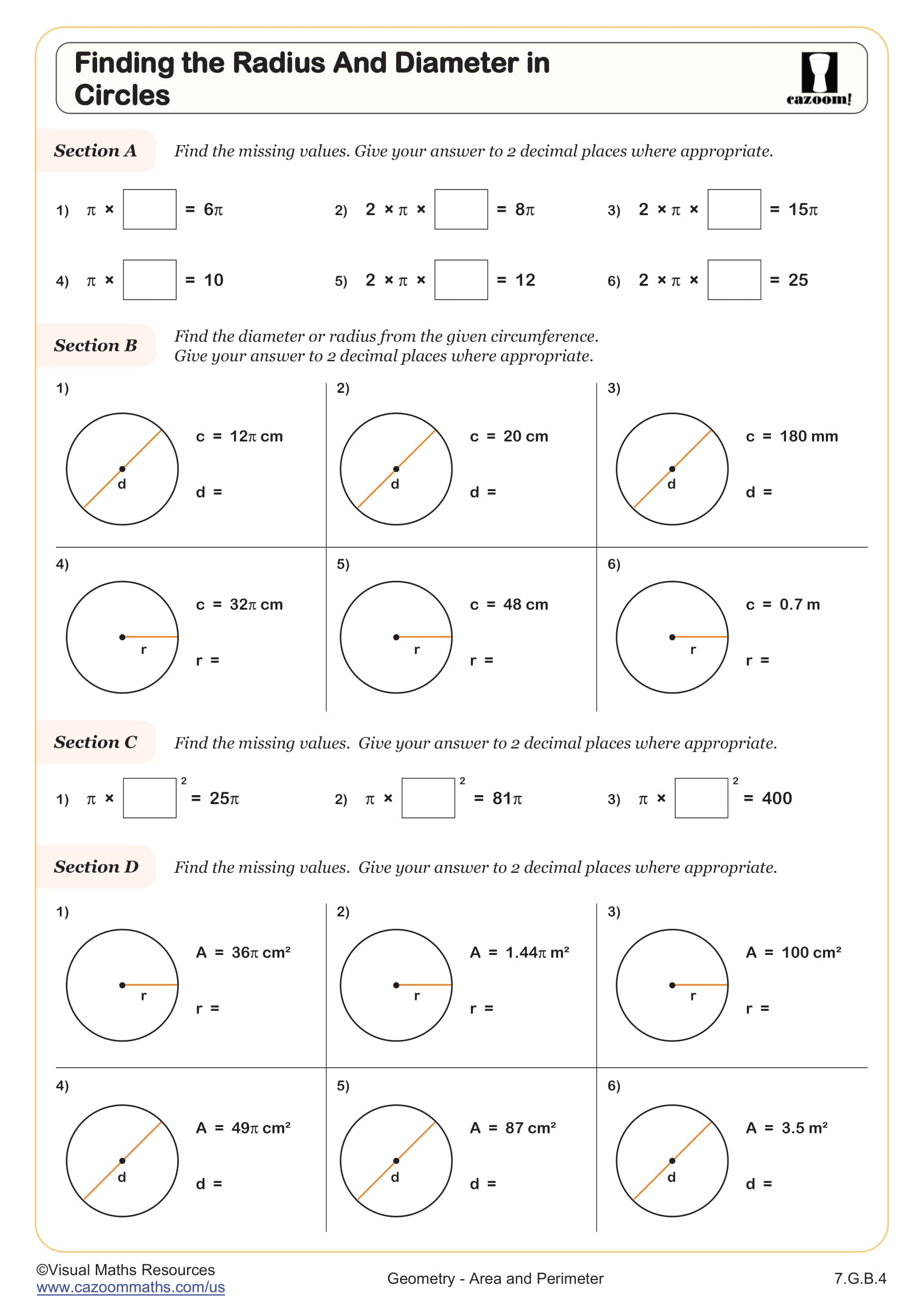
Grade 7 circumference worksheets focus on the relationship between radius, diameter, and circumference using the formula C = πd or C = 2πr. Students practice calculating circumference when given the radius or diameter, and work backwards to find radius or diameter when given circumference values.
Teachers frequently observe that students struggle with remembering which formula variation to use, often attempting to multiply the radius directly by π instead of doubling it first. These 7th grade circles worksheet problems also include mixed practice where students must identify whether they're given a radius or diameter measurement before selecting the appropriate calculation method.
How do 7th grade circle concepts connect to other grade levels?
Circle concepts in 7th grade build on 6th grade work with area and perimeter of polygons, introducing students to their first curved geometric shape calculations. Students apply proportional reasoning skills from earlier in 7th grade to understand the constant relationship between diameter and circumference represented by π.
These skills prepare students for 8th grade work with volume of cylinders and cones, where circumference calculations become components of more complex three-dimensional problems. The conceptual understanding of π as a ratio rather than just a number becomes core for high school trigonometry and calculus applications.
What's the most effective way to teach circumference vs area of circles?
Teachers find success by emphasizing that circumference measures the distance around a circle's edge, while area measures the space inside. Using physical manipulatives like string around circular objects helps students visualize circumference as a linear measurement, while area requires thinking about covering the entire circular region.
A common classroom error occurs when students confuse the formulas, attempting to use C = πr² for circumference or A = 2πr for area. Circle class 7 worksheet problems benefit from including both types of problems with clear labeling requirements, forcing students to identify whether they're finding distance around or space within the circle.
How should teachers use circle worksheets most effectively in 7th grade?
Teachers report best results when circle worksheet grade 7 activities start with concrete measurements before moving to abstract calculations. Having students measure actual circular objects and calculate theoretical circumference creates meaningful connections between formulas and real-world applications like finding the distance a bicycle wheel travels in one rotation.
The answer keys allow teachers to quickly identify common error patterns during guided practice sessions. Students benefit from working through problems in pairs initially, discussing which measurement they're given and which formula applies before calculating independently on additional problems.