7th Grade Percentages Worksheets
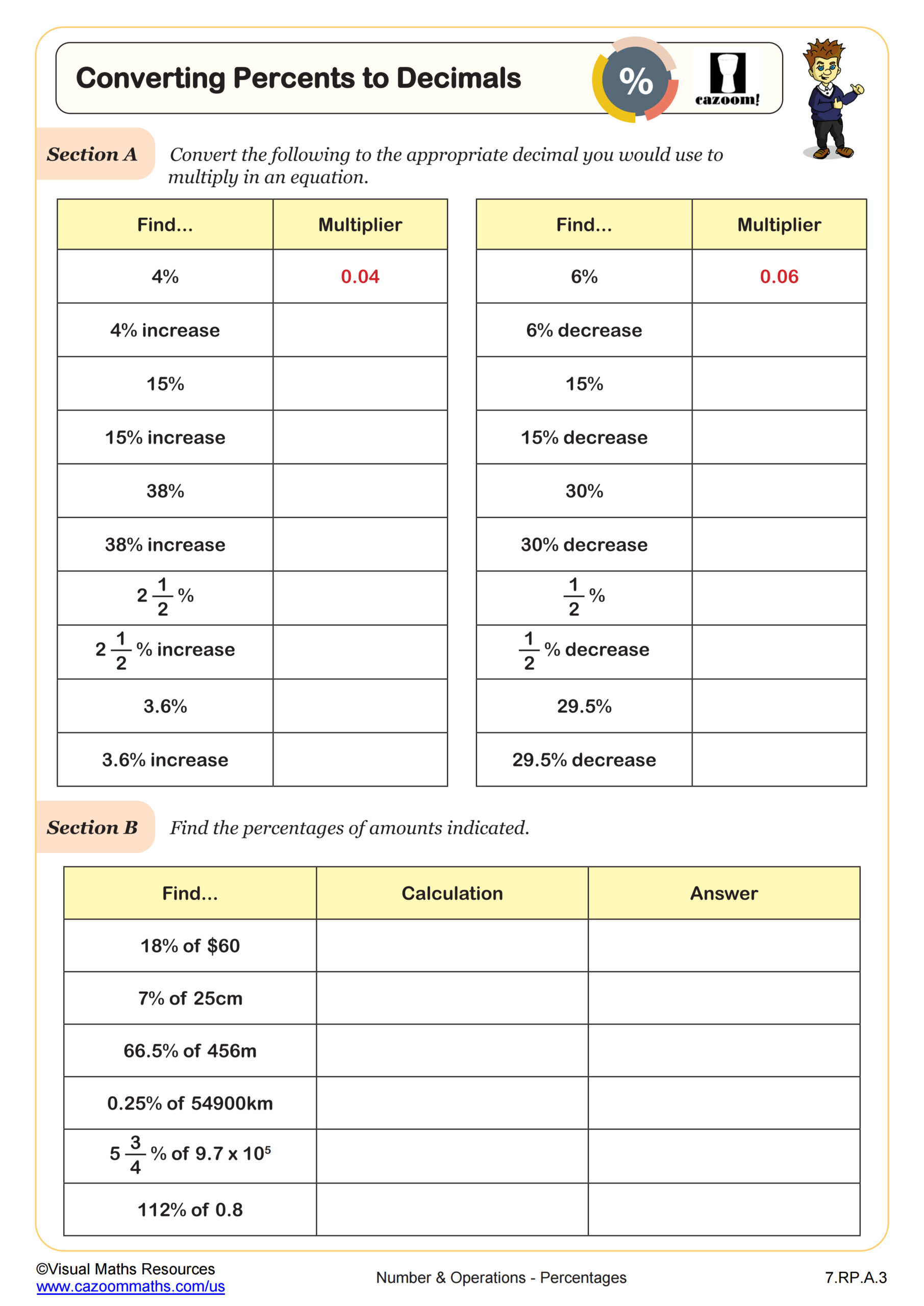
Converting Percents to Decimals
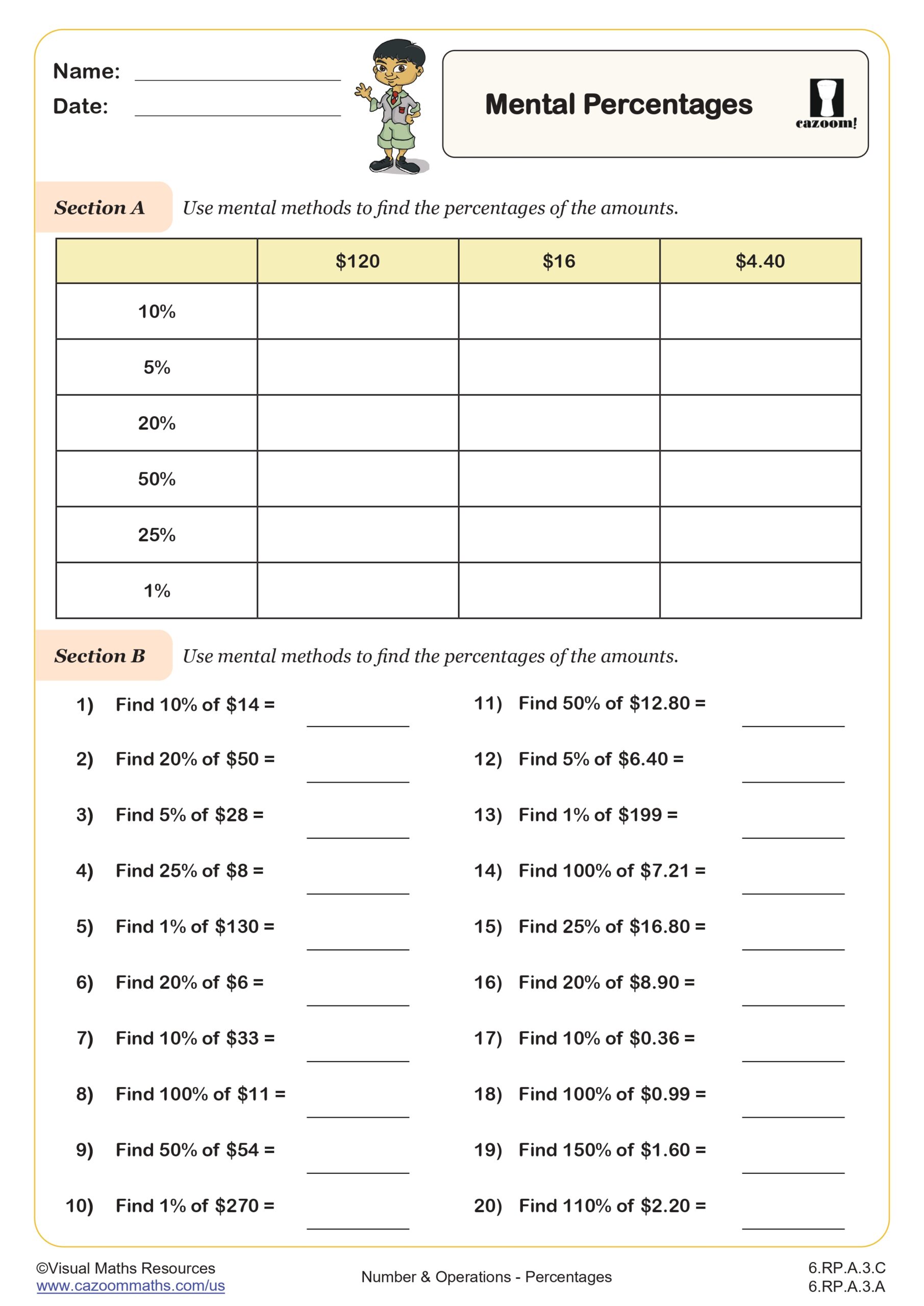
Mental Percentages
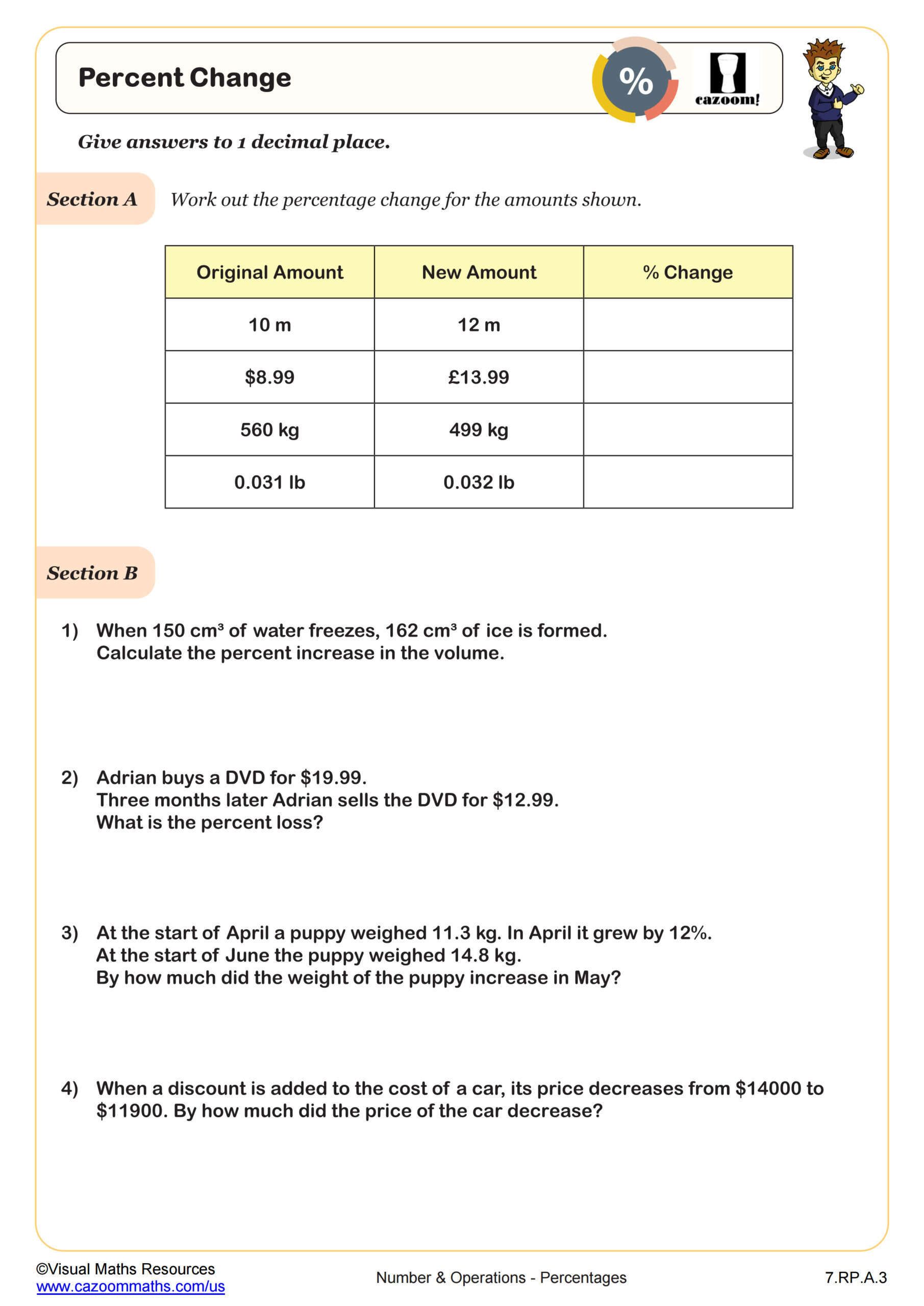
Percent Change
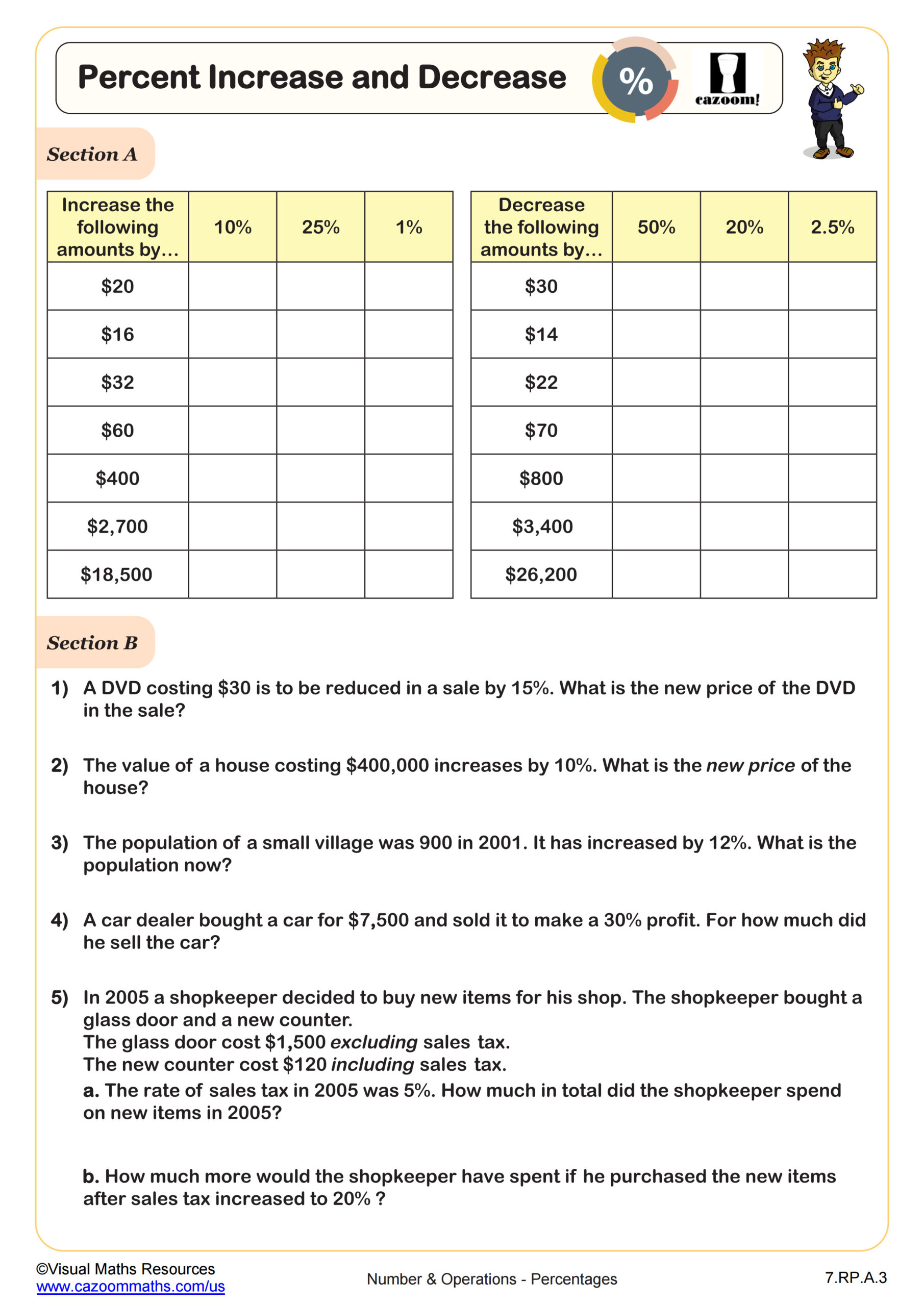
Percent Increase and Decrease
Percent Word Problems
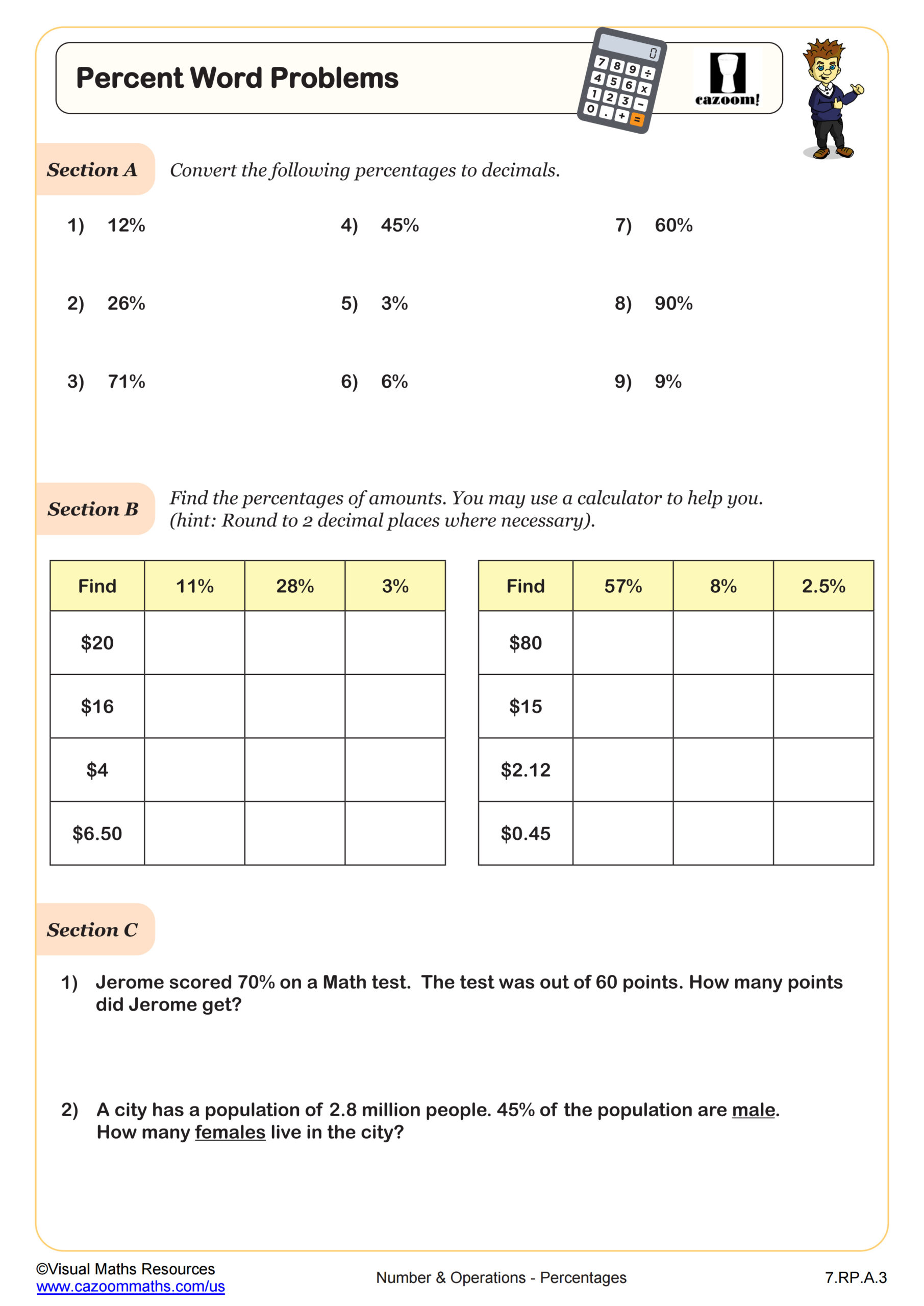
Percentage Change (A)
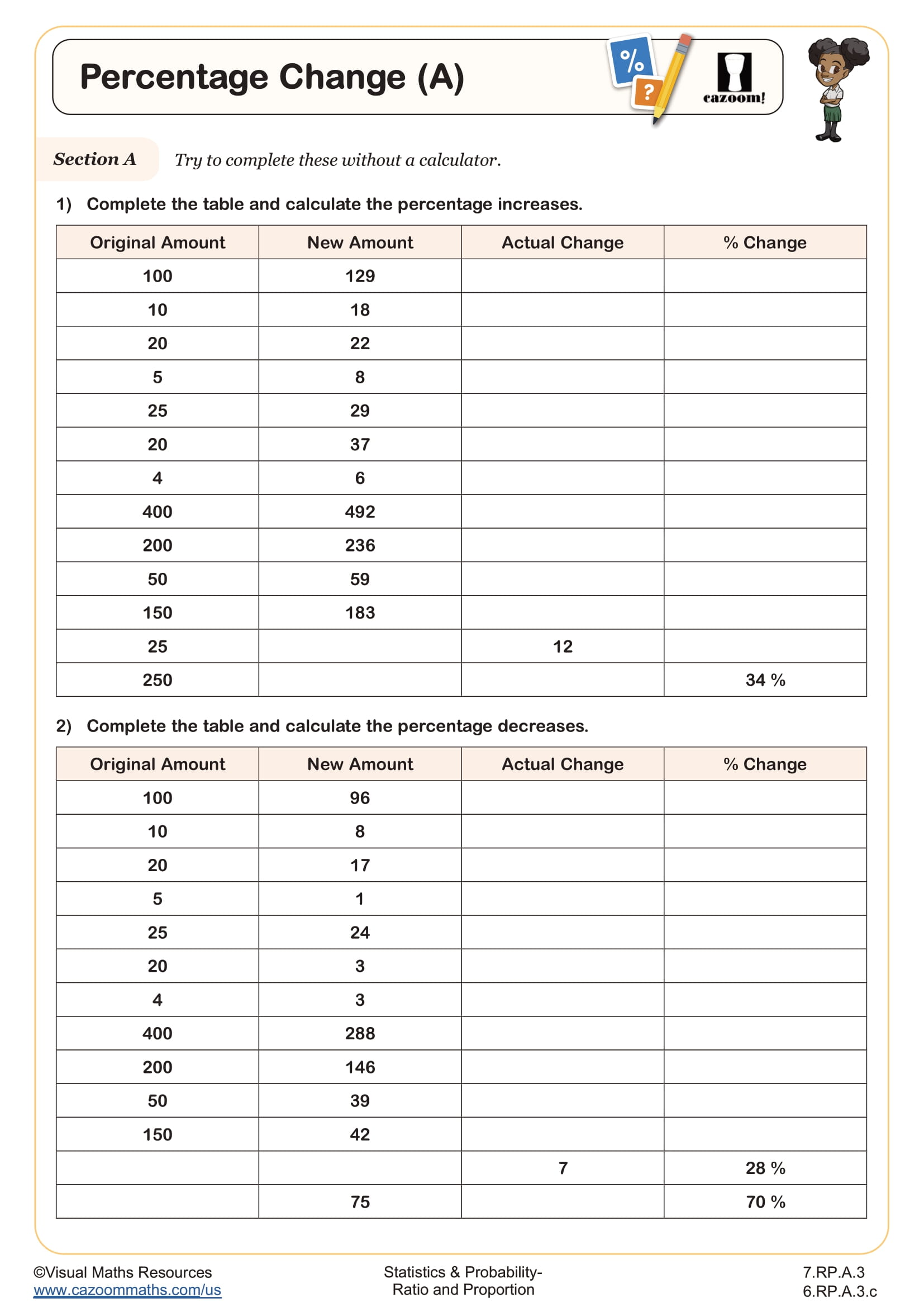
Percentage Decrease - Using a Bar Model
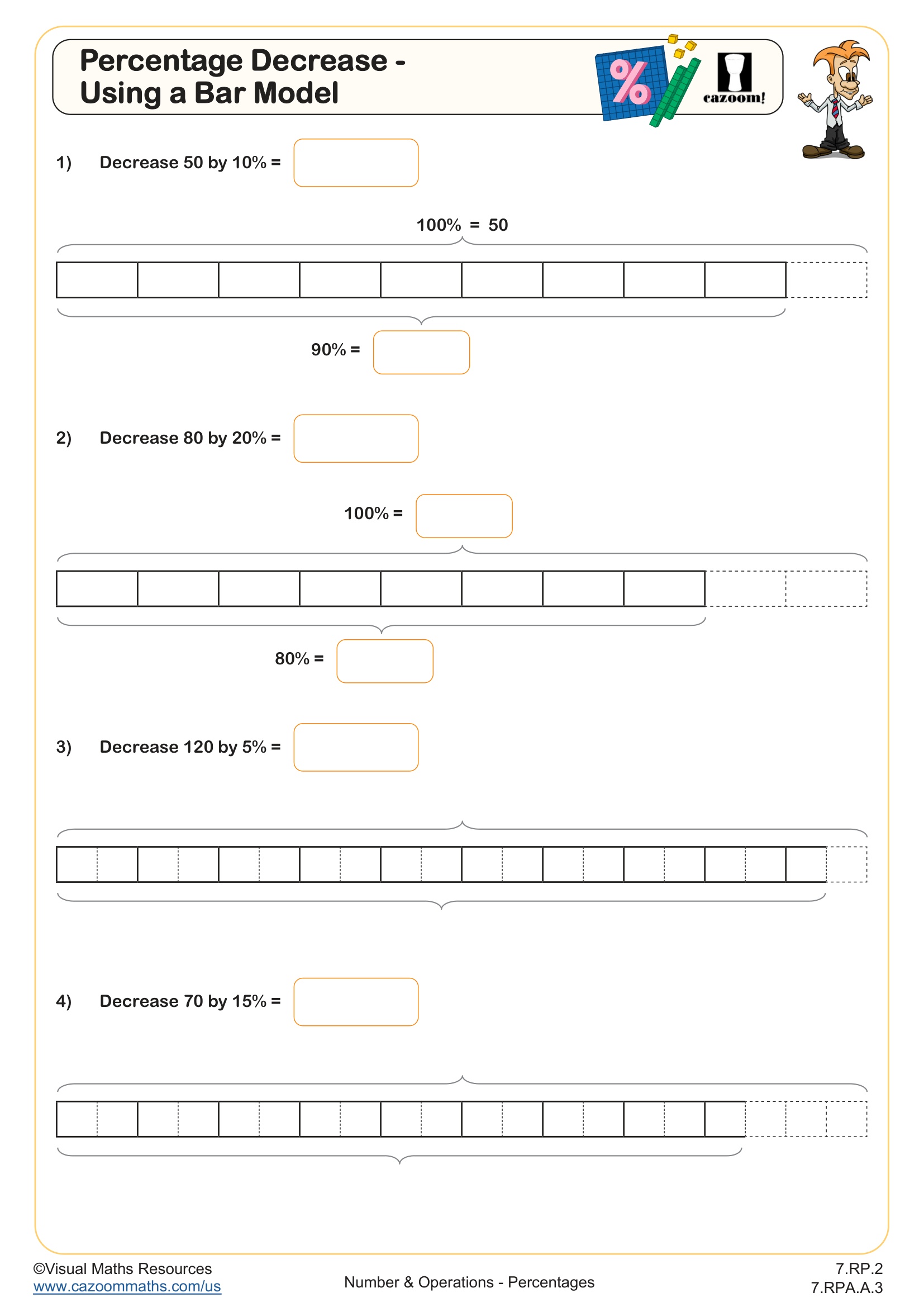
Percentage Increase - Using a Bar Model
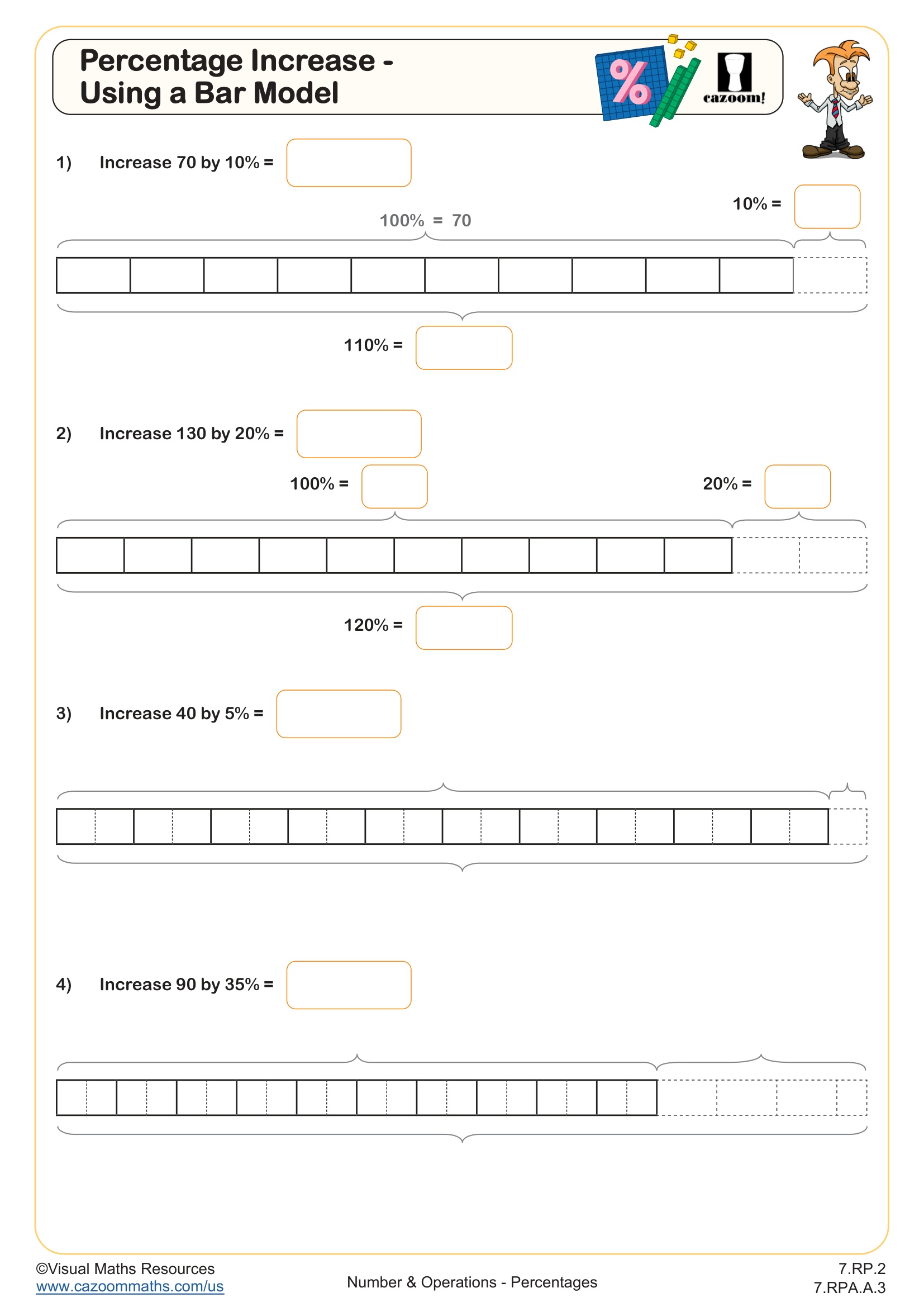
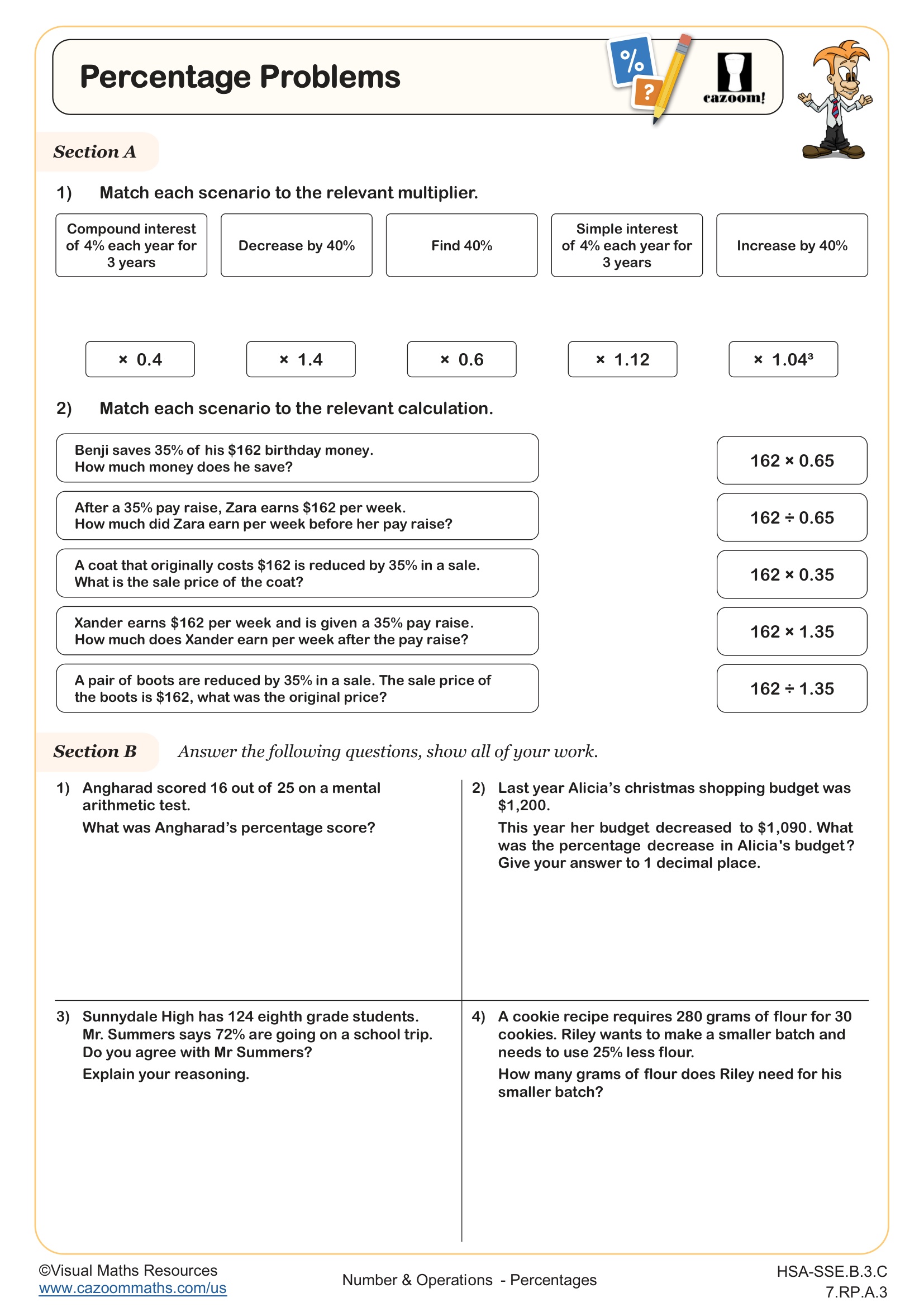
Percentage Problems
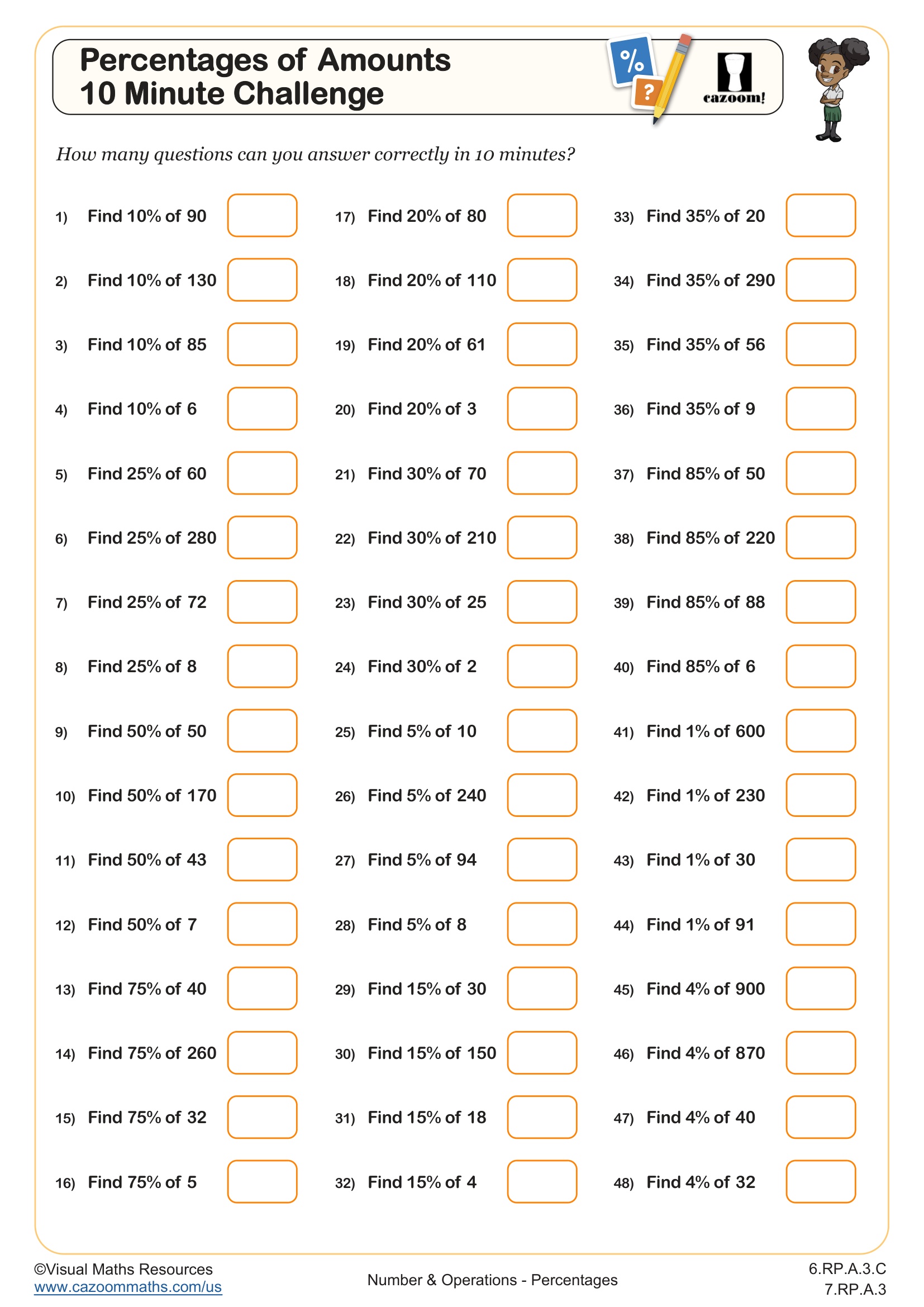
Percentages of Amounts 10 Minute Challenge
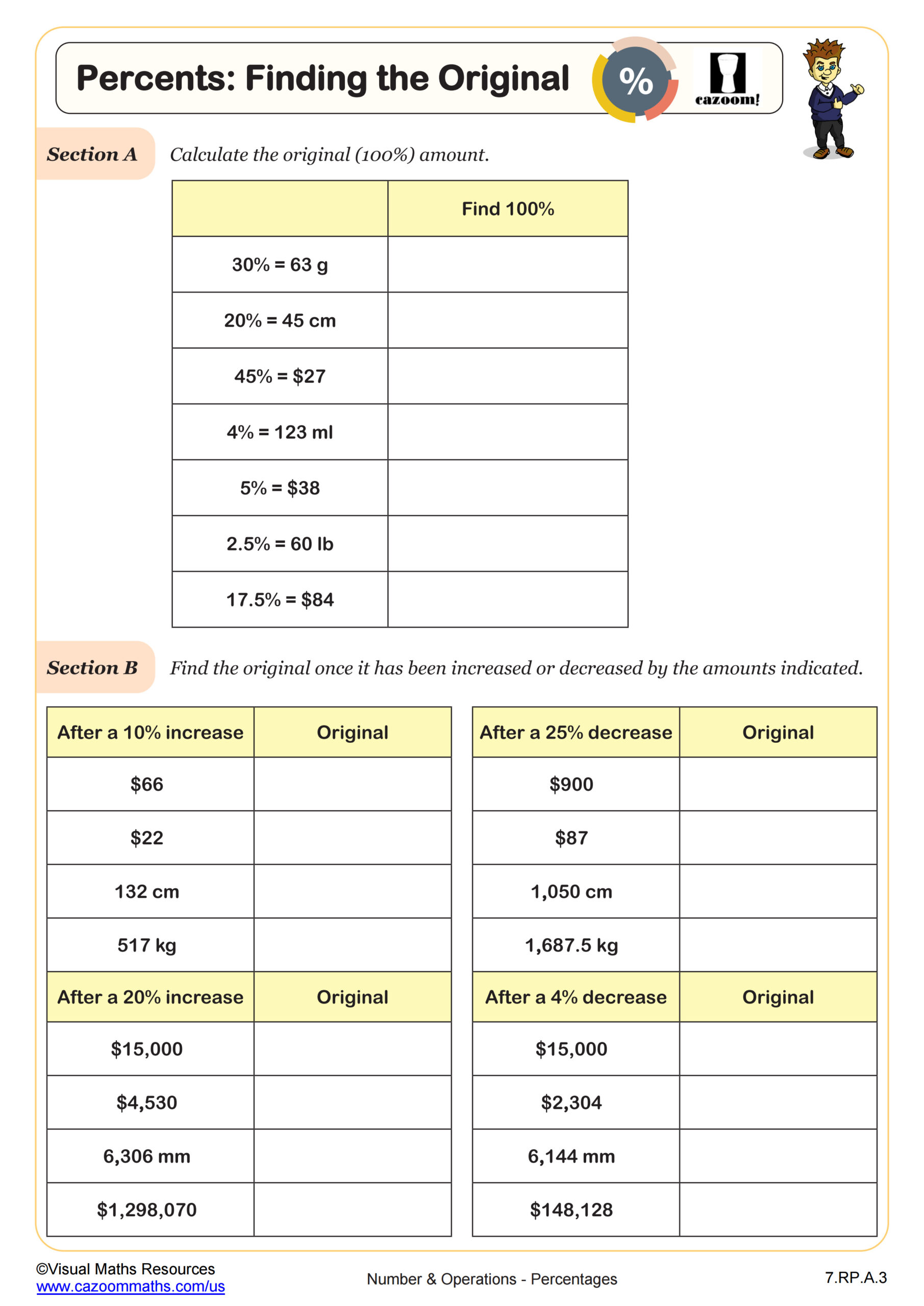
Percents: Finding the Original
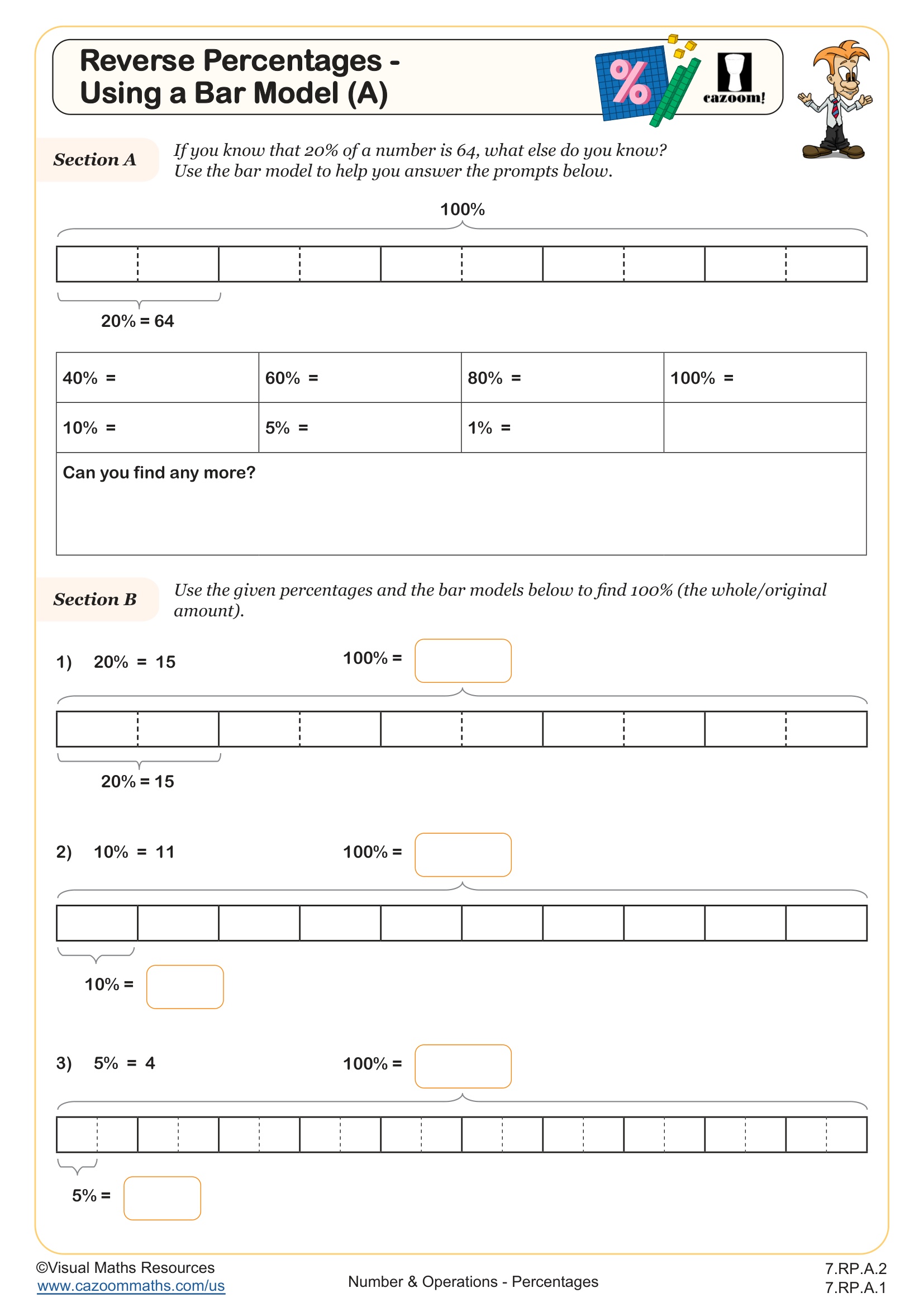
Reverse Percentages - Using a Bar Model (A)
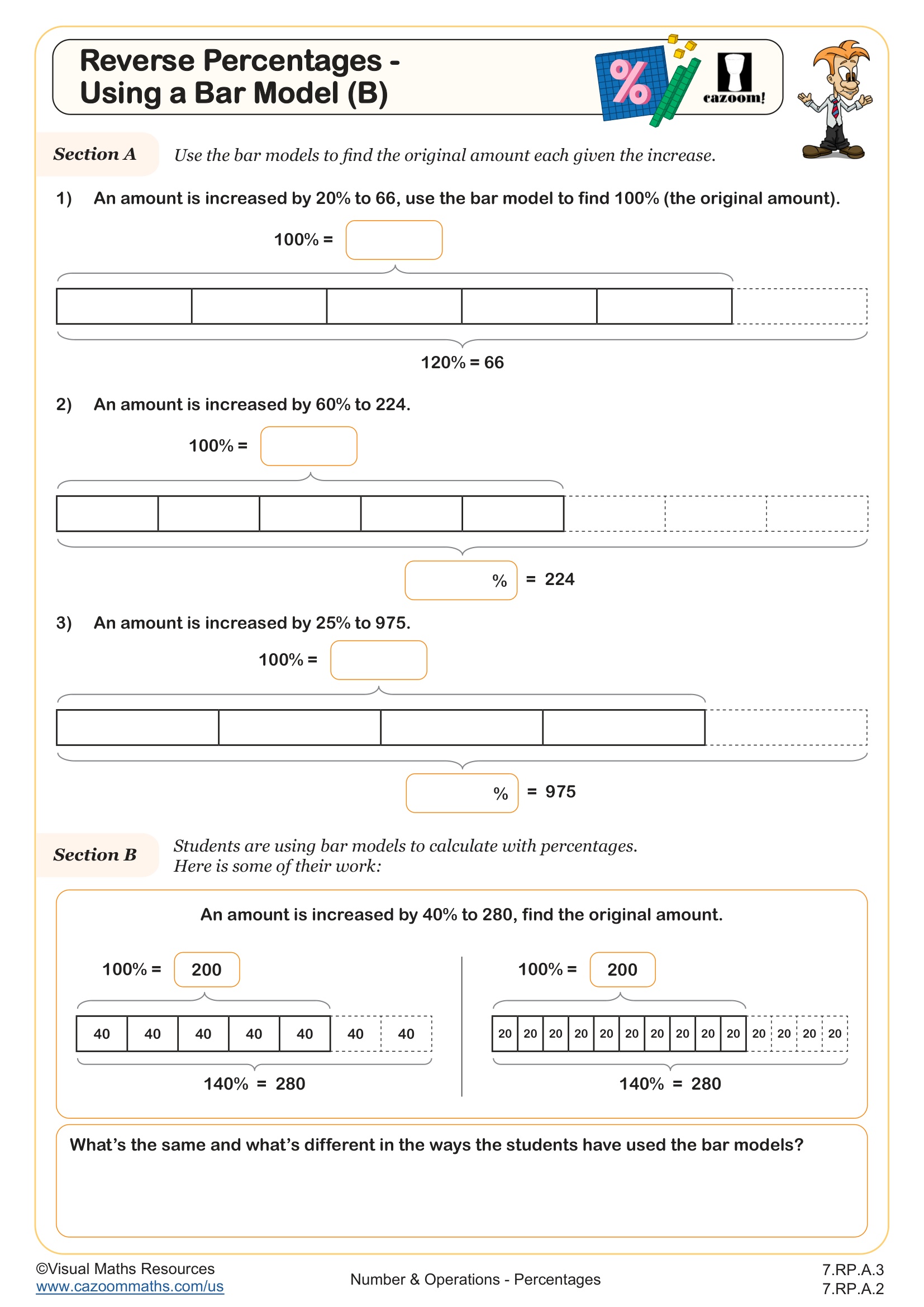
Reverse Percentages - Using a Bar Model (B)
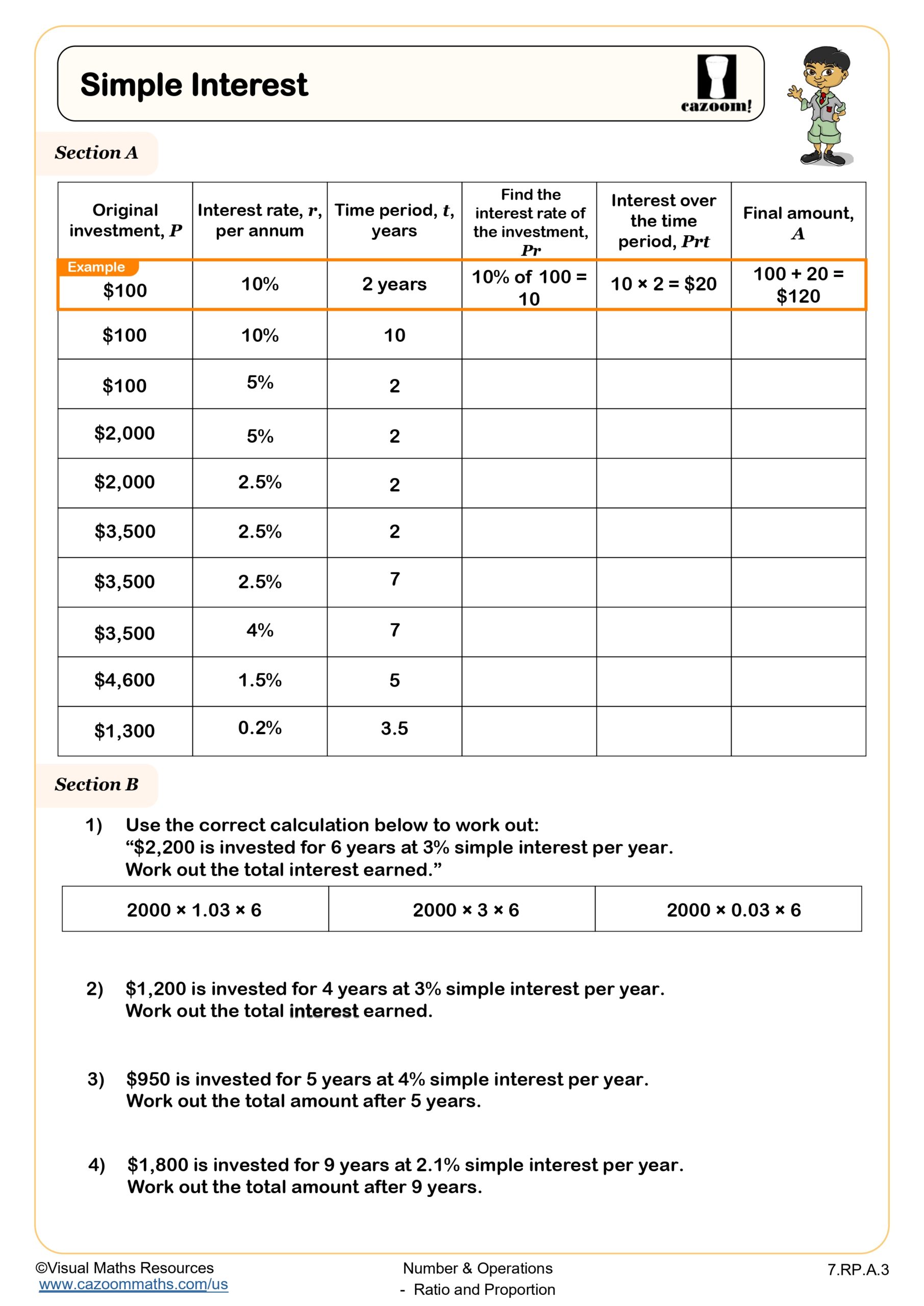
Simple Interest
All worksheets are created by the team of experienced teachers at Cazoom Math.
What topics are covered in 7th grade percentage worksheets?
Percentage worksheet grade 7 materials typically cover converting between fractions, decimals, and percentages, finding percentages of quantities, calculating percentage increase and decrease, and solving multi-step percentage word problems. These align with Common Core standard 7.RP.3, which requires students to use proportional relationships to solve percent problems including simple interest, tax, markups, markdowns, gratuities, and commissions.
Teachers often observe that students need explicit practice distinguishing between finding a percentage of a number versus finding what percentage one number is of another. The percent worksheets grade 7 address this confusion by providing problems that require students to identify the type of percentage relationship before calculating, helping them develop the reasoning skills needed for more complex applications in algebra and consumer mathematics.
Are these percentage worksheets appropriate for accelerated 6th graders or struggling 8th graders?
Many teachers use these percentage grade 7 worksheets PDF resources with advanced 6th grade students who have mastered proportional reasoning and basic fraction-decimal conversions. The problems provide appropriate challenge without requiring algebraic thinking that typically develops in 8th grade. Conversely, 8th grade teachers often assign these worksheets as review before introducing more complex percent applications in pre-algebra.
The key indicator of readiness is whether students can confidently convert between fractions and decimals and understand part-whole relationships. Teachers notice that students who still struggle with these foundational concepts need additional work with simpler percentage problems before attempting the multi-step word problems featured in grade-level appropriate materials.
How do these worksheets help students avoid common percentage calculation errors?
The percent worksheet 7th grade format emphasizes setting up problems correctly before calculating, addressing the most common error teachers observe: students jumping straight to multiplication or division without identifying what the problem is asking. Many worksheets include explicit steps for determining whether to find a part, whole, or percentage rate, preventing the frequent mistake of multiplying by the percentage instead of its decimal equivalent.
Teachers report that students particularly struggle with percentage decrease problems, often adding the decrease amount instead of subtracting it from the original value. The structured practice helps students recognize these patterns and develop systematic approaches to percentage problems that will serve them well in algebra, geometry, and real-world applications like calculating tips, taxes, and discounts.
What's the most effective way to use these percentage worksheets for grade 7 with answers PDF in the classroom?
Teachers find success using these percentage worksheets for grade 7 with answers pdf as both guided practice during lessons and independent homework assignments. The answer keys allow for immediate feedback, which is crucial when students are developing procedural fluency with percentage calculations. Many teachers assign different problems to different groups based on diagnostic assessment results, using the variety of problem types to differentiate instruction.
Effective implementation often involves having students work through one or two problems collaboratively before independent practice, allowing teachers to address conceptual misunderstandings before they become ingrained. The PDF format makes it easy to project problems for whole-class discussion or print specific sections for students who need additional support with particular percentage concepts like markup and markdown problems.