7th Grade Probability Worksheets
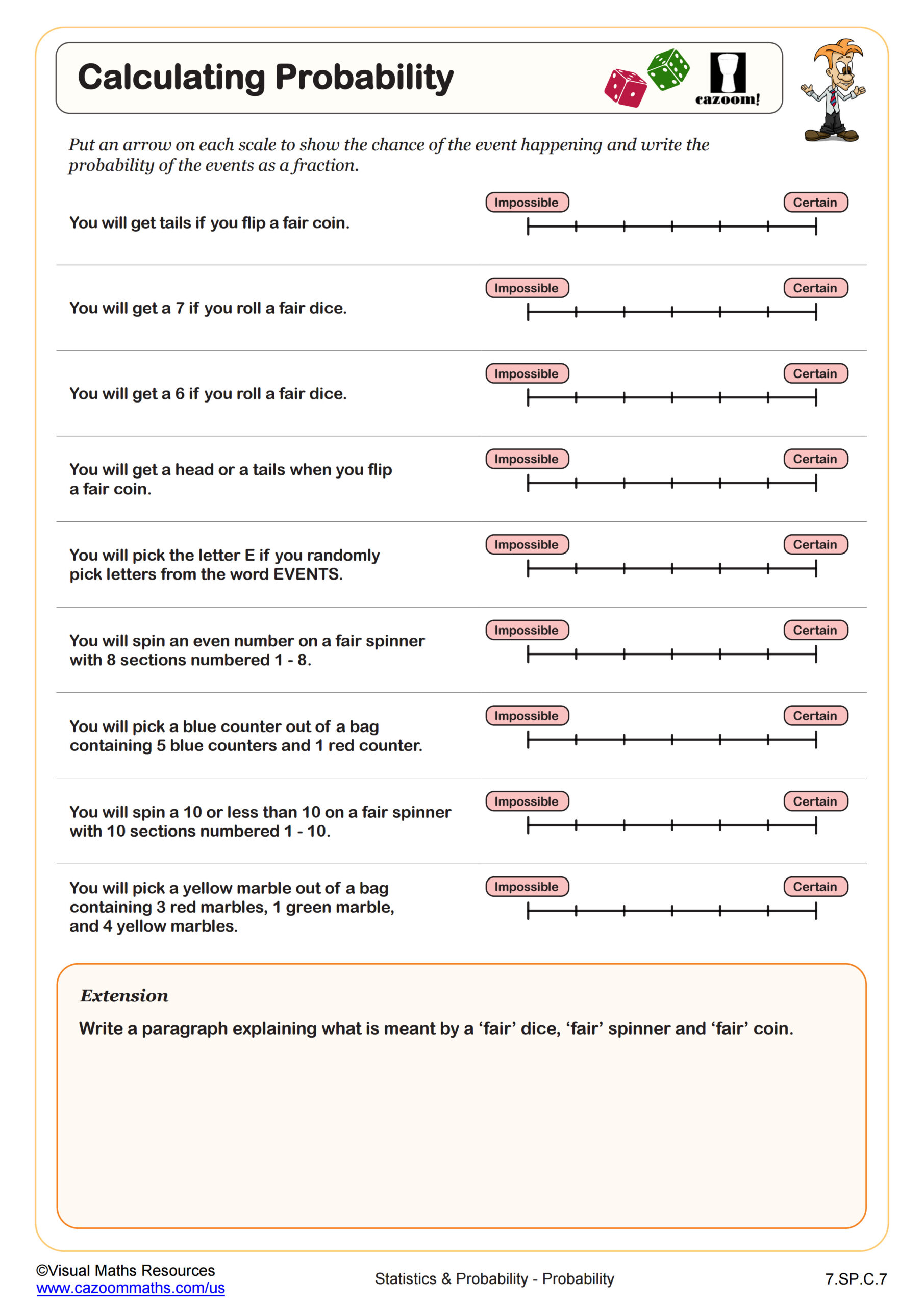
Calculating Probability
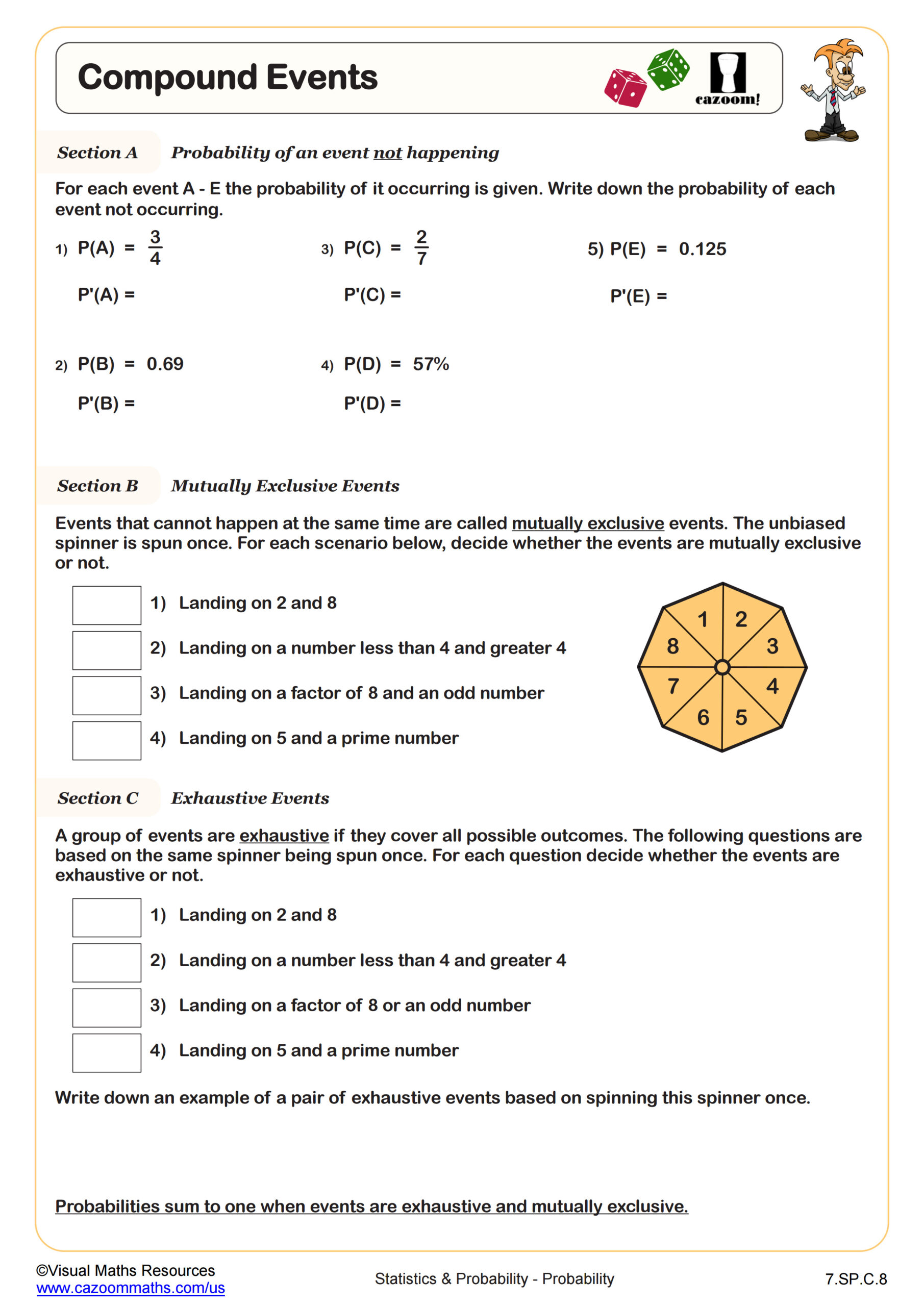
Compound Events
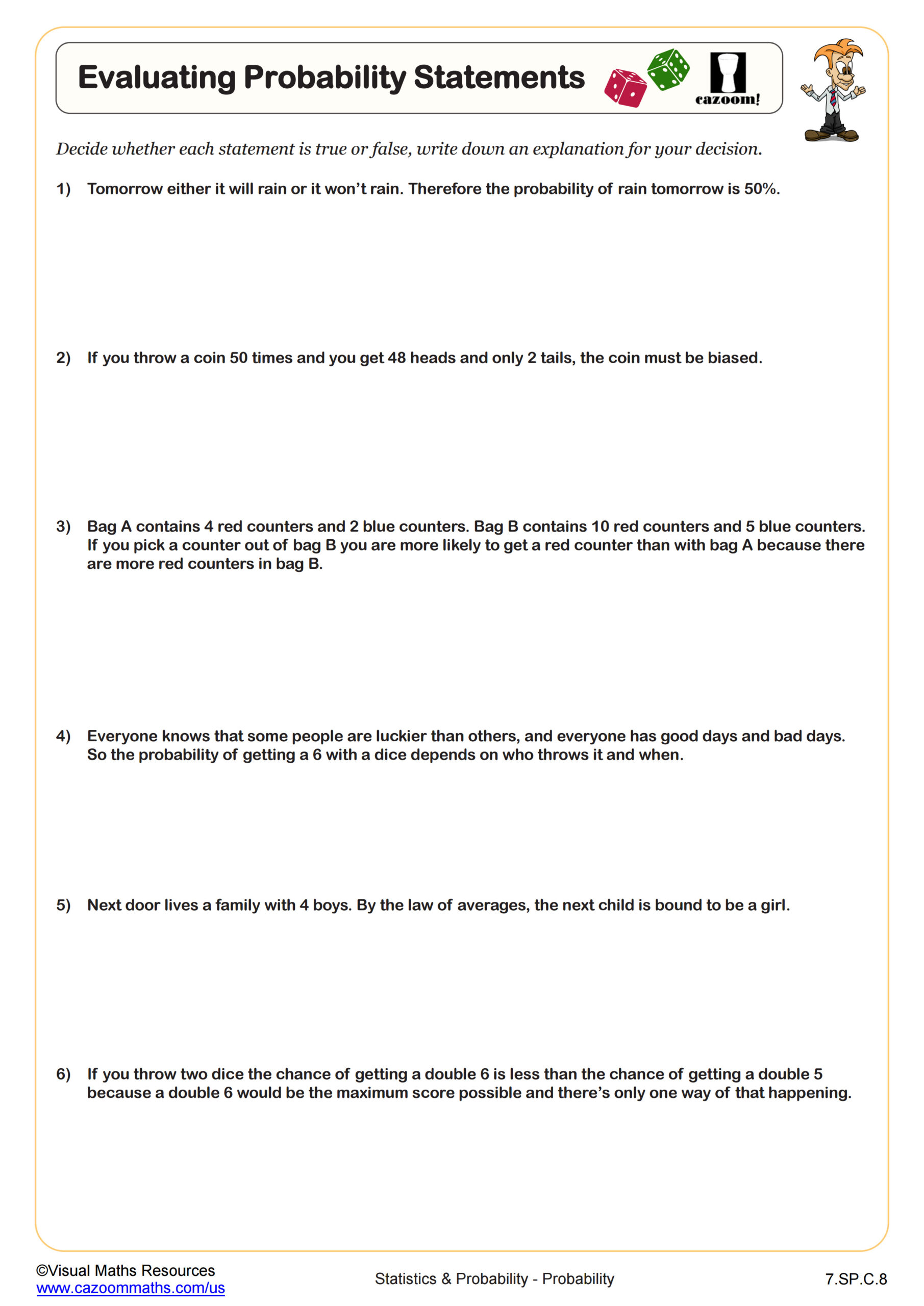
Evaluating Probability Statements
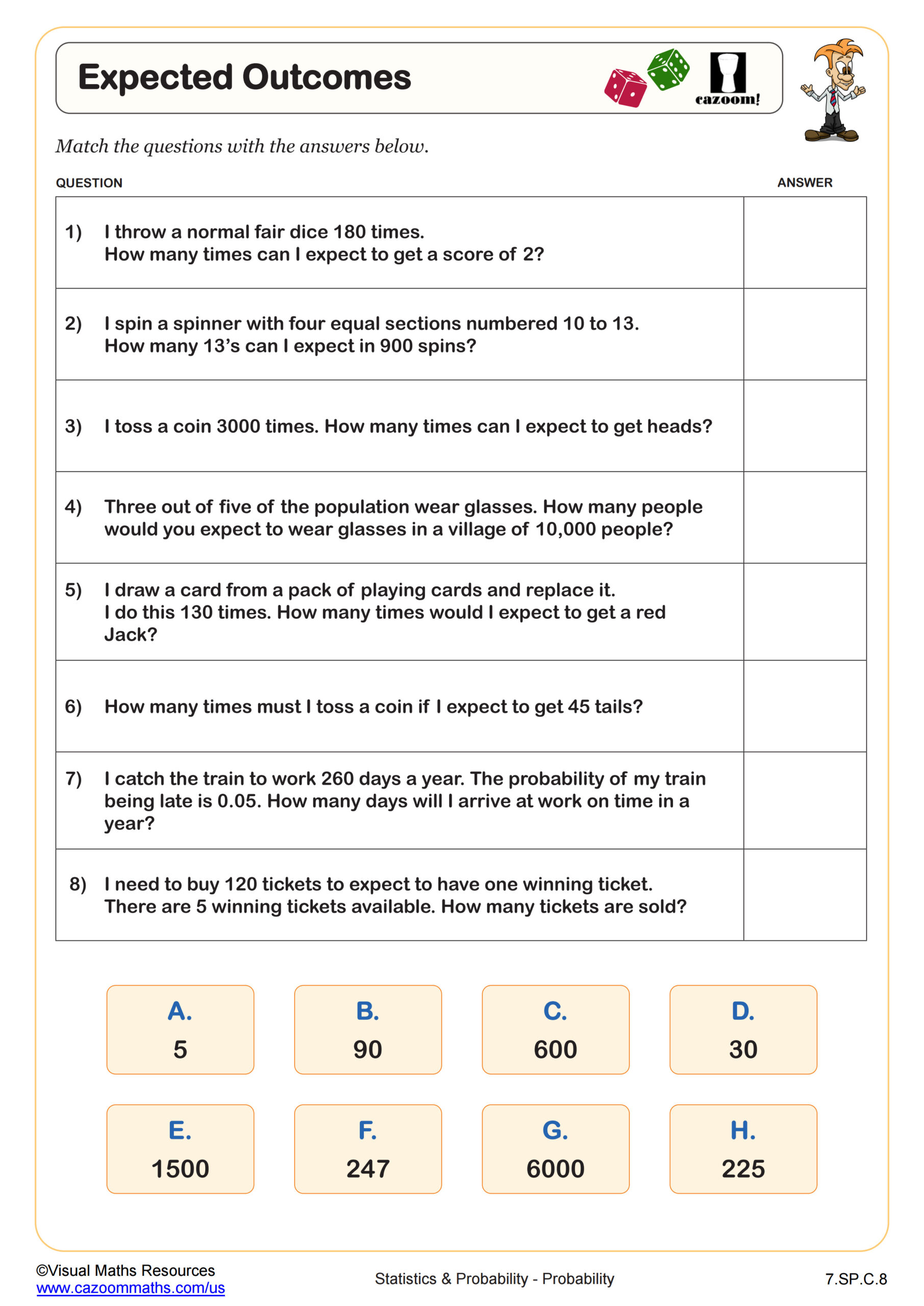
Expected Outcomes
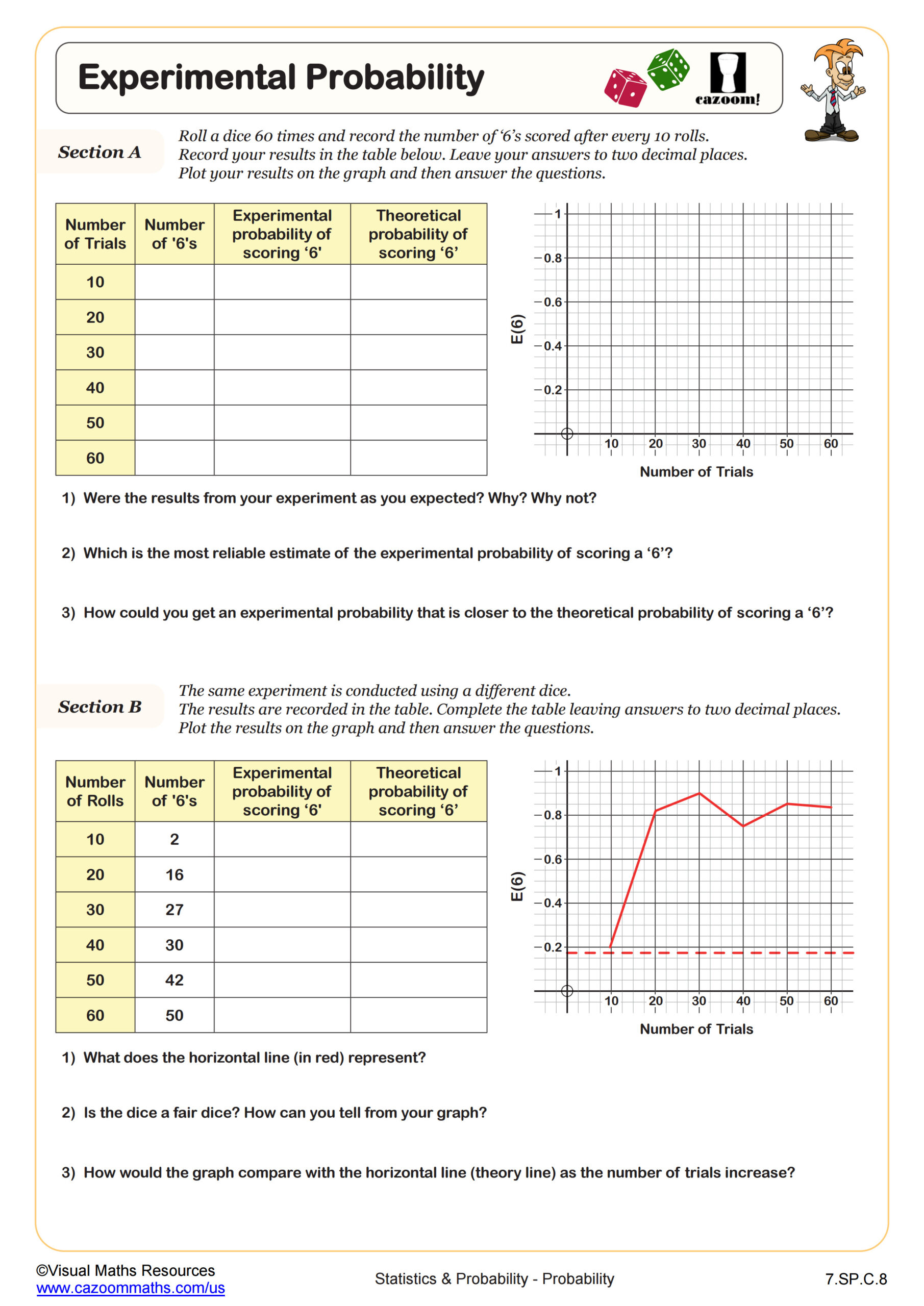
Experimental Probability
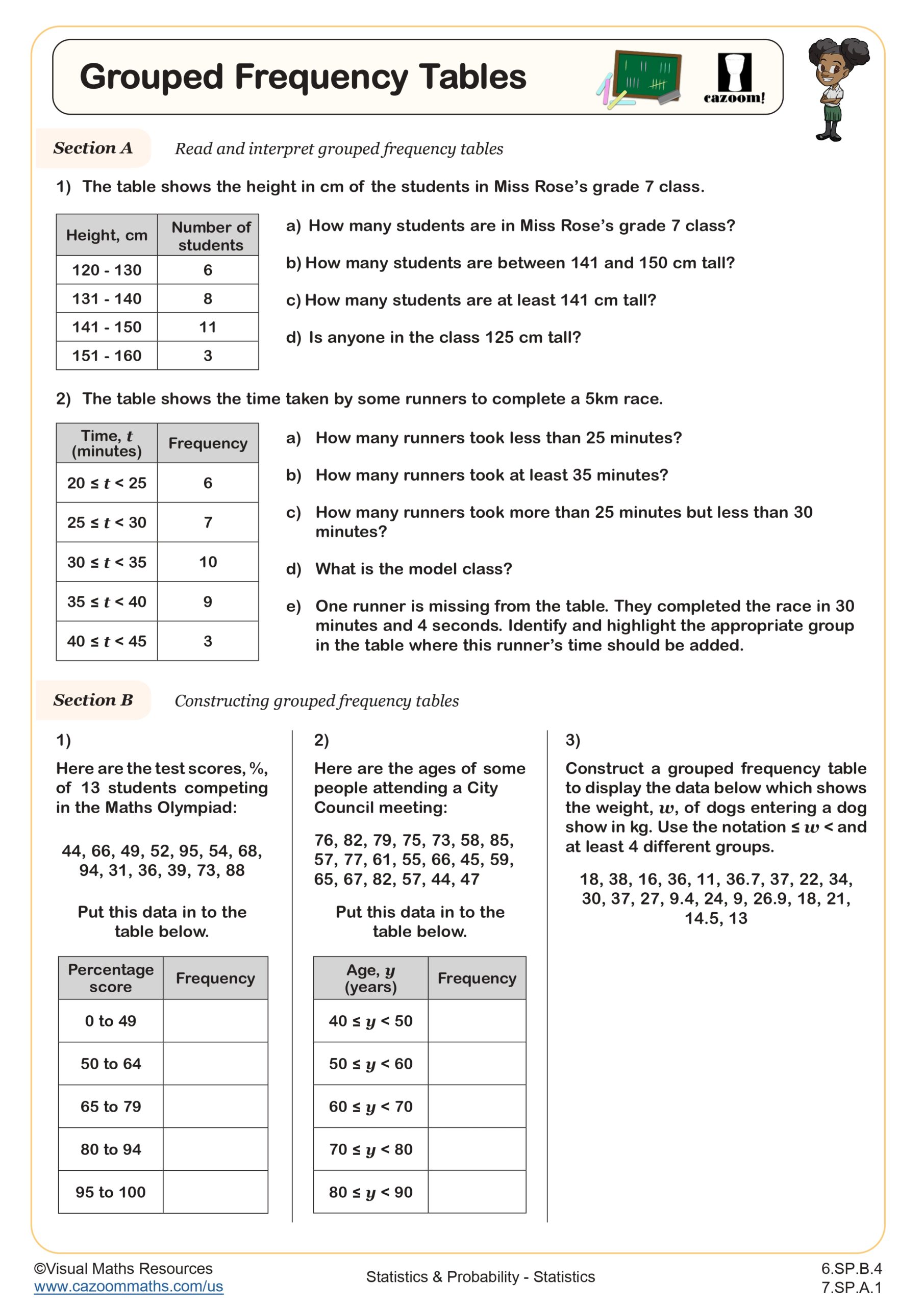
Grouped Frequency Tables
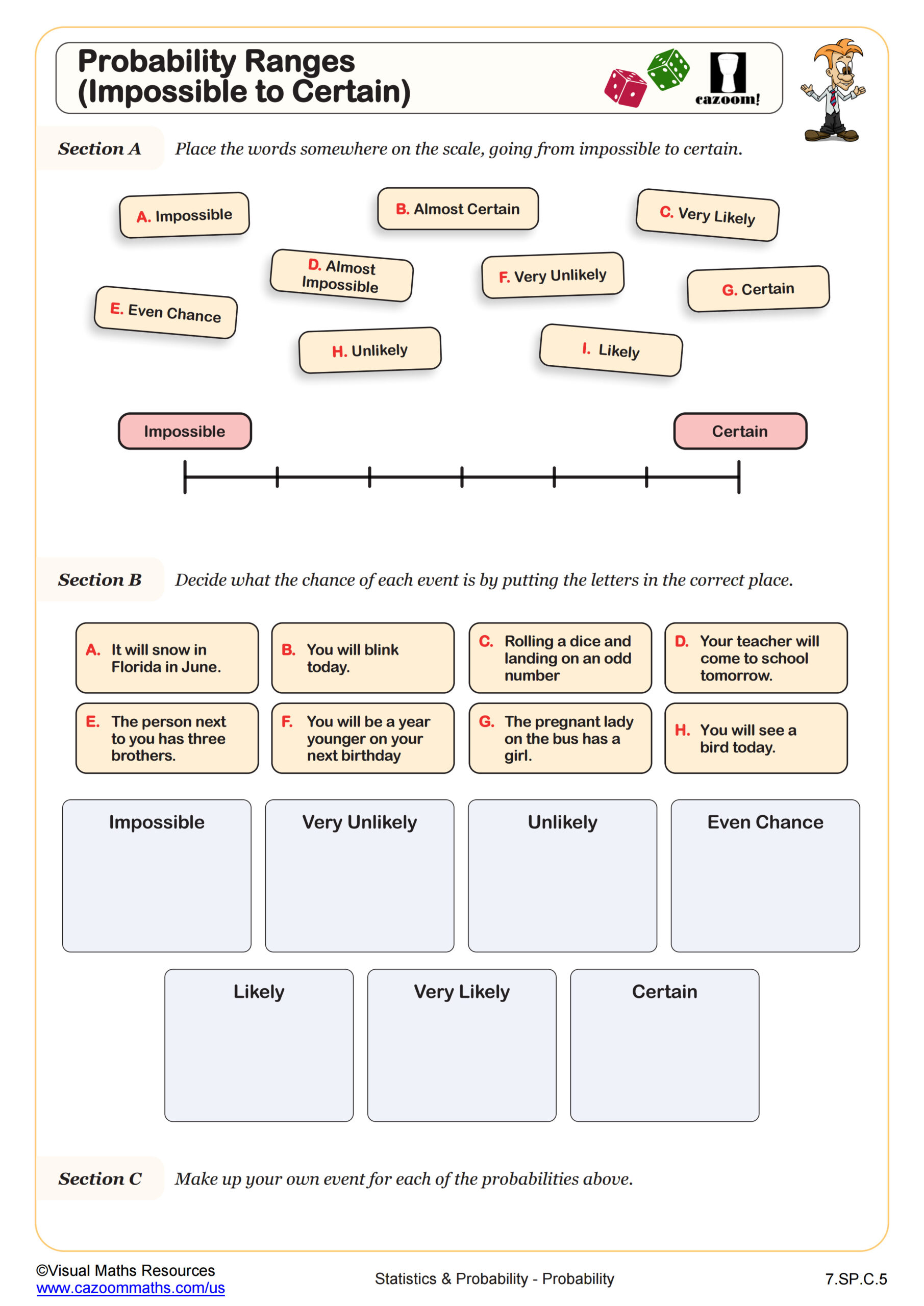
Probability Ranges (Impossible to Certain)
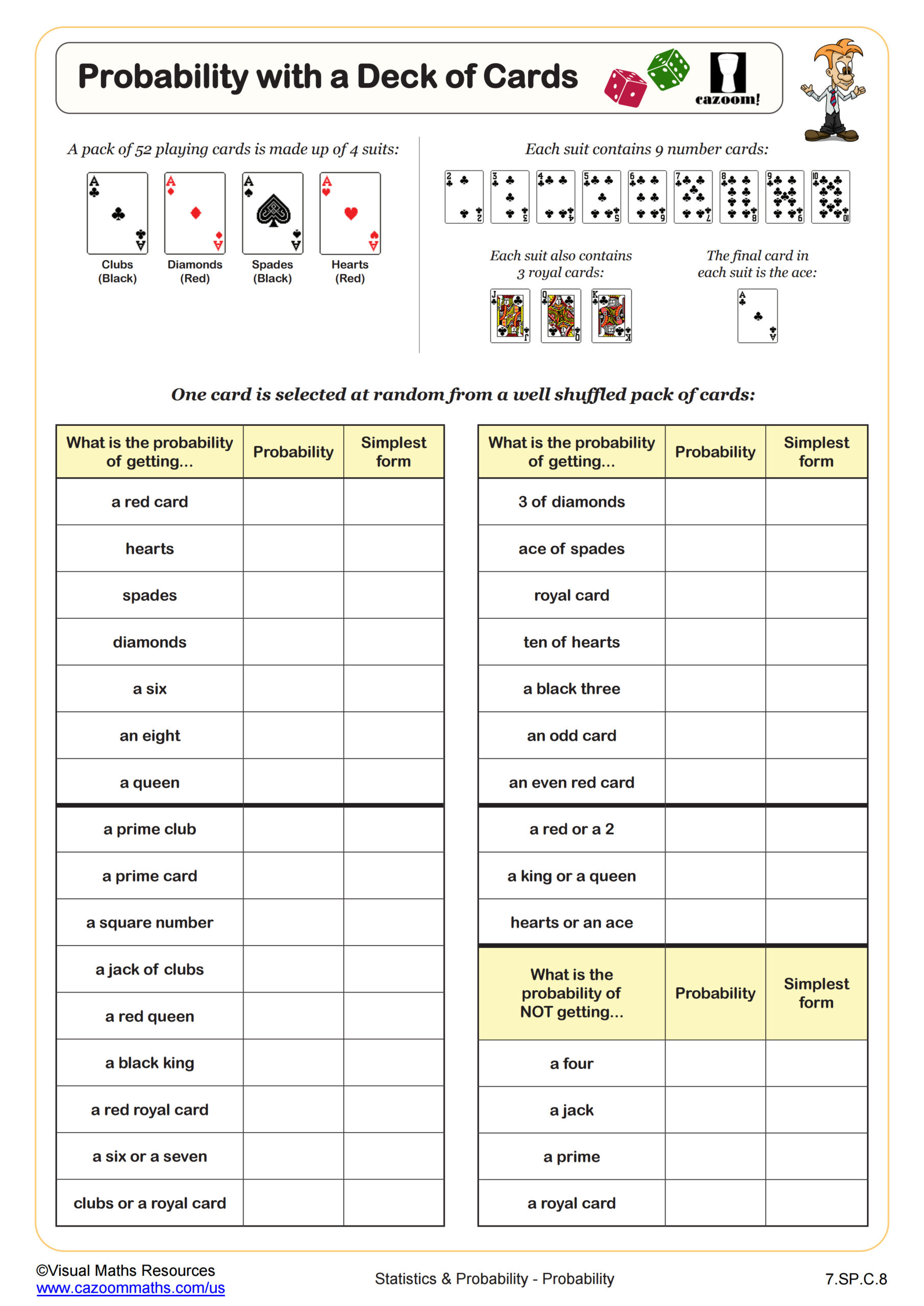
Probability with a Deck of Cards
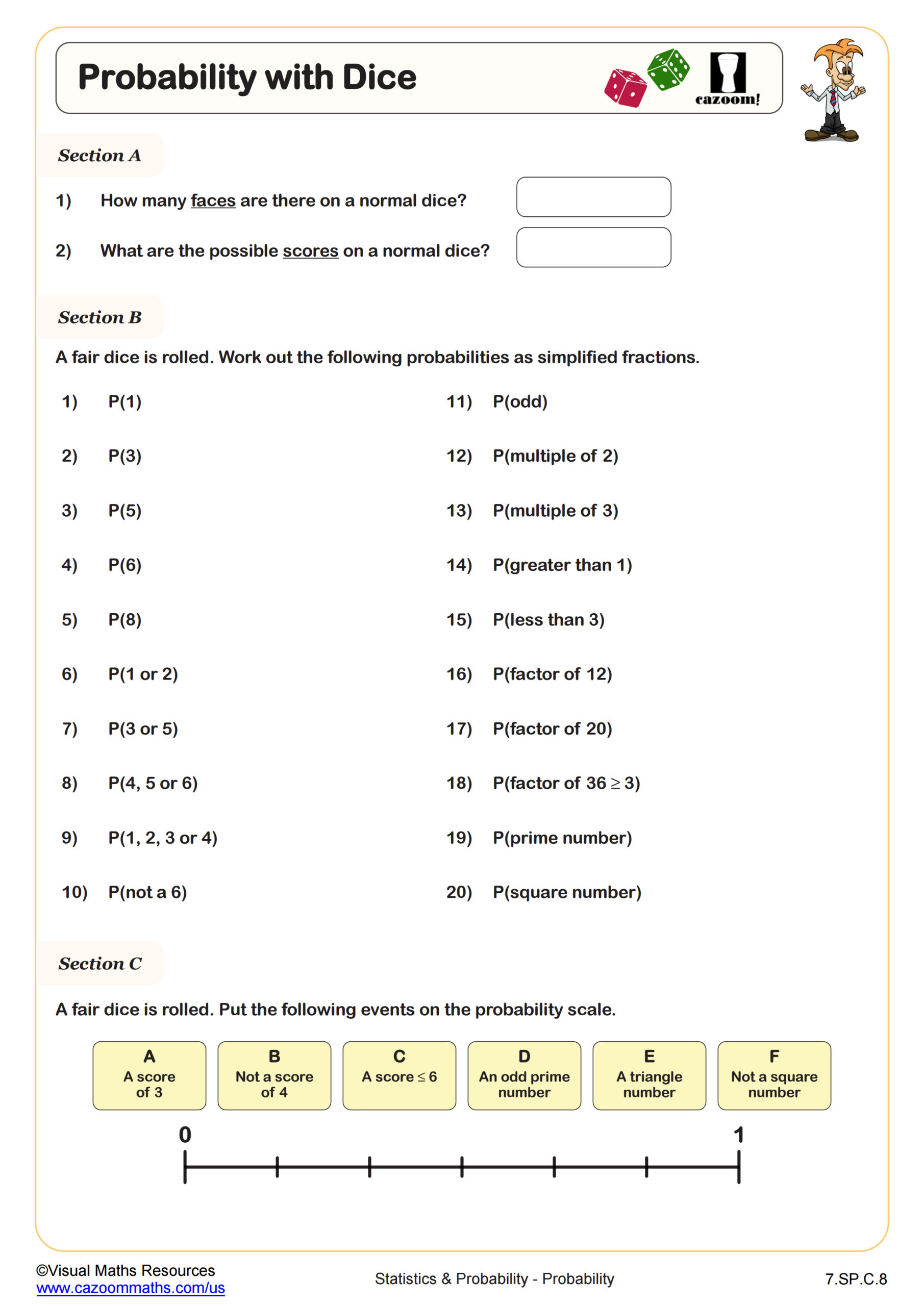
Probability with Dice
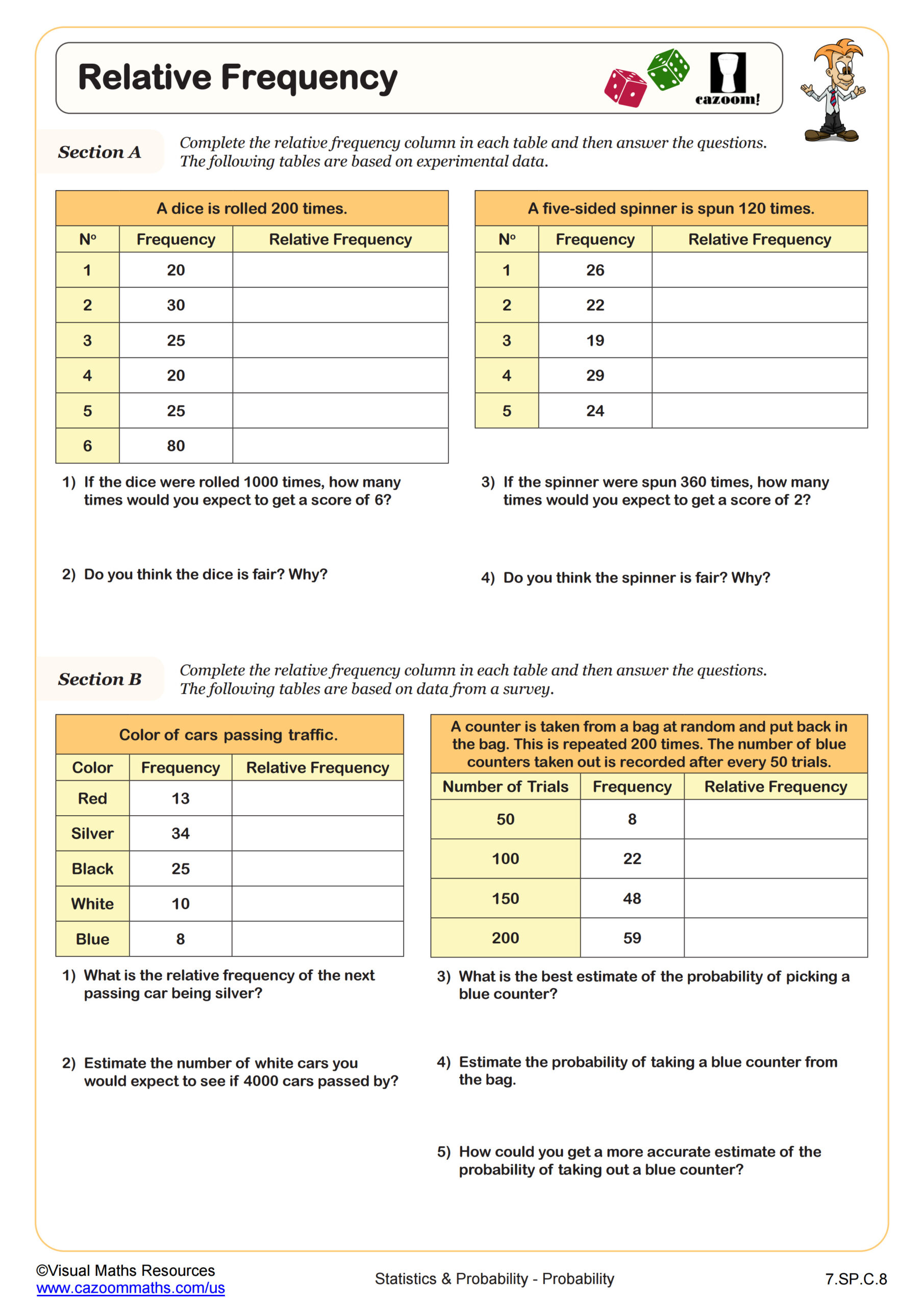
Relative Frequency
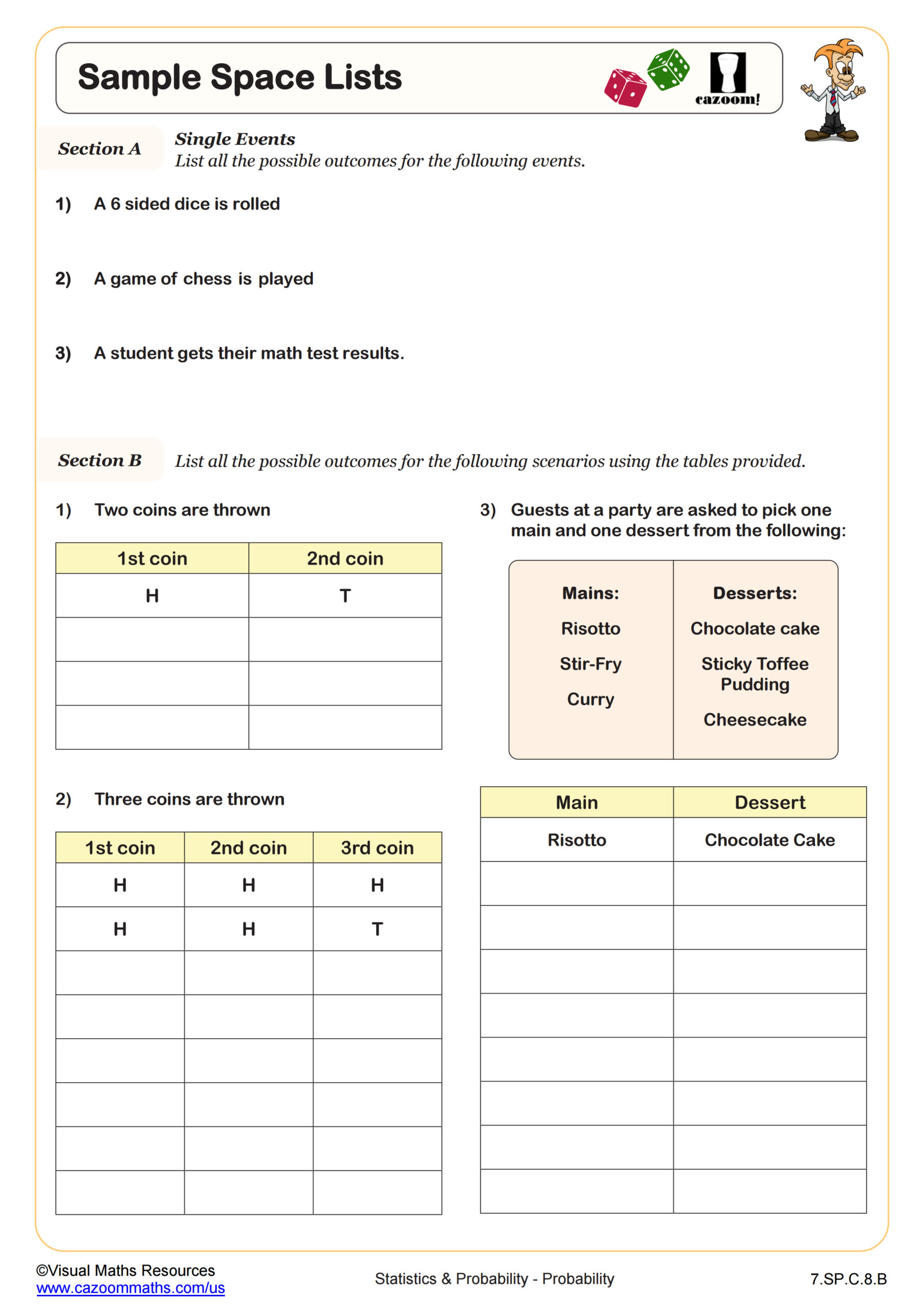
Sample Space Lists
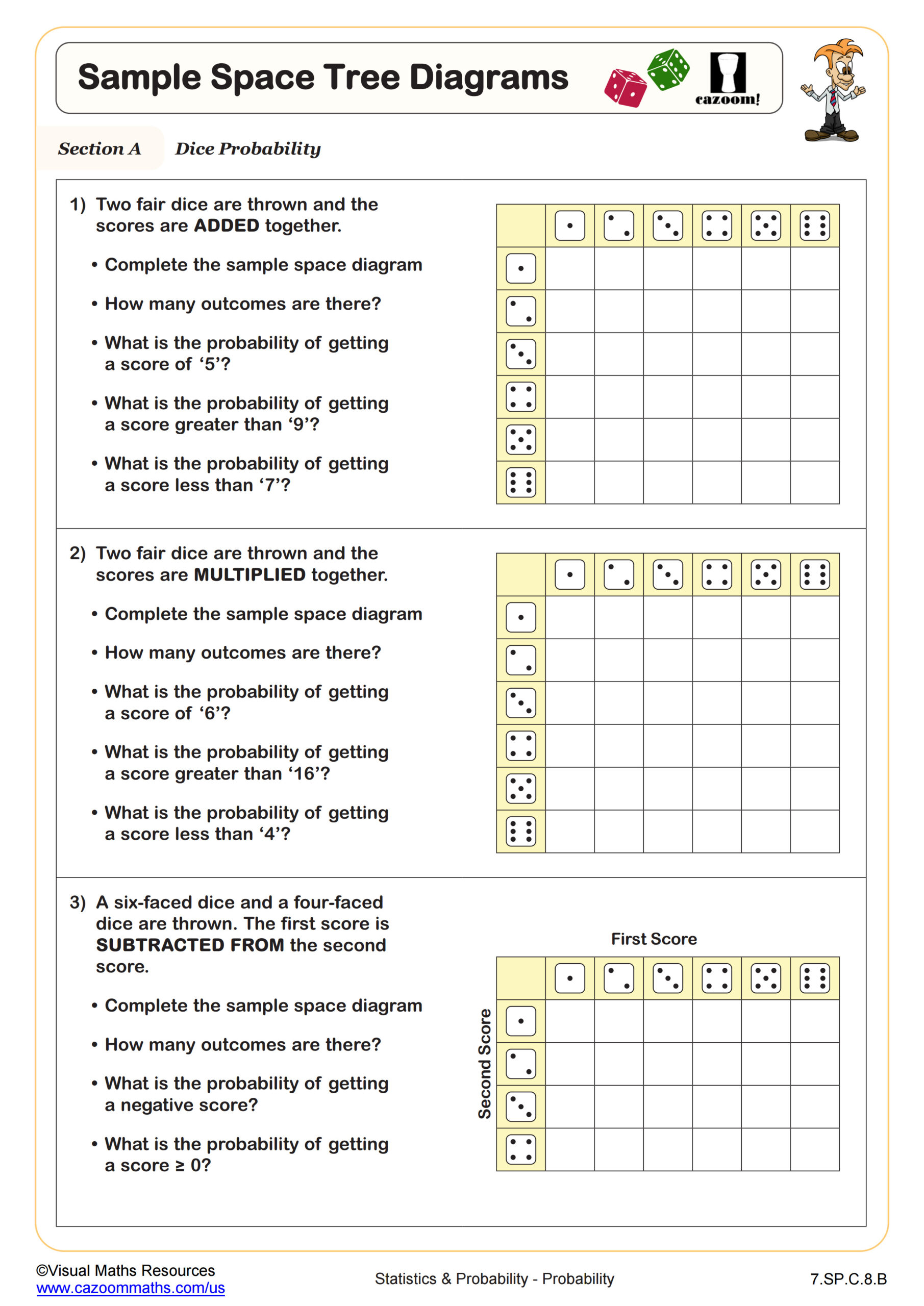
Sample Space Tree Diagrams
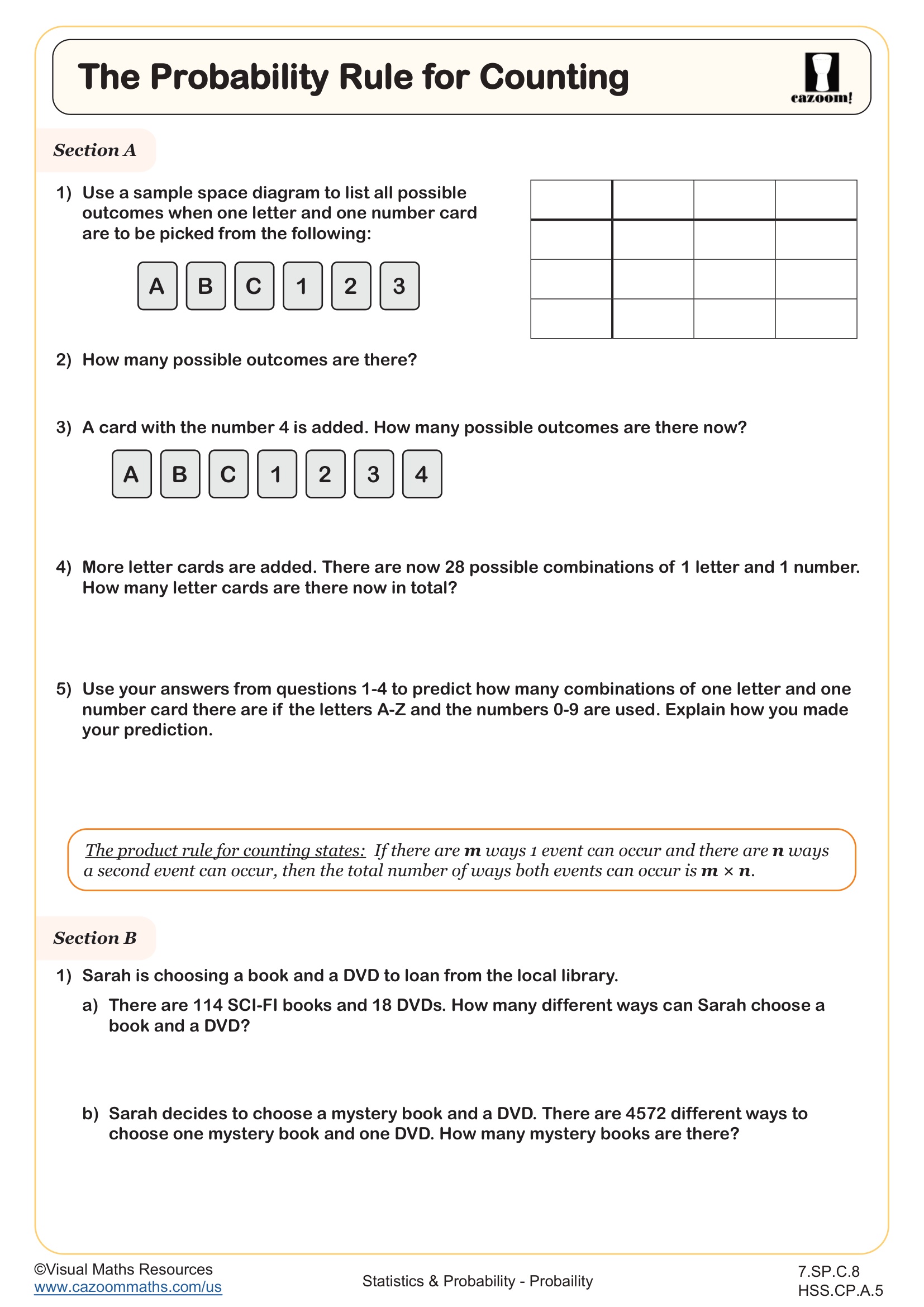
The Probability Rule for Counting
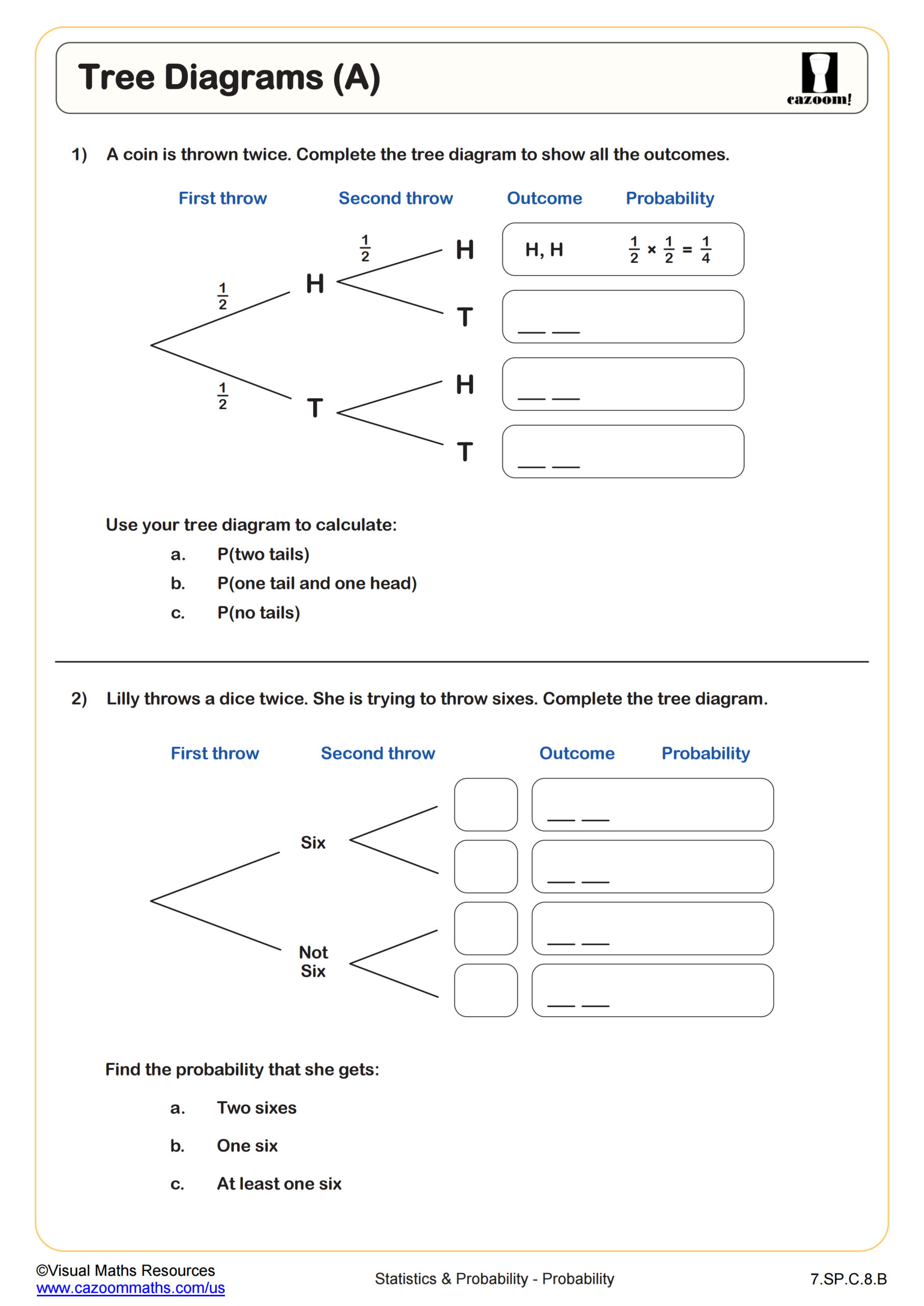
Tree Diagrams (A)
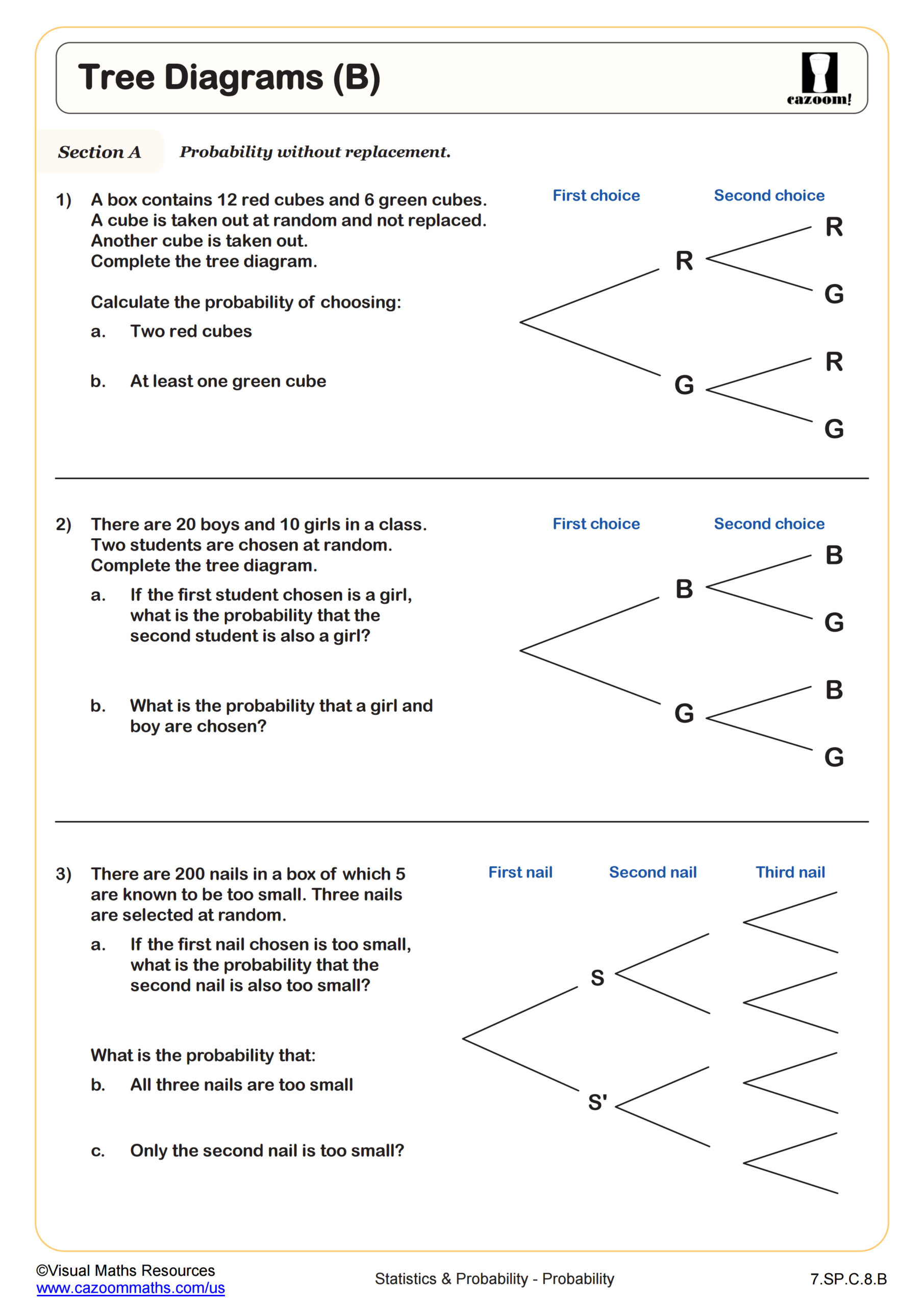
Tree Diagrams (B)
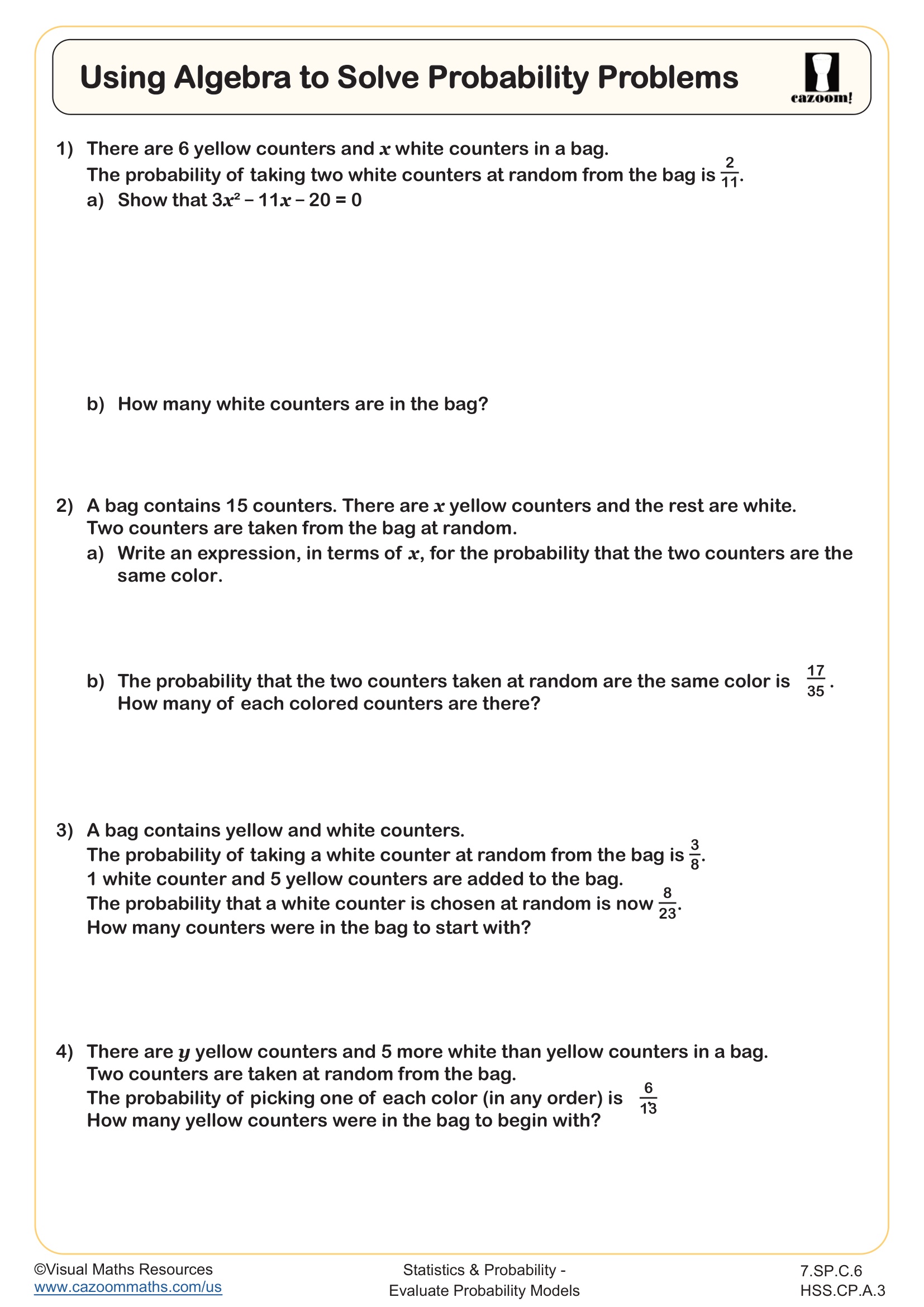
Using Algebra to Solve Probability Problems
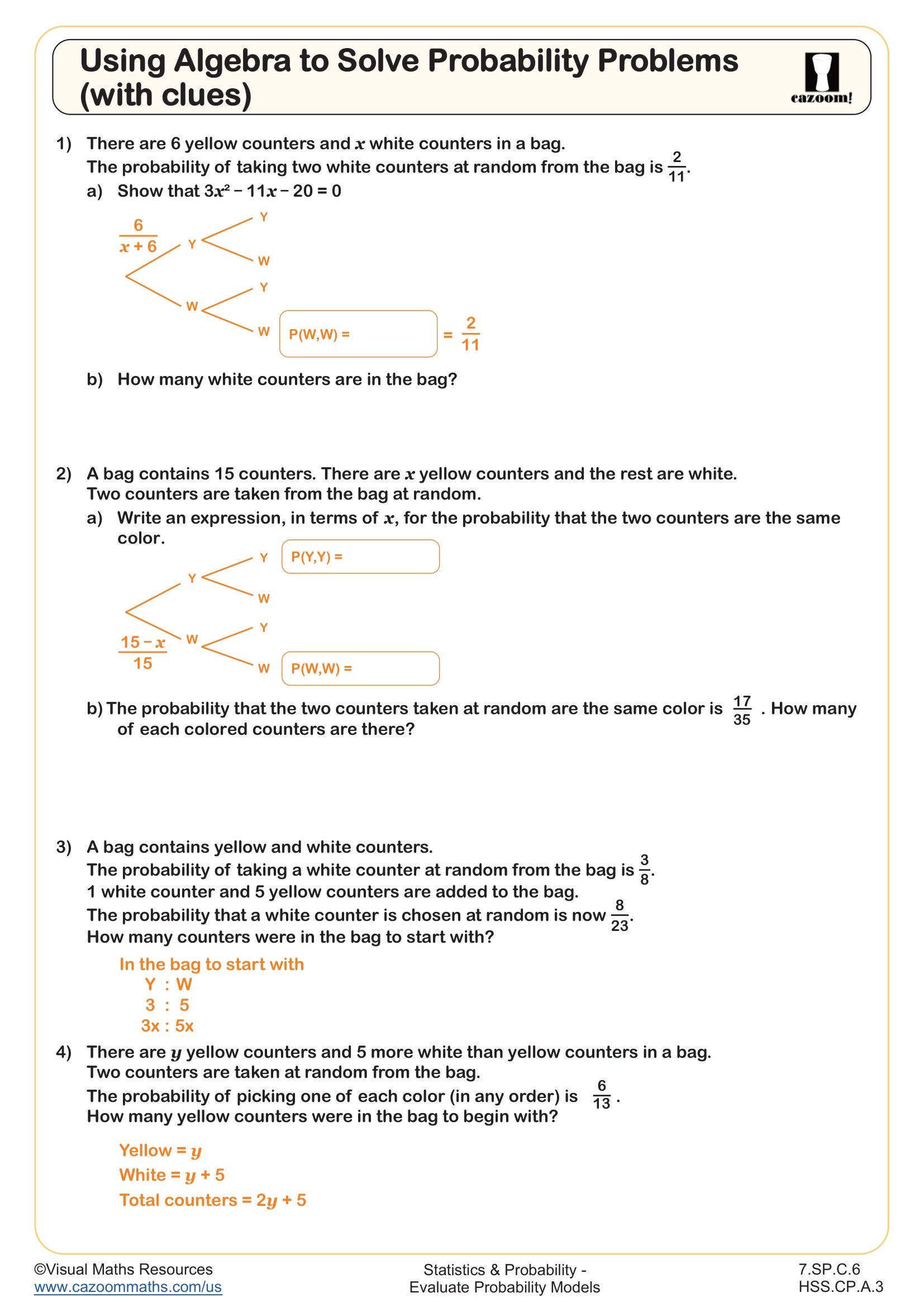
Using Algebra to Solve Probability Problems (with clues)
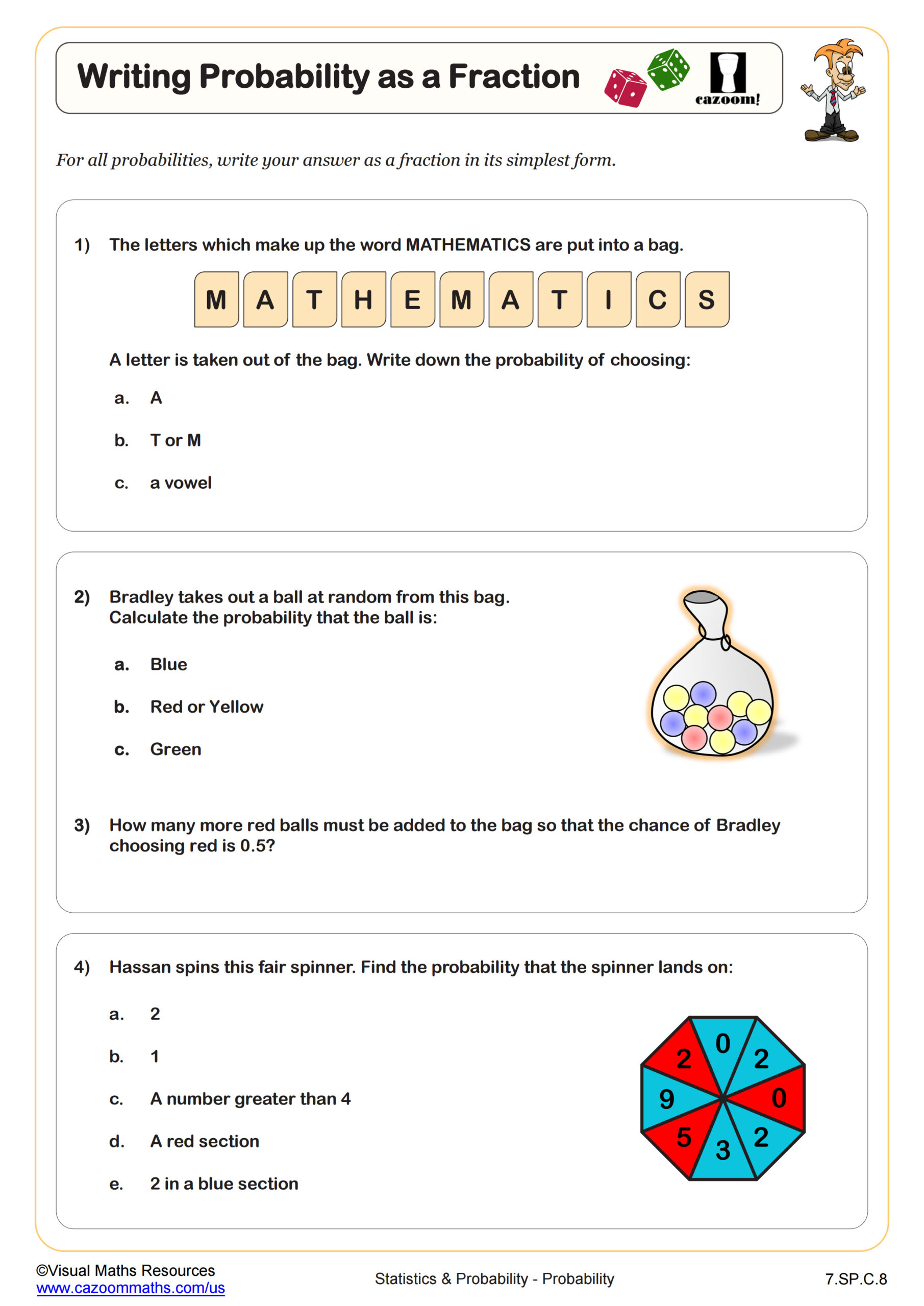
Writing Probability as a Fraction
All worksheets are created by the team of experienced teachers at Cazoom Math.
What topics do probability worksheets grade 7 typically cover?
Grade 7 probability worksheets align with Common Core Standards 7.SP.5 through 7.SP.8, focusing on understanding probability as a number between 0 and 1. Students work with simple events, compound events, sample spaces, and comparing theoretical versus experimental probability using simulations and data collection.
Teachers notice that students often confuse independent and dependent events when working through compound probability problems. For example, when drawing cards without replacement, many seventh graders incorrectly assume each draw has the same probability as the first. Effective probability grade 7 worksheets with answers provide step-by-step solutions that clarify how sample spaces change with each event.
How does 7th grade probability preparation differ from earlier grades?
Seventh grade marks the transition from informal probability language to formal mathematical notation and calculations. While elementary students might say events are 'likely' or 'unlikely,' seventh graders must express probability as precise numerical values and understand that all probabilities in a sample space sum to 1.
The jump from qualitative to quantitative thinking challenges many students. Teachers report that grade 7 probability worksheets work best when they bridge this gap by starting with familiar scenarios like spinner games before moving to abstract probability calculations. This progression helps students connect their intuitive understanding to mathematical formalism.
Why do students struggle with experimental versus theoretical probability?
The distinction between what should happen theoretically and what actually occurs in experiments confuses many seventh graders. Students expect experimental results to match theoretical predictions exactly, leading to frustration when their coin flip data doesn't yield a perfect 50-50 split.
Math teachers find that probability worksheet 7th grade problems addressing this misconception work best when they include larger sample sizes. When students conduct 100 trials instead of 10, they observe how experimental probability converges toward theoretical probability. This hands-on experience reinforces that theoretical probability predicts long-term behavior, not individual outcomes.
How can teachers use these worksheets most effectively in class?
Successful implementation combines individual practice with collaborative data collection activities. Teachers often assign probability 7th grade worksheet problems as homework after conducting class experiments, allowing students to compare their theoretical calculations with actual results from shared data.
The answer keys prove invaluable for peer review sessions where students check each other's work and discuss different solution approaches. Many teachers use the 7th grade probability worksheet pdf format to project problems during whole-class instruction, walking through complex sample space diagrams step-by-step before releasing students to independent practice.