7th Grade Proportion Worksheets
Creating Equivalent Ratios (A)
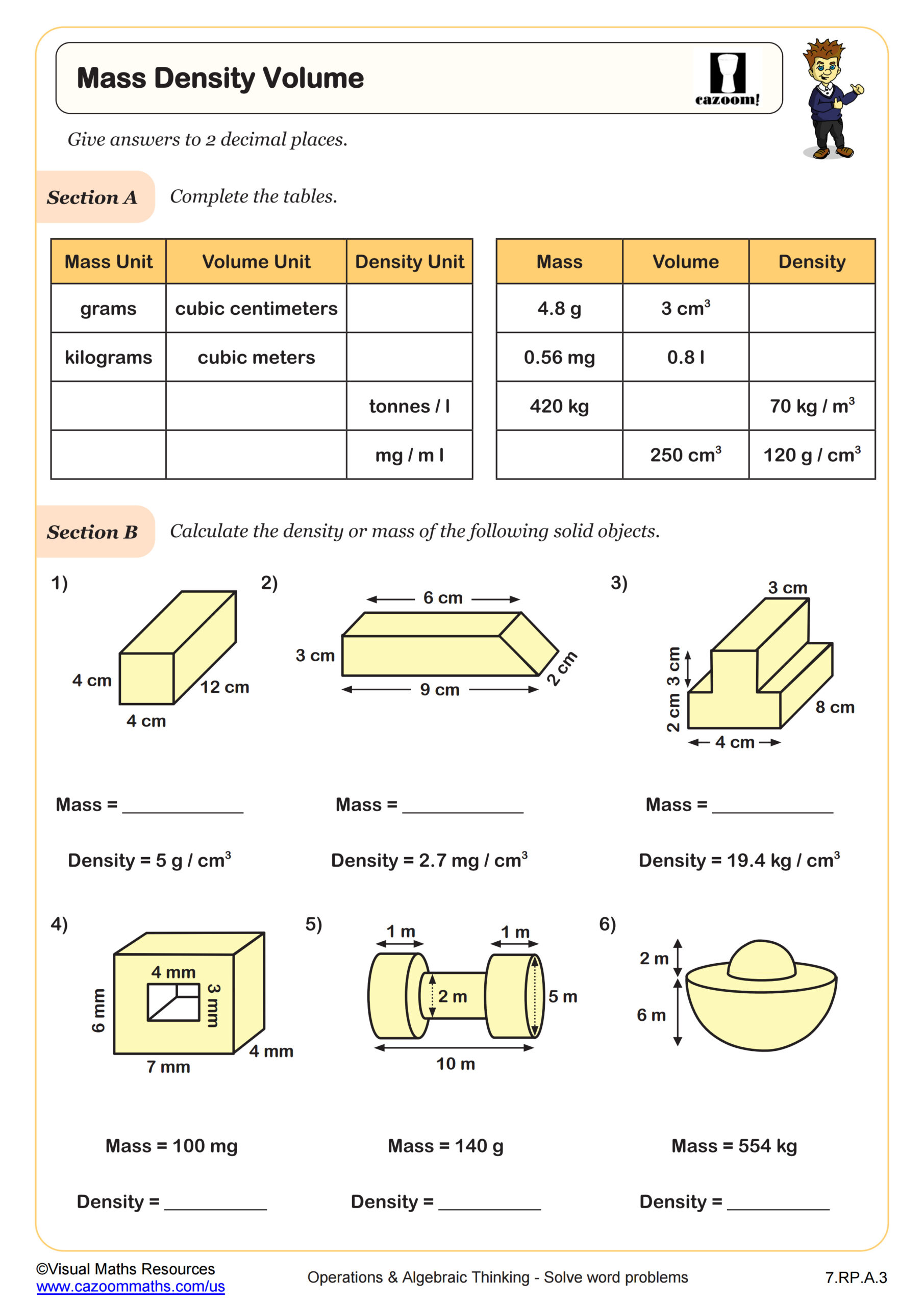
Density, Mass, and Volume
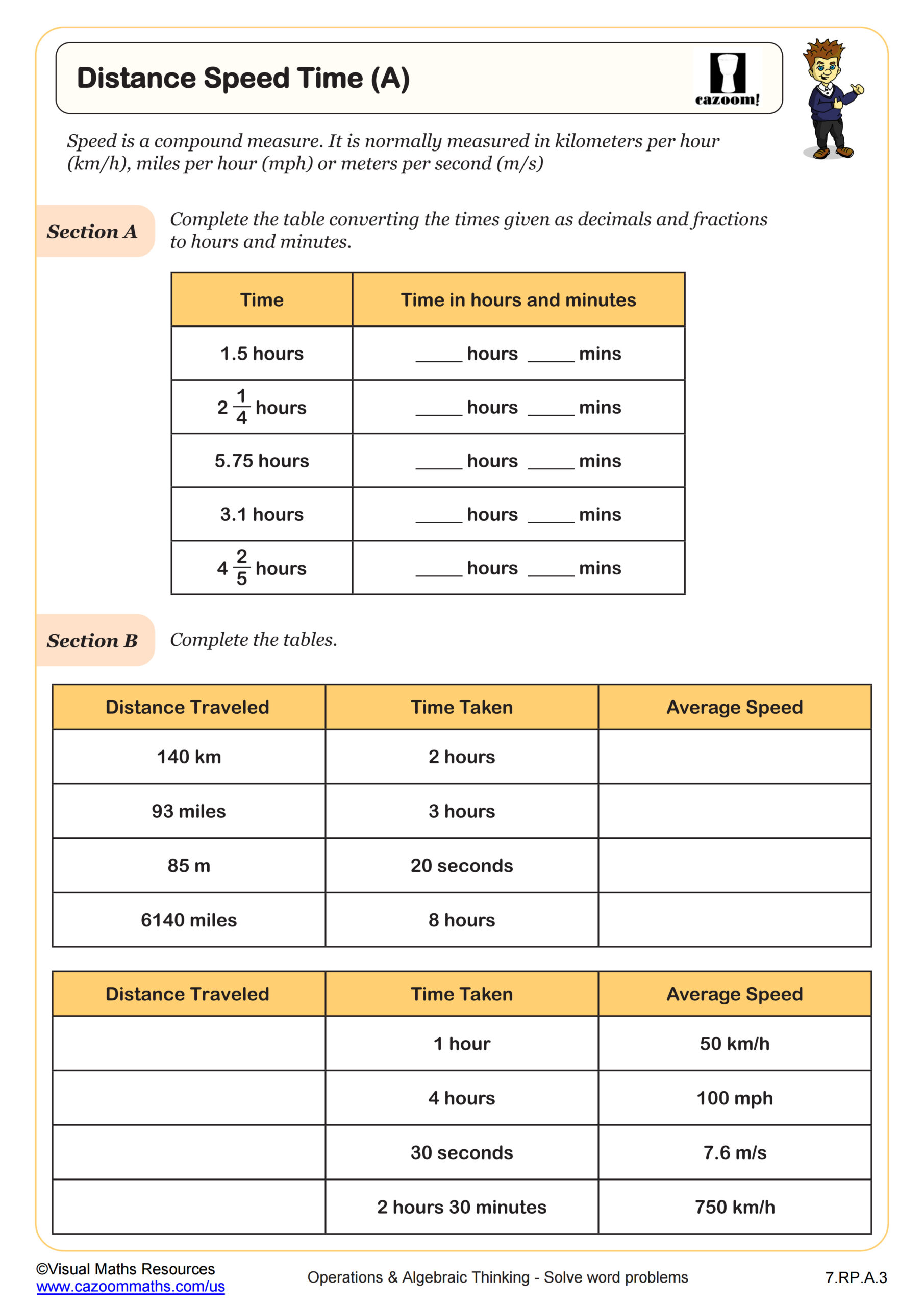
Distance, Speed, and Time (A)
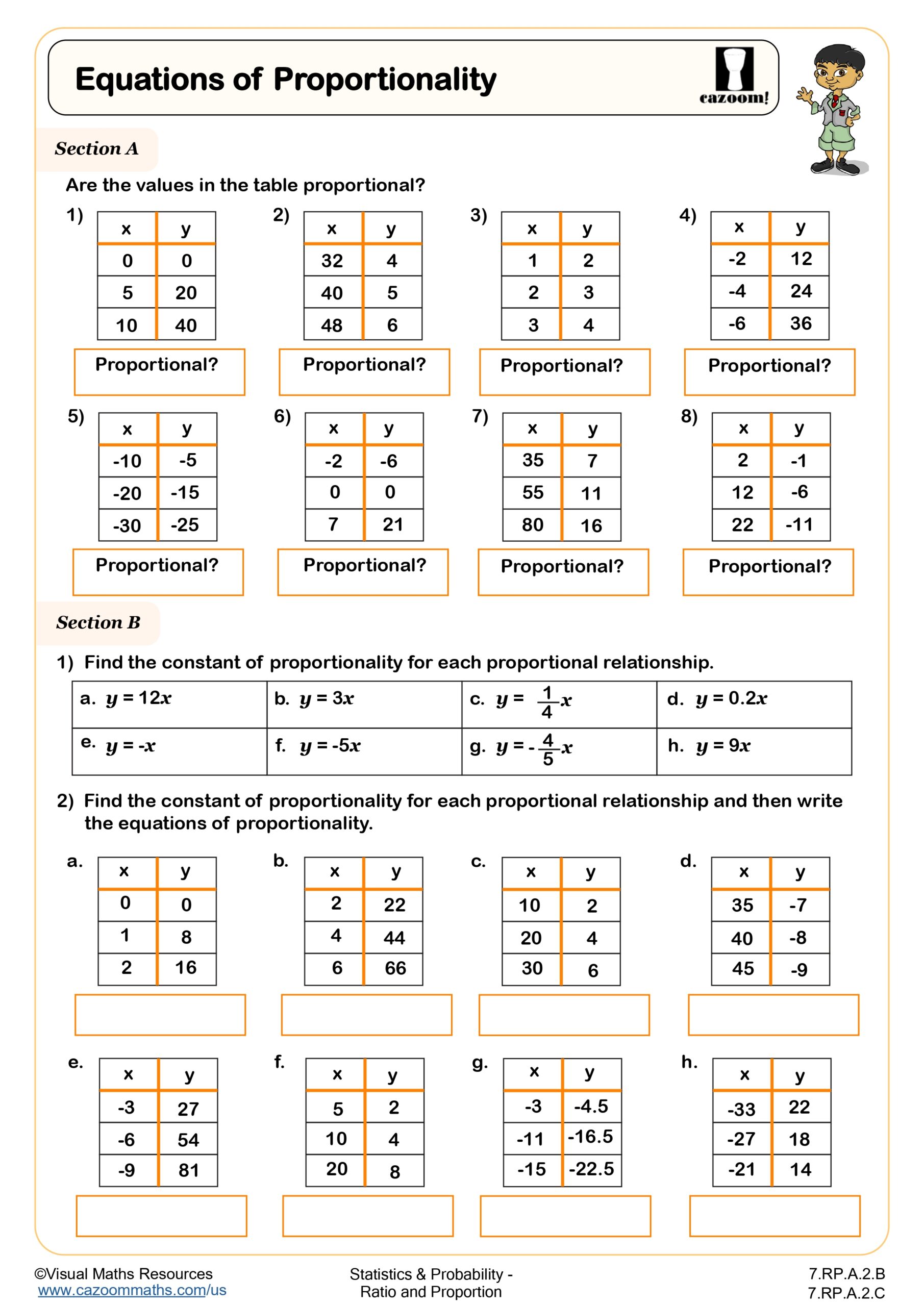
Equations of Proportionality
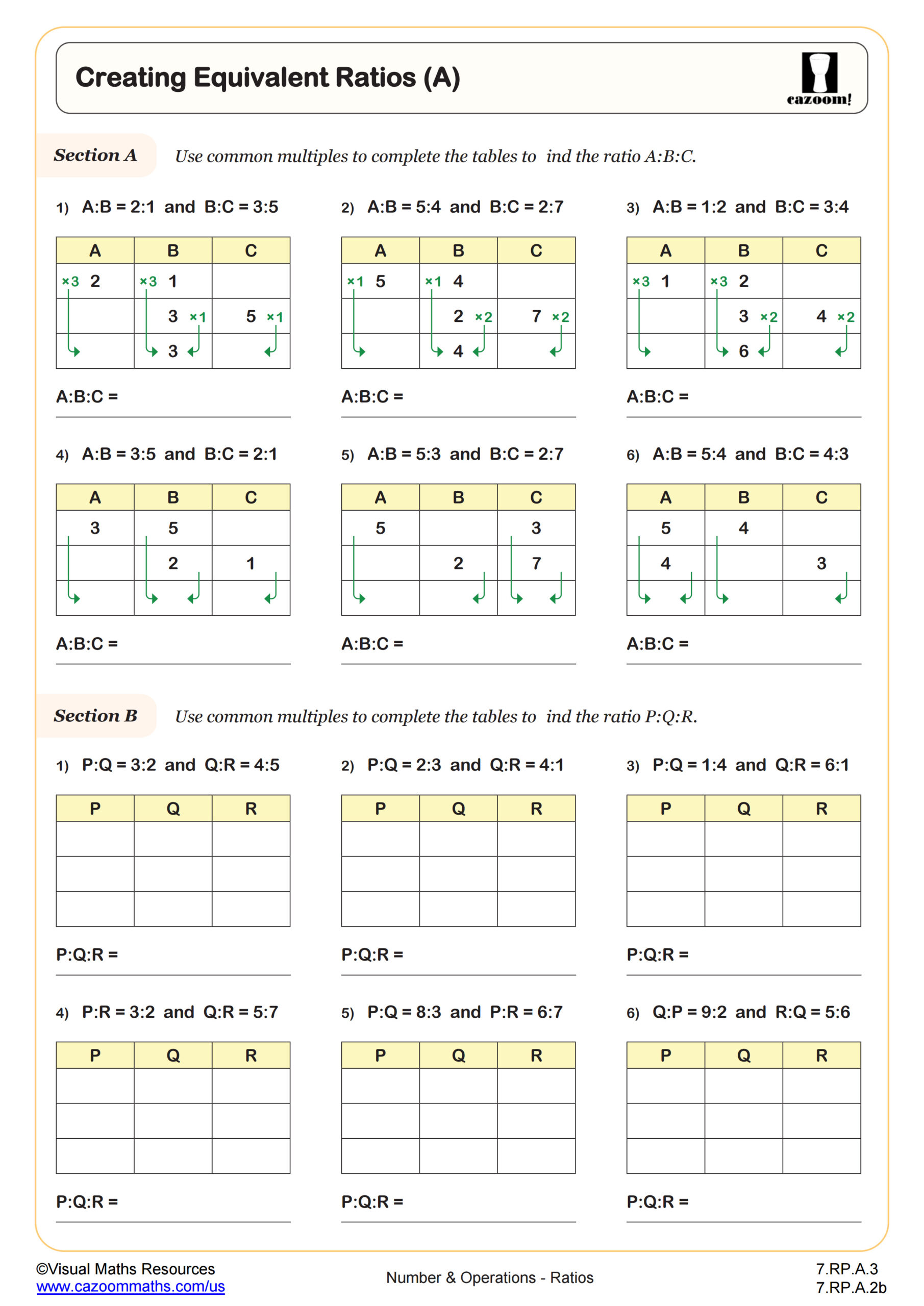
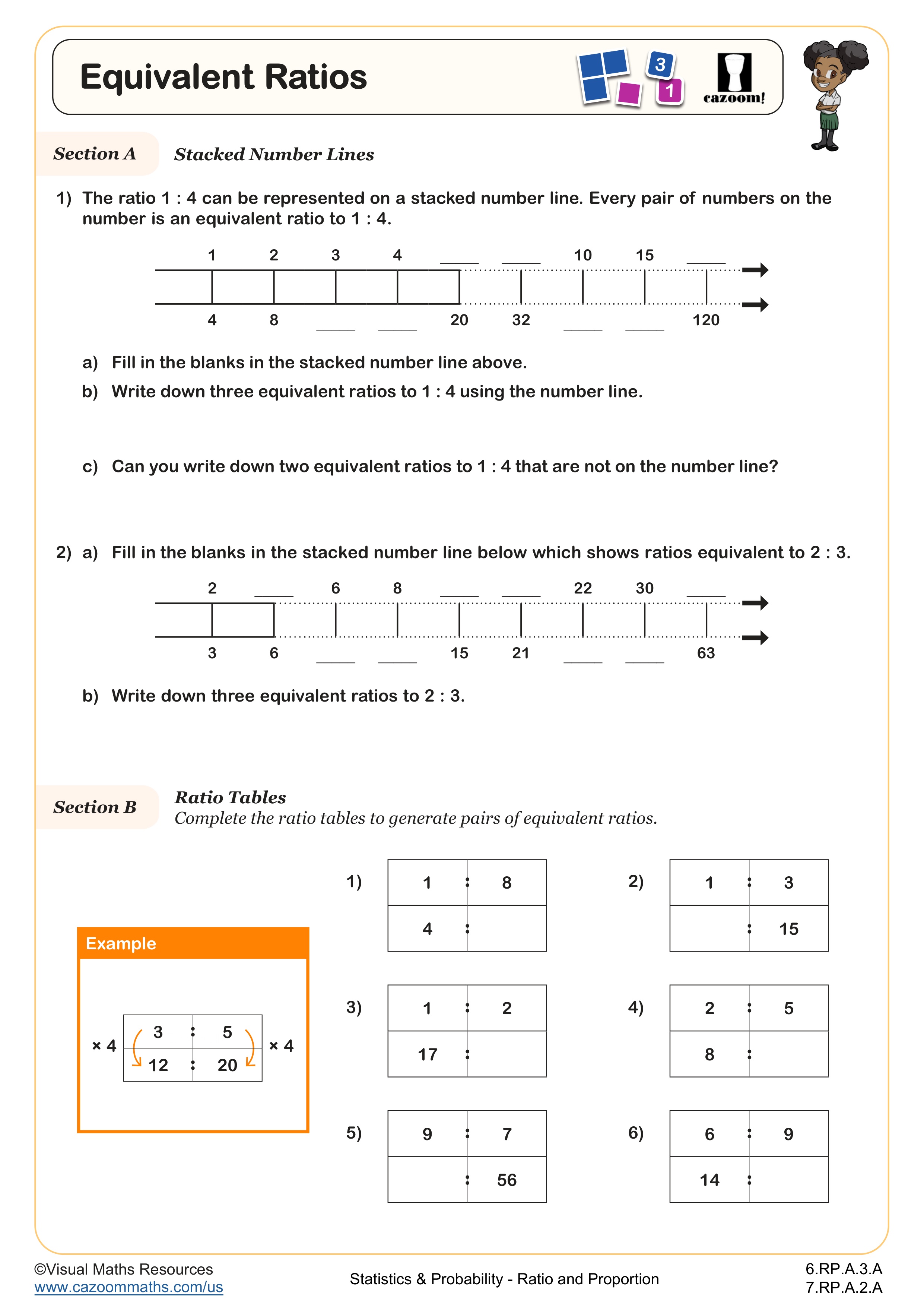
Equivalent Ratios
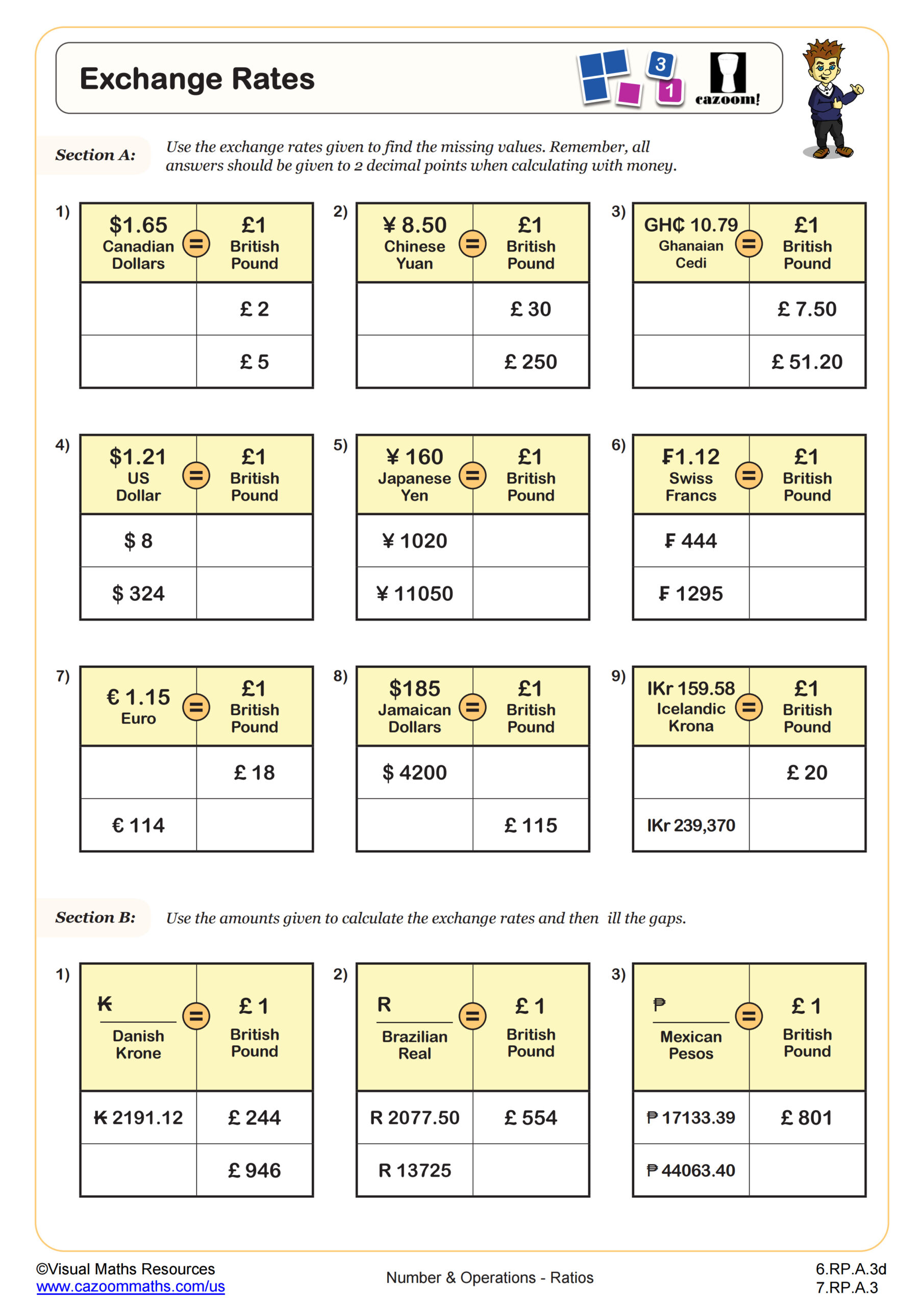
Exchange Rates
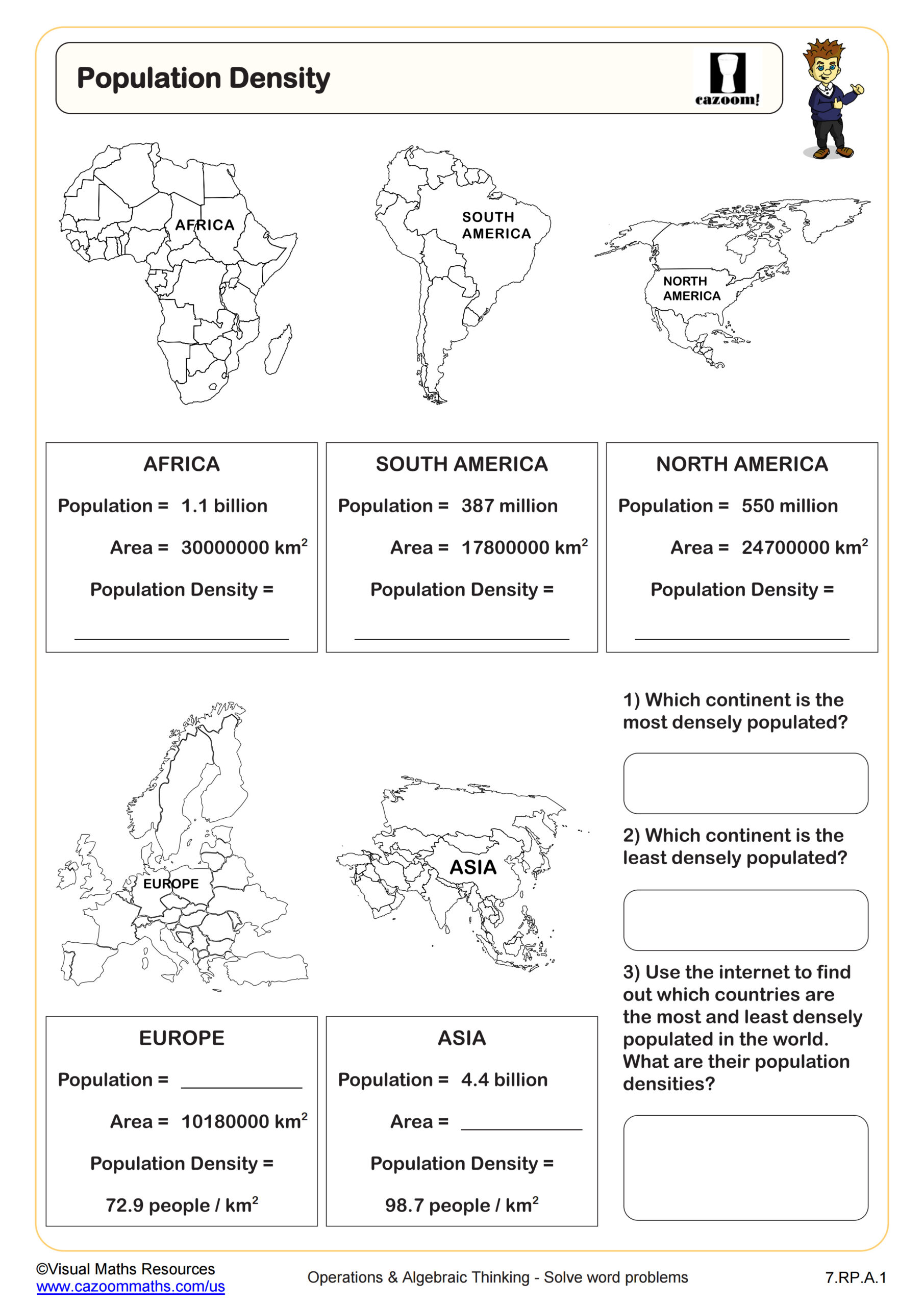
Population Density
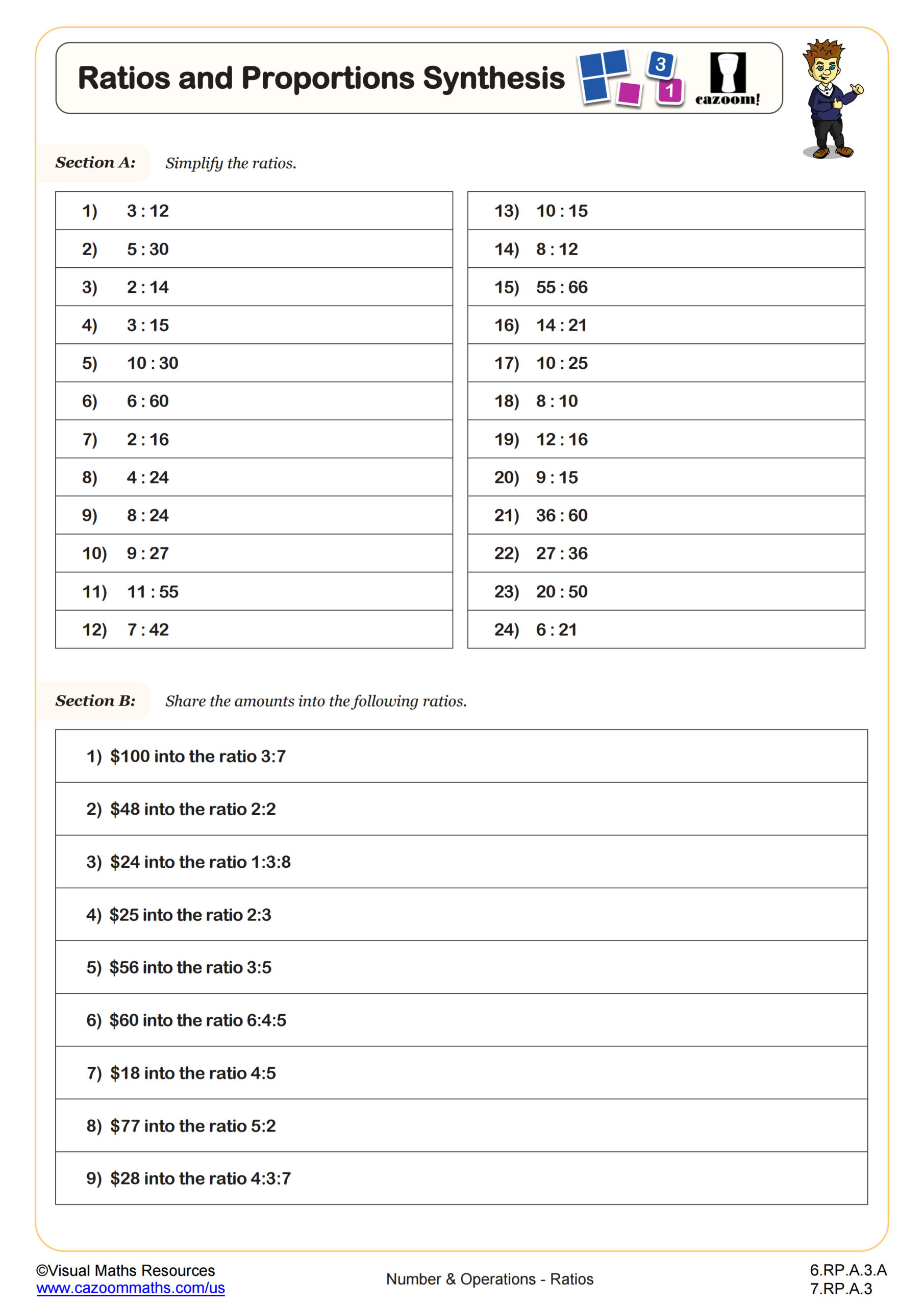
Ratios and Proportions Synthesis
Recipe Proportions (A)
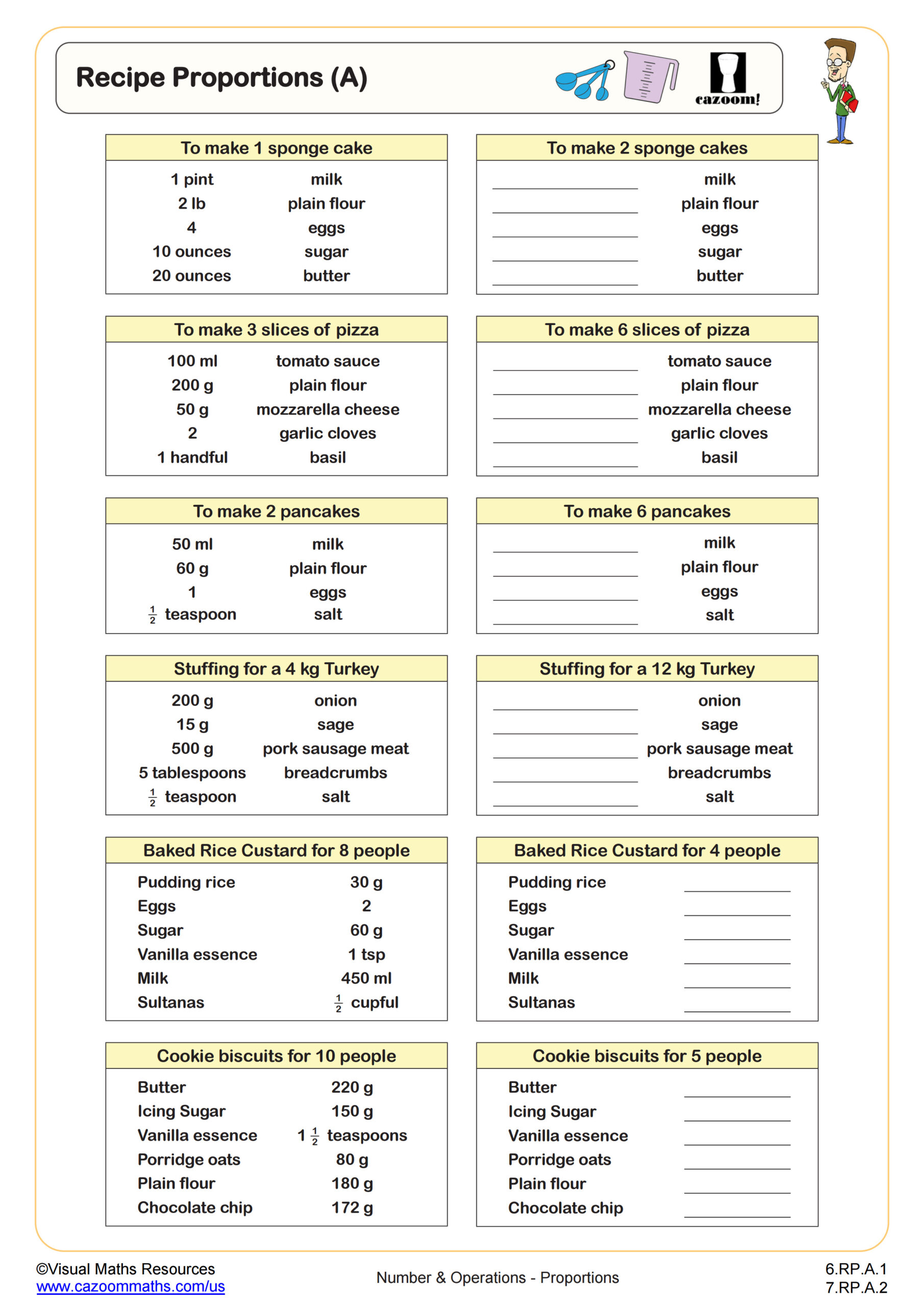
Recipe Proportions (B)
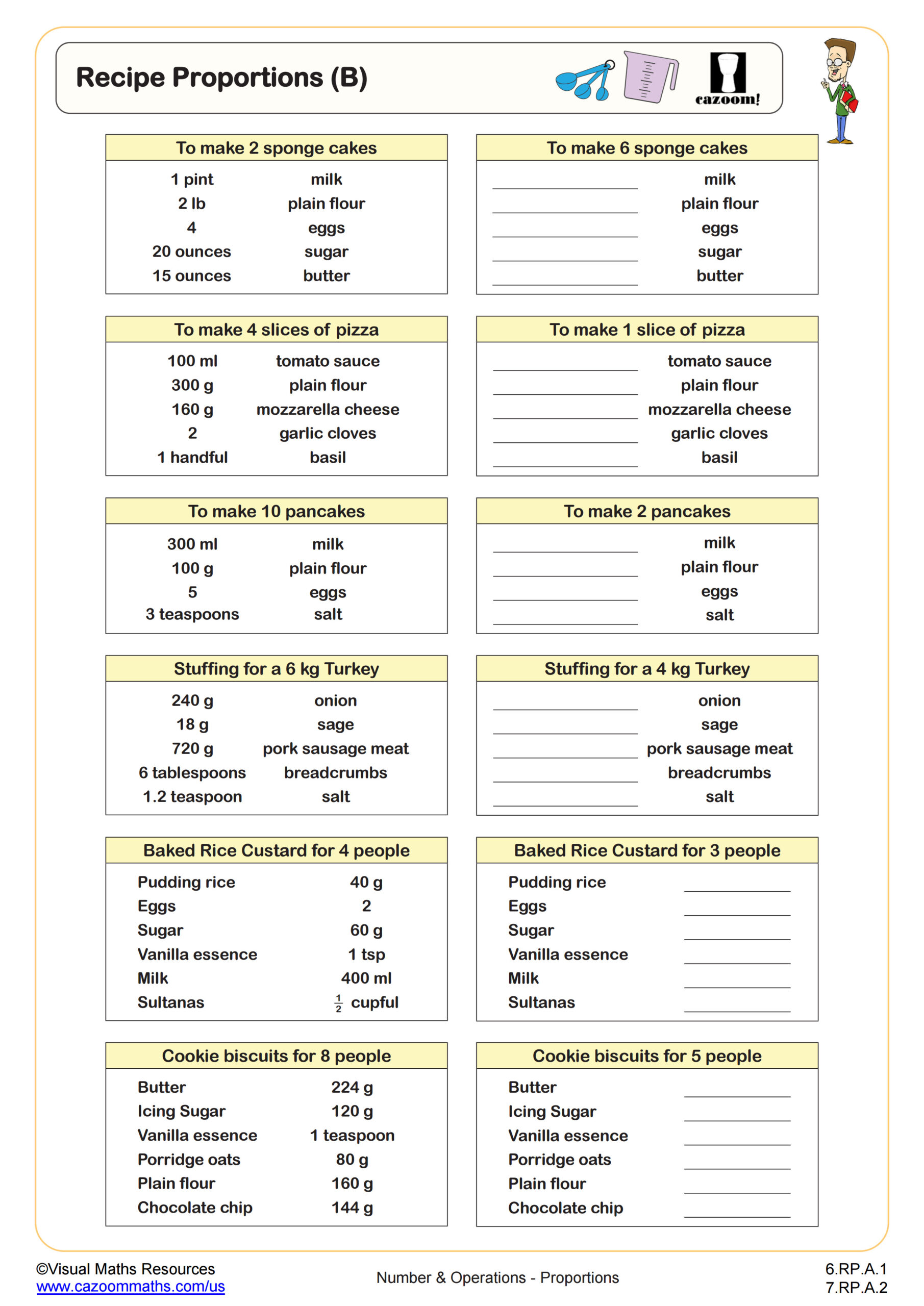
Recipe Proportions (C)
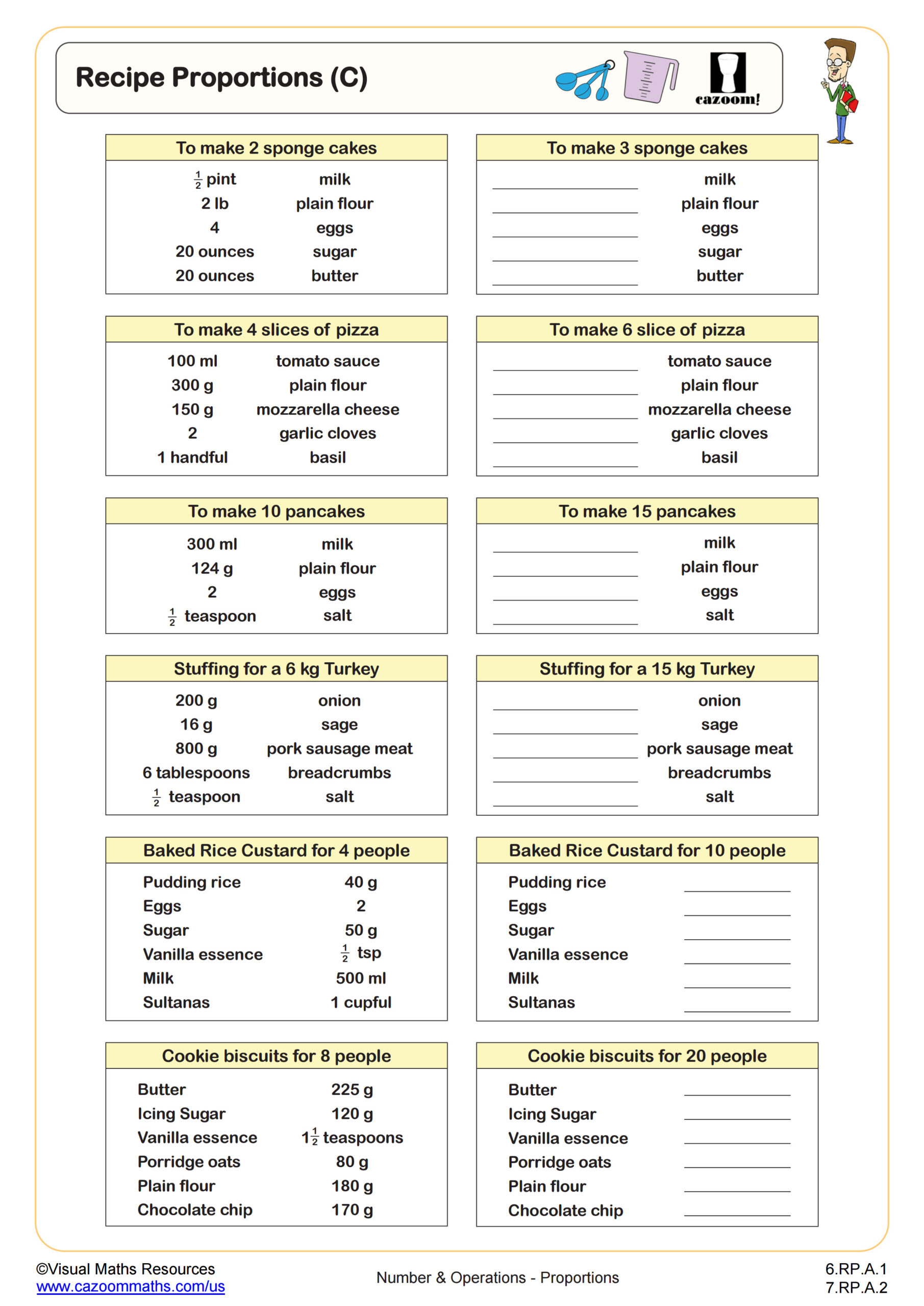
Recipes (A)
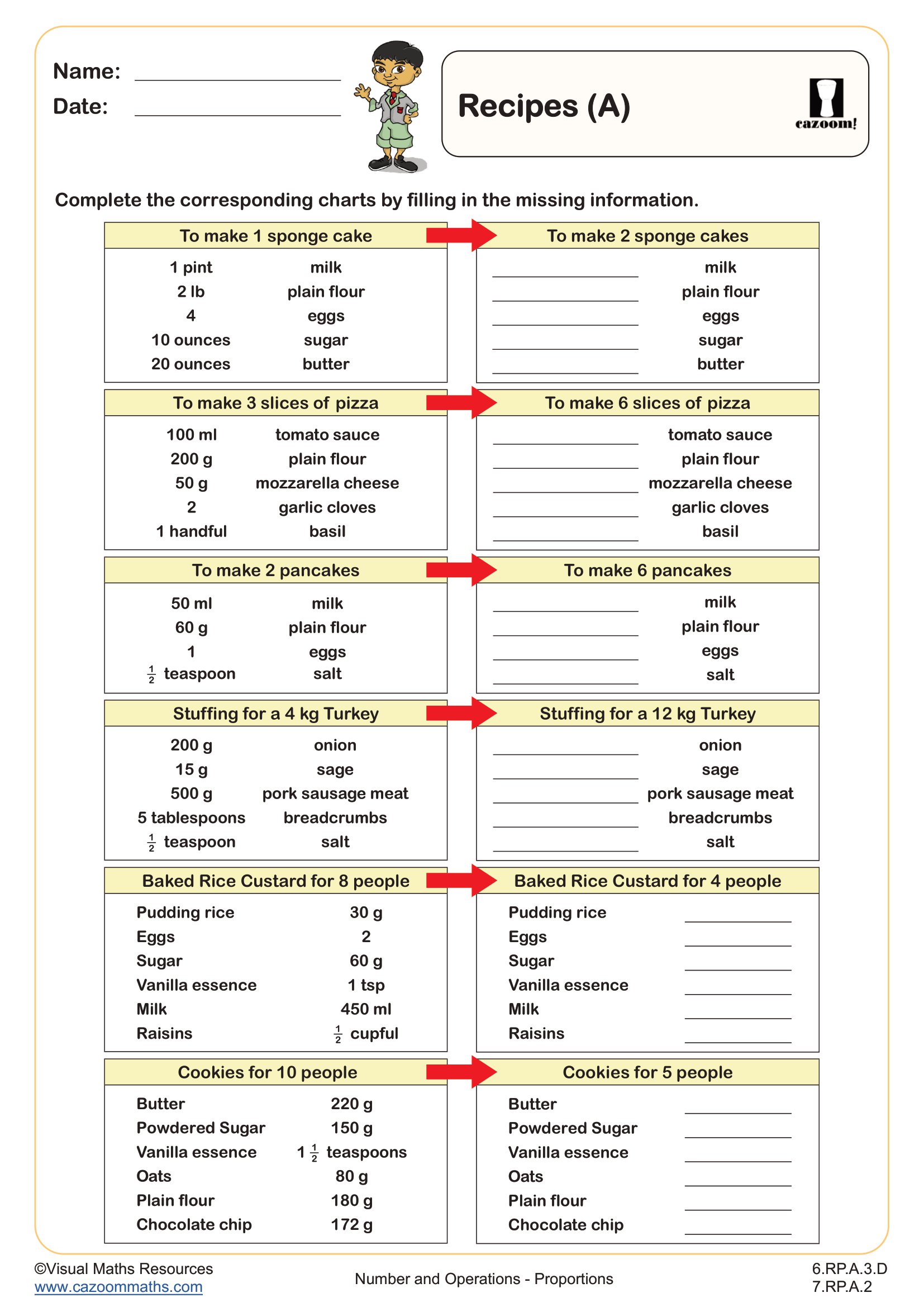
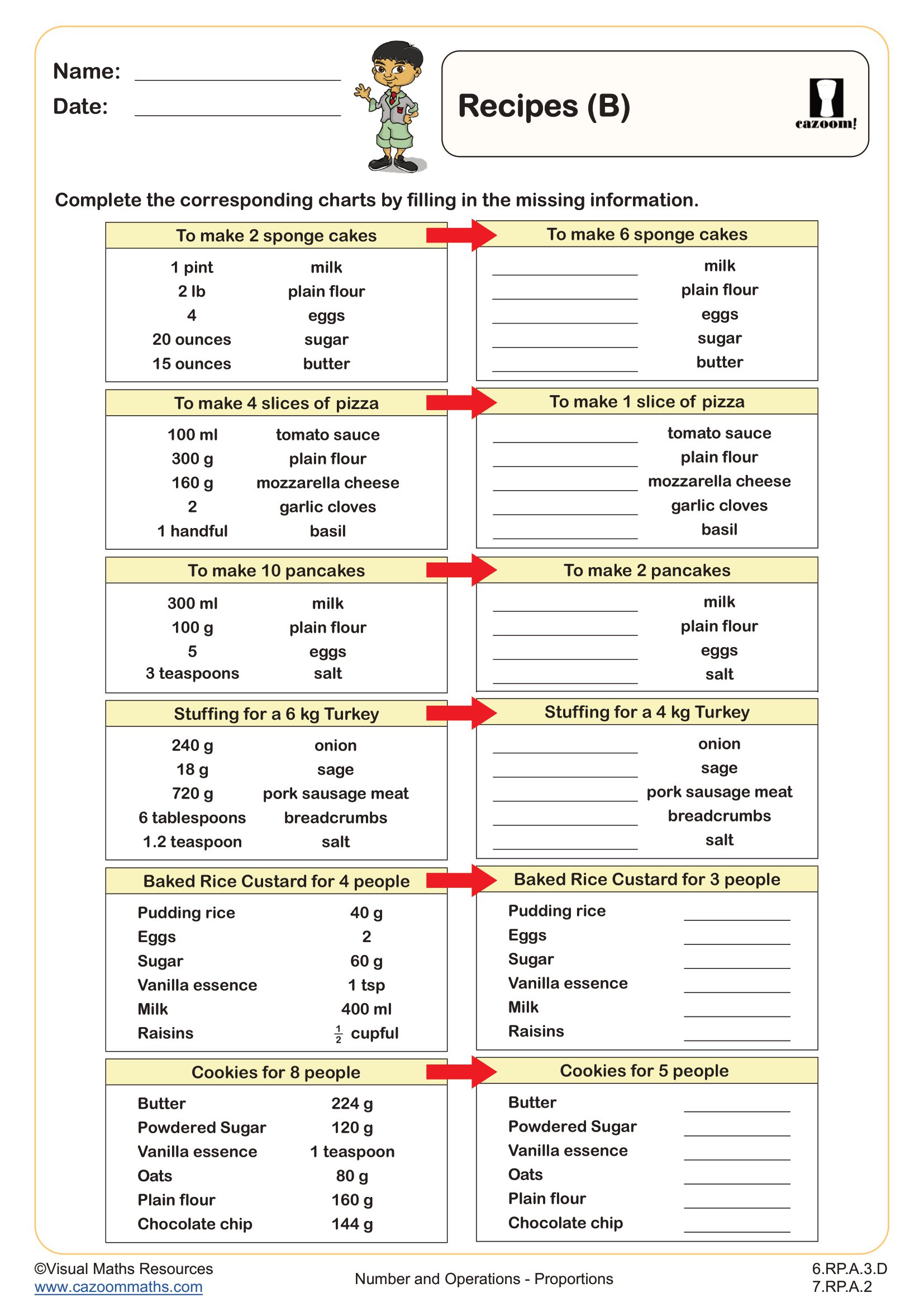
Recipes (B)
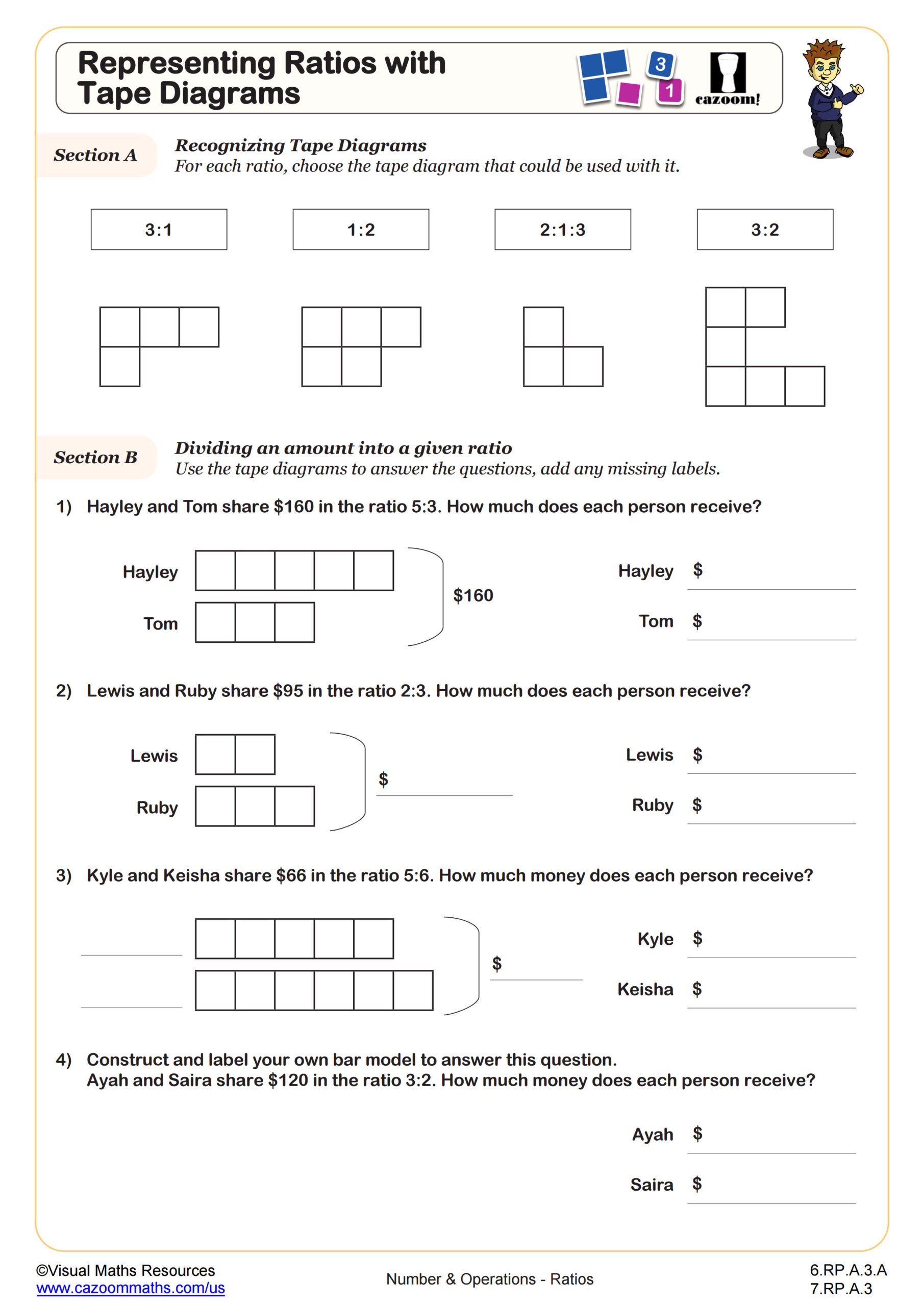
Representing Ratios with Tape Diagrams
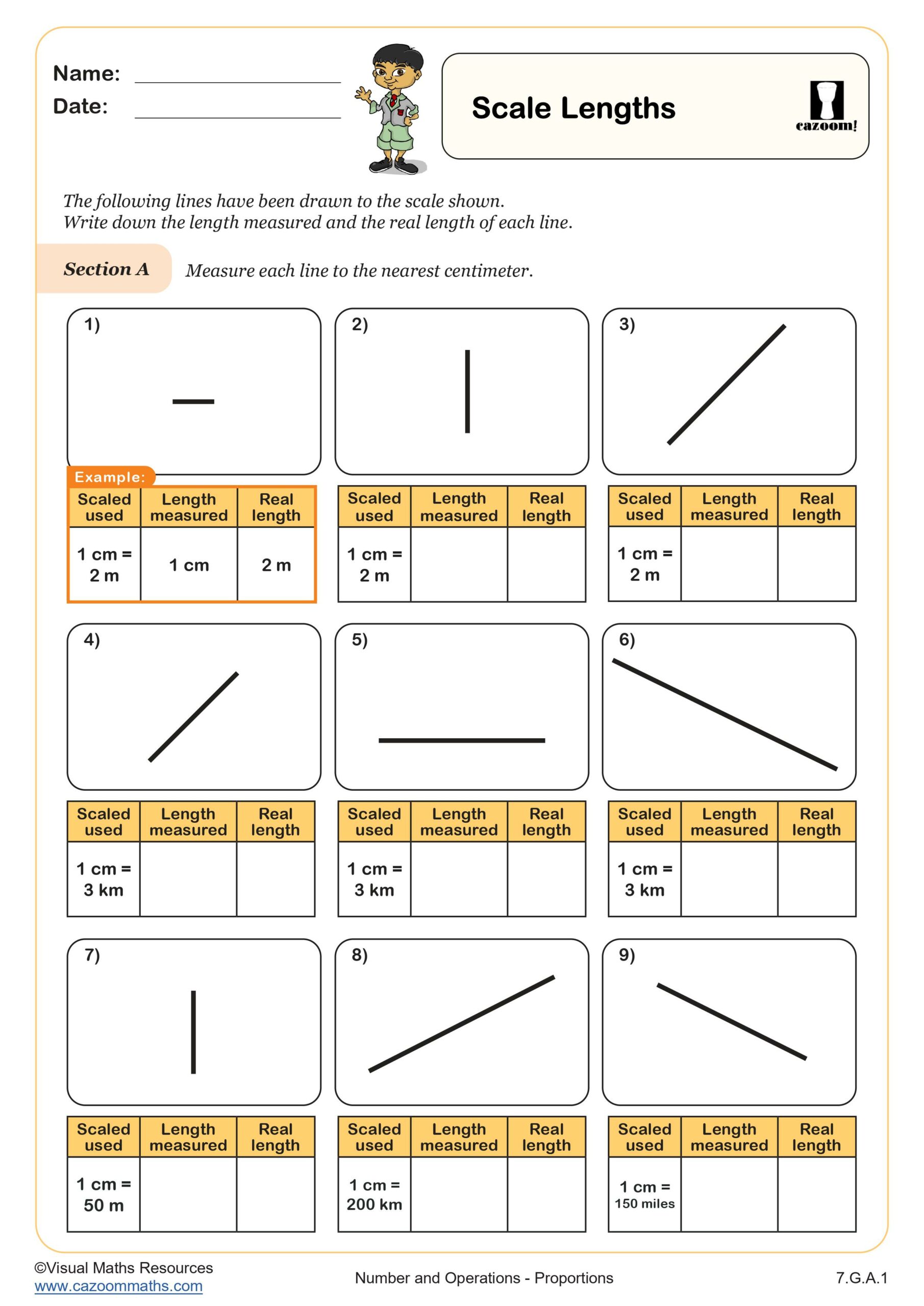
Scale Lengths
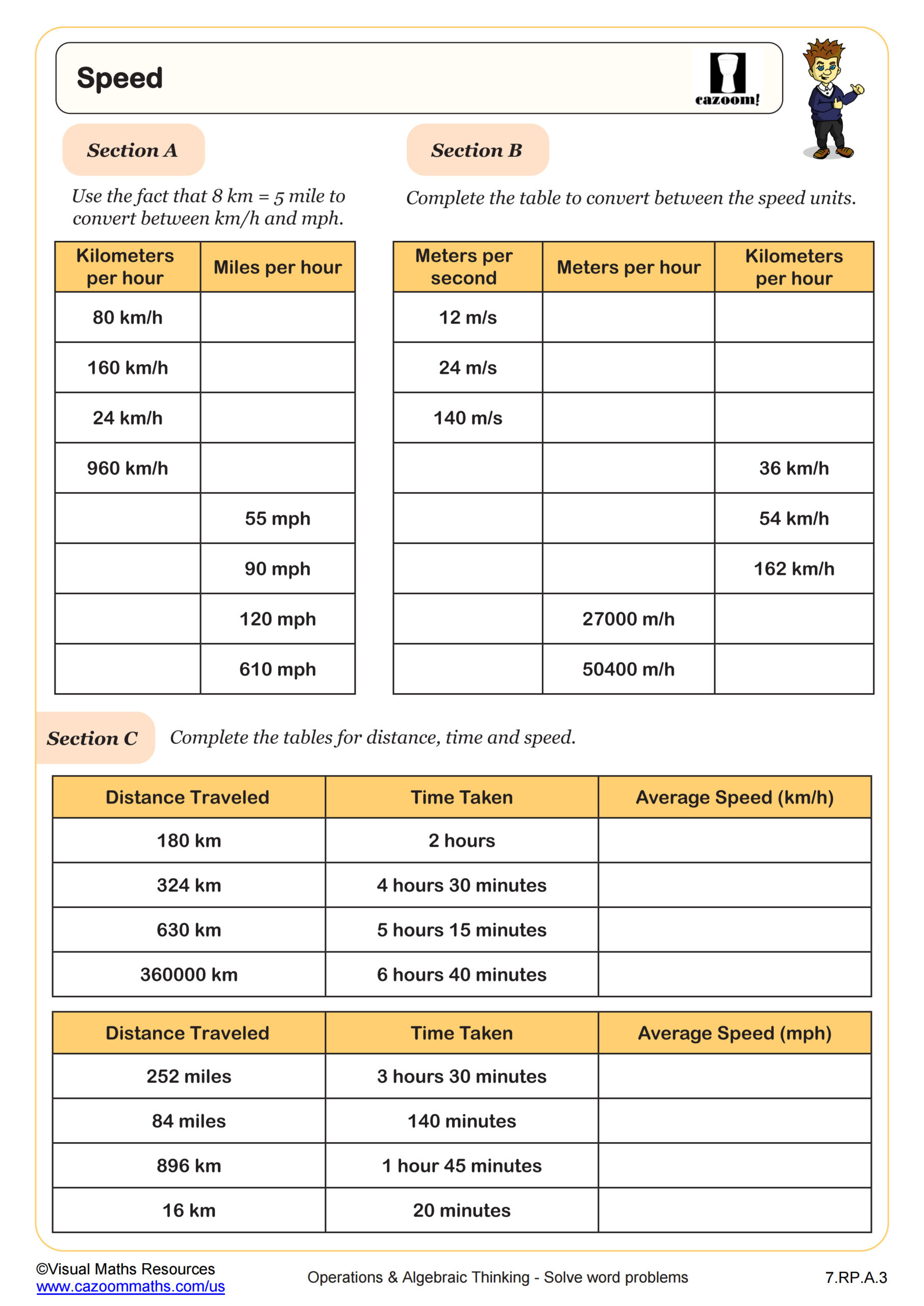
Speed
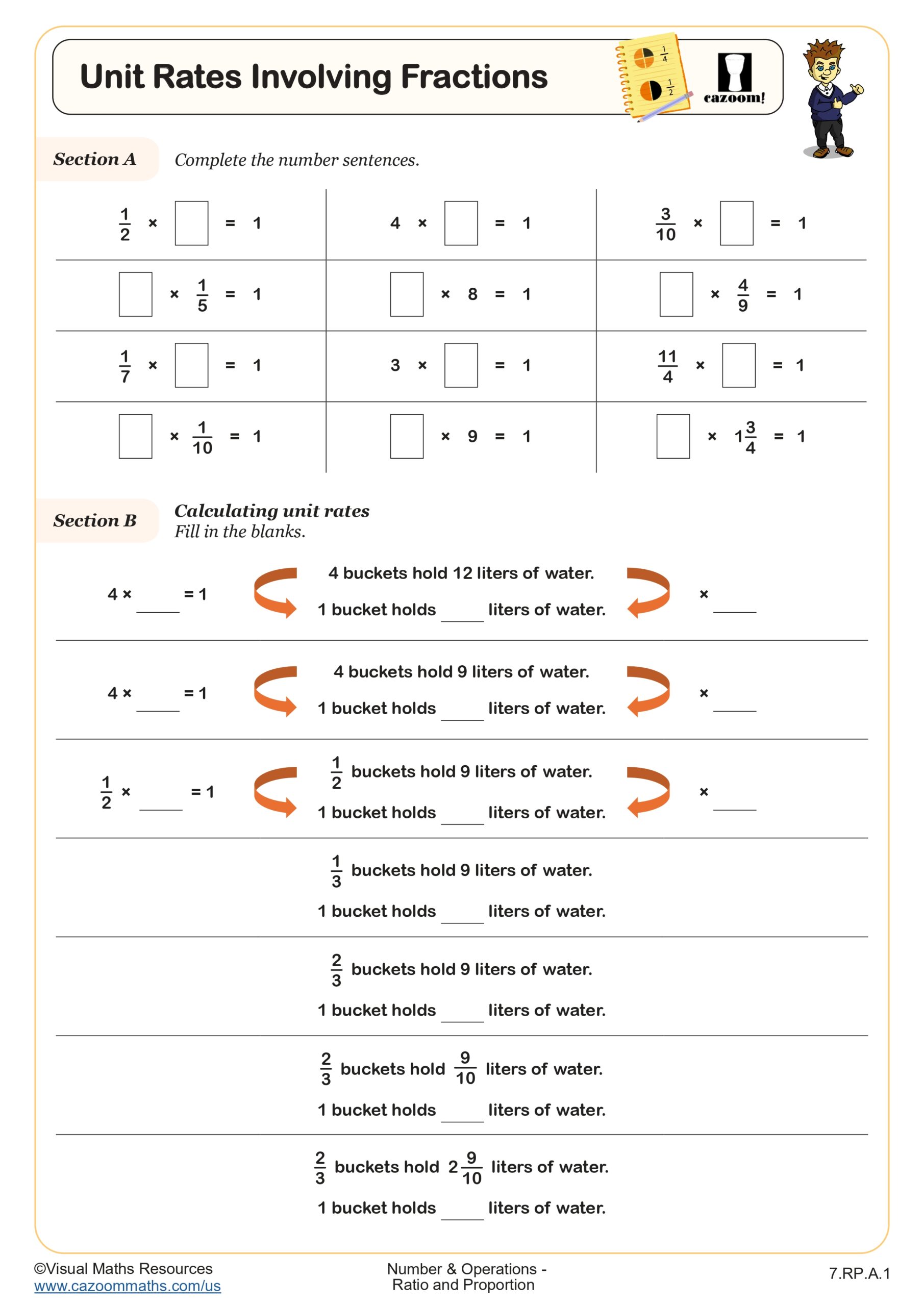
Unit Rates Involving Fractions
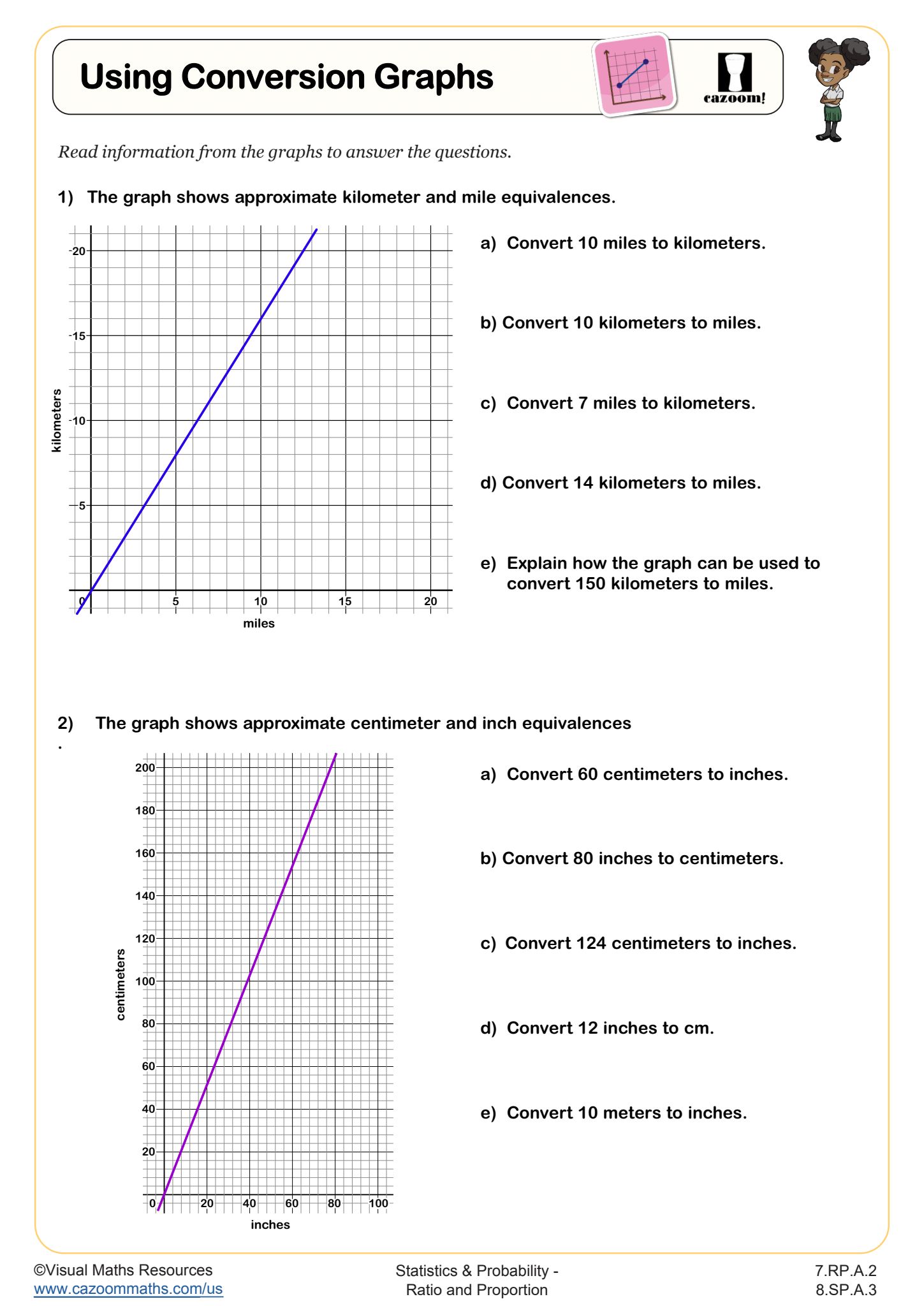
Using Conversion Graphs
All worksheets are created by the team of experienced teachers at Cazoom Math.
What makes a good proportions worksheet 7th grade students can handle effectively?
A quality 7th grade proportions worksheet should align with Common Core standard 7.RP.2, focusing on recognizing and representing proportional relationships. The problems need to progress from simple numeric proportions to real-world applications involving unit rates, scale drawings, and similar figures.
Teachers find that students benefit most when worksheets include visual representations like tables and graphs alongside traditional algebraic setups. The most effective proportional relationship worksheets 7th grade pdf format include a mix of problem types: some where students identify whether relationships are proportional, others requiring cross-multiplication to solve for unknowns, and word problems connecting to contexts like recipes, maps, or construction projects.
How do 7th grade proportion concepts differ from 6th grade ratios?
Sixth grade focuses on understanding ratios and unit rates as foundational concepts, while 7th grade extends this to identifying and working with proportional relationships. The key difference lies in recognizing when two ratios are equivalent and using this understanding to solve problems systematically.
Many teachers observe that students who mastered 6th grade ratio concepts still struggle with the abstract nature of proportional thinking. A proportion worksheet grade 7 level requires students to move beyond simple ratio comparisons to understanding the constant relationship between quantities. This progression prepares students for 8th grade linear relationships and high school algebra, where proportional reasoning becomes targeted for understanding functions and graphing.
Why do students make errors when cross-multiplying in proportions?
Cross-multiplication errors typically stem from students mechanically applying the procedure without understanding the underlying equivalent ratios concept. Many students correctly set up the proportion but then multiply incorrectly, often multiplying straight across instead of diagonally.
Classroom observations show that students who learn to check their work by substituting back into the original proportion catch these errors more readily. Solving proportions worksheet 7th grade pdf materials that emphasize the reasoning behind cross-multiplication, rather than just the algorithm, help students avoid these common mistakes. Teachers report better success when students first practice identifying equivalent ratios before moving to algebraic solving methods.
How should teachers use ratio and proportion worksheets with answers pdf grade 7 materials in instruction?
These worksheets work best when integrated into a sequence that moves from guided practice to independent application. Teachers should model the problem-solving process first, then use worksheets for structured practice where students can immediately check their reasoning against provided solutions.
The answer keys serve multiple purposes beyond simple correction. Students can analyze their errors, identify patterns in their mistakes, and self-assess their understanding before moving to more complex problems. Many educators find success using these materials for differentiated instruction, allowing advanced students to work ahead while providing additional support for those needing more practice with foundational proportion concepts.