7th Grade Ratio and Proportional Relationships Worksheets
Best Value for Money - the Unitary Method
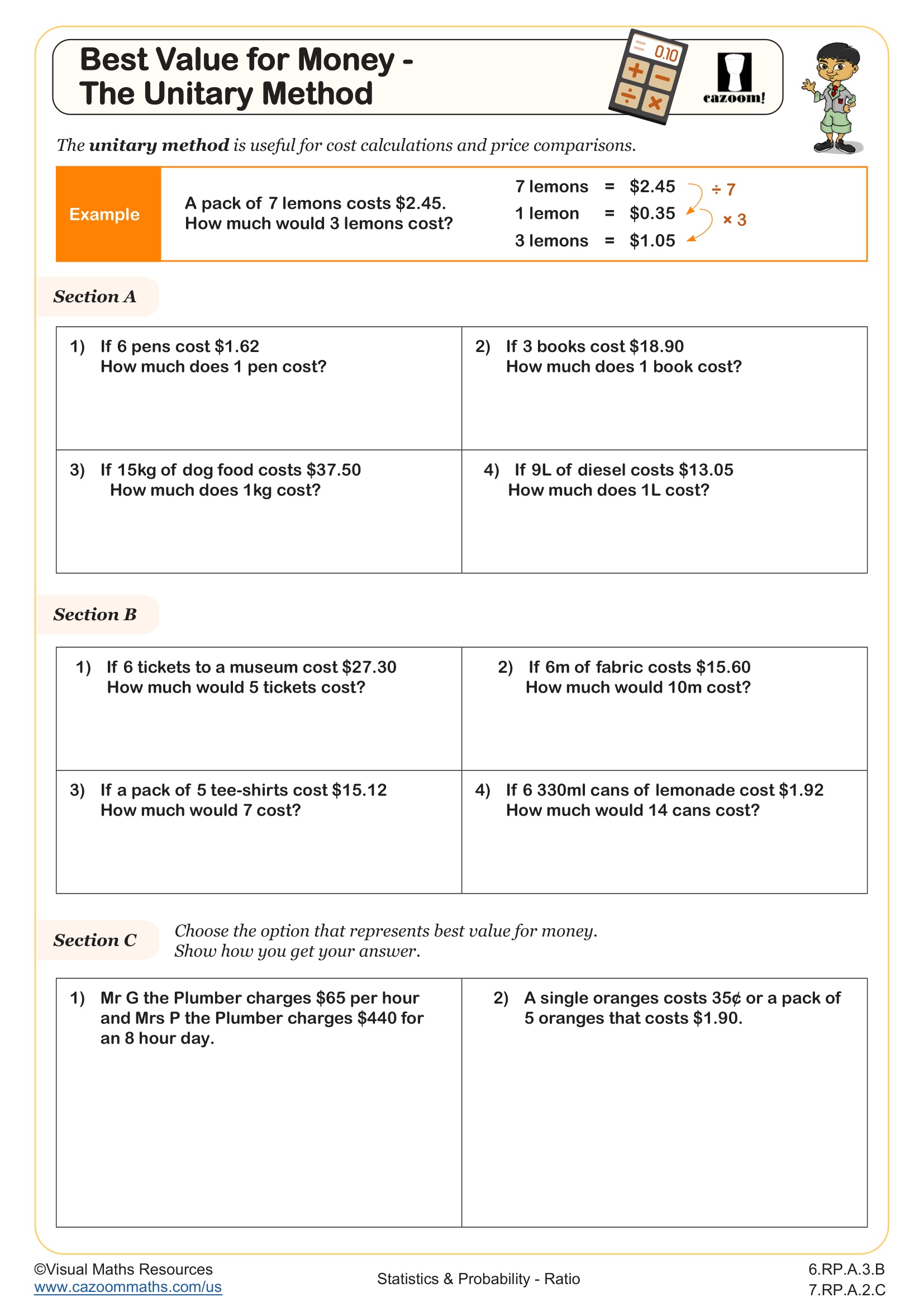
Changing Ratios
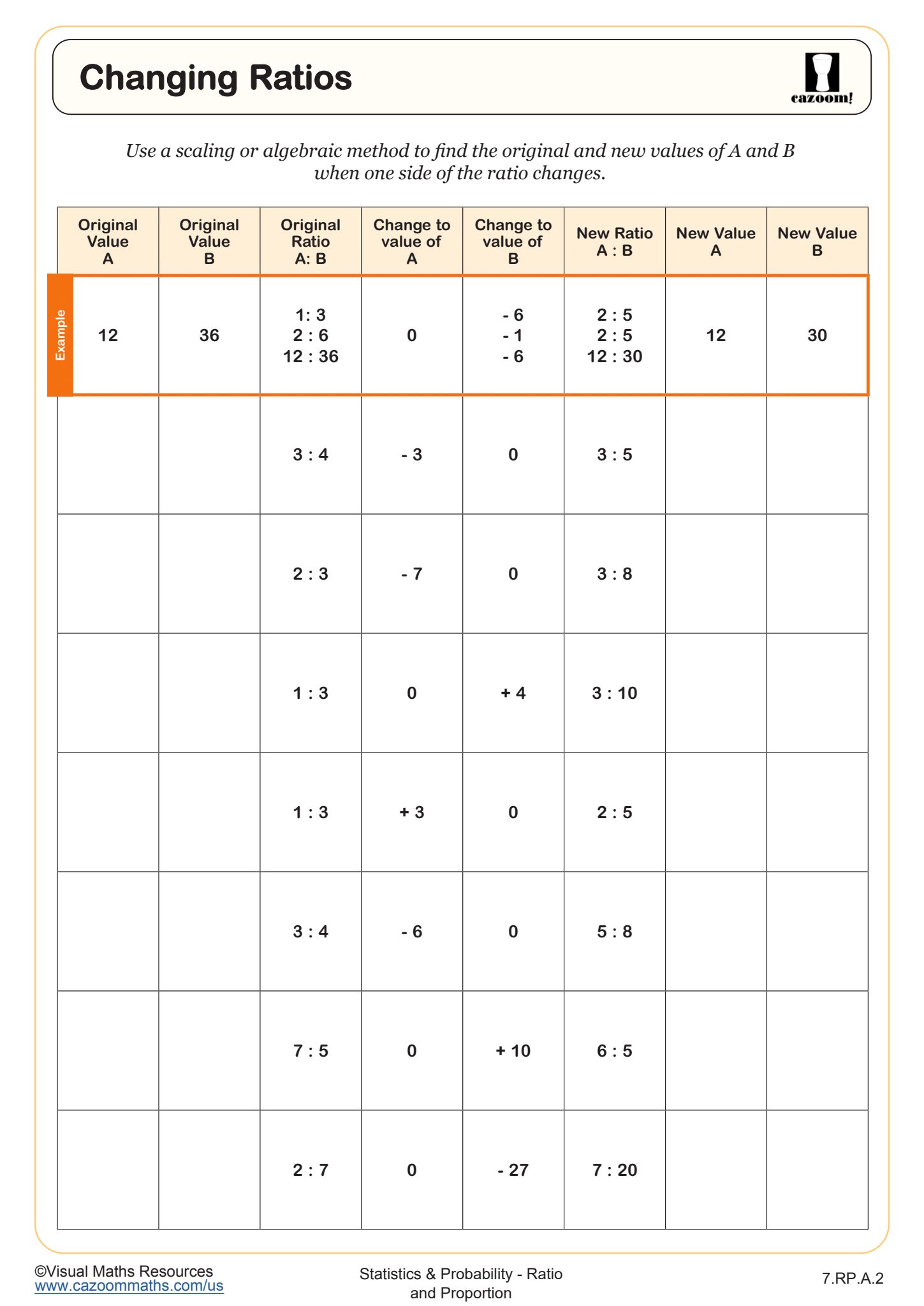
Creating Equivalent Ratios (A)
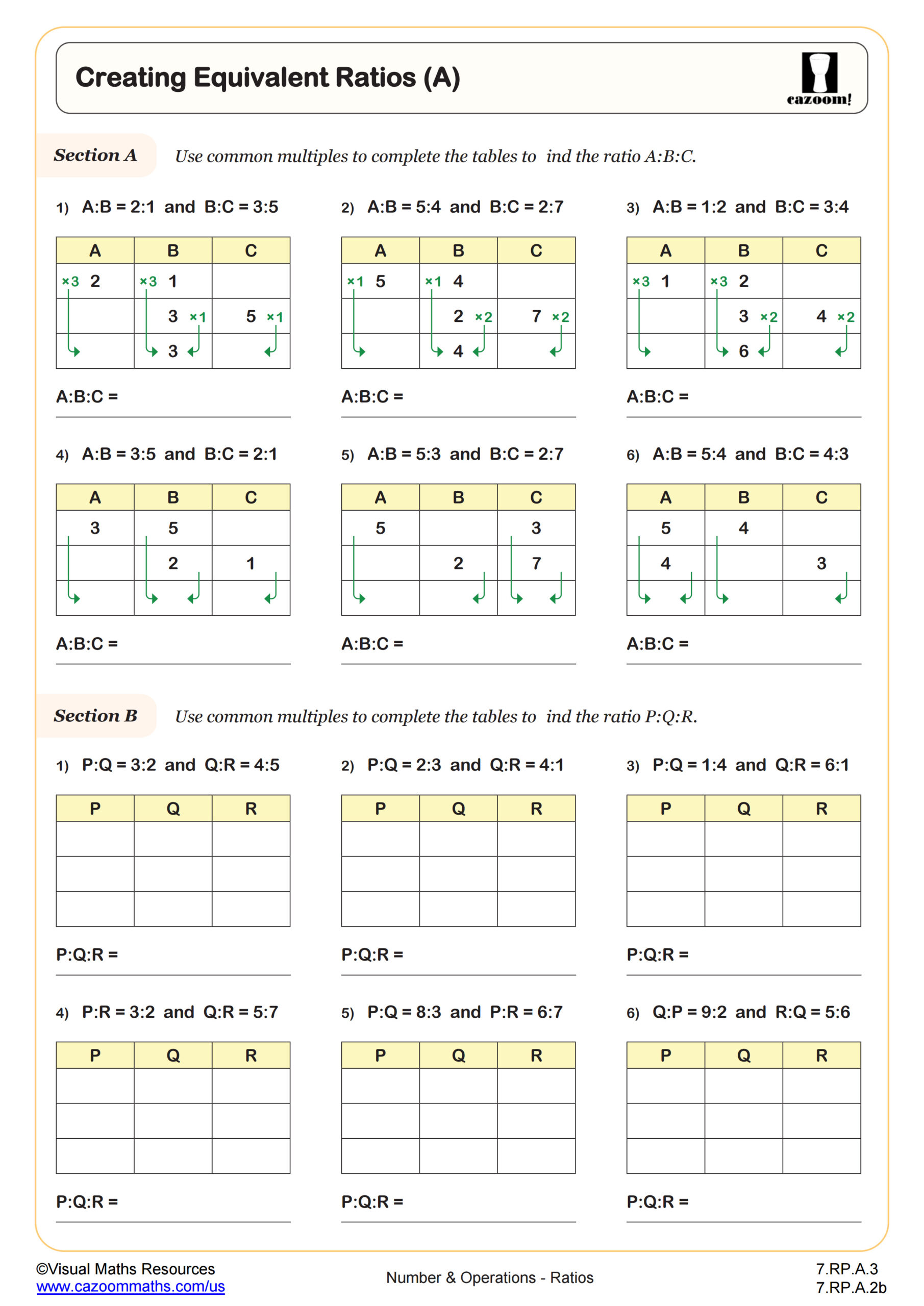
Drawing Conversion Graphs
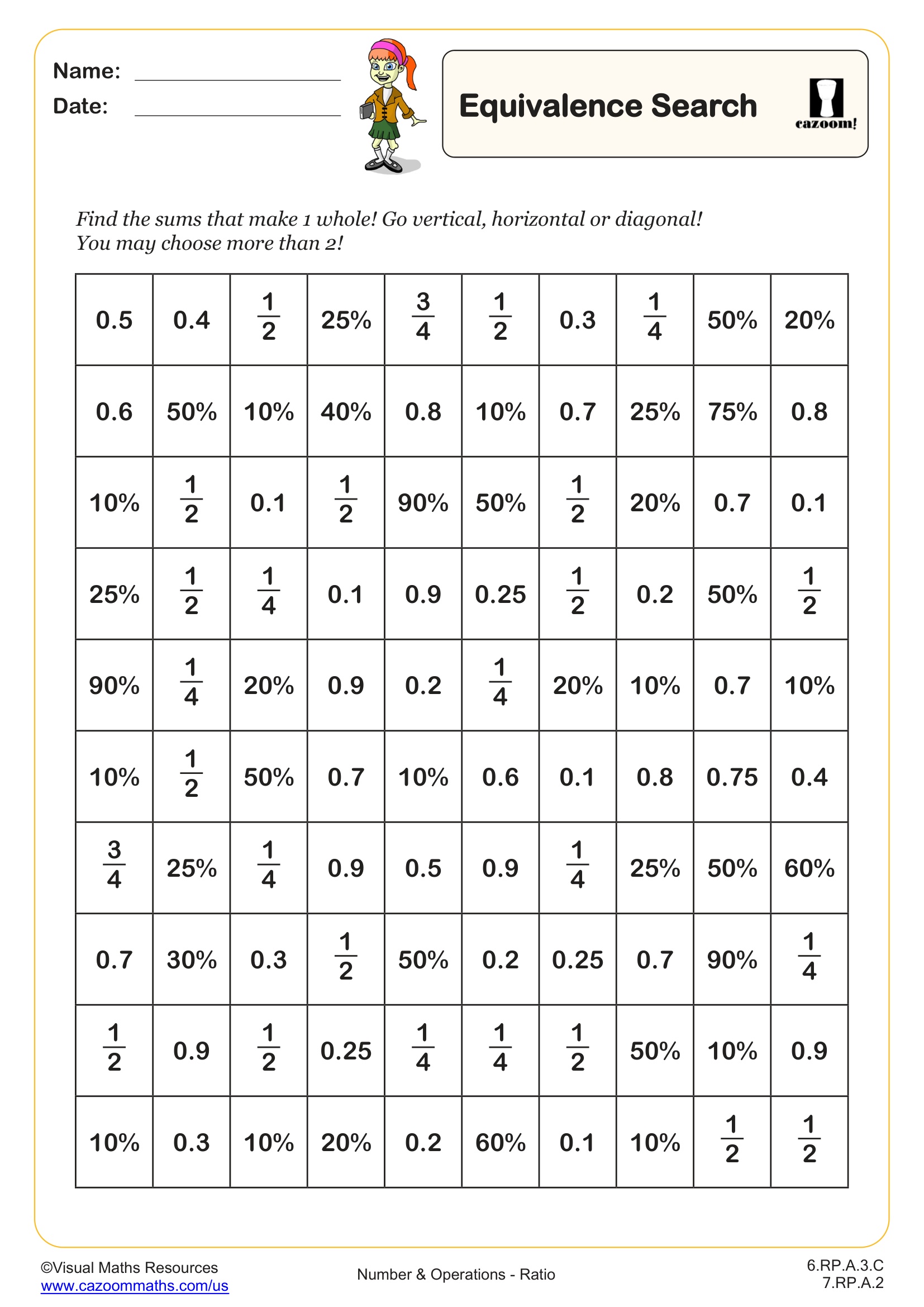
Equivalence Search (A)
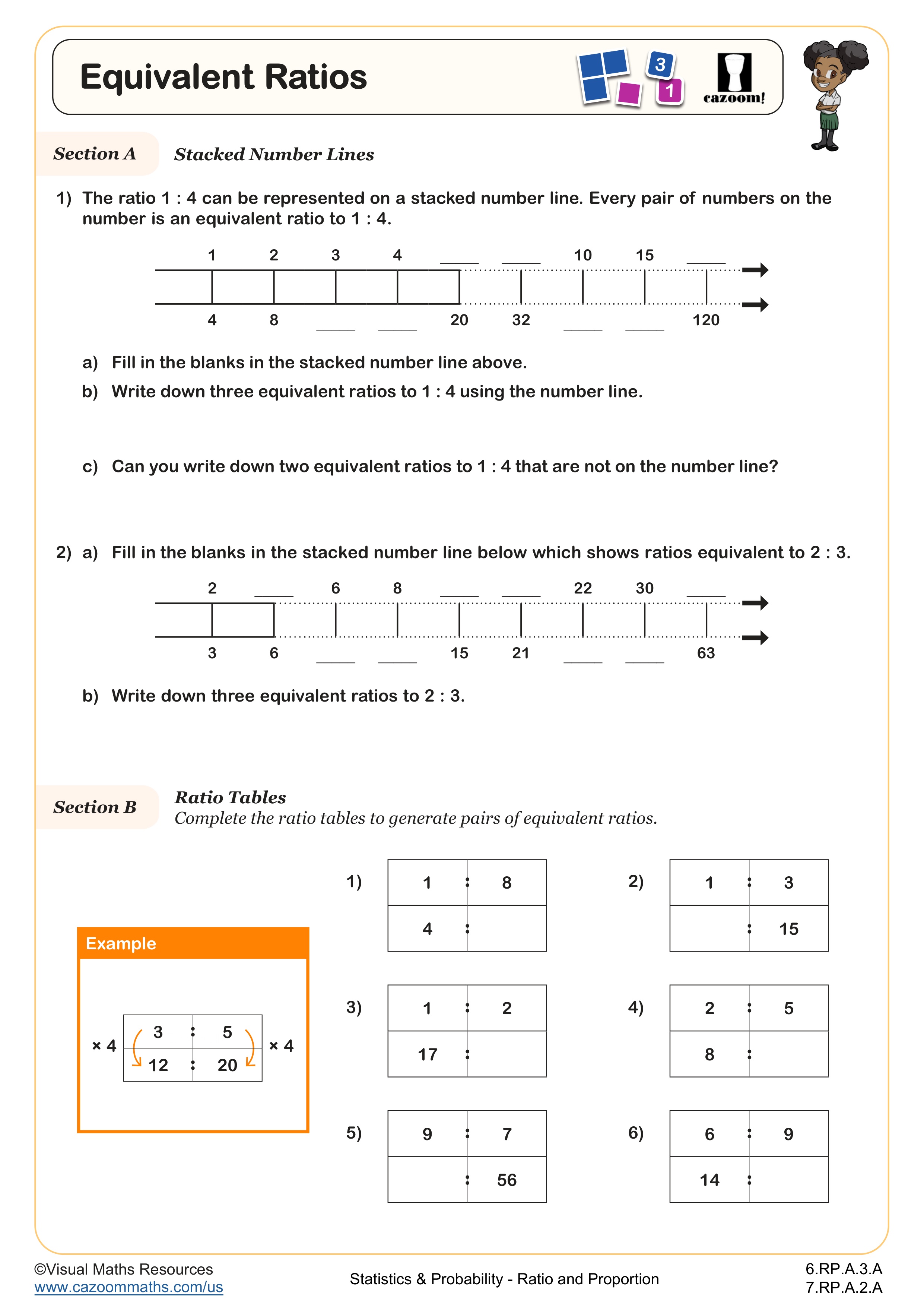
Equivalent Ratios
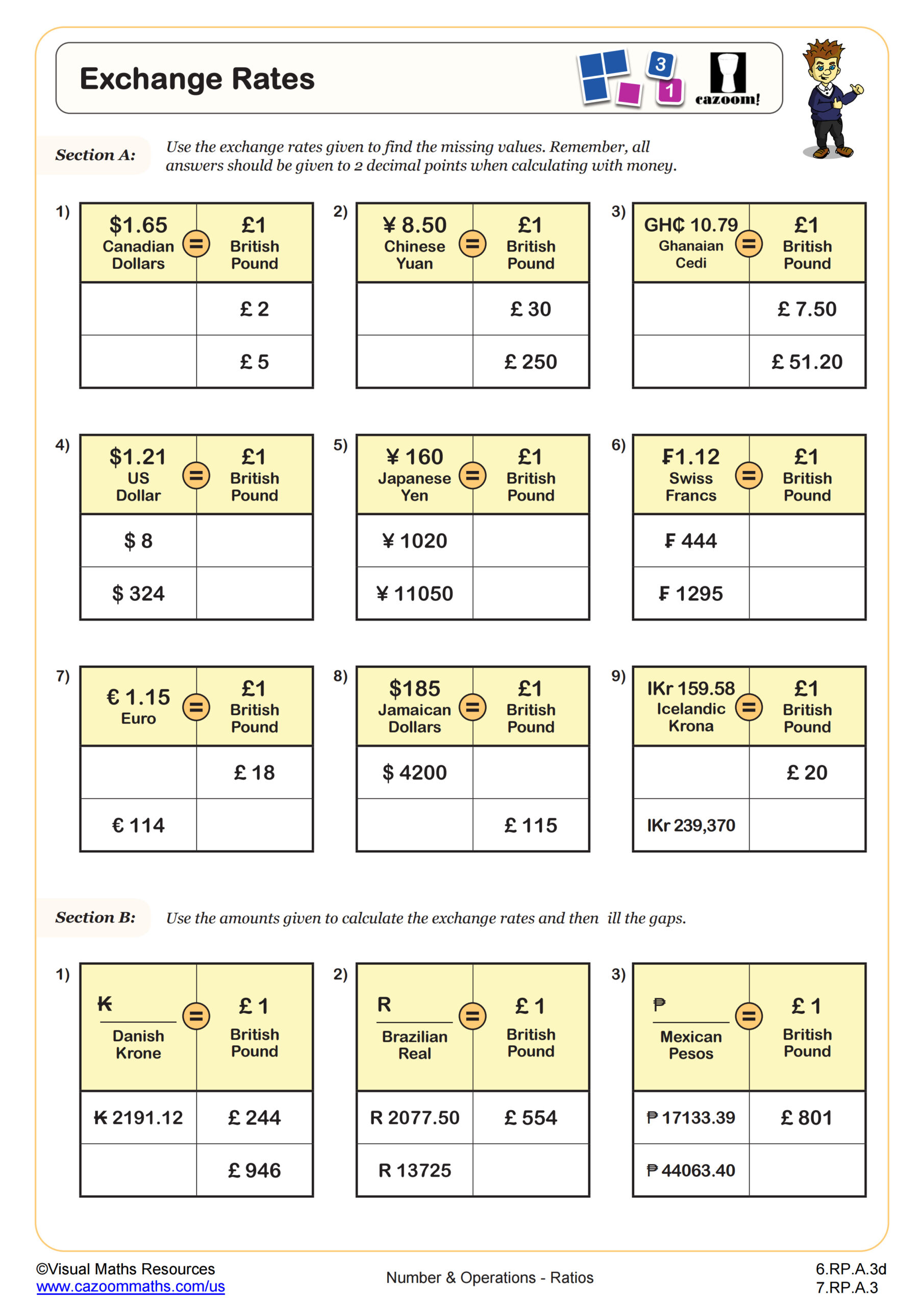
Exchange Rates
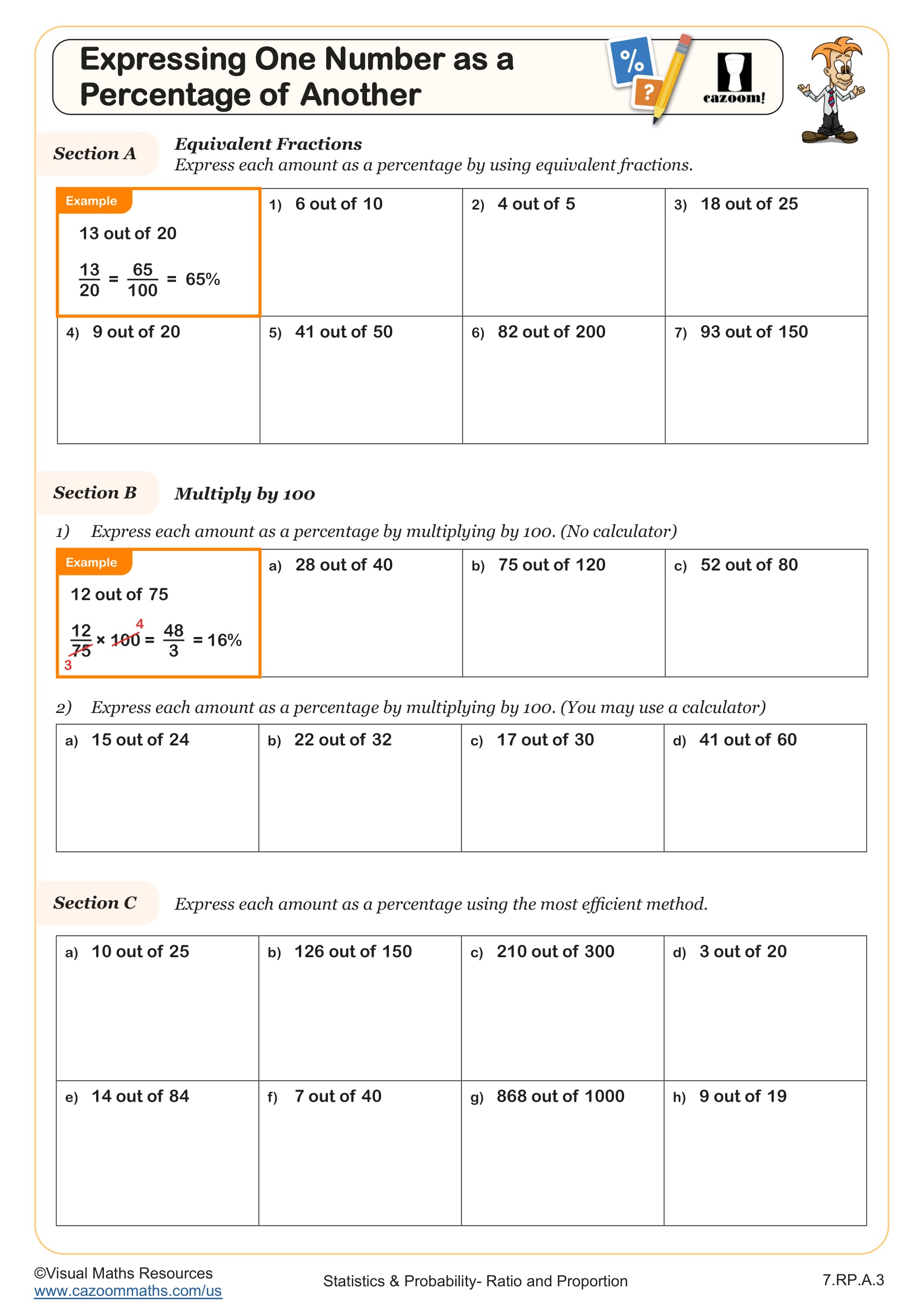
Express One Number as a Percentage of Another
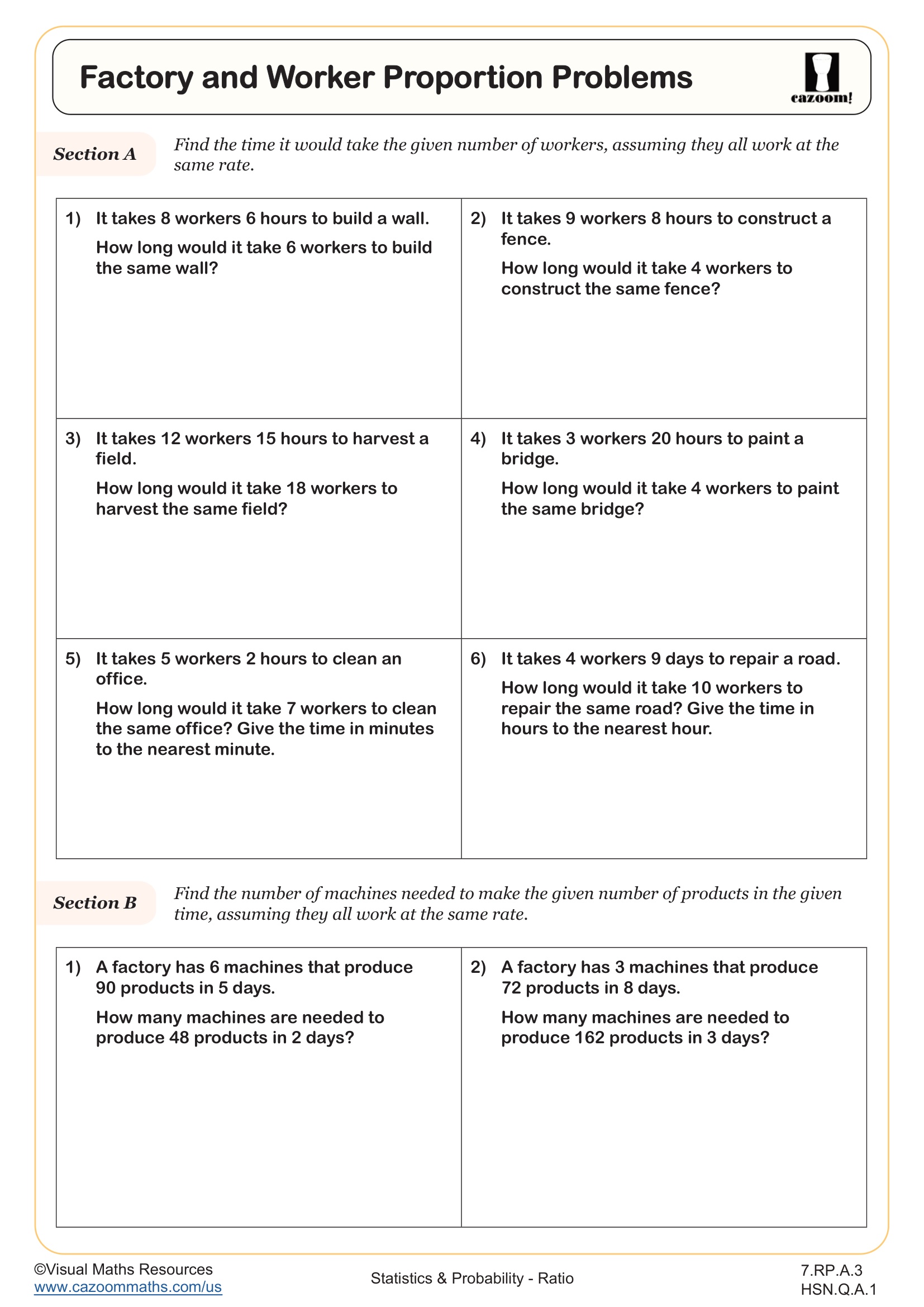
Factory and Worker Proportion Problems
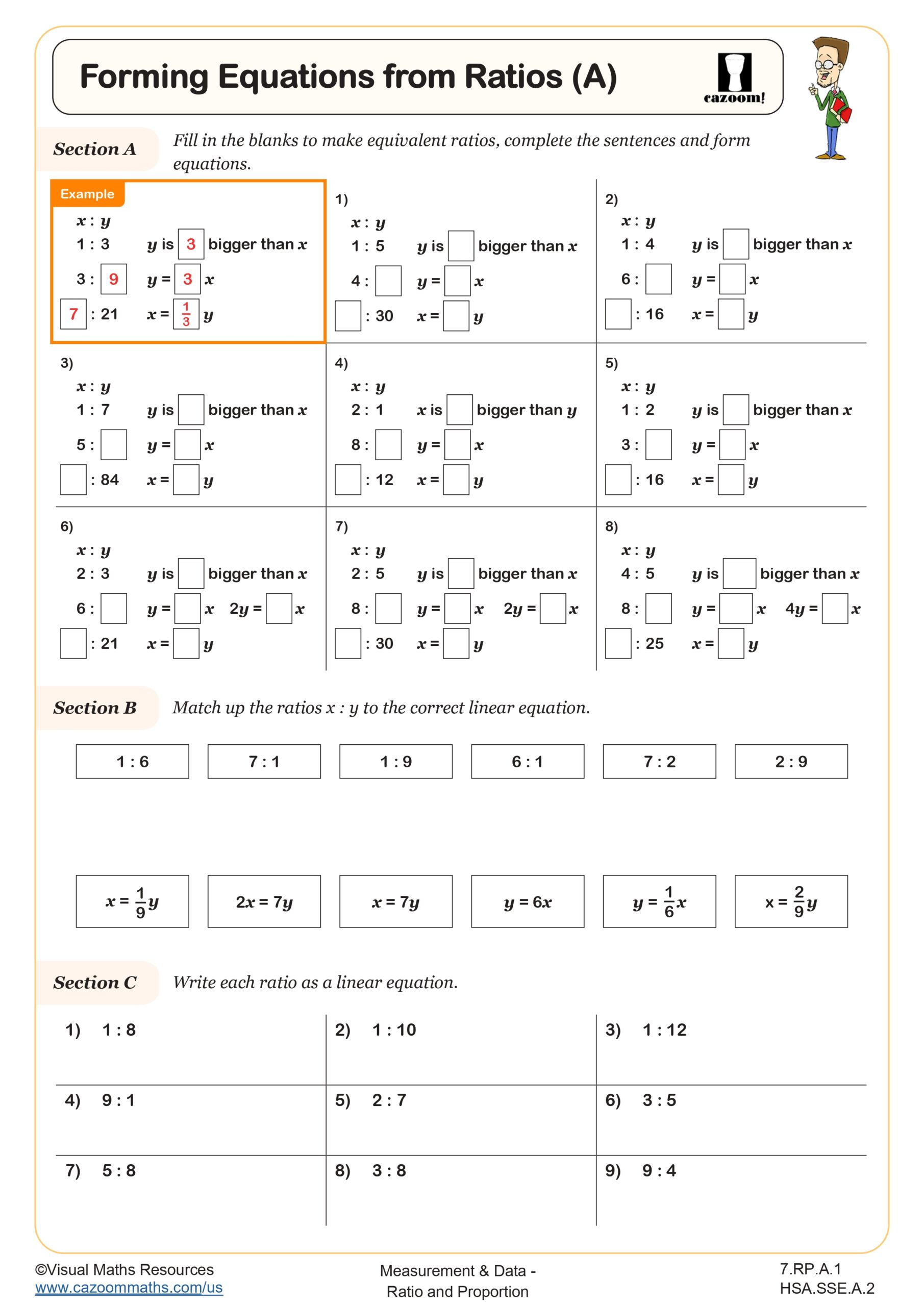
Forming Equations from Ratios (A)
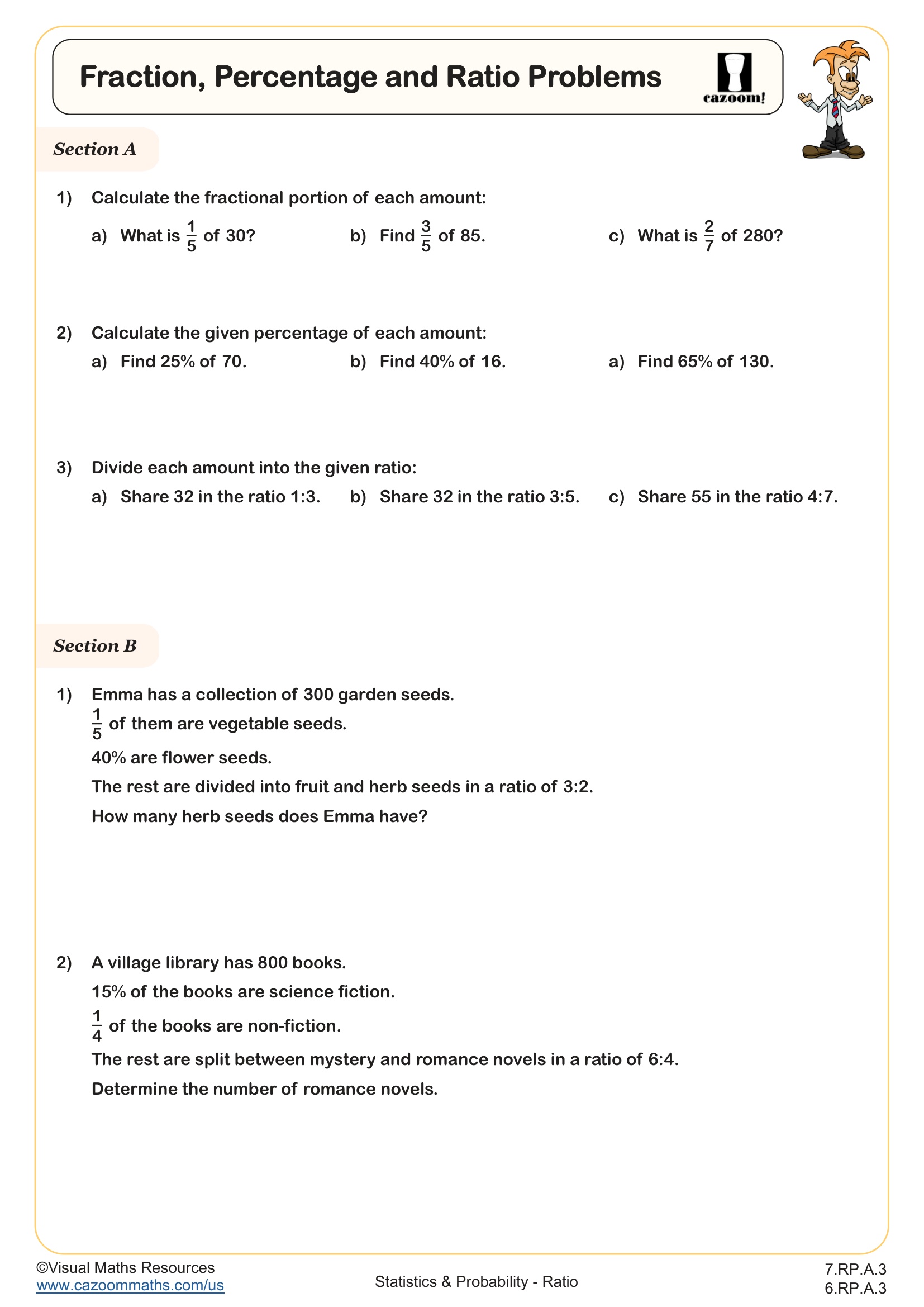
Fraction, Percentage and Ratio Problems
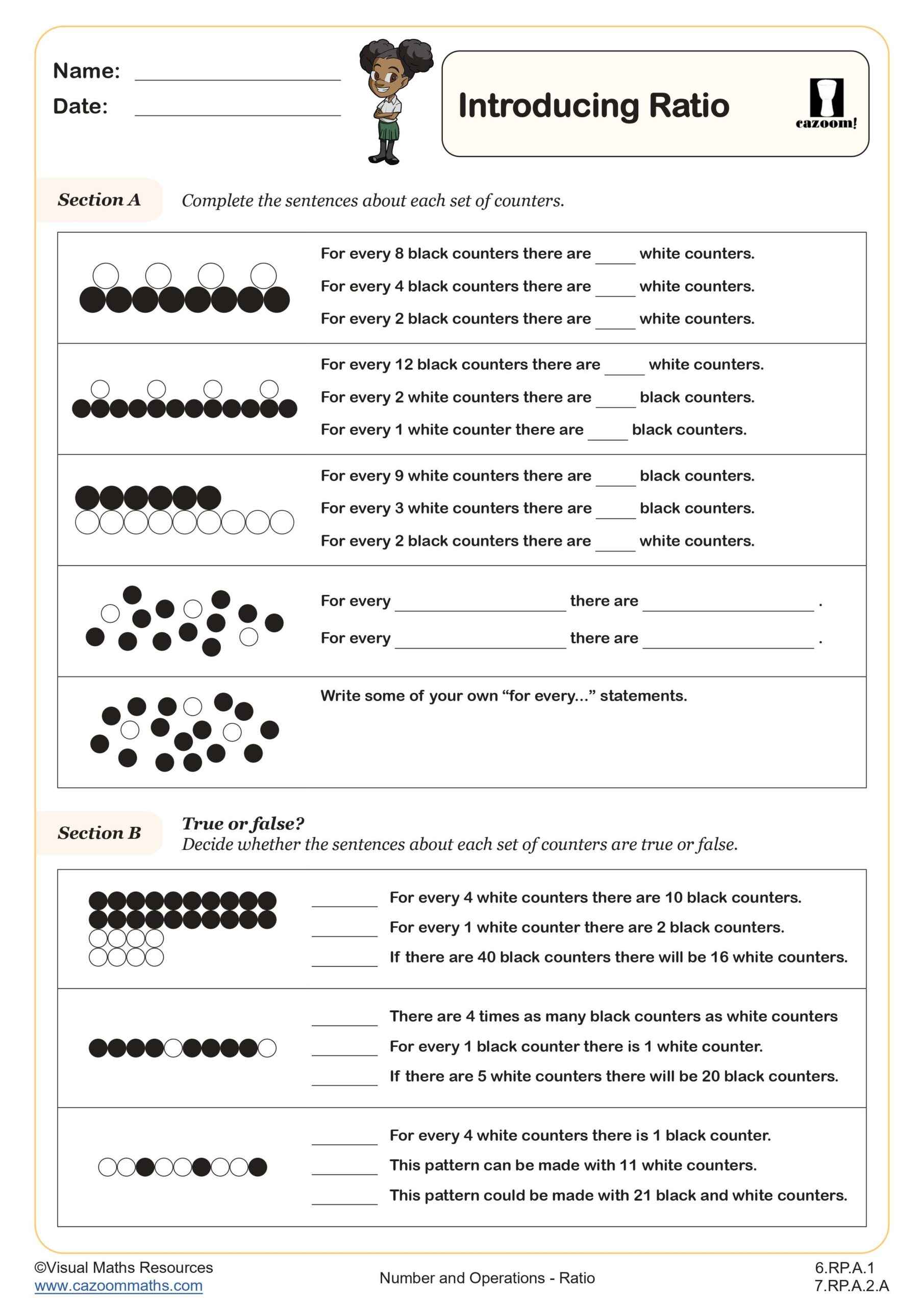
Introducing Ratio
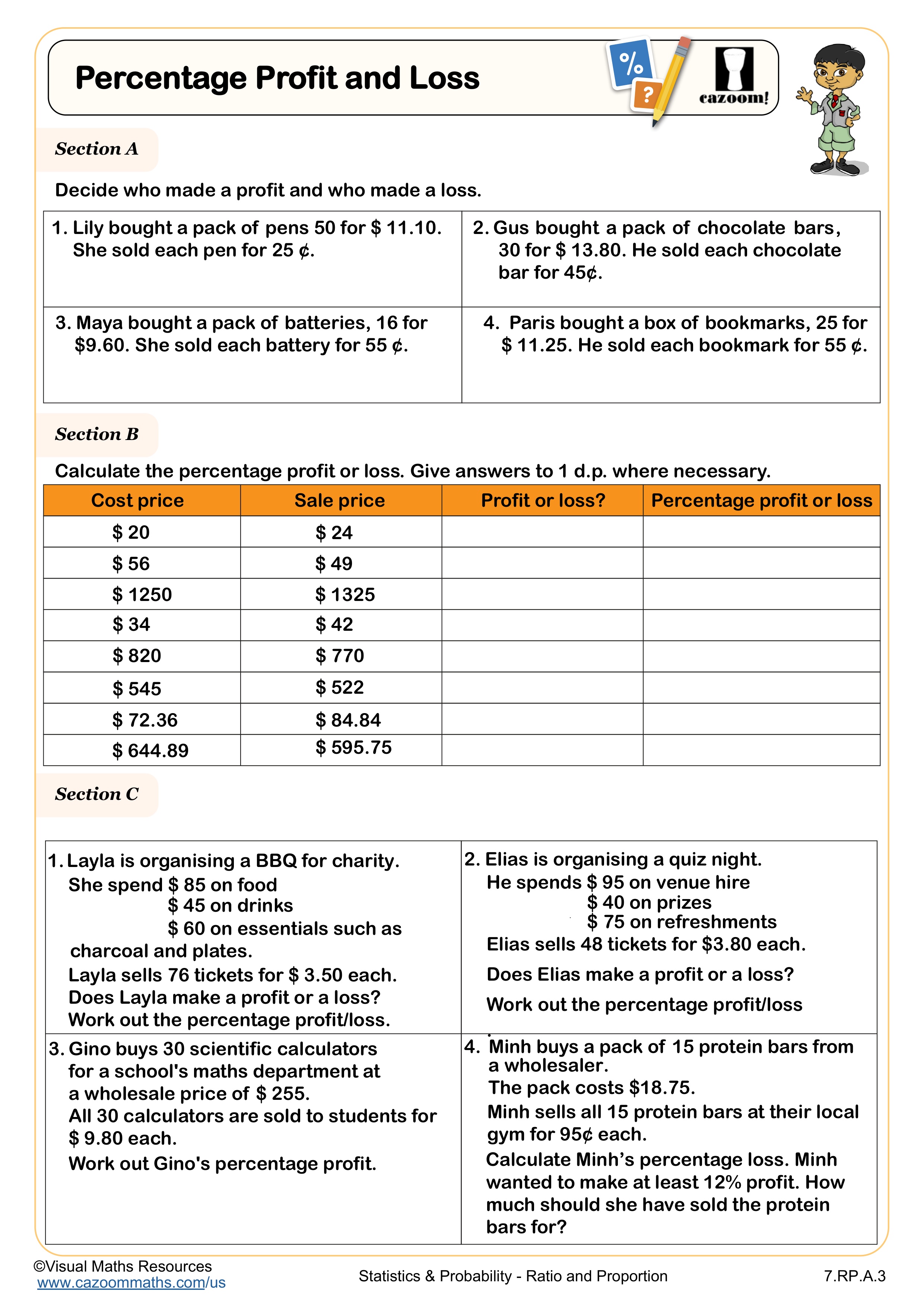
Percentage Profit and Loss
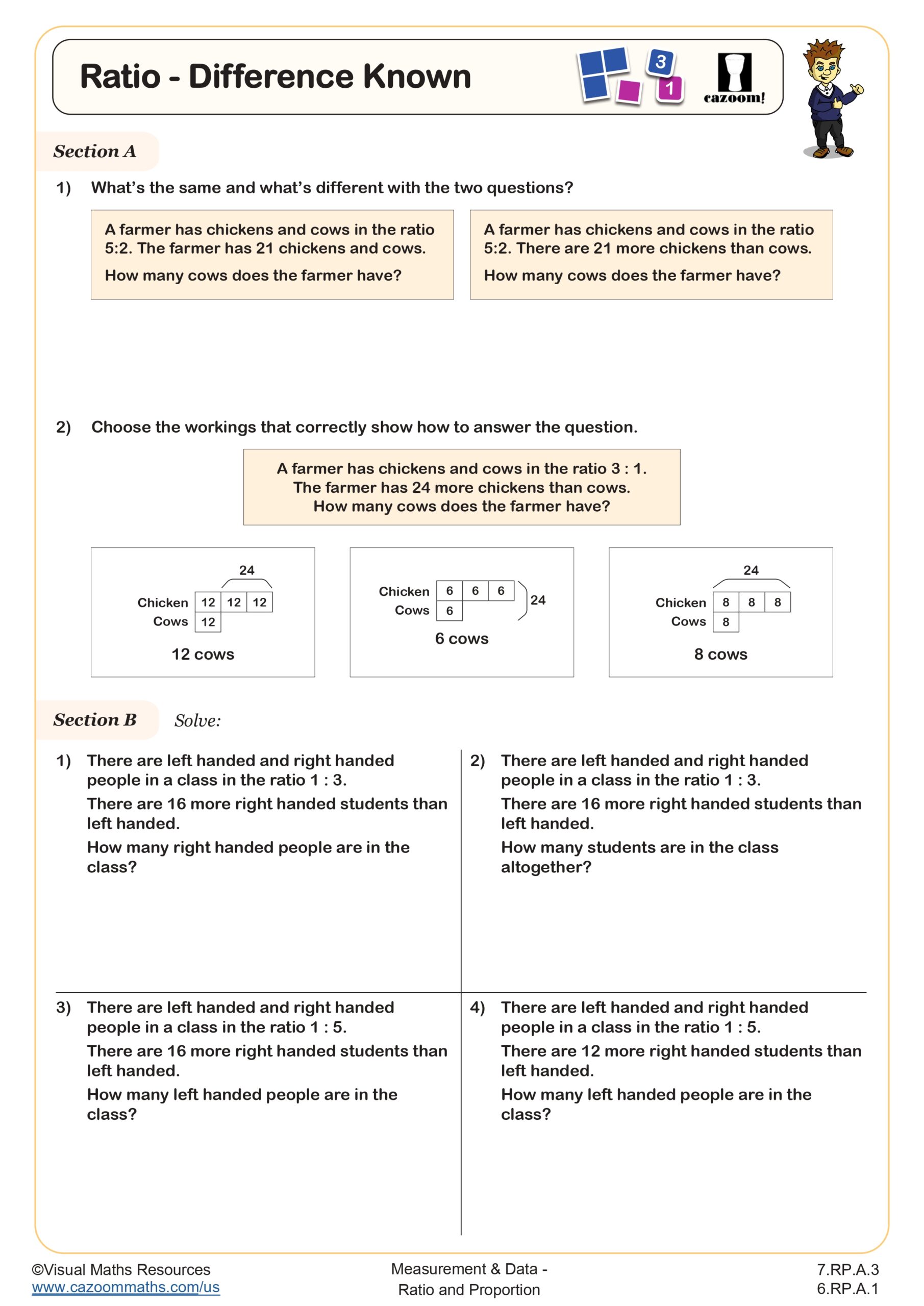
Ratio - Difference Known
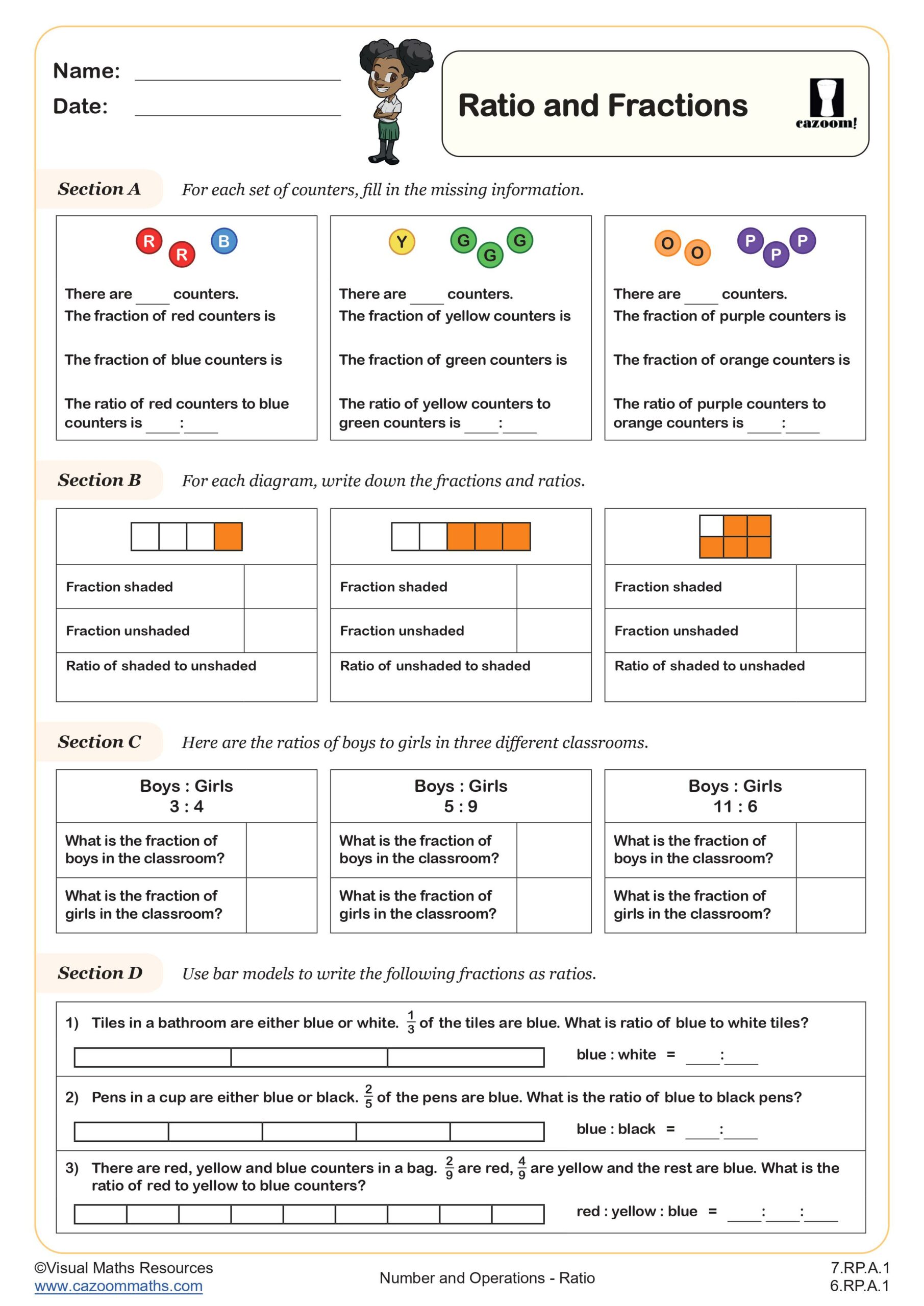
Ratio and Fractions
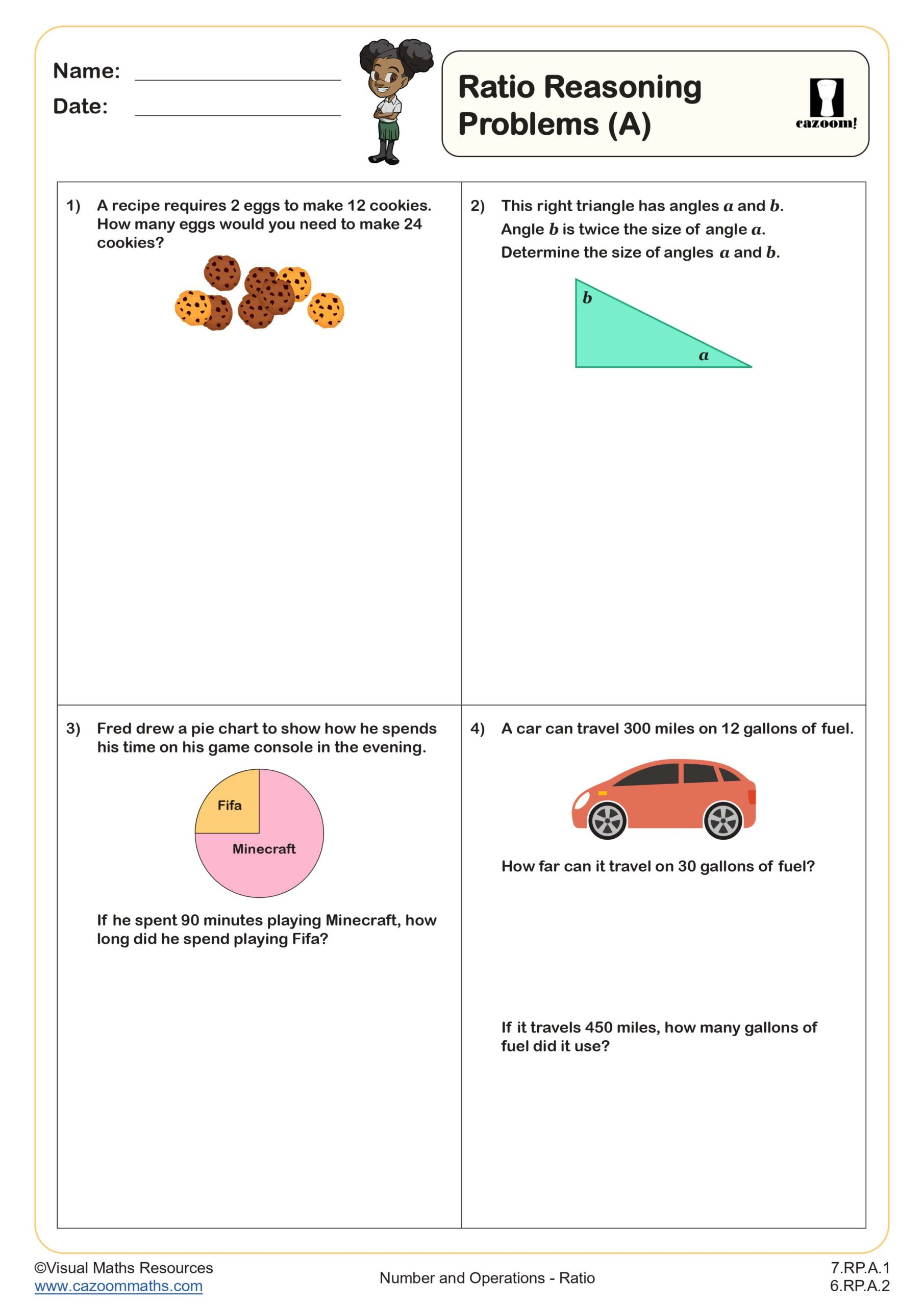
Ratio Reasoning Problems (A)
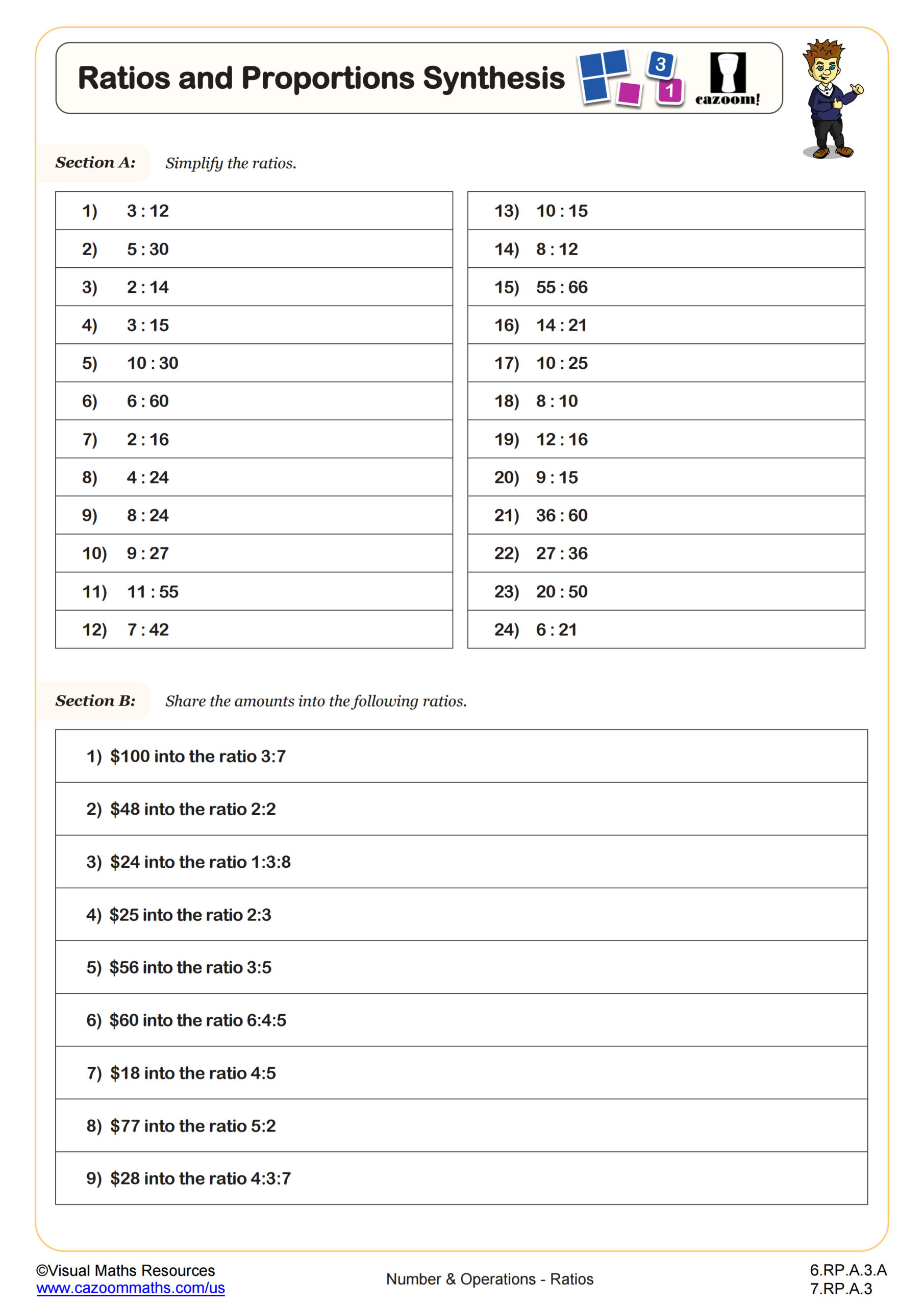
Ratio Reasoning Problems (B)
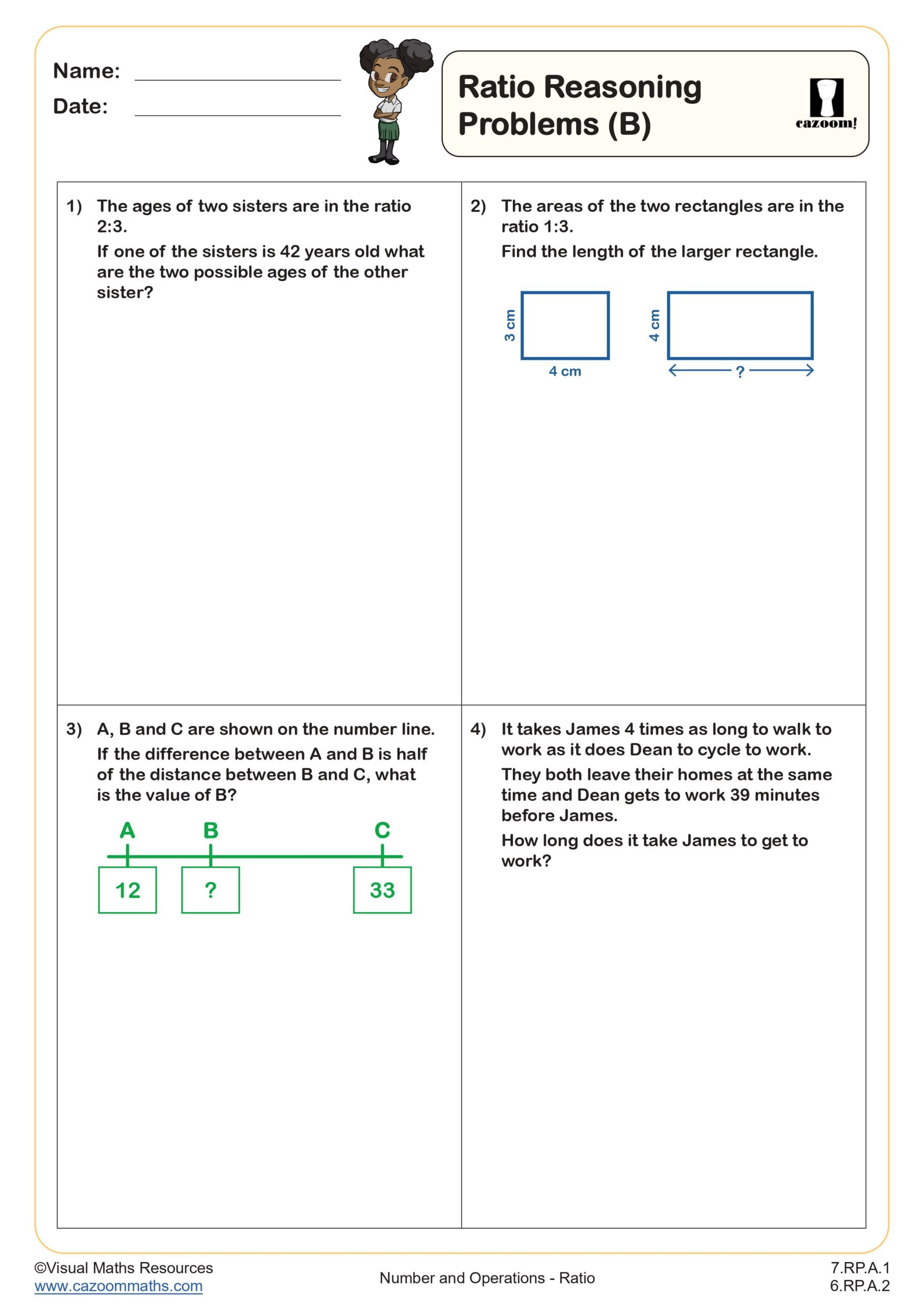
Ratio- One Amount Known
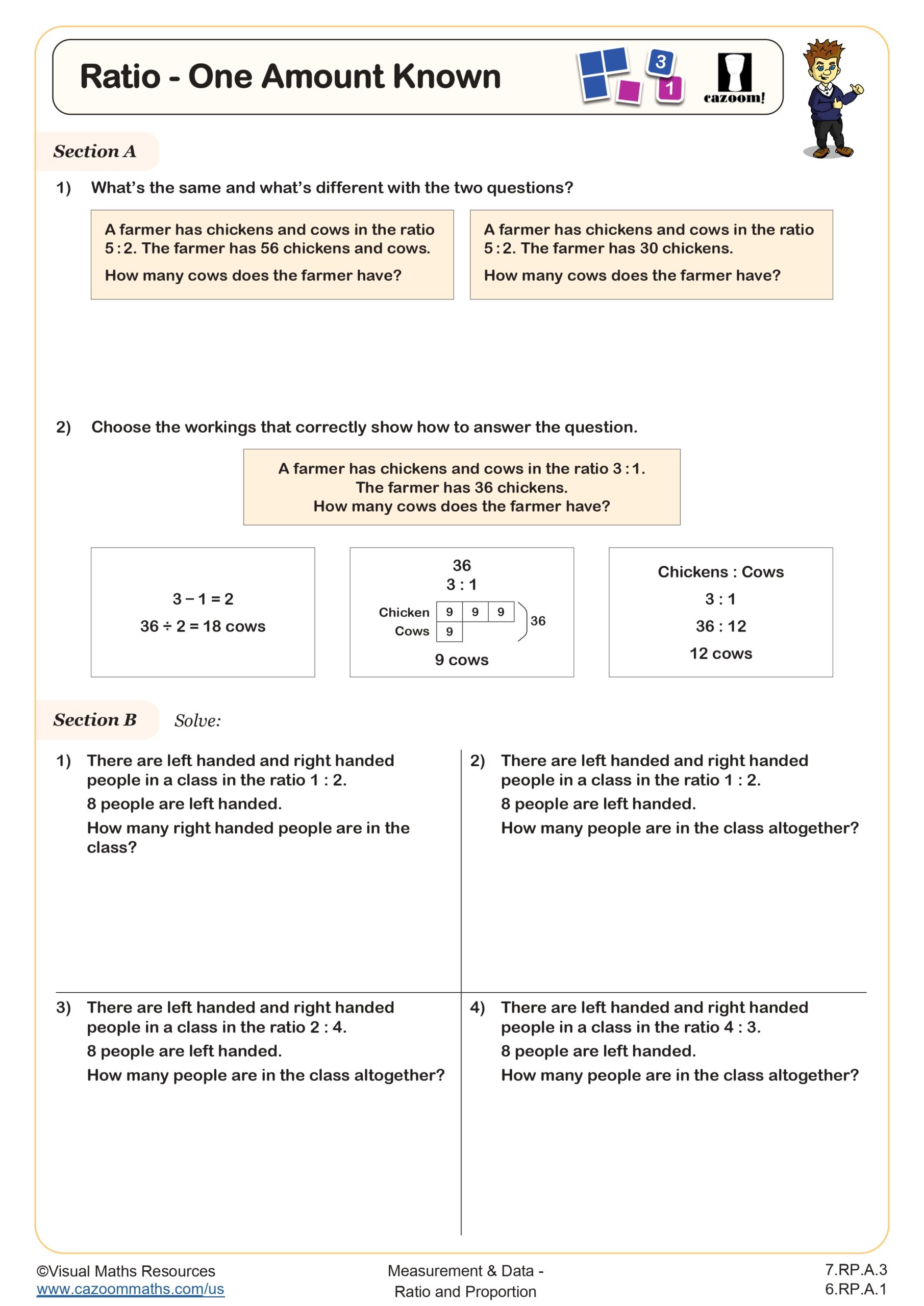
Ratios 1:n and n:1
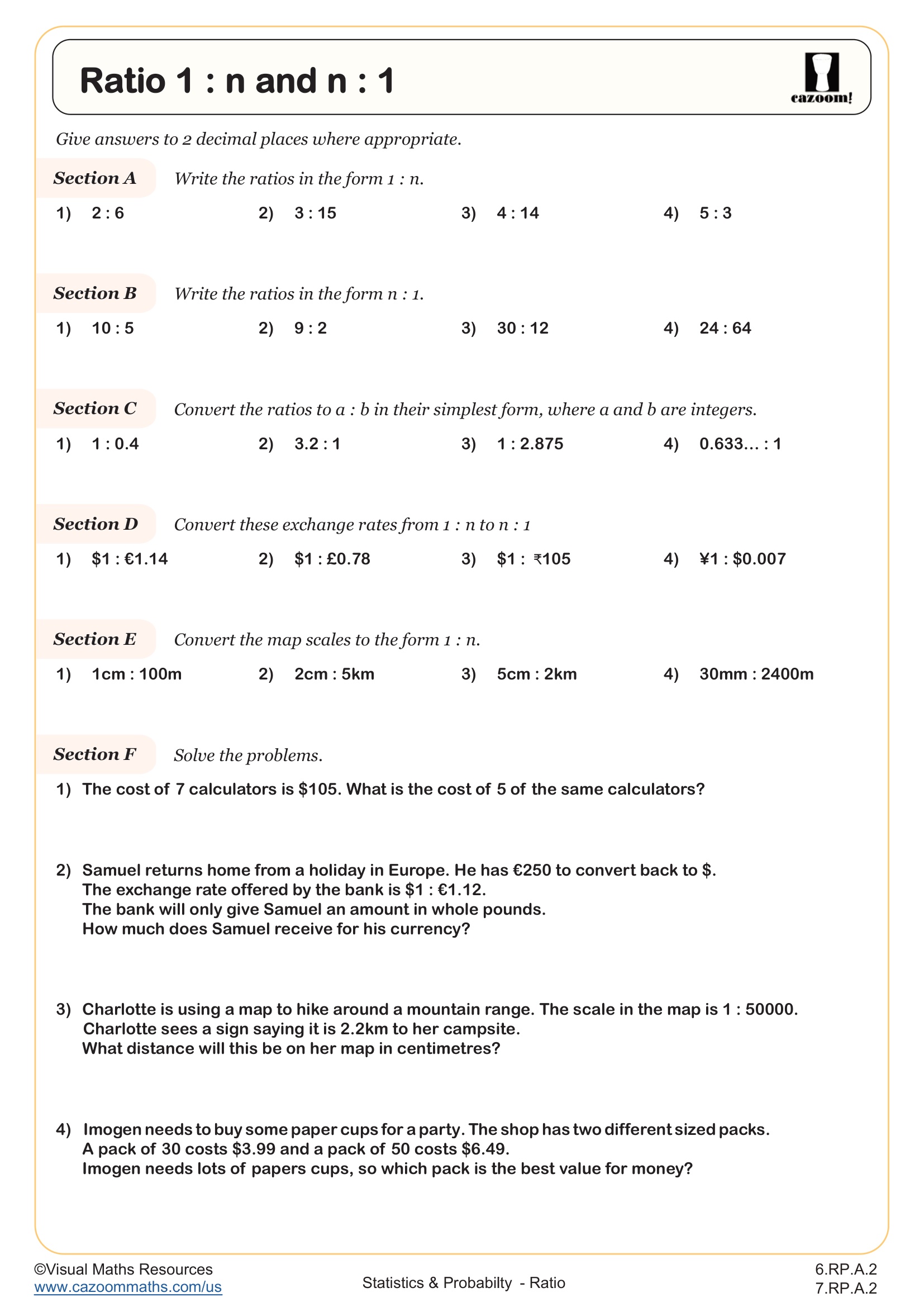
Ratios and Proportions Synthesis
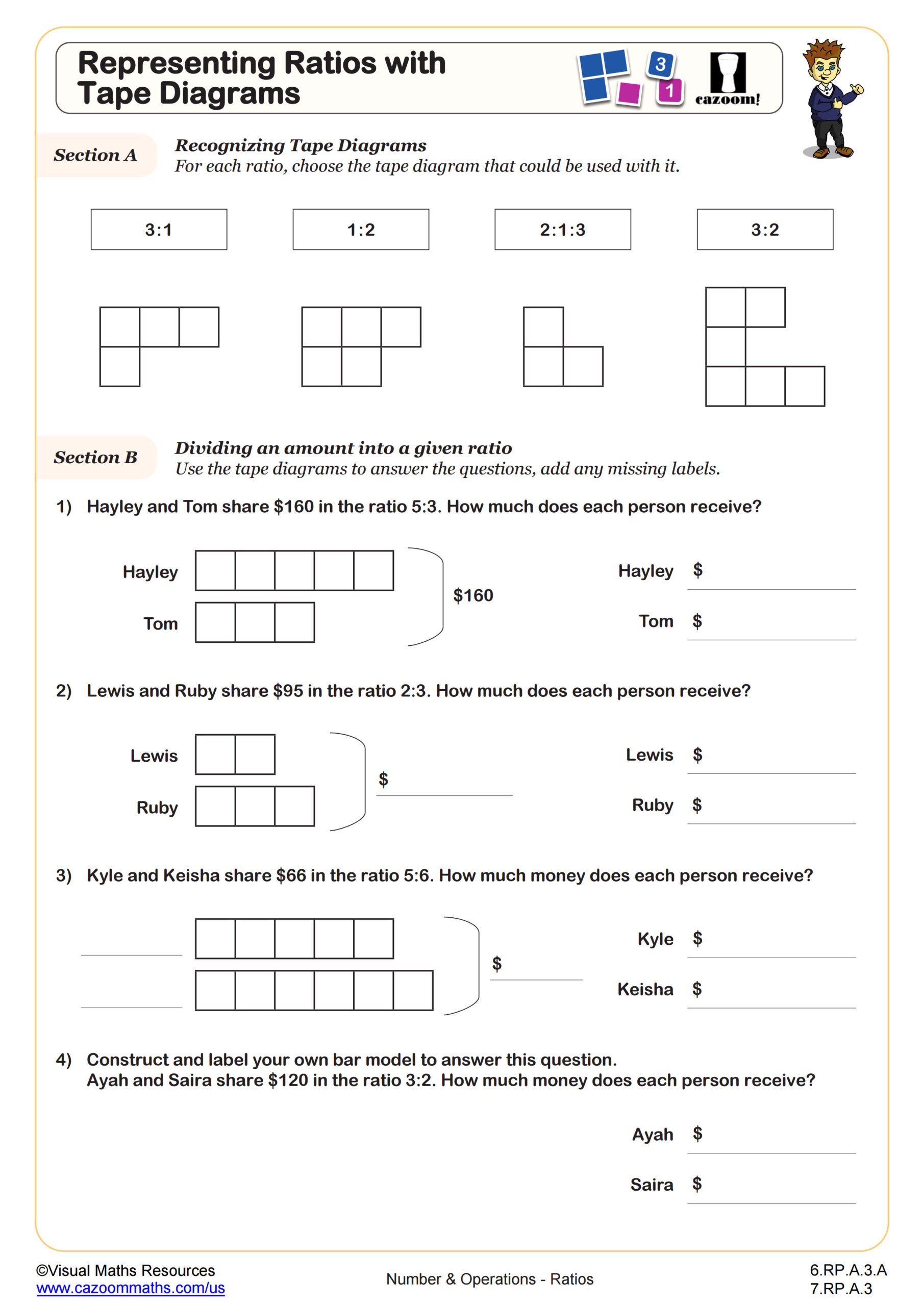
Representing Ratios with Tape Diagrams
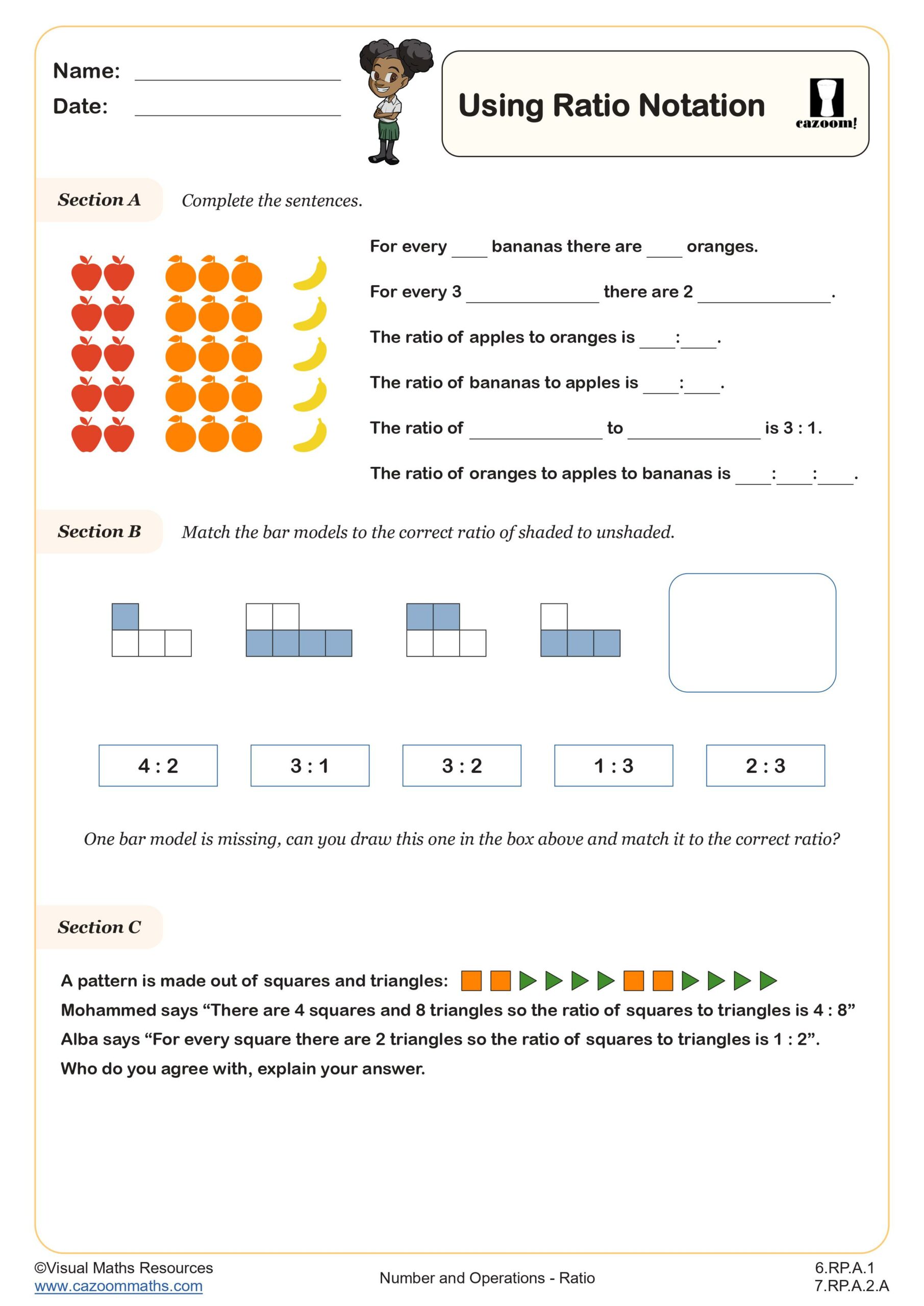
Using Ratio Notation
All worksheets are created by the team of experienced teachers at Cazoom Math.
What topics are covered in a proportional relationships 7th grade worksheet?
A thorough proportional relationships 7th grade worksheet typically covers identifying proportional relationships in tables and graphs, solving proportions using cross multiplication, finding unit rates, and working with equivalent ratios. Students also practice determining constant of proportionality and writing equations in the form y = kx to represent proportional relationships.
Teachers notice that students often confuse additive patterns with multiplicative ones when analyzing tables. For example, when given a table where x increases by 2 and y increases by 4, students might incorrectly conclude the relationship is proportional without checking if the ratio y/x remains constant. This 7th grade proportional relationships worksheet includes multiple representations to help students recognize these distinctions.
How do 7th grade ratio concepts build from elementary skills?
Seventh grade proportional relationships worksheets extend elementary ratio concepts by introducing formal algebraic representations and more complex problem-solving contexts. While 6th graders work with simple equivalent ratios and basic rate problems, 7th graders analyze proportional relationships graphically and determine whether relationships are proportional or non-proportional.
The transition from concrete ratio tables to abstract proportional equations challenges many students. Teachers observe that students who mastered 6th grade ratio worksheets still struggle with the concept that proportional relationships must pass through the origin when graphed. These 7th grade math proportional relationships worksheets bridge this gap through systematic progression from visual models to algebraic representations.
What makes solving proportions challenging for 7th graders?
Cross multiplication becomes the primary method for solving proportions in 7th grade, but many students apply it mechanically without understanding why it works. A quality proportions worksheet 7th grade focuses on building conceptual understanding before introducing algorithmic procedures, helping students see proportions as equivalent ratios rather than just equations to solve.
Teachers frequently see students set up proportions incorrectly by mixing up corresponding terms. When solving problems like "If 3 pencils cost $1.50, how much do 8 pencils cost?", students might write 3/1.50 = x/8 instead of 3/1.50 = 8/x. These solving proportions worksheet 7th grade PDF resources include multiple setup examples to address this common error pattern.
How can teachers use these worksheets most effectively in class?
Teachers find success using proportional relationship worksheets 7th grade with answers as both guided practice during instruction and independent assessment tools. The answer keys allow for immediate feedback during collaborative work sessions, while the PDF format makes differentiation easy through selective problem assignment based on student readiness levels.
Many educators use these 7th grade ratios and proportions worksheets PDF as warm-up activities to maintain skill retention throughout the unit. Since proportional reasoning connects to geometry, statistics, and algebra concepts later in the year, consistent practice through varied worksheet problems helps students maintain fluency. Teachers often project select problems for whole-class discussion, focusing on student reasoning rather than just correct answers.