7th Grade Ratio Worksheets
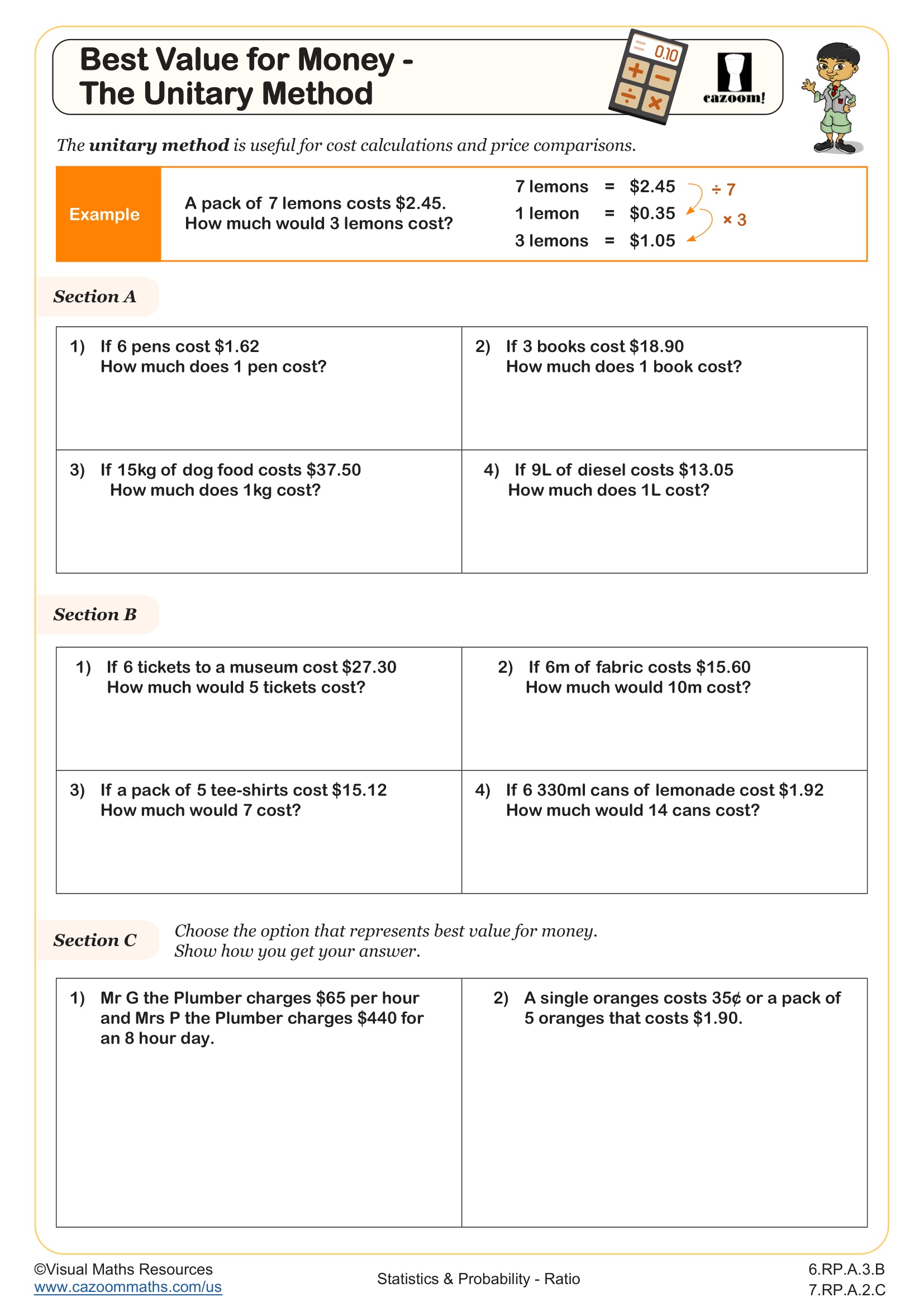
Best Value for Money - the Unitary Method
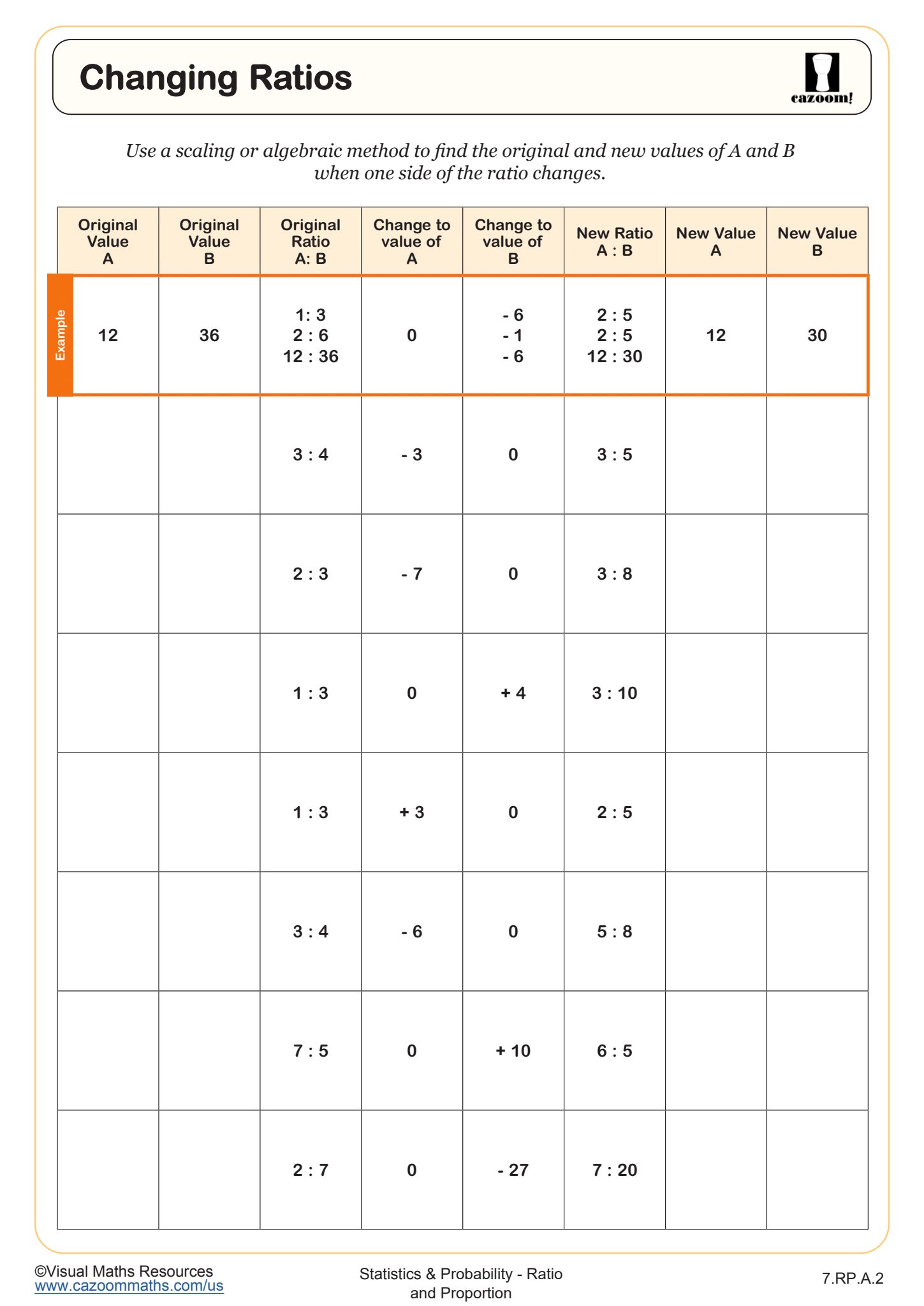
Changing Ratios
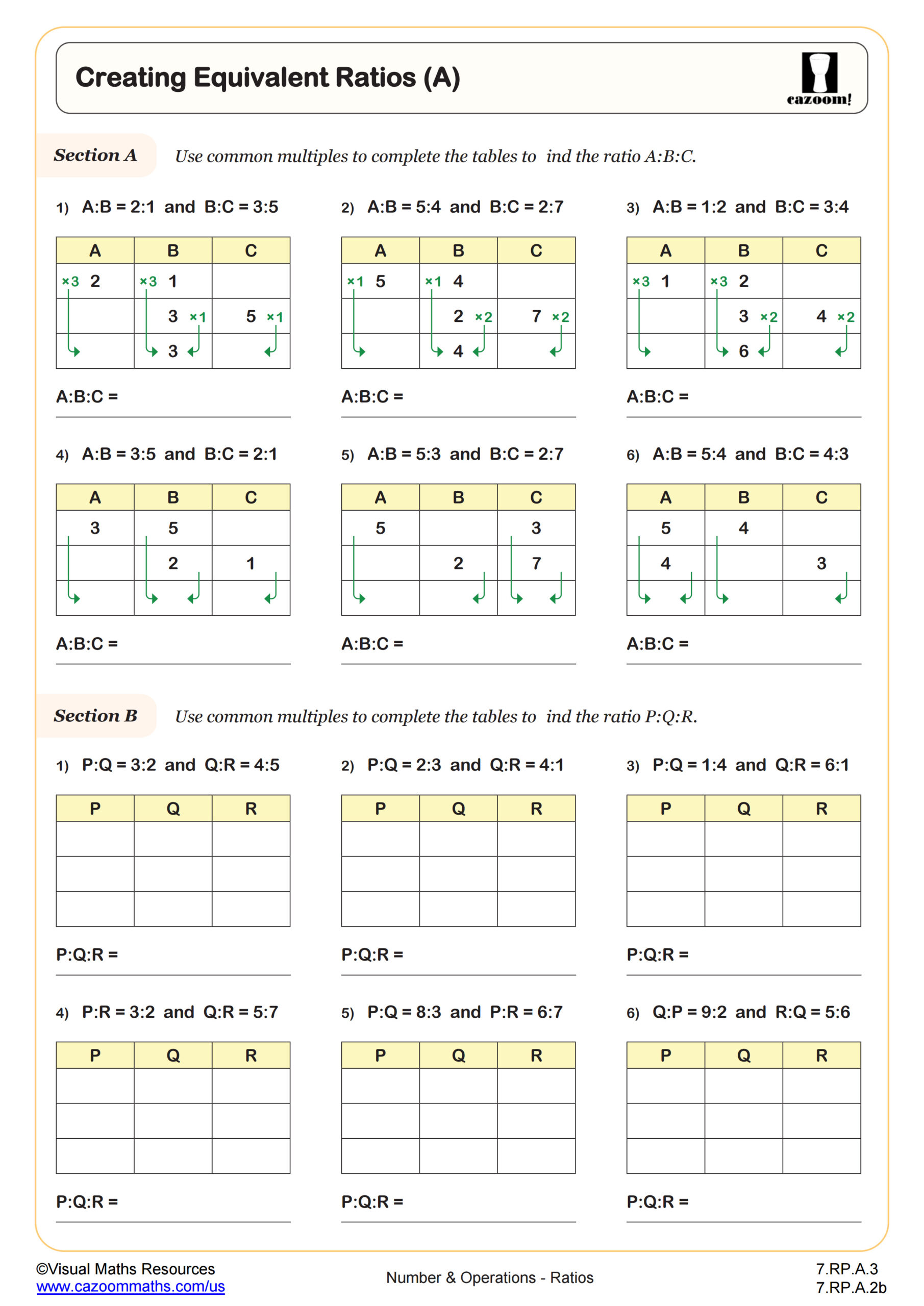
Creating Equivalent Ratios (A)
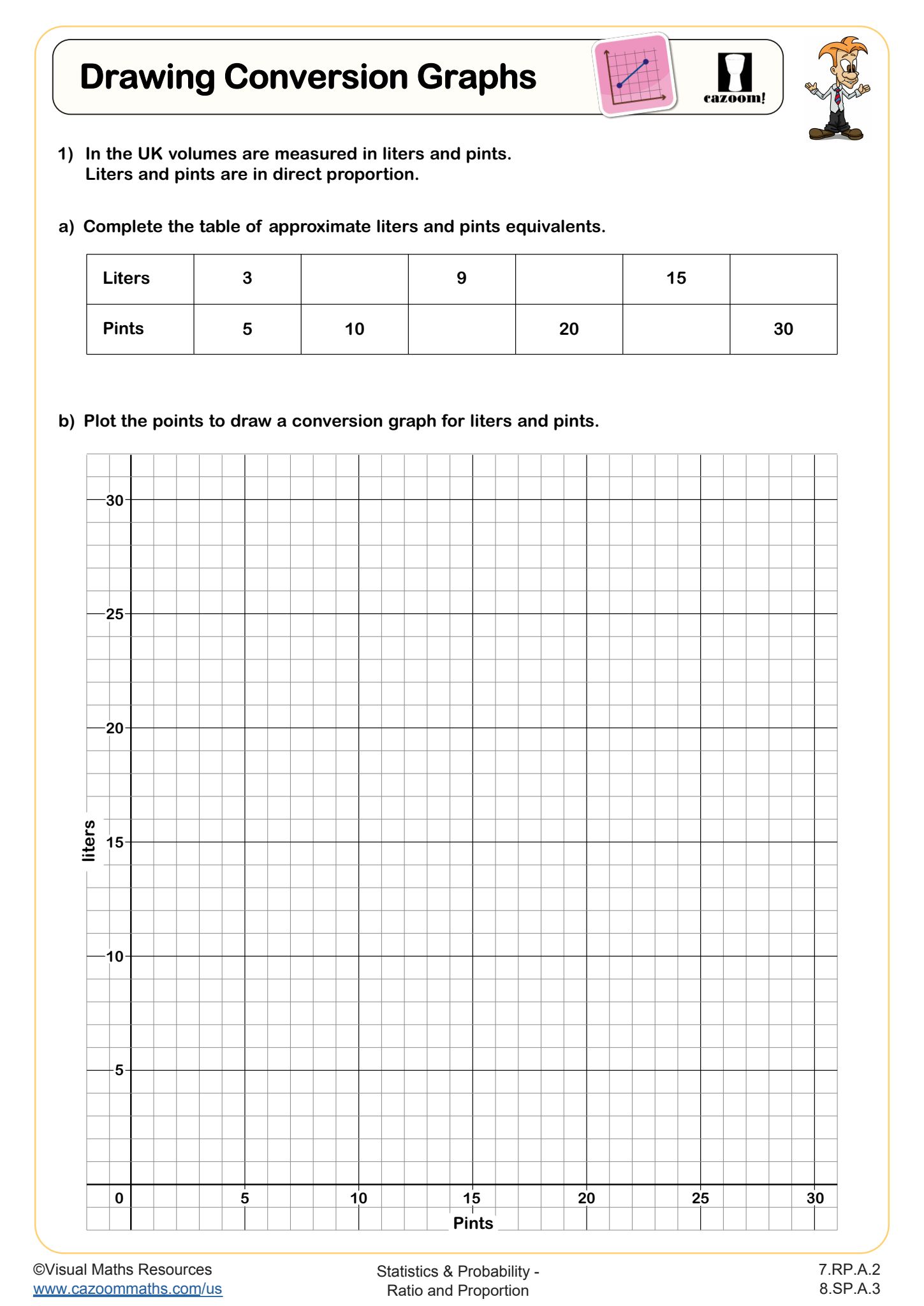
Drawing Conversion Graphs
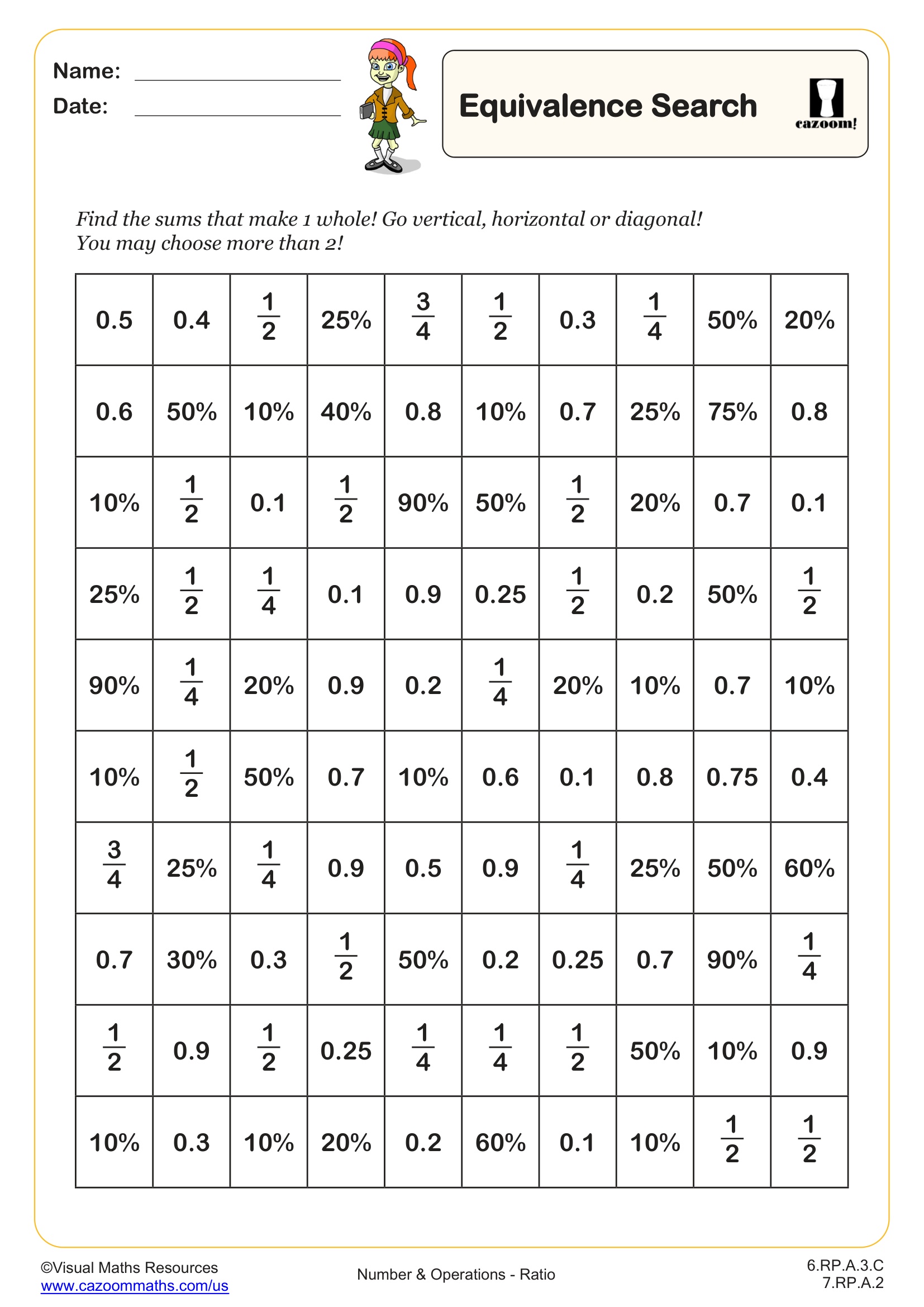
Equivalence Search (A)
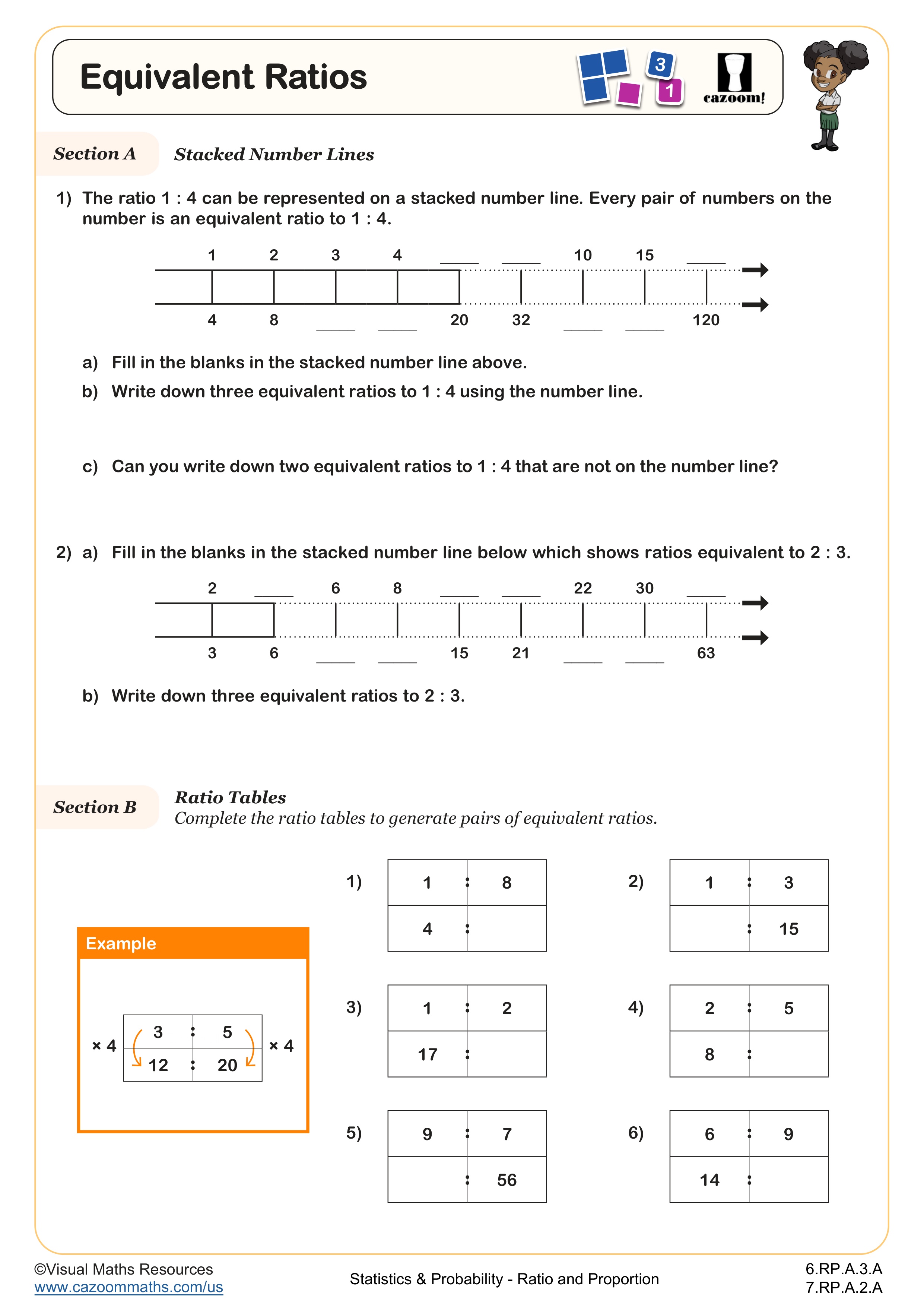
Equivalent Ratios
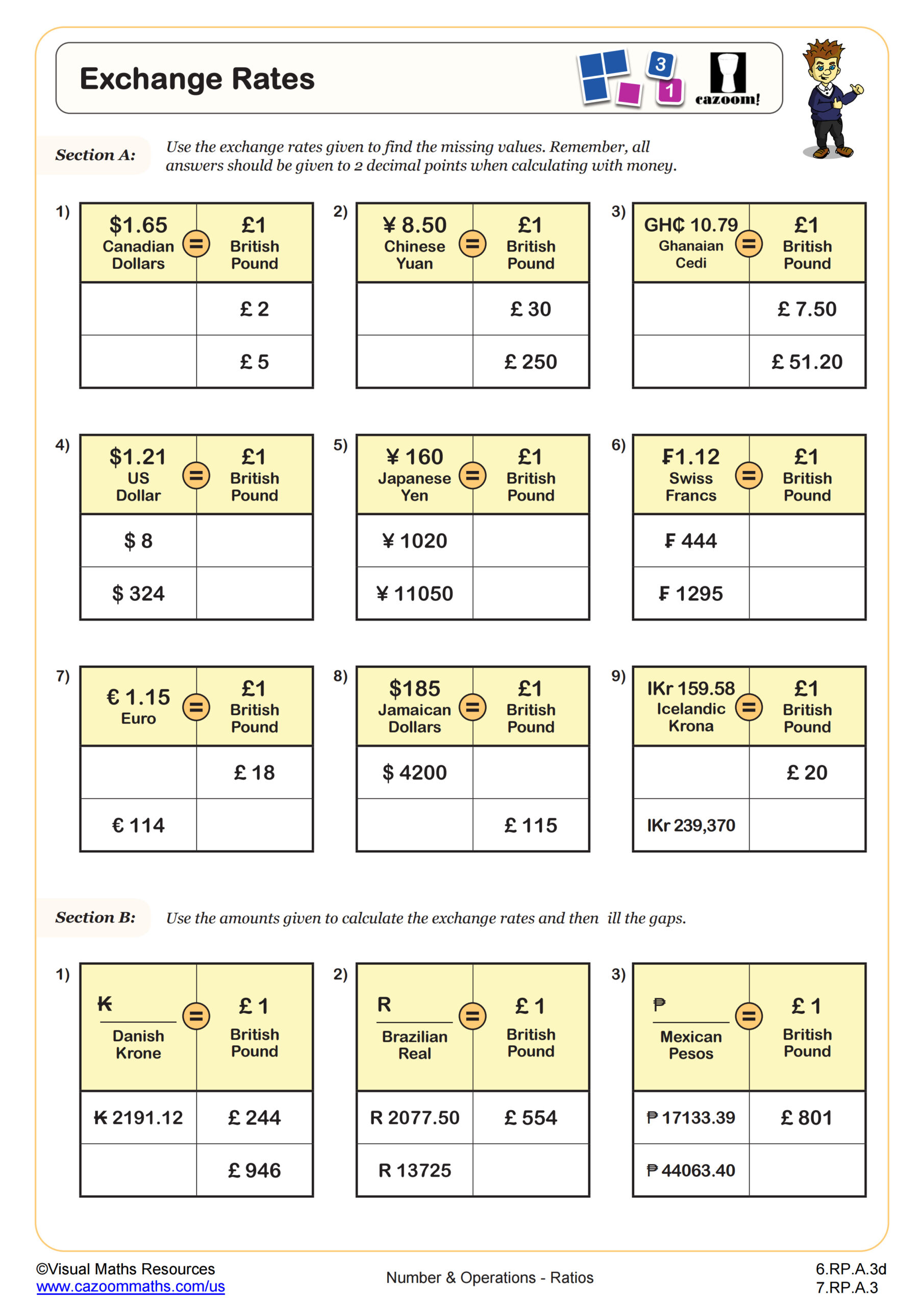
Exchange Rates
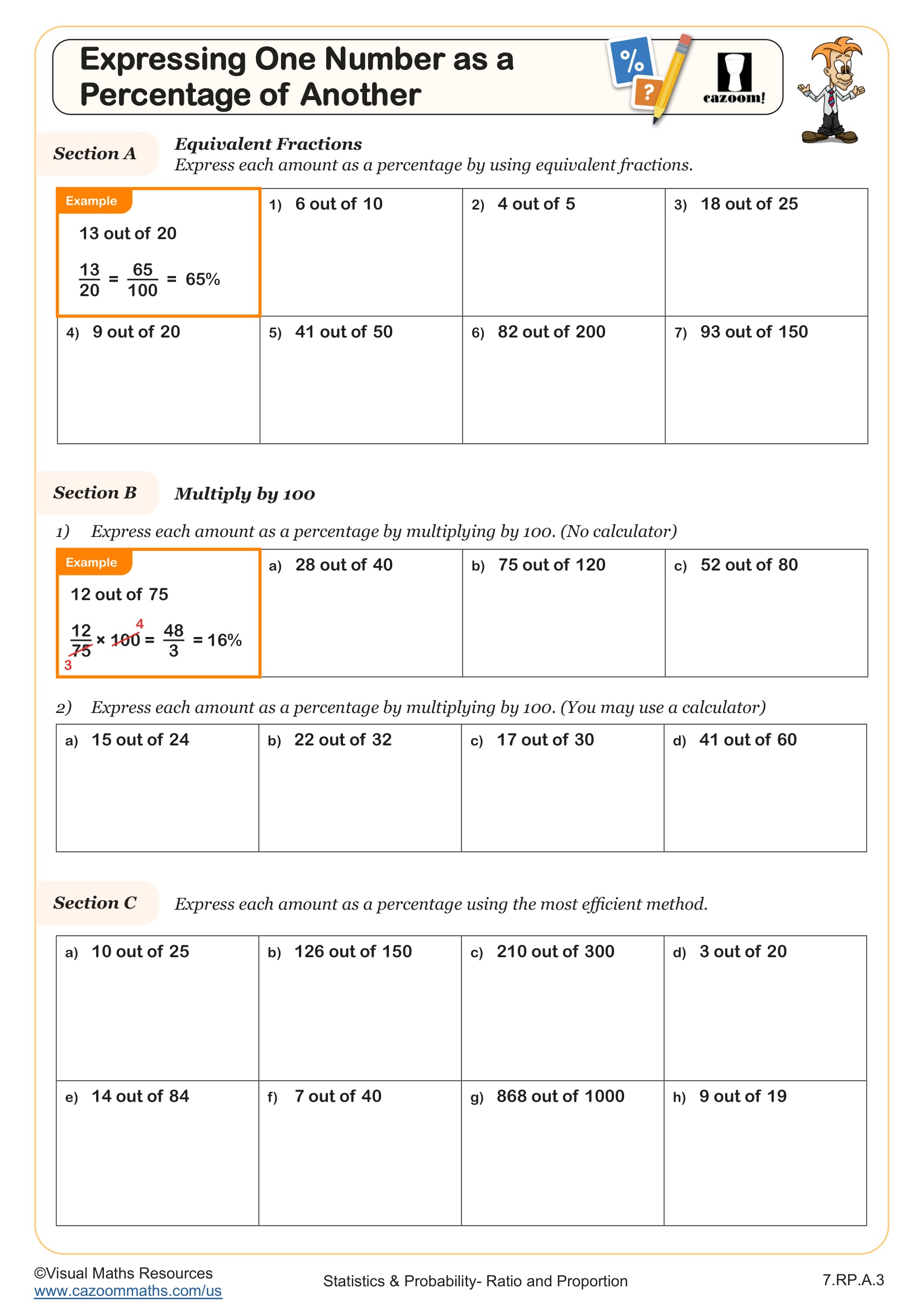
Express One Number as a Percentage of Another
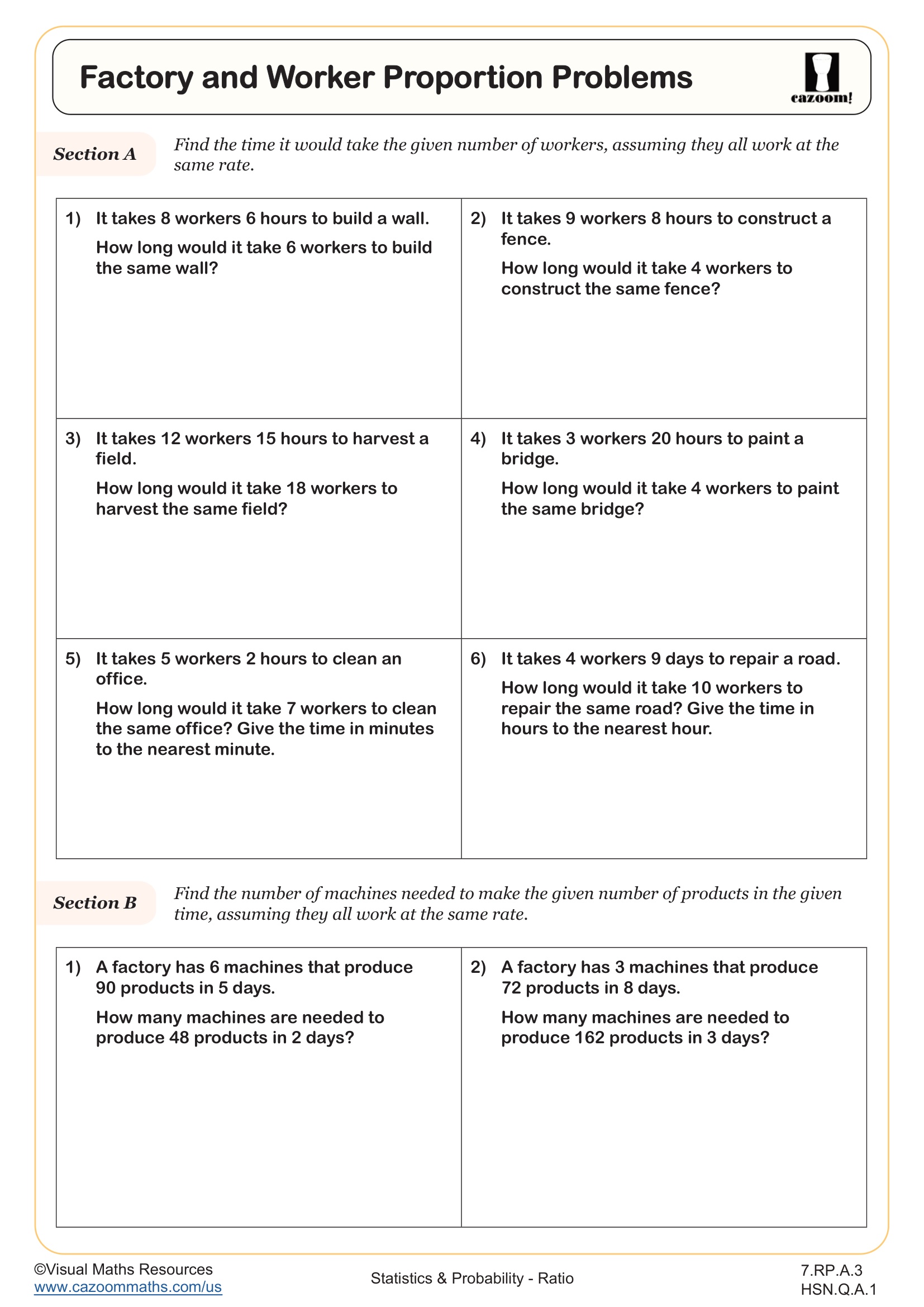
Factory and Worker Proportion Problems
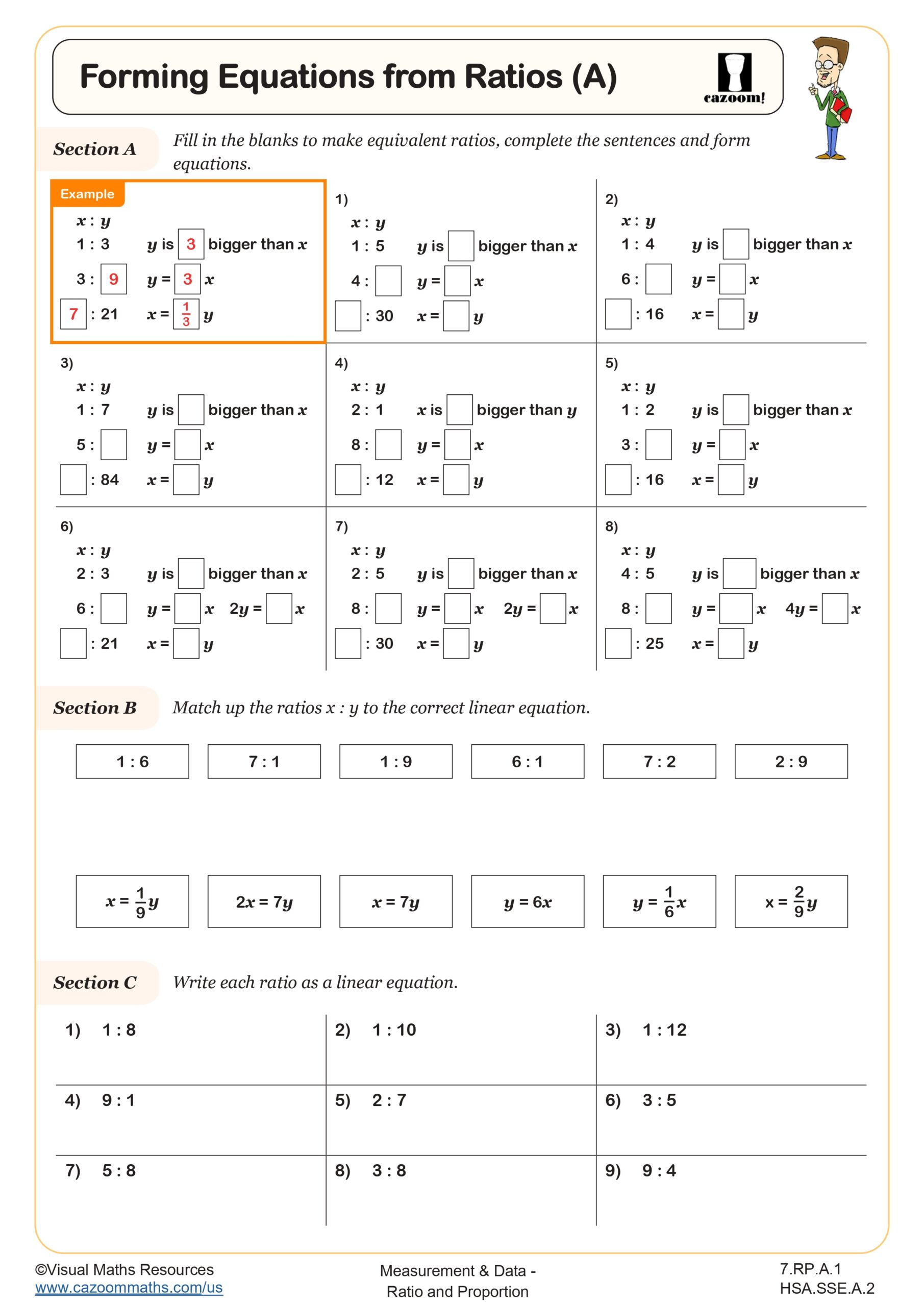
Forming Equations from Ratios (A)
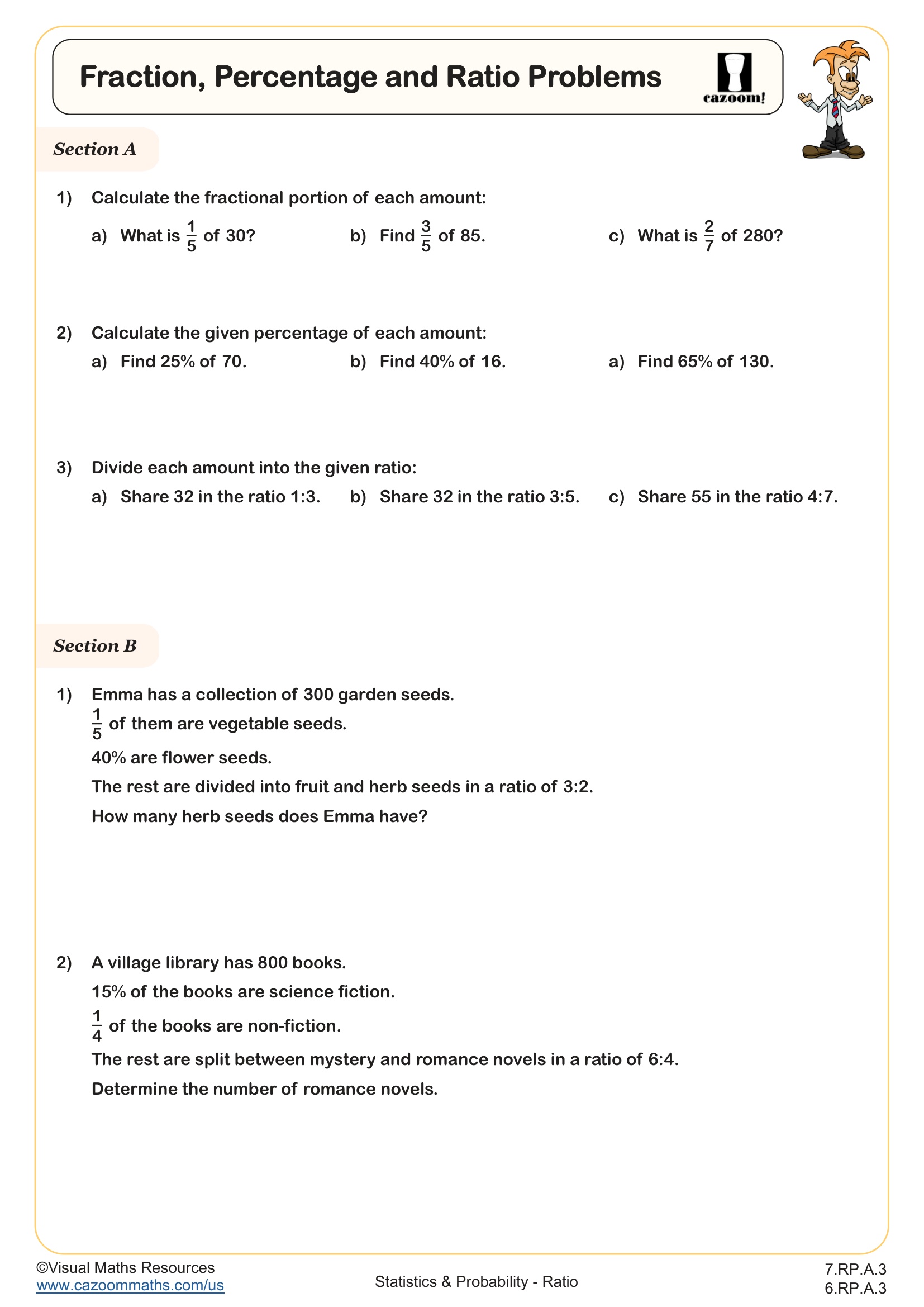
Fraction, Percentage and Ratio Problems
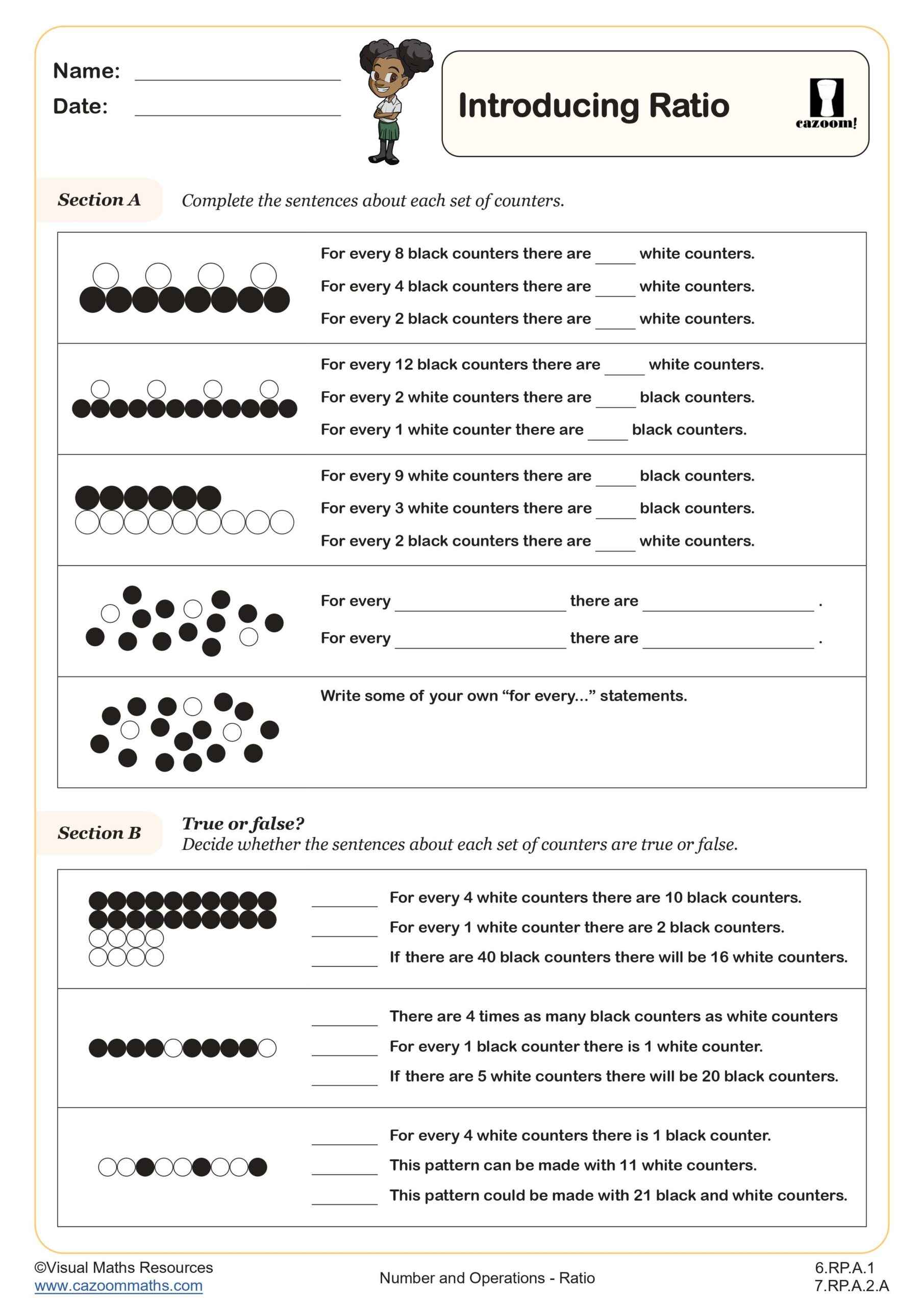
Introducing Ratio
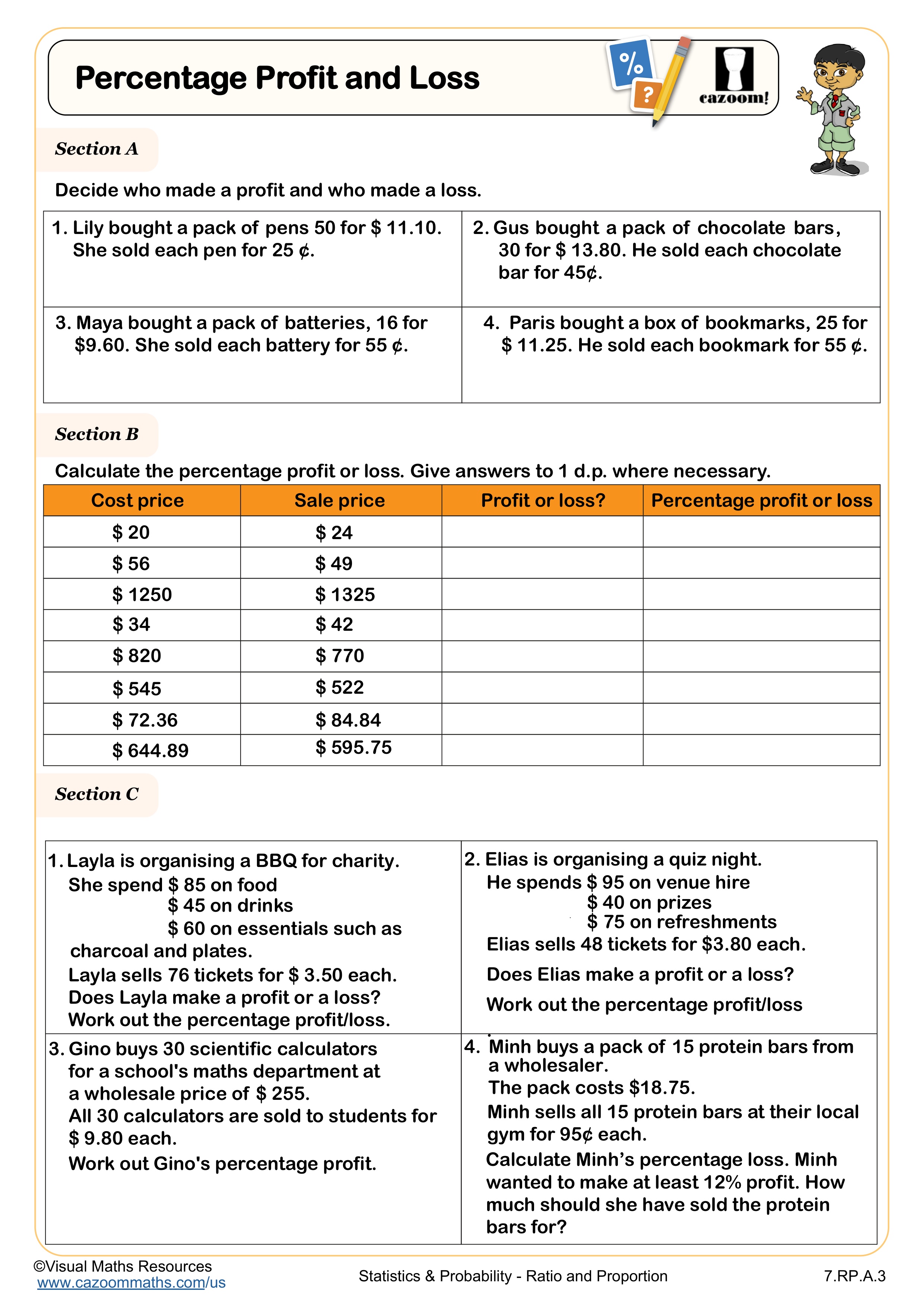
Percentage Profit and Loss
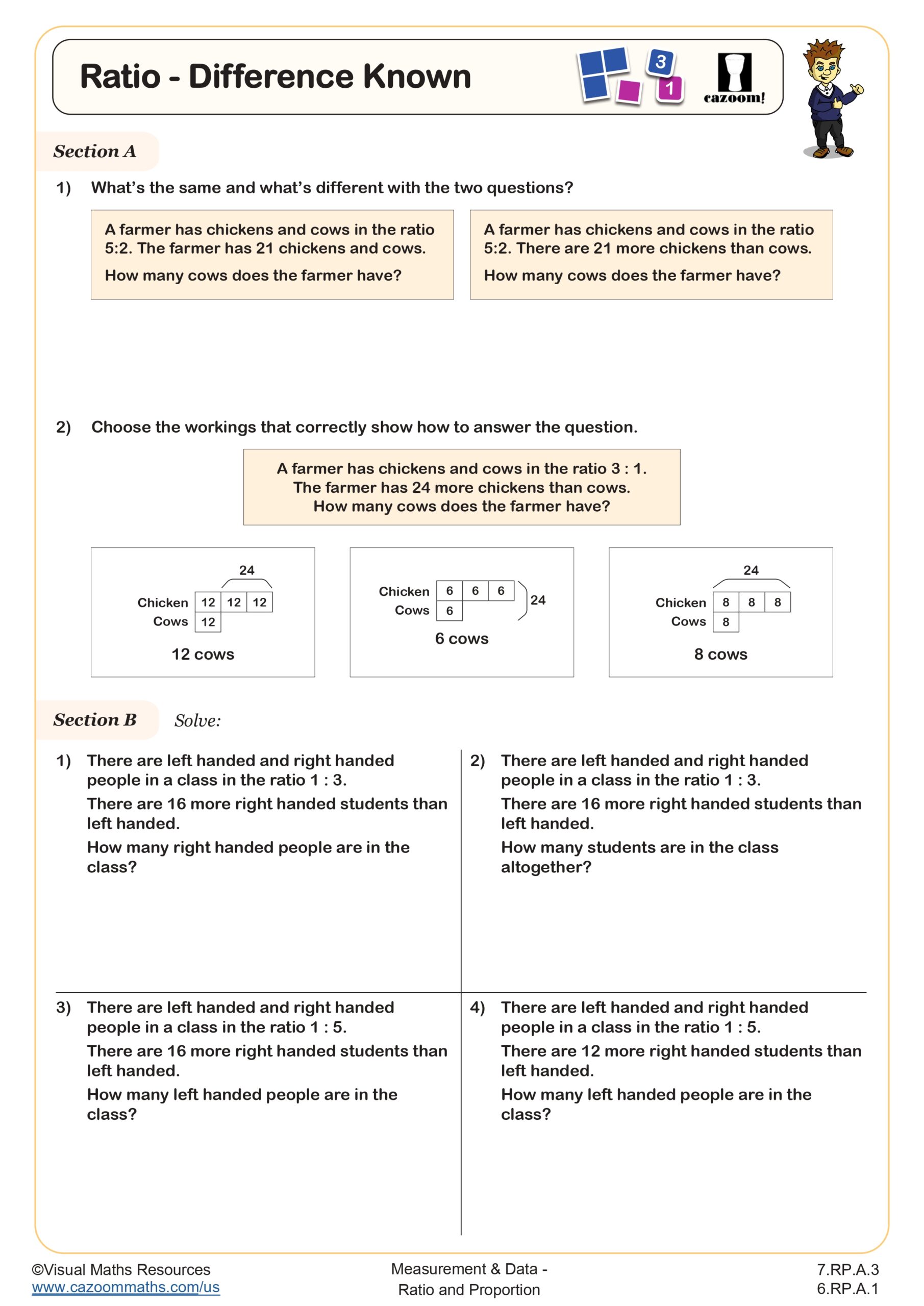
Ratio - Difference Known
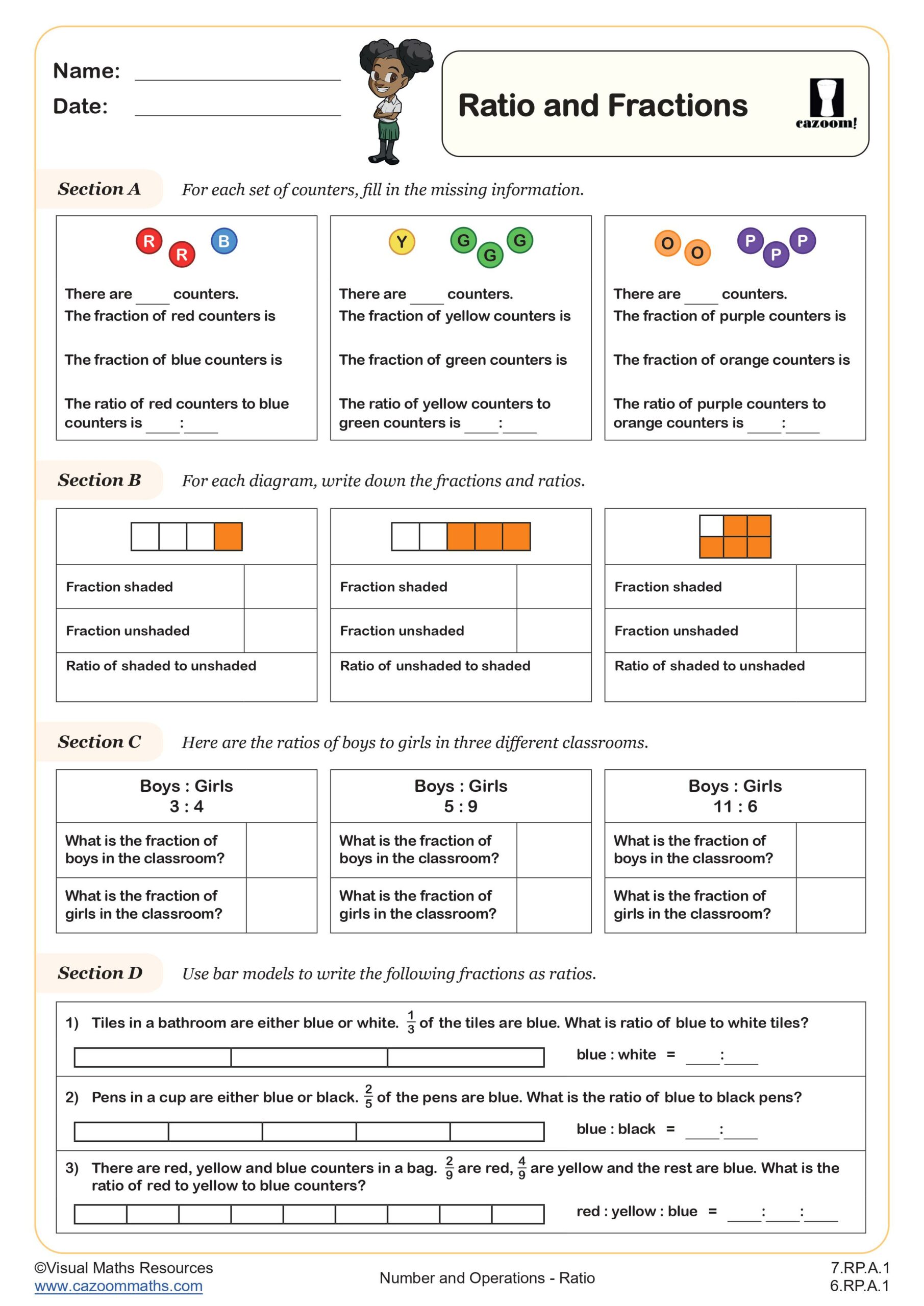
Ratio and Fractions
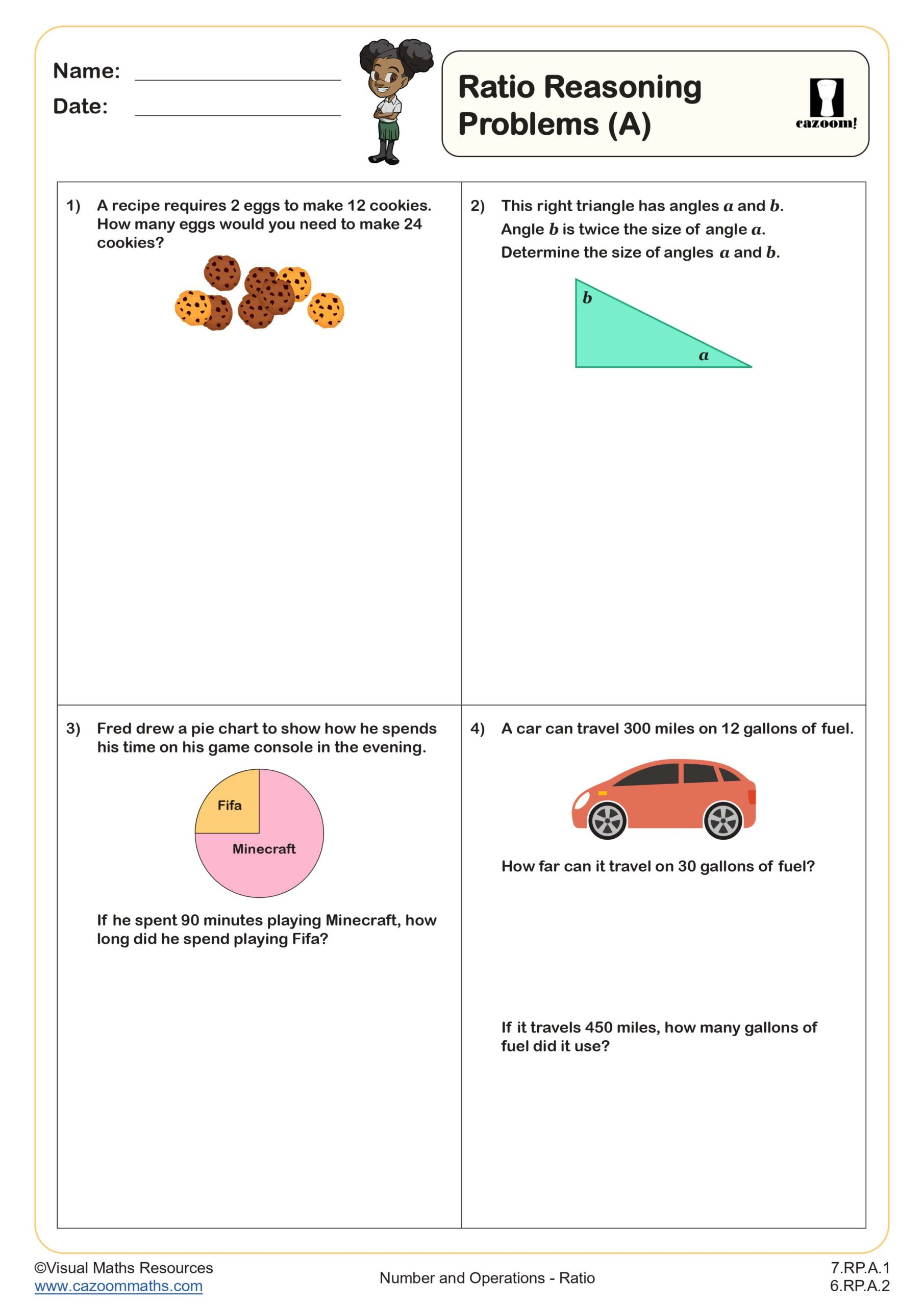
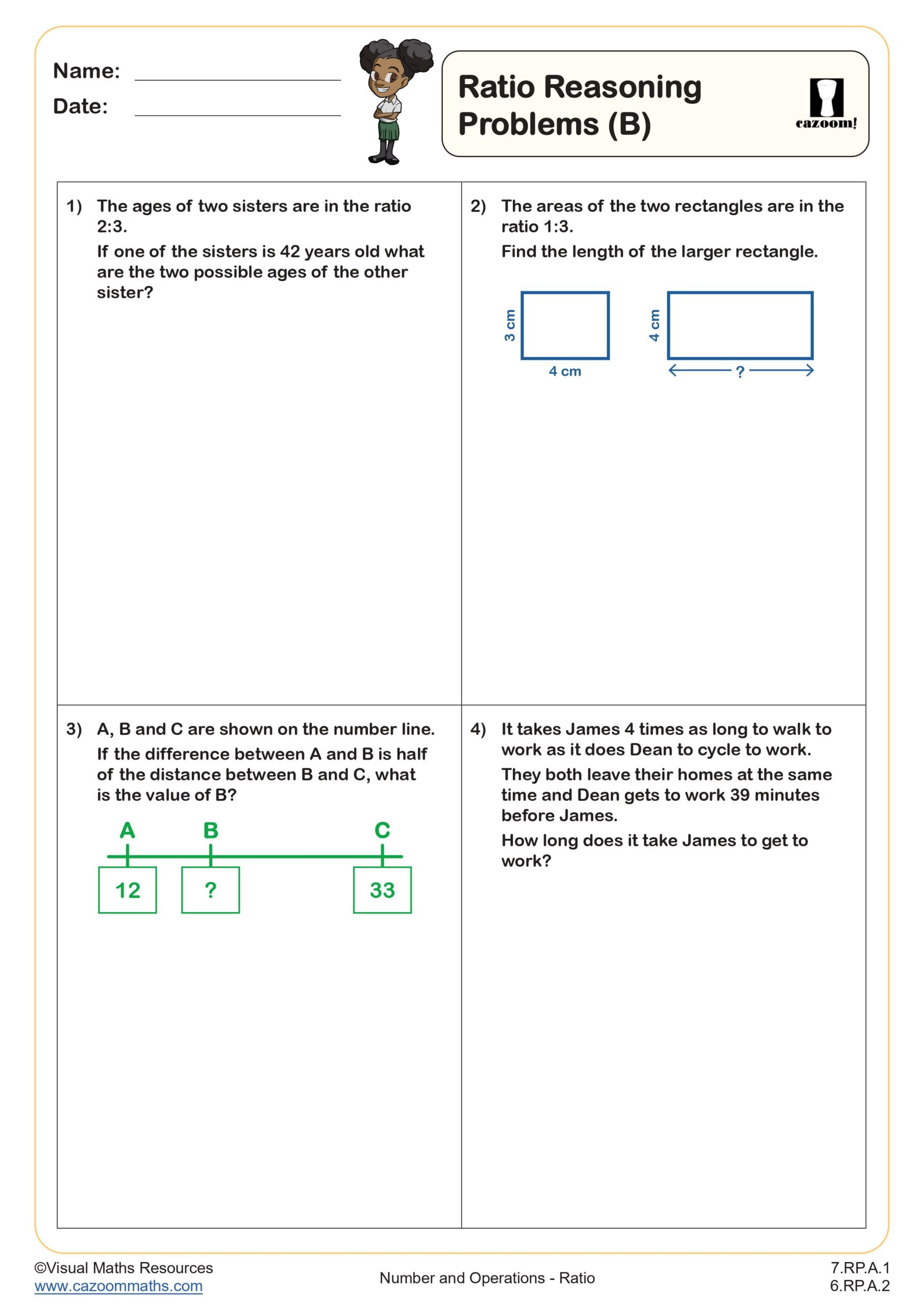
Ratio Reasoning Problems (A)
Ratio Reasoning Problems (B)
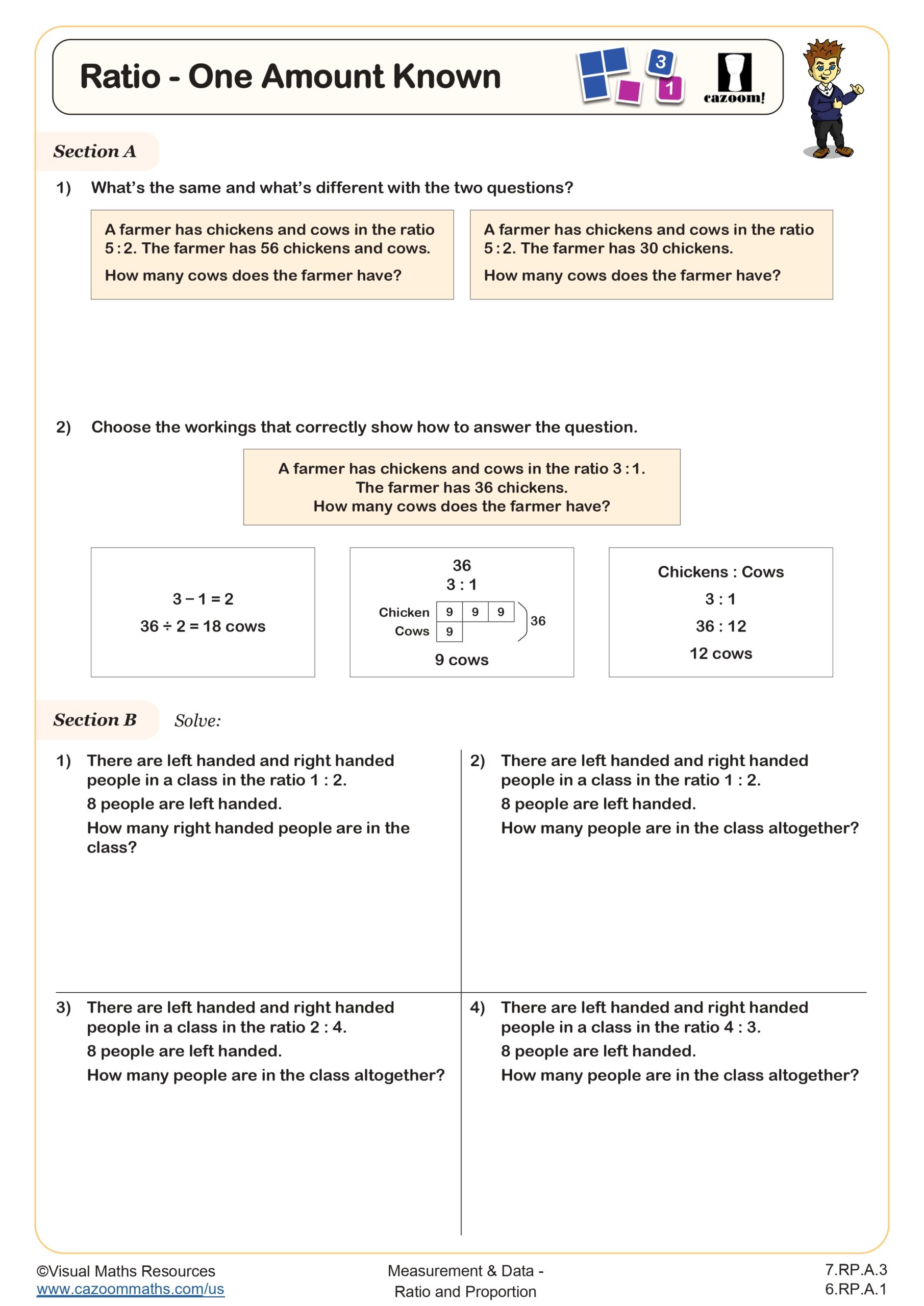
Ratio- One Amount Known
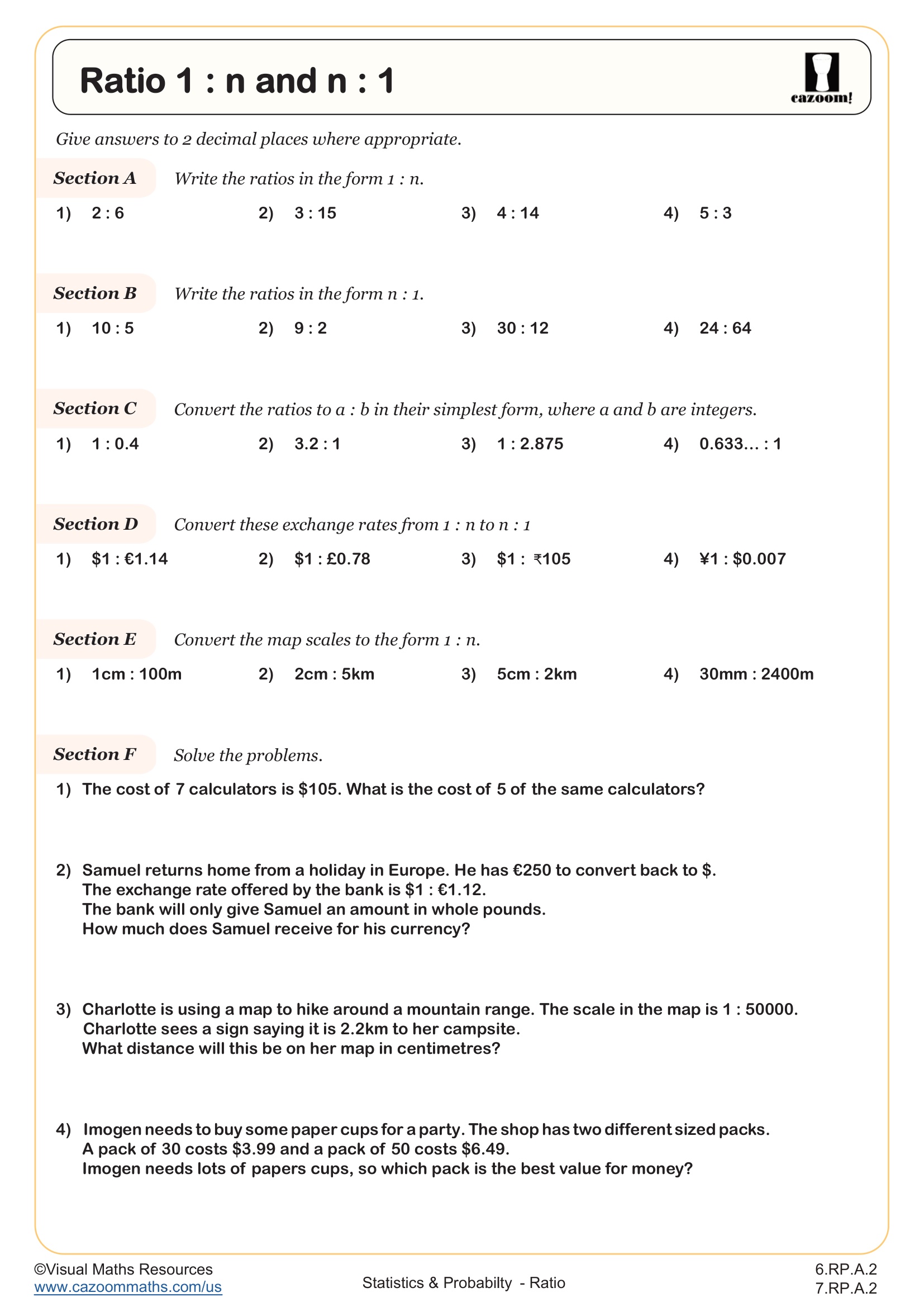
Ratios 1:n and n:1
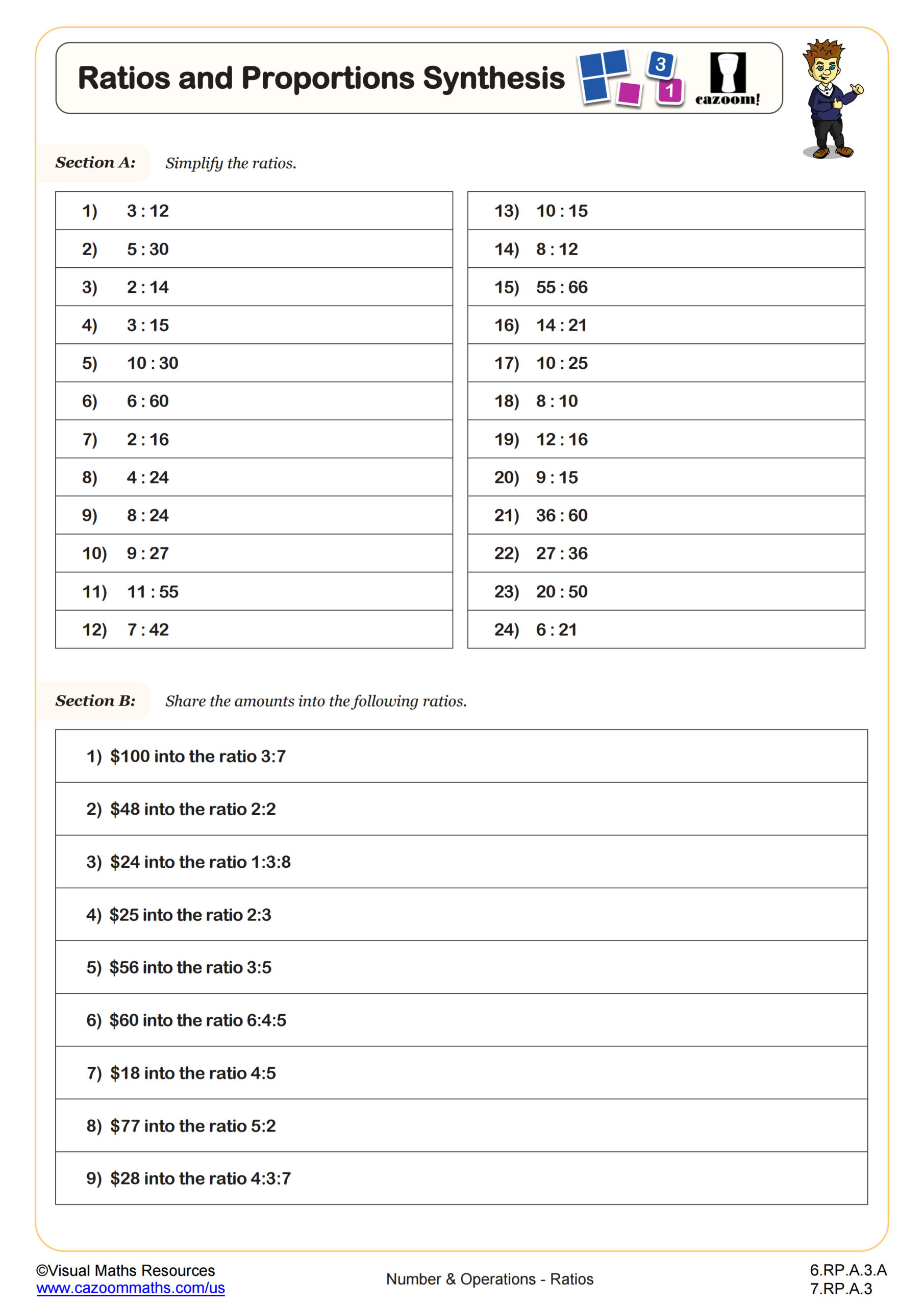
Ratios and Proportions Synthesis
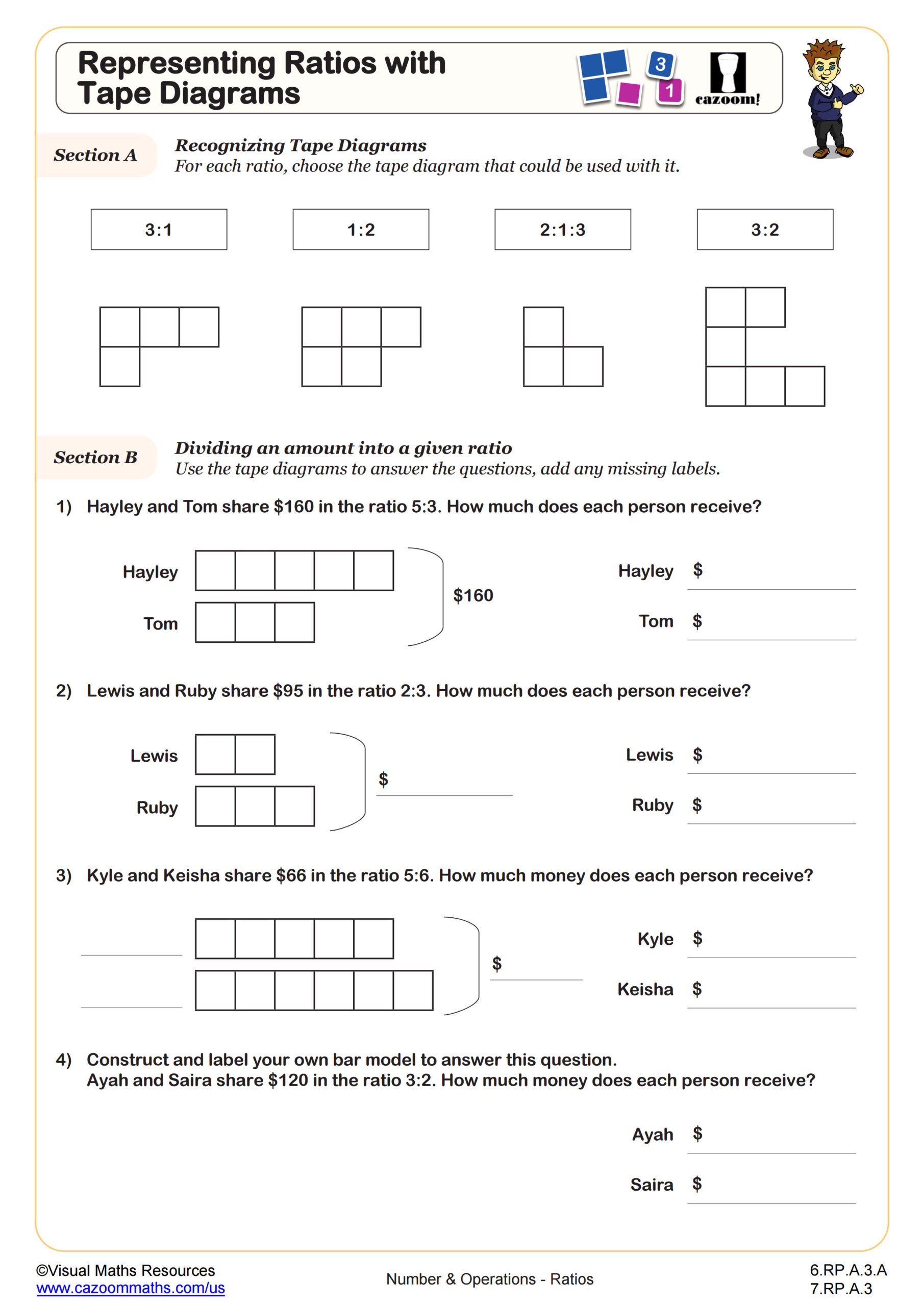
Representing Ratios with Tape Diagrams
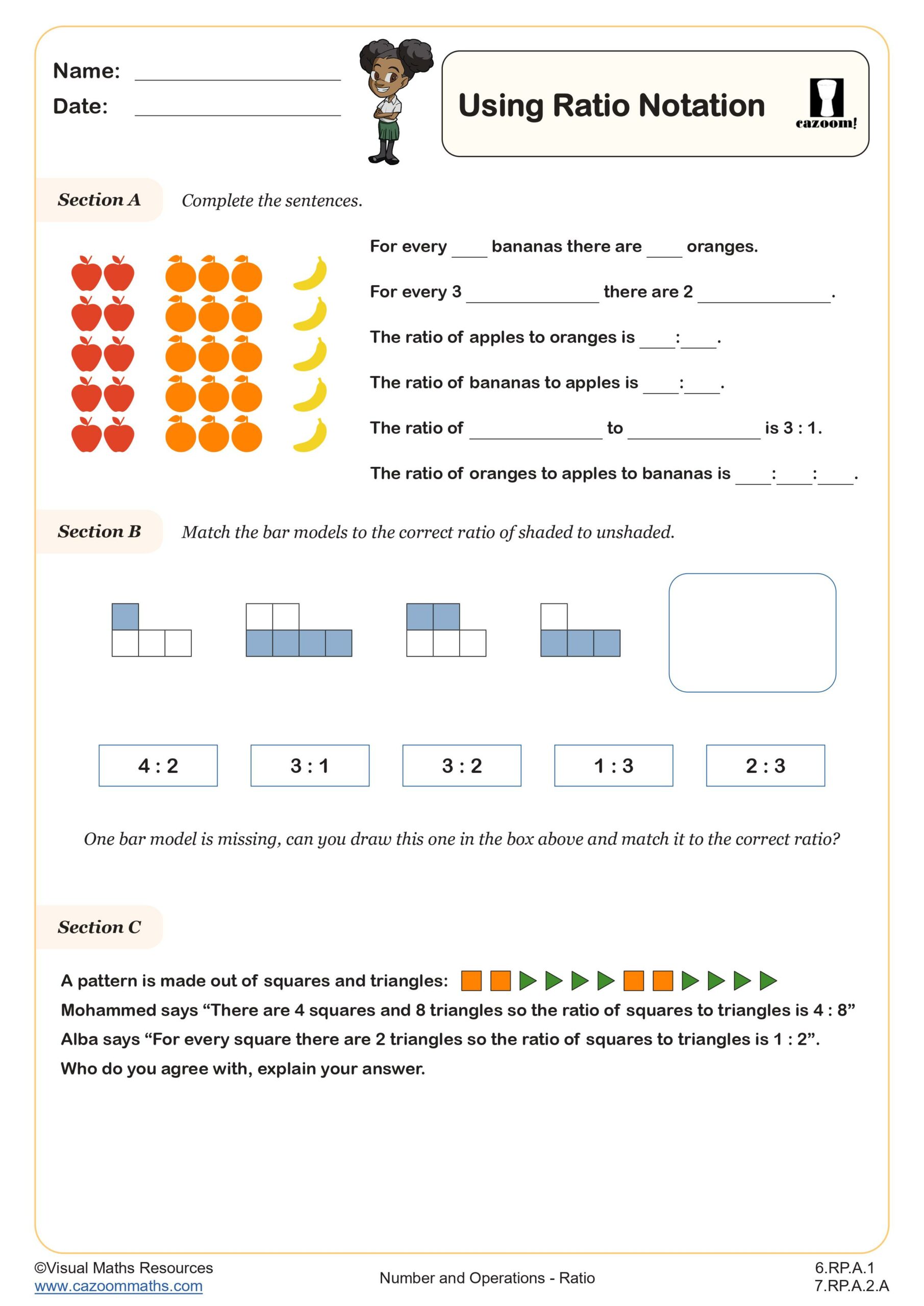
Using Ratio Notation
All worksheets are created by the team of experienced teachers at Cazoom Math.
What topics do ratio worksheets grade 7 with answers typically cover?
Grade 7 ratio worksheets with answers focus on fundamental proportional reasoning concepts outlined in Common Core standard 7.RP. Students practice writing ratios in multiple forms, finding equivalent ratios through multiplication and division, and solving proportion equations. The worksheets also include unit rate problems and scale factor applications.
Math teachers notice that students often confuse ratios with fractions, especially when simplifying. A ratio of 8:12 should simplify to 2:3, but many students write 2/3 instead of maintaining the colon notation. The answer keys help teachers identify when students understand the concept but use incorrect formatting.
Are these worksheets appropriate for advanced 6th graders or struggling 8th graders?
While designed for 7th grade ratios worksheet standards, these materials work well for differentiated instruction across grade levels. Advanced 6th graders ready for pre-algebra concepts can handle the foundational ratio problems, while struggling 8th graders benefit from reviewing proportional reasoning before tackling more complex algebraic relationships.
Middle school teachers find that ratio skills form the foundation for many 8th grade topics including linear relationships and geometric similarity. Students who haven't mastered equivalent ratios in 7th grade often struggle with slope calculations and scale drawings later. The progression allows teachers to identify gaps early and provide targeted intervention.
How do equivalent ratios worksheet grade 7 problems help students understand proportional thinking?
Equivalent ratios worksheets help students recognize that ratios represent relationships between quantities rather than specific numbers. Students learn to scale ratios up and down while maintaining the same proportional relationship, building the foundation for more advanced algebraic thinking about functions and linear equations.
Classroom observations show that students initially treat each ratio as isolated information. They struggle to see that 3:5, 6:10, and 15:25 represent the same relationship. Visual models like tape diagrams or tables help bridge this conceptual gap, and the worksheet answer keys often include these representations to support student understanding.
What's the most effective way to use ratio worksheet 7th grade materials in classroom instruction?
Teachers get the best results when they use these worksheets after introducing concepts through hands-on activities or real-world problems. Starting with concrete examples like recipe scaling or map distances helps students understand why ratios matter before moving to abstract practice problems. The worksheets work well for guided practice during the lesson or independent review.
Many teachers assign specific problems rather than entire worksheets, focusing on areas where individual students need more practice. The detailed answer keys allow students to check their work immediately, promoting self-correction and metacognitive awareness. This approach prevents students from practicing errors repeatedly and builds confidence in their problem-solving abilities.