7th Grade Scale & Loci Worksheets
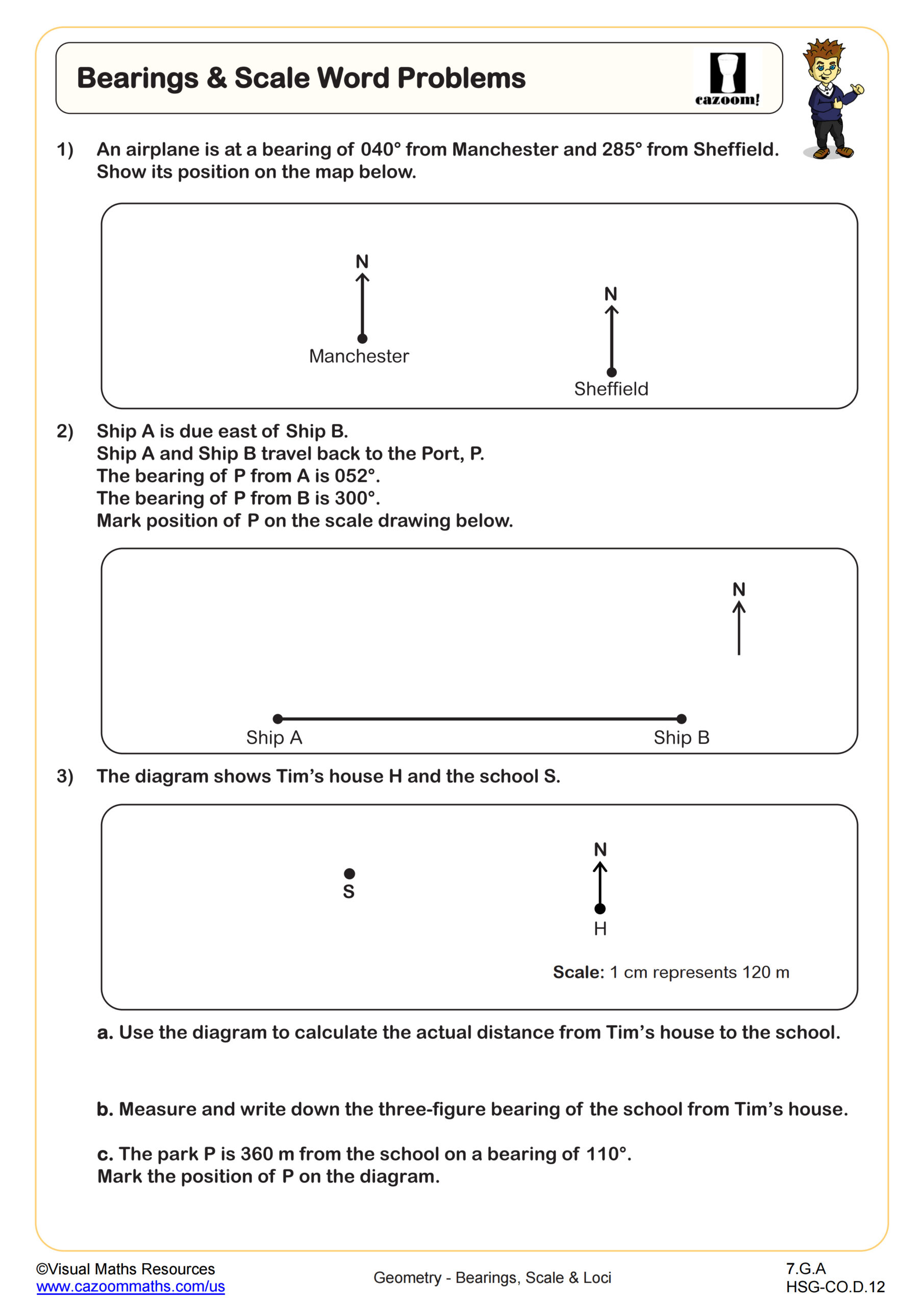
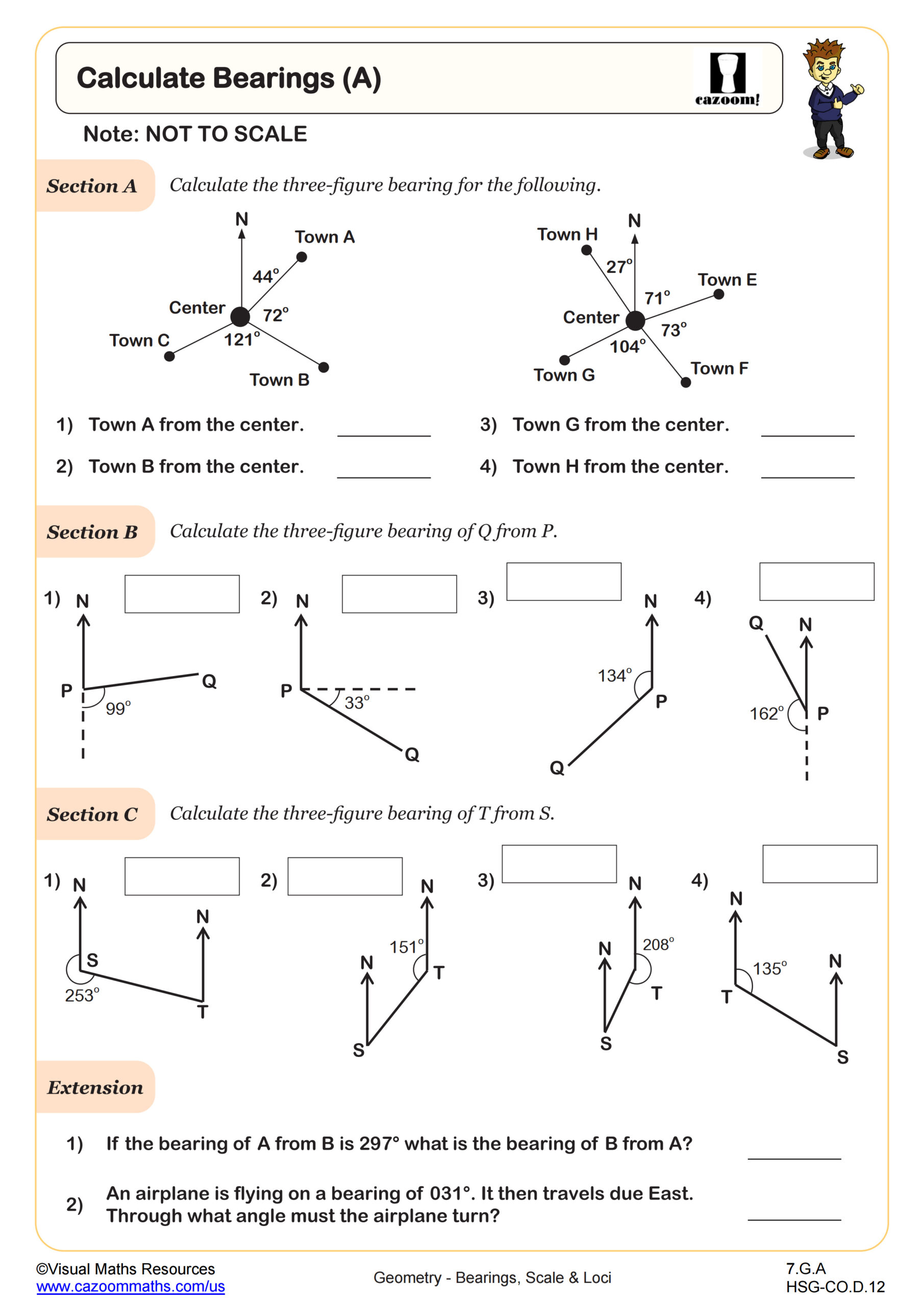
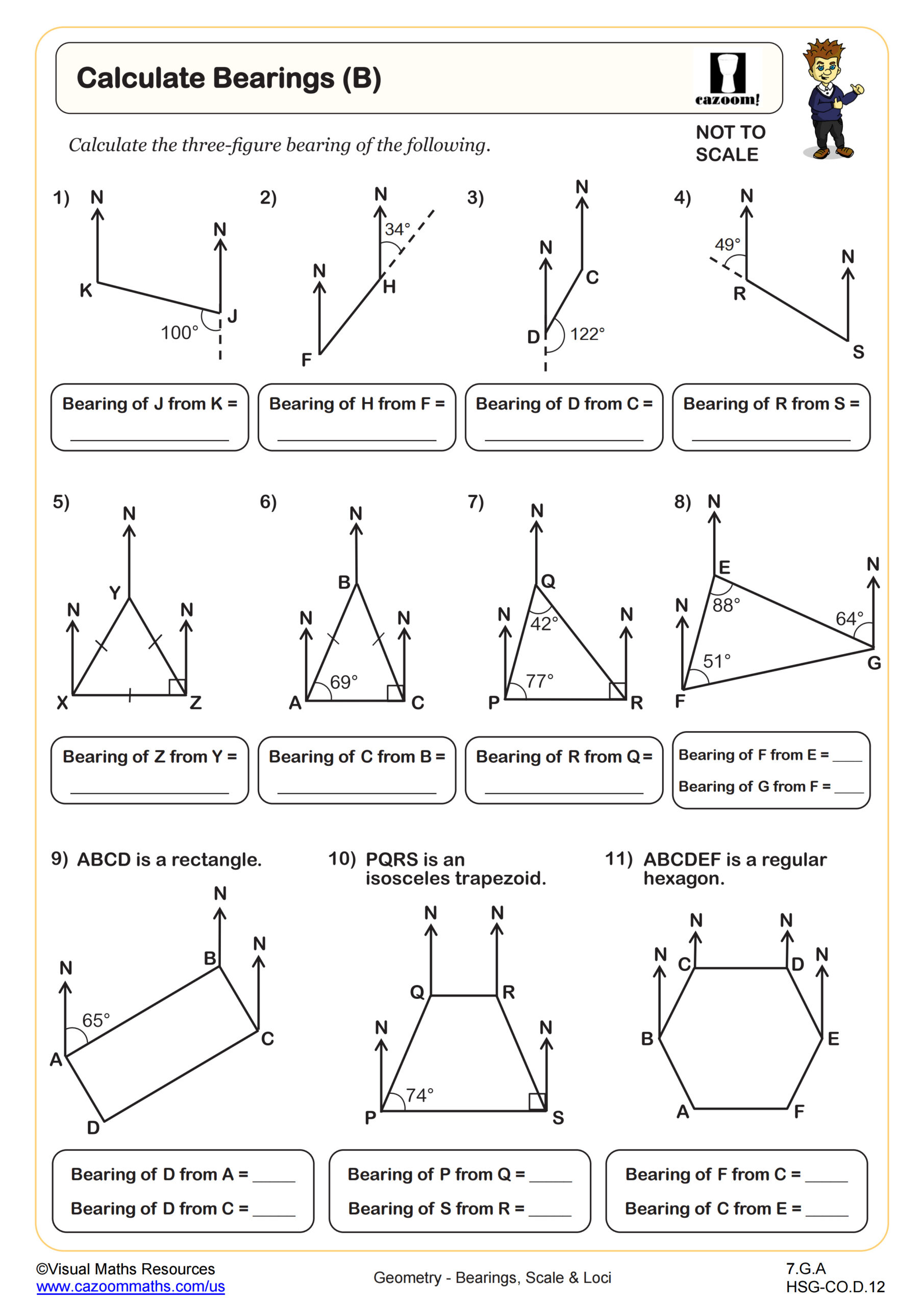
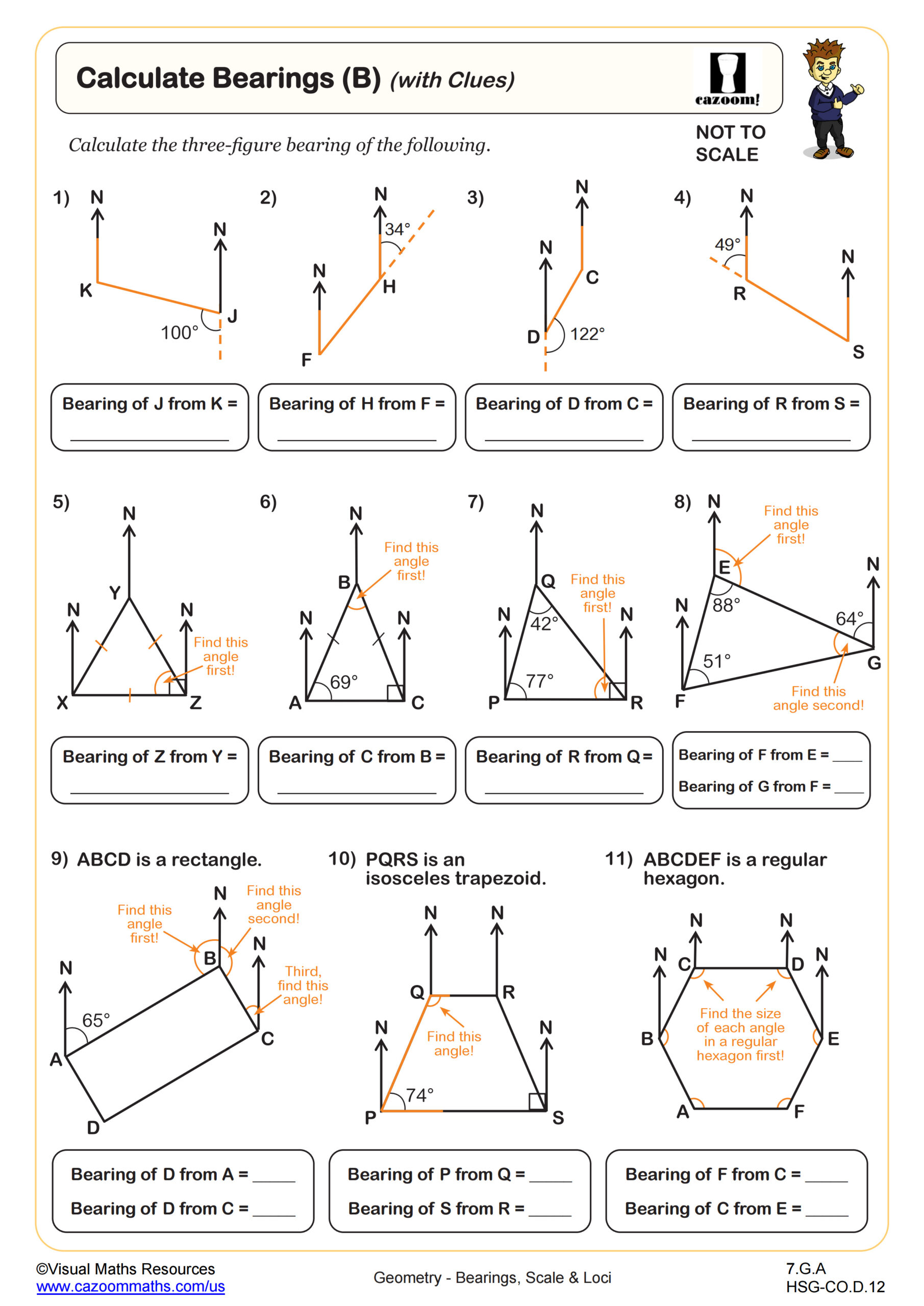
All worksheets are created by the team of experienced teachers at Cazoom Math.
What Are Bearings and Why Do 7th Graders Need to Learn Them?
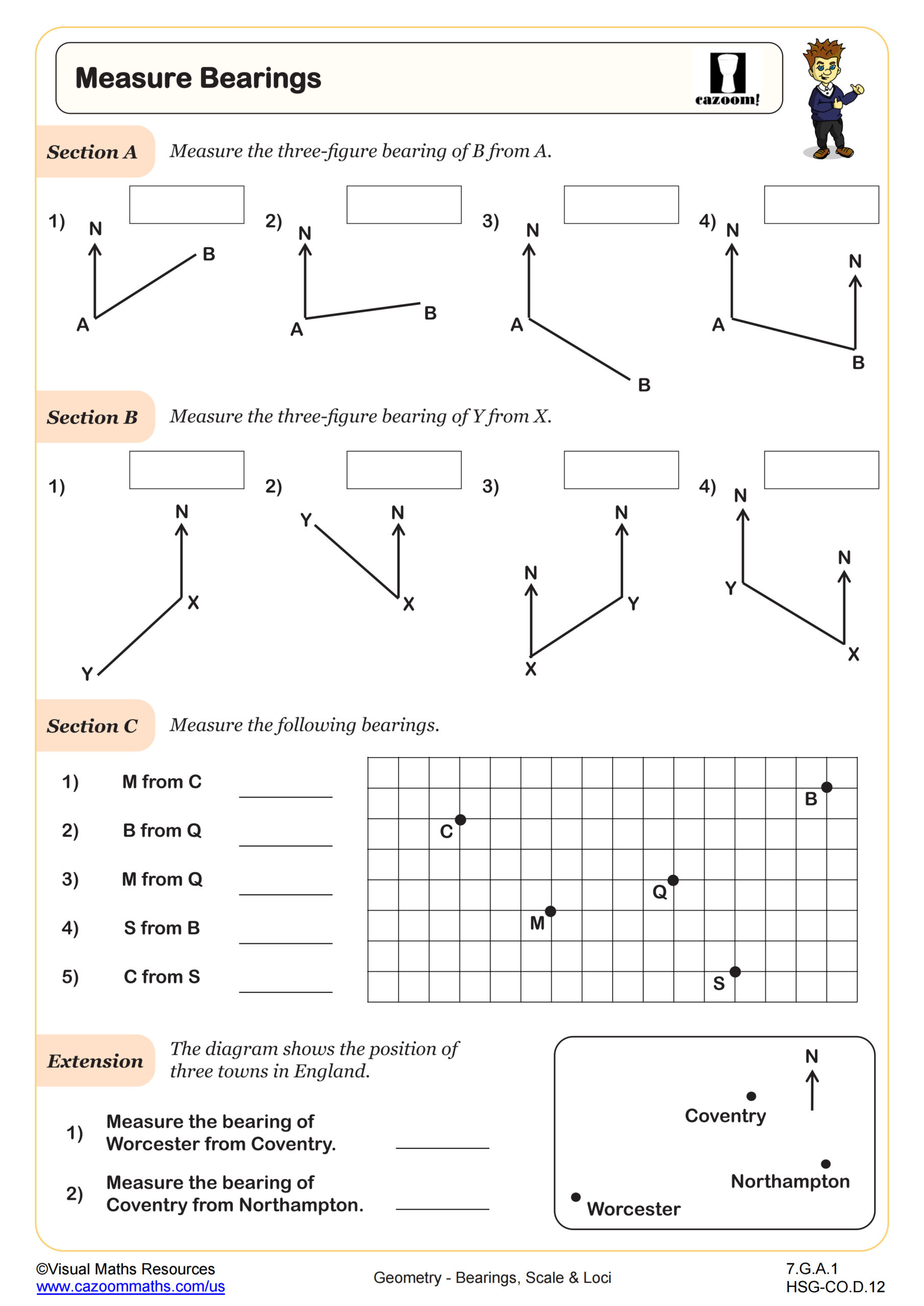
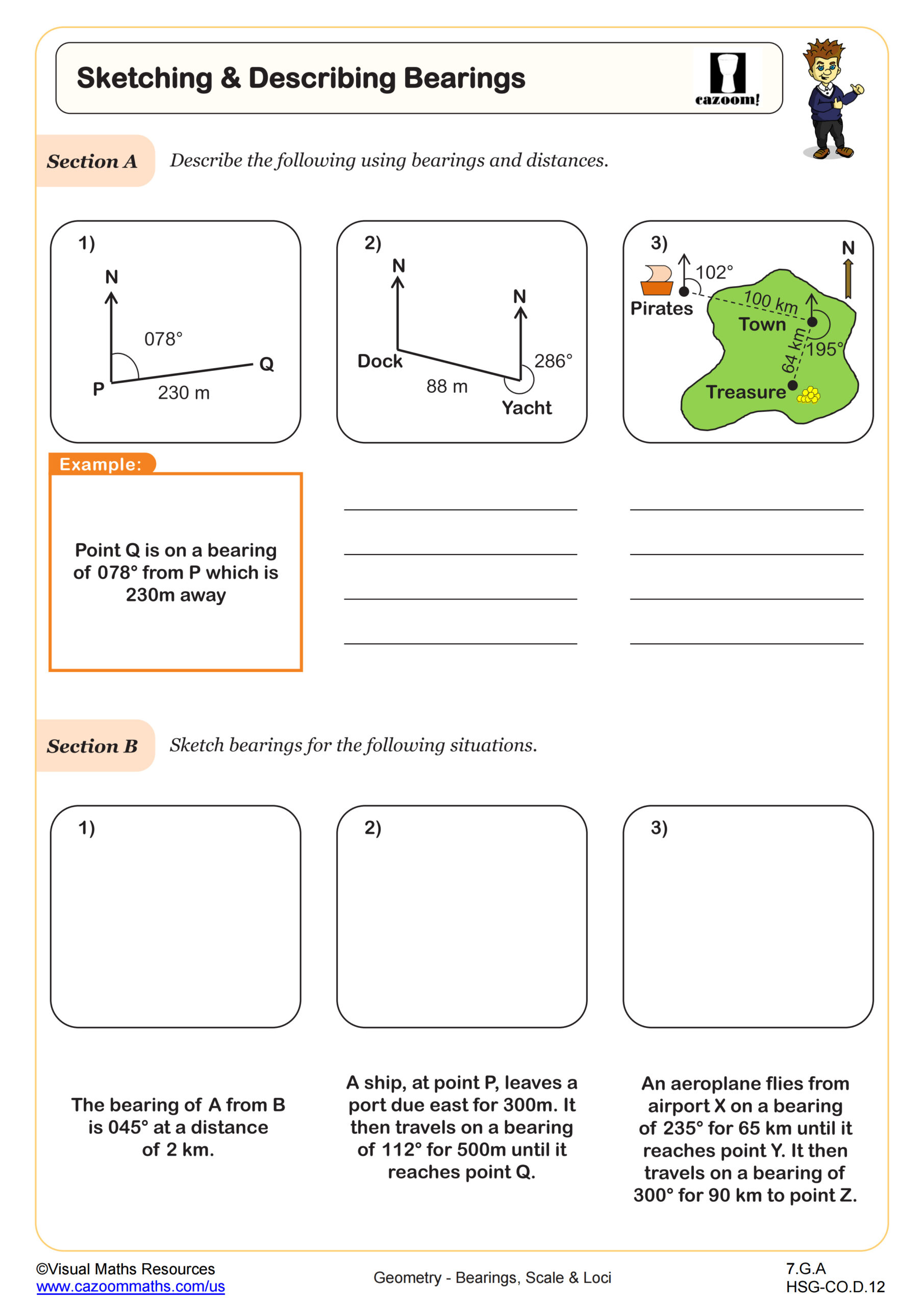
Bearings are three-figure angles measured clockwise from north, used to describe direction precisely in navigation, aviation, and surveying. In 7th grade, students learn to calculate and interpret bearings as part of middle school geometry standards, connecting angle measurement with real-world directional systems. This skill bridges earlier work with angles and protractors to more sophisticated applications in coordinate geometry and trigonometry.
Students frequently lose points on assessments by writing bearings as two-digit numbers like 45° instead of the required three-figure format 045°. Teachers notice that the breakthrough happens when students visualize themselves standing at a point, facing north, then turning clockwise to find the direction—this kinesthetic understanding prevents the common error of measuring angles from the wrong baseline or turning the wrong direction around the circle.
Which Grade Levels Cover Scale and Loci?
These worksheets specifically target 7th grade middle school students who are developing spatial reasoning and measurement skills required by geometry standards. At this level, students work with bearings, scale drawings, and basic loci construction as they transition from concrete arithmetic to more abstract geometric thinking.
The progression within 7th grade builds systematically: students first master calculating bearings from diagrams, then tackle bearing problems that require interpreting written clues without complete diagrams, and finally combine bearings with scale factor calculations in word problems. Loci construction appears after students demonstrate proficiency with compass and straightedge, as it requires both tool precision and understanding of geometric definitions like "equidistant from two points" or "constant distance from a line."
What Is Loci Construction and How Do Students Practice It?
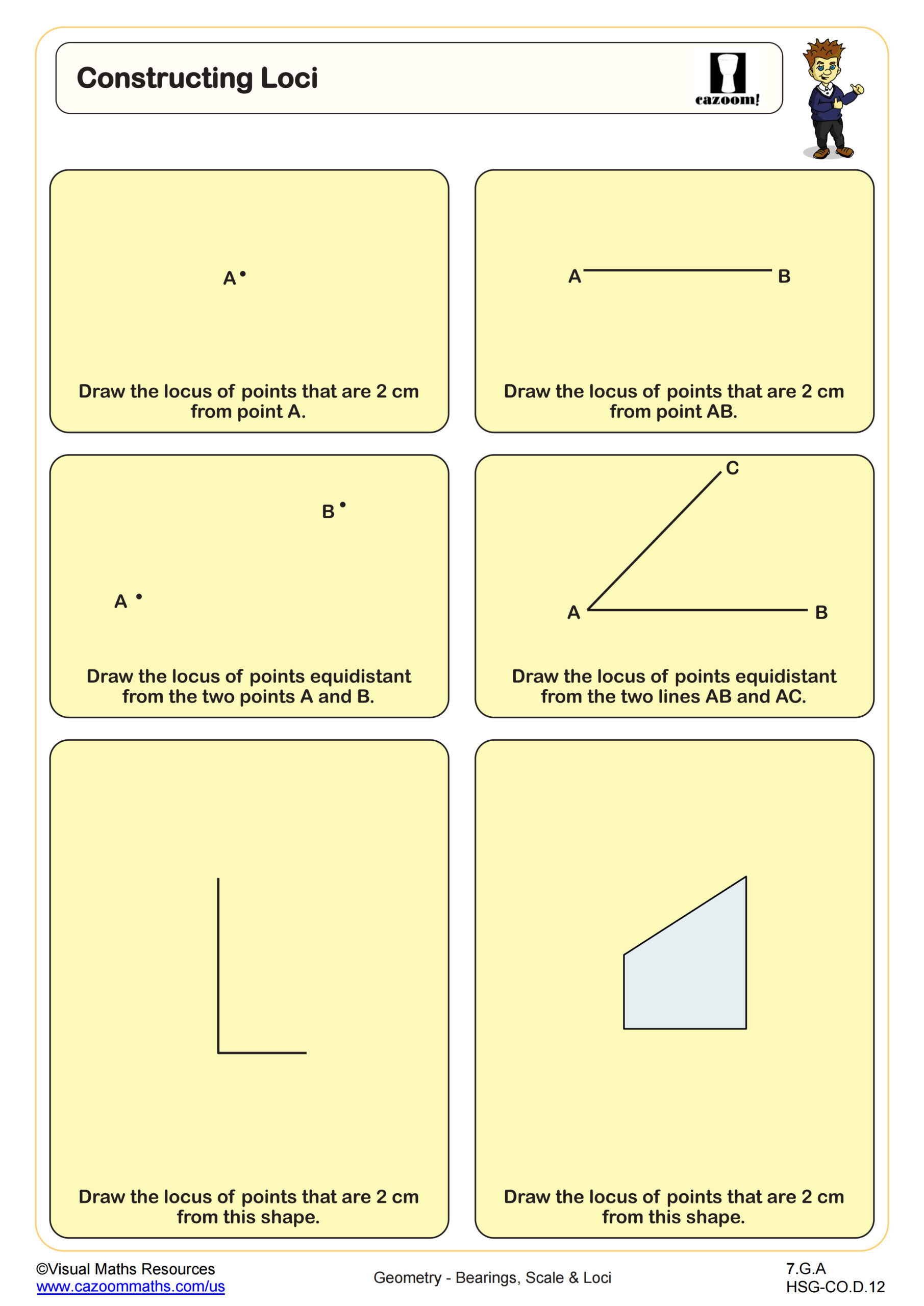
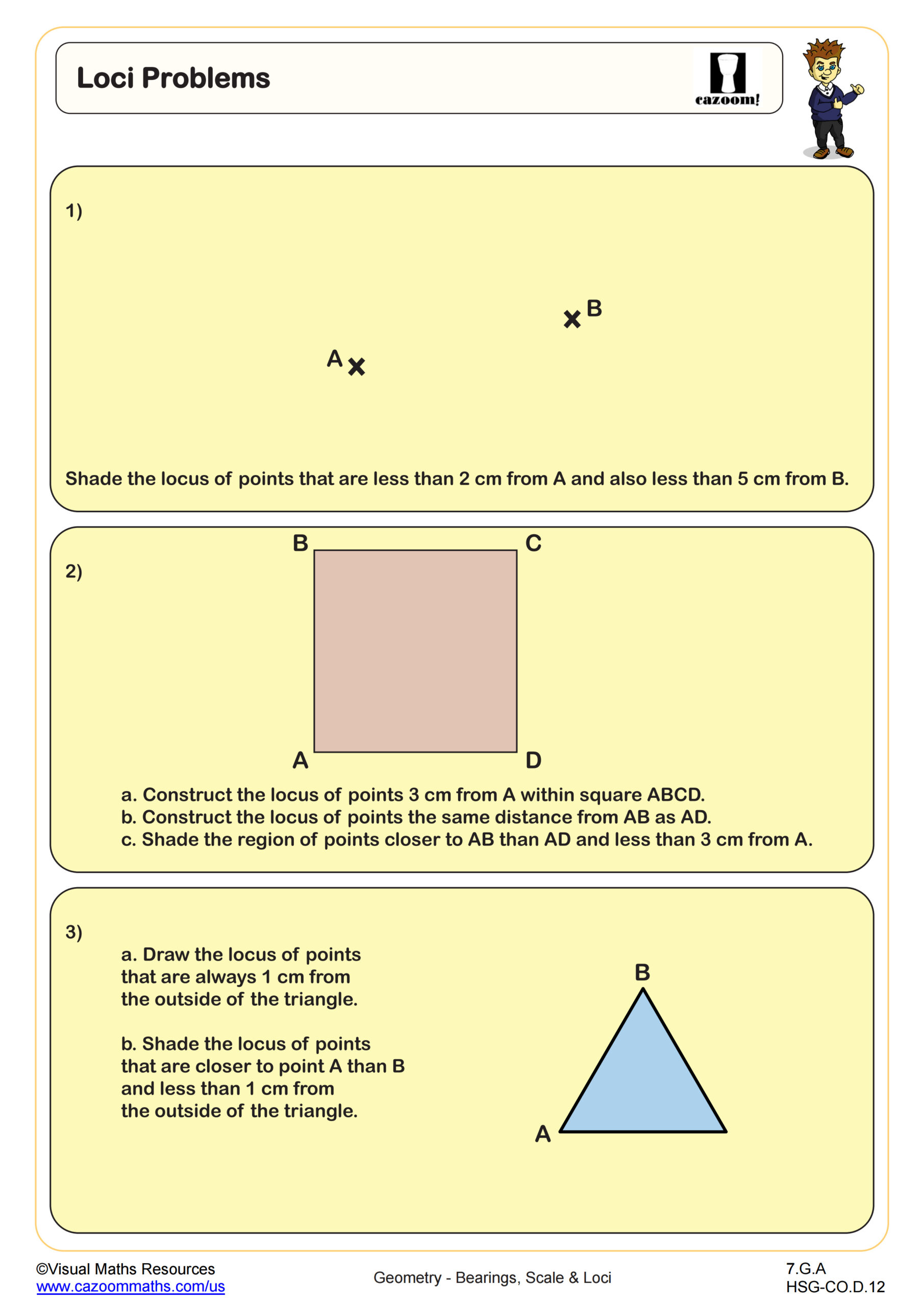
Loci construction involves creating the path or region of all points that satisfy specific geometric conditions, such as points equidistant from two given points (the perpendicular bisector) or points at a fixed distance from a line (parallel lines). Students use compass and straightedge to construct these paths accurately, developing both geometric reasoning and technical drawing skills. The worksheets guide students through identifying the geometric relationship described, then executing the construction with precision.
Architects and engineers use loci principles when designing spaces with specific distance requirements, like determining where to place a cell tower so it's equidistant from three towns, or mapping areas within a certain distance of a hazard zone. Urban planners apply these same concepts when establishing building setbacks from property lines or determining coverage areas for emergency services, making loci construction foundational for careers in STEM fields that require spatial planning and geometric constraint satisfaction.
How Do These Worksheets Help Students Master Scale and Loci Concepts?
The worksheets progress from straightforward bearing calculations on clear diagrams to more complex problems requiring students to interpret clues and construct their own diagrams. This scaffolding helps students develop both computational accuracy and visual-spatial reasoning. The answer keys show complete constructions and calculation steps, allowing students to identify exactly where errors occur in their compass work or bearing measurements rather than just seeing a final answer.
Teachers use these worksheets for differentiated instruction, assigning the basic bearing calculations to students who need foundational practice while challenging advanced students with the clue-based problems that require diagram interpretation. The loci construction sheets work well for partner activities where one student describes the geometric condition while the other constructs it, building communication skills alongside technical precision. The word problems combining bearings and scale make effective homework assignments since the answer keys help students self-check their multi-step reasoning.