7th Grade Solving Equations Worksheets
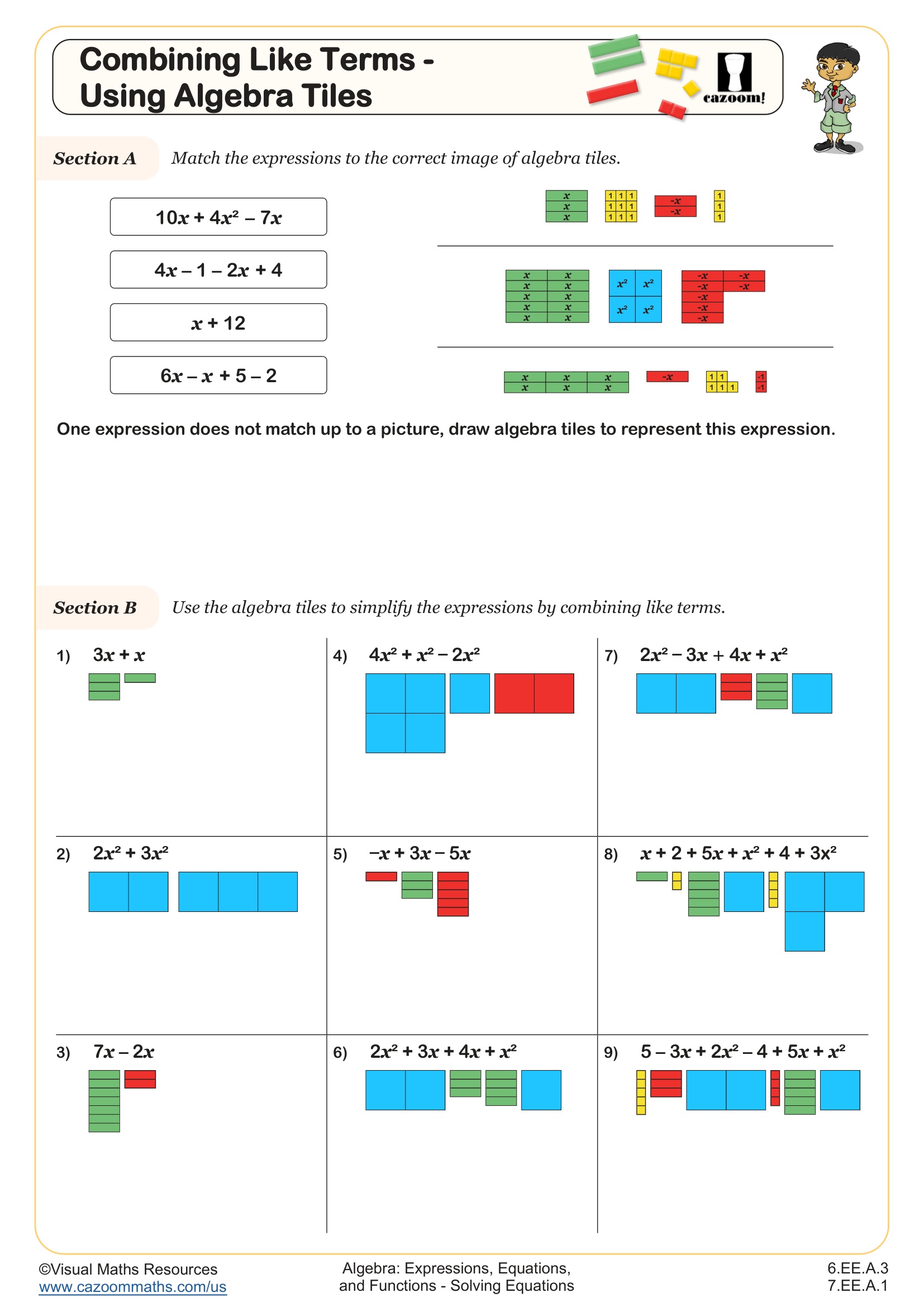
Combining Like Terms - Using Algebra Tiles
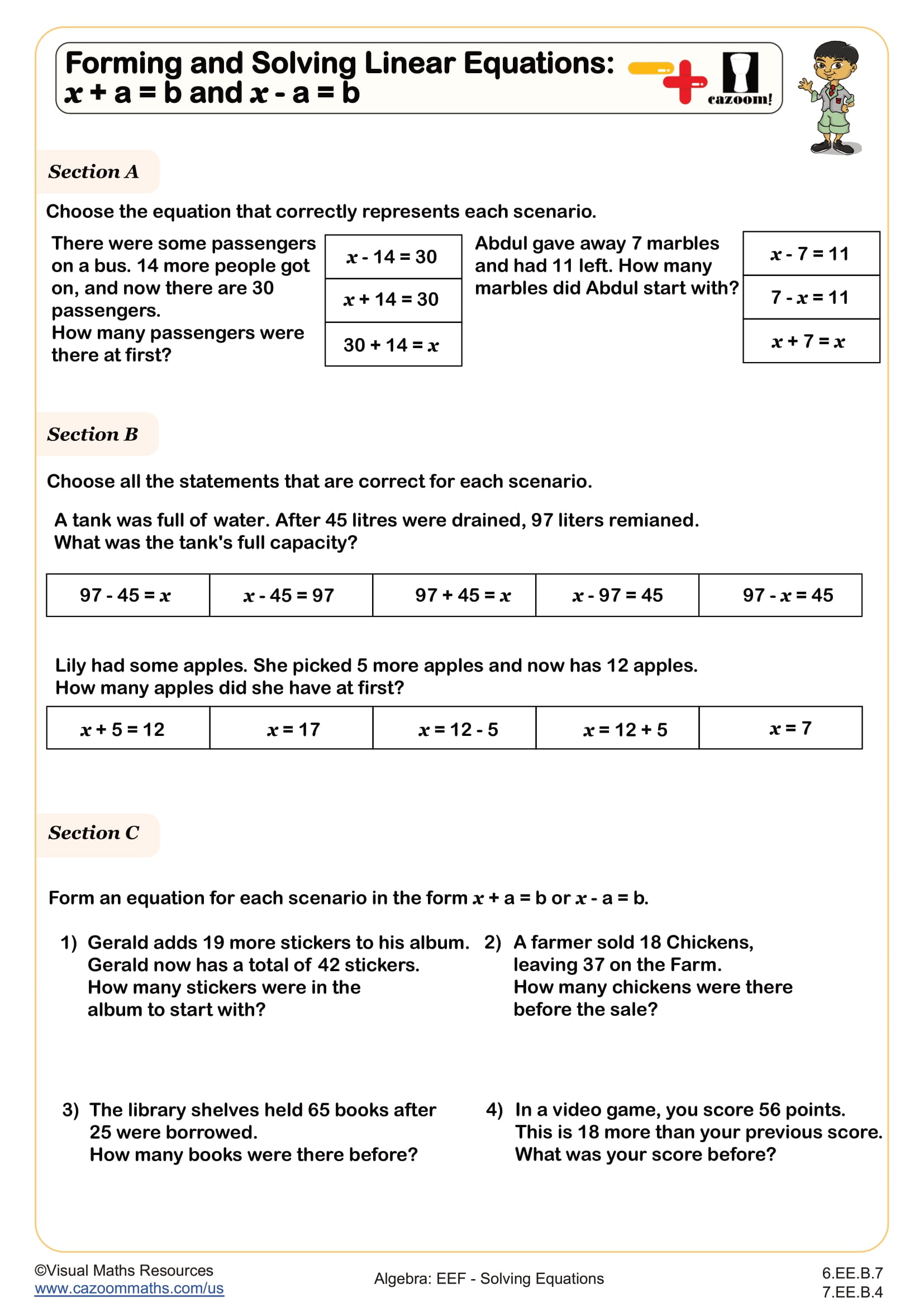
Forming and Solving Linear Equations: 𝑥 + a = b and 𝑥 - a = b
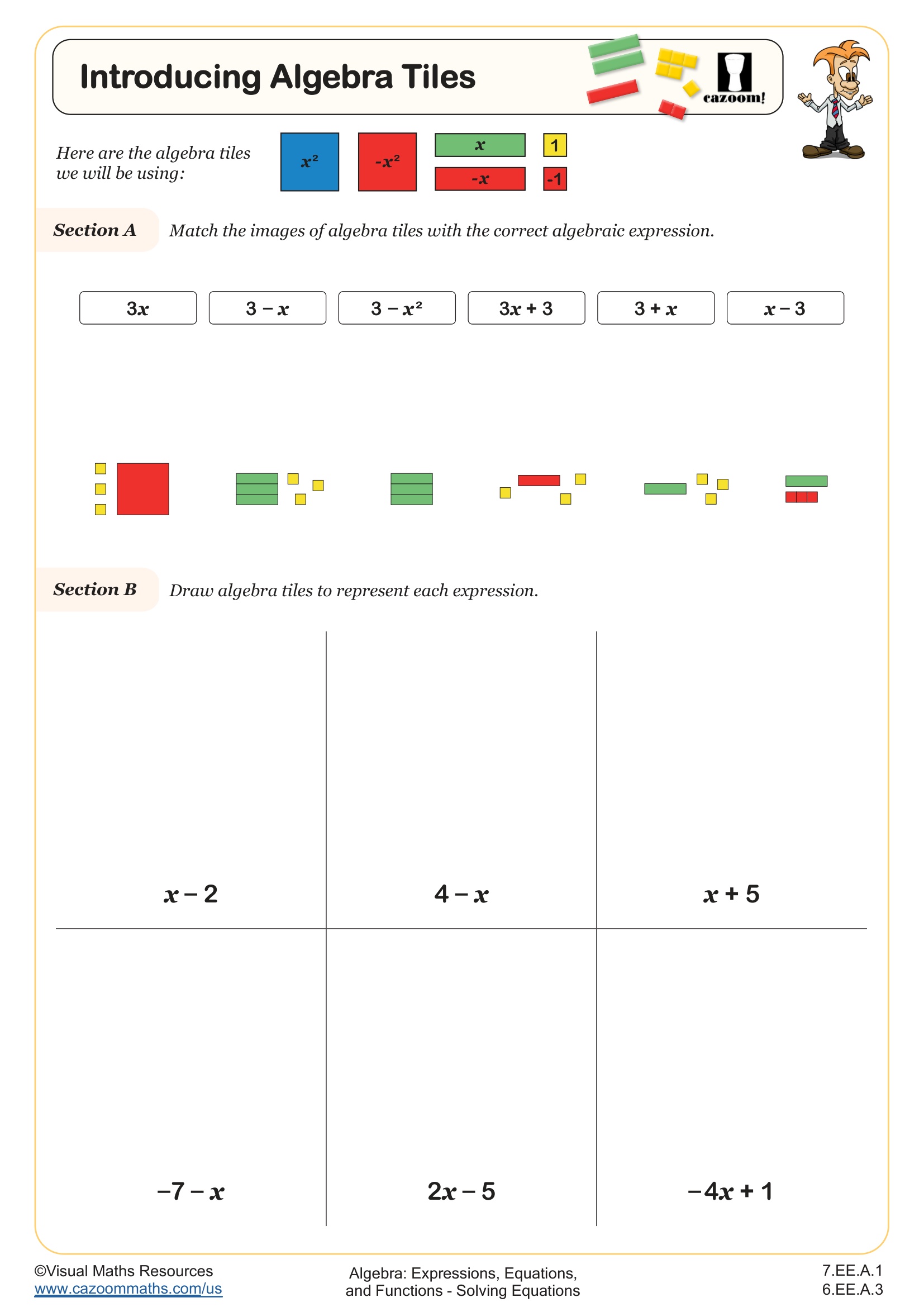
Introducing Algebra Tiles
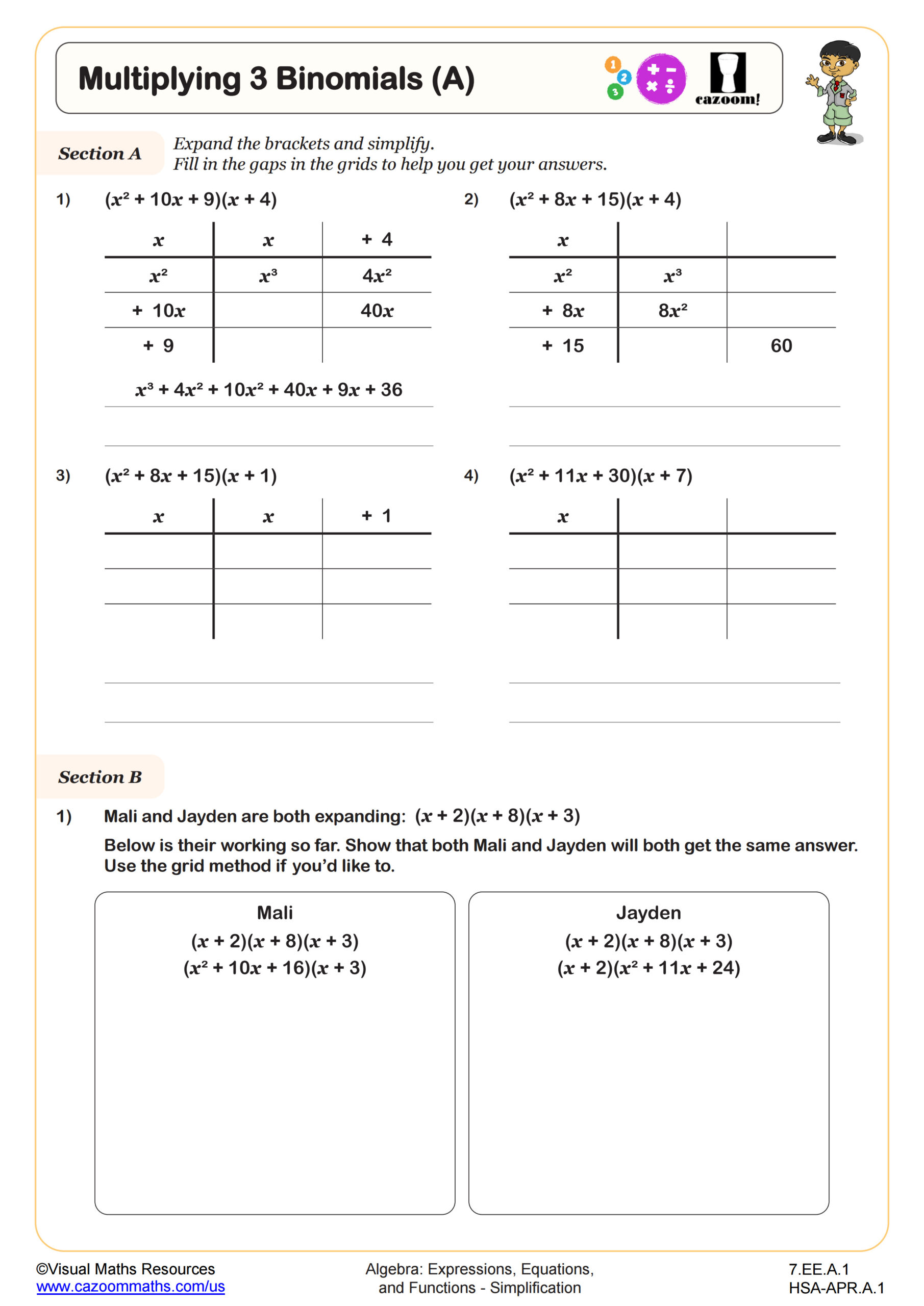
Multiplying 3 Binomials (A)
Multiplying 3 Binomials (B)
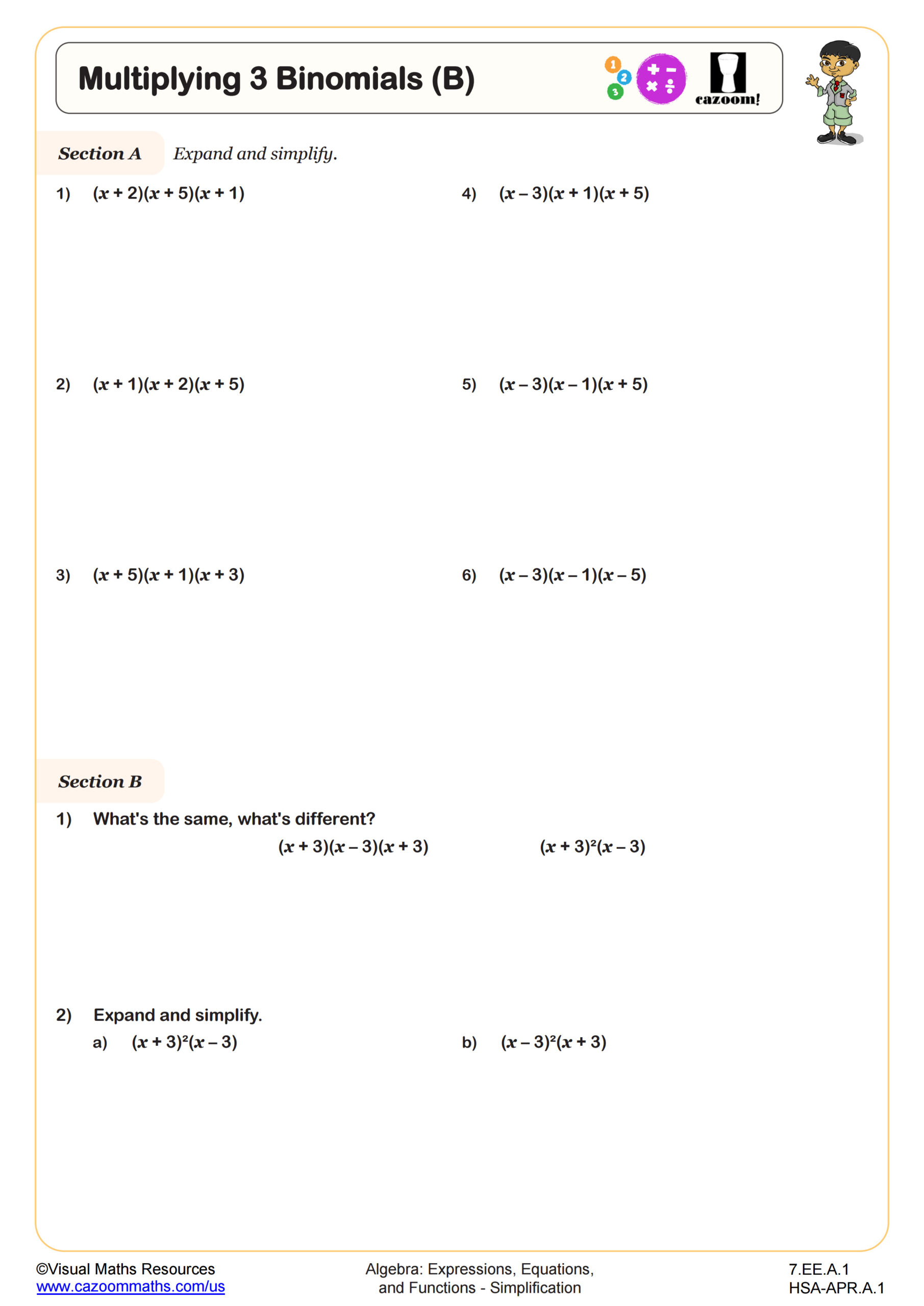
Multiplying Binomials
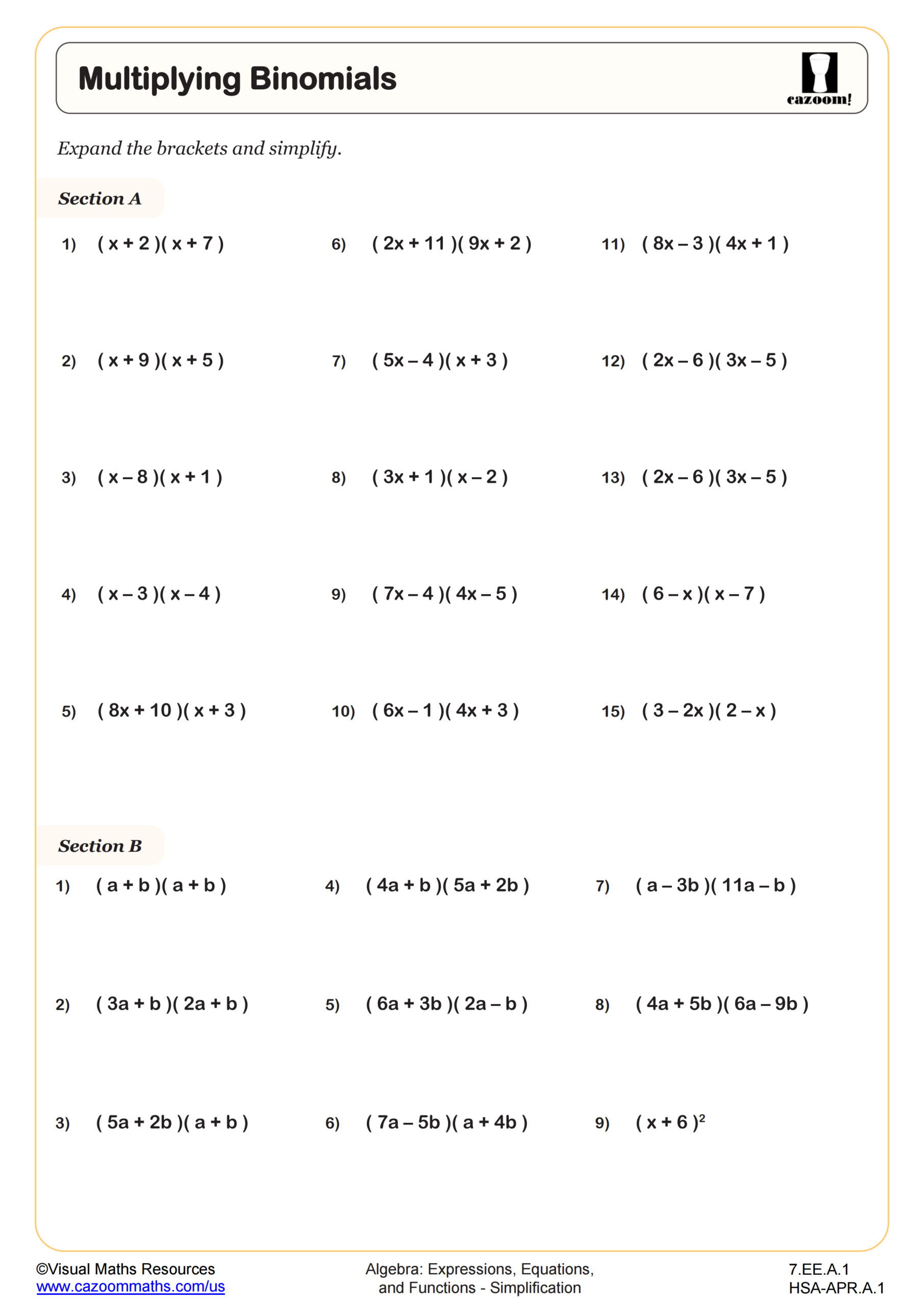
Multiplying Binomials using the Grid Method
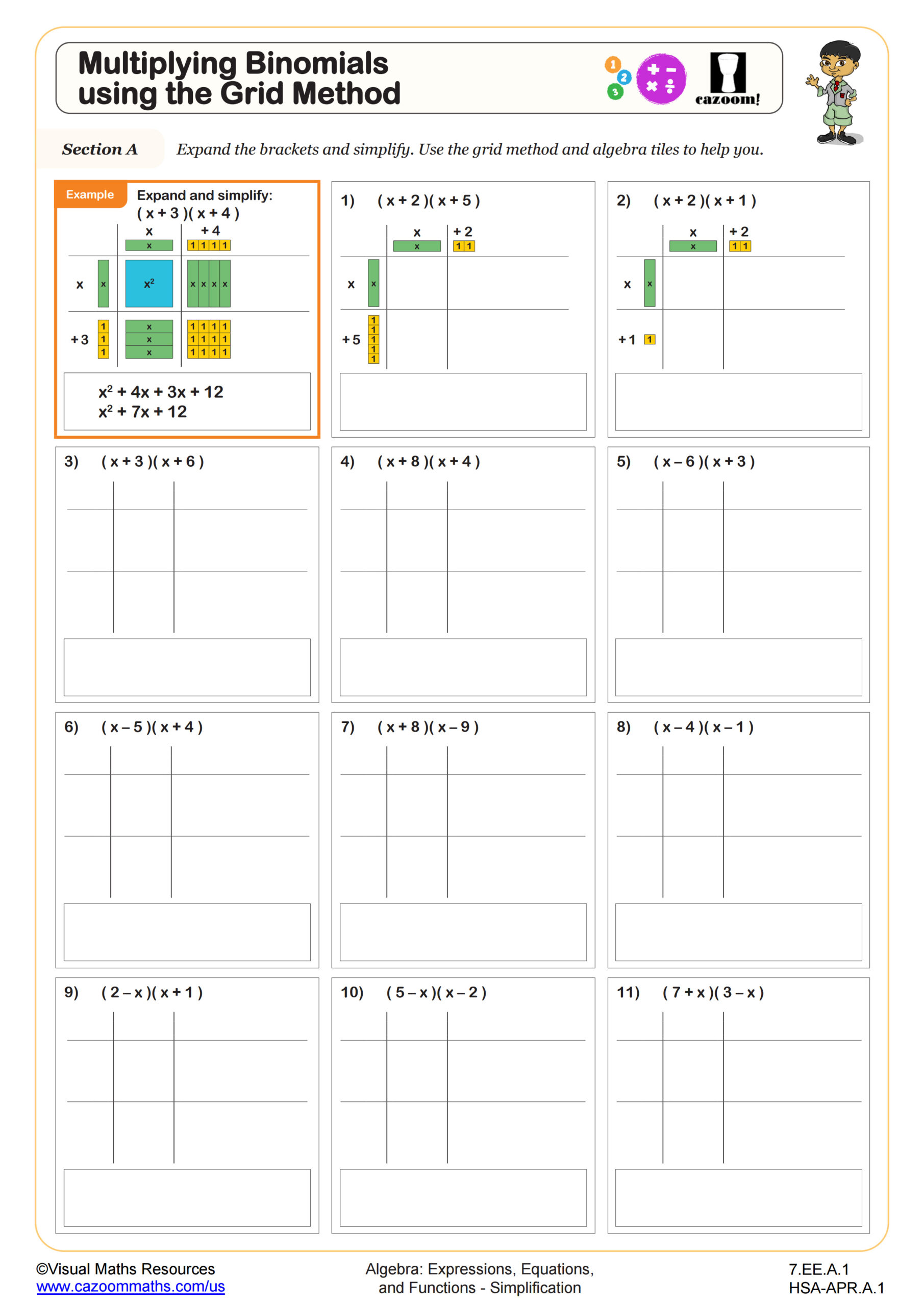
Simplify - Using Algebra Tiles
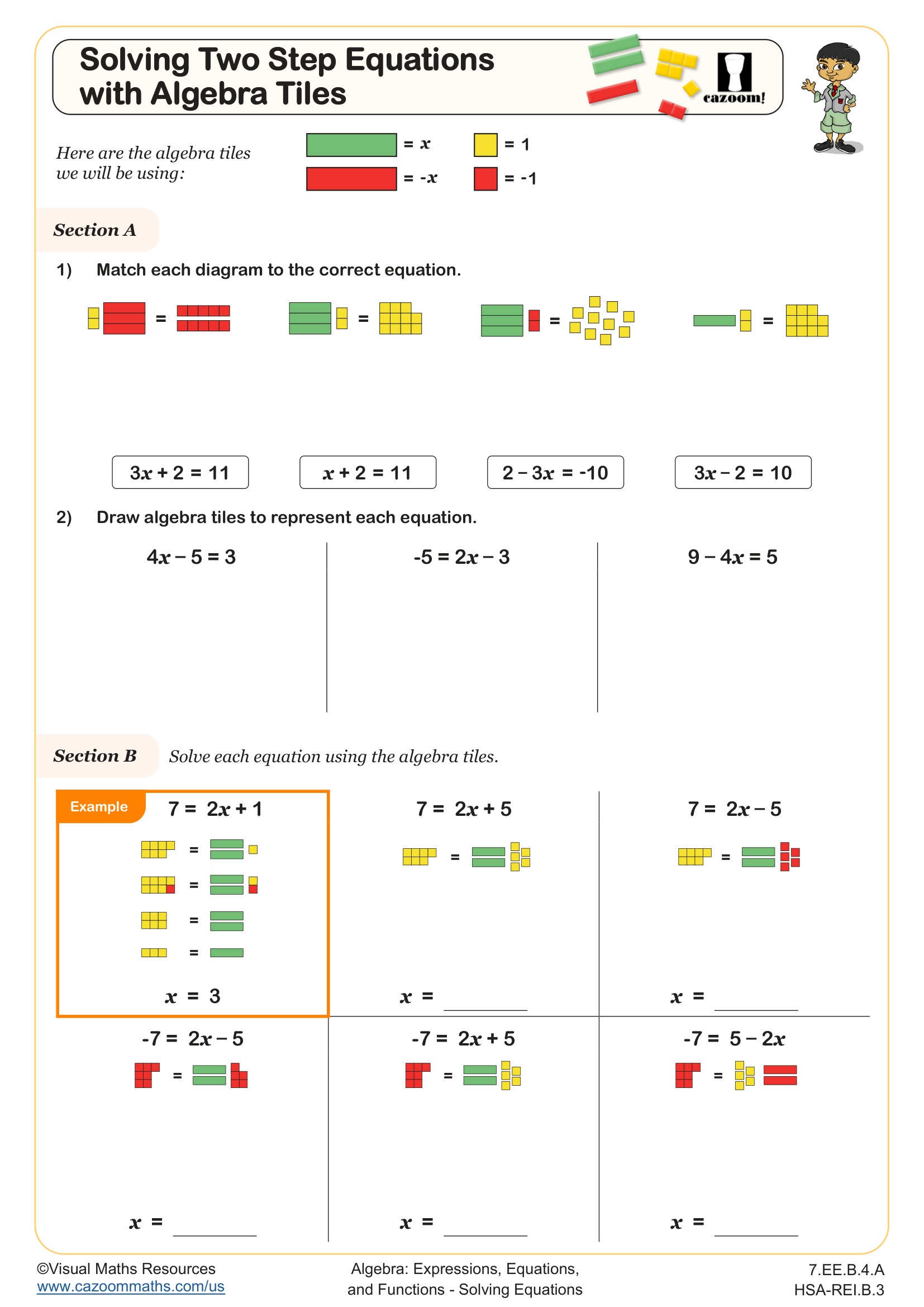
Solving Two Step Equations with Algebra Tiles
All worksheets are created by the team of experienced teachers at Cazoom Math.
What are the most common mistakes students make when solving equations?
Students frequently lose track of negative signs when distributing or combining like terms, leading to incorrect solutions. Another common error involves performing operations on only one side of the equation instead of maintaining balance by applying the same operation to both sides. Many 7th graders also struggle with fraction coefficients, often multiplying incorrectly or forgetting to clear denominators before solving.
Teachers notice that students lose points on standardized tests when they skip the verification step—substituting their solution back into the original equation to check their work. Building this habit early prevents careless errors from going unnoticed. Students who consistently check their solutions develop stronger number sense and catch sign errors, calculation mistakes, or algebraic missteps before submitting their work.
Which grade levels use solving equations worksheets?
These solving equations worksheets target 7th grade students in middle school, aligning with Common Core standards that introduce formal algebraic equation solving. At this level, students move beyond arithmetic into abstract thinking, using variables to represent unknown quantities and applying systematic strategies to isolate those variables.
The worksheets progress in complexity throughout 7th grade, starting with straightforward two-step equations and advancing to more challenging problems involving distribution, combining like terms on both sides, and equations with variables on both sides. By the end of 7th grade, students encounter the quadratic formula and compound interest applications, which prepare them for the more advanced algebraic concepts they'll face in 8th grade algebra and high school mathematics courses.
How do function machines help students solve two-step equations?
Function machine templates visualize the operations applied to a variable, showing students the step-by-step process in a concrete way. The input goes through a series of operations (like multiply by 3, then add 5), and students work backward from the output to find the original input. This representation helps students understand that solving equations means reversing operations in the opposite order they were applied—a breakthrough concept for many middle schoolers.
Engineers and computer programmers use this same input-output thinking when designing algorithms and troubleshooting code. When a program produces an unexpected result, programmers trace backward through the operations to identify where the error occurred—exactly the same logical reasoning students develop when using function machines to solve equations. This computational thinking skill extends far beyond math class into careers in technology, data science, and systems analysis.
How can teachers use these solving equations worksheets effectively in the classroom?
The worksheets scaffold learning by presenting problems in order of increasing difficulty, allowing students to build confidence with simpler equations before tackling more complex scenarios. Worked examples on many sheets provide models that students can reference, and the algebra tile activities offer hands-on manipulation that makes abstract concepts tangible. Complete answer keys enable students to self-check during independent practice or allow for quick peer review sessions.
Teachers use these worksheets for differentiated instruction—assigning specific subtopics based on individual student needs identified through formative assessment. They work well as warm-up activities to reinforce prior learning, as homework to extend classroom instruction, or as intervention materials for small-group instruction. Many teachers pair students strategically, having stronger students explain their problem-solving process to peers, which deepens understanding for both students through mathematical discourse.