7th Grade Volume and Surface Area Worksheets
All worksheets are created by the team of experienced teachers at Cazoom Math.
What concepts do grade 7 volume worksheets typically cover?
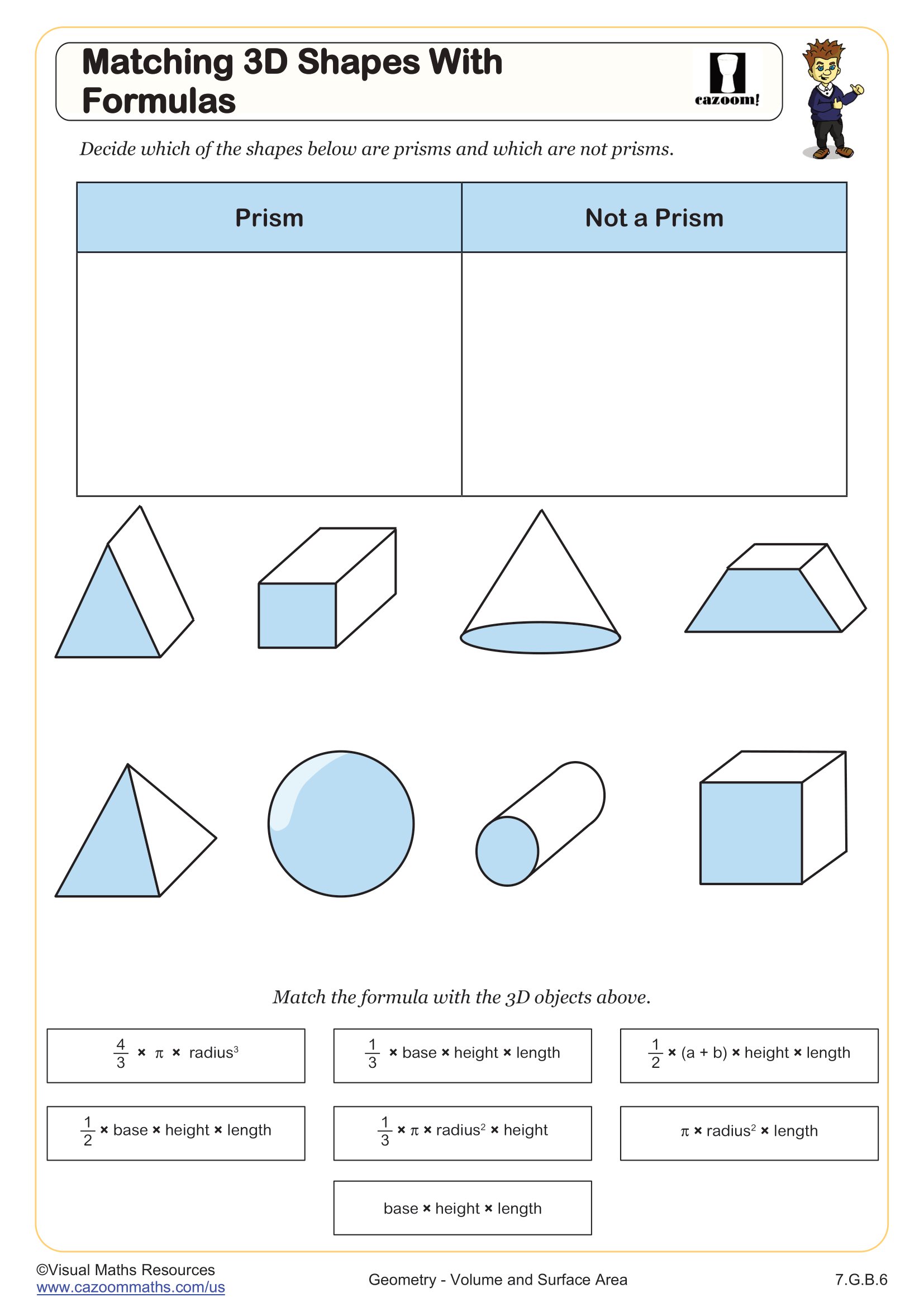
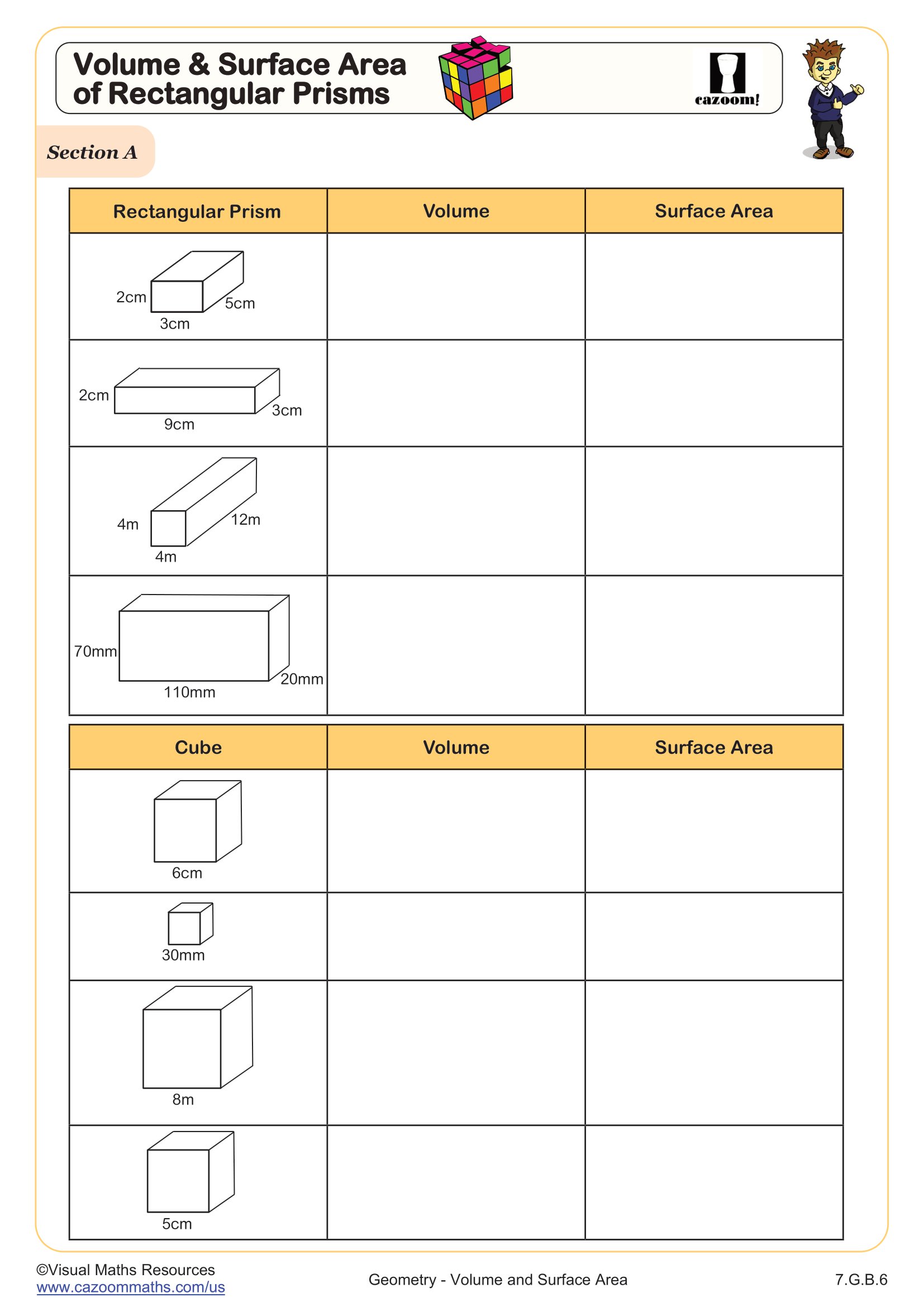
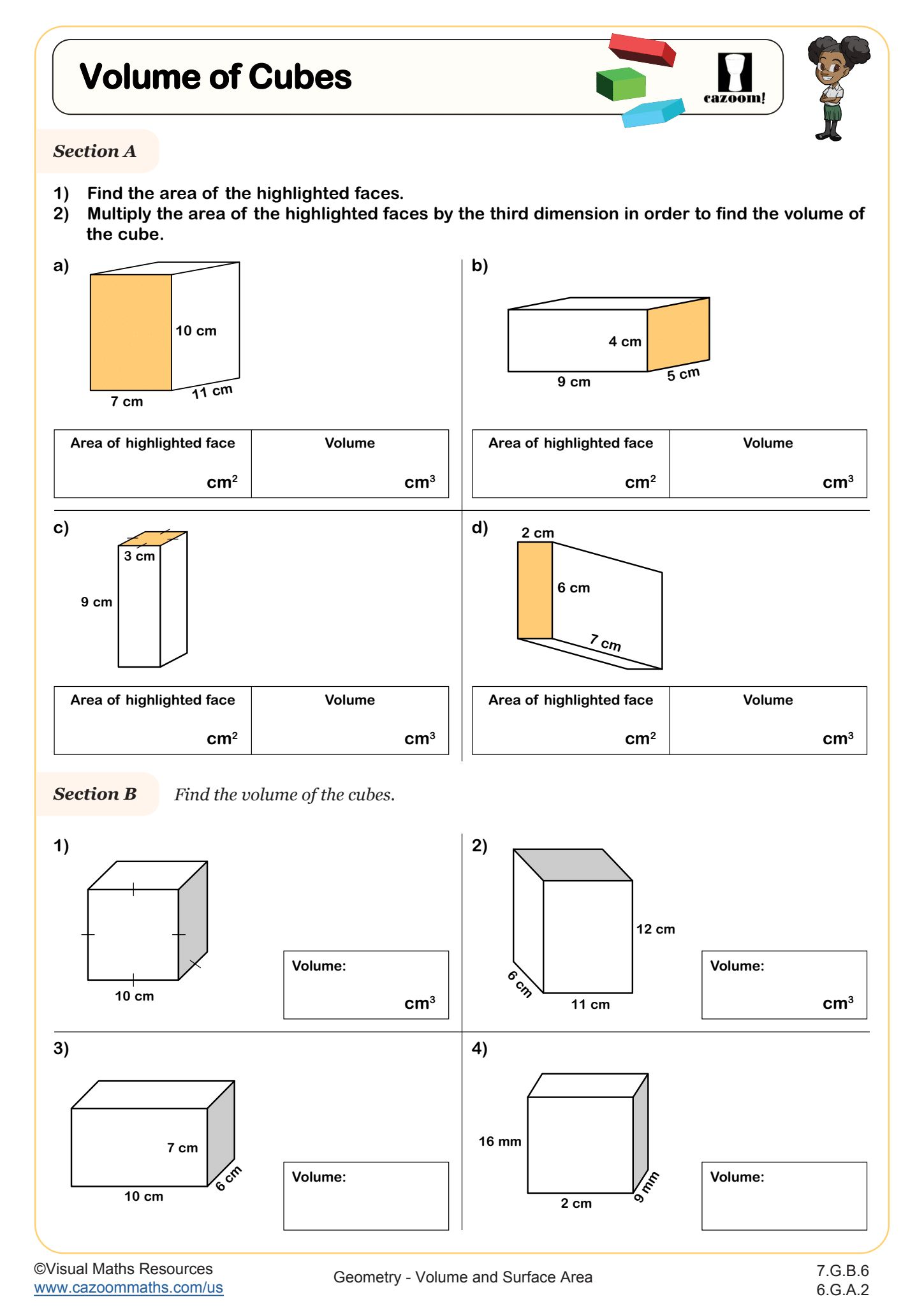
Volume worksheets grade 7 focus on calculating the volume of rectangular prisms, triangular prisms, cylinders, and composite figures using appropriate formulas. Students work with both whole numbers and decimals while applying V = lwh for rectangular prisms, V = Bh for triangular prisms, and V = πr²h for cylinders, aligning with Common Core standards 7.G.B.6.
Teachers notice that students often forget to include cubic units in their final answers or mix up the base area calculation for triangular prisms. The worksheets include problems where students must identify which measurements represent length, width, height, or radius, helping them organize their work systematically before applying volume formulas.
How do 7th grade volume and surface area concepts build on earlier learning?
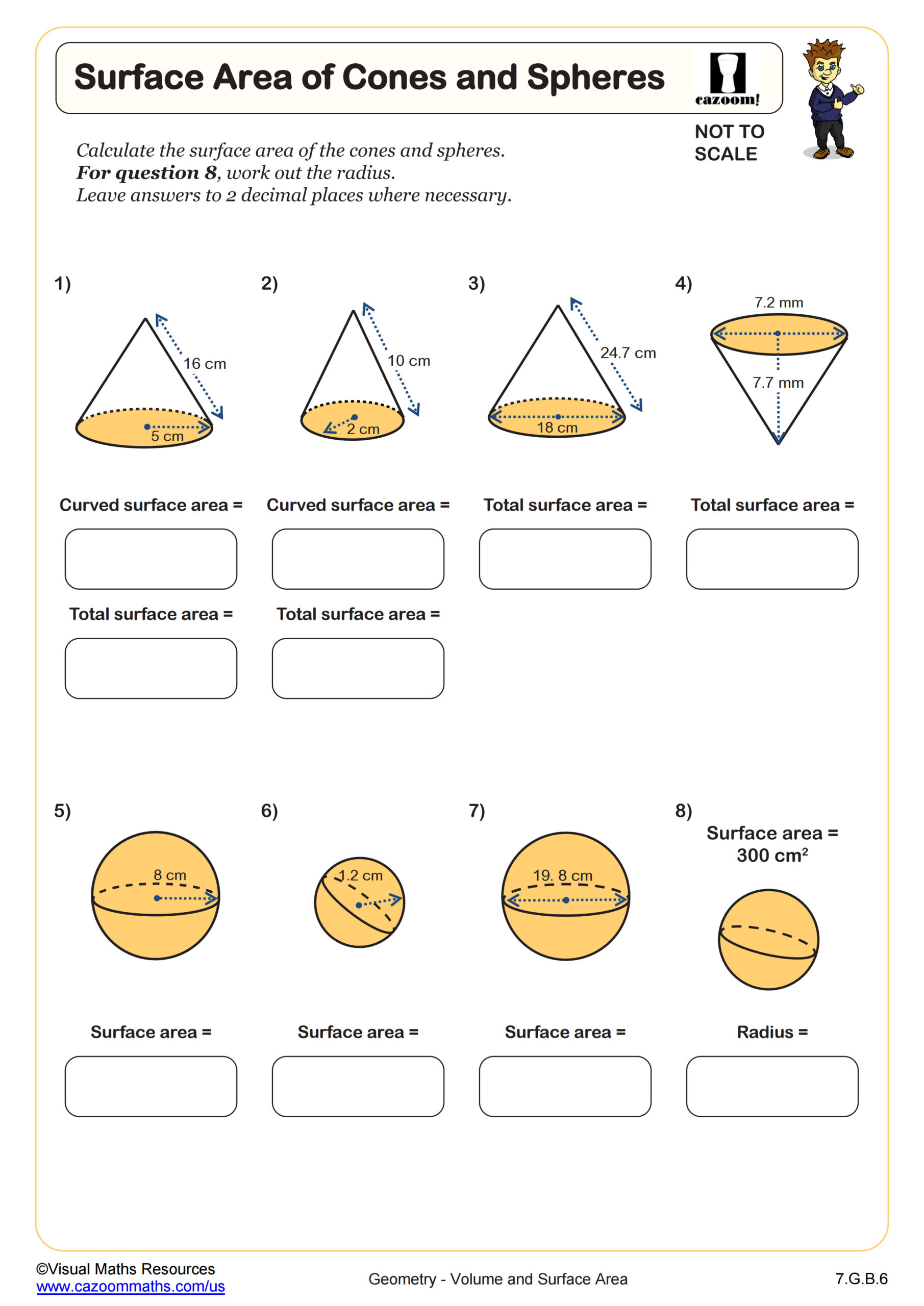
Seventh grade students extend their understanding from finding areas of two-dimensional shapes in 6th grade to calculating surface area and volume of three-dimensional figures. This progression prepares them for more complex geometry topics in 8th grade, including working with spheres and cones.
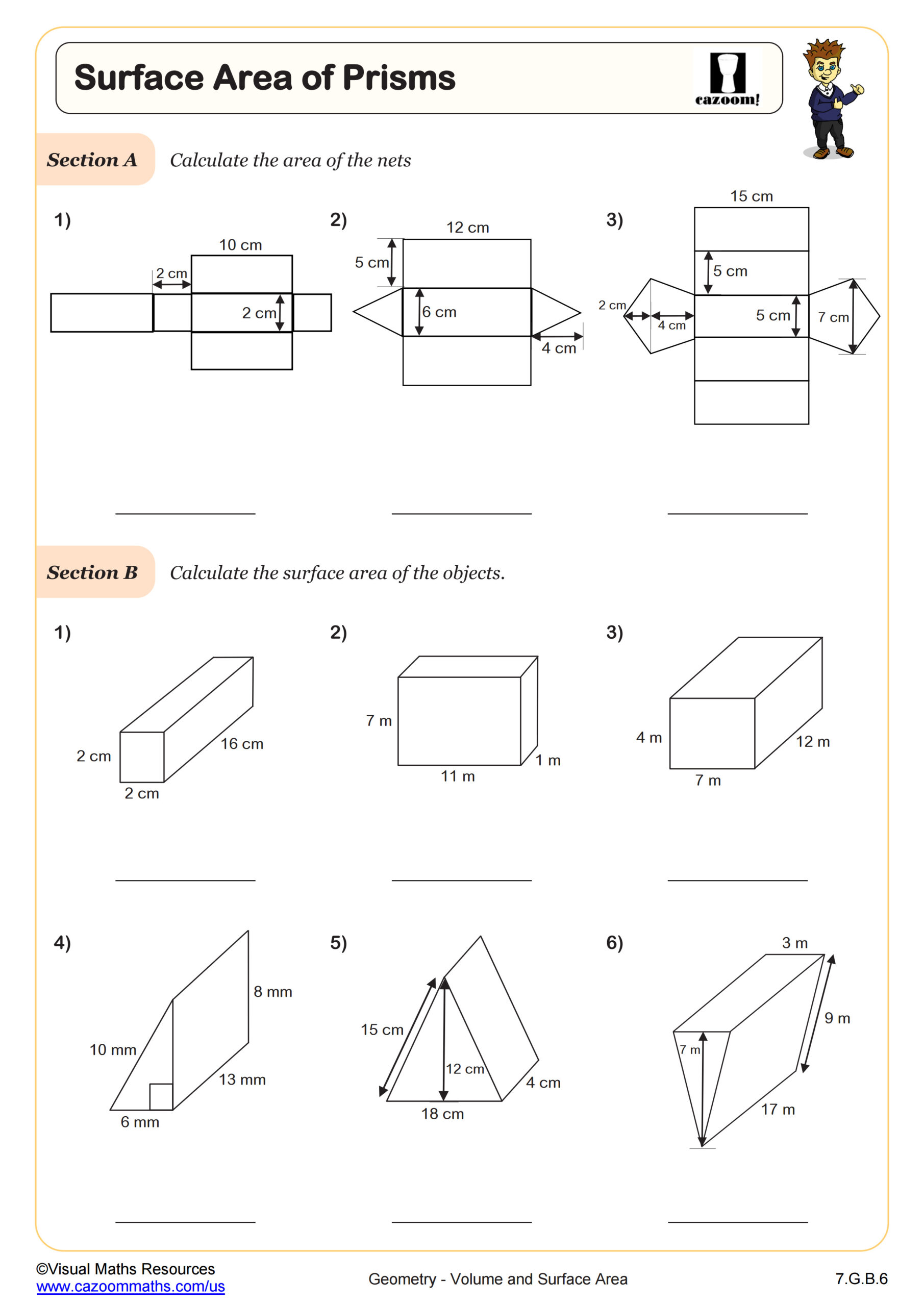
Many teachers observe that students who struggled with area calculations in previous grades often carry those difficulties into surface area problems. The worksheets provide scaffolded practice that connects two-dimensional area skills to three-dimensional surface area, helping students visualize how flat shapes combine to form solid figures.
Why do students often confuse surface area and volume calculations?
Students frequently mix up surface area and volume because both involve three-dimensional figures, but surface area measures the total area of all faces while volume measures the space inside. Teachers report that students sometimes use area formulas when they need volume formulas, or forget that surface area uses square units while volume uses cubic units.
7th grade surface area worksheet problems help students distinguish between these concepts by providing visual nets alongside three-dimensional figures. This approach allows students to see how surface area involves adding up individual face areas, while volume involves multiplying dimensions to find interior space.
How can teachers use these worksheets most effectively in their math classes?
Teachers find success by starting with concrete manipulatives or visual models before moving to worksheet practice. Students benefit from building rectangular prisms with unit cubes or examining real objects like cereal boxes to understand the relationship between dimensions and volume.
The answer keys allow teachers to quickly identify common error patterns during formative assessment. Many educators use selected problems as warm-up activities or exit tickets, focusing on one type of figure per lesson rather than mixing all shapes initially. This targeted approach helps students master each formula before tackling composite figures.