8th Grade Functions Worksheets
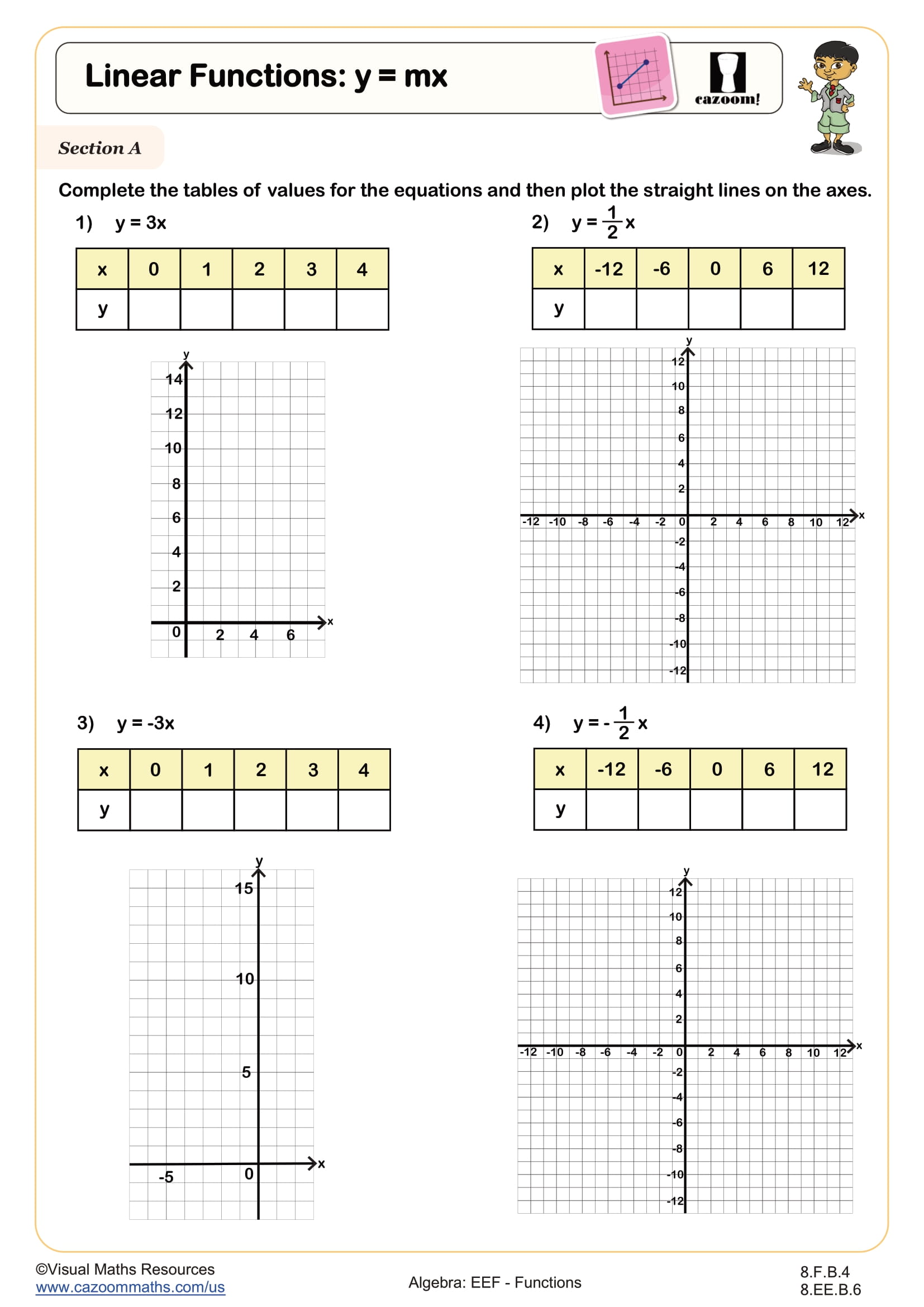
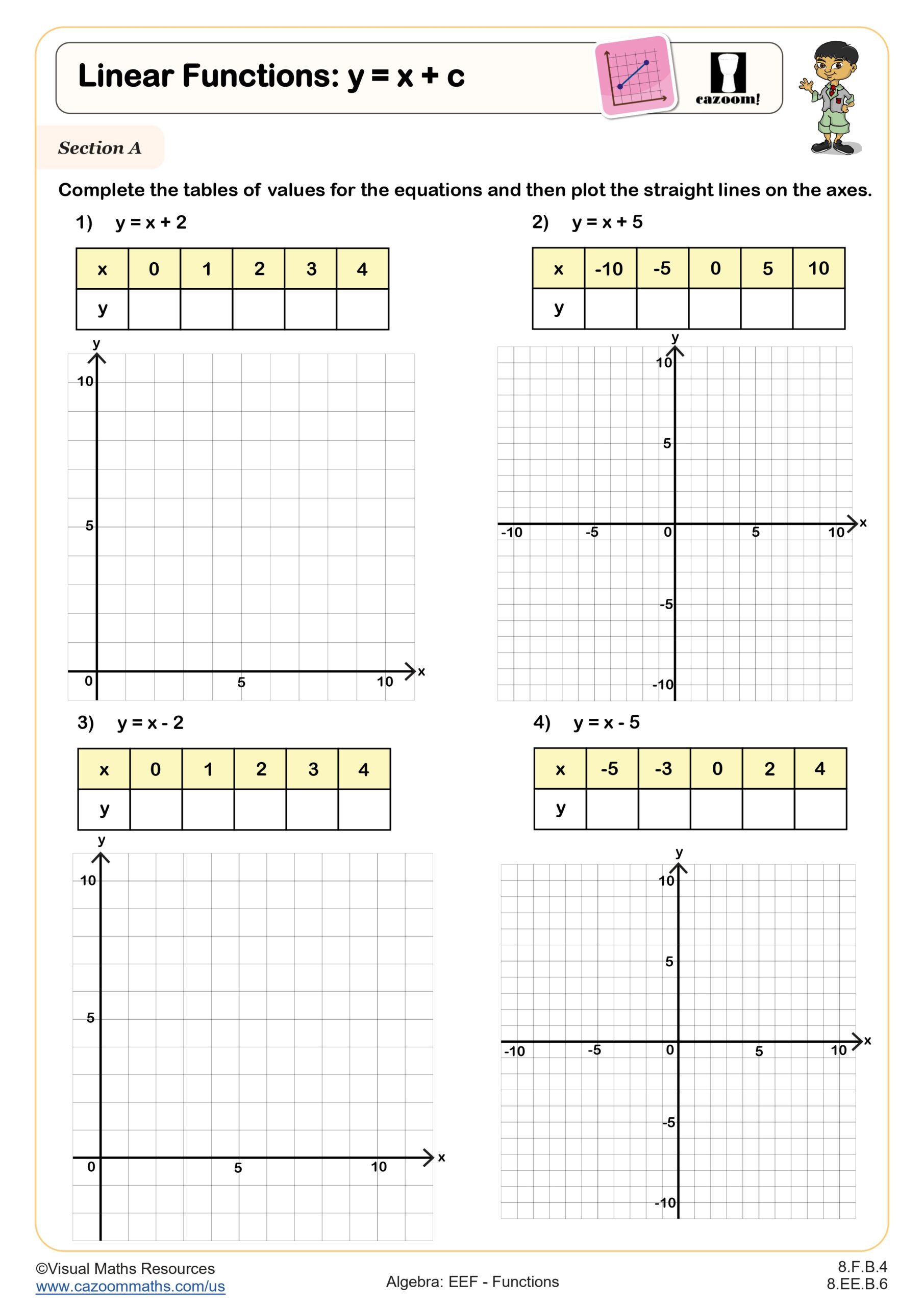
All worksheets are created by the team of experienced teachers at Cazoom Math.
What Are Functions and Why Do 8th Graders Study Them?
Functions represent relationships where each input has exactly one output, forming the foundation for advanced algebra and higher mathematics. In 8th grade, students formalize their understanding of linear relationships by working with function notation f(x), analyzing different forms of linear functions, and connecting algebraic and graphical representations. This aligns with Common Core Standard 8.F.A, which requires students to define, evaluate, and compare functions.
Students often lose points on assessments when they confuse the notation f(3) with multiplication, writing f times 3 instead of recognizing it means "the output when the input is 3." Worksheets that repeatedly ask students to evaluate functions at specific values help them overcome this notation barrier and build fluency with function language that appears throughout high school mathematics.
Which Grade Levels Use Functions Worksheets?
These functions worksheets target 8th grade students in middle school, addressing the formal introduction of function concepts required at this level. While students encounter patterns and linear relationships in earlier grades, 8th grade marks when they begin using precise function notation and analyzing functions as mathematical objects rather than just equations to solve.
The difficulty progression within 8th grade moves from simple linear functions with positive integer slopes and intercepts toward composite functions that require students to evaluate one function and use that output as the input for another. Students who master evaluating basic linear functions like f(x) = 2x + 3 typically struggle initially with composite functions like f(g(x)), where they must work from the inside out—a skill that becomes essential in Algebra 2 and Precalculus.
What Are Composite Functions and How Do Students Learn Them?
Composite functions combine two functions by using the output of one function as the input of another, written as f(g(x)) or (f ∘ g)(x). Students evaluate these by first finding g(x), then substituting that result into function f. This requires careful attention to order of operations and the ability to track values through multiple steps—many students make the connection between composite functions and nested operations once they see concrete numerical examples rather than just variables.
Composite functions appear throughout STEM fields, particularly in computer programming where nested functions process data through multiple transformations. Temperature conversion provides an accessible example: converting Fahrenheit to Kelvin requires first converting to Celsius, then to Kelvin—a real-world composite function. Engineers use composite functions when designing systems where one component's output becomes another's input, making this middle school concept foundational for technical problem-solving.
How Do These Worksheets Help Students Master Functions?
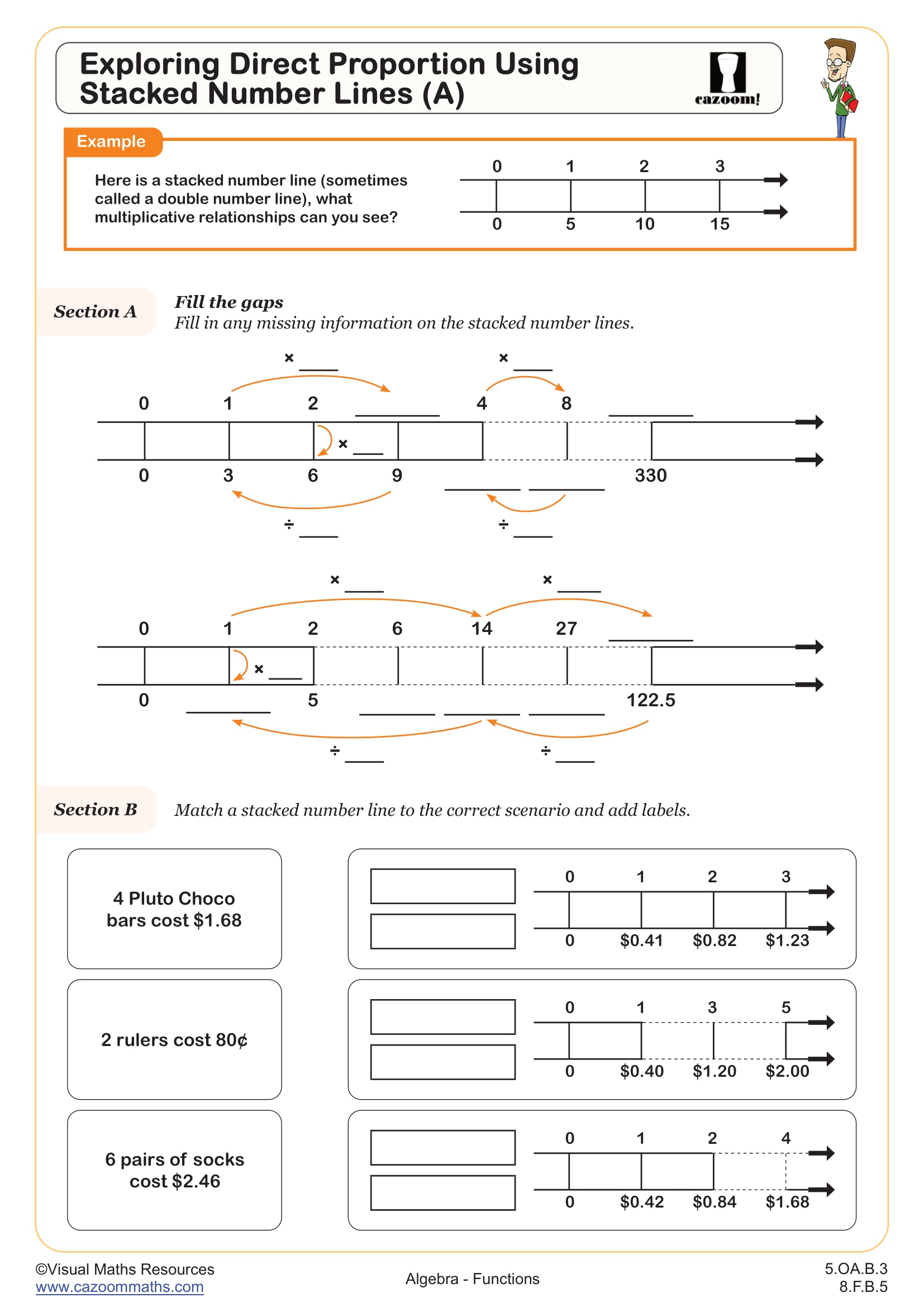
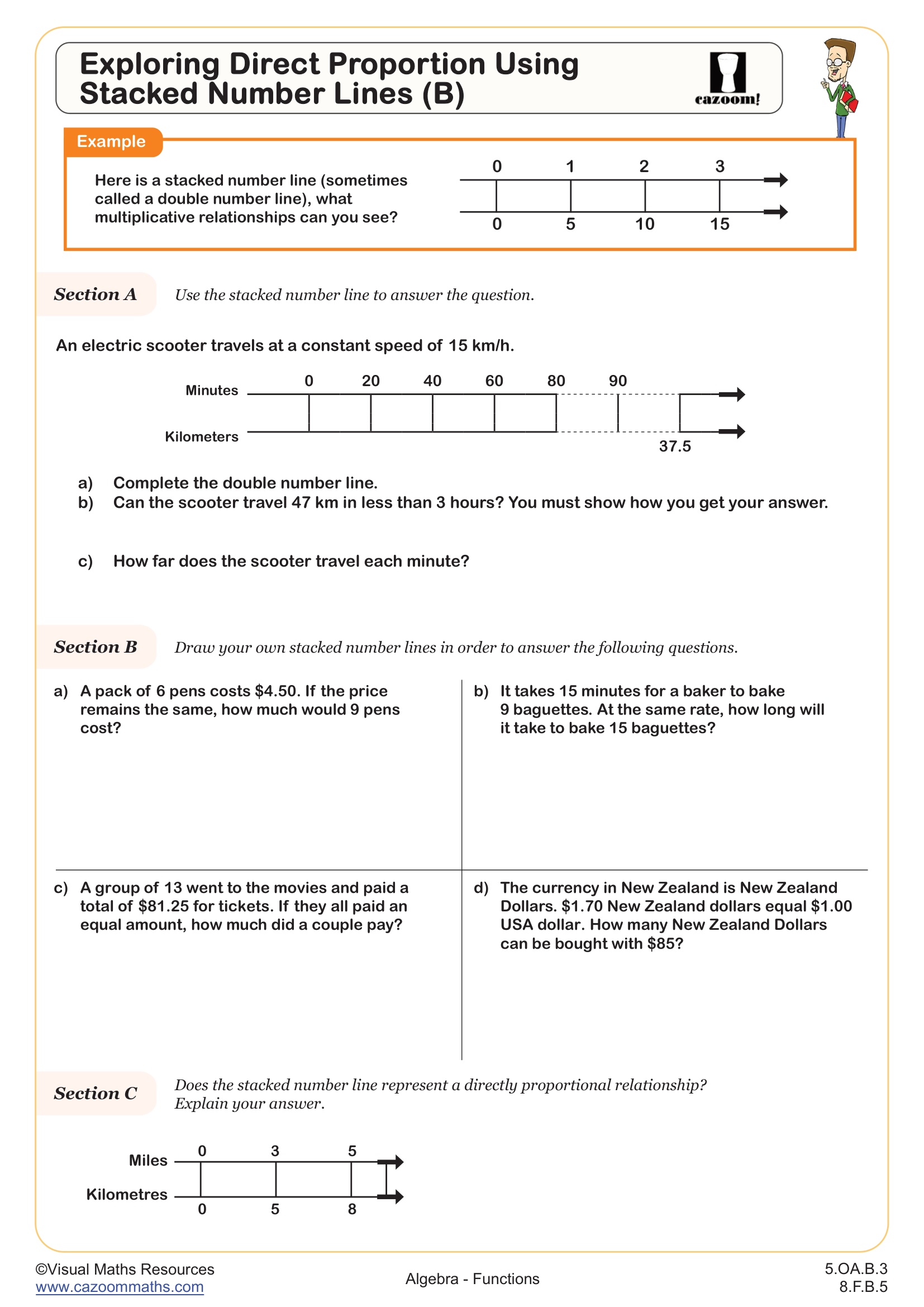
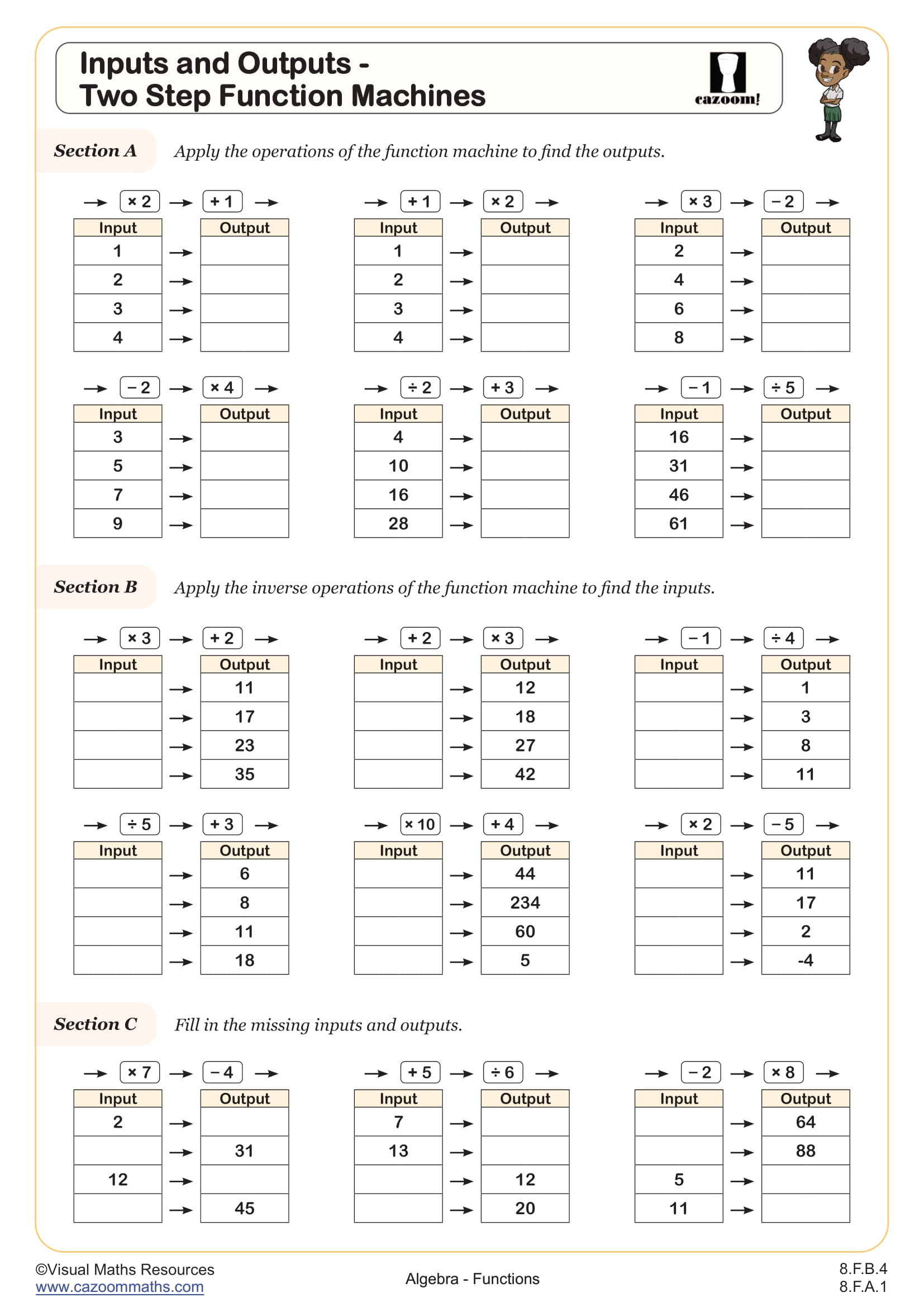
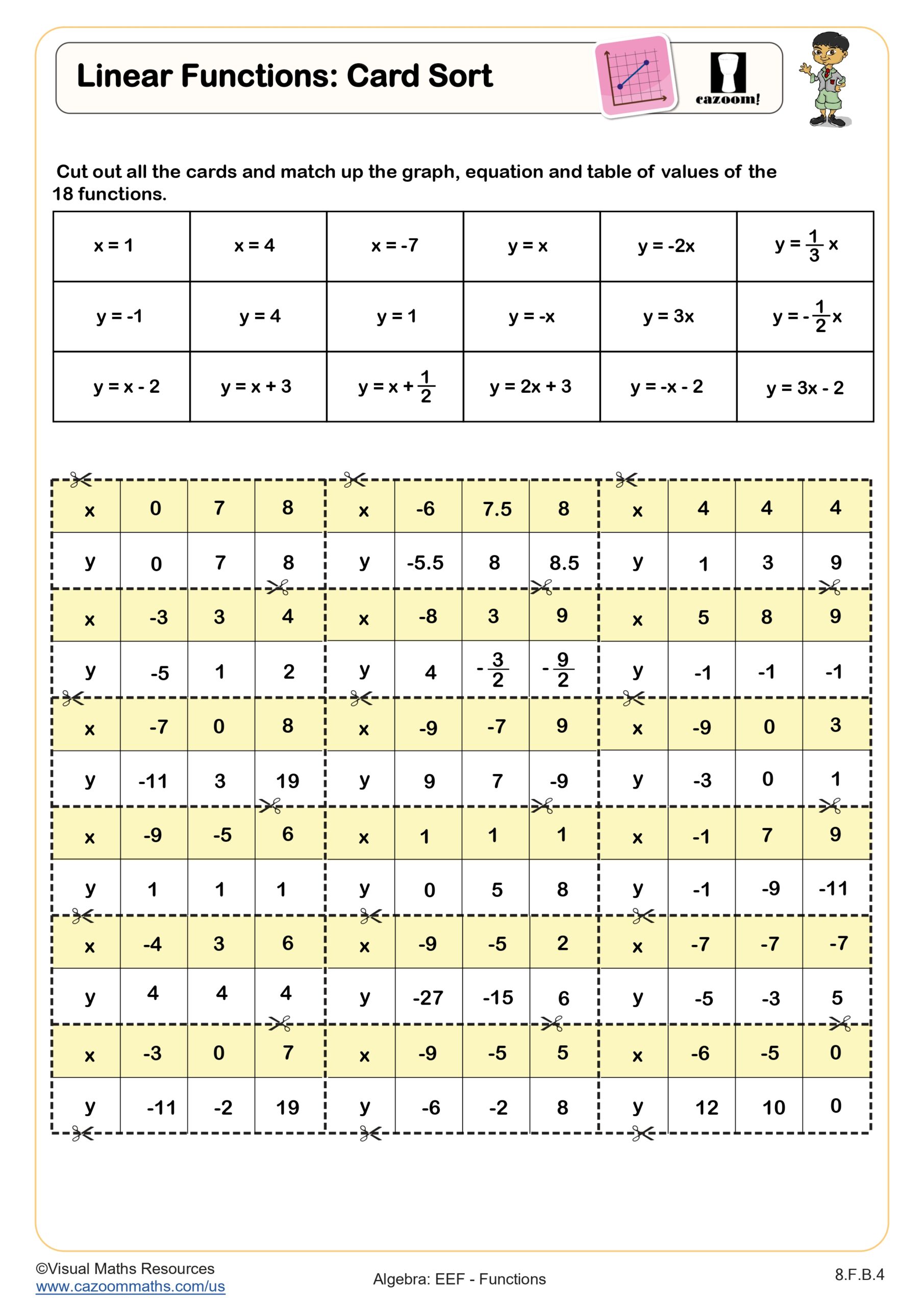
The worksheets scaffold learning by presenting functions in multiple formats—equations, tables, graphs, and word problems—so students build flexibility in recognizing and working with functional relationships. Separate worksheets focus on specific forms like y = mx and y = x + c before combining concepts, allowing students to develop confidence with one representation before tackling more complex variations. Answer keys let students check their work independently and identify where their reasoning broke down.
Teachers use these worksheets for differentiated instruction, assigning simpler linear function problems to students still building fluency while challenging advanced learners with composite functions. They work well as warm-up activities to activate prior knowledge before new instruction, as homework for independent practice, or as intervention materials for students who need additional repetition. Paired work allows students to verbalize their thinking about function evaluation, which often reveals conceptual gaps that silent independent work doesn't expose.