8th Grade Indices Worksheets
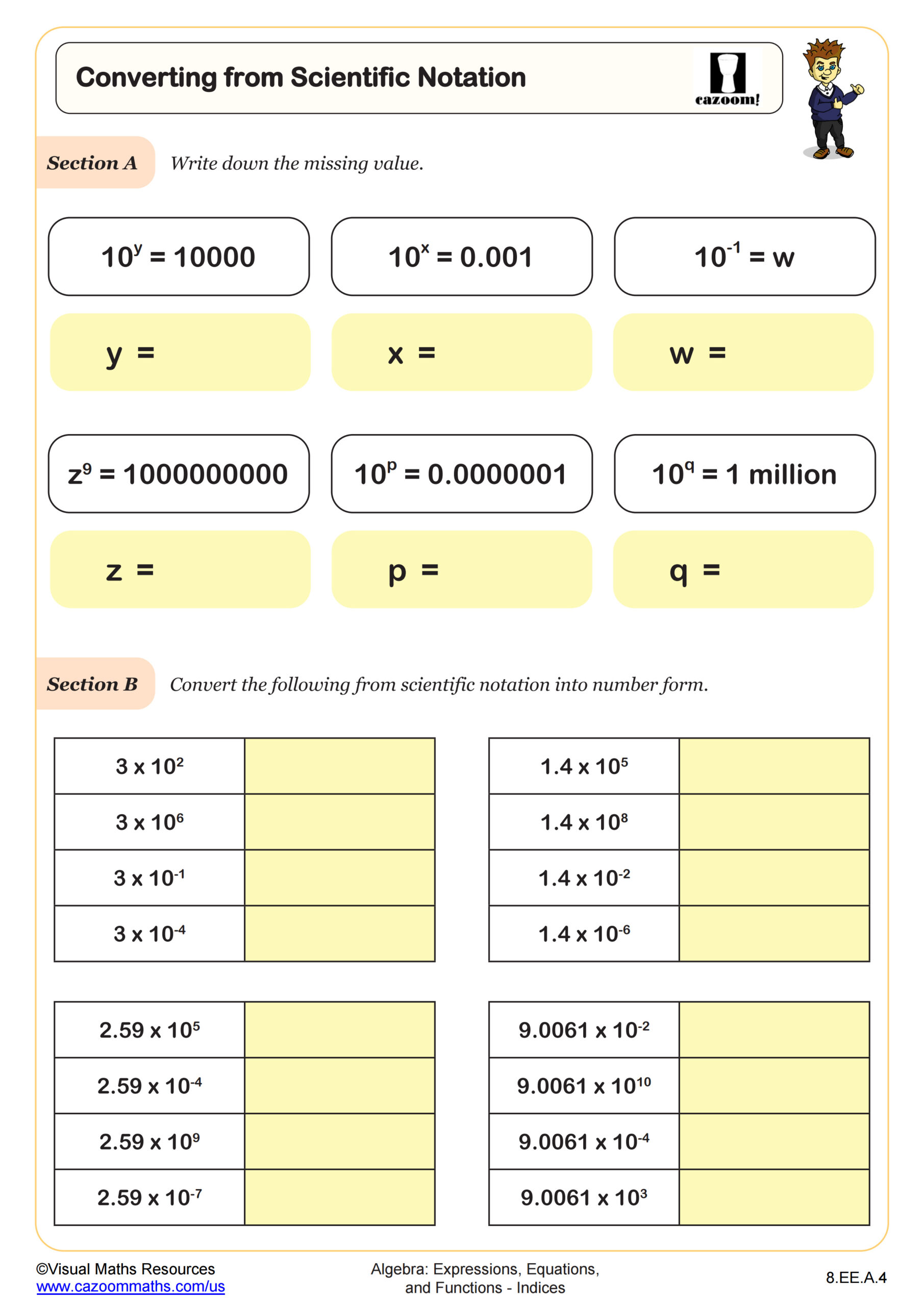
Converting from Scientific Notation
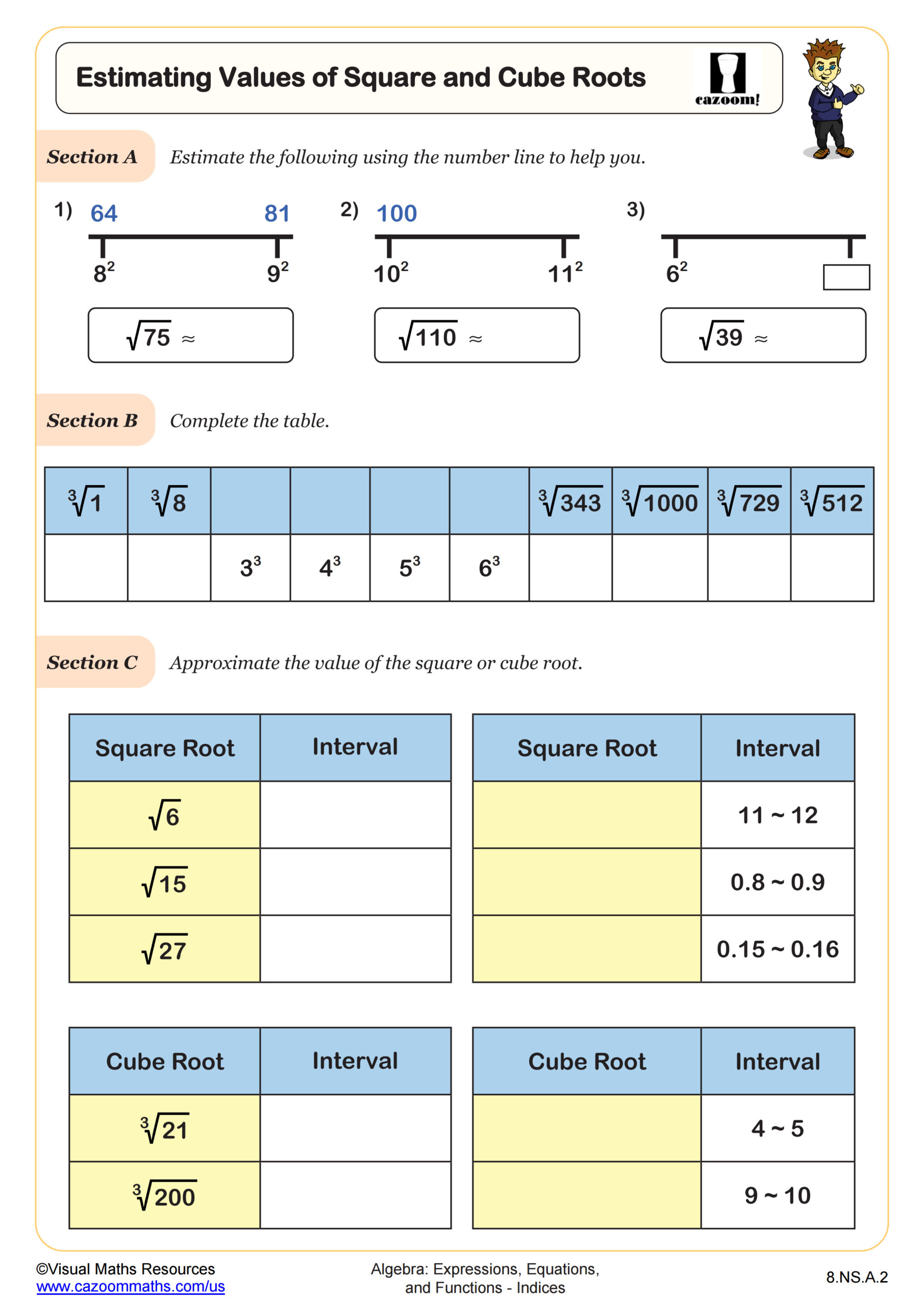
Estimating Values of Square and Cube Roots
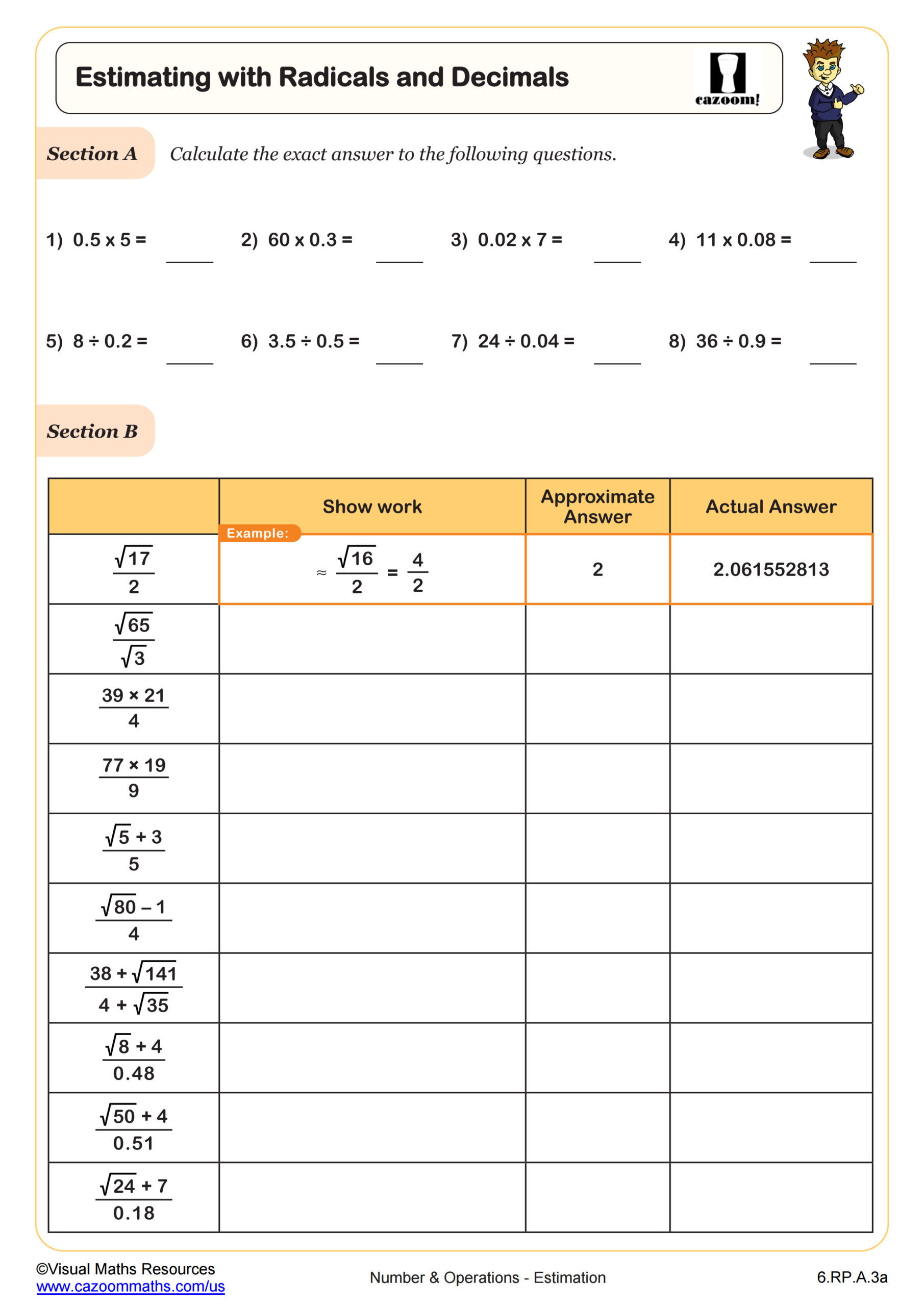
Estimating with Radicals and Decimals
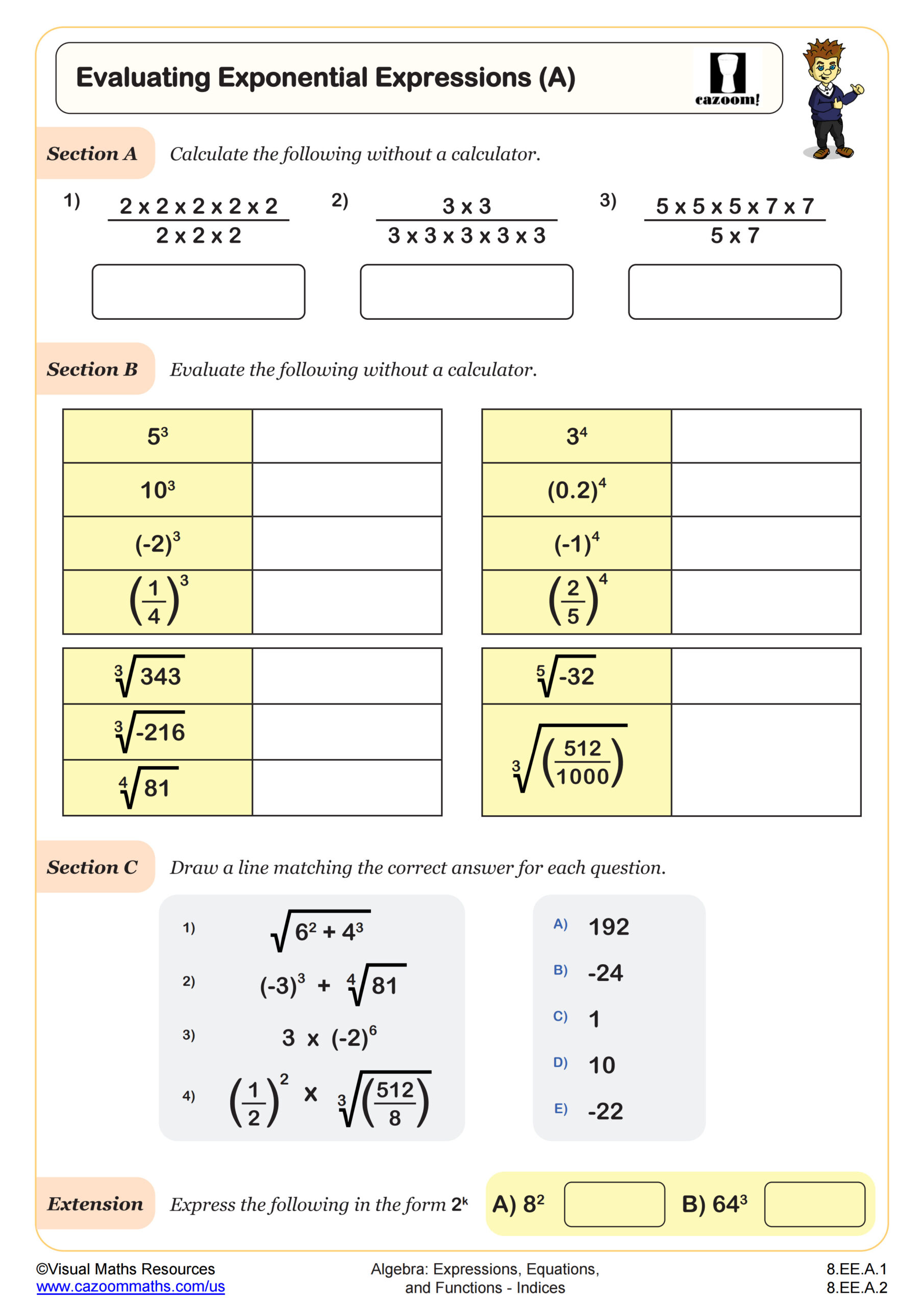
Evaluating Exponential Expressions (A)
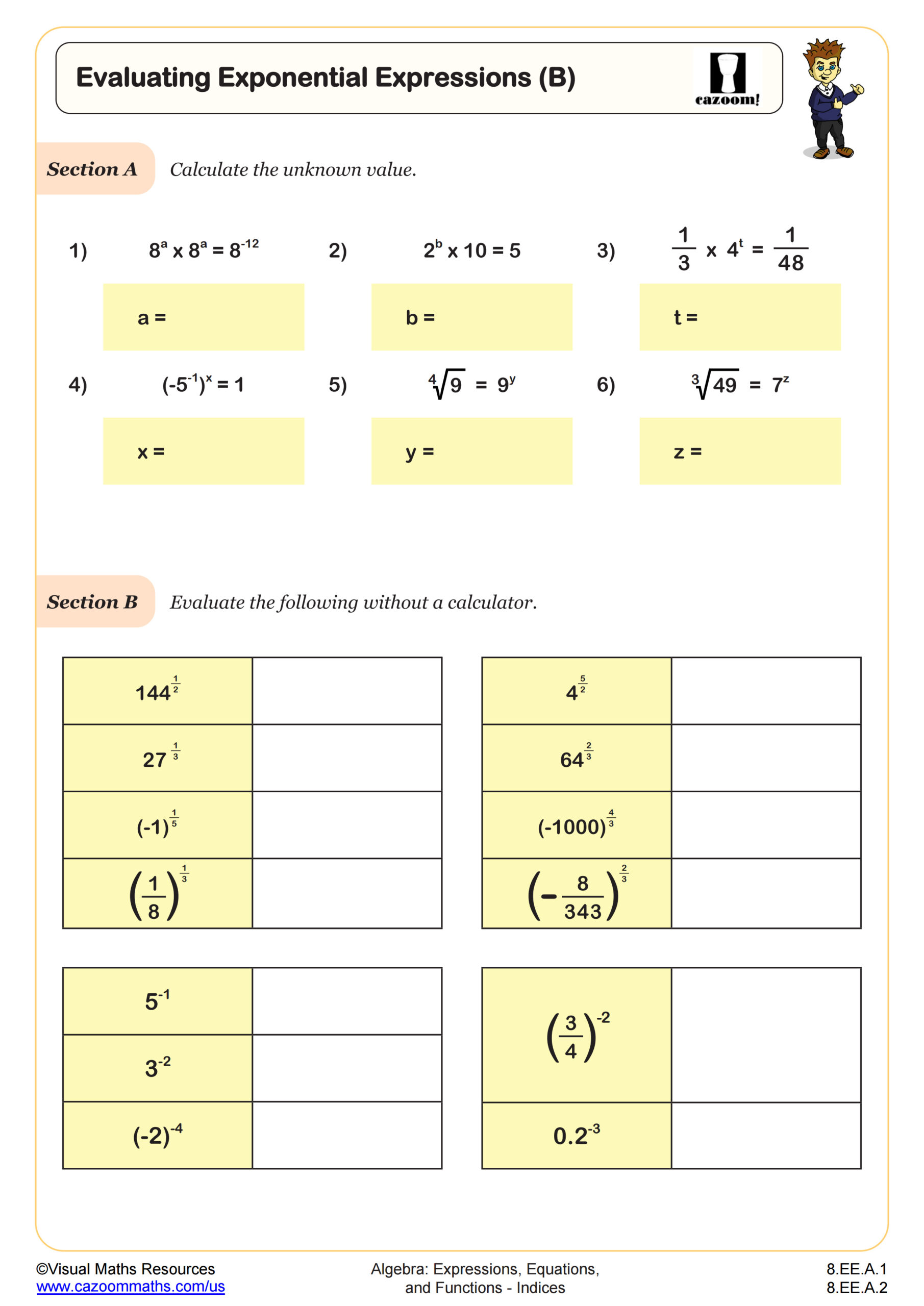
Evaluating Exponential Expressions (B)
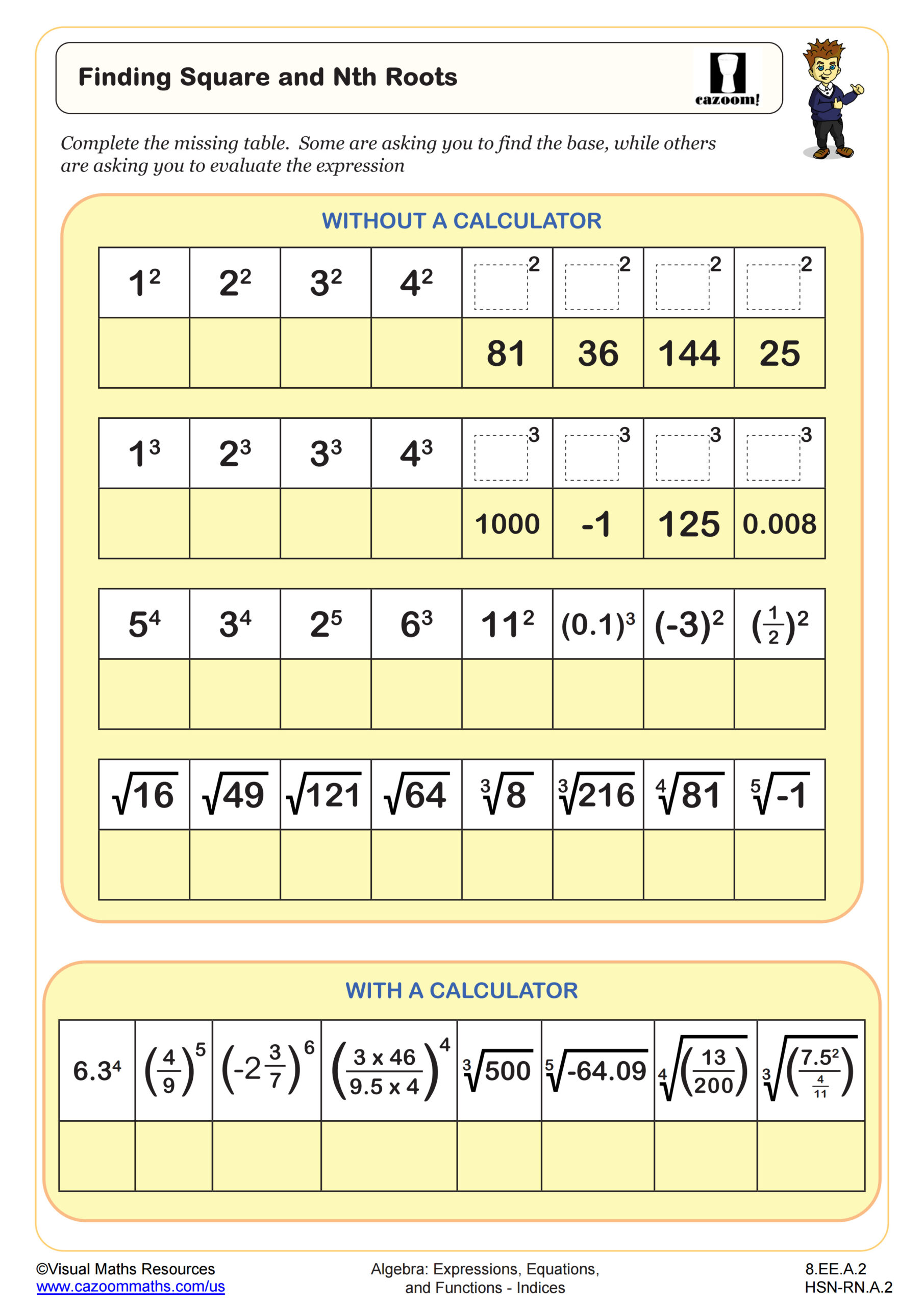
Finding Square and Nth Roots
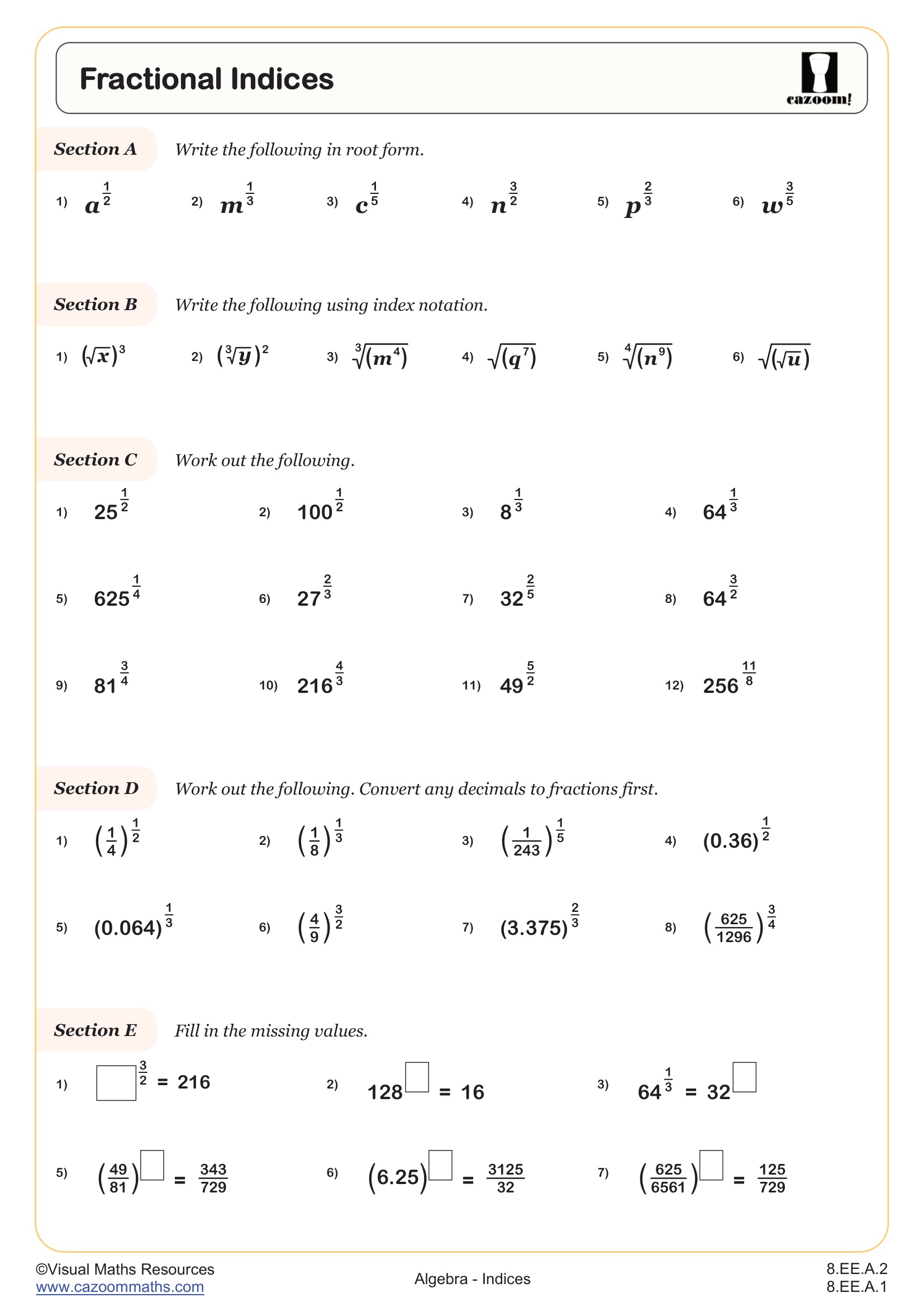
Fractional Indices
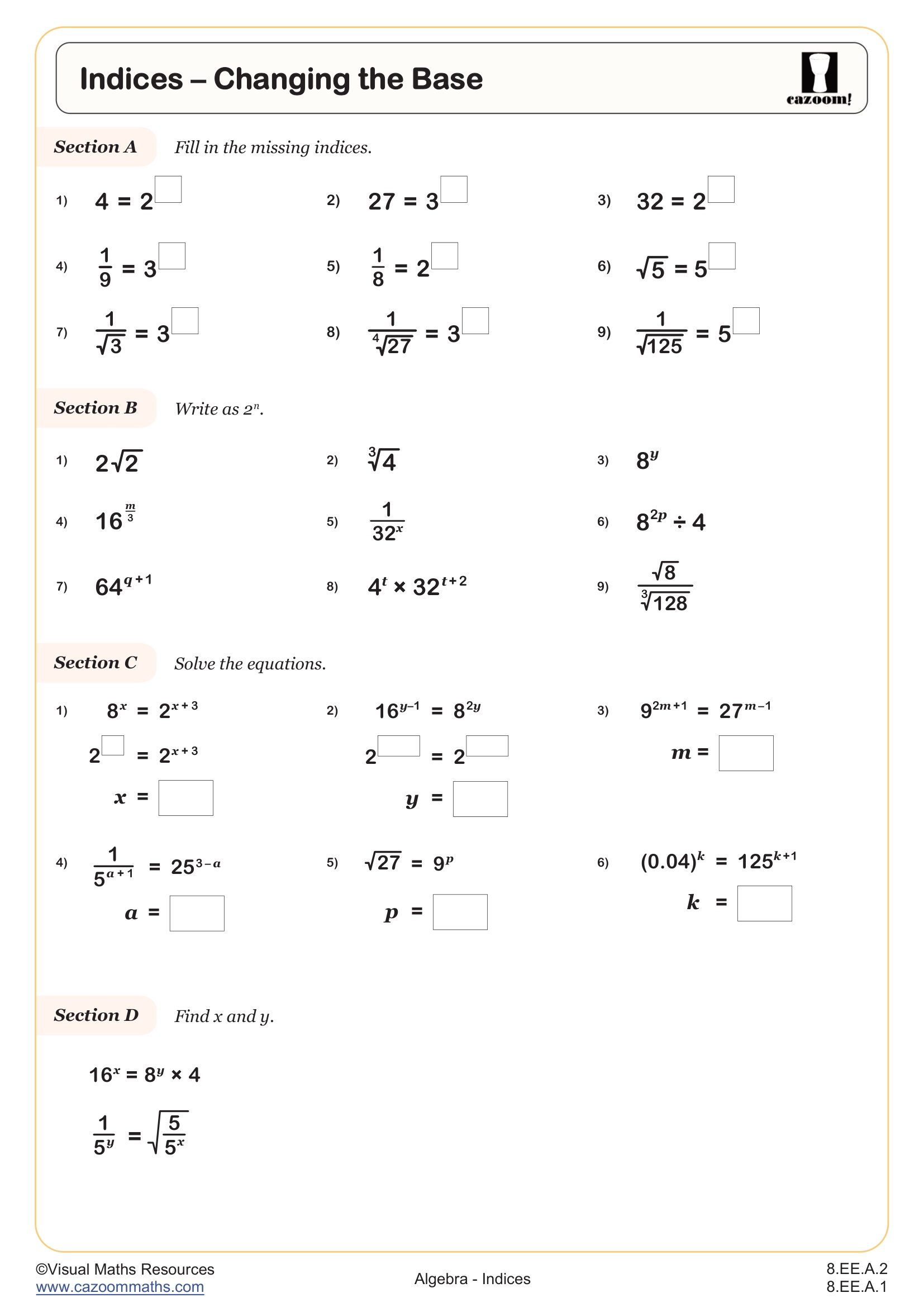
Indices - Changing the Base
Multiplying and Dividing with Scientific Notation
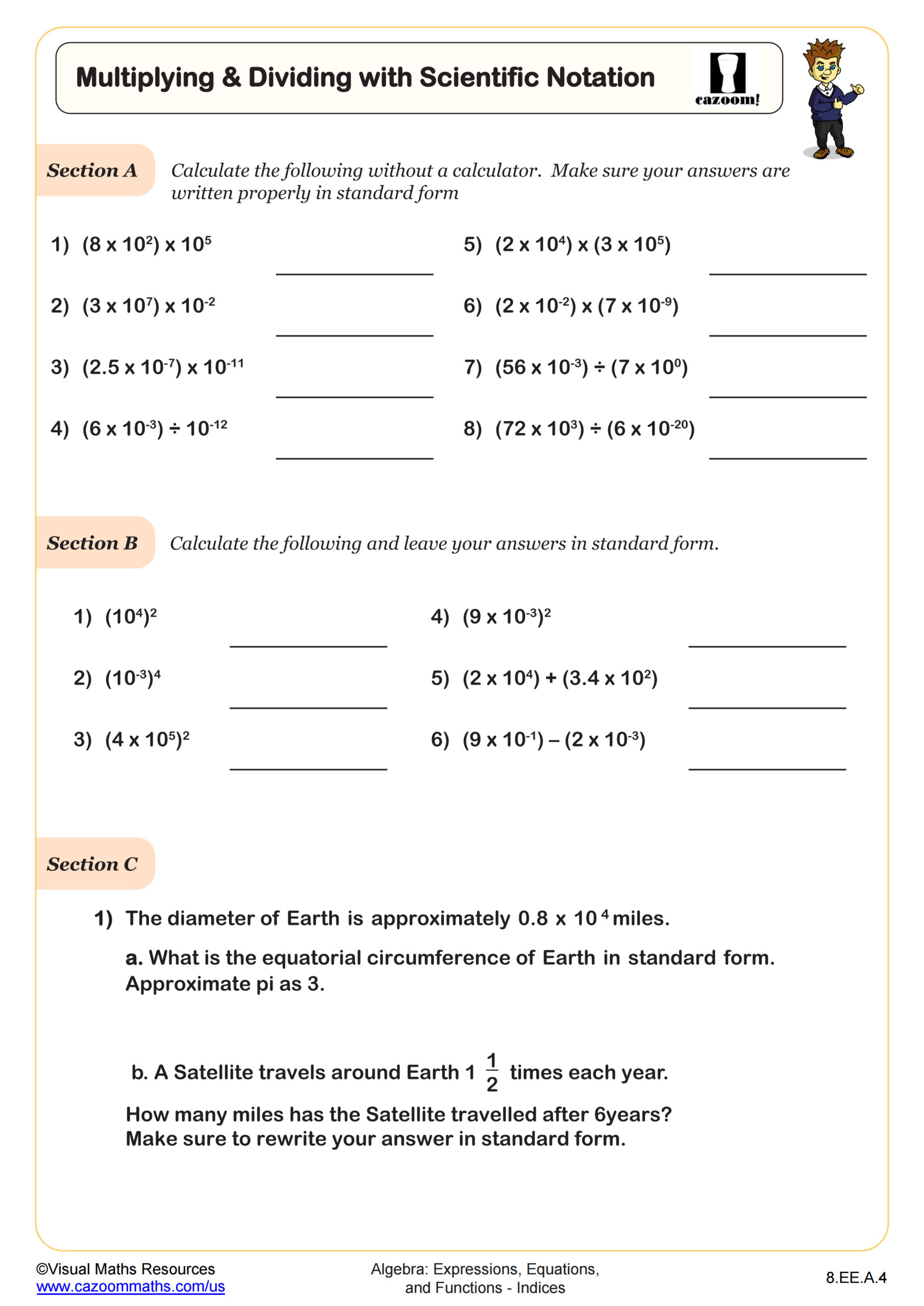
Negative Indices
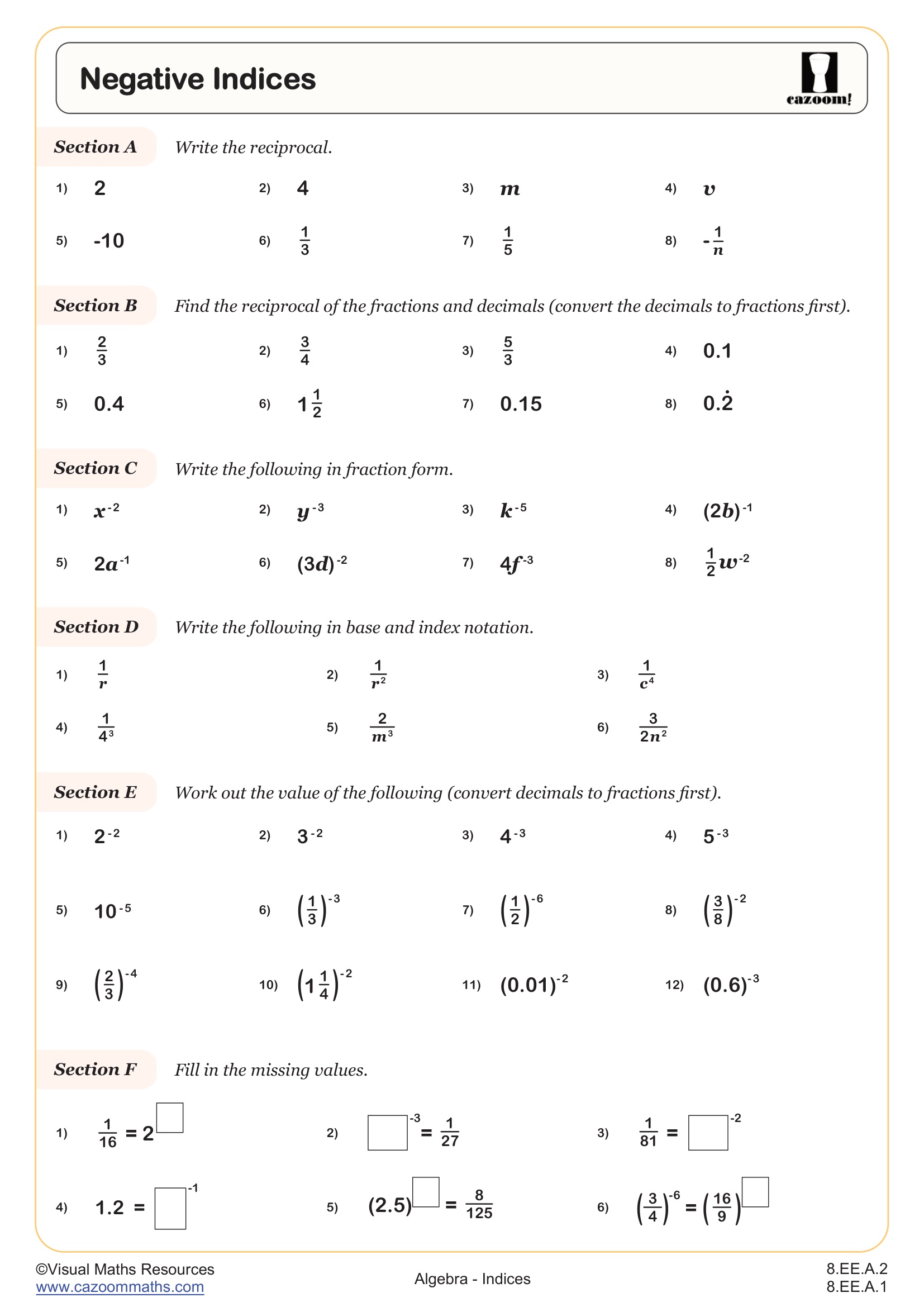
Operations with Scientific Notation (A)
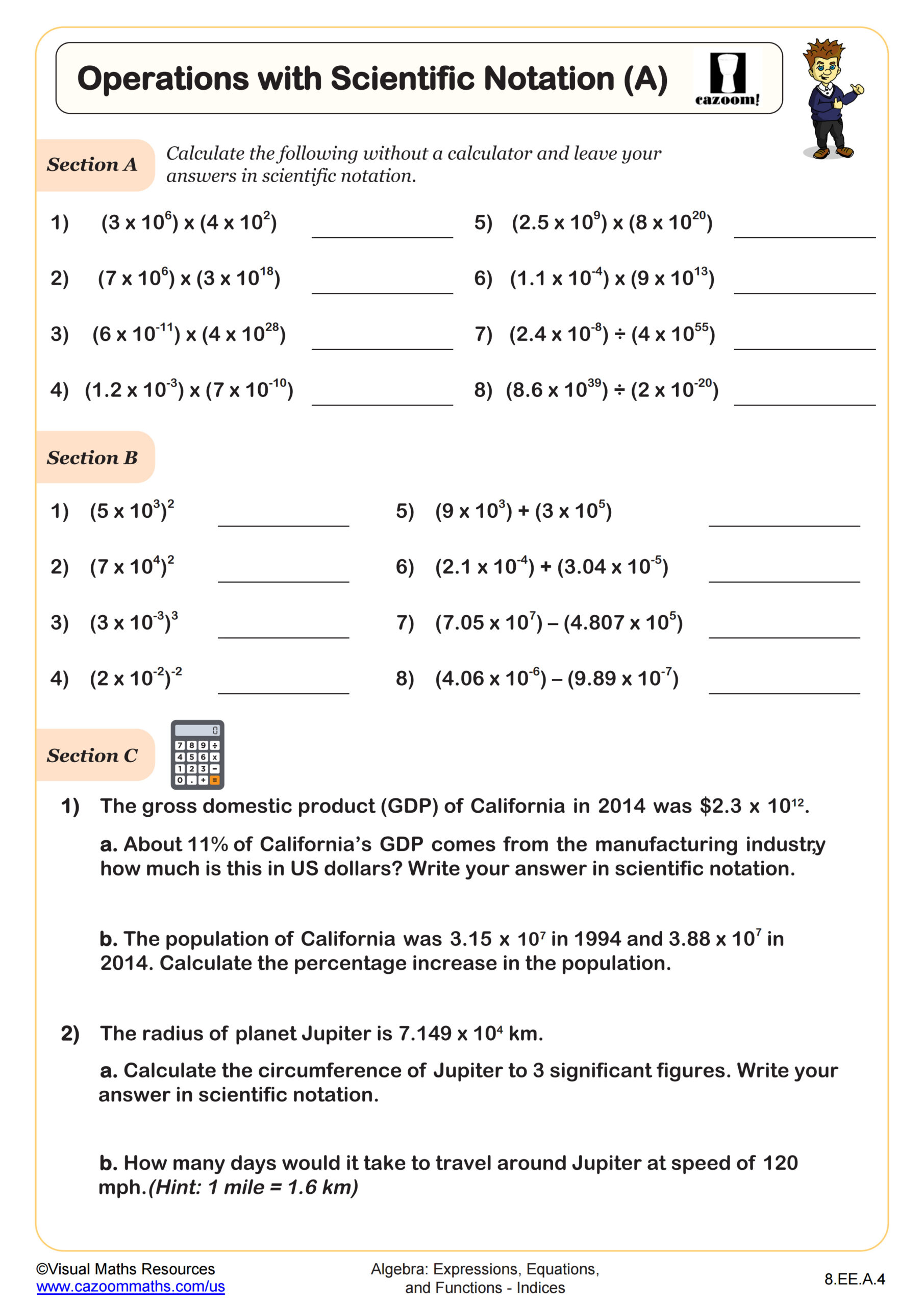
Operations with Scientific Notation (B)
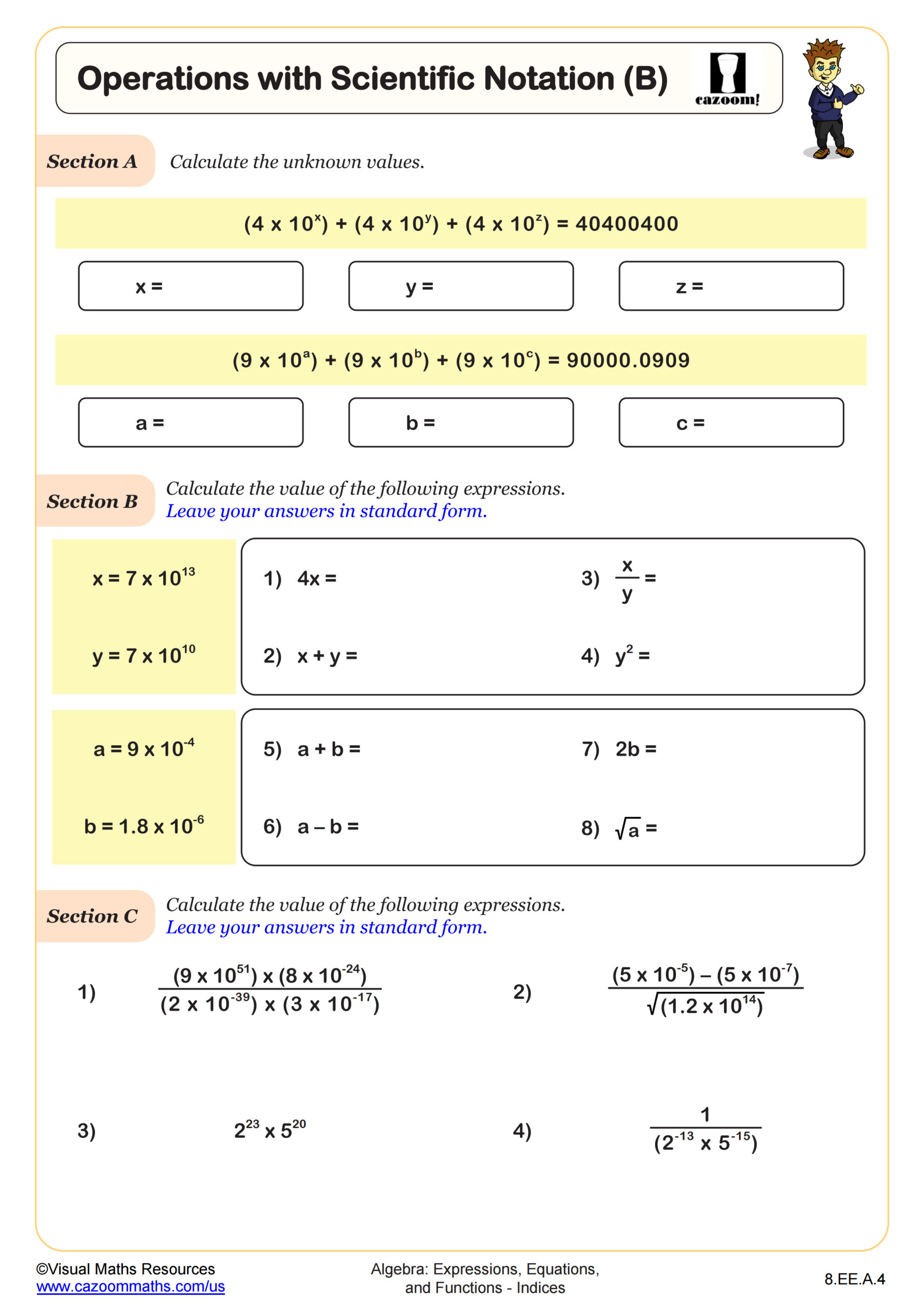
Operations with Scientific Notation Word Problems
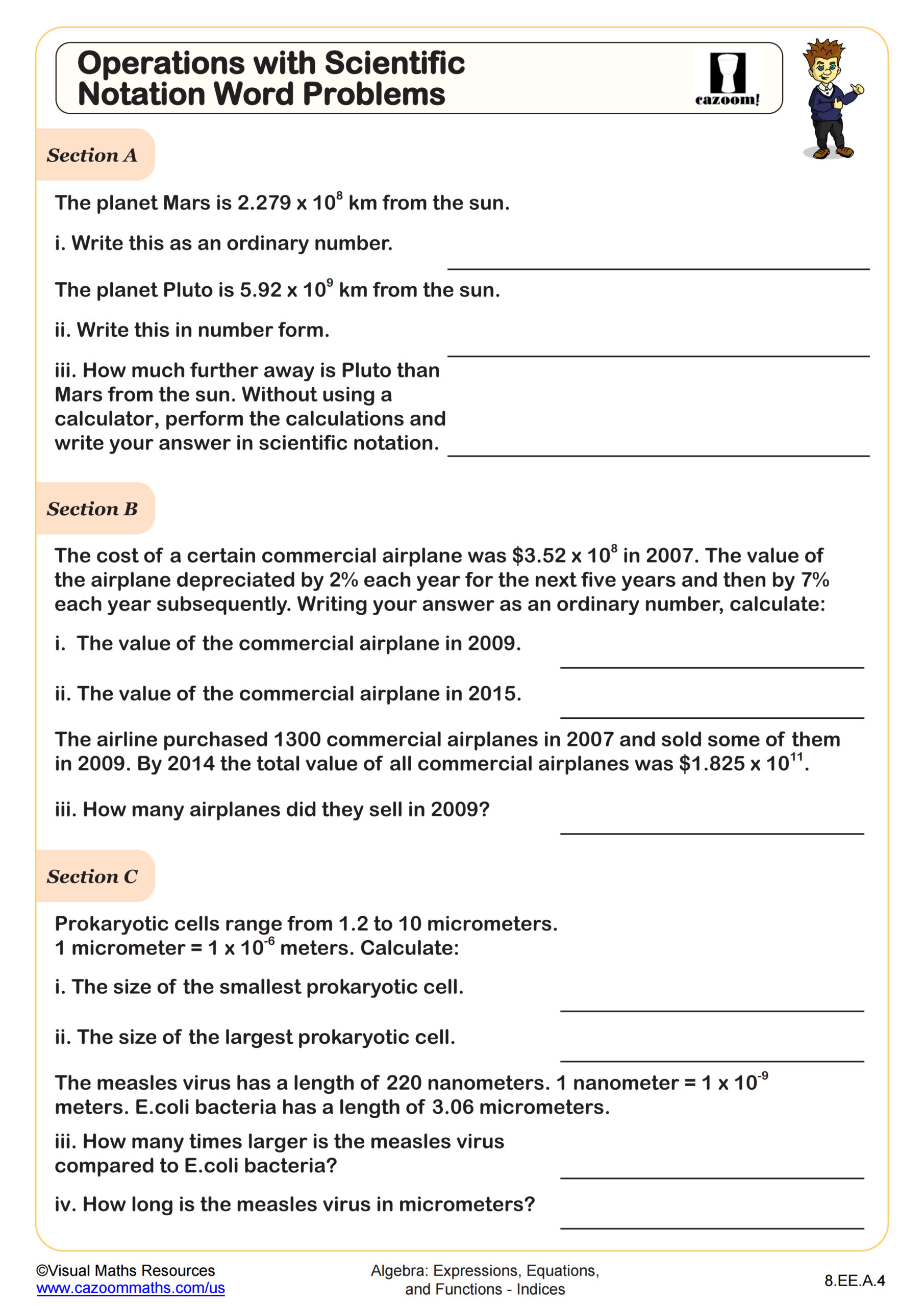
Representing Metric Units with Scientific Notation
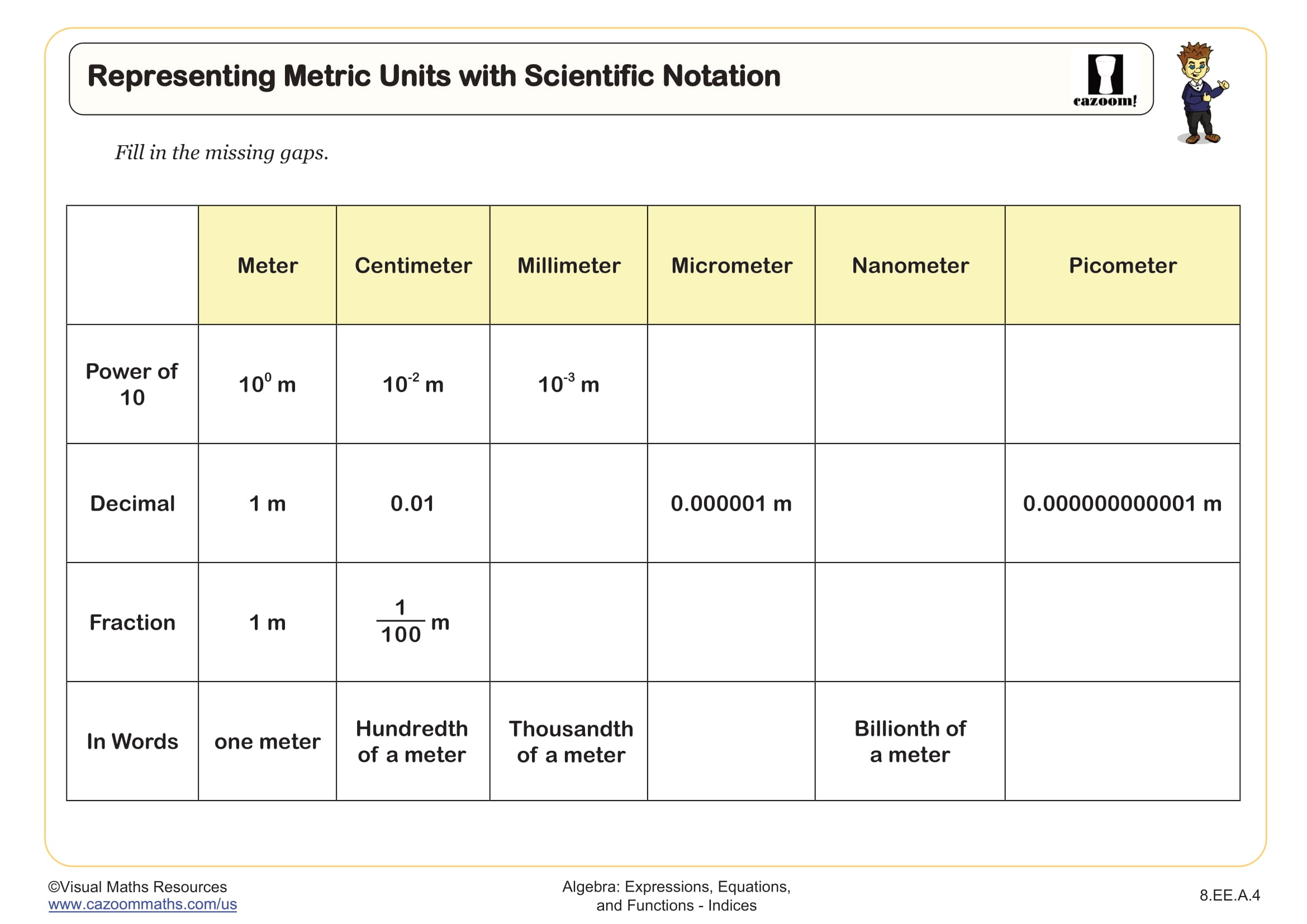
Scientific Notation Problem Solving
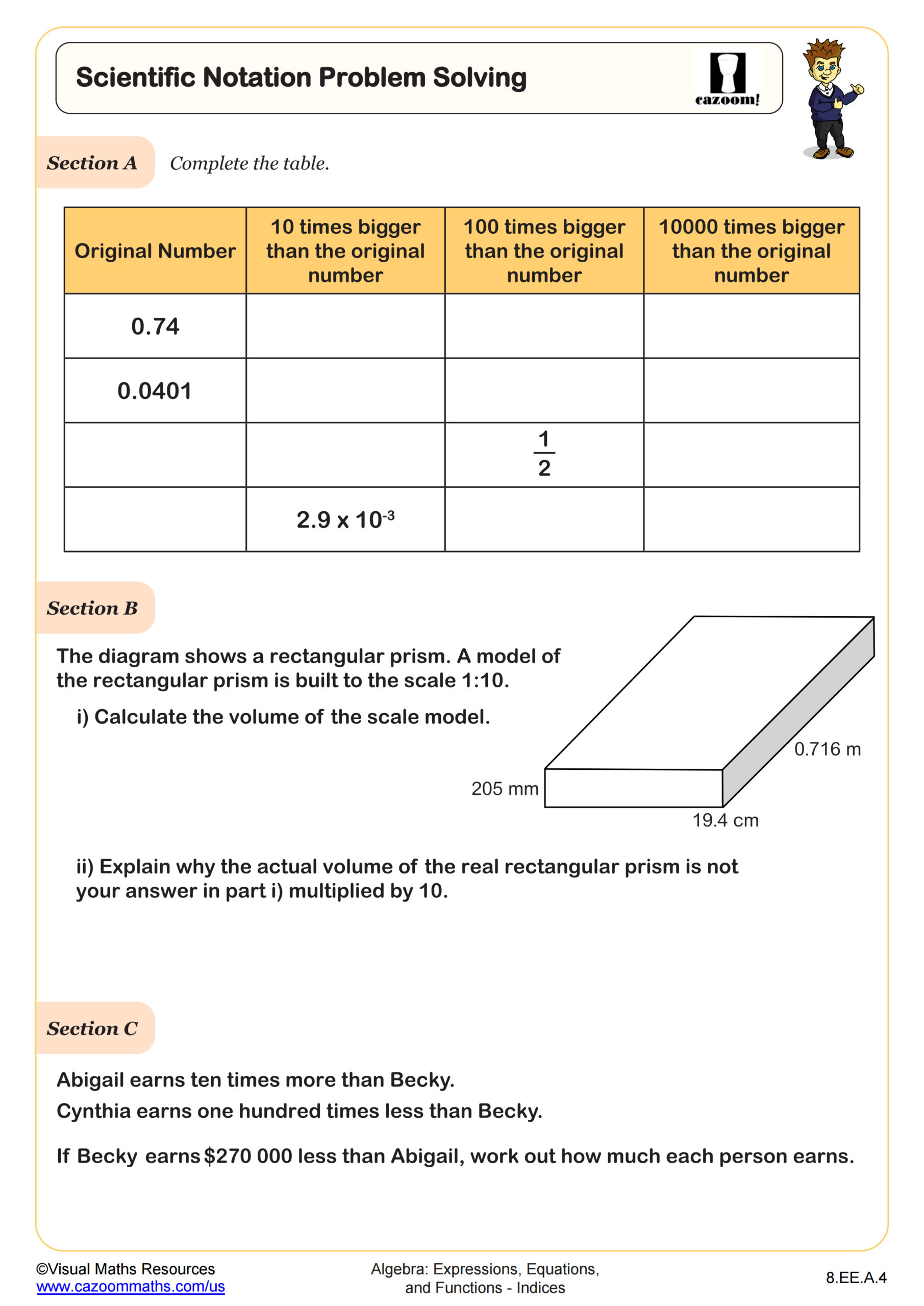
Scientific Notation: Rewriting in Standard Form
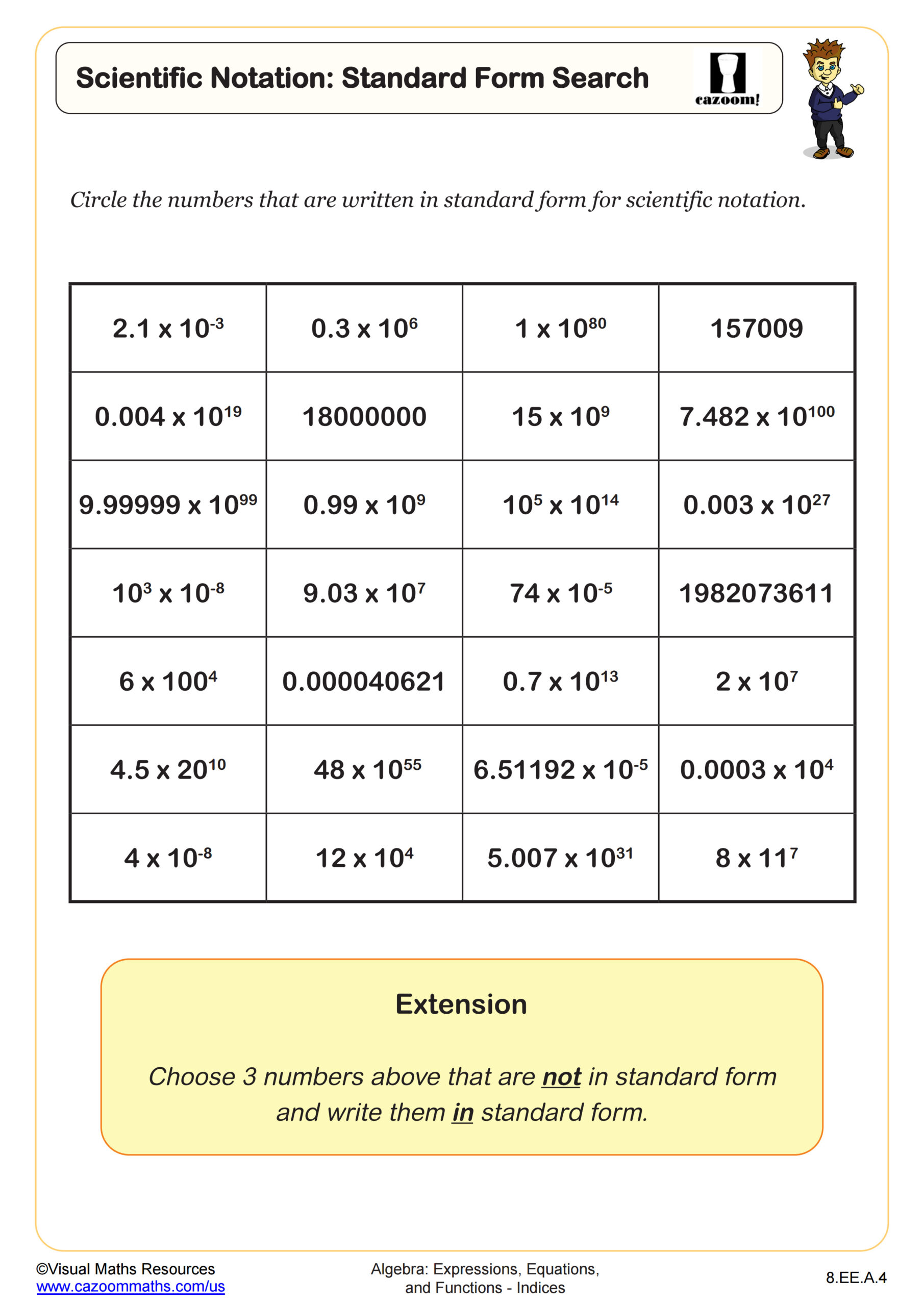
Scientific Notation: Standard Form Search
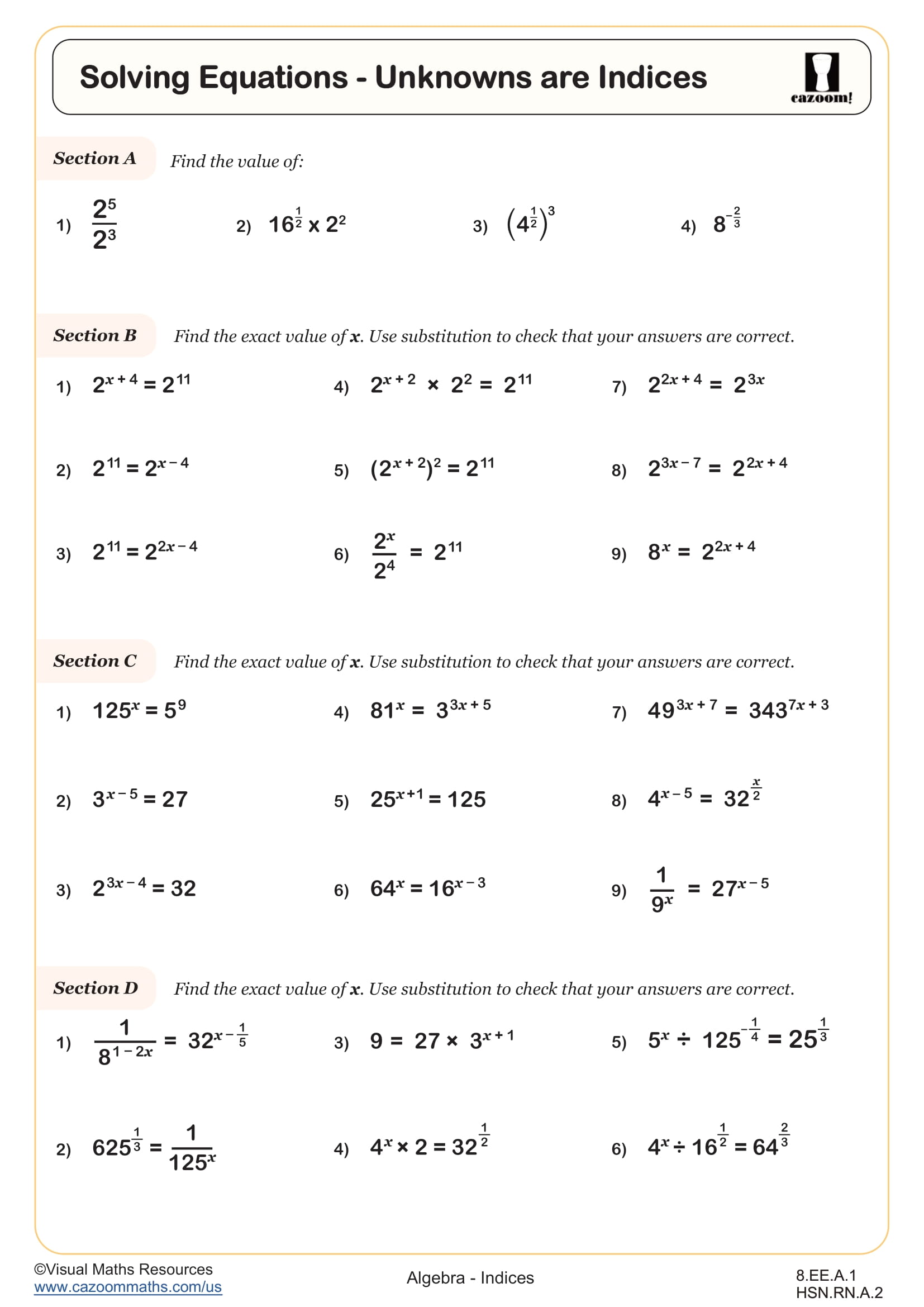
Solving Equations - Unknowns are Indices
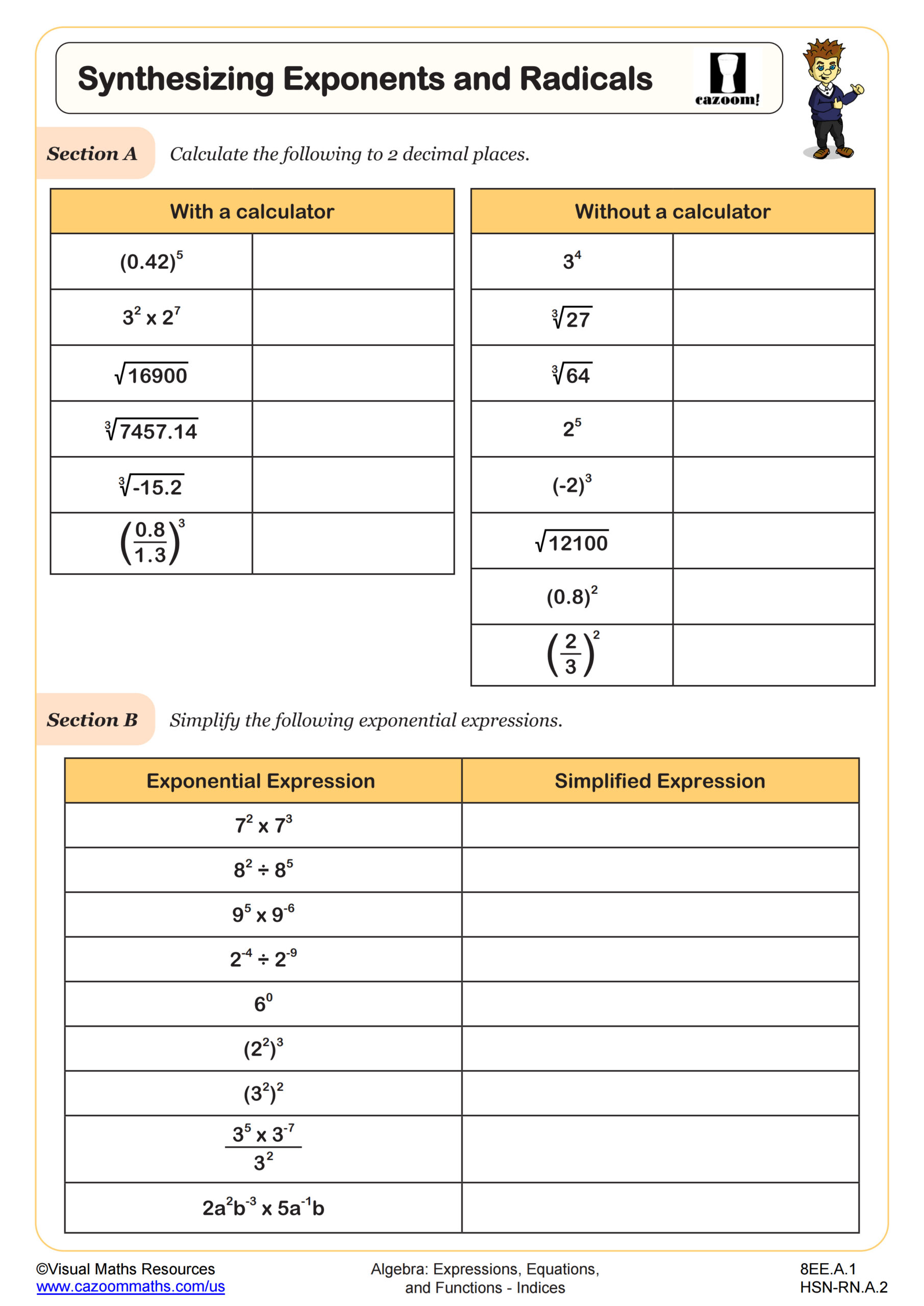
Synthesizing Exponents and Radicals
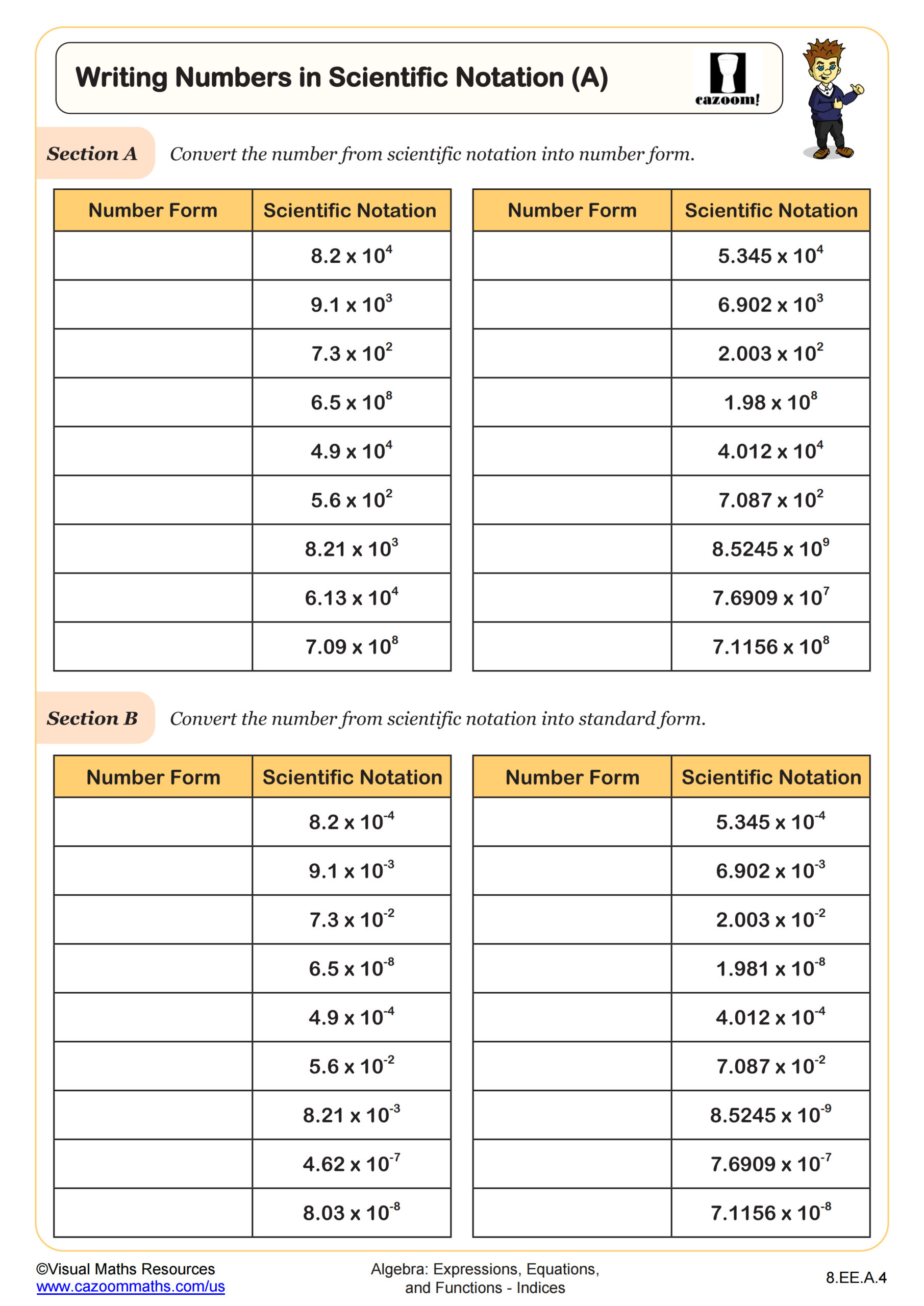
Writing Numbers in Scientific Notation (A)
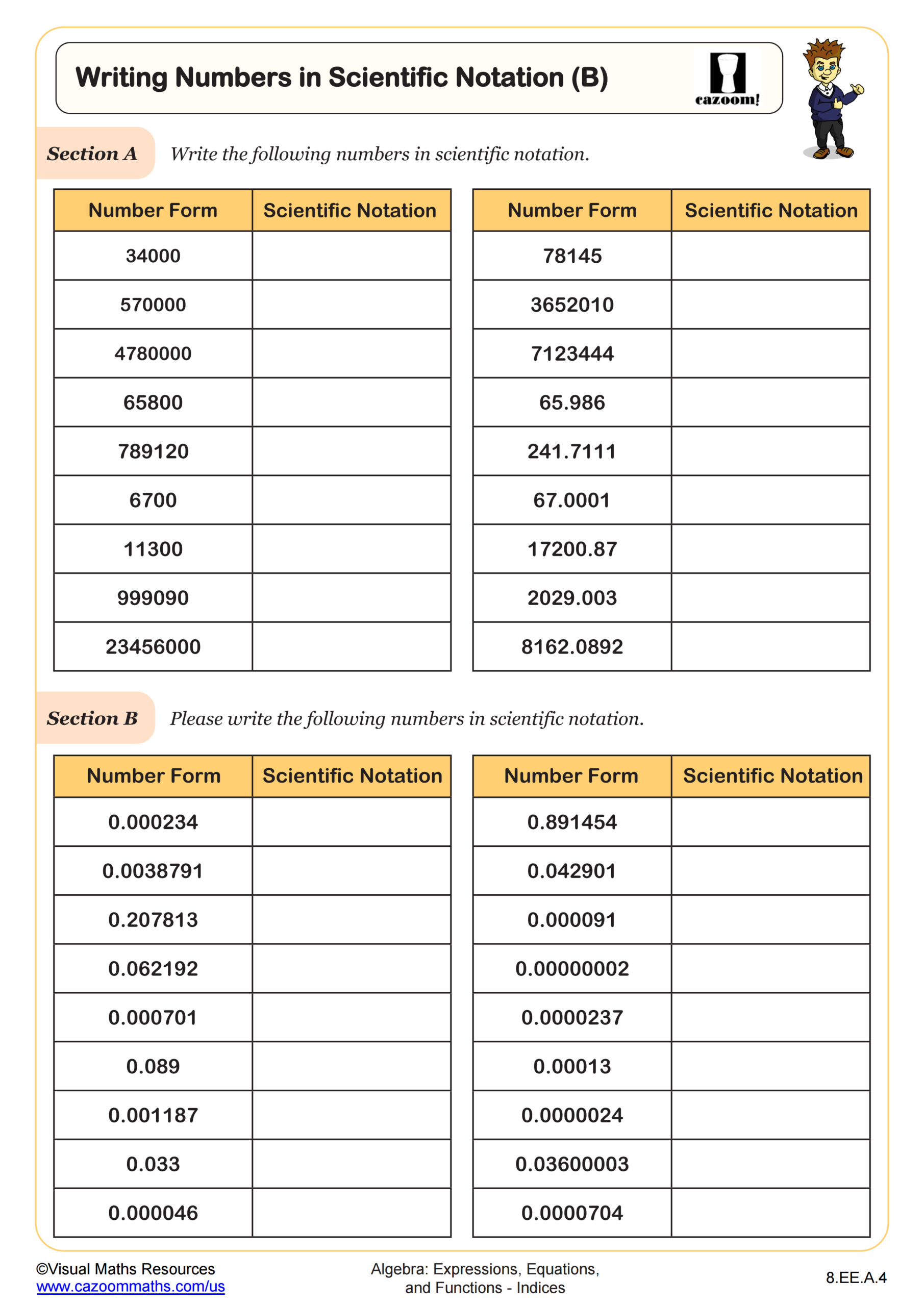
Writing Numbers in Scientific Notation (B)
All worksheets are created by the team of experienced teachers at Cazoom Math.
What topics are covered in a typical indices worksheet grade 8?
Grade 8 indices worksheets typically cover fundamental exponent laws including the product rule (x^a × x^b = x^(a+b)), quotient rule (x^a ÷ x^b = x^(a-b)), and power rule ((x^a)^b = x^(ab)). Students also practice with zero and negative exponents, which align with Common Core Standard 8.EE.1 for working with integer exponents.
Many teachers notice that students initially want to multiply the base by the exponent rather than using repeated multiplication. Effective worksheets include visual representations and step-by-step examples to reinforce that 3⁴ means 3 × 3 × 3 × 3, not 3 × 4. This conceptual understanding becomes crucial when students encounter negative exponents later in the unit.
Is grade 8 the right level for learning indices and exponent rules?
Grade 8 represents the optimal time for formal introduction of exponent rules, as students have developed sufficient algebraic thinking skills from earlier grades. The Common Core Standards place integer exponents at the 8th grade level (8.EE.1), building on the foundation of whole number exponents from grades 5-7. This timing allows students to connect exponents to scientific notation and prepare for high school algebra.
Teachers report that students who miss this foundation in 8th grade struggle significantly with polynomial operations and exponential functions in Algebra 1. The abstract nature of negative exponents requires the cognitive development typically present in middle school students. Starting too early often leads to procedural memorization without conceptual understanding.
How do students typically approach indices with directed numbers in grade 8?
Students working with indices involving directed numbers often confuse the sign of the base with the sign of the exponent. A common error occurs with problems like (-3)² versus -3², where students don't recognize that the first equals 9 while the second equals -9. This distinction requires careful attention to parentheses and order of operations.
Math teachers find success using color coding or highlighting to emphasize whether the negative sign is inside or outside the parentheses. Problems involving fractional bases with negative exponents, such as (1/2)^(-3), require students to apply both reciprocal rules and sign conventions. Real-world applications in physics, like calculating decay rates or inverse square laws, help students see why these rules matter beyond the classroom.
How can teachers use these worksheets most effectively in their classrooms?
Successful implementation requires scaffolding from concrete examples to abstract applications. Teachers report best results when starting each worksheet with guided practice, working through the first few problems together while verbalizing the thinking process. The answer keys enable students to check their work immediately, but teachers should encourage showing all steps rather than just final answers.
Differentiation works well by assigning different sections based on student readiness levels. Struggling students benefit from starting with positive integer exponents only, while advanced learners can tackle mixed operations with negative exponents and fractional bases. Using the worksheets for exit tickets or warm-up activities helps teachers quickly assess which concepts need reteaching before moving to more complex applications.