8th Grade Lines and Angles Worksheets
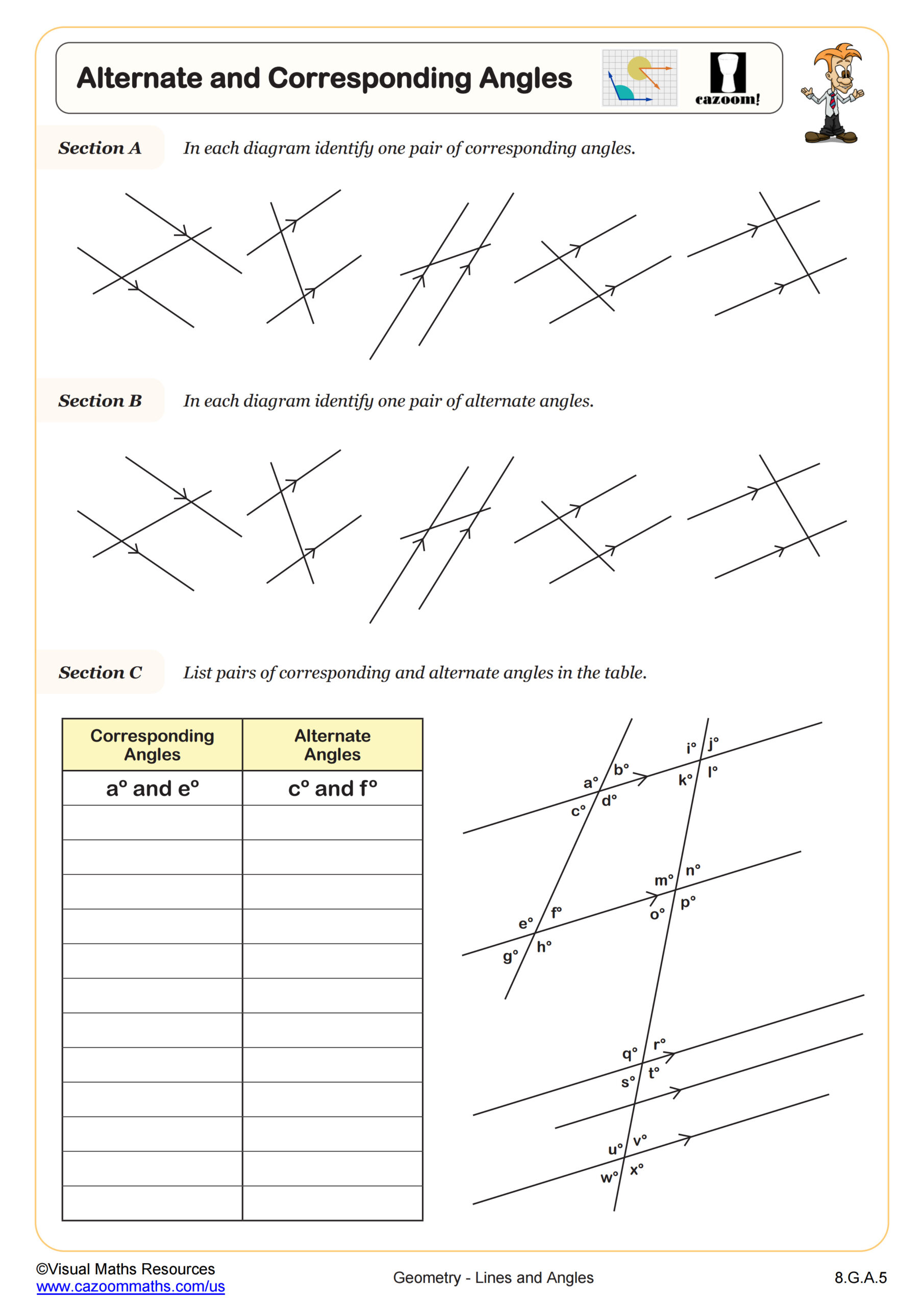
Alternate and Corresponding Angles
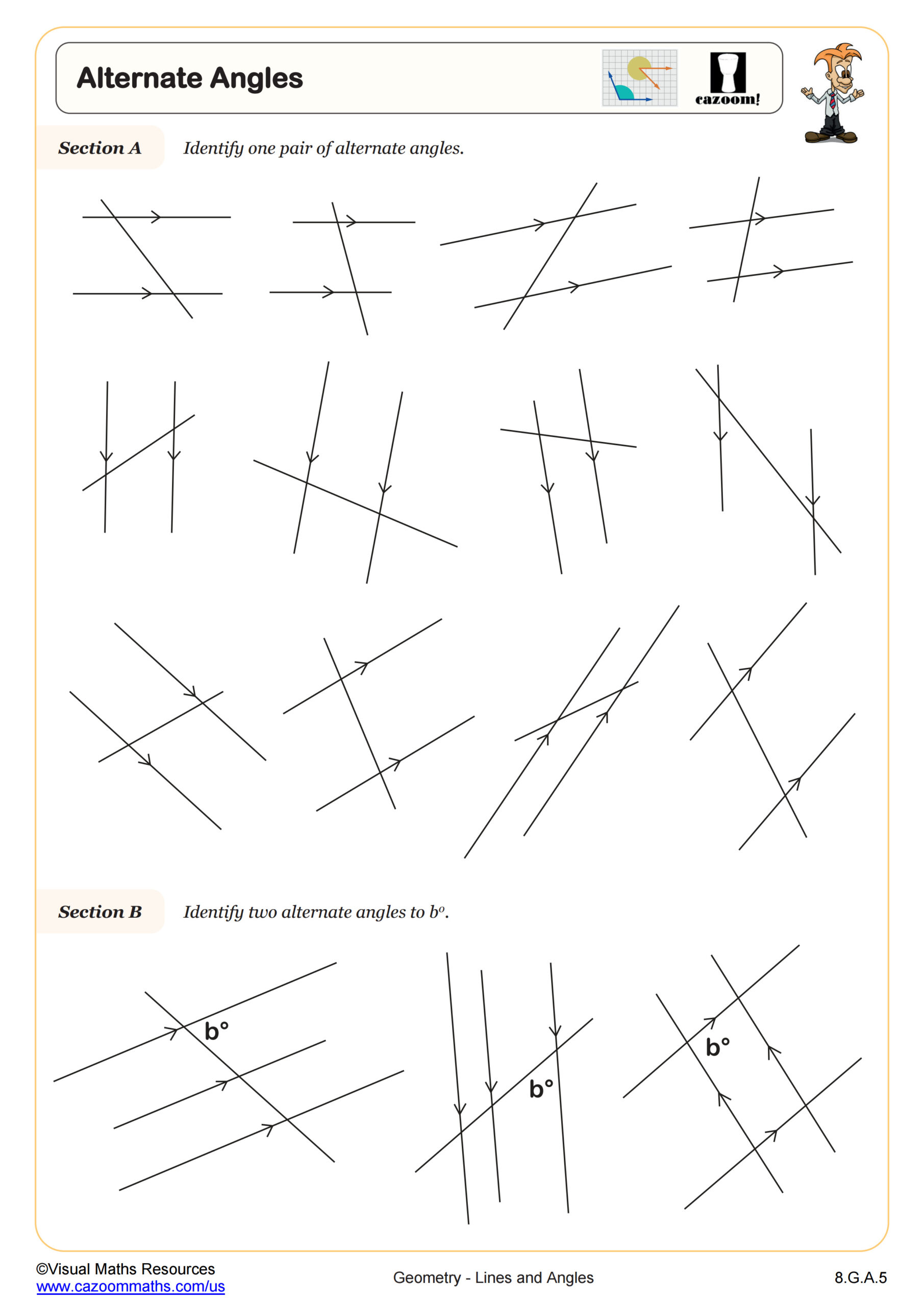
Alternate Angles
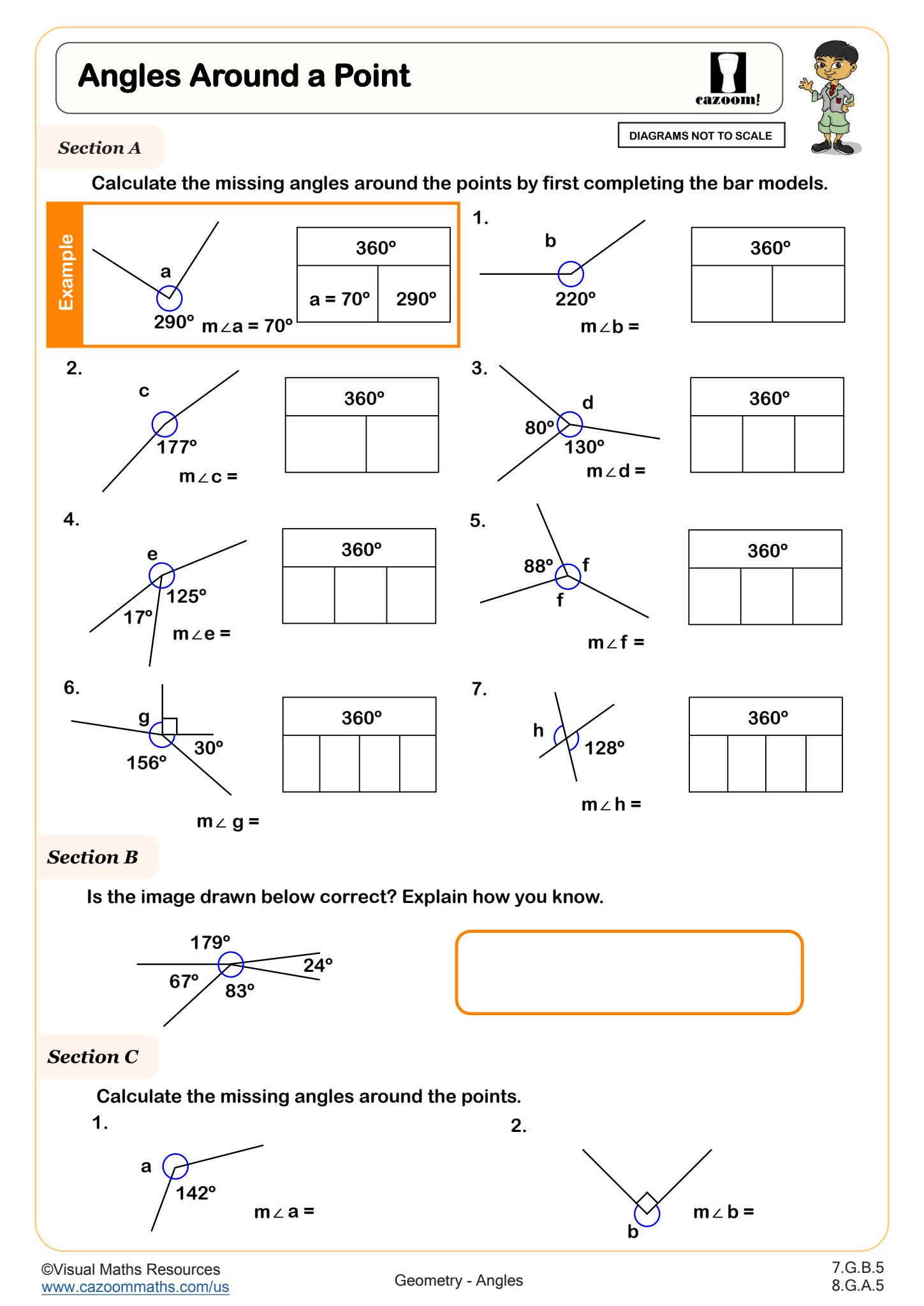
Angles Around a Point
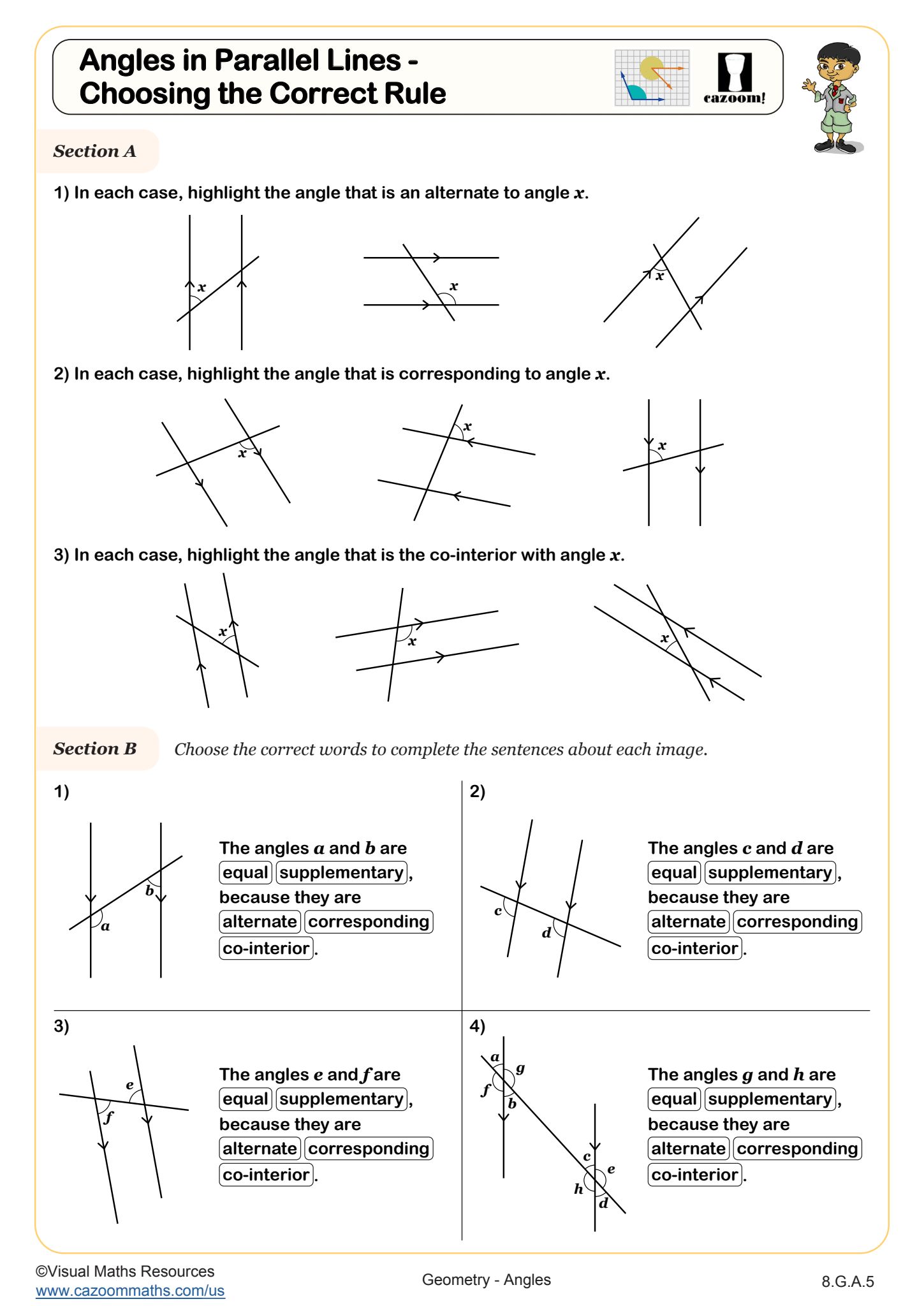
Angles in Parallel Lines - Choosing the Correct Rule
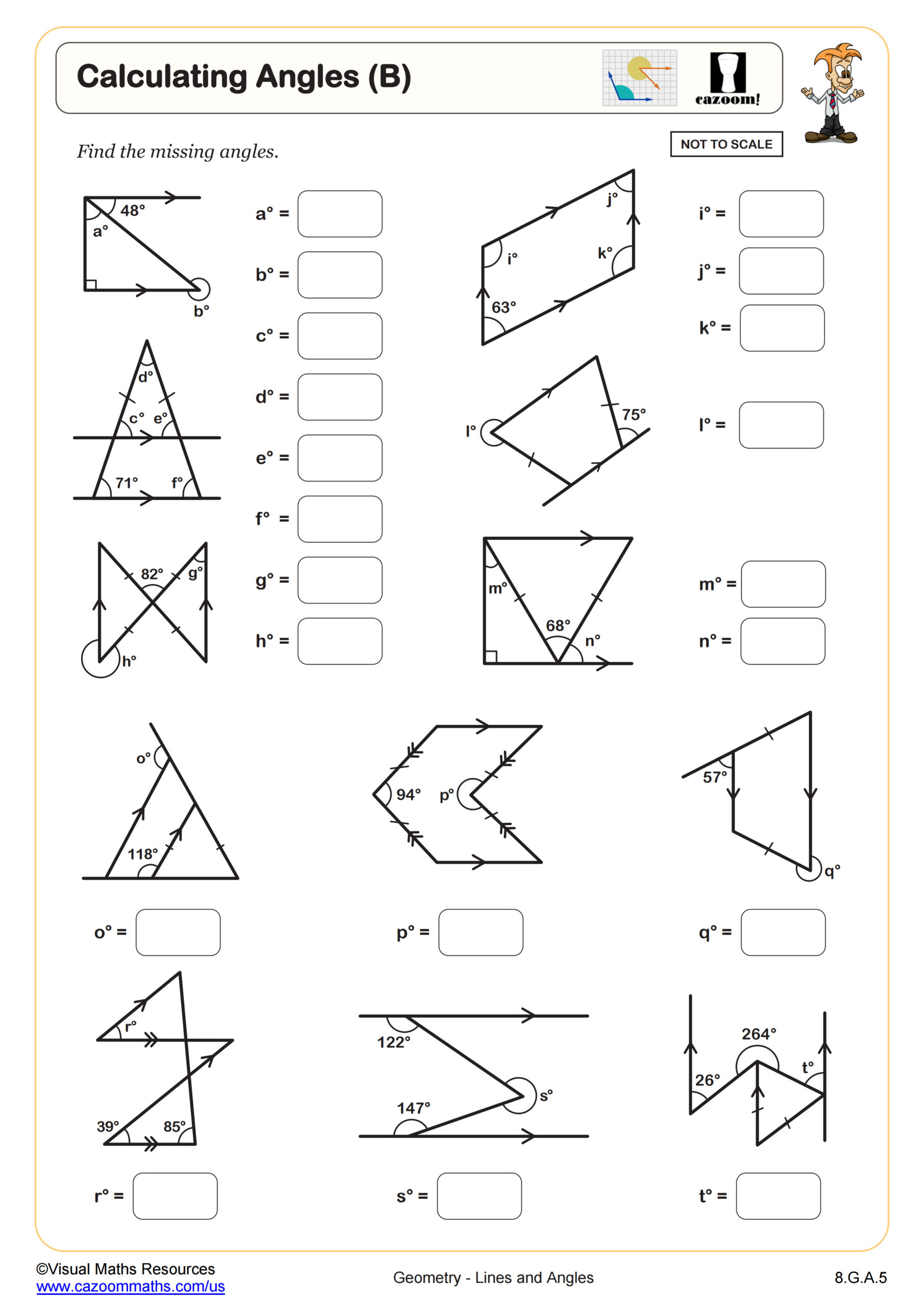
Calculating Angles (B)
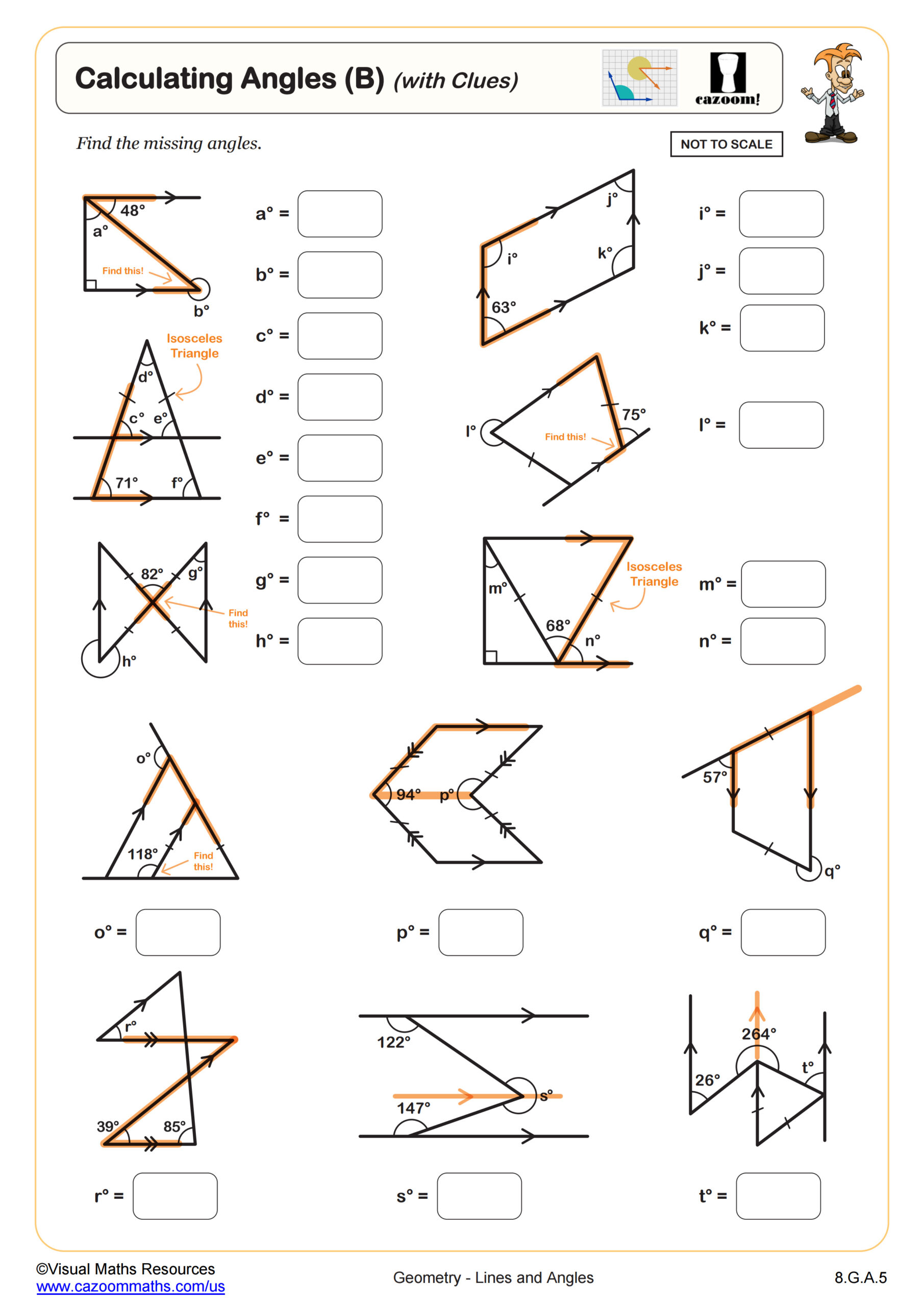
Calculating Angles (B) (With Clues)
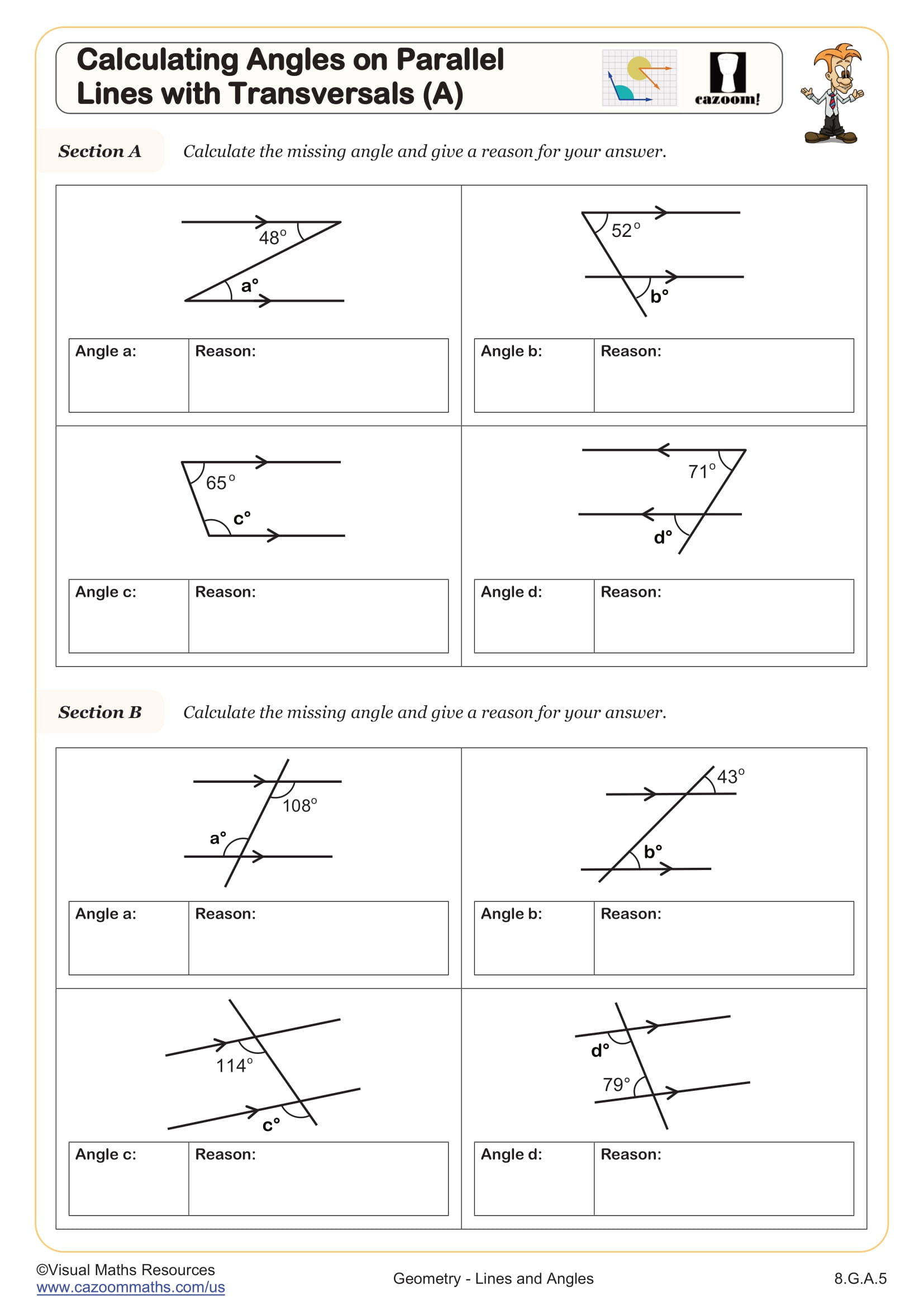
Calculating Angles on Parallel Lines with Transversals (A)
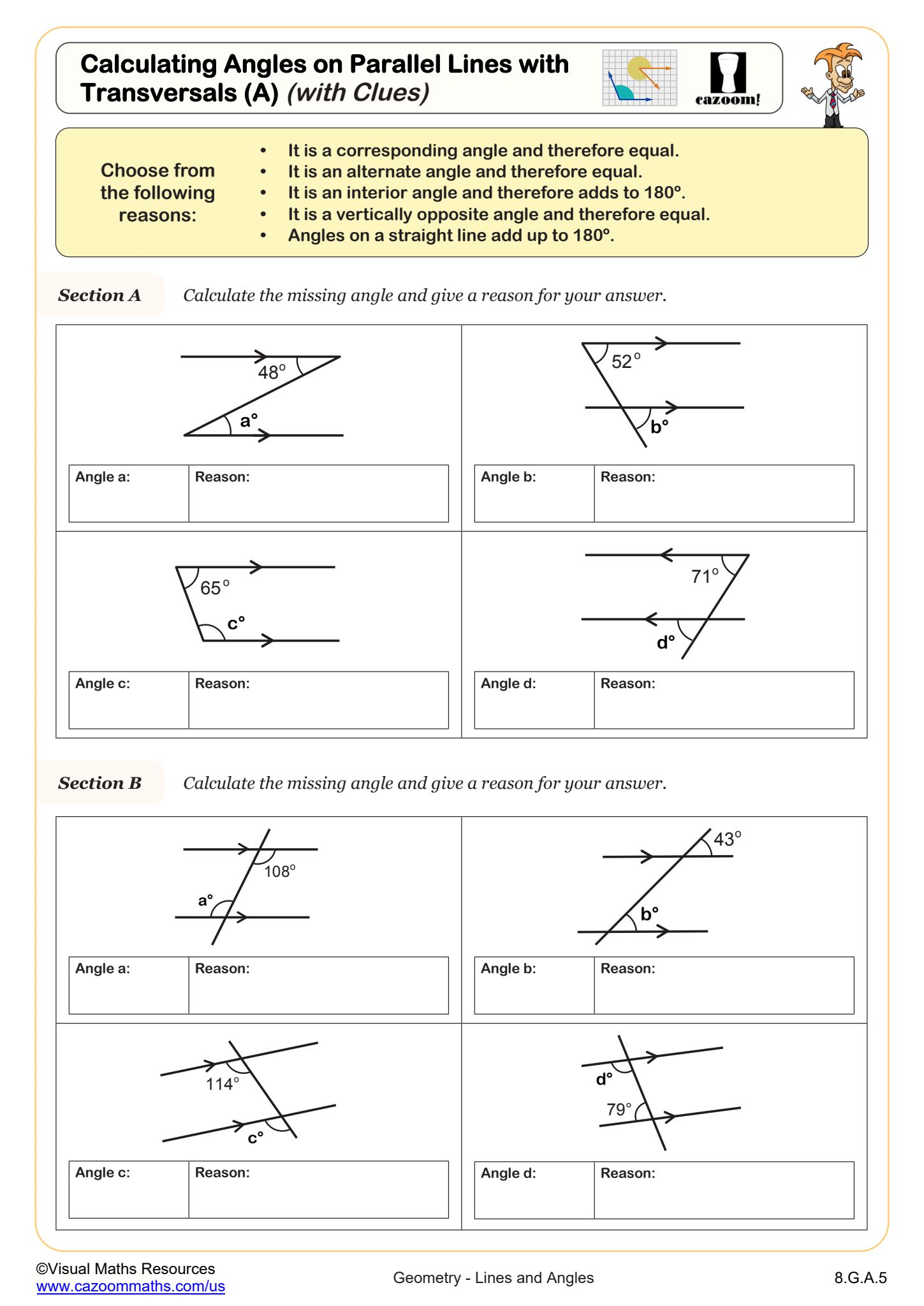
Calculating Angles on Parallel Lines with Transversals (A) (with clues)
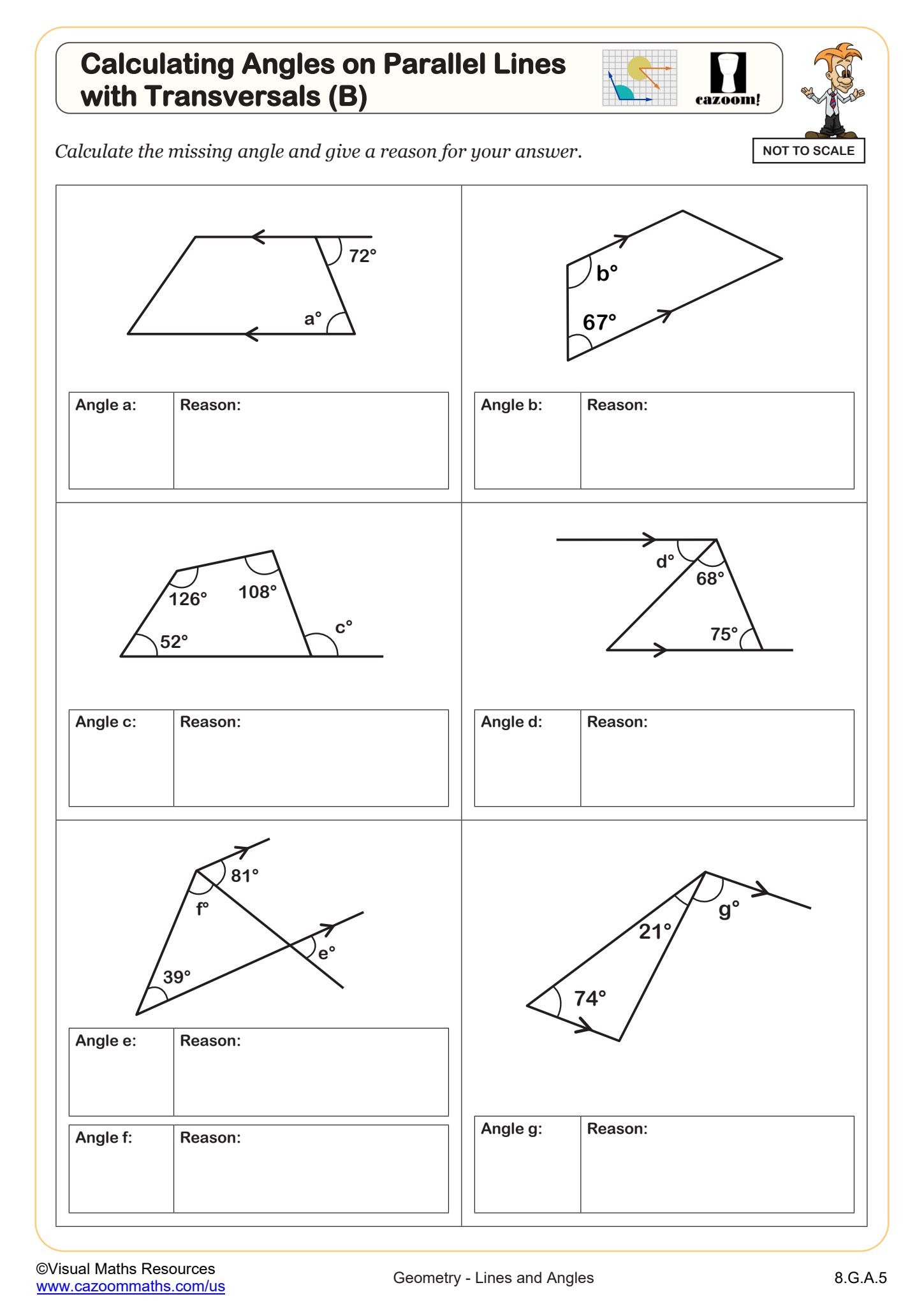
Calculating Angles on Parallel Lines with Transversals (B)
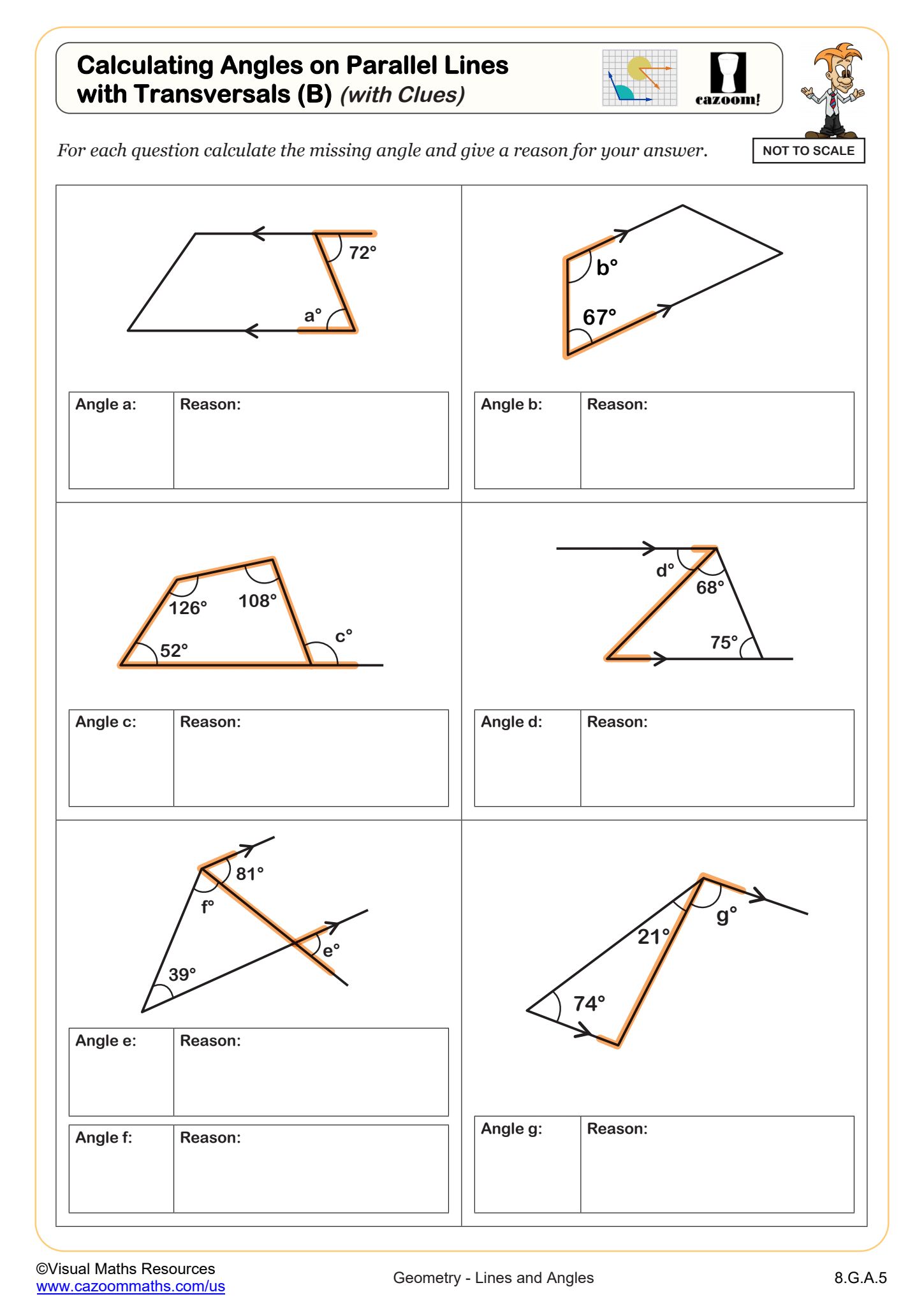
Calculating Angles on Parallel Lines with Transversals (B) (with clues)
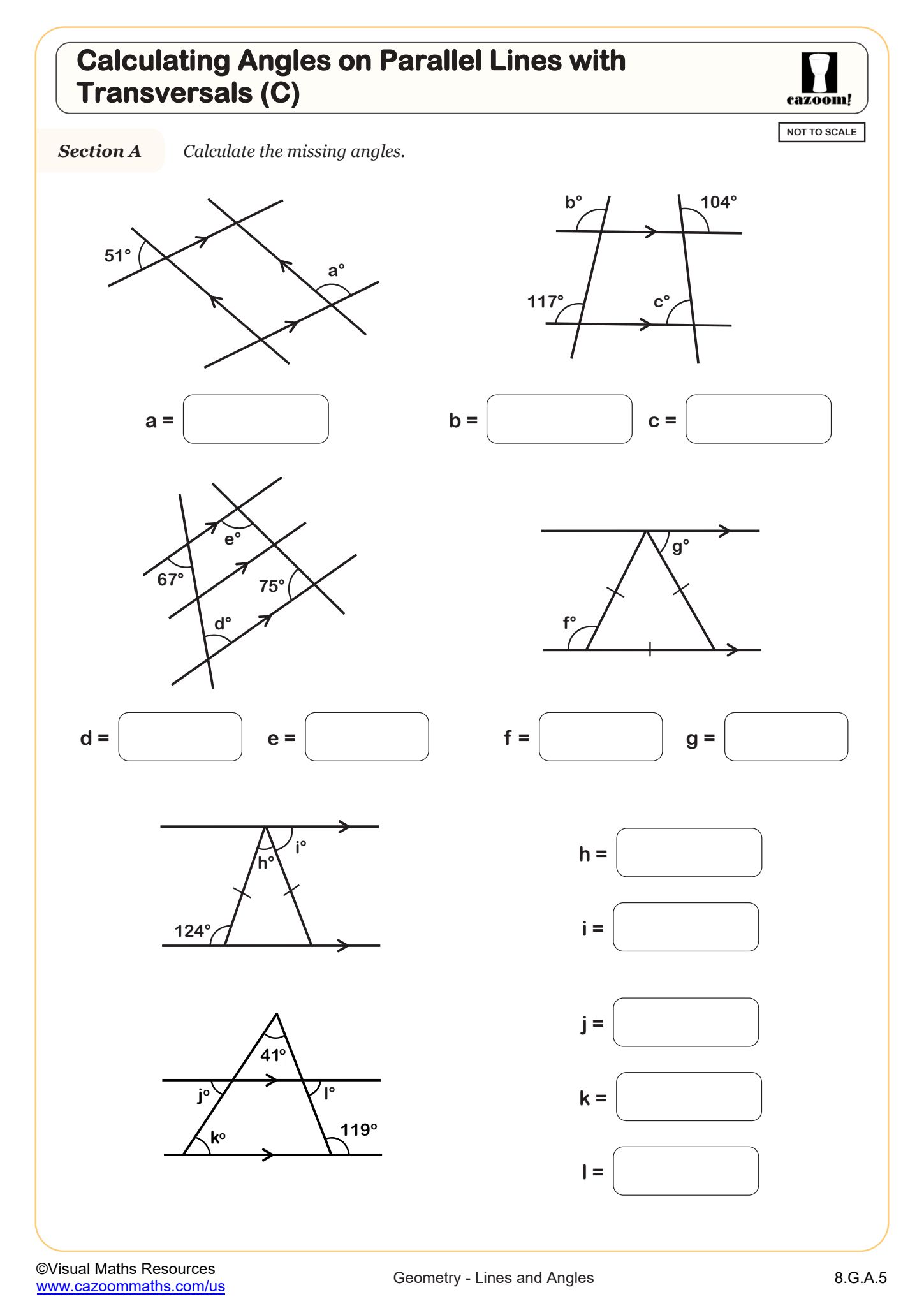
Calculating Angles on Parallel Lines with Transversals (C)
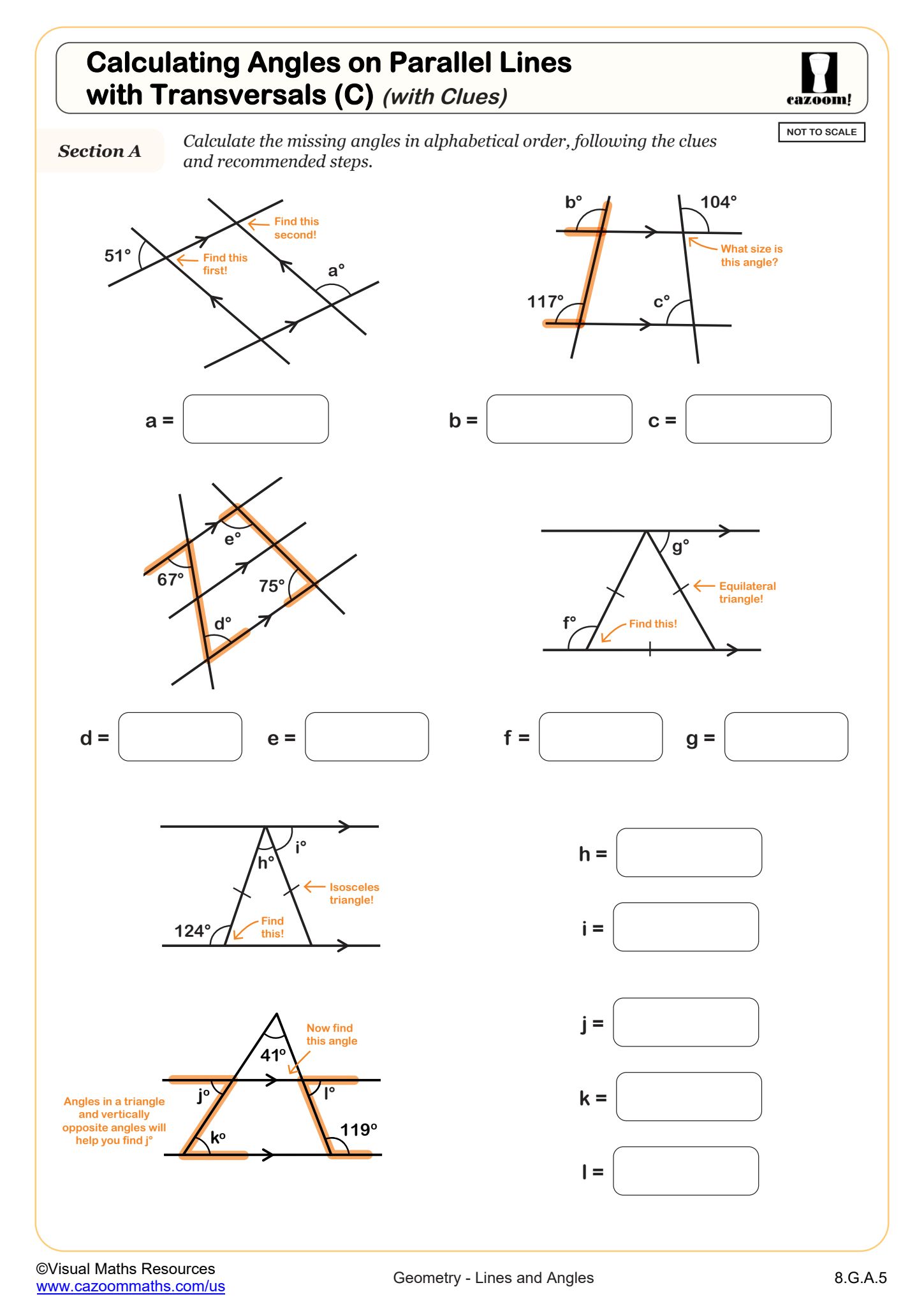
Calculating Angles on Parallel Lines with Transversals (C) (with clues)
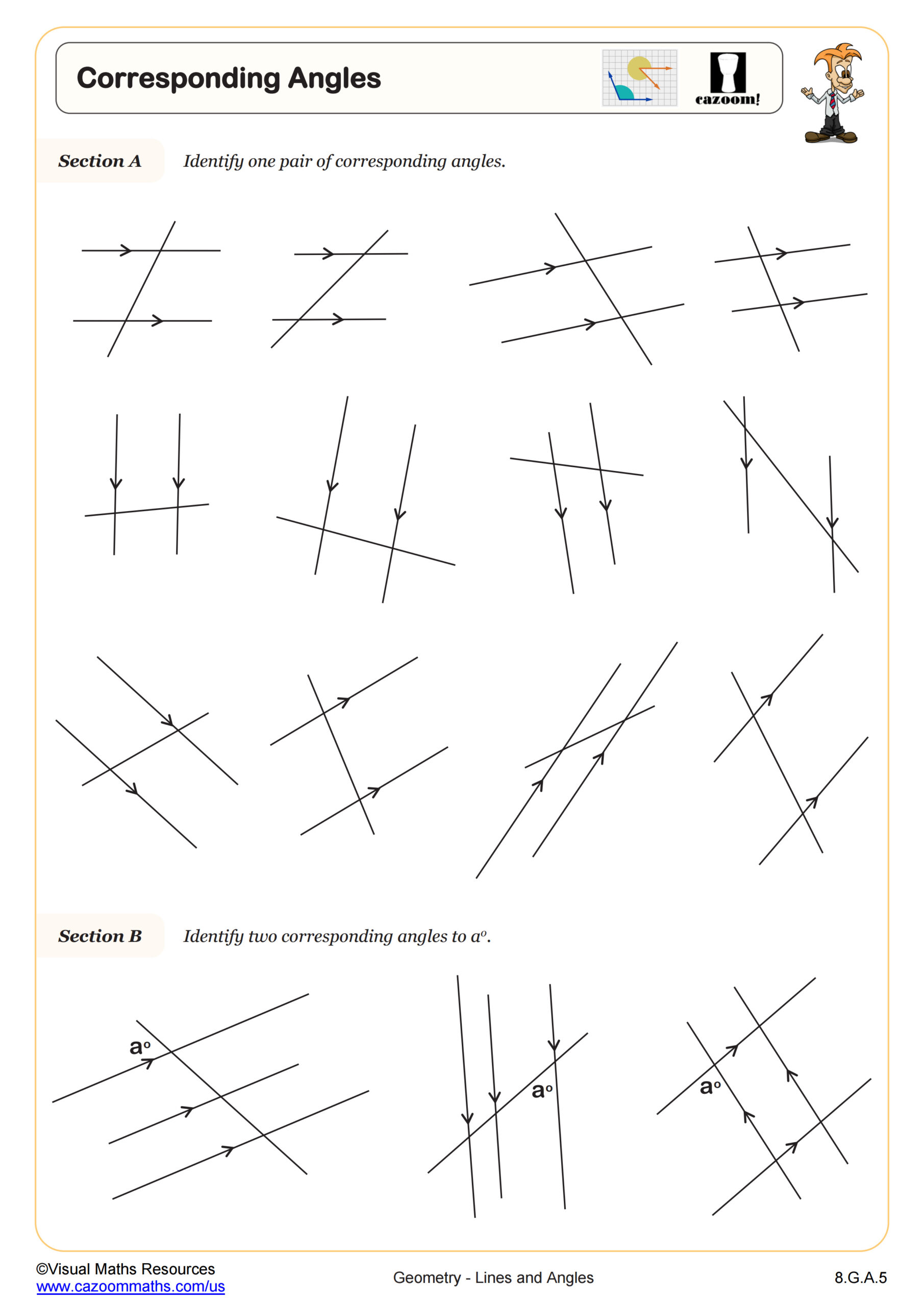
Corresponding Angles
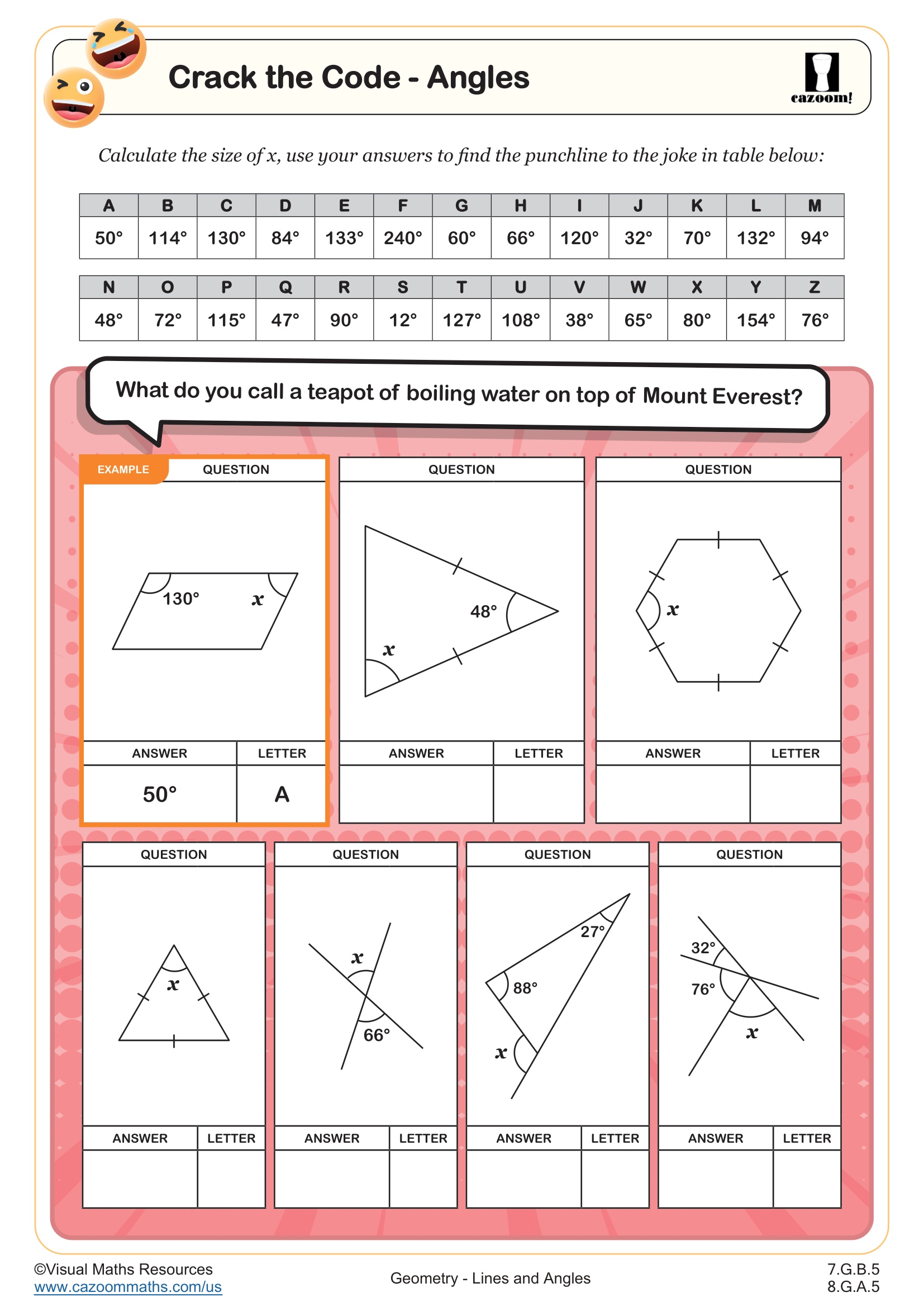
Crack the Code - Angles
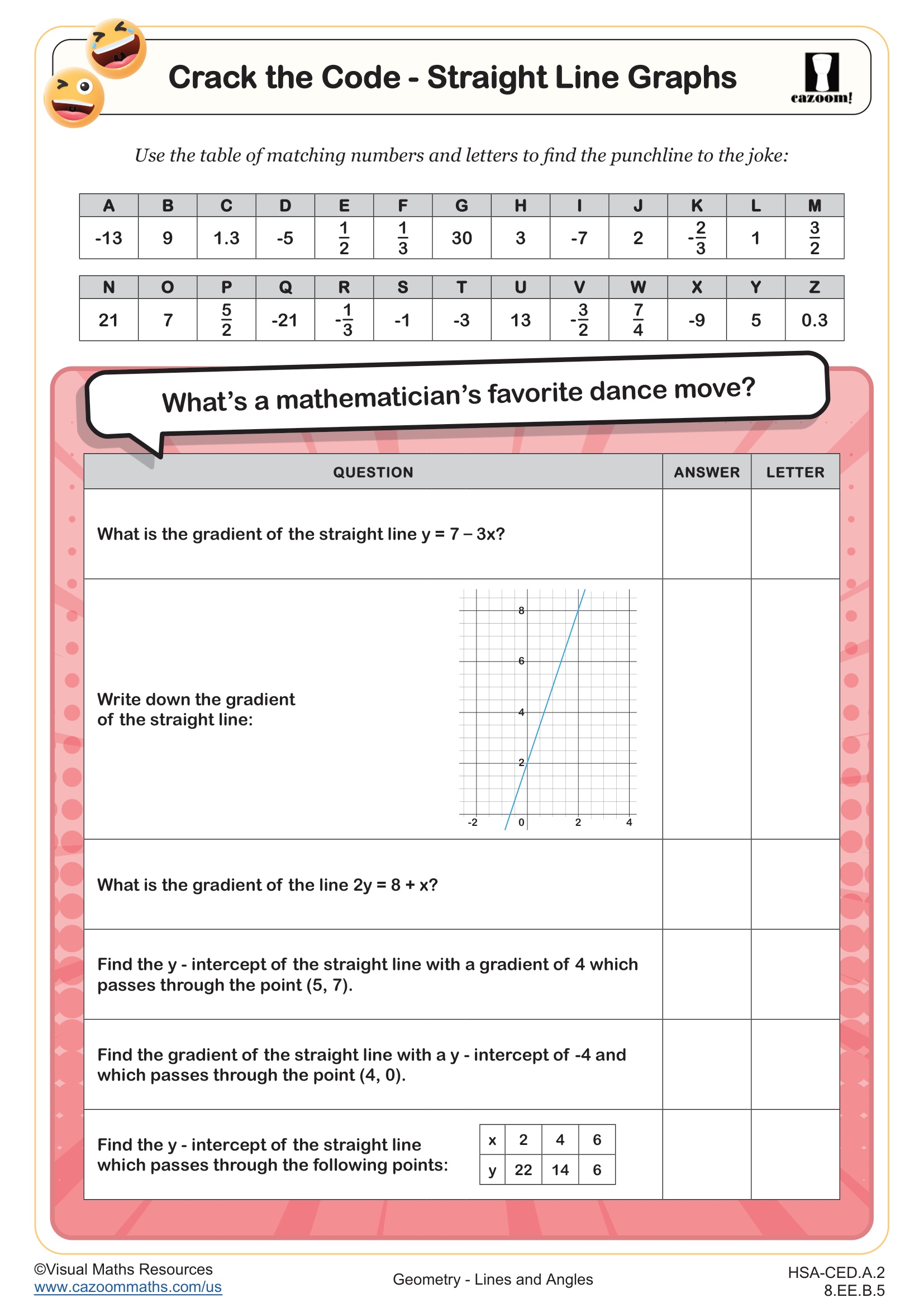
Crack the Code - Straight Line Graphs
All worksheets are created by the team of experienced teachers at Cazoom Math.
Where can Teachers find calculating angles on parallel lines with transversals (c) answers?
Complete answer keys for calculating angles on parallel lines with transversals (c) answers are included with every worksheet download. These solutions show the step-by-step process for identifying angle relationships like corresponding angles, alternate interior angles, and same-side interior angles when a transversal crosses parallel lines.
Teachers frequently observe that students correctly identify angle pairs but make arithmetic errors when setting up equations. The answer keys demonstrate proper equation setup, such as when corresponding angles are equal (3x + 15 = 2x + 40), helping teachers pinpoint whether errors stem from conceptual misunderstanding or computational mistakes.
Why are lines and angles concepts crucial for 8th grade math students?
Lines and angles form the geometric foundation that 8th graders need before tackling formal proofs in high school geometry. According to Common Core Standard 8.G.A.5, students must understand angle relationships created when parallel lines are cut by transversals, building toward more complex proof structures.
This topic connects directly to real-world applications in engineering and architecture, where professionals calculate structural angles and ensure parallel supports maintain proper relationships. Teachers notice that students who master these angle relationships in 8th grade show greater confidence when approaching geometric proofs and coordinate geometry in subsequent courses.
How do students typically approach vertical angles and linear pair problems?
Students often correctly identify that vertical angles are congruent but struggle when multiple angle relationships appear in the same diagram. The most effective approach involves teaching students to label known angles first, then work systematically through each relationship rather than jumping between different angle pairs.
Many teachers observe that students benefit from color-coding different angle relationships on complex diagrams. For instance, marking corresponding angles in blue and alternate interior angles in red helps students organize their thinking and avoid mixing up angle pair types when solving multi-step problems involving several transversals.
What's the most effective way to use these worksheets in classroom instruction?
Teachers find success using these worksheets as guided practice after introducing each angle relationship concept, rather than assigning all problems at once. Starting with simpler diagrams and gradually increasing complexity helps students build confidence before tackling multi-step problems that combine several angle relationships.
The answer keys allow teachers to implement peer checking strategies where students work in pairs to verify solutions and explain their reasoning. This approach helps identify conceptual gaps early, particularly when students confuse alternate interior angles with corresponding angles or struggle with setting up equations from angle relationship statements.