8th Grade Real Life Graphs Worksheets
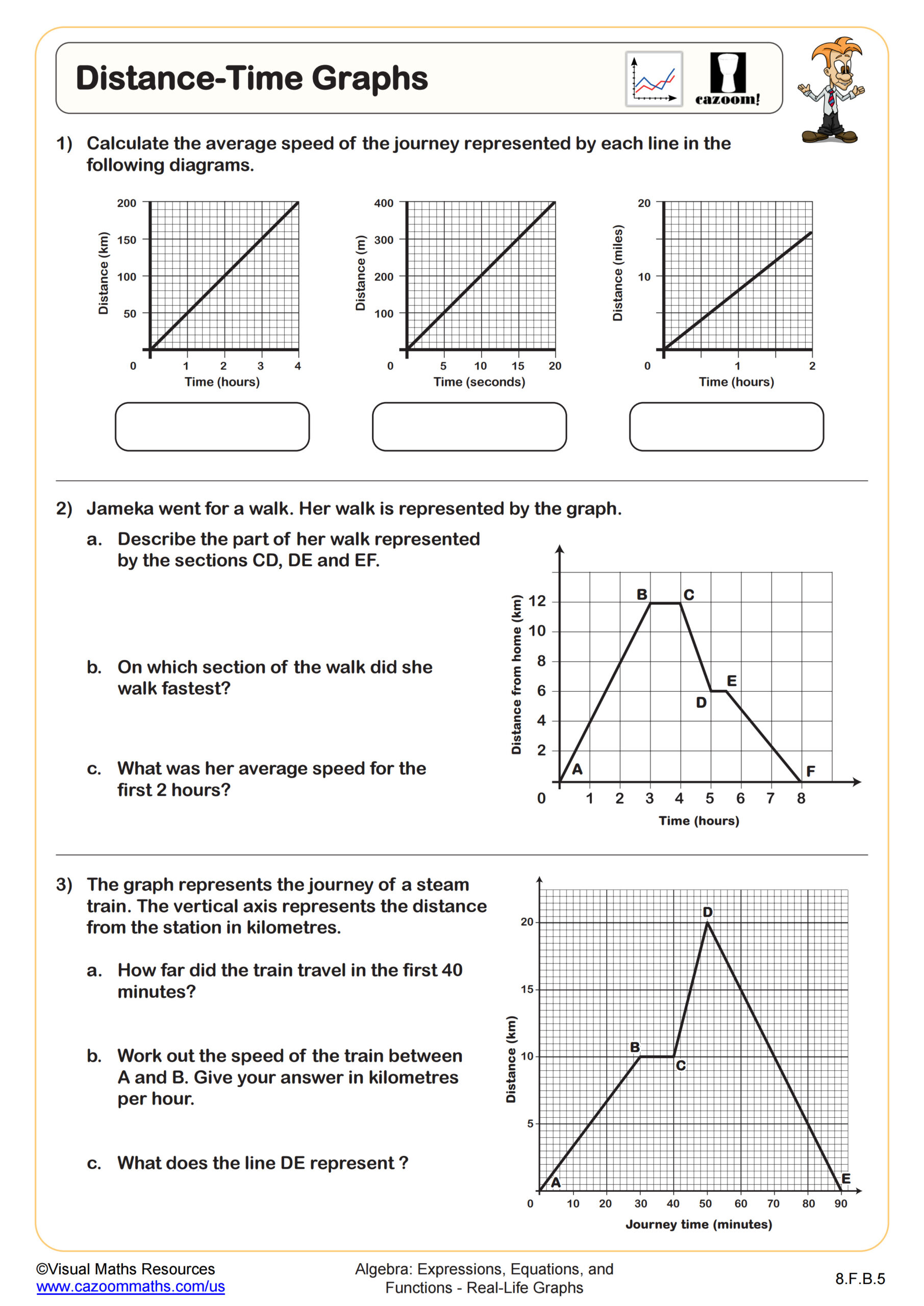
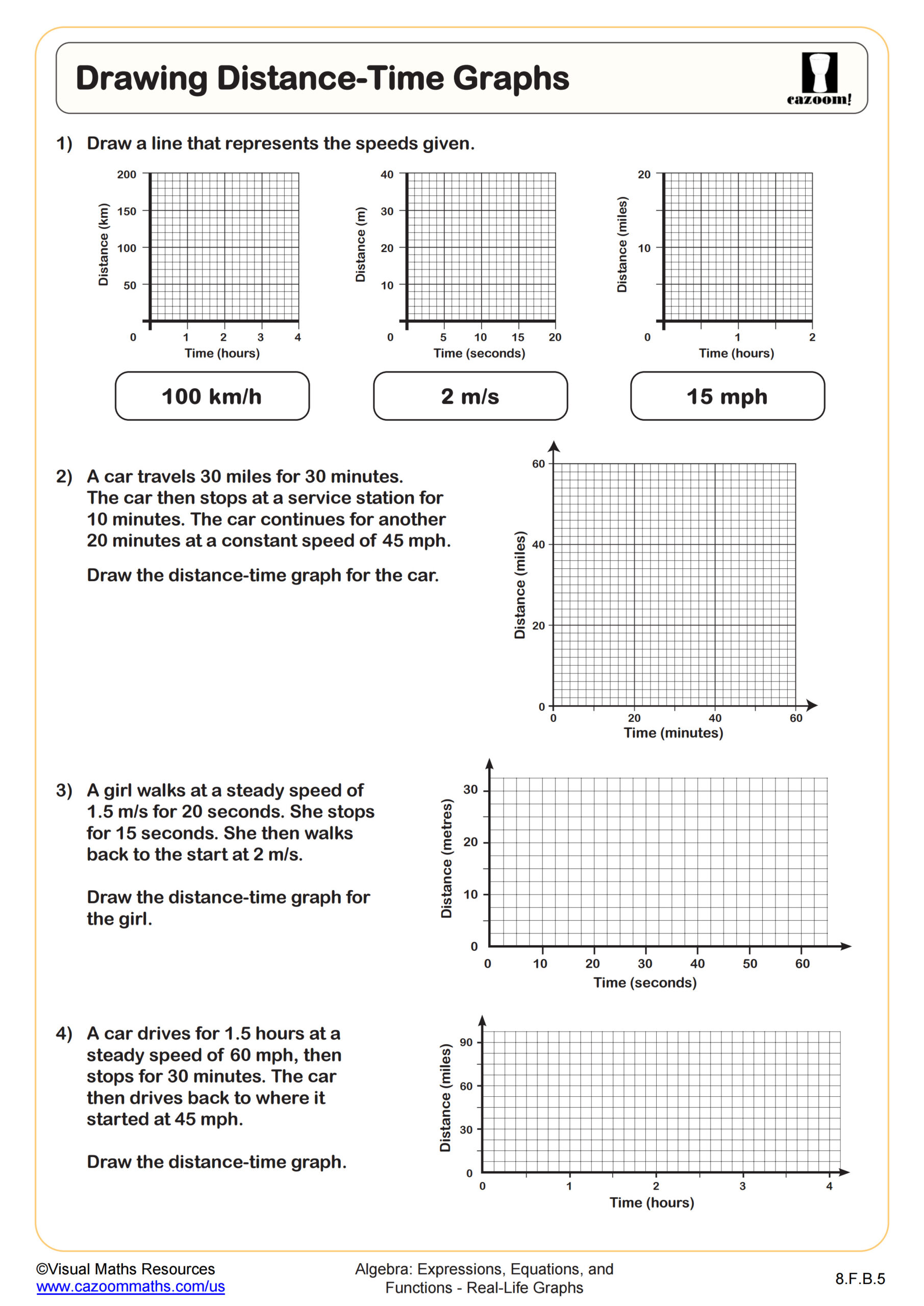
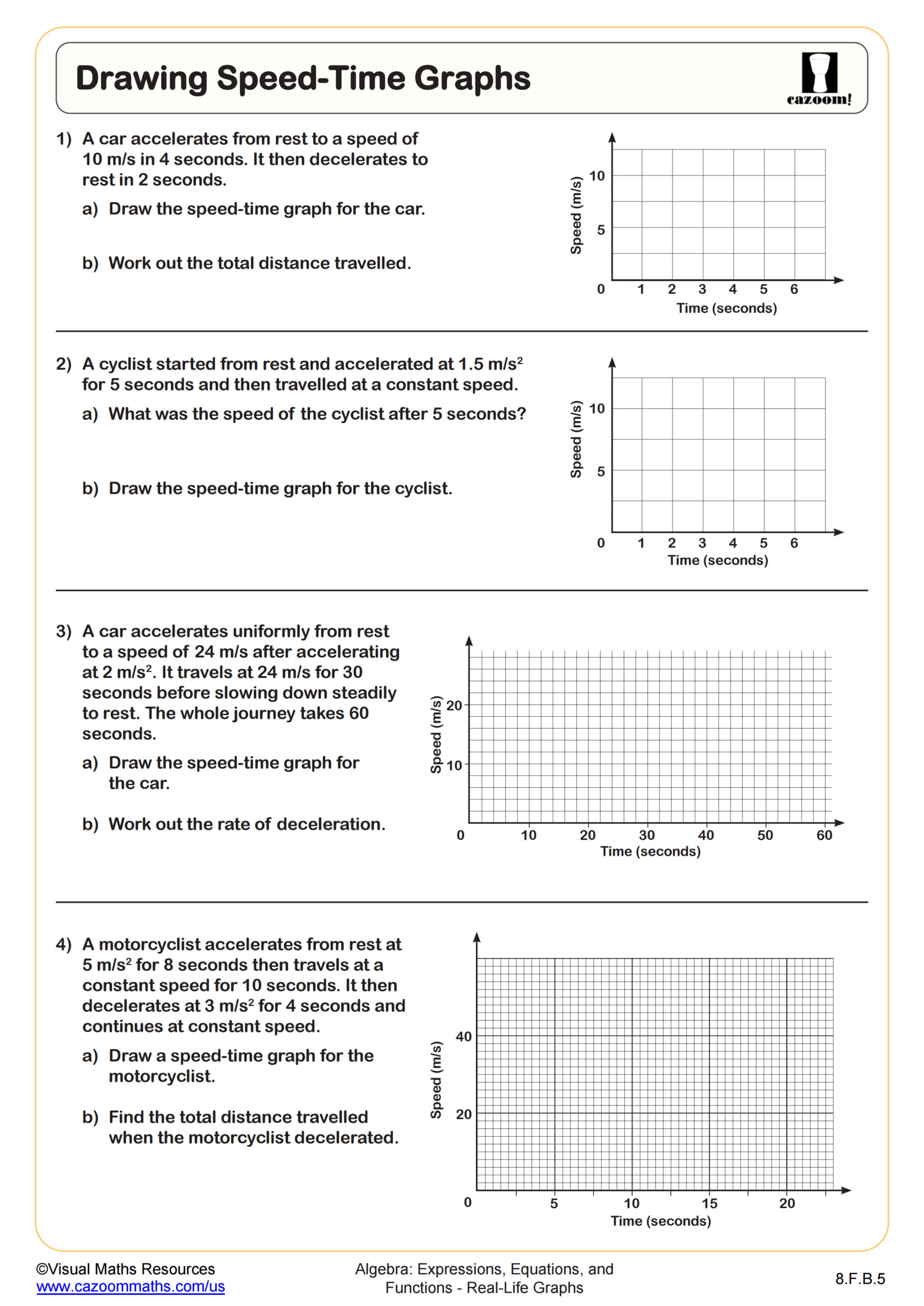
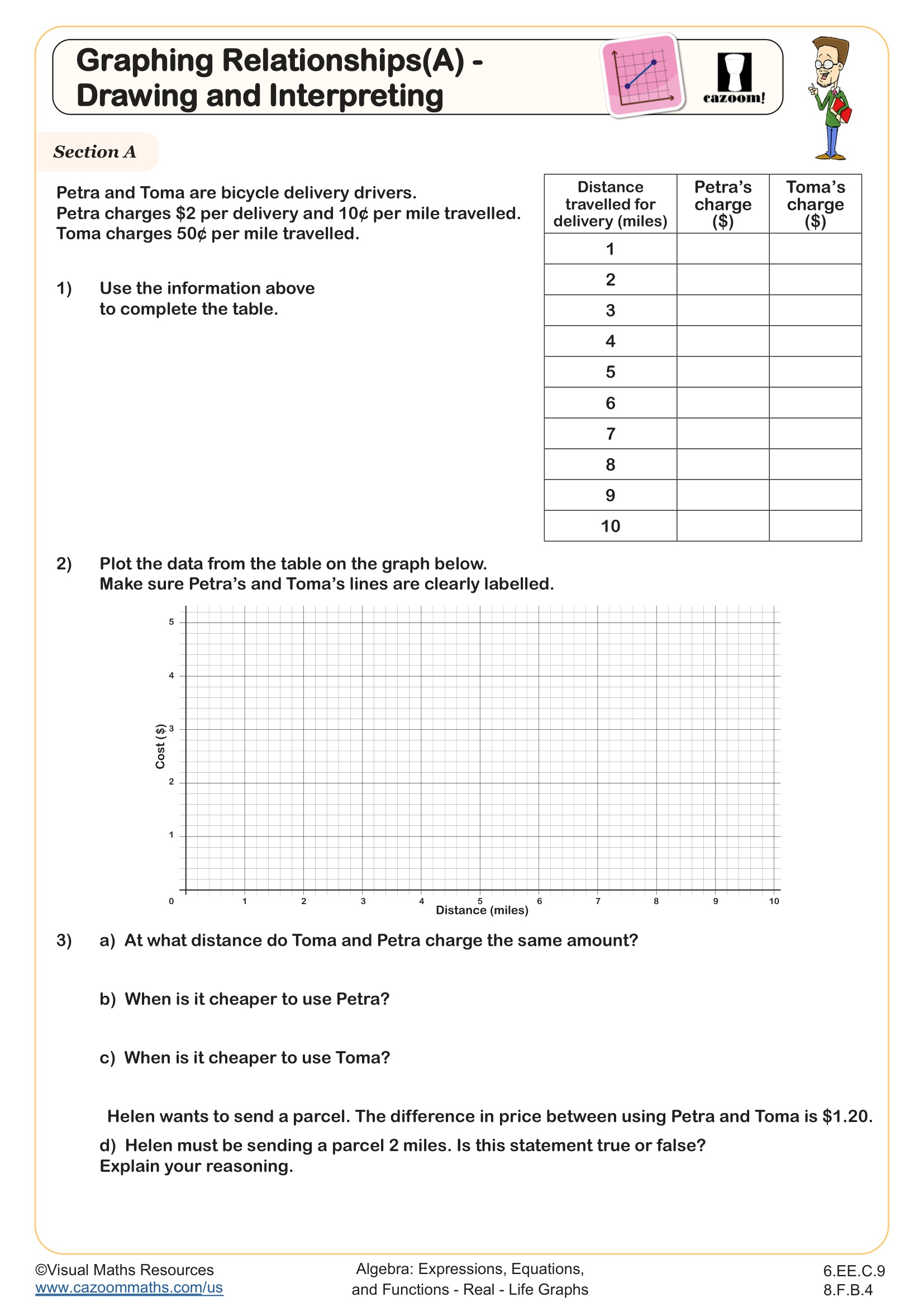
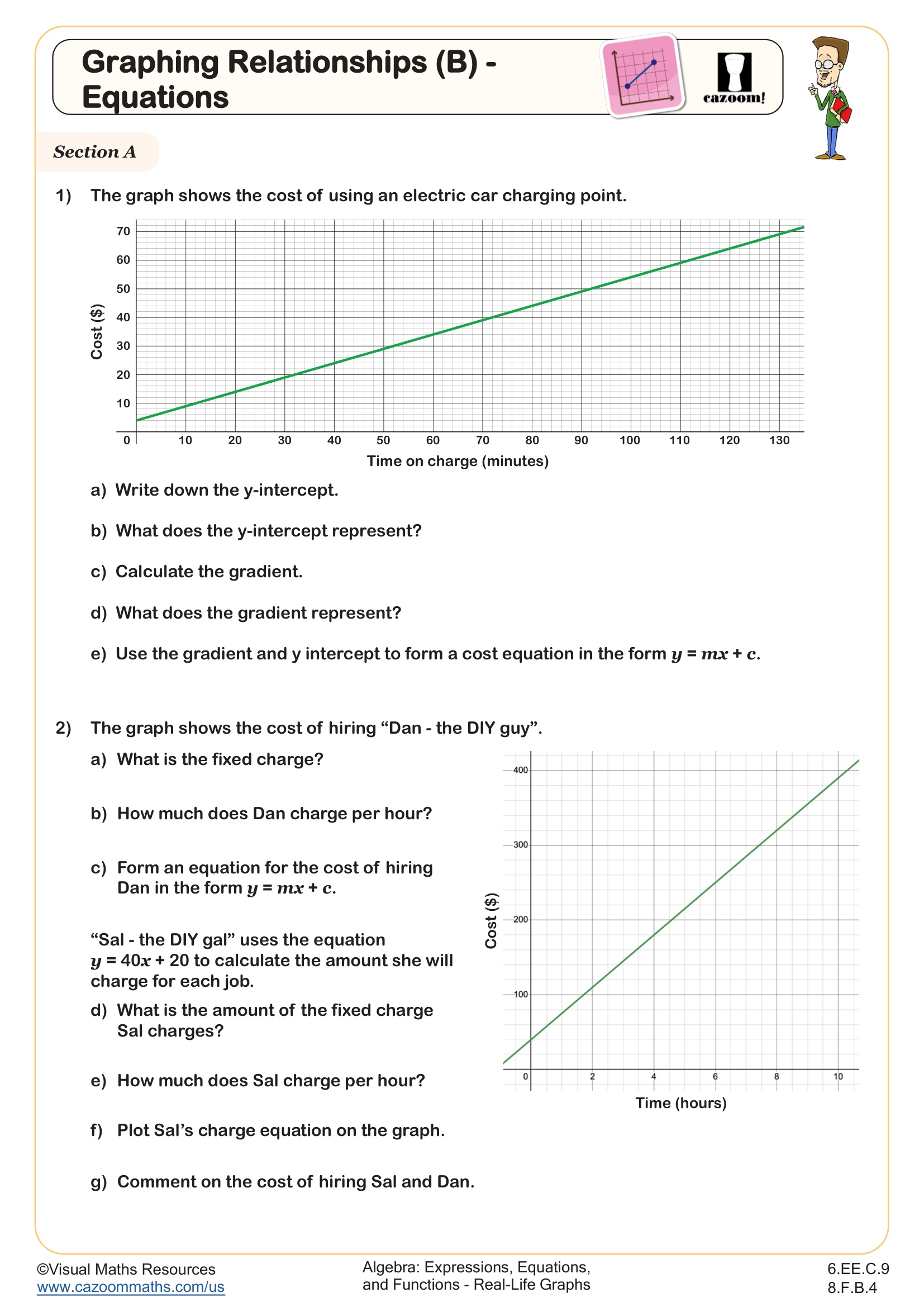
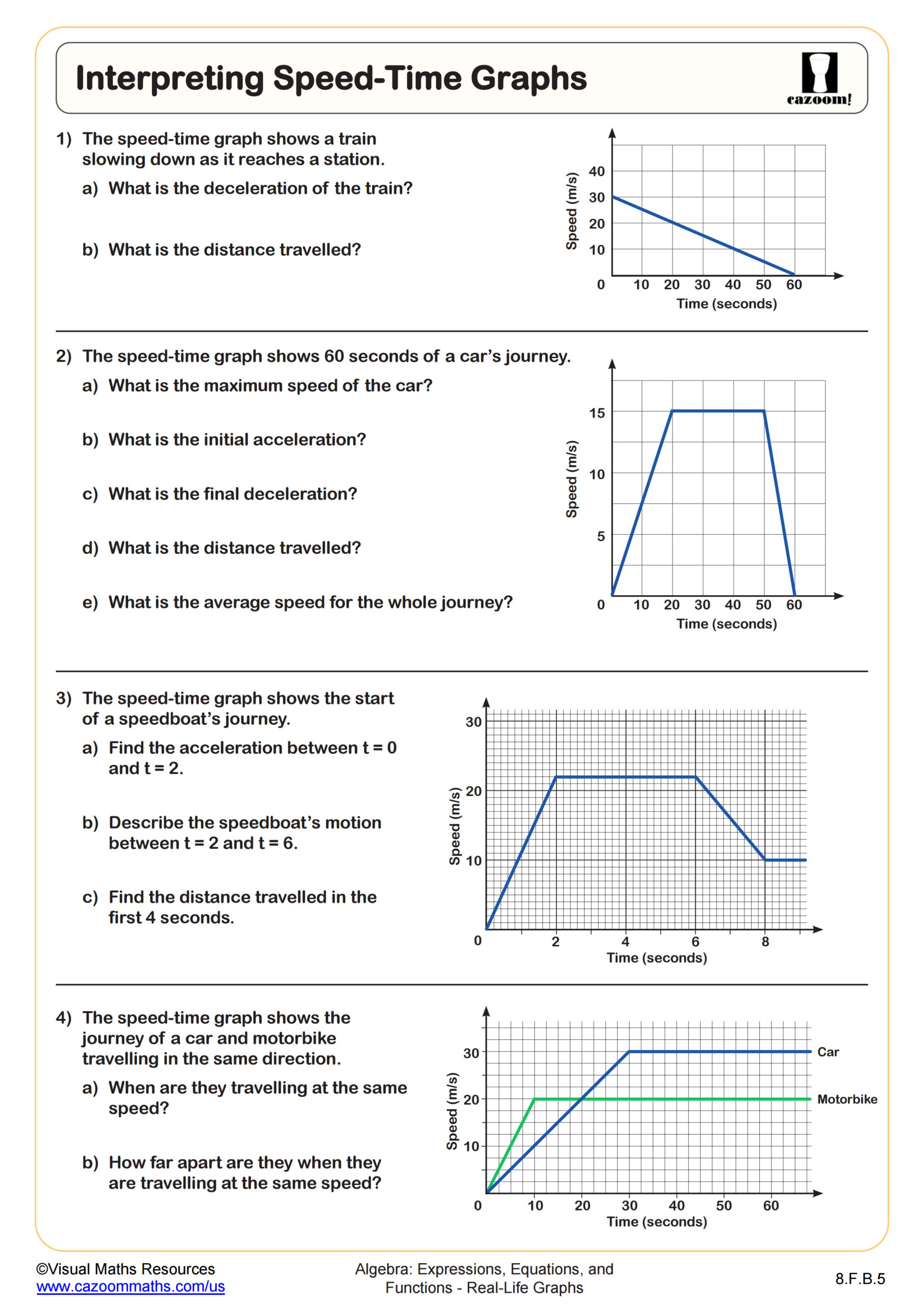
All worksheets are created by the team of experienced teachers at Cazoom Math.
What makes 8th grade graphing worksheets effective for real-world applications?
Effective 8th grade graphing worksheets present mathematical concepts through authentic scenarios that students can relate to, such as analyzing cell phone data usage or tracking savings account balances. These materials align with Common Core Standard 8.F.5, which requires students to describe the functional relationship between two quantities by analyzing graphs.
Teachers report that students show significantly more engagement when graphs represent familiar situations rather than abstract mathematical relationships. However, many students initially focus only on reading individual points rather than understanding the overall trend or rate of change, requiring targeted instruction on slope interpretation in context.
How do real world graphs worksheets progress from 7th to 8th grade level?
Seventh grade students typically work with simpler linear relationships and basic coordinate plotting, while 8th grade real world graphs worksheets introduce more complex scenarios involving non-linear functions, piecewise functions, and multiple variables. The progression emphasizes deeper analysis of what mathematical relationships mean in practical contexts.
Eighth graders encounter graphs showing exponential growth in technology adoption, quadratic relationships in projectile motion, and step functions in shipping costs. Teachers notice that students who mastered basic graphing in 7th grade still need scaffolding to interpret these more sophisticated real-world applications and make predictions based on graph behavior.
Why do students struggle with interpreting slope in real world contexts?
Students often memorize that slope equals rise over run but fail to connect this calculation to what the slope represents in real-world situations. For example, they might correctly calculate that a line has slope 2 but struggle to explain that this means temperature increases 2 degrees per hour in a weather scenario.
Classroom observations show that students frequently confuse steeper slopes with higher values rather than faster rates of change. When analyzing a graph showing two different savings plans, students might incorrectly assume the line ending at a higher point represents the better plan, missing that a steeper slope indicates faster growth regardless of starting position.
How should teachers use these worksheets to maximize student understanding?
Teachers find success by having students work through problems collaboratively first, discussing what each graph element represents before attempting calculations. The answer keys provide detailed explanations that teachers can use to model proper interpretation techniques, emphasizing the connection between mathematical features and real-world meaning.
Effective implementation involves having students create their own real-world scenarios for given graphs, which reveals whether they truly understand the relationships. Teachers report that students who can explain graphs in their own words demonstrate much stronger performance on assessments compared to those who only practice computational skills without conceptual understanding.