8th Grade Using a Calculator Worksheets
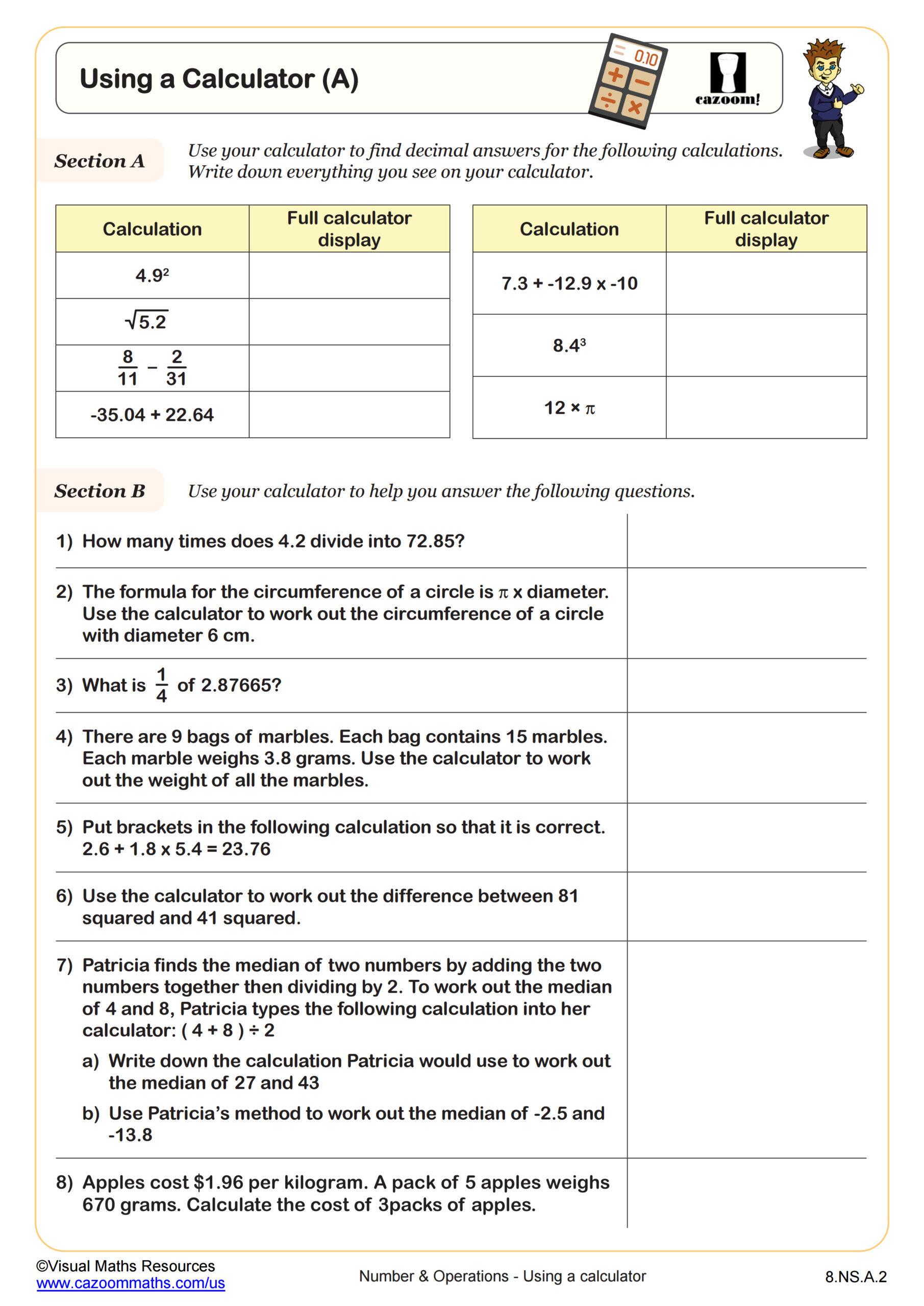
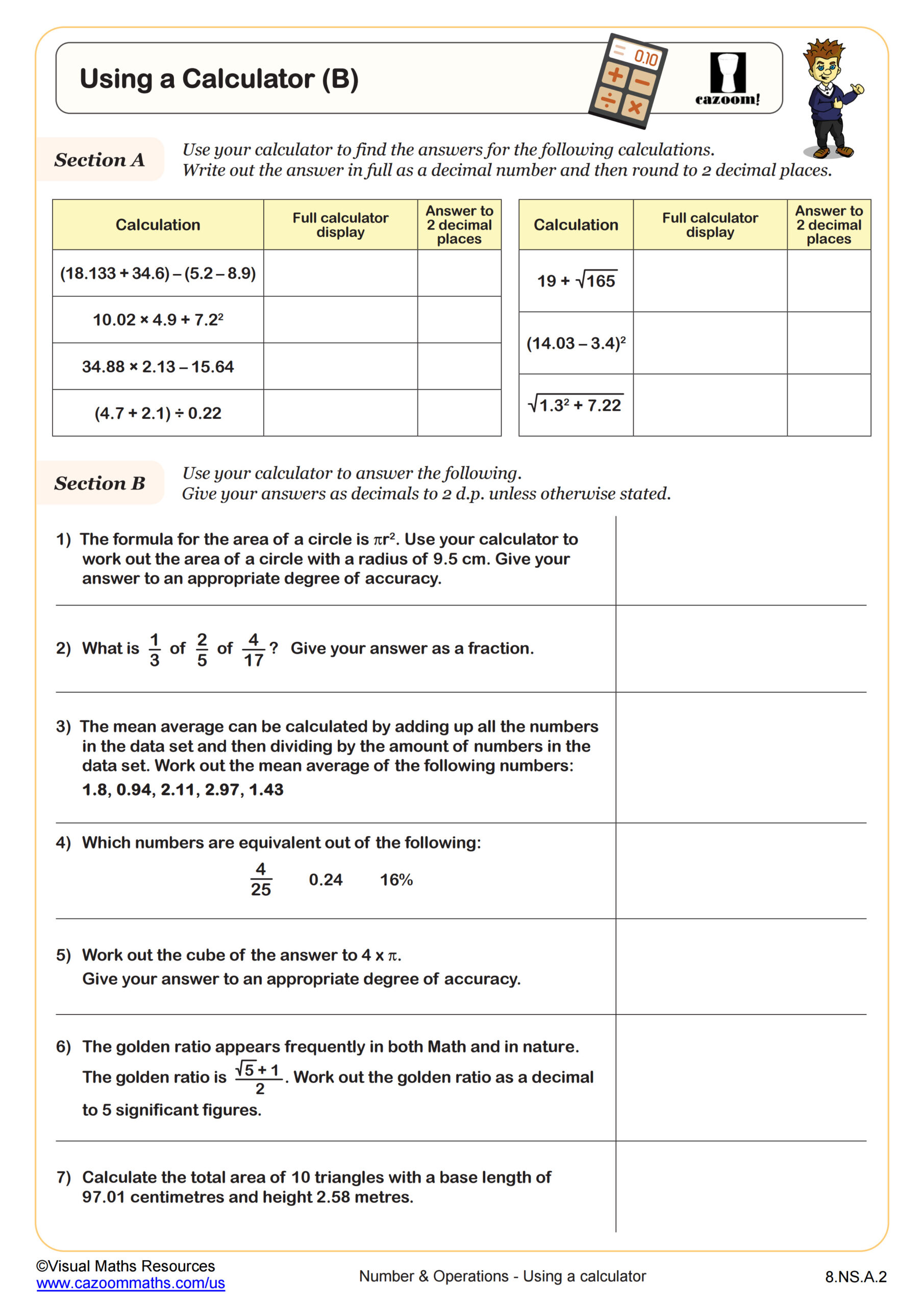
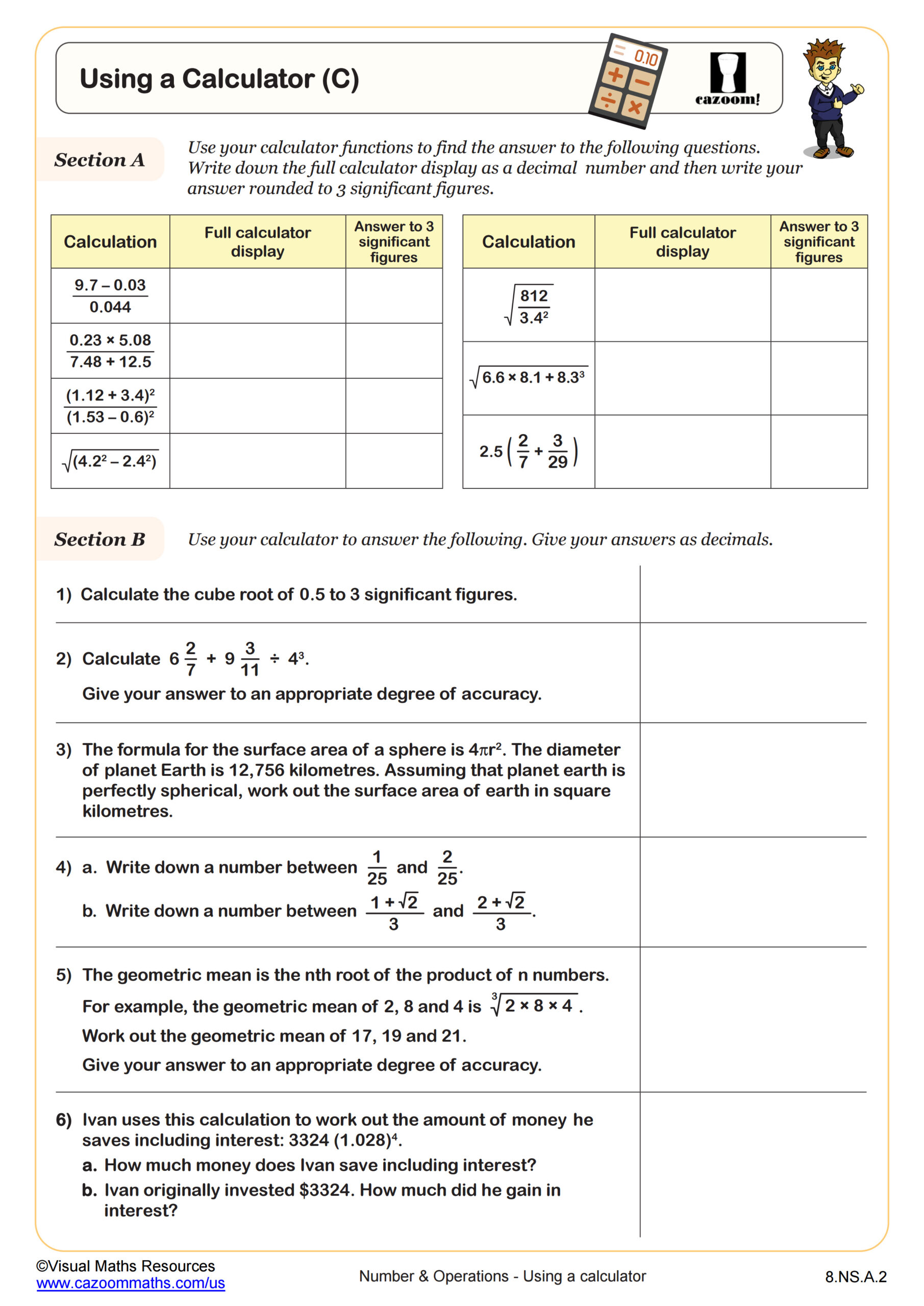
All worksheets are created by the team of experienced teachers at Cazoom Math.
What makes an effective calculator for grade 8 math instruction?
An effective grade 8 calculator program focuses on strategic calculator use rather than basic computation replacement. Students learn when calculator use enhances problem-solving efficiency, particularly for complex decimals, scientific notation, and real-world applications involving multiple operations. The curriculum emphasizes interpreting calculator displays and understanding when manual calculation provides better number sense.
Teachers notice students often input expressions left-to-right without considering order of operations, leading to incorrect results. Effective worksheets include problems where students must first predict reasonable answers, then verify using calculators, building both computational fluency and critical thinking skills core for high school mathematics.
How do calculator skills progress from 7th to 8th grade?
Calculator instruction builds from 7th grade basic operations to 8th grade advanced applications including scientific notation, complex fraction operations, and multi-step problem solving. Seventh graders typically focus on decimal calculations and percentage problems, while eighth graders tackle exponential expressions and coordinate plane calculations requiring precise decimal values.
The progression emphasizes calculator efficiency alongside mental math retention. Teachers observe that students who master calculator use in 8th grade demonstrate stronger algebraic reasoning in high school, as they can focus on conceptual understanding rather than computational mechanics. This foundation proves foundational for geometry and algebra courses requiring frequent decimal approximations.
Why do students make errors when using calculators for multi-step problems?
Students frequently make input errors during multi-step calculations because they enter operations sequentially without considering mathematical hierarchy. Many calculators follow algebraic logic, but students often input expressions as they read them, creating order of operations mistakes that produce dramatically incorrect results.
Teachers find that students benefit from explicitly writing out calculator entry sequences before inputting. Using a calculator worksheet approach helps students develop systematic habits: identify the complete expression, determine parentheses placement, then execute step-by-step. This methodical approach reduces errors and builds confidence for standardized testing situations where calculator precision becomes crucial.
How should teachers structure calculator practice sessions effectively?
Effective calculator sessions begin with estimation exercises where students predict approximate answers before calculating. This approach develops number sense and helps identify unreasonable calculator results. Teachers should model proper input sequences using classroom display calculators, demonstrating parentheses usage and memory functions for complex expressions.
Using calculator worksheets with varied problem types helps students recognize when calculators enhance versus hinder problem-solving. Teachers observe better results when sessions alternate between calculator-appropriate problems and mental math exercises, maintaining computational fluency while building technological proficiency. Answer keys enable immediate error correction, preventing misconceptions from becoming ingrained habits during independent practice.