8th Grade Volume and Surface Area Worksheets
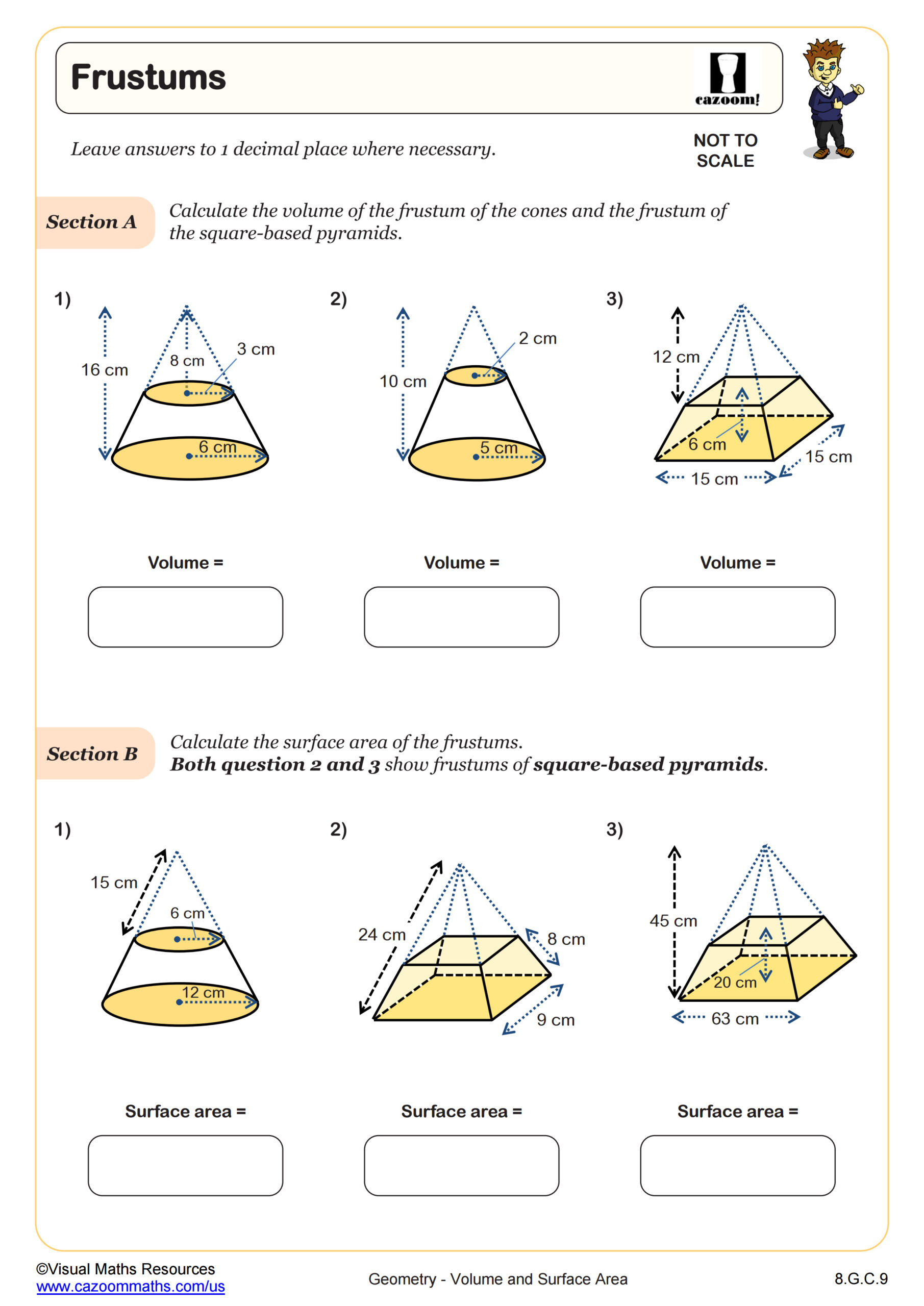
Frustums
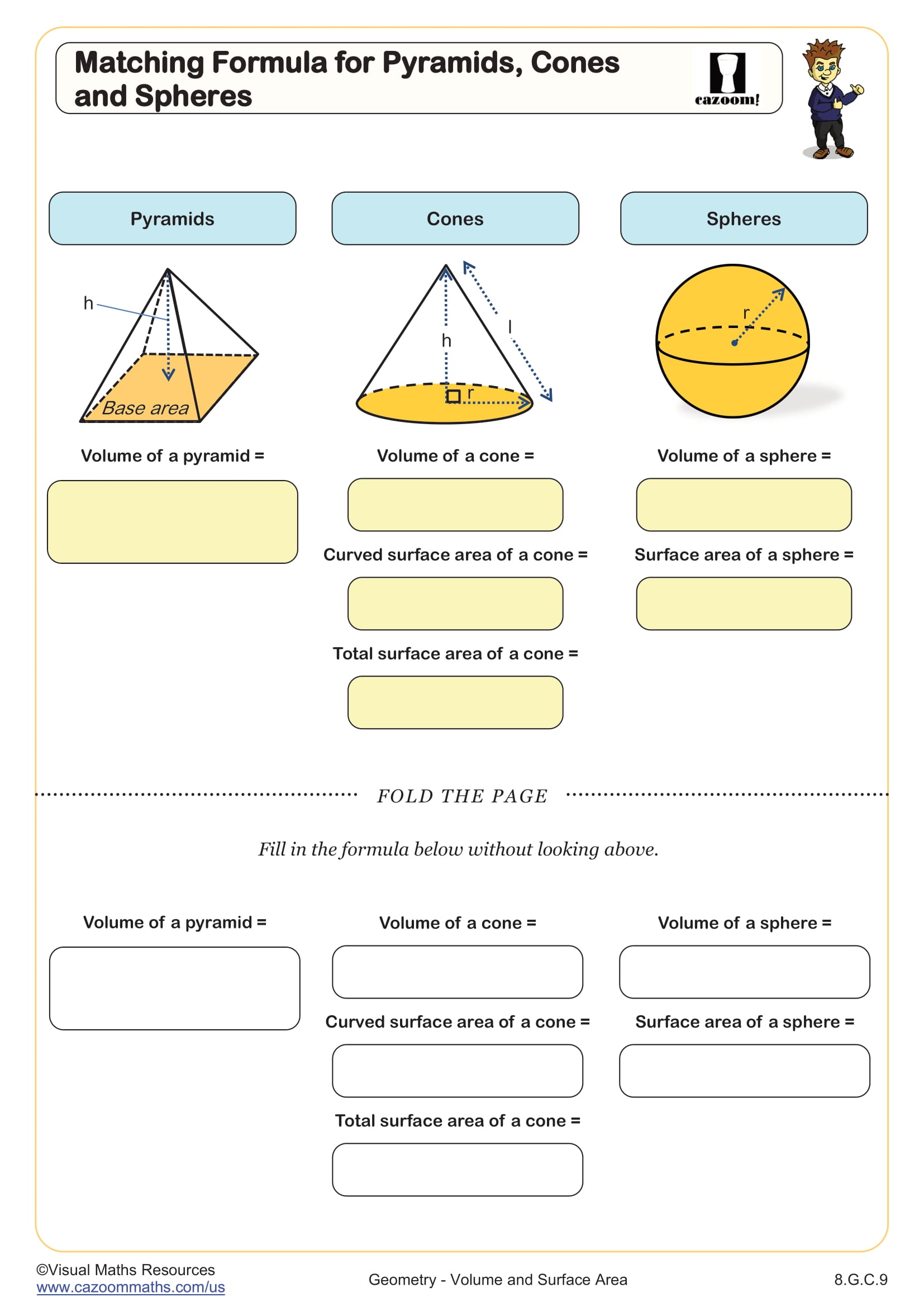
Matching Formulas for Pyramids, Cones, and Spheres
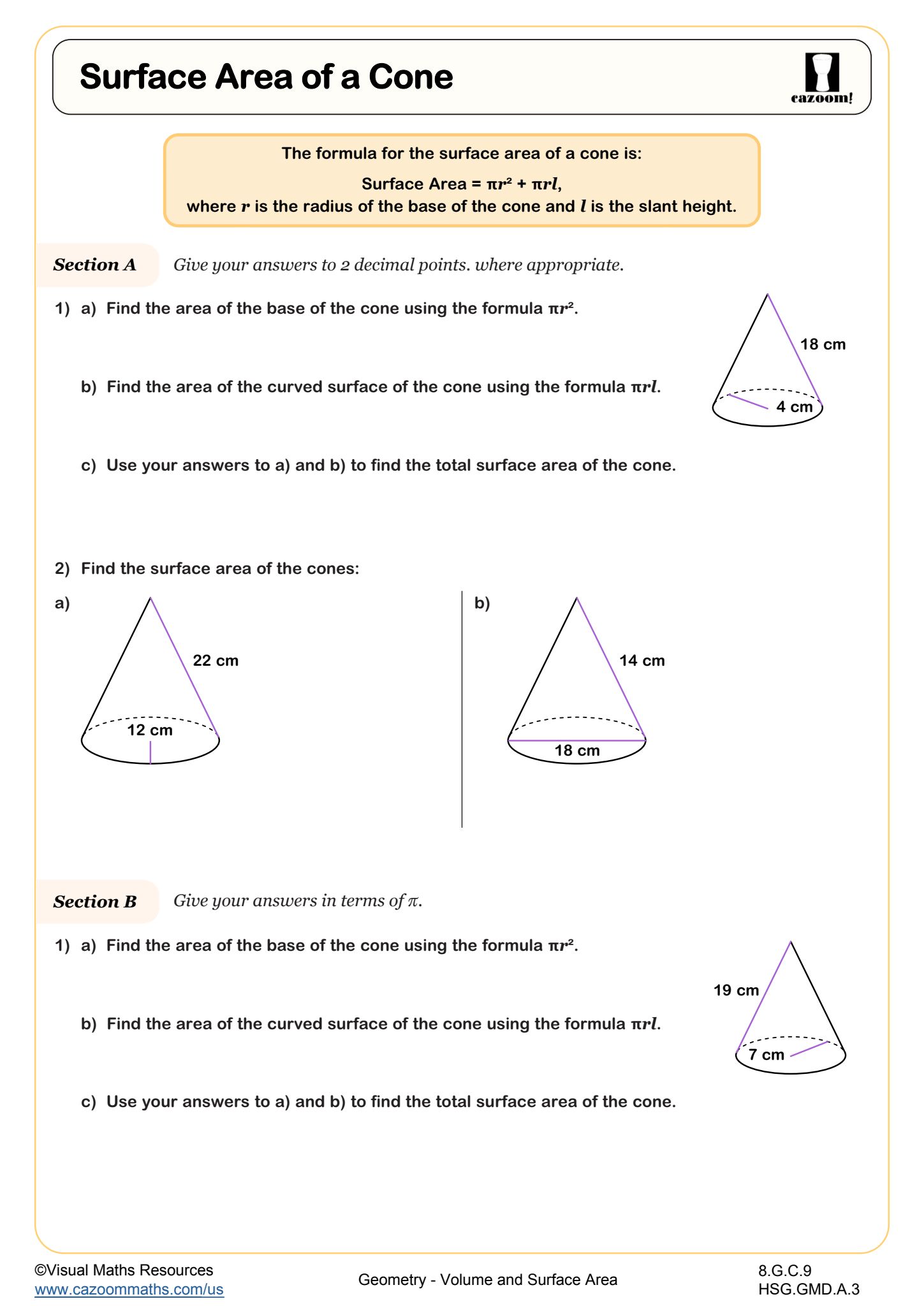
Surface Area of a Cone
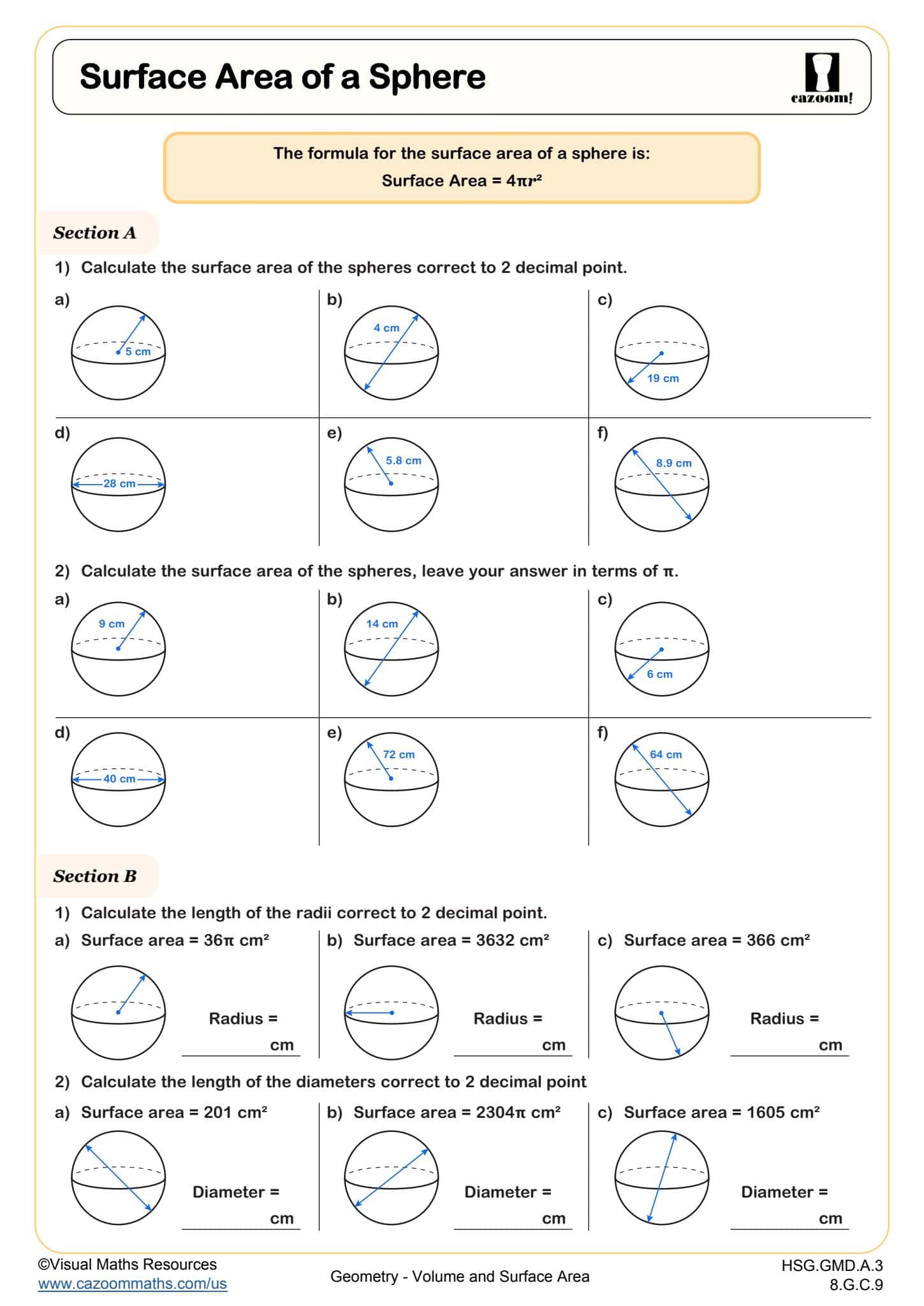
Surface Area of a Sphere
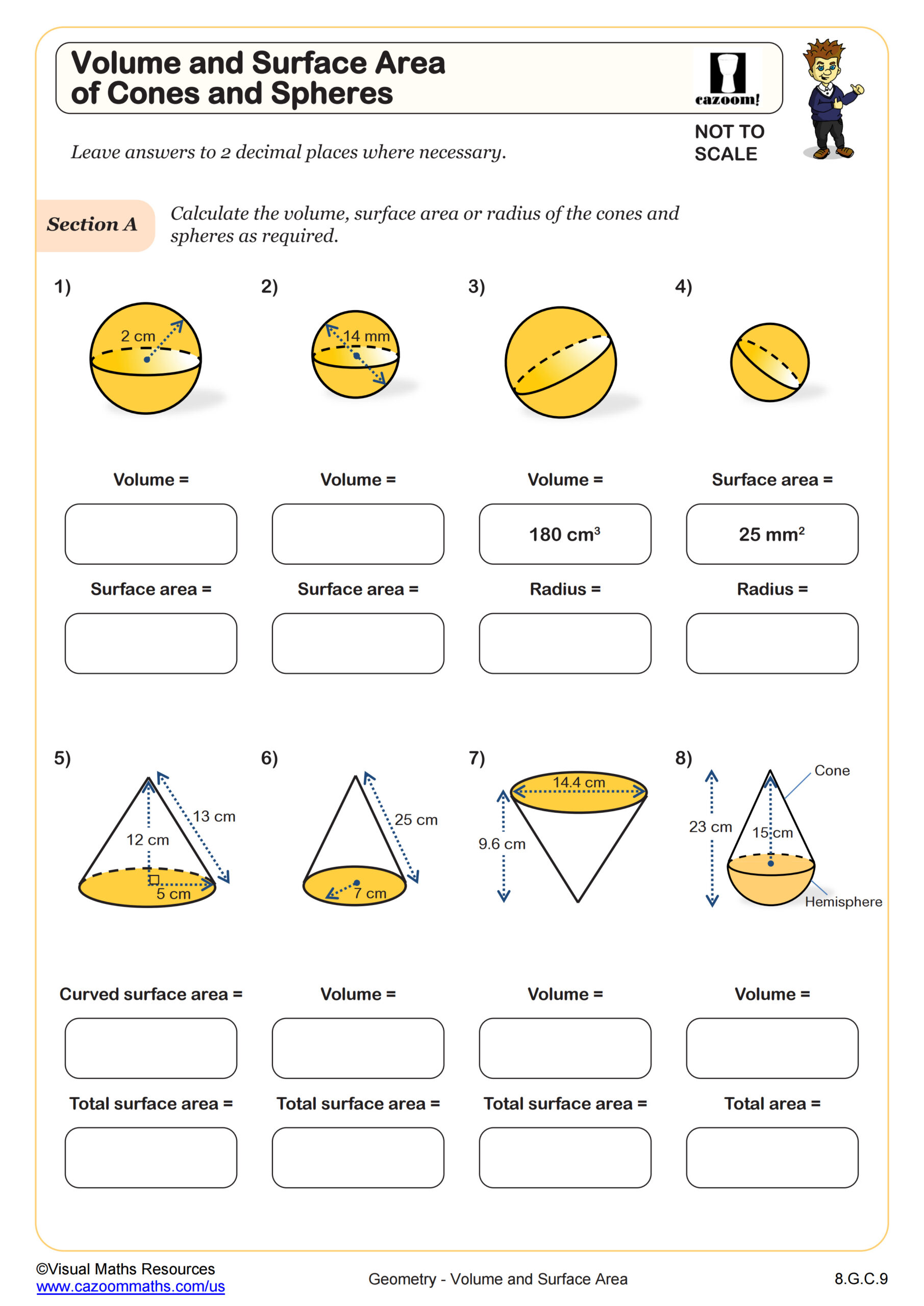
Volume and Surface Area of Cones and Spheres
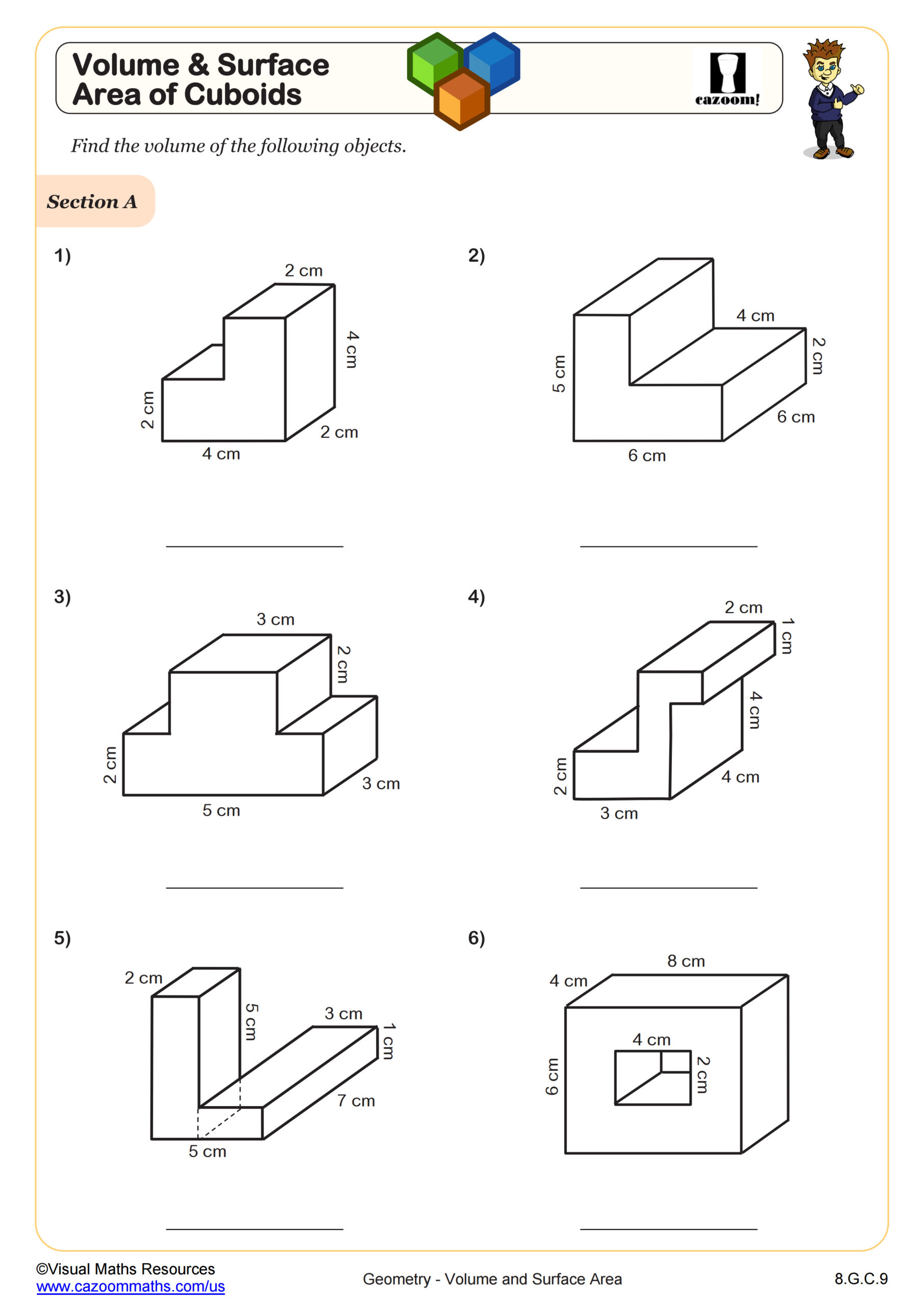
Volume and Surface Area of Cuboid
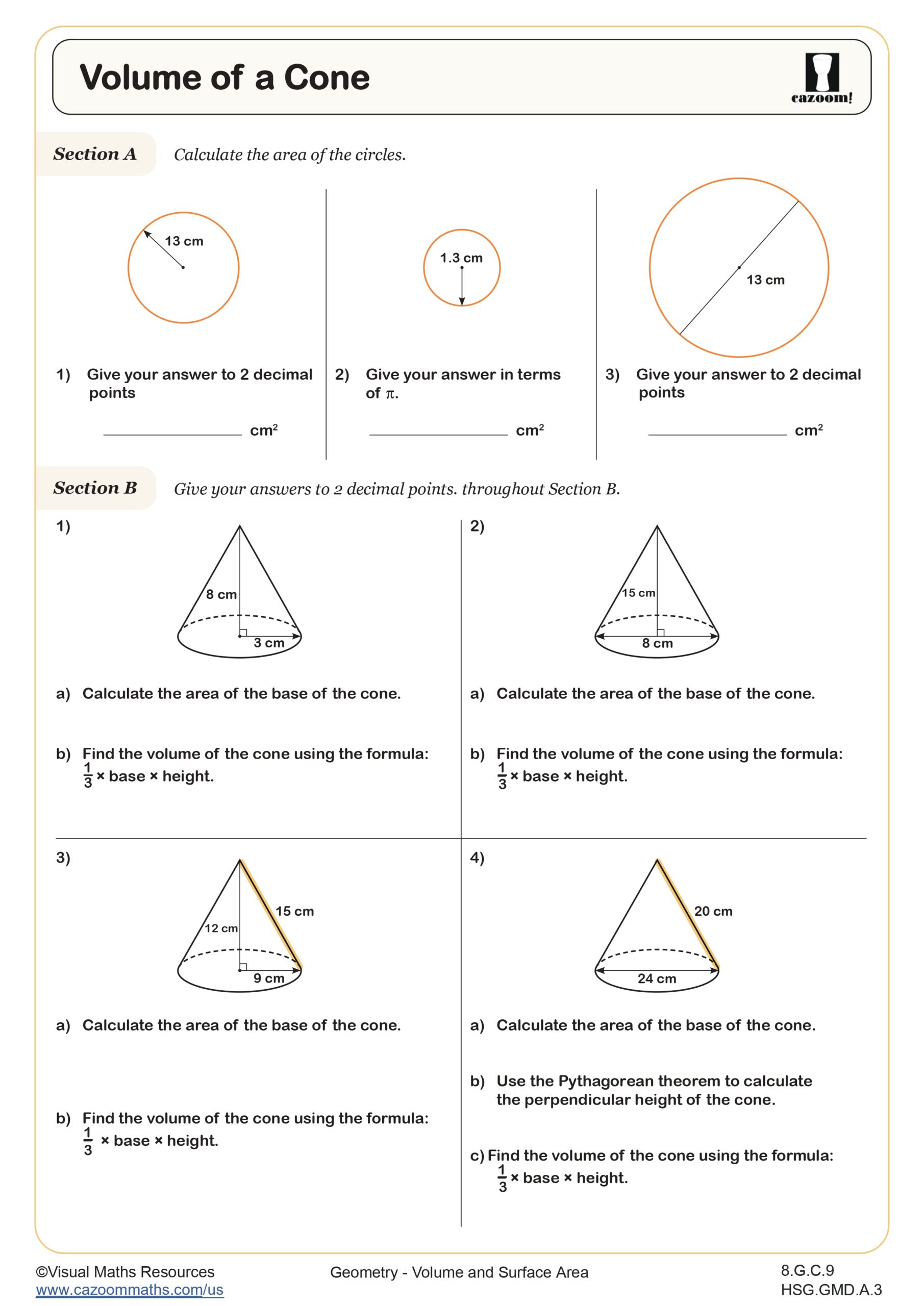
Volume of a Cone
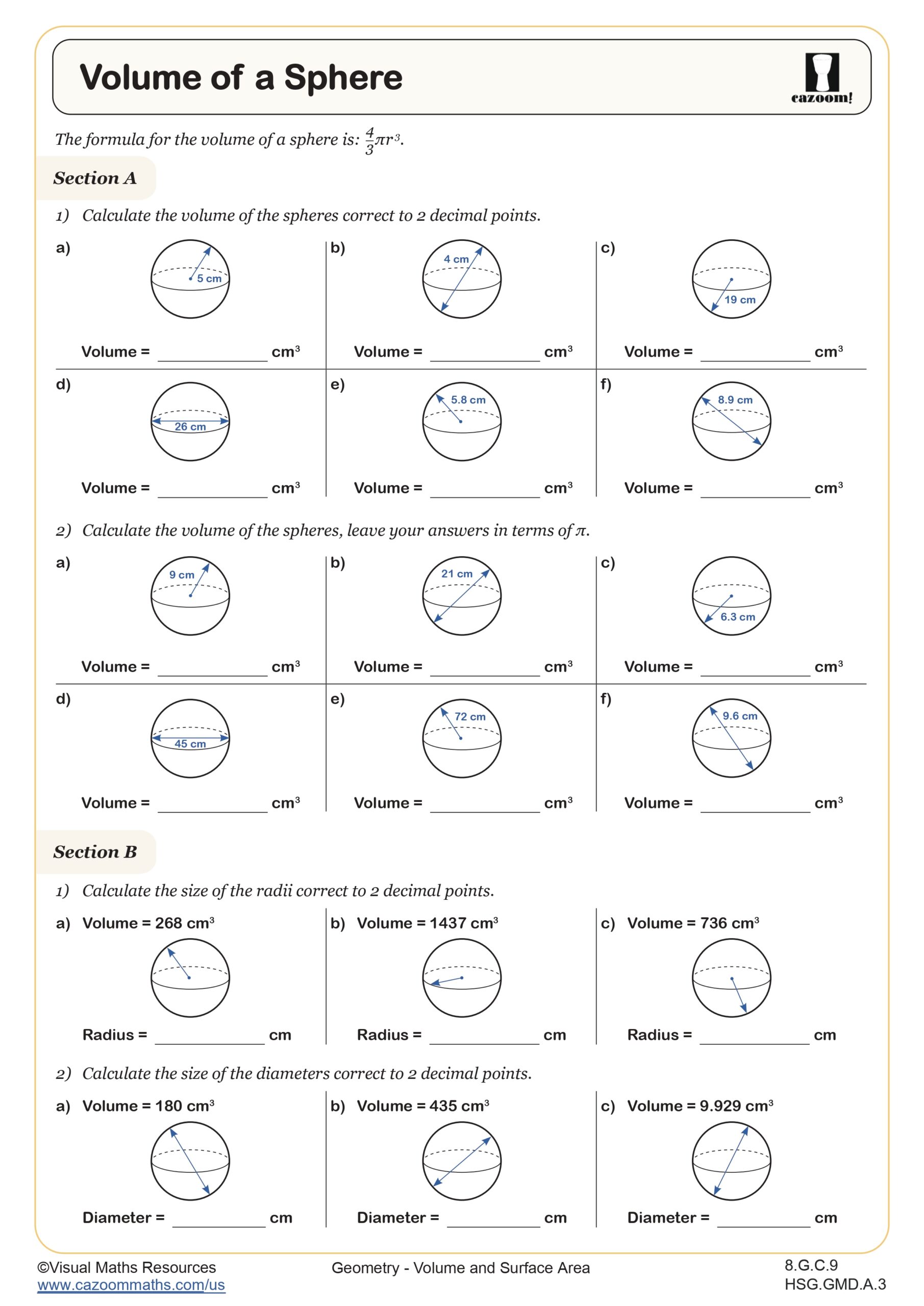
Volume of a Sphere
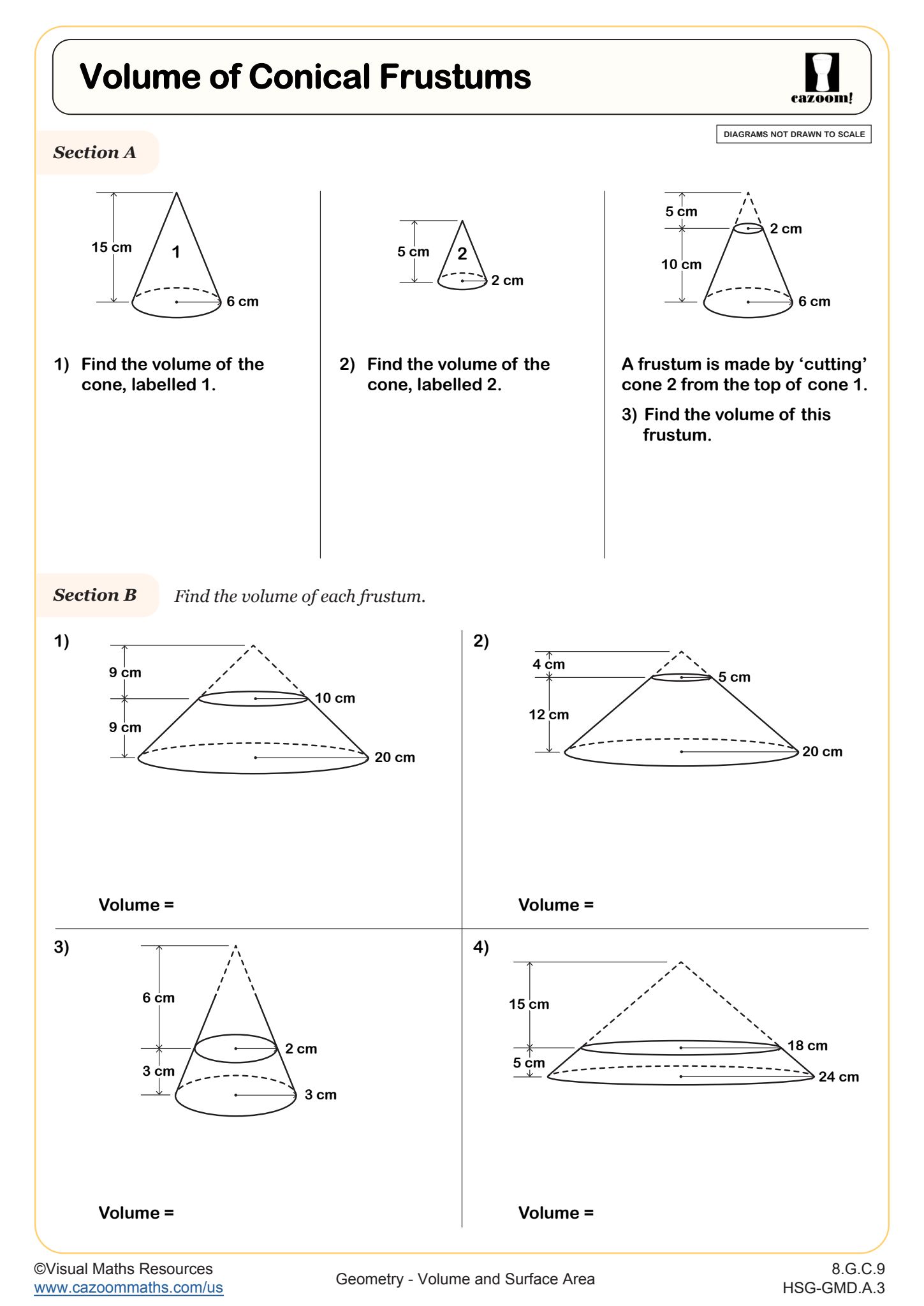
Volume of Conical Frustums
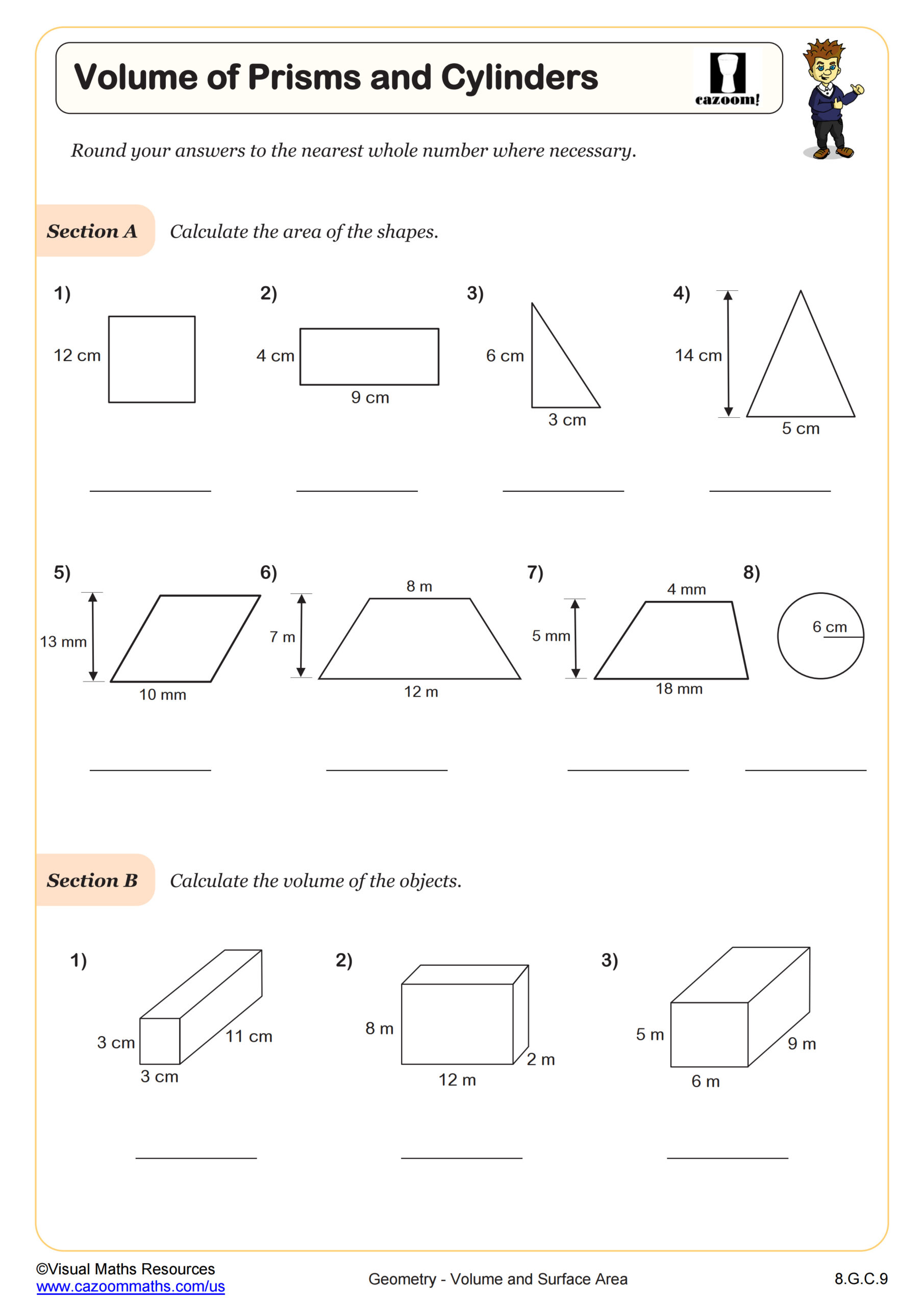
Volume of Prisms and Cylinders
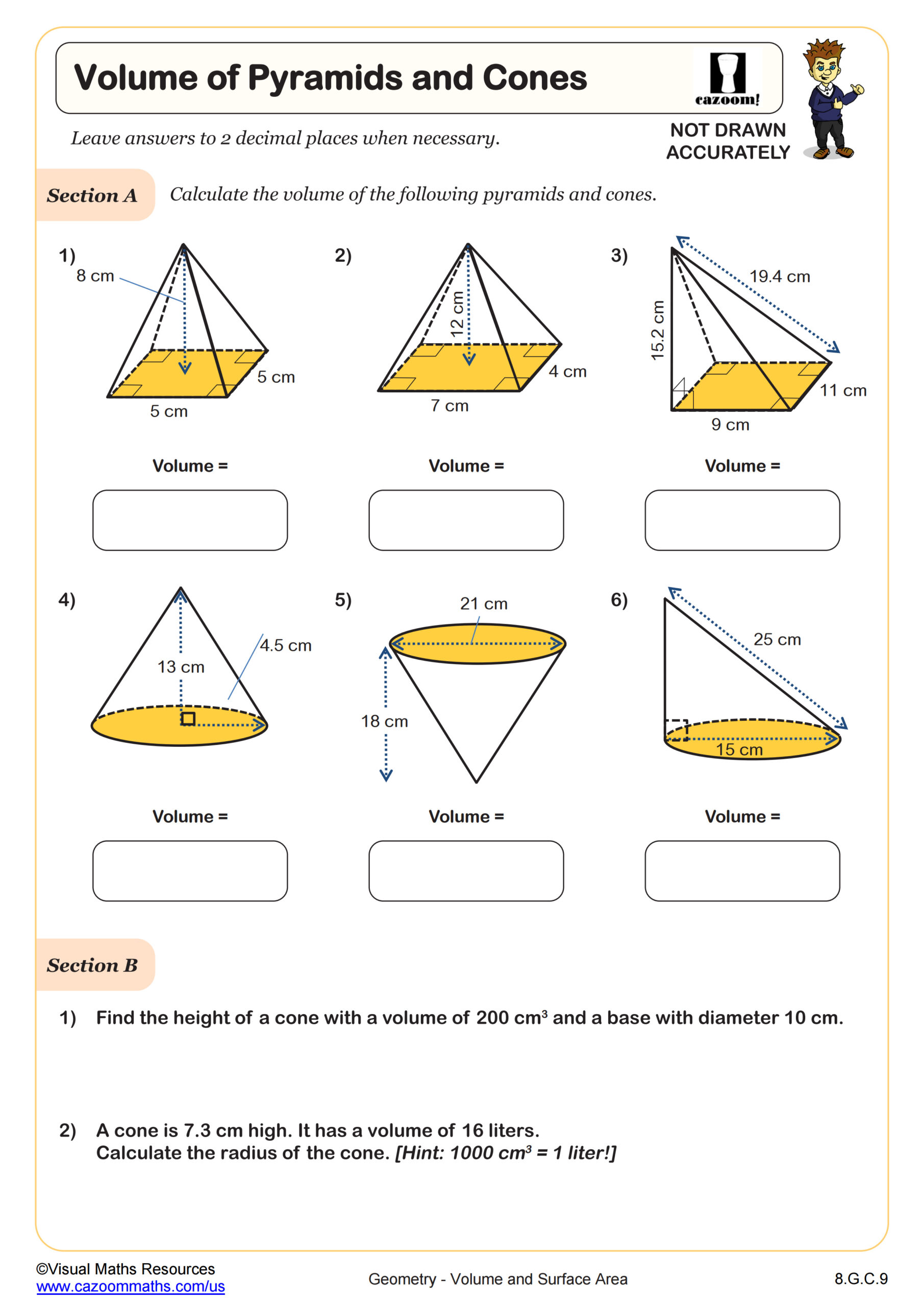
Volume of Pyramids and Cones
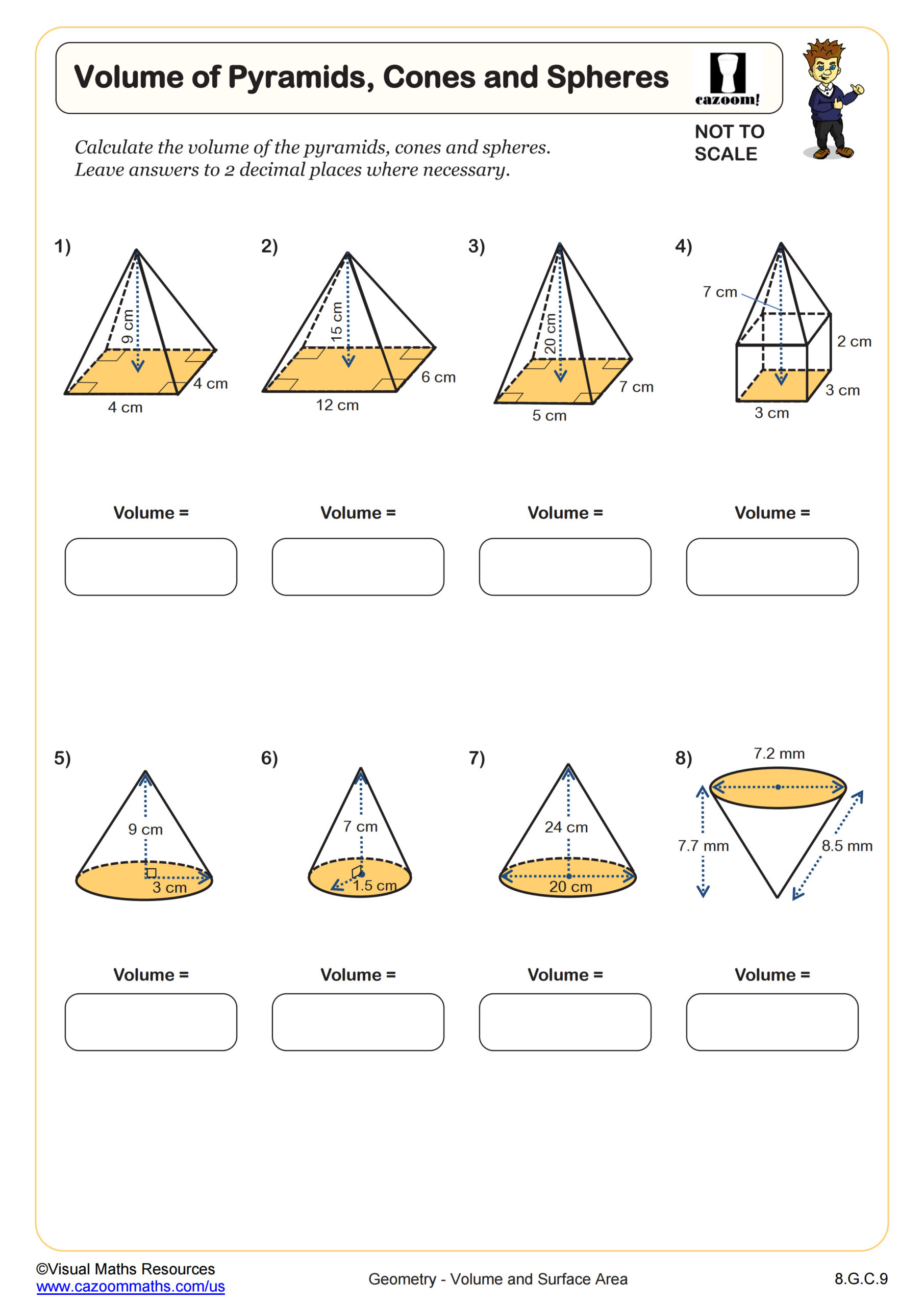
Volume of Pyramids Cones and Spheres
Volume of Square-based Truncated Pyramids
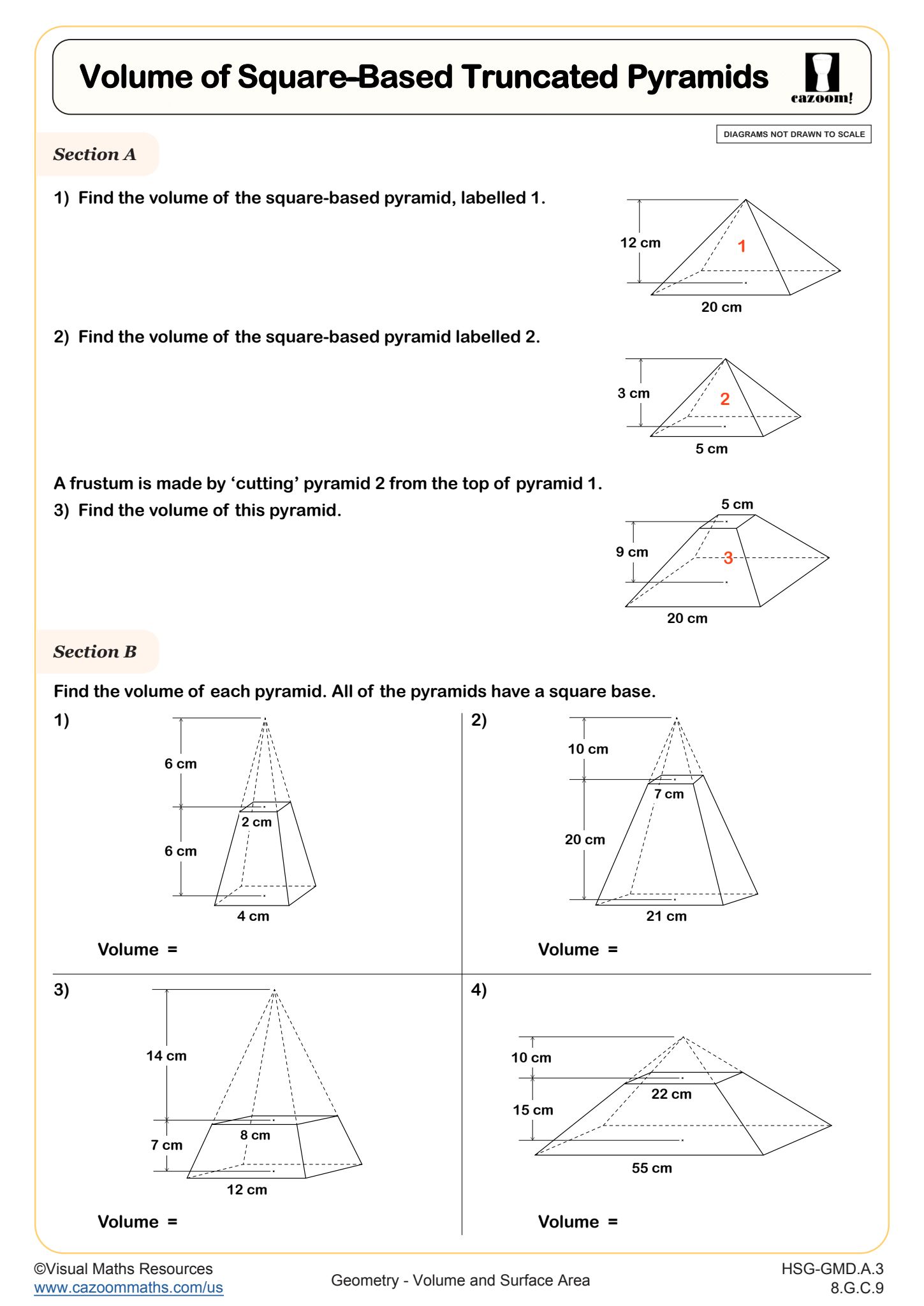
Volume Word Problems
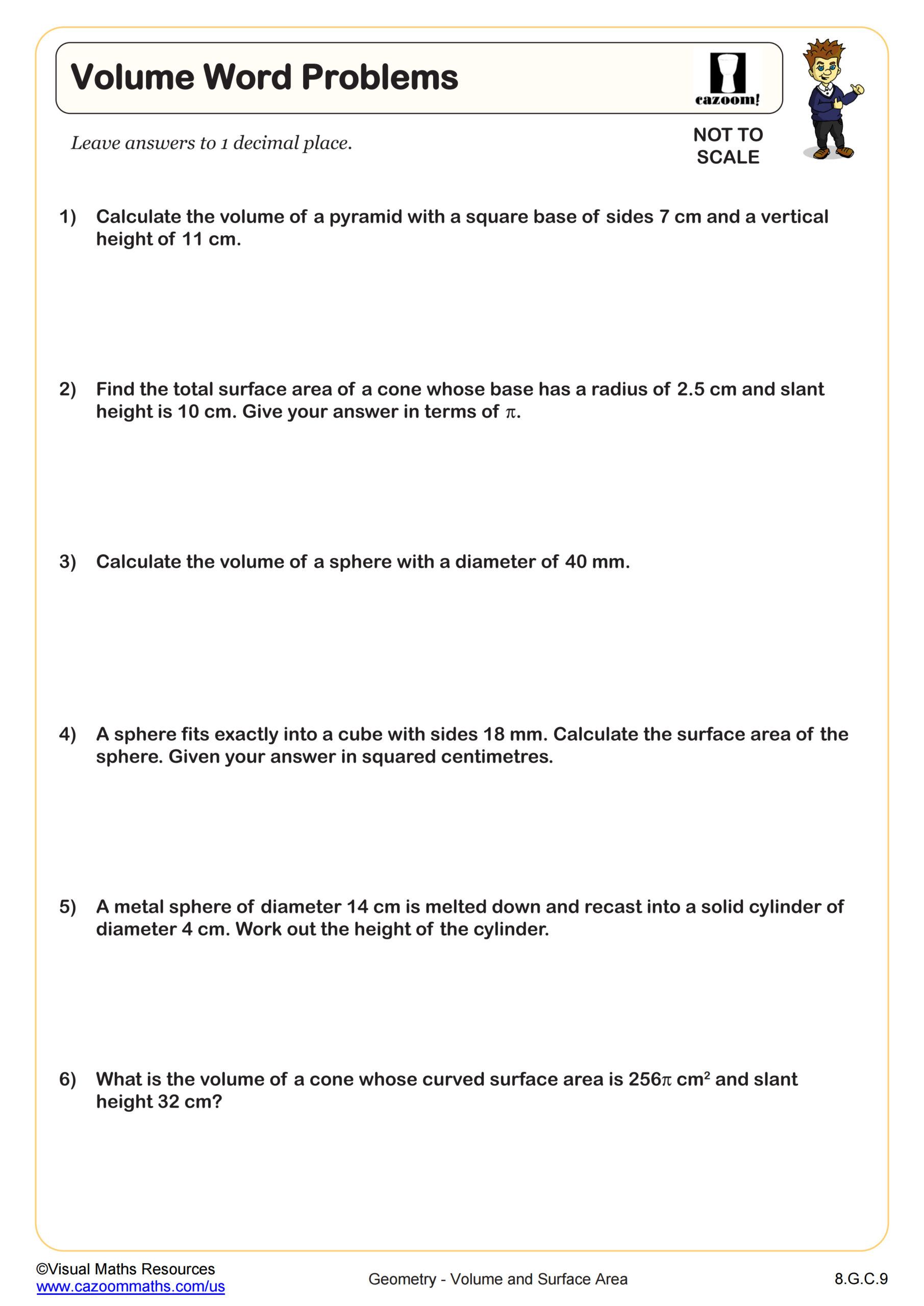
All worksheets are created by the team of experienced teachers at Cazoom Math.
What topics are covered in grade 8 surface area and volume worksheets?
Grade 8 surface area and volume worksheets align with Common Core Standard 8.G.C.9, covering rectangular and triangular prisms, cylinders, pyramids, cones, and spheres. Students practice applying formulas, working with composite figures, and solving word problems that require choosing between surface area and volume calculations.
Teachers frequently observe that students memorize formulas but struggle with units, often forgetting to use cubic units for volume and square units for surface area. The worksheets emphasize proper unit usage and include problems where students must identify which measurement a real-world situation requires, such as determining paint needed for walls versus concrete needed to fill a foundation.
Are these volume worksheets grade 8 appropriate for all skill levels?
Volume worksheets grade 8 are designed for students who have mastered basic area formulas and understand the concept of three-dimensional space. The problems progress from straightforward formula substitution to complex multi-step applications involving composite shapes and real-world contexts.
Some students may need review of prerequisite skills like calculating areas of rectangles, triangles, and circles before tackling these concepts. Teachers often differentiate by starting struggling students with simpler prisms while challenging advanced learners with problems involving hemispheres, truncated pyramids, or optimization scenarios like maximizing package volume while minimizing surface area for shipping costs.
How do these worksheets help students understand composite figures?
The worksheets include problems where students must break down complex three-dimensional shapes into familiar components like combining rectangular prisms with pyramids or cylinders with cones. Students learn to identify which formulas apply to each section and how to add or subtract volumes appropriately.
Teachers notice that students often correctly calculate individual components but make errors in the final combination step. Common mistakes include adding surface areas when they should subtract overlapping faces, or forgetting to account for hollow sections. The worksheets provide scaffolded practice with visual aids and step-by-step solution methods to address these misconceptions systematically.
How can teachers use these 8th grade surface area and volume worksheets with answers effectively?
Teachers can use the complete answer keys to facilitate peer checking, guided practice sessions, and immediate feedback during independent work time. The detailed solutions help students understand not just the final answer but the reasoning process, particularly important for identifying whether a situation calls for surface area or volume calculations.
Many teachers assign different worksheet sections for homework and use class time to address common errors revealed in the answer keys. The worksheets work well for station rotations, where students can self-check their work and move to extension problems. Teachers also use the real-world applications to connect geometry concepts to STEM fields like architecture, engineering, and manufacturing design.