Adding Numbers up to 100 Worksheets
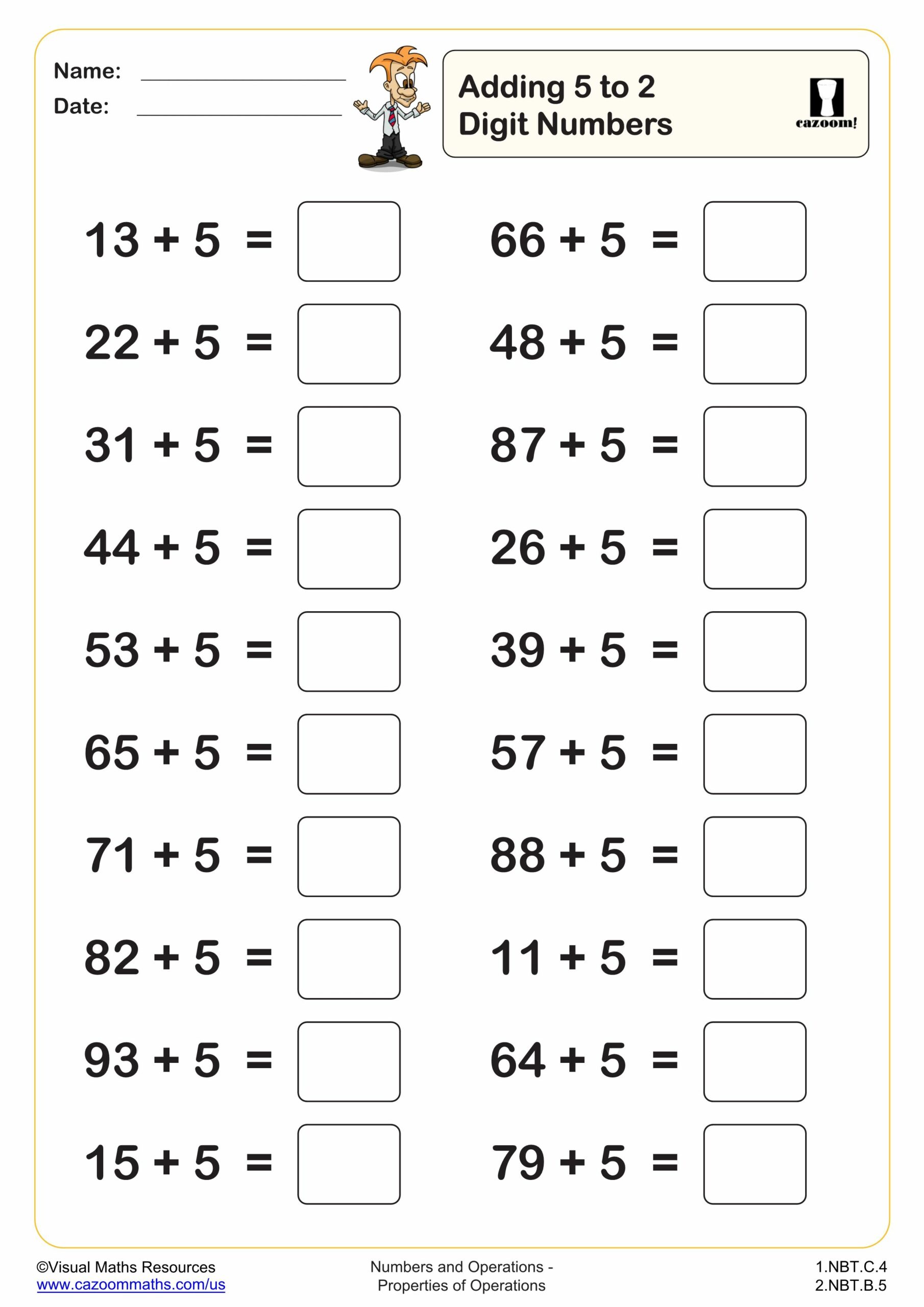
Adding 5 to 2 digit numbers (20 questions)
Grades: 1st Grade, 2nd Grade
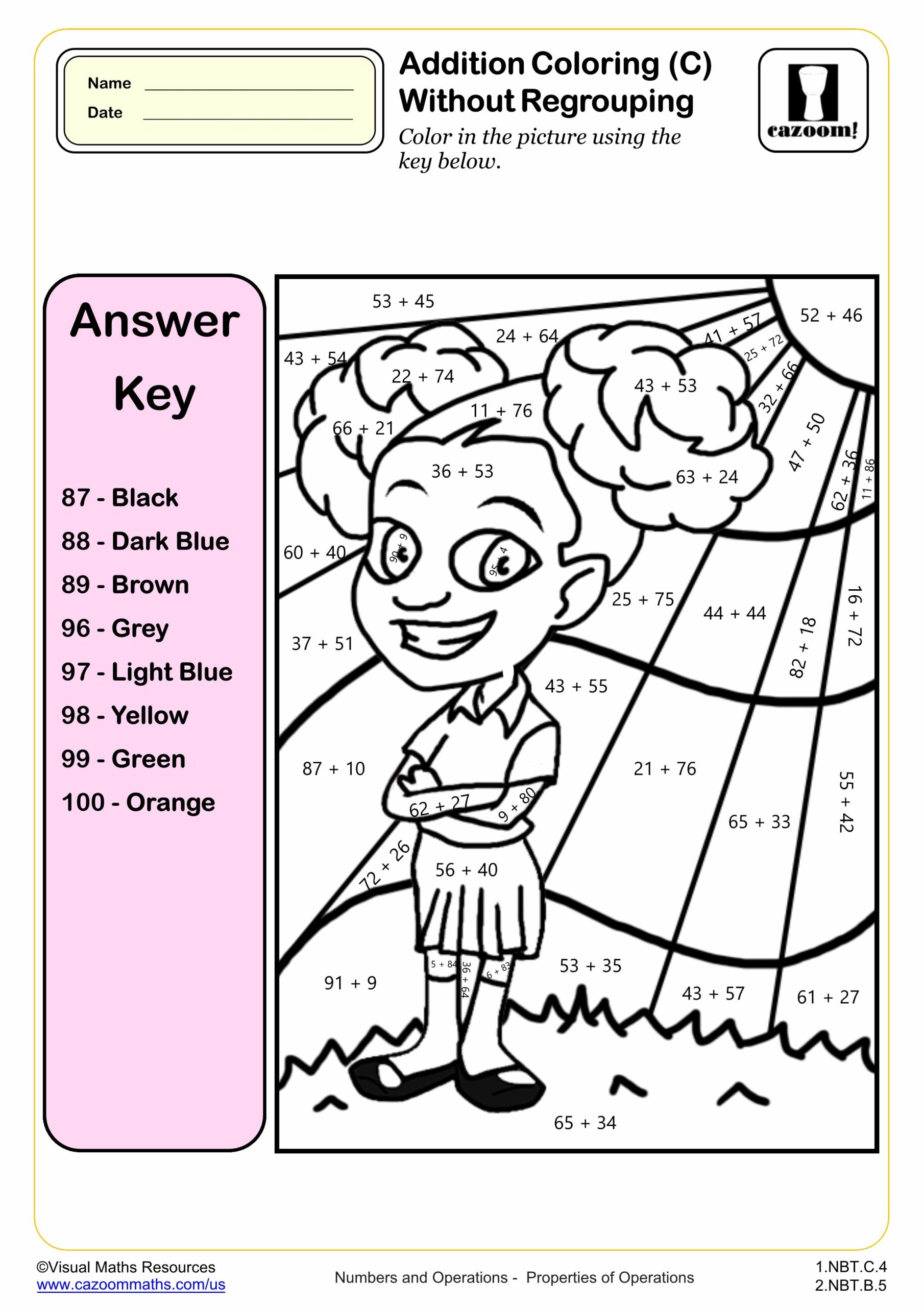
Addition Coloring (C)
Grades: 1st Grade, 2nd Grade
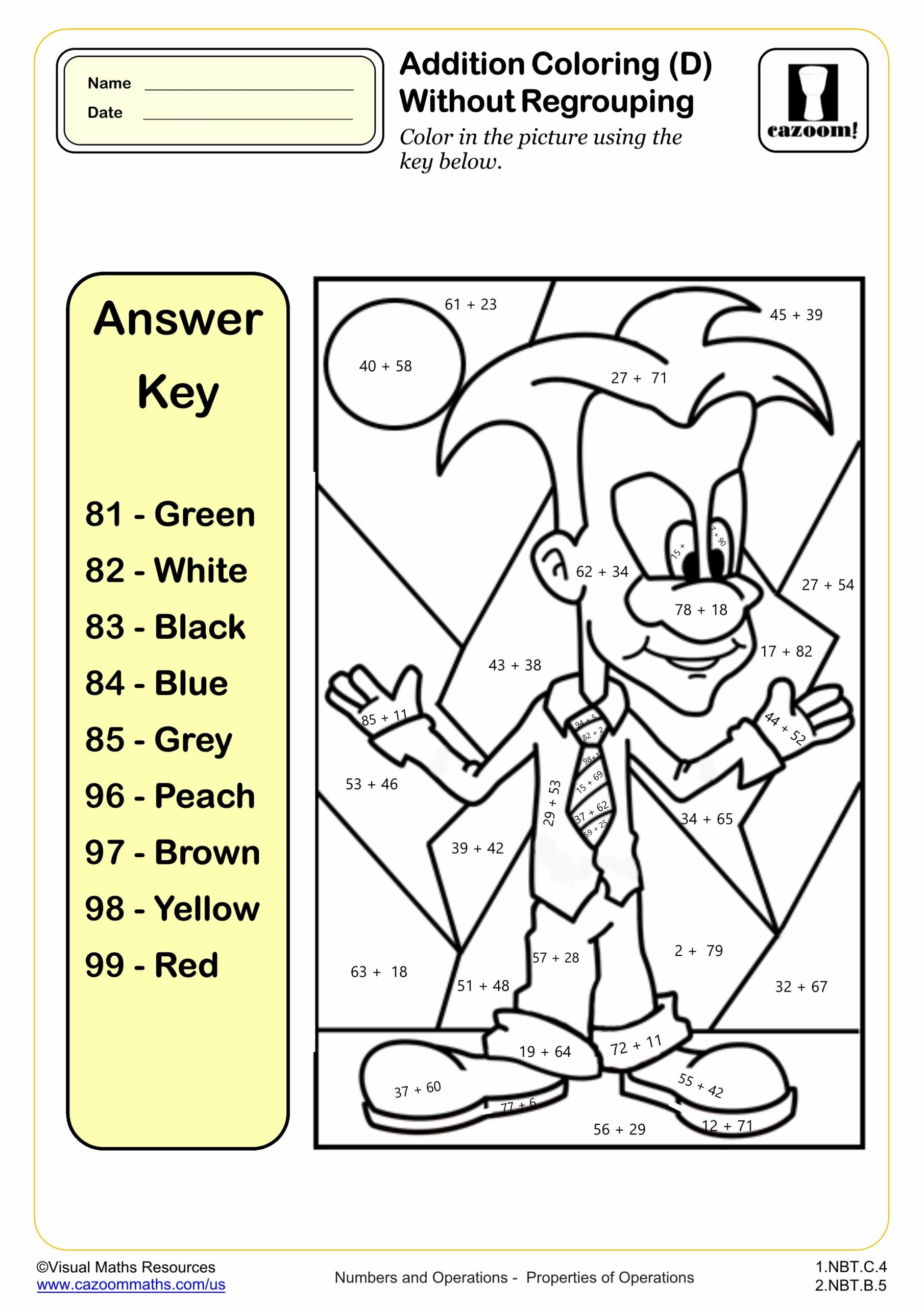
Addition Coloring (D)
Grades: 1st Grade, 2nd Grade
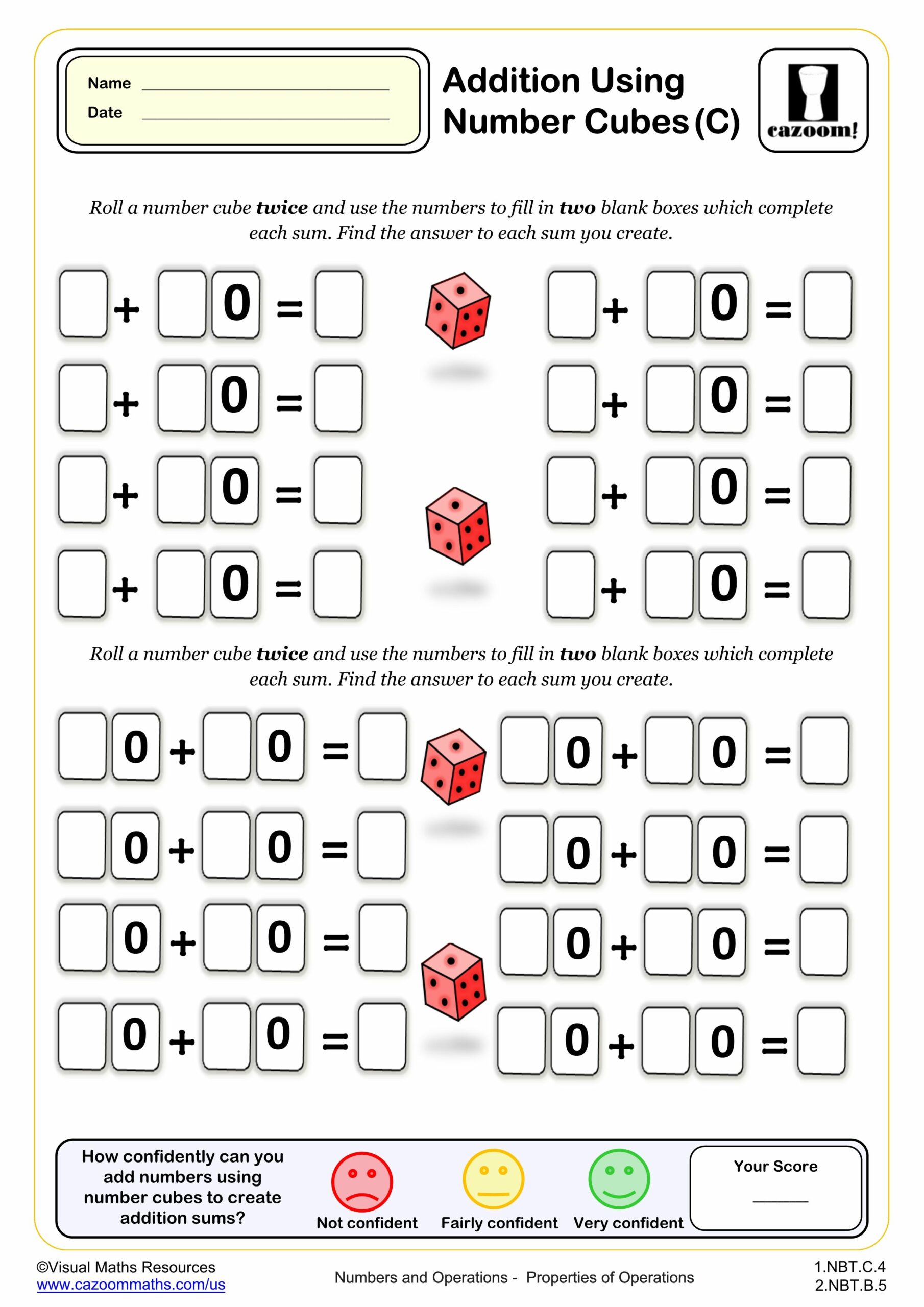
Addition Using Number Cubes (C)
Grades: 1st Grade, 2nd Grade
Addition Using Number Cubes (D)
Grades: 1st Grade, 2nd Grade
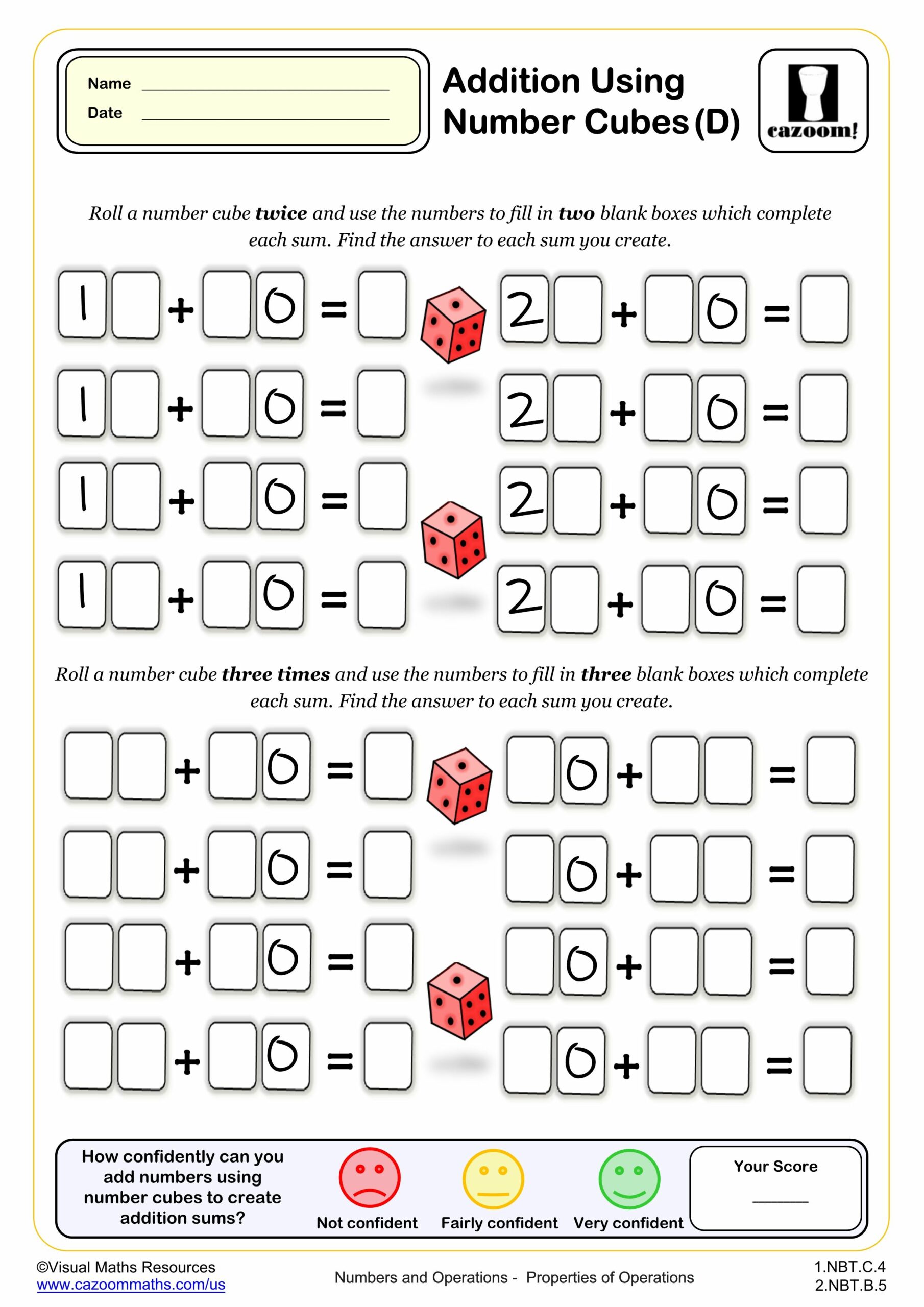
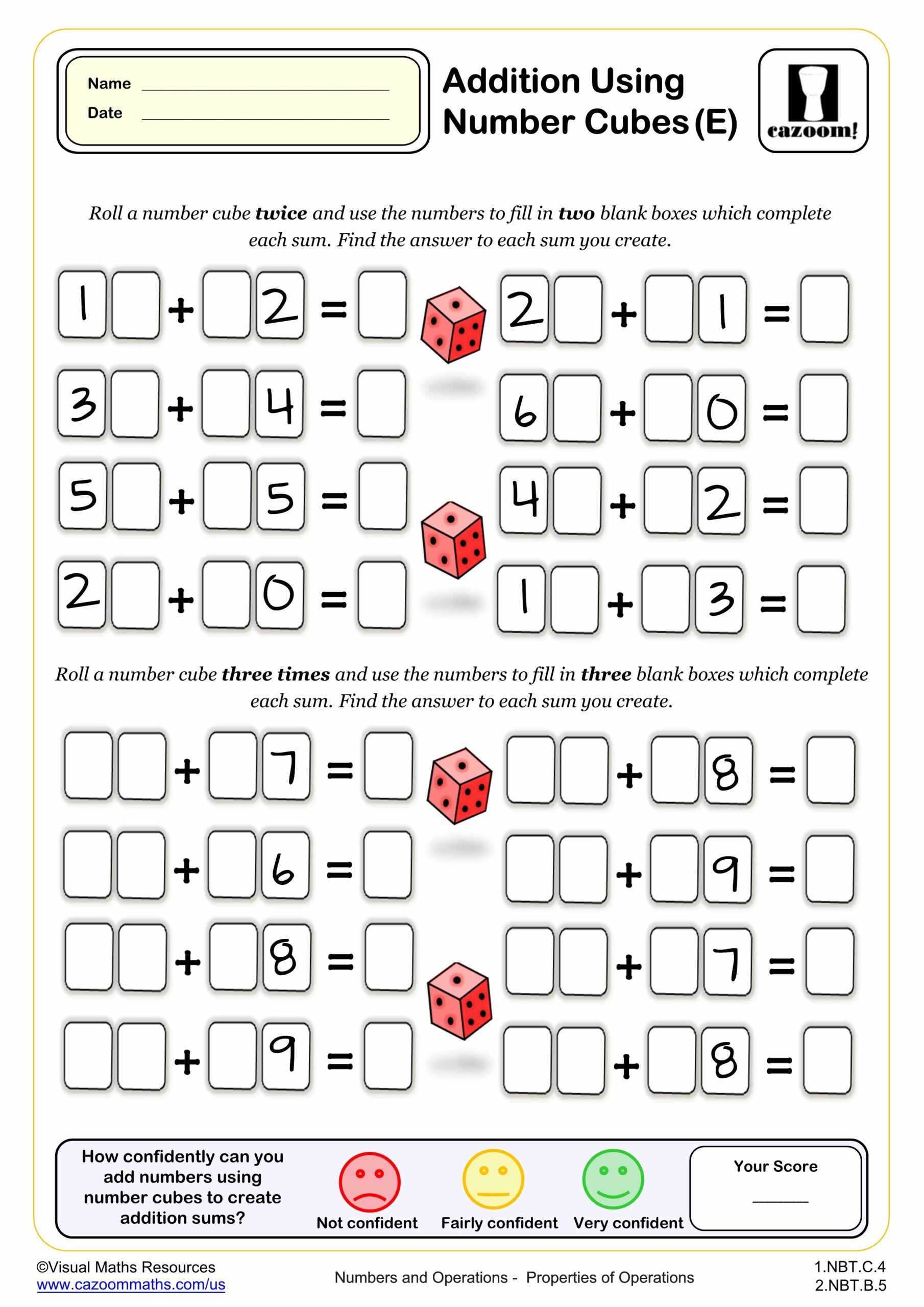
Addition Using Number Cubes (E)
Grades: 1st Grade, 2nd Grade
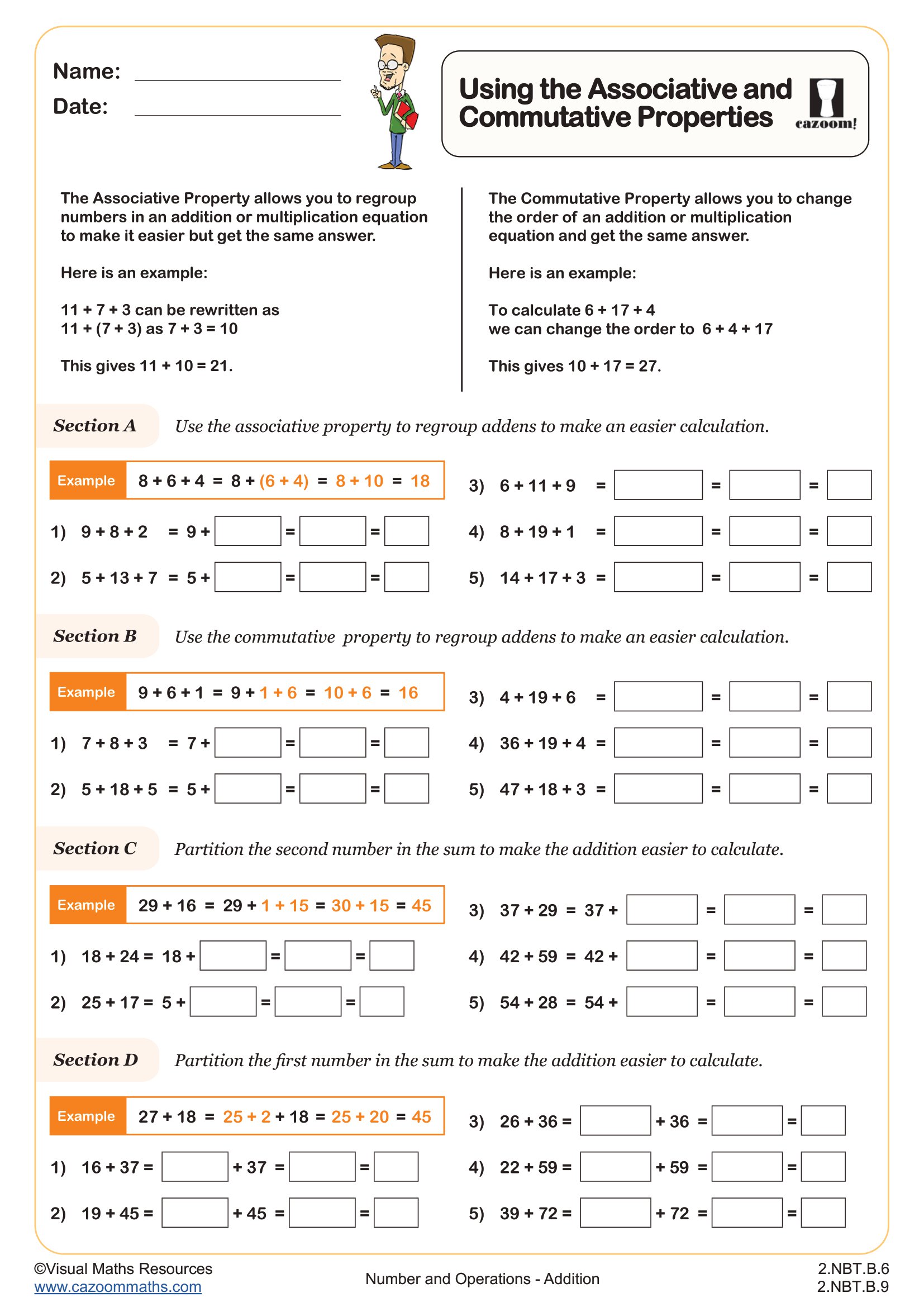
Using the Associative and Commutative Properties
Grades: 2nd Grade
All worksheets are created by the team of experienced teachers at Cazoom Math.
What strategies help students master addition up to 100?
Students benefit from a progression that starts with adding multiples of ten, then moves to two-digit numbers without regrouping, and finally tackles problems requiring regrouping across place values. Visual models like number lines, base-ten blocks, and hundreds charts support conceptual understanding before moving to abstract computation.
Many teachers observe that students who struggle with addition up to 100 often lack automaticity with basic facts or haven't developed efficient mental math strategies. Encouraging methods like breaking apart numbers (47 + 26 = 47 + 20 + 6) or using compensation (38 + 29 = 38 + 30 - 1) helps students work more flexibly with larger numbers while building confidence.
Which grade levels typically work on adding numbers up to 100?
Second grade students primarily focus on add within 100 according to Common Core Standards, though the skill often extends into third grade for fluency building. Second graders work extensively with two-digit addition, both with and without regrouping, while developing strategies for mental computation and understanding place value relationships.
Third grade teachers frequently use these problems for warm-up activities and review, especially when students need to strengthen foundational skills before tackling three-digit addition. Some advanced first grade students may also encounter simpler versions of adding up to 100, particularly when working with multiples of ten or familiar number combinations that build toward this benchmark.
How do students learn what equals 100 in addition effectively?
Students develop number sense around combinations that make 100 through systematic exploration of number pairs and patterns. Teachers often use activities like finding all the ways to make 100 using two addends, which reveals patterns like 50 + 50, 25 + 75, and 10 + 90, helping students recognize complementary relationships.
A common misconception occurs when students assume only round numbers can combine to make 100. Providing varied examples like 37 + 63 or 84 + 16 helps them understand that any two numbers totaling 100 work, regardless of whether they end in zero. This understanding proves valuable for estimation and mental math in real-world situations like calculating change or measuring distances.
How can teachers use these worksheets most effectively in their classrooms?
Teachers find success using these worksheets as differentiated practice tools, selecting problems that match each student's current skill level while gradually increasing complexity. Starting with concrete manipulatives, then moving to pictorial representations, and finally abstract number problems helps students build lasting understanding rather than just procedural fluency.
The answer keys allow for immediate self-checking, which teachers use to promote student independence and mathematical discussions about solution strategies. Many educators incorporate these worksheets into math centers, homework assignments, or intervention sessions, using student performance data to identify specific areas needing reteaching or enrichment opportunities.