Addition With Visual Aids Worksheets
Addition with dots (A)
Grades: Kindergarten, 1st Grade
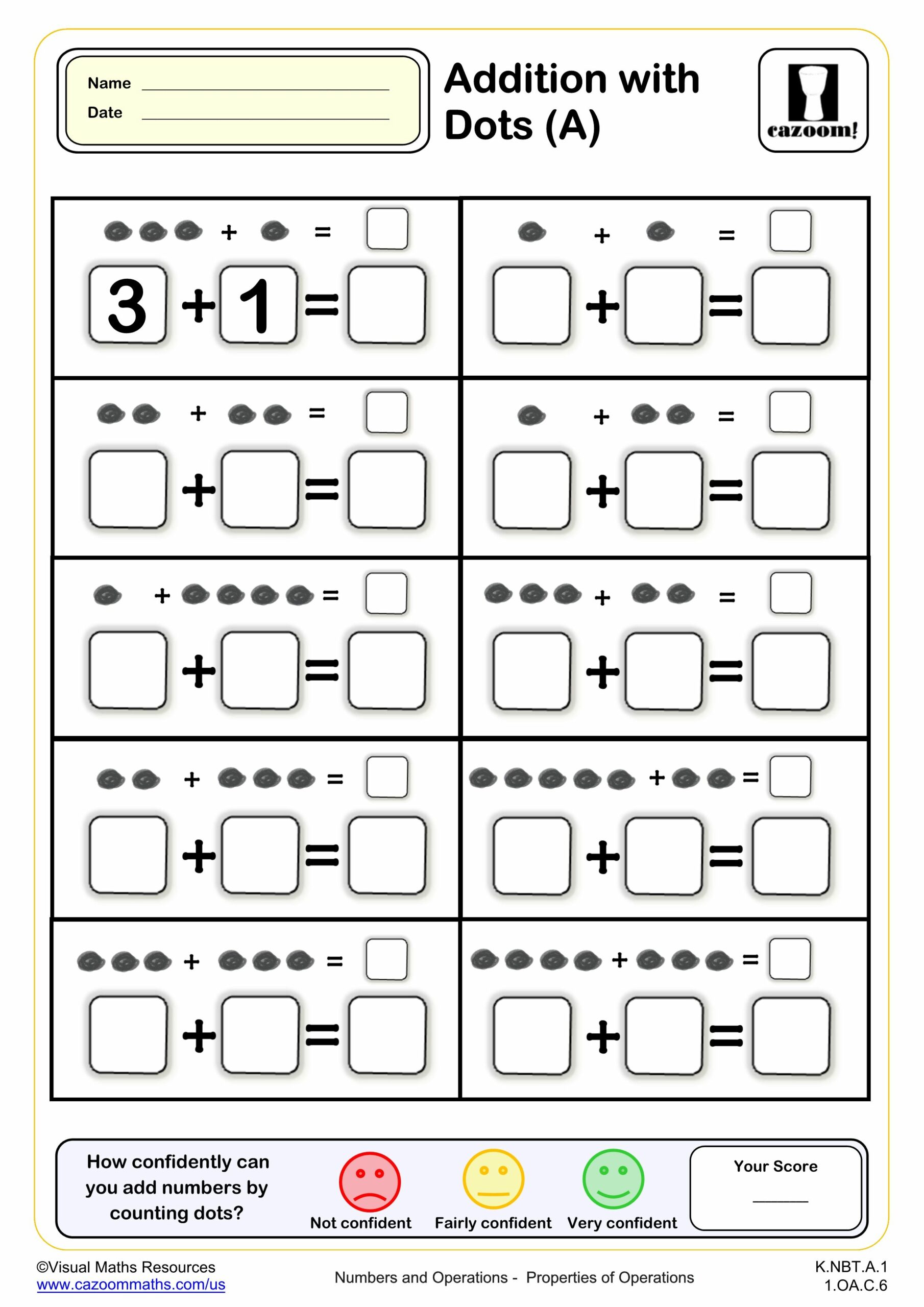
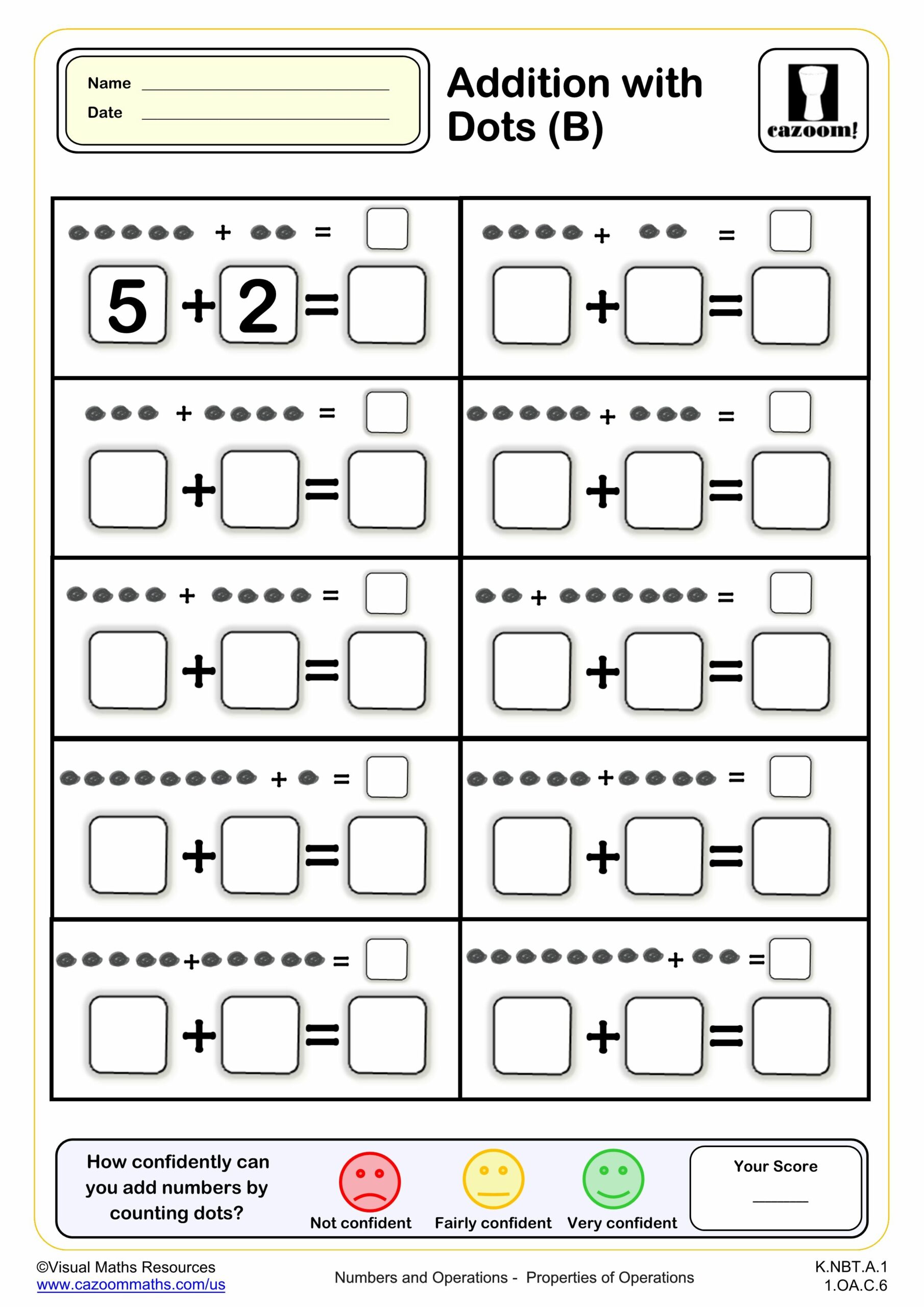
Addition with Dots (B)
Grades: Kindergarten, 1st Grade
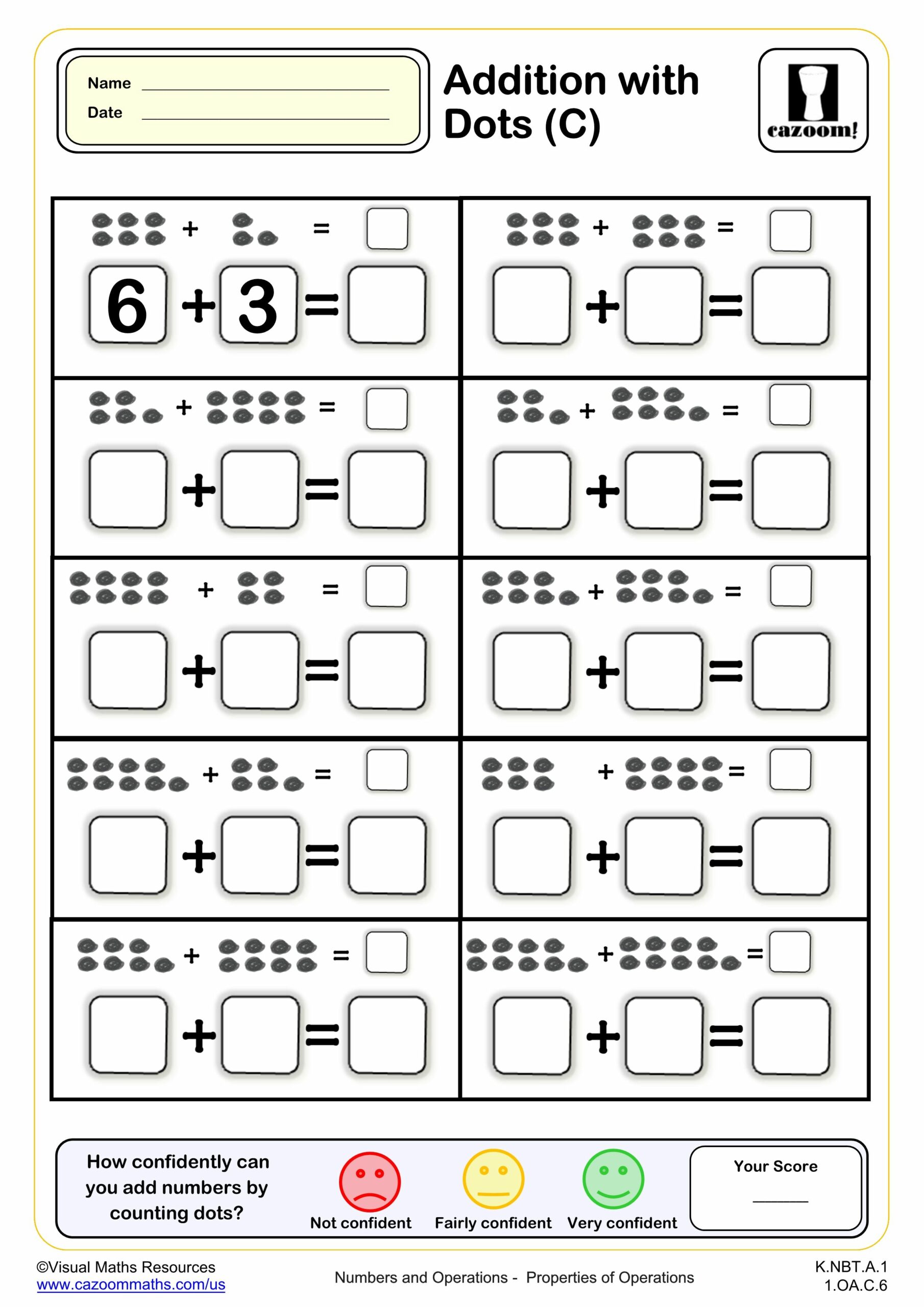
Addition with Dots (C)
Grades: Kindergarten, 1st Grade
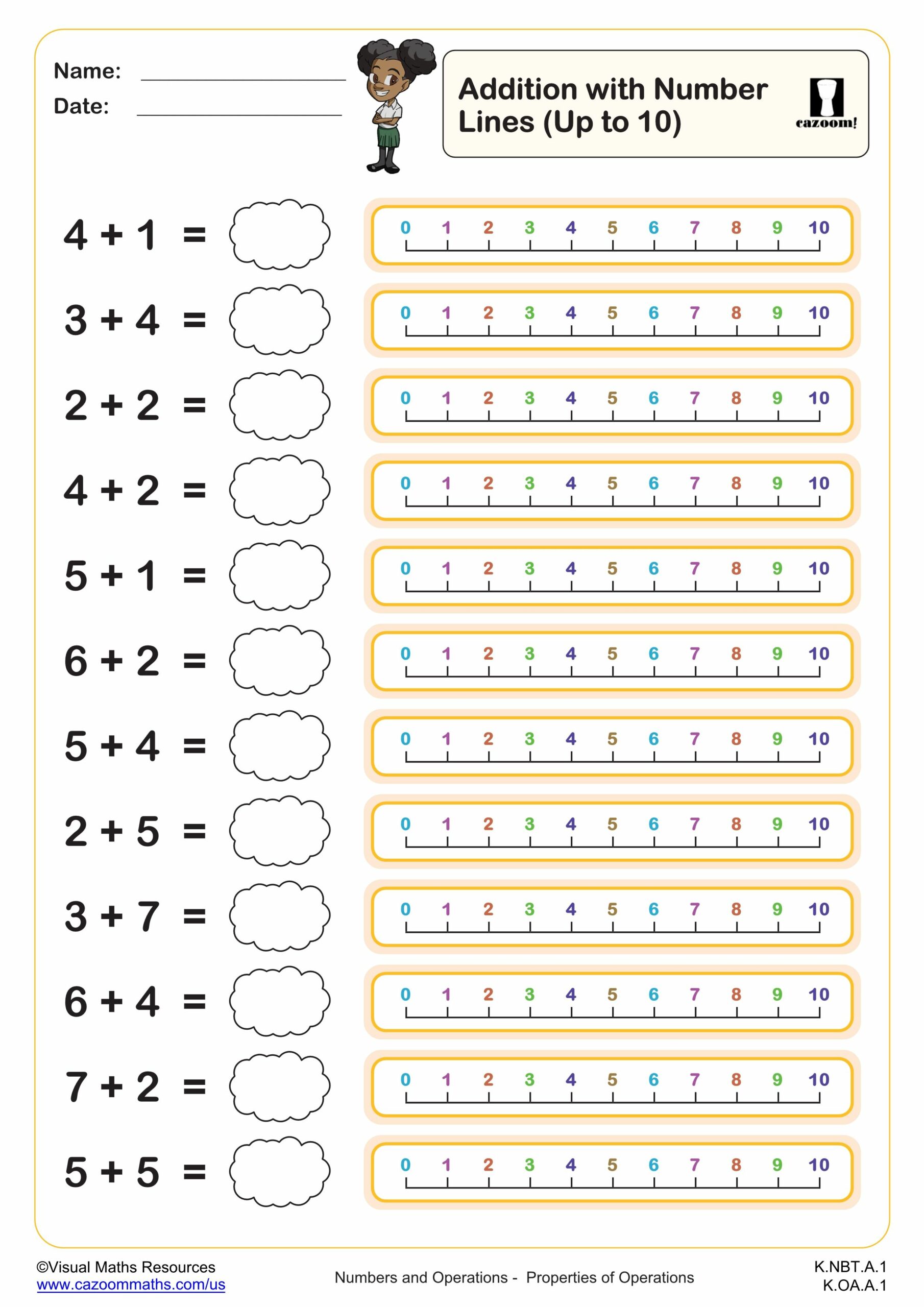
Addition with Number Lines (up to 10)
Grades: Kindergarten
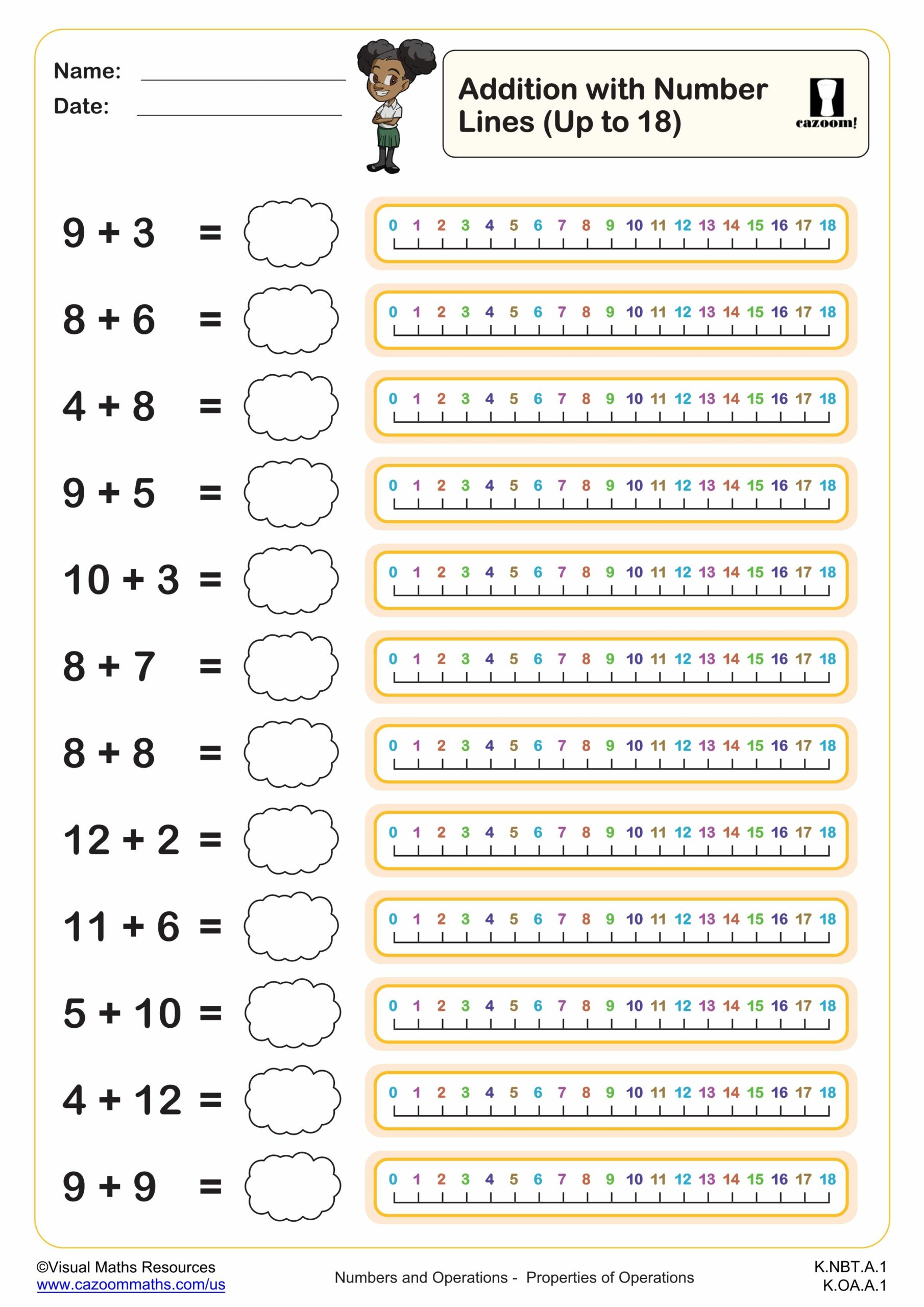
Addition with Number Lines (up to 18)
Grades: Kindergarten
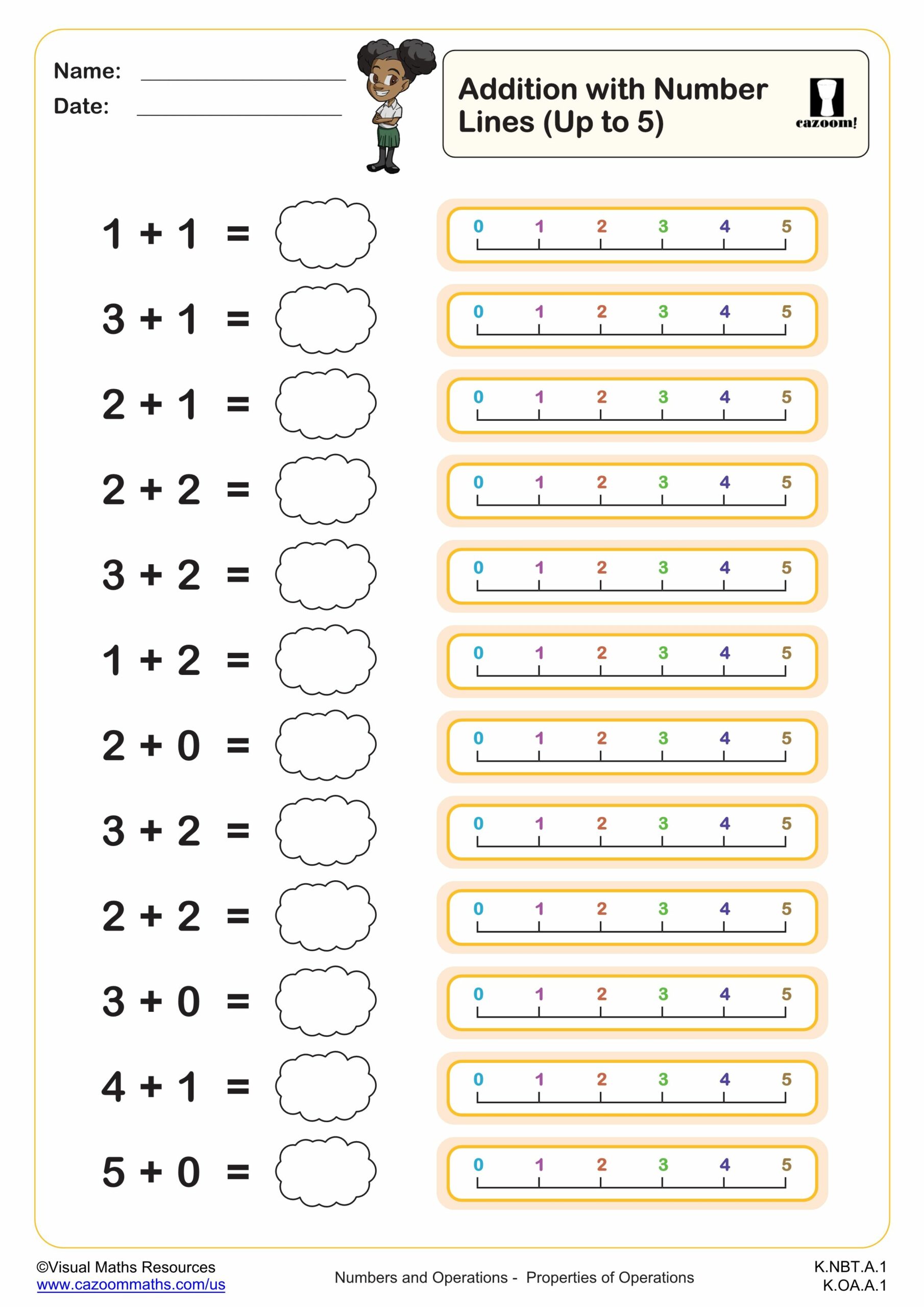
Addition with Number Lines (up to 5)
Grades: Kindergarten
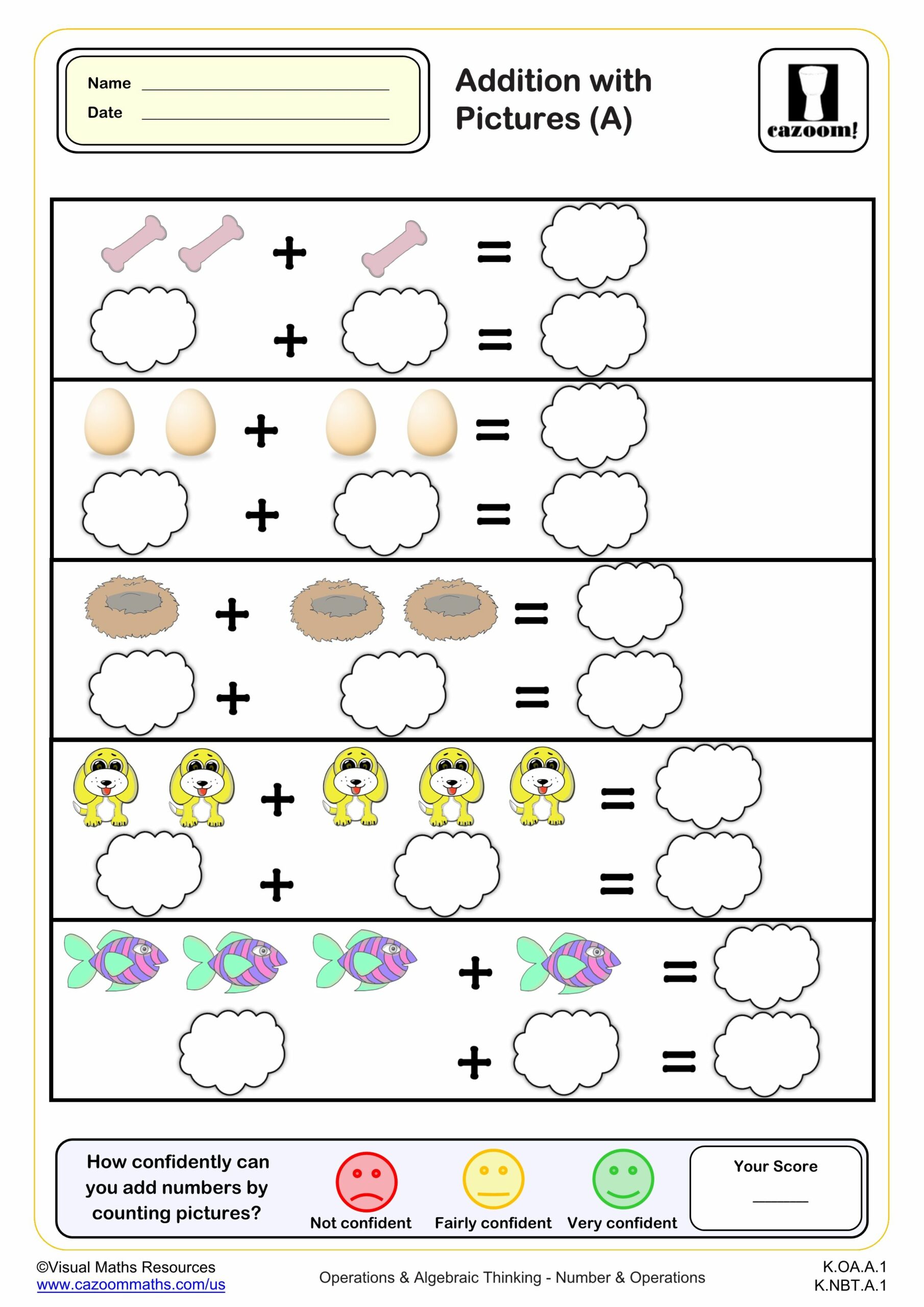
Addition with Pictures (A)
Grades: Kindergarten
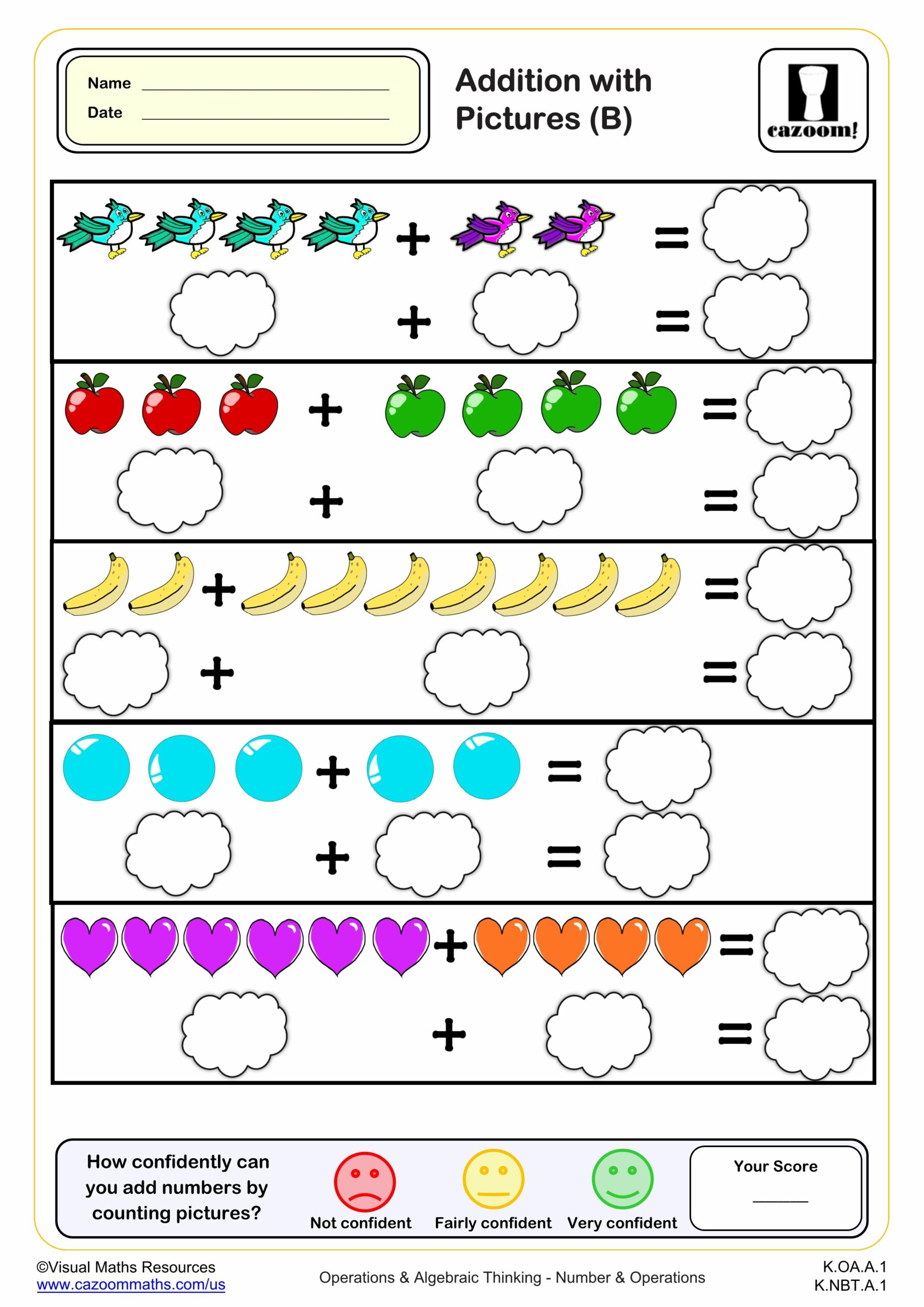
Addition with Pictures (B)
Grades: Kindergarten
Addition with Sticks (A)
Grades: Kindergarten
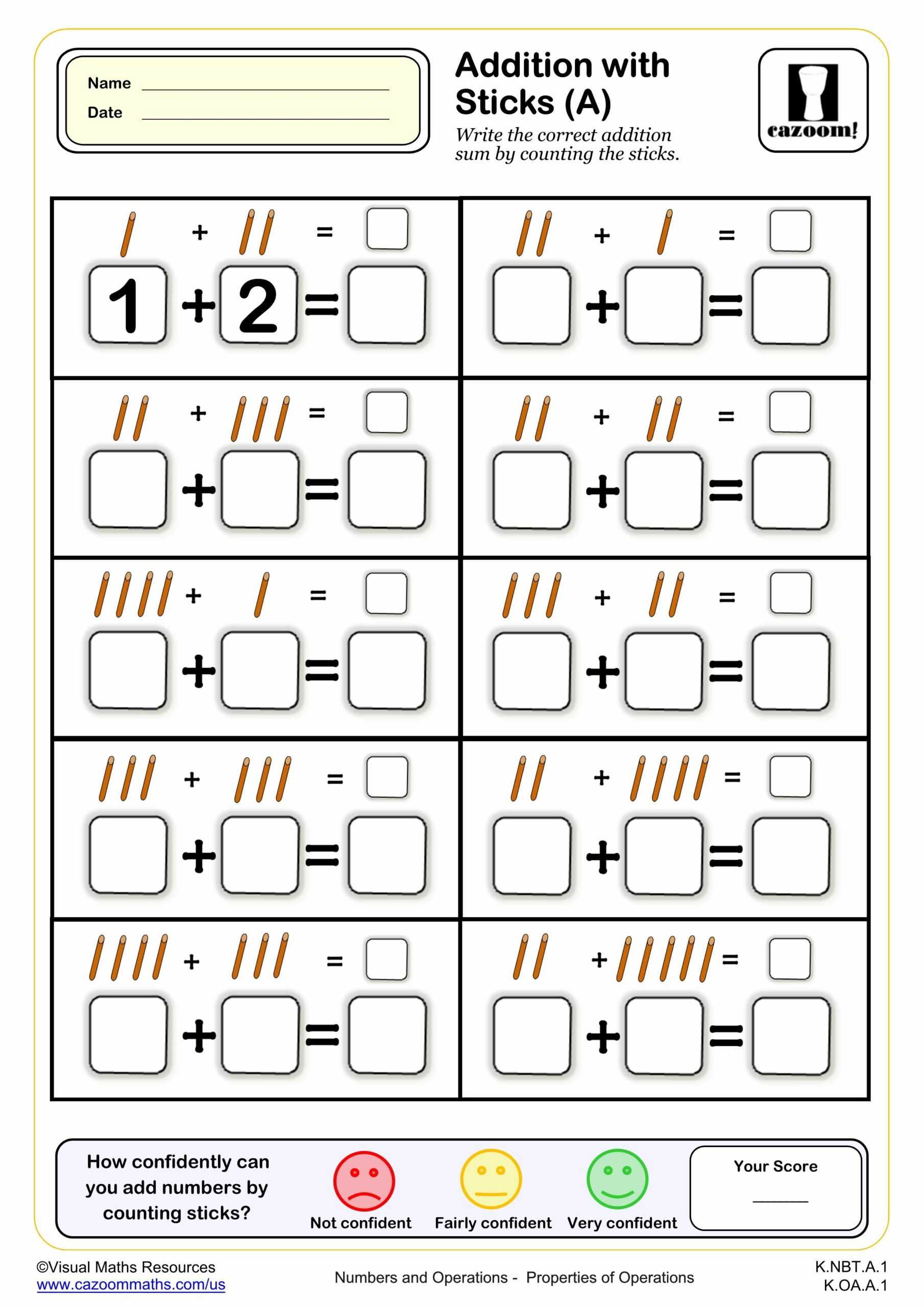
Addition with Sticks (B)
Grades: Kindergarten
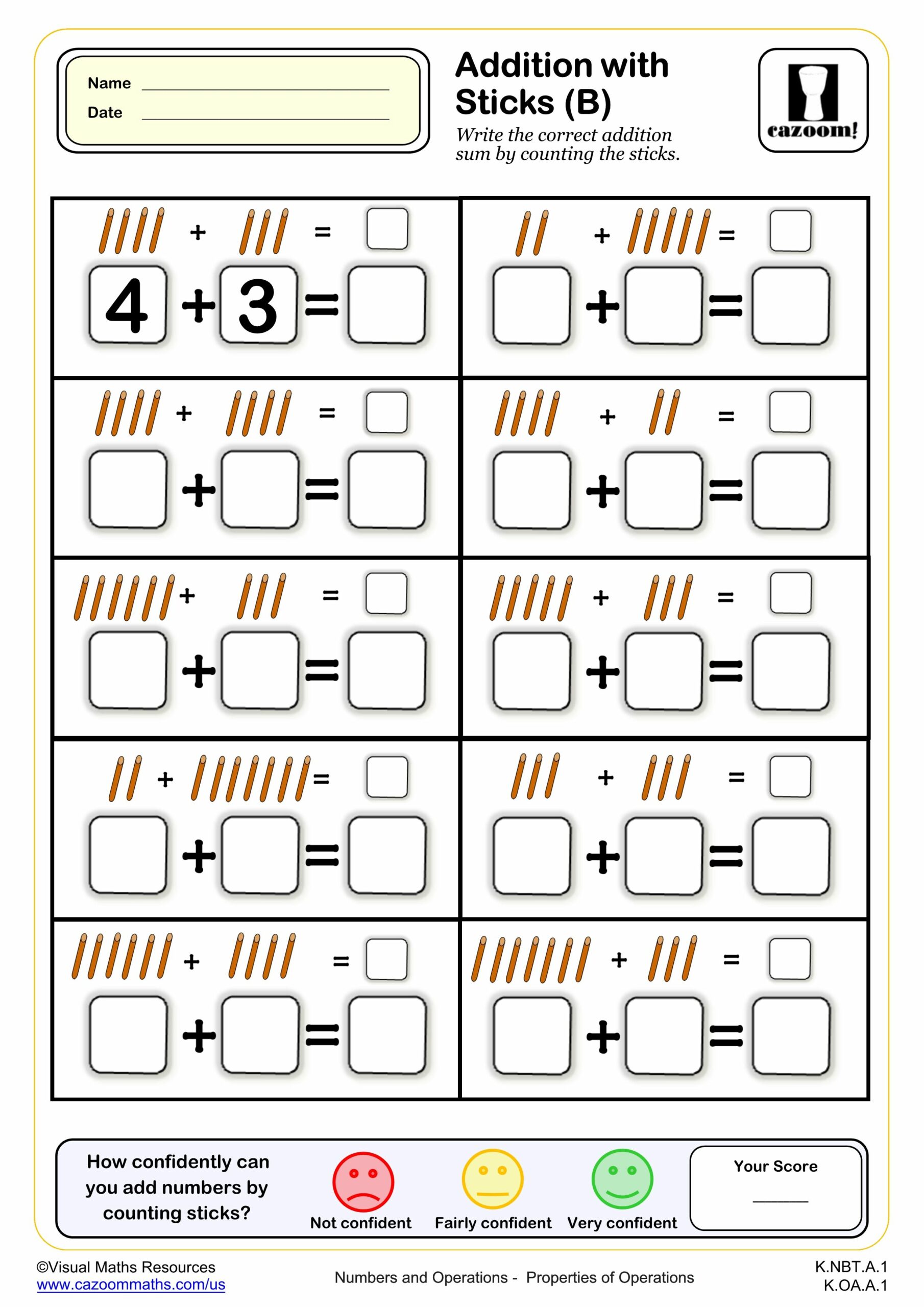
Addition with Sticks (C)
Grades: Kindergarten
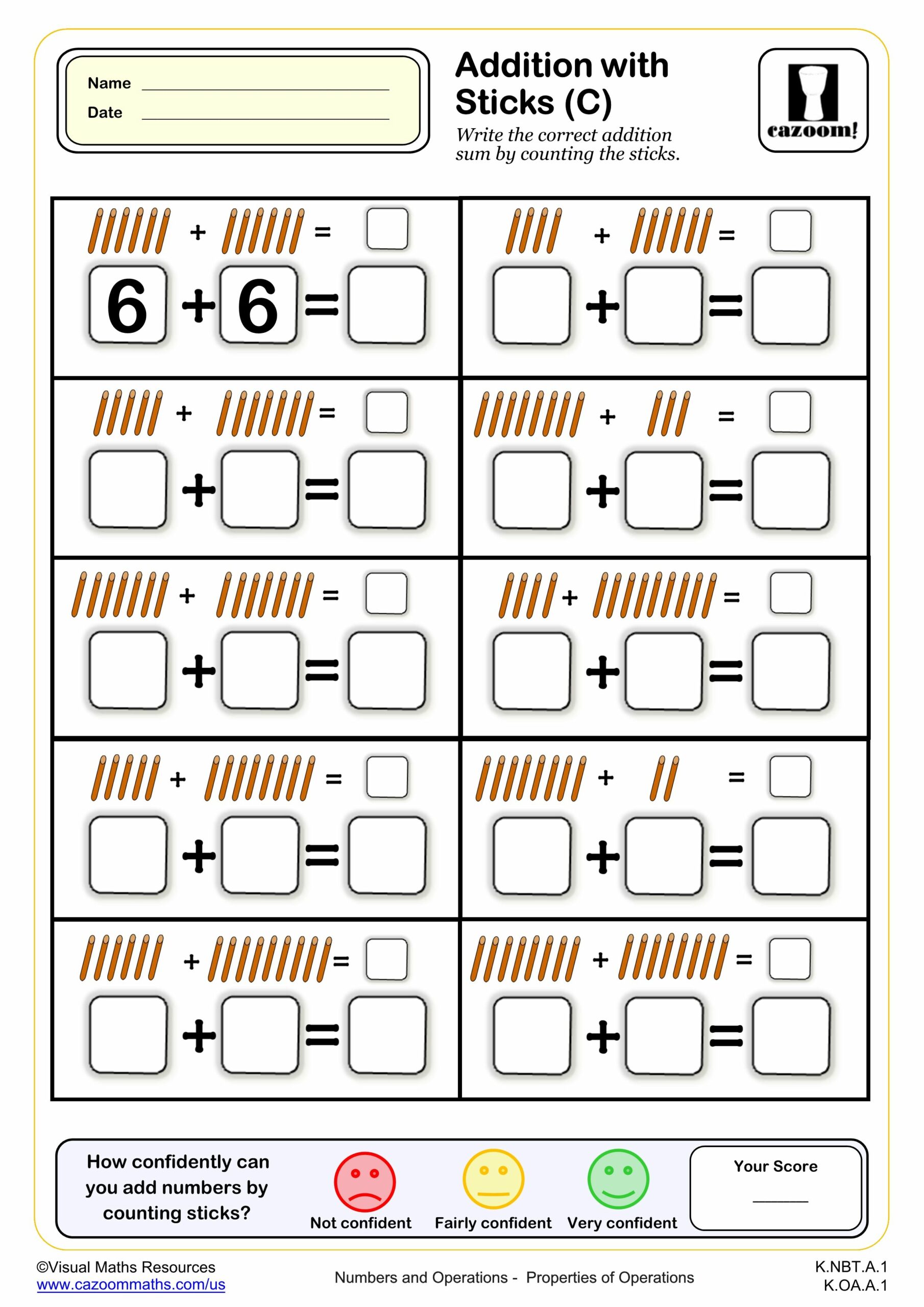
Writing Addition Number Sentences
Grades: Kindergarten
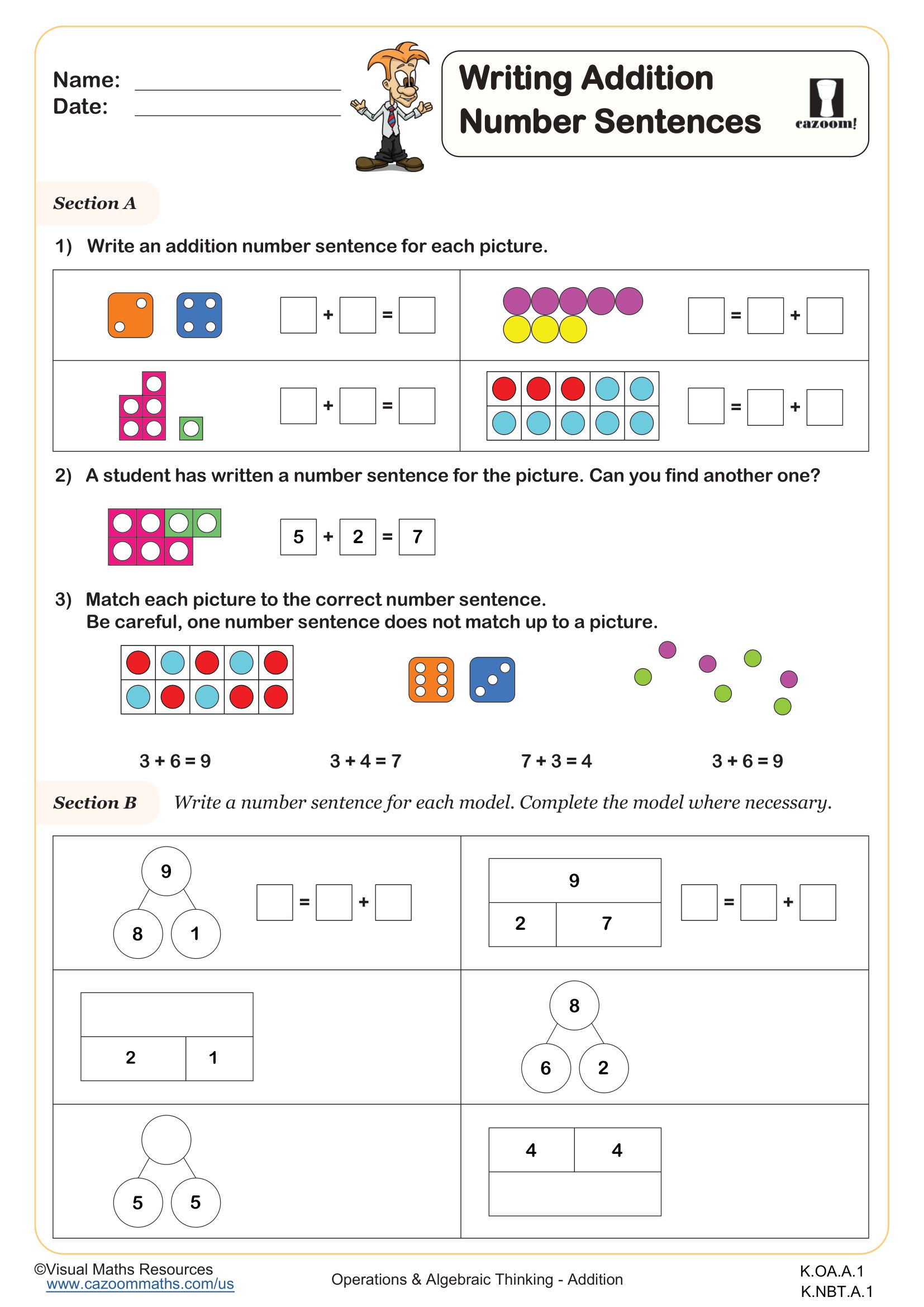
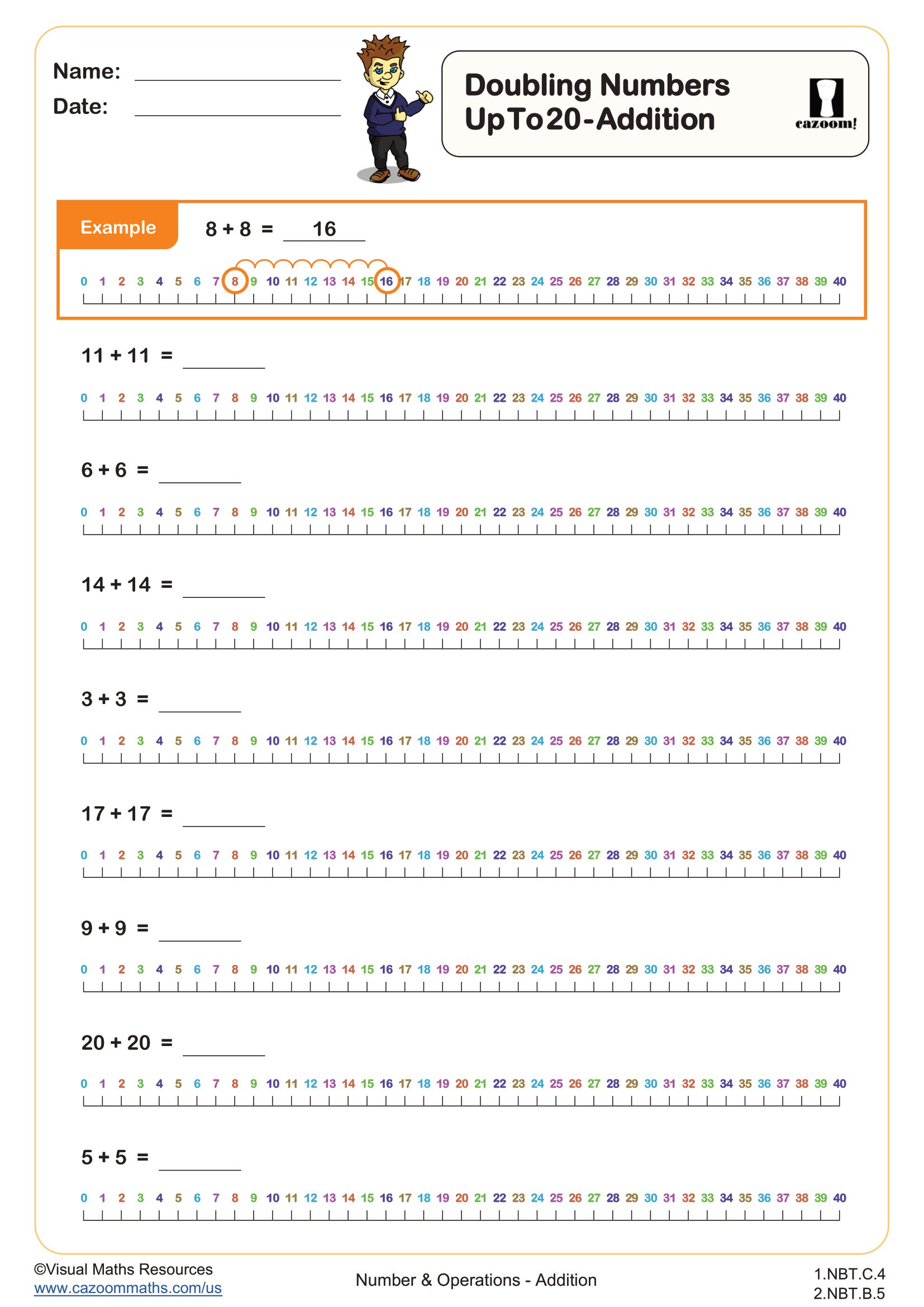
Doubling Numbers Up to 20 - Addition
Grades: 1st Grade, 2nd Grade
All worksheets are created by the team of experienced teachers at Cazoom Math.
How do visual addition worksheets support Common Core standards?
Visual addition worksheets directly align with Common Core standards that emphasize conceptual understanding before procedural fluency. Students use concrete and visual models to represent addition problems, meeting standards like K.OA.1 and 1.OA.1 that require multiple strategies for solving addition problems.
Teachers notice that students who master addition with visuals demonstrate stronger place value understanding when they encounter multi-digit problems. The visual representations help students see the relationship between quantities, particularly when working with ten frames or base-ten blocks, creating a solid foundation for more complex mathematical reasoning.
What grade levels benefit most from visual addition practice?
Visual addition worksheets are most beneficial for kindergarten through second grade students who are developing foundational number concepts. Kindergarten students typically start with concrete objects and pictures, while first graders progress to more abstract visual models like ten frames and number lines.
Second grade teachers often use these resources for students who need additional support with two-digit addition, especially when regrouping concepts emerge. Special education teachers across all elementary grades find visual addition particularly valuable for students who require extended concrete and pictorial representation phases before moving to symbolic mathematics.
How do ten frames specifically help with addition strategies?
Ten frames provide a structured visual model that helps students recognize number patterns and develop efficient addition strategies. Students can quickly see combinations that make ten, which becomes crucial for mental math strategies and understanding place value relationships.
Teachers observe that students using ten frame addition worksheets develop stronger subitizing skills and number sense. When adding 7 + 5, for example, students can visualize filling one ten frame completely and adding two more, naturally leading to the "make ten" strategy that supports fluency development and prepares them for multi-digit addition algorithms.
What's the most effective way to implement these visual addition resources?
Teachers find success by starting with concrete manipulatives before introducing the visual worksheets, allowing students to physically move objects before representing the same concepts on paper. The progression should move gradually from concrete to pictorial to abstract representations.
Classroom observations show that students benefit when teachers model the visual strategies explicitly before independent practice. Using the answer keys to facilitate class discussions about different solution methods helps students see multiple approaches to the same problem, strengthening their mathematical reasoning and preparing them for standardized assessments that require flexible thinking.